Scientia Agricultura Sinica ›› 2026, Vol. 59 ›› Issue (15): 3440-3451.doi: 10.3864/j.issn.0578-1752.2026.15.015

• ANIMAL SCIENCE·VETERINARY SCIENCE • Previous Articles     Next Articles

Effects of Grazing Intensities on Root Functional Traits in Plant Communities of Inner Mongolia Meadow Steppe

KONG MengQiao1,2(), LI Hui2,3, LI ZiHao2,3, PING XiaoYan1, JIANG CuiXia2,3, GUO HaoNan2,3, YANG YiJing2,4, XIN XiaoPing2()   

  1. 1 School of Grassland Science, Beijing Forestry University, Beijing 100083
    2 State Key Laboratory of Efficient Utilization of Arid and Semi-arid Arable Land in Northern China / National Hulunber Grassland Ecosystem Observation and Research Station / Institute of Agricultural Resources and Regional Planning, Chinese Academy of Agricultural Sciences, Beijing 100081
    3 College of Ecology, Lanzhou University, Lanzhou 730000
    4 College of Prataculture and GrasslandNorthwest Agricultural and Forestry University, Yangling 712100, Shaanxi
  • Received:2025-04-02 Accepted:2026-06-04 Online:2026-08-01 Published:2026-08-03
  • Contact: XIN XiaoPing

Abstract:

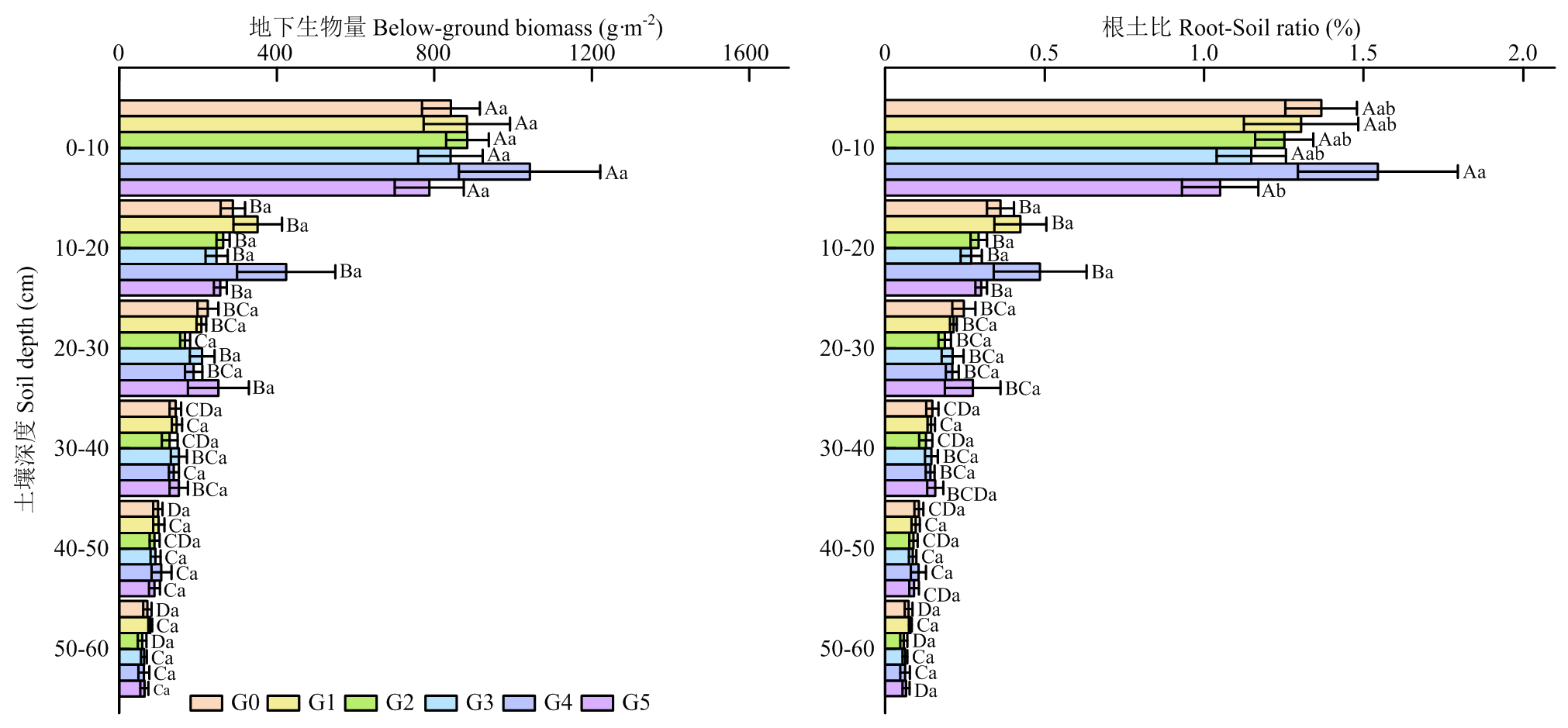
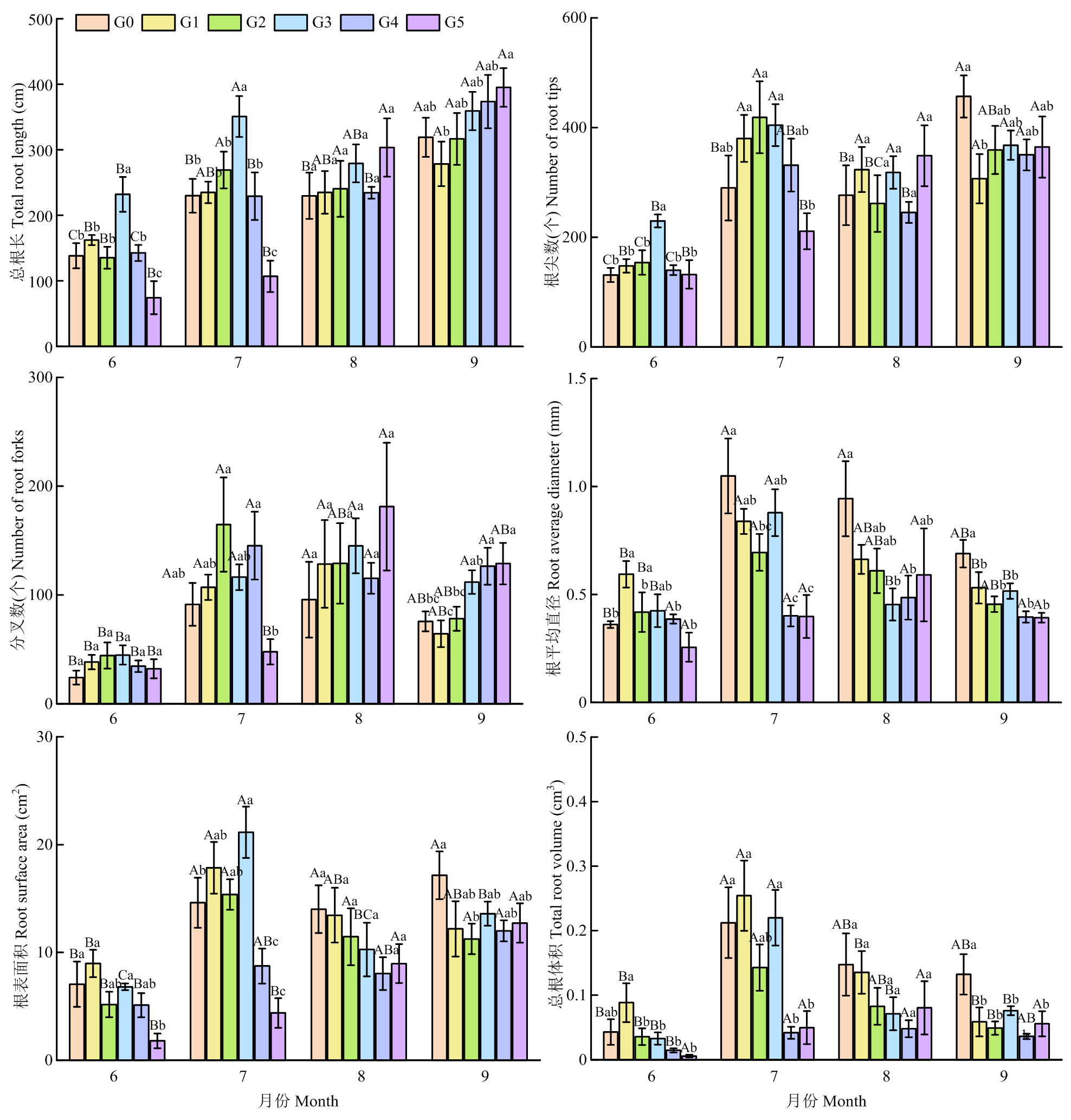
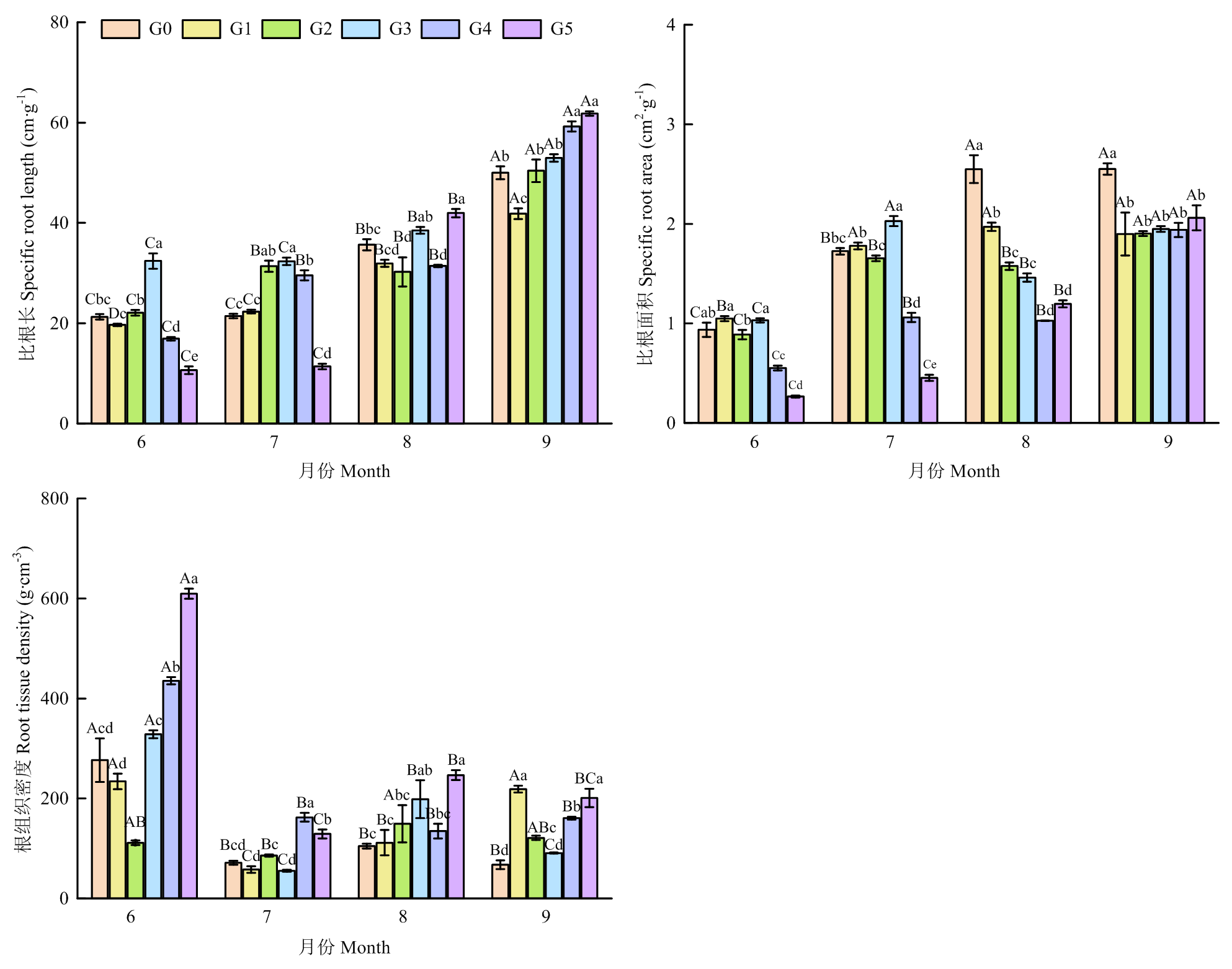
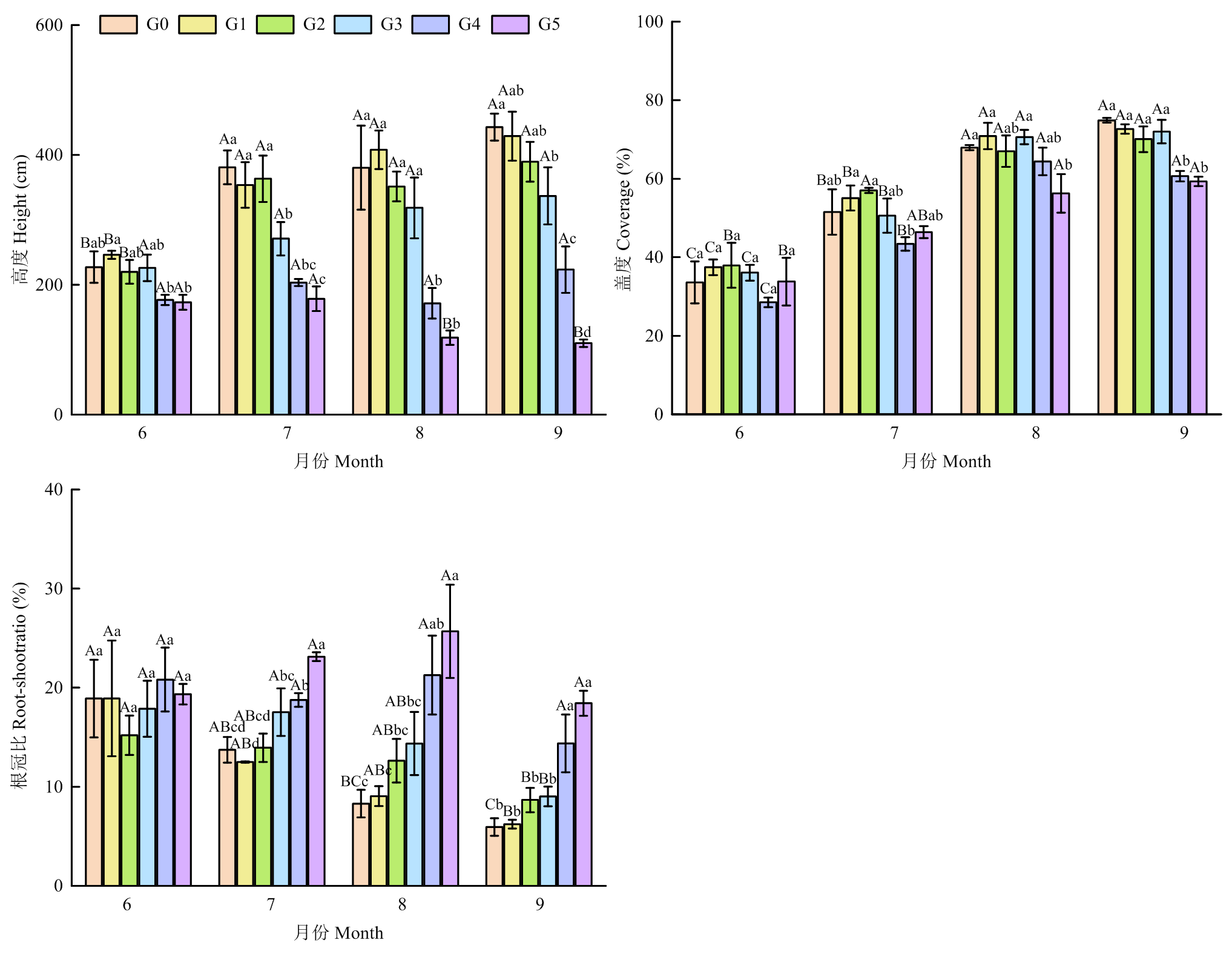
【Objective】Roots are the most critical underground organs of plants. This study investigates the dynamic effects of grazing disturbance on the root functional traits of meadow steppe communities, aiming to clarify the mechanisms by which grazing affects the structure and function of grassland community roots. It provides insights into the regulatory mechanisms and survival strategies of grassland plants under grazing disturbance.【Method】The root functional traits including total root length, number of root tips, number of root forks, root average diameter, root surface area, and total root volume were measured using minirhizotron technology under six grazing intensity treatments: no grazing (G0), light grazing (G1), light moderate grazing (G2), moderate grazing (G3), heavy grazing (G4), and extreme grazing (G5). Each grazing intensity treatment was replicated with nine minirhizotron tubes.【Result】(1) Both below-ground biomass and root-soil ratio exhibited significant decreasing trends with increasing soil depth (P<0.05). The maximum below-ground biomass and root-soil ratio were observed in the 0-10 cm soil layer under G4 grazing treatment, but there were no significant differences in below-ground biomass among grazing treatments. (2) The root morphological characteristics of meadow steppe communities vary significantly with the progression of the growing season and are affected by grazing intensity, with total root length and number of root forks showing an increasing trend over the growing season, whereas both root average diameter and total root volume reached their maxima in July before subsequent declines. Under varying grazing intensity gradients, root traits exhibit distinct patterns: moderate grazing (G1-G3) promotes root growth in the early growing season, whereas heavy or extreme grazing increases total root length and number of root forks in the late growing season but still reduces root average diameter and total root volume. (3) Specific root length (SRL) and specific root area (SRA) showed an increasing trend as the growing season progressed, peaking in September, while root tissue density (RTD) fluctuated. From June to July, SRL and SRA were highest under G3 grazing intensity, while from August to September, SRL increased with grazing intensity, and SRA decreased. RTD was generally higher under G3-G5 intensities compared to G0-G2. (4) Over time, plant height and coverage increased seasonally and peaked in September, while root-shoot ratio (R:S) decreased. With increasing grazing intensity, both height and coverage significantly decreased significantly in each month, while R:S significantly increased. (5) SRL and SRA were significantly correlated with plant community characteristics, and total root length and RTD were strongly correlated with R:S. However, average root diameter and number of root tips showed no significant correlation with soil factors or plant community characteristics.【Conclusion】The response of root morphological traits to grazing intensity exhibited dynamic differences, reflecting trade-offs in resource acquisition and structural strength at different periods. The functional composition of plant communities was strongly correlated with root traits, warranting further research. This study provides valuable insights into the response mechanisms and adaptability of meadow steppe plant roots to grazing intensity and seasonal dynamics.

Key words: root functional traits, minirhizotron, meadow steppe, grazing intensity

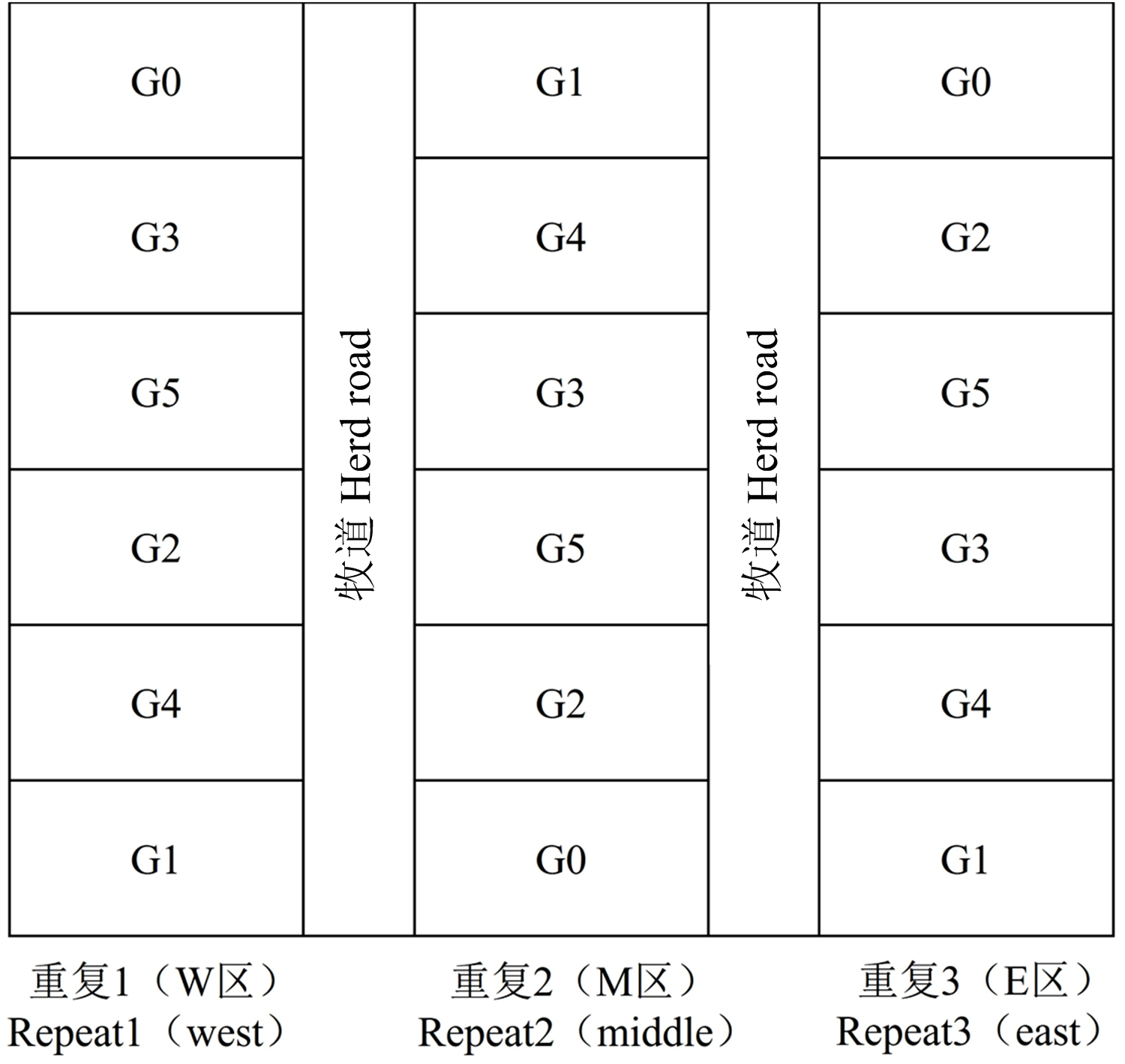
Fig. 1

Experimental plan of different grazing intensities"

Fig. 2

Vertical distribution of below-ground biomass and root-soil ratio in meadow steppe communities under different grazing intensities Different lowercase letters indicate significant differences among grazing intensities at the same soil depth(P<0.05), while different uppercase letters denote significant differences among soil depths under the same grazing intensity(P<0.05)"

Fig. 3

Dynamic effects of grazing intensity on root morphological traits in meadow steppe communities Different uppercase letters indicate significant differences among months within the same grazing intensity (P<0.05), while different lowercase letters denote significant differences among grazing intensities within the same month (P<0.05). The same as below"

Fig. 4

Seasonal variations in root morphological traits under different grazing intensities"

Fig. 5

Effects of grazing intensity on root functional traits of meadow steppe communities"

Fig. 6

Variations in plant community characteristics of meadow steppe under grazing intensities"

Fig. 7

Correlation between root functional traits and soil factors and plant community characteristics Pearson’s r represents the correlation coefficient between soil factors and plant community characteristics in the matrix, with blue indicating positive correlation and red indicating negative correlation; the color depth reflects the strength of the correlation. Mantel’s P represents the significance level of the Mantel test, and the line color indicates significance. Mantel’s r represents the correlation coefficient of the Mantel test, and the line thickness indicates the strength of the correlation.SWC: soil moisture content, BD: soil bulk density, ST: soil temperature, STN: soil total nitrogen, R:S: root-shoot ratio, ABP: Annual/Biennial plant, LEGU: Legumes, LILY: Liliaceae plants, PSF: Perennial short forbs, PSG: Perennial short grass, PTF: Perennial tall forbs, PTG: Perennial tall grass, SHR: Shrubs"

[1]
余露, 雷雪霞, 李昂, 胡如梅. 面向实现多功能目标的国有草原治理路径探析[J]. 草地学报, 2023, 31(9): 2590-2597.
Yu L, Lei X X, Li A, Hu R M. Study on the governance pathway of state-owned grassland oriented by multiple functions[J]. Acta Agrestia Sinica, 2023, 31(9): 2590-2597.(in Chinese)
[2]
司雨凡, 李辉, 李子好, 姜翠霞, 郭昊南, 杨培志, 席杰军, 闫瑞瑞, 乌仁其其格, 山丹, 辛晓平. 草甸草原关键物种功能性状对长期放牧和停牧恢复的响应[J]. 中国农业科学, 2023, 56(18): 3693-3708. DOI: 10.3864/j.issn.0578-1752.2023.18.016.
Si Y F, Li H, Li Z H, Jiang C X, Guo H N, Yang P Z, Xi J J, Yan R R, Wurenqimuge, Shan D, Xin X P. Response of functional traits of key species in meadow steppe to long-term grazing and grazing exclusion[J]. Scientia Agricultura Sinica, 2023, 56(18): 3693-3708. DOI: 10.3864/j.issn.0578-1752.2023.18.016.(in Chinese)
[3]
任继周. 草原文化是华夏文化的活泼元素[J]. 草业学报, 2010, 19(1): 1-5.
Ren J Z. Grassland culture is an integral part in Chinese culture[J]. Acta Prataculturae Sinica, 2010, 19(1): 1-5.(in Chinese)
[4]
Zheng S X, Lan Z C, Li W H, Shao R X, Shan Y M, Wan H W, Taube F, Bai Y F. Differential responses of plant functional trait to grazing between two contrasting dominant C3 and C4 species in a typical steppe of Inner Mongolia, China[J]. Plant and Soil, 2011, 340(1): 141-155.
[5]
da Silva J R, Yule T S, de Aquino Ribas A C, Scremin-Dias E. Do root secondary xylem functional traits differ between growth forms in Fabaceae species in a seasonally dry Neotropical environment?[J]. Annals of Botany, 2023, 132(3): 401-412.
[6]
Yan S Y, Weng B S, Jing L S, Bi W X, Yan D H. Adaptive pathway of summer maize under drought stress: Transformation of root morphology and water absorption law[J]. Frontiers in Earth Science, 2022, 10.: 1020553.
[7]
Biedrzycki M L, Bais H P. Kin recognition in plants: Did we learn anything from roots?[J]. Frontiers in Ecology and Evolution, 2022, 9: 785019.
[8]
王政权, 郭大立. 根系生态学[J]. 植物生态学报, 2008, 32(6): 1213-1216.
Wang Z Q, Guo D L. Root Ecology[J]. Chinese Journal of Plant Ecology, 2008, 32(6): 1213-1216.(in Chinese)
[9]
赵广帅, 刘珉, 石培礼, 宗宁, 张鑫, 张宪洲. 羌塘高原降水梯度植物叶片、根系性状变异和生态适应对策[J]. 生态学报, 2020, 40(1): 295-309.
Zhao G S, Liu M, Shi P L, Zong N, Zhang X, Zhang X Z. Variation of leaf and root traits and ecological adaptive strategies along a precipitation gradient on Changtang Plateau[J]. Acta Ecologica Sinica, 2020, 40(1): 295-309.(in Chinese)
[10]
Baker-Brosh K F, Peet R K. The ecological significance of lobed and toothed leaves in temperature forest trees[J]. Ecology, 1997, 78(4): 1250-1255.
[11]
Bardgett R D, Mommer L, De Vries F T. Going underground: Root traits as drivers of ecosystem processes[J]. Trends in Ecology & Evolution, 2014, 29(12): 692-699.
[12]
Wright I J, Reich P B, Westoby M, Ackerly D D, Baruch Z, Bongers F, Cavender-Bares J, Chapin T, Cornelissen J H C, Diemer M, Flexas J, Garnier E, Groom P K, Gulias J, Hikosaka K, Lamont B B, Lee T, Lee W, Lusk C, Midgley J J, et al. The worldwide leaf economics spectrum[J]. Nature, 2004, 428(6985): 821-827.
[13]
Reich P B. The world-wide ‘fast-slow’ plant economics spectrum: A traits manifesto[J]. Journal of Ecology, 2014, 102(2): 275-301.
[14]
Freschet G T, Swart E M, Cornelissen J H C. Integrated plant phenotypic responses to contrasting above- and below-ground resources: Key roles of specific leaf area and root mass fraction[J]. New Phytologist, 2015, 206(4): 1247-1260.
[15]
Ryan P R, Delhaize E, Watt M, Richardson A E. Plant roots: Understanding structure and function in an ocean of complexity[J]. Annals of Botany, 2016, 118(4): 555-559.
[16]
王树凤, 胡韵雪, 孙海菁, 施翔, 潘红伟, 陈益泰. 盐胁迫对2种栎树苗期生长和根系生长发育的影响[J]. 生态学报, 2014, 34(4): 1021-1029.
Wang S F, Hu Y X, Sun H J, Shi X, Pan H W, Chen Y T. Effects of salt stress on growth and root development of two oak seedlings[J]. Acta Ecologica Sinica, 2014, 34(4): 1021-1029.(in Chinese)
[17]
崔家宝, 魏晨, 王宁, 曹建军. 高寒草地不同径级根形态对围封年限的响应[J]. 生态学报, 2023, 43(8): 3327-3338.
Cui J B, Wei C, Wang N, Cao J J. The response of the root morphology under different diameter classes to grazing exclosure duration in alpine grassland[J]. Acta Ecologica Sinica, 2023, 43(8): 3327-3338.(in Chinese)
[18]
董亭, 李群, 赵萌莉, 贾乐, 阿穆拉, 韩国栋, 白玮杰. 放牧对大针茅根系生物量影响的研究[J]. 草地学报, 2011, 19(2): 237-241.
Dong T, Li Q, Zhao M L, Jia L, Han G D, Bai W J. Effect of grazing intensity on root biomass of Stipa grandis[J]. Acta Agrectir Sinica, 2011, 19(2): 237-241.(in Chinese)
[19]
位晓婷, 刘月华, 钟梦莹, 武瑞鑫, 潘多, 邵新庆. 羊草个体性状对不同放牧模式响应的研究[J]. 草地学报, 2014, 22(5): 949-953.
Wei X T, Liu Y H, Zhong M Y, Wu R X, Pan D, Shao X Q. Responses of Leymus chinensis individual traits to different grazing patterns[J]. Acta Agrectir Sinica, 2014, 22(5): 949-953.(in Chinese)
[20]
Bonin C, Flores J, Lal R, Tracy B. Root characteristics of perennial warm-season grasslands managed for grazing and biomass production[J]. Agronomy, 2013, 3(3): 508-523.
[21]
Wei X T, Zhong M Y, Liu Y H, Wu R X, Shao X Q. Covariation in root traits of Leymus chinensis in response to grazing in steppe rangeland[J]. The Rangeland Journal, 2019, 41(4): 313-322.
[22]
Maire V, Wright I J, Prentice I C, Batjes N H, Bhaskar R, van Bodegom P M, Cornwell W K, Ellsworth D, Niinemets Ü, Ordonez A, Reich P B, Santiago L S. Global effects of soil and climate on leaf photosynthetic traits and rates[J]. Global Ecology and Biogeography, 2015, 24(6): 706-717.
[23]
缪雨珏, 宗宁, 李振威. 高寒植物功能性状权衡策略研究进展[J]. 应用与环境生物学报, 2025, 31(7): 1157-1172.
Miao Y J, Zong N, Li Z W. Research progress on trade-off strategies for functional traits in alpine plants[J]. Chinese Journal of Applied and Environmental Biology, 2025, 31(7): 1157-1172.(in Chinese)
[24]
白文明, 程维信, 李凌浩. 微根窗技术及其在植物根系研究中的应用[J]. 生态学报, 2005, 25(11): 3076-3081.
Bai W M, Cheng W X, Li L H. Applications of minirhizotron techniques to root ecology research[J]. Acta Ecologica Sinica, 2005, 25(11): 3076-3081.(in Chinese)
[25]
吐地·依米提, 于洪亮, 王旭, 平晓燕, 吴宜倩, 王崇伟. 草原蘑菇圈对生态系统碳、水通量特征的影响[J]. 中国农业科学, 2025, 58(9): 1804-1815. DOI: 10.3864/j.issn.0578-1752.2025.09.010.
Tudi·Yimiti, Yu H L, Wang X, Ping X Y, Wu Y Q, Wang C W. Effects of fairy rings on carbon and water fluxes in Hulunbuir meadow steppe[J]. Scientia Agricultura Sinica, 2025, 58(9): 1804-1815. DOI: 10.3864/j.issn.0578-1752.2025.09.010.(in Chinese)
[26]
李金花, 李镇清, 任继周. 放牧对草原植物的影响[J]. 草业学报, 2002, 11(1): 4-11.
Li J H, Li Z Q, Ren J Z. The effects of grazing on grassland plants[J]. Acta Prataculturae Sinica, 2002, 11(1): 4-11.(in Chinese)
[27]
Trumbore S E, Gaudinski J B. The secret lives of roots[J]. Science, 2003, 302(5649): 1344-1345.
[28]
van der Maarel E, Titlyanova A. Above-ground and below-ground biomass relations in steppes under different grazing conditions[J]. Oikos, 1989, 56(3): 364-370.
[29]
孙熙麟, 王明玖, 陈海军, 陈丽丽, 娜乐. 短花针茅荒漠草原地下生物量对不同强度放牧的响应[J]. 内蒙古农业大学学报(自然科学版), 2010, 31(4): 101-104.
Sun X L, Wang M J, Chen H J, Chen L L, Na L. Response of underground biomass to different grazing intensities in the Stipa breviflora desert steppe[J]. Journal of Inner Mongolia Agricultural University (Natural Science Edition), 2010, 31(4): 101-104.(in Chinese)
[30]
字洪标, 阿的鲁骥, 马力, 胡雷, 陈焱, 杨有芳, 王长庭. 高寒草甸不同类型草地群落根土比、土壤养分变化[J]. 西南农业学报, 2016, 29(12): 2916-2921.
Zi H B Adiluji, Ma L, Hu L, Chen Y, Yang Y F, Wang C T. Change of ratio of root to soil and soil nutrient content at different grassland types in alpine meadow[J]. Southwest China Journal of Agricultural Sciences, 2016, 29(12): 2916-2921.(in Chinese)
[31]
Briske D D, Richards J H. Plant responses to defoliation: A physiological, morphological and demographic evaluation[M]//Wildland Plants: Physiological Ecology and Developmental Morphology. Denver: Society for Range Management, 1995: 635-710.
[32]
Khasanova A, Lovell J T, Bonnette J, Weng X Y, Jenkins J, Yoshinaga Y, Schmutz J, Juenger T E. The genetic architecture of shoot and root trait divergence between mesic and xeric ecotypes of a perennial grass[J]. Frontiers in Plant Science, 2019, 10: 366.
[33]
Zhou M, Wang J, Bai W, Zhang Y, Zhang W. The response of root traits to precipitation change of herbaceous species in temperate steppes[J]. Functional Ecology, 2019, 33: 2030-2041.
[34]
de la Riva E G, Marañón T, Pérez-Ramos I M, Navarro-Fernández C M, Olmo M, Villar R. Root traits across environmental gradients in Mediterranean woody communities: Are they aligned along the root economics spectrum?[J]. Plant and Soil, 2018, 424(1): 35-48.
[35]
孙佳慧, 史海兰, 陈科宇, 纪宝明, 张静. 植物细根功能性状的权衡关系研究进展[J]. 植物生态学报, 2023, 47(8): 1055-1070.
Sun J H, Shi H L, Chen K Y, Ji B M, Zhang J. Research advances on trade-off relationships of plant fine root functional traits[J]. Chinese Journal of Plant Ecology, 2023, 47(8): 1055-1070.(in Chinese)
[36]
Han M G, Chen Y, Li R, Yu M, Fu L C, Li S F, Su J R, Zhu B. Root phosphatase activity aligns with the collaboration gradient of the root economics space[J]. The New Phytologist, 2022, 234(3): 837-849.
[37]
覃桂丽, 玉舒中. 降香黄檀根系性状对石灰岩石砾的适应响应[J]. 西南林业大学学报(自然科学), 2023, 43(3): 24-32.
Qin G L, Yu S Z. Adaptive response of root characteristics of Dalbergia odorifera to limestone gravel[J]. Journal of Southwest Forestry University (Natural Sciences), 2023, 43(3): 24-32.(in Chinese)
[38]
杨孟晴, 黄盛怡, 王斌, 周志春, 徐小牛, 徐卫可, 吴仁超. 赤皮青冈容器苗生长和根系发育对缓释肥添加的动态响应[J]. 南京林业大学学报(自然科学版), 2025, 49(1): 103-111.
Yang M Q, Huang S Y, Wang B, Zhou Z C, Xu X N, Xu W K, Wu R C. Response of the growth and root development of Cyclobalanopsis gilva container seedlings to the slow-release fertilizer addition[J]. Journal of Nanjing Forestry University (Natural Sciences Edition), 2025, 49(1): 103-111.(in Chinese)
[39]
周永姣, 程林, 王满堂, 朱国洁, 钟全林, 郭炳桥, 程栋梁. 武夷山不同海拔黄山松细根性状季节变化[J]. 生态学报, 2019, 39(12): 4530-4539.
Zhou Y J, Cheng L, Wang M T, Zhu G J, Zhong Q L, Guo B Q, Cheng D L. Seasonal changes of fine root traits in Pinus taiwanensis Hayata at different altitudes in the Wuyi Mountains[J]. Acta Ecologica Sinica, 2019, 39(12): 4530-4539.(in Chinese)
[40]
An N N, Lu N, Fu B J, Chen W L, Keyimu M, Wang M Y. Root trait variation of seed plants from China and the primary drivers[J]. Journal of Biogeography, 2021, 48(10): 2402-2417.
[41]
许宏斌, 辛晓平, 宝音陶格涛, 闫瑞瑞, 王旭, 陈宝瑞, 金东艳, 姚静, 刘志英. 放牧对呼伦贝尔羊草草甸草原生物量分布的影响[J]. 草地学报, 2020, 28(3): 768-774.
Xu H B, Xin X P, Baoyintaogetao, Yan R R, Wang X, Chen B R, Jin D Y, Yao J, Liu Z Y. Effects of grazing on biomass distribution on the Leymus chinensis meadow steppe of Hulunbeier[J]. Acta Agrestia Sinica, 2020, 28(3): 768-774.(in Chinese)
[42]
万里强, 陈玮玮, 李向林, 何峰, 刘树军. 放牧对草地土壤含水量与容重及地下生物量的影响[J]. 中国农学通报, 2011, 27(26): 25-29.
Wan L Q, Chen W W, Li X L, He F, Liu S J. Effects of grazing on soil moisture, bulk and pasture underground biomass[J]. Chinese Agricultural Science Bulletin, 2011, 27(26): 25-29.(in Chinese)
[43]
武帅楷, 郝杰, 刁华杰, 居新, 宁亚楠, 苏原, 董宽虎, 王常慧. 晋北农牧交错带草地生物量对短期放牧强度的响应[J]. 草地学报, 2023, 31(8): 2446-2454.
Wu S K, Hao J, Diao H J, Ju X, Ning Y N, Su Y, Dong K H, Wang C H. Response of grassland biomass to short-term grazing intensities in the agro-pastoral ecotone in northern Shanxi[J]. Acta Agrestia Sinica, 2023, 31(8): 2446-2454.(in Chinese)
[44]
Wang S Y, Comas L H, Reich P B, McCormack M L, Phillips R P, Gu J C, Sun T. Variation of root resource acquisition and conservation strategies in a temperate forest is linked with plant growth forms[J]. Tree Physiology, 2025, 45(4): tpaf027.
[45]
Niu K C, He J S, Lechowicz M J. Grazing-induced shifts in community functional composition and soil nutrient availability in Tibetan alpine meadows[J]. Journal of Applied Ecology, 2016, 53(5): 1554-1564.
[46]
Wang C N, Li X, Lu X M, Wang Y, Bai Y F. Intraspecific trait variation governs grazing-induced shifts in plant community above- and below-ground functional trait composition[J]. Agriculture, Ecosystems & Environment, 2023, 346: 108357.
[1] SI YuFan, LI Hui, LI ZiHao, JIANG CuiXia, GUO HaoNan, YANG PeiZhi, XI JieJun, YAN RuiRui, WURENQIQIGE, SHAN Dan, XIN XiaoPing. Response of Functional Traits of Key Species in Meadow Steppe to Long-Term Grazing and Grazing Exclusion [J]. Scientia Agricultura Sinica, 2023, 56(18): 3693-3708.
[2] WANG Miao,ZHANG Yu,LI RuiQiang,XIN XiaoPing,ZHU XiaoYu,CAO Juan,ZHOU ZhongYi,YAN RuiRui. Effects of Grazing Disturbance on the Stoichiometry of Nitrogen and Phosphorus in Plant Organs of Leymus chinensis Meadow Steppe [J]. Scientia Agricultura Sinica, 2022, 55(7): 1371-1384.
[3] YAN RuiRui, GAO Wa, SHEN BeiBei, ZHANG Yu, WANG Miao, ZHU XiaoYu, XIN XiaoPing. Index System for Quantitative Evaluation of Pasture Degradation in Meadow Grassland of Inner Mongolia [J]. Scientia Agricultura Sinica, 2021, 54(15): 3343-3354.
[4] WANG KaiLi,YANG HeLong,XIAO Hong,SUN Wei,RONG YuPing. Effects of Nitrogen Application and Clipping Height on Vegetation Productivity and Plant Community Composition of Haying Meadow Steppe [J]. Scientia Agricultura Sinica, 2020, 53(13): 2625-2636.
[5] YAN RuiRui,ZHANG Yu,XIN XiaoPing,WEI ZhiJun,Wuren qiqige,GUO MeiLan. Effects of Mowing Disturbance on Grassland Plant Functional Groups and Diversity in Leymus chinensis Meadow Steppe [J]. Scientia Agricultura Sinica, 2020, 53(13): 2573-2583.
[6] HOU LuLu,YAN RuiRui,ZHANG Yu,XIN XiaoPing. Effects of Grazing Intensity on Functional Traits of Leymus chinensis in Meadow Steppe [J]. Scientia Agricultura Sinica, 2020, 53(13): 2562-2572.
[7] ZHANG Yu, HOU LuLu, YAN RuiRui, XIN XiaoPing. Effects of Grazing Intensity on Plant Community Characteristics and Nutrient Quality of Herbage in a Meadow Steppe [J]. Scientia Agricultura Sinica, 2020, 53(13): 2550-2561.
[8] WU Qi, WU Peng-fei, WANG Qun, WEN Yong-li, GAO Yan-mei, ZHANG Rong-zhi, LONG Wei. Effects of Grazing Intensity on the Community Structure and Diversity of Different Soil Fauna in Alpine Meadow [J]. Scientia Agricultura Sinica, 2016, 49(9): 1826-1834.
[9] WANG Hong-Mei, SUN Qi-Zhong, HUA Mei. Studies on Native Grass Silage of Different Plant Communities in Meadow Steppe [J]. Scientia Agricultura Sinica, 2013, 46(12): 2566-2575.
[10] QIU Xin-Qiang, GAO Yang, HUANG Ling, LI Xin-Qiang, SUN Jing-Sheng, DUAN Ai-Wang. Temporal and Spatial Distribution of Root Morphology of Winter Wheat [J]. Scientia Agricultura Sinica, 2013, 46(11): 2211-2219.
[11] ,,,,. A Study of the Effects of Different Grazing Intensities on Soil Physical Properties of Grassland and Forest Floor -- For Example Hilly and Gully Regions on the Loess Plateau [J]. Scientia Agricultura Sinica, 2006, 39(7): 1501-1506 .
Viewed
Full text


Abstract

Cited

  Shared   
  Discussed   
No Suggested Reading articles found!