Scientia Agricultura Sinica ›› 2026, Vol. 59 ›› Issue (13): 2815-2827.doi: 10.3864/j.issn.0578-1752.2026.13.005

• TILLAGE & CULTIVATION·PHYSIOLOGY & BIOCHEMISTRY·AGRICULTURE INFORMATION TECHNOLOGY • Previous Articles     Next Articles

Analysis of Physiological and Metabolic Response Mechanisms in Maize Varieties with Different Salt Tolerances Under Salt Stress

MA XiaoYing1(), QU XiaoYu1, LI Tao1, LIU WeiFan1, LIU Hao1, MA FengLan1, WAN MengHu1, WU Na1(), LIU JiLi2   

  1. 1 College of Agriculture, Ningxia University, Yinchuan 750021
    2 College of Ecology and Environment, Ningxia University, Yinchuan 750021
  • Received:2025-11-25 Accepted:2026-05-28 Online:2026-07-01 Published:2026-07-01
  • Contact: WU Na

Abstract:

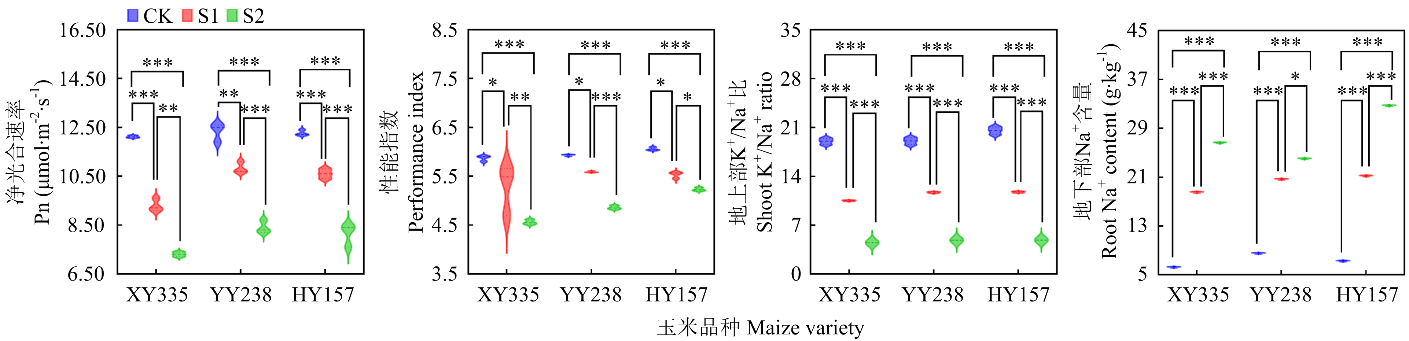
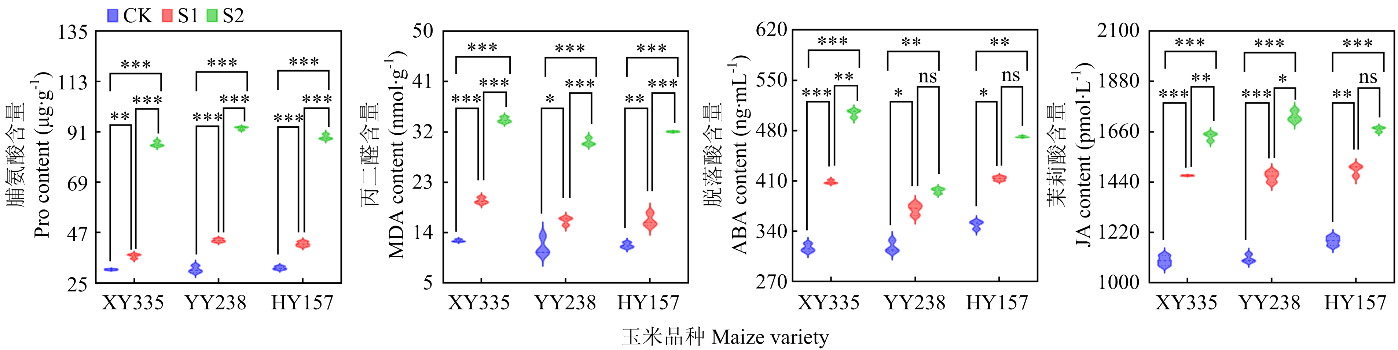
【Objective】As a major food crop in China, maize (Zea mays L.) is relatively sensitive to salt stress, which significantly inhibits its photosynthesis and causes metabolic disorders. Therefore, this study utilized maize varieties with different levels of salt tolerance to systematically investigate their photosynthetic physiology and metabolic responses under salt stress, with the aim of elucidating the underlying causes of inter-varietal differences in salt tolerance at the physiological and metabolic levels. 【Method】A pot experiment was conducted using salt-tolerant maize varieties Yinyu 238 (YY238) and Heyu 157 (HY157), and the salt-sensitive variety Xianyu 335 (XY335). Three salt stress concentration gradients were established: 0 mmol NaCl·L-1 (CK), 120 mmol NaCl·L-1 (S1), and 240 mmol NaCl·L-1 (S2). Stress treatment was applied at the six-leaf stage of the maize seedlings. Samples were taken at 24 hours after stress treatment to measure the net photosynthetic rate (Pn), photosynthetic performance index (PI), ion content (K+, and Na+), and the content of malondialdehyde (MDA), proline (Pro), abscisic acid (ABA), and jasmonic acid (JA). Non-targeted metabolomics technology was used to analyze leaf metabolites. Differential metabolites were screened based on a variable importance in projection (VIP) > 1 and P<0.05, and pathway enrichment analysis was performed using the KEGG database. 【Result】Salt stress significantly reduced both Pn and PI. Compared with CK, the salt-sensitive variety XY335 exhibited a maximum Pn reduction of 39.8% under S2, while the salt-tolerant variety YY238 showed a relatively smaller reduction of 31.9%. In terms of ion homeostasis, salt stress significantly decreased the shoot K+/Na+ ratio, with XY335 experiencing a reduction of 76.4%, significantly higher than the 74.6% reduction in YY238. Salt-tolerant varieties demonstrated stronger osmotic adjustment capacity, with YY238 showing a 199.2% increase in Pro accumulation. In contrast, the salt-sensitive variety XY335 suffered more severe oxidative damage, with a 172.1% increase in MDA content. Hormonal responses indicated that XY335 had a higher increase in ABA (59.3%), while YY238 showed the largest increase in JA under S2, reaching 56.3%. Metabolomic analysis revealed that salt stress induced variety-specific metabolic reprogramming. The metabolic disorder in the salt-sensitive variety XY335 worsened with increasing stress intensity, with the number of differential metabolites surging to 127. In contrast, salt-tolerant varieties exhibited a stronger ability to maintain metabolic homeostasis. Salt-tolerant varieties specifically accumulated stress resistance-related metabolites: YY238 significantly upregulated amino acid derivatives and organic acids, including Nα-methylhistidine and trans-aconitate; HY157 specifically accumulated amino acids and their derivatives, such as γ-aminobutyric acid and L-glutamine, as well as phenolic acids like salicylic acid. In comparison, the salt-sensitive variety XY335 primarily accumulated nucleic acid metabolites related to energy metabolism, such as β-guanidinopropionic acid, and organic acids like isonicotinic acid. KEGG pathway enrichment analysis revealed that salt-tolerant varieties were commonly enriched in pathways, such as phenylpropanoid biosynthesis and ABC transporters. Additionally, YY238 specifically activated the biosynthesis of flavonoids and flavonols, while HY157 was significantly enriched in alanine, aspartate, and glutamate metabolism pathways. 【Conclusion】In summary, salt stress enhanced the adaptability of salt-tolerant maize varieties by maintaining photosynthetic performance and ion homeostasis, mitigating oxidative damage, and activating specific metabolic pathways. Salt-tolerant varieties maintained higher photosynthetic efficiency through precise ion compartmentalization and alleviate oxidative damage by rapidly accumulating osmotic adjustment substances and effectively scavenging reactive oxygen species. At the metabolic level, salt-tolerant varieties specifically activated pathways, such as phenylpropanoid biosynthesis and amino acid metabolism, providing the key material and signaling foundations for their salt tolerance.

Key words: maize, salt stress, photosynthetic characteristics, physiological response, metabolomics, metabolic pathways

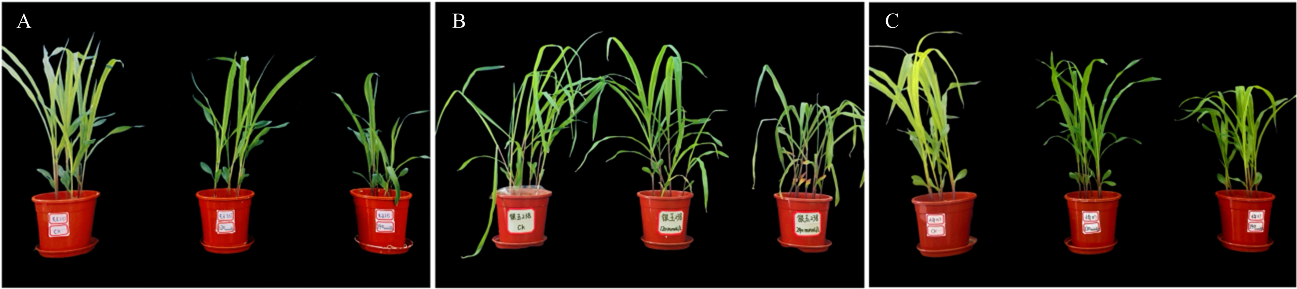
Fig. 1

Seedling growth phenotypes of maize varieties under salt stress A: XY335 (Xianyu 335, salt-sensitive variety); B: YY238 (Yinyu 238, salt-tolerant variety); C: HY157 (Heyu 157, salt-tolerant variety). CK, S1, and S2 represent salt concentration treatments with 0, 120, and 240 mmol NaCl·L-1, respectively. The same as below"

Fig. 2

Responses of ion homeostasis and photosynthetic characteristics in maize varieties under salt stress *:P<0.05,**:P<0.01,***:P<0.001;ns表示无显著差异(P≥0.05) ns indicates no significant difference (P≥0.05)。下同 The same as below"

Fig. 3

Salt stress-induced oxidative damage, osmoregulation and hormonal signaling changes"

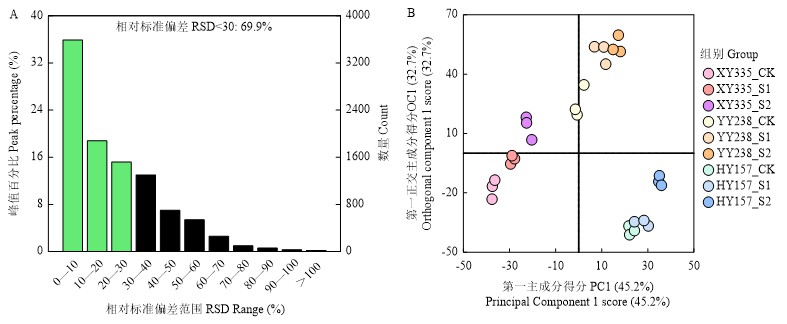
Fig. 4

Metabolomics data quality assessment of different salt-tolerant maize varieties A: RSD distribution of features in QC samples; B: OPLS-DA score plot of metabolites among groups. The RSD distribution shows that approximately 65% of features in QC samples had RSD<30%, indicating acceptable data quality. The OPLS-DA plot demonstrates the metabolic separation among salt-sensitive maize (XY335) and salt-tolerant maize (YY238, and HY157) under different salt concentration treatments (CK, S1, and S2)"

Fig. 5

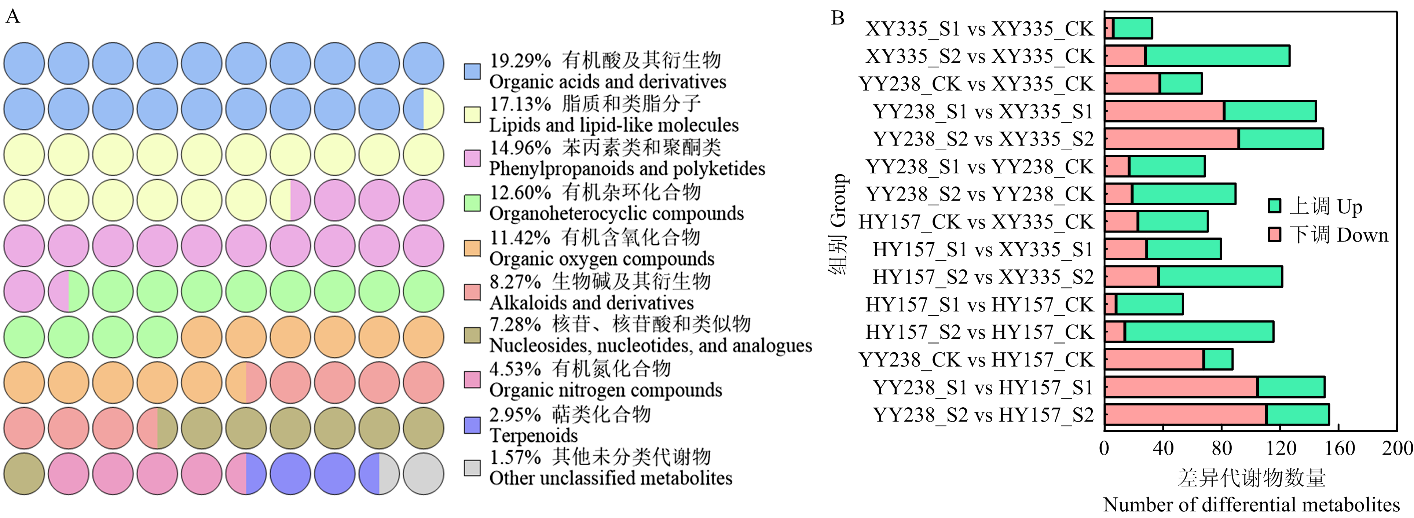
Classification and statistics of differential metabolites and intergroup variation"

Fig. 6

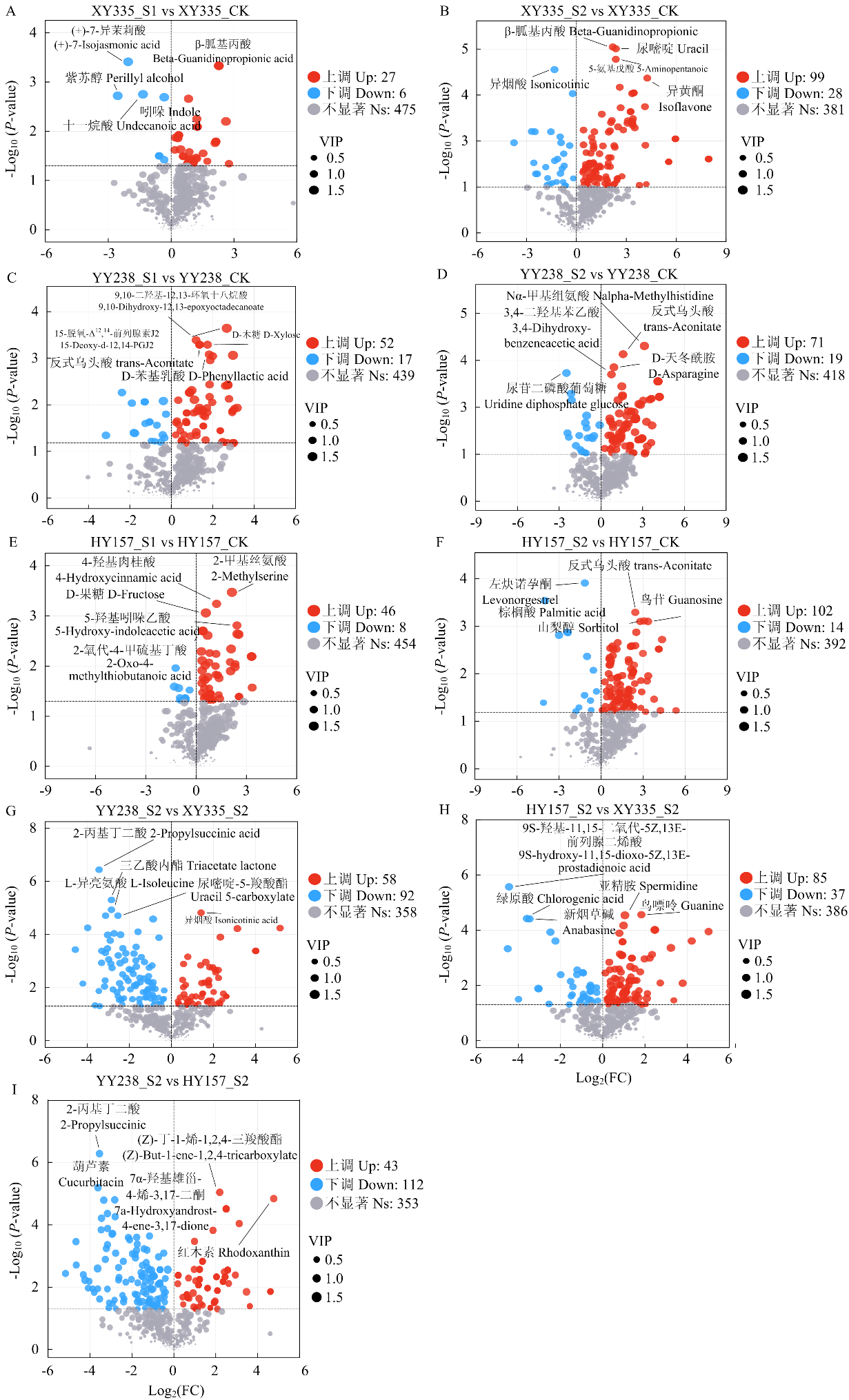
Volcano plot of differentially altered metabolites The x-axis represents the log2-transformed fold change of metabolite quantification values between two samples; the y-axis represents the -log10 transformed P-value. Each point in the plot represents a metabolite. Red, blue, and gray points indicate significantly up-regulated, significantly down-regulated, and non-significant metabolites, respectively. Point size corresponds to the VIP value. The numbers in the top right corner indicate the counts of metabolites annotated by each color. The top 5 metabolites with the smallest P-values are labeled. Metabolites with -log10 (P value)≥1.3 were considered significantly expressed"

Fig. 7

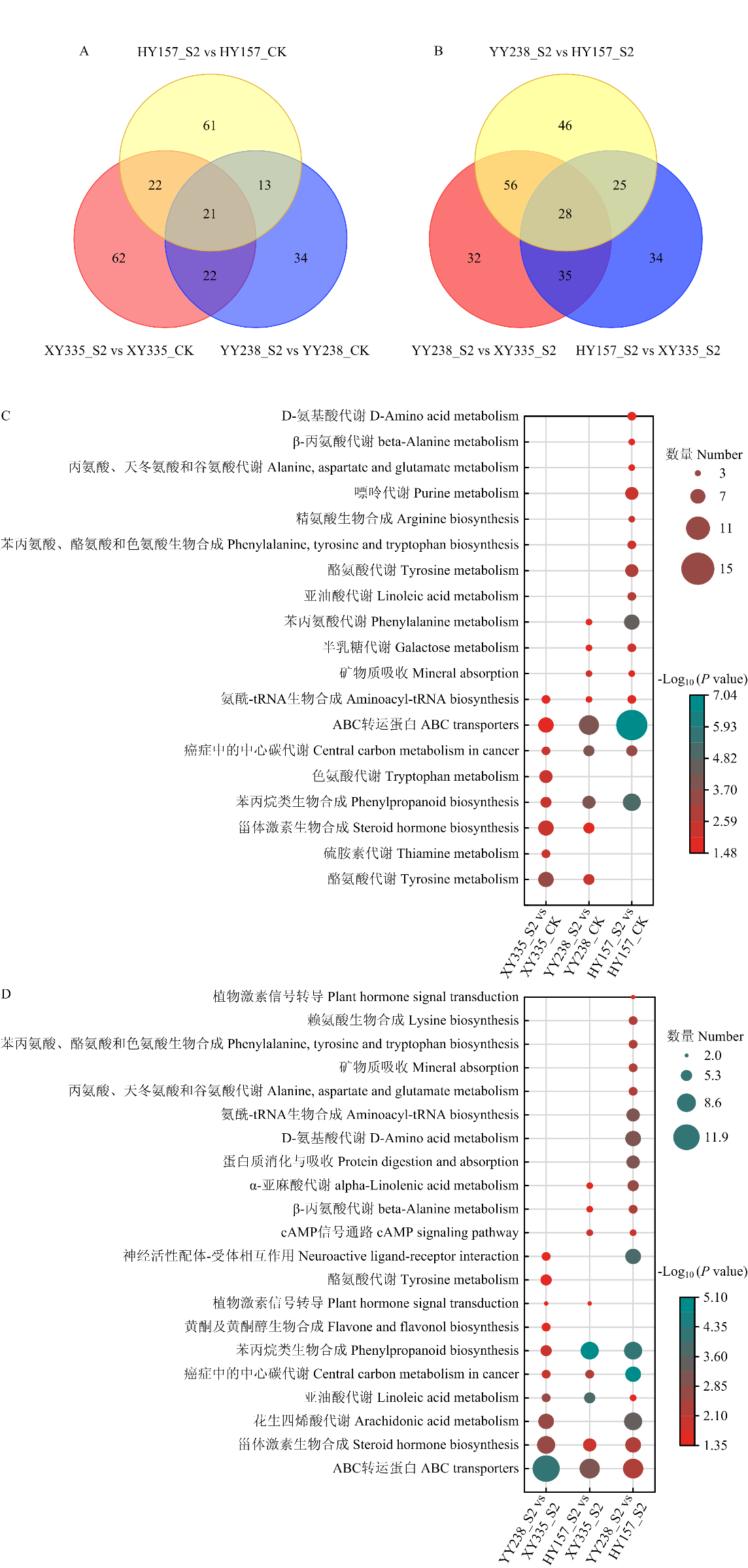
Differential metabolites in maize cultivars in response to salt stress and KEGG enrichment analysis A and B are Venn diagrams of differential metabolites within and between maize varieties, respectively, while C and D are KEGG enrichment distribution diagrams of differential metabolites within and between maize varieties, respectively"

[1]
沈义国, 陈受宜. 植物盐胁迫应答的分子机制[J]. 遗传, 2001, 23(4): 365-369.
Shen Y G, Chen S Y. Molecular mechanism of plant responses to salt stress[J]. Hereditas, 2001, 23(4): 365-369. (in Chinese)
[2]
武书羽, 衡燕芳, 于太飞, 王世佳, 于思佳, 李园, 胡正, 张辉, 孙现军, 黎亮, 姜奇彦. 玉米自然群体苗期耐盐性鉴定及耐盐相关基因分析[J]. 中国农业科学, 2025, 58(20): 4085-4099. DOI: 10.3864/j.issn.0578-1752.2025.20.005.
Wu S Y, Heng Y F, Yu T F, Wang S J, Yu S J, Li Y, Hu Z, Zhang H, Sun X J, Li L, Jiang Q Y. Identification of salt tolerance in maize natural populations at the seedling stage and analysis of salt tolerance-associated genes[J]. Scientia Agricultura Sinica, 2025, 58(20): 4085-4099. DOI: 10.3864/j.issn.0578-1752.2025.20.005. (in Chinese)
[3]
van Zelm E, Zhang Y X, Testerink C. Salt tolerance mechanisms of plants[J]. Annual Review of Plant Biology, 2020, 71: 403-433.
[4]
Nykiel M, Gietler M, Fidler J, Prabucka B, Labudda M. Abiotic stress signaling and responses in plants[J]. Plants, 2023, 12(19): 3405.
[5]
Hanin M, Ebel C, Ngom M, Laplaze L, Masmoudi K. New insights on plant salt tolerance mechanisms and their potential use for breeding[J]. Frontiers in Plant Science, 2016, 7: 1787.
[6]
Krasensky J, Jonak C. Drought, salt, and temperature stress-induced metabolic rearrangements and regulatory networks[J]. Journal of Experimental Botany, 2012, 63(4): 1593-1608.
[7]
Roy S J, Negrão S, Tester M. Salt resistant crop plants[J]. Current Opinion in Biotechnology, 2014, 26: 115-124.
[8]
Wang C Q, Pei J, Li H, Zhu X L, Zhang Y N, Wang Y J, Li W J, Wang Z Y, Liu K, Du B H, Jiang J Q, Zhao D Y. Mechanisms on salt tolerant of Paenibacillus polymyxa SC2 and its growth-promoting effects on maize seedlings under saline conditions[J]. Microbiological Research, 2024, 282: 127639.
[9]
Du H, Wang N L, Cui F, Li X H, Xiao J H, Xiong L Z. Characterization of the beta-carotene hydroxylase gene DSM2 conferring drought and oxidative stress resistance by increasing xanthophylls and abscisic acid synthesis in rice[J]. Plant Physiology, 2010, 154(3): 1304-1318.
[10]
Jalalian S, Ebrahimzadeh A, Zahedi S M, Becker S J, Hayati F, Hassanpouraghdam M B, Rasouli F. Chlamydomonas sp. Extract meliorates the growth and physiological responses of ‘Camarosa’ strawberry (Fragaria × Ananassa Duch) under salinity stress[J]. Scientific Reports, 2024, 14(1): 22436.
[11]
Chen K, Li G J, Bressan R A, Song C P, Zhu J K, Zhao Y. Abscisic acid dynamics, signaling, and functions in plants[J]. Journal of Integrative Plant Biology, 2020, 62(1): 25-54.
[12]
Byrt C S, Munns R, Burton R A, Gilliham M, Wege S. Root cell wall solutions for crop plants in saline soils[J]. Plant Science, 2018, 269: 47-55.
[13]
Arzani A, Ashraf M. Smart engineering of genetic resources for enhanced salinity tolerance in crop plants[J]. Critical Reviews in Plant Sciences, 2016, 35(3): 146-189.
[14]
Borbély P, Poór P, Tari I. Changes in physiological and photosynthetic parameters in tomato of different ethylene status under salt stress: Effects of exogenous 1-aminocyclopropane-1-carboxylic acid treatment and the inhibition of ethylene signalling[J]. Plant Physiology and Biochemistry, 2020, 156: 345-356.
[15]
Ahmed I M, Nadira U A, Qiu C W, Cao F B, Chen Z H, Vincze E, Wu F B. The barley S-adenosylmethionine synthetase 3 gene HvSAMS3 positively regulates the tolerance to combined drought and salinity stress in Tibetan wild barley[J]. Cells, 2020, 9(6): 1530.
[16]
Liu Z B, Wang Q X, Zhang L L, Zhang Y, Jin Q. Integrated transcriptome and metabolome analysis revealed the molecular regulatory mechanism of carbohydrate synthesis in Panax ginseng[J]. Plant science : An international Journal of Experimental Plant Biology, 2025: 112573.
[17]
Ali M M, Jeddi K, Attia M S, Elsayed S M, Yusuf M, Osman M S, Soliman M H, Hessini K. Wuxal amino (Bio stimulant) improved growth and physiological performance of tomato plants under salinity stress through adaptive mechanisms and antioxidant potential[J]. Saudi Journal of Biological Sciences, 2021, 28(6): 3204-3213.
[18]
Zhang H T, Yu P, Xiao H W, Wang C Y, Yan X F, Zhang X Q. Genome-wide characterization and expression analysis of the GATA transcription factor family in response to salt and drought stress in barley (Hordeum vulgare L.)[J]. Frontiers in Plant Science, 2025, 16: 1661591.
[19]
Goswami K, Mittal D, Gautam B, Sopory S K, Sanan-Mishra N. Mapping the salt stress-induced changes in the root miRNome in pokkali rice[J]. Biomolecules, 2020, 10(4): 498.
[20]
Li Q Y, Zhu P W, Yu X Q, Xu J Y, Liu G L. Physiological and molecular mechanisms of rice tolerance to salt and drought stress: Advances and future directions[J]. International Journal of Molecular Sciences, 2024, 25(17): 9404.
[21]
Britto D T, Kronzucker H J. Sodium efflux in plant roots: What do we really know?[J]. Journal of Plant Physiology, 2015, 186: 1-12.
[22]
朱春艳, 宋佳伟, 白天亮, 王娜, 马帅国, 普正菲, 董艳, 吕建东, 李杰, 田蓉蓉, 罗成科, 张银霞, 马天利, 李培富, 田蕾. NaCl胁迫对不同耐盐性粳稻种质幼苗叶绿素荧光特性的影响[J]. 中国农业科学, 2022, 55(13): 2509-2525. DOI:10.3864/j.issn.0578-1752.2022.13.003.
Zhu C Y, Song J W, Bai T L, Wang N, Ma S G, Pu Z F, Dong Y, J D, Li J, Tian R R, Luo C K, Zhang Y X, Ma T L, Li P F, Tian L. Effects of NaCl stress on the chlorophyll fluorescence characteristics of seedlings of Japonica rice germplasm with different salt tolerances[J]. Scientia Agricultura Sinica, 2022, 55(13): 2509-2525. DOI:10.3864/j.issn.0578-1752.2022.13.003. (in Chinese)
[23]
赵莹, 杨克军, 赵长江, 李佐同, 王玉凤, 付健, 郭亮, 李文胜. 外源糖调控玉米光合系统和活性氧代谢缓解盐胁迫[J]. 中国农业科学, 2014, 47(20): 3962-3972. DOI: 10.3864/j.issn.0578-1752.2014.20.004.
Zhao Y, Yang K J, Zhao C J, Li Z T, Wang Y F, Fu J, Guo L, Li W S. Alleviation of the adverse effects of salt stress by regulating photosynthetic system and active oxygen metabolism in maize seedlings[J]. Scientia Agricultura Sinica, 2014, 47(20): 3962-3972. DOI: 10.3864/j.issn.0578-1752.2014.20.004. (in Chinese)
[24]
李东波, 赵晓宇, 青格尔, 马达灵, 屈佳伟, 赵文山, 韩旭珂, 胡树平, 高聚林, 于晓芳. 复合耐盐碱菌系促进中度盐碱胁迫下玉米生长的机制[J]. 植物营养与肥料学报, 2025, 31(11): 2317-2330.
Li D B, Zhao X Y, Qing G E, Ma D L, Qu J W, Zhao W S, Han X K, Hu S P, Gao J L, Yu X F. Promotion mechanisms of multiple species inoculants on the growth and development of maize under moderate saline-alkali stress[J]. Journal of Plant Nutrition and Fertilizers, 2025, 31(11): 2317-2330. (in Chinese)
[25]
Reumann S, Weber A P M. Plant peroxisomes respire in the light: Some gaps of the photorespiratory C2 cycle have become filled: Others remain[J]. Biochimica et Biophysica Acta (BBA) - Molecular Cell Research, 2006, 1763(12): 1496-1510.
[26]
Caretto S, Linsalata V, Colella G, Mita G, Lattanzio V. Carbon fluxes between primary metabolism and phenolic pathway in plant tissues under stress[J]. International Journal of Molecular Sciences, 2015, 16(11): 26378-26394.
[27]
Yang W, Liu X, Yu S W, Liu J S, Jiang L J, Lu X D, Liu Y G, Zhang J D, Li X, Zhang S X. The maize ATP-binding cassette (ABC) transporter ZmMRPA6 confers cold and salt stress tolerance in plants [J]. Plant Cell Reports, 2023, 43(1): 13.
[28]
Szabados L, Savouré A. Proline: A multifunctional amino acid[J]. Trends in Plant Science, 2010, 15(2): 89-97.
[29]
Kavi Kishor P B, Sreenivasulu N. Is proline accumulation per se correlated with stress tolerance or is proline homeostasis a more critical issue?[J]. Plant, Cell & Environment, 2014, 37(2): 300-311.
[30]
Obata T, Fernie A R. The use of metabolomics to dissect plant responses to abiotic stresses[J]. Cellular and Molecular Life Sciences, 2012, 69(19): 3225-3243.
[31]
邓立成, 李程, 赫磊, 安红强, 王才林, 张亚东, 赵长江, 路凯. 耐盐南粳品种苗期盐胁迫应答的生理特性及其耐盐相关基因分析[J]. 中国农业科学, 2025, 58(12): 2275-2290. DOI: 10.3864/j.issn.0578-1752.2025.12.001.
Deng L C, Li C, He L, An H Q, Wang C L, Zhang Y D, Zhao C J, Lu K. Physiological characteristics in response to salt stress and allelic variation and expression of salt-responsive genes in seedling stage of Nangeng rice varieties with salt-tolerance ability[J]. Scientia Agricultura Sinica, 2025, 58(12): 2275-2290. DOI: 10.3864/j.issn.0578-1752.2025.12.001. (in Chinese)
[32]
Nakabayashi R, Yonekura-Sakakibara K, Urano K, Suzuki M, Yamada Y, Nishizawa T, Matsuda F, Kojima M, Sakakibara H, Shinozaki K, Michael A J, Tohge T, Yamazaki M, Saito K. Enhancement of oxidative and drought tolerance in Arabidopsis by overaccumulation of antioxidant flavonoids[J]. The Plant Journal, 2014, 77(3): 367-379.
[33]
Takahashi F, Yoshida R, Ichimura K, Mizoguchi T, Seo S, Yonezawa M, Maruyama K, Yamaguchi-Shinozaki K, Shinozaki K. The mitogen-activated protein kinase cascade MKK3-MPK6 is an important part of the jasmonate signal transduction pathway in Arabidopsis[J]. The Plant Cell, 2007, 19(3): 805-818.
[34]
Romo-Pérez M L, Weinert C H, Egert B, Kulling S E, Zörb C. The tale of two Ions Na+ and Cl-: Unraveling onion plant responses to varying salt treatments[J]. BMC Plant Biology, 2024, 24(1): 1022.
[35]
Yang Y X, Duan A L, Meng D, Wang A Y, Zhao M, Zhang J H. Genome-wide identification of ABC transporters and their contribution to triflumezopyrim susceptibility regulated by microRNAs in Laodelphax striatellus[J]. Pesticide Biochemistry and Physiology, 2026, 216: 106791.
[36]
Timm S. The impact of photorespiration on plant primary metabolism through metabolic and redox regulation[J]. Biochemical Society Transactions, 2020, 48(6): 2495-2504.
[37]
Ali Khan N, Owens L, Nuñez M A, Khan A L. Complexity of combined abiotic stresses to crop plants[J]. Plant Stress, 2025, 17: 100926.
[38]
Zhai Q Z, Zhang X, Wu F M, Feng H L, Deng L, Xu L, Zhang M, Wang Q M, Li C Y. Transcriptional mechanism of jasmonate receptor COI1-mediated delay of flowering time in Arabidopsis[J]. The Plant Cell, 2015, 27(10): 2814-2828.
[1] CAI QiaoHong, ZHOU Tian, SU Ming, HONG ZiQiang, LI FanGuo, LI Tong, WANG Hua, KANG JianHong, WU HongLiang. Effects of Nitrogen Reduction and Potassium Enhancement Fertilization Mode on Photosynthetic Fluorescence Characteristics and Photosynthetic Product Accumulation of Maize in Ningxia Yellow Irrigation Area [J]. Scientia Agricultura Sinica, 2026, 59(9): 1869-1886.
[2] LI ZhiWei, WANG ZiQi, GAO YaMeng, GAO RunHong, CHEN Xue, YANG Zhu, KAN WenJie, JIAN ShuangLing, YAN ShengNan, TANG CaiGuo, WU LiFang. Effects of Different Light Quality on Growth Acceleration and Photosynthetic Characteristics of Barley [J]. Scientia Agricultura Sinica, 2026, 59(8): 1639-1652.
[3] CHEN XuanYi, GUO XingXing, ZHANG XiangQian, LU ZhanYuan, LIU LingYue, LUO Fang, LI JinLong, ZHANG ChuanLing, ZHANG ZhiQing, CHE ManQing. Impacts of Intercropping Row Patterns on the Heterogeneity of the Light Environment and Photosynthetic Product Production in Maize Canopy [J]. Scientia Agricultura Sinica, 2026, 59(8): 1653-1671.
[4] HOU HuiZhi, YIN JiaDe, MA MingSheng, LIU XiaoWei, LIU YanLan, LEI KangNing. Effects of Tillage and Organic Fertilizer Application on Crop Yield and Water Use in a Potato-Maize Double Cropping System in the Longdong Region [J]. Scientia Agricultura Sinica, 2026, 59(8): 1672-1685.
[5] ZHAO SiJie, REN JiaXin, NAN JiangLei, WANG XingYun, CHENG WeiNing. Relationships Between Secondary Metabolite Contents and Related Gene Expression in Maize Leaves and Their Resistance to Spodoptera frugiperda [J]. Scientia Agricultura Sinica, 2026, 59(8): 1686-1696.
[6] YUE NanDong, JIANG BingTing, NIE JingGui, FANG Yue, TANG JunRong, YUE ZhenSheng, ZHOU Ying, LI NengBo, HE XiaHong, ZHANG XueChun. Analysis of Chemical Components, Functional Activities and Metabolomics of Stems, Leaves and Flowers of Dendrobium devonianum Paxt. [J]. Scientia Agricultura Sinica, 2026, 59(8): 1775-1796.
[7] LU XueLi, GILLANI SyedaWajeeha, MENG Chen, LI XiaoBin, SONG YiRu, BAI Yu, WANG JuYing, FENG XiaoFei, LIU ChenChen, LI YiQiang, XU ZongChang. Effects of Different Types of Salt Stress on Seed Germination of Pennisetum alopecuroides and Study on Sodium-Regulated Transcriptome [J]. Scientia Agricultura Sinica, 2026, 59(7): 1400-1419.
[8] WANG YaFei, YAN Peng, XUE JinTao, DONG XueRui, MENG FanQi, GUO LiNa, LUO Yi, ZHANG Juan, DONG ZhiQiang, LU Lin. Effects of Ethephon-Glycine Betaine-Salicylic Acid Mixture on Root System Architecture, Physiological Function and Yield of Maize Under Heat Stress [J]. Scientia Agricultura Sinica, 2026, 59(7): 1439-1455.
[9] ZHANG ZhiLin, LIU Rong, ZONG XuXiao, HAO XiaoPeng, YANG Tao. Integrated Multi-Stage Evaluation of Salt Tolerance in Vicia faba L. and Itaconic Acid-Mediated Alleviation of Germination-Stage Salt Stress [J]. Scientia Agricultura Sinica, 2026, 59(6): 1172-1188.
[10] WANG JiaNuo, CHEN GuiPing, LI Pan, WANG LiPing, NAN YunYou, HE Wei, FAN ZhiLong, HU FaLong, CHAI Qiang, YIN Wen, ZHAO LiaoHao. Photo-Physiological Mechanism at Grain Filling Stage of No-Tillage with Plastic Re-Mulching to Increase Maize Yield in Oasis Irrigation Areas [J]. Scientia Agricultura Sinica, 2026, 59(6): 1189-1202.
[11] ZHOU XinJie, REN Hao, CHEN YingLong, ZHANG JiWang, ZHAO Bin, REN BaiZhao, LIU Peng, WANG HongZhang. Effects of Calcium Peroxide on Root Morphology and Yield Formation of Summer Maize in Waterlogging Farmland [J]. Scientia Agricultura Sinica, 2026, 59(6): 1203-1216.
[12] HE JiHang, ZHANG Qing, LÜ XiangYue, XUE JiQuan, XU ShuTu, LIU JianChao. Evaluation of Nitrogen Efficiency of Different Stay-Green Maize Hybrids [J]. Scientia Agricultura Sinica, 2026, 59(6): 1217-1230.
[13] LI YongJuan, ZHANG YueTong, WANG YiBo, ZHAO ChangJiang, SONG Jie, CHEN XueLi, YAO Qin. Effects of Biochar Application on the Abundance and Community Composition of Nitrogen-Fixing Microbial nifH Gene in Soybean Rotation and Continuous Cropping Systems [J]. Scientia Agricultura Sinica, 2026, 59(6): 1272-1285.
[14] YUE LiXin, WANG QingHua, WANG ZhenBao, NIMAQIONGJI, LIU ZeZhou, KONG SuPing, ZHANG LiFeng, GAO LiMin. Widely Targeted Metabolomics-Based Analysis of the Differences in Tibetan Bunching Onion and Chive on Nutritional Quality and Flavonoid Metabolites [J]. Scientia Agricultura Sinica, 2026, 59(5): 1070-1086.
[15] LI SiYuan, LI HongPing, CHANG HongQing, ZHANG SenYan, LI SiJia, CUI XinFei, QIAO Po, ZENG Bo, LIU GuiZhen, LIU TianXue, TANG JiHua, LI ChaoHai. Effects of Density Increase on Dynamic Change of Yield and Agronomic Traits of Maize Cultivars with Different Plant Heights [J]. Scientia Agricultura Sinica, 2026, 59(5): 967-984.
Viewed
Full text


Abstract

Cited

  Shared   
  Discussed   
No Suggested Reading articles found!