Scientia Agricultura Sinica ›› 2026, Vol. 59 ›› Issue (8): 1697-1711.doi: 10.3864/j.issn.0578-1752.2026.08.008

• PLANT PROTECTION • Previous Articles     Next Articles

Isolation, Identification and Whole-Genome Sequencing Analysis of Phosphate-Solubilizing Bacteria in Invasive Plant Rhizosphere

MI ChunXiao1,2(), ZHANG Qiang1,2, GUO JiaQi1,2, FAN LinRan1,2, LI RuiYing1,2, ZHANG YanJun1,2, ZHANG GuiLong1,2, WANG Hui1,2,*(), ZHAO JianNing1,2,*()   

  1. 1 Agro-Environmental Protection Institute, Ministry of Agriculture and Rural Affairs, Tianjin 300110
    2 Tianjin Engineering Center of Agricultural Ecological and Environmental Remediation Technology, Tianjin 300191
  • Received:2025-12-29 Accepted:2026-02-08 Online:2026-04-16 Published:2026-04-21
  • Contact: WANG Hui, ZHAO JianNing

Abstract:

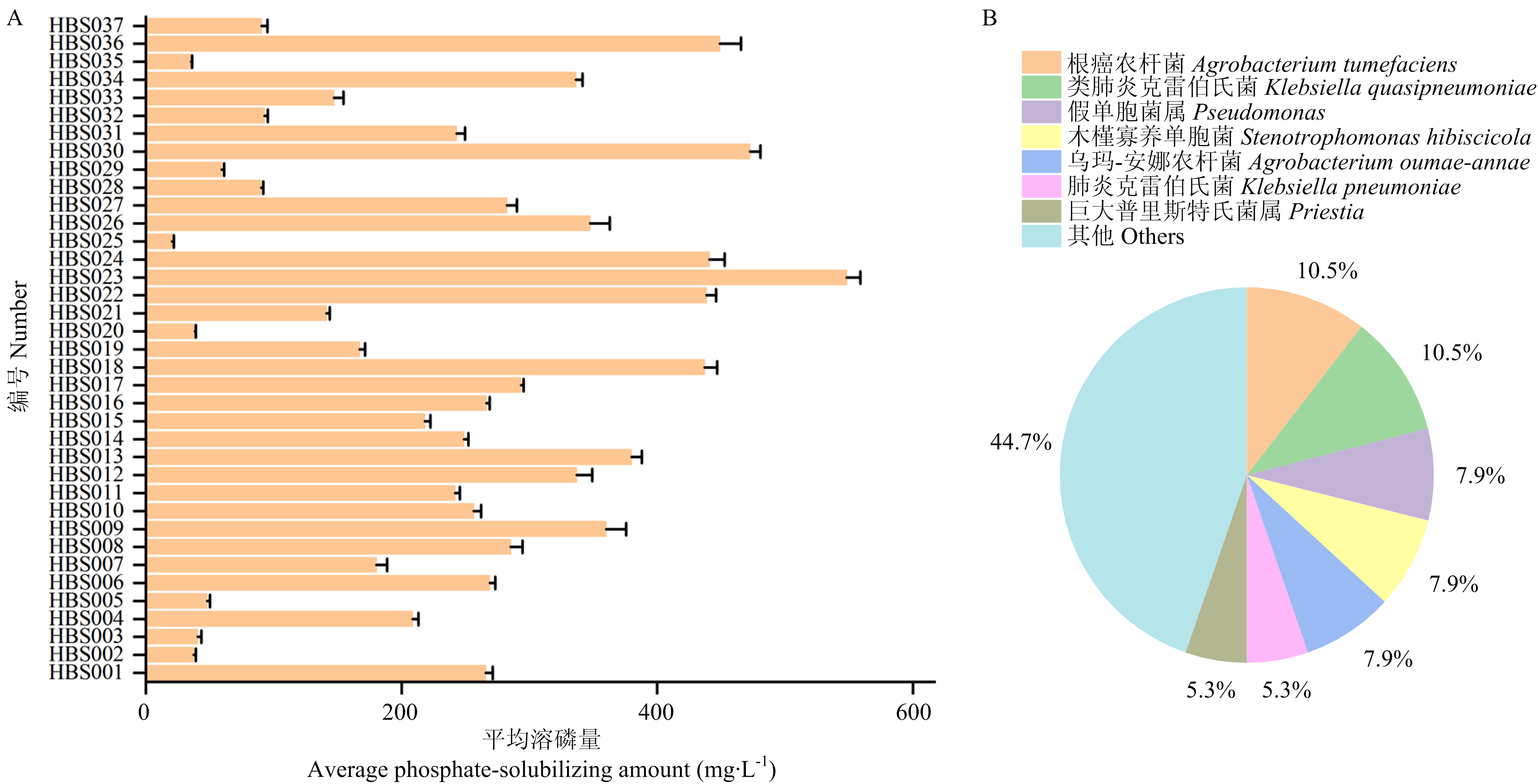
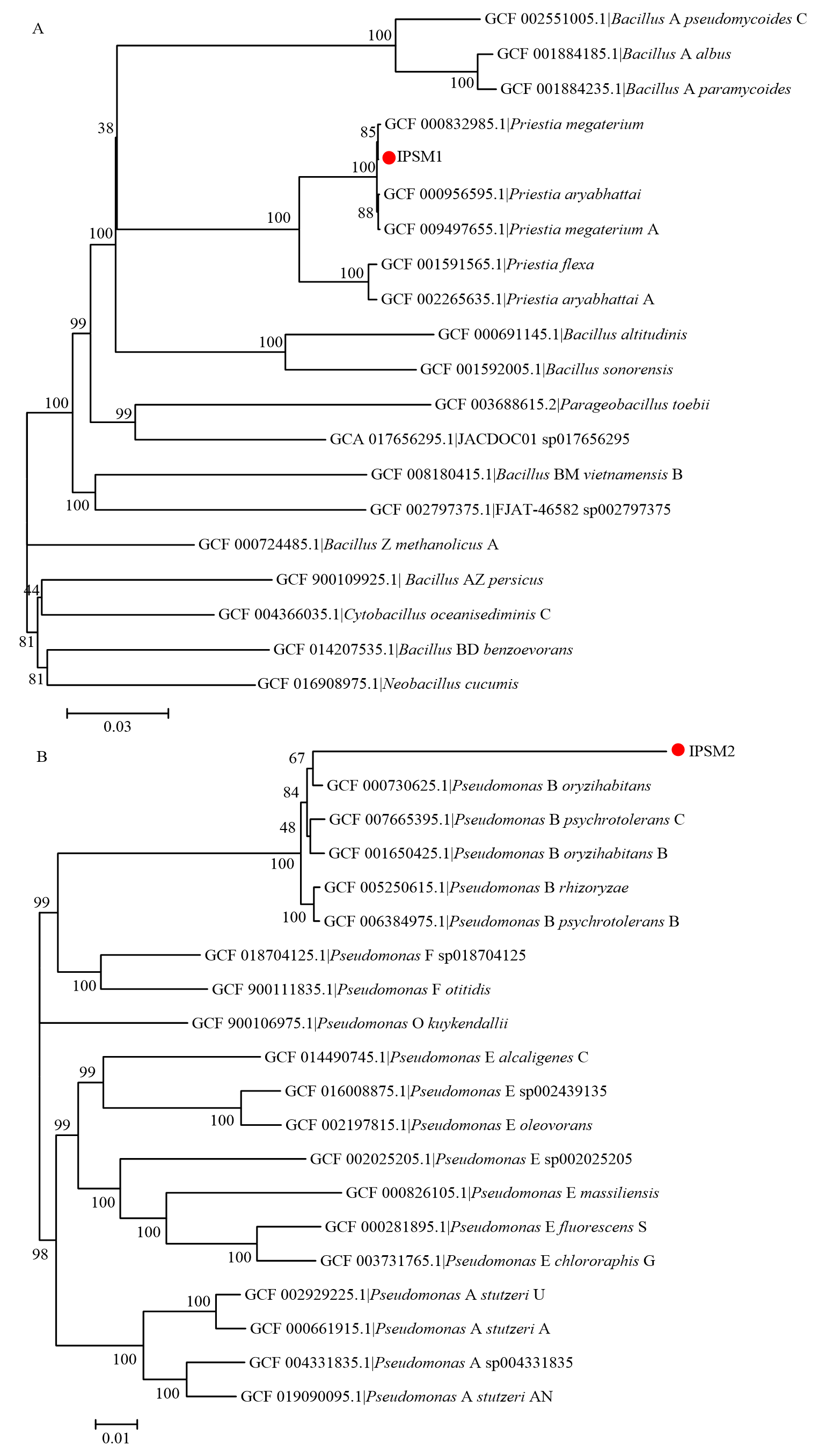
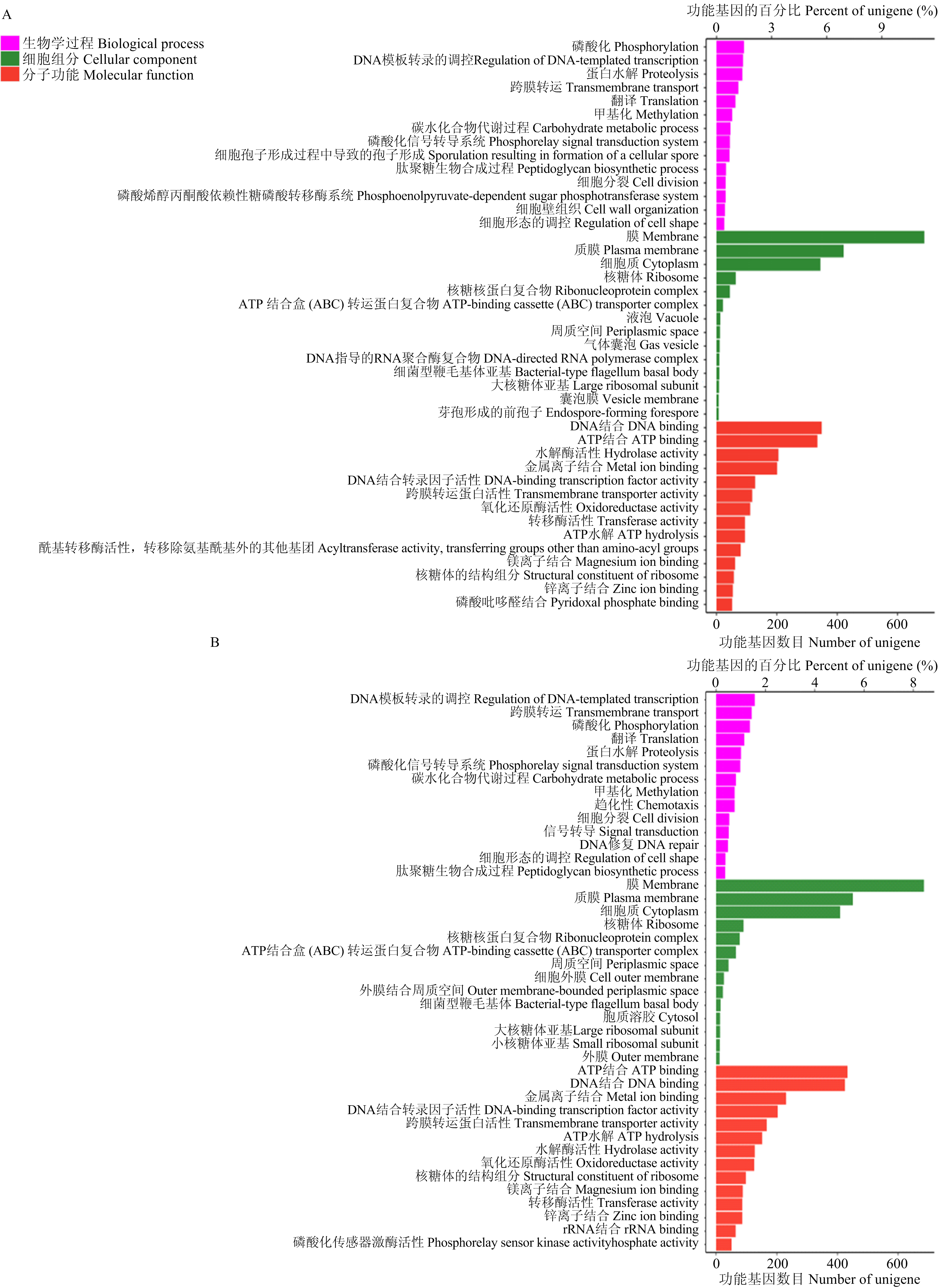
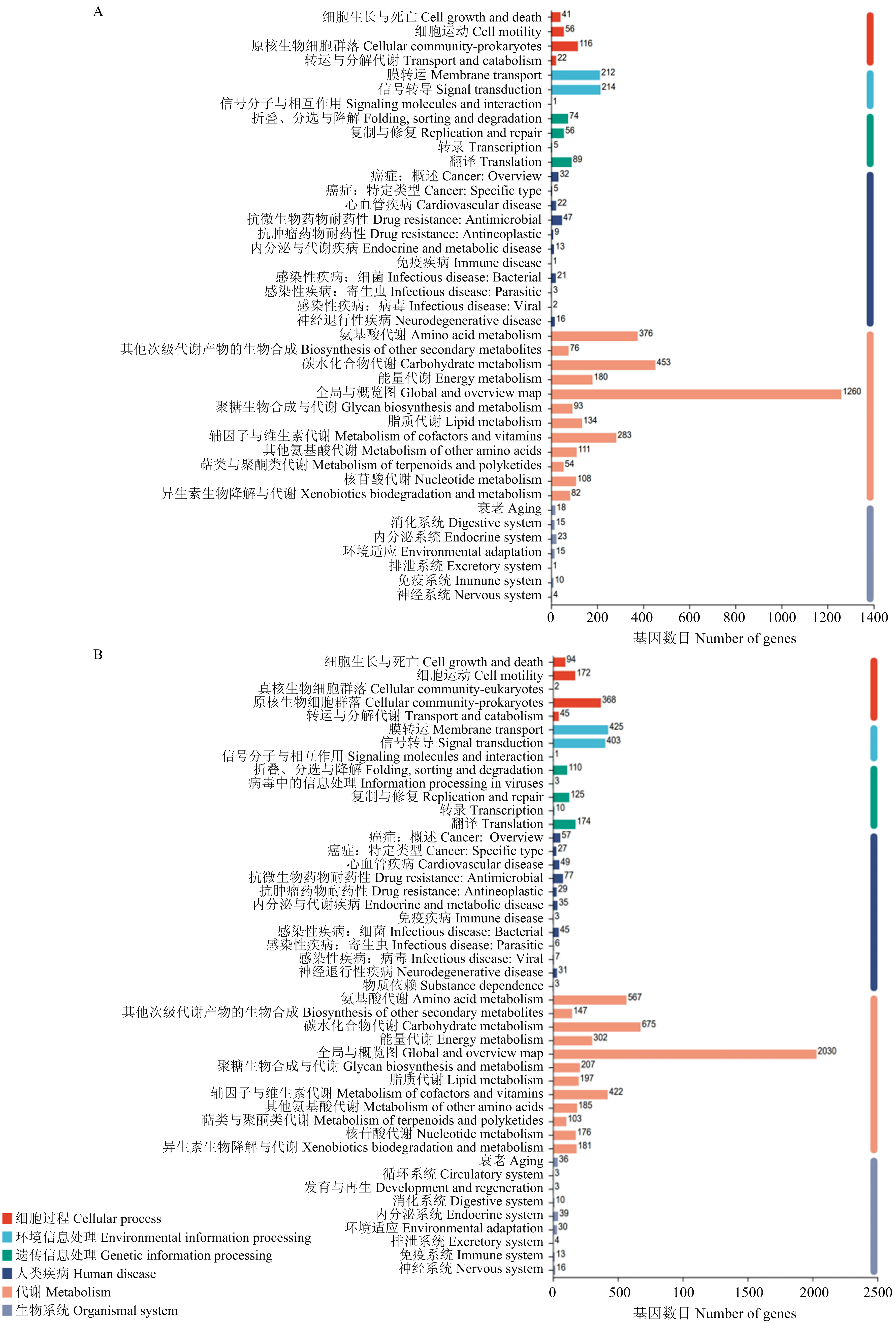
【Objective】The rhizosphere soil of invasive plants may harbor abundant phosphate-solubilizing microbial resources. This study aims to isolate and screen highly efficient phosphate-solubilizing strains from their rhizosphere soil, thereby identifying functional strains with application potential for soil improvement and sustainable agricultural development.【Method】Using rhizosphere soil samples collected from 10 invasive plants across different habitats, efficient phosphate-solubilizing strains were isolated via screening on solid medium and quantified by the molybdenum-antimony colorimetric method. Molecular identification was performed, and two novel strains were selected for further analysis of their phosphate-solubilizing capacity and whole-genome sequencing. Genome assembly, functional annotation, and mining of potential phosphorus-cycling gene clusters and mechanisms were conducted to evaluate their phosphorus utilization potential.【Result】Sixteen efficient phosphate-solubilizing strains were isolated from the rhizosphere soils of different invasive plants. Two novel strains, designated IPSM-1 and IPSM-2, were identified based on 16S rDNA sequencing. The phosphate-solubilizing capacity assay showed a significant difference between the two strains: IPSM-2 released up to 448.82 mg·L-1 of soluble phosphate, significantly higher than the 243.00 mg·L-1 released by IPSM-1. Phylogenetic analysis using the neighbor-joining method in MEGA software confirmed that IPSM-1 and IPSM-2 belong to the genus Priestia and Pseudomonas, respectively. After 10 d of culture, the ratio of phosphate-solubilizing zone diameter to colony diameter (D/d) was 2.07 for IPSM-1 and 2.41 for IPSM-2, indicating stronger solubilization potential by IPSM-2. Growth curve analysis revealed that IPSM-1 exhibited better growth characteristics, whereas IPSM-2 demonstrated higher phosphate-solubilizing potential. Scanning electron microscopy further revealed clear differences in colony morphology, cell structure, and growth features between the two strains. Genomic analysis showed that IPSM-1 has a genome size of 5 961 332 bp with a GC content of 37.48%. Its functional genes were notably enriched in pathways related to carbohydrate metabolism, amino acid transport, and signal transduction, along with a high number of phosphorylation-related genes. In contrast, IPSM-2 possesses a larger genome of 8 746 878 bp with a GC content of 67.15%. Besides stronger enrichment in the aforementioned metabolic and signaling pathways, it also contains significantly more genes involved in transmembrane transport and metal ion binding, as well as relatively complete gene clusters for organic acid synthesis and secretion.【Conclusion】The two novel phosphate-solubilizing strains obtained in this study exhibit high phosphate-solubilizing efficiency. Among them, IPSM-1 may primarily achieve phosphorus dissolution through intracellular phosphorus metabolism pathways, making it more suitable for long-term low-phosphorus stress environments. IPSM-2 exhibits enhanced phosphorus dissolution capacity through multiple mechanisms such as secretion of organic acids and chelation of metal ions. Both strains provide excellent microbial resources for developing efficient microbial fertilizers.

Key words: phosphate-solubilizing bacteria, invasive plant, rhizosphere microorganism, phosphate-solubilizing capacity, whole-genome sequencing analysis

Table 1

Sample collection information"

植物类别
Plant category
采样时间
Sampling date
采样地点
Sampling location
生境类型
Habitat type
经纬度
Longitude and latitude
三叶鬼针草Bidens pilosa 2024-08-12 山东省临沂市Linyi City, Shandong Province 林地Forestland 35.35° N, 118.31° E
大狼把草Bidens frondosa 2024-08-12 山东省临沂市Linyi City, Shandong Province 河边Riverside 35.46° N, 117.83° E
银胶菊Parthenium hysterophorus 2024-08-12 山东省济宁市Jining City, Shandong Province 路边Roadside 35.48° N, 116.41° E
垂序商陆Phytolacca americana 2024-08-12 山东省临沂市Linyi City, Shandong Province 林地Forestland 35.62° N, 118.11° E
一年蓬Erigeron annuus 2024-08-12 山东省临沂市Linyi City, Shandong Province 沟渠Ditch 35.42° N, 118.27° E
苏门白酒草Conyza sumatrensis 2024-08-11 山东省东营市Dongying City, Shandong Province 农田Farmland 38.01° N, 118.09° E
豚草Ambrosia artemisiifolia 2024-08-08 山东省青岛市Qingdao City, Shandong Province 农田Farmland 36.22° N, 120.18°E
三叶鬼针草Bidens pilosa 2024-08-10 山东省莱西市Laixi City, Shandong Province 苹果园Apple orchard 36.68° N, 120.44° E
大狼把草Bidens frondosa 2024-08-12 山东省临沂市Linyi City, Shandong Province 路边Roadside 35.52° N, 117.58° E
银胶菊Parthenium hysterophorus 2024-08-12 山东省济宁市Jining City, Shandong Province 农田Farmland 35.48° N, 116.41° E

Fig. 1

Phosphate-solubilizing capacity (A) and genus (B) of the strains"

Fig. 2

Phylogenetic tree of IPSM-1 (A) and IPSM-2 (B)"

Fig. 3

Phosphate-solubilizing zones produced by strains on solid medium (A) and their growth curves (B)"

Table 2

Ratio of phosphate-solubilizing zone diameter to colony diameter"

菌株编号Strain number 时间
Time (d)
菌落直径
Colony diameter (d, mm)
平均值
Average (mm)
溶磷圈直径
Phosphate-solubilizing zone diameter (D, mm)
平均值
Average (mm)
D/d
IPSM-1 2 8.0 7.8 8.9 8.23 9.5 9.8 10.7 10.00 1.23±0.03
4 10.1 10.5 10.3 10.30 15.9 16.8 16.1 16.27 1.58±0.02
6 10.6 10.5 10.6 10.57 18.8 19.1 18.5 18.80 1.78±0.03
8 10.4 10.7 10.3 10.47 20.8 21.8 21.1 21.23 2.04±0.01
10 10.5 10.7 10.1 10.43 21.0 21.1 22.0 21.37 2.07±0.11
IPSM-2 2 5.9 6.3 5.7 5.97 10.4 8.4 10.0 9.60 1.57±0.21
4 6.8 7.3 7.6 7.23 15.8 16.0 15.6 15.80 2.14±0.08
6 7.6 7.2 7.1 7.30 17.1 16.1 16.5 16.57 2.28±0.04
8 7.7 7.5 7.4 7.53 17.5 17.4 18.3 17.73 2.38±0.08
10 7.5 7.4 7.6 7.50 17.5 17.8 18.5 17.93 2.41±0.02

Fig. 4

Growth state and cell morphology of strains IPSM-1 (A-C) and IPSM-2 (D-F)"

Table 3

Basic genomic characteristics of strains IPSM-1 and IPSM-2"

基因组特征Genomic characteristics IPSM-1 IPSM-2
基因组大小Genome size (bp) 5961332 8746878
Scaffold数量Number of scaffolds 30 48
GC含量GC content (%) 37.48 67.15
编码基因数量Number of protein-coding genes 6084 8131
重复序列数量Number of repetitive sequences 85 268
tRNA基因数量Number of tRNA genes 100 92
rRNA基因数量
Number of rRNA genes (5S/16S/23S)
11/1/1 2/2/2

Fig. 5

Whole-genome framework of strains IPSM-1 and IPSM-2"

Fig. 6

Comparative analysis of GO functional annotation of IPSM-1 (A) and IPSM-2 (B)"

Fig. 7

Comparative analysis of KEGG functional annotation of IPSM-1 (A) and IPSM-2 (B)"

[1]
吕俊, 王晓娅. 溶磷微生物及其对植物促生作用的研究进展. 中国土壤与肥料, 2023(1): 231-239.
J, WANG X Y. Research progress on phosphorus-solubilizing microorganisms and their effects on plant growth. Soil and Fertilizer Sciences in China, 2023(1): 231-239. (in Chinese)
[2]
WANG X, SHEN J, LIAO H. Acquisition or utilization, which is more critical for enhancing phosphorus efficiency in modern crops? Plant Science, 2010, 179(4): 302-306.

doi: 10.1016/j.plantsci.2010.06.007
[3]
孙艳, 洪婉婷, 韩阳, 徐梓楷, 程凌云. 植物内部磷循环利用提高磷效率的研究进展. 植物营养与肥料学报, 2021, 27(12): 2216-2228.
SUN Y, HONG W T, HAN Y, XU Z K, CHENG L Y. Targeting internal phosphorus re-utilization to improve plant phosphorus use efficiency. Journal of Plant Nutrition and Fertilizers, 2021, 27(12): 2216-2228. (in Chinese)
[4]
温佳旭, 陈雪丽, 肖洋, 万书明, 孙磊, 方海瑞. 土壤中主要溶磷菌种类及其作用机制. 北方园艺, 2023(14): 139-145.
WEN J X, CHEN X L, XIAO Y, WAN S M, SUN L, FANG H R. Major phosphorus-dissolving bacteria species in soils and mechanisms of action. Northern Horticulture, 2023(14): 139-145. (in Chinese)
[5]
STALSTRÖM V A. Beitrag Zur Kenntrusder einwinsking sterilizer and in garung befindlieher striffe any dilloslies hkeit der phosphorus are destrical cum phosphours. Zbt Bakt Abt II, 1903, 11: 724-732.
[6]
李娟, 王文丽, 卢秉林. 解磷微生物菌剂对油菜生长及产量的影响. 中国土壤与肥料, 2010(3): 67-69.
LI J, WANG W L, LU B L. Effect of phosphate-solubilizing microorganism agent on the growth and yield of oilseed rape. Soil and Fertilizer Sciences in China, 2010(3): 67-69. (in Chinese)
[7]
蒋欣梅, 夏秀华, 于锡宏, 倪淑君, 张树春. 微生物解磷菌肥对大棚茄子生长及土壤有效磷利用的影响. 浙江大学学报(理学版), 2012, 39(6): 685-688.
JIANG X M, XIA X H, YU X H, NI S J, ZHANG S C. Effect of phosphorus-dissolving microbes fertilizer on growth of eggplant and utilization of available phosphorus in soil in greenhouse. Journal of Zhejiang University (Science Edition), 2012, 39(6): 685-688. (in Chinese)
[8]
韩凯鑫. 耐盐解磷菌筛选及对土壤细菌群落结构的影响[D]. 哈尔滨: 东北农业大学, 2023.
HAN K X. Screening of salinity-tolerant phosphate-solubilizing bacteria and their effects on soil bacterial community structure[D]. Harbin: Northeast Agricultural University, 2023. (in Chinese)
[9]
孙健, 张鑫鹏, 李松龄, 王亚艺. 高寒冷凉环境中解磷微生物的效果初探. 中国土壤与肥料, 2023(1): 217-223.
SUN J, ZHANG X P, LI S L, WANG Y Y. Screening of phosphorus solubilizing microorganisms under high latitude and cold environment. Soil and Fertilizer Sciences in China, 2023(1): 217-223. (in Chinese)
[10]
江红梅, 殷中伟, 史发超, 刘彩月, 程明芳, 范丙全. 一株耐盐溶磷真菌的筛选、鉴定及其生物肥料的应用效果. 植物营养与肥料学报, 2018, 24(3): 728-742.
JIANG H M, YIN Z W, SHI F C, LIU C Y, CHENG M F, FAN B Q. Isolation, identification, and application effect of biofertilizer of a salt-tolerant phosphate-solubilizing fungus. Journal of Plant Nutrition and Fertilizers, 2018, 24(3): 728-742. (in Chinese)
[11]
宫安东, 朱梓钰, 路亚南, 万海燕, 吴楠楠, DIMUNA C, 龚双军, 文淑婷, 侯晓. 吡咯伯克霍尔德菌WY6-5的溶磷、抑菌与促玉米生长作用研究. 中国农业科学, 2019, 52(9): 1574-1586. doi: 10.3864/j.issn.0571-1752.2019.09.009.
GONG A D, ZHU Z Y, LU Y N, WAN H Y, WU N N, DIMUNA C, GONG S J, WEN S T, HOU X. Functional analysis of Burkholderia pyrrocinia WY6-5 on phosphate solubilizing, antifungal and growth-promoting activity of maize. Scientia Agricultura Sinica, 2019, 52(9): 1574-1586. doi: 10.3864/j.issn.0571-1752.2019.09.009. (in Chinese)
[12]
ATEŞ Ö, ÇAKMAKÇI R, YALÇIN G, TAŞPINAR K, ALVEROĞLU V. Isolation and characterization of phosphate solubilizing bacteria and effect of growth and nutrient uptake of maize under pot and field conditions. Communications in Soil Science and Plant Analysis, 2022, 53(16): 2114-2124.

doi: 10.1080/00103624.2022.2070632
[13]
SHAH C, MALI H, MESARA S, DHAMELIYA H, SUBRAMANIAN R B. Combined inoculation of phosphate solubilizing bacteria with mycorrhizae to alleviate the phosphate deficiency in banana. Biologia, 2022, 77(9): 2657-2666.

doi: 10.1007/s11756-022-01105-8
[14]
CAO J J, WANG Z Q, WU J H, ZHAO P, LI C C, LI X B, LIU L, ZHAO Y L, ZHONG N Q. Phosphorus accumulation aggravates potato common scab and to be controlled by phosphorus-solubilizing bacteria. Science Bulletin, 2023, 68(20): 2316-2320.

doi: 10.1016/j.scib.2023.09.002 pmid: 37739845
[15]
TOKHTAR V K, VINOGRADOVA Y K, NOTOV A A, KURSKOY A Y, DANILOVA E S. Main directions of the study of plant invasions in Russia. Environmental & Socio-Economic Studies, 2021, 9(4): 45-56.
[16]
NI M, HULME P E. Botanic gardens play key roles in the regional distribution of first records of alien plants in China. Global Ecology and Biogeography, 2021, 30(8): 1572-1582.

doi: 10.1111/geb.v30.8
[17]
ZHANG P, LI B, WU J, HU S J. Invasive plants differentially affect soil biota through litter and rhizosphere pathways: A meta-analysis. Ecology Letters, 2019, 22(1): 200-210.

doi: 10.1111/ele.13181 pmid: 30460738
[18]
QIN Z, XIE J F, QUAN G M, ZHANG J E, MAO D J, DITOMMASO A. Impacts of the invasive annual herb Ambrosia artemisiifolia L. on soil microbial carbon source utilization and enzymatic activities. European Journal of Soil Biology, 2014, 60: 58-66.

doi: 10.1016/j.ejsobi.2013.11.007
[19]
王利民, 邱珊莲, 林新坚, 黄东风, 李卫华, 邱孝煊. 不同培肥茶园土壤微生物量碳氮及相关参数的变化与敏感性分析. 生态学报, 2012, 32(18): 5930-5936.
WANG L M, QIU S L, LIN X J, HUANG D F, LI W H, QIU X X. Changes and sensitivity analysis of soil microbial biomass carbon, nitrogen and related parameters in tea gardens under different fertilization regimes. Acta Ecologica Sinica, 2012, 32(18): 5930-5936. (in Chinese)

doi: 10.5846/stxb
[20]
陈华. 外来植物与土壤微生物的关系研究[D]. 济南: 山东大学, 2011.
CHEN H. Study on the relationship between exotic plants and soil microorganisms[D]. Ji’nan: Shandong University, 2011. (in Chinese)
[21]
陈亮, 李会娜, 杨民和, 万方浩. 入侵植物薇甘菊和三叶鬼针草对土壤细菌群落的影响. 中国农学通报, 2011, 27(8): 63-68.
CHEN L, LI H N, YANG M H, WAN F H. The influence of invasion of Mikania micrantha and Bidens pilosa to the bacterial community in the root soils. Chinese Agricultural Science Bulletin, 2011, 27(8): 63-68. (in Chinese)
[22]
贾伟. 入侵菊科植物对根际土壤微生物群落结构的影响[D]. 福州: 福建农林大学, 2010.
JIA W. Effects of invasive Asteraceae plants on the rhizosphere soil microbial community structure[D]. Fuzhou: Fujian Agriculture and Forestry University, 2010. (in Chinese)
[23]
CHAPUIS-LARDY L, VANDERHOEVEN S, DASSONVILLE N, KOUTIKA L S, MEERTS P. Effect of the exotic invasive plant Solidago gigantea on soil phosphorus status. Biology and Fertility of Soils, 2006, 42(6): 481-489.

doi: 10.1007/s00374-005-0039-4
[24]
陆雪天, 赵菁, 程丹丹. 入侵植物欧洲千里光内生固氮菌和溶磷菌多样性. 微生物学通报, 2023, 50(2): 454-470.
LU X T, ZHAO J, CHENG D D. Diversity of endophytic nitrogen- fixing and phosphate-solubilizing bacteria in the invasive plant Senecio vulgaris. Microbiology China, 2023, 50(2): 454-470. (in Chinese)
[25]
HUANGFU C, LI H, CHEN X, LIU H M, YANG D L. The effects of exotic weed Flaveria bidentis with different invasion stages on soil bacterial community structures. African Journal of Biotechnology, 2015, 14(35): 2636-2643.

doi: 10.5897/AJB
[26]
SHAHEEN N, YIN L, GU Y, RWIGIMBA E, XIE Q Q, WEI Y. Separation of isorhamnetin 3-sulphate and astragalin from Flaveria bidentis (L.) Kuntze using macroporous resin and followed by high-speed countercurrent chromatography. Journal of Separation Science, 2015, 38(11): 1933-1941.

doi: 10.1002/jssc.v38.11
[27]
纪巧凤. 黄顶菊入侵对根际土壤主要功能细菌多样性的影响[D]. 北京: 中国农业科学院, 2014.
JI Q F. Effects of invasive plant Flaveria bidentis on the diversity of major functional bacteria in rhizosphere soil[D]. Beijing: Chinese Academy of Agricultural Sciences, 2014. (in Chinese)
[28]
宋振, 纪巧凤, 付卫东, 张瑞海, 张婷, 晏静, 张国良. 黄顶菊入侵对土壤中主要功能细菌的影响. 应用生态学报, 2016, 27(8): 2636-2644.

doi: 10.13287/j.1001-9332.201608.013
SONG Z, JI Q F, FU W D, ZHANG R H, ZHANG T, YAN J, ZHANG G L. Effects of Spartina alterniflora invasion on soil-associated functional bacteria. Chinese Journal of Applied Ecology, 2016, 27(8): 2636-2644. (in Chinese)
[29]
胡传旺, 李巧玉, 周朝晖, 李铁桥, 陈坚, 堵国成, 方芳. 酱醪细菌菌株的分离及功能分析. 微生物学通报, 2017, 44(8): 1899-1907.
HU C W, LI Q Y, ZHOU C H, LI T Q, CHEN J, DU G C, FANG F. Isolation and functional analysis of bacterial strains from soy sauce moromi. Microbiology China, 2017, 44(8): 1899-1907. (in Chinese)
[30]
夏枫峰, 油九菊, 洪志翔, 傅荣兵, 何映雪, 余靖雯, 张晓林. 一株耐盐微生物的分离鉴定及其对养殖尾水降解效果研究. 浙江海洋大学学报(自然科学版), 2021, 40(2): 134-138, 147.
XIA F F, YOU J J, HONG Z X, FU R B, HE Y X, YU J W, ZHANG X L. Isolation and identification of a salt-tolerant microorganism and its degradation effect on aquaculture tail water. Journal of Zhejiang Ocean University (Natural Science), 2021, 40(2): 134-138, 147. (in Chinese)
[31]
蔺宝珺, 杨文权, 赵帅, 柴港宁, 鱼杨华, 武燕茹, 韩显忠, 李希来, 寇建村. 高寒草甸植物根际溶磷菌的筛选鉴定及其溶磷与促生效果. 草地学报, 2022, 30(11): 3132-3139.

doi: 10.11733/j.issn.1007-0435.2022.11.031
LIN B J, YANG W Q, ZHAO S, CHAI G N, YU Y H, WU Y R, HAN X Z, LI X L, KOU J C. Screening and identification of phosphate- solubilizing bacteria in plant rhizosphere of alpine meadow and their effects on phosphate-solubilizing and plant growth promotion. Acta Agrestia Sinica, 2022, 30(11): 3132-3139. (in Chinese)
[32]
宋雅荣, 常单娜, 周国朋, 高嵩涓, 段廷玉, 曹卫东. 解磷细菌活化水稻土中低品位磷矿粉的效果与机制. 中国农业科学, 2024, 57(6): 1102-1116. doi: 10.3864/j.issn.0578-1752.2024.06.007.
SONG Y R, CHANG D N, ZHOU G P, GAO S J, DUAN T Y, CAO W D. Effect and mechanism of phosphate-solubilizing bacterial on activating of low-grade phosphate rock powder in red paddy soil. Scientia Agricultura Sinica, 2024, 57(6): 1102-1116. doi: 10.3864/j.issn.0578-1752.2024.06.007. (in Chinese)
[33]
倪晋仁, 吴东姣, 陈倩. 兼具脱氮除磷功能的根癌土壤杆菌及其应用: CN102586154A[P]. (2012-07-18) [2025-12-29].
NI J R, WU D J, CHEN Q. Agrobacterium tumefaciens with dual nitrogen and phosphorus removal capabilities and its applications: CN102586154A[P]. (2012-07-18) [2025-12-29]. (in Chinese)
[34]
MAHMOUD F M, PRITSCH K, SIANI R, BENNING S, RADL V, KUBLIK S, BUNK B, SPRÖER C, SCHLOTER M. Comparative genomic analysis of strain Priestia megaterium B1 reveals conserved potential for adaptation to endophytism and plant growth promotion. Microbiology Spectrum, 2024, 12(8): e0042224.

doi: 10.1128/spectrum.00422-24
[35]
刘诚, 张钲, 佘梦林, 唐梦君, 倪红. 多功能菌株假单胞菌的溶磷和解磷效果及其应用. 湖北大学学报(自然科学版), 2018, 40(5): 457-461, 469.
LIU C, ZHANG Z, SHE M L, TANG M J, NI H. Multifunctional Pseudomonas with degrading organophosphorus and phosphate- solubilizing and its application. Journal of Hubei University (Natural Science), 2018, 40(5): 457-461, 469. (in Chinese)
[36]
介晓磊, 李有田, 庞荣丽, 刘世亮, 化党领. 低分子量有机酸对石灰性土壤磷素形态转化及有效性的影响. 土壤通报, 2005, 36(6): 856-860.
JIE X L, LI Y T, PANG R L, LIU S L, HUA D L. Effect of low molecular weight organic acids on transformation and availability of phosphates in calcareous soil. Chinese Journal of Soil Science, 2005, 36(6): 856-860. (in Chinese)
[37]
廖新荣, 梁嘉伟, 梁善, 王荣萍, 詹振寿. 不同种类小分子有机酸对砖红壤磷素形态转化的影响. 华南农业大学学报, 2017, 38(5): 30-35.
LIAO X R, LIANG J W, LIANG S, WANG R P, ZHAN Z S. Effects of various low-molecular-weight organic acids on phosphorus transformation in lateritic soil. Journal of South China Agricultural University, 2017, 38(5): 30-35. (in Chinese)
[38]
WANG F D, JIN F Y, LIN X Y, JIA F, SONG K J, LIANG J, ZHANG J J, ZHANG J F. Priestia aryabhattai improves soil environment and promotes alfalfa growth by enhancing rhizosphere microbial carbon sequestration capacity under greenhouse conditions. Current Microbiology, 2024, 81(12): 420.

doi: 10.1007/s00284-024-03946-9
[1] CHEN JuanNi, CHEN PinLu, LI Yu, XIE MengXiao, LI XinBei, DING Wei. Mechanism of Tobacco Resistance to Bacterial Wilt Induced by Magnesium Oxide Nanoparticles [J]. Scientia Agricultura Sinica, 2025, 58(16): 3327-3344.
[2] ZHAO Yong, ZHANG ZhongFu, WANG YuTong, AI Jing, LIU JiaYong, WU JianMing, DENG Jun, ZHANG YueBin. Effects of Potassium Application on Root Rhizosphere Microbial Community Changes and Growth of Sugarcane [J]. Scientia Agricultura Sinica, 2025, 58(13): 2630-2644.
[3] SONG YaRong, CHANG DanNa, ZHOU GuoPeng, GAO SongJuan, DUAN TingYu, CAO WeiDong. Effect and Mechanism of Phosphate-Solubilizing Bacterial on Activating of Low-Grade Phosphate Rock Powder in Red Paddy Soil [J]. Scientia Agricultura Sinica, 2024, 57(6): 1102-1116.
[4] JIANG YaNan, QI FangJian, LI WeiWei, CHEN JuLian, TAN XiaoLing. The Increasing Temperature Accelerated the Population Growth of Rhopalosiphum padi and Sitobion avenae by Wheat Rhizosphere Microorganisms [J]. Scientia Agricultura Sinica, 2024, 57(20): 4045-4056.
[5] ZHAO WeiSong, GUO QingGang, LI SheZeng, LU XiuYun, GOU JianJun, MA Ping. Effect of Broccoli Residues on Enzyme Activity of Cotton Rhizosphere Soil and Relationships Between Enzyme Activity and Carbon Metabolism Characteristics [J]. Scientia Agricultura Sinica, 2023, 56(11): 2092-2105.
[6] SUN YanMei,ZHANG QianBing,MIAO XiaoRong,LIU JunYing,YU Lei,MA ChunHui. Effects of Phosphorus-Solubilizing Bacteria and Arbuscular Mycorrhizal Fungi on Production Performance and Root Biomass of Alfalfa [J]. Scientia Agricultura Sinica, 2019, 52(13): 2230-2242.
[7]

LI Hui-na,LIU Wan-xue,WAN Fang-hao

. Feedback of Fungicide on Invasive Plant Ageratina adenophroa and Companion Plants [J]. Scientia Agricultura Sinica, 2011, 44(11): 2269-2275 .
[8] ZHU Wei-jie,WANG Nan,YU Xue-ping,WANG Wei . Effects of the Biocontrol Agent Pseudomonas fluorescens 2P24 on Microbial Community Diversity in the Melon Rhizosphere
[J]. Scientia Agricultura Sinica, 2010, 43(7): 1389-1396 .
[9] ,,,,,,. Evaluation of Biocontrol Trichoderma on Biology Security [J]. Scientia Agricultura Sinica, 2006, 39(04): 715-720 .
Viewed
Full text


Abstract

Cited

  Shared   
  Discussed   
No Suggested Reading articles found!