Scientia Agricultura Sinica ›› 2026, Vol. 59 ›› Issue (20): 4447-4460.doi: 10.3864/j.issn.0578-1752.2026.20.002

• CROP GENETICS & BREEDING·GERMPLASM RESOURCES·MOLECULAR GENETICS • Previous Articles     Next Articles

Genetic Identification of the GhAARS Ⅰ Family in Upland Cotton and Functional Analysis of GhAARS Ⅰ-17 in Regulating Plant Height

FENG YuYu1(), ZHOU YaRong1, CHAI YingYing1, YANG JunNing1, WEI JiaZhi1, YU XiaoXue1, ZHAO Yan1, MA XiongFeng2, WANG CaiXiang1(), SU JunJi1()   

  1. 1 College of Life Science and Technology, Gansu Agricultural University/State Key Laboratory of Aridland Crop Science, Lanzhou 730070
    2 Cotton Research Institute, Chinese Academy of Agricultural Sciences, Anyang 455000, Henan
  • Received:2026-02-13 Accepted:2026-04-10 Online:2026-10-16 Published:2026-10-21
  • Contact: WANG CaiXiang, SU JunJi

Abstract:

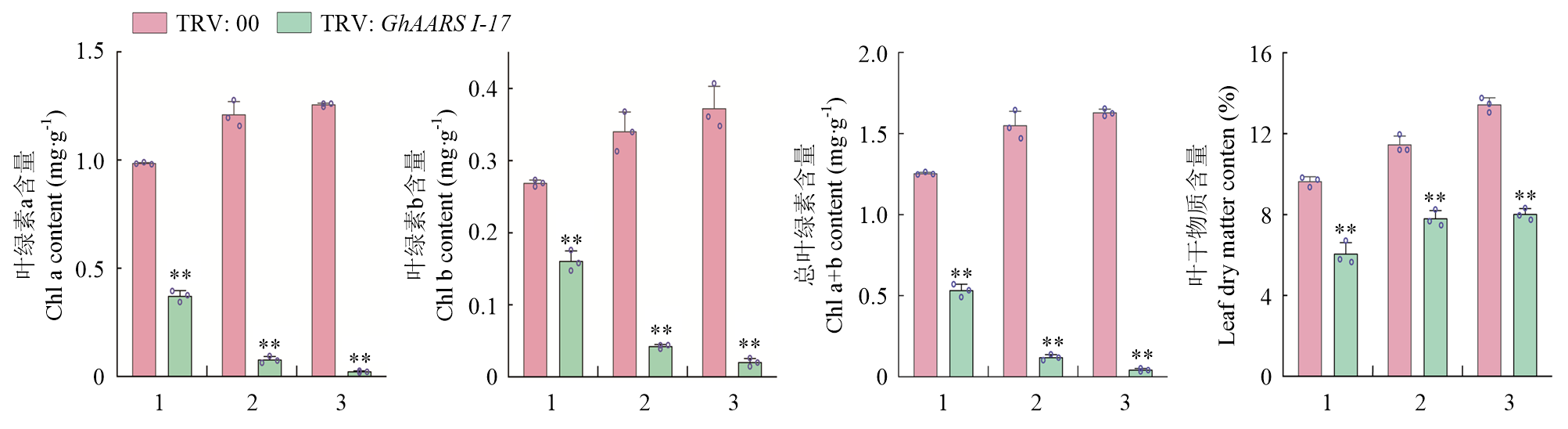
【Objective】Plant height is an important agronomic trait of cotton, which directly affects crop yield, fiber quality, and the efficiency of mechanized harvesting. Aminoacyl-tRNA synthetases have been reported to be involved in the developmental regulation process in various plants. This study aimed to identify members of the Class Ⅰ AARS family in upland cotton at the whole-genome level, analyze their evolutionary characteristics and expression patterns, explore the function of GhAARS Ⅰ-17 in regulating plant height, and discover superior allelic variations applicable for marker-assisted breeding, so as to provide genetic resources and a theoretical basis for cultivating cotton varieties suitable for mechanized production.【Method】Based on the cotton multi-omics database and multiple plant genome databases, members of the AARS Ⅰ family in upland cotton and nine other species were identified using the Hidden Markov Model (HMM). A phylogenetic tree was constructed using the maximum likelihood method, and synteny, gene structure, conserved motifs, and promoter cis-acting elements were analyzed to reveal the evolutionary history and structural characteristics of this family. Tissue-specific RNA-seq data and RT-qPCR were used to analyze gene expression patterns and screen candidate genes related to plant height. Functional validation of the candidate gene was performed in upland cotton via Virus-Induced Gene Silencing (VIGS), followed by phenotypic observation of the plants. Based on published genomic data of upland cotton germplasm resources, SNP identification and association analysis were conducted on the coding regions to verify the genetic association with plant height. The distribution frequency of superior allelic variations in different ecological cotton regions was analyzed, and Kompetitive Allele-Specific PCR (KASP) markers were developed.【Result】A total of 18 GhAARS Ⅰ genes were identified in upland cotton. Phylogenetic analysis classified them into three subfamilies, with six members in each. According to the type of catalytic amino acid, they could be further divided into valine-, isoleucine-, leucine-, and methionine-related subclasses, among which valine and isoleucine accounted for more members. Synteny analysis showed that this family was highly conserved among Gossypium species, and its expansion in upland cotton was mainly derived from segmental duplication events. Gene structure and conserved motif analysis indicated that members of the same subfamily shared similar structures. The promoter regions were rich in light-responsive and hormone-responsive cis-acting elements, suggesting their involvement in multiple regulatory pathways during cotton growth and development. RNA-seq data and RT-qPCR analysis showed that GhAARS Ⅰ-17 was highly expressed in roots, stems, and calyxes, with higher expression levels in tall varieties. Functional verification of GhAARS Ⅰ-17 via VIGS showed that compared with the control, GhAARS Ⅰ-17-silenced plants had a 5.45 cm reduction in plant height and a 0.78 mm reduction in stem diameter. Breeding evolution analysis revealed that the C genotype of GhAARS Ⅰ-17 was a superior allelic variant, which was selected during upland cotton breeding. On this basis, KASP molecular markers were developed to distinguish this allelic variation locus.【Conclusion】GhAARS Ⅰ-17 is involved in the regulation of plant height. Its functional deficiency leads to dwarfism of the plant, decreased chlorophyll content and insufficient biomass accumulation; the superior allelic variation of this gene is closely related to the plant height trait.

Key words: Upland cotton, plant height, chlorophyll, GhAARS Ⅰ-17, virus-induced gene silencing (VIGS)

Fig. 1

Phylogenetic tree analysis of AARS Ⅰ proteins A: Combined phylogenetic tree of AARS Ⅰ proteins; B: Phylogenetic tree of IleRS-associated proteins; C: Phylogenetic tree of LeuRS-associated proteins; D: Phylogenetic tree of ValRS-associated proteins; E: Phylogenetic tree of MetRS-associated proteins. At: Arabidopsis thaliana; Gh: Gossypium hirsutum; Gr: Gossypium raimondii; Gb: Gossypium barbadense; Ga: Gossypium arboreum; Zm: Zea mays; Os: Oryza sativa; Tc: Theobroma cacao; Vv: Vitis vinifera"

Fig. 2

Interspecific synteny analysis (A) and intraspecific synteny analysis (B) of the AARS Ⅰ gene family in cotton"

Fig. 3

Analysis of the GhAARS Ⅰ family gene structure (A), conserved Motifs (B), amino acid composition of each Motif (C), and cis-acting elements (D)"

Fig. 4

Analysis of GhAARS Ⅰs expression patterns A: Detection of the relative expression levels of GhAARS Ⅰs by RNA-seq; B: Relative expression levels of 8 genes in different tissues; C: Expression pattern analysis of 8 genes in different tall and short varieties. Different lowercase letters indicate significant differences between treatments (P<0.05). *: P<0.05; **: P<0.01; n.s.: No significant difference. The same as below"

Fig. 5

Phenotypes of GhAARS Ⅰ-17-silenced plants A: Phenotypes of plant height, main stem diameter, the height of the first three internode positions, and corresponding true leaves of TRV:00 and TRV:GhAARS Ⅰ-17 plants. The same as below; B: Quantitative statistics of plant height, main stem diameter and internode positions of the first three internodes in TRV:00 and TRV:GhAARS Ⅰ-17 plants"

Fig. 6

Effects of VIGS-mediated silencing of GhAARS Ⅰ-17 on chlorophyll content and leaf dry matter accumulation"

Fig. 7

Analysis and validation of SNP loci A: Structure of the GhAARS Ⅰ-17 gene; B: Validation of allelic variant loci; C: Association analysis between allelic variants and plant height; D: Frequency distribution of allelic variants in extreme tall- and short-stalk cultivars; E: Allelic discrimination plot; F: Association analysis of genotype with plant height phenotype; G: Geographic distribution frequency of allelic variants. NIR: Northwest Inland Region, YRR: Yellow River Region, YZRR: Yangtze River Region"

[1]
Tarazi R, Vaslin M F S. The viral threat in cotton: How new and emerging technologies accelerate virus identification and virus resistance breeding[J]. Frontiers in Plant Science, 2022, 13: 851939.

doi: 10.3389/fpls.2022.851939
[2]
Ruan Y L. Boosting seed development as a new strategy to increase cotton fiber yield and quality[J]. Journal of Integrative Plant Biology, 2013, 55(7): 572-575.

doi: 10.1111/jipb.v55.7
[3]
Yan W, Li F J, Xu D Y, Eneji A E, Du M W, Tian X L, Li Z H. Effects of row spacing, nitrogen, and mepiquat chloride application on yield and spatio-temporal patterns of cotton bolls in the Yellow River valley of China[J]. Agronomy Journal, 2021, 113(1): 61-74.

doi: 10.1002/agj2.v113.1
[4]
Salama E A A, Farid M A, El-Mahalawy Y A, El-Akheder A A A, Aboshosha A A, Fayed A M, Yehia W M B, Lamlom S F. Exploring agro-morphological and fiber traits diversity in cotton (G. barbadense L.)[J]. BMC Plant Biology, 2024, 24(1): 403.

doi: 10.1186/s12870-024-04912-0 pmid: 38750434
[5]
Dai P H, Miao Y C, He S P, Pan Z E, Jia Y H, Cai Y F, Sun J L, Wang L R, Pang B Y, Wang M, Du X M. Identifying favorable alleles for improving key agronomic traits in upland cotton[J]. BMC Plant Biology, 2019, 19(1): 138.

doi: 10.1186/s12870-019-1725-y pmid: 30975072
[6]
Pan Y X, Meng F B, Wang X Y. Sequencing multiple cotton genomes reveals complex structures and lays foundation for breeding[J]. Frontiers in Plant Science, 2020, 11: 560096.

doi: 10.3389/fpls.2020.560096
[7]
Eriani G, Delarue M, Poch O, Gangloff J, Moras D. Partition of tRNA synthetases into two classes based on mutually exclusive sets of sequence motifs[J]. Nature, 1990, 347(6289): 203-206.

doi: 10.1038/347203a0
[8]
Ibba M, Soll D. Aminoacyl-tRNA synthesis[J]. Annual Review of Biochemistry, 2000, 69: 617-650.

pmid: 10966471
[9]
Berg M, Rogers R, Muralla R, Meinke D. Requirement of aminoacyl- tRNA synthetases for gametogenesis and embryo development in Arabidopsis[J]. The Plant Journal, 2005, 44(5): 866-878.

doi: 10.1111/tpj.2005.44.issue-5
[10]
Saga Y, Kawashima M, Sakai S, Yamazaki K, Kaneko M, Takahashi M, Sato N, Toyoda Y, Takase S, Nakano T, Kawakami N, Kushiro T. Plant-specific domains and fragmented sequences imply non- canonical functions in plant aminoacyl-tRNA synthetases[J]. Genes, 2020, 11(9): 1056.

doi: 10.3390/genes11091056
[11]
Zhang J Z, Somerville C R. Suspensor-derived polyembryony caused by altered expression of valyl-tRNA synthetase in the twn2 mutant of Arabidopsis[J]. Proceedings of the National Academy of Sciences of the United States of America, 1997, 94(14): 7349-7355.

doi: 10.1073/pnas.94.14.7349 pmid: 9207094
[12]
Moschopoulos A, Derbyshire P, Byrne M E. The Arabidopsis organelle-localized glycyl-tRNA synthetase encoded by EMBRYO DEFECTIVE DEVELOPMENT1 is required for organ patterning[J]. Journal of Experimental Botany, 2012, 63(14): 5233-5243.

doi: 10.1093/jxb/ers184 pmid: 22791832
[13]
Xi Y, Cai J J, Peng Q F, Li G T, Zhu G H. Chloroplastic aspartyl-tRNA synthetase is required for chloroplast development, photosynthesis and photorespiratory metabolism[J]. Plant, Cell & Environment, 2025, 48(5): 2998-3011.

doi: 10.1111/pce.v48.5
[14]
唐小涵, 刘世家, 刘喜, 田云录, 王云龙, 滕烜, 段二超, 张元燕, 江玲, 张文伟, 王益华, 万建民. 色氨酰-tRNA合成酶基因WRS1调控水稻种子发育[J]. 中国水稻科学, 2020, 34(5): 383-396.

doi: 10.16819/j.1001-7216.2020.0302
Tang X H, Liu S J, Liu X, Tian Y L, Wang Y L, Teng X, Duan E C, Zhang Y Y, Jiang L, Zhang W W, Wang Y H, Wan J M. Tryptophanyl- tRNA synthetase gene WRS1 regulates rice seed development[J]. Chinese Journal of Rice Science, 2020, 34(5): 383-396. (in Chinese)
[15]
Yang X J, Li G, Tian Y S, Song Y, Liang W Q, Zhang D B. A rice glutamyl-tRNA synthetase modulates early anther cell division and patterning[J]. Plant Physiology, 2018, 177(2): 728-744.

doi: 10.1104/pp.18.00110 pmid: 29720556
[16]
Liu H J, Gong X, Deng H, Tan J J, Sun Y Q, Wang F, Wu W J, Zhou Z J, Xu R M, He H Y, Lo C. The rice aspartyl-tRNA synthetase YLC3 regulates amino acid homeostasis and chloroplast development under low temperature[J]. Frontiers in Plant Science, 2022, 13: 847364.

doi: 10.3389/fpls.2022.847364
[17]
Yang Z Q, Wang J, Huang Y M, Wang S B, Wei L L, Liu D X, Weng Y L, Xiang J H, Zhu Q, Yang Z E, Nie X H, Yu Y, Yang Z R, Yang Q Y. CottonMD: A multi-omics database for cotton biological study[J]. Nucleic Acids Research, 2023, 51(D1): D1446-D1456.
[18]
Kumar S, Stecher G, Suleski M, Sanderford M, Sharma S, Tamura K. MEGA12: Molecular evolutionary genetic analysis version 12 for adaptive and green computing[J]. Molecular Biology and Evolution, 2024, 41(12): msae263.
[19]
Letunic I, Bork P. Interactive Tree Of Life (iTOL) v4: Recent updates and new developments[J]. Nucleic Acids Research, 2019, 47(W1): W256-W259.

doi: 10.1093/nar/gkz239
[20]
Wang Y P, Li J P, Paterson A H. MCScanX-transposed: Detecting transposed gene duplications based on multiple colinearity scans[J]. Bioinformatics, 2013, 29(11): 1458-1460.

doi: 10.1093/bioinformatics/btt150 pmid: 23539305
[21]
Chen C J, Chen H, Zhang Y, Thomas H R, Frank M H, He Y H, Xia R. TBtools: An integrative toolkit developed for interactive analyses of big biological data[J]. Molecular Plant, 2020, 13(8): 1194-1202.

doi: S1674-2052(20)30187-8 pmid: 32585190
[22]
Bailey T L, Boden M, Buske F A, Frith M, Grant C E, Clementi L, Ren J Y, Li W W, Noble W S. MEME Suite: Tools for motif discovery and searching[J]. Nucleic Acids Research, 2009, 37(suppl_2): W202-W208.

doi: 10.1093/nar/gkp335
[23]
Lescot M, Déhais P, Thijs G, Marchal K, Moreau Y, Van de Peer Y, Rouzé P, Rombauts S. PlantCARE, a database of plant cis-acting regulatory elements and a portal to tools for in silico analysis of promoter sequences[J]. Nucleic Acids Research, 2002, 30(1): 325-327.

doi: 10.1093/nar/30.1.325
[24]
Zhao L J, Lü Y J, Chen W, Yao J B, Li Y, Li Q L, Pan J W, Fang S T, Sun J, Zhang Y S. Genome-wide identification and analyses of the AHL gene family in cotton (Gossypium)[J]. BMC Genomics, 2020, 21(1): 69.

doi: 10.1186/s12864-019-6406-6 pmid: 31969111
[25]
Rao X Y, Huang X L, Zhou Z C, Lin X. An improvement of the 2ˆ (-delta delta CT) method for quantitative real-time polymerase chain reaction data analysis[J]. Biostatistics, Bioinformatics and Biomathematics, 2013, 3(3): 71-85.
[26]
Zhang T Z, Hu Y, Jiang W K, Fang L, Guan X Y, Chen J D, Zhang J B, Saski C A, Scheffler B E, Stelly D M, Hulse-Kemp A M, Wan Q, Liu B L, Liu C X, Wang S, Pan M Q, Wang Y K, Wang D W, Ye W X, Chang L J, et al. Sequencing of allotetraploid cotton (Gossypium hirsutum L. Acc. TM-1) provides a resource for fiber improvement[J]. Nature Biotechnology, 2015, 33(5): 531-537.

doi: 10.1038/nbt.3207
[27]
Wellburn A R, Lichtenthaler H. Formulae and program to determine total carotenoids and chlorophylls a and B of leaf extracts in different solvents[M]//Advances in Photosynthesis Research: Proceedings of the VIth International Congress on Photosynthesis, Brussels, Belgium, August 1-6, 1983 Volume 2. Dordrecht: Springer Netherlands, 1984: 9-12.
[28]
Gebretsadik K, Chen W L, Duan Y, Sun Y P, He Y D, Liao Q G, Wang C L, Bo K L. Map-based cloning reveals Cpgp gene encoding an APRR2 protein to regulate the green fruit peel formation in Cucurbita pepo[J]. Molecular Breeding, 2024, 44(8): 53.

doi: 10.1007/s11032-024-01492-7
[29]
Garnier E, Shipley B, Roumet C, Laurent G. A standardized protocol for the determination of specific leaf area and leaf dry matter content[J]. Functional Ecology, 2001, 15(5): 688-695.

doi: 10.1046/j.0269-8463.2001.00563.x
[30]
Guo C P, Pan Z Y, You C Y, Zhou X F, Huang C, Shen C, Zhao R H, Yang Q Y, Zhu L F, Shahzad R, Meng F D, Lin Z X, Nie X H. Association mapping and domestication analysis to dissect genetic improvement process of upland cotton yield-related traits in China[J]. Journal of Cotton Research, 2021, 4(1): 10.

doi: 10.1186/s42397-021-00087-3
[31]
Geng X L, Sun G F, Qu Y J, Sarfraz Z, Jia Y H, He S P, Pan Z E, Sun J L, Iqbal M S, Wang Q L, Qin H D, Liu J H, Liu H, Yang J, Ma Z Y, Xu D Y, Yang J L, Zhang J B, Li Z K, Cai Z M, et al. Genome-wide dissection of hybridization for fiber quality- and yield-related traits in upland cotton[J]. The Plant Journal, 2020, 104(5): 1285-1300.

doi: 10.1111/tpj.v104.5
[32]
Sloan D B, DeTar R A, Warren J M. Aminoacyl-tRNA synthetase evolution within the dynamic tripartite translation system of plant cells[J]. Genome Biology and Evolution, 2023, 15(4): evad050.

doi: 10.1093/gbe/evad050
[33]
Warren J M, Broz A K, Martinez-Hottovy A, Elowsky C, Christensen A C, Sloan D B. Rewiring of aminoacyl-tRNA synthetase localization and interactions in plants with extensive mitochondrial tRNA gene loss[J]. Molecular Biology and Evolution, 2023, 40(7): msad163.
[34]
Huang G, Huang J Q, Chen X Y, Zhu Y X. Recent advances and future perspectives in cotton research[J]. Annual Review of Plant Biology, 2021, 72: 437-462.

doi: 10.1146/annurev-arplant-080720-113241 pmid: 33428477
[35]
Zhang Q Q, Wang P L, Li W L, Liu M, Zhou L L, Su X F, Cheng H M, Guo H M. AmCBF1 activates the expression of GhClpR1 to mediate dark-green leaves in cotton (Gossypium hirsutum)[J]. Plant Cell Reports, 2024, 43(3): 83.

doi: 10.1007/s00299-024-03171-5 pmid: 38441719
[36]
Salazar-Iribe A, De-la-Peña C. Auxins, the hidden player in chloroplast development[J]. Plant Cell Reports, 2020, 39(12): 1595-1608.

doi: 10.1007/s00299-020-02596-y
[37]
Qi H K, Xiao C Y, Zhao W C, Xu D Y, Eneji A E, Lu Z Y, Shao R R, Wang G F, Du M W, Tian X L, Li Z H. Chemical topping with mepiquat chloride at flowering does not compromise the maturity or yield of cotton[J]. Agronomy, 2023, 13(2): 497.

doi: 10.3390/agronomy13020497
[38]
Zhang H Z, Khan A, Tan D K Y, Luo H H. Rational water and nitrogen management improves root growth, increases yield and maintains water use efficiency of cotton under mulch drip irrigation[J]. Frontiers in Plant Science, 2017, 8: 912.

doi: 10.3389/fpls.2017.00912 pmid: 28611817
[39]
Tung S A, Huang Y, Hafeez A, Ali S, Khan A, Souliyanonh B, Song X H, Liu A D, Yang G Z. Mepiquat chloride effects on cotton yield and biomass accumulation under late sowing and high density[J]. Field Crops Research, 2018, 215: 59-65.

doi: 10.1016/j.fcr.2017.09.032
[40]
Luo H H, Zhang Z X, Wu J F, Wu Z J, Wen T W, Tang F Y. Effects of mepiquat chloride and plant population density on leaf photosynthesis and carbohydrate metabolism in upland cotton[J]. Journal of Cotton Research, 2023, 6(1): 20.

doi: 10.1186/s42397-023-00157-8
[1] ZHANG WenJiao, WEI JiaZhi, ZHOU YaRong, YANG HaoRan, GUO RongXin, MA JunFeng, YANG JiaHui, WANG CaiXiang, SU JunJi. Functional Identification and Breeding Evolution Analysis of the Key Gene GhPDF1 for Fruit Branch Angle in Upland Cotton [J]. Scientia Agricultura Sinica, 2026, 59(9): 1836-1847.
[2] WEI JIAZHI, ZHANG WENJIAO, ZHAO YAN, LI YING, JU JISHENG, YANG JUNNING, FENG YUYU, MA XIONGFENG, SU JUNJI, WANG CAIXIANG. Functional Identification and Breeding Evolution of the Key Flowering Gene GhSUVs in Upland Cotton [J]. Scientia Agricultura Sinica, 2026, 59(15): 3252-3266.
[3] CHEN BingRu, TANG YuJie, ZHANG LiXia, ZHOU YuFei, YU Miao, SHI GuiShan, WANG XinDing, LI Yang, GAO ShiJie, LU XiaoChun, WANG Nai, DIAO XianMin. The Green Revolution of Chinese Grain Hybrid Sorghum [J]. Scientia Agricultura Sinica, 2025, 58(8): 1494-1507.
[4] CHEN GuiPing, LI Pan, SHAO GuanGui, WU XiaYu, YIN Wen, ZHAO LianHao, FAN ZhiLong, HU FaLong. The Regulatory Effect of Reduced Irrigation and Combined Organic- Inorganic Fertilizer Application on Stay-Green Characteristics in Silage Maize Leaves After Tasseling Stage [J]. Scientia Agricultura Sinica, 2025, 58(7): 1381-1396.
[5] WANG LiYuan, WANG Hui, WANG MuMu, WANG DongJian, LI RuYu, ZHENG YongSheng, ZHANG Han. Construction and Application of DNA Fingerprint Database for Known Varieties in Upland Cotton DUS Testing [J]. Scientia Agricultura Sinica, 2025, 58(22): 4570-4588.
[6] JIA YuJing, LI ChaoNan, PAN ZhiXiong, YANG DeLong, MAO XinGuo, JING RuiLian. Cloning and Genetic Effect Analysis of TaTIFY11c-4A in Wheat [J]. Scientia Agricultura Sinica, 2025, 58(17): 3357-3371.
[7] XIANG AiHui, BAI RongJi, HAO YuQiong, ZHAO JiaJia, WU BangBang, LI XiaoHua, ZHENG XingWei, GUAN PanFeng, ZHENG Jun. Identification of Dwarf Genes and Mining of Plant Height Genetic Loci in Shanxi Wheat [J]. Scientia Agricultura Sinica, 2025, 58(17): 3372-3388.
[8] MA Jia, PENG JieLi, WANG Xu, JIA Nan, LI MengKai, HU Dong. Effects of Streptomyces sp. TOR3209 on Chlorophyll Synthesis and Polyamine Content in Tomato Plants Under Low Temperature Stress [J]. Scientia Agricultura Sinica, 2025, 58(15): 3064-3080.
[9] SHI ShunYu, YANG Tao, PANG Bo, LI Jing, LIN YiFeng, WANG ZhengRui, FU LinCheng, ABUDUBEK Zalgamali, GAO WenWei, WU PengHao. Genome-Wide Association Analysis and Prediction of Candidate Genes for Chlorophyll Content in Gossypium barbadense [J]. Scientia Agricultura Sinica, 2025, 58(10): 1878-1895.
[10] ZHOU ZhiHui, GU XiaoBo, CHENG ZhiKai, CHANG Tian, ZHAO TongTong, WANG YuMing, DU YaDan. Inversion of Chlorophyll Content of Film-Mulched Maize Based on Image Segmentation [J]. Scientia Agricultura Sinica, 2024, 57(6): 1066-1079.
[11] LI FaJi, CHENG DunGong, YU XiaoCong, WEN WeiE, LIU JinDong, ZHAI ShengNan, LIU AiFeng, GUO Jun, CAO XinYou, LIU Cheng, SONG JianMin, LIU JianJun, LI HaoSheng. Genome-Wide Association Studies for Canopy Activity Related Traits and Its Genetic Effects on Yield-Related Traits [J]. Scientia Agricultura Sinica, 2024, 57(4): 627-637.
[12] LI KaiLi, WEI YunXiao, CHONG ZhiLi, MENG ZhiGang, WANG Yuan, LIANG ChengZhen, CHEN QuanJia, ZHANG Rui. Red and Blue Light Promotes Cotton Callus Induction and Proliferation [J]. Scientia Agricultura Sinica, 2024, 57(4): 638-649.
[13] LI ChuXin, SONG ChenHu, ZHOU JinHuan, LI JiaXin, WANG XinLiang, TIAN XuBin, SONG Zhen. Research on Prevention and Control Technology of Citrus Yellow Vein Clearing Virus Based on VIGS [J]. Scientia Agricultura Sinica, 2024, 57(22): 4473-4482.
[14] MA Jia, PENG JieLi, JIA Nan, WANG Xu, WANG ZhanWu, HU Dong. Effects of Streptomyces sp. TOR3209 on Chlorophyll Fluorescence Characteristics and Xanthophyll Cycle in Tomato Plants Under Cold Stress [J]. Scientia Agricultura Sinica, 2024, 57(22): 4522-4540.
[15] ZHANG JianLong, XING WenWen, YE ShaoBo, ZHANG Chao, ZHENG DeCong. Oat Plant Height Estimation Based on a Dual Output Regression Convolutional Neural Network [J]. Scientia Agricultura Sinica, 2024, 57(20): 3974-3985.
Viewed
Full text


Abstract

Cited

  Shared   
  Discussed   
No Suggested Reading articles found!