Scientia Agricultura Sinica ›› 2026, Vol. 59 ›› Issue (17): 3778-3794.doi: 10.3864/j.issn.0578-1752.2026.17.006

• PLANT PROTECTION • Previous Articles     Next Articles

Effects of Wheat Crown Rot Occurrence on Rhizosphere Soil Microbial Community Structure and Metabolite Composition

GUO JinWang1(), ZHAO WeiSong2(), LI SheZeng2, MO ShaoJing2, YANG Wei2, LU XiuYun2, GUO QingGang2, MA Ping2   

  1. 1 College of Plant Protection, Hebei Agricultural University, Baoding 071001, Hebei
    2 Plant Protection Institute, Hebei Academy of Agricultural and Forestry Sciences/National Collection of Plant-Associated Microbes (Hebei)/IPM Innovation Centre of Hebei Province/International Science and Technology Joint Research Center on IPM of Hebei Province, Baoding 071000, Hebei
  • Received:2026-04-14 Accepted:2026-06-16 Online:2026-09-03 Published:2026-09-03
  • Contact: ZHAO WeiSong

Abstract:

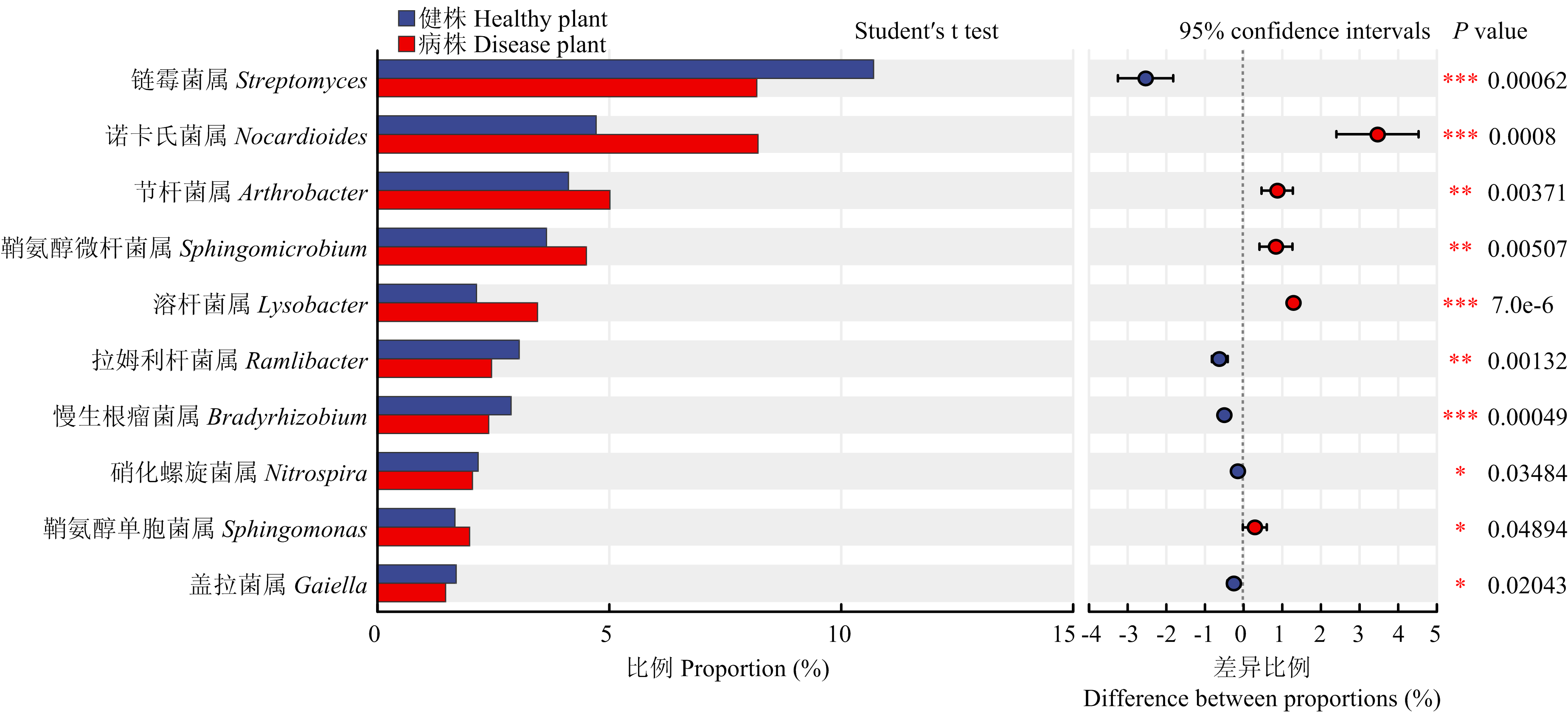
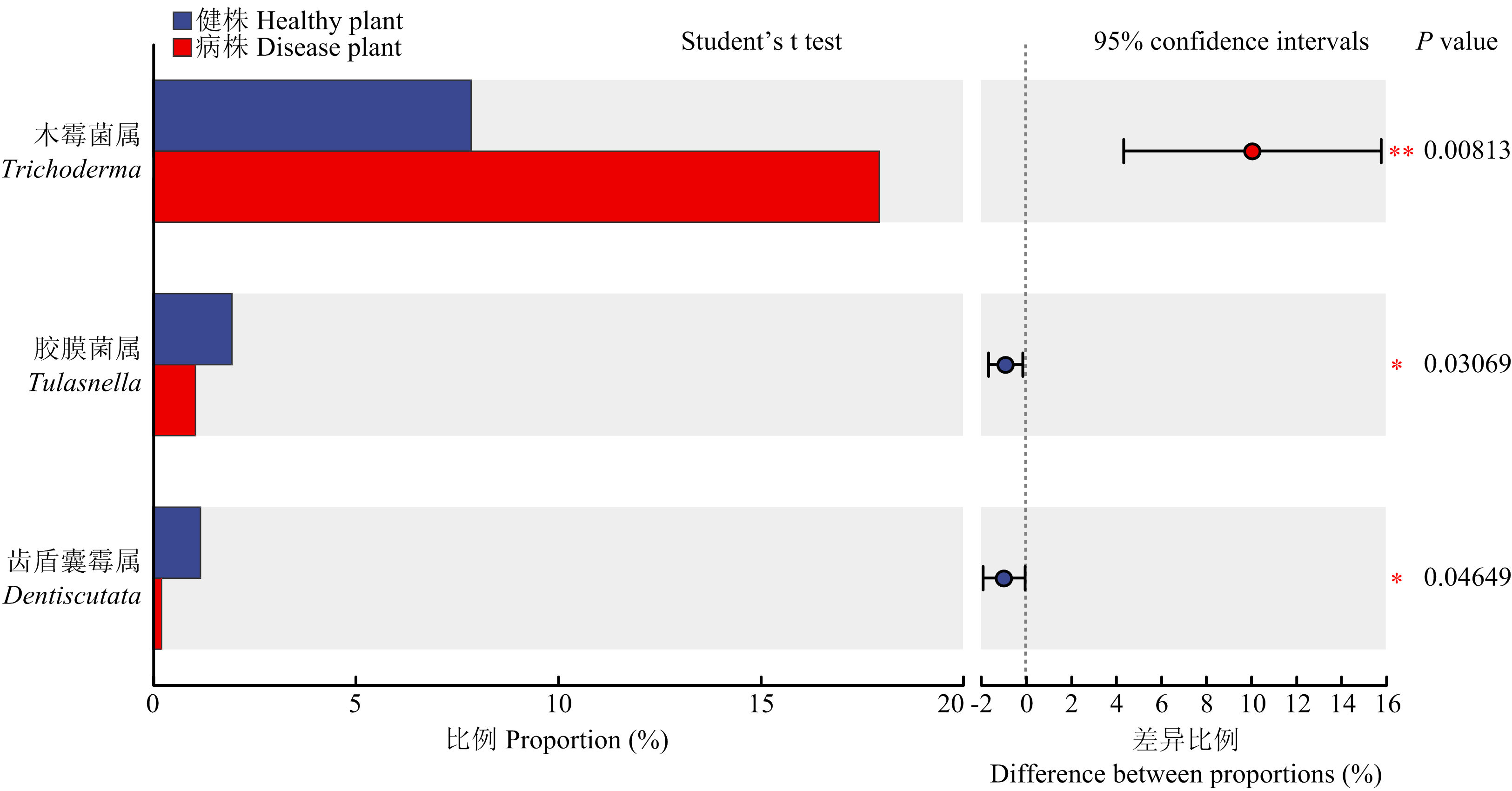
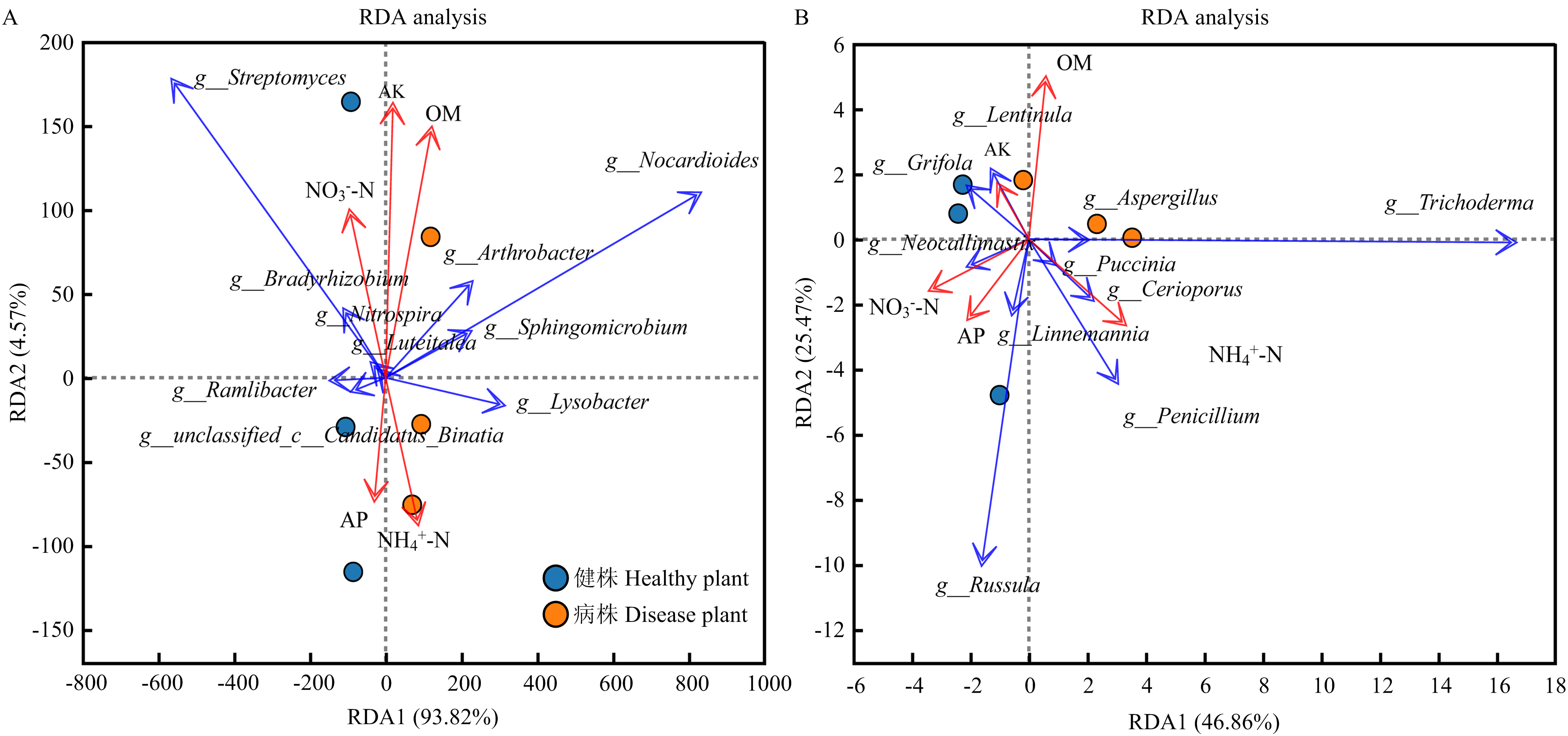
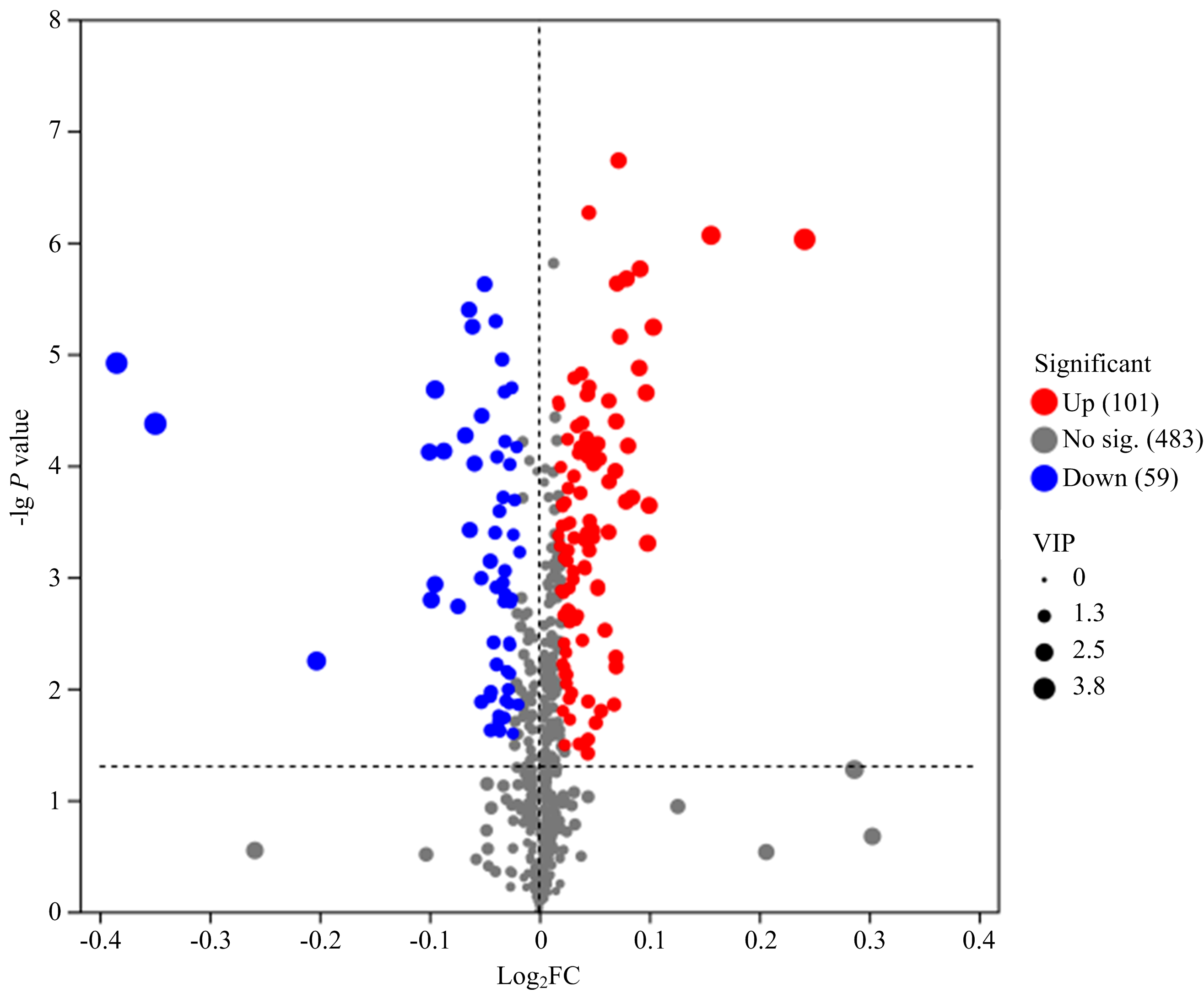
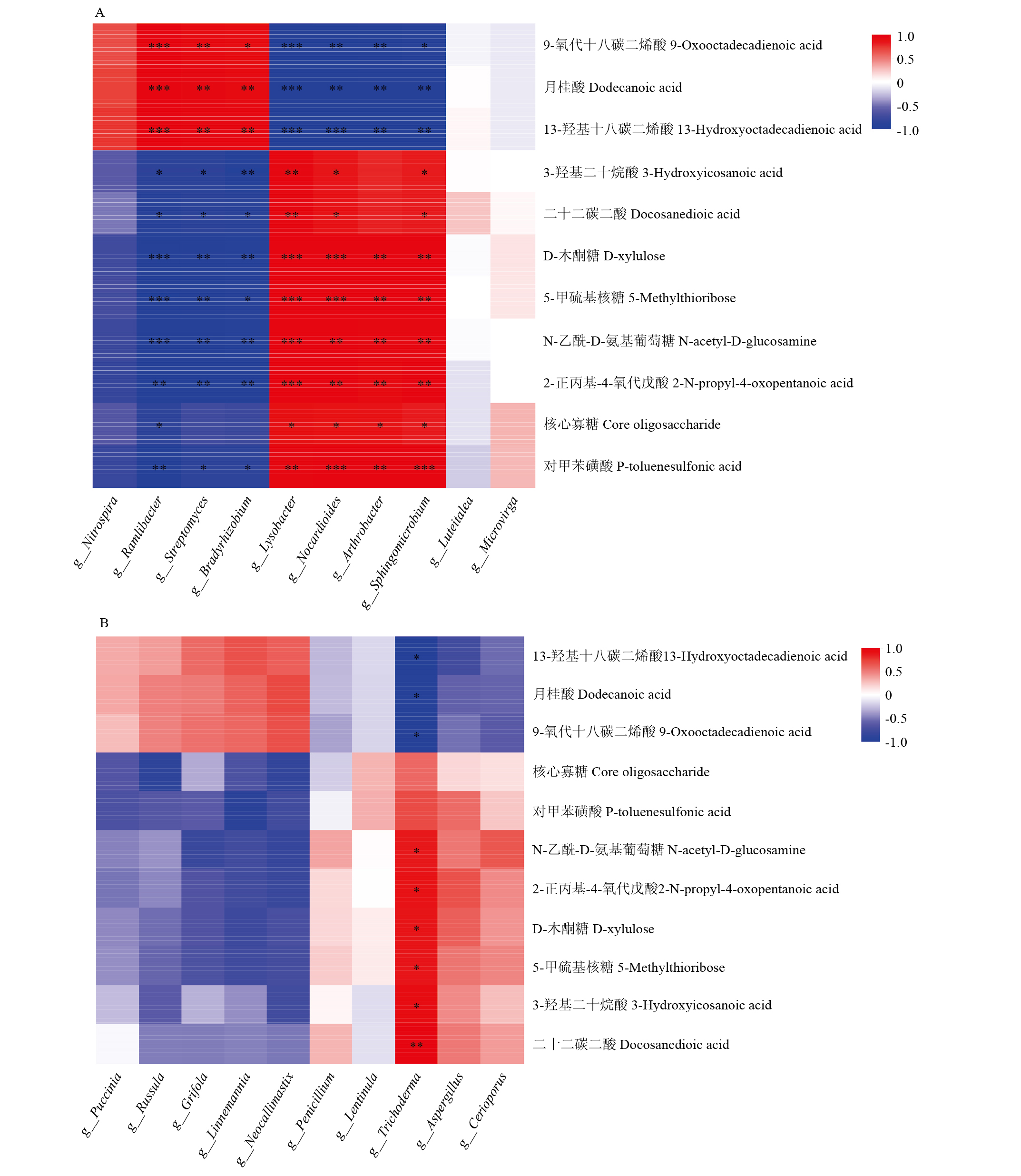
【Objective】This study aimed to elucidate the relationship between rhizosphere soil microbial community structure, key metabolites, and the occurrence of wheat crown rot by examining the differences in rhizosphere soil microbial community composition and soil metabolites between healthy and diseased wheat plants, interpret the causes of wheat crown rot from a microbial ecological perspective, and to provide new insights and theoretical bases for disease management.【Method】Rhizosphere soils from healthy and crown rot-affected wheat plants were collected as research subjects. Metagenomic sequencing and metabolomic profiling were employed to investigate variations in microbial community structure and differential metabolites between diseased and healthy plants. Redundancy analysis (RDA) was performed to determine the correlations between soil microbial communities and soil nutrient properties, and the relationships between microbial community structure and key differential metabolites were further explored.【Result】The occurrence of wheat crown rot significantly reduced plant fresh weight and plant height. Although the contents of available phosphorus, available potassium, and nitrate nitrogen in the rhizosphere soil of diseased plants were lower than those of healthy plants, the differences were not statistically significant. High-throughput sequencing analysis revealed that the richness and diversity of both bacterial and fungal communities in the rhizosphere soil of diseased plants were decreased. At the genus level, differential abundance analysis showed that, among bacteria, the relative abundances of Nocardioides, Arthrobacter, Sphingomicrobium, and Lysobacter were significantly increased in the diseased rhizosphere soil, with increases of 73.51%, 21.53%, 23.48%, and 60.69%, respectively, whereas the relative abundances of Streptomyces and Bradyrhizobium were significantly decreased by 23.50% and 16.66%, respectively. Among fungi, the relative abundance of Trichoderma was significantly increased by 130% in the diseased rhizosphere soil, while those of Tulasnella and Dentiscutata were significantly decreased by 45.79% and 81.36%, respectively. Redundancy analysis (RDA) of microbial community composition and soil nutrients indicated a significant correlation between soil microbial communities and soil nutrient variables. Beneficial genera such as Nocardioides, Arthrobacter, and Bradyrhizobium were positively correlated with available potassium, organic matter, and nitrate nitrogen, whereas pathogenic genera including Aspergillus and Penicillium were positively correlated with organic matter and ammonium nitrogen, respectively. Furthermore, a total of 160 differential metabolites were detected between the rhizosphere soils of healthy and diseased plants. Combined analysis of soil microbial communities and metabolites revealed that Streptomyces and Bradyrhizobium were significantly positively correlated with three organic acids (9-oxo-octadecadienoic acid, dodecanoic acid, and 13-hydroxyoctadecadienoic acid) which are involved in plant defense and immune responses, while Lysobacter, Nocardioides, Sphingomicrobium, and Trichoderma showed significant negative correlations with these compounds.【Conclusion】The decreased diversity and altered community structure of rhizosphere soil microorganisms in diseased plants may be a key factor contributing to the occurrence of wheat crown rot. Moreover, microbial community structure was significantly correlated with soil nutrient properties. Additionally, soil metabolite profiles were markedly altered in diseased plants and showed significant correlations with soil microbial community structure.

Key words: wheat crown rot, Fusarium pseudograminearum, microbial community structure, soil nutrient, soil metabolites

Table 1

Effects of wheat crown rot on plant biomass accumulation"

处理
Treatment
发病率
Incidence rate (%)
病情指数
Disease index
单株鲜重
Fresh weight per plant (g)
单株干重
Dry weight per plant (g)
平均株高
Average plant height (cm)
健株Healthy plant 0b 0b 0.33±0.003a 0.034±0.001a 22.63±0.27a
病株Disease plant 48.44±3.93a 28.71±0.74a 0.29±0.009b 0.028±0.002a 20.89±0.46b

Table 2

Effects of wheat crown rot on soil nutrients"

处理Treatment 健株Healthy plant 病株Disease plant
速效磷AP (μmol·g-1) 3.280±0.166a 3.170±0.150a
速效钾AK (mg·kg-1) 165.594±7.212a 158.079±7.054a
有机质OM (%) 5.207±0.081a 5.347±0.065a
铵态氮NH4+-N (μg·g-1) 12.273±1.389a 14.242±1.747a
硝态氮NO3--N (μg·g-1) 21.231±1.157a 19.374±0.957a

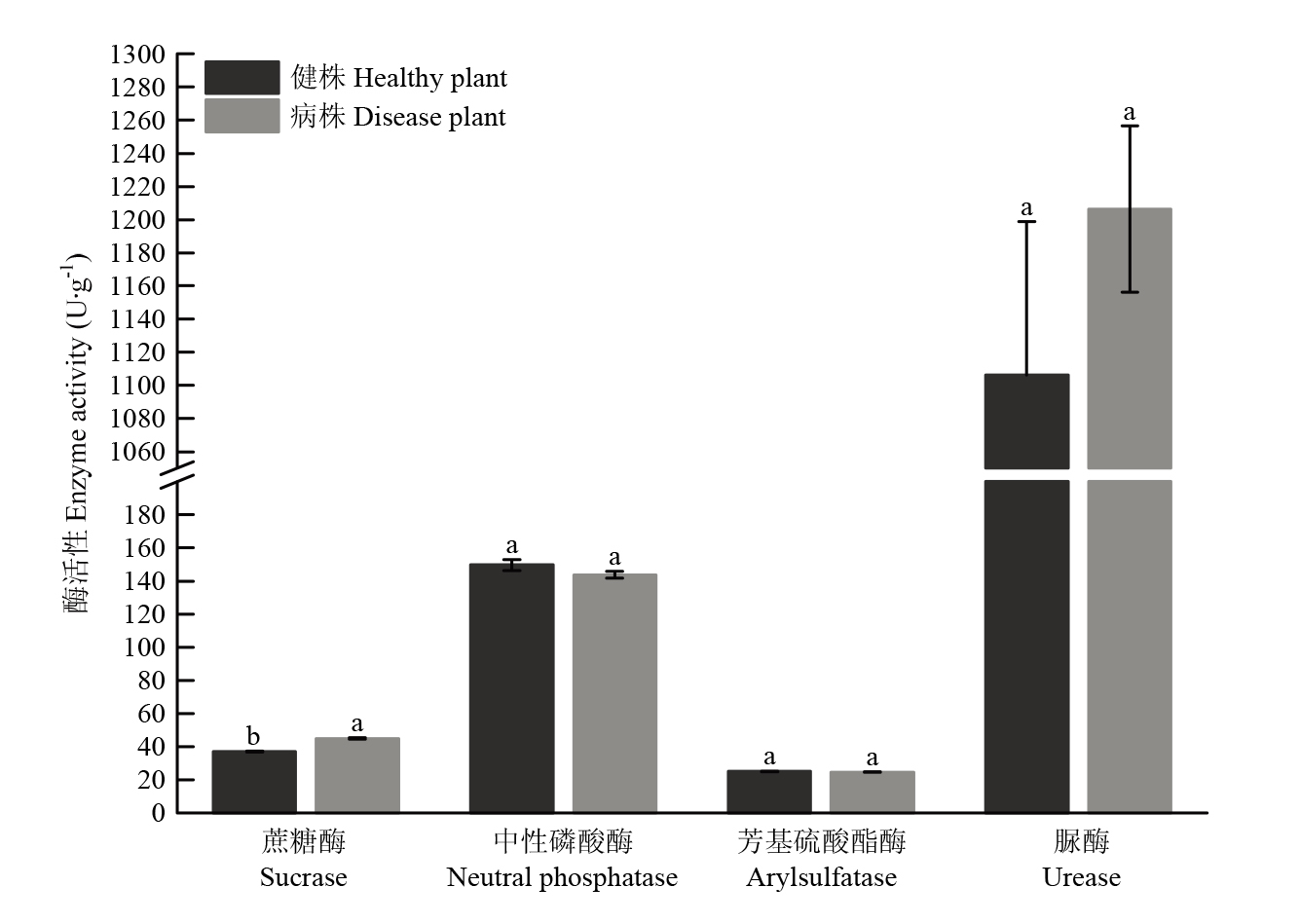
Fig. 1

Change of enzyme activity in rhizosphere soil of healthy and diseased plants"

Table 3

Effects of wheat crown rot on malondialdehyde (MDA) and proline contents"

处理
Treatment
丙二醛MDA (μg·g-1) 脯氨酸Pro (nmol·g-1)
根Root 茎Stem 根Root 茎Stem
健株Healthy plant 20.968±0.538a 34.404±1.119a 13.427±0.385a 31.878±0.801a
病株Disease plant 15.591±0.821b 31.900±0.988a 11.427±1.019a 20.096±0.385b

Table 4

Alpha diversity index of the microbial communities"

微生物群落
Microbial community
处理
Treatment
ACE指数
ACE index
Chao1指数
Chao1 index
Simpson指数
Simpson index
Shannon指数
Shannon index
细菌Bacteria 健株Healthy plant 3094.33±11.98a 3094.33±11.98a 4.69±0.01a 0.036±0.001a
病株Disease plant 3079.33±15.24a 3079.33±15.24a 4.61±0.02a 0.033±0.001a
真菌Fungi 健株Healthy plant 54.33±0.88a 54.33±0.88a 3.59±0.03a 0.036±0.001b
病株Disease plant 50.33±4.84a 50.33±4.84a 3.34±0.09a 0.065±0.007a

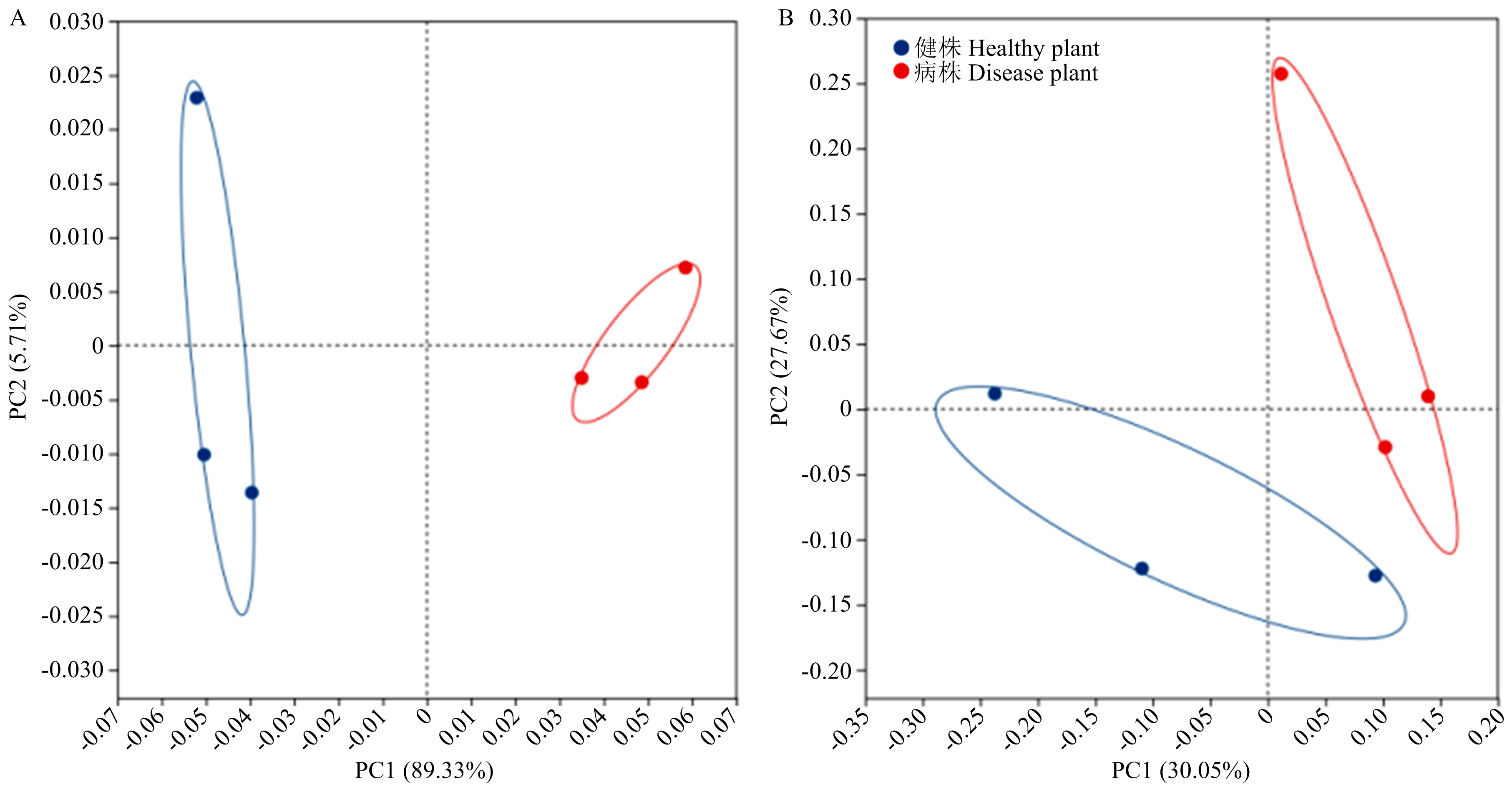
Fig. 2

Effect of wheat crown rot on β-diversity of soil bacterial (A) and fungal (B) communities"

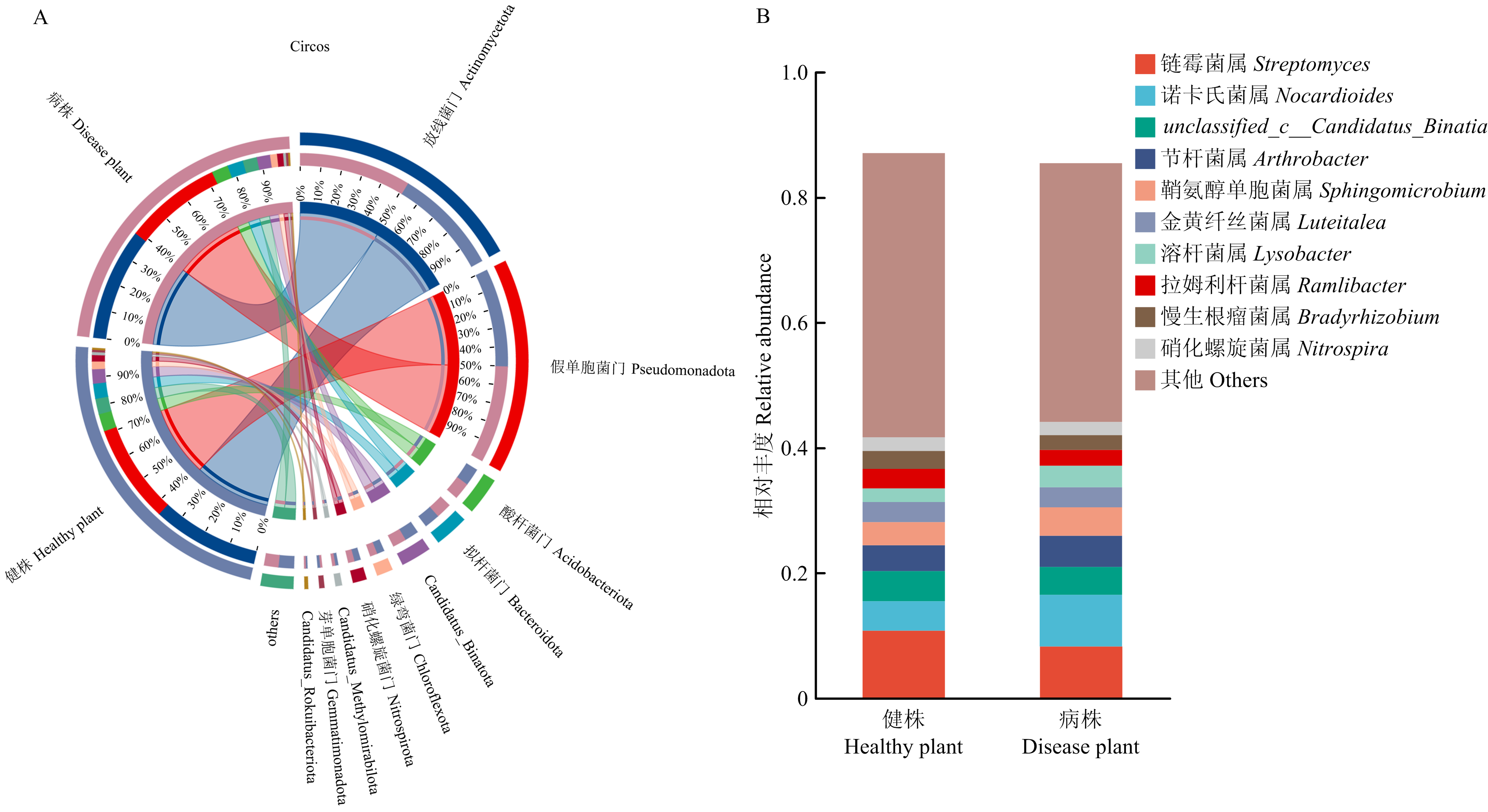
Fig. 3

Effect of wheat crown rot on soil bacterial communities at phylum and genus levels"

Fig. 4

Analysis of the differences of bacteria species in rhizosphere soil of healthy and diseased plants at genus level"

Fig. 5

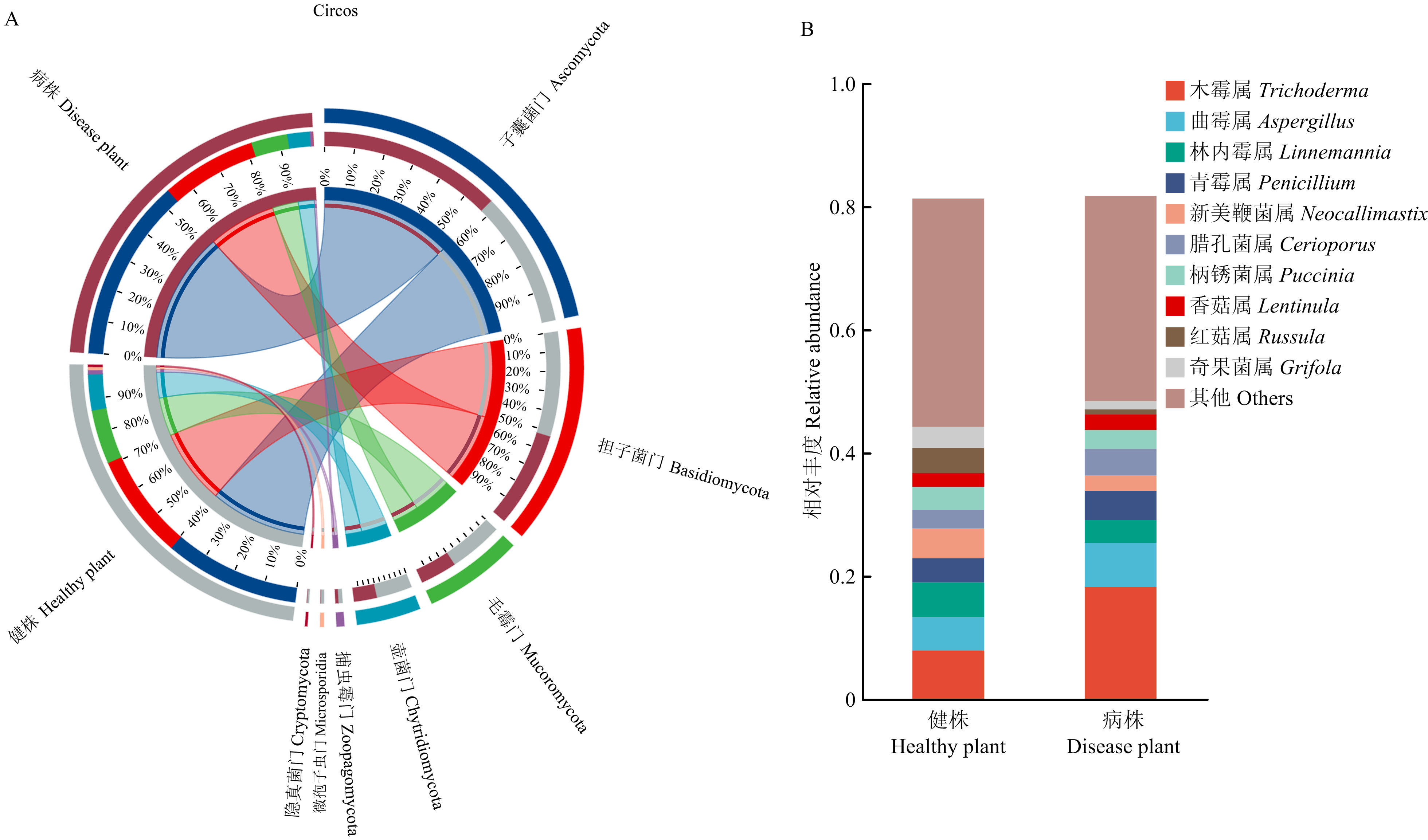
Effect of wheat crown rot on soil fungal communities at phylum and genus levels"

Fig. 6

Analysis of the differences of fungal species in rhizosphere soil of healthy and diseased plants at genus level"

Fig. 7

RDA analysis of soil nutrient with bacterial (A) and fungal (B) communities structure at genus level"

Fig. 8

Volcanic maps of different metabolites in rhizosphere soil of healthy and diseased plants"

Table 5

Differential metabolites of carbohydrates and organic acids in rhizosphere soil of healthy and diseased plants"

分类Classification 代谢物名称Metabolite name 表达差异倍数FC VIP值VIP value
糖类
Carbohydrate
N-乙酰-D-氨基葡萄糖N-acetyl-D-glucosamine 1.0321 1.4902
核心寡糖Core oligosaccharide 1.0255 1.2696
D-木酮糖D-xylulose 1.0242 1.3875
5-甲硫基核糖5-Methylthioribose 1.0746 2.2322
有机酸
Organic acid
月桂酸Dodecanoic acid 0.9817 1.2050
3-羟基二十烷酸3-Hydroxyicosanoic acid 1.0177 1.1214
9-氧代十八碳二烯酸9-Oxooctadecadienoic acid 0.9847 1.1091
2-正丙基-4-氧代戊酸2-N-propyl-4-oxopentanoic acid 1.0196 1.1617
13-羟基十八碳二烯酸13-Hydroxyoctadecadienoic acid 0.9859 1.0614
二十二碳二酸Docosanedioic acid 1.0148 1.0250
对甲苯磺酸P-toluenesulfonic acid 1.0497 1.6872

Fig. 9

Association analysis of soil microbial community and differential metabolites Red indicates a positive correlation, and blue indicates a negative correlation. Asterisks indicate the level of significance (*P<0.05, **P<0.01, ***P<0.001)"

[1]
Figueroa M, Hammond-Kosack K E, Solomon P S. A review of wheat diseases - a field perspective[J]. Molecular Plant Pathology, 2018, 19(6): 1523-1536.

doi: 10.1111/mpp.12618 pmid: 29045052
[2]
Kemal K, Gardiner D M. Fusarium crown rot caused by Fusarium pseudograminearum in cereal crops: Recent progress and future prospects[J]. Molecular Plant Pathology, 2018, 19(7): 1547-1562.

doi: 10.1111/mpp.12639 pmid: 29105256
[3]
赵利民, 吕国强, 何洋, 冯贺奎, 彭红. 河南省小麦茎基腐病发生现状及综合防控措施[J]. 中国植保导刊, 2022, 42(5): 49-51.
Zhao L M, G Q, He Y, Feng H K, Peng H. Occurrence status and comprehensive control measures of wheat crown rot in Henan Province[J]. China Plant Protection, 2022, 42(5): 49-51. (in Chinese)
[4]
竺筱洁. 茎基腐病对小麦根际微生物群落影响及其生防微生物筛选与应用研究[D]. 贵阳: 贵州民族大学, 2025.
Zhu X J. Effects of crown rot on wheat rhizosphere microbial community and screening and application of biocontrol microorganisms[D]. Guiyang: Guizhou Minzu University, 2025. (in Chinese)
[5]
王楚涵. 根际微生物调控小麦茎基腐病发生的机制[D]. 赣州: 江西理工大学, 2025.
Wang C H. Mechanism of rhizosphere microorganisms regulating the occurrence of wheat crown rot[D]. Ganzhou: Jiangxi University of Science and Technology, 2025. (in Chinese)
[6]
冯志珍, 陈太春, 颜宏, 陈志杰, 李英梅, 徐进, 郭欢, 秦涛, 付博. 小麦茎基腐病发病与健康土壤理化性质和微生物群落结构比较分析[J]. 中国农学通报, 2026, 42(12): 109-118.

doi: 10.11924/j.issn.1000-6850.casb2026-0015
Feng Z Z, Chen T C, Yan H, Chen Z J, Li Y M, Xu J, Guo H, Qin T, Fu B. Comparative analysis of physicochemical properties and microbial community structure between diseased and healthy soils in wheat Fusarium crown rot[J]. Chinese Agricultural Science Bulletin, 2026, 42(12): 109-118. (in Chinese)
[7]
谢田朋, 张佳宁, 杨林桦, 丁琦, 杜晓雪, 刘雪枫, 朱田田, 杨涛. 茄腐镰刀菌胁迫下甘肃渭源当归根际土壤微生物及代谢物变化[J]. 南方农业学报, 2025, 56(9): 2697-2712.
Xie T P, Zhang J N, Yang L H, Ding Q, Du X X, Liu X F, Zhu T T, Yang T. Changes in rhizosphere soil microorganisms and metabolites of Angelica sinensis in Weiyuan, Gansu under Fusarium solani stress[J]. Journal of Southern Agriculture, 2025, 56(9): 2697-2712. (in Chinese)
[8]
Zhang M L, Kong Z R, Fu H J, Shu X L, Xue Q H, Lai H X, Guo Q. Rhizosphere microbial ecological characteristics of strawberry root rot[J]. Frontiers in Microbiology, 2023, 14: 1286740.
[9]
Wang B Y, Xia Q, Lin Y, Wei F G, Yang S Z, Dai C C, Huang X Q, Zhang J B, Cai Z C, Zhao J. Root rot induces a core assemblage of bacterial microbiome to prevent disease infection in Sanqi ginseng[J]. Applied Soil Ecology, 2024, 198: 105371.
[10]
Jiang H, Ma L, Gao P, Zhang Y, Zhang B, Ma G, Qi K, Qi J. Relationships between wheat development, soil properties, and rhizosphere mycobiota[J]. Microorganisms, 2024, 12(8): 1516.
[11]
隋丽娜. 木霉防治小麦茎基腐病及对小麦土壤微生物群落的影响[D]. 济南: 齐鲁工业大学, 2021.
Sui L N. Trichoderma control of Fusarium crown rot and its effect on wheat soil microbial community[D]. Ji’nan: Qilu University of Technology, 2021. (in Chinese)
[12]
高梦瑶. 秸秆还田与化肥配施对土壤养分和土壤酶活性的影响[D]. 合肥: 安徽农业大学, 2020.
Gao M Y. Effects of straw returning to field and combined application of chemical fertilizer on soil nutrients and soil enzyme activity[D]. Hefei: Anhui Agricultural University, 2020. (in Chinese)
[13]
赵卫松, 郭庆港, 李社增, 鹿秀云, 勾建军, 马平. 土壤添加西兰花残体对棉花根际土壤酶活性的影响及其与碳代谢特征的关系[J]. 中国农业科学, 2023, 56(11): 2092-2105. DOI: 10.3864/j.issn.0578-1752.2023.11.005.
Zhao W S, Guo Q G, Li S Z, Lu X Y, Gou J J, Ma P. Effect of broccoli residues on enzyme activity of cotton rhizosphere soil and relationships between enzyme activity and carbon metabolism characteristics[J]. Scientia Agricultura Sinica, 2023, 56(11): 2092-2105. DOI: 10.3864/j.issn.0578-1752.2023.11.005. (in Chinese)
[14]
张彦, 郝松泽, 窦明, 李平, 米庆彬, 梁志杰, 杜臻杰, 周雨泽. 可降解微塑料对小麦根际土壤酶活性及其代谢组学的影响[J]. 环境科学, 2026, 47(6): 4164-4175.
Zhang Y, Hao S Z, Dou M, Li P, Mi Q B, Liang Z J, Du Z J, Zhou Y Z. Effects of enzyme activities and metabolomics of wheat rhizosphere soil under biodegradable microplastics[J]. Environmental Science, 2026, 47(6): 4164-4175. (in Chinese)
[15]
李彦林, 贺怀鹏, 刘菁, 邓小娟. 不同根系分泌有机酸组分分析及其对土壤养分、酶活性的影响[J]. 北方园艺, 2024(12): 73-79.
Li Y L, He H P, Liu J, Deng L J. Analysis of organic acid components in root exudates and their effects on soil nutrients and enzyme activities[J]. Northern Horticulture, 2024(12): 73-79. (in Chinese)
[16]
罗林毅. MB35-5微生物菌剂对土壤养分及棉花产量品质的影响[D]. 石河子: 石河子大学, 2023.
Luo L Y. Effects of MB35-5 microbial agent on soil nutrients and cotton yield and quality[D]. Shihezi: Shihezi University, 2023. (in Chinese)
[17]
李平, 聂浩, 郎漫, 施明杨, 杨彬妍, 罗小三. 几种土壤结构改良剂对重金属污染土壤养分有效性与酶活性的影响[J]. 环境科学研究, 2025, 38(3): 599-609.
Li P, Nie H, Lang M, Shi M Y, Yang B Y, Luo X S. Effects of several soil structure conditioners on nutrient availability and enzyme activities in heavy metal contaminated soil[J]. Research of Environmental Sciences, 2025, 38(3): 599-609. (in Chinese)
[18]
李琪, 张鹏飞, 沈逸凡, 李宇航, 金博, 魏人杰, 罗璟, 张卫彪, 张晓超, 雷泞菲, 裴向军. 高寒草甸工程扰损区生态重构土壤养分与微生物群落演变特征[J/OL]. 地球科学, https://link.cnki.net/urlid/42.1874.p.20260105.1241.004.
Li Q, Zhang P F, Shen Y F, Li Y H, Jin B, Wei R J, Luo J, Zhang W B, Zhang X C, Lei N F, Pei X J. Evolution characteristics of soil nutrients and microbial community in ecologically reconstructed areas affected by engineering disturbance in high-altitude alpine meadow[J/OL]. Earth Science, https://link.cnki.net/urlid/42.1874.p.20260105.1241.004. in Chinese)
[19]
刘军民, 潘倍莎. 土壤水分胁迫对不同茬次紫花苜蓿丙二醛及抗氧化酶含量的影响[J]. 工业微生物, 2023, 53(5): 172-178.
Liu J M, Pan B S. Effects of soil water stress on the content of malondialdehyde and antioxidant enzymes in different cuts of alfalfa[J]. Industrial Microbiology, 2023, 53(5): 172-178. (in Chinese)
[20]
梁智诚, 汪妮, 许灿越, 谭婉莹, 冯靖启, 朱勇勇, 陈晓远. PRD和氮素形态对水稻游离氨基酸和脯氨酸含量的影响[J]. 陕西农业科学, 2026, 72(1): 17-23, 31.
Liang Z C, Wang N, Xu C Y, Tan W Y, Feng J Q, Zhu Y Y, Chen X Y. Effects of partial root-zone drying and nitrogen forms on free amino acids and proline in rice[J]. Shaanxi Journal of Agricultural Sciences, 2026, 72(1): 17-23, 31. (in Chinese)
[21]
徐肖, 潘雨涵, 沈会权, 吕超, 郭宝健, 许如根. 大麦黄花叶病抗性差异对大麦主要农艺性状的影响程度分析[J]. 麦类作物学报, 2018, 38(9): 1094-1099.
Xu X, Pan Y H, Shen H Q, C, Guo B J, Xu R G. Analysis of the influence degree of barley yellow mosaic disease resistance differences on main agronomic traits of barley[J]. Journal of Triticeae Crops, 2018, 38(9): 1094-1099. (in Chinese)
[22]
Wang T T, Li H, Li Y Z. The novel disease Vicia unijuga caused by Colletotrichum tofieldiae in China: Implications for host growth, photosynthesis, and nutritional quality[J]. Journal of Fungi, 2025, 11(8): 567.
[23]
闫欢, 高芬, 王梦亮, 秦雪梅. 黄芪根腐病病株和健株根围微生物菌群变化分析[J]. 植物保护, 2020, 46(4): 48-54.
Yan H, Gao F, Wang M L, Qin X M. Analysis of microbial community changes in rhizosphere of astragalus plants with root rot and healthy plants[J]. Plant Protection, 2020, 46(4): 48-54. (in Chinese)
[24]
史腾飞. 小麦茎基腐病菌对根际土壤微生物影响研究[D]. 合肥: 安徽农业大学, 2024.
Shi T F. Studied on the effect of wheat stem base rot pathogen on rhizosphere soil microorganisms[D]. Hefei: Anhui Agricultural University, 2024. (in Chinese)
[25]
赵卫松, 郭庆港, 苏振贺, 王培培, 董丽红, 胡卿, 鹿秀云, 张晓云, 李社增, 马平. 马铃薯健株与黄萎病株根际土壤真菌群落结构及其对碳源利用特征[J]. 中国农业科学, 2021, 54(2): 296-309. DOI: 10.3864/j.issn.0578-1752.2021.02.006.
Zhao W S, Guo Q G, Su Z H, Wang P P, Dong L H, Hu Q, Lu X Y, Zhang X Y, Li S Z, Ma P. Characterization of fungal community structure in the rhizosphere soil of healthy and diseased-verticillium wilt potato plants and carbon source utilization[J]. Scientia Agricultura Sinica, 2021, 54(2): 296-309. DOI: 10.3864/j.issn.0578-1752.2021.02.006. (in Chinese)
[26]
唐涛, 袁斌, 王帆帆, 郭杰, 郭晓亮, 段媛媛, 游景茂. 黄连根腐病发生与根际土壤、根茎内生、叶内生细菌群落结构变化关系[J]. 植物保护, 2022, 48(1): 73-81, 103.
Tang T, Yuan B, Wang F F, Guo J, Guo X L, Duan Y Y, You J M. Relationships between the occurrence of root-rot and the change in the community structure of rhizosphere soil bacteria, rhizome and leaf endophytic bacteria of Coptis chinensis[J]. Plant Protection, 2022, 48(1): 73-81, 103. (in Chinese)
[27]
黄海霞, 黄昆鹏, 杨再军, 曹可心, 潘恒德, 韦学平, 陆福勇, 李俊霖, 罗勤站. 烟-薯套作对根际微生物多样性的影响[J]. 浙江农业科学, 2025, 66(12): 2901-2909.

doi: 10.16178/j.issn.0528-9017.20240100
Huang H X, Huang K P, Yang Z J, Cao K X, Pan H D, Wei X P, Lu F Y, Li J L, Luo Q Z. Effects of tobacco-sweet potato intercropping on rhizosphere microbial diversity[J]. Journal of Zhejiang Agricultural Sciences, 2025, 66(12): 2901-2909. (in Chinese)

doi: 10.16178/j.issn.0528-9017.20240100
[28]
谭雪莲, 郭天文, 胡新元, 张平良, 曾骏, 刘晓伟. 黄土高原旱作区马铃薯连作根际土壤微生物群落变化特征[J]. 作物学报, 2022, 48(3): 682-694.
Tan X L, Guo T W, Hu X Y, Zhang P L, Zeng J, Liu X W. Characteristics of microbial community in the rhizosphere soil of continuous potato cropping in arid regions of the Loess Plateau[J]. Acta Agronomica Sinica, 2022, 48(3): 682-694. (in Chinese)
[29]
李华伟, 罗文彬, 许国春, 刘中华, 林志坚, 许泳清, 纪荣昌, 邱思鑫, 汤浩. 基于高通量测序的福建北部马铃薯晚疫病株根际土壤细菌群落分析[J]. 微生物学通报, 2022, 49(3): 1017-1029.
Li H W, Luo W B, Xu G C, Liu Z H, Lin Z J, Xu Y Q, Ji R C, Qiu S X, Tang H. High-throughput sequencing of bacterial community in the rhizosphere soil of potato infected by late blight in northern Fujian Province[J]. Microbiology China, 2022, 49(3): 1017-1029. (in Chinese)
[30]
谭海霞, 彭红丽, 王连龙, 魏建梅. 马铃薯健康株与疮痂病株根区土壤微生物群落多样性差异分析[J]. 浙江农业学报, 2025, 37(8): 1743-1754.

doi: 10.3969/j.issn.1004-1524.20240756
Tan H X, Peng H L, Wang L L, Wei J M. Differences in soil microbial community diversity between healthy and scab-diseased potato plants in root zone[J]. Acta Agriculturae Zhejiangensis, 2025, 37(8): 1743-1754. (in Chinese)

doi: 10.3969/j.issn.1004-1524.20240756
[31]
张廷富, 文国琴, 王守长, 宋波. 柑橘采后青霉病原中寄生病毒的筛选与鉴定[J]. 西南农业学报, 2023, 36(2): 348-355.
Zhang T F, Wen G Q, Wang S C, Song B. Screening and identification of parasitic viruses in Penicillium pathogen of postharvest citrus[J]. Southwest China Journal of Agricultural Sciences, 2023, 36(2): 348-355. (in Chinese)
[32]
Ma M M, Zhao H N, Wang W, Li P, Yang R, Yang J W, Wu C P, Sun X F, Chang X L, Gong G S. Phenotypic traits, genetic diversity, and toxigenic potential of Aspergillus flavus from maize ear rots in Sichuan Province, China[J]. Food Research International, 2025, 222: 117644.
[33]
Manrique-Barros S, Flanagan N S, Ramírez-Bejarano E, Mosquera-Espinosa A T. Evaluation of Tulasnella and Ceratobasidium as biocontrol agents of Fusarium wilt on Vanilla planifolia[J]. Agronomy, 2023, 13(9): 2425.
[34]
Gebremariam E S, Sharma-Poudyal D, Paulitz T C, Erginbas-Orakci G, Karakaya A, Dababat A. Identity and pathogenicity of Fusarium species associated with crown rot on wheat (Triticum spp.) in Turkey[J]. European Journal of Plant Pathology, 2018, 150(2): 387-399.
[35]
林亚, 蔡瑜, 胡凡, 王佳瑜, 江虹霖, 周双双, 张庆伟. 大黄根腐病与土壤营养及微生物群落组成的相关性研究[J]. 西南大学学报(自然科学版), 2024, 46(3): 70-83.
Lin Y, Cai Y, Hu F, Wang J Y, Jiang H L, Zhou S S, Zhang Q W. Study on the correlation of rhubarb root rot disease with soil nutrients and microbial community composition[J]. Journal of Southwest University (Natural Science Edition), 2024, 46(3): 70-83. (in Chinese)
[36]
Yang B Y, Zhang C Q, Guan C W, Feng X H, Yan D, Zhang Z G, Qin Y M, Xiong S B, Zhang W M, Cai X J, Hu L W. Analysis of the composition and function of rhizosphere microbial communities in plants with tobacco bacterial wilt disease and healthy plants[J]. Microbiology Spectrum, 2024, 12(12): e0055924.
[37]
Yao J, Zhang F, Xu X L, Wu C Y, Fan L J, Liu Z R, Yao Y J. Study on differences in chemical and microbial characteristics of healthy and infected Brassica napus root soils under Plasmodiophora brassicae[J]. Applied Soil Ecology, 2025, 214: 106380.
[38]
Botero-Ramirez A, Hwang S F, Strelkov S E. Plasmodiophora brassicae inoculum density and spatial patterns at the field level and relation to soil characteristics[J]. Pathogens, 2021, 10(5): 499.
[39]
Cao Y, Shen Z, Zhang N, Deng X H, Thomashow L S, Lidbury I, Liu H J, Li R, Shen Q R, Kowalchuk G A. Phosphorus availability influences disease-suppressive soil microbiome through plant-microbe interactions[J]. Microbiome, 2024, 12(1): 185.

doi: 10.1186/s40168-024-01906-w pmid: 39342390
[40]
Fan M M, Liu M J, Zhou W B, Wan L, Gu X H, Xia X Y, Li J Z, Zhang L M, Lin S. Mosaic disease is positively correlated with soil sand content and negatively correlated with nutrient availability for tobacco production[J]. International Journal of Agriculture and Biology, 2020, 24(5): 1301-1308.
[41]
张智浩, 邓毅书, 聂强, 解国玲, 吴流通, 邸雪嫣, 石浩, 付克剑, 张继来, 林春, 张乃明, 苏友波. 白菜健康株与根肿病患病株的土壤微生物群落和功能差异[J]. 中国生态农业学报, 2023, 31(4): 530-542.
Zhang Z H, Deng Y S, Nie Q, Xie G L, Wu L T, Di X Y, Shi H, Fu K J, Zhang J L, Lin C, Zhang N M, Su Y B. Differences in soil microbial community and function between healthy and clubroot diseased plants of Chinese cabbage[J]. Chinese Journal of Eco-Agriculture, 2023, 31(4): 530-542. (in Chinese)
[42]
Li W, Hu X Y, Zhu C S, Guo S X, Li M. Control effect of root exudates from mycorrhizal watermelon seedlings on Fusarium wilt and the bacterial community in continuously cropped soil[J]. Frontiers in Plant Science, 2023, 14: 1225897.
[43]
Li P F, Liu M, Li G L, Liu K, Liu T S, Wu M, Saleem M, Li Z P. Phosphorus availability increases pathobiome abundance and invasion of rhizosphere microbial networks by Ralstonia[J]. Environmental Microbiology, 2021, 23(10): 5992-6003.
[44]
李树泓, 杜薇, 张松杰, 李先锋, 杜鸿波, 任天宝, 张松涛, 耿宗泽, 杜娇. 感染黑胫病烟株根际土壤微生物群落结构和代谢物特征分析[J]. 烟草科技, 2026, 59(2): 22-30.
Li S H, Du W, Zhang S J, Li X F, Du H B, Ren T B, Zhang S T, Geng Z Z, Du J. Analysis of microbial community structure and metabolite characteristics in rhizosphere soil of tobacco plants infected with black shank disease[J]. Tobacco Science & Technology, 2026, 59(2): 22-30. (in Chinese)
[45]
Alberton D, Müller-Santos M, Brusamarello-Santos L C C, Valdameri G, Cordeiro F A, Yates M G, de Oliveira Pedrosa F, de Souza E M. Comparative proteomics analysis of the rice roots colonized by Herbaspirillum seropedicae strain SmR1 reveals induction of the methionine recycling in the plant host[J]. Journal of Proteome Research, 2013, 12(11): 4757-4768.

doi: 10.1021/pr400425f pmid: 23971515
[46]
Sun J Y, Li S H, Fan C Y, Cui K J, Tan H X, Qiao L P, Lu L F. N-acetylglucosamine promotes tomato plant growth by shaping the community structure and metabolism of the rhizosphere microbiome[J]. Microbiology Spectrum, 2022, 10(3): e0035822.
[47]
Gu Y, Liang W N, Li Z D, Liu S, Liang S, Lei P, Wang R, Gao N, Li S, Xu Z Q, Xu H. The biocontrol agent Bacillus velezensis T-5 changes the soil bacterial community composition by affecting the tomato root exudate profile[J]. Plant and Soil, 2023, 490: 669-680.
[48]
Morhunov I G, Kamzolova S V, Dedyukhina E G, Chistyakova T I, Lunina J N, Mironov A A, Stepanova N N, Shemshura O N, Vainshtein M B. Application of organic acids for plant protection against phytopathogens[J]. Applied Microbiology and Biotechnology, 2017, 101(3): 921-932.

doi: 10.1007/s00253-016-8067-6 pmid: 28040844
[49]
Dayrit F M. The properties of lauric acid and their significance in coconut oil[J]. Journal of the American Oil Chemists’ Society, 2015, 92(1): 1-15.
[50]
Nishiguchi S, Murata K, Ube N, Ueno K, Tebayashi S I, Teraishi M, Okumoto Y, Mori N, Ishihara A. Accumulation of 9- and 13-KODEs in response to jasmonic acid treatment and pathogenic infection in rice[J]. Journal of Pesticide Science, 2018, 43(3): 191-197.

doi: 10.1584/jpestics.D18-022 pmid: 30363135
[51]
Mironenka J, Rozalska S, Bernat P. Potential of Trichoderma harzianum and its metabolites to protect wheat seedlings against Fusarium culmorum and 2,4-D[J]. International Journal of Molecular Sciences, 2021, 22(23): 13058.
[1] LI YongJuan, ZHANG YueTong, WANG YiBo, ZHAO ChangJiang, SONG Jie, CHEN XueLi, YAO Qin. Effects of Biochar Application on the Abundance and Community Composition of Nitrogen-Fixing Microbial nifH Gene in Soybean Rotation and Continuous Cropping Systems [J]. Scientia Agricultura Sinica, 2026, 59(6): 1272-1285.
[2] ZENG QingPing, LIU Han, NIE TangJie, JIANG XuanBin, LI HongYan, TANG JiaJia, SHEN Ling, CHEN LiJie, LUO XiaoGang, XIE ChengWei, TONG Long. Elevation-Related Variation and Key Environmental Drivers of Fresh Bamboo Shoot Quality in Chimonobambusa utilis from Jinfo Mountain in China [J]. Scientia Agricultura Sinica, 2026, 59(13): 2946-2961.
[3] JIA HuiLi, ZHU YiChen, CHEN SiXue, LIU Miao, DONG KuanHu, ZHAO Xiang, SHI YongHong. Effect of Nitrogen Addition on Soil Microorganisms in Leymus secalinus Grassland in Northern Shanxi [J]. Scientia Agricultura Sinica, 2026, 59(13): 2878-2893.
[4] LIN Jiao, MOU TingSen, CHEN Jun, LI Xiang, YUAN SiYu, LIU Le, ZHANG ZhenHua, XIA YinHang. The Characteristics of Stoichiometric Ratios of Carbon, Nitrogen and Phosphorus in Farmland Soils Under Different Land Use Patterns in Typical Red Soil Regions of Hunan Province [J]. Scientia Agricultura Sinica, 2026, 59(11): 2434-2446.
[5] LUO YiNuo, LI YanFei, LI WenHu, ZHANG SiQi, MU WenYan, HUANG Ning, SUN RuiQing, DING YuLan, SHE WenTing, SONG WenBin, LI XiaoHan, SHI Mei, WANG ZhaoHui. Iron Concentrations in Grain and Its Different Parts of Newly Developed Wheat Varieties (Lines) in China and Influencing Factors [J]. Scientia Agricultura Sinica, 2025, 58(3): 416-430.
[6] ZHANG Feng, XU JunFeng, GAO ZhiYuan, DANG HaiYan, GUO RongBo, SHE WenTing, LI WenHu, LIU JinShan, WANG ZhaoHui. Optimizing Wheat Nitrogen and Phosphorus Fertilizer Rates Based on Apparent Nitrogen and Phosphorus Balance in a Long-Term Location Fixed Field Experiment [J]. Scientia Agricultura Sinica, 2025, 58(22): 4688-4702.
[7] ZHANG SiJia, YANG Jie, ZHAO Shuai, LI LiWei, WANG GuiYan. The Impact of Diversified Crops and Wheat-Maize Rotations on Soil Quality in the North China Plain [J]. Scientia Agricultura Sinica, 2025, 58(2): 238-251.
[8] WU Yong, WEN Xue, WANG TianShu, HUANG YanYan, MENG YiLi, JIANG HongYu, BI LiDong, WU HuiJun, YAO ShuiHong. The Influence of Topographic Factors and Ridge Tillage Methods on Soil Nutrients and Fertility Index of Sloping Arable Land in the Black Soil Region [J]. Scientia Agricultura Sinica, 2025, 58(18): 3676-3689.
[9] GUO Lei, ZHANG BinBin, SHEN ZhiJun, YAN Juan, XU JianLan, CAI ZhiXiang, YU MingLiang, WANG FaLin, SONG HongFeng. The Release Characteristics of Medium and Trace Elements and Their Effects on Soil Available Nutrients after the Continuous Return of Green Manure in Peach Orchards [J]. Scientia Agricultura Sinica, 2025, 58(12): 2411-2426.
[10] DONG ZaiFang, DING TengTeng, SHAN YiXuan, LI HongLian, CHEN LinLin, XING XiaoPing. Autophagy-Related Gene FpAtg3 Involves in Growth and Pathogenicity of Fusarium pseudograminearum [J]. Scientia Agricultura Sinica, 2024, 57(6): 1080-1090.
[11] WANG QingHui, LI NaiHui, ZHANG YiPing, DI ChengQian, WU FengZhi. Effects of Wheat and Common Vetch Cover Crops on Chinese Cabbage Seedling Growth and Soil Microbial Community Structure [J]. Scientia Agricultura Sinica, 2024, 57(3): 555-569.
[12] LUO YuHong, HUANG YuShu, ZHU Na, LI Le, CHENG YanBin, LIU JiaHui, ZHANG JingMin, BAO YuFan, XU Nuo, YAN YuChun. Effects of Cultivation and Cropland Afforestation on Soil Particle- Size Distribution and Soil Nutrients in the Typical Steppe of Xilingol League [J]. Scientia Agricultura Sinica, 2024, 57(24): 4919-4932.
[13] LI HaiPeng, DU WuYan, WU HanQian, ZHANG Jie, MENG HuiSheng, HONG JianPing, XU MingGang, HAO XianJun, GAO WenJun. Different Manures Affect Soil Nutrients and Bacterial Community Structure in Mining Reclamation Area [J]. Scientia Agricultura Sinica, 2024, 57(16): 3207-3219.
[14] SU HaiLan, ZHU YanMing, CHEN Hong, NIU YuQing, ZHENG MeiXia, ZHU YuJing. Effects of Different Intercropping Methods on Mesona Chinesis Quality and Its Rhizosphere Soil Characteristic [J]. Scientia Agricultura Sinica, 2024, 57(14): 2755-2770.
[15] WANG QingYang, CAO DianYun, WANG Di, ZHAN ZengYi, HE WanYing, SUN Qiang, CHEN WenFu, LAN Yu. Effects of Long-Term Application of Biochar on Nutrients, Fractions of Humic in Brown Soil [J]. Scientia Agricultura Sinica, 2024, 57(13): 2612-2622.
Viewed
Full text


Abstract

Cited

  Shared   
  Discussed   
No Suggested Reading articles found!