Scientia Agricultura Sinica ›› 2026, Vol. 59 ›› Issue (11): 2374-2386.doi: 10.3864/j.issn.0578-1752.2026.11.006

• PLANT PROTECTION • Previous Articles     Next Articles

Function of c-di-GMP Synthase Rsp1208 of Ralstonia solanacearum Strain GMI 1000

FAN XiaoHan1(), ZHANG WeiJun2, YUAN JinFeng2, ZHAO DongLin1, ZHANG ChengSheng1, ZHANG ZhiFan2(), XU KangWen1()   

  1. 1 Tobacco Research Institute, Chinese Academy of Agricultural Sciences, Qingdao 266101, Shandong
    2 Fenggang Branch of Zunyi Company, Guizhou Provincial Tobacco Company, Zunyi 564200, Guizhou
  • Received:2026-02-10 Accepted:2026-04-03 Online:2026-06-01 Published:2026-06-03
  • Contact: ZHANG ZhiFan, XU KangWen

Abstract:

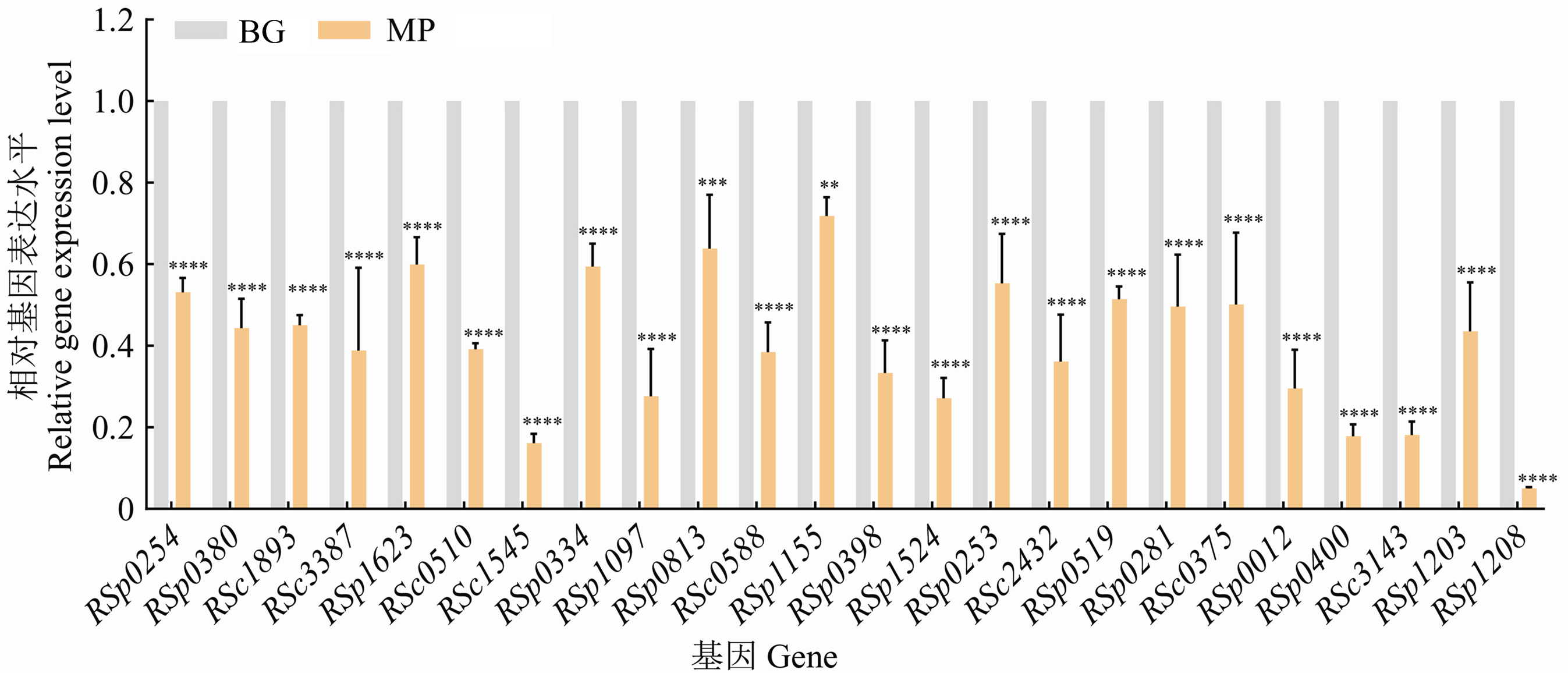
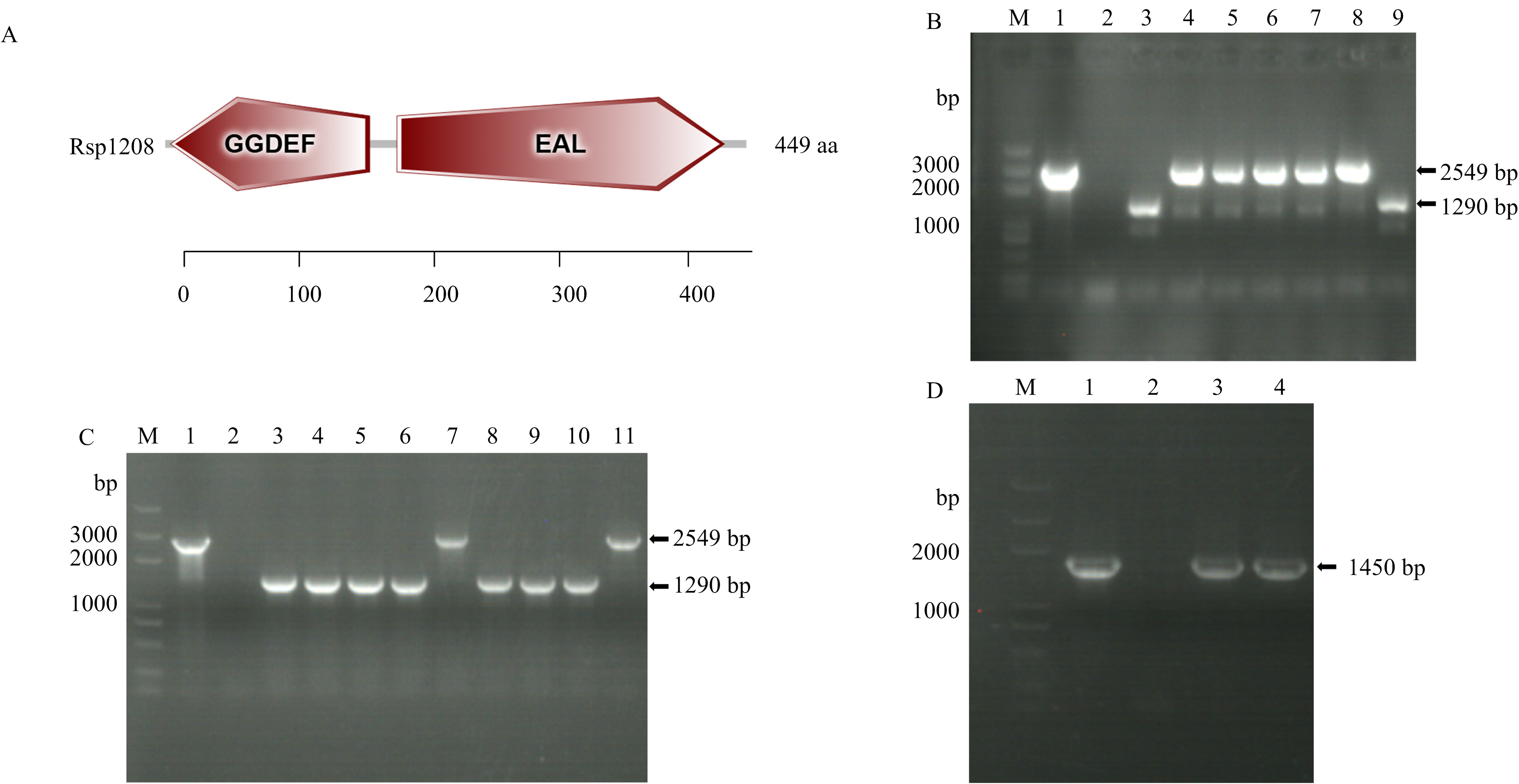
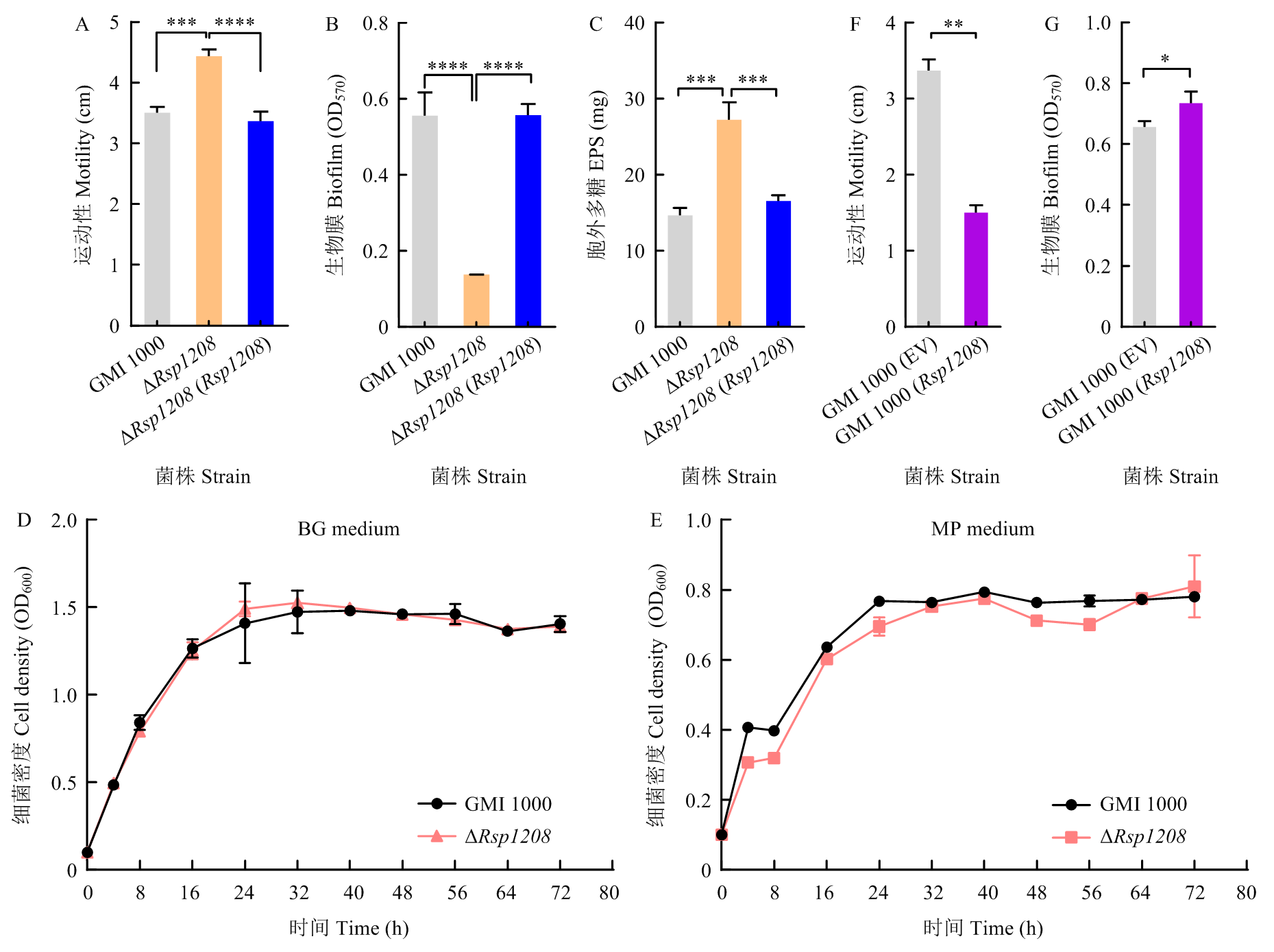
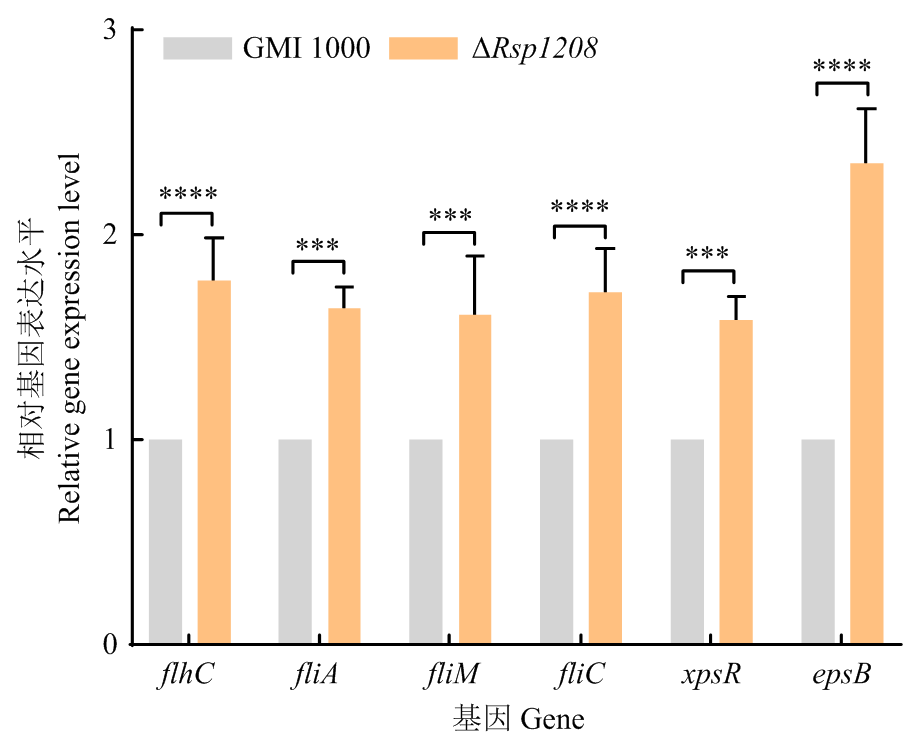
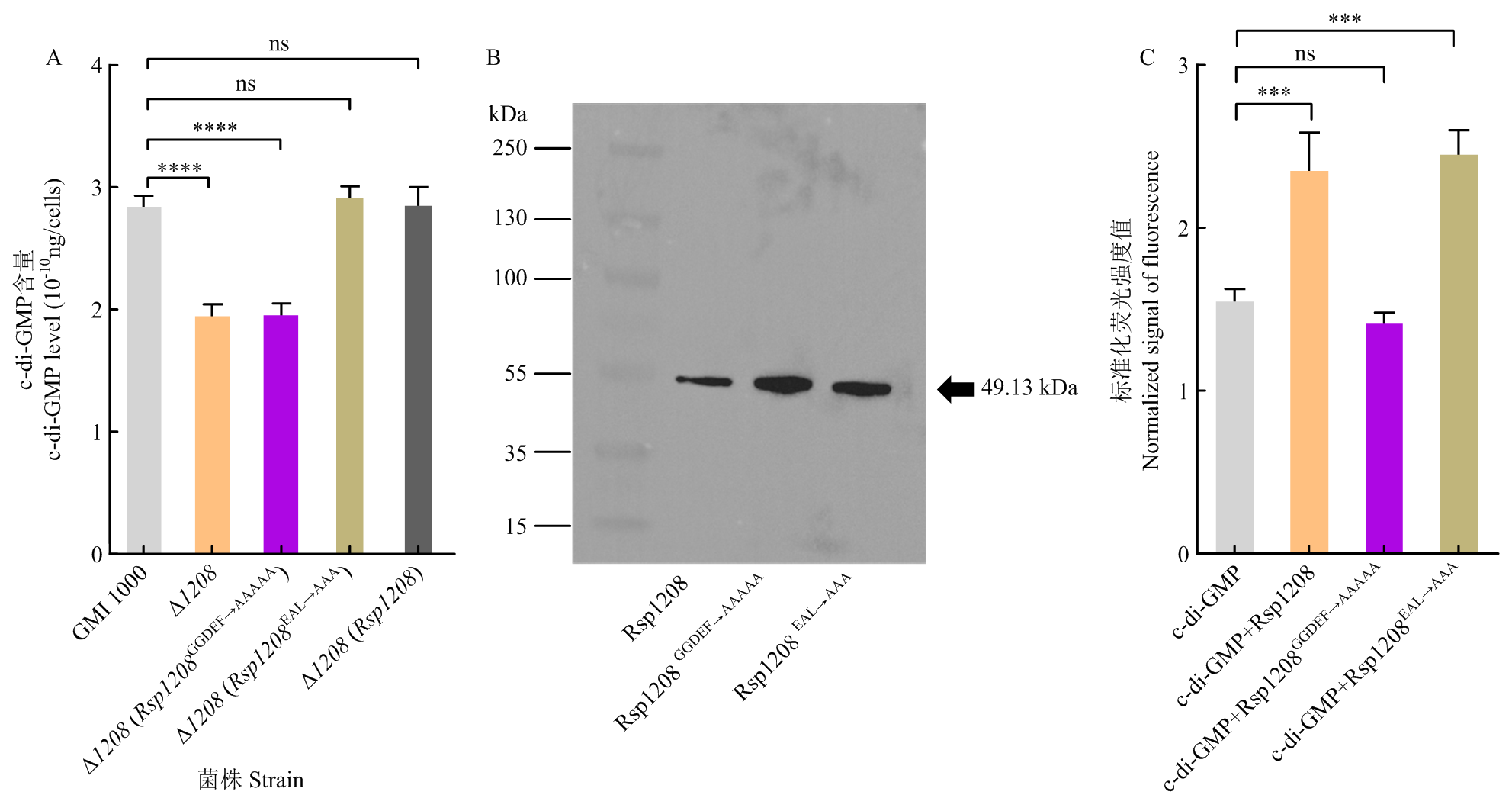
【Background】Bacterial wilt is a devastating soil-borne vascular disease caused by Ralstonia solanacearum. As a conserved second messenger in bacteria, c-di-GMP orchestrates multiple pathogenic phenotypes of plant bacterial pathogens. However, the functional characteristics of core c-di-GMP metabolic genes in R. solanacearum remain to be fully elucidated.【Objective】This study aimed to investigate the functions and regulatory mechanisms of c-di-GMP metabolism-associated genes in R. solanacearum GMI 1000, clarify the impacts of key genes on bacterial physiological phenotypes and pathogenicity, refine the c-di-GMP signaling regulatory network, and to provide a theoretical foundations for screening novel control targets and developing green management strategies against bacterial wilt.【Method】Using R. solanacearum GMI 1000 as the material, RT-qPCR was performed to compare the transcriptional profiles of 24 putative c-di-GMP metabolic genes under routine culture and simulated infection conditions. For the most significantly downregulated gene Rsp1208, gene deletion, complementation, enzyme active-site mutagenesis and overexpression strains were constructed via homologous recombination and electroporation. Key physiological phenotypes including growth kinetics, motility, biofilm formation and exopolysaccharide (EPS) yield were systematically quantified. Transcriptional levels of motility- and EPS synthesis-related genes were analyzed by RT-qPCR. Intracellular c-di-GMP content and in vitro diguanylate cyclase activity were detected using LC-MS/MS and thiazole orange fluorescence assay, respectively. Pathogenicity assays on tomato seedlings were conducted using the root-wounding inoculation method.【Result】Under simulated infection conditions, all 24 c-di-GMP metabolic genes were transcriptionally downregulated to varying degrees, among which Rsp1208 showed the most extreme downregulation. The protein encoded by Rsp1208 harbors both GGDEF and EAL domains. Deletion of Rsp1208 significantly increased bacterial motility by 26.57% and EPS production by 85.92%, reduced biofilm formation by 75%, decreased intracellular c-di-GMP levels markedly, and extremely enhanced pathogenicity on tomato. The complemented strain restored wild-type phenotypes, whereas the overexpression strain exhibited attenuated motility, mildly elevated biofilm formation and significantly weakened pathogenicity. Transcriptional levels of motility-related genes (flhC, fliA, fliM, fliC) and EPS synthesis genes (xpsR, epsB) were drastically upregulated in the Rsp1208 deletion mutant. Mutation of the GGDEF active site abolished the c-di-GMP synthetic activity of Rsp1208, while EAL site mutation exerted no significant effect.【Conclusion】Rsp1208 functions as a c-di-GMP diguanylate cyclase through its GGDEF domain, regulating intracellular c-di-GMP homeostasis in R. solanacearum, mediating phenotypic remodeling of motility, biofilm formation and EPS production, and ultimately governing the pathogenicity of the pathogen. These findings deepen the mechanistic understanding of R. solanacearum pathogenesis and provide critical theoretical support for the development of green control technologies against bacterial wilt.

Key words: Ralstonia solanacearum, c-di-GMP, pathogenicity, motility, biofilm

Table 1

Primers used for Rsp1208 gene deletion, complementation, and overexpression vector construction"

引物名称
Primer name
引物序列
Primer sequence
靶标基因
Target gene
退火温度
Annealing temperature (℃)
产物大小
Product size (bp)
用途
Purpose
Rsp1208-F1 gagctcggtacccggggatccAACACGTCGTCGTTGGTGATC 上游
Upstream
56 550 基因克隆
Gene clone
Rsp1208-R1 tatcgtcgatccagCAGCAGCTGGACGAATCGTT
Rsp1208-F2 ctgctgCTGGATCGACGATACGCAGG 下游
Downstream
56 740 基因克隆
Gene clone
Rsp1208-R2 acgacggccagtgccaagcttGAAACCGCCTCCAGCATGG
Rsp1208OE-F agggaacaaaagctgggtaccGTTGCCTGACCGCGAACG 过表达片段
Overexpression fragment
58 1350 基因克隆
Gene clone
Rsp1208OE-R caggaattcgatatcaagcttTTACGGCATCAGATCGCGC
M13F TGTAAAACGACGGCCAGT 55 过表达验证
Overexpression verification
M13R AACAGCTATGACCATGA
Rsp1208-pET30-F taagaaggagatatacatatgTTGCCTGACCGCGAACGATTCGTC 蛋白表达片段
Protein expression fragment
55 1371 基因克隆
Gene clone
Rsp1208-pET30-R ctcgagtgcggccgcaagcttCGGCATCAGATCGCGCGCGCGTTCG

Table 2

Primers used for RT-qPCR"

基因Gene 引物序列Primer sequence
gyrB F: CAAGGGCAAGATCCTGAACG R: GATGATGATGCGGTGGTAGC
flhC F: AAGAGGTGCTGTCGATCACT R: TCACGGTGTGCAACATCTTC
fliA F: CATCGCCAACCAGATGATGG R: GCGGCATAGAACTCGAACTG
fliM F: CATGCCGTACACCATGATCG R: TGTTGAGGATGTCGGACACA
fliC F: ACTACAACGGCAACAAGCTG R: TGGCCATATTGGAAGGTCGT
xpsR CCCGCCAGTTCATTCTTCAG GGACTGATGATCCAGGTGGT
epsB GTGAGCTTGCTCAACGACAT GTCAGCTTCTTGGGCTTCAC

Fig. 1

Screening of genes related to c-di-GMP metabolism in R. solanacearum"

Fig. 2

Domain analysis of Rsp1208 protein and PCR identification of deletion, complementation, point mutation, and overexpression strains"

Fig. 3

Effects of Rsp1208 deletion and overexpression on growth, motility, biofilm, and exopolysaccharide phenotypes of R. solanacearum GMI 1000"

Fig. 4

Transcription levels of related genes in the Rsp1208 deletion mutants"

Fig. 5

Regulation of intracellular c-di-GMP contents in R. solanacearum by Rsp1208 and validation of its in vitro c-di-GMP synthase activity"

Fig. 6

Effects of Rsp1208 deletion and overexpression on the pathogenicity in tomato"

[1]
李亚培, 曹景林, 程君奇, 吴成林, 张俊杰. 烟草抗青枯病育种启示. 中南农业科技, 2023, 44(2): 233-237.
LI Y P, CAO J L, CHENG J Q, WU C L, ZHANG J J. Insights into tobacco breeding for resistance to bacterial wilt. South-Central Agricultural Science and Technology, 2023, 44(2): 233-237. (in Chinese)
[2]
GENIN S, BOUCHER C. Lessons learned from the genome analysis of Ralstonia solanacearum. Annual Review of Phytopathology, 2004, 42: 107-134.

doi: 10.1146/phyto.2004.42.issue-1
[3]
冯洁. 植物病原细菌分类最新进展. 中国农业科学, 2017, 50(12): 2305-2314. doi: 10.3864/j.issn.0578-1752.2017.12.011.
FENG J. Recent advances in taxonomy of plant pathogenic bacteria. Scientia Agricultura Sinica, 2017, 50(12): 2305-2314. doi: 10.3864/j.issn.0578-1752.2017.12.011. (in Chinese)
[4]
屈皓. 青枯菌双组分调控系统PhoB-PhoR的功能研究[D]. 南宁: 广西大学, 2024.
QU H. Functional study of the PhoB-PhoR two-component regulatory system in Ralstonia solanacearum[D]. Nanning: Guangxi University, 2024. (in Chinese)
[5]
谢秀明, 沈虹, 孙锦. 番茄青枯病综合防治研究进展. 中国果菜, 2018, 38(11): 63-67.
XIE X M, SHEN H, SUN J. Research advance in integrated control of tomato bacterial wilt. China Fruit & Vegetable, 2018, 38(11): 63-67. (in Chinese)
[6]
刘蕾, 徐进, 许景升, 陈匡宇, 张丽勍, 张昊, 冯洁. 青枯菌Po82菌株III型分泌系统调控基因hrpB的功能研究. 植物保护, 2012, 38(5): 9-15.
LIU L, XU J, XU J S, CHEN K Y, ZHANG L Q, ZHANG H, FENG J. The role of type III secretion system regulatory gene hrpB in Ralstonia solanacearum strain Po82. Plant Protection, 2012, 38(5): 9-15. (in Chinese)
[7]
LEE H J, LEE S M, CHOI M, KWON J H, LEE S W. A mutation of a putative NDP-sugar epimerase gene in Ralstonia pseudosolanacearum attenuates exopolysaccharide production and bacterial virulence in tomato plant. The Plant Pathology Journal, 2023, 39(5): 417-429.

doi: 10.5423/PPJ.OA.06.2023.0090
[8]
张晨宁, 杜甜甜, 诸卫平, 梁小敏, 舒迎花, 王建武, 冯远娇. 作物青枯病发生与生态防控研究进展. 生态科学, 2025, 44(2): 280-288.
ZHANG C N, DU T T, ZHU W P, LIANG X M, SHU Y H, WANG J W, FENG Y J. Research progress on occurrence and ecological control of crop bacterial wilt. Ecological Science, 2025, 44(2): 280-288. (in Chinese)
[9]
HENGGE R. Principles of c-di-GMP signalling in bacteria. Nature Reviews Microbiology, 2009, 7(4): 263-273.

doi: 10.1038/nrmicro2109 pmid: 19287449
[10]
ZHAN X L, ZHANG K, WANG C C, FAN Q, TANG X J, ZHANG X, WANG K, FU Y, LIANG H H. A c-di-GMP signaling module controls responses to iron in Pseudomonas aeruginosa. Nature Communications, 2024, 15(1): 1860.

doi: 10.1038/s41467-024-46149-3
[11]
YAO P, ZHANG Y Q, DING J. Investigating c-di-GMP signaling in Vibrio parahaemolyticus: Biological effects and mechanisms of regulation. Current Microbiology, 2025, 82(7): 319.

doi: 10.1007/s00284-025-04260-8
[12]
MAO L Y, LI J L, HUO X Y, YANG W G, ZHANG H, DUAN C Y, SHEN X H, ZHANG L. c-di-GMP regulates bacterial NAD biosynthesis via targeting the transcriptional repressor NadR. mBio, 2025, 16(9): e0198225.

doi: 10.1128/mbio.01982-25
[13]
JENAL U, REINDERS A, LORI C. Cyclic di-GMP: Second messenger extraordinaire. Nature Reviews Microbiology, 2017, 15(5): 271-284.

doi: 10.1038/nrmicro.2016.190 pmid: 28163311
[14]
WANG Z, XIE X R, SHANG D H, XIE L G, HUA Y Y, SONG L, YANG Y T, WANG Y, SHEN X H, ZHANG L. A c-di-GMP signaling cascade controls motility, biofilm formation, and virulence in Burkholderia thailandensis. Applied and Environmental Microbiology, 2022, 88(7): e02529-21.
[15]
RÖMLING U, GALPERIN M Y, GOMELSKY M. Cyclic di-GMP: The first 25 years of a universal bacterial second messenger. Microbiology and Molecular Biology Reviews, 2013, 77(1): 1-52.

doi: 10.1128/MMBR.00043-12 pmid: 23471616
[16]
LI S Y, SUN H X, LI J H, ZHAO Y J, WANG R Y, XU L, DUAN C Y, LI J L, WANG Z, LIU Q M, WANG Y, OUYANG S Y, SHEN X H, ZHANG L. Autoinducer-2 and bile salts induce c-di-GMP synthesis to repress the T3SS via a T3SS chaperone. Nature Communications, 2022, 13(1): 6684.

doi: 10.1038/s41467-022-34607-9 pmid: 36335118
[17]
LI S Y, LIU Q M, DUAN C Y, LI J L, SUN H X, XU L, YANG Q, WANG Y, SHEN X H, ZHANG L. c-di-GMP inhibits the DNA binding activity of H-NS in Salmonella. Nature Communications, 2023, 14(1): 7502.

doi: 10.1038/s41467-023-43442-5
[18]
韩森. 产酶溶杆菌OH11中第二信使c-di-GMP受体蛋白CdgL调控抗菌物质HSAF合成与蹭行运动的机制研究[D]. 南京: 南京农业大学, 2020.
HAN S. Mechanism of second messenger c-di-GMP receptor protein CdgL regulating HSAF synthesis and twitching motility in Lysobacter enzymogenes OH11[D]. Nanjing: Nanjing Agricultural University, 2020. (in Chinese)
[19]
FENG Q S, DAI X, WU Q, ZHANG L H, YANG L, FU Y. c-di-GMP phosphodiesterase ProE interacts with quorum sensing protein PqsE to promote pyocyanin production in Pseudomonas aeruginosa. mSphere, 2025, 10(2): e01026-24.
[20]
CHRISTEN B, CHRISTEN M, PAUL R, SCHMID F, FOLCHER M, JENOE P, MEUWLY M, JENAL U. Allosteric control of cyclic di-GMP signaling. The Journal of Biological Chemistry, 2006, 281(42): 32015-32024.

doi: 10.1016/S0021-9258(19)84115-7
[21]
RYAN R P, FOUHY Y, LUCEY J F, CROSSMAN L C, SPIRO S, HE Y W, ZHANG L H, HEEB S, CÁMARA M, WILLIAMS P, DOW J M. Cell-cell signaling in Xanthomonas campestris involves an HD-GYP domain protein that functions in cyclic di-GMP turnover. Proceedings of the National Academy of Sciences of the United States of America, 2006, 103(17): 6712-6717.
[22]
VALENTINI M, FILLOUX A. Biofilms and cyclic di-GMP (c-di-GMP) signaling: Lessons from Pseudomonas aeruginosa and other bacteria. The Journal of Biological Chemistry, 2016, 291(24): 12547-12555.

doi: 10.1074/jbc.R115.711507
[23]
BENACH J, SWAMINATHAN S S, TAMAYO R, HANDELMAN S K, FOLTA-STOGNIEW E, RAMOS J E, FOROUHAR F, NEELY H, SEETHARAMAN J, CAMILLI A, HUNT J F. The structural basis of cyclic diguanylate signal transduction by PilZ domains. The EMBO Journal, 2007, 26(24): 5153-5166.

doi: 10.1038/sj.emboj.7601918
[24]
FAZLI M, O’CONNELL A, NILSSON M, NIEHAUS K, DOW J M, GIVSKOV M, RYAN R P, TOLKER-NIELSEN T. The CRP/FNR family protein Bcam1349 is a c-di-GMP effector that regulates biofilm formation in the respiratory pathogen Burkholderia cenocepacia. Molecular Microbiology, 2011, 82(2): 327-341.

doi: 10.1111/mmi.2011.82.issue-2
[25]
KHARADI R R, SUNDIN G W. CsrD regulates amylovoran biosynthesis and virulence in Erwinia amylovora in a novel cyclic-di-GMP dependent manner. Molecular Plant Pathology, 2022, 23(8): 1154-1169.

doi: 10.1111/mpp.v23.8
[26]
HU Q B, ZHANG J X, CHEN Y, HU L H, LI W H, HE Z G. Cyclic di-GMP co-activates the two-component transcriptional regulator DevR in Mycobacterium smegmatis in response to oxidative stress. The Journal of Biological Chemistry, 2019, 294(34): 12729-12742.

doi: 10.1074/jbc.RA119.008252
[27]
LI W H, LI M, HU L H, ZHU J P, XIE Z W, CHEN J R, HE Z G. HpoR, a novel c-di-GMP effective transcription factor, links the second messenger’s regulatory function to the mycobacterial antioxidant defense. Nucleic Acids Research, 2018, 46(7): 3595-3611.

doi: 10.1093/nar/gky146
[28]
牛世霖. 青枯菌GMI1000中5个环二鸟苷酸代谢相关基因功能的鉴定[D]. 福州: 福建农林大学, 2025.
NIU S L. Functional identification of five c-di-GMP metabolism- related genes in Ralstonia solanacearum GMI1000[D]. Fuzhou: Fujian Agriculture and Forestry University, 2025. (in Chinese)
[29]
杨晓欣, 许景升, 徐进, 韩文超, 李志明, 冯洁. 青枯菌GMI 1000菌株c-di-GMP代谢酶调控基因vsrD功能研究. 植物保护, 2025, 51(3): 102-112.
YANG X X, XU J S, XU J, HAN W C, LI Z M, FENG J. Functional study of the c-di-GMP metabolic enzyme regulatory gene vsrD in Ralstonia solanacearum GMI 1000. Plant Protection, 2025, 51(3): 102-112. (in Chinese)
[30]
王卓, 魏嘉倓, 杨艳艳, 郭欣, 王传旭, 杨静, 牛亚洁, 李新. 信号分子自诱导物-2(AI-2)通过Tar1调节伸长盐单胞菌的趋化运动和生物膜形成. 微生物学报, 2026, 66(2): 770-782.
WANG Z, WEI J T, YANG Y Y, GUO X, WANG C X, YANG J, NIU Y J, LI X. The signaling molecule autoinducer-2 regulates the chemotaxis and biofilm formation of Halomonas elongata via Tar1. Acta Microbiologica Sinica, 2026, 66(2): 770-782. (in Chinese)
[31]
UNGPHAKORN W, MALMBERG C, LAGERBÄCK P, CARS O, NIELSEN E I, TÄNGDÉN T. Evaluation of automated time-lapse microscopy for assessment of in vitro activity of antibiotics. Journal of Microbiological Methods, 2017, 132: 69-75.

doi: 10.1016/j.mimet.2016.11.001
[32]
BOON C, DENG Y Y, WANG L H, HE Y W, XU J L, FAN Y, PAN S Q, ZHANG L H. A novel DSF-like signal from Burkholderia cenocepacia interferes with Candida albicans morphological transition. The ISME Journal, 2008, 2(1): 27-36.

doi: 10.1038/ismej.2007.76
[33]
SONG S H, YIN W F, SUN X Y, CUI B B, HUANG L, LI P, YANG L, ZHOU J N, DENG Y Y. Anthranilic acid from Ralstonia solanacearum plays dual roles in intraspecies signalling and inter-Kingdom communication. The ISME Journal, 2020, 14(9): 2248-2260.

doi: 10.1038/s41396-020-0682-7
[34]
石俊龙. 枯草芽孢杆菌MEB-44胞外多糖产量优化、结构解析及活性分析[D]. 南宁: 广西大学, 2025.
SHI J L. Optimization of exopolysaccharide production, structural analysis and activity evaluation of Bacillus subtilis MEB-44[D]. Nanning: Guangxi University, 2025. (in Chinese)
[35]
NAKAYAMA S, KELSEY I, WANG J X, ROELOFS K, STEFANE B, LUO Y L, LEE V T, SINTIM H O. Thiazole orange-induced c-di-GMP quadruplex formation facilitates a simple fluorescent detection of this ubiquitous biofilm regulating molecule. Journal of the American Chemical Society, 2011, 133(13): 4856-4864.

doi: 10.1021/ja1091062 pmid: 21384923
[36]
高志宇, 薛敏钊, 刘燕刚, 黄德音. 噻唑橙类菁染料与生物大分子结合的光谱特性的研究. 感光科学与光化学, 2002, 20(4): 269-275.
GAO Z Y, XUE M Z, LIU Y G, HUANG D Y. Study on the spectral properties of thiazole orange cyanine dyes binding with biomacromolecules. Photographic Science and Photochemistry, 2002, 20(4): 269-275. (in Chinese)
[37]
JACOBS J M, BABUJEE L, MENG F, MILLING A, ALLEN C. The in planta transcriptome of Ralstonia solanacearum: Conserved physiological and virulence strategies during bacterial wilt of tomato. mBio, 2012, 3(4): e00114-12.
[38]
YANG L, LI S L, QIN X Y, JIANG G F, CHEN J N, LI B D, YAO X Y, LIANG P B, ZHANG Y, DING W. Exposure to umbelliferone reduces Ralstonia solanacearum biofilm formation, transcription of type III secretion system regulators and effectors and virulence on tobacco. Frontiers in Microbiology, 2017, 8: 1234.

doi: 10.3389/fmicb.2017.01234
[39]
LI X, YIN W, LIN J D, ZHANG Y, GUO Q, WANG G, CHEN X, CUI B, WANG M, CHEN M, et al. Regulation of the physiology and virulence of Ralstonia solanacearum by the second messenger 2’,3’-cyclic guanosine monophosphate. Nature Communications, 2023, 14(1): 7654.

doi: 10.1038/s41467-023-43461-2
[40]
SALANOUBAT M, GENIN S, ARTIGUENAVE F, GOUZY J, MANGENOT S, ARLAT M, BILLAULT A, BROTTIER P, CAMUS J C, CATTOLICO L, et al. Genome sequence of the plant pathogen Ralstonia solanacearum. Nature, 2002, 415(31): 497-502.

doi: 10.1038/415497a
[41]
YUAN X, YU M, YANG C H. Innovation and application of the type III secretion system inhibitors in plant pathogenic bacteria. Microorganisms, 2020, 8(12): 1956.

doi: 10.3390/microorganisms8121956
[42]
ZHANG Y, WEI C, JIANG W, WANG L, LI C, WANG Y, DOW J M, SUN W. The HD-GYP domain protein RpfG of Xanthomonas oryzae pv. oryzicola regulates synthesis of extracellular polysaccharides that contribute to biofilm formation and virulence on rice. PLoS ONE, 2013, 8(3): e59428.

doi: 10.1371/journal.pone.0059428
[43]
CHUA S L, SIVAKUMAR K, RYBTKE M, YUAN M, ANDERSEN J B, NIELSEN T E, GIVSKOV M, TOLKER-NIELSEN T, CAO B, KJELLEBERG S, YANG L. C-di-GMP regulates Pseudomonas aeruginosa stress response to tellurite during both planktonic and biofilm modes of growth. Scientific Reports, 2015, 5(1): 10052.

doi: 10.1038/srep10052
[44]
VALENTINI M, FILLOUX A. Multiple roles of c-di-GMP signaling in bacterial pathogenesis. Annual Review of Microbiology, 2019, 73: 387-406.

doi: 10.1146/annurev-micro-020518-115555 pmid: 31500536
[45]
孙雨, 解志红, 刘卫, 郭洪恩. 茎瘤固氮根瘤菌ORS571 GGDEF和EAL结构域蛋白的预测及功能研究. 微生物学报, 2019, 59(10): 2000-2012.
SUN Y, XIE Z H, LIU W, GUO H E. Prediction and functional analysis of GGDEF and EAL domain proteins in Azorhizobium caulinodans ORS571. Acta Microbiologica Sinica, 2019, 59(10): 2000-2012. (in Chinese)
[46]
XIAO Y J, LIANG Q Y, HE M N, WU N Q, NIE L, CHEN W L, HUANG Q Y. Second messenger c-di-GMP modulates exopolysaccharide pea-dependent phenotypes via regulation of eppA expression in Pseudomonas putida. Applied and Environmental Microbiology, 2022, 88(4): e0227021.

doi: 10.1128/aem.02270-21
[47]
PÉREZ-MENDOZA D, ROMERO-JIMÉNEZ L, RODRÍGUEZ- CARVAJAL M A, LORITE M J, MUÑOZ S, OLMEDILLA A, SANJUÁN J. The role of two linear β-glucans activated by c-di-GMP in Rhizobium etli CFN42. Biology, 2022, 11(9): 1364.

doi: 10.3390/biology11091364
[1] DONG Yu, WU Qian, FENG Xuan, ZHENG YinYing, CUI BaiMing. A Novel Plasmid pEA60 of Erwinia amylovora Enhances the Pathogenicity of Strains by Regulating the Synthesis of Virulence Factors [J]. Scientia Agricultura Sinica, 2026, 59(5): 996-1007.
[2] CONG QiQi, ZHANG JingYi, MENG XiangLong, DAI PengBo, LI Bo, HU TongLe, WANG ShuTong, CAO KeQiang, WANG YaNan. Identification of Hypovirus in Apple Ring Rot Fungus Botryosphaeria dothidea and Detection of Virus-Carrying Status in China [J]. Scientia Agricultura Sinica, 2025, 58(3): 478-492.
[3] TONG ZhaoYang, LIU WenHua, ZHANG GuoXin, DONG ChunYan, ZHANG YanXia, XU XiaoWei, HE Dong, LIU HeChun, LI Yang, WANG FengTao, FENG Jing, YAO XiaoBo, LIU MeiJin, LIN RuiMing. The Relationship Between Occurrence of Hulless Barley Ear Rot and Population Migration of Grass Mite (Siteroptes spp.) [J]. Scientia Agricultura Sinica, 2025, 58(3): 493-506.
[4] ZHANG LinLin, GONG Rui, CUI YanLing, ZHONG XiongHui, LI Ye, LI RanHong, QIAN ZongWei. Effect Analysis of SmWRKY30 in Eggplant Resistance to Ralstonia solanacearum by Virus Induced Gene Silencing (VIGS) [J]. Scientia Agricultura Sinica, 2025, 58(3): 548-563.
[5] YANG WenJuan, GAO JiaCheng, WANG YanTing, LI Yan, GUO Ming, WANG JunCheng, MENG YaXiong, WANG HuaJun, SI ErJing. Function of Effector Pg00778 Regulation on the Pathogenicity of Pyrenophora graminea to Barley [J]. Scientia Agricultura Sinica, 2025, 58(15): 3020-3035.
[6] LIAO XinLin, GUO Xin, YANG JiXue, SHAO JiaZhu, YUAN XinYu, HU JiaYan, CHEN XiaoXiao, JIANG DongHua. Screening of Actinomycetes Against Ralstonia solanacearum and Its Disease Prevention Function [J]. Scientia Agricultura Sinica, 2024, 57(7): 1319-1334.
[7] DONG ZaiFang, DING TengTeng, SHAN YiXuan, LI HongLian, CHEN LinLin, XING XiaoPing. Autophagy-Related Gene FpAtg3 Involves in Growth and Pathogenicity of Fusarium pseudograminearum [J]. Scientia Agricultura Sinica, 2024, 57(6): 1080-1090.
[8] ZHANG AiHong, YANG Fei, ZHAO YuanYe, ZHAO YiHan, DI DianPing, MIAO HongQin. Pathogenicity and Epidemic Risk of Barley Yellow Striate Mosaic Virus [J]. Scientia Agricultura Sinica, 2024, 57(23): 4686-4697.
[9] WANG NanWei, LI LiLi, CHEN KaiFeng, ZHOU ZhouPing, PAN Peng, GUAN Jin, XU ChengGang, LIAO Ming, ZHANG JianMin. STM2503 Regulates Biofilm Formation and Stress Adaptability of S. Typhimurium [J]. Scientia Agricultura Sinica, 2024, 57(16): 3294-3304.
[10] WANG Yuan, DU MengDan, LI ZhengGang, SHE XiaoMan, YU Lin, LAN GuoBing, DING ShanWen, HE ZiFu, TANG YaFei. Identification of Pathogen Causing Tomato White Tip and Curl Leaf Disease and Its Pathogenicity in Guangdong Province [J]. Scientia Agricultura Sinica, 2024, 57(12): 2350-2363.
[11] ZHANG Jian, ZHAO BinSen, FENG Hao, HUANG LiLi. Function and Mechanism Analysis of Vm-milRN7 Regulating the Pathogenicity of Valsa mali [J]. Scientia Agricultura Sinica, 2024, 57(10): 1930-1942.
[12] GAO XiaoXiao, TU LiQin, YANG Liu, LIU YaNan, GAO DanNa, SUN Feng, LI Shuo, ZHANG SongBai, JI YingHua. Construction of an Infectious Clone of Tobacco Mild Green Mosaic Virus Isolate Infecting Pepper from Jiangsu Based on Genomic Clone [J]. Scientia Agricultura Sinica, 2023, 56(8): 1494-1502.
[13] GONG AnDong, LEI YinYu, WU NanNan, LIU JingRong, SONG MengGe, ZHANG YiMei, YANG Guang, YANG Peng. The Effect of 3-Oxyacyl ACP Reductase Gene FgOAR1 on the Growth, Development and Pathogenicity of Fusarium graminearum [J]. Scientia Agricultura Sinica, 2023, 56(24): 4854-4865.
[14] LI HuiXin, SONG WenPing, HAN ZongXi, LIU ShengWang. Isolation and Pathogenicity of Fowl Adenovirus Serotype 8a Strain [J]. Scientia Agricultura Sinica, 2023, 56(16): 3226-3236.
[15] WU YaJie, TAN Song, CHEN YuPing, NIU AJuan, LIU YuXin, WANG GuangYu, XU XingLian, QIU WeiFen. Effects of nuoB on the Biofilm Formation and Cellular Metabolism of Meat-Borne Pseudomonas fragi During Chilled Storage [J]. Scientia Agricultura Sinica, 2023, 56(11): 2172-2185.
Viewed
Full text


Abstract

Cited

  Shared   
  Discussed   
No Suggested Reading articles found!