Scientia Agricultura Sinica ›› 2024, Vol. 57 ›› Issue (17): 3305-3317.doi: 10.3864/j.issn.0578-1752.2024.17.001

• CROP GENETICS & BREEDING·GERMPLASM RESOURCES·MOLECULAR GENETICS • Previous Articles     Next Articles

Construction of ms1 Basic Recurrent Populations Adapted to Different Ecological Regions Using Maturity Genes E1 and E2 in Soybean

HU XueJie1,2(), LIU LuPing2(), WANG FengMin2, HAN YuHua2, SUN BinCheng3, MA QiBin4, HUANG ZhiPing5, FENG Yan2, CHEN Qiang2, YANG ChunYan2, ZHANG MengChen2, ZHANG Kai1(), QIN Jun2()   

  1. 1 College of Agronomy and Biotechnology, Hebei Normal University of Science & Technology/Key Laboratory of Crop Stress Biology in Hebei Province, Qinhuangdao 066004, Hebei
    2 Institute of Cereal and Oil Crops, Hebei Academy of Agriculture and Forestry Sciences/National Soybean Improvement Center Shijiazhuang Sub-Center/Huang-Huai-Hai Key Laboratory of Biology and Genetic Breeding of Soybean, Ministry of Agriculture and Rural Affairs/Hebei Laboratory of Crop Genetics and Breeding, Shijiazhuang 050035
    3 Hulunbuir Institute of Agricultural and Animal Husbandry Sciences, Hulunbuir 162650, Inner Mongolia
    4 College of Agriculture, South China Agricultural University, Guangzhou 510642
    5 Anhui Academy of Agricultural Sciences, Hefei 230031
  • Received:2024-02-06 Accepted:2024-04-04 Online:2024-09-01 Published:2024-09-04
  • Contact: ZHANG Kai, QIN Jun

Abstract:

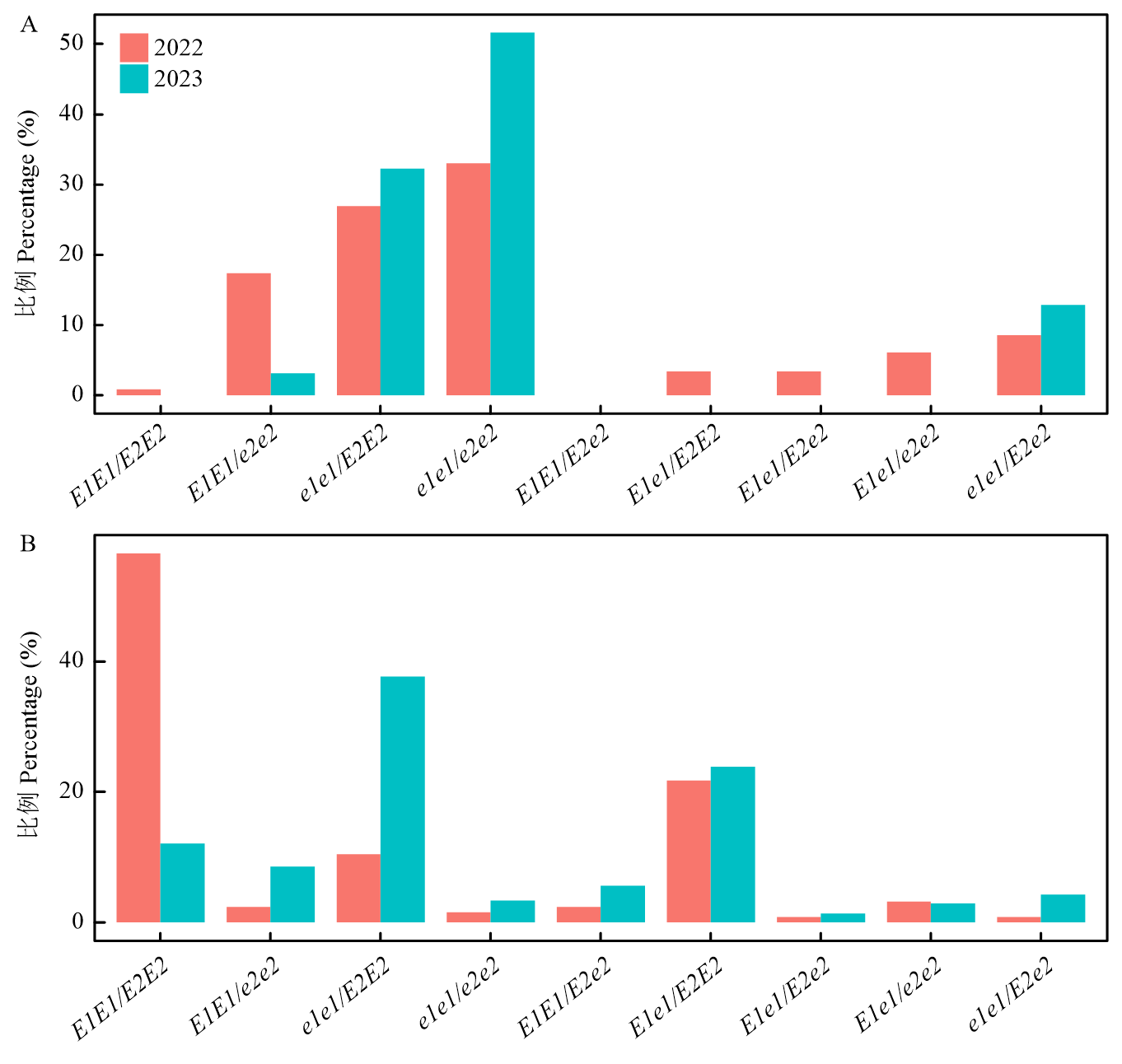
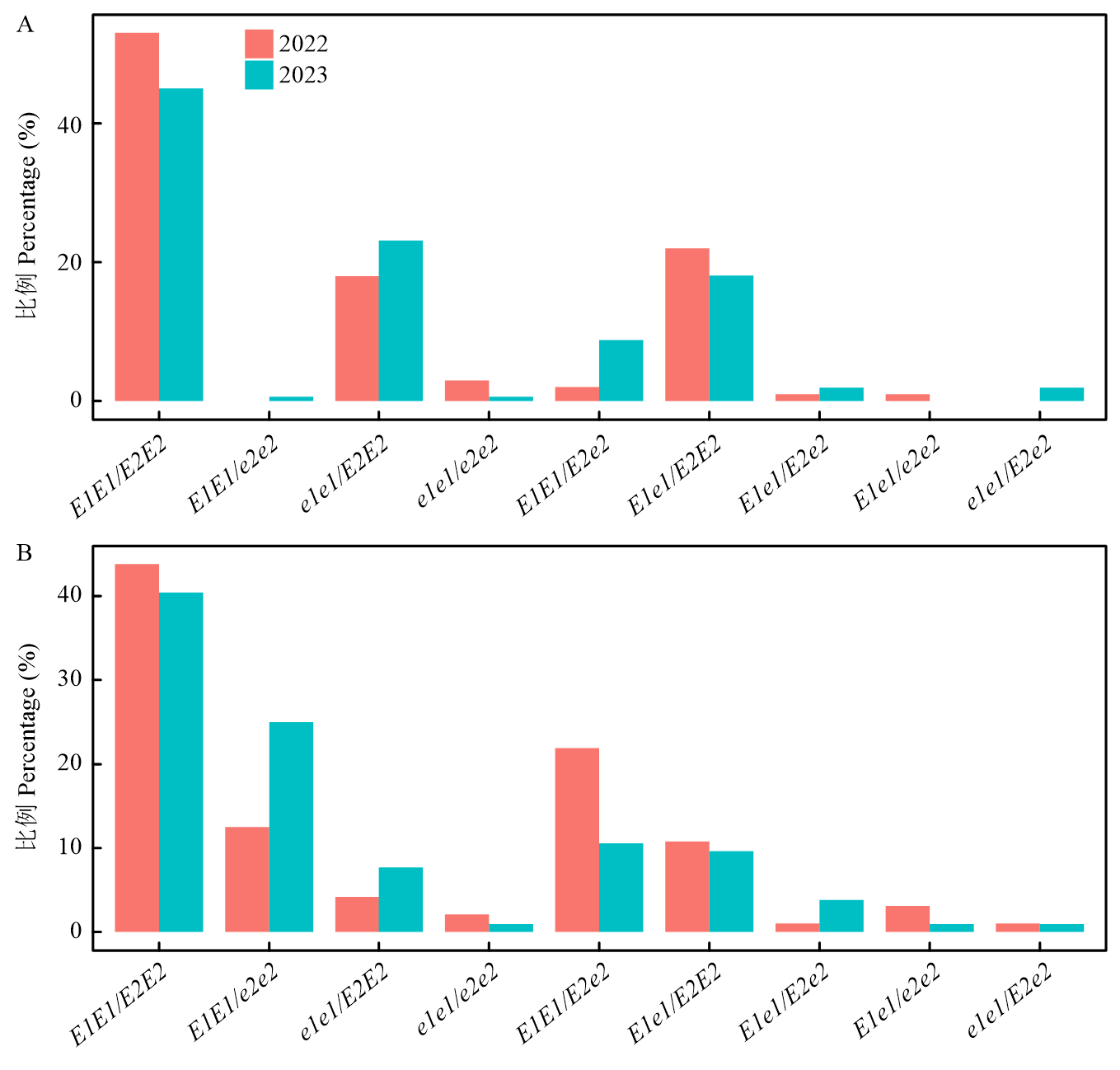
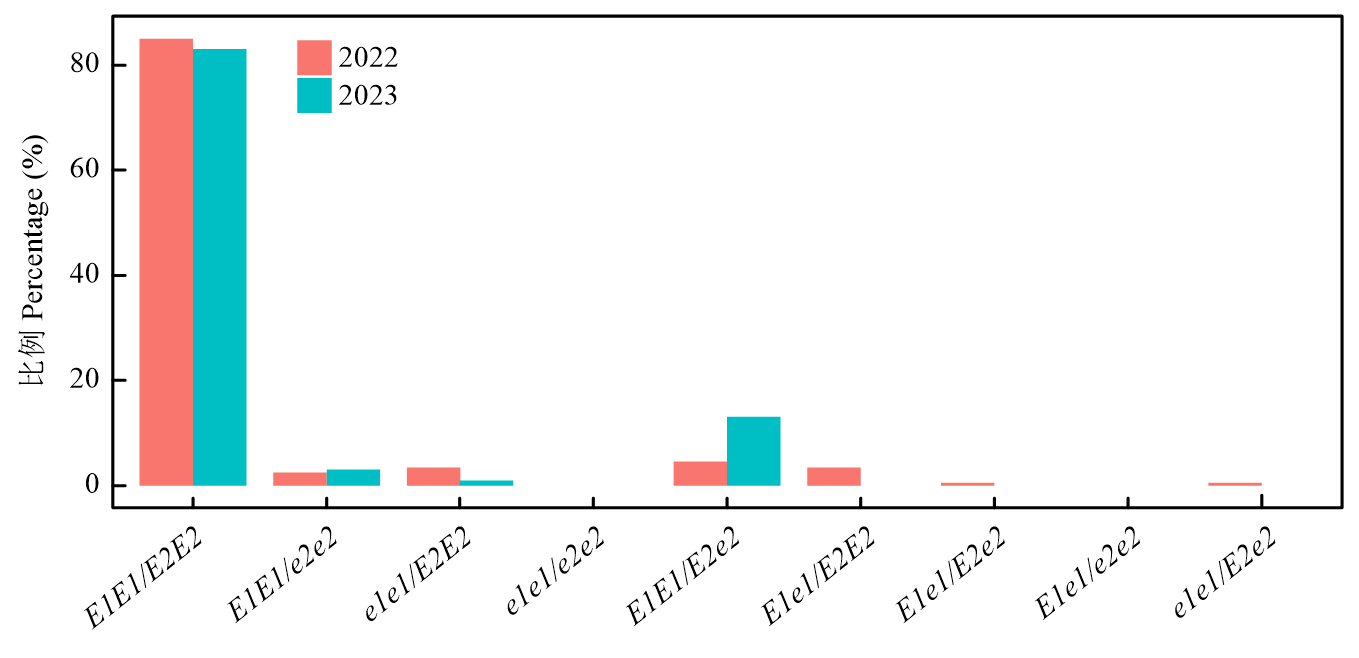
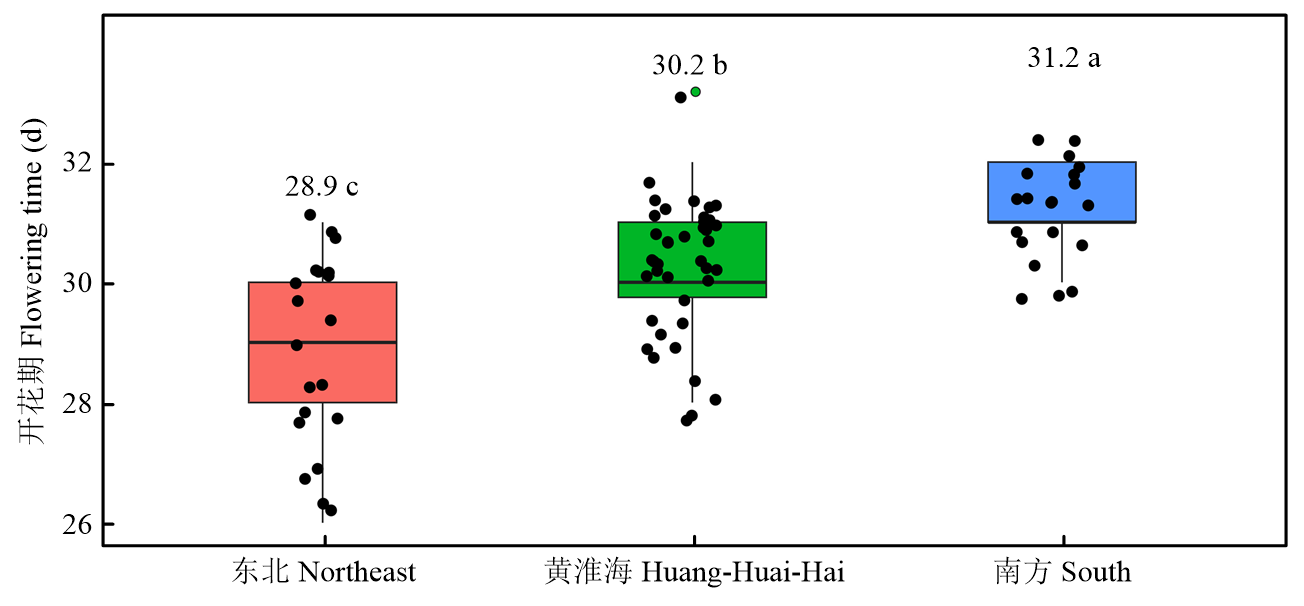
【Objective】Soybean is a short day crop that is sensitive to photoperiod, and it maybe lead to premature or late flowering when it is planted in different ecological areas. Therefore, in the application of ms1 (male sterility 1) basic population for recurrent selection in different ecological regions, there are problems such as the flowering time unsynchronization between local donor parents and acceptor sterile plants and low introduction rate. The purpose of this study is to construct ms1 basic recurrent population adapted to three ecological regions for improving the probability of flowering time synchronization between donor parents and acceptor sterile plants and reveal the changes of maturity genes E1 and E2 genotypes and phenotype of each population after two rounds of cross-fertilize for providing evidence for improvement of the flowering and maturity time of soybeans.【Method】We used 528 donor parents from different ecological regions and the ms1 basic population as materials. The donor parents were genotyping with the KASP markers of maturity genes E1 and E2 reported by previous research. The donor parents were classified according to E1 and E2 genotypes and mixed with seeds of ms1 basic population respectively, and these populations were planted in different ecological areas according to the suitable genotypes of each region for two rounds of cross-fertilize in two years. Northeast ecological region population was planted in Hulunbuir, Inner Mongolia and Chengde, Hebei, respectively. Huang-Huai-Hai ecological region population was planted in Shijiazhuang, Hebei and Xuchang, Henan. South ecological region population was planted in Guangzhou, Guangdong. Seeds harvested from different ms1 populations were planted in Sanya, Hainan every winter. The flowering and maturity time of donor parents and ms1 basic population were investigated, and the proportions of E1 and E2 genotypes in populations of different region were calculated.【Result】According to genotypes of maturity genes E1 and E2, the donor parents were divided into four groups E1E1/E2E2, E1E1/e2e2, e1e1/E2E2 and e1e1/e2e2 with ratios of 12.1%, 65.0%, 19.3%, and 3.6%, respectively. In the ms1 basic population, the late flowering genotype E1E1/E2E2 had the highest proportion (48.6%), and the flowering time of the population was late, mainly concentrated in 45-51 days. After two rounds of import by cross-fertilize, the percentage of target genotype e1e1/e2e2 increased from 33.0% to 51.6% in Hulunbuir of Northeast China, and the percentage of the e1e1/e2e2 genotype increased from 1.6% to 8% in Chengde. The percentage of target genotype e1e1/E2E2 increased from 18% to 23.1% in Shijiazhuang of Huang-Huai-Hai ecological area, and the percentage of E1E1/e2e2 increased from 12.5% to 30% in Xuchang, respectively. The percentage of E1E1/E2E2 remains above 80% in Guangzhou of South ecological region. The proportion of heterozygous genotypes of target imported genotypes was also increasing in the population. After two rounds of cross-fertilize, there were significant differences in flowering time among ms1 populations of different ecological regions, indicating that phenotypes of different populations also changed with the change of genotype of flowering genes.【Conclusion】Importing genotype of donor parents into the ms1 population based on their genotypes of flowering genes can increase the frequency of suitable genotypes in each ecological region, construct ms1 basic recurrent populations adapted to different ecological regions, increase the probability of flower time synchronization of local donor parents and acceptor ms1 sterile plants, achieve open pollination, gene aggregation and accumulation in soybean, and enrich the genetic diversity of the population, further improve breeding efficiency.

Key words: soybean, ms1 basic recurrent population, flowering time, maturity time, E1, E2, KASP

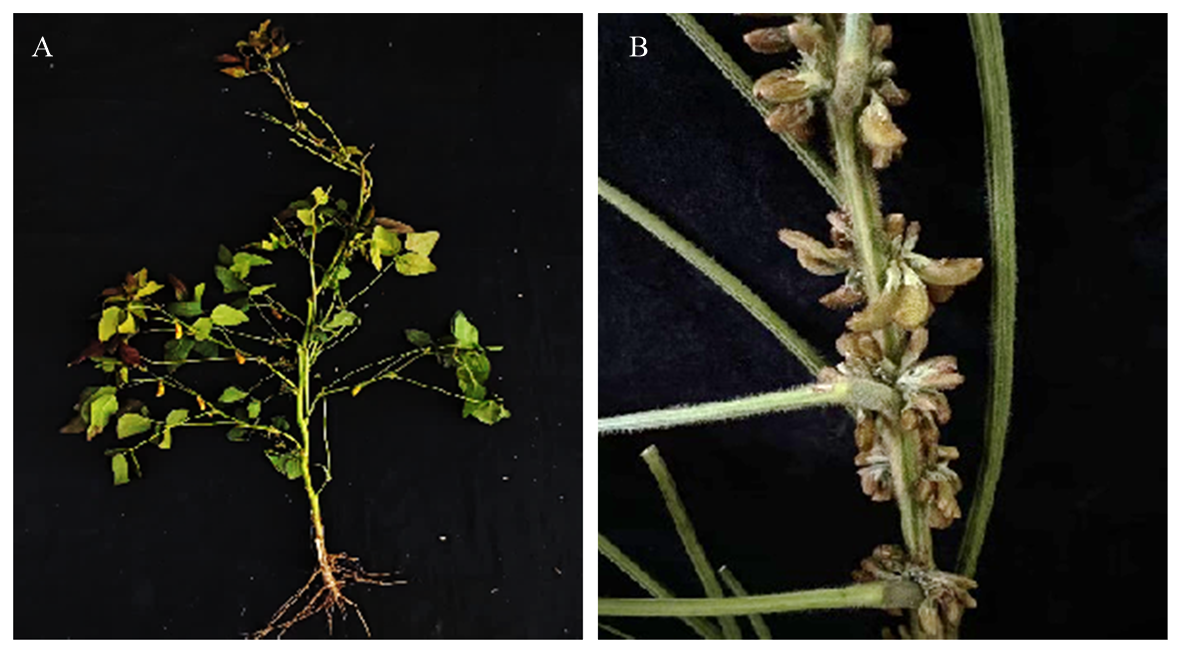
Fig. 1

Phenotype of ms1 male-sterile plant A: Male-sterile plant; B: Cluster pod of sterile plant"

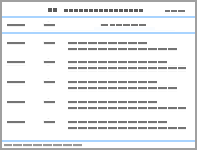
Table 1

The sequences of KASP primer of E1 and E2"

引物
Primer
序列
Sequence (5′-3′)
E1-as_FAM AAAGGGAGCAGTGTCAAAAGAAGAC
E1-as_VIC AAAGGGAGCAGTGTCAAAAGAAGAG
E1-as_Reverse GTTAGAGGCTTCGCATATGGTGGWTT
E2-as_FAM CCCATCAGAGGCATGTCTTATGA
E2-as_VIC CCCATCAGAGGCATGTCTTATGT
E2-as_Reverse CTGTTTTGTTCTCTAGTGGACTCA

Table 2

E1, E2, E3 and E4 genotypes of donor parents"

基因型
Genotype
品种数
Number of varieties
基因型比例
Genotype percentage (%)
E1/e2-ns/E3/E4 341 64.6
e1-as/E2/E3/E4 102 19.3
E1/E2/E3/E4 64 12.1
e1-as/e2-ns/E3/E4 18 3.4
e1-as/e2-ns/e3-tr/E4 1 0.2
E1/e2-ns/e3-tr/E4 2 0.4

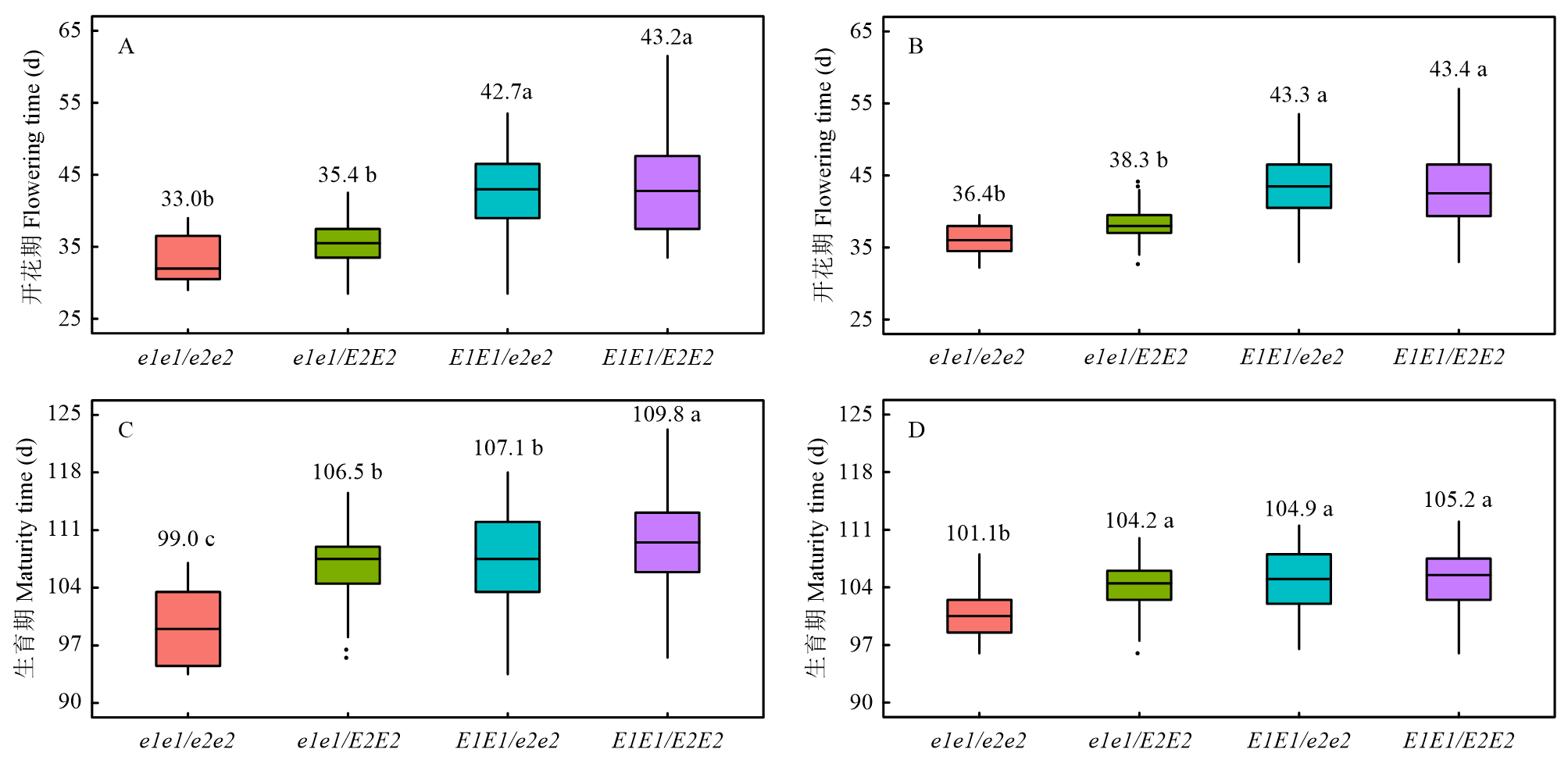
Fig. 2

Flowering and maturity time of varieties with different genotypes of E1 and E2 A-B: Flowering time of varieties with different genotypes, A: Shijiazhuang, Hebei, B: Bengbu, Anhui. C-D: Maturity time of varieties with different genotypes, C: Shijiazhuang, Hebei, D: Bengbu, Anhui. Flowering time: Days from VE to R1. Maturity time: Days from VE to R7. The numbers above the boxplot indicate the average values of flowering and maturity time, and the letters indicate the significance of the differences. The same as below"

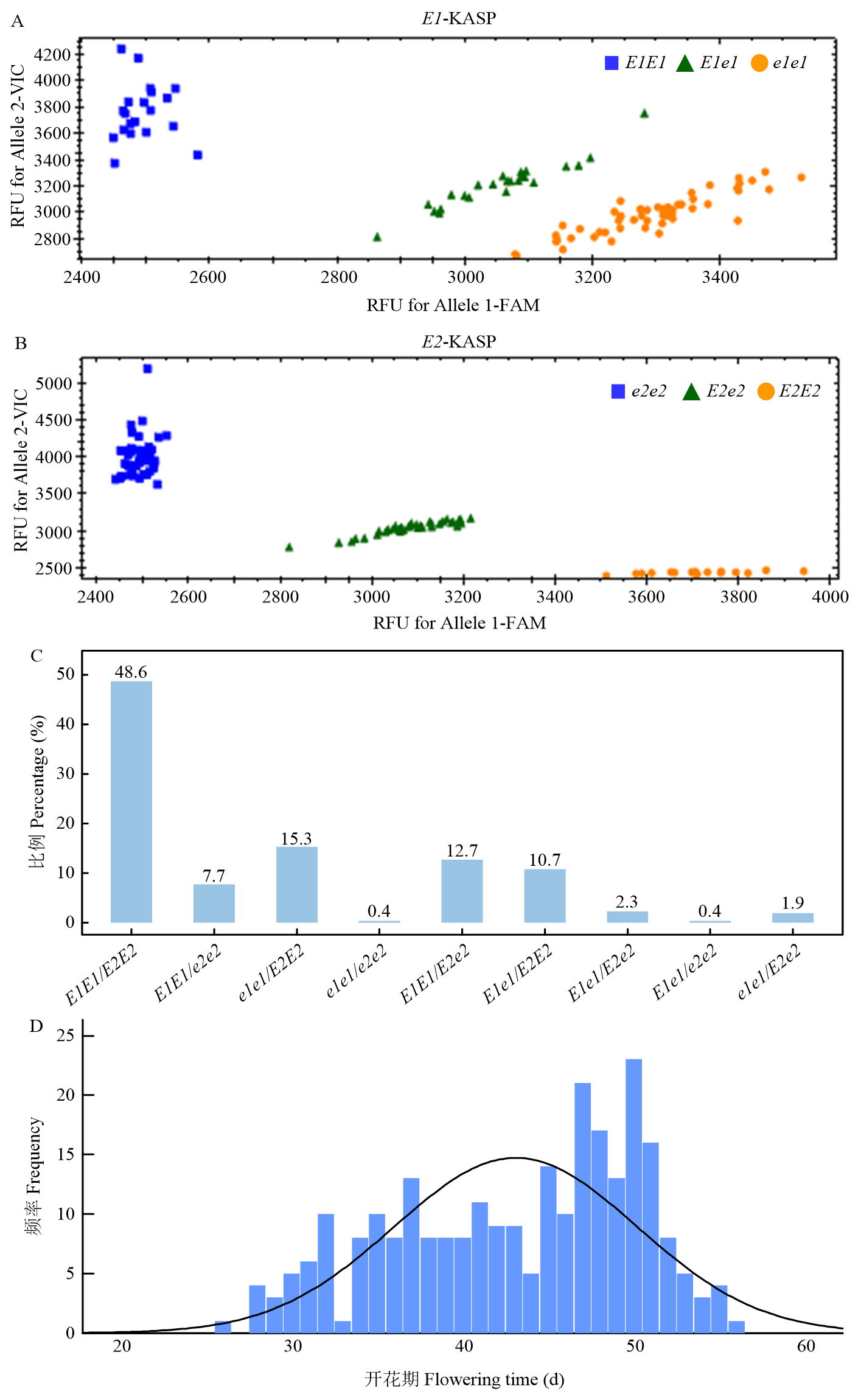
Fig. 3

Genotype and flowering time of ms1 basic population A-B: Genotyping of E1 and E2 with KASP markers. C: Proportion of each genotype in ms1 basic population. D: Flowering time of ms1 basic population"

Fig. 4

Proportion of different genotypes in ms1 population of Northeast ecological region A: Proportion of different genotypes in ms1 population of Hulunbuir. B: Proportion of different genotypes in ms1 population of Chengde. Genotypes with bold font are the target imported genotypes and their heterozygous. The same as below"

Fig. 5

Proportion of different genotypes in ms1 population of Huang-Huai-Hai ecological region A: Proportion of different genotypes in ms1 population of Shijiazhuang; B: Proportion of different genotypes in ms1 population of Xuchang"

Fig. 6

Proportion of different genotypes in ms1 population of South ecological region"

Fig. 7

Flowering time of ms1 population of different ecological region"

[1]
赵双进, 张孟臣, 杨春燕, 蒋春志, 刘兵强. 高蛋白大豆新品种冀豆20的选育及栽培要点. 农业科技通讯, 2010(1): 145-146.
ZHAO S J, ZHANG M C, YANG C Y, JIANG C Z, LIU B Q. Selection and breeding of high quality and high protein content soybean variety Jidou 20 and the crucial points of high yield culture techniques. Bulletin of Agricultural Science and Technology, 2010(1): 145-146. (in Chinese)
[2]
姬月梅, 罗瑞萍, 连金番, 赵志刚. 利用大豆雄性核不育基因ms1创制春大豆新种质及其在育种中的应用. 大豆科技, 2022(1): 9-13.
JI Y M, LUO R P, LIAN J F, ZHAO Z G. Creation of new spring soybean germplasm by using soybean male sterile gene ms1 and its application in breeding. Soybean Science & Technology, 2022(1): 9-13. (in Chinese)
[3]
陈东亮, 陈佳琴, 李振动, 杨春杰, 谭春燕, 朱星陶. 大豆ms1轮回群体核心种质在贵州的性状表现及相关性. 贵州农业科学, 2018, 46(12): 1-5.
CHEN D L, CHEN J Q, LI Z D, YANG C J, TAN C Y, ZHU X T. Trait expression and correlation of core germplasm of soybean male sterile (ms1) recurrent selection population in Guizhou. Guizhou Agricultural Sciences, 2018, 46(12): 1-5. (in Chinese)
[4]
赵青松, 杨春燕, 赵双进, 闫龙, 史晓蕾, 刘丽娟, 赵聪聪, 冯燕, 赵鑫, 张孟臣. 大豆ms1轮回群体应用于转EPSPS基因大豆育种改良研究. 华北农学报, 2016, 31(S1): 112-116.

doi: 10.7668/hbnxb.2016.S1.020
ZHAO Q S, YANG C Y, ZHAO S J, YAN L, SHI X L, LIU L J, ZHAO C C, FENG Y, ZHAO X, ZHANG M C. Application of transgenic herbicide-resistant soybean breeding based on male sterile (ms1) recurrent selection population. Acta Agriculturae Boreali-Sinica, 2016, 31(S1): 112-116. (in Chinese)
[5]
赵志刚, 罗瑞萍, 马献军, 荀光生. 大豆ms1轮回群体选择育种研究的探索与实践. 安徽农业科学, 2011, 39(24): 14555-14556.
ZHAO Z G, LUO R P, MA X J, XUN G S. MS1 soybean breeding cycle of group selection and practice. Journal of Anhui Agricultural Sciences, 2011, 39(24): 14555-14556. (in Chinese)
[6]
FANG X L, SUN X Y, YANG X D, LI Q, LIN C J, XU J, GONG W J, WANG Y F, LIU L, ZHAO L M, LIU B H, QIN J, ZHANG M C, ZHANG C B, KONG F J, LI M N. MS1 is essential for male fertility by regulating the microsporocyte cell plate expansion in soybean. Science China-Life Sciences, 2021, 64(9): 1533-1545.
[7]
BRIM C A, YOUNG M F. Inheritance of a male-sterile character in soybeans. Crop Science, 1971, 11(4): 564-566.
[8]
宋启建, 吴天侠, 盖钧镒. 熟期选择对大豆轮回群体质量、数量性状及不育率的影响. 中国农业科学, 1996, 29(3): 49-54. doi: 10.3864/j.issn.0578-1752.1996-29-03-49-54.
SONG Q J, WU T X, GAI J Y. Effect of maturity selection in a soybean recurrent population on morphological and agronomic traits and ratio of male-sterile plants. Scientia Agricultura Sinica, 1996, 29(3): 49-54. doi: 10.3864/j.issn.0578-1752.1996-29-03-49-54. (in Chinese)
[9]
赵双进, 张孟臣, 蒋春志, 杨春燕, 刘兵强, 崔珏. 大豆ms1轮回群体品质改良效应与分离特性研究. 中国农业科学, 2006, 39(12): 2422-2427. doi: 10.3864/j.issn.0578-1752.at-2005-6054.
ZHAO S J, ZHANG M C, JIANG C Z, YANG C Y, LIU B Q, CUI Y. Study on quality improvement effect and separate character of soybean male sterile (ms1) recurrent selection population. Scientia Agricultura Sinica, 2006, 39(12): 2422-2427. doi: 10.3864/j.issn.0578-1752.at-2005-6054. (in Chinese)
[10]
XIA Z J, WATANABE S, YAMADA T, TSUBOKURA Y, NAKASHIMA H, ZHAI H, ANAI T, SATO S, YAMAZAKI T, S X, WU H Y, TABATA S, HARADA K. Positional cloning and characterization reveal the molecular basis for soybean maturity locus E1 that regulates photoperiodic flowering. Proceedings of the National Academy of Sciences of the United States of America, 2012, 109(32): E2155-E2164.
[11]
WATANABE S, XIA Z J, HIDESHIMA R, TSUBOKURA Y, SATO S, YAMANAKA N, TAKAHASHI R, ANAI T, TABATA S, KITAMURA K, HARADA K. A map-based cloning strategy employing a residual heterozygous line reveals that the GIGANTEA gene is involved in soybean maturity and flowering. Genetics, 2011, 188(2): 395-407.
[12]
WATANABE S, HIDESHIMA R, XIA Z J, TSUBOKURA Y, SATO S, NAKAMOTO Y, YAMANAKA N, TAKAHASHI R, ISHIMOTO M, ANAI T, TABATA S, HARADA K. Map-based cloning of the gene associated with the soybean maturity locus E3. Genetics, 2009, 182(4): 1251-1262.
[13]
LIU B H, KANAZAWA A, MATSUMURA H, TAKAHASHI R, HARADA K, ABE J. Genetic redundancy in soybean photoresponses associated with duplication of the phytochrome A gene. Genetics, 2008, 180(2): 995-1007.

doi: 10.1534/genetics.108.092742 pmid: 18780733
[14]
BONATO E R, VELLO N A. E6, a dominant gene conditioning early flowering and maturity in soybeans. Genetics and Molecular Biology, 1999, 22(2): 229-232.
[15]
FANG C, LIU J, ZHANG T, SU T, LI S C, CHENG Q, KONG L P, LI X M, BU T T, LI H Y, DONG L D, LU S J, KONG F J, LIU B H. A recent retrotransposon insertion of J caused E6 locus facilitating soybean adaptation into low latitude. Journal of Integrative Plant Biology, 2021, 63(6): 995-1003.
[16]
COBER E R, VOLDENG H D. A new soybean maturity and photoperiod-sensitivity locus linked to E1 and T. Crop Science, 2001, 41(3): 698-701.
[17]
COBER E R, MOLNAR S J, CHARETTE M, VOLDENG H D. A new locus for early maturity in soybean. Crop Science, 2010, 50(2): 524-527.
[18]
ZHAO C, TAKESHIMA R, ZHU J H, XU M L, SATO M, WATANABE S, KANAZAWA A, LIU B H, KONG F J, YAMADA T, ABE J. A recessive allele for delayed flowering at the soybean maturity locus E9 is a leaky allele of FT2a, a FLOWERING LOCUS T ortholog. BMC Plant Biology, 2016, 16: 20.
[19]
SAMANFAR B, MOLNAR S J, CHARETTE M, SCHOENROCK A, DEHNE F, GOLSHANI A, BELZILE F, COBER E R. Mapping and identification of a potential candidate gene for a novel maturity locus, E10, in soybean. Theoretical and Applied Genetics, 2017, 130(2): 377-390.
[20]
LU S J, DONG L D, FANG C, LIU S L, KONG L P, CHENG Q, CHEN L Y, SU T, NAN H Y, ZHANG D, ZHANG L, WANG Z J, YANG Y Q, YU D Y, LIU X L, YANG Q Y, LIN X Y, TANG Y Y, ZHAO X H, YANG X Q, TIAN C G, XIE Q G, LI X, YUAN X H, TIAN Z X, LIU B H, WELLER J L, KONG F J. Stepwise selection on homeologous PRR genes controlling flowering and maturity during soybean domestication. Nature Genetics, 2020, 52(4): 428-436.
[21]
DONG L D, LI S C, WANG L S, SU T, ZHANG C B, BI Y D, LAI Y C, KONG L P, WANG F, PEI X X, LI H Y, HOU Z H, DU H P, DU H, LI T, CHENG Q, FANG C, KONG F J, LIU B H. The genetic basis of high-latitude adaptation in wild soybean. Current Biology, 2023, 33(2): 252-262.
[22]
DONG L D, CHENG Q, FANG C, KONG L P, YANG H, HOU Z H, LI Y L, NAN H Y, ZHANG Y H, CHEN Q S, ZHANG C B, KOU K, SU T, WANG L S, LI S C, LI H Y, LIN X Y, TANG Y, ZHAO X H, LU S J, LIU B H, KONG F J. Parallel selection of distinct Tof5 alleles drove the adaptation of cultivated and wild soybean to high latitudes. Molecular Plant, 2022, 15(2): 308-321.
[23]
LI H Y, DU H P, HE M L, WANG J H, WANG F, YUAN W J, HUANG Z R, CHENG Q, GOU C J, CHEN Z, LIU B H, KONG F J, FANG C, ZHAO X H, YU D Y. Natural variation of FKF1 controls flowering and adaptation during soybean domestication and improvement. The New Phytologist, 2023, 238(4): 1671-1684.
[24]
LI H Y, DU H P, HUANG Z R, HE M L, KONG L P, FANG C, CHEN L Y, YANG H, ZHANG Y H, LIU B H, KONG F J, ZHAO X H. The AP2/ERF transcription factor TOE4b regulates photoperiodic flowering and grain yield per plant in soybean. Plant Biotechnology Journal, 2023, 21(8): 1682-1694.
[25]
DONG L D, FANG C, CHENG Q, SU T, KOU K, KONG L P, ZHANG C B, LI H Y, HOU Z H, ZHANG Y H, CHEN L Y, YUE L, WANG L S, WANG K, LI Y L, GAN Z R, YUAN X H, WELLER J L, LU S J, KONG F J, LIU B H. Genetic basis and adaptation trajectory of soybean from its temperate origin to tropics. Nature Communications, 2021, 12(1): 5445.
[26]
KOU K, YANG H, LI H Y, FANG C, CHEN L Y, YUE L, NAN H Y, KONG L P, LI X M, WANG F, WANG J H, DU H P, YANG Z Y, BI Y D, LAI Y C, DONG L D, CHENG Q, SU T, WANG L S, LI S C, HOU Z H, LU S J, ZHANG Y H, CHE Z J, YU D Y, ZHAO X H, LIU B H, KONG F J. A functionally divergent SOC1 homolog improves soybean yield and latitudinal adaptation. Current Biology, 2022, 32(8): 1728-1742.
[27]
LU S J, ZHAO X H, HU Y L, LIU S L, NAN H Y, LI X M, FANG C, CAO D, SHI X Y, KONG L P, SU T, ZHANG F G, LI S C, WANG Z, YUAN X H, COBER E R, WELLER J L, LIU B H, HOU X L, TIAN Z X, KONG F J. Natural variation at the soybean J locus improves adaptation to the tropics and enhances yield. Nature Genetics, 2017, 49(5): 773-779.
[28]
LI X M, FANG C, YANG Y Q, LV T X, SU T, CHEN L Y, NAN H Y, LI S C, ZHAO X H, LU S J, DONG L D, CHENG Q, TANG Y, XU M L, ABE J, HOU X L, WELLER J L, KONG F J, LIU B H. Overcoming the genetic compensation response of soybean florigens to improve adaptation and yield at low latitudes. Current Biology, 2021, 31(17): 3755-3767.
[29]
TSUBOKURA Y, WATANABE S, XIA Z J, KANAMORI H, YAMAGATA H, KAGA A, KATAYOSE Y, ABE J, ISHIMOTO M, HARADA K. Natural variation in the genes responsible for maturity loci E1, E2, E3 and E4 in soybean. Annals of Botany, 2014, 113(3): 429-441.
[30]
JIANG B J, NAN H Y, GAO Y F, TANG L L, YUE Y L, LU S J, MA L M, CAO D, SUN S, WANG J L, WU C X, YUAN X H, HOU W S, KONG F J, HAN T F, LIU B H. Allelic combinations of soybean maturity Loci E1, E2, E3 and E4 result in diversity of maturity and adaptation to different latitudes. PLoS ONE, 2014, 9(8): e106042.
[31]
LIU L P, SONG W W, WANG L W, SUN X G, QI Y P, WU T T, SUN S, JIANG B J, WU C X, HOU W S, NI Z F, HAN T F. Allele combinations of maturity genes E1-E4 affect adaptation of soybean to diverse geographic regions and farming systems in China. PLoS ONE, 2020, 15(7): e0235397.
[32]
CAO D, TAKESHIMA R, ZHAO C, LIU B H, JUN A, KONG F J. Molecular mechanisms of flowering under long days and stem growth habit in soybean. Journal of Experimental Botany, 2017, 68(8): 1873-1884.

doi: 10.1093/jxb/erw394 pmid: 28338712
[33]
SONG W W, LIU L P, SUN S, WU T T, ZENG H Y, TIAN S Y, SUN B C, LI W B, LIU L J, WANG S M, XING H, ZHOU X A, NIAN H, LU W C, HAN X Z, WANG S Y, CHEN W Y, GUO T, SONG X Q, TIAN Z Y, CHENG Y X, SONG S H, FU L S, WANG H C, LUO R P, LIU X Y, LIU Q, ZHANG G H, LU S H, XU R, LI S Z, LU W G, ZHANG Q, WANG Z B, JIANG C G, SHEN W L, ZHANG M R, ZHU D H, WANG R Z, CHEN Y, WANG T J, ZHU X T, ZHAN Y, JIANG B J, XU C L, YUAN S, HOU W S, GAI J Y, WU C X, HAN T F. Precise classification and regional delineation of maturity groups in soybean cultivars across China. European Journal of Agronomy, 2023, 151: 126982.
[34]
夏正俊. 大豆光周期反应与生育期基因研究进展. 作物学报, 2013, 39(4): 571-579.
XIA Z J. Research progresses on photoperiodic flowering and maturity genes in soybean (Glycine max Merr.). Acta Agronomica Sinica, 2013, 39(4): 571-579. (in Chinese)
[35]
邓莹莹, 赵双进, 闫龙, 杨春燕, 刘兵强, 邸锐, 东方阳, 张孟臣. 定向选择对大豆ms1轮回群体遗传基础的影响. 大豆科学, 2015, 34(4): 548-554.
DENG Y Y, ZHAO S J, YAN L, YANG C Y, LIU B Q, DI R, DONGFANG Y, ZHANG M C. Effect of orthoselection on agronomic traits and genetic base of a male sterile soybean recurrent population. Soybean Science, 2015, 34(4): 548-554. (in Chinese)
[1] LI YongJuan, ZHANG YueTong, WANG YiBo, ZHAO ChangJiang, SONG Jie, CHEN XueLi, YAO Qin. Effects of Biochar Application on the Abundance and Community Composition of Nitrogen-Fixing Microbial nifH Gene in Soybean Rotation and Continuous Cropping Systems [J]. Scientia Agricultura Sinica, 2026, 59(6): 1272-1285.
[2] LIU FangDong, SUN Lei, WANG WuBin, ZHAO JinMing, GAI JunYi. Changes of Cropping System and Suggestions on Ecological Cultivation Regions of Soybeans in China [J]. Scientia Agricultura Sinica, 2026, 59(3): 486-498.
[3] CAI TingYang, ZHU YuPeng, LI RuiDong, WU ZongSheng, XU YiFan, SONG WenWen, XU CaiLong, WU CunXiang. Effects of Leaf-Cutting at Seedling Stage on Photosynthetic Characteristics, Pod Distribution and Yield Formation in Soybean in the Huang-Huai-Hai Region [J]. Scientia Agricultura Sinica, 2026, 59(2): 292-304.
[4] WU Qiong, XIE XiangTing, WANG Lei, MOU Yong, LI JinWei. Development and Validation of Event-Specific PCR Method for the Quantification of Genetically Modified Soybean DBN8205 [J]. Scientia Agricultura Sinica, 2026, 59(1): 29-40.
[5] LIU LuPing, HU XueJie, QI Jin, CHEN Qiang, LIU Zhi, ZHAO TianTian, SHI XiaoLei, LIU BingQiang, MENG QingMin, ZHANG MengChen, HAN TianFu, YANG ChunYan. Cloning of the Promoters and Analysis of Expression Patterns of Maturity Genes E1 and E2 in Soybean [J]. Scientia Agricultura Sinica, 2025, 58(5): 840-850.
[6] ZHENG Yu, CHEN Yi, TI JinSong, SHI LongFei, XU XiaoBo, LI YuLin, GUO Rui. Evaluation of Carbon Footprint and Economic Benefit of Different Tobacco Rotation Patterns [J]. Scientia Agricultura Sinica, 2025, 58(4): 733-747.
[7] ZHANG Qi, XUE FuZhen, YANG XiuJie, JIANG SuYang, HUANG XueJuan, MA JiaYi, ZHANG ZheWen, XU JieFei. Study on the Function of Soybean Nicotinamide Enzyme GmNIC1 Gene Under Saline Alkali Stress [J]. Scientia Agricultura Sinica, 2025, 58(24): 5128-5142.
[8] MA HeXiao, GE GuoLong, ZHANG XiangQian, LU ZhanYuan, WANG ManXiu, RONG MeiRen, SHI JingJing, ZHANG DeJian, SUN XuePing. Effects of Different Crop Rotation Systems on Soil Readily Oxidized Organic Carbon and Carbon Pool Activity Differences [J]. Scientia Agricultura Sinica, 2025, 58(24): 5201-5215.
[9] GAO ChunHua, ZHAO HaiJun, ZHAO FengTao, KONG WeiLin, JU FeiYan, LI ZongXin, SHI DeYang, LIU Ping. Effect of Growth Regulators on the Stem Characteristics and Yield of Summer Maize in Maize-Soybean Strip Intercropping [J]. Scientia Agricultura Sinica, 2025, 58(23): 4920-4935.
[10] YANG ShuQi, ZHAO YingXing, QIAN Xin, ZHANG XuePeng, MENG WeiWei, SUI Peng, LI ZongXin, CHEN YuanQuan. Comprehensive Evaluation of the Maize-Soybean Intercropping Pattern in the Huang-Huai Region [J]. Scientia Agricultura Sinica, 2025, 58(23): 4936-4951.
[11] FANG Jian, QIN ZhaoJi, YU YuanYuan, YU NingNing, ZHAO Bin, LIU Peng, REN BaiZhao, ZHANG JiWang. Impacts of Varying Row Ratio Arrangements on Plant Performance, Stand Yield, and Comprehensive Benefits in Soybean-Maize Strip intercropping [J]. Scientia Agricultura Sinica, 2025, 58(23): 4841-4857.
[12] SONG XuHui, ZHAO XueYing, ZHAO Bin, REN BaiZhao, ZHANG JiWang, LIU Peng, REN Hao. Effects of Row Ratio Allocation on Light Distribution and Photosynthetic Production Capacity of Maize-Soybean Strip Intercropping [J]. Scientia Agricultura Sinica, 2025, 58(23): 4858-4871.
[13] SHI DeYang, GAO ChunHua, LI YanHong, ZHAO HaiJun, XIA DeJun. Effects of Row Spacing Configuration on the Canopy Characteristics and Grain Yield of the Intercropping Maize [J]. Scientia Agricultura Sinica, 2025, 58(23): 4872-4885.
[14] ZHANG MengYu, HE ZaiJu, WANG XingXing, REN Hao, REN BaiZhao, LIU Peng, ZHANG JiWang, ZHAO Bin. The Influences of Different Plant Height Combinations of Maize Varieties on Light Distribution in the Canopy and the Photosynthetic Characteristics of Maize Under Maize-Soybean Strip Intercropping Pattern [J]. Scientia Agricultura Sinica, 2025, 58(23): 4886-4904.
[15] KONG WeiLin, GAO ChunHua, ZHAO FengTao, JU FeiYan, LI ZongXin, ZHAO HaiJun, LIU Ping. Effects of Nitrogen Application Rate Combined with Drip Irrigation Amount After Sowing on Yield, Economic Benefit, Water Use Characteristics of Maize-Soybean Strip Intercropping Planting System [J]. Scientia Agricultura Sinica, 2025, 58(23): 4905-4919.
Viewed
Full text


Abstract

Cited

  Shared   
  Discussed   
No Suggested Reading articles found!