Scientia Agricultura Sinica ›› 2024, Vol. 57 ›› Issue (5): 950-964.doi: 10.3864/j.issn.0578-1752.2024.05.010

• SOIL & FERTILIZER·WATER-SAVING IRRIGATION·AGROECOLOGY & ENVIRONMENT • Previous Articles     Next Articles

Spatial Distribution and Driving Factors of Winter Wheat Irrigation Carbon Emission Intensity at Township Level in Henan Province

ZHU RuiMing1,2(), ZHAO RongQin1(), JIAO ShiXing3, LI XiaoJian2, XIAO LianGang1, XIE ZhiXiang1, YANG QingLin1, WANG Shuai1, ZHANG HuiFang1   

  1. 1 College of Surveying and Geo-Informatics, North China University of Water Resources and Electric Power, Zhengzhou 450046
    2 College of Geography and Environmental Science, Henan University, Kaifeng 475004, Henan
    3 Department of Resources & Environment and Tourism, Anyang Normal University, Anyang 455000, Henan
  • Received:2023-03-31 Accepted:2023-06-09 Online:2024-03-06 Published:2024-03-06
  • Contact: ZHAO RongQin

Abstract:

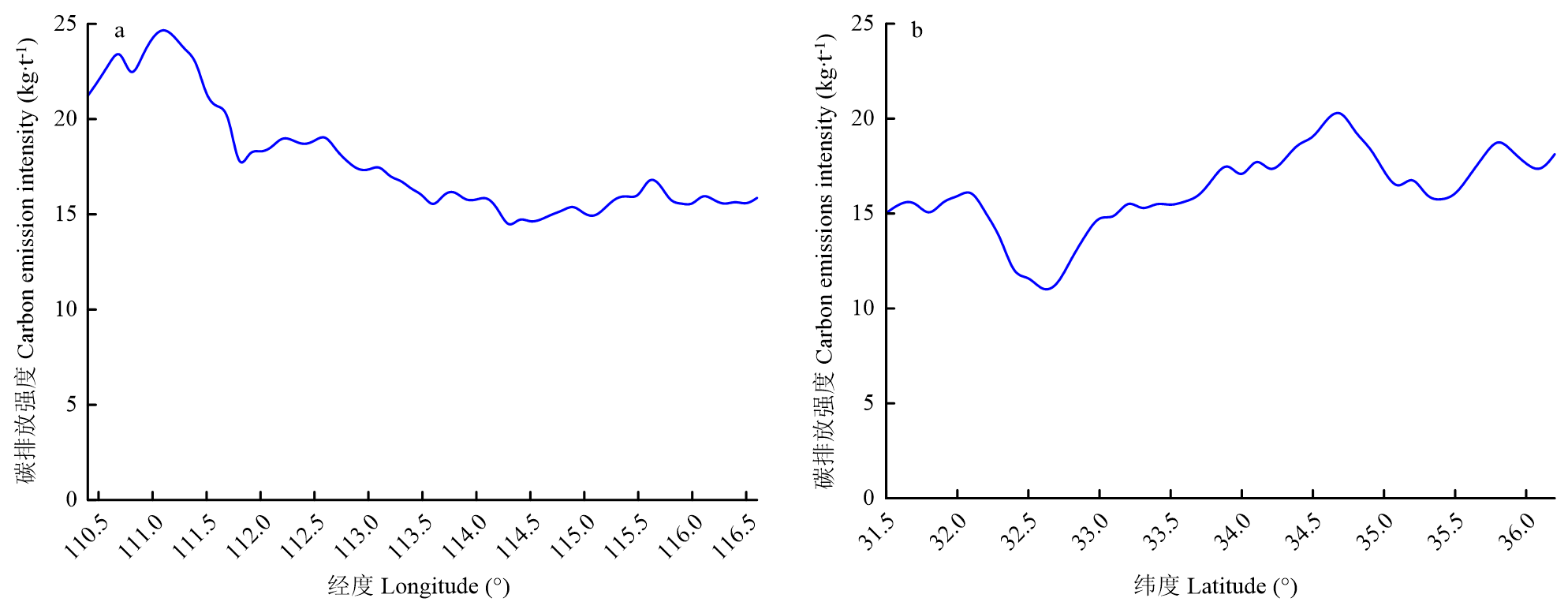
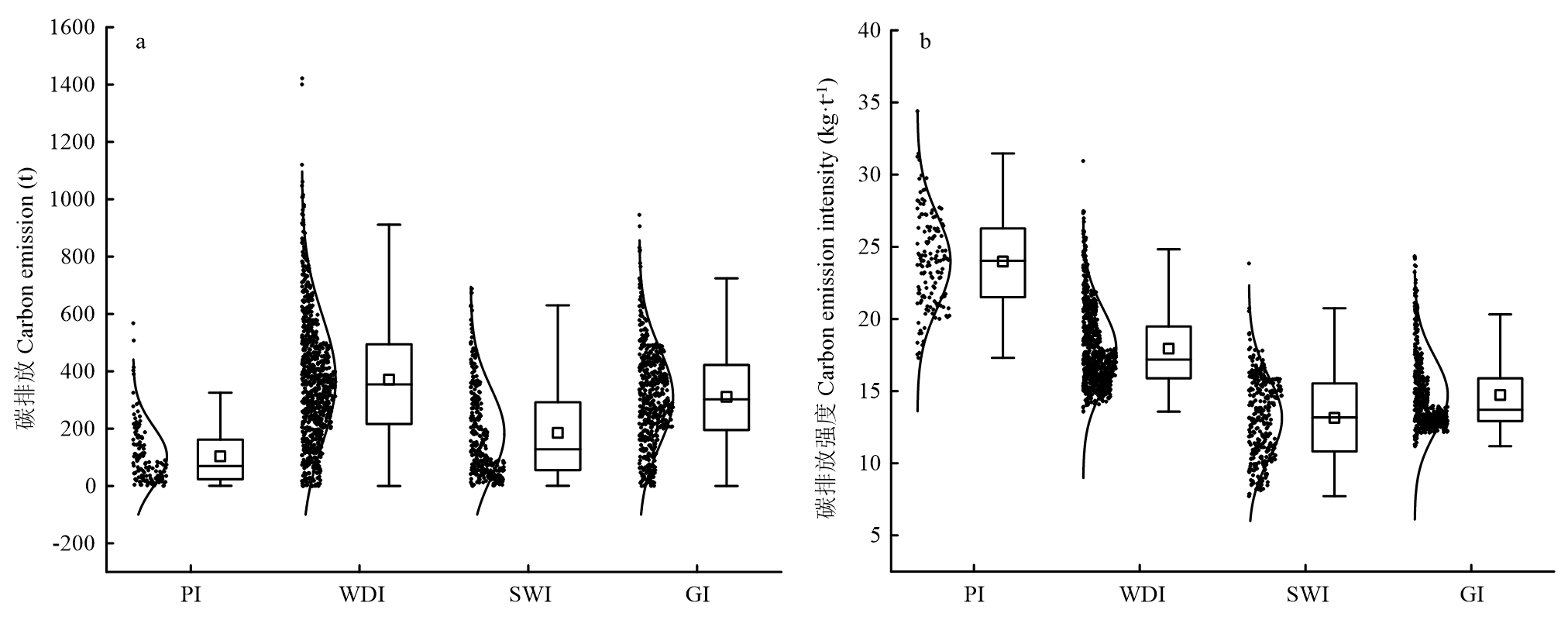
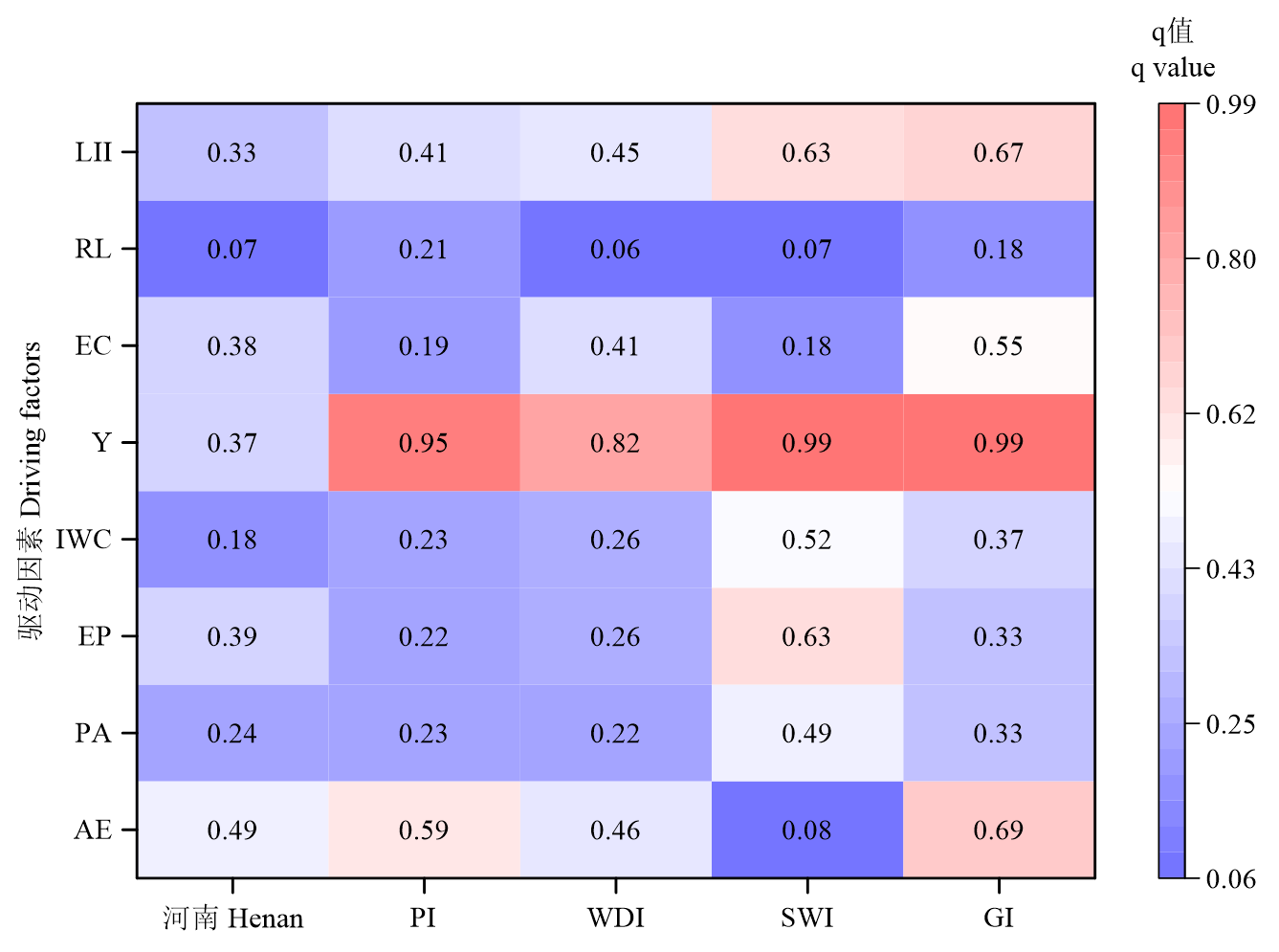
【Objective】The aim of this study was to explore the spatial distribution pattern and driving mechanism of agricultural carbon emissions of different townships and irrigation modes, and to reveal the regional differences of agricultural water and energy resources consumption combination characteristics, so as to provide necessary references for agricultural irrigation mode optimization, water and energy resources conservation and low-carbon agricultural sustainable development. 【Method】The irrigation carbon emission intensity and its spatial distribution of winter wheat at township level were calculated by using multi-source data, including remote sensing data, statistical data, meteorological data, and agricultural irrigation survey data. In addition, the geographical detector was employed to discuss the influencing factors of carbon emission intensity under different irrigation modes (Irrigation mode with rain-fed agriculture as the primary method, PI mode; Irrigation mode with surface water irrigation as the primary method, SWI mode; Irrigation mode with diversion and irrigation projects as the primary method, WDI mode; Irrigation mode with groundwater irrigation as the primary method, GI mode). 【Result】(1) In 2018, the average carbon emission intensity of winter wheat irrigation at the township level in Henan Province was 15.05 kg∙t-1, which showed a west-to-east decreasing trend in the longitudinal direction and a north-high-south-low spatial distribution pattern in the latitudinal direction. The mean value of mean carbon emission intensity at township level was 15.05 kg∙t-1. The high value townships was concentrated in the western mountainous region, while the lower gathered in the southeast region. (2) By comparing four irrigation modes, the irrigation mode with highest carbon emission intensity was the irrigation mode with rain-fed as the primary method (PI mode, 22.22 kg∙t-1), while the irrigation mode with groundwater irrigation as the primary method was the least ideal (SWI mode, 11.05 kg∙t-1). (3) The average elevation and effective precipitation explained 49% and 39% of the spatial differentiation pattern of carbon emission intensity, respectively, which were key factors influencing the carbon emission intensity of winter wheat irrigation. The effect of the same driving factor under different irrigation modes was variable. The influence of energy consumption on the spatial differentiation pattern of winter wheat irrigation carbon emission intensity under the irrigation mode dominated by water diversion irrigation projects (WDI mode) was the strongest, and the driving effect of land input intensity under the GI mode was the most significant. In addition, the interaction of different drivers had double-factor enhancement effects and non-linear enhancement effects. 【Conclusion】There was spatial heterogeneity and differences in irrigation mode in the carbon emission intensity of winter wheat irrigation at the township level in Henan Province. The PI mode was the mode with the highest winter wheat irrigation carbon emission intensity and the WDI mode was the mode with the highest carbon emissions. The average elevation and effective precipitation were the main reasons for the formation of spatially divergent patterns of irrigation carbon emission intensity of winter wheat at township scale in Henan Province, while anthropogenic factors were the dominant forces under different irrigation patterns.

Key words: carbon emissions, township level, irrigation mode, winter wheat, carbon emission intensity, driving factors, Henan Province

Fig. 1

Spatial distribution of winter wheat irrigation modes and survey villages in Henan Province"

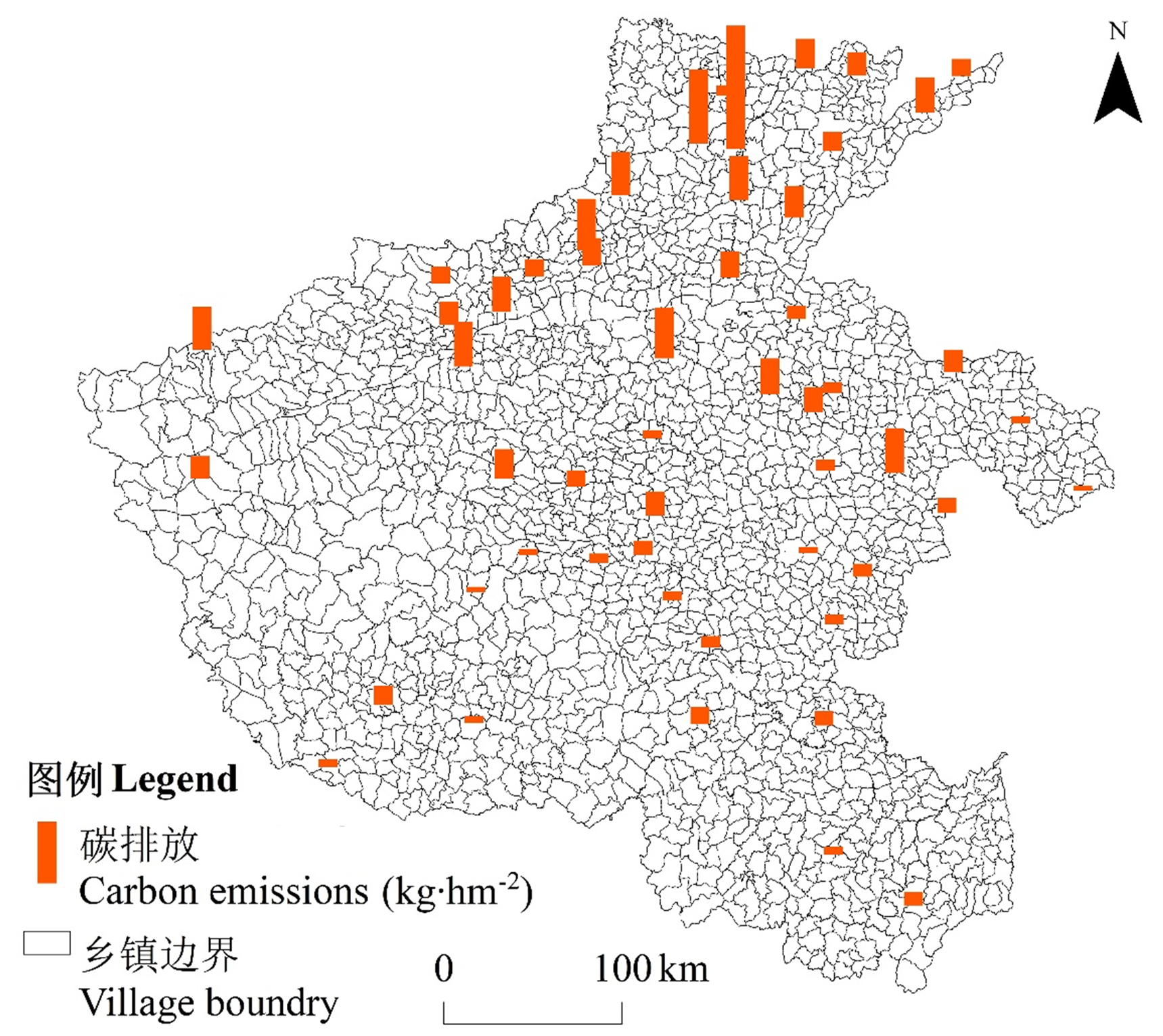
Fig. 2

Carbon emissions from winter wheat irrigation of 65 villages in Henan Province"

Fig. 3

Spatial distribution of winter wheat irrigation carbon emission and its intensity at township level in Henan Province"

Fig. 4

The change of winter wheat irrigation carbon emission intensity at township level with the increase of longitude and latitude in Henan Province The ordinate is the average carbon emission intensity of townships with equal centroids"

Fig. 5

Carbon emission and its intensity box chart at township level under different irrigation modes in Henna Province"

Fig. 6

Risk factor detector under different irrigation modes AE is the average elevation, EP is the effective precipitation, RL is the river length, PA is the planted area, IWC is the irrigation water consumption, Y is the yield, EC is the energy consumption, LII is the land input intensity"

Fig. 7

Spatial distribution of irrigation carbon emission intensity driving factors in Henna Province"

Table 1

Interaction detection results of different driving factors under different irrigation modes"

灌溉模式
Irrigation mode
驱动因素
Driving factors
AE PA EP IWC Y EC RL LII
河南省
Henan Province
AE 0.49
PA 0.56 0.24
EP 0.74 0.58 0.39
IWC 0.53 0.29 0.61 0.18
Y 0.59 0.48 0.75 0.41 0.37
EC 0.55 0.51 0.66 0.45 0.56 0.38
RL 0.55 0.35 0.54 0.28 0.48 0.46 0.07
LII 0.56 0.38 0.68 0.38 0.51 0.51 0.44 0.33
PI AE 0.59
PA 0.73 0.23
EP 0.79 0.58 0.22
IWC 0.70 0.30 0.47 0.23
Y 0.97 0.96 0.97 0.96 0.95
EC 0.79 0.57 0.60 0.49 0.97 0.19
RL 0.78 0.53 0.68 0.46 0.97 0.53 0.21
LII 0.75 0.47 0.67 0.47 0.96 0.62 0.58 0.41
WDI AE 0.46
PA 0.53 0.22
EP 0.74 0.53 0.26
IWC 0.52 0.31 0.59 0.26
Y 0.83 0.84 0.99 0.83 0.82
EC 0.48 0.52 0.72 0.51 0.83 0.41
RL 0.49 0.38 0.36 0.42 0.83 0.46 0.06
LII 0.64 0.50 0.75 0.48 0.87 0.63 0.57 0.45
SWI AE 0.08
PA 0.56 0.49
EP 0.77 0.81 0.63
IWC 0.58 0.56 0.80 0.52
Y 0.99 0.99 0.99 0.99 0.99
EC 0.21 0.63 0.79 0.63 0.99 0.18
RL 0.26 0.65 0.71 0.63 0.99 0.29 0.07
LII 0.67 0.68 0.85 0.66 0.99 0.70 0.74 0.63
GI AE 0.69
PA 0.78 0.33
EP 0.77 0.57 0.33
IWC 0.78 0.42 0.63 0.37
Y 0.99 0.99 0.99 0.99 0.99
EC 0.72 0.75 0.69 0.76 0.99 0.55
RL 0.75 0.68 0.59 0.68 0.99 0.65 0.18
LII 0.84 0.77 0.80 0.74 0.99 0.83 0.80 0.67
[1]
FUHRMAN J, MCJEON H, PATEL P, DONEY S C, SHOBE W M, CLARENS A F. Food-energy-water implications of negative emissions technologies in a +1.5 ℃ future. Nature Climate Change, 2020, 10(10): 920-927.

doi: 10.1038/s41558-020-0876-z
[2]
XU Z C, CHEN X Z, LIU J G, ZHANG Y, CHAU S, BHATTARAI N, WANG Y, LI Y J, CONNOR T, LI Y K. Impacts of irrigated agriculture on food-energy-water-CO2 nexus across metacoupled systems. Nature Communications, 2020, 11: 5837.

doi: 10.1038/s41467-020-19520-3
[3]
张扬, 李涵, 赵正豪. 中国粮食作物种植变化对省际农业碳排放量的影响研究. 中国农业资源与区划. https://kns.cnki.net/kcms/detail/11.3513.S.20220831.1438.012.html.
ZHANG Y, LI H, ZHAO Z H. Effects of grain crop planting changes on agricultural carbon emissions between provinces in China. Chinese Journal of Agricultural Resources and Regional Planning. https://kns.cnki.net/kcms/detail/11.3513.S.20220831.1438.012.html. (in Chinese)
[4]
杜景新, 赵荣钦, 肖连刚, 杨青林, 王帅, 杨文娟, 张慧芳, 王天俣, 李永涛, 冯浩. 基于“水-能”关联的河南省农业灌溉过程的碳排放研究. 灌溉排水学报, 2020, 39(10): 82-90.
DU J X, ZHAO R Q, XIAO L G, YANG Q L, WANG S, YANG W J, ZHANG H F, WANG T Y, LI Y T, FENG H. Carbon emissions from irrigated agricultural soils in Henan Province: Analyzed from the water-energy nexus point of view. Journal of Irrigation and Drainage, 2020, 39(10): 82-90. (in Chinese)
[5]
SIYAL A W, GERBENS-LEENES P W, NONHEBEL S. Energy and carbon footprints for irrigation water in the lower Indus Basin in Pakistan, comparing water supply by gravity fed canal networks and groundwater pumping. Journal of Cleaner Production, 2021, 286: 125489.

doi: 10.1016/j.jclepro.2020.125489
[6]
赵荣钦, 张帅, 黄贤金, 秦耀辰, 刘英, 丁明磊, 焦士兴. 中原经济区县域碳收支空间分异及碳平衡分区. 地理学报, 2014, 69(10): 1425-1437.

doi: 10.11821/dlxb201410003
ZHAO R Q, ZHANG S, HUANG X J, QIN Y C, LIU Y, DING M L, JIAO S X. Spatial variation of carbon budget and carbon balance zoning of Central Plains Economic Region at county-level. Acta Geographica Sinica, 2014, 69(10): 1425-1437. (in Chinese)

doi: 10.11821/dlxb201410003
[7]
顾张锋, 徐丽华, 马淇蔚, 施益军, 陆张维, 吴亚琪. 浙江省都市区碳排放时空演变及其影响因素. 自然资源学报, 2022, 37(6): 1524-1539.

doi: 10.31497/zrzyxb.20220611
GU Z F, XU L H, MA Q W, SHI Y J, LU Z W, WU Y Q. Spatio-temporal evolution of carbon emissions in metropolitan areas and its influencing factors: A case study of Zhejiang Province. Journal of Natural Resources, 2022, 37(6): 1524-1539. (in Chinese)

doi: 10.31497/zrzyxb.20220611
[8]
徐玉秀, 郭李萍, 谢立勇, 云安萍, 李迎春, 张璇, 赵迅, 刁田田. 中国主要旱地农田N2O背景排放量及排放系数特点. 中国农业科学, 2016, 49(9): 1729-1743. doi: 10.3864/j.issn.0578-1752.2016.09.009.
XU Y X, GUO L P, XIE L Y, YUN A P, LI Y C, ZHANG X, ZHAO X, DIAO T T. Characteristics of background emissions and emission factors of N2O from major upland fields in China. Scientia Agricultura Sinica, 2016, 49(9): 1729-1743. doi: 10.3864/j.issn.0578-1752.2016.09.009. (in Chinese)
[9]
WEST T O, MARLAND G. A synthesis of carbon sequestration, carbon emissions, and net carbon flux in agriculture: Comparing tillage practices in the United States. Agriculture, Ecosystems & Environment, 2002, 91(1-3): 217-232.

doi: 10.1016/S0167-8809(01)00233-X
[10]
RAJAN A, GHOSH K, SHAH A. Carbon footprint of India’s groundwater irrigation. Carbon Management, 2020, 11(3): 265-280.

doi: 10.1080/17583004.2020.1750265
[11]
KASHYAP D, AGARWAL T. Carbon footprint and water footprint of rice and wheat production in Punjab, India. Agricultural Systems, 2021, 186: 102959.

doi: 10.1016/j.agsy.2020.102959
[12]
白义鑫, 王霖娇, 盛茂银. 黔中喀斯特地区农业生产碳排放实证研究. 中国农业资源与区划, 2021, 42(3): 150-157.
BAI Y X, WANG L J, SHENG M Y. Empirical study on carbon emission of agricultural production in Karst region of Guizhou Province. Chinese Journal of Agricultural Resources and Regional Planning, 2021, 42(3): 150-157. (in Chinese)
[13]
GONG H R, LI J, SUN M X, XU X B, OUYANG Z. Lowering carbon footprint of wheat-maize cropping system in North China Plain: Through microbial fertilizer application with adaptive tillage. Journal of Cleaner Production, 2020, 268: 122255.

doi: 10.1016/j.jclepro.2020.122255
[14]
田云, 王梦晨. 湖北省农业碳排放效率时空差异及影响因素. 中国农业科学, 2020, 53(24): 5063-5072. doi: 10.3864/j.issn.0578-1752.2020.24.009.
TIAN Y, WANG M C. Research on spatial and temporal difference of agricultural carbon emission efficiency and its influencing factors in Hubei Province. Scientia Agricultura Sinica, 2020, 53(24): 5063-5072. doi: 10.3864/j.issn.0578-1752.2020.24.009. (in Chinese)
[15]
XIONG C H, YANG D G, XIA F Q, HUO J W. Changes in agricultural carbon emissions and factors that influence agricultural carbon emissions based on different stages in Xinjiang, China. Scientific Reports, 2016, 6: 36912.

doi: 10.1038/srep36912 pmid: 27830739
[16]
李明琦, 刘世梁, 武雪, 孙永秀, 侯笑云, 赵爽. 云南省农田生态系统碳足迹时空变化及其影响因素. 生态学报, 2018, 38(24): 8822-8834.
LI M Q, LIU S L, WU X, SUN Y X, HOU X Y, ZHAO S. Temporal and spatial dynamics in the carbon footprint and its influencing factors of farmland ecosystems in Yunnan Province. Acta Ecologica Sinica, 2018, 38(24): 8822-8834. (in Chinese)
[17]
谢花林, 黄萤乾. 非农就业与土地流转对农户耕地撂荒行为的影响: 以闽赣湘山区为例. 自然资源学报, 2022, 37(2): 408-423.

doi: 10.31497/zrzyxb.20220210
XIE H L, HUANG Y Q. Impact of non-agricultural employment and land transfer on farmland abandonment behaviors of farmer: A case study in Fujian-Jiangxi-Hunan Mountainous Areas. Journal of Natural Resources, 2022, 37(2): 408-423. (in Chinese)

doi: 10.31497/zrzyxb.20220210
[18]
刘晔, 刘丹, 张林秀. 中国省域城镇居民碳排放驱动因素分析. 地理科学, 2016, 36(5): 691-696.

doi: 10.13249/j.cnki.sgs.2016.05.006
LIU Y, LIU D, ZHANG L X. Driving factors analysis of carbon emissions in Chinese provincial urban households. Scientia Geographica Sinica, 2016, 36(5): 691-696. (in Chinese)

doi: 10.13249/j.cnki.sgs.2016.05.006
[19]
王劲峰, 徐成东. 地理探测器: 原理与展望. 地理学报, 2017, 72(1): 116-134.

doi: 10.11821/dlxb201701010
WANG J F, XU C D. Geodetector: Principle and prospective. Acta Geographica Sinica, 2017, 72(1): 116-134. (in Chinese)

doi: 10.11821/dlxb201701010
[20]
张振龙, 孙慧, 苏洋. 中国西北干旱地区农牧业生态系统碳排放的空间分布与演变趋势. 生态学报, 2017, 37(16): 5263-5272.
ZHANG Z L, SUN H, SU Y. The spatial distribution and evolution trends of agricultural and animal husbandry carbon emissions in the northwest arid region of China. Acta Ecologica Sinica, 2017, 37(16): 5263-5272. (in Chinese)
[21]
ZHAO R Q, LIU Y, TIAN M M, DING M L, CAO L H, ZHANG Z P, CHUAI X W, XIAO L G, YAO L G. Impacts of water and land resources exploitation on agricultural carbon emissions: The water- land-energy-carbon nexus. Land Use Policy, 2018, 72: 480-492.

doi: 10.1016/j.landusepol.2017.12.029
[22]
王帅, 赵荣钦, 苏辉, 冯德显, 肖连刚, 杨青林, 熊涛, 杨文娟. 河南省典型区农业水土资源开发的碳排放效应研究. 华北水利水电大学学报(自然科学版), 2019, 40(1): 71-78.
WANG S, ZHAO R Q, SU H, FENG D X, XIAO L G, YANG Q L, XIONG T, YANG W J. Carbon emission effects of agricultural land and water resources exploitation in typical villages of Henan Province. Journal of North China University of Water Resources and Electric Power (Natural Science Edition), 2019, 40(1): 71-78. (in Chinese)
[23]
GUPTA D K, BHATIA A, KUMAR A, DAS T K, JAIN N, TOMER R, MALYAN S K, FAGODIYA R K, DUBEY R, PATHAK H. Mitigation of greenhouse gas emission from rice-wheat system of the Indo-Gangetic Plains: Through tillage, irrigation and fertilizer management. Agriculture, Ecosystems & Environment, 2016, 230: 1-9.

doi: 10.1016/j.agee.2016.05.023
[24]
刘琼, 肖海峰. 农地经营规模与财政支农政策对农业碳排放的影响. 资源科学, 2020, 42(6): 1063-1073.

doi: 10.18402/resci.2020.06.05
LIU Q, XIAO H F. The impact of farmland management scale and fiscal policy for supporting agriculture on agricultural carbon emission. Resources Science, 2020, 42(6): 1063-1073. (in Chinese)

doi: 10.18402/resci.2020.06.05
[25]
田云, 张俊飚, 李波. 中国粮食主产区农业碳排强度估算及其分析. 地理科学进展, 2012, 31(11): 1546-1551.
TIAN Y, ZHANG J B, LI B. Intensities of agricultural carbon emissions and their causes in the major grain producing areas in China. Progress in Geography, 2012, 31(11): 1546-1551. (in Chinese)

doi: 10.11820/dlkxjz.2012.11.016
[26]
YIN L C, TAO F L, CHEN Y, WANG Y C, CIAIS P, SMITH P. Novel cropping-system strategies in China can increase plant protein with higher economic value but lower greenhouse gas emissions and water use. One Earth, 2023, 6(5): 560-572.

doi: 10.1016/j.oneear.2023.04.010
[27]
LIU Y, ZHOU X N, DU C H, LIU Y, XU X C, EJAZ I, HU N Y, ZHAO X, ZHANG Y H, WANG Z M, SUN Z C. Trade-off between soil carbon emission and sequestration for winter wheat under reduced irrigation: The role of soil amendments. Agriculture, Ecosystems & Environment, 2023, 352: 108535.

doi: 10.1016/j.agee.2023.108535
[28]
王晓云, 蔡焕杰, 李亮, 徐家屯, 陈慧. 亏缺灌溉对冬小麦农田温室气体排放的影响. 环境科学, 2019, 40(5): 2413-2425.
WANG X Y, CAI H J, LI L, XU J T, CHEN H. Effects of water deficit on greenhouse gas emission in wheat field in different periods. Environmental Science, 2019, 40(5): 2413-2425. (in Chinese)
[29]
SPRINGMANN M, CLARK M, MASON-D’CROZ D, WIEBE K, BODIRSKY B L, LASSALETTA L, DE VRIES W, VERMEULEN S J, HERRERO M, CARLSON K M, JONELL M, TROELL M, DECLERCK F, GORDON L J, ZURAYK R, SCARBOROUGH P, RAYNER M, LOKEN B, FANZO J, GODFRAY H C J, TILMAN D, ROCKSTRÖM J, WILLETT W. Options for keeping the food system within environmental limits. Nature, 2018, 562(7728): 519-525.

doi: 10.1038/s41586-018-0594-0
[30]
JIAO F L, HONG S Z, CUI J C, ZHANG Q F, LI M, SHI R L, HAN H F, LI Q Q. Subsoiling combined with irrigation improves carbon emission and crop water productivity of winter wheat in North China Plain. Agricultural Water Management, 2022, 269: 107685.

doi: 10.1016/j.agwat.2022.107685
[31]
许尔琪. 中国农业资源环境分区数据集. 全球变化数据学报(中英文), 2021, 5(1): 19-26.
XU E Q. Dataset of agricultural resource and environment zoning of China. Journal of Global Change Data & Discovery, 2021, 5(1): 19-26. (in Chinese)
[32]
王帅, 赵荣钦, 杨青林, 肖连刚, 杨文娟, 余娇, 朱瑞明, 揣小伟, 焦士兴. 碳排放约束下的农业生产效率及其空间格局: 基于河南省65个村庄的调查. 自然资源学报, 2020, 35(9): 2092-2104.

doi: 10.31497/zrzyxb.20200905
WANG S, ZHAO R Q, YANG Q L, XIAO L G, YANG W J, YU J, ZHU R M, CHUAI X W, JIAO S X. Agricultural production efficiency and spatial pattern under carbon emission constraint: Based on 65 villages of Henan Province. Journal of Natural Resources, 2020, 35(9): 2092-2104. (in Chinese)

doi: 10.31497/zrzyxb.20200905
[33]
张峰, 吴炳方, 罗治敏. 美国冬小麦产量遥感预测方法. 遥感学报, 2004, 8(6): 611-617.
ZHANG F, WU B F, LUO Z M. Winter wheat yield predicting for America using remote sensing data. Journal of Remote Sensing, 2004, 8(6): 611-617. (in Chinese)
[34]
LI F J, REN J Q, WU S R, ZHAO H W, ZHANG N D. Comparison of regional winter wheat mapping results from different similarity measurement indicators of NDVI time series and their optimized thresholds. Remote Sensing, 2021, 13(6): 1162.

doi: 10.3390/rs13061162
[35]
MORGOUNOV A, GUMMADOV N, BELEN S, KAYA Y, KESER M, MURSALOVA J. Association of digital photo parameters and NDVI with winter wheat grain yield in variable environments. Turkish Journal of Agriculture and Forestry, 2014, 38: 624-632.

doi: 10.3906/tar-1312-90
[36]
王帅, 赵荣钦, 韩枫, 黄会平, 张师赫, 熊涛, 张笑荣, 石金鑫. 河南省农作物虚拟水与隐含碳排放的时空格局及关联机制研究. 华北水利水电大学学报(自然科学版), 2020, 41(2): 72-80.
WANG S, ZHAO R Q, HAN F, HUANG H P, ZHANG S H, XIONG T, ZHANG X R, SHI J X. Study on spatial and temporal pattern and nexus mechanism of virtual water and embodied carbon emission of crops in Henan Province. Journal of North China University of Water Resources and Electric Power (Natural Science Edition), 2020, 41(2): 72-80. (in Chinese)
[37]
LIU C W, CUI N B, GONG D Z, HU X T, FENG Y. Evaluation of seasonal evapotranspiration of winter wheat in humid region of East China using large-weighted lysimeter and three models. Journal of Hydrology, 2020, 590: 125388.

doi: 10.1016/j.jhydrol.2020.125388
[38]
GONG X H, ZHANG H B, REN C F, SUN D Y, YANG J T. Optimization allocation of irrigation water resources based on crop water requirement under considering effective precipitation and uncertainty. Agricultural Water Management, 2020, 239: 106264.

doi: 10.1016/j.agwat.2020.106264
[39]
张志高, 袁征, 李贝歌, 张宏亮, 张玉, 郑美洁. 基于投入视角的河南省农业碳排放时空演化特征与影响因素分解. 中国农业资源与区划, 2017, 38(10): 152-161.
ZHANG Z G, YUAN Z, LI B G, ZHANG H L, ZHANG Y, ZHENG M J. Spatial-temporal evolution characteristics and factor decomposition on agricultural carbon emissions in Henan Province. Chinese Journal of Agricultural Resources and Regional Planning, 2017, 38(10): 152-161. (in Chinese)
[40]
王占彪, 王猛, 陈阜. 华北平原作物生产碳足迹分析. 中国农业科学, 2015, 48(1): 83-92. doi: 10.3864/j.issn.0578-1752.2015.01.09.
WANG Z B, WANG M, CHEN F. Carbon footprint analysis of crop production in North China plain. Scientia Agricultura Sinica, 2015, 48(1): 83-92. doi: 10.3864/j.issn.0578-1752.2015.01.09. (in Chinese)
[41]
MAO Y, LIU Y L, ZHUO L, WANG W, LI M, FENG B B, WU P T. Quantitative evaluation of spatial scale effects on regional water footprint in crop production. Resources, Conservation and Recycling, 2021, 173: 105709.

doi: 10.1016/j.resconrec.2021.105709
[1] ZHU Qi, JIA ZhenPeng, Tahir SHAH, XU ChenSheng, LI ZhiQi, LÜ HuiShuai, ZHU PengChao, WEI XiaoMin, HUANG DongLin, SUN YanNi, CAO WeiDong, GAO YaJun, WANG ZhaoHui, ZHANG DaBin. Green Manure Crops Combined with Enhanced-Efficiency Products Reduced Greenhouse Gas Emissions and Carbon Footprints in Dryland Wheat Fields [J]. Scientia Agricultura Sinica, 2026, 59(7): 1507-1522.
[2] QIAN Jin, LI YingXue, WU Fang, ZOU XiaoChen. Improved Leaf Phosphorus Content Estimation of Winter Wheat Using Ensemble Hyperspectral Dimensionality Reduction Method [J]. Scientia Agricultura Sinica, 2026, 59(4): 781-792.
[3] KONG Yuan, CUI ShaSha, LI Mei, LI Jian, YANG SiYu, FANG Feng, LIU ShuaiShuai, LIU MingPing, ZENG Yan, GAO XingXiang, BAI LianYang. Spatiotemporal Distribution Dynamics of Five Grass Weed Species Including Lolium multiflorum in Winter Wheat Fields of the Huang- Huai-Hai Region [J]. Scientia Agricultura Sinica, 2026, 59(4): 807-823.
[4] XIAN QingLin, XIAO JianKe, GAO AQing, GAO LiChuang, LIU Yang. Effects of Planting Patterns Combined with Soil Moisture Measurement and Supplementary Irrigation on the Yield and Water Use Efficiency of Winter Wheat [J]. Scientia Agricultura Sinica, 2026, 59(3): 589-601.
[5] LI Bei, ZHENG JiaXi, ZHANG HuiJie. Regional Disparities, Spatial Agglomeration and Dynamic Evolution of Planting Industry Eco-Efficiency in China [J]. Scientia Agricultura Sinica, 2026, 59(3): 687-704.
[6] WANG JiaMei, XU FengQi, ZHOU Hui, HU XiangDong. The Current Situation, Regional Characteristics and International Experience of Agricultural Socialized Services in China [J]. Scientia Agricultura Sinica, 2026, 59(2): 459-474.
[7] LÜ XuDong, SUN ShiYuan, LI YaNan, LIU YuLong, WANG YanQun, FU Xin, ZHANG JiaYing, NING Peng, PENG ZhengPing. Effects of Intelligent Mechanized Layered Fertilization on Root-Soil Nutrient Distribution and Yield in Wheat Fields [J]. Scientia Agricultura Sinica, 2026, 59(1): 129-146.
[8] PU LiXia, ZHANG JiaRui, YE JianPing, HUANG XiuLan, FAN GaoQiong, YANG HongKun. The Combined Effects of 16, 17-Dihydro Gibberellin A5 and Straw Mulching on Tillering and Grain Yield of Dryland Wheat [J]. Scientia Agricultura Sinica, 2025, 58(9): 1735-1748.
[9] SHI Fan, LI WenGuang, YI ShuSheng, YANG Na, CHEN YuMeng, ZHENG Wei, ZHANG XueChen, LI ZiYan, ZHAI BingNian. The Variation Characteristics of Soil Organic Carbon Fractions Under the Combined Application of Organic and Inorganic Fertilizers [J]. Scientia Agricultura Sinica, 2025, 58(4): 719-732.
[10] FANG KangRui, DING ShiJie, CHEN YuShan, YANG BingGeng, GUO TengFei, XU XinPeng, ZHAO ShiCheng, WANG XiuBin, HUANG ShaoMin, QIU ShaoJun, HE Ping, ZHOU Wei. In-Season Release Rate of Nitrogen and Phosphorus in Manure Fertilizers During the Wheat Season in Typical Fluvo-Aquic Soil Under the Combined Application of Chemical and Manure Fertilizers [J]. Scientia Agricultura Sinica, 2025, 58(24): 5234-5246.
[11] SHE YingJun, ZHOU ZiZhe, WU Ming, GUO Wei, SHI ChangJian, HU Chao, LI Ping. Effects of Groundwater Depth and Nitrogen Application on the Distribution of Soil Water and Salt and the Nutrient Absorption and Utilization of Winter Wheat [J]. Scientia Agricultura Sinica, 2025, 58(20): 4285-4304.
[12] YIN MinHao, CHEN ChiBo, LU YiHeng, TIAN Yun. China's Agricultural Carbon Emission Density: Spatiotemporal Characteristics, Dynamic Evolution, and Spatial Effect [J]. Scientia Agricultura Sinica, 2025, 58(18): 3710-3727.
[13] WANG RongRong, XU NingLu, HUANG XiuLi, ZHAO KaiNan, HUANG Ming, WANG HeZheng, FU GuoZhan, WU JinZhi, LI YouJun. Effects of One-Off Irrigation and Nitrogen Fertilizer Management on Grain Yield and Quality in Dryland Wheat [J]. Scientia Agricultura Sinica, 2025, 58(1): 43-57.
[14] GAO XingXiang, KONG Yuan, ZHANG YaoZhong, LI Mei, LI Jian, JIN Yan, ZHANG GuoFu, LIU ShuaiShuai, LIU MingPing, ZENG Yan, BAI LianYang. Analysis on Distribution and Change of Weed Community in Winter Wheat Field in Henan Province [J]. Scientia Agricultura Sinica, 2025, 58(1): 91-100.
[15] LÜ JinLing, YOU Ke, WANG XiaoFei, XIAO Qiang, LI WenFeng, MA Jin, YANG Qing, ZHANG JinPing, KONG HaiJiang, CHANG YunHua. Variation Characteristics and Key Influencing Factors of Near-Surface Ambient Ammonia Concentration in Typical Cropland Areas in Henan Province [J]. Scientia Agricultura Sinica, 2025, 58(1): 127-140.
Viewed
Full text


Abstract

Cited

  Shared   
  Discussed   
No Suggested Reading articles found!