Scientia Agricultura Sinica ›› 2023, Vol. 56 ›› Issue (16): 3140-3155.doi: 10.3864/j.issn.0578-1752.2023.16.008

• SOIL & FERTILIZER·WATER-SAVING IRRIGATION·AGROECOLOGY & ENVIRONMENT • Previous Articles     Next Articles

Spatial-Temporal Variation Characteristics of Wheat and Maize Stalk Resources and Chemical Fertilizer Reduction Potential of Returning to Farmland in Recent 30 Years in China

LIU ShuJun1,2(), LI DongChu1,2, HUANG Jing1,2, QU XiaoLin3, MA ChangBao3, WANG HuiYing3, YU ZiKun3, ZHANG Lu1,2, HAN TianFu1, LIU KaiLou4, SHEN Zhe1, ZHANG HuiMin1,2()   

  1. 1 Institute of Agricultural Resources and Regional Planning, Chinese Academy of Agricultural Sciences/National Engineering Laboratory for Improving Quality of Arable Land, Beijing 100081
    2 Red Soil Experimental Station of Chinese Academy of Agricultural Sciences in Hengyang/National Observation and Research Station of Farmland Ecosystem in Qiyang, Hunan, Qiyang 426182, Hunan
    3 Cultivated Land Quality Monitoring and Protection Center, Ministry of Agricultural and Rural Affairs, Beijing 100125
    4 Jiangxi Institute of Red Soil and Germplasm Resources/Key Laboratory of Acidified Soil Amelioration and Utilization, Ministry of Agriculture and Rural Affairs, Nanchang 330046
  • Received:2022-09-07 Accepted:2022-11-03 Online:2023-08-16 Published:2023-08-18

Abstract:

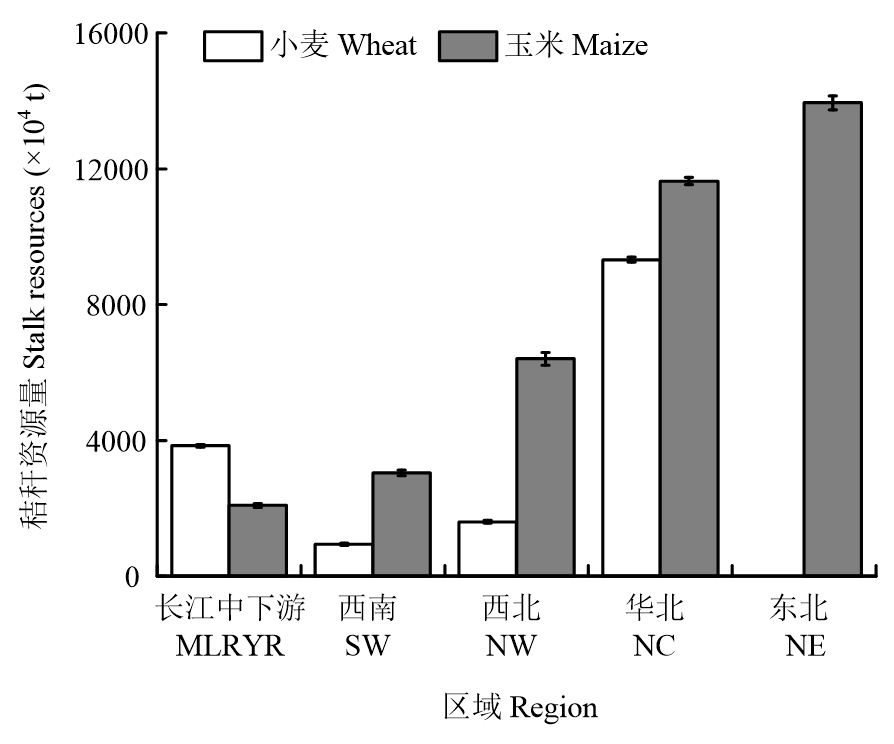
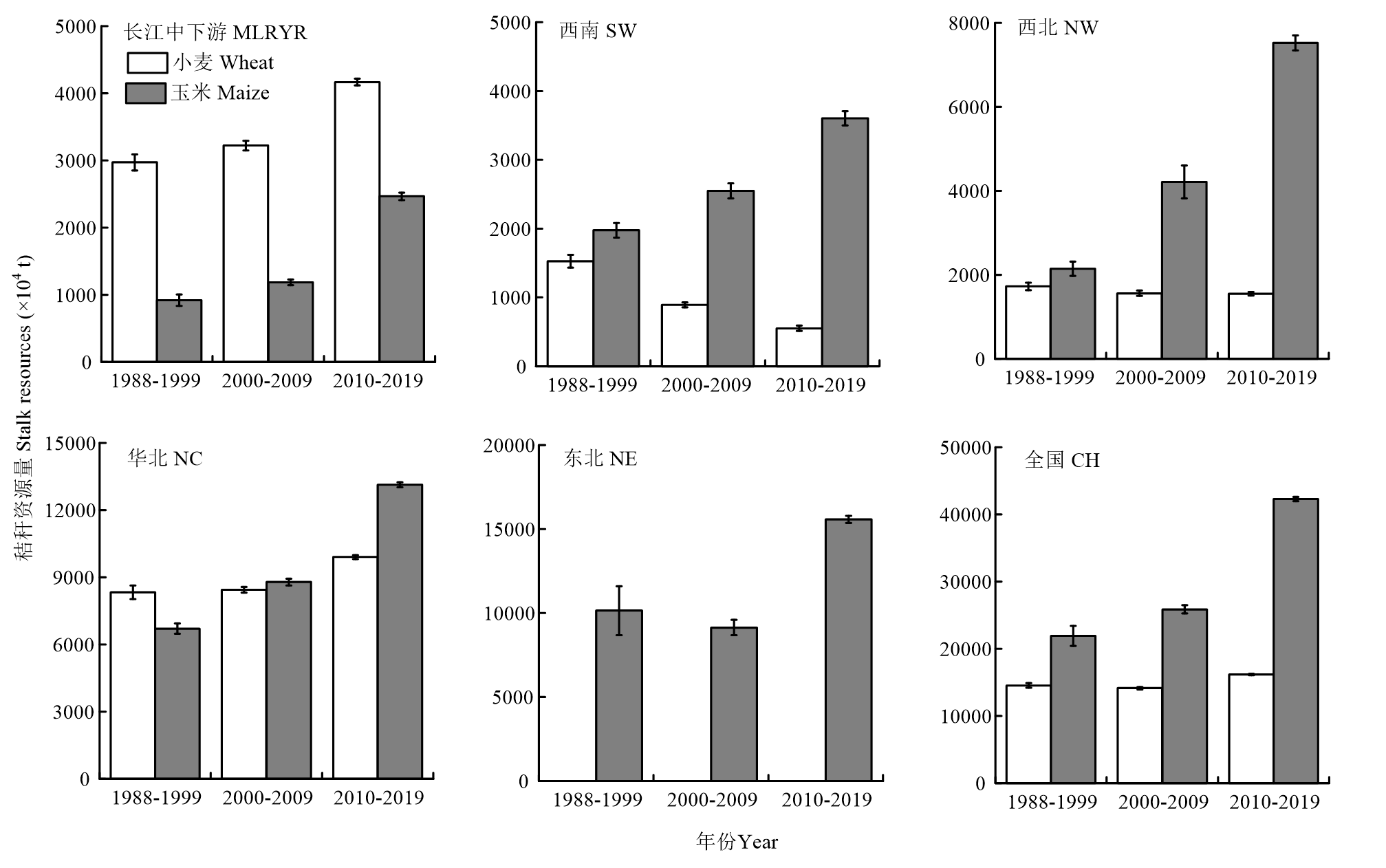
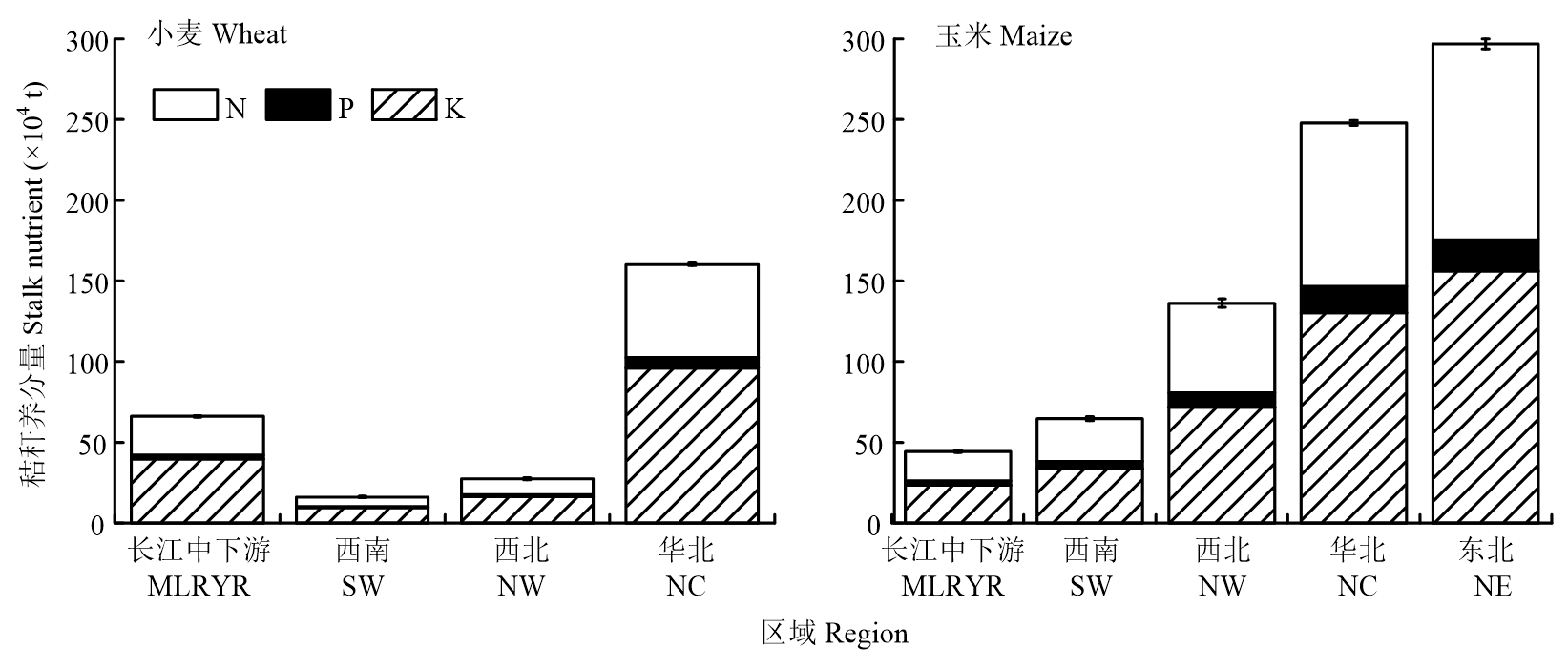
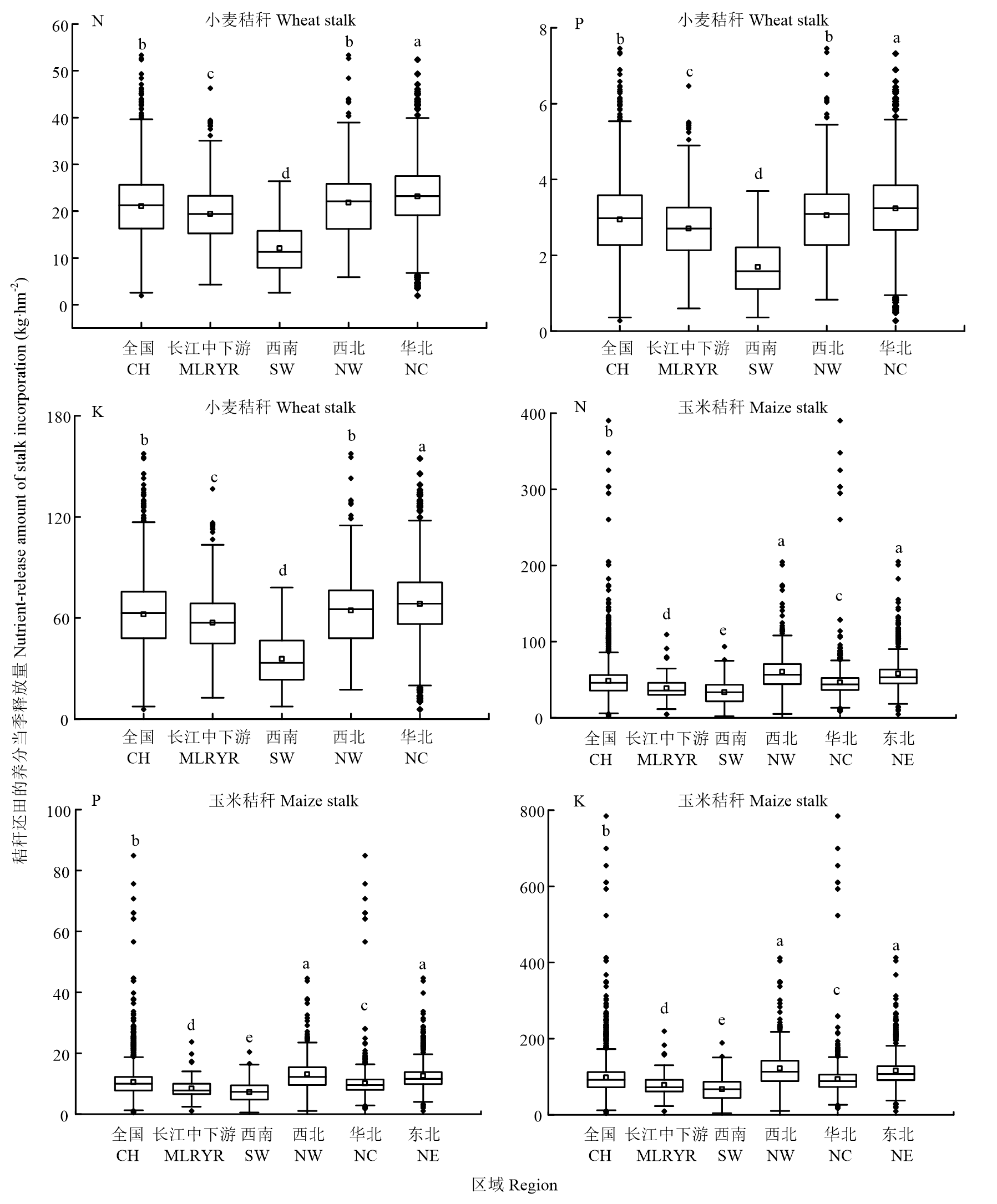
【Objective】China has rich wheat and maize stalk resources. It is necessary to clarify the spatial-temporal characteristics of the wheat and maize stalk resources, the corresponding nutrient resources and chemical fertilizer reduction potential through stalk incorporation, which can provide decision basis for promoting the utilization of stalk resources and reducing chemical fertilizer application. 【Method】Based on the soil long-term monitoring data of the Ministry of Agriculture and Rural Affairs in wheat and maize planting areas of China from 1988 to 2019, this study analyzed the amount of wheat and maize stalk and its nutrient resources and fertilizer reduction potential through stalk incorporation in different years in each region of China. 【Result】The annual average amount of wheat and maize stalk resources reached 1.62×10⁸ t and 4.23×10⁸ t, respectively in 2010s, which were increased by 0.16×10⁸ t and 2.04×10⁸ t compared with 1990s, respectively. The annual average amount of wheat and maize stalk NPK resources reached 278.19×10⁴ t and 901.08×10⁴ t, respectively, which were increased by 27.97×10⁴ t and 434.82×10⁴ t compared with 1990s, respectively. Both of them increased most in North China (NC). The annual average amount of wheat stalk resources and NPK resources decreased first and then increased with planting years, while maize increased. In the first stage (1990s to 2000s) and the second stage (2000s to 2010s), the annual variation rate (AVR) of wheat stalk resources were -42.47×10⁴ t·a-1 and 205.10×10⁴ t·a-1, and the AVR of nutrient resources were -0.26×10⁴ t·a-1 of N, -0.03×10⁴ t·a-1 of P, -0.44×10⁴ t·a-1 of K and 1.27×10⁴ t·a-1 of N, 0.14×10⁴ t·a-1 of P, and 2.11×10⁴ t·a-1 of K, respectively. In the first stage and the second stage, the AVR of maize stalk resources were 397.82×10⁴ t·a-1 and 1 643.60×10⁴ t·a-1, and the AVR of nutrient resources were 3.46×10⁴ t·a-1 of N, 0.56×10⁴ t·a-1 of P, 4.46×10⁴ t·a-1 of K and 14.30×10⁴ t·a-1 of N, 2.30×10⁴ t·a-1 of P, and 18.41×10⁴ t·a-1 of K, respectively. There were more than 80% of wheat stalk and its nutrient resources distributed in NC and Middle and lower reaches of Yangtze River (MLRYR), with the highest in NC (0.93×10⁸ t, 160.31×10⁴ t of NPK), and the lowest in Southwest China (SW) (0.09×10⁸ t, 16.05×10⁴ t of NPK). About 70% of maize stalk and its nutrient resources were distributed in Northeast China (NE) and NC, with the highest in NE (1.39×10⁸ t, 296.96×10⁴ t of NPK), and the lowest in MLRYR (0.21×10⁸ t, 44.40×10⁴ t of NPK). The annual average nutrient-release amount of wheat stalk incorporation per unit area were 21.1 kg·hm-2 of N, 3.0 kg·hm-2 of P and 62.3 kg·hm-2 of K in China, with the highest in NC, and the lowest in SW. The annual average nutrient-release amount of maize stalk incorporation per unit area were 48.6 kg·hm-2 of N, 10.6 kg·hm-2 of P and 97.7 kg·hm-2 of K in China, with the highest in Northwest China (NW), and the lowest in SW. The annual average nutrient-release amount of wheat and maize stalk incorporation per unit area increased continually during 1988-2019. The proportion of wheat stalk returning nutrients to the annual chemical fertilizer application were 9.13%-10.82%, 4.26%-6.43% and 88.02%-111.86%, respectively, and that of maize stalk were 22.99%-24.37%, 16.04%-28.67% and 150.29%-171.95%, respectively. 【Conclusion】In general, using wheat and maize stalk properly could satisfy the basic potassium requirement for crop production and reduce the application of about 10%-20% nitrogen fertilizer and 5%-20% phosphorus fertilizer. Making full use of stalk resources was an important guarantee for reducing fertilizer application and increasing efficiency.

Key words: stalk resources, wheat, maize, temporal and spatial variation, chemical fertilizer reduction, China

Table 1

Region division in this study"

小麦 Wheat 玉米 Maize
区域
Region
监测点个数
Number of monitoring points
省、市、自治区
Provinces, cities and
autonomous regions
区域
Region
监测点个数
Number of
monitoring points
省、市、自治区
Provinces, cities and
autonomous regions
长江中下游
MLRYR
120 安徽、湖北、江苏、上海
Anhui, Hubei, Jiangsu, Shanghai
长江中下游
MLRYR
45 安徽、湖北、江苏、湖南
Anhui, Hubei, Jiangsu, Hunan
西南 SW 30 贵州、四川、重庆、云南
Guizhou, Sichuan, Chongqing, Yunnan
西南 SW
56 贵州、四川、重庆、云南
Guizhou, Sichuan, Chongqing, Yunnan
西北 NW 67 甘肃、宁夏、新疆、青海
Gansu, Ningxia, Xinjiang, Qinghai
西北 NW 100 甘肃、宁夏、新疆、内蒙古
Gansu Ningxia, Xinjiang, Inner Mengulia
华北 NC 215 北京、河北、河南、山东、山西、天津
Beijing, Hebei, Henan, Shandong, Shanxi, Tianjin
华北 NC 260 北京、河北、河南、山东、山西、天津
Beijing, Hebei, Henan, Shandong, Shanxi, Tianjin
东北 NE 204 黑龙江、吉林、辽宁
Heilongjiang, Jilin, Liaoning

Table 2

The yield per unit, cultivation area and fertilizer application rate of wheat and maize in different regions"

区域
Region
年代
Years
小麦单产
Wheat yield per unit
(kg·hm-2)
小麦播种面积
Wheat cultivation area (×107 hm2)
小麦施肥量
Fertilizer application rate of
wheat (kg·hm-2)
玉米单产
Maize yield per unit
(kg·hm-2)
玉米播种面积
Maize cultivation area (×107 hm2)
玉米施肥量
Fertilizer application rate
of maize (kg·hm-2)
N P K N P K
长江中
下游
MLRYR
1990s 5097.2 0.56 193.93 35.47 45.19 5846.5 0.16 284.20 88.08 89.79
2000s 5863.0 0.51 184.00 38.96 53.74 6506.1 0.18 238.00 28.48 55.55
2010s 6524.6 0.63 228.44 33.82 62.39 9029.9 0.27 249.27 32.48 71.13
西南
SW
1990s 4063.3 0.38 184.21 45.25 65.86 5455.4 0.38 162.05 28.43 41.76
2000s 3491.0 0.23 140.02 39.92 64.54 7318.2 0.37 177.66 34.57 53.51
2010s 4179.1 0.14 120.83 21.87 35.06 7593.9 0.48 223.88 31.94 62.86
西北
NW
1990s 6687.5 0.28 181.31 72.58 68.13 8087.9 0.26 169.89 67.67 30.63
2000s 7006.8 0.22 215.19 79.69 37.60 14329.0 0.31 230.36 88.23 41.20
2010s 7174.1 0.21 212.55 61.13 39.41 13073.8 0.60 259.04 58.71 47.21
华北
NC
1990s 6075.8 1.28 189.83 66.61 67.66 8335.4 0.83 142.17 74.36 70.86
2000s 7165.9 1.18 187.51 55.92 59.61 9009.4 0.97 188.10 40.28 51.60
2010s 7794.9 1.27 228.77 56.87 59.68 10391.0 1.32 219.92 35.30 52.93
东北
NE
1990s - - - - - 13666.0 0.64 159.58 39.28 31.11
2000s - - - - - 11780.5 0.77 149.17 38.93 46.99
2010s - - - - 12295.3 1.29 196.08 39.35 68.44
全国
CH
1990s 5536.7 2.50 188.38 56.48 57.70 8276.5 2.27 163.77 52.74 52.08
2000s 6439.4 2.15 184.83 52.83 57.28 9682.2 2.60 186.77 43.68 50.47
2010s 7195.0 2.25 222.66 48.56 59.00 10808.8 3.97 220.99 38.55 59.44

Fig. 1

The wheat and maize stalk resources in different regions"

Fig. 2

Temporal variation of wheat and maize stalk resources in different regions"

Table 3

The annual variation rate of wheat and maize stalk resources in different regions"

区域
Region
小麦 Wheat 玉米 Maize
1990s—2000s的年变化速率
Annual variation rate in 1990s-2000s(×104 t·a-1
2000s—2010s的年变化速率
Annual variation rate in 2000s-2010s(×104 t·a-1
1990s—2000s的年变化速率
Annual variation rate in 1990s-2000s(×104 t·a-1
2000s—2010s的年变化速率
Annual variation rate in 2000s-2010s(×104 t·a-1
长江中下游 MLRYR 24.95 94.56 26.78 128.10
西南 SW -63.22 -34.19 57.41 105.46
西北 NW -16.29 -1.02 206.72 331.41
华北 NC 12.09 145.75 207.91 434.66
东北 NE - - -101.00 643.97
全国 CH -42.47 205.10 397.82 1643.60

Fig. 3

The wheat and maize stalk nutrient in different regions"

Table 4

Temporal variation of annual average nutrient resources of wheat and maize stalk in different regions"

区域
Region
年代
Years
小麦秸秆养分量 Nutrients in wheat stalk (×104 t) 玉米秸秆养分量 Nutrients in maize stalk (×104 t)
N P K 合计Total N P K 合计Total
长江中下游
MLRYR
1990s 18.42±0.74 2.08±0.09 30.61±1.23 51.11±1.44 7.99±0.74 1.29±0.12 10.28±0.95 19.55±1.21
2000s 19.97±0.45 2.25±0.06 33.18±0.75 55.40±0.88 10.32±0.37 1.66±0.06 13.28±0.47 25.26±0.60
2010s 25.83±0.31 2.92±0.04 42.92±0.52 71.67±0.61 21.46±0.49 3.45±0.08 27.63±0.63 52.54±0.80
西南
SW
1990s 9.47±0.57 1.07±0.06 15.73±0.95 26.26±1.11 17.19±0.91 2.77±0.15 22.13±1.17 42.09±1.49
2000s 5.55±0.23 0.63±0.03 9.21±0.39 15.39±0.45 22.19±0.95 3.57±0.15 28.56±1.22 54.32±1.55
2010s 3.43±0.24 0.39±0.03 5.69±0.41 9.50±0.48 31.36±0.91 5.05±0.15 40.38±1.17 76.79±1.49
西北
NW
1990s 10.69±0.56 1.21±0.06 17.75±0.93 29.64±1.09 18.66±1.49 3.00±0.24 24.02±1.92 45.69±2.45
2000s 9.68±0.39 1.09±0.04 16.07±0.65 26.84±0.77 36.65±3.38 5.90±0.54 47.18±4.36 89.72±5.54
2010s 9.61±0.25 1.09±0.03 15.97±0.42 26.67±0.49 65.48±1.54 10.54±0.25 84.29±1.99 160.31±2.53
华北
NC
1990s 51.62±1.90 5.83±0.21 85.75±3.16 143.20±3.69 58.36±2.05 9.39±0.33 75.13±2.63 142.88±3.35
2000s 52.37±0.81 5.91±0.09 87.00±1.34 145.28±1.57 76.45±1.33 12.30±0.21 98.41±1.71 187.16±2.17
2010s 61.40±0.54 6.93±0.06 102.01±0.90 170.35±1.06 114.26±0.98 18.39±0.16 147.10±1.26 279.74±1.60
东北
NE
1990s - - - - 88.24±12.66 14.20±2.04 113.60±16.30 216.05±20.74
2000s - - - - 79.46±3.94 12.79±0.63 102.29±5.07 194.54±6.45
2010s - - - - 135.48±1.85 21.80±0.30 174.42±2.38 331.70±3.02
全国
CH
1990s 90.19±2.19 10.18±0.25 149.84±3.64 250.22±4.25 190.44±12.97 30.65±2.09 245.17±16.69 466.26±21.24
2000s 87.56±1.03 9.89±0.12 145.46±1.72 242.91±2.01 225.05±5.45 36.22±0.88 289.72±7.02 550.99±8.93
2010s 100.28±0.72 11.32±0.08 166.59±1.20 278.19±1.40 368.05±2.79 59.23±0.45 473.81±3.60 901.08±4.58

Table 5

The annual variation rate of wheat and maize stalk nutrient in different regions"

养分 Nutrient 区域
Region
小麦 Wheat 玉米 Maize
1990s—2000s的年变化速率
Annual variation rate in 1990s-2000s(×104 t·a-1
2000s—2010s的年变化速率
Annual variation rate in 2000s-2010s(×104 t·a-1
1990s—2000s的年变化速率
Annual variation rate in 1990s-2000s(×104 t·a-1
2000s—2010s的年变化速率
Annual variation rate in 2000s-2010s(×104 t·a-1
N
长江中下游
MLRYR
0.15 0.59 0.23 1.11
西南 SW -0.39 -0.21 0.50 0.92
西北 NW -0.10 -0.01 1.80 2.88
华北 NC 0.07 0.90 1.81 3.78
东北 NE - - -0.88 5.60
全国 CH -0.26 1.27 3.46 14.30
P
长江中下游
MLRYR
0.02 0.07 0.04 0.18
西南 SW -0.04 -0.02 0.08 0.15
西北 NW -0.01 -0.0007 0.29 0.46
华北 NC 0.01 0.10 0.29 0.61
东北 NE - - -0.14 0.90
全国 CH -0.03 0.14 0.56 2.30
K
长江中下游
MLRYR
0.26 0.97 0.30 1.43
西南 SW -0.65 -0.35 0.64 1.18
西北 NW -0.17 -0.01 2.32 3.71
华北 NC 0.12 1.50 2.33 4.87
东北 NE - - -1.13 7.21
全国 CH -0.44 2.11 4.46 18.41

Fig. 4

Nutrient-release amount of wheat and maize stalk incorporation in different regions Different lowercases indicate significantly difference (P<0.05); The solid line in the box represents the median value, □ Represents the average value, and · represents the abnormal value. The upper and lower line represent 75% and 25% confidence intervals, respectively. The upper and lower dots represent 95% and 5% confidence intervals, respectively"

Table 6

Temporal distribution of nutrient-release amount of wheat and maize stalk incorporation in different regions"

区域
Region
年代
Years
小麦秸秆还田的养分当季释放量
Nutrient-release amount of wheat stalk
incorporation (kg·hm-2)
养分当季释放量占化肥施用量的比例
Ratio of nutrient-release amount to fertilizer application (%)
玉米秸秆还田的养分当季释放量
Nutrient-release amount of maize stalk
incorporation (kg·hm-2)
养分当季释放量占化肥施用量的比例
Ratio of nutrient-release amount to fertilizer application (%)
N P K N P K N P K N P K
长江中下游
MLRYR
1990s 15.84±0.51c 2.21±0.07c 46.75±1.50c 8.17 6.24 103.45 27.49±1.59b 5.98±0.35b 55.29±3.21b 9.67 6.79 61.57
2000s 18.22±0.39b 2.54±0.05b 53.78±1.15b 9.90 6.53 100.06 30.59±0.97b 6.65±0.21b 61.52±1.96b 12.85 23.35 110.75
2010s 20.27±0.23a 2.83±0.03a 59.84±0.68a 8.87 8.37 95.92 42.45±0.94a 9.23±0.20a 85.39±1.89a 17.03 28.43 120.05
西南
SW
1990s 12.62±0.50a 1.76±0.07a 37.27±1.48 6.85 3.90 56.59 25.65±1.53b 5.58±0.33b 51.59±3.09b 15.83 19.62 123.55
2000s 10.85±0.52b 1.52±0.07b 32.02±1.54b 7.75 3.80 49.61 34.41±1.54a 7.48±0.33a 69.20±3.09a 19.37 21.64 129.32
2010s 12.98±0.64a 1.81±0.09a 38.33±1.89a 10.75 8.30 109.34 35.70±0.96a 7.76±0.21a 71.81±1.93a 15.95 24.31 114.23
西北
NW
1990s 20.78±1.24a 2.90±0.17a 61.34±3.67a 11.46 4.00 90.04 38.03±2.30b 8.27±0.50b 76.48±4.62b 22.38 12.22 249.71
2000s 21.77±0.88a 3.04±0.12a 64.27±2.61a 10.12 3.82 170.93 67.37±4.86a 14.65±1.06a 135.50±9.77a 29.25 16.61 328.85
2010s 22.29±0.61a 3.11±0.09a 65.80±1.81a 10.49 5.09 166.97 61.47±1.30a 13.37±0.28a 123.63±2.61a 23.73 22.77 261.84
华北
NC
1990s 18.88±0.65c 2.64±0.09c 55.73±1.92c 9.94 3.96 82.36 39.19±1.61b 8.52±0.35b 78.82±3.24b 27.57 11.46 111.23
2000s 22.26±0.34b 3.11±0.05b 65.73±1.01b 11.87 5.56 110.27 42.36±0.72b 9.21±0.16b 85.19±1.45b 22.52 22.87 165.09
2010s 24.22±0.19a 3.38±0.03a 71.50±0.56a 10.59 5.95 119.81 48.85±0.85a 10.62±0.19a 98.26±1.72a 22.21 30.09 185.65
东北
NE
1990s - - - - - - 64.25±5.89a 13.97±1.28a 129.23±11.84a 40.26 35.57 415.43
2000s - - - - - - 55.39±2.06b 12.04±0.45b 111.40±4.14b 37.13 30.94 237.06
2010s - - - - - - 57.81±0.83ab 12.57±0.18ab 116.27± 1.67ab 29.48 31.95 169.89
全国
CH
1990s 17.20±0.40c 2.40±0.06c 50.78±1.19c 9.13 4.26 88.02 38.91±1.45c 8.46±0.32c 78.26±2.92c 23.76 16.04 150.29
2000s 20.01±0.26b 2.80±0.04b 59.06±0.77b 10.82 5.29 103.11 45.52±0.85b 9.90±0.18b 91.56±1.70b 24.37 22.66 181.42
2010s 22.35±0.15a 3.12±0.02a 65.99±0.45a 10.04 6.43 111.86 50.82±0.50a 11.05±0.11a 102.21±1.01a 22.99 28.67 171.95
[1]
石祖梁, 杨四军, 常志州, 张斯梅. 秸秆产生利用现状调查与禁烧面临难点分析: 以江苏省某乡镇为例. 农业资源与环境学报, 2014, 31(2): 103-109.
SHI Z L, YANG S J, CHANG Z Z, ZHANG S M. Investigation of straw yield and utilization status and analysis of difficulty in prohibition straw burning: A case study in a township in Jiangsu Province, China. Journal of Agricultural Resources and Environment, 2014, 31(2): 103-109. (in Chinese)
[2]
薛颖昊, 冯浩杰, 孙仁华, 胡潇方, 李晓阳, 徐志宇. 农作物秸秆肥料化利用研究文献计量分析. 中国农业资源与区划, 2023, 44(1): 108-118.
XUE Y H, FENG H J, SUN R H, HU X F, LI X Y, XU Z Y. Bibliometric analysis of crop straw fertilizer utilization. Chinese Journal of Agricultural Resources and Regional Planning, 2023, 44(1): 108-118. (in Chinese)
[3]
郝小雨, 陈苗苗. 农作物秸秆肥料化利用现状与发展建议: 以黑龙江省为例. 河北农业大学学报(社会科学版), 2021, 23(6): 108-114.
HAO X Y, CHEN M M. Present fertilizer utilization of crop straw situation and suggestions for its development: a case study of Heilongjiang Province. Journal of Hebei Agricultural University (Social Sciences), 2021, 23(6): 108-114. (in Chinese)
[4]
劳秀荣, 孙伟红, 王真, 郝艳如, 张昌爱. 秸秆还田与化肥配合施用对土壤肥力的影响. 土壤学报, 2003, 40(4): 618-623.
LAO X R, SUN W H, WANG Z, HAO Y R, ZHANG C A. Effect of matching use of straw and chemical fertilizer on soil fertility. Acta Pedologica Sinica, 2003, 40(4): 618-623. (in Chinese)
[5]
闫翠萍, 裴雪霞, 王姣爱, 杨峰, 曹勇, 张晶, 党建友. 秸秆还田与施氮对冬小麦生长发育及水肥利用率的影响. 中国生态农业学报, 2011, 19(2): 271-275.
YAN C P, PEI X X, WANG J A, YANG F, CAO Y, ZHANG J, DANG J Y. Effect of corn straw returned to soil and N application on growth, water and nitrogen use efficiency of winter wheat. Chinese Journal of Eco-Agriculture, 2011, 19(2): 271-275. (in Chinese)

doi: 10.3724/SP.J.1011.2011.00271
[6]
余坤, 李国建, 李百凤, 褚晓升, 冯浩. 不同秸秆还田方式对土壤质量改良效应的综合评价. 干旱地区农业研究, 2020, 38(3): 213-221.
YU K, LI G J, LI B F, CHU X S, FENG H. Comprehensive evaluation of soil quality under different straw incorporation approaches. Agricultural Research in the Arid Areas, 2020, 38(3): 213-221. (in Chinese)
[7]
杨帆, 董燕, 徐明岗, 包耀贤. 南方地区秸秆还田对土壤综合肥力和作物产量的影响. 应用生态学报, 2012, 23(11): 3040-3044.
YANG F, DONG Y, XU M G, BAO Y X. Effects of straw returning on the integrated soil fertility and crop yield in Southern China. Chinese Journal of Applied Ecology, 2012, 23(11): 3040-3044. (in Chinese)
[8]
YIN H J, ZHAO W Q, LI T, CHENG X Y, LIU Q. Balancing straw returning and chemical fertilizers in China: role of straw nutrient resources. Renewable and Sustainable Energy Reviews, 2018, 81: 2695-2702.

doi: 10.1016/j.rser.2017.06.076
[9]
霍丽丽, 赵立欣, 孟海波, 姚宗路. 中国农作物秸秆综合利用潜力研究. 农业工程学报, 2019, 35(13): 218-224.
HUO L L, ZHAO L X, MENG H B, YAO Z L. Study on straw multi-use potential in China. Transactions of the Chinese Society of Agricultural Engineering, 2019, 35(13): 218-224. (in Chinese)
[10]
王金武, 唐汉, 王金峰. 东北地区作物秸秆资源综合利用现状与发展分析. 农业机械学报, 2017, 48(5): 1-21.
WANG J W, TANG H, WANG J F. Comprehensive utilization status and development analysis of crop straw resource in northeast China. Transactions of the Chinese Society for Agricultural Machinery, 2017, 48(5): 1-21. (in Chinese)
[11]
刘晓永, 李书田. 中国秸秆养分资源及还田的时空分布特征. 农业工程学报, 2017, 33(21): 1-19.
LIU X Y, LI S T. Temporal and spatial distribution characteristics of crop straw nutrient resources and returning to farmland in China. Transactions of the Chinese Society of Agricultural Engineering, 2017, 33(21): 1-19. (in Chinese)
[12]
李飞跃, 汪建飞. 中国粮食作物秸秆焚烧排碳量及转化生物炭固碳量的估算. 农业工程学报, 2013, 29(14): 1-7.
LI F Y, WANG J F. Estimation of carbon emission from burning and carbon sequestration from biochar producing using crop straw in China. Transactions of the Chinese Society of Agricultural Engineering, 2013, 29(14): 1-7. (in Chinese)
[13]
ZHANG L B, LIU Y Q, HAO L. Contributions of open crop straw burning emissions to PM 2.5 concentrations in China. Environmental Research Letters, 2016, 11(1): 014014.

doi: 10.1088/1748-9326/11/1/014014
[14]
SUN J F, PENG H Y, CHEN J M, WANG X M, WEI M, LI W J, YANG L X, ZHANG Q Z, WANG W X, MELLOUKI A. An estimation of CO2 emission via agricultural crop residue open field burning in China from 1996 to 2013. Journal of Cleaner Production, 2016, 112: 2625-2631.

doi: 10.1016/j.jclepro.2015.09.112
[15]
JIANG D, ZHUANG D F, FU J Y, HUANG Y H, WEN K G. Bioenergy potential from crop residues in China: availability and distribution. Renewable and Sustainable Energy Reviews, 2012, 16(3): 1377-1382.

doi: 10.1016/j.rser.2011.12.012
[16]
CONTRERAS-RAMOS S M, ALVAREZ-BERNAL D, TRUJILLO- TAPIA N, DENDOOVEN L. Composting of tannery effluent with cow manure and wheat straw. Bioresource Technology, 2004, 94(2): 223-228.

doi: 10.1016/j.biortech.2003.12.001
[17]
DAI J, BEAN B, BROWN B, BRUENING W, EDWARDS J, FLOWERS M, KAROW R, LEE C, MORGAN G, OTTMAN M, RANSOM J, WIERSMA J. Harvest index and straw yield of five classes of wheat. Biomass and Bioenergy, 2016, 85: 223-227.

doi: 10.1016/j.biombioe.2015.12.023
[18]
YOU L Z, WOOD S, WOOD-SICHRA U, WU W B. Generating global crop distribution maps: from census to grid. Agricultural Systems, 2014, 127: 53-60.

doi: 10.1016/j.agsy.2014.01.002
[19]
李晖, 戴明威, 戴顺利, 刘婧, 吴瑾, 施六林. 2010—2015年安徽省粮食作物秸秆的时空分布特征和资源评价. 安徽农业大学学报, 2018, 45(2): 282-287.
LI H, DAI M W, DAI S L, LIU J, WU J, SHI L L. A comprehensive analysis of crop straw resources in Anhui Province from 2010 to 2015. Journal of Anhui Agricultural University, 2018, 45(2): 282-287. (in Chinese)
[20]
车莉. 农作物秸秆资源量估算、分布与利用潜力研究[D]. 大连: 大连理工大学, 2014.
CHE L. Research on resource estimation, distribution and utilization potential of crop residue[D]. Dalian: Dalian University of Technology, 2014. (in Chinese)
[21]
谢光辉, 王晓玉, 任兰天. 中国作物秸秆资源评估研究现状. 生物工程学报, 2010, 26(7): 855-863.
XIE G H, WANG X Y, REN L T. China's crop residues resources evaluation. Chinese Journal of Biotechnology, 2010, 26(7): 855-863. (in Chinese)
[22]
霍丽丽, 赵立欣, 姚宗路, 贾吉秀, 赵亚男, 傅国浩, 丛宏斌. 中国玉米秸秆草谷比及其资源时空分布特征. 农业工程学报, 2020, 36(21): 227-234.
HUO L L, ZHAO L X, YAO Z L, JIA J X, ZHAO Y N, FU G H, CONG H B. Difference of the ratio of maize stovers to grain and spatiotemporal variation characteristics of maize stovers in China. Transactions of the Chinese Society of Agricultural Engineering, 2020, 36(21): 227-234. (in Chinese)
[23]
宋大利, 侯胜鹏, 王秀斌, 梁国庆, 周卫. 中国秸秆养分资源数量及替代化肥潜力. 植物营养与肥料学报, 2018, 24(1): 1-21.
SONG D L, HOU S P, WANG X B, LIANG G Q, ZHOU W. Nutrient resource quantity of crop straw and its potential of substituting. Journal of Plant Nutrition and Fertilizers, 2018, 24(1): 1-21. (in Chinese)
[24]
柴如山, 徐悦, 程启鹏, 王擎运, 马超, 叶新新, 章力干, 郜红建. 安徽省主要作物秸秆养分资源量及还田利用潜力. 中国农业科学, 2021, 54(1): 95-109. doi: 10.3864/j.issn.0578-1752.2021.01.008.

doi: 10.3864/j.issn.0578-1752.2021.01.008
CHAI R S, XU Y, CHENG Q P, WANG Q Y, MA C, YE X X, ZHANG L G, GAO H J. Nutrient resource quantity of main crop straw and utilization potential under straw returning in Anhui Province. Scientia Agricultura Sinica, 2021, 54(1): 95-109. doi: 10.3864/j.issn.0578-1752.2021.01.008. (in Chinese)

doi: 10.3864/j.issn.0578-1752.2021.01.008
[25]
中华人民共和国农业农村部. 中国农业年鉴. 北京: 中国农业出版社, 1989-2020.
Ministry of Agriculture and Rural Affairs of the People's Republic of China. China Agriculture Yearbook. Beijing: China Agriculture Press, 1989-2020. (in Chinese)
[26]
全国农业技术推广服务中心. 中国有机肥料资源. 北京: 中国农业出版社, 1999.
China National Agricultural Technology Extension Service. Data Collection for Organic Fertilizer Nutrients in China. Beijing: Chinese Agriculture Press, 1999. (in Chinese)
[27]
刘淑军, 李冬初, 黄晶, 马常宝, 王慧颖, 于子坤, 曲潇林, 张璐, 韩天富, 都江雪, 柳开楼, 张会民. 1988—2018年中国水稻秸秆资源时空分布特征及还田替代化肥潜力. 农业工程学报, 2021, 37(11): 151-161.
LIU S J, LI D C, HUANG J, MA C B, WANG H Y, YU Z K, QU X L, ZHANG L, HAN T F, DU J X, LIU K L, ZHANG H M. Temporal and spatial distribution characteristics of rice stalk resources and its potential of synthetic fertilizers substitution returning to farmland in China from 1988 to 2018. Transactions of the Chinese Society of Agricultural Engineering, 2021, 37(11): 151-161. (in Chinese)
[28]
毕于运. 秸秆资源评价与利用研究[D]. 北京: 中国农业科学院, 2010.
BI Y Y. Study on straw resources evaluation and utilization in China[D]. Beijing: Chinese Academy of Agricultural Sciences, 2010. (in Chinese)
[29]
徐志宇, 宋振伟, 邓艾兴, 陈武梅, 陈阜, 张卫建. 近30年我国主要粮食作物生产的驱动因素及空间格局变化研究. 南京农业大学学报, 2013, 36(1): 79-86.
XU Z Y, SONG Z W, DENG A X, CHEN W M, CHEN F, ZHANG W J. Regional changes of production layout of main grain crops and their actuation factors during 1981-2008 in China. Journal of Nanjing Agricultural University, 2013, 36(1): 79-86. (in Chinese)
[30]
贾正雷, 程家昌, 李艳梅, 刘玉. 1978—2014年中国玉米生产的时空特征变化研究. 中国农业资源与区划, 2018, 39(2): 50-57.
JIA Z L, CHENG J C, LI Y M, LIU Y. Spatial-temporal characteristics of maize production in China during 1978-2014. Chinese Journal of Agricultural Resources and Regional Planning, 2018, 39(2): 50-57. (in Chinese)
[31]
刘彦随, 王介勇, 郭丽英. 中国粮食生产与耕地变化的时空动态. 中国农业科学, 2009, 42(12): 4269-4274. doi: 10.3864/j.issn.0578-1752.2009.12.018.

doi: 10.3864/j.issn.0578-1752.2009.12.018
LIU Y S, WANG J Y, GUO L Y. The spatial-temporal changes of grain production and arable land in China. Scientia Agricultura Sinica, 2009, 42(12): 4269-4274. doi: 10.3864/j.issn.0578-1752.2009.12.018. (in Chinese)

doi: 10.3864/j.issn.0578-1752.2009.12.018
[32]
范玲玲. 过去65年中国小麦种植时空格局变化及其驱动因素分析[D]. 北京: 中国农业科学院, 2018.
FAN L L. Spatio-temporal variation of wheat cultivation in China and its driving factors during the past 65 years[D]. Beijing: Chinese Academy of Agricultural Sciences, 2018. (in Chinese)
[33]
杨笛. 中国玉米产量增长的驱动因素分析[D]. 北京: 中国农业科学院, 2017.
YANG D. Contribution analysis of driving factors for maize yield growth in China[D]. Beijing: Chinese Academy of Agricultural Sciences, 2017. (in Chinese)
[34]
赵鹏, 陈阜, 马新明, 熊淑萍. 麦玉两熟秸秆还田对作物产量和农田氮素平衡的影响. 干旱地区农业研究, 2010, 28(2): 162-166.
ZHAO P, CHEN F, MA X M, XIONG S P. Effects of integrated straw on crop yield and nitrogen balance in winter wheat & summer maize. Agricultural Research in the Arid Areas, 2010, 28(2): 162-166. (in Chinese)
[35]
房静静, 丁维婷, 武雪萍, 李晓秀, 姜宇, 张继宗, 刘晓彤, 奚雅静, 郑凤君, 张孟妮, 米刚, 马献发. 长期秸秆配施化肥对土壤养分及小麦产量、品质的影响. 中国土壤与肥料, 2020(5): 141-146.
FANG J J, DING W T, WU X P, LI X X, JIANG Y, ZHANG J Z, LIU X T, XI Y J, ZHENG F J, ZHANG M N, MI G, MA X F. Effects of long-term straw and fertilizer combined application on soil nutrient, wheat yield and quality. Soil and Fertilizer Sciences in China, 2020(5): 141-146. (in Chinese)
[36]
李红莉, 张卫峰, 张福锁, 杜芬, 李亮科. 中国主要粮食作物化肥施用量与效率变化分析. 植物营养与肥料学报, 2010, 16(5): 1136-1143.
LI H L, ZHANG W F, ZHANG F S, DU F, LI L K. Chemical fertilizer use and efficiency change of main grain crops in China. Plant Nutrition and Fertilizer Science, 2010, 16(5): 1136-1143. (in Chinese)
[37]
柴如山, 安之冬, 马超, 王擎运, 章力干, 郜红建. 我国主要粮食作物秸秆钾养分资源量及还田替代钾肥潜力. 植物营养与肥料学报, 2020, 26(2): 201-211.
CHAI R S, AN Z D, MA C, WANG Q Y, ZHANG L G, GAO H J. Potassium resource quantity of main grain crop straw and potential for straw incorporation to substitute potassium fertilizer in China. Journal of Plant Nutrition and Fertilizers, 2020, 26(2): 201-211. (in Chinese)
[38]
周延辉, 朱新开, 郭文善, 封超年. 中国地区小麦产量及产量要素对秸秆还田响应的整合分析. 核农学报, 2019, 33(1): 129-137.

doi: 10.11869/j.issn.100-8551.2019.01.0129
ZHOU Y H, ZHU X K, GUO W S, FENG C N. Meta-analysis of the response of wheat yield and yield components to straw returning in China. Journal of Nuclear Agricultural Sciences, 2019, 33(1): 129-137. (in Chinese)

doi: 10.11869/j.issn.100-8551.2019.01.0129
[39]
王良, 刘元元, 钱欣, 张慧, 代红翠, 刘开昌, 高英波, 方志军, 刘树堂, 李宗新. 单季麦秸还田促进小麦-玉米周年碳效率和经济效益协同提高. 中国农业科学, 2022, 55(2): 350-364. doi: 10.3864/j.issn.0578-1752.2022.02.010.

doi: 10.3864/j.issn.0578-1752.2022.02.010
WANG L, LIU Y Y, QIAN X, ZHANG H, DAI H C, LIU K C, GAO Y B, FANG Z J, LIU S T, LI Z X. The single season wheat straw returning to promote the synergistic improvement of carbon efficiency and economic benefit in wheat-maize double cropping system. Scientia Agricultura Sinica, 2022, 55(2): 350-364. doi: 10.3864/j.issn.0578-1752.2022.02.010. (in Chinese)

doi: 10.3864/j.issn.0578-1752.2022.02.010
[40]
凌宁, 荀卫兵, 沈其荣. 根际沉积碳与秸秆碳共存下作物与微生物氮素竞争机制及其调控. 南京农业大学学报, 2018, 41(4): 589-597.
LING N, XUN W B, SHEN Q R. Plant-microbial competition for nitrogen in rhizosphere under straw returning regime: mechanisms and manipulation. Journal of Nanjing Agricultural University, 2018, 41(4): 589-597. (in Chinese)
[41]
胡雅杰, 朱大伟, 邢志鹏, 龚金龙, 张洪程, 戴其根, 霍中洋, 许轲, 魏海燕, 郭保卫. 改进施氮运筹对水稻产量和氮素吸收利用的影响. 植物营养与肥料学报, 2015, 21(1): 12-22.
HU Y J, ZHU D W, XING Z P, GONG J L, ZHANG H C, DAI Q G, HUO Z Y, XU K, WEI H Y, GUO B W. Modifying nitrogen fertilization ratio to increase the yield and nitrogen uptake of super japonica rice. Journal of Plant Nutrition and Fertilizer, 2015, 21(1): 12-22. (in Chinese)
[42]
李涛, 何春娥, 葛晓颖, 欧阳竹. 秸秆还田施氮调节碳氮比对土壤无机氮、酶活性及作物产量的影响. 中国生态农业学报, 2016, 24(12): 1633-1642.
LI T, HE C E, GE X Y, OUYANG Z. Responses of soil mineral N contents, enzyme activities and crop yield to different C/N ratio mediated by straw retention and N fertilization. Chinese Journal of Eco-Agriculture, 2016, 24(12): 1633-1642. (in Chinese)
[43]
KUMAR K, GOH K M. Nitrogen release from crop residues and organic amendments as affected by biochemical composition. Communications in Soil Science and Plant Analysis, 2003, 34(17/18): 2441-2460.

doi: 10.1081/CSS-120024778
[44]
杨志谦, 王维敏. 秸秆还田后碳、氮在土壤中的积累与释放. 土壤肥料, 1991(5): 43-46.
YANG Z Q, WANG W M. Accumulation and release of carbon and nitrogen in soil after straw returning. Soils and Fertilizers, 1991(5): 43-46. (in Chinese)
[45]
王如芳, 张吉旺, 董树亭, 刘鹏. 我国玉米主产区秸秆资源利用现状及其效果. 应用生态学报, 2011, 22(6): 1504-1510.
WANG R F, ZHANG J W, DONG S T, LIU P. Present situation of maize straw resource utilization and its effect in main maize production regions of China. Chinese Journal of Applied Ecology, 2011, 22(6): 1504-1510. (in Chinese)
[46]
马书芳, 朱德慧, 曹辉辉, 关瑞陈. 秸秆全量还田对农作物病虫害的影响及防控对策. 中国植保导刊, 2016, 36(7): 75-77.
MA S F, ZHU D H, CAO H H, GUAN R C. Effects of total straw returning on crop pests and diseases and countermeasures. China Plant Protection, 2016, 36(7): 75-77. (in Chinese)
[47]
乔玉强, 曹承富, 赵竹, 杜世州, 张耀兰, 刘永华, 张四华. 秸秆还田与施氮量对小麦产量和品质及赤霉病发生的影响. 麦类作物学报, 2013, 33(4): 727-731.
QIAO Y Q, CAO C F, ZHAO Z, DU S Z, ZHANG Y L, LIU Y H, ZHANG S H. Effects of straw-returning and N-fertilizer application on yield, quality and occurrence of Fusarium head blight of wheat. Journal of Triticeae Crops, 2013, 33(4): 727-731. (in Chinese)
[48]
高晓梅, 刘晓辉, 于淼, 李杨, 敖静, 孙玉禄, 桓明辉, 池景良. 秸秆还田量对半干旱褐土区氮素淋溶及春玉米产量的影响. 山东农业科学, 2021, 53(10): 64-71.
GAO X M, LIU X H, YU M, LI Y, AO J, SUN Y L, HUAN M H, CHI J L. Effects of straw returning amount on nitrogen leaching and yield of spring maize in cinnamon soil of semi-arid region. Shandong Agricultural Sciences, 2021, 53(10): 64-71. (in Chinese)
[49]
冷明珠, 金月, 童喻浩, 侯建军, 裴惠民. 秸秆还田量对土壤肥力和小麦产量的影响. 浙江农业科学, 2022, 63(4): 679-681.
LENG M Z, JIN Y, TONG Y H, HOU J J, PEI H M. Effect of straw returning amount on soil fertility and wheat yield. Journal of Zhejiang Agricultural Sciences, 2022, 63(4): 679-681. (in Chinese)
[50]
赵亚慧, 王宁, 于建光, 豆利岭, 刘满强, 焦加国. 不同还田量及还田方式下稻秸淋洗对小麦苗期生长发育的影响. 山东农业科学, 2020, 52(1): 53-58.
ZHAO Y H, WANG N, YU J G, DOU L L, LIU M Q, JIAO J G. Effects of rice straw leaching under different returning amounts and manners on growth of wheat seedlings. Shandong Agricultural Sciences, 2020, 52(1): 53-58. (in Chinese)
[51]
李天娇, 卓富彦, 陈冉冉, 李荣德, 史爱民. 秸秆还田对玉米病虫草害影响的研究进展. 中国植保导刊, 2022, 42(1): 23-29.
LI T J, ZHUO F Y, CHEN R R, LI R D, SHI A M. Research progress on the effect of straw returning on maize pests. China Plant Protection, 2022, 42(1): 23-29. (in Chinese)
[52]
李波, 魏亚凤, 季桦, 汪波, 熊飞, 张琛, 刘建. 水稻秸秆还田与不同耕作方式下影响小麦出苗的因素. 扬州大学学报(农业与生命科学版), 2013, 34(2): 60-63.
LI B, WEI Y F, JI H, WANG B, XIONG F, ZHANG C, LIU J. Factors affecting seedling emergence in winter wheat under different tillage patterns with rice straw mulching. Journal of Yangzhou University (Agricultural and Life Science Edition), 2013, 34(2): 60-63. (in Chinese)
[53]
杨竣皓, 骆永丽, 陈金, 金敏, 王振林, 李勇. 秸秆还田对我国主要粮食作物产量效应的整合(Meta)分析. 中国农业科学, 2020, 53(21): 4415-4429. doi: 10.3864/j.issn.0578-1752.2020.21.010.

doi: 10.3864/j.issn.0578-1752.2020.21.010
YANG J H, LUO Y L, CHEN J, JIN M, WANG Z L, LI Y. Effects of main food yield under straw return in China: a meta-analysis. Scientia Agricultura Sinica, 2020, 53(21): 4415-4429. doi: 10.3864/j.issn.0578-1752.2020.21.010. (in Chinese)

doi: 10.3864/j.issn.0578-1752.2020.21.010
[54]
盖霞普, 刘宏斌, 杨波, 王洪媛, 翟丽梅, 雷秋良, 武淑霞, 任天志. 不同施肥年限下作物产量及土壤碳氮库容对增施有机物料的响应. 中国农业科学, 2019, 52(4): 676-689. doi: 10.3864/j.issn.0578-1752.2019.04.009.

doi: 10.3864/j.issn.0578-1752.2019.04.009
GAI X P, LIU H B, YANG B, WANG H Y, ZHAI L M, LEI Q L, WU S X, REN T Z. Responses of crop yields, soil carbon and nitrogen stocks to additional application of organic materials in different fertilization years. Scientia Agricultura Sinica, 2019, 52(4): 676-689. doi: 10.3864/j.issn.0578-1752.2019.04.009. (in Chinese)

doi: 10.3864/j.issn.0578-1752.2019.04.009
[1] WANG YaFei, YAN Peng, XUE JinTao, DONG XueRui, MENG FanQi, GUO LiNa, LUO Yi, ZHANG Juan, DONG ZhiQiang, LU Lin. Effects of Ethephon-Glycine Betaine-Salicylic Acid Mixture on Root System Architecture, Physiological Function and Yield of Maize Under Heat Stress [J]. Scientia Agricultura Sinica, 2026, 59(7): 1439-1455.
[2] YUAN HaoLiang, NIE Jun, LI Peng, LU YanHong, LIAO YuLin, XU ChangXu, LI ZhongYi, CAO WeiDong, ZHANG JiangLin. Effects of Co-Utilization of Chinese Milk Vetch and Rice Straw on Soil Phosphorus Composition and Phosphorus Activation of Paddy Field in Southern China [J]. Scientia Agricultura Sinica, 2026, 59(7): 1480-1491.
[3] ZHU Qi, JIA ZhenPeng, Tahir SHAH, XU ChenSheng, LI ZhiQi, LÜ HuiShuai, ZHU PengChao, WEI XiaoMin, HUANG DongLin, SUN YanNi, CAO WeiDong, GAO YaJun, WANG ZhaoHui, ZHANG DaBin. Green Manure Crops Combined with Enhanced-Efficiency Products Reduced Greenhouse Gas Emissions and Carbon Footprints in Dryland Wheat Fields [J]. Scientia Agricultura Sinica, 2026, 59(7): 1507-1522.
[4] WANG JiaNuo, CHEN GuiPing, LI Pan, WANG LiPing, NAN YunYou, HE Wei, FAN ZhiLong, HU FaLong, CHAI Qiang, YIN Wen, ZHAO LiaoHao. Photo-Physiological Mechanism at Grain Filling Stage of No-Tillage with Plastic Re-Mulching to Increase Maize Yield in Oasis Irrigation Areas [J]. Scientia Agricultura Sinica, 2026, 59(6): 1189-1202.
[5] ZHOU XinJie, REN Hao, CHEN YingLong, ZHANG JiWang, ZHAO Bin, REN BaiZhao, LIU Peng, WANG HongZhang. Effects of Calcium Peroxide on Root Morphology and Yield Formation of Summer Maize in Waterlogging Farmland [J]. Scientia Agricultura Sinica, 2026, 59(6): 1203-1216.
[6] HE JiHang, ZHANG Qing, LÜ XiangYue, XUE JiQuan, XU ShuTu, LIU JianChao. Evaluation of Nitrogen Efficiency of Different Stay-Green Maize Hybrids [J]. Scientia Agricultura Sinica, 2026, 59(6): 1217-1230.
[7] LI YongJuan, ZHANG YueTong, WANG YiBo, ZHAO ChangJiang, SONG Jie, CHEN XueLi, YAO Qin. Effects of Biochar Application on the Abundance and Community Composition of Nitrogen-Fixing Microbial nifH Gene in Soybean Rotation and Continuous Cropping Systems [J]. Scientia Agricultura Sinica, 2026, 59(6): 1272-1285.
[8] LI WenHu, LI HaiFeng, DU YuPeng, DING YuLan, LUO YiNuo, LI YuKe, SHE WenTing, ZHANG Feng, TENG Yu, ZHANG SiQi, HUANG Cui, LI XiaoHan, LIU JinShan, WANG ZhaoHui. Regional Differences in Wheat Zinc Uptake and Translocation Responses to Soil Zinc Fertilization [J]. Scientia Agricultura Sinica, 2026, 59(5): 1034-1047.
[9] JIAO WenJuan, HE WanLong, GENG HongWei, BAI Bin, LI JianFeng, CHENG YuKun. Stripe Rust Resistance Evaluation and Molecular Characterization of Yr Genes for 155 Spring Wheat Varieties (Lines) [J]. Scientia Agricultura Sinica, 2026, 59(5): 937-950.
[10] LI SiYuan, LI HongPing, CHANG HongQing, ZHANG SenYan, LI SiJia, CUI XinFei, QIAO Po, ZENG Bo, LIU GuiZhen, LIU TianXue, TANG JiHua, LI ChaoHai. Effects of Density Increase on Dynamic Change of Yield and Agronomic Traits of Maize Cultivars with Different Plant Heights [J]. Scientia Agricultura Sinica, 2026, 59(5): 967-984.
[11] DONG JinLong, ZHAO Ying, YU HaiBing, LÜ JianYe, QIN JiaQi, LIANG Chen, MING Bo, LI ShaoKun. Multi-Model Elucidating of Nutritional Quality Contributions to Maize Kernel Test Weight and Regional Heterogeneity [J]. Scientia Agricultura Sinica, 2026, 59(5): 985-995.
[12] CUI ShiYou, CHEN PengJun, MIAO YuanQing, HAN JiJun, SHEN JunMing. Development and Field Evaluation of Glyphosate-Resistant Wheat Germplasm Generated Through EMS Mutagenesis [J]. Scientia Agricultura Sinica, 2026, 59(4): 723-733.
[13] QIAN Jin, LI YingXue, WU Fang, ZOU XiaoChen. Improved Leaf Phosphorus Content Estimation of Winter Wheat Using Ensemble Hyperspectral Dimensionality Reduction Method [J]. Scientia Agricultura Sinica, 2026, 59(4): 781-792.
[14] KONG Yuan, CUI ShaSha, LI Mei, LI Jian, YANG SiYu, FANG Feng, LIU ShuaiShuai, LIU MingPing, ZENG Yan, GAO XingXiang, BAI LianYang. Spatiotemporal Distribution Dynamics of Five Grass Weed Species Including Lolium multiflorum in Winter Wheat Fields of the Huang- Huai-Hai Region [J]. Scientia Agricultura Sinica, 2026, 59(4): 807-823.
[15] WANG YongSheng, NIU Li, WANG ChangJie, MA LiHua, LIAN XiaoXiao, MENG YaXiong, MA XiaoLe, YAO LiRong, ZHANG Hong, YANG Ke, LI BaoChun, WANG HuaJun, SI ErJing, WANG JunCheng. Genome-Wide Association Study and Candidate Gene Identification for Thousand Grain Weight in Winter Wheat [J]. Scientia Agricultura Sinica, 2026, 59(3): 499-514.
Viewed
Full text


Abstract

Cited

  Shared   
  Discussed   
No Suggested Reading articles found!