Scientia Agricultura Sinica ›› 2023, Vol. 56 ›› Issue (10): 1994-2006.doi: 10.3864/j.issn.0578-1752.2023.10.014

• ANIMAL SCIENCE·VETERINARY SCIENCE • Previous Articles     Next Articles

Identifying Quantitative Trait Loci Associated with Teat Number of Pig by Genomic Analysis

YIN YanZhen1,2(), HOU LiMing1,2, LIU Hang1,2, TAO Wei1,2, SHI ChuanZong1,2, LIU KaiYue1,2, ZHANG Ping1,2, NIU PeiPei2, LI Qiang3, LI PingHua1,2(), HUANG RuiHua1,2()   

  1. 1 Institute of Swine Science, Nanjing Agricultural University, Nanjing 210095
    2 Huaian Academy, Nanjing Agricultural University, Huai’an 223001, Jiangsu
    3 Huaiyin Xinhuai Pig Breeding Farm of Huai’an City, Huai’an 223322, Jiangsu
  • Received:2021-12-17 Accepted:2022-01-19 Online:2023-05-16 Published:2023-05-17

Abstract:

【Objective】The purposes of this study were to analyze the variation of teat number, to explore the quantitative trait locus (QTL) and candidate genes related to teat number, and to provide important molecular markers for the breeding of pig teat number.【Method】This study accurately measured left, right, total teat number of 709 Suhuai pigs (335 fattening pigs and 374 breeding pigs). Fattening pigs were selected for 80K chip genotyping and the heritability and genomic estimated breeding value (GEBV) of left, right and total teat number were calculated by chip data. Based on the rank of GEBV and phenotype of teat number, the top 10% individuals and the bottom 10% individuals were selected for Fixation Index (FST) analysis to detect highly differentiated loci. Then, the loci associated with teat number were identified by genome wide association analysis (GWAS) and loci which were highly differentiated and significantly associated with teat number were selected as candidate loci. Genes located near candidate loci and related to teat number after functional annotation were selected as candidate genes. Finally, the association analyses between the most significant candidate loci on each chromosome and teat number of 709 Suhuai pigs were performed to verify the significance of the above loci.【Result】The variation coefficients of left, right and total teat number of Suhuai fattening pigs were 10.20%, 9.26% and 8.50%, respectively, and the heritability were 0.212, 0.257 and 0.312, respectively. Based on FST and GWAS analyses, a total of 20 candidate loci on Sus scorfa chromosomes (SSC) 7, 13, 16 and 18 for teat number were identified and these candidate loci could explain 5.49%-8.03% of the phenotypic variance. Among them, locus rs80894106 on SSC7 associated with total teat number was consistent with the reported candidate locus of total teat number based on Large white and Duroc pig populations, but candidate loci rs81444134 (26.51 Mb, SSC13) and rs81233299 (8.13 Mb, SSC18) of left teat number were newly discovered loci related to teat number. Interestingly, candidate loci of left, right and total teat number were mainly concentrated in the 6.36-10.66 Mb interval on SSC16; Linkage disequilibrium (LD) analysis found that candidate loci in 7.47-8.27 Mb interval fit into a 795 kb haplotype block, and this haplotype block was a newly discovered candidate area that affected teat number; rs337606862 (7.47 Mb) in the haplotype block was the most significantly SNP associated with the left and total teat number, and three loci in the haplotype block were all located on the intron of cadherin 18 (CDH18) gene; CDH18 gene encoded type II cadherin, and cadherin was related to the identification, sorting, proliferation, apoptosis of cells in developing tissue and the occurrence of breast cancer. Thus, CDH18 might be a new candidate gene that affected pig teat number. In addition, the most significant loci rs81444134, rs80894106, rs337606862 and rs81233299 on 4 chromosomes were genotyped in 709 Suhuai pigs in this study. After association analysis, these loci were significantly associated with teat number, and could be used as potential molecular markers for the selection of teat number.【Conclusion】In this study, 20 loci significantly related to teat number were identified in Suhuai pig population by genome analysis. Among them, 26.51 Mb on SSC13 and 8.13 Mb on SSC18 were new candidate QTLs for teat number. The 7.47-8.27 Mb on SSC16 was also a newly discovered candidate QTL for teat number, and CDH18 gene in this interval might be a new candidate gene that affected the formation of pig teat.

Key words: FST, GWAS, QTL, Suhuai pig, teat number, candidate genes

Table 1

Primer information of candidate SNPs"

位点
Locus
引物序列
Primer sequence
产物长度(bp)
Production length
退火温度(℃)
Annealing temperature
rs81444134 上引Forward primer: GATCTGGACACTGCATGGCT 529 60
下引Reverse primer: GTTGGGCCCTCAGGATTGAA
rs80894106 上引Forward primer: GCGGCAGAGACAGAAGAAGT 161 63
下引Reverse primer: CACCCCTACTCCATCCTCCA
rs337606862 上引Forward primer: TTTGCTGTACACCCAGTGCT 208 58
下引Reverse primer: GAGTCTGCCGCTCATTAGGT
rs81233299 上引Forward primer: TCACTCACCACTCAGACCCA 483 60
下引Reverse primer: TTTTGGCTTCTGCCTCAGGT

Table 2

The process of PCR amplification"

Table 3

Descriptive statistics and heritability estimation of teat number for 334 Suhuai pigs"

性状
Traits
样本量
Number
最小值
Min
最大值
Max
平均值(标准误)
Mean (SE)
变异系数
CV
遗传力(标准误)
Heritability (SE)
左乳头LTN 334 5 11 7.38 (0.04) 10.20% 0.212 (0.089)
右乳头RTN 334 5 10 7.46 (0.04) 9.26% 0.257 (0.094)
总乳头TTN 334 11 21 14.84 (0.07) 8.50% 0.312 (0.094)

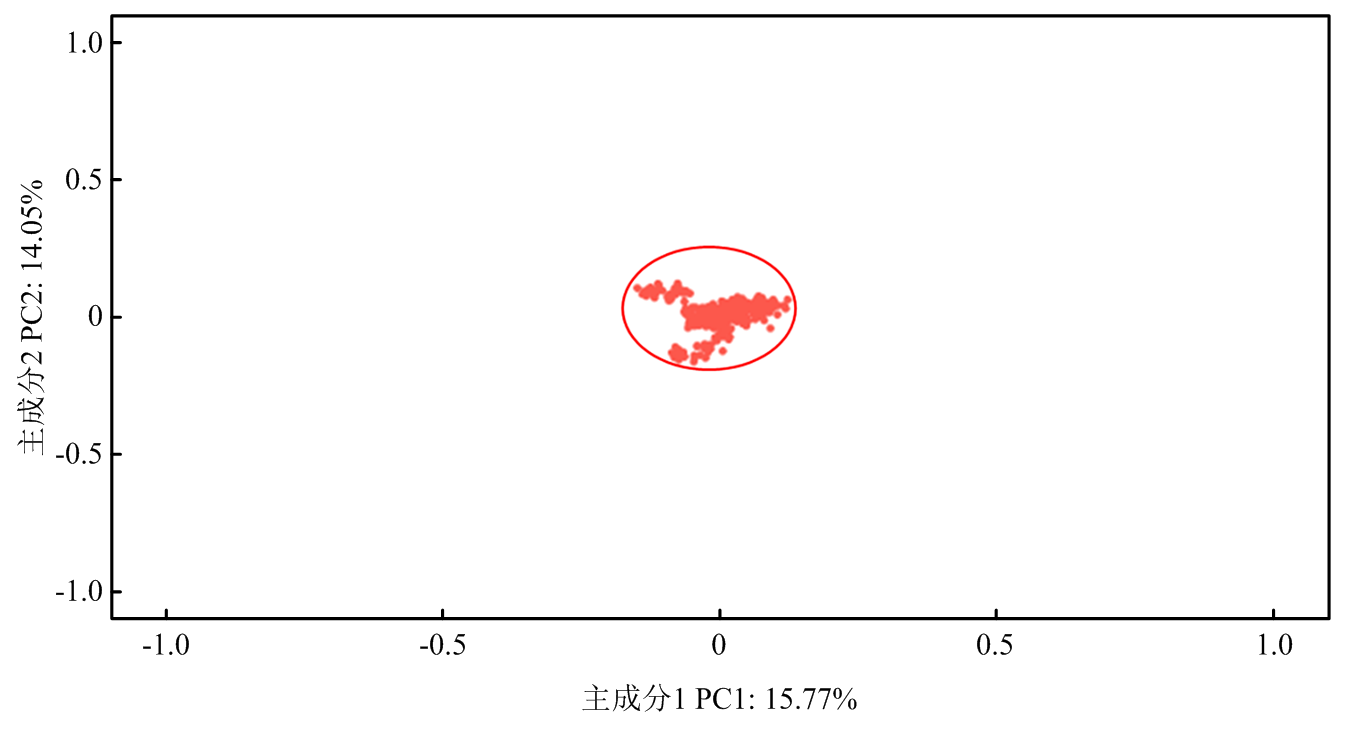
Fig. 1

PCA plot of 334 Suhuai pigs"

Table4

GEBV and phenotypic distribution of individuals with extreme teat number"

组别
Group
个体数
Number
GEBV(平均值±标准误)
GEBV (Mean±SE)
表型(平均值±标准误)
Phenotype (Mean±SE)
左乳头多组Group with more LTNs 32 0.4220±0.02a 8.50±0.13a
左乳头少组Group with fewer LTNs 33 -0.3568±0.01b 6.42±0.11b
右乳头多组Group with more RTNs 33 0.3856±0.02a 8.33±0.094a
右乳头少组Group with fewer RTNs 32 -0.4073±0.02b 6.47±0.10b
总乳头多组Group with more TTNs 32 0.9407±0.05a 16.78±0.21a
总乳头少组Group with fewer TTNs 32 -0.8408±0.03b 12.97±0.15b

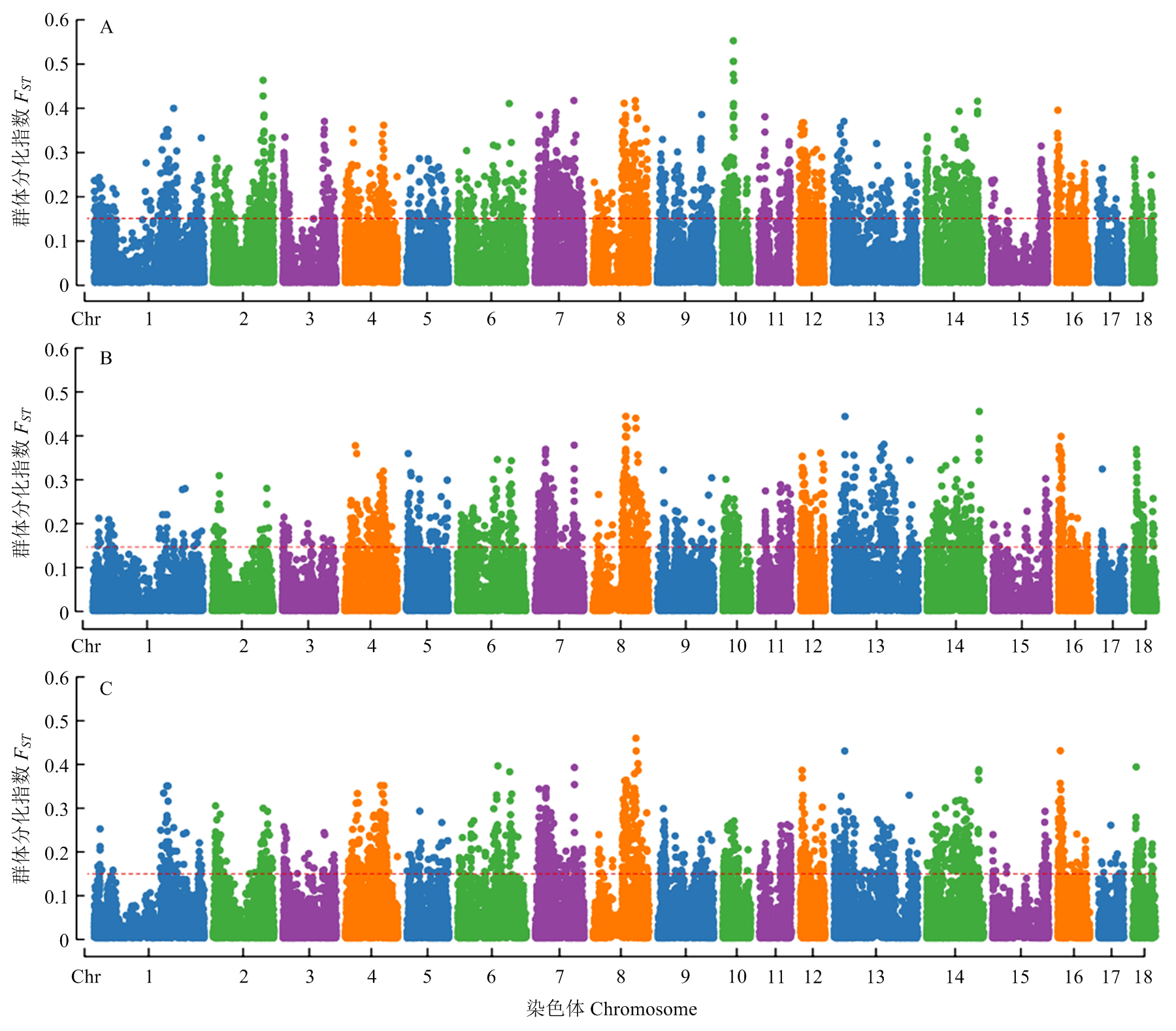
Fig. 2

FST value distribution across the whole genome between groups with more teats and groups with fewer teats in Suhuai pigs A: LTN; B: RTN; C: TTN. The X axis is chromosome 1-18, Y axis is FST value and the red dotted line represents the threshold line"

Table 5

The top five loci of FST value for teat number in Suhuai pigs"

性状 Traits 染色体 Chromosome 位点 Locus 位置 Position 群体分化指数 |FST|
左乳头
LTN
10 rs81318617 28106390 0.56
10 rs341137382 28144348 0.51
10 rs81334525 28217637 0.51
10 rs81318292 28241660 0.51
10 rs81422791 28373981 0.51
右乳头
RTN
8 rs81307920 81966981 0.45
8 rs81401867 82021406 0.43
8 rs81320407 106548266 0.44
13 rs81444134 26512547 0.45
14 rs324738268 129950519 0.46
总乳头
TTN
8 rs81320407 106548266 0.46
8 rs81343887 107245873 0.43
8 rs81403450 111739346 0.40
13 rs81444134 26512547 0.43
16 rs81459891 6366044 0.43

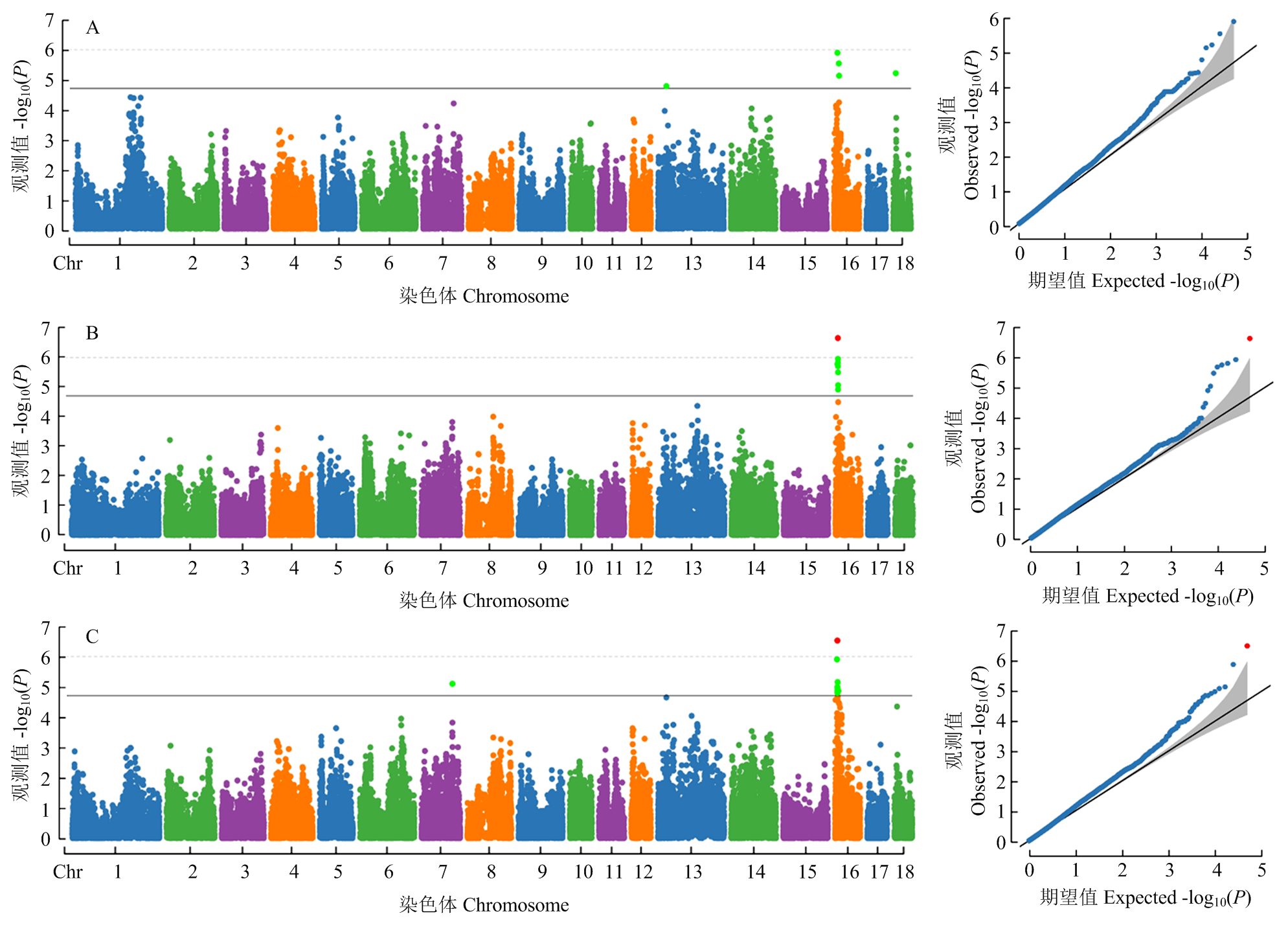
Fig. 3

Manhattan plots and Q-Q plots of GWAS for left, right, total teat number in Suhuai pigs A: LTN; B: RTN; C: TTN. The X axis is chromosome 1-18 and Y axis is -log10(P). The solid line and dotted line of Manhattan plots represent the chromosome significance threshold line and genome significance threshold line respectively"

Table 6

Details of significant loci identified by GWAS for teat number in Suhuai pigs"

性状
Traits
染色体
Chromosome
位点
Locus
位置
Position
等位基因
Alllele
P
P value
群体分化指数
|FST|
解释的表型方差比例
PVE (%)
左乳头
LTN
13 rs81444134 26512547 A/G 1.65×10⁻⁵ 0.37 6.16
16 rs81464450 10667670 T/C 1.26×10⁻⁶ 0.27 6.77
16 rs81315330 15073646 C/T 2.86×10⁻⁶ 0.11 7.05
16 rs319610259 15933003 G/A 7.38×10⁻⁶ 0.09 6.08
18 rs81233299 8138478 T/C 6.07×10⁻⁶ 0.28 6.62
右乳头
RTN
16 rs81459891 6366044 C/A 1.67×10⁻⁶ 0.40 6.84
16 rs337606862 7476146 T/C 2.19×10⁻⁷ 0.36 7.73
16 rs337773899 7565523 C/T 1.48×10⁻⁶ 0.33 7.07
16 rs344324838 7678937 A/C 1.11×10⁻⁶ 0.33 7.33
16 rs327222109 7684898 C/T 1.96×10⁻⁶ 0.33 6.95
16 rs325271937 7996957 G/T 3.15×10⁻⁶ 0.33 6.63
16 rs343435106 8040555 A/G 1.2×10⁻⁵ 0.33 6.15
16 rs336743934 8271651 C/T 8.57×10⁻⁶ 0.31 6.29
总乳头
TTN
7 rs80894106 97652632 T/C 7.91×10⁻⁶ 0.17 8.03
16 rs81459891 6366044 C/A 1.23×10⁻⁶ 0.43 7.01
16 rs337606862 7476146 T/C 2.95×10⁻⁷ 0.34 7.57
16 rs337773899 7565523 C/T 1.01×10⁻⁵ 0.28 6.00
16 rs344324838 7678937 A/C 1.37×10⁻⁵ 0.28 5.90
16 rs327222109 7684898 C/T 1.59×10⁻⁵ 0.28 5.76
16 rs343435106 8040555 A/G 1.16×10⁻⁵ 0.28 6.18
16 rs336743934 8271651 C/T 6.98×10⁻⁶ 0.26 6.42
16 rs81464450 10667670 T/C 1.37×10⁻⁵ 0.30 5.49

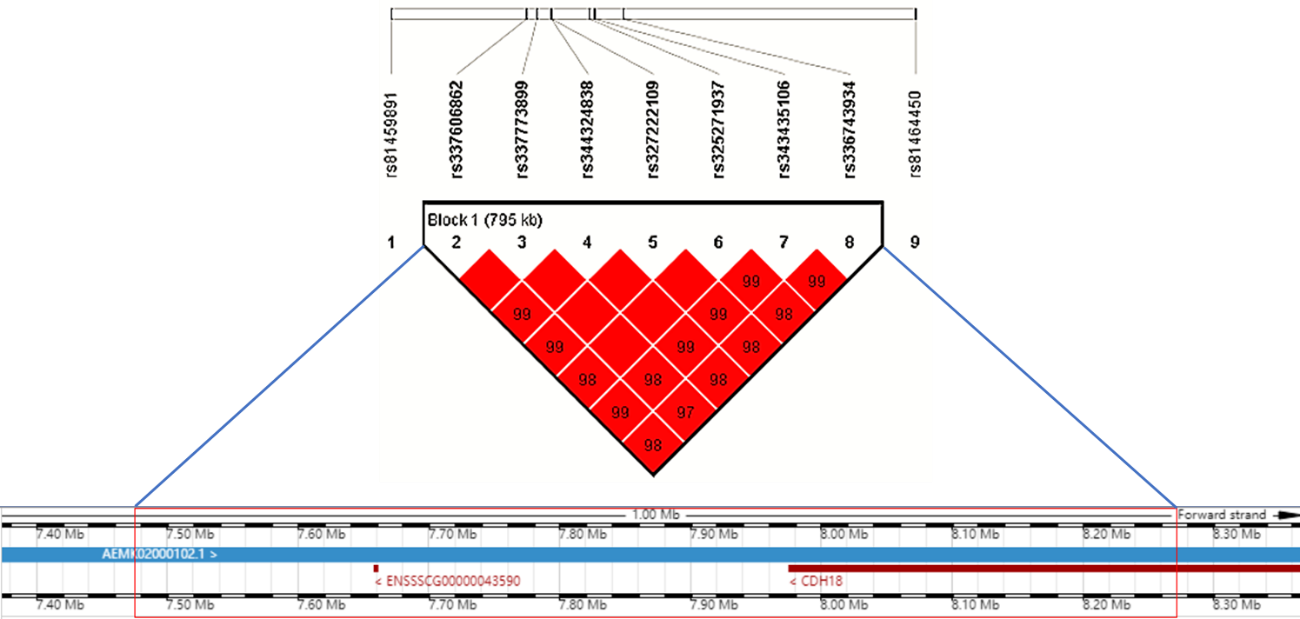
Fig. 4

Haplotype plot The number in the square represents the D’ value between the two SNPs, and the dark red means high linkage degree. A total of two protein coding genes are located in a haplotype block of 795 kb."

Table 7

Descriptive statistics of teat number for 709 Suhuai pigs"

性状
Traits
样本量
Number
最小值
Min
最大值
Max
平均值(标准误)
Mean (SE)
变异系数
CV
左乳头数LTN 709 5 11 7.31 (0.02) 8.58%
右乳头数RTN 709 5 10 7.37 (0.02) 8.22%
总乳头数TTN 709 11 21 14.69 (0.04) 7.34%

Table 8

Association analysis between 4 loci and teat number of entire Suhuai pig population"

位点
Locus
性状
Trait
个体数
Number
P
P value
基因型(平均值±标准误) Genotype (Mean±SE)
AA (n=96) AG (n=332) GG (n=280)
rs81444134 左乳头数 LTN 708 0.0034 7.50±0.06a 7.34±0.04ab 7.26±0.04b
右乳头数 RTN 708 0.0143 7.54±0.06a 7.40±0.03ab 7.33±0.04b
总乳头数 TTN 708 0.0015 15.04±0.11a 14.75±0.06ab 14.58±0.07b
CC (n=445) TC (n=248) TT (n=16)
rs80894106 左乳头数 LTN 709 0.0001 7.41±0.03a 7.20±0.04b 7.21±0.16ab
右乳头数 RTN 709 <0.0001 7.46±0.03a 7.29±0.04b 7.02±0.15b
总乳头数 TTN 709 <0.0001 14.87±0.05a 14.49±0.07b 14.23±0.27ab
CC (n=290) TC (n=318) TT (n=101)
rs337606862 左乳头数 LTN 709 <0.0001 7.25±0.04b 7.32±0.04b 7.58±0.06a
右乳头数 RTN 709 <0.0001 7.28±0.04c 7.42±0.04b 7.62±0.06a
总乳头数 TTN 709 <0.0001 14.53±0.06c 14.74±0.06b 15.20±0.11a
AA (n=316) AG (n=335) GG (n=58)
rs81233299 左乳头数 LTN 709 <0.0001 7.22±0.04b 7.41±0.04a 7.52±0.08a
右乳头数 RTN 709 0.0054 7.32±0.04b 7.43±0.03a 7.55±0.08a
总乳头数 TTN 709 <0.0001 14.53±0.06b 14.84±0.06a 15.07±0.14a
[1]
ALEXOPOULOS J G, LINES D S, HALLETT S, PLUSH K J. A review of success factors for piglet fostering in lactation. Animals: an Open Access Journal from MDPI, 2018, 8(3): 38.
[2]
KIM J S, JIN D I, LEE J H, SON D S, LEE S H, YI Y J, PARK C S. Effects of teat number on litter size in gilts. Animal Reproduction Science, 2005, 90(1/2): 111-116.

doi: 10.1016/j.anireprosci.2005.01.013
[3]
ROHRER G A, NONNEMAN D J. Genetic analysis of teat number in pigs reveals some developmental pathways independent of vertebra number and several loci which only affect a specific side. Genetics, Selection, Evolution: GSE, 2017, 49(1): 4.

doi: 10.1186/s12711-016-0282-1 pmid: 28093083
[4]
WRIGHT S. The genetical structure of populations. Annals of Eugenics, 1951, 15(4): 323-354. doi:10.1111/j.1469-1809.1949.tb02451.x.

doi: 10.1111/j.1469-1809.1949.tb02451.x pmid: 24540312
[5]
HE L C, LI P H, MA X, SUI S P, GAO S, KIM S W, GU Y Q, HUANG Y, DING N S, HUANG R H. Identification of new single nucleotide polymorphisms affecting total number born and candidate genes related to ovulation rate in Chinese Erhualian pigs. Animal Genetics, 2017, 48(1): 48-54.

doi: 10.1111/age.12492 pmid: 27615062
[6]
李开军, 侯黎明, 蒲广, 刘航, 刘根盛, 石传宗, 金通, 周娟, 李平华, 黄瑞华. 基于全基因组Fst和nSL分析鉴别苏淮猪中性洗涤纤维表观消化率相关候选基因位点. 畜牧兽医学报, 2021, 52(7): 1809-1819.
LI K J, HOU L M, PU G, LIU H, LIU G S, SHI C Z, JIN T, ZHOU J, LI P H, HUANG R H. Identification of candidate gene loci related to apparent NDF digestibility of suhuai pigs based on genome-wide fst and nSLAnalyses. Acta Veterinaria et Zootechnica Sinica, 2021, 52(7): 1809-1819. (in Chinese)
[7]
MOSCATELLI G, DALL'OLIO S, BOVO S, SCHIAVO G, KAZEMI H, RIBANI A, ZAMBONELLI P, TINARELLI S, GALLO M, BERTOLINI F, FONTANESI L. Genome-wide association studies for the number of teats and teat asymmetry patterns in Large White pigs. Animal Genetics, 2020, 51(4): 595-600.

doi: 10.1111/age.12947 pmid: 32363597
[8]
LI Y, PU L, SHI L Y, GAO H D, ZHANG P F, WANG L X, ZHAO F P. Revealing new candidate genes for teat number relevant traits in duroc pigs using genome-wide association studies. Animals: an Open Access Journal from MDPI, 2021, 11(3): 806.
[9]
TANG J H, ZHANG Z Y, YANG B, GUO Y M, AI H S, LONG Y, SU Y, CUI L L, ZHOU L Y, WANG X P, ZHANG H, WANG C B, REN J, HUANG L S, DING N S. Identification of loci affecting teat number by genome-wide association studies on three pig populations. Asian-Australasian Journal of Animal Sciences, 2017, 30(1): 1-7.

doi: 10.5713/ajas.15.0980 pmid: 27165028
[10]
ZHOU L, ZHAO W, FU Y, FANG X, REN S, REN J. Genome-wide detection of genetic loci and candidate genes for teat number and body conformation traits at birth in Chinese Sushan pigs. Animal Genetics, 2019, 50(6): 753-756.

doi: 10.1111/age.12844 pmid: 31475745
[11]
WANG LI, ZHOU GAO, LIU LI, NIU, ZHANG LI, ZHOU HUANG. Association of twelve candidate gene polymorphisms with the intramuscular fat content and average backfat thickness of Chinese suhuai pigs. Animals, 2019, 9(11): 858.

doi: 10.3390/ani9110858
[12]
PURCELL S, NEALE B, TODD-BROWN K, THOMAS L, FERREIRA M A R, BENDER D, MALLER J, SKLAR P, DE BAKKER P I W, DALY M J, SHAM P C. PLINK: a tool set for whole-genome association and population-based linkage analyses. American Journal of Human Genetics, 2007, 81(3): 559-575.

doi: 10.1086/519795 pmid: 17701901
[13]
MADSEN P, JENSEN J. A user’s guide to DMU. A package for analysing multivariate mixed models version, 2013, 6: 1-33.
[14]
VANRADEN P M. Efficient methods to compute genomic predictions. Journal of Dairy Science, 2008, 91(11): 4414-4423.

doi: 10.3168/jds.2007-0980 pmid: 18946147
[15]
WEIR B S, COCKERHAM C C. Estimating f-statistics for the analysis of population structure. Evolution; International Journal of Organic Evolution, 1984, 38(6): 1358-1370.
[16]
DANECEK P, AUTON A, ABECASIS G, ALBERS C A, BANKS E, DEPRISTO M A, HANDSAKER R E, LUNTER G, MARTH G T, SHERRY S T, MCVEAN G, DURBIN R, GENOMES PROJECT ANALYSIS GROUP 1 0 0 0. The variant call format and VCFtools. Bioinformatics (Oxford, England), 2011, 27(15): 2156-2158.
[17]
SPEED D, HEMANI G, JOHNSON M R, BALDING D J. Improved heritability estimation from genome-wide SNPs. The American Journal of Human Genetics, 2012, 91(6): 1011-1021.

doi: 10.1016/j.ajhg.2012.10.010
[18]
YANG Q, CUI J, CHAZARO I, CUPPLES L A, DEMISSIE S. Power and type I error rate of false discovery rate approaches in genome- wide association studies. BMC Genetics, 2005, 6(Suppl. 1): S134.

doi: 10.1186/1471-2156-6-S1-S134
[19]
YE S P, CHEN Z T, ZHENG R R, DIAO S Q, TENG J Y, YUAN X L, ZHANG H, CHEN Z M, ZHANG X Q, LI J Q, ZHANG Z. New insights from imputed whole-genome sequence-based genome-wide association analysis and transcriptome analysis: the genetic mechanisms underlying residual feed intake in chickens. Frontiers in Genetics, 2020, 11: 243.

doi: 10.3389/fgene.2020.00243 pmid: 32318090
[20]
SCHMID M, MAUSHAMMER M, PREUß S, BENNEWITZ J. Mapping QTL for production traits in segregating Piétrain pig populations using genome-wide association study results of F2 crosses. Animal Genetics, 2018, 49(4): 317-320.

doi: 10.1111/age.2018.49.issue-4
[21]
YIN L L, ZHANG H H, TANG Z S, XU J Y, YIN D, ZHANG Z W, YUAN X H, ZHU M J, ZHAO S H, LI X Y, LIU X L. rMVP: a memory-efficient, visualization-enhanced, and parallel-accelerated tool for genome-wide association study. Genomics, Proteomics & Bioinformatics, 2021, 19(4): 619-628.
[22]
BARRETT J C, FRY B, MALLER J, DALY M J. Haploview: analysis and visualization of LD and haplotype maps. Bioinformatics, 2004, 21(2): 263-265.

doi: 10.1093/bioinformatics/bth457
[23]
ZHANG T Y, GAO H D, SAHANA G, ZAN Y J, FAN H Y, LIU J X, SHI L Y, WANG H W, DU L X, WANG L X, ZHAO F P. Genome-wide association studies revealed candidate genes for tail fat deposition and body size in the Hulun Buir sheep. Journal of Animal Breeding and Genetics = Zeitschrift Fur Tierzuchtung Und Zuchtungsbiologie, 2019, 136(5): 362-370.
[24]
周李生, 赵为民, 涂枫, 吴云鹤, 任守文, 方晓敏. 猪乳头性状生理学和遗传学研究进展. 遗传, 2019, 41(5): 384-390.
ZHOU L S, ZHAO W M, TU F, WU Y H, REN S W, FANG X M. Physiology and genetics research progress of teat traits in pigs. Hereditas, 2019, 41(5): 384-390. (in Chinese)

doi: 10.1111/j.1601-5223.1955.tb03001.x
[25]
SON M V, LOPES M S, MARTELL H J, DERKS M F L, GANGSEI L E, KONGSRO J, WASS M N, GRINDFLEK E H, HARLIZIUS B. A QTL for number of teats shows breed specific effects on number of vertebrae in pigs: bridging the gap between molecular and quantitative genetics. Frontiers in Genetics, 2019, 10: 272.

doi: 10.3389/fgene.2019.00272 pmid: 30972109
[26]
TAN C, WU Z F, REN J L, HUANG Z L, LIU D W, HE X Y, PRAKAPENKA D, ZHANG R, LI N, DA Y, HU X X. Genome-wide association study and accuracy of genomic prediction for teat number in Duroc pigs using genotyping-by-sequencing. Genetics, Selection, Evolution: GSE, 2017, 49(1): 35.

doi: 10.1186/s12711-017-0311-8 pmid: 28356075
[27]
李晶, 王杰, 康慧敏, 刘冉冉, 李华, 赵桂苹. 基于BLUP和GBLUP方法估计北京油鸡胴体和肉质性状遗传参数的差异. 畜牧兽医学报, 2020, 51(1): 35-42.
LI J, WANG J, KANG H M, LIU R R, LI H, ZHAO G P. The difference of genetic parameters for carcass and meat quality traits by BLUP and GBLUP methods in Beijing You chicken. Acta Veterinaria et Zootechnica Sinica, 2020, 51(1): 35-42. (in Chinese)
[28]
朱墨, 郑麦青, 崔焕先, 赵桂苹, 刘杨. 基于GBLUP和BayesB方法对肉鸡屠宰性状基因组预测准确性的比较. 中国农业科学, 2021, 54(23): 5125-5131. doi: 10.3864/j.issn.0578-1752.2021.23.016.

doi: 10.3864/j.issn.0578-1752.2021.23.016
ZHU M, ZHENG M Q, CUI H X, ZHAO G P, LIU Y. Comparison of genomic prediction accuracy for meat type chicken carcass traits based on GBLUP and BayesB method. Scientia Agricultura Sinica, 2021, 54(23): 5125-5131. doi: 10.3864/j.issn.0578-1752.2021.23.016. (in Chinese)

doi: 10.3864/j.issn.0578-1752.2021.23.016
[29]
ZHUANG Z W, DING R R, PENG L L, WU J, YE Y, ZHOU S P, WANG X W, QUAN J P, ZHENG E Q, CAI G Y, HUANG W, YANG J, WU Z F. Genome-wide association analyses identify known and novel loci for teat number in Duroc pigs using single-locus and multi-locus models. BMC Genomics, 2020, 21: 344.

doi: 10.1186/s12864-020-6742-6 pmid: 32380955
[30]
BIDANEL J P, ROSENDO A, IANNUCCELLI N, RIQUET J, GILBERT H, CARITEZ J C, BILLON Y, AMIGUES Y, PRUNIER A, MILAN D. Detection of quantitative trait loci for teat number and female reproductive traits in Meishan × Large White F2 pigs. Animal, 2008, 2(6): 813-820.

doi: 10.1017/S1751731108002097
[31]
PIPREK R P, KOLASA M, PODKOWA D, KLOC M, KUBIAK J Z. Cell adhesion molecules expression pattern indicates that somatic cells arbitrate gonadal sex of differentiating bipotential fetal mouse gonad. Mechanisms of Development, 2017, 147: 17-27.

doi: S0925-4773(17)30724-4 pmid: 28760667
[32]
HALBLEIB J M, NELSON W J. Cadherins in development: cell adhesion, sorting, and tissue morphogenesis. Genes & Development, 2006, 20(23): 3199-3214.

doi: 10.1101/gad.1486806
[33]
ROBINSON G W. Cooperation of signalling pathways in embryonic mammary gland development. Nature Reviews Genetics, 2007, 8(12): 963-972.

pmid: 18007652
[34]
PIPREK R P, KLOC M, MIZIA P, KUBIAK J Z. The central role of cadherins in gonad development, reproduction, and fertility. International Journal of Molecular Sciences, 2020, 21(21): 8264.

doi: 10.3390/ijms21218264
[35]
ASHAIE M A, CHOWDHURY E H. Cadherins: the superfamily critically involved in breast cancer. Current Pharmaceutical Design, 2016, 22(5): 616-638.

pmid: 26825466
[1] PENG TingShen, LU JiuYan, WU MeiLin, YAN YuXin, LIU HongZhou, NAN WenBin, QIN XiaoJian, LI Ming, GONG JunYi, LIANG YongShu. QTL Analysis of Yield-Related Traits in Both Huangnuo2# and Changbai7# of Perennial Chinese Rice [J]. Scientia Agricultura Sinica, 2026, 59(7): 1361-1379.
[2] YE MeJin, WU Lei, MD NAHIBUZZAMAN Lohani, YIN Li, HU XinRong, LIU YaXi, JIANG YunFeng, CHEN GuoYue, PU ZhiEn, LI Yang, LI Ting, ZOU YaYa, WU JiaYi, MA Jian. Genome-Wide Association Study-Based Identification of Loci Controlling Mature Embryo Size in Chinese Wheat Landraces and Their Genetic Effects Analysis [J]. Scientia Agricultura Sinica, 2026, 59(6): 1157-1171.
[3] YANG LiJuan, CHEN SiYu, ZHAO Wei, ZHU Ling, GUO Lei, MA LiNa, MA RuiMin, ZHANG Juan. Whole-Genome Resequencing Reveals the Genetic Mechanisms Underlying Feather Coloration in Jingyuan Chicken [J]. Scientia Agricultura Sinica, 2026, 59(6): 1348-1360.
[4] WANG YongSheng, NIU Li, WANG ChangJie, MA LiHua, LIAN XiaoXiao, MENG YaXiong, MA XiaoLe, YAO LiRong, ZHANG Hong, YANG Ke, LI BaoChun, WANG HuaJun, SI ErJing, WANG JunCheng. Genome-Wide Association Study and Candidate Gene Identification for Thousand Grain Weight in Winter Wheat [J]. Scientia Agricultura Sinica, 2026, 59(3): 499-514.
[5] YE MeiJin, CHEN JiaTing, ZHOU JieGuang, YIN Li, HU XinRong, LAN YuXin, CHEN Bin, SU LongXing, LIU JiaJun, LIU TianChao, LI XiaoYu, MA Jian. Identification, Validation and Genetic Effect Analysis of Major QTL for Spike Density in Wheat [J]. Scientia Agricultura Sinica, 2026, 59(1): 17-28.
[6] LI YunLi, DIAO DengChao, LIU YaRui, SUN YuChen, MENG XiangYu, WU ChenFang, WANG Yu, WU JianHui, LI ChunLian, ZENG QingDong, HAN DeJun, ZHENG WeiJun. Genome-Wide Association Study of Heat Tolerance at Seedling Stage in A Wheat Natural Population [J]. Scientia Agricultura Sinica, 2025, 58(9): 1663-1683.
[7] CHEN BingRu, TANG YuJie, ZHANG LiXia, ZHOU YuFei, YU Miao, SHI GuiShan, WANG XinDing, LI Yang, GAO ShiJie, LU XiaoChun, WANG Nai, DIAO XianMin. The Green Revolution of Chinese Grain Hybrid Sorghum [J]. Scientia Agricultura Sinica, 2025, 58(8): 1494-1507.
[8] YANG YongQing, HU PengJu, SONG YaHui, JIN XinXin, SU Qiao, WANG Jin. QTL Mapping of Quality Traits for A Peanut Germplasm SW9721-3 with Ultra-High Oil Content [J]. Scientia Agricultura Sinica, 2025, 58(4): 635-646.
[9] LI Lu, XIE Zhuang, XIE KeYing, ZHANG Han, ZHAO ZhuoWen, XIANG AoNi, LI QiaoLong, LING YingHua, HE GuangHua, ZHAO FangMing. Construction of Single and Dual-Segment Substitution Lines from Rice CSSL-Z492 and Genetic Dissection of QTL for Grain Size [J]. Scientia Agricultura Sinica, 2025, 58(3): 401-415.
[10] LI Ming, CHENG YuKun, BAI Bin, LEI Bin, GENG HongWei. Genome-Wide Association Study on Spike Architecture Traits and Elite Haplotype Mining in Winter Wheat [J]. Scientia Agricultura Sinica, 2025, 58(18): 3583-3597.
[11] ZHAO DongLan, MA JuKui, XIAO ShiZhuo, ZHOU ZhiLin, ZHAO LingXiao, WANG Jie, DAI XiBin, SUN HouJun, CAO QingHe. QTL Analysis for Resistance to Stem Nematode Disease in Sweetpotato [J]. Scientia Agricultura Sinica, 2025, 58(17): 3389-3399.
[12] LIU HongXiang, ZHANG XuePing, WANG YiFei, WANG ZhiCheng, GU HaoTian, SONG WeiTao, TAO ZhiYun, XU WenJuan, ZHANG ShuangJie, LU LiZhi, LI HuiFang, ZHU ChunHong. Genome-Wide Association Study of Egg Production Traits in Jinding Duck [J]. Scientia Agricultura Sinica, 2025, 58(15): 3145-3158.
[13] ZHENG MinHua, CHEN Luo, XING JiaLe, XIE YueLan, JIANG XianYa, NIE Shuai, CAI FuGe, WU HaoXiang, LU ZhanHua, SUN Wei, HUO Xing, BAI Song, ZHAO JunLiang, YANG Wu. Genome-Wide Association Study and Genetic Improvement Study of Rice Blast Resistance [J]. Scientia Agricultura Sinica, 2025, 58(14): 2707-2719.
[14] ZHANG Ying, SHI TingRui, CAO Rui, PAN WenQiu, SONG WeiNing, WANG Li, NIE XiaoJun. Genome-Wide Association Study of Drought Tolerance at Seedling Stage in ICARDA-Introduced Wheat [J]. Scientia Agricultura Sinica, 2024, 57(9): 1658-1673.
[15] XU Na, TANG Ying, XU ZhengJin, SUN Jian, XU Quan. Genetic Analysis and Candidate Gene Identification on Fertility and Inheritance of Hybrid Sterility of XI and GJ Cross [J]. Scientia Agricultura Sinica, 2024, 57(8): 1417-1429.
Viewed
Full text


Abstract

Cited

  Shared   
  Discussed   
No Suggested Reading articles found!