Scientia Agricultura Sinica ›› 2026, Vol. 59 ›› Issue (19): 4263-4276.doi: 10.3864/j.issn.0578-1752.2026.19.006

• SOIL & FERTILIZER·WATER-SAVING IRRIGATION·AGROECOLOGY & ENVIRONMENT • Previous Articles     Next Articles

Effects of Long-term Biochar Application on Carbon Sequestration, Emission Reduction and Crop Production in Barren Rainfed Farmland

DUAN XuKun1(), WEI HeYa1, LI JianZheng2(), TIAN YuPing1, WANG LiGang1()   

  1. 1 Institute of Agricultural Resources and Regional Planning, Chinese Academy of Agricultural Sciences/State Key Laboratory of Efficient Utilization of Arid and Semi-arid Arable Land in Northern China, Beijing 100081
    2 Agricultural Information Institute, Chinese Academy of Agricultural Sciences, Beijing 100081
  • Received:2025-11-20 Accepted:2026-01-18 Online:2026-10-01 Published:2026-10-10
  • Contact: LI JianZheng, WANG LiGang

Abstract:

【Objective】Effects of long-term biochar application in barren rainfed farmland remain unclear. This study aimed to quantitatively analyze the impacts of biochar application under reduced nitrogen fertilization on carbon sequestration, emission reduction, and crop production in barren farmland within the Huang-Huai-Hai region through a long-term field experiment. The goal was to provide optimized strategies and scientific evidence for biochar application technology in similar low- to medium-yield fields in the region.【Method】Based on a 10-year long-term field experiment at the Ministry of Agriculture and Rural Affairs Key Field Scientific Observation Station for Eco-Environment in Yanshan, four treatments were established in barren farmland: conventional farmer nitrogen application (N), reduced nitrogen fertilization by 40% (RN), reduced nitrogen + annual low-rate biochar application (RNC1), and reduced nitrogen + high-rate biochar application every five years (RNC5). Soil organic carbon content and N2O emission flux were measured, and these indicators were combined with soil physicochemical properties and crop yield to comprehensively evaluate the effects of different biochar application treatments on carbon sequestration, emission reduction, and crop production in barren rainfed farmland.【Result】Compared with the RN treatment, the RNC1 treatment significantly increased soil available nutrients, with available phosphorus and available potassium increasing by 28.5% and 7.9%, respectively. In contrast, the RNC5 treatment focused more on soil nitrogen retention, significantly increasing total nitrogen in surface and deep soil layers by 7.4% and 13.5%, respectively, and significantly increasing alkaline hydrolysis nitrogen in deep soil by 10.3%. Biochar application significantly enhanced soil organic carbon storage and improved soil carbon fractions. Compared with the N treatment, soil organic carbon storage under RNC1 and RNC5 increased by 34.8% and 38.6%, respectively, and particulate organic carbon content increased by 19.5% and 20.5%, while mineral-associated organic carbon content increased by 78.3% and 88.9%, respectively. Combining reduced nitrogen with biochar application also reduced N2O emissions. The cumulative N2O emissions under RNC5 were 13.0% lower than those under RNC1, indicating that applying biochar every few years could effectively leverage its soil amendment properties, which was more beneficial for carbon sequestration and emission reduction in agricultural ecosystems.【Conclusion】Biochar application could substantially enhance soil carbon storage, reduce greenhouse gas emissions, and improve the soil nutrient environment. Applying 3.85 t of biochar every five years could balance carbon sequestration and crop yield stability in barren farmland. This approach could serve as an effective strategy for green and low-carbon agricultural development in barren farmland within the Huang-Huai-Hai region.

Key words: medium- and low- yield fields, carbon sequestration and emission reduction, carbon components, carbon sequestration rate, biochar, spring maize

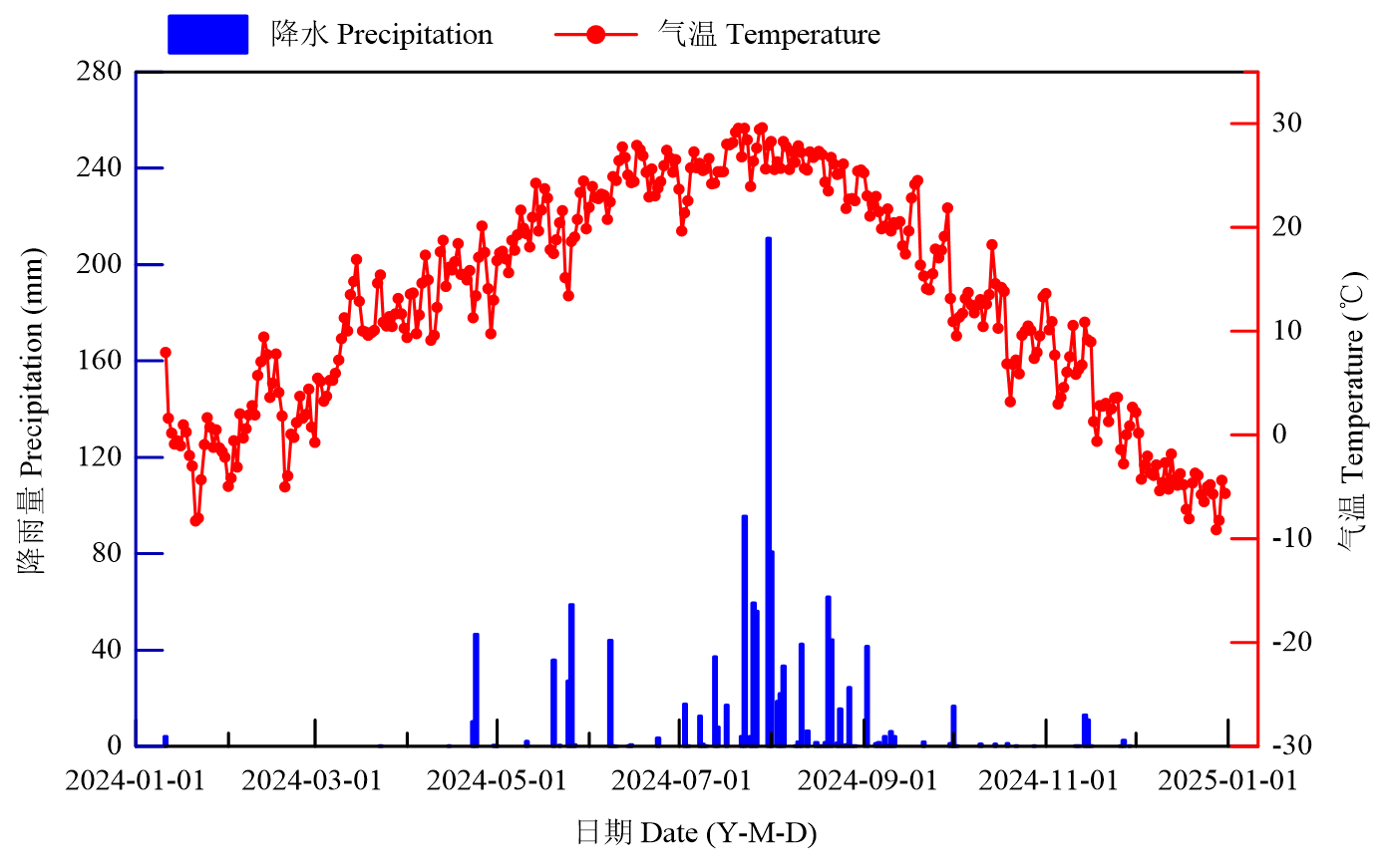
Fig. 1

Temperature and precipitation during experiment"

Table 1

Application rates of chemical fertilizer and biochar under each experimental treatment"

处理 Treatment 氮肥 N (kg·hm-2) 磷肥 P2O5 (kg·hm-2) 钾肥 KCl (kg·hm-2) 生物炭 Biochar
N 180 75 75 0
RN 108 75 75 0
RNC1 108 75 75 0.77 t·hm-2 per year
RNC5 108 75 75 3.85 t·hm-2 in 5 years

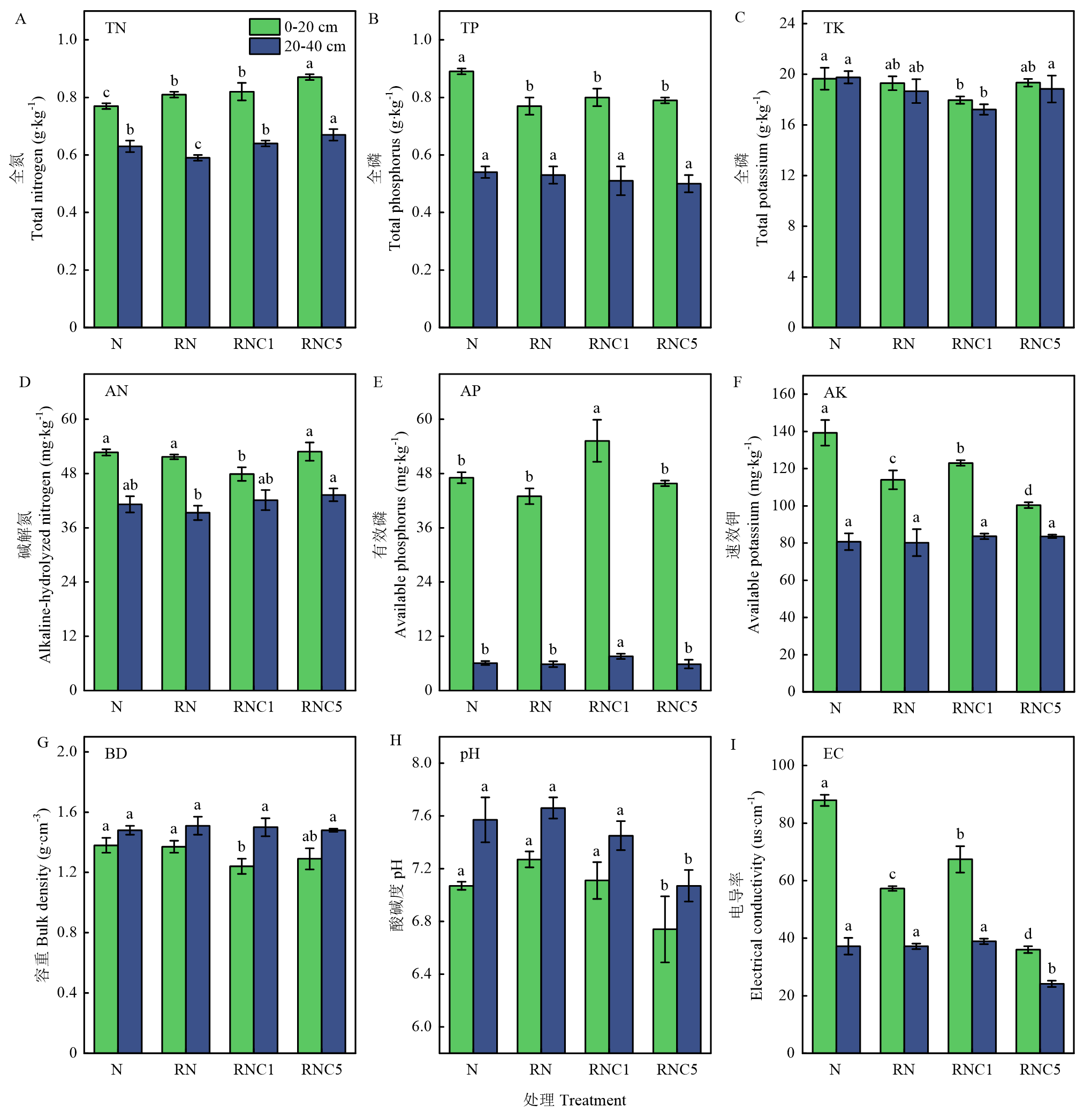
Fig. 2

Effects of different treatments on soil physicochemical properties Different lowercase letters indicate significant difference between different treatments (P<0.05). The same as below"

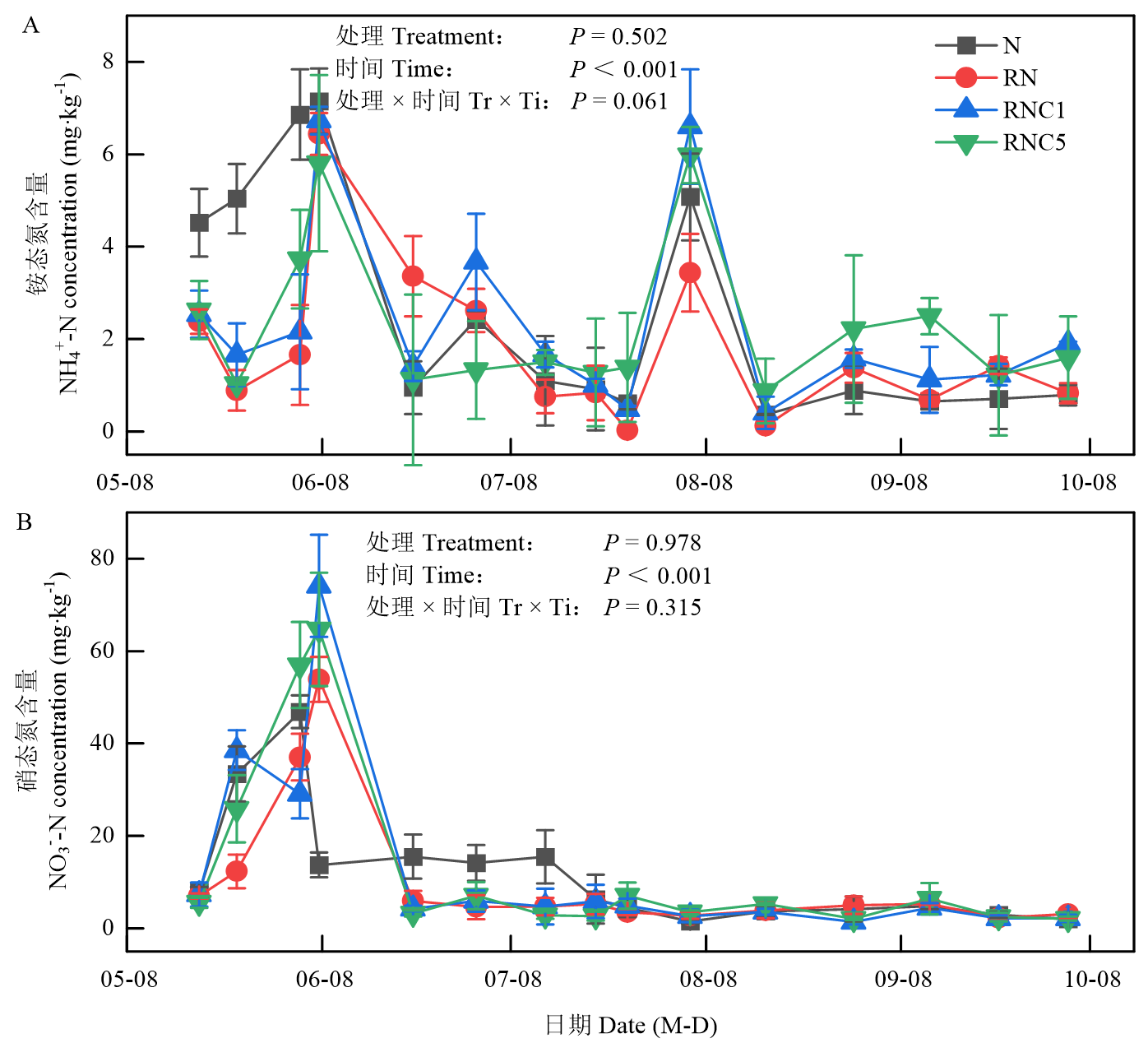
Fig. 3

Dynamics of soil NH4+-N (A) and NO3--N (B) concentrations during the maize growing season"

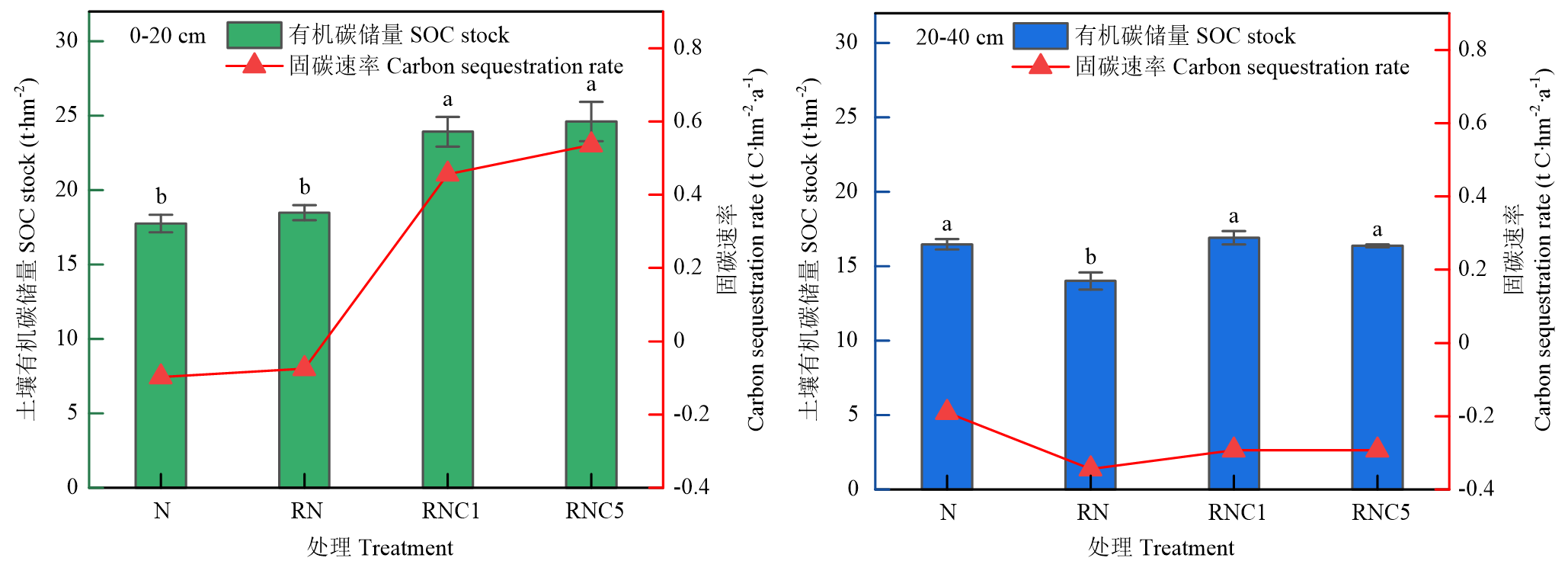
Fig. 4

Effects of different treatments on soil organic carbon storage"

Table 2

Effects of different treatments on soil carbon components"

处理
Treatment
可溶性有机碳
Dissolved organic carbon
(mg·kg-1)
微生物量碳
Microbial biomass carbon (g·kg-1)
颗粒有机碳
Particulate organic carbon (g·kg-1)
矿物结合态有机碳
Mineral-associated organic carbon (g·kg-1)
N 57.86±3.21b 66.67±0.86b 3.47±0.26b 3.10±0.03c
RN 46.56±0.76c 78.18±2.81a 2.65±0.26c 4.10±0.12b
RNC1 62.77±2.02a 65.25±4.24b 4.15±0.16a 5.52±0.46a
RNC5 56.78±2.62b 63.73±4.00b 4.19±0.47a 5.85±0.66a

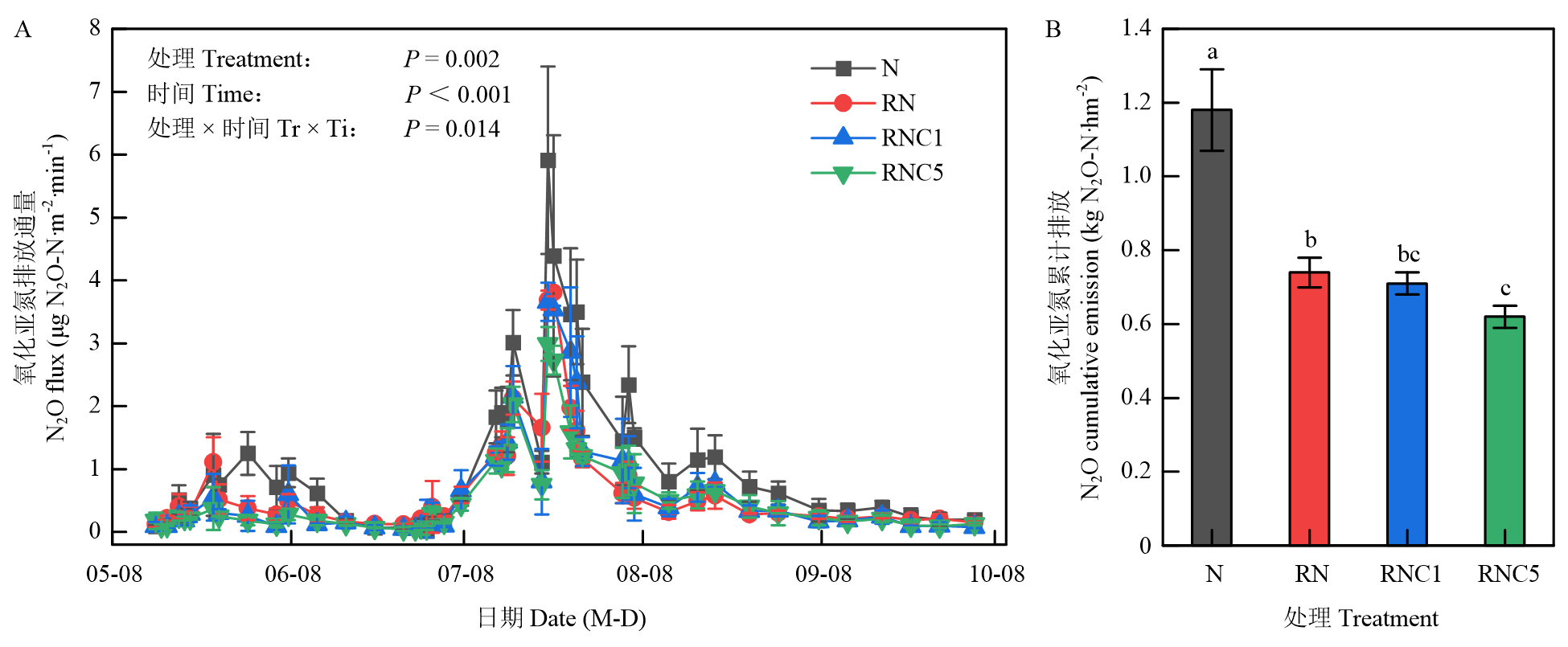
Fig. 5

Effects of different treatments on N2O emissions"

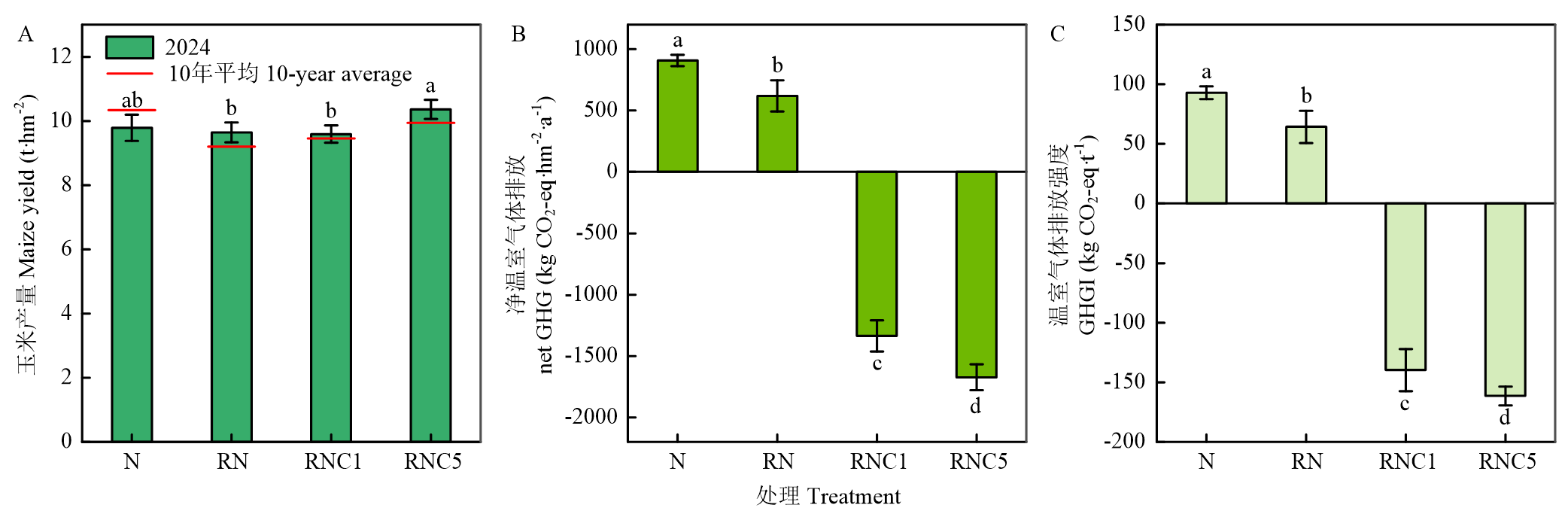
Fig. 6

Effects of different treatments on maize yield, net GHG, and GHGI"

Fig. 7

The correlations between greenhouse gas emissions, crop yield, soil organic carbon, and various physicochemical properties"

Fig. 8

The impact pathway of biochar application on carbon sequestration, emission reduction, and crop production in barren farmland A: Partial Least Squares Structural Equation Modeling (PLS-SEM); B: Decomposition of crop yield effects; C: Decomposition of nitrous oxide effects; D: Decomposition of soil carbon effects; GFI = 0.70: Goodness-of-Fit Index"

[1]
2019年全国耕地质量等级情况公报(农业农村部公报[2020]1号)[Z]. 中华人民共和国农业农村部公报, 2020(4): 113-121.
Announcement of national arable land quality grading in 2019[Z]. Gazette of the Ministry of Agriculture and Rural Affairs of the People’s Republic of China, 2020(4): 113-121. (in Chinese)
[2]
Lehmann J, Rillig M C, Thies J, Masiello C A, Hockaday W C, Crowley D. Biochar effects on soil biota-A review[J]. Soil Biology and Biochemistry, 2011, 43(9): 1812-1836.

doi: 10.1016/j.soilbio.2011.04.022
[3]
Luo L, Wang J, Lü J, Liu Z, Sun T, Yang Y, Zhu Y G. Carbon sequestration strategies in soil using biochar: Advances, challenges, and opportunities[J]. Environmental Science & Technology, 2023, 57(31): 11357-11372.

doi: 10.1021/acs.est.3c02620
[4]
Zhang S, Xue L, Liu J, Jia P, Feng Y, Xu Y, Li Z, Zhao X. One-third substitution of nitrogen with cow manure or biochar greatly reduced N2O emission and carbon footprint in saline-alkali soils[J]. Field Crops Research, 2024, 316: 109517.

doi: 10.1016/j.fcr.2024.109517
[5]
Shi Y, Liu X, Zhang Q, Li G, Wang P. Biochar rather than organic fertilizer mitigated the global warming potential in a saline-alkali farmland[J]. Soil and Tillage Research, 2022, 219: 105337.

doi: 10.1016/j.still.2022.105337
[6]
高尚洁, 刘杏认, 李迎春, 柳晓婉. 施用生物炭和秸秆还田对农田温室气体排放及增温潜势的影响[J]. 中国农业科学, 2024, 57(5): 935-949. DOI: 10.3864/j.issn.0578-1752.2024.05.009.
Gao S J, Liu X R, Li Y C, Liu X W. Effects of biochar and straw return on greenhouse gas emissions and global warming potential in the farmland[J]. Scientia Agricultura Sinica, 2024, 57(5): 935-949. DOI: 10.3864/j.issn.0578-1752.2024.05.009. (in Chinese)
[7]
Fu J, Zhou X, He Y, Liu R, Yao Y, Zhou G, Chen H, Zhou L, Fu Y, Bai S H. Co-application of biochar and organic amendments on soil greenhouse gas emissions: A meta-analysis[J]. Science of the Total Environment, 2023, 897: 166171.

doi: 10.1016/j.scitotenv.2023.166171
[8]
Liu S, Zhang Y, Zong Y, Hu Z, Wu S, Zhou J, Jin Y, Zou J. Response of soil carbon dioxide fluxes, soil organic carbon and microbial biomass carbon to biochar amendment: A meta-analysis[J]. GCB Bioenergy, 2016, 8(2): 392-406.

doi: 10.1111/gcbb.2016.8.issue-2
[9]
Lu W, Ding W, Zhang J, Li Y, Luo J, Bolan N, Xie Z. Biochar suppressed the decomposition of organic carbon in a cultivated sandy loam soil: A negative priming effect[J]. Soil Biology and Biochemistry, 2014, 76: 12-21.

doi: 10.1016/j.soilbio.2014.04.029
[10]
Wu J, Zhou B, Li Z, Liu C, Li Y, Wang Y, Zhao N, Wang Z, Chai Y, Scopa A, Drosos M, Rajput V D, Shan S. Biochar promoted soil organic carbon accumulation and aggregate stability by increasing the content of organic complex metal oxides in paddy soil[J]. Soil and Tillage Research, 2025, 254: 106713.

doi: 10.1016/j.still.2025.106713
[11]
Pan Y, Wang D, Tan T, An J, Jin X, Zou H, Zhang Y, Yu N, Siddique K H M. Effect of organic amendments on soil organic carbon fractions, water retention, and mechanical properties in a Chinese Alfisol[J]. Soil and Tillage Research, 2025, 254: 106723.

doi: 10.1016/j.still.2025.106723
[12]
Cao H, Yang Y, Gao Y, Liu J, Ma S, Duan A. Organic amendments combined with moderate nitrogen rate significantly enhance soil fertility and crop productivity[J]. Journal of Agriculture and Food Research, 2025, 23: 102211.

doi: 10.1016/j.jafr.2025.102211
[13]
Han M, Zhang J, Zhang L, Wang Z. Effect of biochar addition on crop yield, water and nitrogen use efficiency: A meta-analysis[J]. Journal of Cleaner Production, 2023, 420: 138425.

doi: 10.1016/j.jclepro.2023.138425
[14]
Peng J, Han X, Li N, Chen K, Yang J, Zhan X, Luo P, Liu N. Combined application of biochar with fertilizer promotes nitrogen uptake in maize by increasing nitrogen retention in soil[J]. Biochar, 2021, 3(3): 367-379.

doi: 10.1007/s42773-021-00090-6
[15]
Chang F, Yue S, Li S, Wang H, Chen Y, Yang W, Wu B, Sun H, Wang S, Yin L, Deng X. Periodic straw-derived biochar improves crop yield, sequesters carbon, and mitigates emissions[J]. European Journal of Agronomy, 2025, 164: 127516.

doi: 10.1016/j.eja.2025.127516
[16]
Lu J, Zhang W, Liu X, Khan A, Wang W, Ge J, Yan S, Xiong Y C. Can converting raw straw into biochar incorporation achieve both higher maize yield and lower greenhouse gas emissions intensity in drought-prone environment?[J]. Environmental Technology & Innovation, 2024, 35: 103683.
[17]
Wang L, O’Connor D, Rinklebe J, Ok Y S, Tsang D C W, Shen Z, Hou D. Biochar aging: mechanisms, physicochemical changes, assessment, and implications for field applications[J]. Environmental Science & Technology, 2020, 54(23): 14797-14814.

doi: 10.1021/acs.est.0c04033
[18]
Cambardella C A, Elliott E T. Particulate soil organic-matter changes across a grassland cultivation sequence[J]. Soil Science Society of America Journal, 1992, 56(3): 777-783.

doi: 10.2136/sssaj1992.03615995005600030017x
[19]
Kaiser K, Kaupenjohann M, Zech W. Sorption of dissolved organic carbon in soils: Effects of soil sample storage, soil-to-solution ratio, and temperature[J]. Geoderma, 2001, 99(3/4): 317-328.

doi: 10.1016/S0016-7061(00)00077-X
[20]
Wu J, Joergensen R G, Pommerening B, Chaussod R, Brookes P C. Measurement of soil microbial biomass C by fumigation-extraction: An automated procedure[J]. Soil Biology and Biochemistry, 1990, 22(8): 1167-1169.

doi: 10.1016/0038-0717(90)90046-3
[21]
Don A, Schumacher J, Freibauer A. Impact of tropical land-use change on soil organic carbon stocks-a meta-analysis: Soil organic carbon and land-use change[J]. Global Change Biology, 2011, 17(4): 1658-1670.

doi: 10.1111/gcb.2011.17.issue-4
[22]
杨建君, 盖浩, 孙振兴, 王卿梅, 陈柏旭, 文昊, 焦玉昌, 王立刚. 一种用于高秆作物的便携式农田温室气体采集装置[P]. 中国: CN216484204U, 2022-05-10.
Yang J J, Gai H, Sun Z X, Wang Q M, Chen B X, Wen H, Jiao Y C, Wang L G. A portable farmland greenhouse gas collecting device for tall-stalk crops[P]. China: CN216484204U, 2022-05-10. (in Chinese)
[23]
IPCC. 2019 Refinement to the 2006 IPCC Guidelines for National Greenhouse Gas Inventories: Volume 4-Agriculture, Forestry and Other Land Use[M]. Hayama, Japan: Institute for Global Environmental Strategies (IGES), 2019.
[24]
蒋志敏, 王威, 储成才. 植物氮高效利用研究进展和展望[J]. 生命科学, 2018, 30(10): 1060-1071.
Jiang Z M, Wang W, Chu C C. Towards understanding of nitrogen use efficiency in plants[J]. Chinese Bulletin of Life Sciences, 2018, 30(10): 1060-1071. (in Chinese)
[25]
Xu S, Chen J, Peng H, Leng S, Li H, Qu W, Hu Y, Li H, Jiang S, Zhou W, Leng L. Effect of biomass type and pyrolysis temperature on nitrogen in biochar, and the comparison with hydrochar[J]. Fuel, 2021, 291: 120128.

doi: 10.1016/j.fuel.2021.120128
[26]
Hu C C, Liu X Y, Driscoll A W, Kuang Y W, Jack Brookshire E N, Lü X T, Chen C J, Song W, Mao R, Liu C Q, Houlton B Z. Global distribution and drivers of relative contributions among soil nitrogen sources to terrestrial plants[J]. Nature Communications, 2024, 15: 6407.

doi: 10.1038/s41467-024-50674-6
[27]
史广宇, 吴贝贝, 胡嘉源, 施维林. 施加生物炭缓解土壤氮流失机理的研究进展[J]. 环境化学, 2025, 44(1): 149-163.
Shi G Y, Wu B B, Hu J Y, Shi W L. Advances in nitrogen loss reduction mechanism study by biochar application[J]. Environmental Chemistry, 2025, 44(1): 149-163. (in Chinese)
[28]
Hossain M Z, Bahar M M, Sarkar B, Donne S W, Ok Y S, Palansooriya K N, Kirkham M B, Chowdhury S, Bolan N. Biochar and its importance on nutrient dynamics in soil and plant[J]. Biochar, 2020, 2(4): 379-420.

doi: 10.1007/s42773-020-00065-z
[29]
Li H, Li Y, Xu Y, Lu X. Biochar phosphorus fertilizer effects on soil phosphorus availability[J]. Chemosphere, 2020, 244: 125471.

doi: 10.1016/j.chemosphere.2019.125471
[30]
Amin A A. Impact of corn cob biochar on potassium status and wheat growth in a calcareous sandy soil[J]. Communications in Soil Science and Plant Analysis, 2016, 47(17): 2026-2033.

doi: 10.1080/00103624.2016.1225081
[31]
Su Z, Liu X, Wang Z, Wang J. Biochar effects on salt-affected soil properties and plant productivity: A global meta-analysis[J]. Journal of Environmental Management, 2024, 366: 121653.

doi: 10.1016/j.jenvman.2024.121653
[32]
Singh H, Northup B K, Rice C W, Vara Prasad P V. Biochar applications influence soil physical and chemical properties, microbial diversity, and crop productivity: A meta-analysis[J]. Biochar, 2022, 4(1): 8.

doi: 10.1007/s42773-022-00138-1
[33]
Zhang L, Bate B, Cui J, Feng Y, Yu J, Cui Z, Wang H, Li Q. Biochar input to saline-alkali farmland can improve soil health and crop yield: A meta-analysis[J]. Agriculture, 2025, 15(5): 561.

doi: 10.3390/agriculture15050561
[34]
Fakhar A, Canatoy R C, Galgo S J C, Rafique M, Sarfraz R. Advancements in modified biochar production techniques and soil application: A critical review[J]. Fuel, 2025, 400: 135745.

doi: 10.1016/j.fuel.2025.135745
[35]
Mandal S, Sarkar B, Bolan N, Novak J, Ok Y S, Van Zwieten L, Singh B P, Kirkham M B, Choppala G, Spokas K, Naidu R. Designing advanced biochar products for maximizing greenhouse gas mitigation potential[J]. Critical Reviews in Environmental Science and Technology, 2016, 46(17): 1367-1401.

doi: 10.1080/10643389.2016.1239975
[36]
Liu H, Li X, Lu S, Wang N, Li Y, Zhang Y, Qi G, Lu H, Dong H, Wang H, Wang Y. Biennial biochar application mitigates N2O emissions in saline-alkali soils by modulating microbial communities and metabolic pathways[J]. Environmental Technology & Innovation, 2025, 40: 104475.
[37]
黄家威, 白嘉骏, 关松, 窦森, 张家麟, 王曦若. 田间老化生物质炭结构表征及吸附铵态氮效应[J]. 土壤学报, 2023, 60(5): 1468-1479.
Huang J W, Bai J J, Guan S, Dou S, Zhang J L, Wang X R. Structural characterization of field-aging biochar and its adsorption effect on ammonia nitrogen[J]. Acta Pedologica Sinica, 2023, 60(5): 1468-1479. (in Chinese)
[38]
Luo L, Xu C, Chen Z, Zhang S. Properties of biomass-derived biochars: Combined effects of operating conditions and biomass types[J]. Bioresource Technology, 2015, 192: 83-89.

doi: 10.1016/j.biortech.2015.05.054 pmid: 26022969
[39]
Han L, Sun K, Yang Y, Xia X, Li F, Yang Z, Xing B. Biochar’s stability and effect on the content, composition and turnover of soil organic carbon[J]. Geoderma, 2020, 364: 114184.

doi: 10.1016/j.geoderma.2020.114184
[40]
Qiu H, Liu J, Boorboori M R, Li D, Chen S, Ma X, Cheng P, Zhang H. Effect of biochar application rate on changes in soil labile organic carbon fractions and the association between bacterial community assembly and carbon metabolism with time[J]. Science of the Total Environment, 2023, 855: 158876.

doi: 10.1016/j.scitotenv.2022.158876
[41]
Bolan S, Hou D, Wang L, Hale L, Egamberdieva D, Tammeorg P, Li R, Wang B, Xu J, Wang T, Sun H, Padhye L P, Wang H, Siddique K H M, Rinklebe J, Kirkham M B, Bolan N. The potential of biochar as a microbial carrier for agricultural and environmental applications[J]. Science of the Total Environment, 2023, 886: 163968.

doi: 10.1016/j.scitotenv.2023.163968
[42]
Zhang A, Wang X, Fang Y, Sun X, Tavakkoli E, Li Y, Wu D, Du Z. Biochar more than stubble management affected carbon allocation and persistence in soil matrix: A 9-year temperate cropland trial[J]. Journal of Soils and Sediments, 2023, 23(8): 3018-3028.

doi: 10.1007/s11368-023-03546-3
[43]
Zhang Y, Sun C, Wang S, Xie H, Jiang N, Chen Z, Wei K, Bao X, Song X, Bai Z. Stover and biochar can improve soil microbial necromass carbon, and enzymatic transformation at the genetic level[J]. GCB Bioenergy, 2022, 14(10): 1082-1096.

doi: 10.1111/gcbb.v14.10
[44]
Nan Q, Speth D R, Qin Y, Chi W, Milucka J, Gu B, Wu W. Biochar application using recycled annual self straw reduces long-term greenhouse gas emissions from paddy fields with economic benefits[J]. Nature Food, 2025, 6(5): 456-465.

doi: 10.1038/s43016-025-01124-z pmid: 40074921
[45]
Yang J, Xia L, van Groenigen K J, Zhao X, Ti C, Wang W, Du Z, Fan M, Zhuang M, Smith P, Lal R, Butterbach-Bahl K, Han X, Meng J, Liu J, Cai H, Cheng Y, Liu X, Shu X, Jiao X, et al. Sustained benefits of long-term biochar application for food security and climate change mitigation[J]. Proceedings of the National Academy of Sciences of the United States of America, 2025, 122(33): e2509237122.
[46]
Zhao R, Coles N, Wu J. Carbon mineralization following additions of fresh and aged biochar to an infertile soil[J]. Catena, 2015, 125: 183-189.

doi: 10.1016/j.catena.2014.10.026
[1] LI YongJuan, ZHANG YueTong, WANG YiBo, ZHAO ChangJiang, SONG Jie, CHEN XueLi, YAO Qin. Effects of Biochar Application on the Abundance and Community Composition of Nitrogen-Fixing Microbial nifH Gene in Soybean Rotation and Continuous Cropping Systems [J]. Scientia Agricultura Sinica, 2026, 59(6): 1272-1285.
[2] HAN XiaoYu, ZHU YuPing, LIU HongFang, SUN ZhiMei, ZHANG XiuZhi, GAO HongJun, PENG Chang, ZHANG ShuXiang. Dynamics of Black Soil Labile Carbon Fractions and Carbon- Hydrolyzing Enzymes Under Long-Term Fertilization Regimes [J]. Scientia Agricultura Sinica, 2026, 59(18): 4092-4104.
[3] WU JiaJia, LIU Rui, LI XinYan, ZHANG JiuDong, CHANG DanNa, CAO WeiDong. Reducing Nitrogen Footprint of Maize Production with Intercropping Green Manure, Nitrogen Reduction, and Sesbania Biochar [J]. Scientia Agricultura Sinica, 2026, 59(16): 3605-3620.
[4] LI JinJin, ZHAO YuQing, LIU RuiYi, JI YanZhi, XIE JianZhi, GUO YanJie, ZHANG LiJuan. Effects of Reduced Nitrogen and Controlled Water Combined with Biochar and Nitrification Inhibitor on Nitrogen Losses in a Facility Soil-Tomato System [J]. Scientia Agricultura Sinica, 2026, 59(16): 3621-3639.
[5] WANG XiaoLi, FAN ZhiLong, NAN YunYou, CHEN GuiPing, JIANG LongXiu, YIN Wen, HU FaLong, CHAI Qiang. Response of Dry Matter Accumulation and Yield Stability in Intercropped Maize to Biochar Application Under Nitrogen Reduction [J]. Scientia Agricultura Sinica, 2026, 59(15): 3302-3314.
[6] WANG Shen, LI Pan, LIANG Miao, WANG LiPing, ZHANG DianKai, ZHAO LianHao, FAN ZhiLong, HU FaLong, NAN YunYou, YIN Wen, CHAI Qiang. Regulation Effect of Biochar Combined with Slow-Release Fertilizer on Soil Water Use in Oasis Irrigation Area [J]. Scientia Agricultura Sinica, 2026, 59(15): 3374-3386.
[7] ZHOU ShengYi, LI Chao, YU XinRan, WU FengZhi, PAN Kai. Effects of Helianthus tuberosus Straw Biochar on Watermelon Growth, Fusarium Wilt and Soil Bacterial Communities Under Continuous Cropping [J]. Scientia Agricultura Sinica, 2026, 59(14): 3132-3146.
[8] HUANG YiWen, SUI ShiJiang, HE ZhiGang, YE Xin, XU JiaYi, ZOU XiaoJin, GONG Liang. The Influence of Straw Returning to the Field on the Soil Agglomeration Structure and Carbon Sequestration Effect of Meadows [J]. Scientia Agricultura Sinica, 2026, 59(13): 2867-2877.
[9] ZHAO Yao, CHENG Qian, XU TianJun, LIU Zheng, WANG RongHuan, ZHAO JiuRan, LU DaLei, LI CongFeng. Effects of Plant Type Improvement on Root-Canopy Characteristics and Grain Yield of Spring Maize Under High Density Condition [J]. Scientia Agricultura Sinica, 2025, 58(7): 1296-1310.
[10] TIAN Lei, SHAO Xin, ZHOU YiMin, MIAO XiuZhen, JI Nan, WANG Hao, SHI MingShuai, ZHANG YueZhong. Selection of Maize Planting Density and Dense-Planting Tolerant and Lodging-Resistant Varieties in the Southern Foothills of the Greater Khingan Mountains under Multi-Factor Management [J]. Scientia Agricultura Sinica, 2025, 58(24): 5143-5155.
[11] ZHANG HaiRui, JIA AngYuan, GAO QiQi, HAN ZheQun, NAN ShanShan, DUAN BiHua, WU XuePing. The Effects of Biochar Combined with Fulvic Acid on the Physical and Chemical Properties, Enzyme Activities and Multifunctionality of Soil in Coastal Saline-Alkali Land [J]. Scientia Agricultura Sinica, 2025, 58(20): 4178-4188.
[12] WANG AnXin, FANG YaTing, DUN Qian, WU YongQing, LIAO ShiPeng, LI XiaoKun, REN Tao, LU ZhiFeng, CONG RiHuan, LU JianWei. Effects of Direct and Biochar-Based Straw Incorporation on Crop Yield and Nitrogen Uptake and Utilization in a Rice-Rapeseed Rotation System [J]. Scientia Agricultura Sinica, 2025, 58(16): 3280-3292.
[13] MA YuJie, LI Xu, ZHAI YingFang, LI JingYu, FU Xin, PENG ZhengPing. Effects of Straw Returning Methods and Nitrogen Application Rates on Soil Organic Carbon Components and Enzyme Activity [J]. Scientia Agricultura Sinica, 2025, 58(12): 2397-2410.
[14] GAO ShangJie, LIU XingRen, LI YingChun, LIU XiaoWan. Effects of Biochar and Straw Return on Greenhouse Gas Emissions and Global Warming Potential in the Farmland [J]. Scientia Agricultura Sinica, 2024, 57(5): 935-949.
[15] CAO WenZhuo, YU ZhenWen, ZHANG YongLi, ZHANG Zhen, SHI Yu, WANG YongJun. The Difference of Grain Starch Accumulation Dynamics and Yield Formation of Spring Maize Under Different Nitrogen Application Rates in Black Soil [J]. Scientia Agricultura Sinica, 2024, 57(22): 4431-4443.
Viewed
Full text


Abstract

Cited

  Shared   
  Discussed   
No Suggested Reading articles found!