Scientia Agricultura Sinica ›› 2026, Vol. 59 ›› Issue (17): 3712-3729.doi: 10.3864/j.issn.0578-1752.2026.17.002

• CROP GENETICS & BREEDING·GERMPLASM RESOURCES·MOLECULAR GENETICS • Previous Articles     Next Articles

Genome-Wide Association Study and Candidate Gene Identification for Grain Number per Spike in Dryland Wheat (Triticum aestivum L.)

WANG HaoDong1,2(), WANG Peng3, WU YuXuan2, ZHANG Qin2, WANG QiaoYun2, GUO LiJian1, YANG DeLong1,2(), CHEN Tao2()   

  1. 1 State Key Laboratory of Aridland Crop Science, Lanzhou 730070
    2 College of Life Science and Technology, Gansu Agricultural University, Lanzhou 730070
    3 College of Agronomy, Gansu Agricultural University, Lanzhou 730070
  • Received:2026-02-03 Accepted:2026-04-01 Online:2026-09-03 Published:2026-09-03
  • Contact: YANG DeLong, CHEN Tao

Abstract:

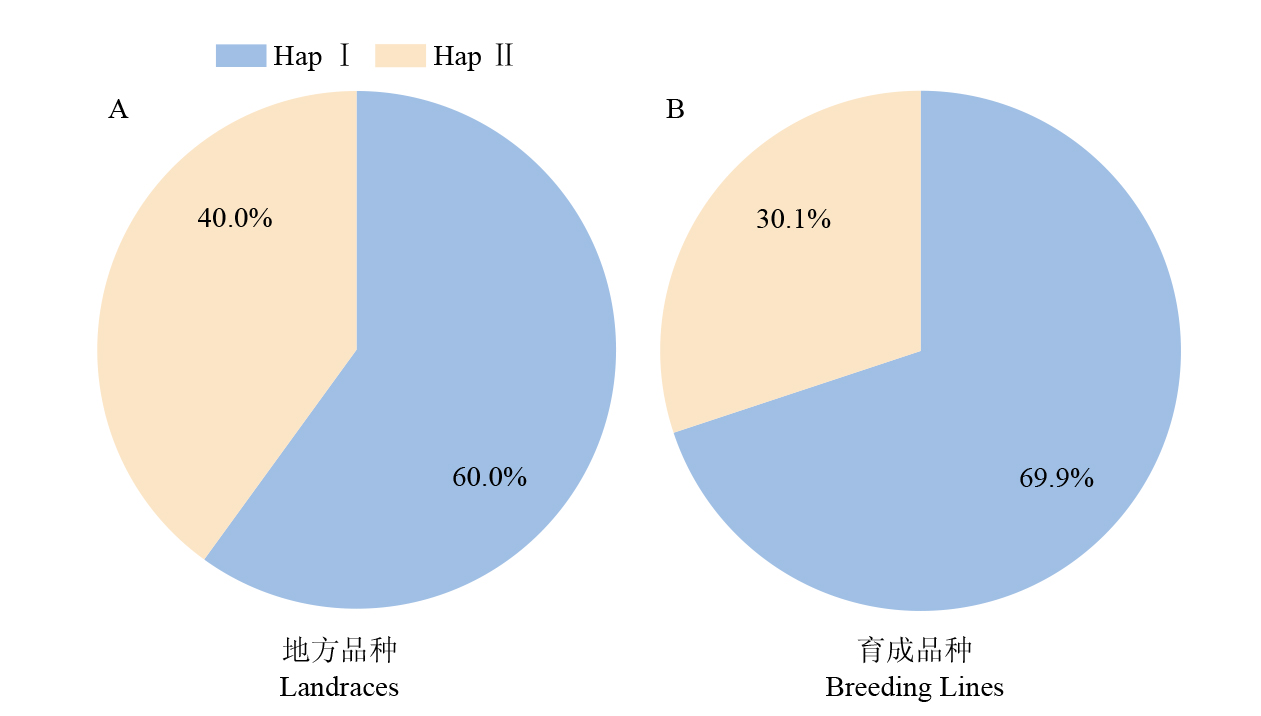
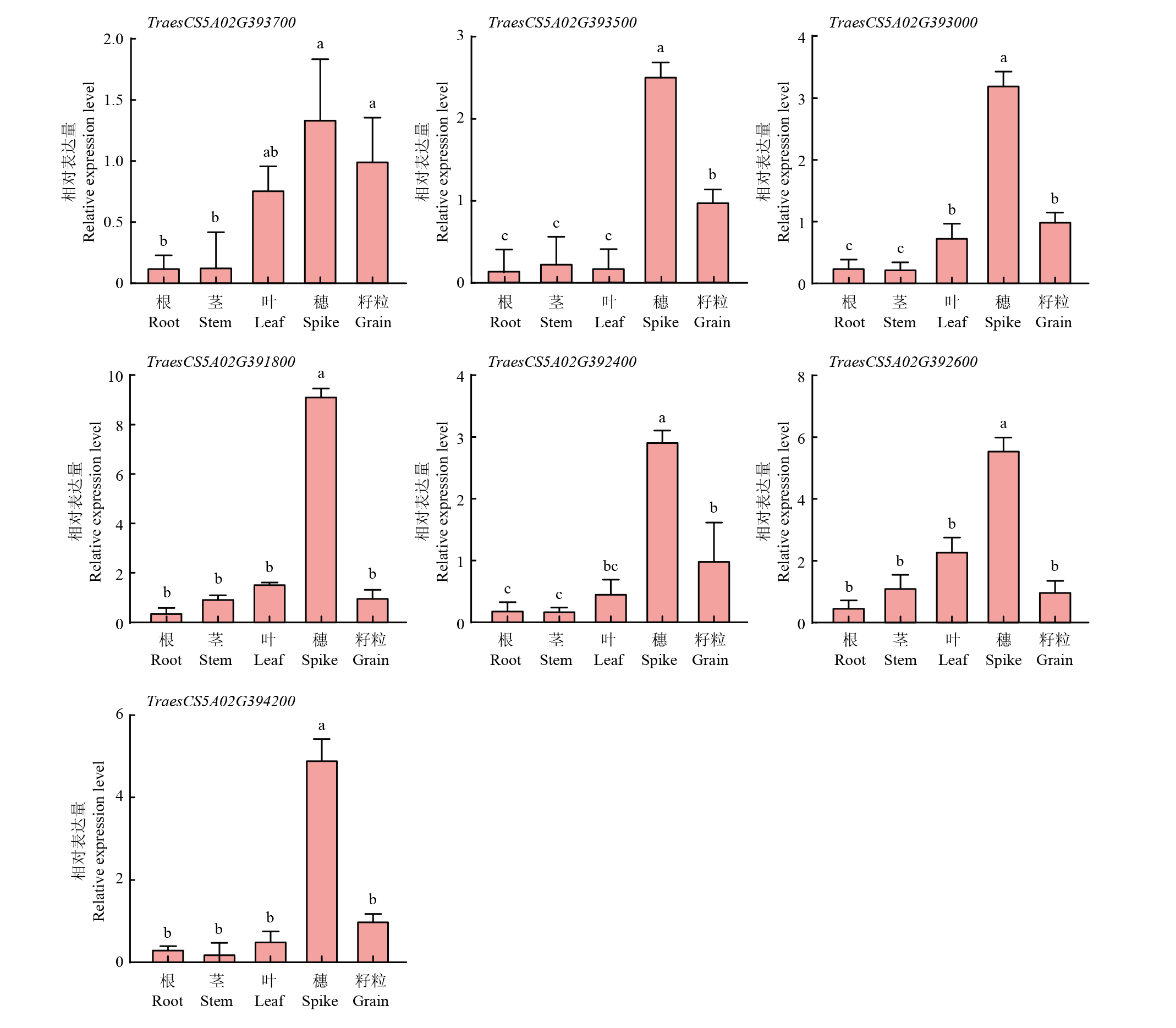
【Objective】Wheat (Triticum aestivum L.) ranks among the most vital cereal crops globally, making the enhancement of its yield crucial for ensuring food security. The grain number per spike (GNS) serves as a critical determinant of wheat yield. Understanding the genetic architecture of GNS and identifying key candidate genes will promote genetic improvement and enable marker-assisted selection for this trait.【Method】A panel of 123 wheat accessions was phenotyped for GNS across multiple drought-prone environments. Genome-wide association studies (GWAS) were conducted utilizing a mixed linear model (MLM) based on genotyping data derived from a 35K SNP array. For marker-trait associations (MTAs) significantly correlated with GNS, haplotype analysis was performed, Kompetitive Allele-Specific PCR (KASP) markers were developed, and multi-environment phenotypic validation was executed. Candidate genes were identified through public RNA-seq data to screen for genes with high expression levels in spike tissues. This was followed by validation using quantitative real-time reverse transcription PCR (qRT-PCR) and functional annotation based on homology and previously reported functional information.【Result】GNS exhibited coefficients of variation between 17.18% and 22.48% across different environments, indicating a significant environmental impact. The GWAS identified 47 significant MTAs, with the highest concentration of 9 MTAs located on chromosome 5A. Notably, the marker AX-94445381 on chromosome 5A was consistently detected in two environments, demonstrating a stable genetic association. Haplotype analysis categorized this marker into two distinct haplotypes (HapⅠ and HapⅡ). Validation of the KASP marker indicated that accessions carrying HapⅡ displayed significantly higher GNS across three environments compared to those with HapⅠ. An analysis of the favorable haplotype AX-94445381-HapⅡ, utilizing publicly available resequencing data, revealed that its frequency was lower in modern cultivars (30.1%) than in landraces (40.0%), suggesting that this haplotype has not been fully exploited in wheat breeding programs. Candidate gene screening within the 1 Mb region surrounding AX-94445381, in conjunction with RNA-seq data, identified genes that are highly expressed specifically in spike tissue. Validation through qRT-PCR and homology analysis with rice orthologs identified three candidate genes directly involved in spike development, which encode a UDP-glycosyltransferase, a MADS-box transcription factor, and a WD repeat-containing protein, respectively.【Conclusion】A major stable locus, AX-94445381, associated with GNS has been identified. The advantageous haplotype AX-94445381-HapⅡ was shown to markedly enhance GNS, underscoring its potential for further exploitation and application in wheat breeding.

Key words: wheat, grain number per spike, genome-wide association study, KASP marker, candidate genes

Fig. 1

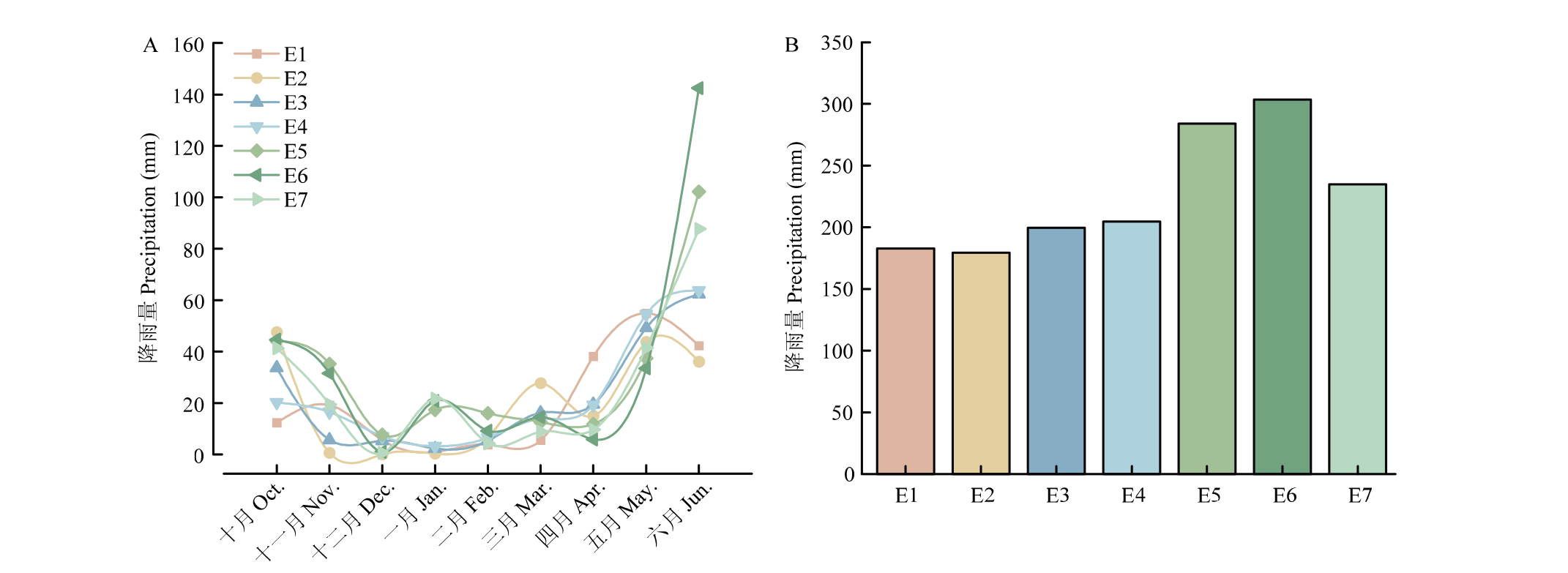
Rainfall amounts during the reproductive period of NP1 and NP2 groups under different environmental conditions A: Monthly precipitation in different environments; B: Total precipitation in different environments. E1-E4: Wujiachuan wheat experimental station in Tongwei County in the 2015-2016, 2016-2017, 2017-2018, and 2018-2019 growing seasons, respectively; E5: Nanhu wheat experimental station in Zhuanglang County; E6: Hesheng wheat experimental station in Ning County; E7: Shizi wheat experimental station in Lingtai County. The same as below"

Table 1

KASP molecular marker primers"

引物Primer 序列Sequence (5′-3′)
AX-94445381-KASP-F1 GAAGGTGACCAAGTTCATGCTTTGGAAGGATTCGGCACGCA
AX-94445381-KASP-F2 GAAGGTCGGAGTCAACGGATTTTGGAAGGATTCGGCACGCC
AX-94445381-KASP-R CAGCCAGCCCTTGCCTCCGTGC

Table 2

Primers for qRT-PCR"

基因ID Gene ID 正向引物 Forward primer (5′-3′) 反向引物 Reverse primer (5′-3′)
TraesCS5A02G391800 GATGCTGCCGTGCCGACTACC GACCCTCAAGCTGTTCAAGCTCG
TraesCS5A02G392400 AGAACCTCACGCAGGCCGCCG CCGCCAGCACCGGAGTCAAAC
TraesCS5A02G392600 CGTCGCCTCTCTCAGTAACCTCC GAATAGCCATGCCCGGAGAGC
TraesCS5A02G393000 GAGGGAGAGATTCCGGAGAGTGTC CGACACTGCCCTAGCTCCCTAG
TraesCS5A02G393500 GAAGGCGAAGGGGTCACTGGAC GATTTGGGCACCACGCGCGTC
TraesCS5A02G393700 CCGGGCTTGCCAGTACAGTTATCC CCGGTGCTAGAGGCTGAAGTGG
TraesCS5A02G394200 GTCCAACCGAAGGGCAGCAGCTG CGGAGCTCCTGGTCGGCAAAC
TaGAPDH AAATCTGGCATCACACTTTCTAC GTCTCAAACATAATCTGGGTCATC

Fig. 2

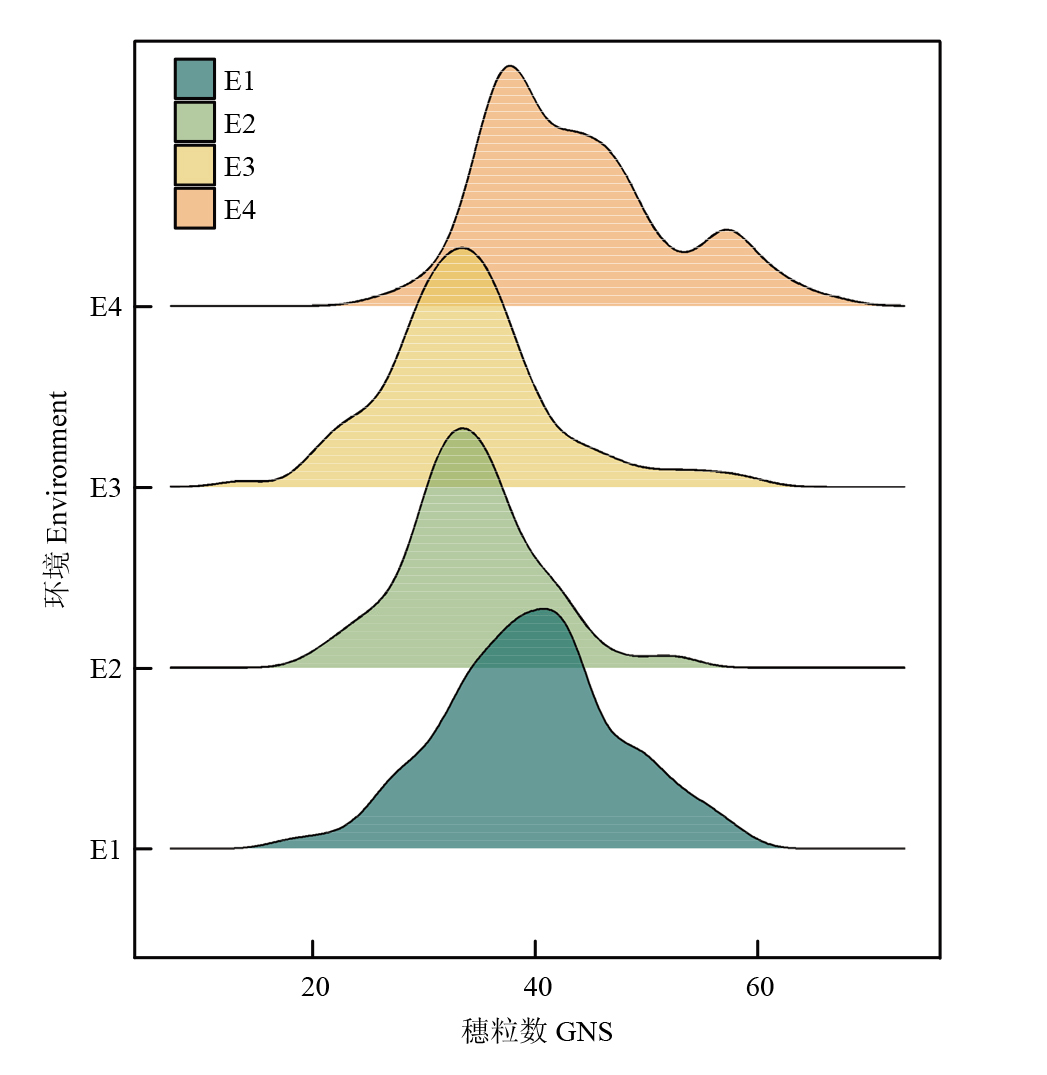
Phenotypic frequency distribution of GNS in NP1 population under different environmental conditions GNS: grain number per spike. The same as below"

Table 3

Phenotypic analysis of GNS in NP1 population"

性状
Trait
环境
Environment
范围
Range
平均值±标准差
Mean±SD
变异系数
CV (%)
偏度
Skewness
峰度
Kurtosis
穗粒数
GNS
E1 18.00-58.00 39.59±7.85 19.83 -0.013 -0.039
E2 20.33-53.00 34.32±5.89 17.18 0.404 0.940
E3 13.67-59.33 33.94±7.63 22.48 0.409 -0.442
E4 26.00-66.67 43.61±8.29 19.01 0.650 -0.123

Fig. 3

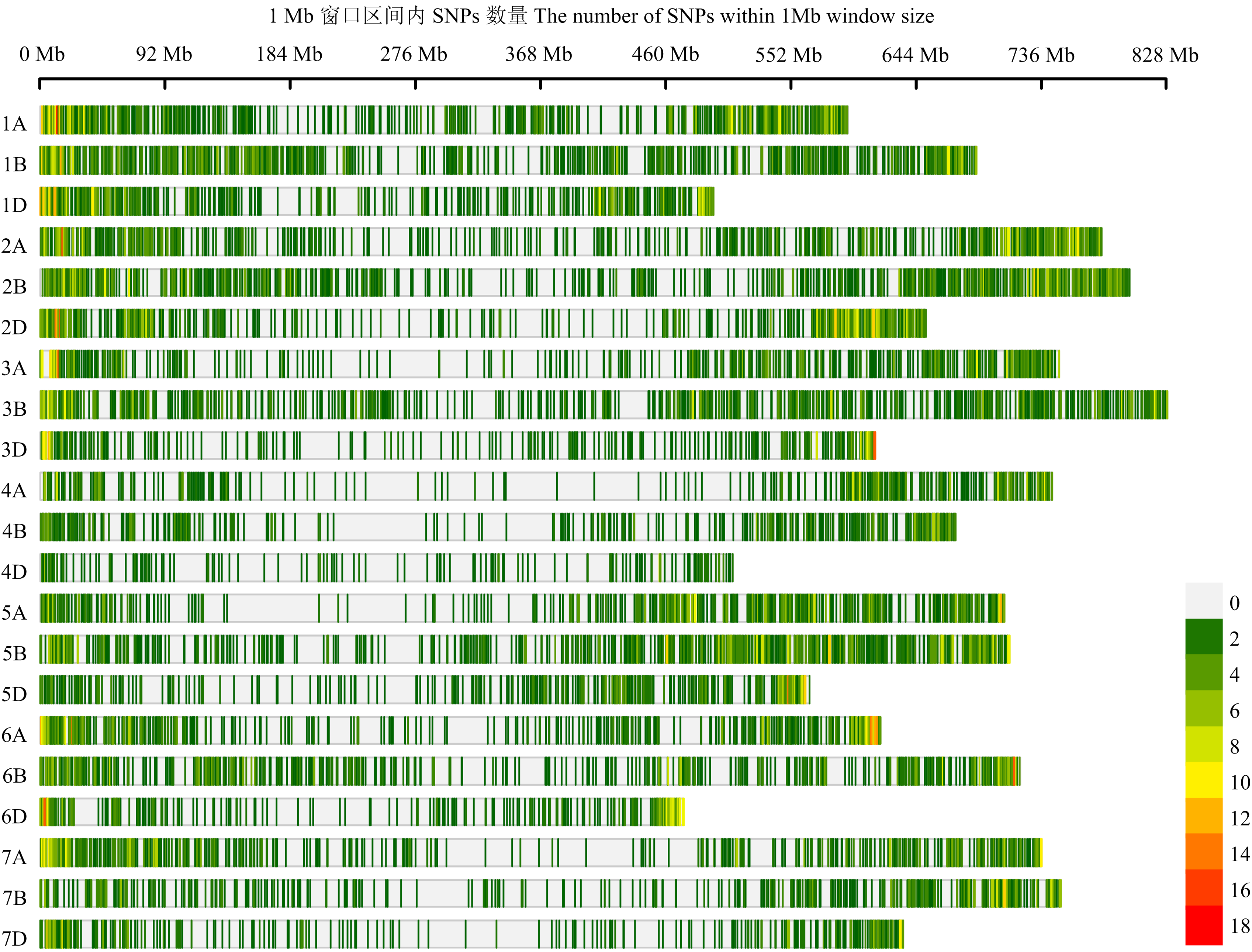
Distribution of high-quality SNPs across the 21 chromosomes of wheat"

Table 4

Information of SNP markers"

染色体
Chr.
标记数目
No. of markers
物理长度
Physical length (Mb)
标记密度
Marker density (Mb)
最小等位基因频率MAF 多态性信息含量PIC
均值Average 范围Range 均值Average 范围Range
1A 812 592.86 0.73 0.75 0.50-0.95 0.27 0.09-0.38
1B 924 688.60 0.75 0.74 0.50-0.95 0.29 0.09-0.38
1D 616 495.13 0.80 0.76 0.50-0.95 0.27 0.09-0.38
2A 854 780.32 0.91 0.76 0.50-0.95 0.26 0.09-0.38
2B 980 799.42 0.82 0.75 0.50-0.95 0.27 0.09-0.38
2D 709 651.40 0.92 0.74 0.50-0.95 0.28 0.09-0.38
3A 621 749.26 1.21 0.74 0.50-0.95 0.28 0.09-0.38
3B 875 829.07 0.95 0.74 0.50-0.95 0.28 0.09-0.38
3D 391 613.59 1.57 0.74 0.50-0.95 0.28 0.09-0.38
4A 453 742.10 1.64 0.77 0.50-0.95 0.26 0.09-0.38
4B 444 672.67 1.52 0.78 0.50-0.95 0.25 0.09-0.38
4D 181 508.05 2.81 0.74 0.50-0.95 0.28 0.09-0.38
5A 685 708.54 1.03 0.73 0.50-0.95 0.29 0.09-0.38
5B 912 712.88 0.78 0.74 0.50-0.95 0.28 0.09-0.38
5D 478 565.85 1.18 0.73 0.50-0.95 0.28 0.09-0.38
6A 635 617.28 0.97 0.73 0.50-0.95 0.28 0.09-0.38
6B 717 720.60 1.01 0.74 0.50-0.95 0.28 0.09-0.37
6D 383 473.37 1.24 0.76 0.50-0.95 0.27 0.09-0.38
7A 694 736.45 1.06 0.77 0.50-0.95 0.26 0.09-0.38
7B 550 750.49 1.36 0.77 0.50-0.95 0.26 0.09-0.38
7D 388 634.71 1.64 0.77 0.50-0.95 0.26 0.09-0.38
A基因组Genome A 4754 4926.81 1.04 0.75 0.50-0.95 0.27 0.09-0.38
B基因组Genome B 5402 5173.73 0.96 0.75 0.50-0.95 0.27 0.09-0.38
D基因组Genome D 3146 3942.10 1.25 0.75 0.50-0.95 0.27 0.09-0.38
总计Total 13302 14042.64 1.06 0.75 0.50-0.95 0.27 0.09-0.38

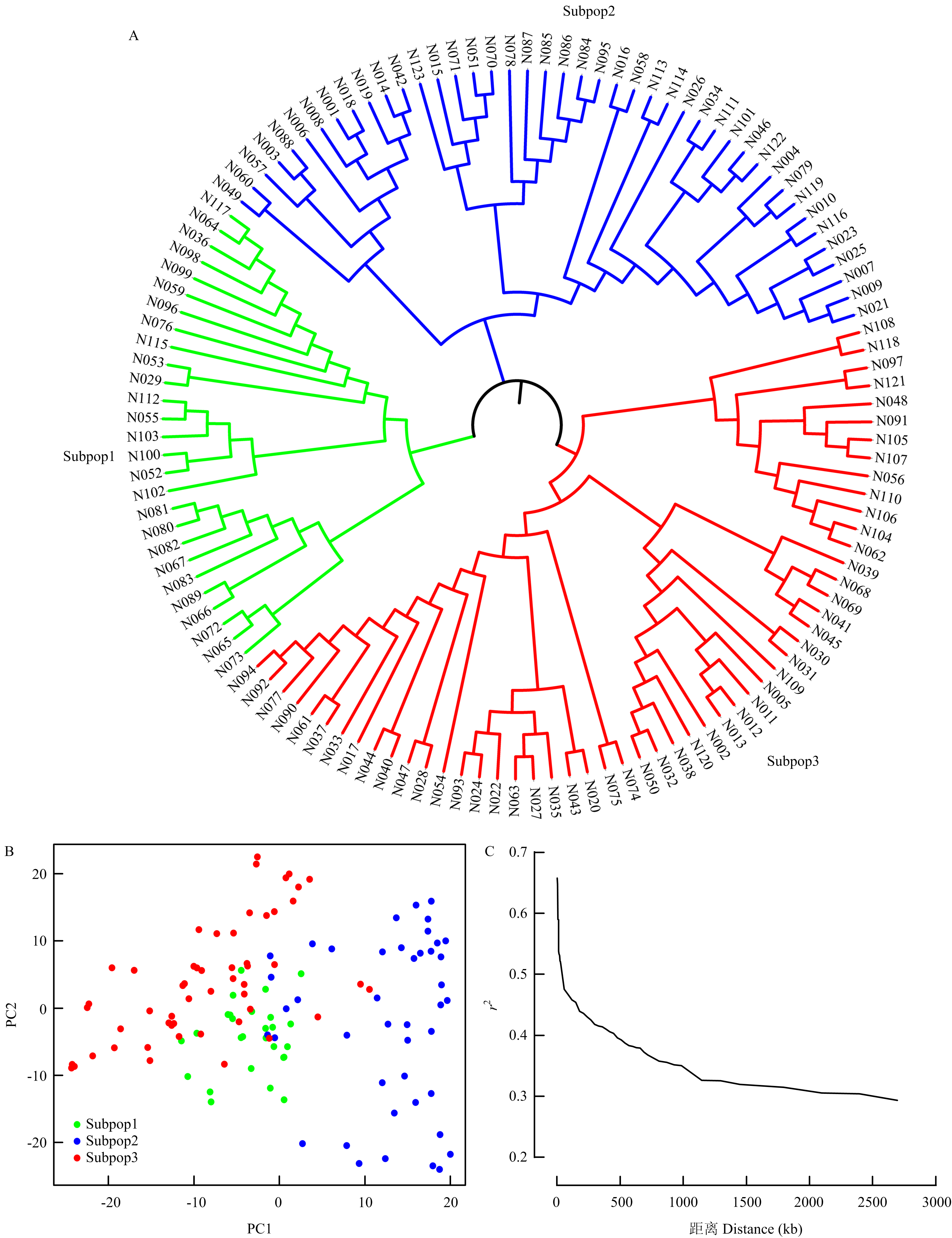
Fig. 4

Population structure analysis of NP1 population A: Neighbor-joining clustering diagram; B: Principal component analysis; C: Linkage disequilibrium attenuation distance"

Fig. 5

Manhattan plots of GWAS for GNS across different environments The horizontal dashed lines in the manhattan plot indicate the significance threshold; Different colors represent GWAS results from different environments"

Table 5

MTA associated with GNS detected by GWAS"

标记Marker 等位变异Allelic variation 染色体Chr. 物理位置Position (bp) 环境Environment PP value R2 (%)
AX-94940774 G/T 1A 412035140 E3 3.71E-04 12.69
AX-94595074 A/G 1B 1434729 E2 4.28E-04 14.29
AX-94460586 C/T 2A 568411263 E2 2.52E-04 14.39
AX-94918833 G/T 2A 740873736 E3 3.10E-04 13.95
AX-94773990 C/T 2A 31089755 E3 7.14E-04 14.08
AX-94905029 A/G 2A 52586827 E4 7.04E-04 13.14
AX-95126447 A/G 2A 24060452 E4 7.20E-04 13.55
AX-94970086 C/G 2B 680522418 E1 1.30E-04 16.48
AX-94450454 A/G 2B 738686815 E2 8.58E-05 16.72
AX-94408488 C/T 2B 580887157 E2 3.16E-04 13.91
AX-94431990 A/C 2B 657793077 E2 5.19E-04 13.06
AX-95256964 A/G 2B 737490832 E2 6.45E-04 12.66
AX-94450445 A/G 3B 783870123 E3 3.30E-04 16.08
AX-94783697 A/C 4B 581072860 E2 4.15E-04 13.27
AX-95127411 A/T 4B 573290876 E4 8.46E-04 10.46
AX-94472979 A/G 5A 551483456 E1 4.72E-04 15.27
AX-94479272 C/G 5A 552515382 E1 7.24E-04 13.06
AX-95243984 A/G 5A 549800941 E1 7.90E-04 13.23
AX-94522762 C/T 5A 485598127 E2 4.07E-04 14.71
AX-94445381 A/C 5A 588738568 E3 3.38E-04 13.83
E4 3.99E-04 14.02
AX-94404219 A/C 5A 588854488 E3 6.30E-04 13.74
AX-95085015 A/C 5A 480284549 E4 2.44E-04 14.79
AX-95629907 A/G 5A 480176958 E4 4.33E-04 13.72
AX-94615284 A/T 5A 479848189 E4 6.85E-04 14.04
AX-94712641 C/G 5B 691797180 E2 3.81E-04 13.48
AX-94820753 C/T 5B 689950369 E2 3.97E-04 13.53
AX-94878420 G/T 5B 449201643 E2 5.32E-04 12.82
AX-94977236 A/C 5D 408304024 E2 3.97E-04 13.60
AX-94431816 G/T 5D 545932823 E2 4.07E-04 13.26
AX-95114243 C/G 5D 375310485 E2 4.19E-04 13.23
AX-94395064 A/G 6A 73994641 E2 4.38E-04 13.51
AX-94750824 A/G 6A 25692809 E2 8.20E-04 12.07
AX-94660514 A/G 6A 65066575 E3 7.25E-04 15.86
AX-94982674 G/T 6A 559432410 E3 7.78E-04 12.85
AX-94624630 G/T 6A 108070104 E4 9.10E-04 13.33
AX-94511580 A/T 6B 191529940 E2 2.67E-04 14.64
AX-94758158 C/T 6B 492492877 E2 7.01E-04 12.29
AX-94708023 C/T 6B 21138180 E3 2.16E-04 16.89
AX-94898852 C/T 6B 462157403 E3 8.90E-04 12.28
AX-95252437 G/T 6D 55925493 E1 9.43E-04 12.53
AX-95222417 C/T 6D 9972857 E2 2.14E-04 16.19
AX-94759612 C/T 6D 200873028 E2 3.73E-04 13.44
AX-94572243 A/G 6D 80064488 E3 6.84E-04 14.55
AX-94675786 C/T 7A 21446154 E2 5.21E-04 12.81
AX-94389135 A/C 7A 713743759 E2 9.81E-04 11.80
AX-94456211 A/G 7A 30816891 E3 5.81E-04 14.12
AX-94467530 G/T 7B 537458194 E1 9.01E-04 10.29

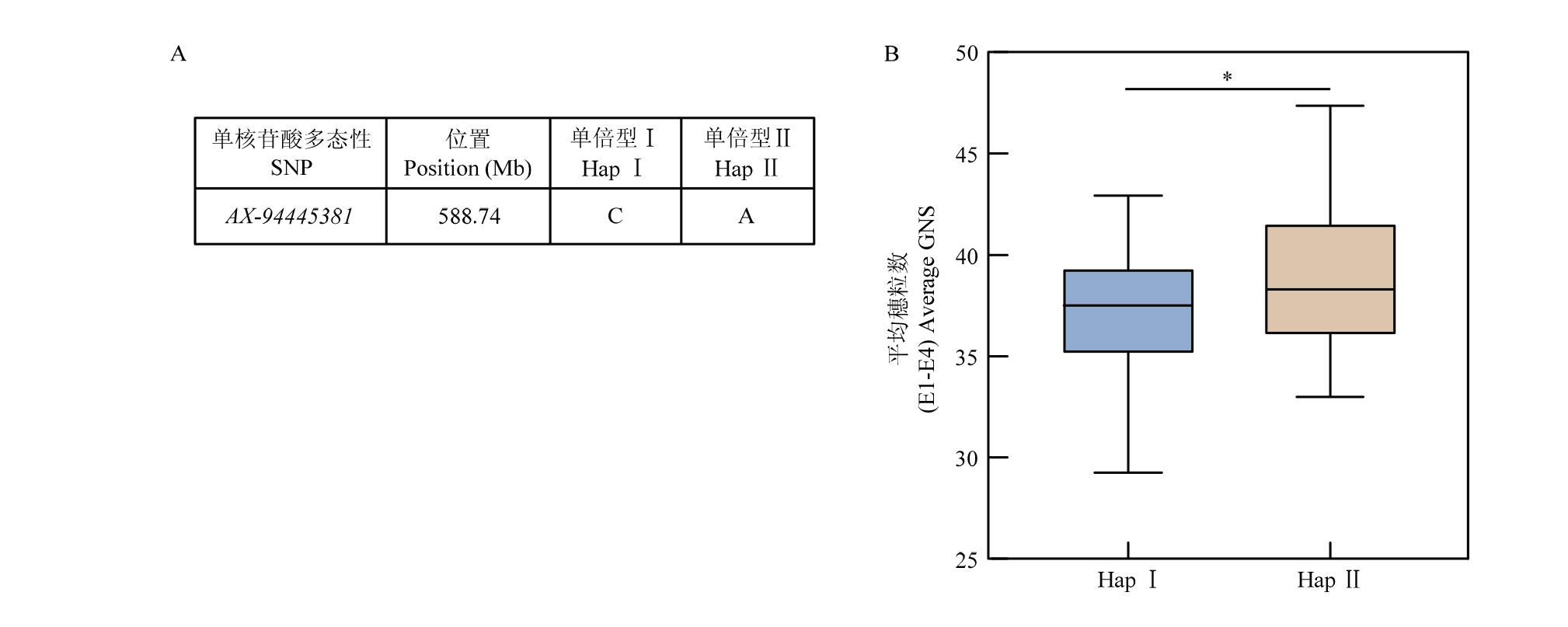
Fig. 6

Haplotype analysis of the marker AX-94445381 A: Marker position and alleles; B: Average GNS of two haplotypes across E1-E4. *: Significant difference at the P<0.05 level. The same as below"

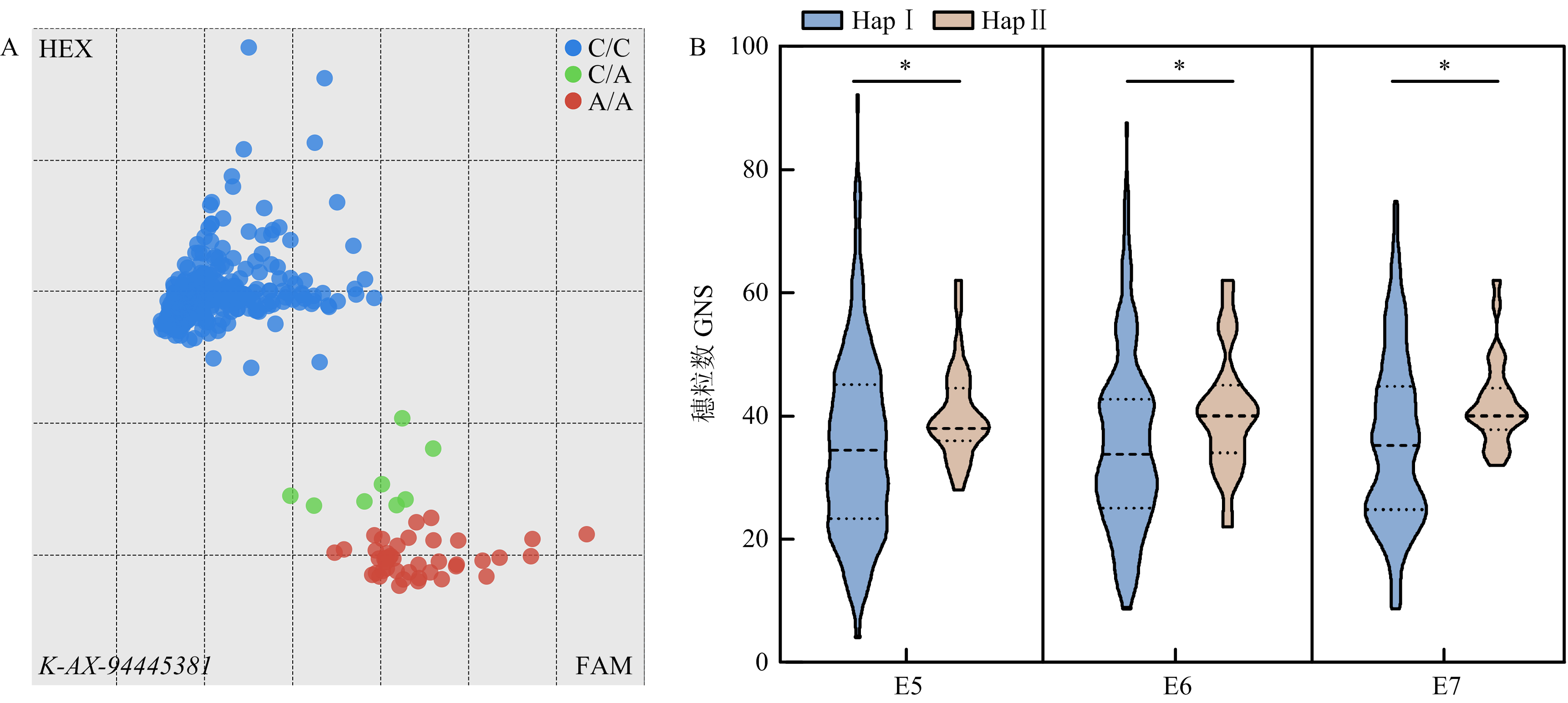
Fig. 7

Genotyping of AX-94445381 and significance test for phenotype of GNS trait denotes heterozygotes A: Scatter-cluster analysis of KASP marker genotypes. C/C represents HapⅠ homozygotes, A/A indicates HapⅡ homozygotes, and C/A denotes heterozygotes; B: Significance analysis of the GNS trait"

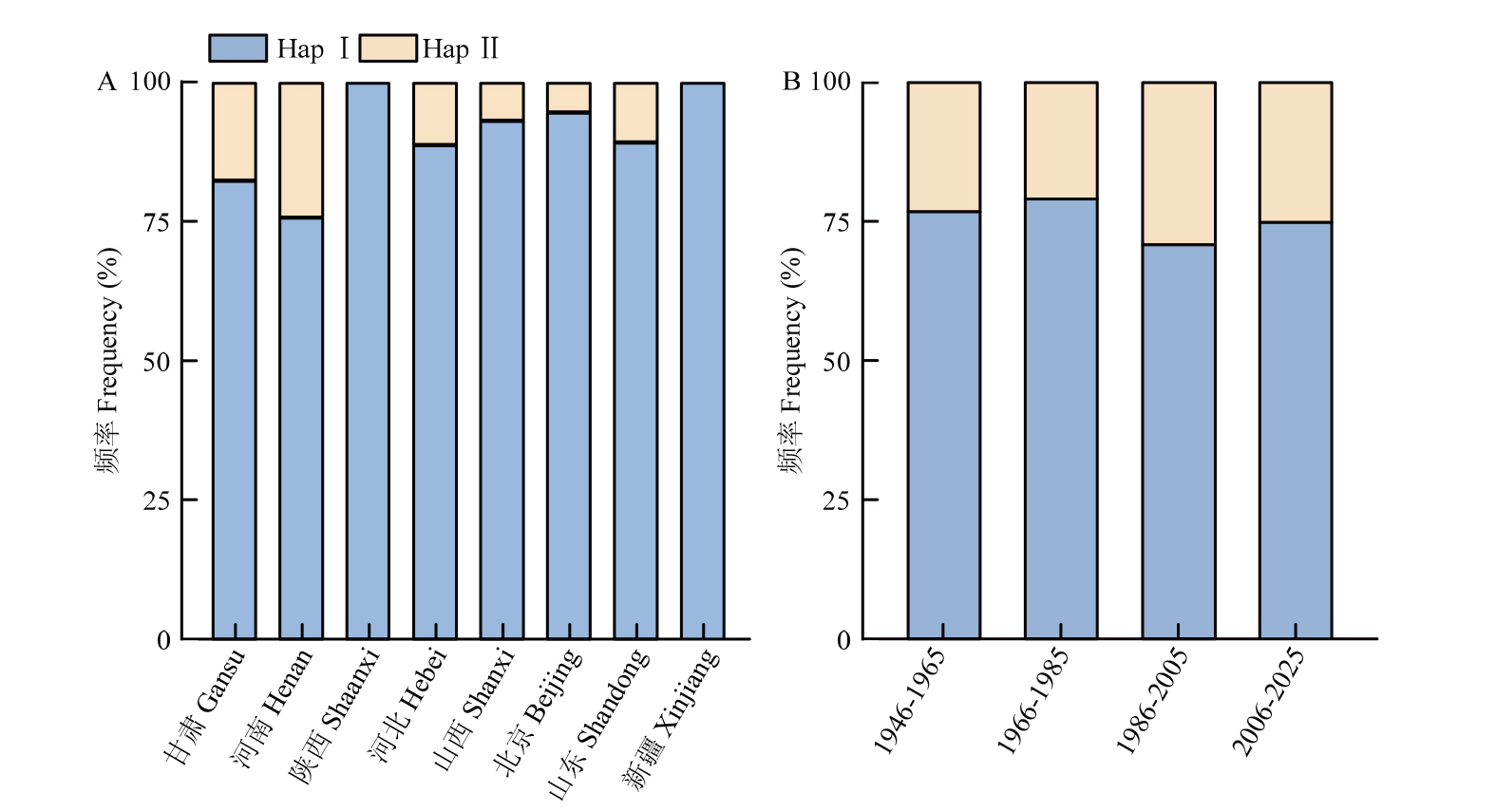
Fig. 8

The spatial-temporal distribution of AX-94445381 marks two haplotypes in the cultivated varieties of the major wheat- growing areas in China and the distribution frequency in varieties of different eras A: Distribution frequency of the AX-94445381-HapⅡ in cultivated varieties across eight major wheat-producing provinces in China; B: Frequency trends of the two AX-94445381 haplotypes in varieties developed during different periods (1946-2025)"

Fig. 9

Frequency distribution of AX-94445381-HapⅡ A: Frequency distribution of AX-94445381-HapⅡ in landraces; B: Frequency distribution of AX-94445381-HapⅡ in breeding lines"

Fig. 10

Expression pattern analysis of candidate genes within the 1 Mb upstream and downstream region of marker AX-94445381 Z is the abbreviation of the Zadoks growth scale, and the following number indicates the specific growth stage code"

Fig. 11

Analysis of expression levels of candidate genes by qRT-PCR Different lowercase letters indicate statistically significant differences at P<0.05"

Table 6

The finally identified candidate genes"

候选基因
Candidate gene
基因区间
Gene interval (bp)
基因注释
Gene annotation
水稻基因号
Rice gene number
同源性
Homology (%)
E
E value
TraesCS5A02G391800 588017833-588024080 MADS-box转录因子
MADS-box transcription factor
LOC_Os03g54170 97 1.24E-118
LOC_Os06g06750 96 2.54E-71
TraesCS5A02G392400 588553923-588558813 WD重复序列蛋白
WD repeat-containing protein
LOC_Os03g51550 73 6.64E-29
TraesCS5A02G394200 589370600-589373630 UDP-糖基转移酶
UDP-glycosyltransferase
LOC_Os03g55040 93 8.82E-116
TraesCS5A02G392600 588740101-588746176 ABC转运蛋白B家族蛋白
ABC transporter B family protein
LOC_Os03g54790 100 0.0
TraesCS5A02G393000 588871831-588876487 受体蛋白激酶Receptor protein kinase LOC_Os07g41140 96 0.0
TraesCS5A02G393500 589240694-589244001 有丝分裂纺锤体组织蛋白1B
Mitotic-spindle organizing protein 1B
LOC_Os03g32150 91 2.96e-13
TraesCS5A02G393700 589287682-589295519 牙本质唾液磷蛋白
Dentin sialophosphoprotein-like protein
LOC_Os03g54970 61 2.03e-136
[1]
Ma J F, Tian T, Wang P, Liu Y, Zhang P P, Chen T, Guo L J, Zhang Y Y, Wu Y X, Shahinnia F, Yang D L. Identification of quantitative trait loci and candidate genes underlying kernel traits of wheat (Triticum aestivum L.) in response to drought stress[J]. Theoretical and Applied Genetics, 2025, 138(9): 216.
[2]
Senapati N, Brown H E, Semenov M A. Raising genetic yield potential in high productive countries: Designing wheat ideotypes under climate change[J]. Agricultural and Forest Meteorology, 2019, 271: 33-45.

doi: 10.1016/j.agrformet.2019.02.025 pmid: 31217650
[3]
李明, 程宇坤, 白斌, 雷斌, 耿洪伟. 冬小麦穗部性状GWAS分析及优异单倍型筛选[J]. 中国农业科学, 2025, 58(18): 3583-3597. DOI: 10.3864/j.issn.0578-1752.2025.18.002.
Li M, Cheng Y K, Bai B, Lei B, Geng H W. Genome-wide association study on spike architecture traits and elite haplotype mining in winter wheat[J]. Scientia Agricultura Sinica, 2025, 58(18): 3583-3597. DOI: 10.3864/j.issn.0578-1752.2025.18.002. (in Chinese)
[4]
魏艳丽, 王彬龙, 李瑞国, 蒋会利, 张安静. 大穗小麦穗部性状的遗传分析[J]. 麦类作物学报, 2015, 35(10): 1366-1371.
Wei Y L, Wang B L, Li R G, Jiang H L, Zhang A J. Genetic analysis on spike characteristics of wheat variety with large spike[J]. Journal of Triticeae Crops, 2015, 35(10): 1366-1371. (in Chinese)
[5]
Liu J, Xu Z B, Fan X L, Zhou Q, Cao J, Wang F, Ji G S, Feng B, Wang T. A genome-wide association study of wheat spike related traits in China[J]. Frontiers in Plant Science, 2018, 9: 1584.

doi: 10.3389/fpls.2018.01584 pmid: 30429867
[6]
Ling Y M, Zhao Q L, Liu W X, Wei K X, Bao R F, Song W N, Nie X J. Detection and characterization of spike architecture based on deep learning and X-ray computed tomography in barley[J]. Plant Methods, 2023, 19(1): 115.

doi: 10.1186/s13007-023-01096-w pmid: 37891590
[7]
McCartney C A, Somers D J, Humphreys D G, Lukow O, Ames N, Noll J, Cloutier S, McCallum B D. Mapping quantitative trait loci controlling agronomic traits in the spring wheat cross RL4452x’AC Domain'[J]. Genome, 2005, 48(5): 870-883.

doi: 10.1139/g05-055 pmid: 16391693
[8]
Liu S B, Yang X P, Zhang D D, Bai G H, Chao S, Bockus W. Genome-wide association analysis identified SNPs closely linked to a gene resistant to Soil-borne wheat mosaic virus[J]. Theoretical and Applied Genetics, 2014, 127(5): 1039-1047.

doi: 10.1007/s00122-014-2277-z pmid: 24522724
[9]
Maccaferri M, Zhang J L, Bulli P, Abate Z, Chao S, Cantu D, Bossolini E, Chen X M, Pumphrey M, Dubcovsky J. A genome-wide association study of resistance to stripe rust (Puccinia striiformis f.sp. Tritici) in a worldwide collection of hexaploid spring wheat (Triticum aestivum L.)[J]. G3, 2015, 5(3): 449-465.
[10]
Sukumaran S, Dreisigacker S, Lopes M, Chavez P, Reynolds M P. Genome-wide association study for grain yield and related traits in an elite spring wheat population grown in temperate irrigated environments[J]. Theoretical and Applied Genetics, 2015, 128(2): 353-363.

doi: 10.1007/s00122-014-2435-3 pmid: 25490985
[11]
左煜昕, 马靖福, 刘媛, 张沛沛, 栗孟飞, 程宏波, 陈思瑾, 幸华, 杨德龙. 小麦穗粒数QTL整合与元分析[J]. 麦类作物学报, 2020, 40(7): 771-779.
Zuo Y X, Ma J F, Liu Y, Zhang P P, Li M F, Cheng H B, Chen S J, Xing H, Yang D L. Mapping and meta-analysis of QTLs for the kernel number per spike in wheat (Triticum aestivum L.)[J]. Journal of Triticeae Crops, 2020, 40(7): 771-779. (in Chinese)
[12]
Lin Y, Jiang X J, Hu H Y, Zhou K Y, Wang Q, Yu S F, Yang X L, Wang Z Q, Wu F K, Liu S H, Li C X, Deng M, Ma J, Chen G D, Wei Y M, Zheng Y L, Liu Y X. QTL mapping for grain number per spikelet in wheat using a high-density genetic map[J]. The Crop Journal, 2021, 9(5): 1108-1114.
[13]
Ding P Y, Mo Z Q, Tang H P, Mu Y, Deng M, Jiang Q T, Liu Y X, Chen G D, Chen G Y, Wang J R, Li W, Qi P F, Jiang Y F, Kang H Y, Yan G J, Wei Y M, Zheng Y L, Lan X J, Ma J. A major and stable QTL for wheat spikelet number per spike validated in different genetic backgrounds[J]. Journal of Integrative Agriculture, 2022, 21(6): 1551-1562.
[14]
Liao S M, Xu Z B, Fan X L, Zhou Q, Liu X F, Jiang C, Ma F, Wang Y L, Wang T, Feng B. Identification and validation of two major QTL for grain number per spike on chromosomes 2B and 2D in bread wheat (Triticum aestivum L.)[J]. Theoretical and Applied Genetics, 2024, 137(7): 147.
[15]
Jiang C, Xu Z B, Fan X L, Zhou Q, Ji G S, Liao S M, Wang Y L, Ma F, Zhao Y, Wang T, Feng B. Genetic dissection of major QTL for grain number per spike on chromosomes 5A and 6A in bread wheat (Triticum aestivum L.)[J]. Frontiers in Plant Science, 2023, 14: 1305547.
[16]
Guo Z F, Chen D J, Alqudah A M, Röder M S, Ganal M W, Schnurbusch T. Genome-wide association analyses of 54 traits identified multiple loci for the determination of floret fertility in wheat[J]. New Phytologist, 2017, 214(1): 257-270.

doi: 10.1111/nph.14342 pmid: 27918076
[17]
Guo Z F, Chen D J, Röder M S, Ganal M W, Schnurbusch T. Genetic dissection of pre-anthesis sub-phase durations during the reproductive spike development of wheat[J]. The Plant Journal, 2018, 95(5): 909-918.
[18]
Juliana P, Poland J, Huerta-Espino J, Shrestha S, Crossa J, Crespo-Herrera L, Toledo F H, Govindan V, Mondal S, Kumar U, Bhavani S, Singh P K, Randhawa M S, He X Y, Guzman C, Dreisigacker S, Rouse M N, Jin Y, Pérez-Rodríguez P, Montesinos- López O A, et al. Improving grain yield, stress resilience and quality of bread wheat using large-scale genomics[J]. Nature Genetics, 2019, 51(10): 1530-1539.

doi: 10.1038/s41588-019-0496-6 pmid: 31548720
[19]
Ai G, He C, Bi S T, Zhou Z R, Liu A K, Hu X, Liu Y Y, Jin L J, Zhou J C, Zhang H P, Du D X, Chen H, Gong X, Saeed S, Su H D, Lan C X, Chen W, Li Q, Mao H L, Li L, et al. Dissecting the molecular basis of spike traits by integrating gene regulatory networks and genetic variation in wheat[J]. Plant Communications, 2024, 5(5): 100879.
[20]
Kuzay S, Lin H Q, Li C X, Chen S S, Woods D P, Zhang J L, Lan T Y, von Korff M, Dubcovsky J. WAPO-A1 is the causal gene of the 7AL QTL for spikelet number per spike in wheat[J]. PLoS Genetics, 2022, 18(1): e1009747.
[21]
Zhang Y H, Liu H X, Wang Y J, Si X M, Pan Y X, Guo M J, Wu M J, Li Y H, Liu H X, Zhang X Y, Hou J, Li T, Hao C Y. TaFT-D1 positively regulates grain weight by acting as a coactivator of TaFDL2 in wheat[J]. Plant Biotechnology Journal, 2025, 23(6): 2207-2223.

doi: 10.1111/pbi.70032 pmid: 40100647
[22]
Liu X Q, Yang Z L, Hu W J, Liu S T, Sun R Z, Jin S S, Nergui K, Zhao G Y, Gao L F, Liu Y X, Deng X. A genome-wide association study identifies novel QTL for wheat yield stability under drought stress[J]. Current Plant Biology, 2024, 37: 100326.
[23]
Kline R B. Principles and Practice of Structural Equation Modeling[M]. 4th ed. New York, NY, USA: The Guilford Press, 2016.
[24]
Murray M G, Thompson W F. Rapid isolation of high molecular weight plant DNA[J]. Nucleic Acids Research, 1980, 8(19): 4321-4325.

doi: 10.1093/nar/8.19.4321 pmid: 7433111
[25]
Purcell S, Neale B, Todd-Brown K, Thomas L, Ferreira M A, Bender D, Maller J, Sklar P, de Bakker P I, Daly M J, Sham P C. PLINK: A tool set for whole-genome association and population-based linkage analyses[J]. American Journal of Human Genetics, 2007, 81(3): 559-575.

doi: 10.1086/519795 pmid: 17701901
[26]
Cai G H, Leadbetter C W, Muehlbauer M F, Molnar T J, Hillman B I. Genome-wide microsatellite identification in the fungus Anisogramma anomala using Illumina sequencing and genome assembly[J]. PLoS ONE, 2013, 8(11): e82408.
[27]
Liu K, Muse S V. PowerMarker: An integrated analysis environment for genetic marker analysis[J]. Bioinformatics, 2005, 21(9): 2128-2129.

doi: 10.1093/bioinformatics/bti282 pmid: 15705655
[28]
Khan H, Krishnappa G, Kumar S, Mishra C N, Krishna H, Devate N B, Rathan N D, Parkash O, Yadav S S, Srivastava P, Biradar S, Kumar M, Singh G P. Genome-wide association study for grain yield and component traits in bread wheat (Triticum aestivum L.)[J]. Frontiers in Genetics, 2022, 13: 982589.
[29]
Wickham H. ggplot2: Elegant Graphics for Data Analysis[M]. NY: Springer New York, 2009.
[30]
White J, Sharma R, Balding D, Cockram J, MacKay I J. Genome-wide association mapping of Hagberg falling number, protein content, test weight, and grain yield in U.K. wheat[J]. Crop Science, 2022, 62(3): 965-981.

doi: 10.1002/csc2.20692 pmid: 35915786
[31]
Jung W J, Lee Y J, Kang C S, Seo Y W. Identification of genetic loci associated with major agronomic traits of wheat (Triticum aestivum L.) based on genome-wide association analysis[J]. BMC Plant Biology, 2021, 21(1): 418.

doi: 10.1186/s12870-021-03180-6 pmid: 34517837
[32]
Hao C Y, Jiao C Z, Hou J, Li T, Liu H X, Wang Y Q, Zheng J, Liu H, Bi Z H, Xu F F, Zhao J, Ma L, Wang Y M, Majeed U, Liu X, Appels R, Maccaferri M, Tuberosa R, Lu H F, Zhang X Y. Resequencing of 145 landmark cultivars reveals asymmetric sub-genome selection and strong founder genotype effects on wheat breeding in China[J]. Molecular Plant, 2020, 13(12): 1733-1751.

doi: 10.1016/j.molp.2020.09.001 pmid: 32896642
[33]
Niu J Q, Ma S W, Zheng S S, Zhang C, Lu Y R, Si Y Q, Tian S Q, Shi X L, Liu X L, Naeem M K, Sun H, Hu Y F, Wu H L, Cui Y, Chen C L, Long W B, Zhang Y, Gu M J, Cui M, Lu Q, et al. Whole-genome sequencing of diverse wheat accessions uncovers genetic changes during modern breeding in China and the United States[J]. The Plant Cell, 2023, 35(12): 4199-4216.

doi: 10.1093/plcell/koad229 pmid: 37647532
[34]
Guo W L, Xin M M, Wang Z H, Yao Y Y, Hu Z R, Song W J, Yu K H, Chen Y M, Wang X B, Guan P F, Appels R, Peng H R, Ni Z F, Sun Q X. Origin and adaptation to high altitude of Tibetan semi-wild wheat[J]. Nature Communications, 2020, 11(1): 5085.

doi: 10.1038/s41467-020-18738-5 pmid: 33033250
[35]
Zhou Y, Zhao X B, Li Y W, Xu J, Bi A Y, Kang L P, Xu D X, Chen H F, Wang Y, Wang Y G, Liu S Y, Jiao C Z, Lu H F, Wang J, Yin C B, Jiao Y L, Lu F. Triticum population sequencing provides insights into wheat adaptation[J]. Nature Genetics, 2020, 52(12): 1412-1422.

doi: 10.1038/s41588-020-00722-w pmid: 33106631
[36]
Yang Z Z, Wang Z H, Wang W X, Xie X M, Chai L L, Wang X B, Feng X B, Li J H, Peng H R, Su Z Q, You M S, Yao Y Y, Xin M M, Hu Z R, Liu J, Liang R Q, Ni Z F, Sun Q X, Guo W L. ggComp enables dissection of germplasm resources and construction of a multiscale germplasm network in wheat[J]. Plant Physiology, 2022, 188(4): 1950-1965.

doi: 10.1093/plphys/kiac029 pmid: 35088857
[37]
Liu Z S, Xin M M, Qin J X, Peng H R, Ni Z F, Yao Y Y, Sun Q X. Temporal transcriptome profiling reveals expression partitioning of homeologous genes contributing to heat and drought acclimation in wheat (Triticum aestivum L.)[J]. BMC Plant Biology, 2015, 15: 152.
[38]
Zhao Y, Zhou M, Xu K, Li J H, Li S S, Zhang S H, Yang X J. Integrated transcriptomics and metabolomics analyses provide insights into cold stress response in wheat[J]. The Crop Journal, 2019, 7(6): 857-866.
[39]
Livak K J, Schmittgen T D. Analysis of relative gene expression data using real-time quantitative PCR and the 2-ΔΔCT method[J]. Methods, 2001, 25(4): 402-408.

doi: 10.1006/meth.2001.1262 pmid: 11846609
[40]
MacKay I, Powell W. Methods for linkage disequilibrium mapping in crops[J]. Trends in Plant Science, 2007, 12(2): 57-63.

doi: 10.1016/j.tplants.2006.12.001 pmid: 17224302
[41]
刘易科, 朱展望, 陈泠, 邹娟, 佟汉文, 朱光, 何伟杰, 张宇庆, 高春保. 基于SNP标记揭示我国小麦品种(系)的遗传多样性[J]. 作物学报, 2020, 46(2): 307-314.
Liu Y K, Zhu Z W, Chen L, Zou J, Tong H W, Zhu G, He W J, Zhang Y Q, Gao C B. Revealing the genetic diversity of wheat varieties (lines) in China based on SNP markers[J]. Acta Agronomica Sinica, 2020, 46(2): 307-314. (in Chinese)
[42]
Hao C Y, Wang L F, Ge H M, Dong Y C, Zhang X Y. Genetic diversity and linkage disequilibrium in Chinese bread wheat (Triticum aestivum L.) revealed by SSR markers[J]. PLoS ONE, 2011, 6(2): e17279.
[43]
李云丽, 刁邓超, 刘雅睿, 孙玉晨, 孟祥宇, 邬陈芳, 汪妤, 吴建辉, 李春莲, 曾庆东, 韩德俊, 郑炜君. 小麦苗期耐热性全基因组关联分析[J]. 中国农业科学, 2025, 58(9): 1663-1683. DOI: 10.3864/j.issn.0578-1752.2025.09.001.
Li Y L, Diao D C, Liu Y R, Sun Y C, Meng X Y, Wu C F, Wang Y, Wu J H, Li C L, Zeng Q D, Han D J, Zheng W J. Genome-wide association study of heat tolerance at seedling stage in a wheat natural population[J]. Scientia Agricultura Sinica, 2025, 58(9): 1663-1683. DOI: 10.3864/j.issn.0578-1752.2025.09.001. (in Chinese)
[44]
雍瑞, 胡文静, 吴迪, 汪尊杰, 李东升, 赵蝶, 尤俊超, 肖永贵, 王春平. 小麦穗粒数QTL分析及其对千粒重多效性评价[J]. 作物学报, 2025, 51(2): 312-323.

doi: 10.3724/SP.J.1006.2025.41045
Yong R, Hu W J, Wu D, Wang Z J, Li D S, Zhao D, You J C, Xiao Y G, Wang C P. Identification and validation of quantitative trait loci for grain number per spike showing pleiotropic effect on thousand grain weight in bread wheat (Triticum aestivum L.)[J]. Acta Agronomica Sinica, 2025, 51(2): 312-323. (in Chinese)
[45]
Bhat J A, Yu D Y, Bohra A, Ahmad Ganie S, Varshney R K. Features and applications of haplotypes in crop breeding[J]. Communications Biology, 2021, 4: 1266.

doi: 10.1038/s42003-021-02782-y pmid: 34737387
[46]
Dong N Q, Sun Y W, Guo T, Shi C L, Zhang Y M, Kan Y, Xiang Y H, Zhang H, Yang Y B, Li Y C, Zhao H Y, Yu H X, Lu Z Q, Wang Y, Ye W W, Shan J X, Lin H X. UDP-glucosyltransferase regulates grain size and abiotic stress tolerance associated with metabolic flux redirection in rice[J]. Nature Communications, 2020, 11: 2629.
[47]
Jiang P F, Wang S L, Jiang H Y, Cheng B J, Wu K Q, Ding Y. The COMPASS-like complex promotes flowering and panicle branching in rice[J]. Plant Physiology, 2018, 176(4): 2761-2771.

doi: 10.1104/pp.17.01749 pmid: 29440594
[48]
Kobayashi K, Maekawa M, Miyao A, Hirochika H, Kyozuka J. PANICLE PHYTOMER2 (PAP2), encoding a SEPALLATA subfamily MADS-box protein, positively controls spikelet meristem identity in rice[J]. Plant and Cell Physiology, 2010, 51(1): 47-57.

doi: 10.1093/pcp/pcp166 pmid: 19933267
[49]
Zhang Y, Yu H P, Liu J, Wang W, Sun J, Gao Q, Zhang Y H, Ma D R, Wang J Y, Xu Z J, Chen W F. Loss of function of OsMADS34 leads to large sterile lemma and low grain yield in rice (Oryza sativa L.)[J]. Molecular Breeding, 2016, 36(11): 147.
[50]
Zhu W W, Yang L, Wu D, Meng Q C, Deng X, Huang G Q, Zhang J, Chen X F, Ferrándiz C, Liang W Q, Dreni L, Zhang D B. Rice SEPALLATA genes OsMADS5 and OsMADS34 cooperate to limit inflorescence branching by repressing the TERMINAL FLOWER1-like gene RCN4[J]. New Phytologist, 2022, 233(4): 1682-1700.
[51]
Nguyen V N T, Usman B, Kim E J, Shim S H, Jeon J S, Jung K H. An ATP-binding cassette transporter, OsABCB24, is involved in female gametophyte development and early seed growth in rice[J]. Physiologia Plantarum, 2024, 176(3): e14354.
[52]
Kim C, Jeong D H, An G. Molecular cloning and characterization of OsLRK1 encoding a putative receptor-like protein kinase from Oryza sativa[J]. Plant Science, 2000, 152(1): 17-26.
[1] WANG XiaoWei, DU FoLi, YAN HongCai, LANG ZhengDong, DANG ZhiJuan, LI BaoChun, WANG JunCheng, MA XiaoLe, WANG HuaJun, ZHANG Hong, YAO LiRong. Evaluation of Drought Resistance of 396 Spring Wheat Varieties at Grain Filling Stage and Maturity Stage [J]. Scientia Agricultura Sinica, 2026, 59(8): 1608-1621.
[2] WANG CaiYu, LIU XiaoLi, LI WenGuang, YANG WenPing, YANG ZhenPing, GAO ZhiQiang. Effects of Different Substitution Rates of Organic Fertilizers on Soil Multifunctionality and Its Microbial Driving Mechanisms [J]. Scientia Agricultura Sinica, 2026, 59(8): 1712-1726.
[3] ZHU Qi, JIA ZhenPeng, Tahir SHAH, XU ChenSheng, LI ZhiQi, LÜ HuiShuai, ZHU PengChao, WEI XiaoMin, HUANG DongLin, SUN YanNi, CAO WeiDong, GAO YaJun, WANG ZhaoHui, ZHANG DaBin. Green Manure Crops Combined with Enhanced-Efficiency Products Reduced Greenhouse Gas Emissions and Carbon Footprints in Dryland Wheat Fields [J]. Scientia Agricultura Sinica, 2026, 59(7): 1507-1522.
[4] YE MeJin, WU Lei, MD NAHIBUZZAMAN Lohani, YIN Li, HU XinRong, LIU YaXi, JIANG YunFeng, CHEN GuoYue, PU ZhiEn, LI Yang, LI Ting, ZOU YaYa, WU JiaYi, MA Jian. Genome-Wide Association Study-Based Identification of Loci Controlling Mature Embryo Size in Chinese Wheat Landraces and Their Genetic Effects Analysis [J]. Scientia Agricultura Sinica, 2026, 59(6): 1157-1171.
[5] LI WenHu, LI HaiFeng, DU YuPeng, DING YuLan, LUO YiNuo, LI YuKe, SHE WenTing, ZHANG Feng, TENG Yu, ZHANG SiQi, HUANG Cui, LI XiaoHan, LIU JinShan, WANG ZhaoHui. Regional Differences in Wheat Zinc Uptake and Translocation Responses to Soil Zinc Fertilization [J]. Scientia Agricultura Sinica, 2026, 59(5): 1034-1047.
[6] JIAO WenJuan, HE WanLong, GENG HongWei, BAI Bin, LI JianFeng, CHENG YuKun. Stripe Rust Resistance Evaluation and Molecular Characterization of Yr Genes for 155 Spring Wheat Varieties (Lines) [J]. Scientia Agricultura Sinica, 2026, 59(5): 937-950.
[7] CUI ShiYou, CHEN PengJun, MIAO YuanQing, HAN JiJun, SHEN JunMing. Development and Field Evaluation of Glyphosate-Resistant Wheat Germplasm Generated Through EMS Mutagenesis [J]. Scientia Agricultura Sinica, 2026, 59(4): 723-733.
[8] QIAN Jin, LI YingXue, WU Fang, ZOU XiaoChen. Improved Leaf Phosphorus Content Estimation of Winter Wheat Using Ensemble Hyperspectral Dimensionality Reduction Method [J]. Scientia Agricultura Sinica, 2026, 59(4): 781-792.
[9] KONG Yuan, CUI ShaSha, LI Mei, LI Jian, YANG SiYu, FANG Feng, LIU ShuaiShuai, LIU MingPing, ZENG Yan, GAO XingXiang, BAI LianYang. Spatiotemporal Distribution Dynamics of Five Grass Weed Species Including Lolium multiflorum in Winter Wheat Fields of the Huang- Huai-Hai Region [J]. Scientia Agricultura Sinica, 2026, 59(4): 807-823.
[10] WANG YongSheng, NIU Li, WANG ChangJie, MA LiHua, LIAN XiaoXiao, MENG YaXiong, MA XiaoLe, YAO LiRong, ZHANG Hong, YANG Ke, LI BaoChun, WANG HuaJun, SI ErJing, WANG JunCheng. Genome-Wide Association Study and Candidate Gene Identification for Thousand Grain Weight in Winter Wheat [J]. Scientia Agricultura Sinica, 2026, 59(3): 499-514.
[11] LI XinYi, LI JiaNing, YANG WenPing, XIA Qing, HUO YingRui, HAO ShiHang, HUANG TingMiao, REN YongKang, CHEN Jie, GAO ZhiQiang, YANG ZhenPing. Effects of Post-Anthesis Foliar Zinc Application on Zinc Nutrition in Colored-Grain Wheat [J]. Scientia Agricultura Sinica, 2026, 59(3): 515-527.
[12] XIAN QingLin, XIAO JianKe, GAO AQing, GAO LiChuang, LIU Yang. Effects of Planting Patterns Combined with Soil Moisture Measurement and Supplementary Irrigation on the Yield and Water Use Efficiency of Winter Wheat [J]. Scientia Agricultura Sinica, 2026, 59(3): 589-601.
[13] ZHANG ZhiYong, TAN ShiChao, XIONG ShuPing, MA XinMing, WEI YiHao, WANG XiaoChun. Effects of Annual Water and Nitrogen Optimization on Yield and Nitrogen Migration of Wheat-Maize Rotation System in Irrigation Area of Northern Henan [J]. Scientia Agricultura Sinica, 2026, 59(2): 336-353.
[14] JIANG Jing, WANG GaoFu, SUN XiaoYan, LI Jie, CHEN CanCan, LIU LiangJia, LIU HongYu, LI NianFu, REN HangXing, LÜ ShiPeng. Genome-Wide Association Analysis of Dorsal Black Stripe Trait in Youzhou Dark Goat [J]. Scientia Agricultura Sinica, 2026, 59(17): 3920-3932.
[15] GUO JinWang, ZHAO WeiSong, LI SheZeng, MO ShaoJing, YANG Wei, LU XiuYun, GUO QingGang, MA Ping. Effects of Wheat Crown Rot Occurrence on Rhizosphere Soil Microbial Community Structure and Metabolite Composition [J]. Scientia Agricultura Sinica, 2026, 59(17): 3778-3794.
Viewed
Full text


Abstract

Cited

  Shared   
  Discussed   
No Suggested Reading articles found!