Scientia Agricultura Sinica ›› 2026, Vol. 59 ›› Issue (22): 5079-5094.doi: 10.3864/j.issn.0578-1752.2026.22.009

• TILLAGE & CULTIVATION·PHYSIOLOGY & BIOCHEMISTRY·AGRICULTURE INFORMATION TECHNOLOGY • Previous Articles     Next Articles

Effects of Nitrogen Application on Photosynthetic Characteristics and Yield of Sorghum Under Low Light Stress

XING YiFan(), GUO Pei, LIU ChunJuan, LIU Chang, SHI XiaoLong, ZHAO TianHong(), ZHOU YuFei()   

  1. College of Agronomy, Shenyang Agricultural University, Shenyang 110866
  • Received:2026-04-01 Accepted:2026-09-17 Online:2026-11-16 Published:2026-11-19
  • Contact: ZHAO TianHong, ZHOU YuFei

Abstract:

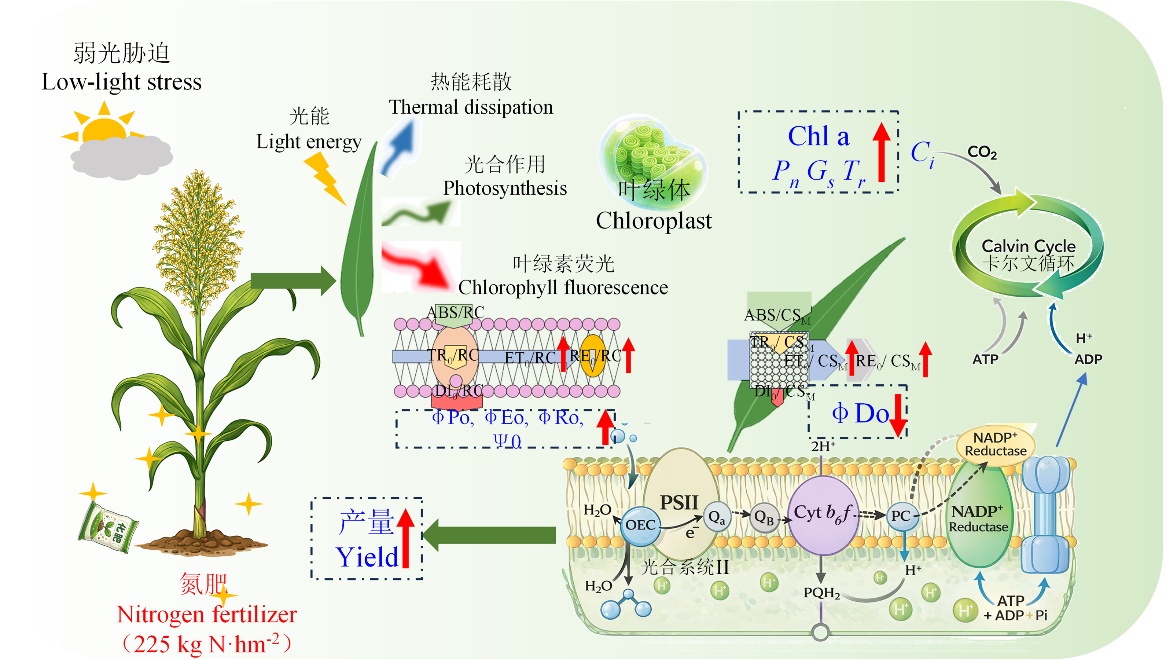
【Objective】This study aimed to elucidate the regulatory mechanisms of nitrogen on photosynthetic performance and yield formation of sorghum and to explore the regulatory effects of nitrogen on photosynthetic electron transfer, dry matter accumulation, and nitrogen distribution in sorghum under low-light stress, so as to provide a theoretical basis for the rational application of nitrogen fertilizer in sorghum under low light conditions. 【Method】The field experiment was conducted in 2023-2024 at the experimental station of Shenyang Agricultural University. The sorghum cultivar “Jiza 236” was used as the experimental material. A two-factor randomized complete block design was employed, with two light environments: normal light and low-light stress (50% shading) and three nitrogen application rates of 150, 225, and 300 kg N·hm-2. Leaf photosynthetic characteristics, chlorophyll fluorescence kinetics, dry matter accumulation of different organs, nitrogen allocation, and yield formation were systematically analyzed. 【Result】The results showed that low-light stress significantly reduced net photosynthetic rate (Pn), stomatal conductance (Gs), chlorophyll content, and the maximum quantum yield of PSII photochemistry (ϕPo), while increasing the fluorescence intensity at the J and I steps of the OJIP transient. Low-light stress also increased absorbed energy per reaction center (ABS/RC) and dissipated energy as heat (DIo/RC), but decreased electron transport flux (ETo/RC) and the reduction flux of end electron acceptors at the PSI acceptor side (REo/RC). Appropriate nitrogen application (225 kg N·hm-2 TN2) effectively alleviated the adverse effects of low-light stress by significantly increasing chlorophyll a and b content and enhancing Pn accompanied by a decrease in intercellular CO2 concentration (Ci). Meanwhile, this treatment reduced relative variable fluorescence at the J and K steps, increased normalized O-I phase fluorescence (WOI), optimized energy allocation within PSII, decreased DIo/RC, and enhanced ETo/RC and REo/RC. In addition, the TN2 treatment promoted dry matter accumulation in stems, leaves, and panicles, improved nitrogen allocation toward the panicle, and significantly increased 1000-grain weight and grain yield. Correlation analysis revealed that photochemical parameters (ϕPo, ETo/RC, etc.) were positively correlated with yield, whereas DIo/RC showed a significant negative correlation with yield. 【Conclusion】Moderate nitrogen application (225 kg N·hm-2) mitigated the inhibitory effects of low-light stress on the sorghum photosynthetic apparatus by enhancing light energy capture and electron transport efficiency, reducing ineffective energy dissipation, and promoting assimilate accumulation and allocation to grains, thereby providing a theoretical basis for optimizing nitrogen management of sorghum under low-light conditions.

Key words: Sorghum bicolor, low light stress, nitrogen, PSII, yield, OJIP

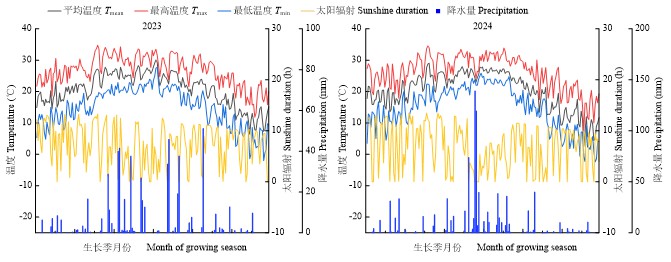
Fig. 1

The daily temperature, sunshine duration and precipitation during the sorghum growing season in the experimental field from 2023 to 2024"

Table 1

Soil properties in 0-30 cm soil layer in the experimental field (2023-2024)"

年份
Year
有机质含量
Organic matter content
(g·kg-1)
总氮含量
Total N content
(mg·kg-1)
速效氮含量
Available N content
(mg·kg-1)
速效磷含量
Available P content
(mg·kg-1)
速效钾含量
Available K content
(mg·kg-1)
pH
2023 14.75 450.22 68.45 17.53 115.47 6.7
2024 15.37 439.23 64.24 18.09 120.21 6.8

Table 2

The sowing date, low light stress date and harvest date of sorghum (2023-2024)"

年份Year 播种日期Sowing date 弱光胁迫开始时间Start date of low light 收获日期Harvest date
2023 05-15 07-11 09-30
2024 05-14 07-11 09-23

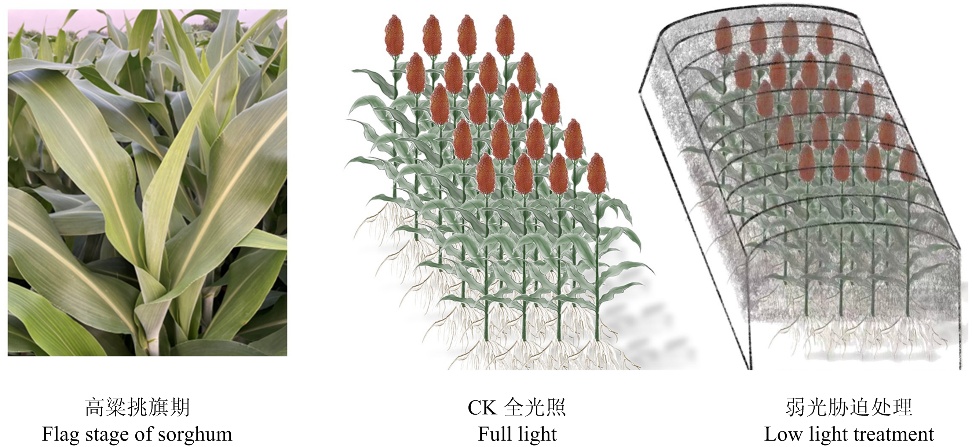
Fig. 2

Model diagram of experimental design"

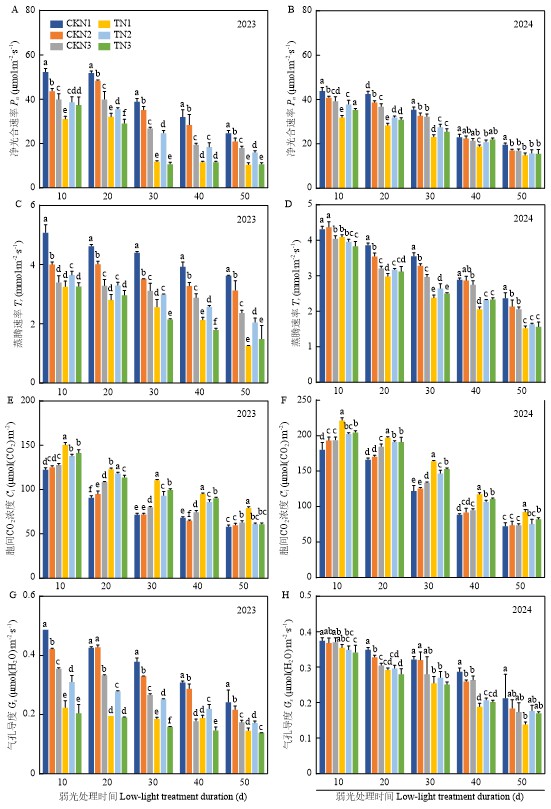
Fig. 3

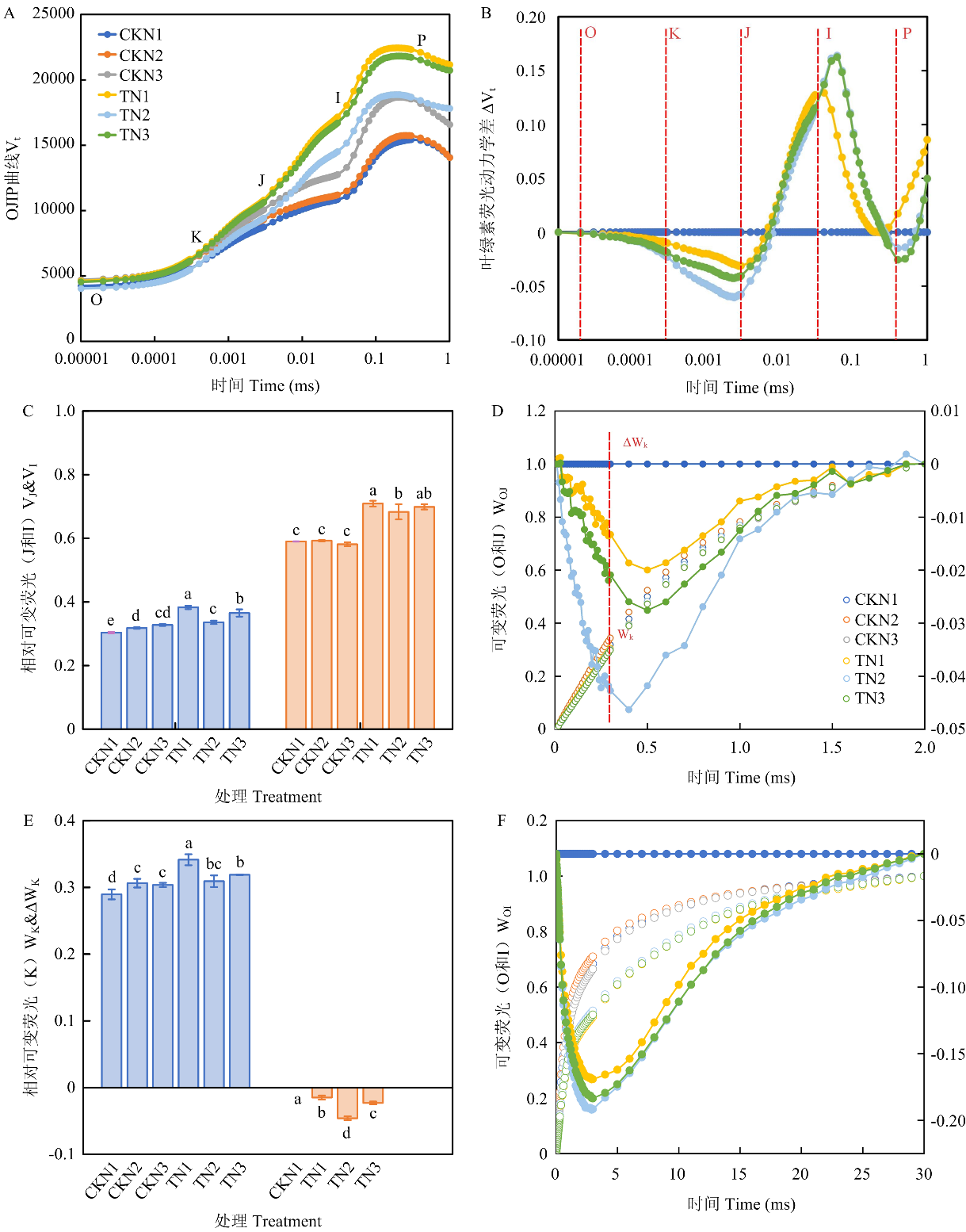
Effects of nitrogen on leaf photosynthetic parameters of sorghum under low-light stress CKN1: No stress and 150 kg N·hm-2; CKN2: No stress and 225 kg N·hm-2; CKN3: No stress and 300 kg N·hm-2; TN1: Low light and 150 kg N·hm-2; TN2: Low light and 225 kg N·hm-2; TN3: Low light and 300 kg N·hm-2. Different lowercase letters indicate significant differences (P < 0.05) among treatments. The same as below"

Fig. 4

Effects of nitrogen on chlorophyll a fluorescence kinetics (OJIP) of sorghum leaves under low-light stress"

Fig. 5

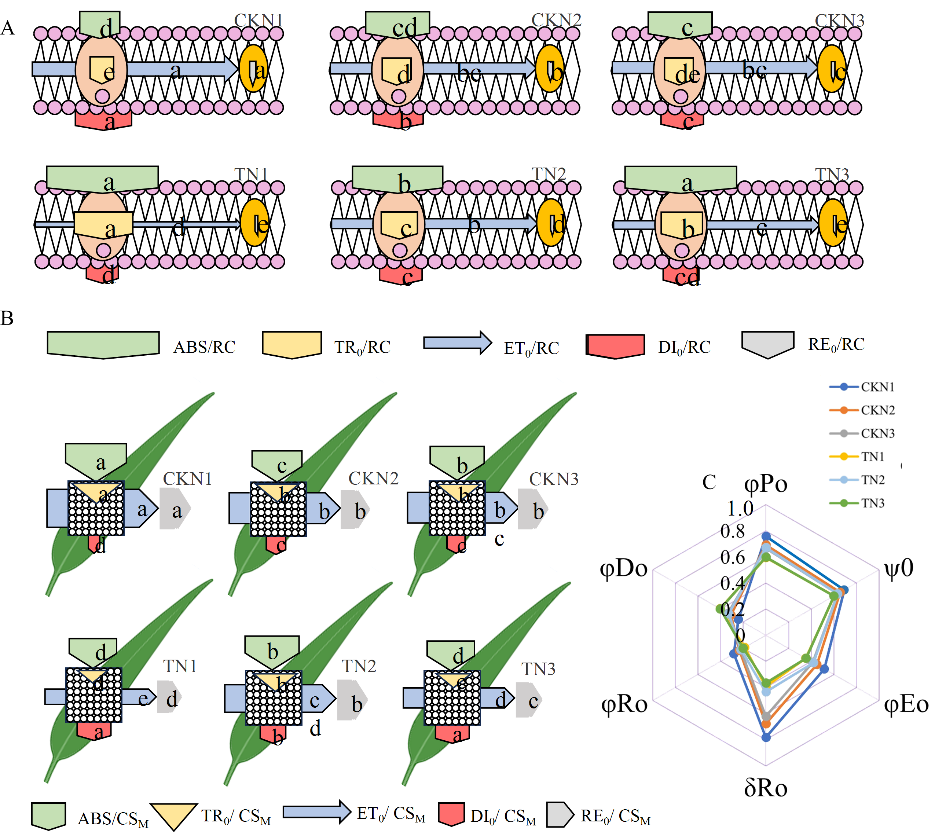
Effects of nitrogen on the pipeline models of specific energy fluxes, leaf model representing phenomenological energy fluxes and quantum yields under low-light stress A: Membrane-based specific energy flux pipeline model of PSII active reaction centers in sorghum leaves; B: Leaf model of specific energy fluxes per PSII active reaction center; C: Radar chart of quantum yields of PSII active reaction centers"

Fig. 6

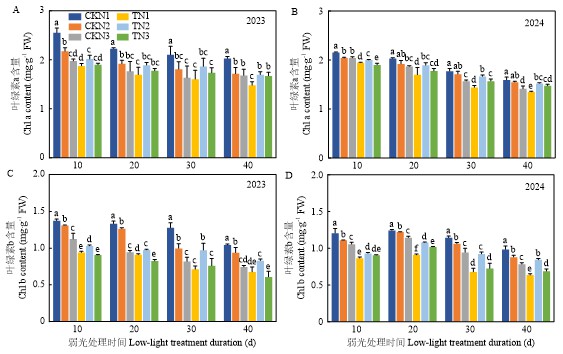
Effects of nitrogen on photosynthetic pigment content of sorghum leaves under low-light stress"

Fig. 7

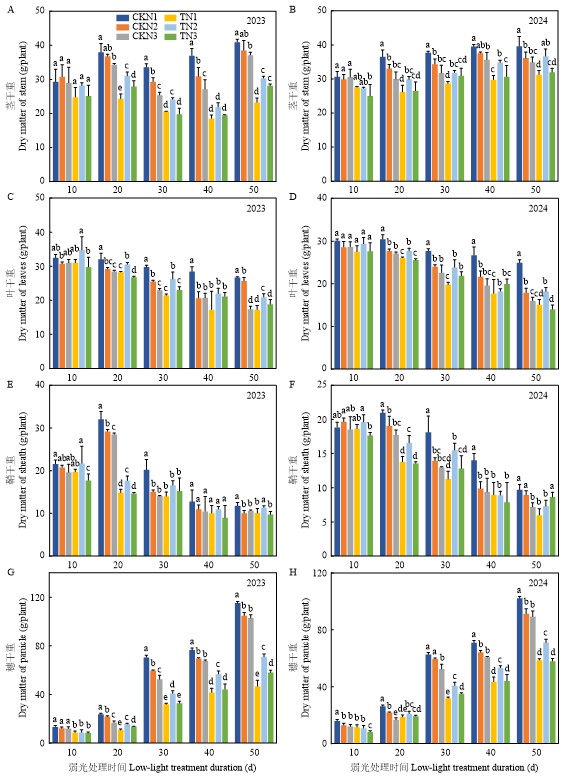
Effects of nitrogen on dry matter accumulation in different organs of sorghum under low-light stress"

Table 3

Effects of nitrogen on nitrogen content in different organs of sorghum under low-light stress"

年份
Year
处理
Treatment
各器官氮含量Nitrogen content in different organs (mg·g-1)
茎Stem 叶Leaves 鞘Sheath 穗Panicle
2023 CKN1 12.61±0.24f 15.14±0.60f 8.35±0.20f 26.54±0.89a
CKN2 13.26±0.21e 19.15±0.44e 11.13±0.11e 22.98±0.78b
CKN3 14.50±0.28d 21.04±0.40d 12.16±0.18d 21.89±0.41bc
TN1 19.61±0.08a 29.47±0.16a 18.59±0.28a 16.23±0.61e
TN2 18.09±0.04c 23.80±0.54c 15.27±0.15c 21.10±1.00c
TN3 18.72±0.61b 25.25±0.17b 16.77±0.43b 19.12±0.59c
2024 CKN1 15.84±0.04f 16.80±0.40d 9.89±0.16f 27.60±0.08a
CKN2 16.49±0.06e 21.15±0.44c 12.67±0.14e 24.02±0.07c
CKN3 17.73±0.27d 21.71±0.18c 13.70±0.18d 24.69±0.40b
TN1 22.84±0.18a 32.80±0.70a 20.13±0.28a 15.86±0.27f
TN2 21.32±0.04c 27.13±0.04b 16.80±0.05c 19.83±0.15d
TN3 21.95±0.16b 27.58±0.67b 18.30±0.23b 16.43±0.01e

Table 4

Effects of nitrogen on grain yield and yield components of sorghum under low-light stress"

年份
Year
处理
Treatment
有效穗数
Effective panicle number (panicles/hm2)
每穗粒数
Grains per panicle
千粒重
1000-kernel weight (g)
产量
Grain yield (kg·hm-2)
2023 CKN1 104513.89±2621.47a 2639.71±2.78a 33.31±0.88a 9191.63±367.04a
CKN2 101736.11±601.41ab 2606.45±80.83a 30.93±0.68b 8198.98±178.56b
CKN3 100347.22±601.41b 2509.09±106.72a 30.26±0.21b 7620.25±350.58c
TN1 86583.33±2755.99d 1825.01±58.78b 25.97±0.83d 4242.62±113.80e
TN2 92361.11±2621.47c 1910.24±69.20b 28.86±0.38c 5091.67±222.25d
TN3 89583.33±1041.67c 1749.53±78.97b 26.54±0.46d 4156.81±90.62e
2024 CKN1 115277.78±10117.22a 2522.09±59.69b 29.20±0.09a 8492.89±815.90a
CKN2 96527.78±6364.69bc 2760.74±251.63a 25.62±2.20b 6790.43±391.65b
CKN3 95833.33±7511.57bc 2726.56±24.43ab 23.83±0.50bc 6226.90±531.55b
TN1 88541.67±2083.33c 1975.90±82.58dc 20.72±0.62d 3622.51±92.90d
TN2 97916.67±2083.33bc 1954.61±60.94dc 23.86±0.50bc 4565.19±108.43c
TN3 97569.44±2168.40bc 1973.97±107.88c 21.83±1.52cd 4194.71±133.13cd
N ** * ** **
T ** ** ** **
Y NS ** ** **
N×T×Y ** NS NS NS

Fig. 8

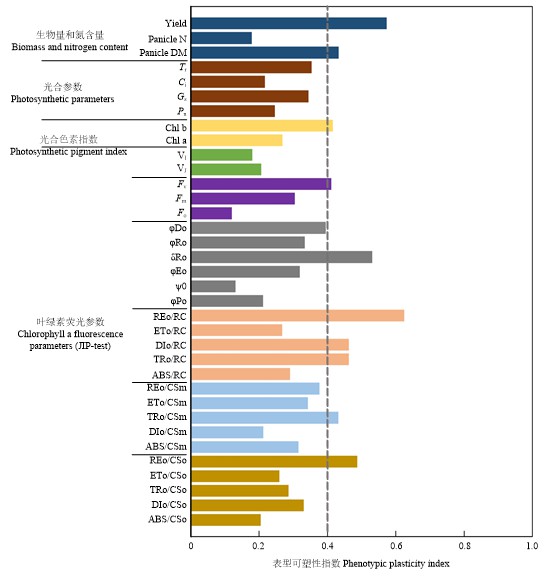
Phenotypic plasticity analysis of sorghum in response to nitrogen under low-light stress Yield: Grain yield; Panicle N: Panicle nitrogen content; Panicle DM: Panicle dry matter weight; Pn: Net photosynthetic rate; Gs: Stomatal conductance; Ci: Intercellular CO2 concentration; Tr: Transpiration rate; Chl a and Chl b: Chlorophyll a and chlorophyll b; Fo, Fm and Fv: Minimal, maximum and maximum variable fluorescence; VJ and VI: Relative variable fluorescence at J- and I-step; ϕPo, ψ0, ϕEo, δRo, ψDo and ϕDo: Quantum yields and probabilities in the JIP-test; ABS/RC, TRo/RC, ETo/RC, DIo/RC and REo/RC: Absorption, trapping, electron transport, dissipation and reduction of end electron acceptors per reaction center; CSo and CSm: Initial and maximum fluorescence states. The same as below"

Fig. 9

Correlation analysis between photosynthetic physiological parameters and yield of sorghum under low-light stress in response to nitrogen"

Fig. 10

Effects of nitrogen application on photosynthetic characteristics and yield of sorghum under low light stress"

[1]
Stamenković O S, Siliveru K, Veljković V B, Banković-Ilić I B, Tasić M B, Ciampitti I A, Đalović I G, Mitrović P M, Sikora V Š, Prasad P V V. Production of biofuels from sorghum[J]. Renewable and Sustainable Energy Reviews, 2020, 124: 109769.
[2]
Silva T N, Thomas J B, Dahlberg J, Rhee S Y, Mortimer J C. Progress and challenges in sorghum biotechnology, a multipurpose feedstock for the bioeconomy[J]. Journal of Experimental Botany, 2022, 73(3): 646-664.
[3]
Hossain M S, Islam M N, Rahman M M, Mostofa M G, Khan M A R. Sorghum: A prospective crop for climatic vulnerability, food and nutritional security[J]. Journal of Agriculture and Food Research, 2022, 8: 100300.
[4]
Jaikumar N S, Stutz S S, Fernandes S B, Leakey A D B, Bernacchi C J, Brown P J, Long S P. Can improved canopy light transmission ameliorate loss of photosynthetic efficiency in the shade? An investigation of natural variation in Sorghum bicolor[J]. Journal of Experimental Botany, 2021, 72(13): 4965-4980.
[5]
Wu A, Truong S H, McCormick R, van Oosterom E J, Messina C D, Cooper M, Hammer G L. Contrasting leaf-scale photosynthetic low-light response and its temperature dependency are key to differences in crop-scale radiation use efficiency[J]. New Phytologist, 2024, 241(6): 2435-2447.
[6]
Tang W, Guo H P, Baskin C C, Xiong W D, Yang C, Li Z Y, Song H, Wang T R, Yin J N, Wu X L, Miao F H, Zhong S Z, Tao Q B, Zhao Y R, Sun J. Effect of light intensity on morphology, photosynthesis and carbon metabolism of alfalfa (Medicago sativa) seedlings[J]. Plants, 2022, 11(13): 1688.
[7]
Sun H H, Li W, Liang Y W, Li G H. Shading stress at different grain filling stages affects dry matter and nitrogen accumulation and remobilization in fresh waxy maize[J]. Plants, 2023, 12(9): 1742.
[8]
Ma P, Zhou L, Liao X H, Zhang K Y, Aer L S, Yang E L, Deng J, Zhang R P. Effects of low light after heading on the yield of direct seeding rice and its physiological response mechanism[J]. Plants, 2023, 12(24): 4077.
[9]
Wu Y S, Chen P, Gong W Z, Gul H, Zhu J Q, Yang F, Wang X C, Yong T W, Liu J, Pu T, Yan Y H, Yang W Y. Morphological and physiological variation of soybean seedlings in response to shade[J]. Frontiers in Plant Science, 2022, 13: 1015414.
[10]
Wang X C, Wu X L, Ding G H, Yang F, Yong T W, Wang X C, Yang W Y. Analysis of grain yield differences among soybean cultivars under maize-soybean intercropping[J]. Agronomy, 2020, 10(1): 110.
[11]
李鹏民, 高辉远, Reto J.Strasser. 快速叶绿素荧光诱导动力学分析在光合作用研究中的应用[J]. 植物生理与分子生物学学报, 2005(6): 559-566.
Li P M, Gao H Y, Strasser R. Application of the fast chlorophyll fluorescence induction dynamics analysis in photosynthesis study[J]. Acta Photophysiologica Sinica, 2005(6): 559-566. (in Chinese)
[12]
Kalaji H M, Schansker G, Ladle R J, Goltsev V, Bosa K, Allakhverdiev S I, Brestic M, Bussotti F, Calatayud A, Dąbrowski P, Elsheery N I, Ferroni L, Guidi L, Hogewoning S W, Jajoo A, Misra A N, Nebauer S G, Pancaldi S, Penella C, Poli D, et al. Frequently asked questions about in vivo chlorophyll fluorescence: Practical issues[J]. Photosynthesis Research, 2014, 122(2): 121-158.
[13]
Stirbet A, Lazár D, Kromdijk J, Govindjee. Chlorophyll a fluorescence induction: Can just a one-second measurement be used to quantify abiotic stress responses?[J]. Photosynthetica, 2018, 56(1): 86-104.
[14]
Chen W Y, Jia B, Chen J Y, Feng Y J, Li Y, Chen M T, Liu H H, Yin Z T. Effects of different planting densities on photosynthesis in maize determined via prompt fluorescence, delayed fluorescence and P700 signals[J]. Plants, 2021, 10(2): 276.
[15]
Ruban A V. Nonphotochemical chlorophyll fluorescence quenching: Mechanism and effectiveness in protecting plants from photodamage[J]. Plant Physiology, 2016, 170(4): 1903-1916.
[16]
Zhao X, Chen T T, Feng B H, Zhang C X, Peng S B, Zhang X F, Fu G F, Tao L X. Non-photochemical quenching plays a key role in light acclimation of rice plants differing in leaf color[J]. Frontiers in Plant Science, 2016, 7: 1968.
[17]
Lu D Y, Liu B, Ren M J, Wu C, Ma J J, Shen Y M. Light deficiency inhibits growth by affecting photosynthesis efficiency as well as JA and ethylene signaling in endangered plant Magnolia sinostellata[J]. Plants, 2021, 10(11): 2261.
[18]
谷闻东, 刘春娟, 李邦, 刘畅, 周宇飞. 外源色氨酸对低氮胁迫下高粱苗期叶片碳氮平衡和衰老特性的影响[J]. 中国农业科学, 2023, 56(7): 1295-1310. DOI: 10.3864/j.issn.0578-1752.2023.07.008.
Gu W D, Liu C J, Li B, Liu C, Zhou Y F. Effects of exogenous tryptophan on C/N balance and senescence characteristics of sorghum seedlings under low nitrogen stress[J]. Scientia Agricultura Sinica, 2023, 56(7): 1295-1310. DOI: 10.3864/j.issn.0578-1752.2023.07.008. (in Chinese)
[19]
Guan C L, Zhang D, Chu C C. Interplay of light and nitrogen for plant growth and development[J]. The Crop Journal, 2025, 13(3): 641-655.
[20]
Xu Y, Zhang Z M, Guo Q, Feng H, Qin F F, Zhang G C, Ding H. Effects of nitrogen allocation and photosynthetic proteins response in peanut leaves on photosynthesis under conditions of water scarcity and nitrogen deficiency[J]. BMC Plant Biology, 2025, 25(1): 1366.
[21]
Swoczyna T, Łata B, Stasiak A, Stefaniak J, Latocha P. JIP-test in assessing sensitivity to nitrogen deficiency in two cultivars of Actinidia arguta (Siebold et Zucc.) Planch. Ex Miq[J]. Photosynthetica, 2019, 57(2): 646-658.
[22]
Song Z W, Wang G D, Zhao L, Tang Q Y, Zhang X J, Wu Q F, Li Y X. Rational nitrogen application improves photosynthetic capacity and yield by prolonging the leaf source function of drip-irrigated rice[J]. Journal of Integrative Agriculture, 2025. DOI: 10.1016/j.jia.2025.07.006.
[23]
Deng F, Li Q P, Chen H, Zeng Y L, Li B, Zhong X Y, Wang L, Ren W J. Relationship between chalkiness and the structural and thermal properties of rice starch after shading during grain-filling stage[J]. Carbohydrate Polymers, 2021, 252: 117212.
[24]
Arnon D I. Copper enzymes in isolated chloroplasts. Polyphenoloxidase in beta vulgaris[J]. Plant Physiology, 1949, 24(1): 1-15.
[25]
Hogewoning S W, Wientjes E, Douwstra P, Trouwborst G, van Ieperen W, Croce R, Harbinson J. Photosynthetic quantum yield dynamics: From photosystems to leaves[J]. The Plant Cell, 2012, 24(5): 1921-1935.
[26]
Mu X H, Chen Y L. The physiological response of photosynthesis to nitrogen deficiency[J]. Plant Physiology and Biochemistry, 2021, 158: 76-82.
[27]
Chen X B, Yao Q F, Gao X H, Jiang C F, Harberd N P, Fu X D. Shoot-to-root mobile transcription factor HY5 coordinates plant carbon and nitrogen acquisition[J]. Current Biology, 2016, 26(5): 640-646.
[28]
Guo Y J, Lu Y P, Goltsev V, Strasser R J, Kalaji H M, Wang H, Wang X X, Chen S G, Qiang S. diuron bentazone, Comparative effect of tenuazonic acid, dibromothymoquinone and methyl viologen on the kinetics of Chl a fluorescence rise OJIP and the MR820 signal[J]. Plant Physiology and Biochemistry, 2020, 156: 39-48.
[29]
Guo P, Ren J Y, Shi X L, Xu A N, Zhang P, Guo F, Feng Y Y, Zhao X H, Yu H Q, Jiang C J. Optimized nitrogen application ameliorates the photosynthetic performance and yield potential in peanuts as revealed by OJIP chlorophyll fluorescence kinetics[J]. BMC Plant Biology, 2024, 24(1): 774.
[30]
Yan Y Y, Duan F Y, Li X, Zhao R L, Hou P, Zhao M, Li S K, Wang Y H, Dai T B, Zhou W B. Photosynthetic capacity and assimilate transport of the lower canopy influence maize yield under high planting density[J]. Plant Physiology, 2024, 195(4): 2652-2667.
[31]
Wang D Y, Xu C M, Yan J X, Zhang X G, Chen S, Chauhan B S, Wang L, Zhang X F. 15N tracer-based analysis of genotypic differences in the uptake and partitioning of N applied at different growth stages in transplanted rice[J]. Field Crops Research, 2017, 211: 27-36.
[32]
Ren W J, Yang W Y, Zhang G Z, Zhu X, Fan G Q, Xu J W. Effect of low-light stress on nitrogen accumulation, distribution and grains protein content of Indica hybrid[J]. Journal of Plant Nutrition and Fertilizers, 2003, 9(3): 288-293.
[33]
Loreto F, Atzori G. Climate challenges: Can plants adapt in time?[J]. Frontiers in Science, 2024, 2: 1522649.
[34]
Falcioni R, de Oliveira C A, Vedana N G, Mendonça W A, Gonçalves J V F, da Silva Haubert D F, de Matos D H S, Reis A S, Antunes W C, Crusiol L G T, Sibaldelli R N R, Nepomuceno A L, Neumaier N, Farias J R B, Furlanetto R H, Demattê J A M, Nanni M R. Progressive water deficit impairs soybean growth, alters metabolic profiles, and decreases photosynthetic efficiency[J]. Plants, 2025, 14(17): 2615.
[35]
Lü Y Y, Wang X, Ding B, Xiao M, Qin C. Effects of nitrogen addition on the growth and photosynthetic physiology of Gleditsia sinensis Lam. Seedlings under shading conditions[J]. Scientific Reports, 2025, 15(1): 32727.
[1] BAI JingJing, ZHANG YuChen, NI ZiJie, GAO JiaYong, LIU WeiYang, GAI DongSheng, WANG YuHang, HE JiaQing, ZHANG Qiang, SHAO XiWen, WU Ying, GENG YanQiu, GUO LiYing. Effects of Different Irrigation Volumes on Lodging Resistance Characteristics and Yield of Rice in Northeast China [J]. Scientia Agricultura Sinica, 2026, 59(9): 1848-1868.
[2] CAI QiaoHong, ZHOU Tian, SU Ming, HONG ZiQiang, LI FanGuo, LI Tong, WANG Hua, KANG JianHong, WU HongLiang. Effects of Nitrogen Reduction and Potassium Enhancement Fertilization Mode on Photosynthetic Fluorescence Characteristics and Photosynthetic Product Accumulation of Maize in Ningxia Yellow Irrigation Area [J]. Scientia Agricultura Sinica, 2026, 59(9): 1869-1886.
[3] ZHU Pei, ZHAO Yao, BAI Yan, ZHANG JinKui, LI Mei, LONG JinJia, YANG Long, LUO LiYa, XU BenBo, XU JinSong, ZHANG XueKun. Physiological Regulation of Pydiflumetofen on Rapeseed (Brassica napus) and Its Combined Effect with Prochloraz [J]. Scientia Agricultura Sinica, 2026, 59(9): 1903-1915.
[4] GE YuBin, HE ChunGui, WANG Ning, ZHANG GuoQin, ZHANG ZhengYing, LÜ Xin. Genetic Diversity Analysis and Innovative Utilization of Introduced Tropical Sorghum Germplasm Resources Based on Phenotypic Traits [J]. Scientia Agricultura Sinica, 2026, 59(8): 1622-1638.
[5] CHEN XuanYi, GUO XingXing, ZHANG XiangQian, LU ZhanYuan, LIU LingYue, LUO Fang, LI JinLong, ZHANG ChuanLing, ZHANG ZhiQing, CHE ManQing. Impacts of Intercropping Row Patterns on the Heterogeneity of the Light Environment and Photosynthetic Product Production in Maize Canopy [J]. Scientia Agricultura Sinica, 2026, 59(8): 1653-1671.
[6] HOU HuiZhi, YIN JiaDe, MA MingSheng, LIU XiaoWei, LIU YanLan, LEI KangNing. Effects of Tillage and Organic Fertilizer Application on Crop Yield and Water Use in a Potato-Maize Double Cropping System in the Longdong Region [J]. Scientia Agricultura Sinica, 2026, 59(8): 1672-1685.
[7] PENG TingShen, LU JiuYan, WU MeiLin, YAN YuXin, LIU HongZhou, NAN WenBin, QIN XiaoJian, LI Ming, GONG JunYi, LIANG YongShu. QTL Analysis of Yield-Related Traits in Both Huangnuo2# and Changbai7# of Perennial Chinese Rice [J]. Scientia Agricultura Sinica, 2026, 59(7): 1361-1379.
[8] XU YangHaoJun, CHEN LiMing, YANG ShiQi, TANG YiFan, TAN XueMing, ZENG YongJun, PAN XiaoHua, ZENG YanHua. Effects of Long-Term Different Straw Returning Methods on Soil Organic Carbon, Nutrients and Aggregate Formation in Different Soil Layers of Double Cropping Rice Field [J]. Scientia Agricultura Sinica, 2026, 59(7): 1492-1506.
[9] WANG YuPing, FU Zhi, SUN JiaYing, MU XiaoMeng, LIU HuiLin, GUO JinYun, SONG WenJing, HOU LeiPing, ZHAO HaiLiang. Evaluation of the Mitigating Effect and Application Efficacy of Melatonin Applied at the Seedling Stage on Short-Term Chilling Stress in Tomato Plants [J]. Scientia Agricultura Sinica, 2026, 59(7): 1523-1535.
[10] WANG JiaNuo, CHEN GuiPing, LI Pan, WANG LiPing, NAN YunYou, HE Wei, FAN ZhiLong, HU FaLong, CHAI Qiang, YIN Wen, ZHAO LiaoHao. Photo-Physiological Mechanism at Grain Filling Stage of No-Tillage with Plastic Re-Mulching to Increase Maize Yield in Oasis Irrigation Areas [J]. Scientia Agricultura Sinica, 2026, 59(6): 1189-1202.
[11] ZHOU XinJie, REN Hao, CHEN YingLong, ZHANG JiWang, ZHAO Bin, REN BaiZhao, LIU Peng, WANG HongZhang. Effects of Calcium Peroxide on Root Morphology and Yield Formation of Summer Maize in Waterlogging Farmland [J]. Scientia Agricultura Sinica, 2026, 59(6): 1203-1216.
[12] HE JiHang, ZHANG Qing, LÜ XiangYue, XUE JiQuan, XU ShuTu, LIU JianChao. Evaluation of Nitrogen Efficiency of Different Stay-Green Maize Hybrids [J]. Scientia Agricultura Sinica, 2026, 59(6): 1217-1230.
[13] LI YongJuan, ZHANG YueTong, WANG YiBo, ZHAO ChangJiang, SONG Jie, CHEN XueLi, YAO Qin. Effects of Biochar Application on the Abundance and Community Composition of Nitrogen-Fixing Microbial nifH Gene in Soybean Rotation and Continuous Cropping Systems [J]. Scientia Agricultura Sinica, 2026, 59(6): 1272-1285.
[14] CAO HaiShun, ZHOU DongYuan, WANG Rui, SHI ZhaoWan, WU TingQuan, ZHANG ChangYuan. Identification of Short Hypocotyl Cucumber Germplasm Under Low Light Stress and QTL Mapping of the Trait [J]. Scientia Agricultura Sinica, 2026, 59(6): 1286-1301.
[15] GUO FuCheng, TANG HaiJiang, HAO XinYi, MA GuoLin, YANG JiuJu, HUANG LinFeng, TIAN Lei, WANG Bin, LUO ChengKe. Effects of Different Irrigation Methods on Water-Salt Transport, Rice Yield, and Water Use Efficiency in Saline Soil in Ningxia [J]. Scientia Agricultura Sinica, 2026, 59(4): 750-764.
Viewed
Full text


Abstract

Cited

  Shared   
  Discussed   
No Suggested Reading articles found!