Scientia Agricultura Sinica ›› 2026, Vol. 59 ›› Issue (22): 5063-5078.doi: 10.3864/j.issn.0578-1752.2026.22.008

• TILLAGE & CULTIVATION·PHYSIOLOGY & BIOCHEMISTRY·AGRICULTURE INFORMATION TECHNOLOGY • Previous Articles     Next Articles

Relationship Between Plant Growth-Development Dynamics and Yield-Quality Formation in Peanut Under Salt Stress

TIAN Yu1(), PEI JingJing1, YIN JuanXian1, JIANG Wen1, LIU YuFeng1, DAI RunZe1, LIU Na2, ZUO ShiYu2, ZHAO XinHua1, ZHANG He1(), YU HaiQiu1,2()   

  1. 1 College of Agriculture, Shenyang Agricultural University, Shenyang 110866
    2 Liaoning Agricultural Vocational and Technical College, Yingkou 115009, Liaoning
  • Received:2026-04-01 Accepted:2026-06-30 Online:2026-11-16 Published:2026-11-19
  • Contact: ZHANG He, YU HaiQiu

Abstract:

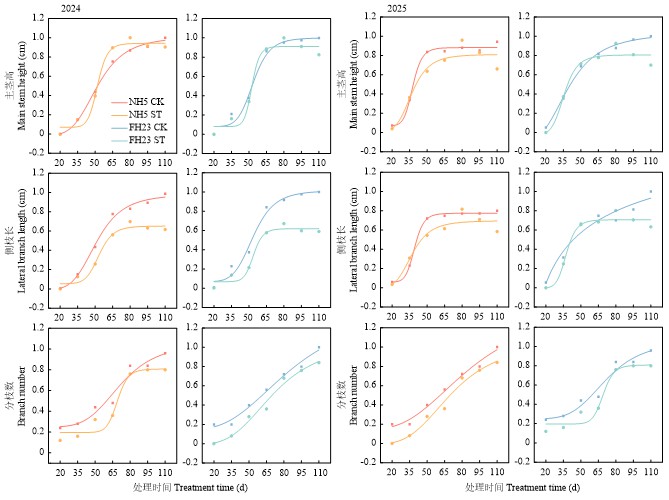
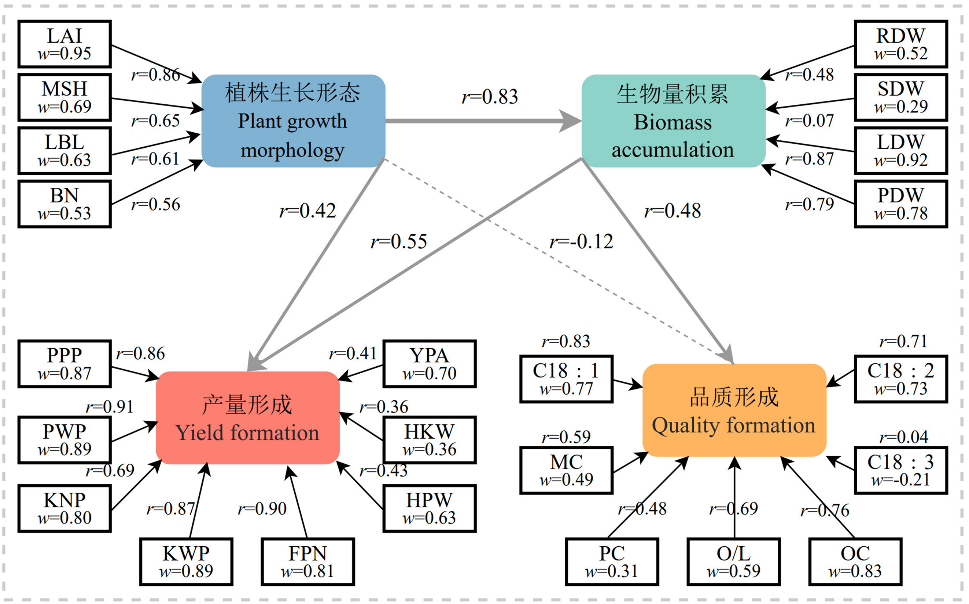
【Objective】This study aimed to explore the relationships between the growth dynamics of peanut plants and the formation of yield and quality under salt stress, so as to provide new perspectives for the precise cultivation of stress-resistant, high-yield and high-quality peanuts and the breeding of salt-tolerant peanut varieties. 【Method】Two peanut cultivars, including the salt-tolerant cultivar Nonghua 5 (NH5) and the salt-sensitive cultivar Fuhua 23 (FH23), were selected as experimental materials. Two treatments were set up: no NaCl application throughout the whole growth period (CK) and 2.5 g·kg-1 NaCl application (ST). A two-year simulated field rhizobox microplot experiment was conducted from 2024 to 2025. By measuring agronomic traits, dry matter accumulation in various organs, seed kernel quality, yield and yield components of peanut at different growth stages, and combining correlation analysis and partial least squares path modeling (PLS-PM), this study explored the internal relationship among peanut growth dynamics, yield formation and quality formation under salt stress throughout the whole growth period. 【Result】Under salt stress, the plant height of main stem, lateral branch length and branch number of cultivars NH5 and FH23 all followed the S-shaped curve of the Logistic growth model, but with reductions in maximum growth volume and delayed initiation of the rapid growth period. Additionally, the leaf area index and dry matter accumulation in all organs decreased significantly under salt stress. Salt stress significantly reduced peanut yield and all its yield components: the yield per unit area of NH5 in 2024-2025 decreased by 14.5% and 13.8% compared with CK, respectively, while that of FH23 decreased by 32.1% and 31.5% compared with CK respectively. Among the yield components, the number of pods per plant, the number of full pods per plant, pod weight per plant and kernel weight per plant showed larger reduction magnitudes, while 100-pod weight exhibited the smallest reduction. Meanwhile, salt stress can significantly alter the quality of peanut kernels, mainly manifested as increased protein content, decreased oil content, changes in the contents of individual fatty acid components, and a reduced oleic-to-linoleic acid ratio, with FH23 being more significantly affected. Correlation analysis showed that leaf area index and stem dry weight at 65-80 days after emergence (DAE), leaf dry weight at 65 DAE, and pod dry weight at 95-110 DAE under salt stress were extremely significantly positively correlated with yield traits (r≥0.85, P<0.001). Leaf dry weight at 65 DAE was significantly positively correlated with oil content, oleic acid content and oleic acid-to-linoleic acid ratio (r≥0.65, P<0.01), and leaf dry weight at 80 DAE was extremely significantly positively correlated with protein content (r=0.85, P<0.001). Partial Least Squares Path Modeling (PLS-PM) showed that peanut plant growth morphology under salt stress had a significant positive effect on yield formation (r=0.42), but its effect on quality formation was not significant. Biomass accumulation had significant positive effects on both yield formation (r=0.55) and quality formation (r=0.48). Among the indicators, leaf area index had the highest contribution weight to plant growth morphology (w=0.95), while leaf dry weight (w=0.92) and pod dry weight (w=0.78) had the highest contribution weights to biomass accumulation. 【Conclusion】Salt stress throughout the entire growth period inhibited the growth and biomass accumulation of peanut plants, delayed the growth process, and ultimately led to reduced yield and deteriorated quality. Plant growth morphology positively regulated yield, while biomass affected both yield and quality. Leaf area index, leaf dry weight and pod dry weight were identified as the key regulatory indicators.

Key words: peanuts, salt stress, entire growth period, growth and development dynamics, yield, seed kernel quality

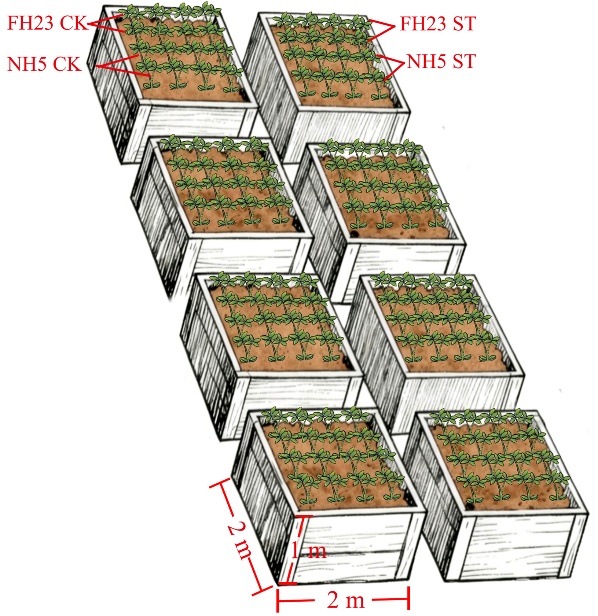
Fig. 1

Schematic diagram of root box planting CK: Control group; ST: Salt stress treatment; NH5: Nonghua 5; FH23: Fuhua 23. The same as below"

Fig. 2

The growth dynamic curves of the main stem height, lateral branch length and branch number of different salt-tolerant peanut varieties under each treatment"

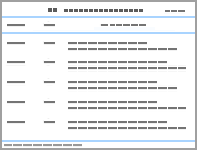
Table 1

The Logistic model parameters for the main stem height, lateral branch length and branch number of different salt-tolerant peanut varieties under each treatment"

年份
Year
指标
Index
处理
Treatment
Logistic拟合曲线
Logistic fitting equation
决定系数
R2
最大生长量Maximum growth amount 快速生长期起点
Starting point of the rapid growth period (d)
2024 主茎高
Main stem height
(cm)
NH5CK y=51.16/(1+EXP(8.2145-0.1682t)) 0.997 51.16 35.6
NH5ST y=37.24/(1+EXP(7.9862-0.1594t)) 0.995 37.24 37.1
FH23CK y=51.70/(1+EXP(8.3217-0.1715t)) 0.998 51.70 36.2
FH23ST y=36.40/(1+EXP(7.8954-0.1568t)) 0.994 36.40 37.8
侧枝长
Lateral branch length
(cm)
NH5CK y=52.61/(1+EXP(8.4521-0.1623t)) 0.996 52.61 37.5
NH5ST y=38.89/(1+EXP(8.1267-0.1541t)) 0.994 38.89 39.2
FH23CK y=53.22/(1+EXP(8.5678-0.1659t)) 0.997 53.22 38.2
FH23ST y=37.63/(1+EXP(8.0123-0.1517t)) 0.993 37.63 39.8
分枝数
Branch number
NH5CK y=10.33/(1+EXP(7.2145-0.1892t)) 0.995 10.33 31.8
NH5ST y=9.33/(1+EXP(7.0012-0.1814t)) 0.993 9.33 33.1
FH23CK y=10.67/(1+EXP(7.3267-0.1926t)) 0.996 10.67 32.4
FH23ST y=9.33/(1+EXP(7.1134-0.1845t)) 0.994 9.33 33.7
2025 主茎高
Main stem height
(cm)
NH5CK y=48.23/(1+EXP(8.1452-0.1685t)) 0.996 48.23 35.8
NH5ST y=48.23/(1+EXP(8.1452-0.1685t)) 0.995 35.83 37.2
FH23CK y=50.80/(1+EXP(8.3217-0.1712t)) 0.997 50.80 36.3
FH23ST y=37.57/(1+EXP(7.8965-0.1603t)) 0.994 37.57 37.7
侧枝长
Lateral branch length
(cm)
NH5CK y=49.80/(1+EXP(8.2341-0.1637t)) 0.996 49.80 37.4
NH5ST y=37.53/(1+EXP(7.9123-0.1558t)) 0.995 37.53 39.0
FH23CK y=61.17/(1+EXP(8.6785-0.1669t)) 0.998 61.17 38.1
FH23ST y=40.28/(1+EXP(8.0234-0.1584t)) 0.994 40.28 39.7
分枝数
Branch number
NH5CK y=10.67/(1+EXP(7.2345-0.1887t)) 0.995 10.67 31.9
NH5ST y=9.33/(1+EXP(7.0126-0.1813t)) 0.993 9.33 33.2
FH23CK y=10.33/(1+EXP(7.1892-0.1864t)) 0.996 10.33 32.5
FH23ST y=8.67/(1+EXP(6.9237-0.1789t)) 0.994 8.67 33.8

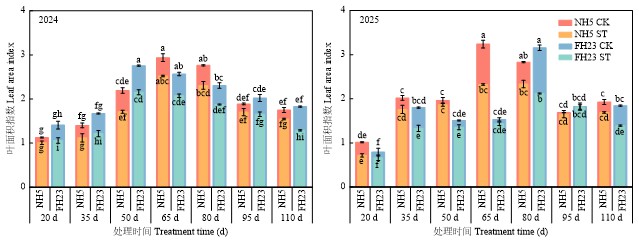
Fig. 3

The effect of salt stress throughout the entire growth period on the leaf area index of different salt-tolerant peanut varieties Different lowercase letters indicate significant differences among different treatments (P < 0.05). For each variety, comparisons were conducted across the entire experimental period between all treatments simultaneously. The same as below"

Fig. 4

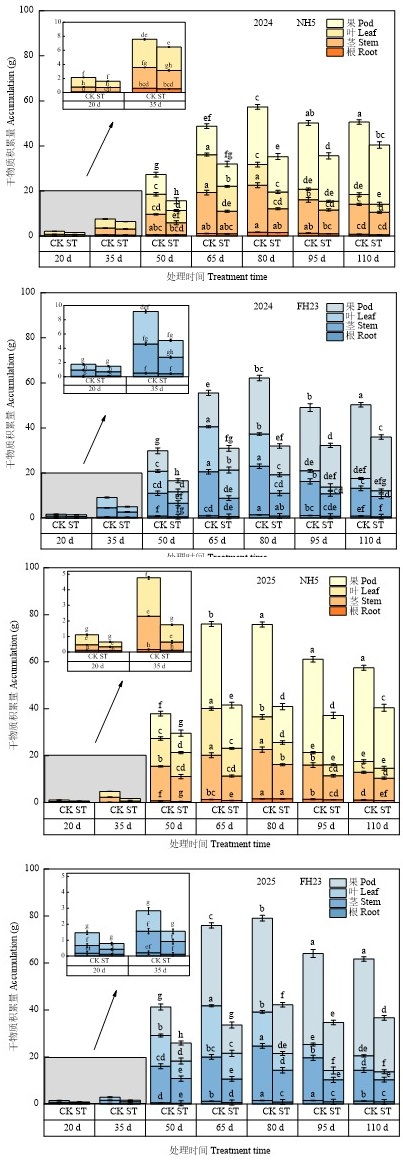
The effects of salt stress throughout the entire growth period on the accumulation of dry matter in different organs of various salt-tolerant peanut varieties"

Fig. 5

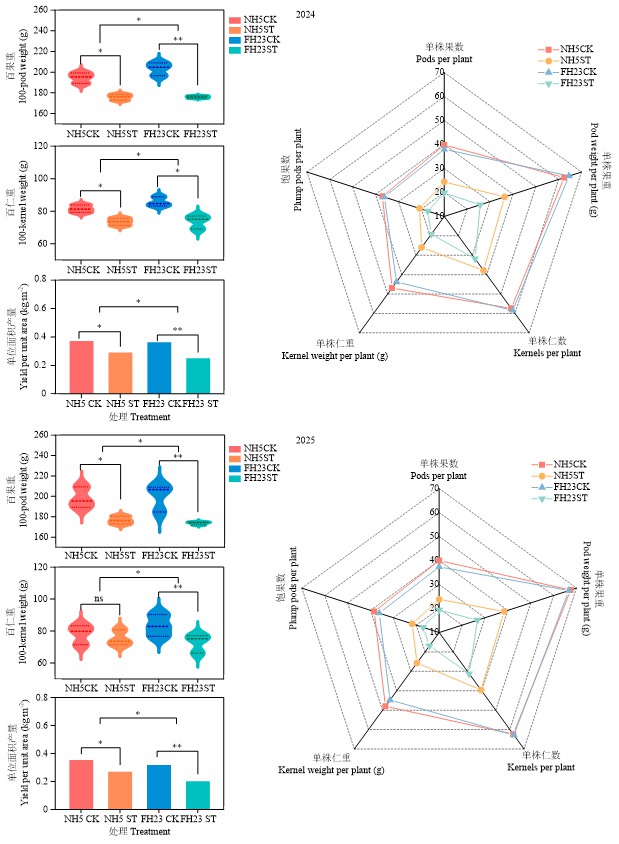
The effects of salt stress throughout the entire growth period on the yield and yield components of different salt-tolerant peanut varieties In the figure, * indicates P < 0.05, representing a significant difference; ** indicates P < 0.01, representing an extremely significant difference. The same as below"

Fig. 6

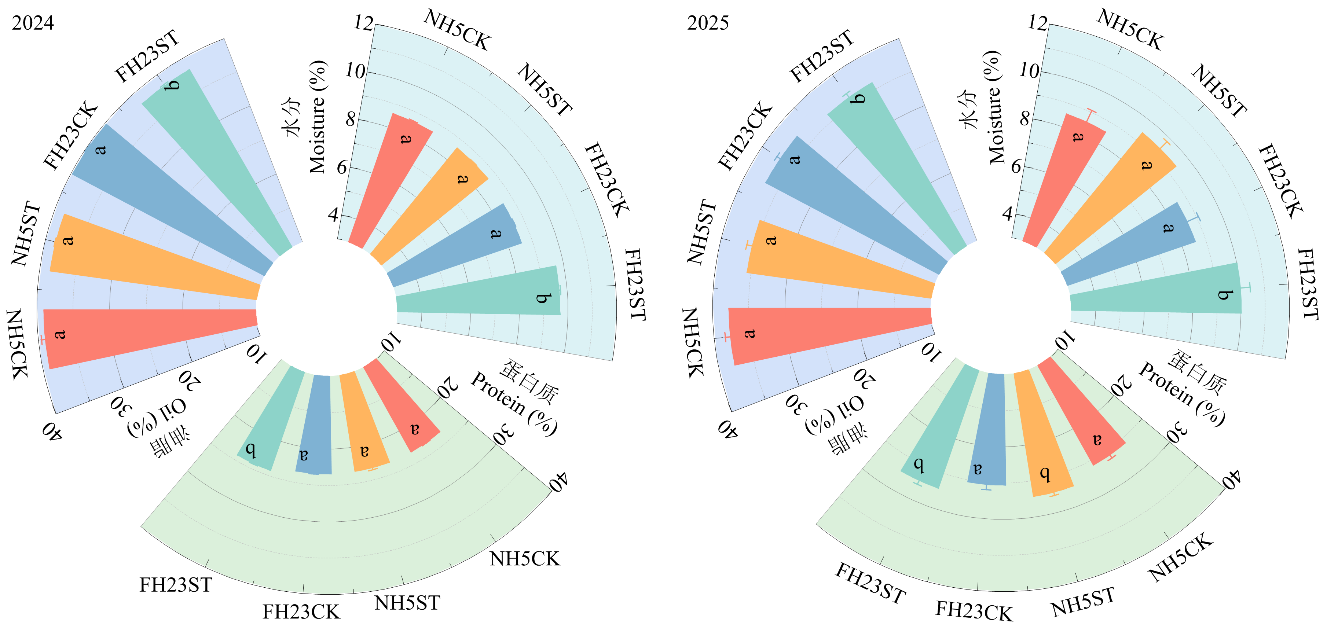
The effects of salt stress throughout the entire growth period on the moisture, protein and fat content of the kernels of different salt-tolerant peanut varieties"

Table 2

The effects of salt stress throughout the entire growth period on the fatty acid content and oil ratio of seed kernels of different salt-tolerant peanut varieties"

年份
Year
处理
Treatment
棕榈酸
C16﹕0 (%)
硬脂酸
C18﹕0 (%)
油酸
C18﹕1 (%)
亚油酸
C18﹕2 (%)
亚麻酸
C18﹕3 (%)
花生烯酸
C20﹕1 (%)
芥酸
C22﹕1 (%)
油亚比
O/L
2024 NH5CK 11.40±0.13a 3.60±0.24a 47.86±0.41a 34.57±0.39a 0.05±0.00a 1.61±0.04a 1.09±0.14a 1.38±0.01a
NH5ST 11.72±0.07b 3.42±0.22a 47.69±0.23a 34.90±0.96a 0.05±0.00a 1.58±0.07a 1.01±0.22a 1.37±0.04a
FH23CK 10.91±0.25a 3.13±0.16a 43.48±0.35a 30.66±0.70a 0.05±0.00a 1.38±0.09a 2.13±0.20a 1.42±0.03a
FH23ST 11.60±0.10b 3.04±0.04a 42.63±1.07a 31.57±0.90a 0.05±0.00a 1.20±0.04a 1.79±0.09a 1.35±0.07b
2025 NH5CK 11.45±0.03a 3.74±0.19a 43.33±0.59a 34.76±0.51a 0.05±0.00a 1.61±0.06a 1.61±0.16a 1.25±0.04a
NH5ST 11.73±0.08b 3.56±0.20a 41.72±0.15b 36.35±0.69a 0.05±0.00a 1.53±0.04a 1.23±0.28a 1.15±0.03b
FH23CK 11.30±0.05a 3.72±0.23a 43.27±0.42a 35.81±0.47a 0.05±0.00a 1.62±0.09a 1.41±0.16a 1.21±0.02a
FH23ST 11.51±0.03b 3.34±0.25a 42.74±0.26a 36.65±0.35a 0.05±0.00a 1.48±0.11a 0.77±0.26b 1.17±0.00b

Fig. 7

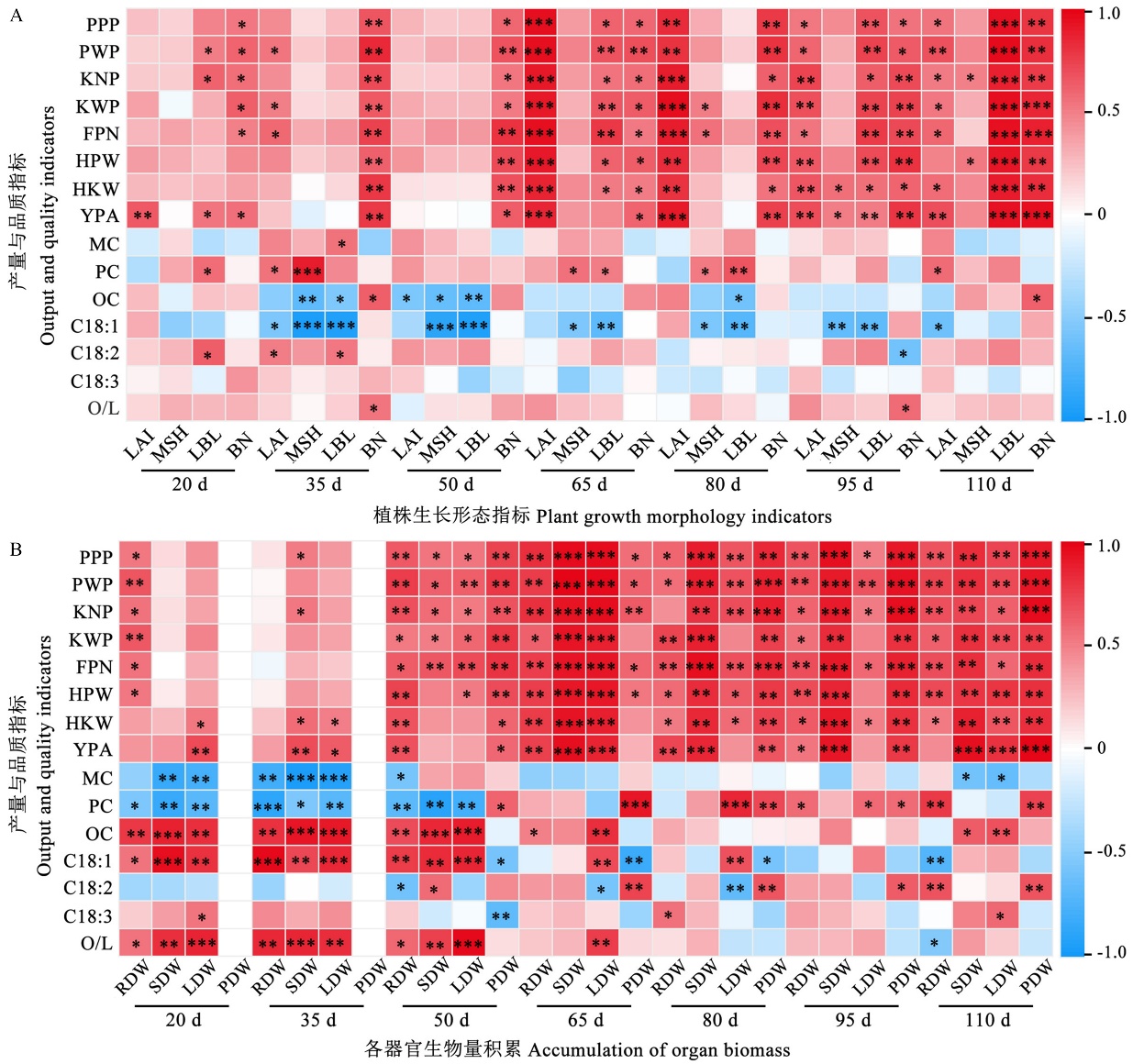
Correlation analysis of growth development and yield and quality traits of peanut plants under whole-farmer cycle salt stress A: Correlation between plant growth morphology and yield and quality; B: Correlation between biomass accumulation in different plant organs and yield and quality. LAI: Leaf area index; MSH: Main stem height; LBL: Lateral branch length; BN: Branch number; RDW: Root dry weight; SDW: Stem dry weight; LDW: Leaf dry weight; PDW: Pod dry weight; PPP: Number of pods per plant; PWP: Pod weight per plant; KNP: Number of kernels per plant; KWP: Kernel weight per plant; FPN: Number of full pods; HPW: Hundred-pod weight; HKW: Hundred-kernel weight; YPA: Yield per unit area; MC: Moisture content; PC: Protein content; OC: Oil content; C18:1: Oleic acid; C18:2: Linoleic acid; C18:3: Linolenic acid; O/L: Oleic acid/linoleic acid ratio. The same as below"

Fig. 8

Partial least squares path model of peanut plant growth, development and yield-quality traits under the whole growth period salt stress |r|>0.7 indicates a strong correlation, 0.3<|r|≤0.7 indicates a moderate correlation, and |r|≤0.3 indicates a weak correlation. w>0.85 is a high contribution weight, 0.7<w≤0.85 is a medium to high contribution weight, 0.5<w≤0.7 is a medium contribution weight, and w<0.5 is a low contribution weight. Solid lines represent positive correlation, while dashed lines represent negative correlation"

[1]
万书波, 张佳蕾, 高华鑫, 王才斌. 中国花生高产栽培研究进展与展望[J]. 作物学报, 2025, 51(7): 1703-1711.
Wan S B, Zhang J L, Gao H X, Wang C B. Advances and prospects of high-yield peanut cultivation in China[J]. Acta Agronomica Sinica, 2025, 51(7): 1703-1711. (in Chinese)
[2]
韩锁义, 代小冬, 许湘茹, 张新友. 我国花生产业现状与高质量发展的对策建议[J]. 中国油料作物学报, 2026, 48(1): 1-6.
Han S Y, Dai X D, Xu X R, Zhang X Y. Current status of China’s peanut industry and recommendations for high-quality development[J]. Chinese Journal of Oil Crop Sciences, 2026, 48(1): 1-6. (in Chinese)
[3]
史晓龙, 郭佩, 任婧瑶, 张鹤, 董奇琦, 赵新华, 周宇飞, 张正, 万书波, 于海秋. 基于花生//高粱间作模式的花生盐胁迫耐受性效应研究[J]. 中国农业科学, 2022, 55(15): 2927-2937. DOI: 10.3864/j.issn.0578-1752.2022.15.005.
Shi X L, Guo P, Ren J Y, Zhang H, Dong Q Q, Zhao X H, Zhou Y F, Zhang Z, Wan S B, Yu H Q. A salt stress tolerance effect study in peanut based on peanut// sorghum intercropping system[J]. Scientia Agricultura Sinica, 2022, 55(15): 2927-2937. DOI: 10.3864/j.issn.0578-1752.2022.15.005. (in Chinese)
[4]
Hassani A, Azapagic A, Shokri N. Global predictions of primary soil salinization under changing climate in the 21st century[J]. Nature Communications, 2021, 12: 6663.
[5]
Liang X Y, Li J F, Yang Y Q, Jiang C F, Guo Y. Designing salt stress-resilient crops: Current progress and future challenges[J]. Journal of Integrative Plant Biology, 2024, 66(3): 303-329.
[6]
Van Zelm E, Zhang Y X, Testerink C. Salt tolerance mechanisms of plants[J]. Annual Review of Plant Biology, 2020, 71: 403-433.
[7]
高华鑫, 张佳蕾, 王建国, 慈敦伟, 杨莎, 唐朝辉, 郭峰, 刘珂珂, 万书波. 盐碱地花生高产栽培研究进展及面临的挑战[J]. 山东农业科学, 2024, 56(9): 142-148.
Gao H X, Zhang J L, Wang J G, Ci D W, Yang S, Tang Z H, Guo F, Liu K K, Wan S B. Research progress and challenge of high-yield cultivation of peanut in saline-alkali lands[J]. Shandong Agricultural Sciences, 2024, 56(9): 142-148. (in Chinese)
[8]
张楠, 张鹤, 白百一, 史晓龙, 任婧瑶, 赵新华, 于海秋, 赵天宏. 不同耐受型花生品种对盐胁迫的生理响应及其产量差异[J]. 沈阳农业大学学报, 2024, 55(2): 129-137.
Zhang N, Zhang H, Bai B Y, Shi X L, Ren J Y, Zhao X H, Zhao T H. Physiological responses and yield differences of different tolerant peanut cultivars to salt stress[J]. Journal of Shenyang Agricultural University, 2024, 55(2): 129-137. (in Chinese)
[9]
Kalaji H M Govindjee, Bosa K, Allakhverdiev S I, Strasser R J. Effects of salt stress on photosystem II efficiency and growth parameters in peanut (Arachis hypogaea L.)[J]. Photosynthetica, 2011, 49(3): 365-373.
[10]
石运庆, 苗华荣, 胡晓辉, 陈静. 花生耐盐碱性鉴定指标的研究及应用[J]. 核农学报, 2015, 29(3): 442-447.
Shi Y Q, Miao H R, Hu X H, Chen J. Research and application of saline-alkaline tolerance indexes of peanut[J]. Journal of Nuclear Agricultural Sciences, 2015, 29(3): 442-447. (in Chinese)
[11]
王菲菲, 张胜忠, 杨贵华, 苗华荣, 胡晓辉, 张则林, 刘莎莎, 乔利仙, 单世华, 陈静. 331份花生种质苗期耐盐性综合评价和强耐盐种质鉴选[J]. 作物学报, 2026, 52(1): 279-294.
Wang F F, Zhang S Z, Yang G H, Miao H R, Hu X H, Zhang Z L, Liu S S, Qiao L X, Shan S H, Chen J. Comprehensive evaluation of salt tolerance and identification of elite salt-tolerant germplasm in 331 peanut accessions at seedling stage[J]. Acta Agronomica Sinica, 2026, 52(1): 279-294. (in Chinese)
[12]
兰文斐, 丁红, 徐扬, 郭庆, 张冠初, 秦斐斐, 张琦, 刘东宇, 张智猛, 石书兵. 盐胁迫时期对花生农艺性状及产量的影响[J]. 花生学报, 2024, 53(3): 28-33.
Lan W F, Ding H, Xu Y, Guo Q, Zhang G C, Qin F F, Zhang Q, Liu D Y, Zhang Z M, Shi S B. Effects of salt stress on agronomic traits and yield of peanuts[J]. Journal of Peanut Science, 2024, 53(3): 28-33. (in Chinese)
[13]
Zhang N, Zhang H, Ren J Y, Bai B Y, Guo P, Lv Z H, Kang S L, Zhao X H, Yu H Q, Zhao T H. Characterization and comprehensive evaluation of phenotypic and yield traits in salt-stress-tolerant peanut germplasm for conservation and breeding[J]. Horticulturae, 2024, 10(2): 147.
[14]
王露欢, 张晓吉, 刘齐妹, 张晓宇, 张鑫, 薛云云, 张蕙琪, 田跃霞, 李娜, 王鹏冬, 白冬梅. 花生品种萌芽期耐盐性综合评价及QTL定位[J]. 植物遗传资源学报, 2025, 26(9): 1796-1808.
Wang L H, Zhang X J, Liu Q M, Zhang X Y, Zhang X, Xue Y Y, Zhang H Q, Tian Y X, Li N, Wang P D, Bai D M. Comprehensive evaluation of salt tolerance and QTL mapping of peanut varieties at the germination stage[J]. Journal of Plant Genetic Resources, 2025, 26(9): 1796-1808. (in Chinese)
[15]
Li Z L, Jiang J M, Sun K Y, Ye S H. Germination of peanut seeds promoted by an endophytic priestia megaterium PH3 via activating ROS and hormone metabolism pathway under salt stress[J]. Plant, Cell & Environment, 2025, 48(10): 7426-7439.
[16]
厉广辉, 郭鑫, 孙艳斌, 张伟男, 赵慧玲, 赵红军, 王兴军, 付春, 赵传志. 盐胁迫下不同花生品种的类黄酮含量和抗氧化酶活性[J]. 中国油料作物学报, 2023, 45(4): 803-809.
Li G H, Guo X, Sun Y B, Zhang W N, Zhao H L, Zhao H J, Wang X J, Fu C, Zhao C Z. Flavonoid contents and antioxidant enzyme activities of different peanut cultivars under salt stress[J]. Chinese Journal of Oil Crop Sciences, 2023, 45(4): 803-809. (in Chinese)
[17]
李建国, 濮励杰, 朱明, 张润森. 土壤盐渍化研究现状及未来研究热点[J]. 地理学报, 2012, 67(9): 1233-1245.
Li J G, Pu L J, Zhu M, Zhang R S. The present situation and hot issues in the salt-affected soil research[J]. Acta Geographica Sinica, 2012, 67(9): 1233-1245. (in Chinese)
[18]
Zhang G C, Dai L X, Ding H, Ci D W, Ning T Y, Yang J S, Zhao X H, Yu H Q, Zhang Z M. Response and adaptation to the accumulation and distribution of photosynthetic product in peanut under salt stress[J]. Journal of Integrative Agriculture, 2020, 19(3): 690-699.
[19]
Shi X L, Zhou D Y, Guo P, Zhang H, Dong J L, Ren J Y, Jiang C J, Zhong C, Zhao X H, Yu H Q. External potassium mediates the response and tolerance to salt stress in peanut at the flowering and needling stages[J]. Photosynthetica, 2020, 58(5): 1141-1149.
[20]
He K, Xu Y, Ding H, Guo Q, Ci D W, Zhang J L, Qin F F, Xu M L, Zhang G C. The impact of short-term drought on the photosynthetic characteristics and yield of peanuts grown in saline alkali soil[J]. Plants, 2024, 13(20): 2920.
[21]
Zhang N, Zhang H, Lv Z H, Bai B Y, Ren J Y, Shi X L, Kang S L, Zhao X H, Yu H Q, Zhao T H. Integrative multi-omics analysis reveals the crucial biological pathways involved in the adaptive response to NaCl stress in peanut seedlings[J]. Physiologia Plantarum, 2024, 176(2): e14266.
[22]
祝令晓, 康涛, 慈敦伟, 丁红, 付晓, 刘孟娟, 张智猛, 石书兵. 种植方式对盐碱地花生生长发育及产量的影响[J]. 中国农学通报, 2015, 31(15): 52-57.
Zhu L X, Kang T, Ci D W, Ding H, Fu X, Liu M J, Zhang Z M, Shi S B. Effect of planting patterns on the growth and development and yield of saline-alkali land peanut[J]. Chinese Agricultural Science Bulletin, 2015, 31(15): 52-57. (in Chinese)
[23]
李雪婷, 任昊, 王洪章, 张吉旺, 赵斌, 任佰朝, 刘莹, 姚海燕, 刘鹏. 盐胁迫对不同耐盐型玉米品种叶片光合性能和干物质积累与分配的影响[J]. 作物学报, 2025, 51(4): 1091-1101.
Li X T, Ren H, Wang H Z, Zhang J W, Zhao B, Ren B Z, Liu Y, Yao H Y, Liu P. Effects of salt stress on photosynthetic performance and dry matter accumulation and distribution in leaves of different salt-tolerant maize varieties[J]. Acta Agronomica Sinica, 2025, 51(4): 1091-1101. (in Chinese)
[24]
张智猛, 戴良香, 慈敦伟, 杨吉顺, 丁红, 秦斐斐, 穆国俊. 种植密度和播种方式对盐碱地花生生长发育、产量及品质的影响[J]. 中国生态农业学报, 2016, 24(10): 1328-1338.
Zhang Z M, Dai L X, Ci D W, Yang J S, Ding H, Qin F F, Mu G J. Effects of planting density and sowing method on growth, development, yield and quality of peanut in saline alkali land[J]. Chinese Journal of Eco-Agriculture, 2016, 24(10): 1328-1338. (in Chinese)
[25]
史晓龙, 张智猛, 戴良香, 张冠初, 田家明, 丁红, 慈敦伟, 温赛群. 钙肥对盐胁迫下花生荚果发育动态的影响[J]. 中国农学通报, 2019, 35(20): 6-12.
Shi X L, Zhang Z M, Dai L X, Zhang G C, Tian J M, Ding H, Ci D W, Wen S Q. Calcium fertilizer affects the development of peanut pod under salt stress[J]. Chinese Agricultural Science Bulletin, 2019, 35(20): 6-12. (in Chinese)
[26]
何晓兰, 徐照龙, 张大勇, 黄益洪, 彭陈, 邵宏波, 王为, 郭士伟. 65个高粱种质萌芽期的耐盐指标比较及其耐盐性综合评价[J]. 植物资源与环境学报, 2015, 24(4): 52-60.
He X L, Xu Z L, Zhang D Y, Huang Y H, Peng C, Shao H B, Wang W, Guo S W. Comparison on salt tolerance indexes of 65 germplasms of Sorghum bicolor at germination stage and comprehensive evaluation on their salt tolerance[J]. Journal of Plant Resources and Environment, 2015, 24(4): 52-60. (in Chinese)
[27]
Gottlieb J, Ochman D, Huang C W, Domec J C, Schwartz N, Hartzell S. Translating soil salinity to agricultural salt stress: Key salt-tolerance mechanisms for agrohydrologic models[J]. iScience, 2025, 28(8): 113139.
[28]
Razzaq A, Ali A, Bin Safdar L, Zafar M M, Rui Y, Shakeel A, Shaukat A, Ashraf M, Gong W K, Yuan Y L. Salt stress induces physiochemical alterations in rice grain composition and quality[J]. Journal of Food Science, 2020, 85(1): 14-20.
[29]
范文程. 盐胁迫对不同耐盐性杂交水稻品种产量形成和生理特性的影响[D]. 长沙: 湖南农业大学, 2024.
Fan W C. Effects of salt stress on yield formation and physiological characteristics of hybrid rice varieties with different salt tolerance[D]. Changsha: Hunan Agricultural University, 2024. (in Chinese)
[30]
高芳, 刘兆新, 赵继浩, 汪颖, 潘小怡, 赖华江, 李向东, 杨东清. 北方主栽花生品种的源库特征及其分类[J]. 作物学报, 2021, 47(9): 1712-1723.
Gao F, Liu Z X, Zhao J H, Wang Y, Pan X Y, Lai H J, Li X D, Yang D Q. Source-sink characteristics and classification of peanut major cultivars in North China[J]. Acta Agronomica Sinica, 2021, 47(9): 1712-1723. (in Chinese)
[31]
Ghassemi-Golezani K, Farhangi-Abriz S. Changes in oil accumulation and fatty acid composition of soybean seeds under salt stress in response to salicylic acid and jasmonic acid[J]. Russian Journal of Plant Physiology, 2018, 65(2): 229-236.
[1] BAI JingJing, ZHANG YuChen, NI ZiJie, GAO JiaYong, LIU WeiYang, GAI DongSheng, WANG YuHang, HE JiaQing, ZHANG Qiang, SHAO XiWen, WU Ying, GENG YanQiu, GUO LiYing. Effects of Different Irrigation Volumes on Lodging Resistance Characteristics and Yield of Rice in Northeast China [J]. Scientia Agricultura Sinica, 2026, 59(9): 1848-1868.
[2] CAI QiaoHong, ZHOU Tian, SU Ming, HONG ZiQiang, LI FanGuo, LI Tong, WANG Hua, KANG JianHong, WU HongLiang. Effects of Nitrogen Reduction and Potassium Enhancement Fertilization Mode on Photosynthetic Fluorescence Characteristics and Photosynthetic Product Accumulation of Maize in Ningxia Yellow Irrigation Area [J]. Scientia Agricultura Sinica, 2026, 59(9): 1869-1886.
[3] ZHU Pei, ZHAO Yao, BAI Yan, ZHANG JinKui, LI Mei, LONG JinJia, YANG Long, LUO LiYa, XU BenBo, XU JinSong, ZHANG XueKun. Physiological Regulation of Pydiflumetofen on Rapeseed (Brassica napus) and Its Combined Effect with Prochloraz [J]. Scientia Agricultura Sinica, 2026, 59(9): 1903-1915.
[4] CHEN XuanYi, GUO XingXing, ZHANG XiangQian, LU ZhanYuan, LIU LingYue, LUO Fang, LI JinLong, ZHANG ChuanLing, ZHANG ZhiQing, CHE ManQing. Impacts of Intercropping Row Patterns on the Heterogeneity of the Light Environment and Photosynthetic Product Production in Maize Canopy [J]. Scientia Agricultura Sinica, 2026, 59(8): 1653-1671.
[5] HOU HuiZhi, YIN JiaDe, MA MingSheng, LIU XiaoWei, LIU YanLan, LEI KangNing. Effects of Tillage and Organic Fertilizer Application on Crop Yield and Water Use in a Potato-Maize Double Cropping System in the Longdong Region [J]. Scientia Agricultura Sinica, 2026, 59(8): 1672-1685.
[6] PENG TingShen, LU JiuYan, WU MeiLin, YAN YuXin, LIU HongZhou, NAN WenBin, QIN XiaoJian, LI Ming, GONG JunYi, LIANG YongShu. QTL Analysis of Yield-Related Traits in Both Huangnuo2# and Changbai7# of Perennial Chinese Rice [J]. Scientia Agricultura Sinica, 2026, 59(7): 1361-1379.
[7] LU XueLi, GILLANI SyedaWajeeha, MENG Chen, LI XiaoBin, SONG YiRu, BAI Yu, WANG JuYing, FENG XiaoFei, LIU ChenChen, LI YiQiang, XU ZongChang. Effects of Different Types of Salt Stress on Seed Germination of Pennisetum alopecuroides and Study on Sodium-Regulated Transcriptome [J]. Scientia Agricultura Sinica, 2026, 59(7): 1400-1419.
[8] WANG YuPing, FU Zhi, SUN JiaYing, MU XiaoMeng, LIU HuiLin, GUO JinYun, SONG WenJing, HOU LeiPing, ZHAO HaiLiang. Evaluation of the Mitigating Effect and Application Efficacy of Melatonin Applied at the Seedling Stage on Short-Term Chilling Stress in Tomato Plants [J]. Scientia Agricultura Sinica, 2026, 59(7): 1523-1535.
[9] ZHANG ZhiLin, LIU Rong, ZONG XuXiao, HAO XiaoPeng, YANG Tao. Integrated Multi-Stage Evaluation of Salt Tolerance in Vicia faba L. and Itaconic Acid-Mediated Alleviation of Germination-Stage Salt Stress [J]. Scientia Agricultura Sinica, 2026, 59(6): 1172-1188.
[10] WANG JiaNuo, CHEN GuiPing, LI Pan, WANG LiPing, NAN YunYou, HE Wei, FAN ZhiLong, HU FaLong, CHAI Qiang, YIN Wen, ZHAO LiaoHao. Photo-Physiological Mechanism at Grain Filling Stage of No-Tillage with Plastic Re-Mulching to Increase Maize Yield in Oasis Irrigation Areas [J]. Scientia Agricultura Sinica, 2026, 59(6): 1189-1202.
[11] ZHOU XinJie, REN Hao, CHEN YingLong, ZHANG JiWang, ZHAO Bin, REN BaiZhao, LIU Peng, WANG HongZhang. Effects of Calcium Peroxide on Root Morphology and Yield Formation of Summer Maize in Waterlogging Farmland [J]. Scientia Agricultura Sinica, 2026, 59(6): 1203-1216.
[12] HE JiHang, ZHANG Qing, LÜ XiangYue, XUE JiQuan, XU ShuTu, LIU JianChao. Evaluation of Nitrogen Efficiency of Different Stay-Green Maize Hybrids [J]. Scientia Agricultura Sinica, 2026, 59(6): 1217-1230.
[13] GUO FuCheng, TANG HaiJiang, HAO XinYi, MA GuoLin, YANG JiuJu, HUANG LinFeng, TIAN Lei, WANG Bin, LUO ChengKe. Effects of Different Irrigation Methods on Water-Salt Transport, Rice Yield, and Water Use Efficiency in Saline Soil in Ningxia [J]. Scientia Agricultura Sinica, 2026, 59(4): 750-764.
[14] HAO Kun, CHEN HongDe, ZHANG Wei, ZHONG Yun, DANG MeiRong, ZHU ShiJiang, HUANG ZhiKun, JIN Ying. Comprehensive Evaluation of Water-Nitrogen Management Under Surge-Root Irrigation Based on Citrus Yield, Quality, and Water- Nitrogen Use Efficiency [J]. Scientia Agricultura Sinica, 2026, 59(4): 862-873.
[15] YAN TingLin, DU YaDan, HU XiaoTao, WANG He, LI XiaoYan, WANG YuMing, NIU WenQuan, GU XiaoBo. The Impacts of Nitrogen Fertilizer Organic Alternatives Under Aerated Drip Irrigation on Cotton Yield and Water Use Efficiency Under Deficit Irrigation Conditions [J]. Scientia Agricultura Sinica, 2026, 59(3): 602-618.
Viewed
Full text


Abstract

Cited

  Shared   
  Discussed   
No Suggested Reading articles found!