Scientia Agricultura Sinica ›› 2026, Vol. 59 ›› Issue (16): 3476-3495.doi: 10.3864/j.issn.0578-1752.2026.16.002

• CROP GENETICS & BREEDING·GERMPLASM RESOURCES·MOLECULAR GENETICS • Previous Articles     Next Articles

Evaluation and Genetic Analysis of Seed Vigor in Inbred Lines and Responding Hybrids in Shaan A and Shaan B Groups

CAO Fan(), TANG Yao(), WANG MengWei, ZHANG DongYuan, WEI YaBo, WU Shuang, ZHU WanChao, XU ShuTu, ZHANG XingHua(), XUE JiQuan()   

  1. College of Agronomy, Northwest A&F University/Key Laboratory of Maize Biology and Genetic Breeding in Arid Area of Northwest Region, Ministry of Agriculture and Rural Affairs, Yangling 712100, Shaanxi
  • Received:2025-12-31 Accepted:2026-02-26 Online:2026-08-16 Published:2026-08-17
  • Contact: ZHANG XingHua, XUE JiQuan

Abstract:

【Objective】 Seed vigor is one of the key determinants of seed quality in maize, directly influencing emergence rate, seedling growth, and stand uniformity, thereby affecting final yield formation. This study aimed to identify high-vigor inbred lines and hybrids, uncover key genes involved in regulating seed germination, and provide a theoretical basis for breeding high-vigor maize varieties.【Method】 Twenty-two maize inbred lines from two heterotic groups, Shaan A Group and Shaan B Group, were used to produce 104 F1 hybrids following an NC-Ⅱ mating design. Seed vigor was evaluated under both the standard germination test and the cold soaking germination test. Nine traits were recorded, including germination energy (GE), germination percentage (GP), germination index (GI), seedling length (SL), root length (RL), dry weight (DW), vigor index I (VIⅠ), vigor index Ⅱ (VIⅡ), and vigor index Ⅲ (VIⅢ). Genotypic and phenotypic data were combined to perform a genome-wide association study (GWAS) for major traits. Quantitative trait nucleotides (QTNs) significantly associated with seed vigor were identified. Public transcriptome data were further used to screen potential candidate genes and to predict their possible functions. 【Result】 Significant genetic variation was observed for seed vigor-related traits in both inbred lines and hybrids. Compared with the standard germination test, cold soaking treatment reduced GE, GP, and GI, and increased the range of phenotypic variation among genotypes. Most traits showed significant effects of genotype, treatment, and their interaction, indicating that seed vigor is mainly controlled by genetic factors. Germination traits were positively correlated with seedling growth traits and vigor indices. Several materials showed stable performance under different germination conditions and low sensitivity to cold soaking. Hybrids derived from KA105, KA088, KA085, and KA205 of the Shaan A Group, and KB088, KB060, KB168, KB076, and KB021 of the Shaan B Group maintained relatively high seed vigor under cold soaking conditions. Some inbred lines with moderate seed vigor were able to improve hybrid performance in specific combinations. GWAS detected 43 QTNs significantly associated with seed vigor, including seven loci that were shared by two or more traits under cold soaking conditions. Based on transcriptome data, 11 candidate genes were identified, of which eight had functional annotation and were mainly related to stress response and transcription regulation.【Conclusion】 Maize seed vigor is a quantitative trait under genetic control, and genetic variation is the main source of phenotypic differences. Seed vigor is regulated by multiple loci, with key genomic regions involved under low-temperature conditions. The accumulation of favorable alleles can improve seed vigor in hybrids, and hybrid performance is also influenced by specific genetic interactions between parents.

Key words: maize, seed vigor, inbred line, hybrids, genome-wide association analysis

Table 1

List of inbred line materials"

序号No. 材料名称Name 来源Source 序号No. 材料名称Name 来源Source
M1 KA105 陕A群Shaan A Group P4 KB060 陕B群Shaan B Group
M2 KA023 陕A群Shaan A Group P5 KB076 陕B群Shaan B Group
M3 KA205 陕A群Shaan A Group P6 KB077-2 陕B群Shaan B Group
M4 KA215 陕A群Shaan A Group P7 KB088 陕B群Shaan B Group
M5 KA085 陕A群Shaan A Group P8 KB017 陕B群Shaan B Group
M6 KA088 陕A群Shaan A Group P9 KB113 陕B群Shaan B Group
M7 KB-9-1 陕B群Shaan B Group P10 KB168 陕B群Shaan B Group
M8 KB-9-2 陕B群Shaan B Group P11 KB177 陕B群Shaan B Group
P1 KB017 陕B群Shaan B Group P12 KB179 陕B群Shaan B Group
P2 KB021 陕B群Shaan B Group P13 KB209 陕B群Shaan B Group
P3 KB042-2 陕B群Shaan B Group P14 KB562 陕B群Shaan B Group

Table 2

Descriptive statistics of seed vigor related characters of inbred lines and hybrids"

材料
Material
性状
Trait
处理
Treatment
变异范围
Range
平均值±标准偏差
Mean±SD
偏度
Skewness
峰度
Kurtosis
变异系数
CV (%)
自交系
Inbred lines
发芽势GE (%) SGT 53.33-100.00 85.35±0.13 -0.99 0.32 15.34
CST 4.44-95.56 58.64±0.24 -0.37 -0.48 41.50
发芽率GP (%) SGT 84.44-100.00 96.26±0.05 -1.27 0.51 5.02
CST 8.89-98.89 65.40±0.24 -0.57 -0.23 36.47
发芽指数GI SGT 6.14-9.81 7.74±0.92 0.48 -0.19 11.91
CST 0.60-9.11 5.56±2.22 -0.37 -0.45 39.93
苗长SL (cm) SGT 6.79-12.59 9.57±1.62 -0.04 -0.83 16.88
CST 3.88-12.74 9.99±2.05 -1.13 2.31 20.52
根长RL (cm) SGT 14.54-21.34 17.07±1.50 0.93 1.97 8.79
CST 4.28-22.49 16.90±3.68 -1.78 6.08 21.75
苗干重DW (g) SGT 0.14-0.74 0.51±0.13 -0.94 1.99 25.59
CST 0.46-0.88 0.68±0.12 -0.10 -0.74 17.18
活力指数I VIⅠ SGT 3.08-8.15 5.37±1.41 0.43 -0.47 26.32
CST 0.08-5.53 3.03±1.50 0.04 -1.17 51.97
活力指数Ⅱ VIⅡ SGT 49.16-114.95 75.09±19.86 0.38 -0.91 26.44
CST 2.33-99.17 58.63±28.29 -0.22 -1.07 48.25
活力指数Ⅲ VI Ⅲ SGT 98.21-209.28 132.93±25.12 1.32 3.01 18.90
CST 2.57-204.75 99.59±49.24 0.11 -0.36 49.44
杂交种
Hybrids
发芽势GE (%) SGT 55.56-100.00 90.55±0.10 -1.67 2.26 11.49
CST 31.11-97.78 74.79±0.15 -0.95 0.31 19.88
发芽率GP (%) SGT 85.56-100.00 98.17±0.03 -2.47 6.69 2.85
CST 36.67-100.00 80.79±0.13 -1.04 0.85 16.70
发芽指数GI SGT 6.29-9.94 8.25±0.94 -0.01 -1.10 11.40
CST 3.18-9.64 7.21±1.34 -0.82 0.25 18.64
苗长SL (cm) SGT 8.47-16.69 12.61±1.84 -0.14 -0.68 14.62
CST 4.95-15.97 11.89±1.87 -0.80 1.18 15.72
根长RL (cm) SGT 15.45-25.68 19.71±1.88 0.46 0.27 9.53
CST 11.53-22.40 18.18±1.82 -0.62 1.13 10.01
苗干重DW (g) SGT 0.46-1.17 0.86±0.13 -0.29 0.43 15.36
CST 0.37-1.06 0.71±0.13 0.25 0.33 17.78
活力指数ⅠVIⅠ SGT 3.38-11.08 7.12±1.56 0.05 -0.27 21.89
CST 1.56-8.25 5.20±1.49 -0.30 -0.30 28.65
活力指数Ⅱ VIⅡ SGT 53.33-153.60 105.20±24.94 0.20 -0.96 23.71
CST 20.98-143.65 87.06±24.67 -0.41 -0.21 28.34
活力指数Ⅲ VI Ⅲ SGT 100.33-228.19 163.61±30.51 0.31 -0.81 18.65
CST 48.85-210.06 132.60±33.00 -0.44 0.07 24.89

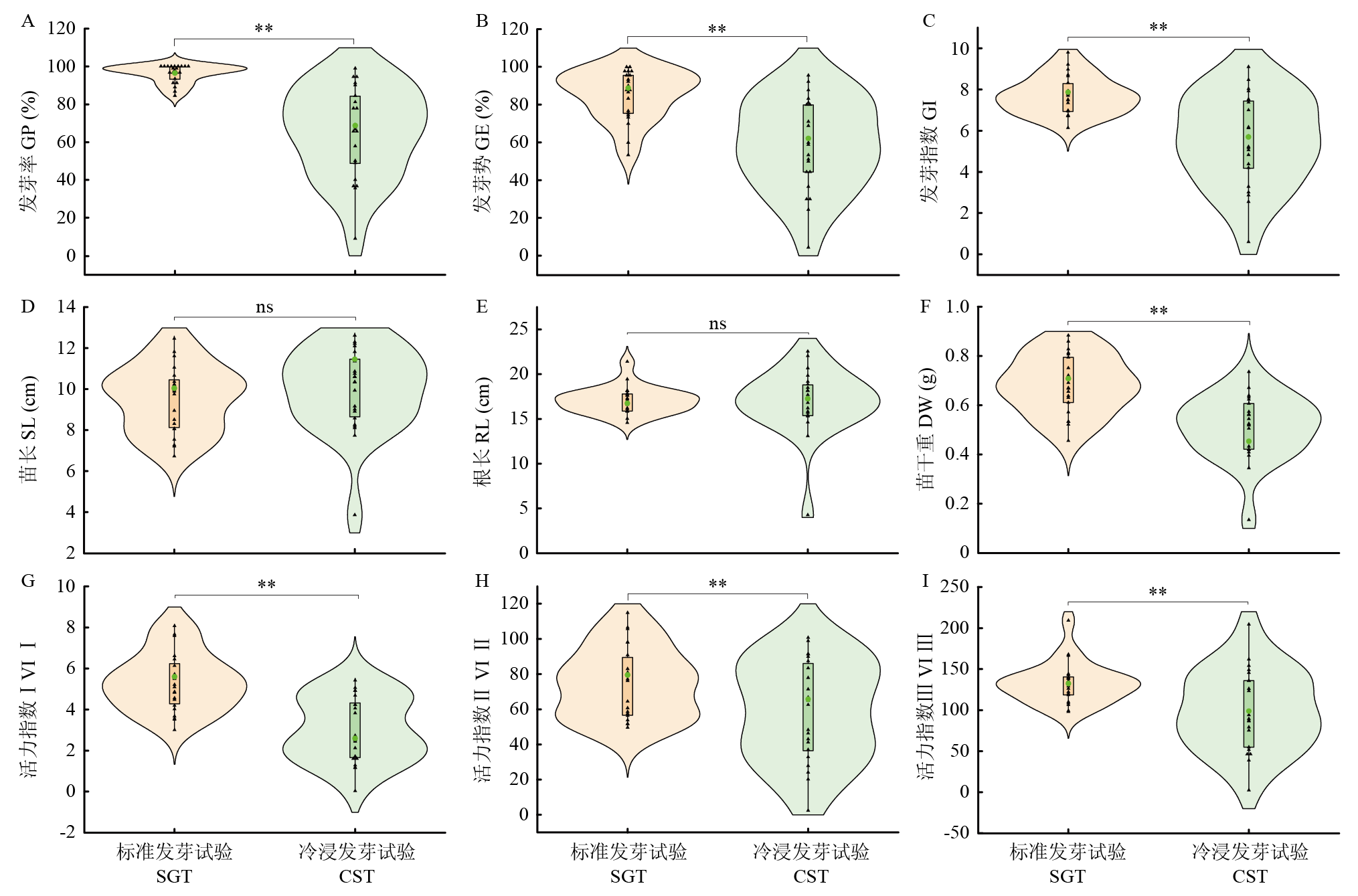
Fig. 1

Analysis of vigor traits of inbred lines ▲: Phenotypic value of inbred line materials; ●: Control inbred line KA105. *: P<0.05; **: P<0.01; ***: P<0.001. ns: The difference is not significant. The same as below"

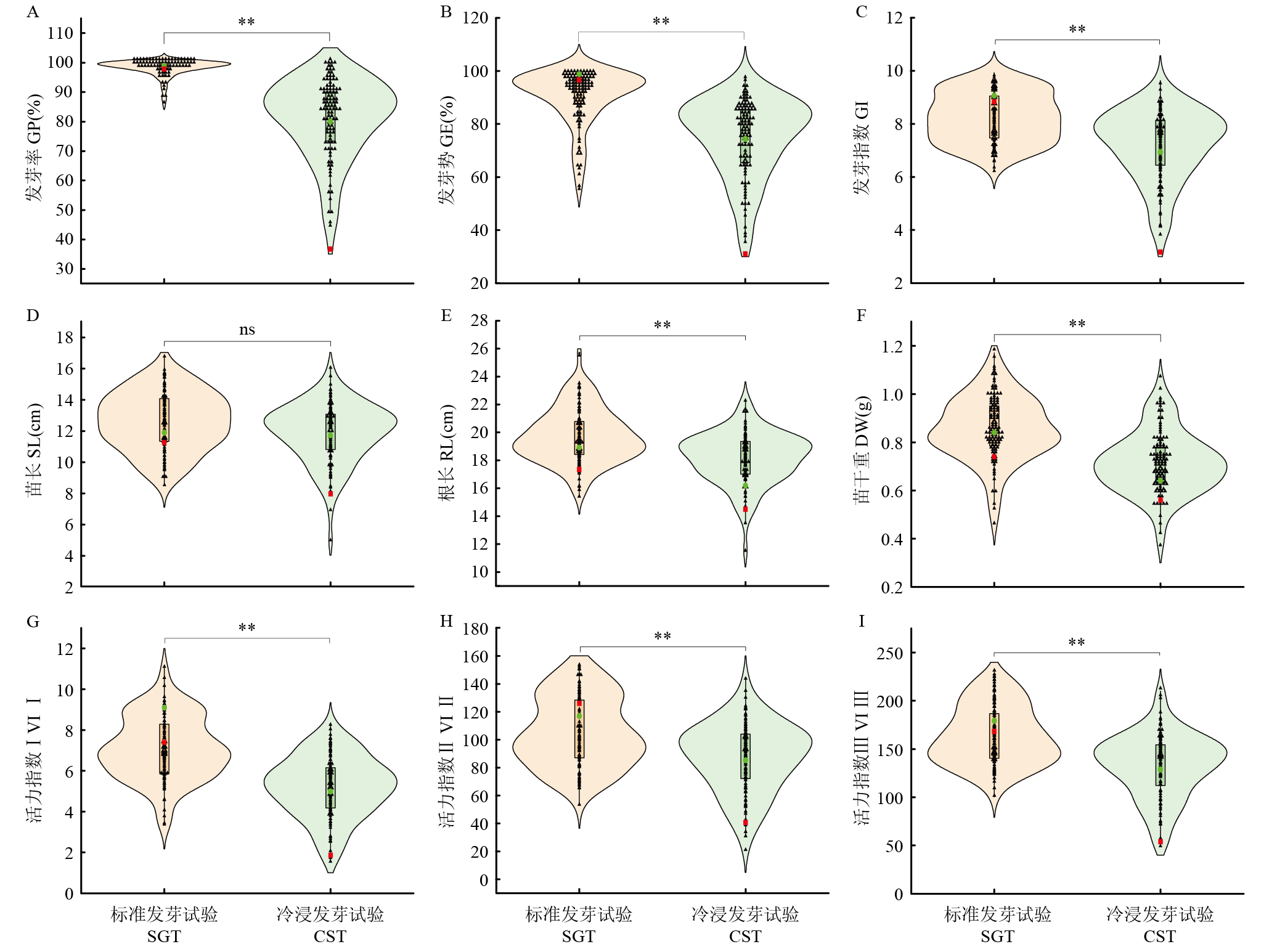
Fig. 2

Analysis of vigor traits of hybrids ▲: Phenotypic value of hybrid materials; ●: Control material ZD958; ■: Control material SD650"

Table 3

Joint variance analysis of seed vigor related traits in inbred lines and hybrids"

材料
Material
性状
Trait
基因型 Genotype 处理 Treatment 处理×基因型 Genotype×Treatment
自由度
DF
均方
MS
F
F-value
自由度
DF
均方
MS
F
F-value
自由度
DF
均方
MS
F
F-value
自交系
Inbred lines
发芽势GE 21 0.14 36.83** 1 2.36 605.78** 21 0.09 22.08**
发芽率GP 21 0.11 39.73** 1 3.14 1168.19** 21 0.07 26.38**
发芽指数GI 21 10.64 48.18** 1 159.99 724.255** 21 6.57 29.73**
苗长SL 21 15.33 14.83** 1 5.37 5.19 21 5.30 5.13
根长RL 21 33.27 32.05** 1 0.65 0.63 21 11.67 11.24**
苗干重DW 21 0.08 31.35** 1 0.99 384.99** 21 0.01 4.57
活力指数Ⅰ VIⅠ 21 11.01 27.52** 1 75.22 188.09** 21 4.39 10.97**
活力指数Ⅱ VIⅡ 21 2409.15 28.49** 1 9115.14 107.78** 21 1124.84 13.30**
活力指数Ⅲ VI Ⅲ 21 6158.26 43.45** 1 37043.47 263.76** 21 2900.96 20.66**
杂交种
Hybrids
发芽势GE 105 0.05 16.72** 1 3.95 1326.67** 105 0.05 16.49**
发芽率GP 105 0.03 19.51** 1 4.80 2917.90** 105 0.02 15.11**
发芽指数GI 105 4.60 18.73** 1 175.54 713.92** 105 3.67 14.93**
苗长SL 105 17.50 13.93** 1 83.48 66.48 105 3.18 2.54**
根长RL 105 13.36 7.08** 1 374.04 198.29** 105 7.17 3.80*
苗干重DW 105 0.08 16.23** 1 3.35 676.20** 105 0.02 4.04**
活力指数ⅠVIⅠ 105 8.72 15.24** 1 252.55 441.49** 105 4.35 7.61**
活力指数Ⅱ VIⅡ 105 2687.82 18.32** 1 53441.35 364.15** 105 1038.37 7.08**
活力指数Ⅲ VI Ⅲ 105 3894.52 15.62** 1 154790.67 620.68** 105 2248.23 9.02**

Fig. 3

Correlation analysis of various traits between inbred lines and hybrids A: Correlation analysis of inbred line materials; B: Correlation analysis of hybrid materials"

Fig. 4

The clustering diagram of the vigor traits of inbred lines and hybrids based on two germination tests A: Inbred line materials; B: Hybrid materials"

Table 4

Comparison of mean values of seed vigor traits in inbred lines and hybrids"

材料
Materials
类别
Type
材料数量
Number
发芽势
GE (%)
发芽率
GP (%)
发芽指数
GI
活力指数Ⅰ
VIⅠ
活力指数Ⅱ
VIⅡ
活力指数Ⅲ
VIⅢ
SGT CST SGT CST SGT CST SGT CST SGT CST SGT CST
自交系
Inbred lines
第Ⅰ类Category Ⅰ 8 88.33 83.61 99.31 89.03 7.91 7.87 5.80 4.79 78.32 87.97 136.13 150.27
第Ⅱ类Category Ⅱ 9 82.34 55.06 94.44 63.21 7.63 5.21 5.02 2.53 73.63 53.39 131.43 89.17
第Ⅲ类Category Ⅲ 5 86.00 25.10 94.67 31.95 7.69 2.46 5.27 1.10 72.53 21.14 130.51 37.26
杂交种
Hybrids
第Ⅰ类Category Ⅰ 51 83.70 84.51 98.21 89.69 7.86 8.06 6.68 5.98 97.26 99.24 150.65 152.22
第Ⅱ类Category Ⅱ 41 93.28 71.65 98.51 77.75 8.64 6.96 7.66 4.97 114.94 84.33 177.48 125.66
第Ⅲ类Category Ⅲ 14 94.37 48.58 96.99 57.23 8.53 4.86 7.12 3.02 105.65 50.65 170.22 81.41

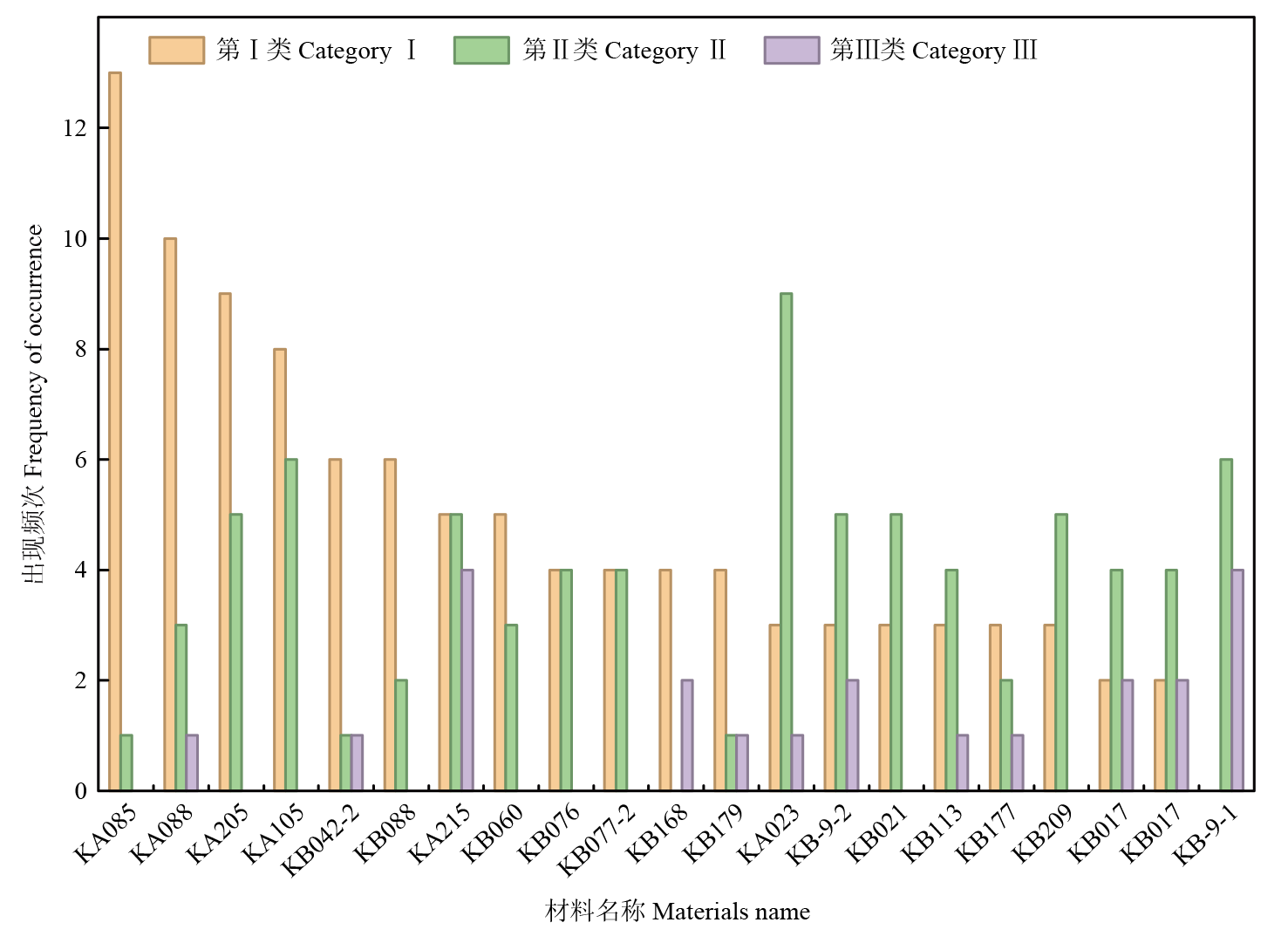
Fig. 5

Frequency analysis of inbred lines in hybrid combinations"

Fig. 6

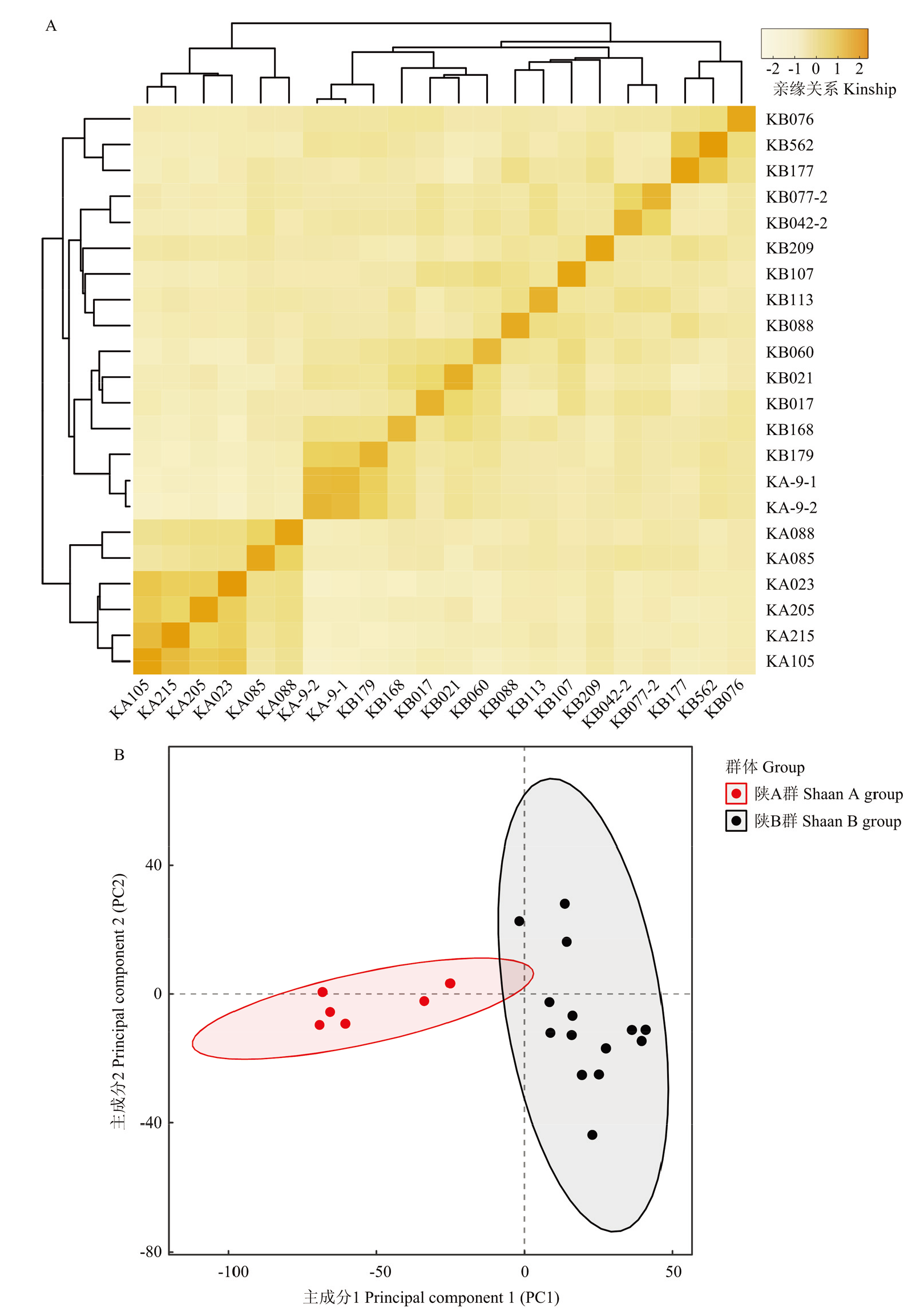
Parental kinship and population structure analysis A: Analysis of parental kinship; B: Analysis of population structure"

Fig. 7

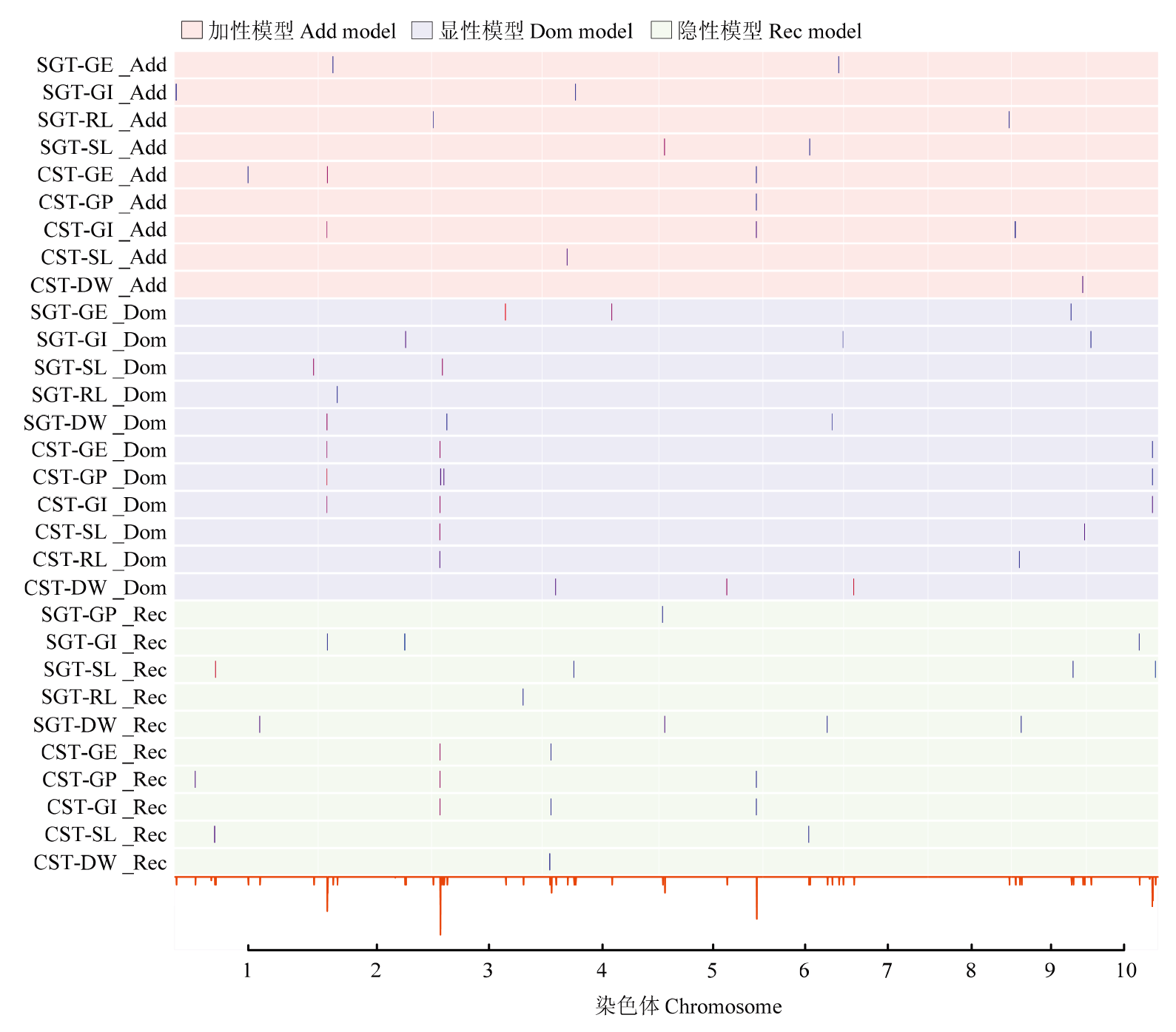
Genome-wide association analysis for seed vigor-related traits under different models Add: Add model; Dom: Dom model; Rec: Rec model. The same as below"

Table 5

Information about important association sites detected by the whole genome association analysis"

序号
No.
标记
Marker
染色体
Chromosome
位置
Position (bp)
基因型
Genotype
模型
Model
性状
Trait
P
P value
表型解释率
R2(%)
SNP1 1_3353289 1 3353289 G/A Add SGT-GI 9.00E-06 11.43
SNP2 1_43499054 1 43499054 T/C Rec CST-GP 1.24E-10 18.26
SNP3 1_84304371 1 84304371 C/T Rec CST-SL 2.86E-12 25.07
SNP4 1_85839980 1 85839980 A/C Rec SGT-SL 2.05E-21 32.68
SNP5 1_154295033 1 154295033 A/G Add CST-GE 7.82E-08 17.78
SNP6 1_178647142 1 178647142 A/G Rec SGT-DW 1.55E-12 22.04
SNP7 1_291856974 1 291856974 T/C Dom SGT-SL 5.13E-15 22.47
SNP8 2_18197441* 2 18197441 A/G Dom CST-GE 6.97E-15 18.78
Dom CST-GI 2.80E-15 19.43
Dom CST-GP 1.10E-19 26.68
Add CST-GI 9.57E-15 18.69
SNP9 2_18739525 2 18739525 T/C Dom SGT-DW 2.63E-18 13.73
SNP10 2_19244047 2 19244047 T/C Rec SGT-GI 3.47E-09 17.49
SNP11 2_19372692 2 19372692 C/T Add CST-GE 8.77E-16 21.42
SNP12 2_30802598 2 30802598 G/C Add SGT-GE 6.48E-08 19.44
SNP13 2_39940294 2 39940294 G/A Dom SGT-RL 1.25E-06 11.55
SNP14 2_183378697 2 183378697 C/T Dom SGT-GI 6.59E-10 13.51
SNP15 3_17590250* 3 17590250 G/A Dom CST-RL 6.46E-10 17.11
Dom CST-SL 3.85E-15 24.91
SNP16 3_17805407* 3 17805407 C/T Rec CST-GE 5.57E-18 35.60
Rec CST-GI 8.49E-18 30.14
Rec CST-GP 7.32E-16 24.59
SNP17 3_17932972* 3 17932972 T/C Dom CST-GE 4.91E-16 24.05
Dom CST-GI 1.28E-14 20.89
SNP18 3_19091776 3 19091776 G/A Dom CST-GP 8.60E-11 11.02
SNP19 3_22825936 3 22825936 C/G Dom SGT-SL 1.34E-14 23.70
SNP20 3_32242592 3 32242592 C/A Dom SGT-DW 1.50E-07 12.62
SNP21 3_155021348 3 155021348 A/C Dom SGT-GE 3.33E-27 19.80
SNP22 3_192210299 3 192210299 G/A Rec SGT-RL 1.04E-06 19.69
SNP23 4_15716701 4 15716701 C/A Rec CST-DW 3.26E-05 12.32
SNP24 4_18511010* 4 18511010 G/C Rec CST-GE 6.81E-07 13.60
Rec CST-GI 1.31E-08 15.92
SNP25 4_28100027 4 28100027 C/A Dom CST-DW 3.08E-12 12.23
SNP26 4_52506095 4 52506095 C/T Add CST-SL 3.61E-10 32.65
SNP27 4_69862542 4 69862542 C/T Add SGT-GI 2.17E-06 16.18
SNP28 4_145757636 4 145757636 G/C Dom SGT-GE 8.07E-16 18.45
SNP29 5_7270274 5 7270274 G/A Rec SGT-GP 6.93E-06 15.31
SNP30 5_11611314 5 11611314 C/A Add SGT-SL 3.07E-18 47.37
SNP31 5_11960070 5 11960070 T/C Rec SGT-DW 2.63E-10 17.35
SNP32 5_142175693 5 142175693 A/G Dom CST-DW 7.30E-18 14.83
SNP33 5_204262820* 5 204262820 T/A Rec CST-GI 3.49E-06 8.56
Rec CST-GP 2.44E-09 14.74
Add CST-GI 5.57E-13 14.79
Add CST-GP 5.80E-08 14.18
Add CST-GE 1.63E-08 10.12
SNP34 6_96096697 6 96096697 C/T Rec CST-SL 3.58E-07 13.13
SNP35 6_159316307 6 159316307 C/T Add SGT-GE 6.71E-07 11.82
SNP36 6_168385013 6 168385013 C/T Dom SGT-GI 1.57E-08 10.40
SNP37 7_21288129 7 21288129 G/A Dom CST-DW 2.01E-18 13.75
SNP38 8_170405872 8 170405872 C/A Add SGT-RL 5.22E-08 22.64
SNP39 9_149806469 9 149806469 C/A Add CST-DW 1.12E-09 15.24
SNP40 9_153233111 9 153233111 C/T Dom CST-SL 3.84E-12 18.95
SNP41 10_9606210 10 9606210 T/C Dom SGT-GI 1.93E-07 11.63
SNP42 10_111383922 10 111383922 A/C Rec SGT-GI 5.59E-07 10.33
SNP43 10_138859255* 10 138859255 C/T Dom CST-GE 6.04E-08 7.74
Dom CST-GI 7.85E-10 10.36
Dom CST-GP 1.35E-07 6.76

Fig. 8

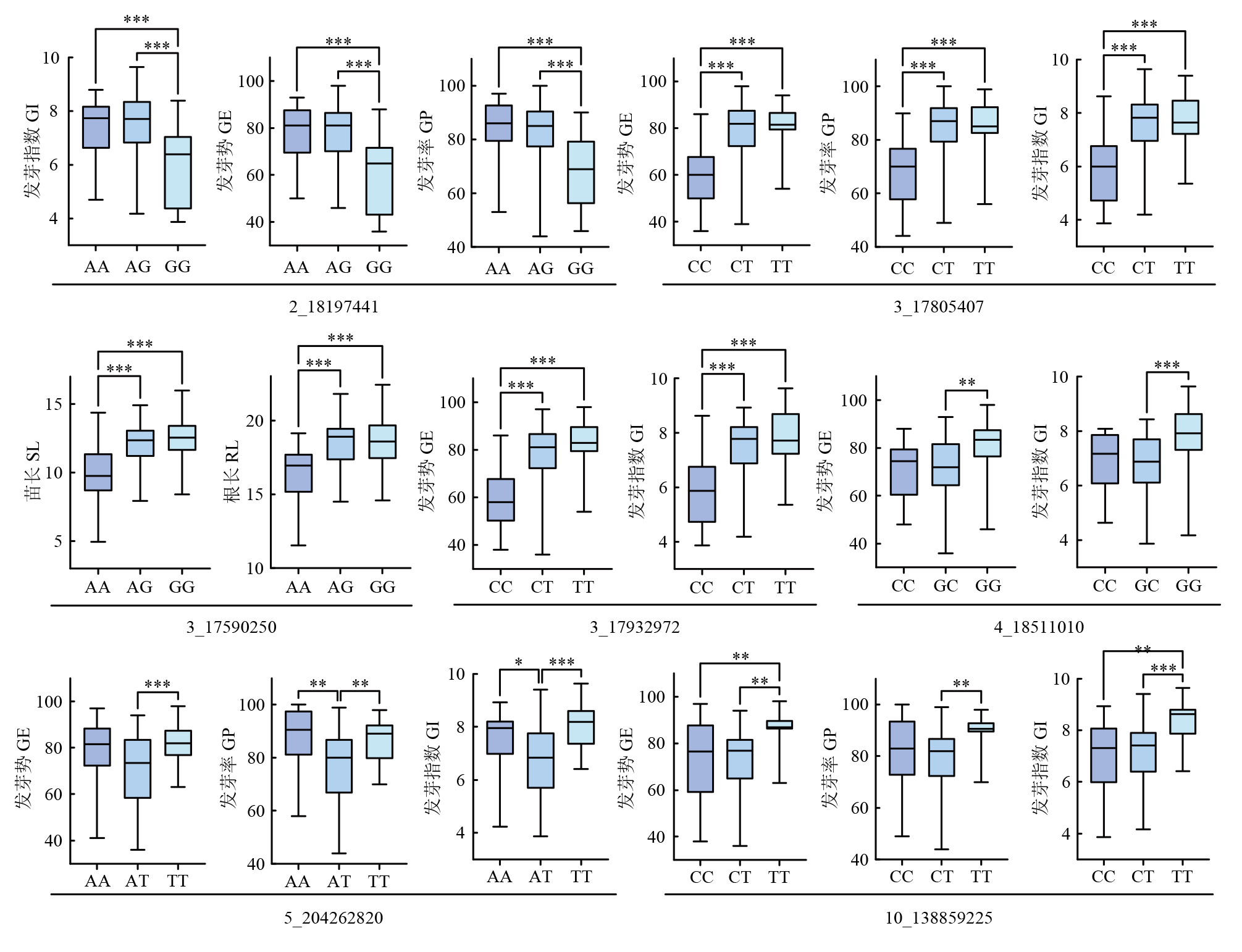
Phenotypic effect analysis of co-localization sites"

Fig. 9

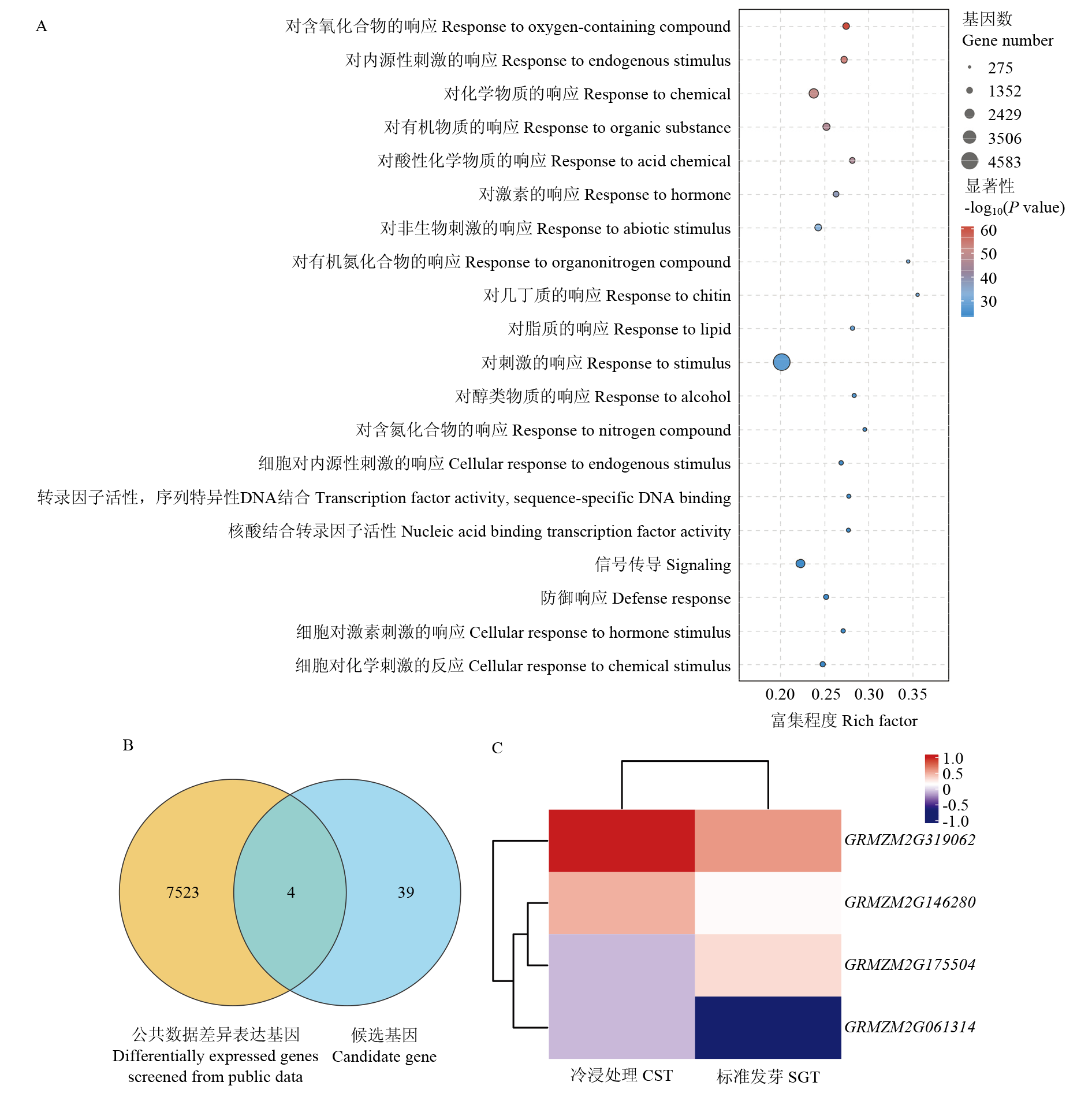
Differential expression analysis of candidate genes at transcriptional level A: GO enrichment analysis of public transcriptome data; B: Common data Wayne diagram of differentially expressed genes and candidate genes; C: Differential expression analysis of candidate genes under two treatments"

Table 6

Candidate gene prediction and functional annotation"

QTN位点
QTN marker
染色体位置
Position
候选基因CandidateGenes 功能注释
Annotation
2_18197441 Chr.2:18197441 GRMZM2G567481
2_18739525 Chr.2:18739525 GRMZM2G175504 有丝分裂激活蛋白激酶激酶激酶YODA
Mitogen-activated protein kinase kinase kinase YODA
3_155021348 Chr.3:155021348 GRMZM2G146280 含WD重复序列的蛋白质结构域磷酸肌醇相互作用蛋白3
WD repeat-containing protein domain phosphoinositide-interacting protein 3
3_17590250 Chr.3:17590250 GRMZM2G166064 蛋白TRM32 Protein TRM32
3_17805407 Chr.3:17805407 GRMZM2G020941
3_17932972 Chr.3:17932972 GRMZM2G100898 DNA甲基化因子1 Factor of DNA methylation 1
4_18511010 Chr.4:18511010 GRMZM5G846314
4_28100027 Chr.4:28100027 GRMZM2G319062 多酚氧化酶潜伏型,叶绿体 Polyphenol oxidase latent form, chloroplastic
5_204262820 Chr.5:204262820 GRMZM2G000280 反转录转座子蛋白Ty1-copia亚类 Retrotransposon protein Ty1-copia subclass
9_149806469 Chr.9:149806469 GRMZM2G061314 蛋白结合蛋白 protein binding protein
10_138859255 Chr.10:138859255 GRMZM2G391272 皮层细胞描绘蛋白 Cortical cell-delineating protein
[1]
Finch-Savage W E, Bassel G W. Seed vigour and crop establishment: Extending performance beyond adaptation[J]. Journal of Experimental Botany, 2016, 67(3): 567-591.

doi: 10.1093/jxb/erv490 pmid: 26585226
[2]
Wang Y L, Peng Y K, Zhuang Q B, Zhao X L. Feasibility analysis of NIR for detecting sweet corn seeds vigor[J]. Journal of Cereal Science, 2020, 93: 102977.

doi: 10.1016/j.jcs.2020.102977
[3]
GB 4404.1—2024 粮食作物种子第1部分: 禾谷类[S].
GB 4404.1—2024 Seed of food crops: Part 1: Cereals[S]. (in Chinese)
[4]
吴丽丽. 甜玉米种子活力影响因素及检测方法概述[J]. 现代农村科技, 2021(3): 65-66.
Wu L L. Summary of influencing factors and detection methods of sweet corn seed vigor[J]. Xiandai Nongcun Keji, 2021(3): 65-66. (in Chinese)
[5]
Adebisi M A, Kehinde T O, Porbeni J B O, Oduwaye O A, Biliaminu K, Akintunde S A. Seed and seedling vigour in tropical maize inbred lines[J]. Plant Breeding and Seed Science, 2014, 67(1): 87-102.

doi: 10.2478/v10129-011-0072-4
[6]
Nowak B, Tomkowiak A, Bocianowski J, Sobiech A, Bobrowska R, Kowalczewski P Ł, Bocianowska M. The use of DArTseq technology to identify markers linked to genes responsible for seed germination and seed vigor in maize[J]. International Journal of Molecular Sciences, 2022, 23(23): 14865.

doi: 10.3390/ijms232314865
[7]
Xing J Y, Tan J J, Feng H Q, Zhou Z J, Deng M, Luo H B, Deng Z P. Integrative proteome and phosphoproteome profiling of early cold response in maize seedlings[J]. International Journal of Molecular Sciences, 2022, 23(12): 6493.

doi: 10.3390/ijms23126493
[8]
Shikha K, Shahi J P, Vinayan M T, Zaidi P H, Singh A K, Sinha B. Genome-wide association mapping in maize: Status and prospects[J]. 3 Biotech, 2021, 11(5): 244.

doi: 10.1007/s13205-021-02799-4 pmid: 33968587
[9]
Li Y T, Liang Y M, Liu M L, Zhang Q Y, Wang Z W, Fan J J, Ruan Y Y, Zhang A, Dong X M, Yue J, Li C. Genome-wide association studies provide insights into the genetic architecture of seed germination traits in maize[J]. Frontiers in Plant Science, 2022, 13: 930438.

doi: 10.3389/fpls.2022.930438
[10]
Ma Y, Yao L, Zhang L W, Su A G, Wang R H, Song W, Li Z W, Zhao J R. Genome-wide association analysis of chilling-tolerant germination in a new maize association mapping panel[J]. Food and Energy Security, 2023, 12(3): e445.

doi: 10.1002/fes3.445
[11]
Yu T, Zhang J G, Cao J S, Li S J, Cai Q, Li X, Li S N, Li Y L, He C G, Ma X N. Identification of multiple genetic loci related to low-temperature tolerance during germination in maize (Zea maize L.) through a genome-wide association study[J]. Current Issues in Molecular Biology, 2023, 45(12): 9634-9655.

doi: 10.3390/cimb45120602
[12]
Ma L L, Wang C, Hu Y, Dai W, Liang Z J, Zou C Y, Pan G T, Lübberstedt T, Shen Y O. GWAS and transcriptome analysis reveal MADS26 involved in seed germination ability in maize[J]. Theoretical and Applied Genetics, 2022, 135(5): 1717-1730.

doi: 10.1007/s00122-022-04065-4 pmid: 35247071
[13]
Li T, Qu J Z, Tian X K, Lao Y H, Wei N N, Wang Y H, Hao Y C, Zhang X H, Xue J Q, Xu S T. Identification of ear morphology genes in maize (Zea mays L.) using selective sweeps and association mapping[J]. Frontiers in Genetics, 2020, 11: 747.

doi: 10.3389/fgene.2020.00747
[14]
GB/T 3543.4—1995 农作物种子检验规程发芽试验[S].
GB/T 3543.4—1995 Rules for inspection of crop seeds Germination test[S]. (in Chinese)
[15]
Knapp S J, Stroup W W, Ross W M. Exact confidence intervals for heritability on a progeny mean Basis[J]. Crop Science, 1985, 25(1): 192-194.

doi: 10.2135/cropsci1985.0011183X002500010046x
[16]
Purcell S, Neale B, Todd-Brown K, Thomas L, Ferreira M A R, Bender D, Maller J, Sklar P, de Bakker P I W, Daly M J, Sham P C. PLINK: A tool set for whole-genome association and population- based linkage analyses[J]. The American Journal of Human Genetics, 2007, 81(3): 559-575.

doi: 10.1086/519795
[17]
Bradbury P J, Zhang Z W, Kroon D E, Casstevens T M, Ramdoss Y, Buckler E S. TASSEL: Software for association mapping of complex traits in diverse samples[J]. Bioinformatics, 2007, 23(19): 2633-2635.

doi: 10.1093/bioinformatics/btm308 pmid: 17586829
[18]
Saxton H, Xu X, Schenkel T, Clayton R H, Halliday I. Convergence, sampling and total order estimator effects on parameter orthogonality in global sensitivity analysis[J]. PLoS Computational Biology, 2024, 20(7): e1011946.

doi: 10.1371/journal.pcbi.1011946
[19]
Tamura K, Stecher G, Kumar S. MEGA11: Molecular evolutionary genetics analysis version 11[J]. Molecular Biology and Evolution, 2021, 38(7): 3022-3027.

doi: 10.1093/molbev/msab120 pmid: 33892491
[20]
Huang X H, Yang S H, Gong J Y, Zhao Y, Feng Q, Gong H, Li W J, Zhan Q L, Cheng B Y, Xia J H, Chen N, Hao Z N, Liu K Y, Zhu C R, Huang T, Zhao Q, Zhang L, Fan D L, Zhou C C, Lu Y Q, et al. Genomic analysis of hybrid rice varieties reveals numerous superior alleles that contribute to heterosis[J]. Nature Communications, 2015, 6: 6258.

doi: 10.1038/ncomms7258 pmid: 25651972
[21]
Li M, Zhang Y W, Zhang Z C, Xiang Y, Liu M H, Zhou Y H, Zuo J F, Zhang H Q, Chen Y, Zhang Y M. A compressed variance component mixed model for detecting QTNs and QTN-by-environment and QTN-by-QTN interactions in genome-wide association studies[J]. Molecular Plant, 2022, 15(4): 630-650.

doi: 10.1016/j.molp.2022.02.012
[22]
Waters A J, Makarevitch I, Noshay J, Burghardt L T, Hirsch C N, Hirsch C D, Springer N M. Natural variation for gene expression responses to abiotic stress in maize[J]. The Plant Journal, 2017, 89(4): 706-717.

doi: 10.1111/tpj.13414 pmid: 28188666
[23]
Fan Y Y, An T, Yao X Y, Long Y, Wang Q Y, Wang Z L, Tian X, Chen L P, Huang W Q. An interpretable nondestructive detection model for maize seed viability: Based on grouped hyperspectral image fusion and key biochemical indicators[J]. Computers and Electronics in Agriculture, 2025, 239: 111036.

doi: 10.1016/j.compag.2025.111036
[24]
Wu Q X, Shi B X, Lai Y, Zhang Y Y, Wu Y, Li Z, Li Y, Zhu X F, Pu Z E, Liu Z H. Genome-wide association analysis of seed vigor-related traits in wheat[J]. Agronomy, 2024, 14(3): 410.

doi: 10.3390/agronomy14030410
[25]
韩登旭, 杨杰, 王业建, 郗浩江, 梁晓玲, 李铭东, 阿布来提·阿布拉 国内外骨干玉米自交系耐低温萌发能力综合评价[J]. 新疆农业科学, 2021, 58(3): 401-411.

doi: 10.6048/j.issn.1001-4330.2021.03.002
Han D X, Yang J, Wang Y J, Xi H J, Liang X L, Li M D, Abulaiti A. Comprehensive evaluation of low temperature germination resistance of backbone maize inbred lines at home and abroad[J]. Xinjiang Agricultural Sciences, 2021, 58(3): 401-411. (in Chinese)

doi: 10.6048/j.issn.1001-4330.2021.03.002
[26]
崔婷茹, 范志强, 郭晋杰. 低温胁迫对玉米种子萌发和幼苗活力的影响[J]. 山西农业科学, 2019, 47(10): 1695-1699.
Cui T R, Fan Z Q, Guo J J. Effect of low temperature stress on seed germination and seedling vigor of maize[J]. Journal of Shanxi Agricultural Sciences, 2019, 47(10): 1695-1699. (in Chinese)
[27]
侯立刚, 刘会芳, 田健, 关法春, 齐春艳, 翟相英, 崔彦如, 祝延立, 那伟. 不同菌剂浓度对低温处理下水稻种子萌发能力的影响[J]. 种子, 2021, 40(3): 87-90, 96.
Hou L G, Liu H F, Tian J, Guan F C, Qi C Y, Zhai X Y, Cui Y R, Zhu Y L, Na W. Effects of different concentrations of bacterial agents on the germination ability of rice seeds under low temperature treatment[J]. Seed, 2021, 40(3): 87-90, 96. (in Chinese)
[28]
Wan J, Wang Q Y, Zhao J W, Zhang X H, Guo Z Y, Hu D S, Meng S J, Lin Y, Qiu X Q, Mu L Q, Ding D, Tang J H. Gene expression variation explains maize seed germination heterosis[J]. BMC Plant Biology, 2022, 22(1): 301.

doi: 10.1186/s12870-022-03690-x pmid: 35718761
[29]
韩赞平, 陈彦惠, 刘海英, 赵瑞芳, 郭书磊. 利用重组自交系群体定位不同温度条件下玉米种子发芽性状的QTL[J]. 河南农业科学, 2017, 46(7): 9-17, 85.
Han Z P, Chen Y H, Liu H Y, Zhao R F, Guo S L. QTL mapping of seed germination traits under different temperature conditions using recombinant inbred lines of maize[J]. Journal of Henan Agricultural Sciences, 2017, 46(7): 9-17, 85. (in Chinese)
[30]
刘文童. 玉米自交系种子活力相关性状的综合评价和关联分析[D]. 保定: 河北农业大学, 2020.
Liu W T. Comprehensive evaluation and association analysis of seed vigor related traits in maize inbred lines[D]. Baoding: Hebei Agricultural University, 2020. (in Chinese)
[31]
Wu X M, Feng F Q, Zhu Y Z, Xie F G, Yang J, Gong J, Liu Y, Zhu W, Gao T L, Chen D Y, Li X Q, Huang J. Construction of high-density genetic map and identification of QTLs associated with seed vigor after exposure to artificial aging conditions in sweet corn using SLAF-seq[J]. Genes, 2019, 11(1): 37.

doi: 10.3390/genes11010037
[32]
Guo X Y, Sun X H, Liu S, Gong C X, Feng C C, Han X, Lv T T, Zhou Y, Wang Z H, Di H. Screening and application of SSR markers related to seed storability traits in maize (Zea mays L.)[J]. Genetic Resources and Crop Evolution, 2021, 68(6): 2521-2535.

doi: 10.1007/s10722-021-01146-z
[33]
Li H Q, Yue H W, Xie J L, Bu J Z, Li L, Xin X Y, Zhao Y M, Zhang H Y, Yang L, Wang J H, Jiang X W. Transcriptomic profiling of the high-vigour maize (Zea mays L.) hybrid variety response to cold and drought stresses during seed germination[J]. Scientific Reports, 2021, 11(1): 19345.

doi: 10.1038/s41598-021-98907-8
[34]
Zhou S N, Yu X L, Tan J, Sun H X, Yang W, Jiang L Y, Zang Z Y, Ci J B, Ren X J. Transcriptomics reveals cold tolerance maize lines involved in the phenylpropanoid and flavonoid pathways[J]. Plants, 2026, 15(1): 161.

doi: 10.3390/plants15010161
[1] CAI QiaoHong, ZHOU Tian, SU Ming, HONG ZiQiang, LI FanGuo, LI Tong, WANG Hua, KANG JianHong, WU HongLiang. Effects of Nitrogen Reduction and Potassium Enhancement Fertilization Mode on Photosynthetic Fluorescence Characteristics and Photosynthetic Product Accumulation of Maize in Ningxia Yellow Irrigation Area [J]. Scientia Agricultura Sinica, 2026, 59(9): 1869-1886.
[2] CHEN XuanYi, GUO XingXing, ZHANG XiangQian, LU ZhanYuan, LIU LingYue, LUO Fang, LI JinLong, ZHANG ChuanLing, ZHANG ZhiQing, CHE ManQing. Impacts of Intercropping Row Patterns on the Heterogeneity of the Light Environment and Photosynthetic Product Production in Maize Canopy [J]. Scientia Agricultura Sinica, 2026, 59(8): 1653-1671.
[3] HOU HuiZhi, YIN JiaDe, MA MingSheng, LIU XiaoWei, LIU YanLan, LEI KangNing. Effects of Tillage and Organic Fertilizer Application on Crop Yield and Water Use in a Potato-Maize Double Cropping System in the Longdong Region [J]. Scientia Agricultura Sinica, 2026, 59(8): 1672-1685.
[4] ZHAO SiJie, REN JiaXin, NAN JiangLei, WANG XingYun, CHENG WeiNing. Relationships Between Secondary Metabolite Contents and Related Gene Expression in Maize Leaves and Their Resistance to Spodoptera frugiperda [J]. Scientia Agricultura Sinica, 2026, 59(8): 1686-1696.
[5] WANG YaFei, YAN Peng, XUE JinTao, DONG XueRui, MENG FanQi, GUO LiNa, LUO Yi, ZHANG Juan, DONG ZhiQiang, LU Lin. Effects of Ethephon-Glycine Betaine-Salicylic Acid Mixture on Root System Architecture, Physiological Function and Yield of Maize Under Heat Stress [J]. Scientia Agricultura Sinica, 2026, 59(7): 1439-1455.
[6] WANG JiaNuo, CHEN GuiPing, LI Pan, WANG LiPing, NAN YunYou, HE Wei, FAN ZhiLong, HU FaLong, CHAI Qiang, YIN Wen, ZHAO LiaoHao. Photo-Physiological Mechanism at Grain Filling Stage of No-Tillage with Plastic Re-Mulching to Increase Maize Yield in Oasis Irrigation Areas [J]. Scientia Agricultura Sinica, 2026, 59(6): 1189-1202.
[7] ZHOU XinJie, REN Hao, CHEN YingLong, ZHANG JiWang, ZHAO Bin, REN BaiZhao, LIU Peng, WANG HongZhang. Effects of Calcium Peroxide on Root Morphology and Yield Formation of Summer Maize in Waterlogging Farmland [J]. Scientia Agricultura Sinica, 2026, 59(6): 1203-1216.
[8] HE JiHang, ZHANG Qing, LÜ XiangYue, XUE JiQuan, XU ShuTu, LIU JianChao. Evaluation of Nitrogen Efficiency of Different Stay-Green Maize Hybrids [J]. Scientia Agricultura Sinica, 2026, 59(6): 1217-1230.
[9] LI YongJuan, ZHANG YueTong, WANG YiBo, ZHAO ChangJiang, SONG Jie, CHEN XueLi, YAO Qin. Effects of Biochar Application on the Abundance and Community Composition of Nitrogen-Fixing Microbial nifH Gene in Soybean Rotation and Continuous Cropping Systems [J]. Scientia Agricultura Sinica, 2026, 59(6): 1272-1285.
[10] LI SiYuan, LI HongPing, CHANG HongQing, ZHANG SenYan, LI SiJia, CUI XinFei, QIAO Po, ZENG Bo, LIU GuiZhen, LIU TianXue, TANG JiHua, LI ChaoHai. Effects of Density Increase on Dynamic Change of Yield and Agronomic Traits of Maize Cultivars with Different Plant Heights [J]. Scientia Agricultura Sinica, 2026, 59(5): 967-984.
[11] DONG JinLong, ZHAO Ying, YU HaiBing, LÜ JianYe, QIN JiaQi, LIANG Chen, MING Bo, LI ShaoKun. Multi-Model Elucidating of Nutritional Quality Contributions to Maize Kernel Test Weight and Regional Heterogeneity [J]. Scientia Agricultura Sinica, 2026, 59(5): 985-995.
[12] SUN YaLing, WANG QingHua, SHU Rui, YUE LiXin, WANG ZhenBao, LI ZhaoXia, GAO LiMin, CHENG Hong, FU ZaiQiu, HUO YuMeng. Production and Characterization of Interspecific Hybrids Between Allium fistulosum and Allium przewalskianum Regel [J]. Scientia Agricultura Sinica, 2026, 59(3): 619-636.
[13] CHEN GuiPing, WEI JinGui, GUO Yao, LI Pan, WANG FeiEr, QIU HaiLong, FENG FuXue, YIN Wen. Synergistic Effects of Wide-Narrow Row and Density Enhancement on the Photosynthetic Characteristics and Resource Utilization of Maize in Oasis Irrigation Areas [J]. Scientia Agricultura Sinica, 2026, 59(2): 278-291.
[14] ZHANG ZhiYong, TAN ShiChao, XIONG ShuPing, MA XinMing, WEI YiHao, WANG XiaoChun. Effects of Annual Water and Nitrogen Optimization on Yield and Nitrogen Migration of Wheat-Maize Rotation System in Irrigation Area of Northern Henan [J]. Scientia Agricultura Sinica, 2026, 59(2): 336-353.
[15] WU JiaJia, LIU Rui, LI XinYan, ZHANG JiuDong, CHANG DanNa, CAO WeiDong. Reducing Nitrogen Footprint of Maize Production with Intercropping Green Manure, Nitrogen Reduction, and Sesbania Biochar [J]. Scientia Agricultura Sinica, 2026, 59(16): 3605-3620.
Viewed
Full text


Abstract

Cited

  Shared   
  Discussed   
No Suggested Reading articles found!