Scientia Agricultura Sinica ›› 2026, Vol. 59 ›› Issue (3): 619-636.doi: 10.3864/j.issn.0578-1752.2026.03.011

• HORTICULTURE • Previous Articles     Next Articles

Production and Characterization of Interspecific Hybrids Between Allium fistulosum and Allium przewalskianum Regel

SUN YaLing1(), WANG QingHua1, SHU Rui1, YUE LiXin1, WANG ZhenBao1, LI ZhaoXia1, GAO LiMin1, CHENG Hong2, FU ZaiQiu1(), HUO YuMeng1()   

  1. 1 Institute of Vegetables, Shandong Academy of Agricultural Sciences/Key Laboratory of Huang Huai Protected Horticulture Engineering, Ministry of Agriculture and Rural Affairs/Shandong Key Laboratory of Bulk Open-Field Vegetable Breeding, Jinan 250100
    2 Institute of Vegetables, Gansu Academy of Agricultural Sciences, Lanzhou 730070
  • Received:2025-06-22 Accepted:2025-08-18 Online:2026-02-01 Published:2026-01-31
  • Contact: FU ZaiQiu, HUO YuMeng

Abstract:

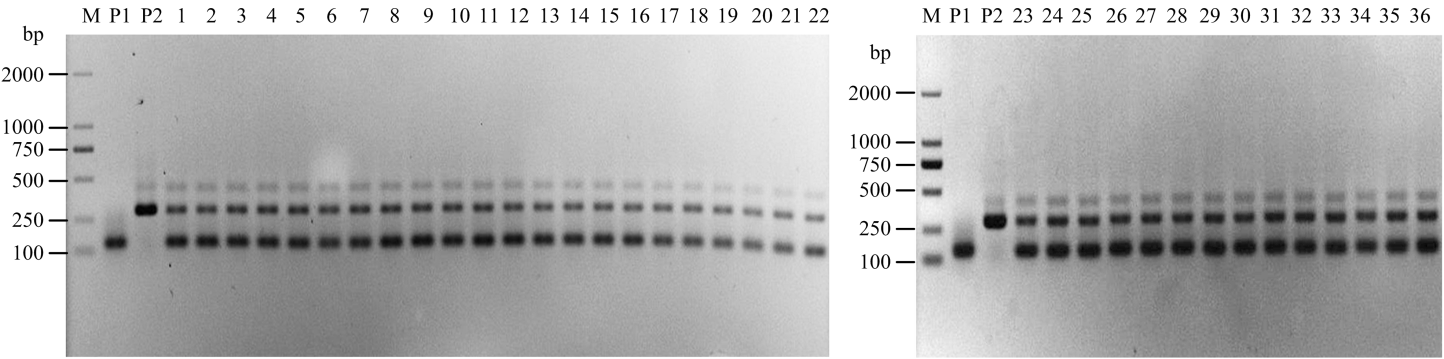
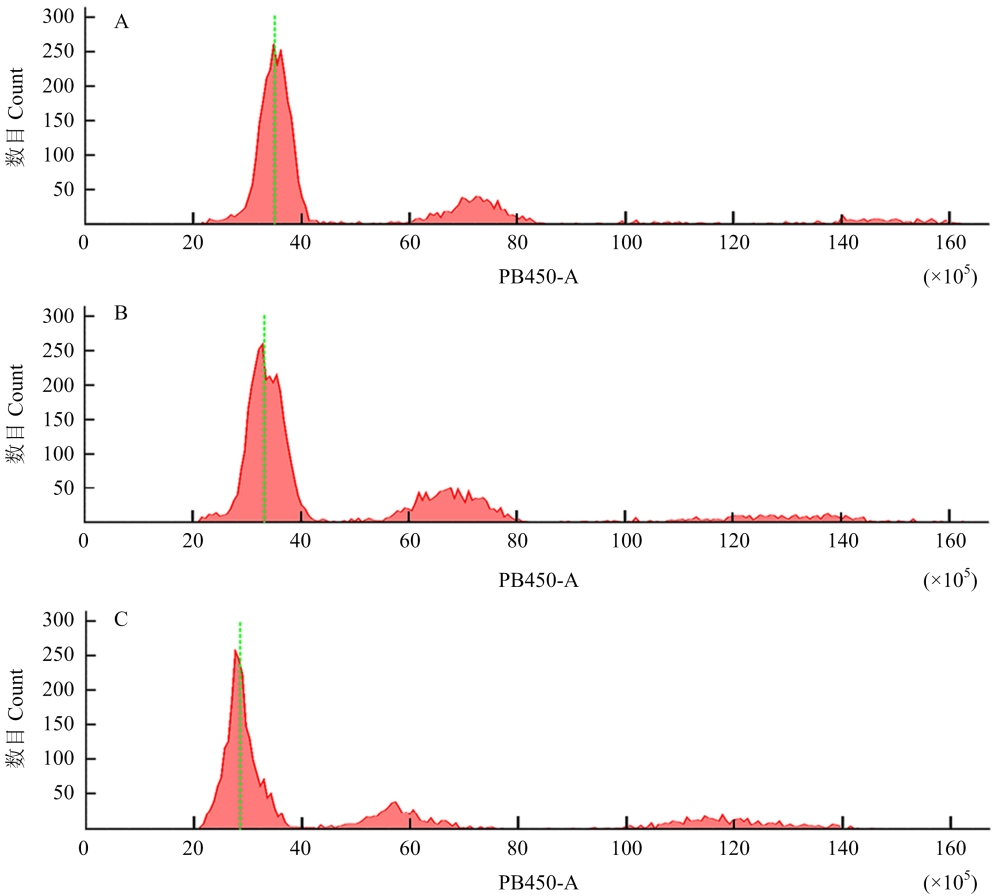
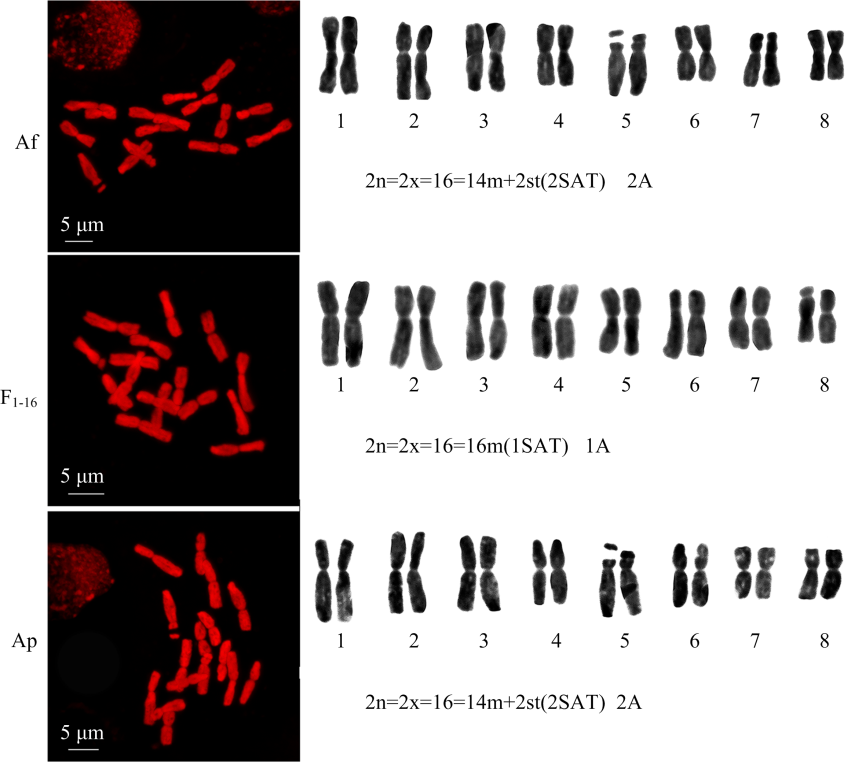
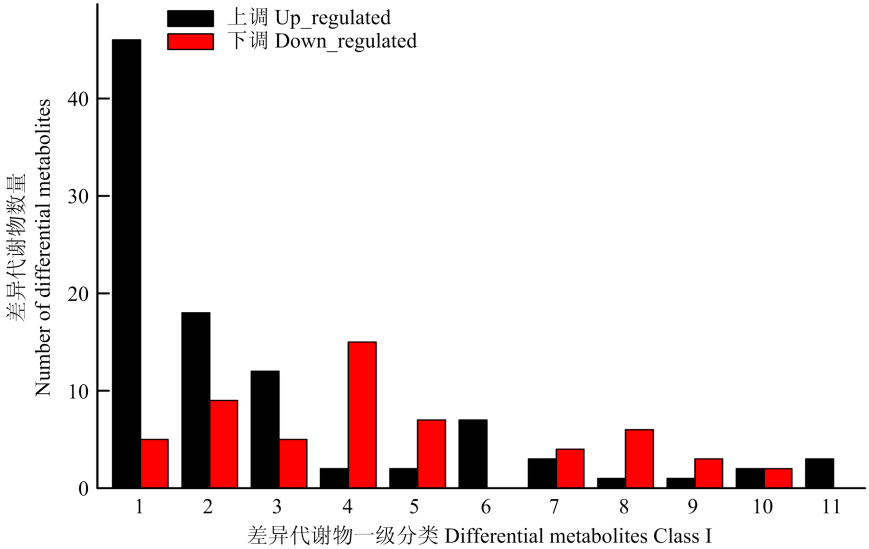
【Objective】 This study aims to obtain interspecific hybrid plants and analyze the botanical characteristics of hybrids between Zhangqiudawutong welsh onions (A. fistulosum) and Qingganjiu (A. przewalskianum Regel), so as to provide a basis for the efficient utilization of wild resources in the Allium genus. 【Method】 Taking Zhangqiudawutong welsh onion and Qingganjiu as experimental materials, flowering induction and reciprocal cross were conducted on both parents. Ovary cultivation technique was applied to obtain F1 hybrid plants. The authenticity of hybrid F1 was identified by means of chloroplast genome sequencing, flow cytometry detection, karyotype analysis, ITS analysis, and phenotypic characteristics. The botanical characteristics of hybrids were observed at the seedling stage, vegetative growth stage, and bolting-flowering stage. Their fertility was identified through observation and self-pollination. The color, texture and taste of the product were assessed via sensory assessment to determine its potential as an emerging vegetable. Differential metabolites between hybrid varieties and their parental lines were analyzed using widely-targeted metabolomics. 【Result】There was a significant difference in the seedling rates between reciprocal crosses of Zhangqiudawutong welsh onion and Qingganjiu. Ovaries from the cross of Zhangqiudawutong welsh onions (♀) × Qingganjiu (♂) expanded normally, whereas those from the reciprocal cross failed to expand and instead wilted and dried out. Ten days after pollination, natural ovaries ceased swelling, gradually turned grayish-white, became soft-textured, and eventually withered. Through ovary culture, 36 F1 hybrid plants were obtained, with a germination rate of 46.25% and a seedling rate of 22.50%. The chloroplast genome sequence of hybrid F1-16 was consistent with that of the maternal parent (Zhangqiudawutong welsh onion), indicating maternal inheritance of the cytoplasm. The peak of chromosome fluorescence intensity was 32.90×10⁵, which was between the two parents. The karyotype formula of chromosomes was 2n=2x=16=16m (1SAT), belonging to type 1A. The ITS sequence haplotypes included two types, which were identical to those of the two parents, respectively. The MAPI_1 molecular marker was developed, and the detection results showed that Zhangqiudawutong welsh onions (♀) had a single 124 bp band, while Qingganjiu (♂) had a single 289 bp band. Both bands were amplified in all 36 F1 hybrid individuals. F1 hybrid plants showed strong heterosis, with an average of 17.50 tillers per plant. Notably, their biomass yield reached 387.52 g per tiller group, which was significantly higher than that of their parents. All F1 individuals were pollen-sterile, exhibiting male sterility, and propagated vegetatively via tillering and aerial bulbils instead. A total of 1 208 metabolites were detected in both parents and hybrid F1-16, and 153 metabolites showed significant differences between F1-16 and its parents. Among these, 97 metabolites were upregulated and 56 metabolites were downregulated in F1-16 compared to the parents. Additionally, F1-16 produced a novel metabolite, Phloretin-2'-O-glucoside (Phloreizin), which has extremely high medicinal and health value. 【Conclusion】Interspecific hybrid F1 between Zhangqiudawutong and Qingganjiu was successfully obtained using ovary culture technology. F1 exhibited obvious heterosis and male sterility. A method for developing molecular markers to identify distant hybrid species was designed and validated.

Key words: welsh onion (A. fistulosum), Qingganjiu (A. przewalskianum Regel), interspecific hybrids, ovary culture, molecular identification, characterization

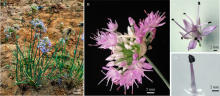
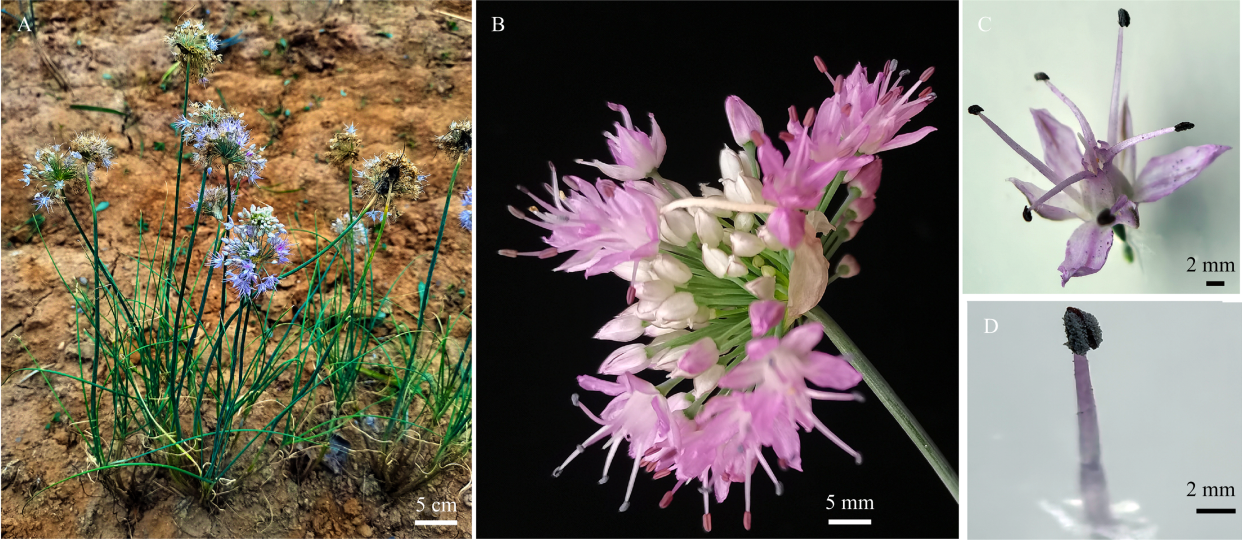
Fig. 1

The morphological characteristics of wild species of A. przewalskianum (ys) A: Plants; B: Inflorescence; C: Floret; D: Anther"

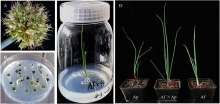
Fig. 2

Ovary culture and hybrid seedlings of F1 plants of A. fistulosum and A. przewalskianum A: The ovary after pollination, the arrow indicates withered ovary; B: Ovary culture and seed germination; C: F1 seedling and rooting culture; D: Parents and interspecific F1 hybrid seedlings (Ap=A. przewalskianum; Af=A. fistulosum), the arrow indicates a purple red pseudostem. The same as below"

Table 1

Ovary induction culture and embryo germination"

种间杂交
Interspecific combination (♀×♂)
接种子房数
No. of ovary culture
成芽数
No. of embryo germinated
成苗数
No. of developed plants
成苗率
Rate of developed plants (%)
Af×Ap 160 74 36 22.50
Ap×Af 100 0 0 0

Table 2

Statistical information on chloroplast genomes and ITS of A. fistulosum, A. przewalskianum, and F1-16"

样本
Sample
Reads总数
Total number of reads
碱基总数
Total number of bases
叶绿体基因组
Chloroplast genome size
ITS单倍型数目
No. of ITS haploid genotype
ITS单倍型
ITS haploid genotype
Ap 39989800 5998470000 153479 1 Ap
Af 8255274 1238291100 153162 1 Af
F1-16 40205264 6030789600 153162 2 Af+Ap

Fig. 3

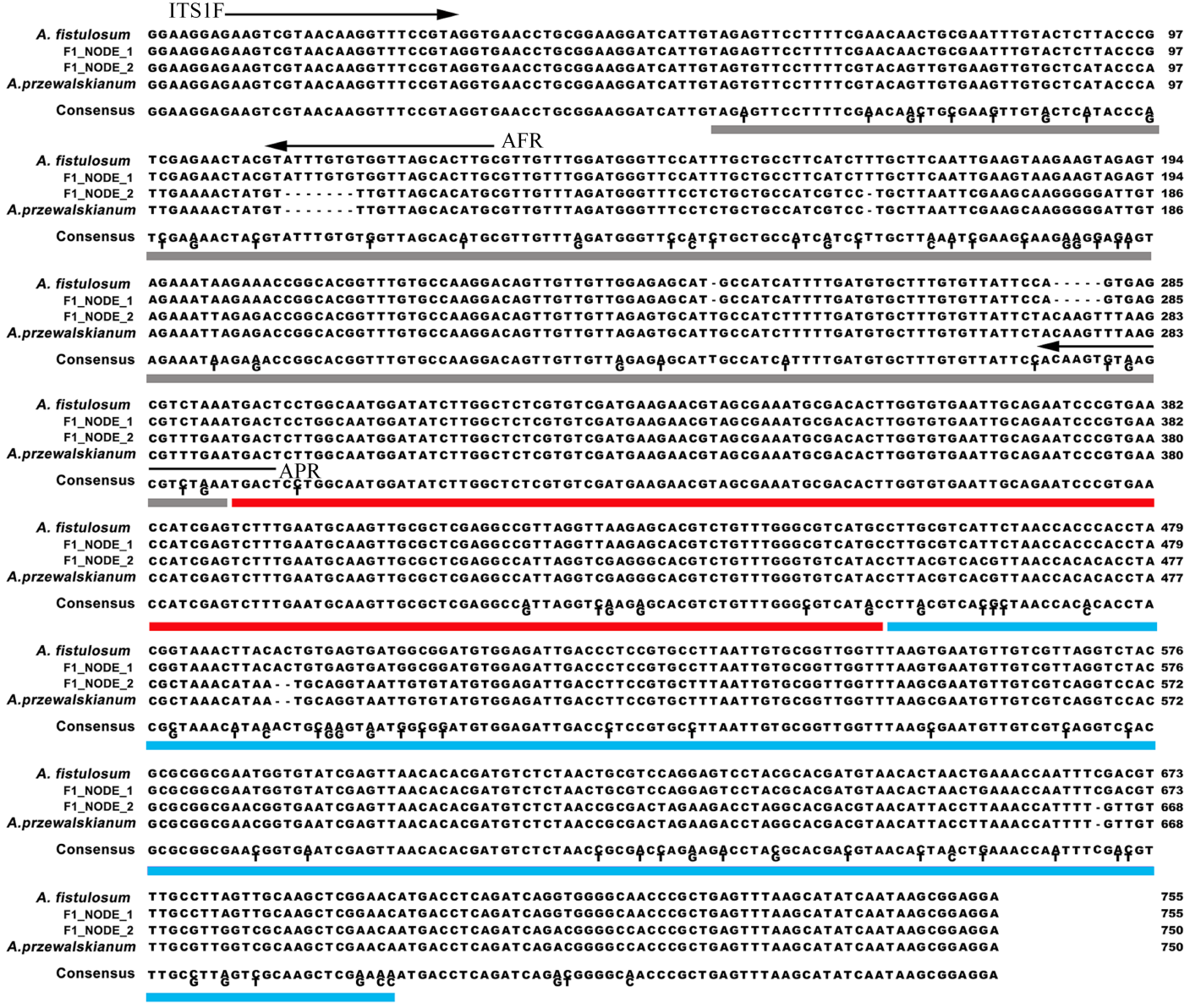
ITS sequence alignment analysis between two parents and F1 hybrid The arrows indicate the binding site of MAPI_1 marker primers; The gray, red, and blue underlined areas are ITS1, 5.8S, and ITS2, respectively; A. fistulosum, A. przewalskianum, F1_NODE_1, and F1_NODE_2 are ITS sequences of A. fistulosum, A. przewalskianum, and two haplotypes, respectively"

Table 3

Analysis of DNA sequence polymorphism of two ITS haplotypes (Ap and Af)"

参数Parameter ITS1 5.8S ITS2 ITS1-5.8S-ITS2
长度Length (bp) 245 160 242 647
多态性位点数No.of polymorphic sites (S) 40 7 39 86
突变总数Total number of mutations (Eta) 40 7 39 86
每个位点核苷酸多样性Nucleotide diversity per site (Pi) 0.17316 0.04375 0.16318 0.13651
插入缺失位点总数Total number of InDel sites 14 0 3 17
每个位点的插入缺失多样性InDel diversity per site Pi(i) 0.01633 0 0.00826 0.00927

Fig. 4

Identification of F1 hybrid by marker MAPI_1 P1 and P2 were A. fistulosum (♀) and A. przewalskianum (♂), respectively; whereas 1-36 denoted 36 F1 hybrids"

Fig. 5

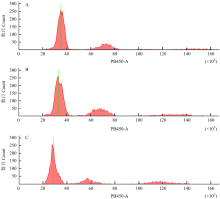
Flow cytometry analysis of relative DNA content of the parents and the selected F1-16 hybrid lines A: A. fistulosum; B: F1-16; C: A. przewalskianum; PB450-A: PB450-A fluorescent channel"

Fig. 6

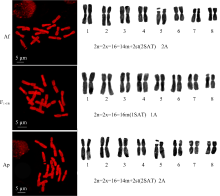
Karyotype analysis of parents and hybrid F1-16"

Table 4

The morphological characteristics of F1 plant"

性状
Characteristics
营养生长期Vegetative growth stage 抽薹开花期Bolting and flowering stage
Af Ap Af×Ap Af Ap Af×Ap
株高Height (cm) 68.28±6.60a 36.18±2.91b 68.05±6.70a 70.18±4.23a 37.82±3.85b 70.65±5.09a
平均分蘖数Average tiller number 1.60±0.52c 5.70±1.95b 10.80±4.94a 1.60±0.52c 8.60±2.22b 17.50±9.97a
叶片最大直径Leaf maximum diameter (cm) 1.69±0.35a 0.18±0.04c 0.39±0.06b 2.04±0.60a 0.26±0.12b 0.50±0.35b
假茎长Pseudostem length (cm) 26.15±3.52a 15.95±2.75c 22.04±4.35b 30.01±6.40a 16.35±3.34c 25.04±3.97b
假茎粗Pseudostem diameter (cm) 2.06±0.37a 0.23±0.12c 1.62±0.37b 2.11±0.45a 0.26±0.11c 1.63±0.34b
单分蘖群重Single tiller group weight (g) 234.62±35.94a 33.32±4.75b 226.32±16.91a 277.42±25.54b 36.32±4.82c 387.52±62.60a
最大薹高Maximum bolt height (cm) / / / 82.39±9.50a 35.34±6.38b 77.02±4.22a
最大薹粗Maximum bolt diameter (cm) / / / 1.98±0.49a 0.28±0.04c 0.66±0.11b

Fig. 7

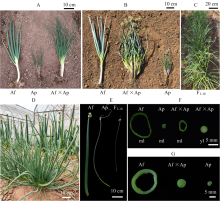
Morphological characteristics of two parents and F1 plants A: Morphological comparison of A. fistulosum, A. przewalskianum, and F1 during the nutritional growth period; B: Comparison of the morphology of A. fistulosum, F1, and A. przewalskianum during the flowering period; C: Bolting F1-16 asexual line; D: F1-16 tiller group; E: In vitro bolting stem of A. fistulosum, A. przewalskianum and F1; F: Solid and hollow cylindrical leaf, ml: Mature leaf, yl: Young leaf; G: Bolting stem of solid and hollow"

Fig. 8

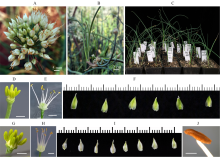
Morphology and bulbils of hybrid F1 flower organs A: The inflorescence of F1 hybrid; B: Secondary scapes and aerial bulbils seedlings; C: Transplanted aerial bulbil seedlings; D-F: 6 stamens and tepals; G-I: 8 stamens and tepals; J: Anthers"

Fig. 9

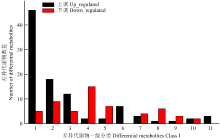
Classification and statistics of significant differential metabolites between F1 and parents 1: Flavonoids; 2: Phenolic acids; 3: Lignans and Coumarins; 4: Alkaloids; 5: Lipids; 6: Nucleotides and derivatives; 7: Terpenoids; 8: Amino acids and derivatives; 9: Organic acids; 10: Quinones; 11: Others"

Table 5

Classification and analysis of metabolites obtained and lost in hybrid F1"

代谢物索引
Metabolite index
物质
Compounds
一级分类
Class I
获得/丢失+/-
mws2118 根皮苷Phloretin-2'-O-glucoside (Phlorizin) 黄酮Flavonoids +
mws0629 L-天冬氨酰-L-苯丙氨酸
L-Aspartyl-L-Phenylalanine
氨基酸及其衍生物
Amino acids and derivatives
-
Wafn002874 4-O-(4'-O-α-D-吡喃葡萄糖基)咖啡酰奎尼酸
4-O-(4'-O-alpha-D-Glucopyranosyl) caffeoylquinic acid
酚酸类
Phenolic acids
-
MWS1830 水杨酸乙酯Ethyl salicylate 酚酸类Phenolic acids -
Zmcp004218 矢车菊素-3-O-(6''-O-阿魏酰)槐糖苷-5-O-葡萄糖苷
Cyanogenin-3-O-(6''-O-feruloyl) sophorosine-5-O-glucoside
黄酮Flavone -
Lacn007285 6'''-O-乙酰基去氢黄柏苷 6'''- O-Acetyl dehydroquercetin 黄酮Flavone -
Wasn003353 葡萄糖基6-羟基-2,6-二甲基-2E,7-辛二烯酸
Glucosyl 6-hydroxy-2,6-dimethyl-2E, 7-octadienoic acid
其他类
Others
-
Qagp006800 枸杞酰胺B Goji berry amide B 生物碱Alkaloid -
Zbsp007466 N-反式-桂皮酸酰对羟基苯乙胺 N-trans cinnamoyl p-hydroxyphenylethylamine 生物碱Alkaloid -
Wagp007639 N-(4-羟基苯乙基)肉桂酰胺 N-(4-hydroxyphenethyl) cinnamamide 生物碱Alkaloid -
Wcjp001278 6-Hydroxycrinamidine 生物碱Alkaloid -
MWSslk217 苦蒿素Blinin 萜类Terpenoids -
pmp001054 异栀子苷Isogeniposide 萜类Terpenoids -
Cmqn004417 7(R)-正丁基莫罗忍冬苷 7(R)-n-butyl Moro honeysuckle glycoside 萜类Terpenoids -
pmn001505 齐墩果酸-3-O-木糖基(1→3)葡萄糖醛酸苷 Oleanolic acid-3-O-xylosyl (1→3) glucuronide 萜类Terpenoids -
Cmyp003257 淫羊藿次苷B1 Epimedium glycoside B1 萜类Terpenoids -
Wacn005438 羟基十五碳烯酸葡萄糖苷 Hydroxypentadecenoic acid glucoside 脂质Lipid -

Fig. 10

Development of molecular markers for species and hybrid identification"

[1]
LI Q Q, ZHOU S D, HE X J, YU Y, ZHANG Y C, WEI X Q. Phylogeny and biogeography of Allium (Amaryllidaceae: Allieae) based on nuclear ribosomal internal transcribed spacer and chloroplast rps16 sequences, focusing on the inclusion of species endemic to China. Annals of Botany, 2010, 106(5): 709-733.

doi: 10.1093/aob/mcq177
[2]
The Angiosperm Phylogeny Group. An update of the Angiosperm Phylogeny Group classification for the orders and families of flowering plants: APG IV. Botanical Journal of the Linnean Society, 2016, 181(1): 1-20.

doi: 10.1111/boj.2016.181.issue-1
[3]
岳丽昕, 王清华, 刘泽洲, 孔素萍, 高莉敏. 大葱雄性不育花药败育的形态学特征和细胞学研究. 中国蔬菜, 2023(9): 58-68.
YUE L X, WANG Q H, LIU Z Z, KONG S P, GAO L M. Morphological characteristics of Welsh onion(Allium fistulosum L.) male sterile anther abortion and studies on cytology. China Vegetables, 2023(9): 58-68. (in Chinese)
[4]
FU X, XIE D F, ZHOU Y Y, CHENG R Y, ZHANG X Y, ZHOU S D, HE X J. Phylogeny and adaptive evolution of subgenus Rhizirideum (Amaryllidaceae, Allium) based on plastid genomes. BMC Plant Biology, 2023, 23(1): 70.

doi: 10.1186/s12870-022-03993-z
[5]
YANG J, KIM S H, GIL H Y, CHOI H J, KIM S C. New insights into the phylogenetic relationships among wild Onions (Allium, Amaryllidaceae), with special emphasis on the subgenera Anguinum and Rhizirideum, as revealed by plastomes. Frontiers in Plant Science, 2023, 14: 1124277.

doi: 10.3389/fpls.2023.1124277
[6]
YAO B Q, DENG J M, LIU J Q. Variations between diploids and tetraploids of Allium przewalskianum, an important vegetable and/or condiment in the Himalayas. Chemistry & Biodiversity, 2011, 8(4): 686-691.

doi: 10.1002/cbdv.v8.4
[7]
朗杰, 王陆州, 关志华, 德庆措姆, 王忠红. 青甘韭花叶开发利用现状与营养品质分析. 植物遗传资源学报, 2018, 19(1): 96-102.

doi: 10.13430/j.cnki.jpgr.2018.01.011
LANG J, WANG L Z, GUAN Z H, DEQING C M, WANG Z H. The development and utilization status and nutritional quality analysis of flower & leaf of Allium przewalskianum Regel. Journal of Plant Genetic Resources, 2018, 19(1): 96-102. (in Chinese)

doi: 10.13430/j.cnki.jpgr.2018.01.011
[8]
中国科学院中国植物志编辑委员会. 中国植物志:第十四卷. 北京: 科学出版社, 1980.
Editorial Committee of the Flora of China of Chinese Academy of Sciences. Flora Reipublicae Popularis Sinicae: Volume 14. Beijing: Science Press, 1980. (in Chinese)
[9]
崔勰奎. 青甘韭的细胞和分子地理学研究[D]. 兰州: 兰州大学, 2008.
CUI X K. Cytogeography and molecular phylogeography of Allium przewalskianum Regel (Liliaceae)[D]. Lanzhou: Lanzhou University, 2008. (in Chinese)
[10]
姚步青. 盐芥和青甘韭表型可塑性研究[D]. 兰州: 兰州大学, 2011.
YAO B Q. Study on phenotypic plasticity of salt mustard and leek[D]. Lanzhou: Lanzhou University, 2011. (in Chinese)
[11]
吴青君, 于毅, 谷希树, 刘峰, 宋敦伦, 魏国树, 贺敏, 刘长仲, 许国庆, 张友军. 韭菜根蛆的发生危害及综合防治技术研究——公益性行业(农业)科研专项“作物根蛆类害虫综合防治技术研究与示范”进展. 应用昆虫学报, 2016, 53(6): 1165-1173.
WU Q J, YU Y, GU X S, LIU F, SONG D L, WEI G S, HE M, LIU C Z, XU G Q, ZHANG Y J. The occurrence of, and damage caused by, root maggots on Chinese chives and integrated management techniques to control these pests. Chinese Journal of Applied Entomology, 2016, 53(6): 1165-1173. (in Chinese)
[12]
BENKE A P, MAHAJAN V, MANJUNATHAGOWDA D C, MOKAT D N. Interspecific hybridization in Allium crops: status and prospectus. Genetic Resources and Crop Evolution, 2022, 69(1): 1-9.

doi: 10.1007/s10722-021-01283-5
[13]
EMSWELLER S L, JONES H A. Meiosis in Allium fistulosum, Allium cepa, and their hybrid. Hilgardia, 1935, 9(5): 275-294.
[14]
EMSWELLER S L, JONES H A. An interspecific hybrid in Allium. Hilgardia, 1935, 9(5): 265-273.
[15]
YAMAMOTO M. Molecular cytogenetic and epigenetic components of crossing barriers and peculiar reproduction ability in Allium hybrids. The Nucleus, 2015, 58(3): 165-172.

doi: 10.1007/s13237-015-0153-0
[16]
KIEŁKOWSKA A, ADAMUS A, GENETYKI K, NASIENNICTWA H. Morphological, cytological and molecular evaluation of interspecific F1 (A. galanthum × A. cepa) hybrids. Biotechnologia, 2012, 2(89): 146-155.
[17]
YAMASHITA K, ARITA H, TASHIRO Y. Cytoplasm of a wild species, Allium galanthum Kar. et Kir., is useful for developing the male sterile line of A. fistulosum L. Journal of the Japanese Society for Horticultural Science, 1999, 68(4): 788-797.
[18]
CHUDA A, KŁOSOWSKA K, ADAMUS A. Morphological, cytological and embryological characterization of F1 A. cepa × A. roylei Hybrids. Acta Biologica Cracoviensia Series Botanica, 2015, 57(2): 98-105.
[19]
YANAGINO T, SUGAWARA E, WATANABE M, TAKAHATA Y. Production and characterization of an interspecific hybrid between leek and garlic. Theoretical and Applied Genetics, 2003, 107(1): 1-5.

pmid: 12835927
[20]
UMEHARA M, SUEYOSHI T, SHIMOMURA K, NAKAHARA T. Production of interspecific hybrids between Allium fistulosum L. and A. macrostemon Bunge through ovary culture. Plant Cell, Tissue and Organ Culture, 2006, 87(3): 297-304.

doi: 10.1007/s11240-006-9167-2
[21]
KELLER E R J, SCHUBERT I, FUCHS J, MEISTER A. Interspecific crosses of onion with distant Allium species and characterization of the presumed hybrids by means of flow cytometry, karyotype analysis and genomic in situ hybridization. Theoretical and Applied Genetics, 1996, 92(3): 417-424.

doi: 10.1007/BF00223688
[22]
KHRUSTALEVA L I, KIK C. Introgression of Allium fistulosum into A. cepa mediated by A. roylei. Theoretical and Applied Genetics, 2000, 100(1): 17-26.

doi: 10.1007/s001220050003
[23]
ALBINI S M, JONES G H. Synaptonemal complex spreading in Allium cepa and Allium fistulosum: III. The F1hybrid. Genome, 1990, 33(6): 854-866.

doi: 10.1139/g90-129
[24]
PEFFLEY E B. Evidence for chromosomal differentiation of Allium fistulosum and A. cepa. Journal of the American Society for Horticultural Science, 1986, 111(1): 126-129.

doi: 10.21273/JASHS.111.1.126
[25]
PEFFLEY E B, MANGUM P D. Introgression of Allium fistulosum L. into Allium cepa L.:Cytogenetic evidence. Theoretical and Applied Genetics, 1990, 79(1): 113-118.

doi: 10.1007/BF00223796
[26]
STEVENSON M, ARMSTRONG S J, FORD-LLOYD B V, JONES G H. Comparative analysis of crossover exchanges and Chiasmata in Allium cepa × fistulosum after genomic in situ hybridization (GISH). Chromosome Research, 1998, 6(7): 567-574.

doi: 10.1023/A:1009296826942
[27]
ULLOA-G M, CORGAN J N, DUNFORD M. Chromosome characteristics and behavior differences in Allium fistulosum L., A. cepa L., their F1 hybrid, and selected backcross progeny. Theoretical and Applied Genetics, 1994, 89(5): 567-571.

doi: 10.1007/BF00222449
[28]
ULLOA-G M, CORGAN J N, DUNFORD M. Evidence for nuclear-cytoplasmic incompatibility between Allium fistulosum and A. cepa. Theoretical and Applied Genetics, 1995, 90(5): 746-754.

doi: 10.1007/BF00222143
[29]
DE VRIES J N, WIETSMA W A, DE VRIES T. Introgression of leaf blight resistance from Allium roylei Stearn into onion (A. cepa L.). Euphytica, 1992, 62(2): 127-133.

doi: 10.1007/BF00037938
[30]
GALVÁN G A, WIETSMA W A, PUTRASEMEDJA S, PERMADI A H, KIK C. Screening for resistance to anthracnose (Colletotrichum gloeosporioides Penz.) in Allium cepa and its wild relatives. Euphytica, 1997, 95(2): 173-178.

doi: 10.1023/A:1002914225154
[31]
KHRUSTALEVA L, MARDINI M, KUDRYAVTSEVA N, ALIZHANOVA R, ROMANOV D, SOKOLOV P, MONAKHOS G. The power of genomic in situ hybridization (GISH) in interspecific breeding of bulb onion (Allium cepa L.) resistant to downy mildew (Peronospora destructor [Berk.] Casp.). Plants, 2019, 8(2): 36.

doi: 10.3390/plants8020036
[32]
KIM S, KIM C W, CHOI M S, KIM S. Development of a simple PCR marker tagging the Allium roylei fragment harboring resistance to downy mildew (Peronospora destructor) in onion (Allium cepa L.). Euphytica, 2016, 208(3): 561-569.

doi: 10.1007/s10681-015-1601-2
[33]
KOFOET A, KIK C, WIETSMA W A, DE VRIES J N. Inheritance of resistance to downy mildew (Peronospora destructor [Berk.] Casp.) from Allium roylei stearn in the backcross Allium cepa L. × (A. roylei ×A. cepa). Plant Breeding, 1990, 105(2): 144-149.

doi: 10.1111/pbr.1990.105.issue-2
[34]
SCHOLTEN O E, VAN HEUSDEN A W, KHRUSTALEVA L I, BURGER-MEIJER K, MANK R A, ANTONISE R G C, HARREWIJN J L, VAN HAECKE W, OOST E H, PETERS R J, et al. The long and winding road leading to the successful introgression of downy mildew resistance into onion. Euphytica, 2007, 156(3): 345-353.

doi: 10.1007/s10681-007-9383-9
[35]
SCHOLTEN O E, VAN KAAUWEN M P W, SHAHIN A, HENDRICKX P M, PAUL KEIZER L C, BURGER K, VAN HEUSDEN A W, VAN DER LINDEN C G, VOSMAN B. SNP-markers in Allium species to facilitate introgression breeding in onion. BMC Plant Biology, 2016, 16(1): 187.

doi: 10.1186/s12870-016-0879-0
[36]
VAN DER MEER Q P, DE VRIES J N. An interspecific cross between Allium roylei Stearn and Allium cepa L., and its backcross to A. cepa. Euphytica, 1990, 47(1): 29-31.

doi: 10.1007/BF00040359
[37]
VAN HEUSDEN A W, VAN OOIJEN J W, VRIELINK-VAN GINKEL R, VERBEEK W H J, WIETSMA W A, KIK C. A genetic map of an interspecific cross in Allium based on amplified fragment length polymorphism (AFLPTM) markers. Theoretical and Applied Genetics, 2000, 100(1): 118-126.

doi: 10.1007/s001220050017
[38]
KHRUSTALEVA L I, KIK C. Cytogenetical studies in the bridge cross Allium cepa× (A. fistulosum×A. roylei). Theoretical and Applied Genetics, 1998, 96(1): 8-14.

doi: 10.1007/s001220050702
[39]
田保华, 梁毅, 陈丽, 王永勤, 裴雁曦. 洋葱大葱种间杂种鉴定方法建立与应用. 植物遗传资源学报, 2011, 12(4): 657-661.

doi: 10.13430/j.cnki.jpgr.2011.04.029
TIAN B H, LIANG Y, CHEN L, WANG Y Q, PEI Y X. Establishand applications of identification interspecific hybrids between onion and Welsh onion. Journal of Plant Genetic Resources, 2011, 12(4): 657-661. (in Chinese)
[40]
王永勤, 田保华, 梁毅. 大葱和洋葱种间杂种的获得及其特性. 中国农业科学, 2010, 43(10): 2115-2121. doi: 10.3864/j.issn.0578-1752.2010.10.018.
WANG Y Q, TIAN B H, LIANG Y. Production and characterization of interspecific hybrids between welsh onion and onion. Scientia Agricultura Sinica, 2010, 43(10): 2115-2121. doi: 10.3864/j.issn.0578-1752.2010.10.018. (in Chinese)
[41]
杨天慧, 魏佑营, 王超, 王馨笙, 刘莎莎, 段曦. 大葱、洋葱远缘杂交后代及其亲本挥发性成分分析. 山东农业科学, 2010(6): 35-39.
YANG T H, WEI Y Y, WANG C, WANG X S, LIU S S, DUAN X. Analysis of volatile components in Welsh onion, onion and their interspecific hybridization progenies. Shandong Agricultural Sciences, 2010(6): 35-39. (in Chinese)
[42]
杨天慧, 魏佑营, 王馨笙, 刘莎莎, 段曦, 武文君. 大葱、洋葱远缘杂交后代植物学性状、品质研究. 山东农业大学学报(自然科学版), 2010, 41(2): 181-185, 208.
YANG T H, WEI Y Y, WANG X S, LIU S S, DUAN X, WU W J. Analysis of botanical characters and quality traits in the interspecific hybridization between welshonion and onion. Journal of Shandong Agricultural University (Natural Science Edition), 2010, 41(2): 181-185, 208. (in Chinese)
[43]
FRIESEN N, FRITSCH R M, BLATTNER F R. Phylogeny and new intrageneric classification of Allium (Alliaceae) based on nuclear ribosomal DNA ITS sequences. Aliso, 2006, 22(1): 372-395.

doi: 10.5642/aliso
[44]
HUO Y M, GAO L M, LIU B J, YANG Y Y, KONG S P, SUN Y Q, YANG Y H, WU X. Complete chloroplast genome sequences of four Allium species: comparative and phylogenetic analyses. Scientific Reports, 2019, 9: 12250.

doi: 10.1038/s41598-019-48708-x
[45]
KHASSANOV F O. Taxonomical and ethnobotanical aspects of Allium species from middle asia with particular reference to subgenus Allium// The Allium Genomes. Cham: Springer International Press, 2018: 11-21.
[46]
WHEELER E J, MASHAYEKHI S, MCNEAL D W, COLUMBUS J T, PIRES J C. Molecular systematics of Allium subgenus Amerallium (Amaryllidaceae) in North America. American Journal of Botany, 2013, 100(4): 701-711.

doi: 10.3732/ajb.1200641
[47]
GAWEL N J, JARRET R L. A modified CTAB DNA extraction procedure for Musa and Ipomoea. Plant Molecular Biology Reporter, 1991, 9(3): 262-266.

doi: 10.1007/BF02672076
[48]
CHEN S F, ZHOU Y Q, CHEN Y R, GU J. Fastp: An ultra-fast all-in-one FASTQ preprocessor. Bioinformatics, 2018, 34(17): i884-i890.
[49]
BANKEVICH A, NURK S, ANTIPOV D, GUREVICH A A, DVORKIN M, KULIKOV A S, LESIN V M, NIKOLENKO S I, PHAM S, PRJIBELSKI A D, et al. SPAdes: A new genome assembly algorithm and its applications to single-cell sequencing. Journal of Computational Biology, 2012, 19(5): 455-477.

doi: 10.1089/cmb.2012.0021 pmid: 22506599
[50]
LANGMEAD B, SALZBERG S L. Fast gapped-read alignment with Bowtie 2. Nature Methods, 2012, 9(4): 357-359.

doi: 10.1038/nmeth.1923 pmid: 22388286
[51]
DANECEK P, BONFIELD J K, LIDDLE J, MARSHALL J, OHAN V, POLLARD M O, WHITWHAM A, KEANE T, MCCARTHY S A, DAVIES R M, et al. Twelve years of SAMtools and BCFtools. GigaScience, 2021, 10(2): giab008.
[52]
LARKIN M A, BLACKSHIELDS G, BROWN N P, CHENNA R, MCGETTIGAN P A, MCWILLIAM H, VALENTIN F, WALLACE I M, WILM A, LOPEZ R, et al. Clustal W and Clustal X version 2.0. Bioinformatics, 2007, 23(21): 2947-2948.
[53]
ROZAS J, FERRER-MATA A, SÁNCHEZ-DELBARRIO J C, GUIRAO-RICO S, LIBRADO P, RAMOS-ONSINS S E, SÁNCHEZ-GRACIA A. DnaSP 6: DNA sequence polymorphism analysis of large data sets. Molecular Biology and Evolution, 2017, 34(12): 3299-3302.

doi: 10.1093/molbev/msx248 pmid: 29029172
[54]
WATERHOUSE A M, PROCTER J B, MARTIN D M A, CLAMP M, BARTON G J. Jalview Version 2—a multiple sequence alignment editor and analysis workbench. Bioinformatics, 2009, 25(9): 1189-1191.

doi: 10.1093/bioinformatics/btp033
[55]
UNTERGASSER A, CUTCUTACHE I, KORESSAAR T, YE J, FAIRCLOTH B C, REMM M, ROZEN S G. Primer3—new capabilities and interfaces. Nucleic Acids Research, 2012, 40(15): e115.

doi: 10.1093/nar/gks596
[56]
王海平, 李锡香. 葱种质资源描述规范和数据标准. 北京: 中国农业出版社, 2008.
WANG H P, LI X X. Descriptors and Data Standard for Welsh Onion (Allium fistulosum). Beijing: China Agriculture Press, 2008. (in Chinese)
[57]
SINGH R J. Plant Cytogenetics (3rd). Boca Raton: CRC Press, 2016.
[58]
LEVAN A, FREDGA K, SANDBERG A A. Nomenclature for centromeric position on chromosomes. Hereditas, 1964, 52(2): 201-220.

doi: 10.1111/j.1601-5223.1964.tb01953.x
[59]
STEBBINS G L. Chromosomal Evolution in Higher Plants. London: Edward Arnold Press. 1971: 12-150.
[60]
刘雪莹, 李君平, 范双喜, 韩莹琰. 不同品种叶用莴苣感官品质评价. 中国蔬菜, 2016(3): 26-30.
LIU X Y, LI J P, FAN S X, HAN Y Y. Quality evaluation of different Lactuca sativa L.varieties by sensory organs. China Vegetables, 2016(3): 26-30. (in Chinese)
[61]
HERDEN T, HANELT P, FRIESEN N. Phylogeny of Allium L. subgenus Anguinum (G. Don. ex W.D.J. Koch) N.Friesen (Amaryllidaceae). Molecular Phylogenetics and Evolution, 2016, 95: 79-93.

doi: 10.1016/j.ympev.2015.11.004
[62]
ZHU S Y, TANG S W, TAN Z J, YU Y T, DAI Q Z, LIU T M. Comparative transcriptomics provide insight into the morphogenesis and evolution of fistular leaves in Allium. BMC Genomics, 2017, 18(1): 60.

doi: 10.1186/s12864-016-3474-8
[63]
SHARMA B B, KALIA P, SINGH D, SHARMA T R. Introgression of black rot resistance from Brassica carinata to cauliflower (Brassica oleracea botrytis group) through embryo rescue. Frontiers in Plant Science, 2017, 8: 1225.

doi: 10.3389/fpls.2017.01225
[64]
SHENG X G, BRANCA F, ZHAO Z Q, WANG J S, YU H F, SHEN Y S, GU H H. Identification of black rot resistance in a wild Brassica species and its potential transferability to cauliflower. Agronomy, 2020, 10(9): 1400.

doi: 10.3390/agronomy10091400
[65]
原小燕, 符明联, 张云云, 刘珏, 铁朝良, 李燕, 王绍能. 油菜和甘芥杂交后代薹花期耐旱性鉴定. 中国油料作物学报, 2018, 40(1): 84-93.
YUAN X Y, FU M L, ZHANG Y Y, LIU J, TIE C L, LI Y, WANG S N. Drought tolerance of rapeseed and hybrids of Brassica napus and Brassica juncea at budding and flowering periods. Chinese Journal of Oil Crop Sciences, 2018, 40(1): 84-93. (in Chinese)
[66]
候林慧, 郑赟, 荣二花, 吴玉香. 陆地棉与瑟伯氏棉远缘杂交后代性状鉴定与遗传分析. 生物技术通报, 2023, 39(12): 128-135.

doi: 10.13560/j.cnki.biotech.bull.1985.2023-0539
HOU L H, ZHENG Y, RONG E H, WU Y X. Character identification and genetic analysis of progeny from distant hybrid between Gossypium hirsutum and G. thurberi. Biotechnology Bulletin, 2023, 39(12): 128-135. (in Chinese)
[67]
薛金燕, 刘益勇, 吴隽香, 徐照璨, 张宇, 成玉富, 杨旭. 栽培茄 (Solanum melongena L.)与喀西茄 (Solanum khasianum C.B.Clarke) F1杂交种的获得与鉴定. 中国蔬菜, 2020, 1(10): 62-67.
XUE J Y, LIU Y Y, WU J X, XU Z C, ZHANG Y, CHENG Y F, YANG X. Obtain and Identification of F1 hybrid of Solanum melongena L. and Solanum khasianum C. B. Clarke. China Vegetables, 2020, 1(10): 62-67. (in Chinese)
[68]
VAN DER VALK P, DE VRIES S E, EVERINK J T, VERSTAPPEN F, DE VRIES J N. Pre- and post-fertilization barriers to backcrossing the interspecific hybrid between Allium fistulosum L. and A. cepa L. with A. cepa. Euphytica, 1991, 53(3): 201-209.

doi: 10.1007/BF00023272
[69]
孙亚玲, 李瑞平, 王振宝, 张庶, 刘冰江, 霍雨猛. 洋葱种子消毒和无菌苗培养新方法. 生物技术通报, 2023, 39(4): 212-220.

doi: 10.13560/j.cnki.biotech.bull.1985.2022-0983
SUN Y L, LI R P, WANG Z B, ZHANG S, LIU B J, HUO Y M. A new method for onion seed disinfection and aseptic seedling culture. Biotechnology Bulletin, 2023, 39(4): 212-220. (in Chinese)
[70]
CRYDER C M, CORGAN J N, URQUHART N S, CLASON D. Isozyme analysis of progeny derived from (Allium fistulosum × Allium cepa) × Allium cepa. Theoretical and Applied Genetics, 1991, 82(3): 337-345.

doi: 10.1007/BF02190620
[71]
GONZALEZ L G, FORD-LLOYD B V. Facilitation of wide-crossing through embryo rescue and pollen storage in interspecific hybridization of cultivated Allium species. Plant Breeding, 1987, 98(4): 318-322.

doi: 10.1111/pbr.1987.98.issue-4
[72]
INADA I, ENDO M. Cytogenetic relationship between Allium fistulosum L. and A. schoenoprasum L.. Journal of the Japanese Society for Horticultural Science, 1999, 68(5): 960-966.
[73]
HUANG J B, YANG L, YANG L, WU X Y, CUI X S, ZHANG L L, HUI J Y, ZHAO Y M, YANG H M, LIU S J, et al. Stigma receptors control intraspecies and interspecies barriers in Brassicaceae. Nature, 2023, 614(7947): 303-308.

doi: 10.1038/s41586-022-05640-x
[74]
BALDWIN B G, SANDERSON M J, PORTER J M, WOJCIECHOWSKI M F, CAMPBELL C S, DONOGHUE M J. The ITS region of nuclear ribosomal DNA: A valuable source of evidence on angiosperm phylogeny. Annals of the Missouri Botanical Garden, 1995, 82(2): 247-277.

doi: 10.2307/2399880
[75]
ABUGALIEVA S, VOLKOVA L, GENIEVSKAYA Y, IVASCHENKO A, KOTUKHOV Y, SAKAUOVA G, TURUSPEKOV Y. Taxonomic assessment of Allium species from Kazakhstan based on ITS and matK markers. BMC Plant Biology, 2017, 17(2): 258.

doi: 10.1186/s12870-017-1194-0
[76]
DUBOUZET J G, SHINODA K. Relationships among old and new world Alliums according to ITS DNA sequence analysis. Theoretical and Applied Genetics, 1999, 98(3): 422-433.

doi: 10.1007/s001220051088
[77]
GURUSHIDZE M, MASHAYEKHI S, BLATTNER F R, FRIESEN N, FRITSCH R M. Phylogenetic relationships of wild and cultivated species of Allium section Cepa inferred by nuclear rDNA ITS sequence analysis. Plant Systematics and Evolution, 2007, 269(3): 259-269.

doi: 10.1007/s00606-007-0596-0
[78]
MES T H, FRITSCH R M, POLLNER S, BACHMANN K. Evolution of the chloroplast genome and polymorphic ITS regions in Allium subg. Melanocrommyum. Genome, 1999, 42(2): 237-247.
[79]
GONZÁLEZ-RODRÍGUEZ A, OYAMA K. Leaf morphometric variation in Quercus affinis and Q. laurina (Fagaceae), two hybridizing Mexican red oaks. Botanical Journal of the Linnean Society, 2005, 147(4): 427-435.

doi: 10.1111/j.1095-8339.2004.00394.x
[80]
SONG Y G, DENG M, HIPP A L, LI Q S. Leaf morphological evidence of natural hybridization between two oak species (Quercusaus trocochinchinensis and Q. kerrii) and its implications for conservation management. European Journal of Forest Research, 2015, 134(1): 139-151.

doi: 10.1007/s10342-014-0839-x
[81]
WIEGAND K M. A taxonomist’s experience with hybrids in the wild. Science, 1935, 81(2094): 161-166.

doi: 10.1126/science.81.2094.161
[82]
邓衍明, 贾新平, 梁丽建. 观赏植物远缘杂交后代的鉴定方法. 核农学报, 2016, 30(7): 1308-1315.

doi: 10.11869/j.issn.100-8551.2016.07.1308
DENG Y M, JIA X P, LIANG L J. Identification methods of hybridity in ornamental plants distant hybridization. Journal of Nuclear Agricultural Sciences, 2016, 30(7): 1308-1315. (in Chinese)

doi: 10.11869/j.issn.100-8551.2016.07.1308
[83]
LU C C, CURRAH L, PEFFLEY E B. Somatic embryogenesis and plant regeneration in diploid Allium fistulosum × A. cepa F1 hybrid onions. Plant Cell Reports, 1989, 7(8): 696-700.

doi: 10.1007/BF00272064
[84]
BASTAKI S M A, OJHA S, KALASZ H, ADEGHATE E. Chemical constituents and medicinal properties of Allium species. Molecular and Cellular Biochemistry, 2021, 476(12): 4301-4321.

doi: 10.1007/s11010-021-04213-2
[85]
LIAO N Q, HU Z Y, MIAO J S, HU X D, LYU X L, FANG H T, ZHOU Y M, MAHMOUD A, DENG G C, MENG Y Q, et al. Chromosome-level genome assembly of bunching onion illuminates genome evolution and flavor formation in Allium crops. Nature Communications, 2022, 13: 6690.

doi: 10.1038/s41467-022-34491-3
[86]
LIU N, HU M M, LIANG H, TONG J, XIE L, WANG B J, JI Y H, HAN B B, HE H J, LIU M C, WU Z H. Physiological, transcriptomic, and metabolic analyses reveal that mild salinity improves the growth, nutrition, and flavor properties of hydroponic Chinese chive (Allium tuberosum Rottler ex Spr). Frontiers in Nutrition, 2022, 9: 1000271.

doi: 10.3389/fnut.2022.1000271
[87]
LIU N, TONG J, HU M M, JI Y H, WANG B J, LIANG H, LIU M C, WU Z H. Transcriptome landscapes of multiple tissues highlight the genes involved in the flavor metabolic pathway in Chinese chive (Allium tuberosum). Genomics, 2021, 113(4): 2145-2157.

doi: 10.1016/j.ygeno.2021.05.005 pmid: 33991618
[88]
TAO H, LI L Y, HE Y Q, ZHANG X Y, ZHAO Y, WANG Q M, HONG G J. Flavonoids in vegetables: improvement of dietary flavonoids by metabolic engineering to promote health. Critical Reviews in Food Science and Nutrition, 2024, 64(11): 3220-3234.

doi: 10.1080/10408398.2022.2131726
[89]
UMEHARA M, SUEYOSHI T, SHIMOMURA K, IWAI M, SHIGYO M, HIRASHIMA K, NAKAHARA T. Interspecific hybrids between Allium fistulosum and Allium schoenoprasum reveal carotene-rich phenotype. Euphytica, 2006, 148(3): 295-301.

doi: 10.1007/s10681-005-9029-8
[90]
路梦, 苏刚, 程菊, 陈建军, 周涛, 赵君利, 王静, 张莎莎, 马青龙, 谢小冬. 黄酮类化合物抗肿瘤活性及机制的研究进展. 华西药学杂志, 2023, 38(2): 236-240.
LU M, SU G, CHENG J, CHEN J J, ZHOU T, ZHAO J L, WANG J, ZHANG S S, MA Q L, XIE X D. Research progress on anti-tumor activity and mechanism of flavonoids. West China Journal of Pharmaceutical Sciences, 2023, 38(2): 236-240. (in Chinese)
[91]
钟宜科, 吴迪, 花晓丹, 赵彤, 王永霞. 黄酮类化合物抑菌作用研究进展. 中国食品添加剂, 2019, 30(8): 166-171.
ZHONG Y K, WU D, HUA X D, ZHAO T, WANG Y X. Progress in the study of antibacterial effect of flavonoids compounds. China Food Additives, 2019, 30(8): 166-171. (in Chinese)
[92]
马琮鉴, 高健美, 孔浩, 徐应淑. 根皮苷药理作用研究进展. 医药导报, 2020, 39(3): 360-364.

doi: 10.3870/j.issn.1004-0781.2020.03.019
MA C J, GAO J M, KONG H, XU Y S. Research progress of pharmacological effects of phlorizin. Herald of Medicine, 2020, 39(3): 360-364. (in Chinese)

doi: 10.3870/j.issn.1004-0781.2020.03.019
[1] LIU Fang, XU MengBei, WANG QiaoLing, MENG Qian, LI GuiMing, ZHANG HongJu, TIAN HuiDan, XU Fan, LUO Ming. Cloning and Functional Characterization of the Promoter of GhSLD1 Gene That Predominantly Expressed in Cotton Fiber [J]. Scientia Agricultura Sinica, 2023, 56(19): 3712-3722.
[2] MA YanBin, LI HuanLi, WEN Jin, ZHOU XianTing, QIN Xin, WANG Xia, WANG XinSheng, LI YanE. Identification of Molecular Characterizations for Transgenic Cotton R1-3 Line of Glyphosate Tolerance [J]. Scientia Agricultura Sinica, 2023, 56(17): 3277-3284.
[3] XUE YaPeng, DING YiBing, WANG YuZhuo, WANG XiaoDan, CAO XiaoNing, SANTRA Dipak K, CHEN Ling, QIAO ZhiJun, WANG RuiYun. Construction of DNA Molecular Identity Card of Core Germplasm of Broomcorn Millet in China Based on Fluorescence SSR [J]. Scientia Agricultura Sinica, 2023, 56(12): 2249-2261.
[4] DUAN CanXing,CAO YanYong,DONG HuaiYu,XIA YuSheng,LI Hong,HU QingYu,YANG ZhiHuan,WANG XiaoMing. Precise Characterization of Maize Germplasm for Resistance to Pythium Stalk Rot and Gibberella Stalk Rot [J]. Scientia Agricultura Sinica, 2022, 55(2): 265-279.
[5] AiHua WANG,HongYe MA,RongFei LI,ShiPin YANG,Rong QIAO,PeiLin ZHONG. Metabolic Analysis of Aroma Components in Two Interspecific Hybrids from the Cross of F.ananassa Duch. and Fragaria nilgerrensis Schlecht. [J]. Scientia Agricultura Sinica, 2021, 54(5): 1043-1054.
[6] WANG XuanXuan,LIU ChunYu,XIE BeiYu,ZHANG ShuShu,WANG DanYang,ZHU ZhenYuan. Extraction Technology, Preliminary Structure and α-glucosidase Inhibition of Polysaccharide with Alkaline-Extracted from Sugarcane Peel [J]. Scientia Agricultura Sinica, 2021, 54(12): 2653-2665.
[7] SHI GuoLiang,WU Qiang,YANG NianWan,HUANG Cong,LIU WanXue,QIAN WanQiang,WAN FangHao. Gene Cloning, Expression Pattern and Molecular Characterization of Chitin Deacetylase 2 in Cydia pomonella [J]. Scientia Agricultura Sinica, 2021, 54(10): 2105-2117.
[8] BI QiuYan,DANG ZhiHong,ZHU WeiQi,GAO ZhanLin,HAN XiuYing,ZHAO JianJiang,WANG WenQiao,LU Fen,WU Jie. Identification of Major Pathogenic Fungi of Soybean in Hebei Province and Screening of Control Fungicides [J]. Scientia Agricultura Sinica, 2021, 54(1): 71-85.
[9] DongHua LI,YaWei FU,ChenXi ZHANG,YanFang CAO,WenTing LI,ZhuanJian LI,XiangTao KANG,GuiRong SUN. Genome-Wide Identification and Characterization of Transposable Elements in Xichuan Black-Bone Chicken [J]. Scientia Agricultura Sinica, 2020, 53(7): 1491-1500.
[10] LI Jie,JIA XuChao,ZHANG RuiFen,LIU Lei,CHI JianWei,HUANG Fei,DONG LiHong,ZHANG MingWei. Isolation, Structural Characterization and Antioxidant Activity of Black Sesame Melanin [J]. Scientia Agricultura Sinica, 2020, 53(12): 2477-2492.
[11] ZHOU Rong,LIU Pan,LI DongHua,ZHANG YanXin,WANG LinHai,ZHANG XiuRong,WEI Xin. Cloning and Functional Characterization of Sesame SiSAD Gene [J]. Scientia Agricultura Sinica, 2019, 52(10): 1678-1685.
[12] HUANG YuQian, YANG JinFeng, LIANG ChunHao, CHEN ShenPingYi, LIU XinYu, GENG KeRui, YAO YuChen, ZHANG Yu, HAN XiaoRi. Effects of Vanillic Acid on Seed Germination, Seedling Growth and Rhizosphere Microflora of Peanut [J]. Scientia Agricultura Sinica, 2018, 51(9): 1735-1745.
[13] ZHEN HaoYang, PENG Huan, KONG LingAn, HONG BaoYuan, ZHU GuiLan, WANG RuiHui, PENG DeLiang, WEN YanHua. Heterodera sojae, a New Cyst Nematode Record in China and Its Parasitism to Legume Crops [J]. Scientia Agricultura Sinica, 2018, 51(15): 2913-2924.
[14] WANG Juan, DENG Hong, LIU Yun, GUO YuRong, MENG YongHong. Enzymatic Reaction System and Structural Characterization of Phloridzin Oxidation Products POP2 [J]. Scientia Agricultura Sinica, 2018, 51(1): 182-190.
[15] YAN XiaoPing, ZHAO Dan, GUO Wei, WANG Wei, ZHANG YaKun, GAO YuJie, ZHAO KunLi. Cloning, Expression and Enzymatic Characterization of Chitin Deacetylases from Hyphantria cunea [J]. Scientia Agricultura Sinica, 2017, 50(5): 849-858.
Viewed
Full text


Abstract

Cited

  Shared   
  Discussed   
No Suggested Reading articles found!