Scientia Agricultura Sinica ›› 2026, Vol. 59 ›› Issue (14): 3147-3161.doi: 10.3864/j.issn.0578-1752.2026.14.012

• HORTICULTURE • Previous Articles     Next Articles

Prediction and Evaluation of Suitable Habitats for Carya illinoinensis in China Based on an Optimized MaxEnt Model and Land Use Types

ZHAO Ning1(), ZHANG JiYu2, WANG Rui3, YUAN ShuangJin3, CHEN JinHui4, LI ShaSha1, CHEN ZhiKun1()   

  1. 1 Xi'an Botanical Garden of Shaanxi Province (Institute of Botany of Shaanxi Province)/Shaanxi Key Laboratory of Qinling Ecological Security, Xi'an 710061
    2 Institute of Botany, Jiangsu Province and Chinese Academy of Sciences, Nanjing 210014
    3 Shaanxi Provincial Forestry Science and Technology Promotion and International Project Management Center, Xi'an 710082
    4 Ankang Hanbin District Forestry Bureau, Ankang 725000, Shaanxi
  • Received:2025-08-17 Accepted:2026-04-08 Online:2026-07-16 Published:2026-07-21
  • Contact: CHEN ZhiKun

Abstract:

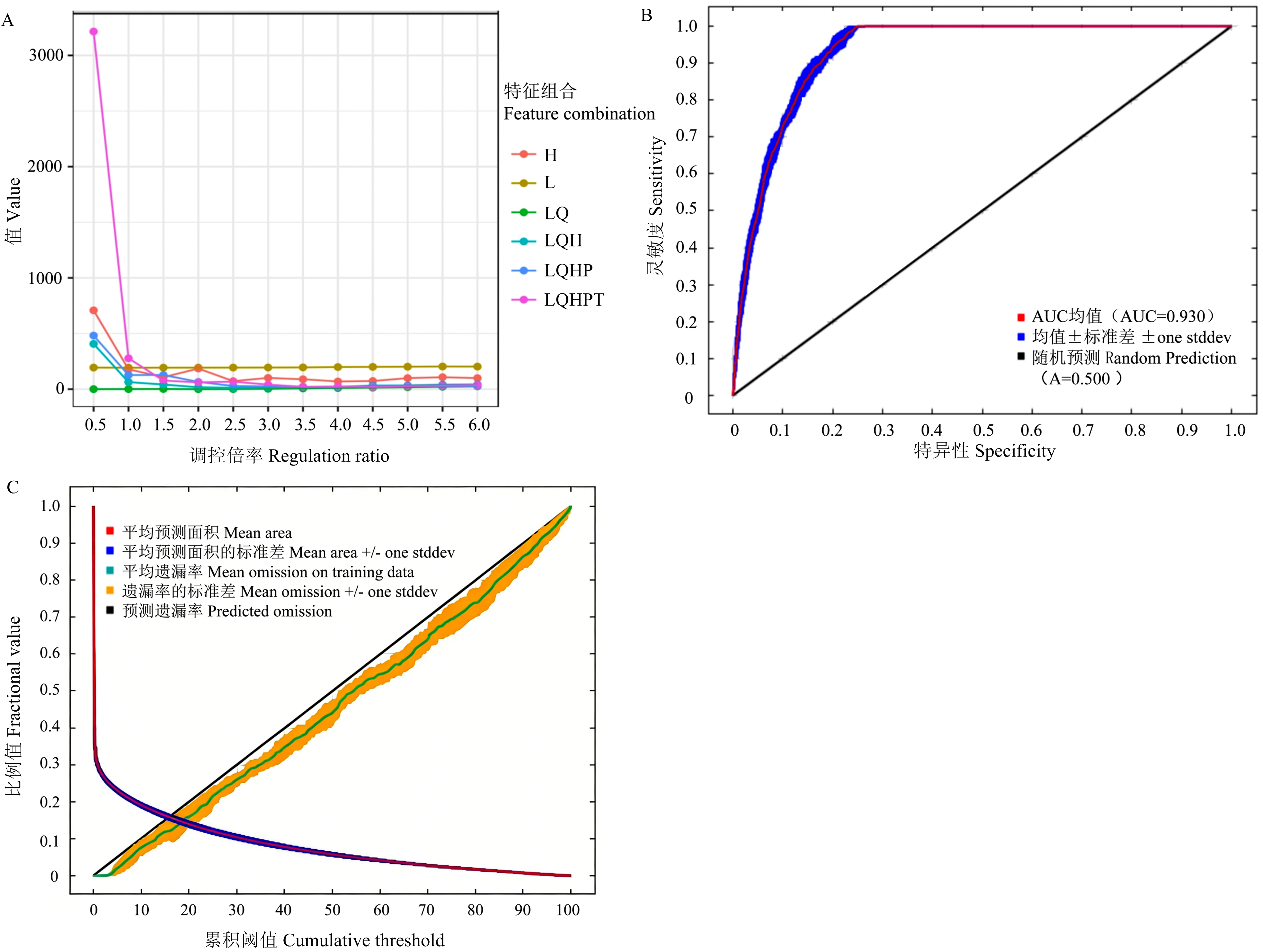
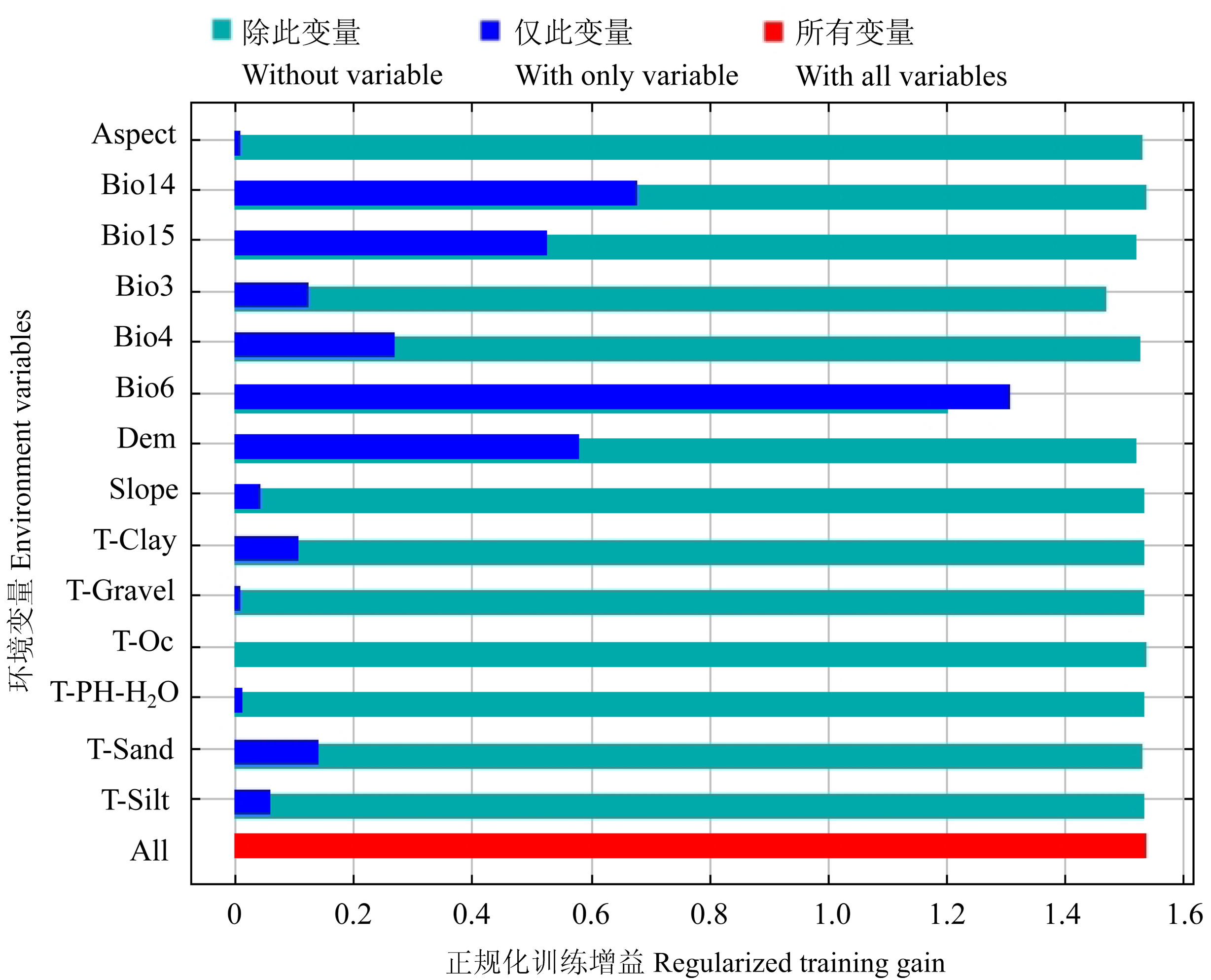
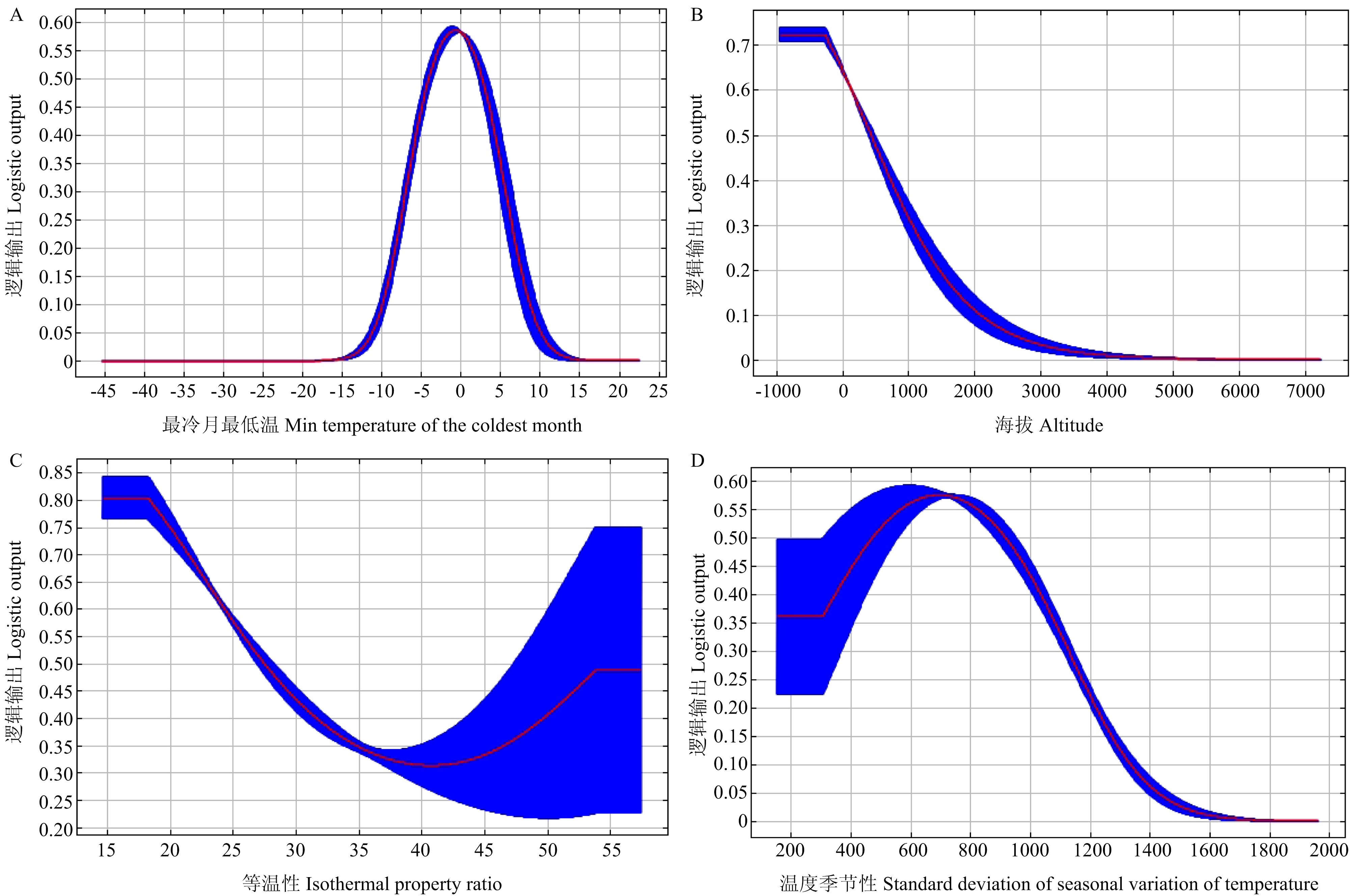
【Objective】Carya illinoinensis (C. illinoinensis) (Pecan), as a characteristic agricultural and economic nut tree species, has been widely cultivated in multiple provinces across China in recent years. This study aimed to provide a scientific basis for the scientific layout of the C. illinoinensis industry by investigating and predicting its suitable habitats and land resources in China.【Method】First, based on the optimized Maximum Entropy (MaxEnt) model, 29 environmental variables, including climate, topography, and soil factors from 167 C. illinoinensis cultivation sites in China were analyzed. Then the dominant environmental factors were screened out, and the potential suitable habitats of C. illinoinensis in China under the current climate scenario were predicted. Second, the available cultivation area for C. illinoinensis was extracted and predicted by overlaying the forest distribution data of China.【Result】The MaxEnt model performed optimally with Feature Class (FC)=Linear-Quadratic (LQ) and Regularization Multiplier (RM) = 2. The AUC value of the ROC curve was 0.93, and the mean TSS of the optimized model was 0.7655, demonstrating that the optimized MaxEnt model exhibits exceptionally high reliability and accuracy. The suitable habitats of C. illinoinensis were mainly influenced by temperature and altitude. The primary dominant environmental factor was the minimum temperature of the coldest month (bio6), followed by altitude, isothermality (bio3), and temperature seasonality (bio4). The corresponding suitable threshold ranges were as follows: -5 ℃ to 5 ℃ for the minimum temperature of the coldest month (bio6), below 1 000 m for altitude, 15-30 and 50-57 for isothermality (bio3), and 400-1 000 for temperature seasonality (bio4). Ten provinces in China were identified as moderately to highly suitable habitats for C. illinoinensis, with a medium-suitable area of 9 208.69×10⁴ hm2, accounting for 10% of China's total land area, and the high suitable area of 6 411.22×10⁴ hm2, accounting for 7% of China's total land area. By overlaying with the forest distribution data of China, the actual available cultivation area for C. illinoinensis in China was 1 360.53×10⁴ hm2.【Conclusion】In China, C. illinoinensis has potentially suitable habitats in Anhui, Hubei, Henan, Jiangsu, Hunan, Jiangxi, Zhejiang, the central part of Yunnan, south-central Shaanxi, and southwestern Shandong. After overlaying the suitable habitat map with China's forest land distribution data, the actual usable area was significantly reduced. At the provincial scale, Hubei Province had the largest area of highly suitable forest land, reaching 343.35×10⁴ hm2, followed by Hunan Province with 305.57×10⁴ hm2. Jiangxi and Anhui ranked third and fourth, with 219.81×10⁴ and 161.83×10⁴ hm2, respectively, making them important potential main producing areas for pecans. Combining the optimized MaxEnt model with land use types can effectively predict and scientifically evaluate the suitable areas for pecans in China, thereby providing a scientific basis for the development of the pecan industry in China.

Key words: Carya illinoinensis, MaxEnt model, suitable habitat prediction, environmental variables

Fig. 1

Sample points of the planting distribution of pecan in China"

Table 1

Environmental impact factors"

环境变量
Environment variable
代号
Code
环境因子名称
Name of environmental factor
单位
Unit
贡献率
Rate of contribution (%)
气候变量
Weather variable
Bio1 年均温 Mean annual temperature 4.7
Bio2 平均气温日较差 Mean diurnal temperature range 2.9
Bio3* 等温性(bio2 /bioc7)*100 Isothermal property ratio - 1.6
Bio4* 温度季节性*100 Standard deviation of seasonal variation of temperature - 0.8
Bio5 最暖月最高温 Max temperature of the warmest month 0.5
Bio6* 最冷月最低温 Minimum temperature of the coldest month 20.7
Bio7 气温年较差(bio5-bio6) Temperature annual range 0.4
Bio8 最湿季均温 Mean temperature of the wettest quarter 1.0
Bio9 最干季均温 Mean temperature of the direst quarter 0.9
Bio10 最热季均温 Mean temperature of the warmest quarter 0.7
Bio11 最冷季均温 Mean temperature of the coldest quarter 0.4
Bio12 年降水量 Annual precipitation mm 2.1
Bio13 最湿月降水量 Precipitation of the wettest month mm 0.3
Bio14* 最干月降水量 Precipitation of the driest month mm 43.7
Bio15* 降水季节性变动 Precipitation seasonality 1.5
Bio16 最湿季降水量 Precipitation of the wettest quarter mm 0.1
Bio17 最干季降水量 Precipitation of the driest quarter mm 2.2
Bio18 最暖季降水量 Precipitation of the warmest quarter mm 0.2
Bio19 最冷季降水量 Precipitation of the coldest quarter mm 0.5
地形变量
Landform variable
Dem* 海拔Altitude m 3.1
Slope* 坡度Slope 4.0
Aspect* 坡向Aspect 1.3
土壤变量
Soil variable
T_Clay* 顶层黏土含量Topsoil clay content % 1.3
T_Gravel* 顶层碎石体积百分比Topsoil gravel content (% by volume) % 1.2
T_PH* 顶层酸碱度(-log(H+))Topsoil pH(-log(H+)) 0.8
T_Sand* 顶层沙含量Topsoil sand content % 0.3
T_Silt* 顶层淤泥含量Topsoil silt content % 2.4
T_Oc* 顶层有机碳含量Topsoil organic carbon content % 0.2
T_Ref_Bulk 顶层土壤容重Topsoil bulk density kg·dm-3 0.1

Fig. 2

The correlation of environmental variables"

Table 2

The contribution rate and Permutation importance of climate variables"

环境因子
Climate variable
贡献率
Percent contribution
(%)
随机分布重要性
Permutation importance (%)
Bio6 82.0 74.0
Dem 7.1 10.5
T_Silt 2.9 0.5
Bio3 2.2 4.8
Bio15 1.6 2.2
Bio4 1.3 6.2
Slope 1.2 0.2
Aspect 0.4 0.1
T_Clay 0.4 0.2
T_PH 0.3 0.3
T_Gravel 0.3 0.3
T_Sand 0.3 0.7
Bio14 0 0
T_Oc 0 0

Fig. 3

Parameter selection and accuracy evaluation of the optimized MaxEnt model A:Selection of the MaxEnt model parameter; B: Results of the ROC precision test in the MaxEnt model; C: Average Omisslon and Predicted Area in the MaxEnt model In Figure A, H: Hinge; L: Linear; LQ: Linear+Quadratic; LQH: Linear+Quadratic+Hinge; LQHP: Linear+Quadratic+Hinge+Product; LQHPT: Linear+Quadratic+Hinge +Product+Threshold"

Fig. 4

Jackknife test to examine training gain result of climate variables"

Fig. 5

Response curves of major climatic factors"

Fig. 6

The division and scale of the suitable areas for pecans A: Division of suitable growing areas of pecan in China; B: Proportion statistics of suitable planting area of pecan; C: Suitable area of pecan in major provinces"

Fig. 7

The suitable growth classification and scale of pecan based on forest land resources A: Grading of suitable areas for pecans based on China’s forest land resources; B: The area of suitable growth zones for pecans in the forest areas of major provinces in China"

[1]
张日清, 吕芳德, 何方. 美国山核桃引种栽培区划研究I 原生境与新生境自然条件比较[J]. 中南林学院学报, 2001, 21(2): 1-5.
Zhang R Q, F D, He F. Cultural regionalization for the introduced pecan tree in China I comparative study of the site conditions between USA and China[J]. Journal of Central South Forestry University, 2001, 21(2): 1-5. (in Chinese)
[2]
Zhu K K, Fan P H, Liu H, Tan P P, Ma W J, Mo Z H, Zhao J, Chu G L, Peng F R. Insight into the CBL and CIPK gene families in pecan (Carya illinoinensis): Identification, evolution and expression patterns in drought response[J]. BMC Plant Biology, 2022, 22(1): 221.

doi: 10.1186/s12870-022-03601-0
[3]
Atanasov A G, Sabharanjak S M, Zengin G, Mollica A, Szostak A, Simirgiotis M, Huminiecki Ł, Horbanczuk O K, Nabavi S M, Mocan A. Pecan nuts: A review of reported bioactivities and health effects[J]. Trends in Food Science & Technology, 2018, 71: 246-257.
[4]
Wang Q, Wang Y, Huang M G, Hayat K, Kurtz N C, Wu X, Ahmad M, Zheng F P. Ultrasound-assisted alkaline proteinase extraction enhances the yield of pecan protein and modifies its functional properties[J]. Ultrasonics Sonochemistry, 2021, 80: 105789.

doi: 10.1016/j.ultsonch.2021.105789
[5]
Liu J P, Deng Q J, Shang Y J, Yao X W, Wang H K, Tang Y J, Peng F R, Tan P P. Effects of zinc application on the growth and photosynthetic characteristics of pecan at the seedling stage[J]. Plant Biology, 2021, 23(6): 1149-1156.

doi: 10.1111/plb.13307 pmid: 34396655
[6]
Bilharva M, Martins C, Hamann J, Fronza D, Marco R, Malgarim M. Pecan: From research to the Brazilian reality[J]. Journal of Experimental Agriculture International, 2018, 23(6): 1-16.
[7]
Zhang X Y, Lan Y G, Wang L N, Liu H X, Jiang N Q, He W, Yan H W, Wu M, Xiang Y. Whole-genome identification and multiple abiotic stresses expression pattern profiling analysis of PLATZ transcription factor family members in Pecan (Carya illinoensis)[J]. International Journal of Biological Macromolecules, 2023, 248: 125959.

doi: 10.1016/j.ijbiomac.2023.125959
[8]
赵宁, 陈智坤, 杨朋飞, 王瑞多, 张计育, 李永荣. 基于尺度交互蒸馏网络的薄壳山核桃品种识别方法[J]. 农业工程学报, 2025, 41(5): 209-216.
Zhao N, Chen Z K, Yang P F, Wang R D, Zhang J Y, Li Y R. Identification method for Carya illinoinensis varieties based on scale interactive distillation network[J]. Transactions of the Chinese Society of Agricultural Engineering, 2025, 41(5): 209-216. (in Chinese)
[9]
张计育, 李永荣, 陈智坤, 王刚. 薄壳山核桃产业发展中存在的问题及其对策[J]. 中国果业信息, 2021, 38(11): 21-23.
Zhang J Y, Li Y R, Chen Z K, Wang G. Problems and countermeasures in the development of Carya illinoensis industry[J]. China Fruit News, 2021, 38(11): 21-23. (in Chinese)
[10]
Zhu H J. Challenges for the expanding pecan industry in China. Pecan South, 2018, 51(9): 16-23.
[11]
邹恒宇, 郭熙, 江叶枫, 李小毛, 陈琳, 白家奇. 基于生态位模型的地理标志农产品种植适宜性评价研究: 以上高县紫皮大蒜为例[J]. 中国农业科学, 2024, 57(18): 3586-3600. DOI: 10.3864/j.issn.0578-1752.2024.18.006.
Zou H Y, Guo X, Jiang Y F, Li X M, Chen L, Bai J Q. Evaluation of planting suitability of geographical indication agricultural products based on ecological niche model: The case of PurpleSkinned garlic in Shanggao County[J]. Scientia Agricultura Sinica, 2024, 57(18): 3586-3600. DOI: 10.3864/j.issn.0578-1752.2024.18.006. (in Chinese)
[12]
胡超贵, 董鹏斌, 王辰玥, 李欠. 基于MaxEnt模型和HPLC技术的独活潜在适宜种植区预测及品质区化研究[J]. 作物学报, 2025, 51(6): 1676-1689.

doi: 10.3724/SP.J.1006.2025.44126
Hu C G, Dong P B, Wang C Y, Li Q. Exploring the prediction of planting suitability distribution and quality zoning of Angelicae publicentis Radix based on MaxEnt model and HPLC[J]. Acta Agronomica Sinica, 2025, 51(6): 1676-1689. (in Chinese)

doi: 10.3724/SP.J.1006.2025.44126
[13]
王佳, 李柔柔, 宋兴江, 杨毅哲, 陈丽丽, 陈瑜, 李欣迪, 张献瑞, 张春玲, 刘刚. 基于气候因子的鬼针草入侵中国过程的生态位保守性与入侵风险研究[J]. 生态学报, 2025, 45(21): 10616-10627.
Wang J, Li R R, Song X J, Yang Y Z, Chen L L, Chen Y, Li X D, Zhang X R, Zhang C L, Liu G. Study on the niche conservatism and invasion risk of Bidens pilosa L.during its invasion in China based on climatic factors[J]. Acta Ecologica Sinica, 2025, 45(21): 10616-10627. (in Chinese)
[14]
徐永红, 陈力, 唐松, 丁德宽, 杨宇衡. 柑橘轮斑病的适生区预测及风险分析[J]. 中国农业科学, 2020, 53(21): 4430-4439. DOI: 10.3864/j.issn.0578-1752.2020.21.011.
Xu Y H, Chen L, Tang S, Ding D K, Yang Y H. Prediction of suitable area and risk analysis for Citrus target spot[J]. Scientia Agricultura Sinica, 2020, 53(21): 4430-4439. DOI: 10.3864/j.issn.0578-1752.2020.21.011. (in Chinese)
[15]
苏静, 李海洋, 王瑞, 张梦帆, 李家美. 外来入侵种地中海大麦在中国的潜在适生区预测[J]. 生态学报, 2025, 45(3): 1379-1388.
Su J, Li H Y, Wang R, Zhang M F, Li J M. Prediction of potential suitable areas for Hordeum murinum subsp. leporinum as an emerging invasive plant in China[J]. Acta Ecologica Sinica, 2025, 45(3): 1379-1388. (in Chinese)
[16]
姚莉, 邓春秀, 唐彪, 王宏, 吴月颖, 张奇, 李源洪, 刘忠友, 卢昌艾, 林超文. 基于最大熵模型(Max Ent)和地理信息系统(GIS)的四川省眉山市东坡区晚熟柑橘适宜性评价[J]. 中国农业科学, 2025, 58(4): 748-758. DOI: 10.3864/j.issn.0578-1752.2025.04.010.
Yao L, Deng C X, Tang B, Wang H, Wu Y Y, Zhang Q, Li Y H, Liu Z Y, Lu C A, Lin C W. Suitability evaluation of late maturing Citrus in Dongpo district, Meishan City, Sichuan Province based on maximum entropy model(MaxEnt) and geographic information system(GIS)[J]. Scientia Agricultura Sinica, 2025, 58(4): 748-758. DOI: 10.3864/j.issn.0578-1752.2025.04.010. (in Chinese)
[17]
王涵, 孙仲秀, 姜荧荧, 宋效东, 王秋兵. 基于MaxEnt模型的青海省枸杞潜在适宜性区划[J]. 土壤, 2025, 57(4): 927-934.
Wang H, Sun Z X, Jiang Y Y, Song X D, Wang Q B. Zoning of potential suitable areas for Lycium barbarum L. based on MaxEnt model in Qinghai Province[J]. Soils, 2025, 57(4): 927-934. (in Chinese)
[18]
张雪艳, 金叶宁, 王长宇, 邵帆, 陈法军, 王雨蒙. 基于MaxEnt模型预测气候变化下北美刺龙葵在中国的适生区分布[J]. 植物保护学报, 2025, 52(4): 896-906.
Zhang X Y, Jin Y N, Wang C Y, Shao F, Chen F J, Wang Y M. Predicted distribution of suitable habitats for horsenettle Solanum carolinense in China under climate change based on the MaxEnt model[J]. Journal of Plant Protection, 2025, 52(4): 896-906. (in Chinese)
[19]
程晋昕, 段长春, 闫生杰. 基于MaxEnt模型的薄壳山核桃气候适宜性区划[J]. 应用气象学报, 2020, 31(5): 631-640.
Cheng J X, Duan C C, Yan S J. Climate suitability regionalization of pecan based on MaxEnt model[J]. Journal of Applied Meteorological Science, 2020, 31(5): 631-640. (in Chinese)
[20]
潘浪波, 段伟, 黄有军. 基于MaxEnt模型预测薄壳山核桃在中国的种植区[J]. 浙江农林大学学报, 2022, 39(1): 76-83.
Pan L B, Duan W, Huang Y J. Prediction on the potential planting area of Carya illinoinensis in China based on MaxEnt model[J]. Journal of Zhejiang A & F University, 2022, 39(1): 76-83. (in Chinese)
[21]
李春晖, 汪建军, 蔡哲, 杨爱萍. 基于MaxEnt模型的薄壳山核桃在江西的潜在适生区预测[J]. 生态学杂志, 2025, 44(5): 1644-1652.
Li C H, Wang J J, Cai Z, Yang A P. Prediction of potential suitable distribution area for pecan in Jiangxi based on MaxEnt model[J]. Chinese Journal of Ecology, 2025, 44(5): 1644-1652. (in Chinese)

doi: 10.13292/j.1000-4890.202505.022
[22]
张日清, 吕芳德, 何方, 栗彬. 美国山核桃引种栽培区划研究 Ⅲ 区划结果与分区描述[J]. 中南林学院学报, 2002, 22(3): 14-19.
Zhang R Q, F D, He F, Li B. Cultural regionalization for the introduced pecan tree in China Ⅲ. Region designation and description[J]. Journal of Central South Forestry University, 2002, 22(3): 14-19. (in Chinese)
[23]
王艳丽, 张英, 戚春林, 张昌达, 史佑海, 杜彦君, 丁琼. 海南热带雨林国家公园生物多样性热点与保护空缺区域识别: 基于大型真菌与植物视角[J]. 生物多样性, 2024, 32(7): 115-125.
Wang Y L, Zhang Y, Qi C L, Zhang C D, Shi Y H, Du Y J, Ding Q. Identifying biodiversity hotspots and conservation gaps in Hainan Tropical Rainforest National Park based on macrofungi and plants perspectives[J]. Biodiversity Science, 2024, 32(7): 115-125. (in Chinese)
[24]
Zhao Y, Deng X W, Xiang W H, Chen L, Ouyang S. Predicting potential suitable habitats of Chinese fir under current and future climatic scenarios based on Maxent model[J]. Ecological Informatics, 2021, 64: 101393.

doi: 10.1016/j.ecoinf.2021.101393
[25]
荣文文, 黄祥, 牛攀新, 刘津岐, 闫然, 苏金娟, 胡善超, 楚光明. 基于最大熵模型的中药材木贼麻黄潜在适生区[J]. 生态学报, 2023, 43(20): 8631-8646.
Rong W W, Huang X, Niu P X, Liu J Q, Yan R, Su J J, Hu S C, Chu G M. Potentially suitable areas for traditional Chinese medicinal material Ephedra equisetina based on MaxEnt model[J]. Acta Ecologica Sinica, 2023, 43(20): 8631-8646. (in Chinese)
[26]
李海铭, 谢文文, 沈邱筱潇, 陈进勋, 申婉青, 党明雨, 王忠斌. MaxEnt模型优化预测气候变化下西藏瑞香狼毒潜在适生区[J]. 草地学报, 2025, 33(8): 2603-2617.

doi: 10.11733/j.issn.1007-0435.2025.08.021
Li H M, Xie W W, Shen Q, Chen J X, Shen W Q, Dang M Y, Wang Z B. Optimizing and predicting the potential suitable habitat of Stellera chamaejasme L.in Xizang under climate change using MaxEnt model[J]. Acta Agrestia Sinica, 2025, 33(8): 2603-2617. (in Chinese)
[27]
郑梦月, 宋彦涛, 李彩琳, 那木汗, 乌云娜, 马晶, 于跃. 基于MaxEnt模型的黄花刺茄在北方农牧交错带潜在适生区分析[J]. 草地学报, 2024, 32(12): 3905-3914.

doi: 10.11733/j.issn.1007-0435.2024.12.026
Zheng M Y, Song Y T, Li C L, Na M H, Wu Y N, Ma J, Yu Y. Analysis of potential geographic distribution of Solanum rostratum based on optimized MaxEnt model in agro-pastoral ecotone of northern China[J]. Acta Agrestia Sinica, 2024, 32(12): 3905-3914. (in Chinese)
[28]
杨舜婷, 王慧纯, 景维坤, 王其刚, 晏慧君, 邱显钦, 蹇洪英. 气候变化对野蔷薇全球分布影响的模拟[J]. 应用生态学报, 2024, 35(7): 1897-1906.

doi: 10.13287/j.1001-9332.202407.022
Yang S T, Wang H C, Jing W K, Wang Q G, Yan H J, Qiu X Q, Jian H Y. Simulation of climate change effect on the global distribution of Rosa multiflora[J]. Chinese Journal of Applied Ecology, 2024, 35(7): 1897-1906. (in Chinese)
[29]
Weber T C. Maximum entropy modeling of mature hardwood forest distribution in four U.S. states[J]. Forest Ecology and Management, 2011, 261(3): 779-788.

doi: 10.1016/j.foreco.2010.12.009
[30]
谢孟, 张学星, 罗燕, 马永鹏, 李伟, 杨琳祥, 柳文, 赵培仙, 李正红, 马宏. 基于MaxEnt模型的云南干热河谷适生树种选择[J]. 生态学报, 2024, 44(9): 3689-3707.
Xie M, Zhang X X, Luo Y, Ma Y P, Li W, Yang L X, Liu W, Zhao P X, Li Z H, Ma H. Application of MaxEnt model for selection of suitable tree species in dry-hot valley of Yunnan[J]. Acta Ecologica Sinica, 2024, 44(9): 3689-3707. (in Chinese)
[31]
Xiao F J, Liu Q F, Qin Y. Predicting the potential distribution of Haloxylon ammodendron under climate change scenarios using machine learning of a maximum entropy model[J]. Biology, 2023, 13(1): 3.

doi: 10.3390/biology13010003
[32]
Tang X G, Yuan Y D, Li X M, Zhang J C. Maximum entropy modeling to predict the impact of climate change on pine wilt disease in China[J]. Frontiers in Plant Science, 2021, 12: 652500.

doi: 10.3389/fpls.2021.652500
[33]
Zhao G H, Cui X Y, Sun J J, Li T T, Wang Q, Ye X Z, Fan B G. Analysis of the distribution pattern of Chinese Ziziphus jujuba under climate change based on optimized biomod2 and MaxEnt models[J]. Ecological Indicators, 2021, 132: 108256.

doi: 10.1016/j.ecolind.2021.108256
[34]
Sabir I A, Hu X L, Khan I, Qin Y H. Regulatory mechanisms of bud dormancy: Environmental, hormonal, and genetic perspectives[J]. International Journal of Molecular Sciences, 2025, 26(6): 2517.

doi: 10.3390/ijms26062517
[35]
陈孟焱, 梁子怡, 舒琦, 闹增措, 陈岩, 曾哲飞, 拉琼, 王俊伟. 基于MaxEnt模型预测入侵植物鬼针草在中国的潜在分布及适生性[J]. 应用生态学报, 2025, 36(6): 1749-1758.

doi: 10.13287/j.1001-9332.202506.028
Chen M Y, Liang Z Y, Shu Q, Nao Z C, Chen Y, Zeng Z F, La Q, Wang J W. Predicting potential distribution and adaptability of the invasive plant Bidens pilosa in China based on the MaxEnt model[J]. Chinese Journal of Applied Ecology, 2025, 36(6): 1749-1758. (in Chinese)
[36]
应邦肯, 田阔, 郭浩宇, 杨晓龙, 李伟业, 李启, 骆宇晨, 张秀梅. 基于MaxEnt模型预测未来气候变化情境下红树秋茄(Kandelia obovata)在中国潜在适生区的变化[J]. 生态学报, 2024, 44(1): 224-234.
Ying B K, Tian K, Guo H Y, Yang X L, Li W Y, Li Q, Luo Y C, Zhang X M. Predicting potential suitable habitats of Kandelia obovata in China under future climatic scenarios based on MaxEnt model[J]. Acta Ecologica Sinica, 2024, 44(1): 224-234. (in Chinese)
[37]
张晓玮, 蒋玉梅, 毕阳, 刘祥林, 李星, 孙涛, 陈浩宇, 李捷. 基于MaxEnt模型的中国沙棘潜在适宜分布区分析[J]. 生态学报, 2022, 42(4): 1420-1428.
Zhang X W, Jiang Y M, Bi Y, Liu X L, Li X, Sun T, Chen H Y, Li J. Identification of potential distribution area for Hippophae rhamnoides subsp.sinensis by the MaxEnt model[J]. Acta Ecologica Sinica, 2022, 42(4): 1420-1428. (in Chinese)
[38]
张华, 赵浩翔, 王浩. 基于Maxent模型的未来气候变化情景下胡杨在中国的潜在地理分布[J]. 生态学报, 2020, 40(18): 6552-6563.
Zhang H, Zhao H X, Wang H. Potential geographical distribution of Populus euphratica in China under future climate change scenarios based on Maxent model[J]. Acta Ecologica Sinica, 2020, 40(18): 6552-6563. (in Chinese)
[39]
Zhang R, Peng F R, Li Y R. Pecan production in China[J]. Scientia Horticulturae, 2015, 197: 719-727.

doi: 10.1016/j.scienta.2015.10.035
[40]
张翠莲, 段云洪. 金华、绍兴两个薄壳山核桃种在红河地区的表现[J]. 江西林业科技, 2011, 39(2): 14-16.
Zhang C L, Duan Y H. Performances of two species of Carya illinoensis as “Jinhua”, “Shaoxing” in the red river area, Yunnan Province[J]. Jiangxi Forestry Science and Technology, 2011, 39(2): 14-16. (in Chinese)
[41]
张日清, 吕芳德. 美国山核桃在原产地分布、引种栽培区划及主要栽培品种分类研究概述[J]. 经济林研究, 2002, 20(3): 53-55.
Zhang R Q, F D. Pecan distribution, cultural regionalization and cultivar classification in USA[J]. Economic Forest Reseaches, 2002, 20(3): 53-55. (in Chinese)
[1] LUO Wei, YU Hong, YUAN LiXin, WANG LingLing, ZHAO JinPeng, YIN Wei, WANG MingTian, WANG RuLin. Change of Geographic Distributions of Ratoon Rice in Sichuan- Chongqing Under Global Climate Change [J]. Scientia Agricultura Sinica, 2026, 59(4): 765-780.
[2] ZHOU Qi, ZHANG ShiHao, ZHANG Liang, PAN Yu, ZHANG LiJuan, TU Zhi, PAN HongMei, LONG Xi. Prediction of the Potential Habitat Suitability of Luopanshan Pigs in Chongqing Based on the Optimized MaxEnt Model [J]. Scientia Agricultura Sinica, 2026, 59(1): 205-219.
[3] ZOU HengYu, GUO Xi, JIANG YeFeng, LI XiaoMao, CHEN Lin, BAI JiaQi. Evaluation of Planting Suitability of Geographical Indication Agricultural Products Based on Ecological Niche Model: The Case of Purple- Skinned Garlic in Shanggao County [J]. Scientia Agricultura Sinica, 2024, 57(18): 3586-3600.
[4] LIU Shao-jun, ZHOU Guang-sheng, FANG Shi-bo. Climatic Suitability Regionalization of Rubber Plantation in China [J]. Scientia Agricultura Sinica, 2015, 48(12): 2335-2345.
Viewed
Full text


Abstract

Cited

  Shared   
  Discussed   
No Suggested Reading articles found!