






中国农业科学 ›› 2026, Vol. 59 ›› Issue (19): 4335-4348.doi: 10.3864/j.issn.0578-1752.2026.19.012
• 专题:基于自然的解决方案:绿色农业转型的研究范式与中国实践 • 上一篇 下一篇
罗宁1( ), 李兆磊2, 徐彩龙3, 牛娜4, 王璞1, 孟庆锋1()
收稿日期:2025-08-26
接受日期:2025-11-13
出版日期:2026-10-01
发布日期:2026-10-10
通信作者:
联系方式:
罗宁,E-mail:luoning@cau.edu.cn。
基金资助:
LUO Ning1(), LI ZhaoLei2, XU CaiLong3, NIU Na4, WANG Pu1, MENG QingFeng1()
Received:2025-08-26
Accepted:2025-11-13
Published:2026-10-01
Online:2026-10-10
摘要:
在全球农业面临持续增长的粮食高产需求与日益严峻的资源与环境约束的双重压力下,探索支撑作物生产实现可持续转型的新理念与可行路径已成为亟需解决的科学问题。本文旨在系统阐述基于自然的解决方案(nature-based solutions,NbS)在作物高产可持续性协同提升中的作用与潜力,构建NbS驱动的农业养分管理理论框架,分析典型技术路径及其实践成效,并梳理相关标准与政策进展,为提升农业系统的生态生产力提供科学支撑。本文系统回顾了当前农田可持续管理的主要路径及其局限,以养分管理为例,提出了NbS的作物高产可持续转型三重路径,并结合世界自然保护联盟发布的全球NbS标准,分析了其在农田管理中的适用性。NbS养分管理通过发挥自然生态过程、优化系统结构和强化多要素协同,可显著提升作物体系的养分利用效率和生态服务功能,实现作物高产、资源高效利用与环境友好的协同目标。本文提出的三重路径包括:一是作物体系内投入因素优化,主要涉及养分等资源投入类型与施用方式等调整;二是作物体系的整体调整,比如在主粮作物中引入豆科作物构建新体系,实现生物固氮、改善养分平衡并促进碳减排;三是作物体系与内部投入要素的协同调控,促进农业系统整体转型与韧性提升。典型区域案例验证了NbS在高产作物体系中提升养分利用效率、减少环境污染与增强系统韧性方面的综合效益,显示出良好的技术可行性与应用潜力。因此,NbS为实现作物高产可持续转型提供了系统化途径。通过融合自然生态过程与现代农业管理,可实现养分高效利用、生态功能恢复与环境风险降低的多重协同,推动农业体系向绿色、低碳与韧性方向发展。进一步完善NbS养分管理的政策支持体系与实施机制,有望在促进农业绿色发展、助力“双碳”战略与保障国家粮食安全等多重目标的协同实现中发挥关键支撑作用。
罗宁, 李兆磊, 徐彩龙, 牛娜, 王璞, 孟庆锋. 基于自然解决方案的作物高产可持续转型[J]. 中国农业科学, 2026, 59(19): 4335-4348.
LUO Ning, LI ZhaoLei, XU CaiLong, NIU Na, WANG Pu, MENG QingFeng. Nature-Based Solutions for Sustainable Transition in High-Yield Cropping Systems[J]. Scientia Agricultura Sinica, 2026, 59(19): 4335-4348.
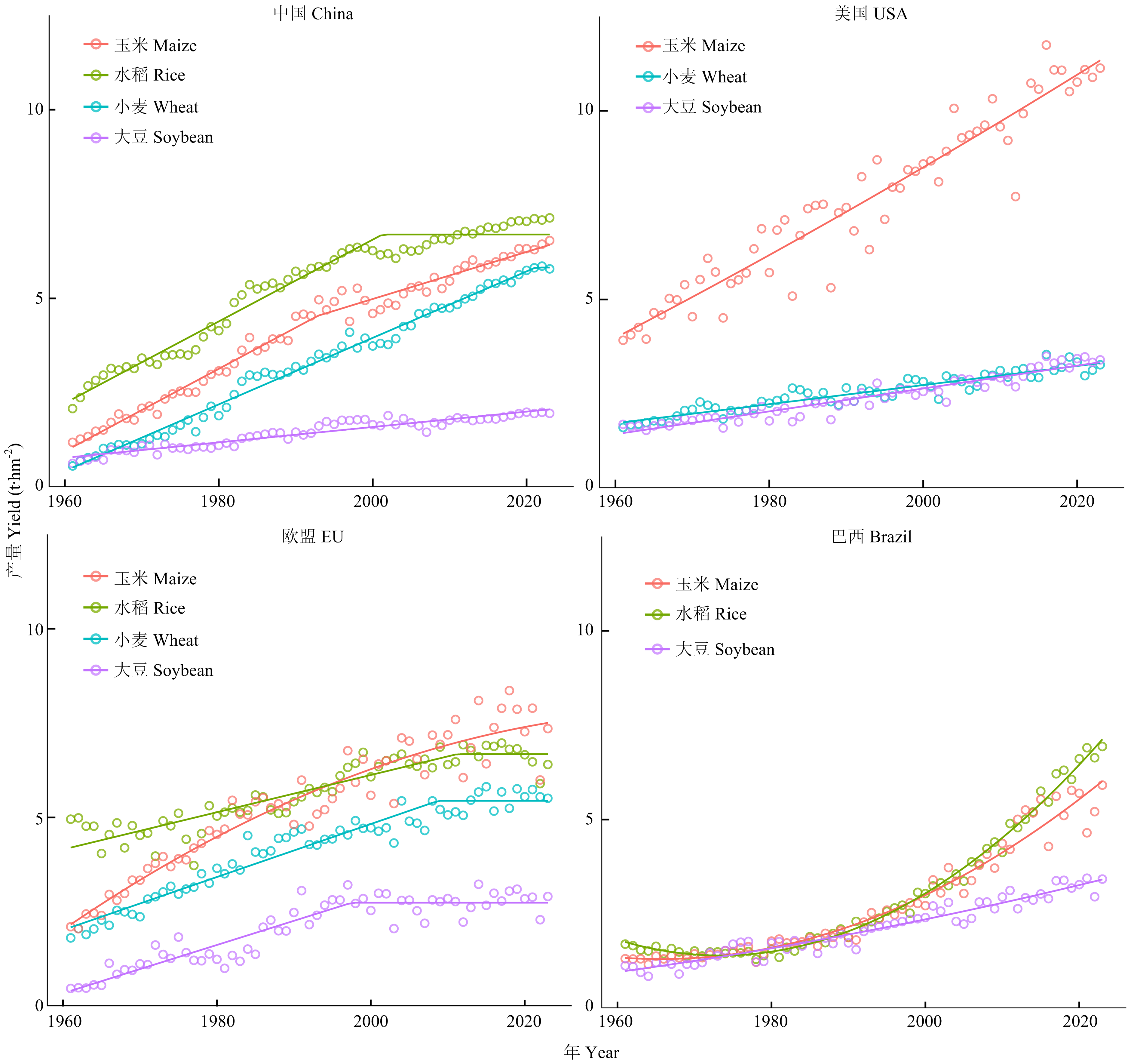
图1
全球主要农业生产区产量变化特征[5]"

表1
全球主要可持续农业路径特征对比"
| 类型 Type | 增产潜力 Yield potential | 养分利用效率 Nutrient use efficiency | 资源投入 Resource input | 技术成本 Technological cost | 可持续潜力 Sustainability potential | 典型区域 Typical region | 局限性 Limitation |
|---|---|---|---|---|---|---|---|
| 生态农业[ Agroecology | 中 Medium | 高 High | 中 Medium | 中 Medium | 高 High | 拉美、东亚 Latin America, East Asia | 对生态调控的精准管理要求高,缺乏可规模复制的标准化模式,需系统级农艺协同与农民培训支撑 High demand for precise ecological regulation; lack of scalable standardized models; requires system- level agronomic coordination and farmer training support |
| 碳农业[ Carbon farming | 中 Medium | 高 High | 高 High | 高 High | 中 Medium | 澳大利亚、北美 Australia, North America | 增碳措施成效受气候、土壤差异影响大,长期监测体系与碳市场机制尚未健全,难以形成农户积极性 Effectiveness of carbon sequestration measures varies greatly with climate and soil differences; long-term monitoring systems and carbon market mechanisms remain underdeveloped, limiting farmer motivation |
| 自然友好型农业[ Nature-inclusive agriculture | 低 Low | 中 Medium | 中 Medium | 中 Medium | 中 Medium | 西欧、北欧乡村地区 Rural areas of Western Europe, Northern Europe | 需划定生态缓冲区或留白地带,降低耕地利用率,不符合高强度复种和单位面积产出最大化的政策导向 Requires establishment of ecological buffer zones or fallow areas, reducing arable land use efficiency and conflicting with policy goals of intensive cropping and maximum yield per unit area |
| 气候智慧型农业[ Climate-smart agriculture | 高 High | 中 Medium | 高 High | 高 High | 中 Medium | 东非、南亚 East Africa, South Asia | 对气象数据、智能灌溉等技术依赖强,在中西部或偏远地区基础设施与气候信息服务体系尚不完善 Strong reliance on meteorological data and smart irrigation; limited infrastructure and climate information services in central, western, and remote regions |
| 永续农业[ Permaculture | 中 Medium | 高 High | 中 Medium | 高 High | 高 High | 澳大利亚、 东南亚 Australia, Southeast Asia | 多以人工生态构建为基础,设计与管理复杂,需专业支持与长周期投入,难以大面积推广 Largely based on artificial ecosystem construction; complex in design and management; requires professional support and long-term investment, making large-scale implementation difficult |
| 高自然价值农业[ High nature value farming | 低 Low | 中 Medium | 低 Low | 低 Low | 高(区域性) High (regional) | 苏格兰、西欧山区 Scotland, Western European mountainous areas | 对生态景观依赖性强,仅适用于少数保育区域,难以融入主粮产区的现代农业体系 Highly dependent on ecological landscapes; applicable only to limited conservation areas and difficult to integrate into modern agricultural systems of major grain-producing regions |
| 生物动力农业[ Biodynamic agriculture | 中 Medium | 高 High | 高 High | 很高 Very high | 中 Medium | 德国、奥地利 Germany, Austria | 依赖特定操作规程与投入剂制备体系,难以纳入主流农艺体系,科学依据争议较大,监管标准不统一 Relies on specific operational protocols and input preparation systems; difficult to integrate into mainstream agronomic practices; scientific evidence remains debated, and regulatory standards are inconsistent |
| 低外部投入农业[ Low external input agriculture | 低 Low | 中 Medium | 低 Low | 低 Low | 中 Medium | 东南亚稻区 Southeast Asian rice-growing areas | 投入少但系统依赖内部循环稳定运行,对耕作管理能力与生态系统构建要求高,经济效益难以吸引主流农户 Low input but dependent on stable internal system cycling; requires strong cultivation management skills and ecological system construction, while limited economic returns make it unattractive to mainstream farmers |
| 有机农业[ Organic farming | 中 Medium | 高 High | 高 High | 高 High | 高 High | 美国、欧盟 United States, European Union | 转型期内需承担产量下降风险,认证体系复杂,小农户难以独立满足标准化生产与全流程溯源要求 During the transition period, there is a risk of yield reduction; certification systems are complex, and smallholders find it difficult to independently meet standardized production and full-process traceability requirements |
| 循环农业[ Circular agriculture | 中 Medium | 很高 Very high | 中 Medium | 中 Medium | 高 High | 中国、荷兰 China, Netherlands | 农牧系统分离背景下,资源回流链条难打通,粪污收集、运输、处理与还田体系尚未全域配套建设 Under the separation of crop and livestock systems, resource recycling chains are difficult to establish; manure collection, transportation, treatment, and field-return systems have not yet been fully developed or implemented nationwide |
| 保护性农业[ Conservation agriculture | 中 Medium | 中 Medium | 中 Medium | 中 Medium | 中 Medium | 南美、南亚 South America, South Asia | 覆盖作物选择与土壤覆盖控制需因地制宜,高温高湿区腐解慢且影响作物管理,农机设备适应性亦受限 Cover crop selection and soil cover management must be adapted to local conditions; in hot and humid regions, decomposition is slow and affects crop management, while the adaptability of agricultural machinery is also limited |
| 生态集约化[ Ecological intensification | 高 High | 高 High | 高 High | 高 High | 高 High | 法国、比利时、荷兰 France, Belgium, Netherlands | 精准施肥、防控等措施依赖信息化技术与农业服务体系,农户接受度与区域能力差异大,落地难度高 Precision fertilization and pest control rely on digital technologies and agricultural service systems; large differences in farmer acceptance and regional capacity make implementation challenging |
| 再生农业[ Regenerative agriculture | 中 Medium | 很高 Very high | 中 Medium | 中 Medium | 很高 Very high | 北美、澳洲 North America, Australia | 实施周期长、见效慢,需长期生态效应累积与持续管理能力,缺乏财政支持与系统监测工具限制推广 Long implementation cycle and slow effectiveness; requires accumulation of long-term ecological effects and sustained management capacity; lack of financial support and systematic monitoring tools limits widespread adoption |
| 可持续集约化[ Sustainable intensification | 很高 Very high | 高 High | 高 High | 高 High | 高 High | 印度、中国华北 India, the North China Plain | 技术集成度高,投入设备、数据管理、制度协同缺口大,当前农户组织化水平和服务体系仍难以全面支撑 High level of technological integration; significant gaps in equipment investment, data management, and institutional coordination; current farmer organization and service systems remain insufficient for comprehensive support |
| NbS养分管理(本研究) NbS nutrient management | 中 Medium | 很高 Very high | 中 Medium | 中 Medium | 很高 Very high | 中国、欧盟试点 Demonstration fields in China, the European Union | 评价体系与标准尚未健全,政策支持和金融机制有待完善,需依托数据平台与系统集成推动落地 Evaluation systems and standards remain underdeveloped; policy support and financial mechanisms need improvement; implementation requires data platforms and system integration |
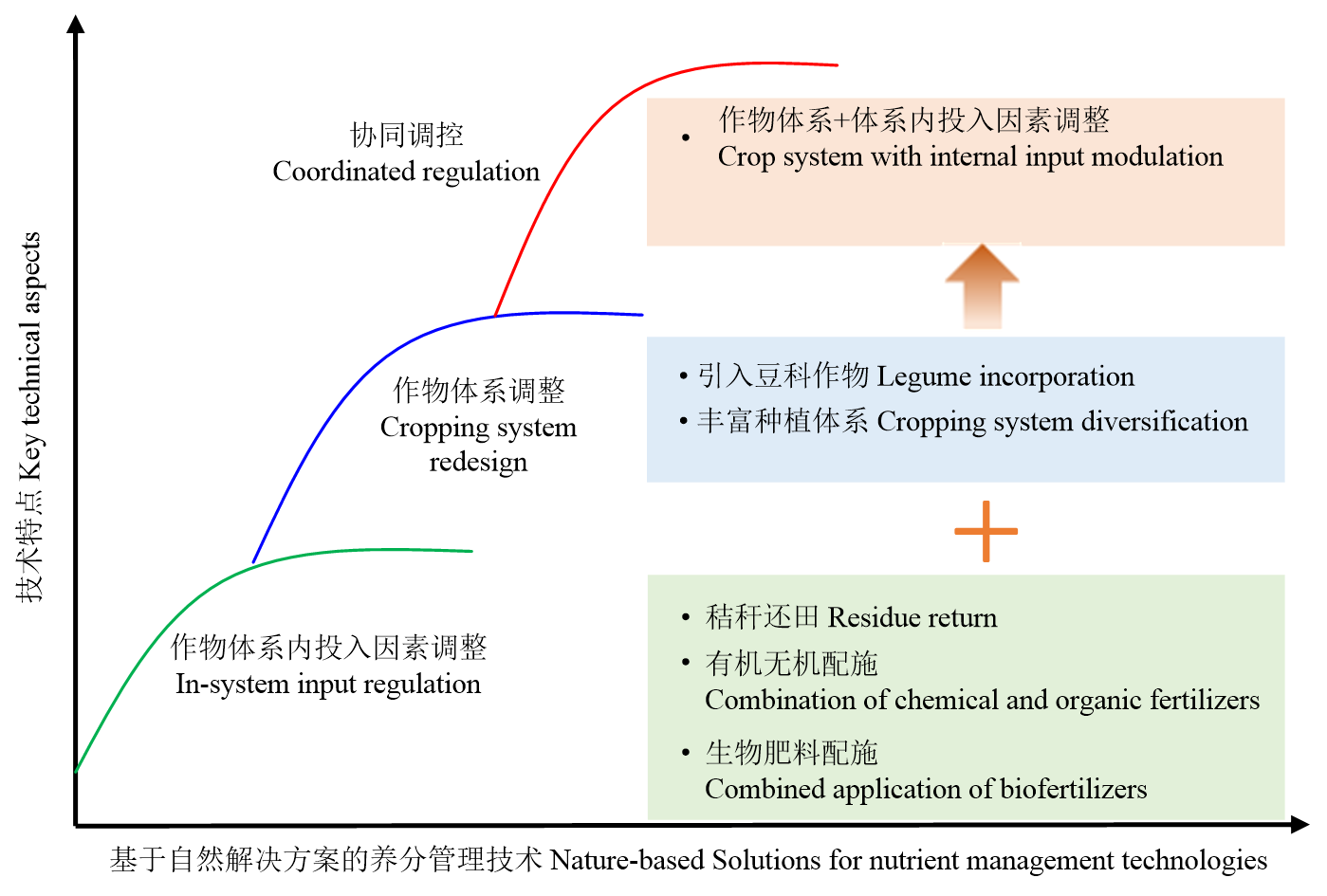
图2
NbS的农业养分管理技术框架示意图"
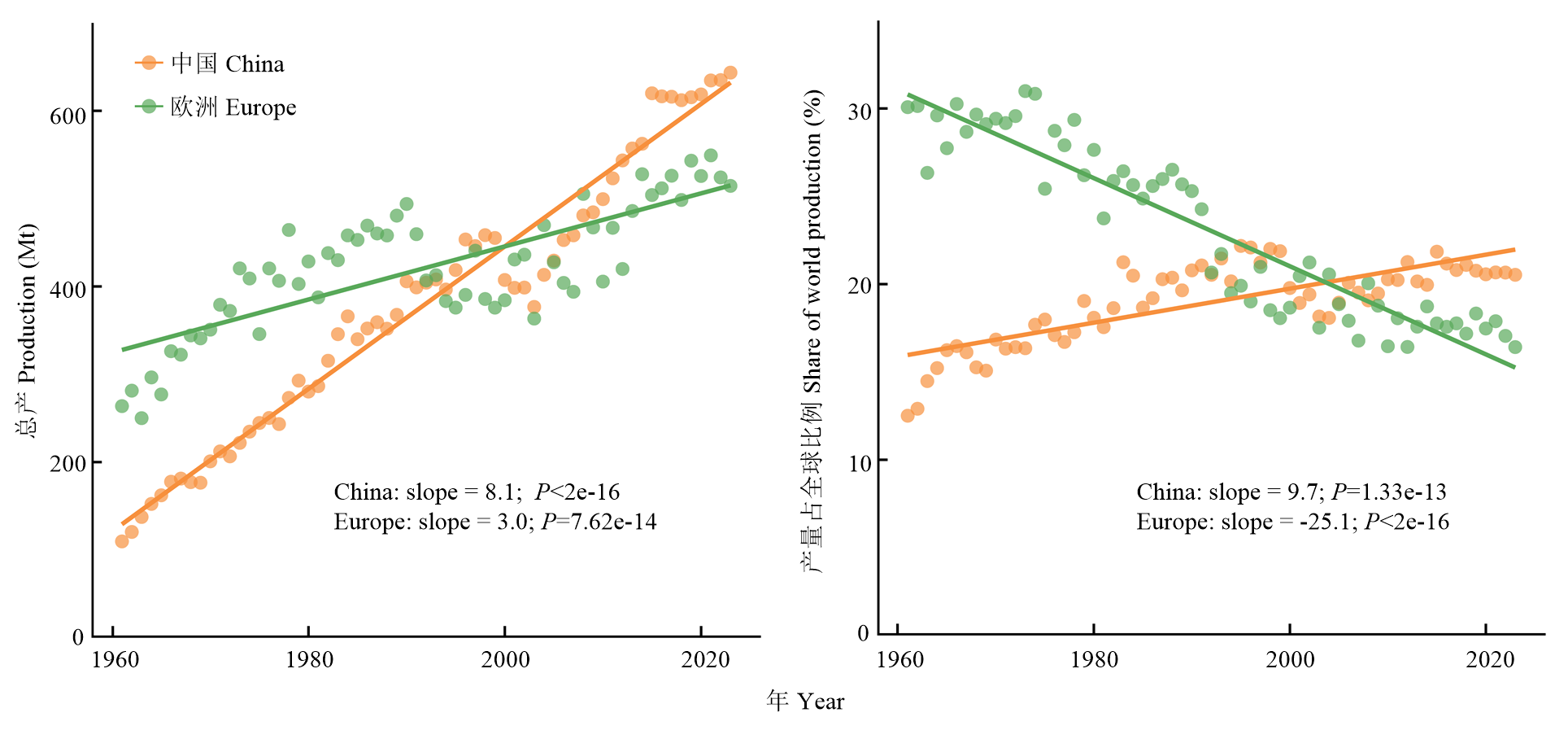
图3
中国与欧洲粮食产量及其占全球总产量比例的变化趋势[5] "
| [1] |
|
| [2] |
doi: 10.1038/d41586-023-02808-x |
| [3] |
doi: 10.1126/science.1246067 pmid: 25035492 |
| [4] |
doi: 10.1038/s43016-023-00913-8 pmid: 38279050 |
| [5] |
Crops and livestock products, food and agriculture organization of the United Nations[DB]. (Retrieved May 20, 2025). http://www.fao.org/faostat/en/#data/QCL.
|
| [6] |
|
| [7] |
doi: 10.1016/j.ecoleng.2022.106772 |
| [8] |
|
| [9] |
马文奇, 马林, 张建杰, 张福锁. 农业绿色发展理论框架和实现路径的思考[J]. 中国生态农业学报(中英文), 2020, 28(8): 1103-1112.
|
|
|
|
| [10] |
|
| [11] |
张福锁, 崔振岭, 王激清, 李春俭, 陈新平. 中国土壤和植物养分管理现状与改进策略[J]. 植物学通报, 2007, 42(6): 687-694.
|
|
|
|
| [12] |
|
| [13] |
doi: 10.2478/rtuect-2022-0068 |
| [14] |
doi: 10.1080/14735903.2017.1312096 |
| [15] |
Food, agriculture organization of the United Nations. Climate-Smart Agriculture: Policies, Practices and Financing for Food Security, Adaptation and Mitigation[M]. Rome, Italy: Food and Agriculture Organization of the United Nations, 2013.
|
| [16] |
|
| [17] |
|
| [18] |
|
| [19] |
doi: 10.3390/su2010001 |
| [20] |
doi: 10.1038/nplants.2015.221 pmid: 27249193 |
| [21] |
|
| [22] |
|
| [23] |
doi: 10.1073/pnas.96.11.5952 pmid: 10339523 |
| [24] |
|
| [25] |
doi: 10.15302/J-FASE-2020357 |
| [26] |
doi: 10.1016/j.agee.2024.109467 |
| [27] |
doi: 10.1038/s43016-024-00940-z pmid: 38486125 |
| [28] |
doi: 10.1016/j.oneear.2024.12.006 |
| [29] |
doi: 10.1016/j.fcr.2024.109618 |
| [30] |
International union for conservation of nature. Guidance for Using the IUCN Global Standard for Nature-Based Solutions: A User-Friendly Framework for the Verification, Design and Scaling up of Nature- Based Solutions[M], first edition Gland, Switzerland: IUCN, 2020.
|
| [31] |
|
| [32] |
|
| [33] |
徐上, 黄喆. 气候-生态突变对农业生产的影响[J]. 科学与社会, 2024, 14(4): 30-42.
|
|
|
|
| [34] |
doi: 10.1038/s44221-023-00155-9 |
| [35] |
卢彩云, 罗锡文, 李洪文, 臧英, 区颖刚. 我国保护性耕作的发展与政策建议[J]. 中国工程科学, 2024, 26(2): 103-112.
doi: 10.15302/J-SSCAE-2023.07.038 |
|
doi: 10.15302/J-SSCAE-2023.07.038 |
|
| [36] |
doi: 10.1016/j.atech.2024.100504 |
| [37] |
吴瑶瑶, 关通, 李鑫磊, 张童, 郭桂祯, 王丹丹. 旱灾风险预警研究进展与展望[J]. 地理研究, 2025, 44(9): 2285-2299.
doi: 10.11821/dlyj020241067 |
|
|
|
| [38] |
doi: 10.5194/hess-26-827-2022 |
| [39] |
孙晓, 姚海燕, 仲晓琳, 丁宝冲, 窦家聪, 于安军, 季帆, 孙玉萍. 水肥一体化技术应用与系统研究[J]. 农业工程技术, 2023, 43(13): 43-46.
|
|
|
|
| [40] |
doi: 10.1111/gcbb.v14.6 |
| [41] |
doi: 10.1002/advs.v12.31 |
| [42] |
doi: 10.1111/gcb.v31.7 |
| [43] |
doi: 10.1016/j.cj.2022.01.001 |
| [44] |
doi: 10.1016/j.jia.2023.10.007 |
| [45] |
|
| [46] |
doi: 10.1016/j.resconrec.2024.107941 |
| [47] |
doi: 10.1021/acs.est.4c12790 |
| [48] |
冯立忠. 高标准农田建设中农田水利配套设施存在的问题及优化策略[J]. 农业产业化, 2025(10): 129-131, 135.
|
|
|
|
| [49] |
宋雪莲, 张文, 王普昶, 阮玺睿, 柳嘉佳, 王志伟, 张威. 遥感技术在智慧农业中的应用研究[J]. 安徽农业科学, 2022, 50(7): 1-5.
|
|
|
|
| [50] |
池书瑶, 卢玮楠, 罗宇, 赵敏娟. 大豆玉米带状复合种植的盈利困境: 成本与产值的双重解析[J]. 农业经济问题, 2025(6): 49-65.
|
|
|
|
| [51] |
齐彦栋, 金诚谦, 刘岗微, 杨腾祥. 大豆玉米带状复合种植全程机械化关键技术与装备[J]. 中国农机化学报, 2023, 44(1): 14-24.
|
|
|
|
| [52] |
孟远夺, 赵英杰, 黄耀蓉, 汪洪, 袁天佑, 边武英. 我国商品有机肥料质量状况分析与思考[J]. 中国土壤与肥料, 2024(8): 251-259.
|
|
|
|
| [53] |
doi: 10.1016/j.jenvman.2024.123657 |
| [54] |
罗宁, 孟庆锋, 王璞. 玉米单产提升关键技术: AI赋能智慧栽培[J]. 中国农民合作社, 2025(5): 21-22.
|
|
|
|
| [55] |
doi: 10.1016/j.rser.2024.114471 |
| [56] |
任凤玲, 王谦. 我国土壤健康研究现状与展望[J]. 环境工程技术学报, 2024, 14(5): 1403-1411.
|
|
|
|
| [57] |
张卫峰, 马林, 黄高强, 武良, 陈新平, 张福锁. 中国氮肥发展、贡献和挑战[J]. 中国农业科学, 2013, 46(15): 3161-3171. DOI: 10.3864/j.issn.0578-1752.2013.15.010.
|
|
|
|
| [58] |
doi: 10.1016/j.agee.2025.109853 |
| [59] |
doi: 10.1016/j.fcr.2024.109706 |
| [60] |
doi: 10.1016/j.fcr.2025.110056 |
| [1] | 杨锐, 陈敬东, 黄郢, 谢伶俐, 张学昆, 周登文, 刘清云, 徐劲松, 许本波. 长江上游油菜高产品系遗传改良与构型分析[J]. 中国农业科学, 2026, 59(2): 250-264. |
| [2] | 梁晓贺, 王琦, 雷洁, 周加加, 吴俣, 周爱莲. 全球基于自然的解决方案在农业研究中的演进脉络、驱动机制与中国路径[J]. 中国农业科学, 2026, 59(19): 4323-4334. |
| [3] | 孔维丽, 王立杰, 郑靖康, 高芳, 李涛, 张珂珂, 张玉亭. 基于自然解决方案的秸秆综合利用关键技术和模式—粮菇定区轮作[J]. 中国农业科学, 2026, 59(19): 4349-4357. |
| [4] | 宁明皓, 路馨丹, 高芳, 徐上, 贾相平. 基于自然的解决方案视角下强化国际食品法典标准体系:治理模型和实践路径[J]. 中国农业科学, 2026, 59(19): 4358-4373. |
| [5] | 肖云泽, 张宇, 成功, 练子柔, 周厚熹. 基于自然解决方案视角下的农业文化遗产研究范式探析[J]. 中国农业科学, 2026, 59(19): 4374-4390. |
| [6] | 刘春蕾, 王娟. 利用水稻耐盐品种Pokkali衍生材料选育的高产耐盐新种质的遗传变异[J]. 中国农业科学, 2025, 58(20): 4117-4130. |
| [7] | 郭世博, 张镇涛, 郭尔静, 赵锦, 刘志娟, 赵闯, 杨晓光. 全球气候变暖对中国种植制度的可能影响XV.适应未来气候变化的我国油料作物种植布局调整[J]. 中国农业科学, 2025, 58(11): 2118-2144. |
| [8] | 朱天赐, 马天封, 柯健, 朱铁忠, 何海兵, 尤翠翠, 吴晨阳, 王冠军, 武立权. 长江下游地区味优高产协同粳稻的品种特性[J]. 中国农业科学, 2024, 57(4): 820-830. |
| [9] | 魏晓东, 宋雪梅, 王宁, 赵庆勇, 朱镇, 陈涛, 赵凌, 王才林, 张亚东. 南粳系列超级稻品种灌浆期光合产物的分配特性[J]. 中国农业科学, 2024, 57(12): 2309-2321. |
| [10] | 丁锦峰, 徐东忆, 丁永刚, 朱敏, 李春燕, 朱新开, 郭文善. 栽培模式对稻茬小麦籽粒产量、氮素吸收利用和群体质量的影响[J]. 中国农业科学, 2023, 56(4): 619-634. |
| [11] | 徐隽峰, 张学美, 杨珺, 郭子糠, 黄翠, 丁玉兰, 黄宁, 孙蕊卿, 田汇, 王朝辉, 石美. 旱地高产小麦品种籽粒氮含量与产量形成及氮磷钾吸收分配的关系[J]. 中国农业科学, 2023, 56(24): 4880-4894. |
| [12] | 郭世博, 张方亮, 张镇涛, 周丽涛, 赵锦, 杨晓光. 全球气候变暖对中国种植制度的可能影响XIV.东北大豆高产稳产区及农业气象灾害分析[J]. 中国农业科学, 2022, 55(9): 1763-1780. |
| [13] | 米国华,霍跃文,曾爱军,李刚华,王秀,张福锁. 作物养分管理的农机农艺结合技术研究进展[J]. 中国农业科学, 2022, 55(21): 4211-4224. |
| [14] | 王荣华,孟丽峰,冯毛,房宇,魏俏红,马贝贝,钟未来,李建科. 蜂王浆高产蜜蜂与意大利蜜蜂哺育蜂唾液腺蛋白质组分析[J]. 中国农业科学, 2022, 55(13): 2667-2684. |
| [15] | 朱铁忠,柯健,姚波,陈婷婷,何海兵,尤翠翠,朱德泉,武立权. 沿江双季稻北缘区机插早稻的超高产群体特征[J]. 中国农业科学, 2021, 54(7): 1553-1564. |
|
||
