Scientia Agricultura Sinica ›› 2026, Vol. 59 ›› Issue (20): 4489-4499.doi: 10.3864/j.issn.0578-1752.2026.20.005

• PLANT PROTECTION • Previous Articles     Next Articles

Construction and Application of a Citrus Leaf Blotch Virus-Based Virus-Induced Genome Editing System

WANG XiaoLian1(), WANG ChunQing2(), LI JiaXin1, LI YaYu1, WANG LiTing1, DING ZiRui1, CHEN Qi1, TIAN XuBin1, SONG Zhen1()   

  1. 1 Citrus Research Institute, Southwest University/National Citrus Engineering Research Center, Chongqing 400712
    2 Institute of Plant Protection, Jiangxi Academy of Agricultural Sciences, Nanchang 330220
  • Received:2026-05-17 Accepted:2026-07-10 Online:2026-10-16 Published:2026-10-21
  • Contact: SONG Zhen

Abstract:

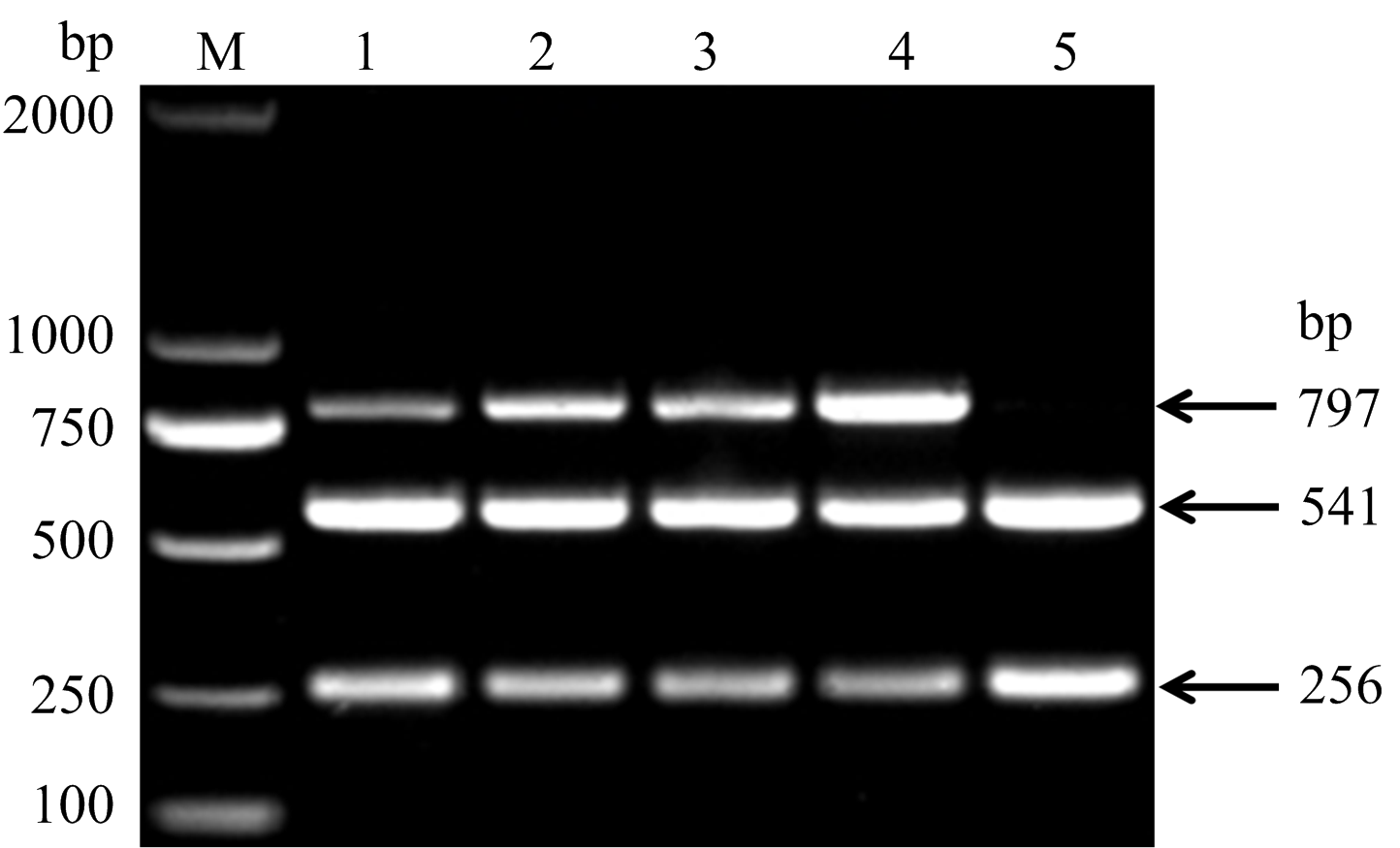
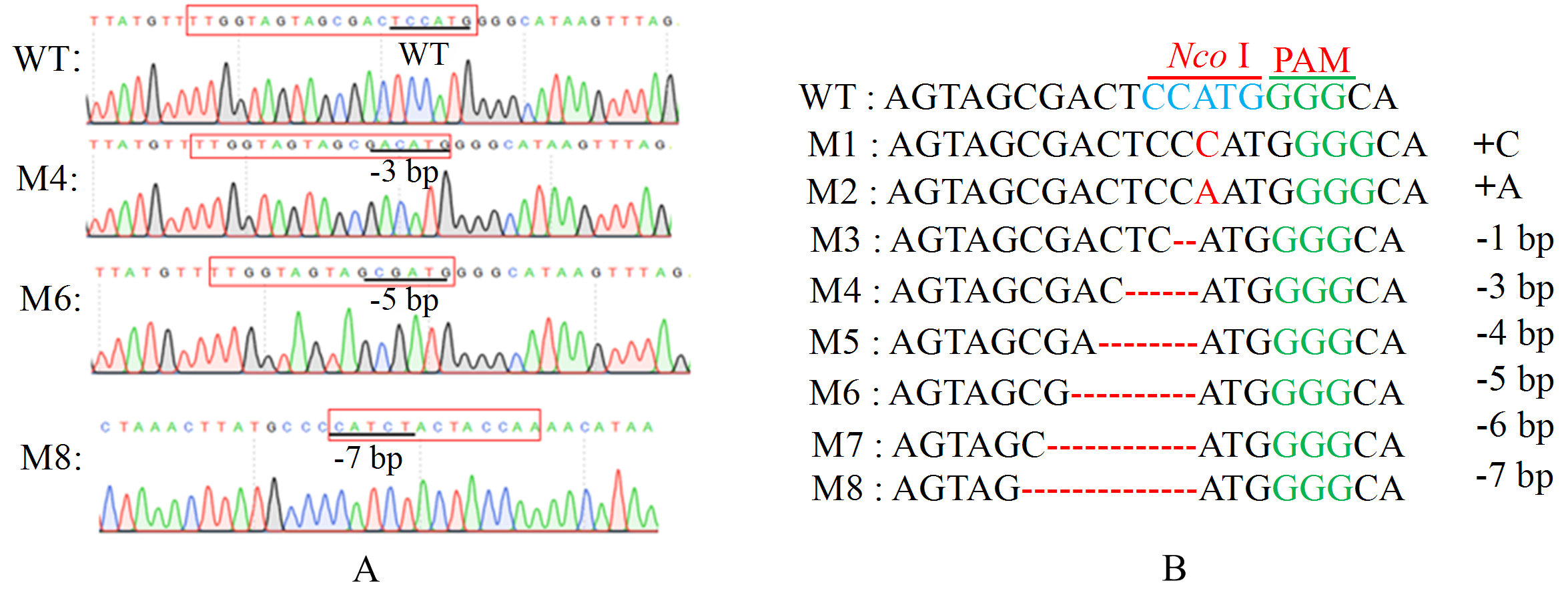
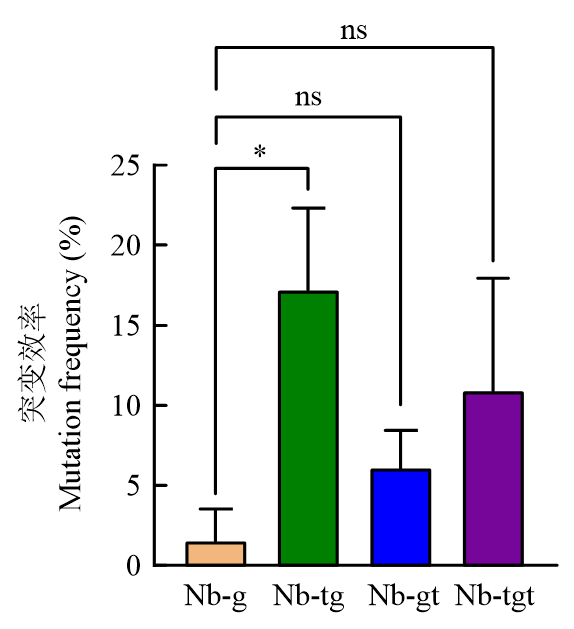
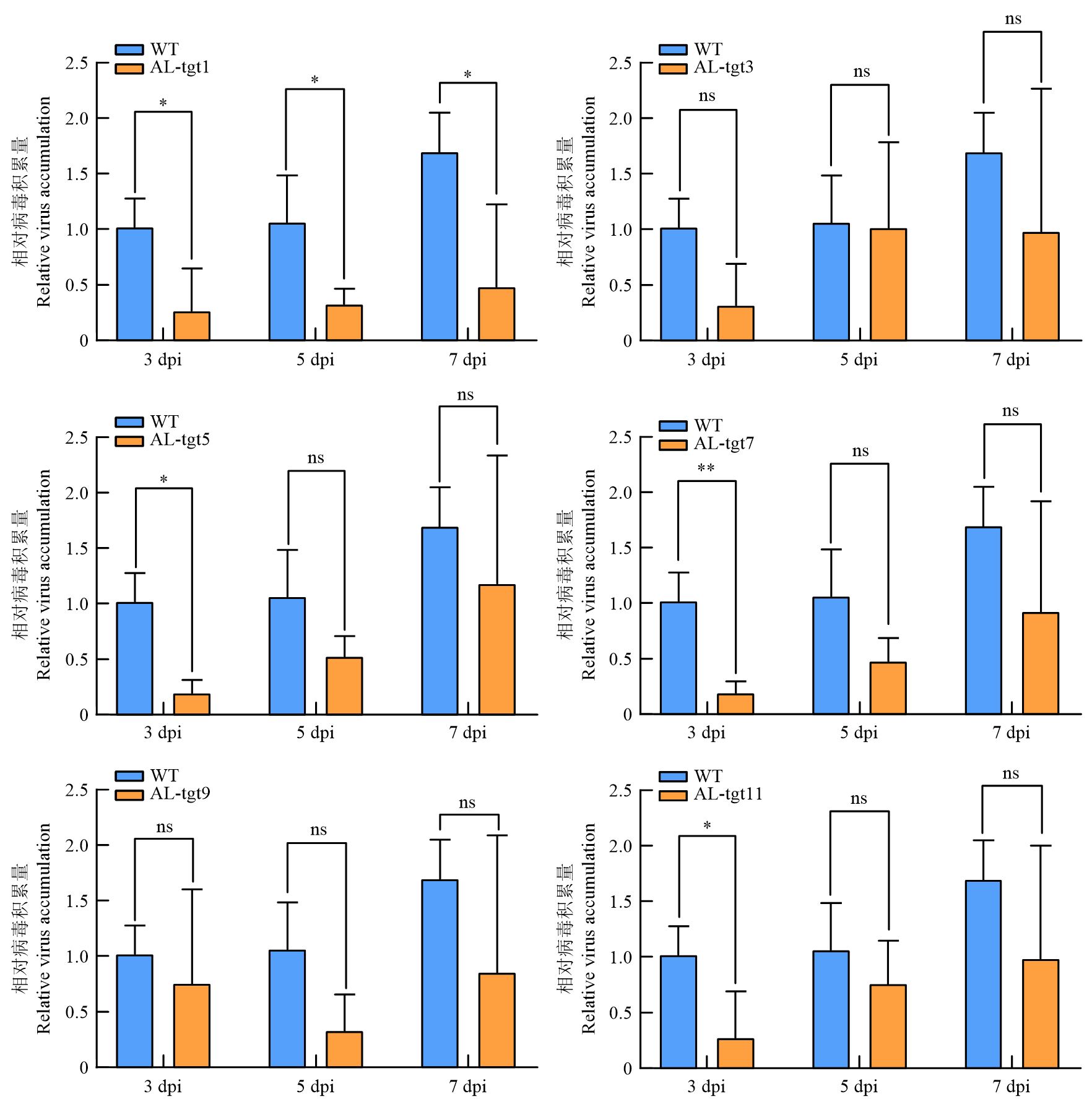
【Objective】Virus-induced genome editing (VIGE) has been widely applied in plants. However, its application in citrus remains at an early stage. This study aimed to establish a VIGE system based on citrus leaf blotch virus (CLBV), and to provide a convenient and rapid genome editing tool for citrus.【Method】A series of gRNA delivery vectors targeting the tobacco PDS, with or without tRNA elements, were constructed based on the viral expression vector pCLBV202. These recombinant constructs were delivered into Cas9-expressing Nicotiana benthamiana line KQ334 via Agrobacterium-mediated infiltration. Genome editing events were evaluated by phenotypic observation, target-site amplification followed by restriction enzyme digestion (PCR/RE), and Hi-TOM high-throughput sequencing to determine the effects of the number and position of tRNA elements on editing efficiency. For antiviral assessment, sgRNAs targeting different functional regions of the ageratum leaf curl Sichuan virus (ALCScV) genome were designed and delivered using the established VIGE system. Plants were inoculated with infectious ALCScV clones, and viral accumulation was determined by qPCR to evaluate antiviral efficacy. In addition, a CLBV-based VIGE vector targeting the citrus PDS was introduced into Cas9-transgenic ‘Jincheng’ sweet orange using Agrobacterium rhizogenes K599-mediated vacuum infiltration. Positive hairy roots were identified and subjected to molecular validation of genome editing.【Result】Following treatment with pCLBV202-tRNA-NbPDS sgRNA-tRNA, a pronounced albino phenotype was observed at 4 weeks post-inoculation. PCR/RE analysis detected the specific target fragment, and sequencing revealed multiple types of mutations at the target site, including single-base insertions and single- or multiple-base deletions, indicating that genome editing had occurred in N. benthamiana KQ334. Hi-TOM high-throughput sequencing further showed that the mutation frequency induced by pCLBV202-tRNA-NbPDS sgRNA ranged from 13.54% to 20.84%, significantly higher than that of the treatment group without tRNA elements (1.10%-2.94%). In the ALCScV antiviral assay, target gene editing events were detected in all treatment groups. qPCR analysis showed that viral accumulation decreased to varying degrees compared with the control, with viral accumulation in plants treated with pCLBV202- tRNA-AL sgRNA1-tRNA being significant reduction at 3, 5, and 7 days post-treatment (P≤0.05). Using Cas9-transgenic ‘Jincheng’ sweet orange, a positive pCLBV202-tRNA-CsPDS sgRNA plant was obtained via A. rhizogenes-mediated vacuum infiltration, and PCR/RE analysis preliminarily confirmed the occurrence of genome editing.【Conclusion】A CLBV-based VIGE system was established to achieve efficient gene editing of tobacco, which was preliminarily verified in citrus. The system is independent of tissue culture, shows potential for control of DNA viruses, and may provide a promising tool for the development of new citrus germplasm.

Key words: citrus leaf blotch virus (CLBV), virus-induced genome editing (VIGE), CRISPR/Cas9

Table 1

Information of the primers used in this study"

引物名称Primer name 引物序列Primer sequence (5′-3′) 用途Usage
CLBV-JC-F ATACCCAAGTCTAACTCAGTCAATA CLBV检测引物
Primers for CLBV detection
CLBV-JC-R CTCATAACTGCTTCCACGATT
PDS-Dete-F AGAAATGTAGCCCGAAGGATTATGTGT 重组载体中sgRNA/tRNA插入片段检测引物
Primers for detecting sgRNA/tRNA inserts in the recombinant vector
tRNA-Dete-R TTAAGAGTGTAAAGTCCTGGCC
NbPDS-TR12-F GAAACACATCACCTAGGCGG 扩增烟草NbPDS靶标片段798 bp
Amplification of the 798 bp target fragment of the tobacco NbPDS
NbPDS-TR12-R GGGCGTGAGGAAGTACGAAA
ALCScV-Dete-F ATGTGGGATCCATTGTTAAACGA ALCScV检测引物
Primers for ALCScV detection
ALCScV-Dete-R TCAGGGCTTTTGAACATCCTGTA
qPCR-F CCCGTGTATGCTACTTTGAAAG 定量检测植株内ALCScV积累水平
Quantitative detection of ALCScV accumulation in plants
qPCR-R ACCTCACACCTTCAGACTGG
CsPDS-3-P2-F TGAACATTTCAATTACTTAGG 扩增柑橘CsPDS靶标片段482 bp
Amplification of the 482 bp target fragment of citrus CsPDS
CsPDS-5-P1-R AGGATTCTTCATTTTCAATGA

Fig. 1

Construction of VIGE vectors based on pCLBV202 for tobacco"

Fig. 2

Phenotypic observation of KQ334"

Fig. 3

Nco I digestion assay for validation of PDS target editing M: DL2000 marker; 1: Nb-g; 2: Nb-tg; 3: Nb-gt; 4: Nb-tgt; 5: pCLBV202-GFP"

Fig. 4

Mutation detection of PDS target sites in KQ334"

Fig. 5

The mutation efficiency of PDS generated by VIGE"

Fig. 6

PCR detection of ALCScV in KQ334"

Fig. 7

Detection of ALCScV accumulation in plants with different VIGE vectors"

Fig. 8

Sequencing analysis of the target site"

Fig. 9

Rooting of VIGE vector-transformed Cas9-expressing Jincheng sweet orange (A) and RT-PCR detection (B)"

Fig. 10

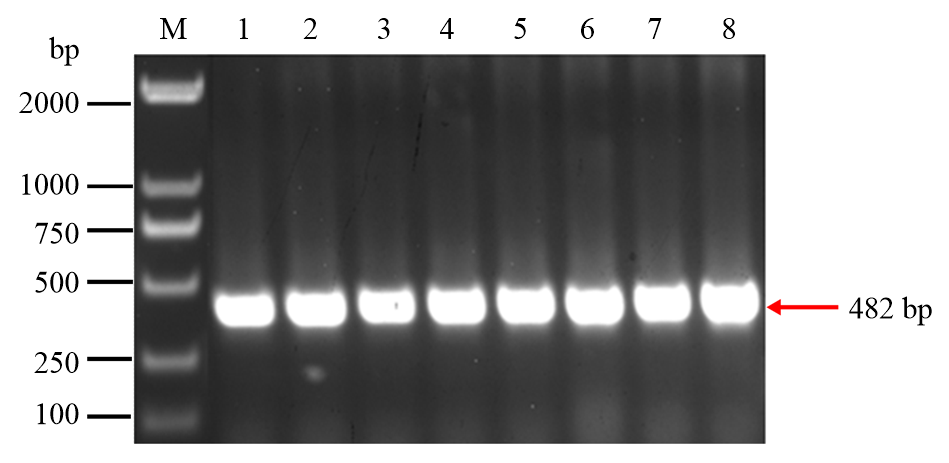
PCR amplification of the CsPDS target editing"

Fig. 11

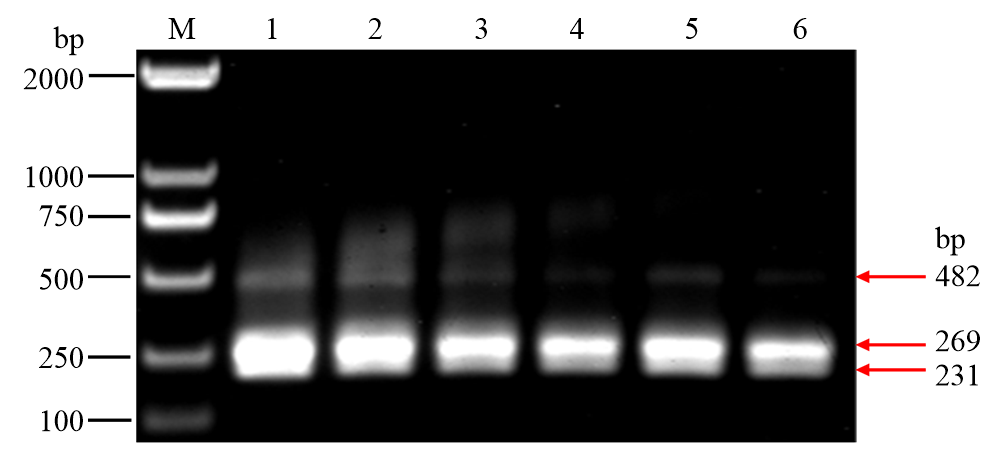
Mfe I digestion assay for validation of CsPDS target editing"

[1]
Haft D H, Selengut J, Mongodin E F, Nelson K E. A guild of 45 CRISPR-associated (Cas) protein families and multiple CRISPR/Cas subtypes exist in prokaryotic genomes[J]. PLoS Computational Biology, 2005, 1(6): e60.

doi: 10.1371/journal.pcbi.0010060 pmid: 16292354
[2]
Demirci Y, Zhang B H, Unver T. CRISPR/Cas9: An RNA-guided highly precise synthetic tool for plant genome editing[J]. Journal of Cellular Physiology, 2018, 233(3): 1844-1859.

doi: 10.1002/jcp.25970 pmid: 28430356
[3]
Cong L, Ran F A, Cox D, Lin S, Barretto R, Habib N, Hsu P D, Wu X, Jiang W, Marraffini L A, Zhang F. Multiplex genome engineering using CRISPR/Cas systems[J]. Science, 2013, 339(6121): 819-823.

doi: 10.1126/science.1231143 pmid: 23287718
[4]
Ran F A, Hsu P D, Wright J, Agarwala V, Scott D A, Zhang F. Genome engineering using the CRISPR-Cas9 system[J]. Nature Protocols, 2013, 8(11): 2281-2308.

doi: 10.1038/nprot.2013.143 pmid: 24157548
[5]
Wang Q, Zhang D, Dai Y R, Liu C C. Efficient tobacco rattle virus- induced gene editing in tomato mediated by the CRISPR/Cas9 system[J]. Biotechnology Journal, 2024, 19(5): e2400204.
[6]
Mikhaylova E. Virus-induced genome editing (VIGE): One step away from an agricultural revolution[J]. International Journal of Molecular Sciences, 2025, 26(10): 4599.

doi: 10.3390/ijms26104599
[7]
Oh Y, Kim H, Kim S G. Virus-induced plant genome editing[J]. Current Opinion in Plant Biology, 2021, 60: 101992.

doi: 10.1016/j.pbi.2020.101992
[8]
Gentzel I N, Ohlson E W, Redinbaugh M G, Wang G L. VIGE: Virus-induced genome editing for improving abiotic and biotic stress traits in plants[J]. Stress Biology, 2022, 2(1): 2.

doi: 10.1007/s44154-021-00026-x
[9]
Wang M, Gao S, Zeng W, Yang Y, Ma J, Wang Y. Plant virology delivers diverse toolsets for biotechnology[J]. Viruses, 2020, 12(11): 1338.

doi: 10.3390/v12111338
[10]
Zhang C, Liu S, Li X, Zhang R, Li J. Virus-induced gene editing and its applications in plants[J]. International Journal of Molecular Sciences, 2022, 23(18): 10202.

doi: 10.3390/ijms231810202
[11]
Jiang N, Zhang C, Liu J Y, Guo Z H, Zhang Z Y, Han C G, Wang Y. Development of beet necrotic yellow vein virus-based vectors for multiple-gene expression and guide RNA delivery in plant genome editing[J]. Plant Biotechnology Journal, 2019, 17(7): 1302-1315.

doi: 10.1111/pbi.13055 pmid: 30565826
[12]
Qiao J H, Zang Y, Gao Q, Liu S N, Zhang X W, Hu W Y, Wang Y, Han C G, Li D W, Wang X B. Transgene- and tissue culture-free heritable genome editing using RNA virus-based delivery in wheat[J]. Nature Plants, 2025, 11: 1252-1259.

doi: 10.1038/s41477-025-02023-8
[13]
Ma X, Zhang X, Liu H, Li Z. Highly efficient DNA-free plant genome editing using virally delivered CRISPR-Cas9[J]. Nature Plants, 2020, 6: 773-779.

doi: 10.1038/s41477-020-0704-5 pmid: 32601419
[14]
Ali Z, Abulfaraj A, Idris A, Ali S, Tashkandi M, Mahfouz M M. CRISPR/Cas9-mediated viral interference in plants[J]. Genome Biology, 2015, 16: 238.

doi: 10.1186/s13059-015-0799-6 pmid: 26556628
[15]
Vives M C, Martín S, Ambrós S, Renovell A, Navarro L, Pina J A, Moreno P, Guerri J. Development of a full-genome cDNA clone of citrus leaf blotch virus and infection of citrus plants[J]. Molecular Plant Pathology, 2008, 9(6): 787-797.

doi: 10.1111/j.1364-3703.2008.00501.x pmid: 19019007
[16]
Liu H, Song S, Wu W, Mi W L, Shen C, Bai B X, Wu Y F. Distribution and molecular characterization of citrus leaf blotch virus from Actinidia in Shaanxi Province, China[J]. European Journal of Plant Pathology, 2019, 154(3): 855-862.

doi: 10.1007/s10658-019-01677-3
[17]
Galipienso L, Navarro L, Ballester-Olmos J F, Pina J A, Moreno P, Guerri J. Host range and symptomatology of a graft-transmissible pathogen causing bud union crease of citrus on trifoliate rootstocks[J]. Plant Pathology, 2000, 49(2): 308-314.

doi: 10.1046/j.1365-3059.2000.00449.x
[18]
崔甜甜, 晏建红, 宾羽, 李中安, 周常勇, 宋震. 利用酵母同源重组系统快速构建柑橘叶斑驳病毒的侵染性克隆[J]. 中国农业科学, 2018, 51(9): 1695-1705. DOI: 10.3864/j.issn.0578-1752.2018.09.007.
Cui T T, Yan J H, Bin Y, Li Z A, Zhou C Y, Song Z. Construction of citrus leaf blotch virus infectious cDNA clone by yeast homologous recombination system[J]. Scientia Agricultura Sinica, 2018, 51(9): 1695-1705. DOI: 10.3864/j.issn.0578-1752.2018.09.007. (in Chinese)
[19]
张琦, 段玉, 苏越, 蒋琪琪, 王春庆, 宾羽, 宋震. 基于柑橘叶斑驳病毒的表达载体构建及应用[J]. 中国农业科学, 2022, 55(22): 4398-4407. DOI: 10.3864/j.issn.0578-1752.2022.22.006.
Zhang Q, Duan Y, Su Y, Jiang Q Q, Wang C Q, Bin Y, Song Z. Construction and application of expression vector based on citrus leaf blotch virus[J]. Scientia Agricultura Sinica, 2022, 55(22): 4398-4407. DOI: 10.3864/j.issn.0578-1752.2022.22.006. (in Chinese)
[20]
段玉. 柑橘黄龙病RPA检测体系及柑橘叶斑驳病毒表达载体构建[D]. 重庆: 西南大学, 2021.
Duan Y. Establishment of RPA detection system for HLB and construction of expression vector based on citrus leaf blotch virus[D]. Chongqing: Southwest University, 2021. (in Chinese)
[21]
Wang C, Ma Z, Zhou J, Li J, Cao P, Song C, Li C, Wang X, Bin Y, Zhou C, Song Z. A simple and effective VIGS system facilitates the control of citrus canker by silencing CsLOB1[J]. Phytopathology Research, 2024, 6: 12.

doi: 10.1186/s42483-024-00234-z
[22]
Li P, Jing C, Ren H, Jia Z, Ghanem H, Wu G, Li M, Qing L. Analysis of pathogenicity and virulence factors of ageratum leaf curl Sichuan virus[J]. Frontiers in Plant Science, 2020, 11: 527787.

doi: 10.3389/fpls.2020.527787
[23]
Shan Q, Wang Y, Li J, Zhang Y, Chen K, Liang Z, Zhang K, Liu J, Xi J J, Qiu J L, Gao C. Targeted genome modification of crop plants using a CRISPR-Cas system[J]. Nature Biotechnology, 2013, 31(8): 686-688.

doi: 10.1038/nbt.2650 pmid: 23929338
[24]
Xie K, Minkenberg B, Yang Y. Boosting CRISPR/Cas9 multiplex editing capability with the endogenous tRNA-processing system[J]. Proceedings of the National Academy of Sciences of the United States of America, 2015, 112(11): 3570-3575.

doi: 10.1073/pnas.1420294112 pmid: 25733849
[25]
Komura S, Kishi-Kaboshi M, Abe F, Inoue Y, Yoshida K. Improvement of simultaneous genome editing of homoeologous loci in polyploid wheat using CRISPR/Cas9 applying tRNA processing system[J]. Plant Biotechnology, 2025, 42(2): 167-172.

doi: 10.5511/plantbiotechnology.25.0214b pmid: 40636432
[26]
Nekrasov V, Staskawicz B, Weigel D, Jones J D G, Kamoun S. Targeted mutagenesis in the model plant Nicotiana benthamiana using Cas9 RNA-guided endonuclease[J]. Nature Biotechnology, 2013, 31(8): 691-693.

doi: 10.1038/nbt.2655
[27]
Veluthambi K, Sunitha S. Targets and mechanisms of geminivirus silencing suppressor protein AC2[J]. Frontiers in Microbiology, 2021, 12: 645419.

doi: 10.3389/fmicb.2021.645419
[28]
Salazar-González J A, Castro-Medina M, Bernardino-Rivera L E, Martínez-Terrazas E, Casson S A, Urrea-López R. In-planta transient transformation of avocado (Persea americana) by vacuum agroinfiltration of aerial plant parts[J]. Plant Cell, Tissue and Organ Culture, 2023, 152(3): 635-646.

doi: 10.1007/s11240-022-02436-9
[29]
刘亭君, 陈祥凤, 王俊利, 林敏, 董明右. 微型CRISPR核酸酶Cas12f研究进展及在基因编辑领域中的应用[J]. 中国人兽共患病学报, 2023, 39(2): 172-179.

doi: 10.3969/j.issn.1002-2694.2022.00.185
Liu T J, Chen X F, Wang J L, Lin M, Dong M Y. Research progress of miniature CRISPR nuclease Cas12f and its application in the field of gene editing[J]. Chinese Journal of Zoonoses, 2023, 39(2): 172-179. (in Chinese)
[30]
Harrington L B, Burstein D, Chen J S, Paez-Espino D, Ma E, Witte I P, Cofsky J C, Kyrpides N C, Banfield J F, Doudna J A. Programmed DNA destruction by miniature CRISPR-Cas14 enzymes[J]. Science, 2018, 362(6416): 839-842.

doi: 10.1126/science.aav4294 pmid: 30337455
[1] ZHANG Qi,DUAN Yu,SU Yue,JIANG QiQi,WANG ChunQing,BIN Yu,SONG Zhen. Construction and Application of Expression Vector Based on Citrus Leaf Blotch Virus [J]. Scientia Agricultura Sinica, 2022, 55(22): 4398-4407.
[2] DUAN Yu,XU JianJian,MA ZhiMin,BIN Yu,ZHOU ChangYong,SONG Zhen. Detection of Citrus Leaf Blotch Virus by Reverse Transcription- Recombinase Polymerase Amplification (RT-RPA) [J]. Scientia Agricultura Sinica, 2021, 54(9): 1904-1912.
[3] YANG Min,XU HuaWei,WANG CuiLing,YANG Hu,WEI YueRong. Using CRISPR/Cas9-mediated Targeted Mutagenesis of ZmFKF1 Delayed Flowering Time in Maize [J]. Scientia Agricultura Sinica, 2021, 54(4): 696-707.
[4] LI SongMei,QIU YuGe,CHEN ShengNan,WANG XiaoMeng,WANG ChunSheng. CRISPR/Cas9 Mediated Exogenous Gene Knock-in at ROSA26 Locus in Sheep Umbilical Cord Mesenchymal Stem Cells [J]. Scientia Agricultura Sinica, 2021, 54(2): 400-411.
[5] WU ShiYang,YANG XiaoYi,ZHANG YanWen,HOU DianYun,XU HuaWei. Generation of ospin9 Mutants in Rice by CRISPR/Cas9 Genome Editing Technology [J]. Scientia Agricultura Sinica, 2021, 54(18): 3805-3817.
[6] LI ZhaoWei,LING DongLan,SUN CongYing,ZENG HuiLing,LIU KaiJi,LAN YingShan,FAN Kai,LIN WenXiong. CRISPR/Cas9 Targeted Editing of OsIAA11 in Rice [J]. Scientia Agricultura Sinica, 2021, 54(13): 2699-2709.
[7] ZHANG Xiang,SHI YaXing,LU BaiShan,WU Ying,LIU Ya,WANG YuanDong,YANG JinXiao,ZHAO JiuRan. Creation of New Maize Variety with Fragrant Rice Like Flavor by Editing BADH2-1 and BADH2-2 Using CRISPR/Cas9 [J]. Scientia Agricultura Sinica, 2021, 54(10): 2064-2072.
[8] QI YongBin,ZHANG LiXia,WANG LinYou,SONG Jian,WANG JianJun. CRISPR/Cas9 Targeted Editing for the Fragrant Gene Badh2 in Rice [J]. Scientia Agricultura Sinica, 2020, 53(8): 1501-1509.
[9] ZHANG Cheng,HE MingLiang,WANG Wei,XU FangSen. Development of an Efficient Editing System in Arabidopsis by CRISPR-Cas9 [J]. Scientia Agricultura Sinica, 2020, 53(12): 2340-2348.
[10] YANG Qiang, XU Pan, JIANG Kai, QIAO ChuanMin, REN Jun, HUANG LuSheng, XING YuYun. Targeted Editing of BMPR-IB Gene in Porcine Fetal Fibroblasts via Lentivirus Mediated CRISPR/Cas9 Technology and Its Effects on Expression of Genes in the BMPs Signaling Pathway [J]. Scientia Agricultura Sinica, 2018, 51(7): 1378-1389.
[11] WEI YingHui, LIU ZhiGuo, XU Kui, Evanna HUYHN, Paul DYCE, LI JiLiang, ZHOU WeiLiang, DONG ShuRen, FENG BaoLiang, MU YuLian, JuLang LI, LI Kui. Generation and Propagation of Cluster of Differentiation 163 Biallelic Gene Editing Pigs [J]. Scientia Agricultura Sinica, 2018, 51(4): 770-777.
[12] PU Yan, LIU Chao, LI Ji-Yang, AERZU GULI·TaShi, HU Yan, LIU XiaoDong. Different SlU6 Promoters Cloning and Establishment of CRISPR/Cas9 Mediated Gene Editing System in Tomato [J]. Scientia Agricultura Sinica, 2018, 51(2): 315-326.
[13] SHENG XiaBing, TAN YanNing, SUN ZhiZhong, YU Dong, WANG XueFeng, YUAN GuiLong, YUAN DingYang, DUAN MeiJuan. Using CRISPR/Cas9-Mediated Targeted Mutagenesis of qSH1 Reduces the Seed Shattering in Rice [J]. Scientia Agricultura Sinica, 2018, 51(14): 2631-2641.
[14] HU ChunHua, DENG GuiMing, SUN XiaoXuan, ZUO CunWu, LI ChunYu, KUANG RuiBin, YANG QiaoSong, YI GanJun. Establishment of an Efficient CRISPR/Cas9-Mediated Gene Editing System in Banana [J]. Scientia Agricultura Sinica, 2017, 50(7): 1294-1301.
[15] JI Xin, LI Fei, YAN Yun, SUN HongZheng, ZHANG Jing, LI JunZhou, PENG Ting, DU YanXiu, ZHAO QuanZhi. CRISPR/Cas9 System-Based Editing of Phytochrome-Interacting Factor OsPIL15 [J]. Scientia Agricultura Sinica, 2017, 50(15): 2861-2871.
Viewed
Full text


Abstract

Cited

  Shared   
  Discussed   
No Suggested Reading articles found!