Scientia Agricultura Sinica ›› 2026, Vol. 59 ›› Issue (18): 4149-4162.doi: 10.3864/j.issn.0578-1752.2026.18.015

• HORTICULTURE • Previous Articles     Next Articles

Rapid Prediction of Tea Leaf Catechins via Hyperspectral Multi-Task Synergistic Sensing Fusing Plant Physiological Priors

CHAI ZhiChao(), QIAN XiaoNa, YU YongChen, LI XiWang, SUN XiaoLing()   

  1. Tea Research Institute, Chinese Academy of Agricultural Sciences/National Center for Tea Plant Improvement/State Key Laboratory of Tea Plant Germplasm Innovation and Resource Utilization, Key Laboratory of Biology/Genetics and Breeding of Special Economic Animals and Plants, Ministry of Agriculture and Rural Affairs, Hangzhou 310008
  • Received:2026-01-28 Accepted:2026-04-28 Online:2026-09-16 Published:2026-09-20
  • Contact: SUN XiaoLing

Abstract:

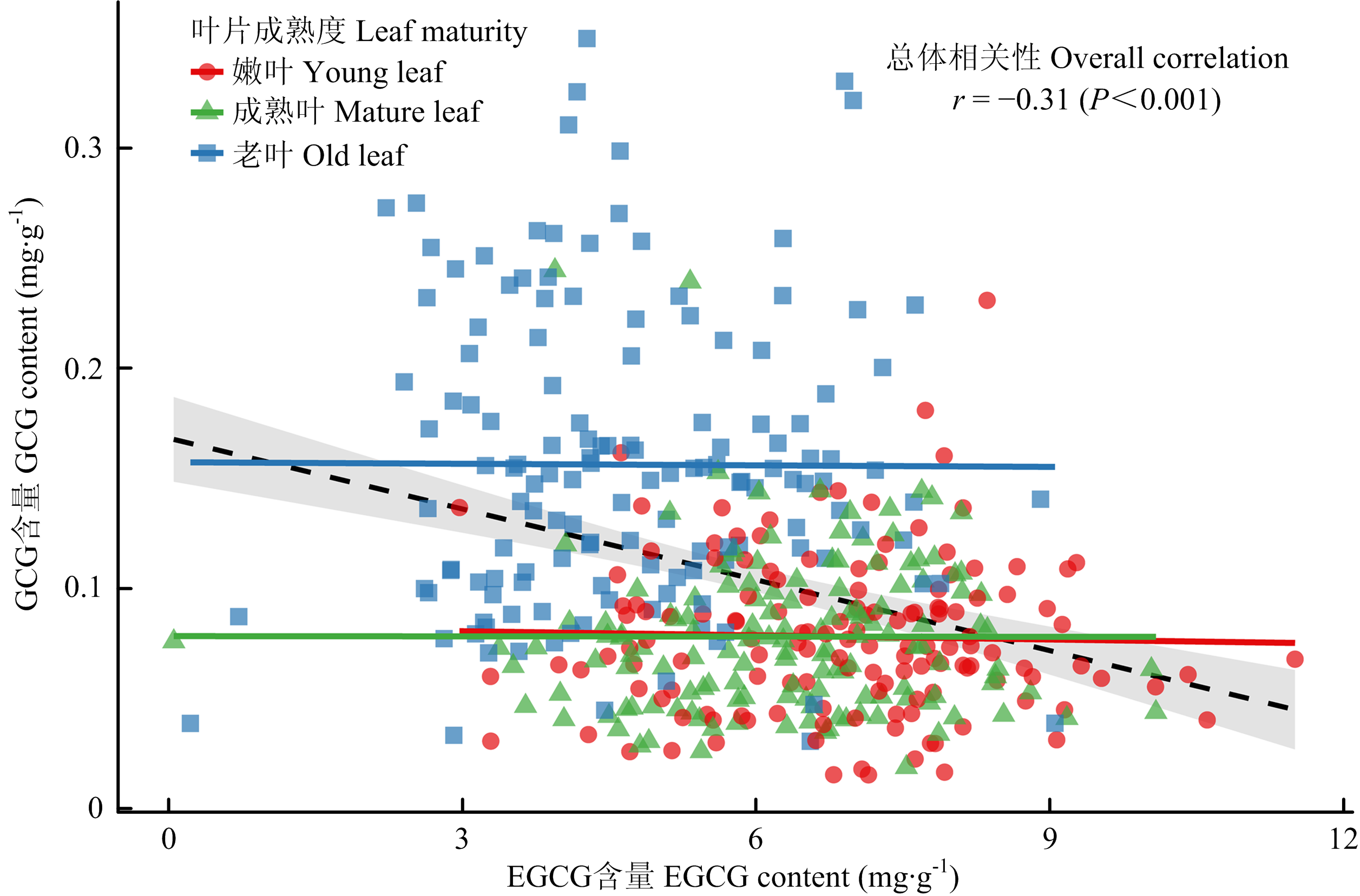
【Objective】To meet the demand for in situ, real-time, and non-destructive monitoring of tea leaf quality in smart tea gardens, this study proposed a multi-component quantitative prediction method based on visible-near infrared hyperspectral imaging (400-1 000 nm) integrated with plant physiological priors, so as to realize rapid assessment of secondary metabolites, such as catechins.【Method】Twelve tea cultivars were used as experiment materials. Leaves were classed as young (2nd-3rd), mature (4th-5th), and old (6th-7th) to represent physiological gradients, giving 429 independent samples in total. For each leaf, hyperspectral reflectance was recorded, and the contents of catechin (C), epicatechin (EC), epigallocatechin (EGC), epicatechin gallate (ECG), epigallocatechin gallate (EGCG), gallocatechin (GC), gallocatechin gallate (GCG), caffeine (CAF), and gallic acid (GA) were quantified by high-performance liquid chromatography. Spectra were preprocessed using Savitzky-Golay (SG) smoothing, standard normal variate (SNV), and first derivative. The generalization performance of partial least squares regression (PLSR), support vector regression (SVR), XGBoost, multilayer perceptron (MLP), and 1D-CNN-SE was compared. Based on the best single-task model, a multi-task XGBoost framework was then developed to simultaneously predict the nine components. Additionally, the successive projections algorithm (SPA) was used to select key wavelengths from the full spectrum (557 bands) to assess the feasibility of simplified modeling.【Result】When leaf maturity was ignored, EGCG and GCG showed a spurious negative correlation due to confounding by maturity, which was a clear instance of Simpson's paradox. This meant that maturity needed to be accounted for, either by stratifying the data or by explicit adjustment, so that models would not learn false correlations. Among the tested models, XGBoost combined with SG+SNV+first-derivative preprocessing achieved the best performance on the small-sample with high-dimensional spectral dataset. The R2 values for EGCG and GCG were approximately 0.60 and 0.59, respectively. In contrast, 1D-CNN-SE achieved calibration set R2 value above 0.90 but dropped to about 0.40-0.50 on the prediction set, showing clear overfitting. The multi-task XGBoost model predicted all nine components in a single run; the R2 value for EGCG remained about 0.57, and the RPD values for EGCG, GCG, and CAF were about 1.48-1.52, with only a slight loss in single-component accuracy but a substantial gain in throughput. After SPA reduced the full spectrum from 557 bands to 18 key wavelengths, the R2 for EGCG remained about 0.54. These key wavelengths fell mainly in the visible region and the near-infrared overtone absorption bands, supporting the design of portable quality sensors based on discrete wavelengths.【Conclusion】The spectral modeling that integrated physiological priors, such as leaf maturity, could enhance the model’s explanatory power and improve its generalization across cultivars and leaf ages. The single- and multi-task XGBoost frameworks, combined with wavelength selection, provided a theoretical basis and practical support for rapid multi-index tea quality assessment in tea plantations.

Key words: tea plant, catechins, hyperspectral imaging, multi-task learning, successive projections algorithm (SPA), leaf maturity, plant physiological priors

Fig. 1

Comparison of the evolution of spectral signals from raw hyperspectral reflectance (A) to those transformed by SG smoothing (B), SNV normalization (C), and first derivative (D)"

Fig. 2

Hyperspectral multi-task collaborative sensing workflow for tea leaf catechins"

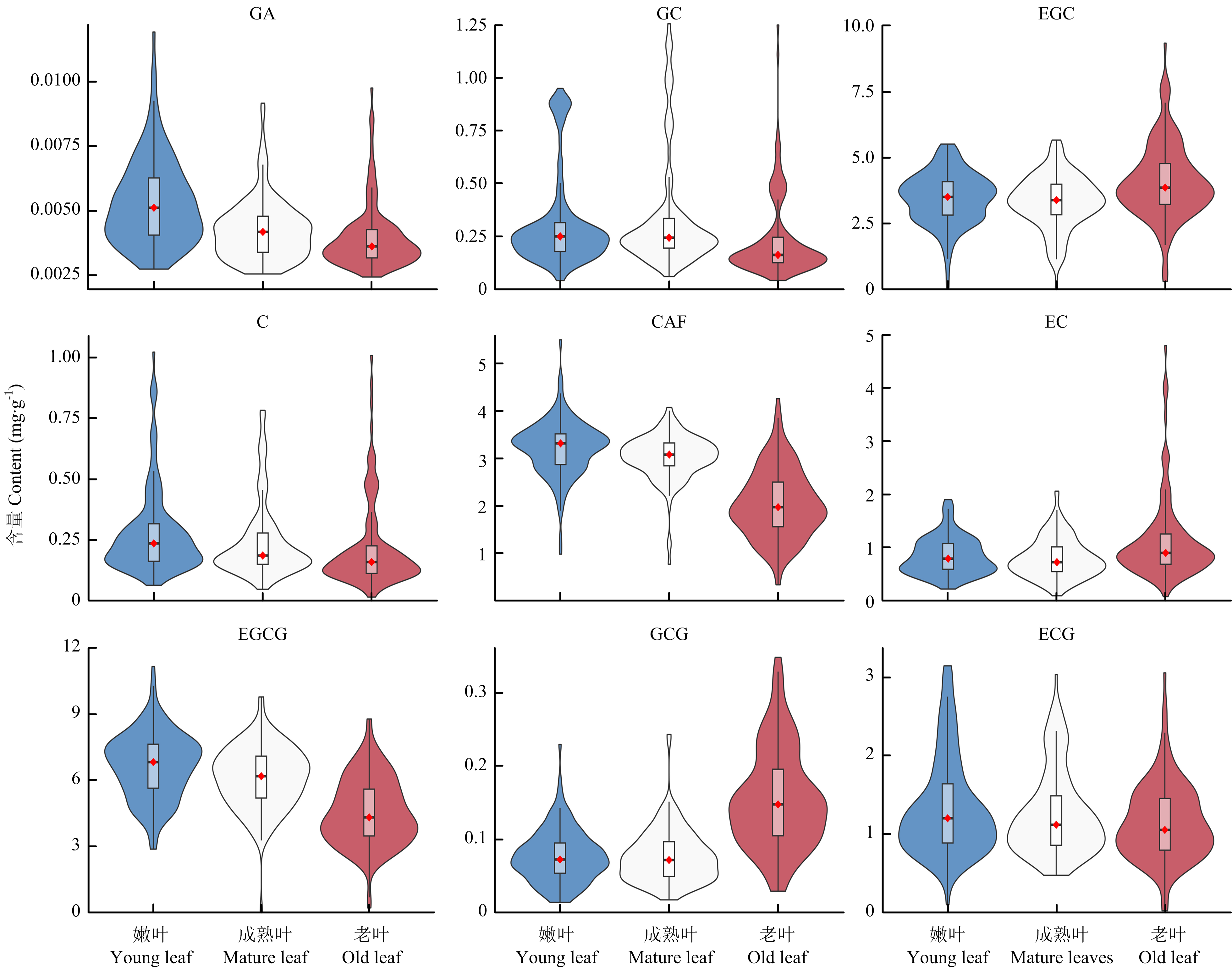
Fig. 3

Gradient distribution of catechins and chemical components content in tea leaves with different maturity levels"

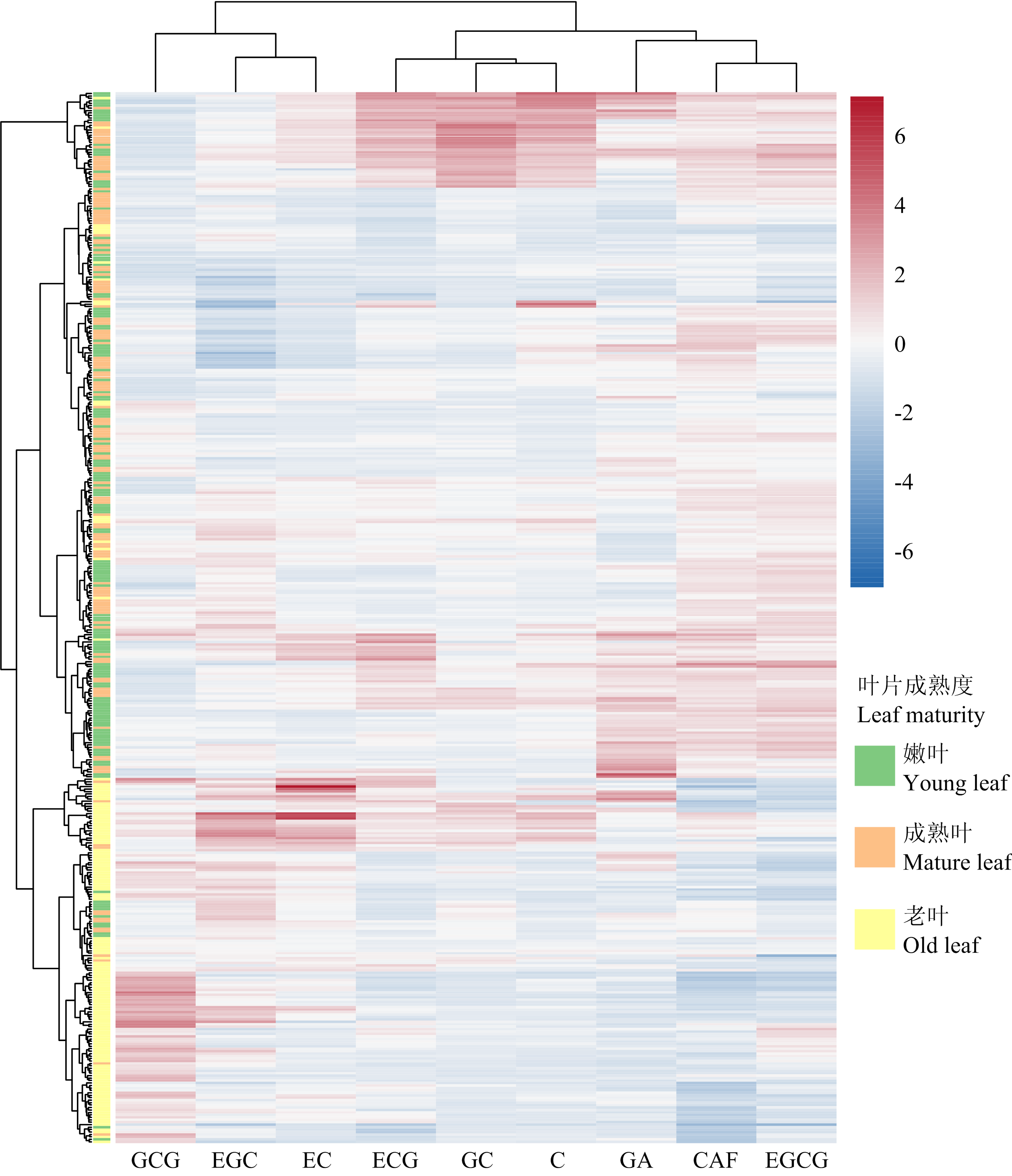
Fig. 4

Hierarchical clustering heatmap of tea leaf samples based on chemical component profiles"

Fig. 5

Pseudo-negative correlation between EGCG and GCG caused by tea leaf maturity confounding (Simpson’s paradox)"

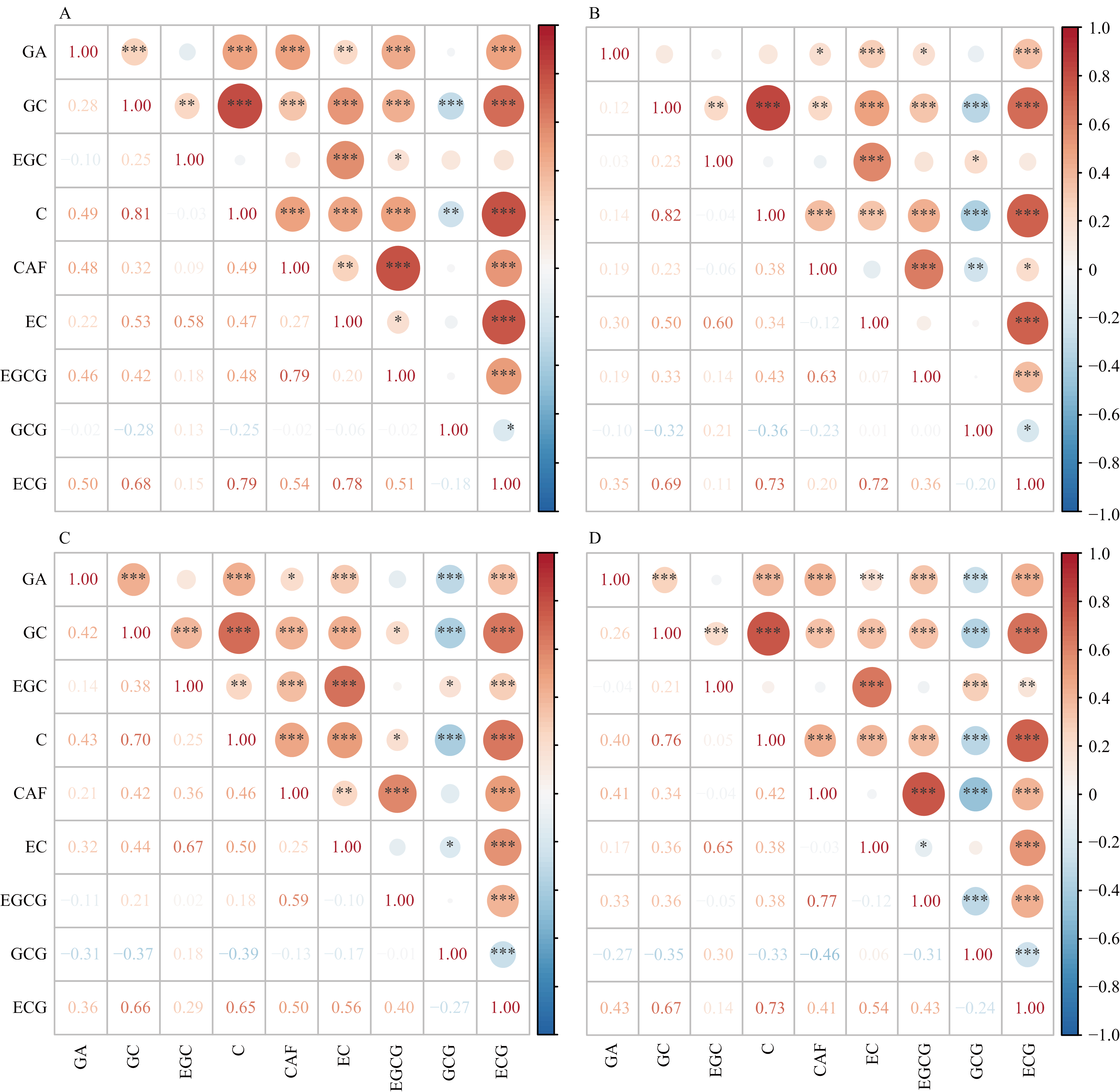
Fig. 6

Pearson correlation coefficient matrix of tea leaf chemical components A: Young leaf; B: Mature leaf; C: Old leaf; D: Whole sample. *: Correlation is significant at the 0.05 level; **: Correlation is significant at the 0.01 level; ***: Correlation is significant at the 0.001 level"

Fig. 7

Radar chart of prediction performance of various algorithms on catechin components under different preprocessing strategies"

Table 1

Performance statistics of the multi-task XGBoost model for simultaneous prediction of nine components in tea leaves based on full- spectrum data"

成分
Component
校正集决定系数
$R_{\mathrm{c}}^{2}$
预测集决定系数
$R_{\mathrm{p}}^{2}$
校正均方根误差
RMSEC
预测均方根误差
RMSEP
相对分析误差
RPD
儿茶素 C 0.937 0.568 0.041 0.122 1.522
表没食子儿茶素没食子酸酯 EGCG 0.903 0.567 0.557 1.128 1.519
没食子儿茶素没食子酸酯 GCG 0.950 0.548 0.014 0.042 1.487
咖啡因CAF 0.918 0.545 0.229 0.498 1.482
没食子儿茶素 GC 0.947 0.540 0.056 0.142 1.474
没食子酸GA 0.893 0.419 0.000 0.001 1.312
表儿茶素没食子酸酯 ECG 0.908 0.413 0.170 0.404 1.305
表儿茶素EC 0.929 0.287 0.151 0.385 1.185
表没食子儿茶素 EGC 0.904 0.099 0.393 1.129 1.053

Table 2

Distribution of characteristic bands for tea leaves each component selected by the successive projection algorithm"

成分
Component
波段数量
Number of bands
特征波段
Characteristic wavelengths (nm)
表没食子儿茶素没食子酸酯 EGCG 18 [763.2, 872.3, 715.0, 414.5, 669.2, 843.6, 906.6, 908.8, 926.5, 867.9, 549.9, 887.8, 943.0, 445.2, 911.0, 852.5, 928.7, 940.8]
咖啡因CAF 18 [561.6, 416.5, 934.2, 487.7, 867.9, 906.6, 898.9, 713.9, 893.3, 549.9, 926.5, 843.6, 675.7, 400.2, 940.8, 852.5, 920.9, 877.9]
没食子儿茶素没食子酸酯 GCG 12 [443.1, 496.1, 839.2, 961.8, 414.5, 844.7, 906.6, 866.8, 675.7, 926.5, 549.9, 713.9]
没食子儿茶素 GC 18 [717.2, 822.7, 911.0, 415.5, 485.6, 871.2, 895.5, 926.5, 549.9, 866.8, 675.7, 933.1, 843.6, 404.3, 897.7, 940.8, 918.7, 943.0]
儿茶素 C 7 [635.6, 417.5, 954.0, 895.5, 834.8, 892.2, 485.6]
表儿茶素没食子酸酯 ECG 7 [717.2, 822.7, 911.0, 415.5, 485.6, 871.2, 895.5]
没食子酸GA 1 [592.6]
表儿茶素EC 1 [549.9]
表没食子儿茶素 EGC 1 [549.9]

Table 3

Prediction performance of the simplified XGBoost model based on SPA-selected characteristic bands"

预处理方法
Preprocessing method
成分
Component
校正集决定系数
$R_{\mathrm{c}}^{2}$
预测集决定系数
$R_{\mathrm{p}}^{2}$
校正均方根误差
RMSEC
预测均方根误差
RMSEP
相对分析误差
RPD
SG+SNV+D1ST 表没食子儿茶素没食子酸酯 EGCG 0.963 0.544 0.341 1.157 1.482
咖啡因CAF 0.919 0.500 0.228 0.522 1.414
没食子儿茶素没食子酸酯 GCG 0.919 0.458 0.017 0.046 1.359
没食子儿茶素 GC 0.900 0.353 0.076 0.168 1.243
儿茶素 C 0.752 0.347 0.082 0.150 1.238
表儿茶素没食子酸酯 ECG 0.625 0.266 0.344 0.452 1.167
没食子酸GA 0.419 0.255 0.001 0.001 1.159
表儿茶素EC 0.590 0.026 0.362 0.450 1.013
表没食子儿茶素 EGC 0.436 -0.079 0.953 1.235 0.963
[1]
Liao Y Y, Zhou X C, Zeng L T. How does tea (Camellia sinensis) produce specialized metabolites which determine its unique quality and function: A review[J]. Critical Reviews in Food Science and Nutrition, 2022, 62(14): 3751-3767.

doi: 10.1080/10408398.2020.1868970
[2]
Xu Y Q, Zhang Y N, Chen J X, Wang F, Du Q Z, Yin J F. Quantitative analyses of the bitterness and astringency of catechins from green tea[J]. Food Chemistry, 2018, 258: 16-24.

doi: 10.1016/j.foodchem.2018.03.042
[3]
Fang K X, Xia Z Q, Li H J, Jiang X H, Qin D D, Wang Q S, Wang Q, Pan C D, Li B, Wu H L. Genome-wide association analysis identified molecular markers associated with important tea flavor-related metabolites[J]. Horticulture Research, 2021, 8: 42.

doi: 10.1038/s41438-021-00477-3 pmid: 33642595
[4]
Seger C, Sturm S, Stuppner H. Mass spectrometry and NMR spectroscopy: Modern high-end detectors for high resolution separation techniques: State of the art in natural product HPLC-MS, HPLC-NMR, and CE-MS hyphenations[J]. Natural Product Reports, 2013, 30(7): 970-987.

doi: 10.1039/c3np70015a
[5]
Luo B D, Sun H W, Zhang L L, Chen F N, Wu K H. Advances in the tea plants phenotyping using hyperspectral imaging technology[J]. Frontiers in Plant Science, 2024, 15: 1442225.
[6]
Ullah F, Ullah I, Khan K, Khan S, Amin F. Advances in deep neural network-based hyperspectral image classification and feature learning with limited samples: A survey[J]. Applied Intelligence, 2025, 55(6): 370.

doi: 10.1007/s10489-024-06139-w
[7]
Xiong L G, Li J, Li Y H, Yuan L, Liu S Q, Huang J A, Liu Z H. Dynamic changes in catechin levels and catechin biosynthesis-related gene expression in albino tea plants (Camellia sinensis L.)[J]. Plant Physiology and Biochemistry, 2013, 71: 132-143.

doi: 10.1016/j.plaphy.2013.06.019
[8]
Stitt M, Sulpice R, Keurentjes J. Metabolic networks: How to identify key components in the regulation of metabolism and growth[J]. Plant Physiology, 2010, 152(2): 428-444.

doi: 10.1104/pp.109.150821 pmid: 20018593
[9]
Li Z X, Yang W J, Ahammed G J, Shen C, Yan P, Li X, Han W Y. Developmental changes in carbon and nitrogen metabolism affect tea quality in different leaf position[J]. Plant Physiology and Biochemistry, 2016, 106: 327-335.

doi: 10.1016/j.plaphy.2016.06.027
[10]
Simpson E H. The interpretation of interaction in contingency tables[J]. Journal of the Royal Statistical Society Series B: Statistical Methodology, 1951, 13(2): 238-241.

doi: 10.1111/j.2517-6161.1951.tb00088.x
[11]
Kievit R A, Frankenhuis W E, Waldorp L J, Borsboom D. Simpson’s paradox in psychological science: A practical guide[J]. Frontiers in Psychology, 2013, 4: 513.
[12]
李鑫瑜, 侯名语, 崔顺立, 刘盈茹, 李秀坤, 刘立峰. 红色和黑色花生籽仁黄酮含量近红外模型的构建[J]. 中国农业科学, 2025, 58(7): 1284-1295. DOI: 10.3864/j.issn.0578-1752.2025.07.003.
Li X Y, Hou M Y, Cui S L, Liu Y R, Li X K, Liu L F. Construction of near infrared spectrometry model for flavonoids content of peanut with red and black testa[J]. Scientia Agricultura Sinica, 2025, 58(7): 1284-1295. DOI: 10.3864/j.issn.0578-1752.2025.07.003. (in Chinese)
[13]
Lu B, Dao P D, Liu J G, He Y H, Shang J L. Recent advances of hyperspectral imaging technology and applications in agriculture[J]. Remote Sensing, 2020, 12(16): 2659.

doi: 10.3390/rs12162659
[14]
Zhang C Y, Bengio S, Hardt M, Recht B, Vinyals O. Understanding deep learning (still) requires rethinking generalization[J]. Communications of the ACM, 2021, 64(3): 107-115.
[15]
Ng W, Minasny B, de Sousa Mendes W, Demattê J A M. The influence of training sample size on the accuracy of deep learning models for the prediction of soil properties with near-infrared spectroscopy data[J]. Soil, 2020, 6(2): 565-578.

doi: 10.5194/soil-6-565-2020
[16]
Moreira J, Aryal J, Guidry L, Adhikari A, Chen Y, Sriwattana S, Prinyawiwatkul W. Tea quality: An overview of the analytical methods and sensory analyses used in the most recent studies[J]. Foods, 2024, 13(22): 3580.

doi: 10.3390/foods13223580
[17]
Zhang Y, Yang Q. A survey on multi-task learning[J]. IEEE Transactions on Knowledge and Data Engineering, 2022, 34(12): 5586-5609.

doi: 10.1109/TKDE.2021.3070203
[18]
Savitzky A, Golay M J E. Smoothing and differentiation of data by simplified least squares procedures[J]. Analytical Chemistry, 1964, 36(8): 1627-1639.

doi: 10.1021/ac60214a047
[19]
Barnes R J, Dhanoa M S, Lister S J. Standard normal variate transformation and de-trending of near-infrared diffuse reflectance spectra[J]. Applied Spectroscopy, 1989, 43(5): 772-777.

doi: 10.1366/0003702894202201
[20]
栗方亮, 孔庆波, 张青. 基于光谱指数的琯溪蜜柚叶片钙素含量估测模型研究[J]. 中国农业科学, 2025, 58(7): 1321-1332. DOI: 10.3864/j.issn.0578-1752.2025.07.006.
Li F L, Kong Q B, Zhang Q. Research on the estimation model of calcium content in Guanxi honey pomelo leaves based on spectral index[J]. Scientia Agricultura Sinica, 2025, 58(7): 1321-1332. DOI: 10.3864/j.issn.0578-1752.2025.07.006. (in Chinese)
[21]
Osman A I A, Ahmed A N, Chow M F, Huang Y F, El-Shafie A. Extreme gradient boosting (Xgboost) model to predict the groundwater levels in Selangor Malaysia[J]. Ain Shams Engineering Journal, 2021, 12(2): 1545-1556.

doi: 10.1016/j.asej.2020.11.011
[22]
Niu C, Tan K, Wang X, Pan C. Mapping nutrient pollution in inland water bodies using multi-platform hyperspectral imagery and deep regression network[J]. Journal of Hazardous Materials, 2025, 488: 137314.

doi: 10.1016/j.jhazmat.2025.137314
[23]
Harbola S, Coors V. One dimensional convolutional neural network architectures for wind prediction[J]. Energy Conversion and Management, 2019, 195: 70-75.

doi: 10.1016/j.enconman.2019.05.007
[24]
Chen X K, Li F L, Chang Q R. Combination of continuous wavelet transform and successive projection algorithm for the estimation of winter wheat plant nitrogen concentration[J]. Remote Sensing, 2023, 15(4): 997.

doi: 10.3390/rs15040997
[25]
刘静, 汪泓, 张磊, 肖玖军, 吴建高, 龚明冲. 基于高光谱的辣椒叶片氮素含量反演[J]. 中国农业科学, 2025, 58(2): 252-265. DOI: 10.3864/j.issn.0578-1752.2025.02.004.
Liu J, Wang H, Zhang L, Xiao J J, Wu J G, Gong M C. Inversion of nitrogen content in chili pepper leaves based on hyperspectral analysis[J]. Scientia Agricultura Sinica, 2025, 58(2): 252-265. DOI: 10.3864/j.issn.0578-1752.2025.02.004. (in Chinese)
[26]
Xu J C, Qu F F, Shen B H, Huang Z X, Li X L, Weng H Y, Ye D P, Wu R Y. Rapid detection of tea polyphenols in fresh tea leaves based on fusion of visible/short-wave and long-wave near infrared spectroscopy and its device development[J]. Applied Sciences, 2023, 13(3): 1739.

doi: 10.3390/app13031739
[27]
Qian X, Yang J, Shi S, Gong W, Du L, Chen B W, Chen B W. Analyzing the effect of incident angle on echo intensity acquired by hyperspectral lidar based on the Lambert-Beckman model[J]. Optics Express, 2021, 29(7): 11055-11069.

doi: 10.1364/OE.420468 pmid: 33820225
[28]
中华全国供销合作总社. 茶叶中茶多酚和儿茶素类含量的检测方法: GB/T 8313—2018[S]. 北京: 中国标准出版社, 2018.
All China Federation of Supply and Marketing Cooperatives. Determination of total polyphenols and catechins content in tea: GB/T 8313-2018[S]. Beijing: Standards Press of China, 2018. (in Chinese)
[29]
Abdi H. Partial least squares regression and projection on latent structure regression (PLS Regression)[J]. Wiley Interdisciplinary Reviews: Computational Statistics, 2010, 2(1): 97-106.

doi: 10.1002/wics.v2:1
[30]
Awad M, Khanna R. Support vector regression[C]//AWAD M, KHANNA R. Efficient Learning Machines:Theories, Concepts, and Applications for Engineers and System Designers. Berkeley, CA: Apress, 2015: 67-80.
[31]
Araújo M C U, Saldanha T C B, Galvão R K H, Yoneyama T, Chame H C, Visani V. The successive projections algorithm for variable selection in spectroscopic multicomponent analysis[J]. Chemometrics and Intelligent Laboratory Systems, 2001, 57(2): 65-73.

doi: 10.1016/S0169-7439(01)00119-8
[32]
Chavana-Bryant C, Malhi Y, Anastasiou A, Enquist B J, Cosio E G, Keenan T F, Gerard F F. Leaf age effects on the spectral predictability of leaf traits in Amazonian canopy trees[J]. Science of the Total Environment, 2019, 666: 1301-1315.

doi: 10.1016/j.scitotenv.2019.01.379
[33]
Zhang L Q, Wei K, Cheng H, Wang L Y, Zhang C C. Accumulation of catechins and expression of catechin synthetic genes in Camellia sinensis at different developmental stages[J]. Botanical Studies, 2016, 57(1): 31.

doi: 10.1186/s40529-016-0143-9
[34]
Yang Y H, Ma S B, Qi F Y, Wang F Y, Xu H B. Application of vis/NIR spectroscopy in the rapid and non-destructive prediction of soluble solid content in milk jujubes[J]. Agriculture, 2025, 15(13): 1382.

doi: 10.3390/agriculture15131382
[35]
Yoon H I, Lee H, Yang J S, Choi J H, Jung D H, Park Y J, Park J E, Kim S M, Park S H. Predicting models for plant metabolites based on PLSR, AdaBoost, XGBoost, and LightGBM algorithms using hyperspectral imaging of Brassica juncea[J]. Agriculture, 2023, 13(8): 1477.

doi: 10.3390/agriculture13081477
[36]
Li J X, Li L, Yan S L, Xie Y D, Hassan M A, Liu P, Wang D X, Fei S P, Xia X C, Tao Z Q, Xiao Y G. A framework for simultaneous prediction of wheat leaf area index and grain yield using hyperspectral remote sensing and multi-task learning[J]. Smart Agricultural Technology, 2026, 14: 102083.

doi: 10.1016/j.atech.2026.102083
[37]
Li C, Jin C, Zhai Y N, Pu Y Y, Qi H N, Zhang C. Simultaneous detection of Citrus internal quality attributes using near-infrared spectroscopy and hyperspectral imaging with multi-task deep learning and instrumental transfer learning[J]. Food Chemistry, 2025, 481: 143996.

doi: 10.1016/j.foodchem.2025.143996
[38]
Zhai Y N, Wang J, Zhou L, Zhang X C, Ren Y, Qi H N, Zhang C. Simultaneously predicting SPAD and water content in rice leaves using hyperspectral imaging with deep multi-task regression and transfer component analysis[J]. Journal of the Science of Food and Agriculture, 2025, 105(1): 554-568.

doi: 10.1002/jsfa.v105.1
[39]
Qi H J, Paz-Kagan T, Karnieli A, Li S W. Linear multi-task learning for predicting soil properties using field spectroscopy[J]. Remote Sensing, 2017, 9(11): 1099.

doi: 10.3390/rs9111099
[40]
Hennessy A, Clarke K, Lewis M. Hyperspectral classification of plants: A review of waveband selection generalisability[J]. Remote Sensing, 2020, 12(1): 113.

doi: 10.3390/rs12010113
[41]
Sharma A, Singh T, Garg N M, Ngo Q C, Kumar D. Hybrid wavelength selection technique and spectral binning for wheat protein estimation using hyperspectral imaging[J]. Food Chemistry, 2026, 512: 148909.

doi: 10.1016/j.foodchem.2026.148909
[1] YAO Lin, PENG LüWen, YANG Hong, RAO JiaYi, GAO HaoRan, TAO QianYi, XIE NianCi, CHEN YingYu, LI SaiJun, LIU ShuoQian, HUANG FeiYi. Polyphenolic Diversity and Genotypic Analysis of Tea Plants with Different Parents and Their F1 Progeny [J]. Scientia Agricultura Sinica, 2026, 59(8): 1760-1774.
[2] CHEN XiHong, CAI Wei, YU Yun, LI Min, WANG NianWu, DU ZhenGuo, SHEN JianGuo, GAO FangLuan. Identification of Tea Plant Viruses in Fujian Province and Establishment of Multiplex PCR Detection Assay [J]. Scientia Agricultura Sinica, 2024, 57(4): 698-710.
[3] LIN XinYing,WANG PengJie,YANG RuXing,ZHENG YuCheng,CHEN XiaoMin,ZHANG Lei,SHAO ShuXian,YE NaiXing. The Albino Mechanism of a New High Theanine Tea Cultivar Fuhuang 1 [J]. Scientia Agricultura Sinica, 2022, 55(9): 1831-1845.
[4] CAI WeiDi,ZHANG Yu,LIU HaiYan,ZHENG HengBiao,CHENG Tao,TIAN YongChao,ZHU Yan,CAO WeiXing,YAO Xia. Early Detection on Wheat Canopy Powdery Mildew with Hyperspectral Imaging [J]. Scientia Agricultura Sinica, 2022, 55(6): 1110-1126.
[5] LIU YuFei,JIN JiQiang,YAO MingZhe,CHEN Liang. Screening, Cloning and Functional Research of the Rare Allelic Variation of Caffeine Synthase Gene (TCS1g) in Tea Plants [J]. Scientia Agricultura Sinica, 2019, 52(10): 1772-1783.
[6] FENG YiLu, FU XiaoBin, WU Fan, CUI HongChun, LI HongLiang. Molecular Cloning, Prokaryotic Expression and Binding Functions of Pheromone Binding Protein 2 (PBP2) in the Ectropis obliqua [J]. Scientia Agricultura Sinica, 2017, 50(3): 504-512.
[7] WANG Yu-chun, HAO Xin-yuan, HUANG Yu-ting, YUE Chuan, WANG Bo, CAO Hong-li, WANG Lu, WANG Xin-chao, YANG Ya-jun, XIAO Bin. Phylogenetic Study of Colletotrichum Species Associated with Camellia sinensis from the Major Tea Areas in China [J]. Scientia Agricultura Sinica, 2015, 48(24): 4924-4935.
[8] YUE Chuan, CAO Hong-li, ZHOU Yan-hua, WANG Lu, HAO Xin-yuan, WANG Xin-chao, YANG Ya-jun. Cloning and Expression Analysis of Glutathione Reductase Genes(CsGRs) in Tea Plant (Camellia sinensis) [J]. Scientia Agricultura Sinica, 2014, 47(16): 3277-3289.
[9] YANG Mei-Hua-1, 2 , ZHAO Xiao-Min-1, 2 , 3 , FANG Qian-1, 2 , XIE Bi-Yu-1, 2 . Study on Soil Total N Estimation by Vis-NIR Spectra with Variable Selection [J]. Scientia Agricultura Sinica, 2014, 47(12): 2374-2383.
[10] ZHANG Li-Qun-1, WEI Kang-1, WANG Li-Yuan-1, CHENG Hao-1, LIU Ben-Ying-2, GONG Wu-Yun-1. The Structure and Single Nucleotide Polymorphism Analysis of Chalcone Synthase Genes in Tea Plant (Camellia sinenesis) [J]. Scientia Agricultura Sinica, 2014, 47(1): 133-144.
[11] ZHENG Zi-Cheng, LIU Min-Ying, LI Ting-Xuan. Distribution Characteristics of Organic Carbon Fractions in Soil Aggregates Under Tea Plantation of Different Ages [J]. Scientia Agricultura Sinica, 2013, 46(9): 1827-1836.
[12] CAO Hong-Li-12, YUE Chuan-12, HAO Xin-Yuan-13, WANG Xin-Chao-1, YANG Ya-Jun-1. Cloning of Choline Monooxygenase (CMO) Gene and Expression Analysis of the Key Glycine Betaine Biosynthesis-Related Genes in Tea Plant (Camellia sinensis) [J]. Scientia Agricultura Sinica, 2013, 46(15): 3087-3096.
[13] XIA Tao, GAO Li-Ping, LIU Ya-Jun, WANG Yun-Sheng, LIU Li, ZHAO Lei, JIANG Xiao-Lan, QIAN Yu-Mei. Advances in Research of Biosynthesis and Hydrolysis Pathways of Gallated Catechins in Camellia sinensis [J]. Scientia Agricultura Sinica, 2013, 46(11): 2307-2320.
[14] ZHANG Li-ming,WANG Yun-sheng,GAO Li-ping,XIA Tao
. Analysis of Differential Protein Expression of Tea Callus with Different Catechins Contents
[J]. Scientia Agricultura Sinica, 2010, 43(19): 4053-4062 .
[15] XIA Tao,GAO Li-ping .

Advances in Biosynthesis Pathways and Regulation of Flavonoids and Catechins

[J]. Scientia Agricultura Sinica, 2009, 42(8): 2899-2908 .
Viewed
Full text


Abstract

Cited

  Shared   
  Discussed   
No Suggested Reading articles found!