Scientia Agricultura Sinica ›› 2026, Vol. 59 ›› Issue (16): 3541-3555.doi: 10.3864/j.issn.0578-1752.2026.16.006

• TILLAGE & CULTIVATION·PHYSIOLOGY & BIOCHEMISTRY·AGRICULTURE INFORMATION TECHNOLOGY • Previous Articles     Next Articles

Identification of Yield-Limiting Factors Associated with Spatiotemporal Differentiation of Soil Nutrients in Long-Term Continuous Sugarcane Cultivation Fields

DENG Jun1,2(), AI Jing2, WANG YuTong2, DAO JingMei2, ZHAO Yong2, YE Song2, DENG Yan3(), ZHANG FuSuo1()   

  1. 1 College of Resources and Environment Sciences, China Agricultural University/National Key Laboratory of Efficient Utilization of Nutrient Resources, Beijing 100094
    2 Sugarcane Research Institute, Yunnan Academy of Agricultural Sciences, Kaiyuan 661699, Yunnan
    3 College of Resources and Environment, Southwest University, Chongqing 400715
  • Received:2026-01-15 Accepted:2026-05-14 Online:2026-08-16 Published:2026-08-17
  • Contact: DENG Yan, ZHANG FuSuo

Abstract:

【Objective】 This study aimed to reveal the spatiotemporal variation in characteristics of soil chemical properties and their relationship with sugarcane yield under long-term continuous cropping, identify the key soil factors limiting sugarcane productivity, and provide a scientific basis for sustainable soil management in sugarcane fields.【Method】 A space-for-time substitution approach was adopted with five continuous cropping duration treatments: CK (0 a), T1 (1 a), T2 (10-19 a), T3 (20-29 a), and T4 (>35 a). Sugarcane yield and soil chemical properties within the 0-60 cm profile (stratified into 0-20, 20-40, and 40-60 cm layers) were systematically analyzed, including pH, soil organic matter (OM), total nitrogen (TN), total phosphorus (TP), total potassium (TK), alkali-hydrolyzable nitrogen (AN), available phosphorus (AP), available potassium (AK), and available micronutrients contents. The integrated fertility index (IFI) was calculated using factor analysis combined with correlation coefficient analysis and the Nemerow composite index method. Two machine learning algorithms-Extreme Gradient Boosting (XGBoost) and Random Forest (RF)-were employed to quantify the relative contribution of individual soil chemical indicators to sugarcane yield.【Result】 (1) Long-term continuous cropping significantly reduced sugarcane yield (P<0.05), with a 13.68% decline observed in the T4 treatment(>35 years)compared with the CK, and induced deterioration in soil chemical properties. (2) Soil acidification was intensified under continuous cropping, exhibiting significant layer-specific characteristics. Compared with the control (CK), the mean soil pH decreased to 4.60 after more than 20 years of continuous cropping. The subsurface layer (20-40 cm) exhibited the most severe acidification, with pH values significantly lower than the CK in the T3 and T4 treatment groups. (3) Soil nutrients exhibited obvious surface enrichment and accumulation of certain elements. The contents of soil organic matter, total nitrogen, total phosphorus, alkali-hydrolyzable nitrogen, and available phosphorus in the surface layer (0-20 cm) were significantly higher than in deeper layers. Prolonged continuous cropping led to significant accumulation of available potassium and available zinc, increasing by 320.47% and 164.13%, respectively, in the surface layer. (4) The soil integrated fertility index (IFI) decreased significantly with soil depth. Although long-term continuous cropping improved average fertility in the surface layer, it exacerbated the variability and spatial heterogeneity of fertility in deeper soil layers. (5) Both XGBoost and RF analyses consistently identified soil pH in the 20-40 cm layer as the primary limiting factor determining sugarcane yield, with a relative importance contribution substantially greater than that of surface available nutrients and other soil indicators.【Conclusion】 Under long-term continuous sugarcane cultivation, soils exhibited a spatiotemporal soil pattern characterized by surface nutrient enrichment and severe subsurface acidification. Acidification in the 20-40 cm soil layer constitutes the core obstacle restricting sugarcane productivity. In practical production, management strategies should shift from surface-oriented nutrient application to deep amelioration targeting subsurface acidification.

Key words: sugarcane, nutrient balance, soil acidification, subsurface acidification, yield driving factor, machine learning

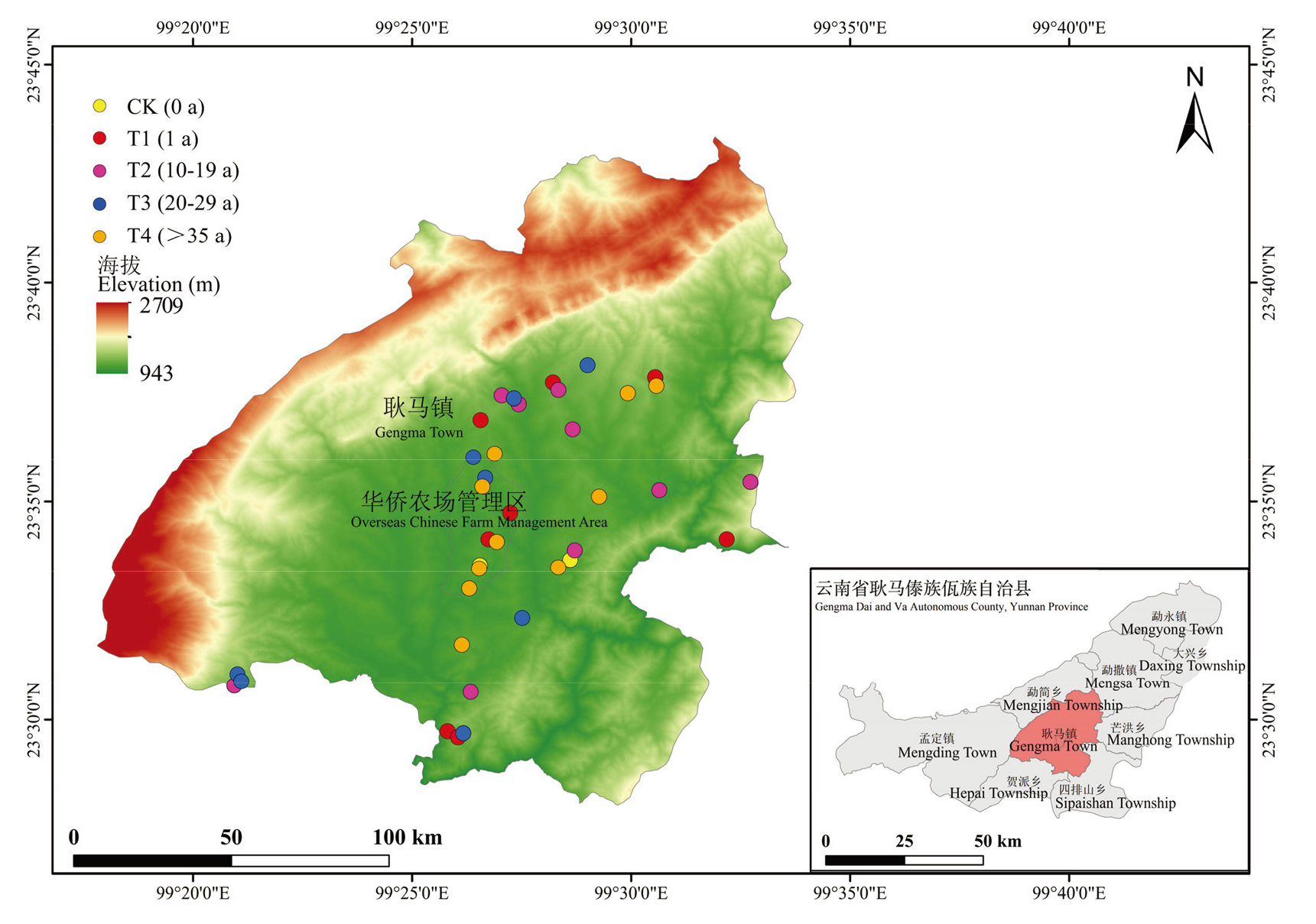
Fig. 1

Distribution of sampling sites"

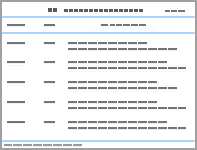
Table 1

Historical fertilization practices for sugarcane in Gengma Town"

年份
Year
肥料类型
Fertilizer type
常规施肥次数及施肥量
Fertilization schedule and application rate
施肥总量
Total fertilizer applied (kg·hm-2)
氮磷钾养分总投入量
Total NPK input
(kg·hm-2)
2016—2022 复合肥(总养分44%,N-P2O5-K2O=26-12-6)
Compound fertilizer (total nutrients 44%, N- P2O5-K2O = 26-12-6)
一次性施肥:肥料全部用于基肥施用
Single application: all applied as basal fertilizer
1 200 528
2004—2015 复合肥(总养分25%,N-P2O5-K2O=10-
10-5)+尿素(含N 46%)
Compound fertilizer (total nutrients 25%, N-P2O5-K2O = 10-10-5) + urea (46% N)
二次施肥:基肥施1 200 kg·hm-2复合肥,追肥施600 kg·hm-2尿素
Two applications: basal application of 1 200 kg·hm-2 compound fertilizer; topdressing with 600 kg·hm-2urea
1 800 576
1980—2003 尿素(含N 46%)+过磷酸钙或钙镁磷肥(含P2O5 12%)+氯化钾(含K2O 60%)
Urea (46% N) + single superphosphate or calcium magnesium phosphate (12% P2O5) + potassium chloride (60% K2O)
三次施肥:基肥施300 kg·hm-2尿素+750 kg·hm-2过磷酸钙或钙镁磷肥+300 kg·hm-2氯化钾,第一次追肥施600 kg·hm-2尿素,第二次追肥施300 kg·hm-2尿素
Three applications: basal application of 300 kg·hm-2 urea +750 kg·hm-2 single superphosphate or calcium magnesium phosphate+300 kg·hm-2 potassium chloride; first topdressing: 600 kg·hm-2 urea; second topdressing: 300 kg·hm-2 urea
2 250 822

Table 2

The grading standard of soil properties"

分级
Grade
有机质含量
Organic matter content (g·kg-1)
全氮含量
Total nitrogen
content
(g·kg-1)
全磷含量
Total
phosphorus
content (g·kg-1)
全钾含量
Total
potassium
content (g·kg-1)
碱解氮含量
Alkali-hydrolyzable
nitrogen content
(mg·kg-1)
速效磷含量
Available
phosphorus
content (mg·kg-1)
速效钾含量
Available
potassium
content (mg·kg-1)
pH
>7 <7
Xa 10 0.75 0.4 5 60 3 40 8.5 4.5
Xc 20 1.50 0.6 20 120 10 100 8.0 5.5
Xp 30 2.00 1.0 25 180 20 150 7.5 6.5

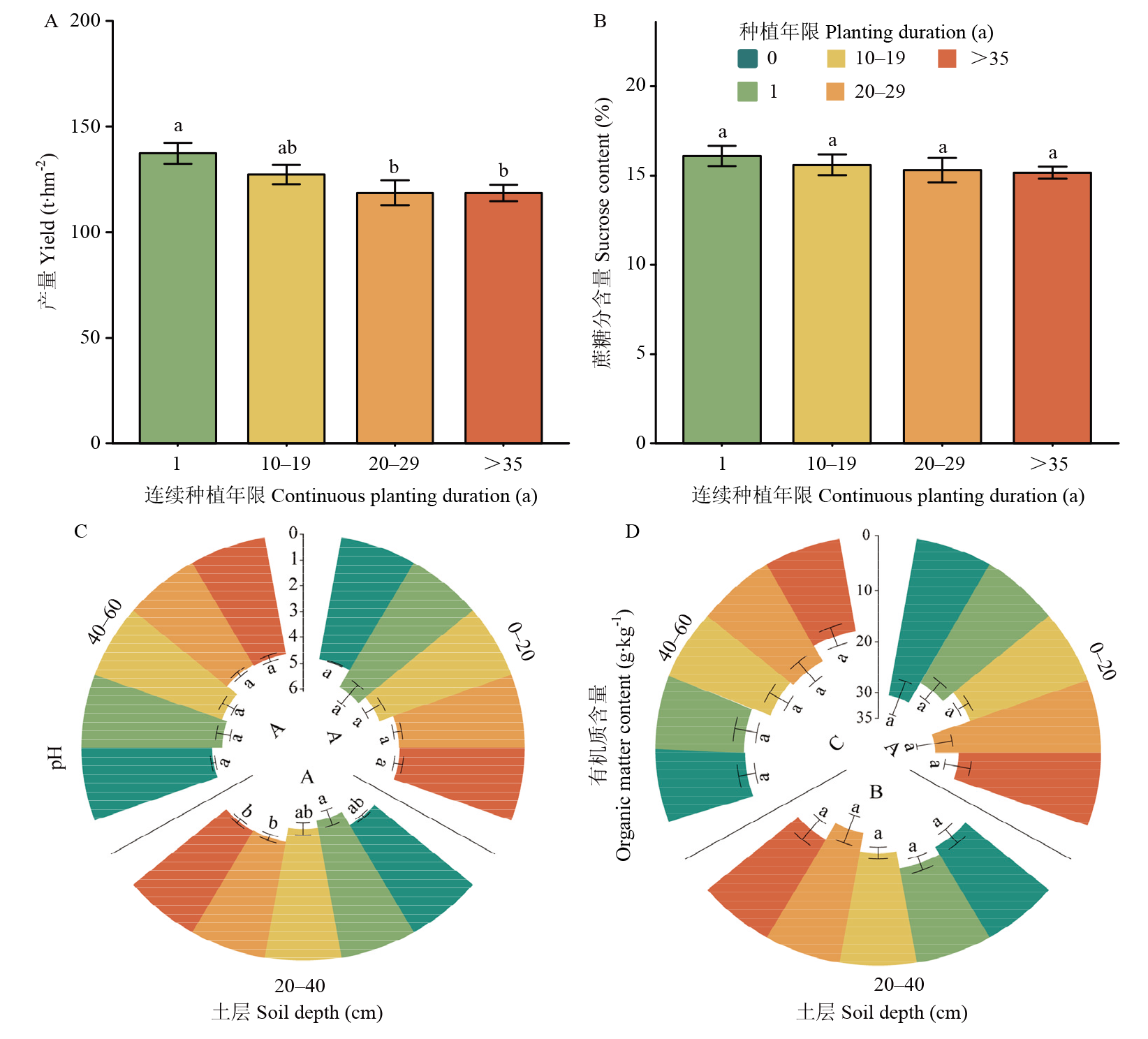
Fig. 2

Sugarcane yield (A), sucrose content (B), soil pH (C) and organic matter content (D) in different soil layers under different continuous cropping years Different lowercase letters indicate significant differences among different continuous cropping years for the same indicator (P<0.05). 0 a represents control soil without sugarcane planting; 1 a, 10—19 a, 20—29 a, and >35 a represent continuous cropping for 1 year, 10—19 years, 20—29 years, and 35 years or more, respectively; A, B, and C represent 0-20 cm, 20—40 cm, and 40—60 cm soil layers, respectively. The same as below"

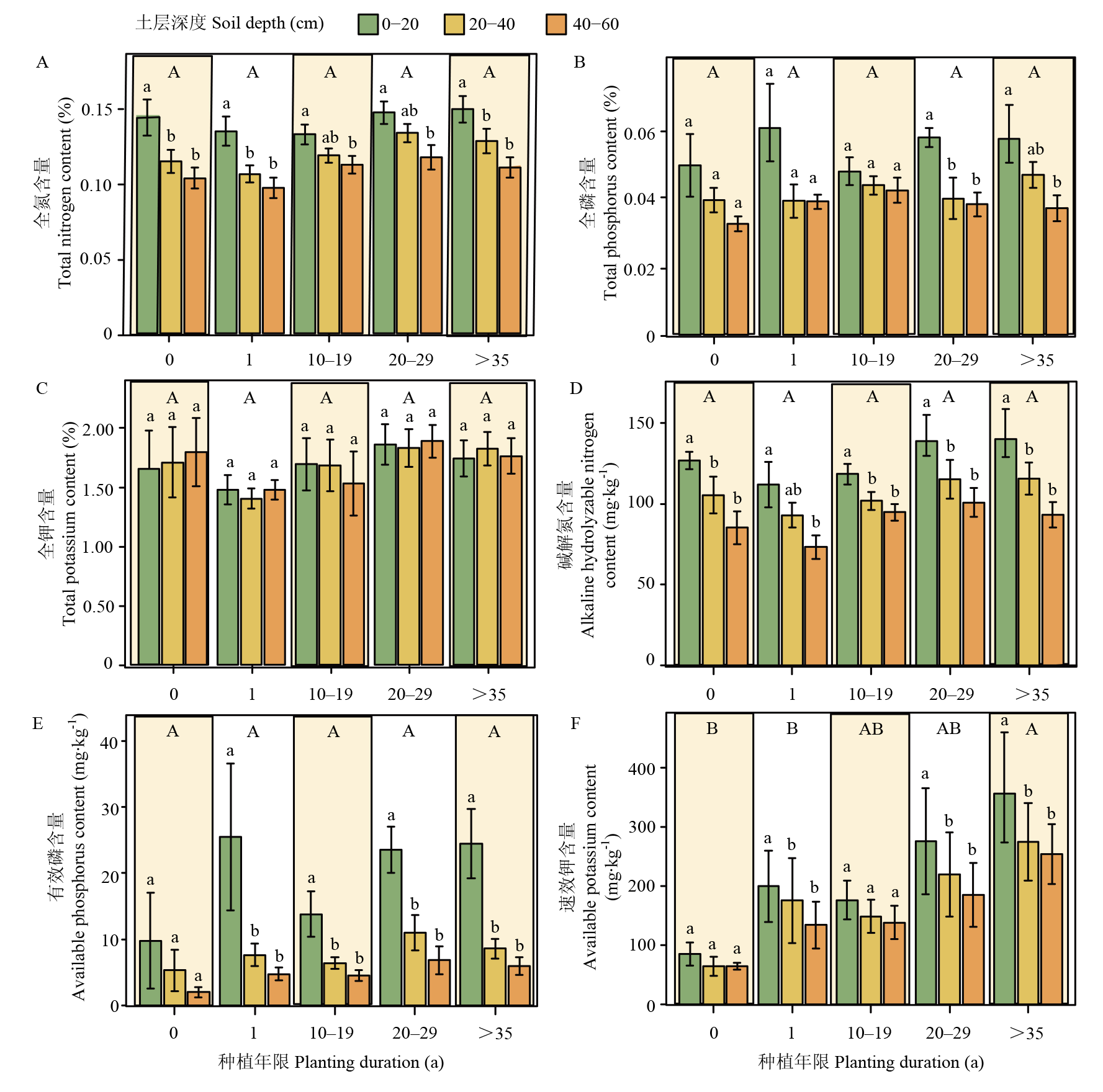
Fig. 3

Soil macronutrient contents in different soil layers under different continuous cropping years"

Fig. 4

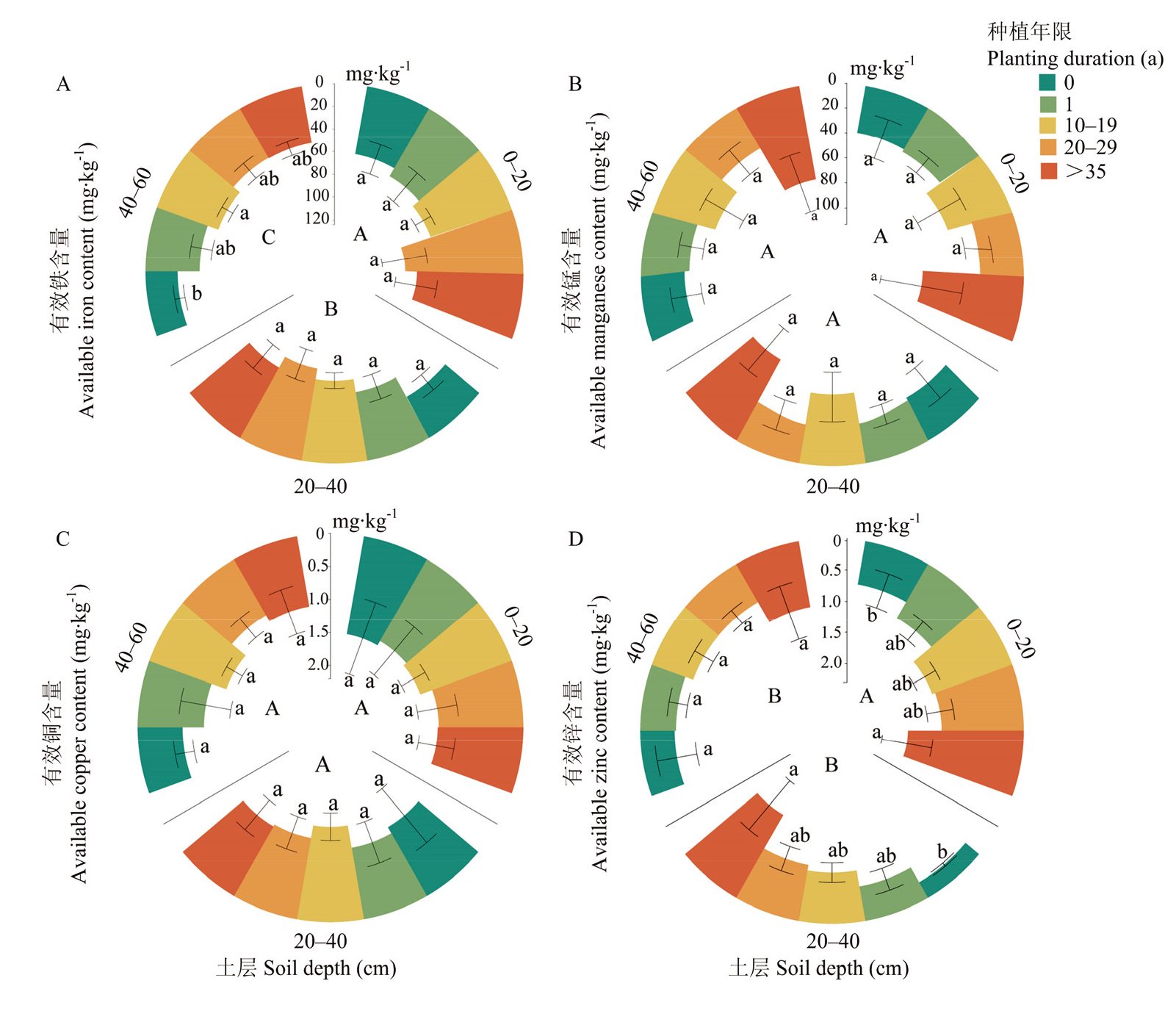
Soil micronutrient contents in different soil layers under different continuous cropping years"

Fig. 5

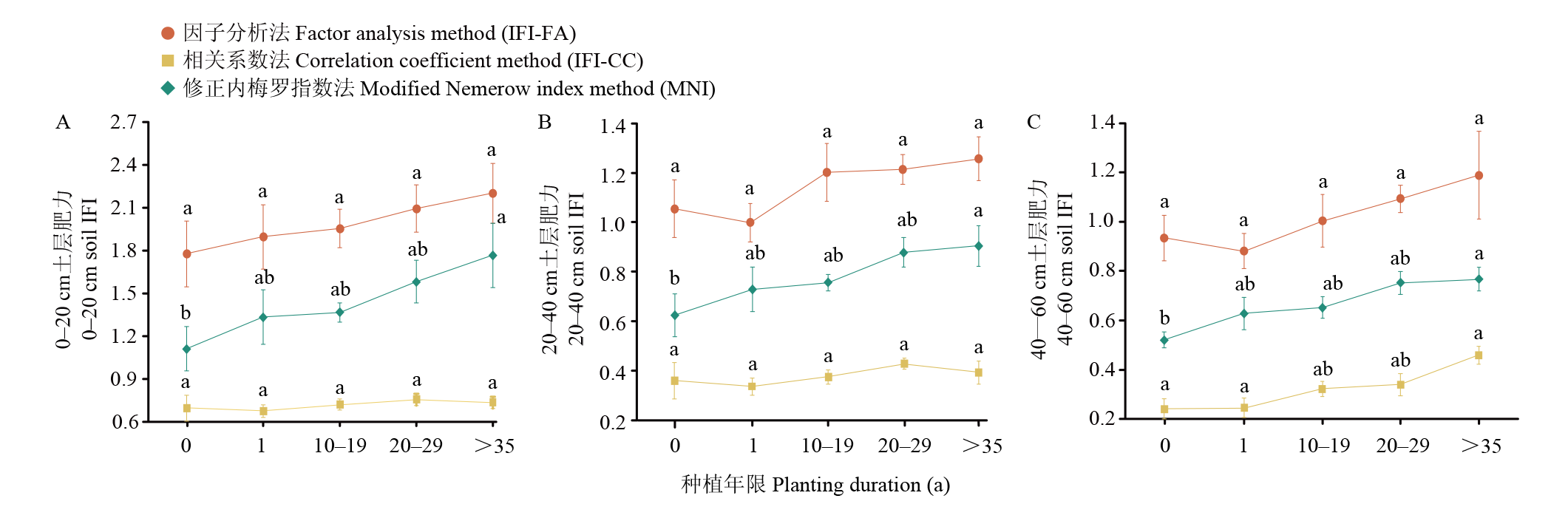
Soil Fertility as influenced by continuous cropping duration and soil depth (0—20, 20—40, 40—60 cm)"

Fig. 6

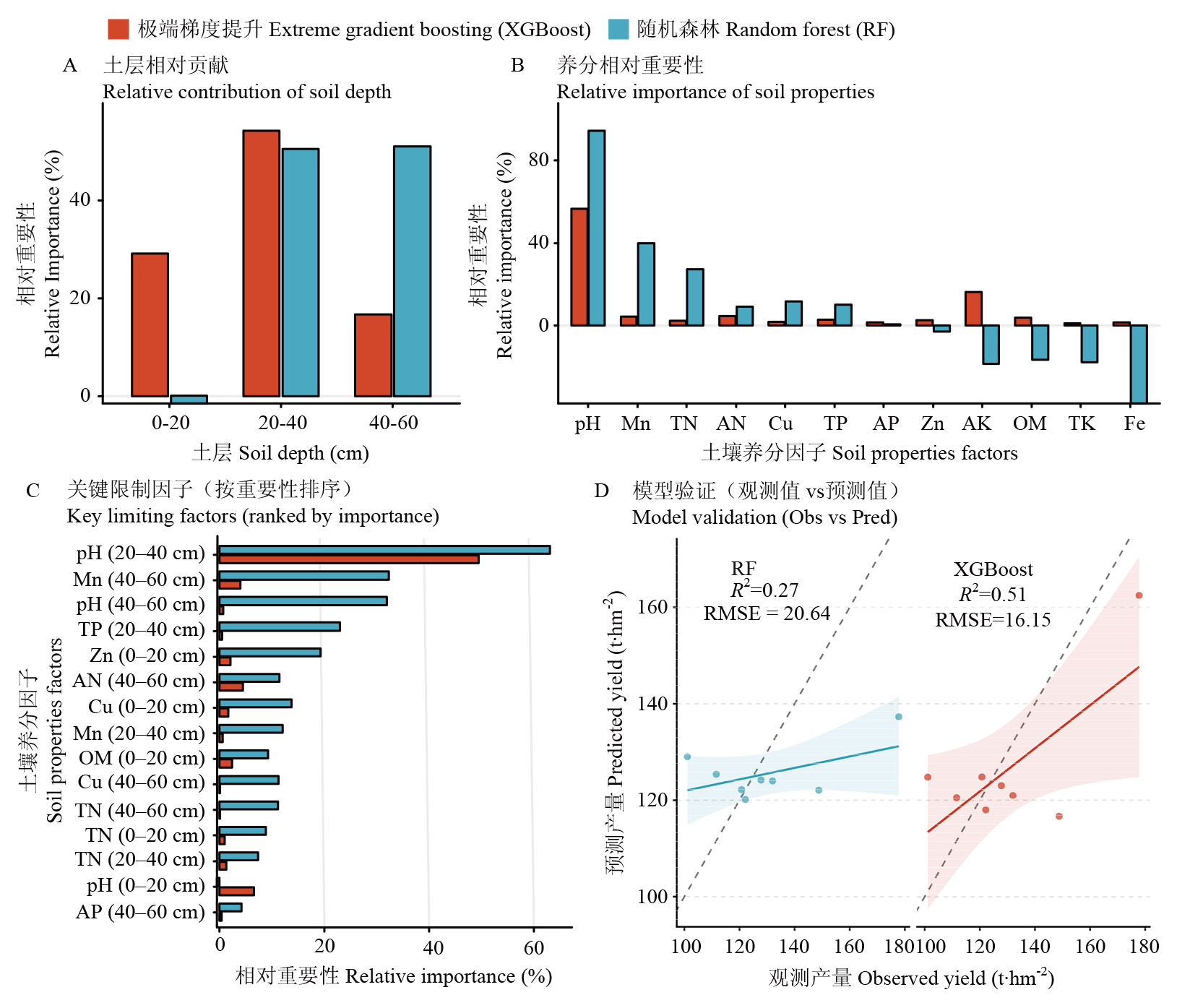
Performance comparison of XGBoost and RF models for sugarcane yield prediction and importance of soil driving factors A: Relative importance contribution of different soil layers to yield prediction; B: Relative importance of soil nutrient indicators; OM: Organic matter; TN: Total nitrogen; TP: Total phosphorus; TK: Total potassium; AN: Alkali-hydrolyzable nitrogen; AP: Available phosphorus; AK: Available potassium; Fe: Available iron; Mn: Available manganese; Cu: Available copper; Zn: Available zinc; (C) : Importance ranking of key limiting factors, in which the numeric suffix of each variable name indicates the corresponding soil layer depth (e.g., "AN_20-40" denotes alkali-hydrolyzable nitrogen in the 20-40 cm soil layer); (D) : Validation of model performance by fitting predicted values against measured values, where the dashed line represents the 1﹕1 reference line, the solid line represents the linear regression fit, the shaded area represents the 95% confidence interval, R2 is the coefficient of determination, and RMSE is the root mean square error (t·hm⁻2). Orange and blue represent the XGBoost and RF models, respectively"

[1]
Waclawovsky A J, Sato P M, Lembke C G, Moore P H, Souza G M. Sugarcane for bioenergy production: An assessment of yield and regulation of sucrose content[J]. Plant Biotechnology Journal, 2010, 8(3): 263-276.

doi: 10.1111/j.1467-7652.2009.00491.x pmid: 20388126
[2]
李杨瑞. 现代甘蔗学[M]. 北京: 中国农业出版社, 2010.
Li Y R. Modern Sugarcane Science[M]. Beijing: China Agriculture Press, 2010. (in Chinese)
[3]
Garside A L, Smith M A, Chapman L S, Hurney A P, Magarey R C. The yield plateau in the Australian sugar industry: 1970-1990[C]// Proceedings of The Australian Society of Sugar Cane Technologists. Townsville, Australia, 1994, 16: 27-35.
[4]
吴静妮. 土壤理化性质与甘蔗连作障碍的相关性研究[D]. 南宁: 广西大学, 2016.
Wu J N. Study on effects of continuous cropping obstacle on growth of the sugarcane and the rhizosphere soil properties[D]. Nanning: Guangxi University, 2016. (in Chinese)
[5]
Tilman D, Cassman K G, Matson P A, Naylor R, Polasky S. Agricultural sustainability and intensive production practices[J]. Nature, 2002, 418(6898): 671-677.

doi: 10.1038/nature01014
[6]
Tayade A S, Ponnaiyan G, Shareef A. Integrated nutrient management in sugarcane[C]// Recent Scientific Advances in Sugarcane Cultivation for Doubling Farmers Income. New Delhi: Dilpreet Publishing House, 2022: 290-301.
[7]
杨阳, 李海亮, 马凯丽, 虞凡枫, 牛世全. 连作对党参根际土壤理化性质、微生物活性及群落特征的影响[J]. 环境科学, 2023, 44(11): 6387-6398.
Yang Y, Li H L, Ma K L, Yu F F, Niu S Q. Effect of continuous cropping on the physicochemical properties, microbial activity, and community characteristics of the rhizosphere soil of Codonopsis pilosula[J]. Environmental Science, 2023, 44(11): 6387-6398. (in Chinese)
[8]
Guo J H, Liu X J, Zhang Y, Shen J L, Han W X, Zhang W F, Christie P, Goulding K W, Vitousek P M, Zhang F S. Significant acidification in major Chinese croplands[J]. Science, 2010, 327(5968): 1008-1010.

doi: 10.1126/science.1182570 pmid: 20150447
[9]
Von Uexküll H R, Mutert E. Global extent, development and economic impact of acid soils[J]. Plant and Soil, 1995, 171(1): 1-15.

doi: 10.1007/BF00009558
[10]
Chen Z C, Huang C F. Sustainable utilization of acid soils[J]. Plant and Soil, 2024, 504(1): 1-3.

doi: 10.1007/s11104-024-07051-5
[11]
Jobbágy E G, Jackson R B. The distribution of soil nutrients with depth: Global patterns and the imprint of plants[J]. Biogeochemistry, 2001, 53(1): 51-77.

doi: 10.1023/A:1010760720215
[12]
卜明娜, 杨习文, 滕政凯, 胡乃月, 张烁, 王春艳, 杨键, 梁文宪, 马文奇, 贺德先, 周苏玫. 不同灌水条件下分层施肥对土壤养分垂直分布与小麦根系生长和功能的影响[J]. 中国农业科学, 2024, 57(11): 2125-2142. DOI: 10.3864/j.issn.0578-1752.2024.11.007.
Bu M N, Yang X W, Teng Z K, Hu N Y, Zhang S, Wang C Y, Yang J, Liang W X, Ma W Q, He D X, Zhou S M. Effects of layered fertilization under different irrigation conditions on vertical distribution of soil nutrients and root growth and function of wheat[J]. Scientia Agricultura Sinica, 2024, 57(11): 2125-2142. DOI: 10.3864/j.issn.0578-1752.2024.11.007. (in Chinese)
[13]
赵引, 李国安, 夏江宝, 薄丽媛, 毛晓敏. 覆膜和灌水量对制种玉米根系分布及产量的影响[J]. 农业工程学报, 2022, 38(15): 104-114.
Zhao Y, Li G A, Xia J B, Bo L Y, Mao X M. Effects of film mulching and irrigation amount on the root distribution and yield of seed-maize[J]. Transactions of the Chinese Society of Agricultural Engineering, 2022, 38(15): 104-114. (in Chinese)
[14]
匡自有, 刀静梅, 杨绍林, 艾静, 王禹童, 张仲富, 李如丹, 邓军, 赵勇. 甘蔗及其近缘种质斑茅和割手密不同生长角度根系分布及宿根性分析[J]. 热带作物学报, 2025, 46(3): 648-661.

doi: 10.3969/j.issn.1000-2561.2025.03.013
Kuang Z Y, Dao J M, Yang S L, Ai J, Wang Y T, Zhang Z F, Li R D, Deng J, Zhao Y. Analysis of root distribution at different growth angles and Ra-tooning characteristic in sugarcane and its related germplasms Erianthus arundinaceus and Saccharum spontaneum[J]. Chinese Journal of Tropical Crops, 2025, 46(3): 648-661. (in Chinese)
[15]
罗俊, 林兆里, 阙友雄, 张华, 李诗燕, 罗会, 张才芳, 陈建峰. 不同耕整地方式对甘蔗耕层结构特性及产量的影响[J]. 中国生态农业学报, 2018, 26(6): 824-836.
Luo J, Lin Z L, Que Y X, Zhang H, Li S Y, Luo H, Zhang C F, Chen J F. Effect of tillage mode on soil structure characteristics of plough layer and sugarcane yield[J]. Chinese Journal of Eco-Agriculture, 2018, 26(6): 824-836. (in Chinese)
[16]
Smith D M, Inman-Bamber N G, Thorburn P J. Growth and function of the sugarcane root system[J]. Field Crops Research, 2005, 92(2/3): 169-183.

doi: 10.1016/j.fcr.2005.01.017
[17]
罗俊, 林兆里, 阙友雄, 李诗燕, 姚坤存, 姜永, 张华, 陈建峰. 耕作深度对蔗地土壤物理性状及甘蔗产量的影响[J]. 应用生态学报, 2019, 30(2): 405-412.

doi: 10.13287/j.1001-9332.201902.010
Luo J, Lin Z L, Que Y X, Li S Y, Yao K C, Jiang Y, Zhang H, Chen J F. Effect of subsoiling depths on soil physical characters and sugarcane yield[J]. Chinese Journal of Applied Ecology, 2019, 30(2): 405-412. (in Chinese)

doi: 10.13287/j.1001-9332.201902.010
[18]
Jeong J H, Resop J P, Mueller N D, Fleisher D H, Yun K, Butler E E, Timlin D J, Shim K M, Gerber J S, Reddy V R, Kim S H. Random forests for global and regional crop yield predictions[J]. PLoS ONE, 2016, 11(6): 1-15.
[19]
Heung B, Bulmer C E, Schmidt M G. Predictive soil parent material mapping at a regional-scale: A Random Forest approach[J]. Geoderma, 2014, 214/215: 141-154.

doi: 10.1016/j.geoderma.2013.09.016
[20]
Chen T Q, Guestrin C. XGBoost: A scalable tree boosting system[C]// Proceedings of the 22nd ACM SIGKDD International Conference on Knowledge Discovery and Data Mining. San Francisco California USA. ACM, 2016: 785-794.
[21]
Walker L R, Wardle D A, Bardgett R D, Clarkson B D. The use of chronosequences in studies of ecological succession and soil development[J]. Journal of Ecology, 2010, 98(4): 725-736.

doi: 10.1111/jec.2010.98.issue-4
[22]
鲍士旦. 土壤农化分析[M]. 3版. 北京: 中国农业出版社, 2000.
Bao S D. Soil and Agricultural Chemistry Analysis[M]. 3rd ed. Beijing: China Agriculture Press, 2000. (in Chinese)
[23]
骆东奇, 白洁, 谢德体. 论土壤肥力评价指标和方法[J]. 土壤与环境, 2002, 11(2): 202-205.
Luo D Q, Bai J, Xie D T. Research on evaluation norm and method of soil fertility[J]. Soil and Environmental Sciences, 2002, 11(2): 202-205. (in Chinese)
[24]
陈均权, 马驰远, 胡鑫, 李朵, 郭艳琦, 刘灿, 周凯, 郑太辉. 有机无机肥配施调控红壤稻田土壤肥力、生态化学计量特征及产量[J]. 中国农业科学, 2025, 58(23): 4952-4965. DOI: 10.3864/j.issn.0578-1752.2025.23.011.
Chen J Q, Ma C Y, Hu X, Li D, Guo Y Q, Liu C, Zhou K, Zheng T H. Effects of incorporation of inorganic-organic fertilizers on soil fertility, ecological stoichiometric characteristics, and yields of rice cropping system in the red soil region of China[J]. Scientia Agricultura Sinica, 2025, 58(23): 4952-4965. DOI: 10.3864/j.issn.0578-1752.2025.23.011. (in Chinese)
[25]
郑立臣, 宇万太, 马强, 王永宝. 农田土壤肥力综合评价研究进展[J]. 生态学杂志, 2004, 23(5): 156-161.
Zheng L C, Yu W T, Ma Q, Wang Y B. Advances in the integrated evaluation of farmland fertility[J]. Chinese Journal of Ecology, 2004, 23(5): 156-161. (in Chinese)
[26]
赵蛟, 徐梦洁, 庄舜尧, 林振清. 基于模糊综合评价法的建瓯市毛竹林地土壤肥力评价[J]. 土壤通报, 2018, 49(6): 1428-1435.
Zhao J, Xu M J, Zhuang S Y, Lin Z Q. Evaluation of soil fertility of Phyllostachys pubescens forest in Jian’ou based on fuzzy comprehensive evaluation method[J]. Chinese Journal of Soil Science, 2018, 49(6): 1428-1435. (in Chinese)
[27]
Qi Y B, Darilek J L, Huang B, Zhao Y C, Sun W X, Gu Z Q. Evaluating soil quality indices in an agricultural region of Jiangsu Province, China[J]. Geoderma, 2009, 149(3/4): 325-334.

doi: 10.1016/j.geoderma.2008.12.015
[28]
Andrews S S, Karlen D L, Mitchell J P. A comparison of soil quality indexing methods for vegetable production systems in Northern California[J]. Agriculture, Ecosystems & Environment, 2002, 90(1): 25-45.

doi: 10.1016/S0167-8809(01)00174-8
[29]
王远鹏, 黄晶, 孙钰翔, 柳开楼, 周虎, 韩天富, 都江雪, 蒋先军, 陈金, 张会民. 近35年红壤稻区土壤肥力时空演变特征: 以进贤县为例[J]. 中国农业科学, 2020, 53(16): 3294-3306. DOI: 10.3864/j.issn.0578-1752.2020.16.008.
Wang Y P, Huang J, Sun Y X, Liu K L, Zhou H, Han T F, Du J X, Jiang X J, Chen J, Zhang H M. Spatiotemporal variability characteristics of soil fertility in red soil paddy region in the past 35 years: A case study of Jinxian County[J]. Scientia Agricultura Sinica, 2020, 53(16): 3294-3306. DOI: 10.3864/j.issn.0578-1752.2020.16.008. (in Chinese)
[30]
全国土壤普查办公室. 中国土壤[M]. 北京: 中国农业出版社, 1998.
National Soil Census Office. Chinese Soil[M]. Beijing: China Agriculture Press, 1998. (in Chinese)
[31]
Pang Z Q, Tayyab M, Kong C B, Liu Q, Liu Y M, Hu C H, Huang J W, Weng P Y, Islam W, Lin W X, Yuan Z N. Continuous sugarcane planting negatively impacts soil microbial community structure, soil fertility, and sugarcane agronomic parameters[J]. Microorganisms, 2021, 9(10): 2008.

doi: 10.3390/microorganisms9102008
[32]
Matson P A, Parton W J, Power A G, Swift M J. Agricultural intensification and ecosystem properties[J]. Science, 1997, 277(5325): 504-509.

pmid: 20662149
[33]
苏浩, 张锐澎, 吴思炫, 姚槐应, 李雅颖. 连作障碍产生机理及防控现状[J]. 土壤, 2024, 56(2): 242-254.
Su H, Zhang R P, Wu S X, Yao H Y, Li Y Y. Mechanisms of continuous cropping obstacles and current situation of prevention and control[J]. Soils, 2024, 56(2): 242-254. (in Chinese)
[34]
苏亚飞, 包文彬, 李彦生, 于镇华, 刘晓冰. 农田土壤酸化: 原理、危害及缓解措施[J]. 土壤与作物, 2025, 14(1): 1-14.
Su Y F, Bao W B, Li Y S, Yu Z H, Liu X B. A review of soil acidification: Principles, risk and mitigation measures in farmland[J]. Soils and Crops, 2025, 14(1): 1-14. (in Chinese)
[35]
徐仁扣, 李科伟. 基于铝化学行为的土壤酸化与调控研究[J]. 土壤, 2025, 57(6): 1252-1261.
Xu R K, Li K W. Researches on soil acidification and its regulation focusing on aluminum chemical behaviors[J]. Soils, 2025, 57(6): 1252-1261. (in Chinese)
[36]
Foy C D, Chaney R L, White M C. The physiology of metal toxicity in plants[J]. Annual Review of Plant Physiology, 1978, 29: 511-566.

doi: 10.1146/arplant.1978.29.issue-1
[37]
Boschiero B N, Mariano E, Torres-Dorante L O, Sattolo T M S, Otto R, Garcia P L, Dias C T S, Trivelin P C O. Nitrogen fertilizer effects on sugarcane growth, nutritional status, and productivity in tropical acid soils[J]. Nutrient Cycling in Agroecosystems, 2020, 117(3): 367-382.

doi: 10.1007/s10705-020-10074-w
[38]
Holland J E, Bennett A E, Newton A C, White P J, McKenzie B M, George T S, Pakeman R J, Bailey J S, Fornara D A, Hayes R C. Liming impacts on soils, crops and biodiversity in the UK: A review[J]. Science of the Total Environment, 2018, 610/611: 316-332.

doi: 10.1016/j.scitotenv.2017.08.020
[39]
Lovera L H, de Souza Z M, Esteban D A A, de Oliveira I N, Farhate C V V, de Souza Lima E, Panosso A R. Sugarcane root system: Variation over three cycles under different soil tillage systems and cover crops[J]. Soil and Tillage Research, 2021, 208: 104866.

doi: 10.1016/j.still.2020.104866
[40]
Kochian L V, Piñeros M A, Hoekenga O A. The physiology, genetics and molecular biology of plant aluminum resistance and toxicity[J]. Plant and Soil, 2005, 274(1): 175-195.

doi: 10.1007/s11104-004-1158-7
[41]
张福锁, 王激清, 张卫峰, 崔振岭, 马文奇, 陈新平, 江荣风. 中国主要粮食作物肥料利用率现状与提高途径[J]. 土壤学报, 2008, 45(5): 915-924.
Zhang F S, Wang J Q, Zhang W F, Cui Z L, Ma W Q, Chen X P, Jiang R F. Nutrient use efficiencies of major cereal crops in China and measures for improvement[J]. Acta Pedologica Sinica, 2008, 45(5): 915-924. (in Chinese)
[42]
Baligar V C, Fageria N K, He Z L. Nutrient use efficiency in plants[J]. Communications in Soil Science and Plant Analysis, 2001, 32(7/8): 921-950.

doi: 10.1081/CSS-100104098
[43]
Holford I C R. Soil phosphorus: Its measurement, and its uptake by plants[J]. Australian Journal of Soil Research, 1997, 35(2): 227-240.

doi: 10.1071/S96047
[44]
杨俐苹, 金继运, 白由路, 黄绍文, 程明芳. 土壤养分综合系统评价法与平衡施肥技术研究回顾与展望[J]. 中国农业科学, 2007, 40(增刊): 3156-3162.

doi: 10.3864/j.issn.0578-1752.nykx-200740-3156
Yang L P, Jin J Y, Bai Y L, Huang S W, Cheng M F. Review and prospects of systematic evaluation of soil nutrient status and balanced fertilization technique[J]. Scientia Agricultura Sinica, 2007, 40(Suppl.): 3156-3162. (in Chinese)
[45]
Bokhtiar S, Sakurai K. Effects of organic manure and chemical fertilizer on soil fertility and productivity of plant and ratoon crops of sugarcane[J]. Archives of Agronomy and Soil Science, 2005, 51(3): 325-334.

doi: 10.1080/03650340500098006
[46]
Marschner H. Marschner’s Mineral Nutrition of Higher Plants[M]. 3rd ed. London; Waltham, MA: Academic Press, 2012.
[1] QIAN Jin, LI YingXue, WU Fang, ZOU XiaoChen. Improved Leaf Phosphorus Content Estimation of Winter Wheat Using Ensemble Hyperspectral Dimensionality Reduction Method [J]. Scientia Agricultura Sinica, 2026, 59(4): 781-792.
[2] DING Qian, HE LiLian, QIAN ZhenFeng, WU QiBin, ZHAO ChangZu, LIN PeiXia, NONG WeiYou, WANG YuJie, ZHANG YuanYuan, QUE YouXiong, LI FuSheng. Comprehensive Evaluation of Defoliation Ability of Different Sugarcane Varieties/Lines and Analysis of Cell Morphology and Physiological Differences in Leaf Sheath Abscission Zone [J]. Scientia Agricultura Sinica, 2026, 59(15): 3315-3327.
[3] YE JiaYi, WU QiFeng, WANG JiaLin, ZHOU Yan, MA XiaoMin, LIANG ChenFei, QIN Hua, CHEN JunHui. Effects of Soil Conditioners and Organic Fertilizer Application on Enzyme Activity and Rice Yield in an Acid Paddy Soil [J]. Scientia Agricultura Sinica, 2026, 59(14): 3121-3131.
[4] FEI YaoYing, WANG Di, TANG WeiJie, GUO CaiLi, ZHANG XiaoHu, QIU XiaoLei, CHENG Tao, YAO Xia, JIANG ChongYa, ZHU Yan, CAO WeiXing, ZHENG HengBiao. Estimation of Rice Grain Protein Content Using Fusion Imagery from UAV-based Multi-Sensors [J]. Scientia Agricultura Sinica, 2026, 59(1): 41-56.
[5] WANG AiDong, LI RuiJie, FENG XiangQian, HONG WeiYuan, LI ZiQiu, ZHANG XiaoGuo, WANG DanYing, CHEN Song. Multi-Angle Imaging and Machine Learning Approaches for Accurate Rice Leaf Area Estimation [J]. Scientia Agricultura Sinica, 2025, 58(9): 1719-1734.
[6] LIU Jing, WANG Hong, ZHANG Lei, XIAO JiuJun, WU JianGao, GONG MingChong. Inversion of Nitrogen Content in Chili Pepper Leaves Based on Hyperspectral Analysis [J]. Scientia Agricultura Sinica, 2025, 58(2): 252-265.
[7] CAO ShiLiang, ZHANG JianGuo, YU Tao, YANG GengBin, LI WenYue, MA XueNa, SUN YanJie, HAN WeiBo, TANG Gui, SHAN DaPeng. Heterosis Groups Research in Maize Inbred Lines Based on Machine Learning [J]. Scientia Agricultura Sinica, 2025, 58(2): 203-213.
[8] HAN LinPu, MA JiLong, QI YongJie, GAO JiaQi, XIE TieNa, JIA Biao. Multispectral Unmanned Aerial Vehicle Parameters Combined with Machine Learning to Predict Silage Maize Biomass [J]. Scientia Agricultura Sinica, 2025, 58(18): 3632-3647.
[9] HUO RunXia, FANG YaTing, ZHANG YanKe, WU HaiYa, LIU GuiSheng, LI XiaoKun, REN Tao, LU ZhiFeng, CONG RiHuan, LU JianWei. Effects of Fertilizer Reduction on Crop Yield and Soil Fertility Under Long-Term Straw-Return Conditions in Rice-Rice-Rapeseed Rotations [J]. Scientia Agricultura Sinica, 2025, 58(16): 3267-3279.
[10] ZHAO Yong, ZHANG ZhongFu, WANG YuTong, AI Jing, LIU JiaYong, WU JianMing, DENG Jun, ZHANG YueBin. Effects of Potassium Application on Root Rhizosphere Microbial Community Changes and Growth of Sugarcane [J]. Scientia Agricultura Sinica, 2025, 58(13): 2630-2644.
[11] WU QiBin, XIE WanJie, ZHONG Hui, FENG ChunYan, PAN HaoRan, QI YiYing, ZHANG JiSen, WANG HengBo. Identification of the Bru1 Genomic Region for Brown Rust Resistance and Functional Analysis of Candidate Resistance Genes in Sugarcane [J]. Scientia Agricultura Sinica, 2024, 57(5): 855-867.
[12] ZHAO Yong, AI Jing, WANG YuTong, ZHANG ZhongFu, YANG HongQi, LI JiaQun, GUO ZhaoJian, LIU HaiJun, QIN Wei, DENG Jun, ZHANG YueBin. Research on the Production Potential of Main Sugarcane Varieties Under Different Planting Modes in Hilly and Mountainous Areas [J]. Scientia Agricultura Sinica, 2024, 57(19): 3743-3757.
[13] HAO LeiXiao, CHU Chu, WEN PeiPei, PENG SongYue, YANG Zhuo, ZOU HuiYing, FAN YiKai, WANG HaiTong, LIU WenJu, WANG DongWei, LIU WeiHua, YANG JunHua, ZHAO Juan, LI WeiQi, WEN Wan, ZHOU JiaMin, ZHANG ShuJun. Establishment of Prediction Models for Sodium, Potassium and Magnesium Content in Milk of Chinese Holstein Cows Based on Mid-Infrared Spectroscopy [J]. Scientia Agricultura Sinica, 2024, 57(14): 2862-2873.
[14] JI JianHua, LÜ ZhenZhen, LIU ShuZhen, HOU HongQian, LIU YiRen, LIU XiuMei, LI XuHua, LAN XianJin. Long-Term Application of Chemical Fertilizers Induces Soil Acidification and Soil Exchangeable Base Cation Loss on Paddy in Southern China [J]. Scientia Agricultura Sinica, 2024, 57(13): 2599-2611.
[15] SHI HaoLei, CAO HongXia, ZHANG WeiJie, ZHU Shan, HE ZiJian, ZHANG Ze. Leaf Area Index Inversion of Cotton Based on Drone Multi-Spectral and Multiple Growth Stages [J]. Scientia Agricultura Sinica, 2024, 57(1): 80-95.
Viewed
Full text


Abstract

Cited

  Shared   
  Discussed   
No Suggested Reading articles found!