Scientia Agricultura Sinica ›› 2023, Vol. 56 ›› Issue (23): 4671-4683.doi: 10.3864/j.issn.0578-1752.2023.23.009

• PLANT PROTECTION • Previous Articles     Next Articles

Effect of Temperature on the Occurrence of Cotton Verticillium Wilt and Host Defense Response

ZHANG YaLin1,2(), JIANG Yan2, ZHAO LiHong2, FENG ZiLi2, FENG HongJie2, WEI Feng2, ZHOU JingLong2, ZHU HeQin2(), MA ZhiYing1()   

  1. 1 College of Agronomy, Hebei Agricultural University/State Key Laboratory of North China Crop Improvement and Regulation/Key Laboratory for Crop Germplasm Resources of Hebei, Baoding 071000, Hebei
    2 Institute of Cotton Research, Chinese Academy of Agricultural Sciences/National Key Laboratory of Cotton Bio-Breeding and Integrated Utilization, Anyang 455000, Henan
  • Received:2023-08-02 Accepted:2023-09-03 Online:2023-12-04 Published:2023-12-04
  • Contact: ZHU HeQin, MA ZhiYing

Abstract:

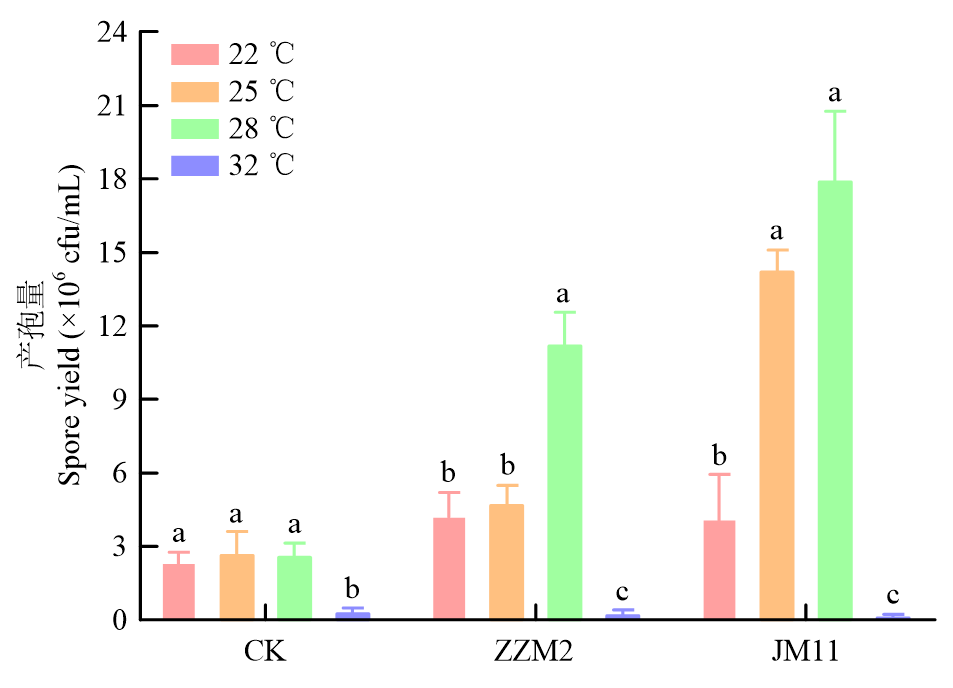
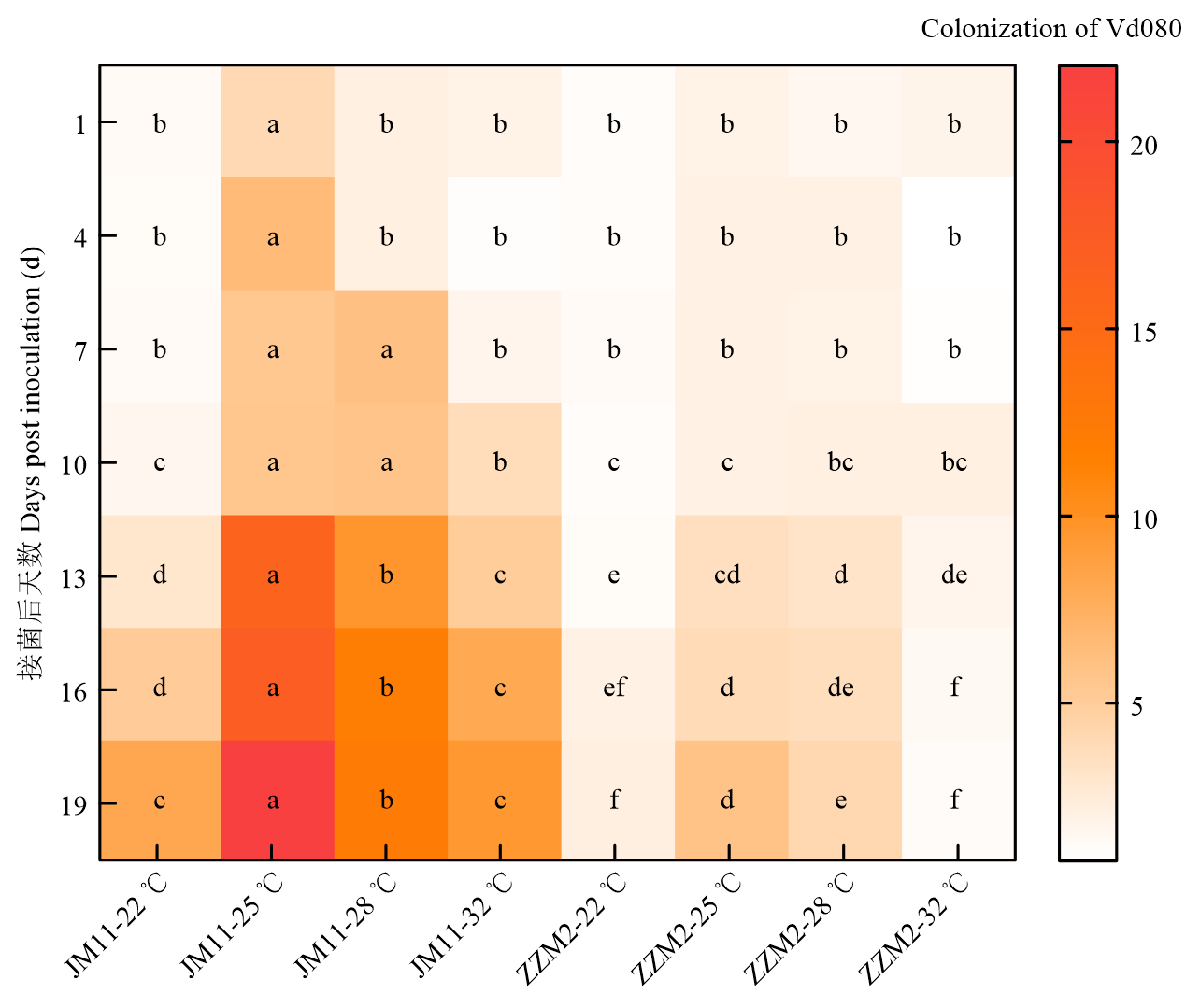
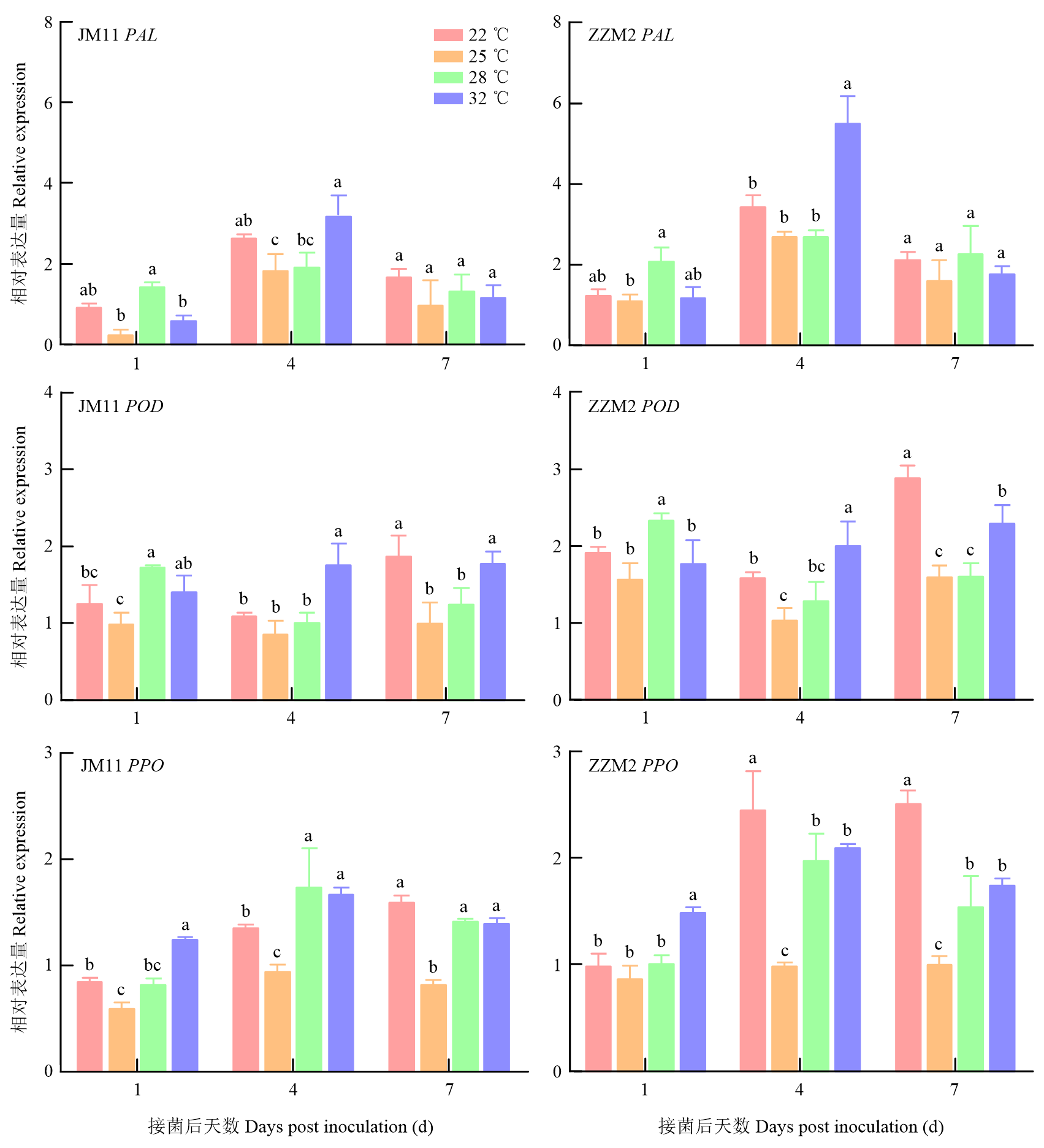
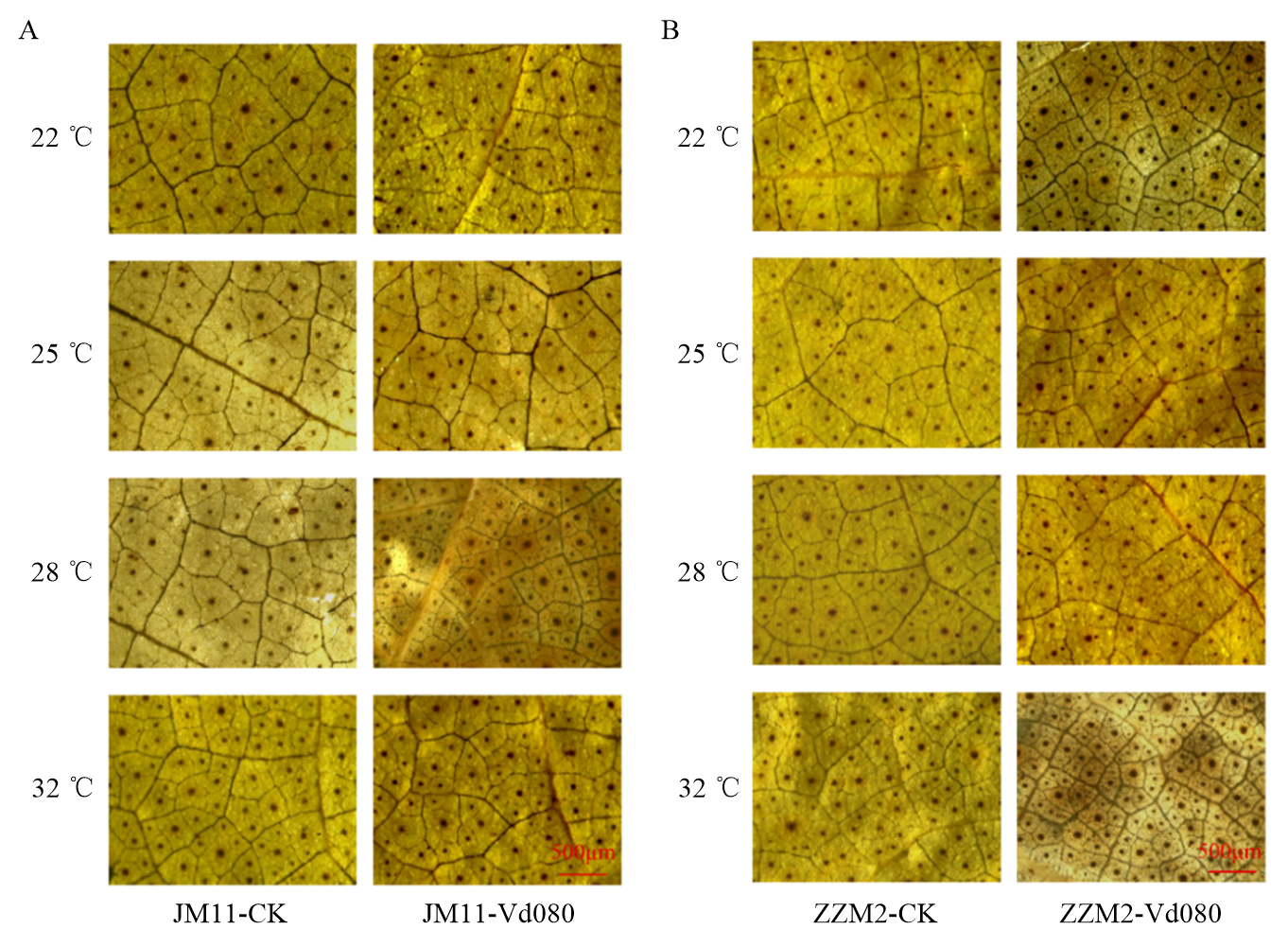
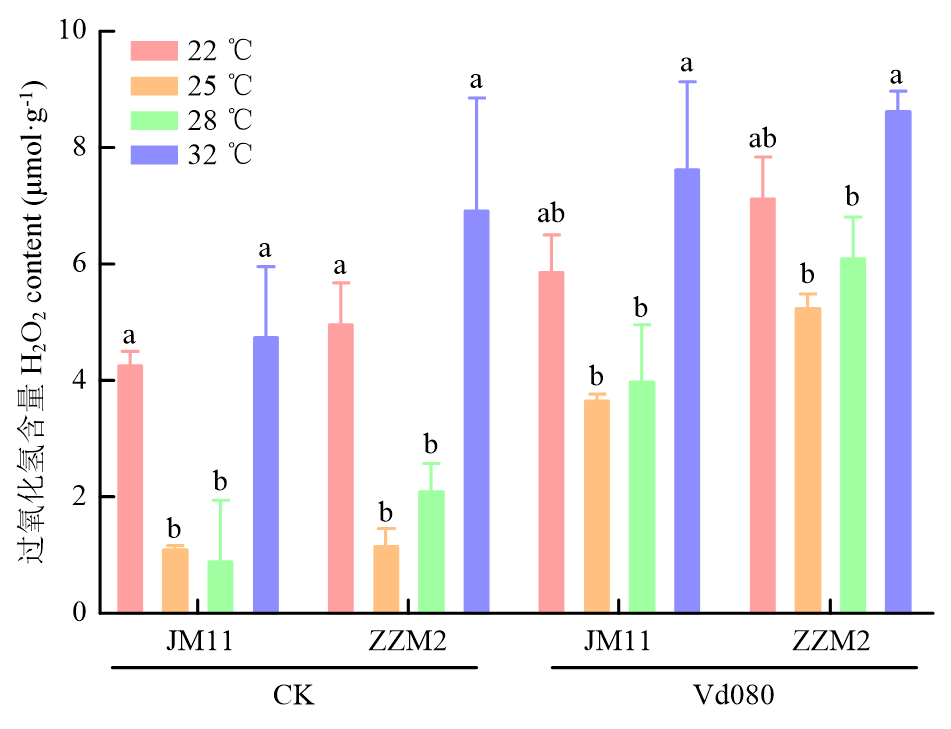
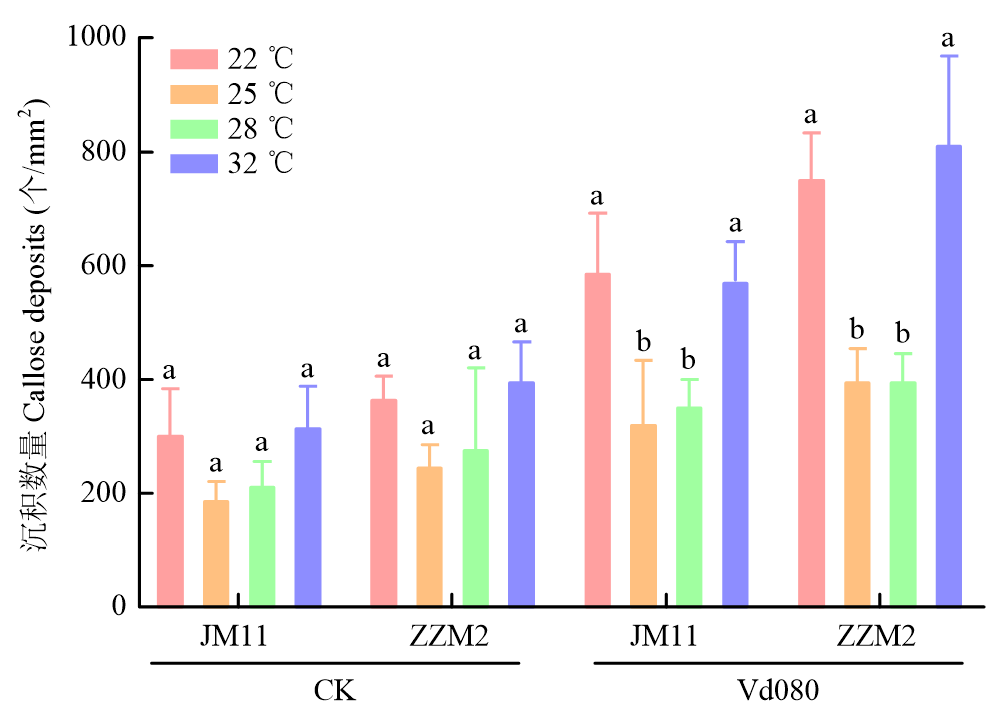
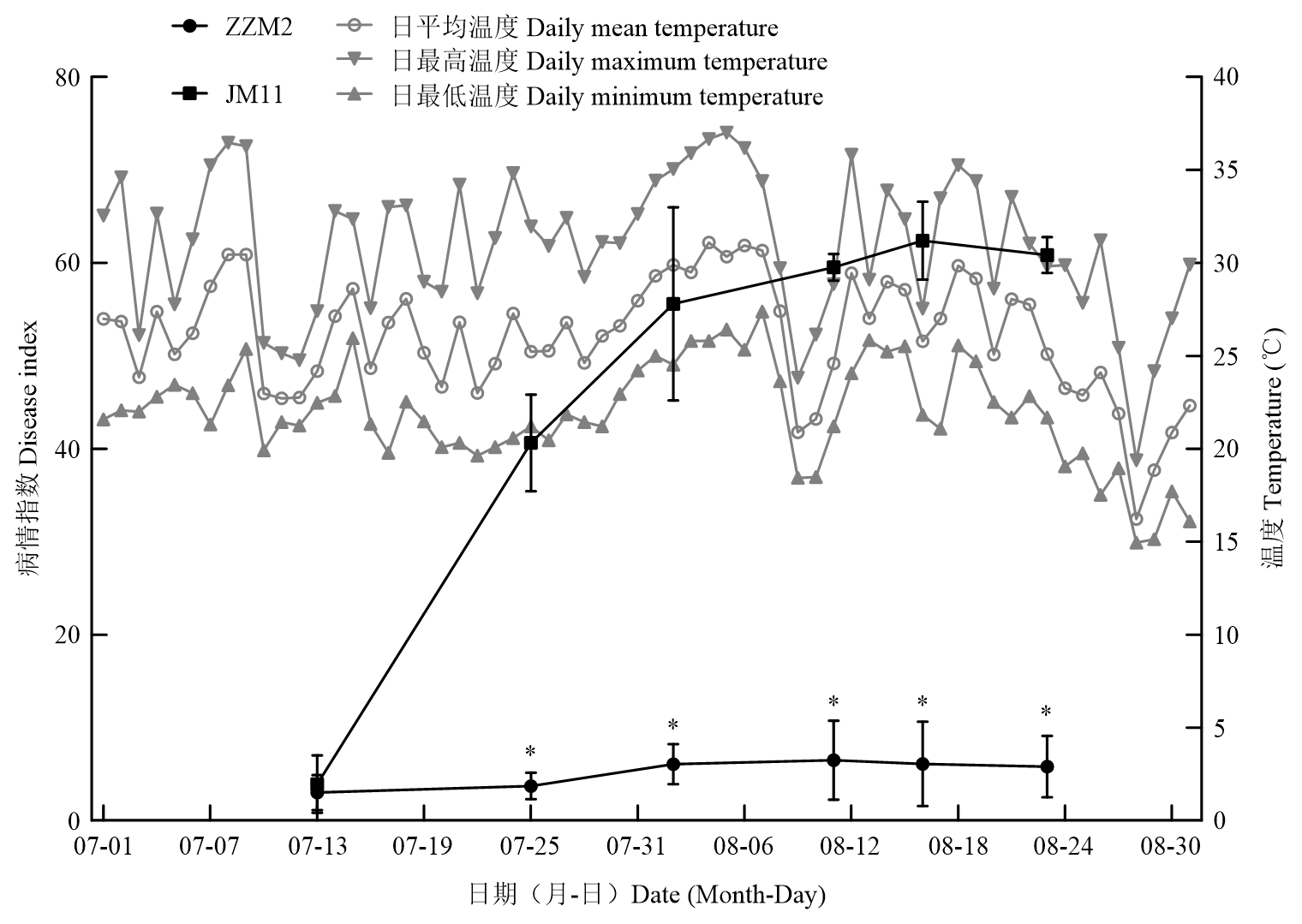
【Objective】The objective of this study is to analyze the effect of different temperatures on the occurrence of cotton Verticillium wilt and the mechanism of regulating host defense response, reveal the dual effects of temperature on pathogen and host, and to provide a theoretical basis for the green control and temperature regulation of this disease.【Method】Cotton Verticillium wilt resistant variety Zhongzhimian 2 (ZZM2) and susceptible variety Jimian 11 (JM11) were employed as experimental materials, indoor experiments and disease nursery experiments were jointly used to set constant temperatures (22, 25, 28, and 32 ℃) and natural temperature variation to determine the effect of temperature on the growth, infection and colonization of Verticillium dahliae, and the occurrence of cotton Verticillium wilt. The mechanism of temperature regulation of cotton host defense response was analyzed by utilizing indicators such as reactive oxygen species (ROS) outbreak, H2O2 content, callose accumulation, and the expression of defense-related genes.【Result】On the culture media, 25 ℃ was the optimal temperature for the mycelial growth of V. dahliae, and the range of 22-28 ℃ was suitable for spore yield. Compared with the culture media, the leaf extracts of resistant variety ZZM2 and susceptible variety JM11 had a promoting effect on the growth of V. dahliae, and JM11 promoted stronger. When the temperatures were between 25 and 28 ℃, both ZZM2 and JM11 suffered from severe Verticillium wilt, and low temperature 22 ℃ and high temperature 32 ℃ were not conducive to the occurrence of Verticillium wilt. Meanwhile, under 25 ℃ treatment, the colonization ability of V. dahliae in cotton was strong, JM11 was more susceptible to V. dahliae infection than ZZM2, which was basically consistent with the results of the cotton Verticillium wilt disease index. Furthermore, temperature significantly affected the host defense response of cotton: compared with 22-28 ℃, whether inoculated with V. dahliae or not, the ROS outbreak produced by ZZM2 and JM11 under 32 ℃ treatment was stronger; under 25 ℃ treatment, the H2O2 content in ZZM2 and JM11 leaves was the lowest; under 32 ℃ treatment, the accumulation of callose in ZZM2 and JM11 leaves was higher, which was 2.04 and 1.80 times higher than that of the untreated control, respectively; the expression level of PAL, POD, and PPO defense-related genes in cotton leaves decreased under treatments at 25-28 ℃, which was lower than that under treatments at 22 and 32 ℃.【Conclusion】Temperature has a dual effect on the growth of V. dahliae and host defense response, which in turn affects the occurrence of cotton Verticillium wilt. Regardless of constant temperature or natural temperature variation, 25-28 ℃ are beneficial for the colonization of V. dahliae in cotton, significantly reduce the host defense response, and lead to severe cotton Verticillium wilt.

Key words: temperature, cotton Verticillium wilt, Verticillium dahliae, defense response, infection

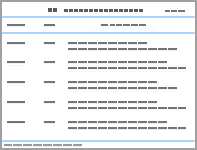
Table 1

RT-qPCR primer sequences"

基因名
Gene name
引物序列
Primer sequence (5′→3′)
β-tubulin F: CCGCCGGTCCATCAGTCTCTCTGTTTATAC
R: CGCCTGCGGGACTCCGAGCGAGCGTAAC
Ubiquitin F: GAGTCTTCGGACACCATTG
R: CTTGACCTTCTTCTTCTTGTGC
PAL F: TGGTGGCTGAGTTTAGGAAA
R: TGAGTGAGGCAATGTGTGA
POD F: CCGCATAACCATCACAAG
R: ACTCTCATCACCTTCAACA
PPO F: ATATCCTTGTTCTGTCTGCTA
R: CTCCTTCTACCGTCTCTTC

Fig. 1

Effect of temperature on the mycelial growth of V. dahliae"

Fig. 2

Effect of temperature on the spore yield of V. dahliae"

Fig. 3

Effect of constant temperature on the occurrence of cotton Verticillium wilt"

Fig. 4

Effect of constant temperature on the colonization of V. dahliae in cotton roots Different lowercase letters indicate significant differences in the colonization of Vd080 in cotton at the same time of different treatments (P<0.05)"

Fig. 5

Effect of temperature on the expression of defense-related genes in cotton"

Fig. 6

Effect of temperature on the outbreak of ROS in cotton leaves"

Fig. 7

Effect of temperature on the content of H2O2 in cotton leaves"

Fig. 8

Effect of temperature on the callose accumulation in cotton leaves"

Fig. 9

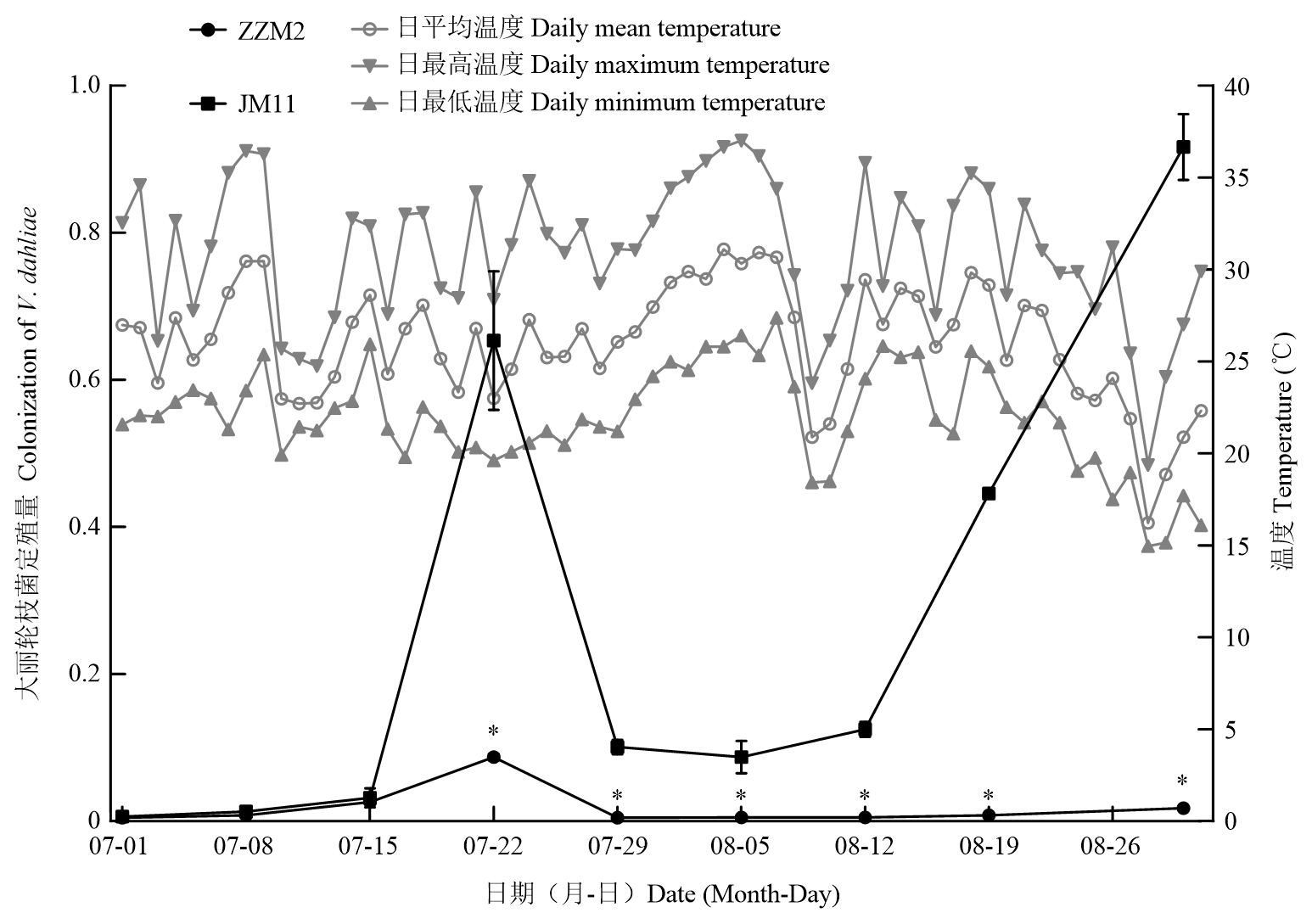
Effect of natural temperature variation on the occurrence of cotton Verticillium wilt"

Fig. 10

Effect of natural temperature variation on the colonization of V. dahliae in cotton leaves"

[1]
朱荷琴, 李志芳, 冯自力, 冯鸿杰, 魏锋, 赵丽红, 师勇强, 刘世超, 周京龙. 我国棉花黄萎病研究十年回顾及展望. 棉花学报, 2017, 29(S1): 37-50.
ZHU H Q, LI Z F, FENG Z L, FENG H J, WEI F, ZHAO L H, SHI Y Q, LIU S C, ZHOU J L. Overview of cotton Verticillium wilt research over the past decade in China and its prospect in future. Cotton Science, 2017, 29(S1): 37-50. (in Chinese)
[2]
ZHU Y T, ZHAO M, LI T, WANG L Z, LIAO C L, LIU D X, ZHANG H M, ZHAO Y P, LIU L S, GE X Y, LI B B. Interactions between Verticillium dahliae and cotton: Pathogenic mechanism and cotton resistance mechanism to Verticillium wilt. Frontiers in Plant Science, 2023, 14: 1174281.

doi: 10.3389/fpls.2023.1174281
[3]
ZHANG Y L, ZHOU J L, ZHAO L H, FENG Z L, WEI F, BAI H Y, FENG H J, ZHU H Q. A review of the pathogenicity mechanism of Verticillium dahliae in cotton. Journal of Cotton Research, 2022, 5: 3.

doi: 10.1186/s42397-021-00111-6
[4]
高峰, 郭惠珊. 植物与土传病原真菌的攻防战及干预. 自然杂志, 2020, 42(6): 499-504.
GAO F, GUO H S. The battle and pathogenic intervention between plant and soilborne pathogens. Chinese Journal of Nature, 2020, 42(6): 499-504. (in Chinese)
[5]
LEACH J E, TRIPLETT L R, ARGUESO C T, TRIVEDI P. Communication in the phytobiome. Cell, 2017, 169(4): 587-596.

doi: S0092-8674(17)30476-2 pmid: 28475891
[6]
KLOSTERMAN S J, ATALLAH Z K, VALLAD G E, SUBBARAO K V. Diversity, pathogenicity, and management of Verticillium species. Annual Review of Phytopathology, 2009, 47: 39-62.

doi: 10.1146/phyto.2009.47.issue-1
[7]
CAVICCHIOLI R, RIPPLE W J, TIMMIS K N, AZAM F, BAKKEN L R, BAYLIS M, BEHRENFELD M J, BOETIUS A, BOYD P W, CLASSEN A T, et al. Scientists’ warning to humanity: Microorganisms and climate change. Nature Reviews Microbiology, 2019, 17(9): 569-586.

doi: 10.1038/s41579-019-0222-5
[8]
李廷刚, 巩东营, 张倩倩. 棉花抗黄萎病遗传学研究进展. 农学学报, 2022, 12(9): 31-36.

doi: 10.11923/j.issn.2095-4050.cjas2021-0038
LI T G, GONG D Y, ZHANG Q Q. Genetics of cotton resistance to Verticillium wilt: Research progress. Journal of Agriculture, 2022, 12(9): 31-36. (in Chinese)
[9]
简桂良, 邹亚飞, 马存. 棉花黄萎病连年流行的原因及对策. 中国棉花, 2003, 30(3): 13-14.
JIAN G L, ZOU Y F, MA C. Reasons and countermeasures for the continuous epidemic of cotton Verticillium wilt. China Cotton, 2003, 30(3): 13-14. (in Chinese)
[10]
万刚, 刘振海, 苏景惠, 朱莉, 王亚滨, 孙昕璐, 丁红, 刘玉国, 张莉, 李国英. 持续高温与棉花黄萎病发生的关系及对棉花产量和品质的影响. 石河子大学学报(自然科学版), 2017, 35(1): 75-82.
WAN G, LIU Z H, SU J H, ZHU L, WANG Y B, SUN X L, DING H, LIU Y G, ZHANG L, LI G Y. The relationship between continuous high temperature and the occurrence of cotton Verticillium wilt and its effect on yield and quality of cotton. Journal of Shihezi University (Natural Science), 2017, 35(1): 75-82. (in Chinese)
[11]
孙晓婷, 鹿秀云, 张敬泽, 祝水金. 浙江棉花黄萎病菌致病型菌株的鉴定及高温抑制病害的表征分析. 浙江大学学报(农业与生命科学版), 2016, 42(6): 671-678.
SUN X T, LU X Y, ZHANG J Z, ZHU S J. Identification of pathotype of Verticillium dahliae isolates on cotton in Zhejiang Province and phenotypic analysis on inhibitory effect by high temperature. Journal of Zhejiang University (Agriculture and Life Science), 2016, 42(6): 671-678. (in Chinese)
[12]
SONG R R, LI J P, XIE C J, JIAN W, YANG X Y. An overview of the molecular genetics of plant resistance to the Verticillium wilt pathogen Verticillium dahliae. International Journal of Molecular Sciences, 2020, 21(3): 1120.

doi: 10.3390/ijms21031120
[13]
魏新政, 王惠卿, 李克梅. 播期和光照对棉花黄萎病发生的影响. 中国植保导刊, 2018, 38(4): 40-43.
WEI X Z, WANG H Q, LI K M. Studies on influence of sowing time and light on the occurrence of cotton Verticillium wilt. China Plant Protection, 2018, 38(4): 40-43. (in Chinese)
[14]
YANG H B, SHI Y T, LIU J Y, GUO L, ZHANG X Y, YANG S H. A mutant CHS3 protein with TIR-NB-LRR-LIM domains modulates growth, cell death and freezing tolerance in a temperature-dependent manner in Arabidopsis. The Plant Journal, 2010, 63(2): 283-296.

doi: 10.1111/tpj.2010.63.issue-2
[15]
ZHU Y, QIAN W Q, HUA J. Temperature modulates plant defense responses through NB-LRR proteins. PLoS Pathogens, 2010, 6(4): e1000844.

doi: 10.1371/journal.ppat.1000844
[16]
HUOT B, CASTROVERDE C D M, VELASQUEZ A C, HUBBARD E, PULMAN J A, YAO J, CHILDS K L, TSUDA K, MONTGOMERY B L, HE S Y. Dual impact of elevated temperature on plant defence and bacterial virulence in Arabidopsis. Nature Communications, 2017, 8(1): 1808.

doi: 10.1038/s41467-017-01674-2
[17]
CHENG C, GAO X, FENG B, SHEEN J, SHAN L, HE P. Plant immune response to pathogens differs with changing temperatures. Nature Communications, 2013, 4: 2530.

doi: 10.1038/ncomms3530 pmid: 24067909
[18]
JANDA M, LAMPAROVA L, ZUBIKOVA A, BURKETOVA L, MARTINEC J, KROKOVA Z. Temporary heat stress suppresses PAMP-triggered immunity and resistance to bacteria in Arabidopsis thaliana. Molecular Plant Pathology, 2019, 20(7): 1005-1012.

doi: 10.1111/mpp.2019.20.issue-7
[19]
QIU J, XIE J, CHEN Y, SHEN Z, SHI H, NAQVI N I, QIAN Q, LIANG Y, KOU Y. Warm temperature compromises JA-regulated basal resistance to enhance Magnaporthe oryzae infection in rice. Molecular Plant, 2022, 15(4): 723-739.

doi: 10.1016/j.molp.2022.02.014
[20]
FU D, UAUY C, DISTELFELD A, BLECHL A, EPSTEIN L, CHEN X, SELA H, FAHIMA T, DUBCOVSKY J. A kinase-START gene confers temperature-dependent resistance to wheat stripe rust. Science, 2009, 323(5919): 1357-1360.

doi: 10.1126/science.1166289 pmid: 19228999
[21]
朱荷琴, 冯自力, 李志芳, 赵丽红, 师勇强. 蛭石沙土无底纸钵定量蘸菌液法鉴定棉花品种(系)的抗黄萎病性. 中国棉花, 2010, 37(12): 15-17.
ZHU H Q, FENG Z L, LI Z F, ZHAO L H, SHI Y Q. Identification of cotton varieties (lines) resistance to Verticillium wilt by quantitative dipping method of vermiculite sandy bottomless paper pot. China Cotton, 2010, 37(12): 15-17. (in Chinese)
[22]
赵丽红, 冯自力, 李志芳, 冯鸿杰, 师勇强, 张芸, 朱荷琴. 棉花抗黄萎病鉴定与评价标准的商榷. 棉花学报, 2017, 29(1): 50-58.
ZHAO L H, FENG Z L, LI Z F, FENG H J, SHI Y Q, ZHANG Y, ZHU H Q. Development of an improved standard for identifying and evaluating Verticillium wilt resistance in cotton. Cotton Science, 2017, 29(1): 50-58. (in Chinese)
[23]
BAI H Y, FENG Z L, ZHAO L H, FENG H J, WEI F, ZHOU J L, GU A X, ZHU H Q, PENG J, ZHANG Y L. Efficacy evaluation and mechanism of Bacillus subtilis EBS03 against cotton Verticillium wilt. Journal of Cotton Research, 2022, 5: 26.

doi: 10.1186/s42397-022-00134-7
[24]
ZHANG Y L, ZHAO L H, FENG Z L, GUO H F, FENG H J, YUAN Y, WEI F, ZHU H Q. The role of a new compound micronutrient multifunctional fertilizer against Verticillium dahliae on cotton. Pathogens, 2021, 10(1): 81.

doi: 10.3390/pathogens10010081
[25]
周京龙, 冯自力, 冯鸿杰, 李云卿, 袁媛, 李志芳, 魏锋, 师勇强, 赵丽红, 孙正祥, 朱荷琴, 周燚. 棉花内生蜡状芽孢杆菌YUPP-10对棉花黄萎病的防治作用及机制. 中国农业科学, 2017, 50(14): 2717-2727. doi: 10.3864/j.issn.0578-1752.2017.14.008.
ZHOU J L, FENG Z L, FENG H J, LI Y Q, YUAN Y, LI Z F, WEI F, SHI Y Q, ZHAO L H, SUN Z X, ZHU H Q, ZHOU Y. Biocontrol effect and mechanism of cotton endophytic bacterium Bacillus cereus YUPP-10 against Verticillium wilt in Gossypium hirsutum. Scientia Agricultura Sinica, 2017, 50(14): 2717-2727. doi: 10.3864/j.issn.0578-1752.2017.14.008. (in Chinese)
[26]
白红燕, 赵丽红, 蒲丹丹, 冯自力, 魏锋, 冯鸿杰, 顾爱星, 朱荷琴, 彭军, 张亚林. 贝莱斯芽孢杆菌EBV02对棉花黄萎病的防治作用及机理. 棉花学报, 2022, 34(5): 443-457.
BAI H Y, ZHAO L H, PU D D, FENG Z L, WEI F, FENG H J, GU A X, ZHU H Q, PENG J, ZHANG Y L. The control effect and mechanism of Bacillus velezensis EBV02 on cotton Verticillium wilt. Cotton Science, 2022, 34(5): 443-457. (in Chinese)
[27]
蓝江林, 刘波, 肖荣凤, 朱育菁, 车建美. 温度对几种作物尖孢镰刀菌菌株生长的影响. 厦门大学学报(自然科学版), 2004, 43(S1): 67-70.
LAN J L, LIU B, XIAO R F, ZHU Y J, CHE J M. Effect of temperature on growth of wilt pathogen Fusarium oxysporum isolated from different host crops. Journal of Xiamen University (Natural Science), 2004, 43(S1): 67-70. (in Chinese)
[28]
纪莉景, 栗秋生, 王亚娇, 吴玉星, 李聪聪, 孙梦伟, 孔令晓. 温度对假禾谷镰刀菌生长、侵染及茎基腐病发生的影响. 植物病理学报, 2020, 50(6): 723-730.
JI L J, LI Q S, WANG Y J, WU Y X, LI C C, SUN M W, KONG L X. Effects of temperature on Fusarium pseudograminearum growth, infection and Fusarium crown rot occurrence. Acta Phytopathologica Sinica, 2020, 50(6): 723-730. (in Chinese)
[29]
FAN L L, YONG M L, LI D Y, LIU Y J, LAI C H, CHEN H M, CHENG F M, HU D W. Effect of temperature on the development of sclerotia in Villosiclava virens. Journal of Integrative Agriculture, 2016, 15(11): 2550-2565.

doi: 10.1016/S2095-3119(16)61400-4
[30]
李戌清, 张敬泽, 张雅, 吴根良. 浙江省绍兴市茄子黄萎病菌菌株致病型鉴定及其生物学特性研究. 浙江农业学报, 2019, 31(5): 784-789.

doi: 10.3969/j.issn.1004-1524.2019.05.14
LI X Q, ZHANG J Z, ZHANG Y, WU G L. Identification of pathotype of Verticillium dahlida isolates on eggplant and their biological characteristics in Shaoxing City, Zhejiang Province. Acta Agriculturae Zhejiangensis, 2019, 31(5): 784-789. (in Chinese)
[31]
袁虹霞, 李洪连, 王烨, 房卫平, 王振跃. 棉花不同抗性品种根系分泌物分析及其对黄萎病菌的影响. 植物病理学报, 2002, 32(2): 127-131.
YUAN H X, LI H L, WANG Y, FANG W P, WANG Z Y. The root exudates of cotton cultivars with the different resistance and their effects on Verticillium dahliae. Acta Phytopathologica Sinica, 2002, 32(2): 127-131. (in Chinese)
[32]
BONDE M R, NESTER S E, BERNER D K. Effects of daily temperature highs on development of Phakopsora pachyrhizi on soybean. Phytopathology, 2012, 102(8): 761-768.

doi: 10.1094/PHYTO-01-12-0011-R
[33]
SHAH D A, PAUL P A, DE WOLF E D, MADDEN L V. Predicting plant disease epidemics from functionally represented weather series. Philosophical Transactions of the Royal Society of London Series B Biological Sciences, 2019, 374(1775): 20180273.
[34]
RAJPUT L S, SHARMA T, MADHUSUDHAN P, SINHA P. Effect of temperature on rice blast infection process with emphasis on appressoria formation by Magnaporthe oryzae. International Journal of Current Microbiology and Applied Sciences, 2017, 6(4): 1931-1939.
[35]
CLARKSON J P, FAWCETT L, ANTHONY S G, YOUNG C. A model for Sclerotinia sclerotiorum infection and disease development in lettuce, based on the effects of temperature, relative humidity and ascospore density. PLoS ONE, 2014, 9(4): e94049.

doi: 10.1371/journal.pone.0094049
[36]
杨宜红, 陆燕, 吴颖静, 冯自力, 唐灿明. 棉花品种黄萎病抗性与免疫反应的关系. 核农学报, 2017, 31(3): 588-596.

doi: 10.11869/j.issn.100-8551.2017.03.0588
YANG Y H, LU Y, WU Y J, FENG Z L, TANG C M. Relationship between Verticillium wilt resistance and immune response in upland cotton. Journal of Nuclear Agricultural Sciences, 2017, 31(3): 588-596. (in Chinese)

doi: 10.11869/j.issn.100-8551.2017.03.0588
[37]
ZHANG W W, JIANG T F, CUI X, QI F J, JIAN G L. Colonization in cotton plants by a green fluorescent protein labelled strain of Verticillium dahliae. European Journal of Plant Pathology, 2013, 135(4): 867-876.

doi: 10.1007/s10658-012-0131-1
[38]
张梦婕, 丁琦, 贺新强, 李仲芳. 低温对毛果杨韧皮部筛分子胼胝质沉积的影响. 电子显微学报, 2015, 34(2): 121-125.
ZHANG M J, DING Q, HE X Q, LI Z F. Effects of low temperature on callose deposition in the sieve elements in Populus trichocarpa. Journal of Chinese Electron Microscopy Society, 2015, 34(2): 121-125. (in Chinese)
[39]
MOLLER I M, JENSEN P E, HANSSON A. Oxidative modifications to cellular components in plants. Annual Review of Plant Biology, 2007, 58: 459-481.

pmid: 17288534
[40]
马晓寒, 张杰, 张环纬, 陈彪, 温心怡, 许自成. 通过外源MeJA抑制H2O2积累提高烟草的耐冷性. 作物学报, 2019, 45(3): 411-418.

doi: 10.3724/SP.J.1006.2019.84090
MA X H, ZHANG J, ZHANG H W, CHEN B, WEN X Y, XU Z C. Exogenous MeJA improves cold tolerance of tobacco by inhibiting H2O2 accumulation. Acta Agronomica Sinica, 2019, 45(3): 411-418. (in Chinese)

doi: 10.3724/SP.J.1006.2019.84090
[1] LI YuanJing, YUAN RuiXiang, LI YongTai, SUN TianGe, LIU Feng, LI YanJun, ZHANG XinYu. Identification and Functional Characterization of β-Glucosidase Genes in Verticillium dahliae for Pathogenicity on Cotton [J]. Scientia Agricultura Sinica, 2026, 59(7): 1380-1399.
[2] MENG Hui, LUO BingYu, LU ZhengYu, WANG Peng, KANG DongRu, ZHENG ChengShu, WANG WenLi. Cloning of CmASMT and Its Role in Thermotolerance of Chrysanthemum [J]. Scientia Agricultura Sinica, 2025, 58(8): 1617-1626.
[3] ZHAO YuXuan, MIAO JiYuan, HU Wei, ZHOU ZhiGuo. Effects of Low Temperature at Seedling Stage on Cotton Floral Bud Differentiation and Cotton Plant Yield [J]. Scientia Agricultura Sinica, 2025, 58(7): 1311-1320.
[4] TANG Yu, LEI BiXin, WANG ChuanWei, YAN XuanTao, WANG Hao, ZHENG Jie, ZHANG WenJing, MA ShangYu, HUANG ZhengLai, FAN YongHui. Response Mechanism of Anthocyanin Accumulation in Colored Wheat to Post-Anthesis High Temperature Stress [J]. Scientia Agricultura Sinica, 2025, 58(6): 1083-1101.
[5] CHEN ErHu, TANG JingJie, HU ShunJie, TANG PeiAn. The Roles of Heat Shock Protein Genes CfHsp70-1 and CfHsp70-2 in Enhancing the High-Temperature Tolerance after Heat Acclimation in Cryptolestes ferrugineus [J]. Scientia Agricultura Sinica, 2025, 58(5): 918-928.
[6] SU Ming, LI FanGuo, HONG ZiQiang, ZHOU Tian, LIU QiangJuan, BAN WenHui, WU HongLiang, KANG JianHong. Antioxidant Characterization of Nitrogen Application for Mitigating Potato Senescence Post-Flowering Under High Temperature Stress [J]. Scientia Agricultura Sinica, 2025, 58(4): 660-675.
[7] LI Rui, LIANG Yue, BAI Yang, ZHANG GuiYue, WANG NanNan, QIAO SongLin, ZHANG GaiPing. Research Progress on the Roles and Mechanisms of Autophagy Involved in Porcine Reproductive and Respiratory Syndrome Virus Infection [J]. Scientia Agricultura Sinica, 2025, 58(4): 792-801.
[8] TONG ZhaoYang, LIU WenHua, ZHANG GuoXin, DONG ChunYan, ZHANG YanXia, XU XiaoWei, HE Dong, LIU HeChun, LI Yang, WANG FengTao, FENG Jing, YAO XiaoBo, LIU MeiJin, LIN RuiMing. The Relationship Between Occurrence of Hulless Barley Ear Rot and Population Migration of Grass Mite (Siteroptes spp.) [J]. Scientia Agricultura Sinica, 2025, 58(3): 493-506.
[9] LIANG Xue, JIANG Yan, WEI ChangZhou, XUE Bing, LI FangFang, CUI YiRui, ZHANG XiaRan. Research on Soil Moisture Diagnosis Model of Maize Farmland Based on Remote Sensing of Unmanned Aerial Vehicles [J]. Scientia Agricultura Sinica, 2025, 58(23): 4979-4992.
[10] DING Ning, QI EnFang, JIA XiaoXia, HUANG Wei, MA LiRong, LI JianWu, YAN RuNan. Screening and Identification of miRNAs in Potato Seedlings in Response to High Temperature Stress [J]. Scientia Agricultura Sinica, 2025, 58(22): 4589-4602.
[11] LEI BiXin, YU YongBo, ZHANG MingTong, CUI GuoJi, HONG JiaWen, HU Tao, YOU AiXin, ZHANG WenJing, MA ShangYu, HUANG ZhengLai, FAN YongHui. Impact of Post-Anthesis Heat Stress on Nitrogen Use Efficiency and Yield Components in Wheat [J]. Scientia Agricultura Sinica, 2025, 58(19): 3837-3856.
[12] ZHANG Jie, HU ChenXi, QI JianBo, ZHANG YongTai, CHEN YiBo, ZHANG YongJi. Effects of Exogenous Zeatin on Photosynthetic Parameter, Antioxidant System and Expression of Genes Related to Zeatin Synthesis in Pepper Under Low-Temperature Combined with Low-Light Stress [J]. Scientia Agricultura Sinica, 2025, 58(19): 3959-3969.
[13] MA Jia, PENG JieLi, WANG Xu, JIA Nan, LI MengKai, HU Dong. Effects of Streptomyces sp. TOR3209 on Chlorophyll Synthesis and Polyamine Content in Tomato Plants Under Low Temperature Stress [J]. Scientia Agricultura Sinica, 2025, 58(15): 3064-3080.
[14] DU SiQi, WEN YuLun, NING LiXing, YIN XiaoYu, WANG ShuFen, SONG HaiYan, WANG ZhaoHai, LI WeiXing, LIAO JiangLin. Effects on Pollen Release Related Traits of the Differential Genotypes Indica by High-Temperature Stress at Anthesis [J]. Scientia Agricultura Sinica, 2025, 58(10): 1867-1877.
[15] CAO XiongJun, WANG Bo, HAN JiaYu, LIAO YongFeng, XIE ShuYu, BAI Yang, HUANG XiaoYun, LU Li, HUANG QiuMi, JIANG ChunFen, PAN FengPing, BAI XianJin. Research and Practice on High Photosynthetic Efficiency Breeding of Grapes in Hot Climate Regions [J]. Scientia Agricultura Sinica, 2025, 58(10): 1994-2007.
Viewed
Full text


Abstract

Cited

  Shared   
  Discussed   
No Suggested Reading articles found!