Scientia Agricultura Sinica ›› 2026, Vol. 59 ›› Issue (9): 1887-1902.doi: 10.3864/j.issn.0578-1752.2026.09.005

• PLANT PROTECTION • Previous Articles     Next Articles

The Cross-Resistance Mechanism of Rapeseed 5N to ALS Inhibitor Herbicides

GUO Yue1,2(), ZHANG YunLong1, LIU DeCai1, WANG JunYu1, LIU HuangJie1,4, SHAO XiaoQi1,4, PENG Qi1,2, YU ShiCheng1,4, QI YuRong1,4, GAO JianQin1, ZHANG JieFu1, HU MaoLong1,3,4()   

  1. 1 Institute of Industrial Crops, Jiangsu Academy of Agricultural Sciences/Nanjing Sub-Center, National Center of Oil Crops Improvement/Key Laboratory of Cotton and Rapeseed (Nanjing), Ministry of Agriculture and Rural Affairs, Nanjing 210014
    2 School of Food and Biological Engineering, Jiangsu University, Zhenjiang 212023, Jiangsu
    3 School of Life Sciences, Jiangsu University, Zhenjiang 212023, Jiangsu
    4 College of Agriculture, Fujian Agriculture and Forestry University, Fuzhou 350002
  • Received:2025-12-22 Accepted:2026-01-27 Online:2026-05-01 Published:2026-05-06
  • Contact: HU MaoLong

Abstract:

【Objective】The high sulfonylurea (SU) resistance germplasm 5N has been widely used in the breeding of rapeseed resistant to herbicides. However, the cross-resistance spectrum and mechanisms of 5N to the other four classes of ALS-inhibitor herbicides remain unclear. The study aims to systematically evaluate the cross-resistance level of 5N to the five classes of ALS inhibitors and elucidate its resistance mechanisms, which will provide a theoretical basis for the scientific utilization of 5N.【Method】The resistance levels and toxicological responses in biomass were detected by exogenous spraying of five kinds of ALS inhibitor herbicides (sulfonylurea-SU, sulfonlyaminocarbonyl-triazolinone-SCT, imidazolinone-IMI, pyrimidyl-benzoate-PB and triazolopyrimidine-TP) at the seedling stage. The sensitivity of the target enzyme and the expression patterns of two target genes were analyzed through in vitro enzyme activity inhibition assays and qRT-PCR. Simultaneously, malondialdehyde content and the activities of multiple antioxidant enzymes were measured to evaluate the oxidative stress response.【Result】5N exhibited the cross-resistance of high level of 16 times the recommended concentration (16×RC) to SU and SCT herbicides, mid-level of 4×RC to IMI herbicides, low level to PB and TP herbicides, which was consistent with the trend in the phytotoxic response of biomass. The mechanism revealed that: (1) Target-site mechanism: The sensitivity of the ALS enzyme in 5N to various herbicides (20-300 µmol·L-1) was significantly lower than that in N131, and the upregulated magnitude and duration of its ALS expression were notably higher than those in N131; (2) Non-target-site mechanism: After treatment with SU and SCT herbicides, the malondialdehyde content, the activities of superoxide dismutase, catalase, peroxidase, and glutathione reductase, as well as the expression levels of detoxification genes such as BnCYP86A2, BnCYP71B3, BnGST39, and BnGST78 in 5N were significantly higher than those in N131. In contrast, the responses under PB, IMI, and TP treatments were more complex and diverse.【Conclusion】5N exhibits broad-spectrum but differential cross-resistance to ALS inhibitors. This resistance is primarily mediated by both the low sensitivity of the target enzyme and mutations in the target gene, while non-target-site resistance mechanisms such as enhanced detoxification and antioxidant capacity, also have an assistant effect on the resistant phenotype. This study shows that SCT herbicides can serve as a safe alternative to SU herbicides at the seedling stage, and provides technical support for the rational utilization of the cross-resistance trait of 5N in herbicide-resistant breeding.

Key words: rapeseed (Brassica napus), 5N, ALS inhibitor herbicide, cross-resistance, resistance mechanism

Table 1

Category, concentration of herbicide recommended in field, and national standard unit concentration correspondingly"

除草剂类别
Herbicide category
除草剂及有效成分含量
Herbicides and active ingredient content
田间推荐使用浓度1倍(1×RC)
Recommended concentration for
field use
对应国标单位浓度
Corresponding to the national standard unit concentration (mmol·L-1)
SU 25%噻吩磺隆Thifensulfuron-methyl 8 g/667 m2 0.17
10%苄嘧磺隆Bensulfuron-methyl 20 g/667 m2 0.16
TP 25 g·L-1五氟磺草胺Penoxsulam 80 mL/667 m2 0.14
50 g·L-1双氟磺草胺Florasulam 6 mL/667 m2 0.028
PB 10%双草醚Bispyribac-sodium 20 mL/667 m2 0.15
5%嘧啶肟草醚Pyribenzoxim 50 mL/667 m2 0.14
SCT 70%氟唑磺隆Flucarbazone-sodium 3.5 g/667 m2 0.21
99.5%噻酮磺隆Thiencarbazone-methyl 4 g/667 m2 0.34
IMI 4%甲氧咪草烟Imazamox 80 mL/667 m2 0.35
5%咪唑乙烟酸Imazethapyr 133 mL/667 m2 0.72

Table 2

Primer sequences used in qRT-PCR"

名称Name 序列Sequence (5′-3′) 大小Size (bp) 名称Name 序列Sequence (5′-3′) 大小Size (bp)
BnALS1-F2 TTCTCCTTAACCCCACAGAAAGA 23 CYP86A2-F AAGGACGGAGAGAAACGACG 20
BnALS1-R2 GGGAGCGTAGCGGGAGAC 18 CYP86A2-R AGGAGACGCCTTCACCAATG 20
BnALS3-F2 CTCCTTAACCCCACAGAAACC 21 CYP71B3-F CTTGAGTGTTGCACAAGACCG 21
BnALS3-R2 GGGAGCGTAGCGGGAGAT 18 CYP71B3-R CACCATATGGCGCAAAGCAA 20
EIF4B-F GTGAGCTGGACGACAAAGTC 20 BnGST39-F GGCTAGCTACATCCAGTTACAT 22
EIF4B-R CTCTGATCATCGGCAGGTCT 20 BnGST39-R TCACAATGTCAACTAGGCTCAT 22
BnALS1-P Fam+CCGTCAATGTCGCACCTCCTTCC+Tamra 23 BnGST78-F CCTCAAAGAGTCTTGCTTTGTC 22
BnALS3-P Fam+CAACTCACCCGTCAATGTCGCACC+Tamra 24 BnGST78-R ACGAAGAAGATGTTCAGGTCTT 22
EIF4B-P Fam+TGCCTGCACCAGACCCGGGT+Tamra 20

Fig. 1

Phenotype of 5N and N131 treated with ALS-inhibiting herbicides after 21 d in greenhouse"

Table 3

Resistance identification of 5N and N131 rapeseed to ALS-inhibiting herbicides after 21 d of treatment in greenhouse"

种类Category 名称
Name
植株
Plant
喷施剂量Spray dose (RC)
1/4× 1/2× 16× 20×
SU 噻吩磺隆Thifensulfuron-methyl 5N/N131 R/R R/S R/S R/S R/S R/S R/S R/S M/S
苄嘧磺隆Bensulfuron-methyl 5N/N131 R/R R/S R/S R/S R/S R/S R/S R/S M/S
TP 五氟磺草胺Penoxsulam 5N/N131 R/R R/S R/S R/S R/S S/S S/S S/S S/S
双氟磺草胺Florasulam 5N/N131 R/R R/S R/S R/S R/S M/S S/S S/S S/S
PB 双草醚Bispyribac-sodium 5N/N131 R/R R/S R/S R/S R/S M/S S/S S/S S/S
嘧啶肟草醚Pyribenzoxim 5N/N131 R/R R/S R/S R/S R/S M/S S/S S/S S/S
SCT 氟唑磺隆Flucarbazone-sodium 5N/N131 R/R R/S R/S R/S R/S R/S R/S R/S M/S
噻酮磺隆Thiencarbazone-methyl 5N/N131 R/R R/S R/S R/S R/S R/S R/S R/S M/S
IMI 甲氧咪草烟Imazamox 5N/N131 R/R R/S R/S R/S R/S R/S S/S S/S S/S
咪唑乙烟酸Imazethapyr 5N/N131 R/R R/S R/S R/S R/S R/S S/S S/S S/S

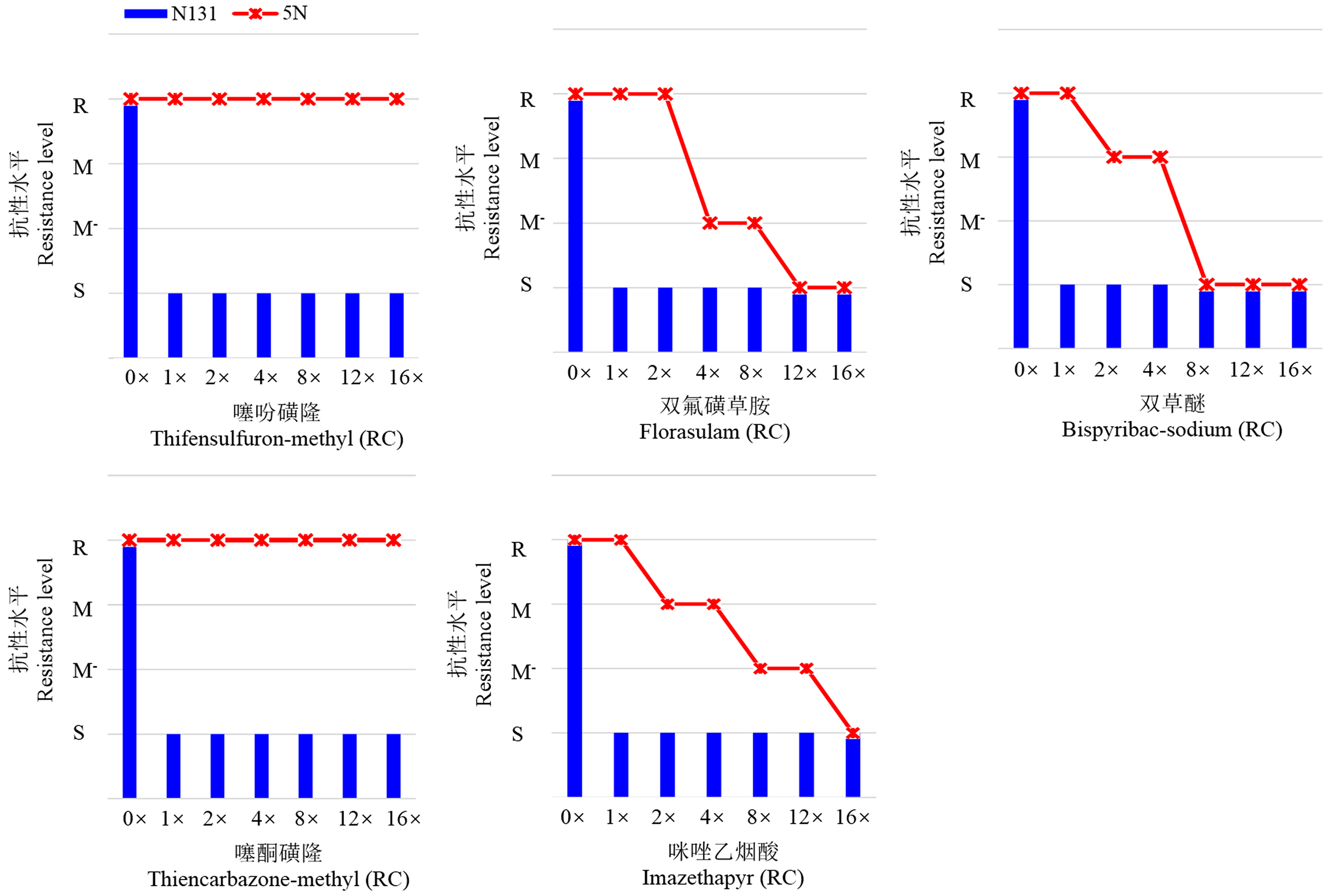
Fig. 2

Resistance identification of N131 and 5N treated with ALS-inhibiting herbicides after 21d through outdoor cultivation"

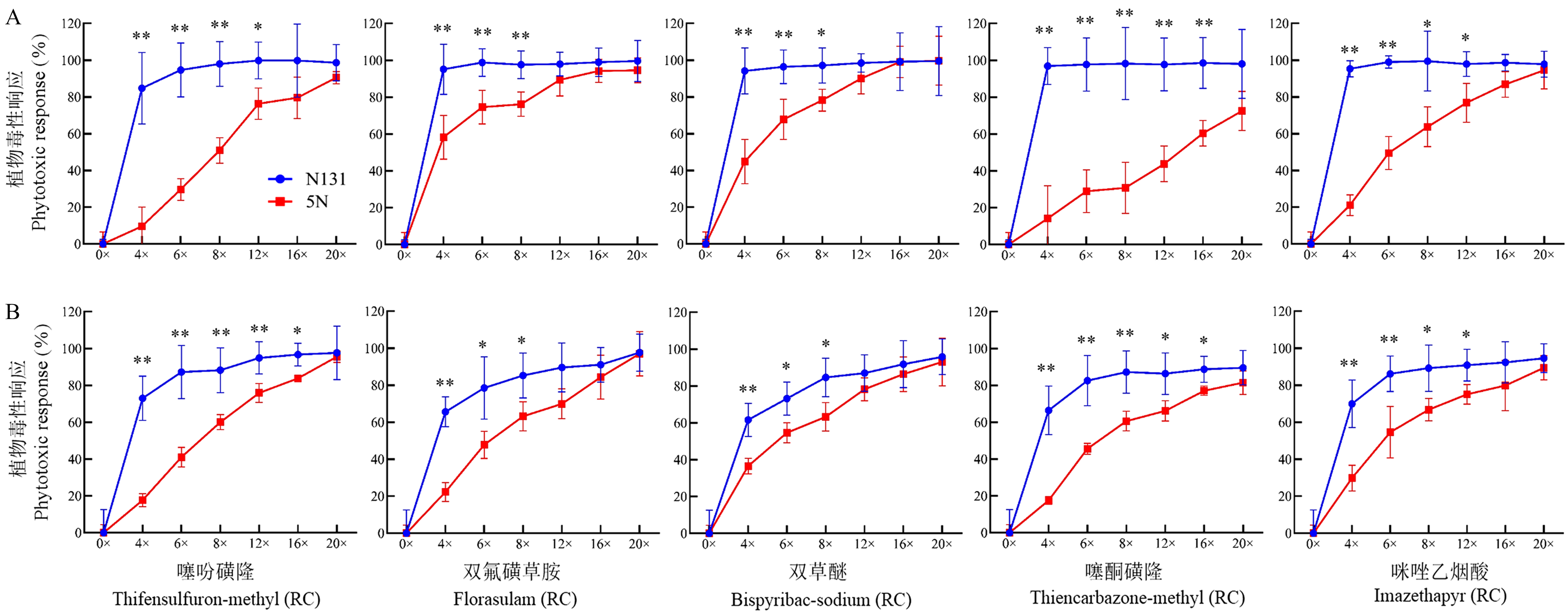
Fig. 3

Phytotoxic response of shoot (A) and root (B) fresh weight in outdoor-grown 5N and N131 plants to ALS-inhibitor herbicide treatments"

Table 4

EC50 of 5N and N131 through outdoor cultivation in response to ALS-inhibiting herbicides"

油菜
Rapeseed
噻吩磺隆
Thifensulfuron-methyl (mmol·L-1)
双氟磺草胺
Florasulam
(μmol·L-1)
双草醚
Bispyribac-sodium
(μmol·L-1)
噻酮磺隆
Thiencarbazone-methyl (mmol·L-1)
咪唑乙烟酸
Imazethapyr
(mmol·L-1)
N131 0.019±0.004 0.154±0.033 7.300±2.311 0.039±0.007 0.050±0.012
5N 2.771±0.862 6.116±1.046 295.701±39.020 5.462±0.637 3.097±0.486

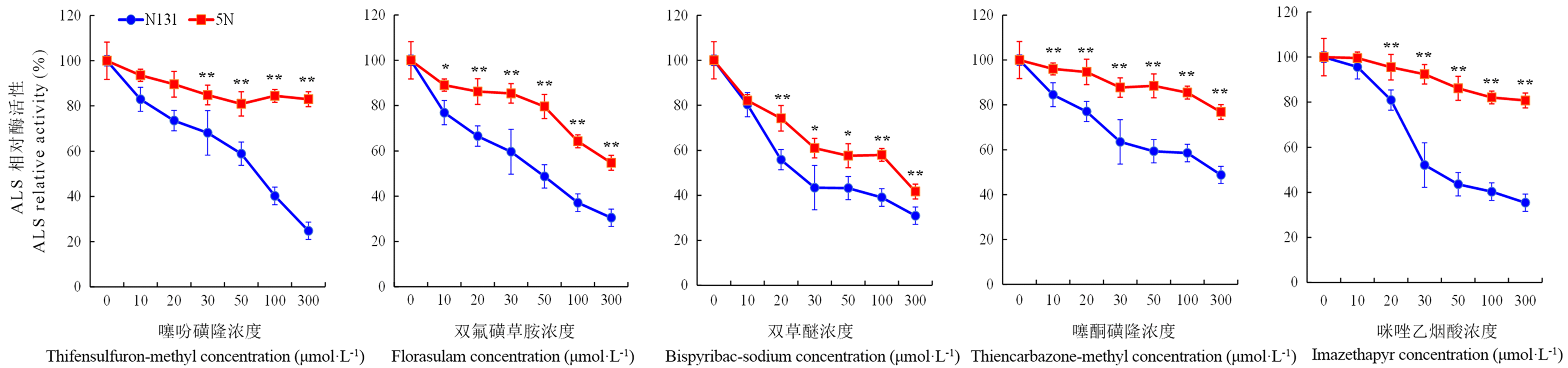
Fig. 4

Response of in vitro ALS enzyme activity in 5N and N131 to different concentrations of ALS-inhibiting herbicides"

Table 5

IC50 (μmol·L-1) of in vitro ALS enzyme activity in 5N and N131 in response to ALS-inhibiting herbicides"

油菜
Rapeseed
噻吩磺隆
Thifensulfuron-methyl
双氟磺草胺
Florasulam
双草醚
Bispyribac-sodium
噻酮磺隆
Thiencarbazone-methyl
咪唑乙烟酸
Imazethapyr
N131 29.510±1.654 25.240±2.444 14.180±1.756 19.980±4.847 23.850±1.482
5N 934.700±24.640 76.020±9.142 35.130±5.421 608.300±47.060 249.700±61.860

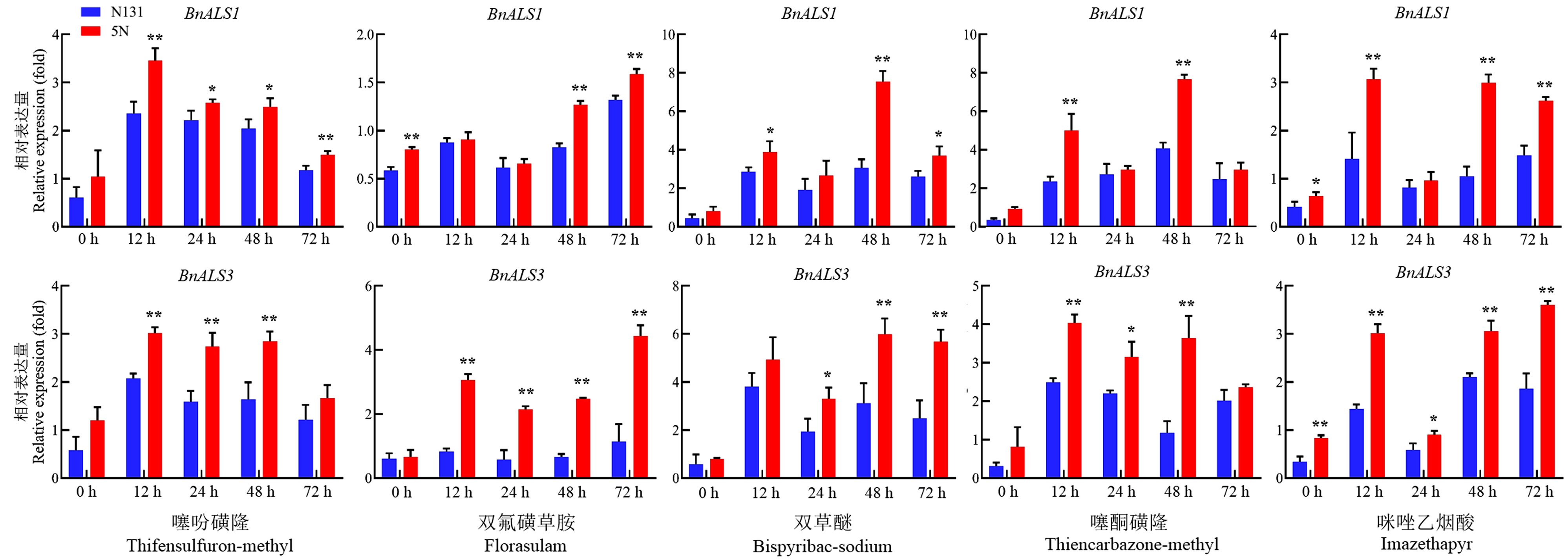
Fig. 5

Expression analysis of the target genes in 5N and N131 after treatment with five classes of herbicides"

Fig. 6

Expression analysis of the NTSR genes in 5N and N131 after treatment with 20×RC herbicides"

Fig. 7

Response of antioxidant enzyme system in 5N and N131 to ALS-inhibiting herbicides"

[1]
王汉中. 中国油菜品种改良的中长期发展战略. 中国油料作物学报, 2004, 26(3): 98-101.
WANG H Z. Medium- and long-term development strategy for rapeseed variety improvement in China. Chinese Journal of Oil Crop Sciences, 2004, 26(3): 98-101. (in Chinese)
[2]
杨锐, 陈敬东, 黄郢, 张学昆, 周登文, 刘清云, 徐劲松, 谢伶俐, 许本波. 长江下游冬油菜区应对气候变化的育种和栽培策略研究. 作物学报, https://link.cnki.net/urlid/11.1809.S.20260205.1631.008.
YANG R, CHEN J D, HUANG Y, ZHANG X K, ZHOU D W, LIU Q Y, XU J S, XIE L L, XU B B. Study on breeding and cultivation strategies for winter rapeseed to cope with climate change in the lower reaches of the Yangtze River. Acta Agronomica Sinica, https://link.cnki.net/urlid/11.1809.S.20260205.1631.008. in Chinese)
[3]
官春云. 优质油菜生理生态和现代栽培技术. 北京: 中国农业出版社, 2013.
GUAN C Y. Physiology, Ecology, and Modern Cultivation Techniques for High-Quality Rapeseed. Beijing: China Agriculture Press, 2013. (in Chinese)
[4]
LONHIENNE T, CHENG Y, GARCIA M D, HU S H, LOW Y S, SCHENK G, WILLIAMS C M, GUDDAT L W. Structural basis of resistance to herbicides that target acetohydroxyacid synthase. Nature Communications, 2022, 13(1): 3368.

doi: 10.1038/s41467-022-31023-x pmid: 35690625
[5]
YU Q, POWLES S B. Resistance to AHAS inhibitor herbicides: Current understanding. Pest Management Science, 2014, 70(9): 1340-1350.

doi: 10.1002/ps.3710 pmid: 24338926
[6]
LIU D C, YU S C, JI B J, PENG Q, GAO J Q, ZHANG J F, GUO Y, HU M L. Molecular mechanisms of herbicide resistance in rapeseed: Current status and future prospects for resistant germplasm development. International Journal of Molecular Sciences, 2025, 26(17): 8292.

doi: 10.3390/ijms26178292
[7]
MCCOURT J A, PANG S S, KING-SCOTT J, GUDDAT L W, DUGGLEBY R G. Herbicide-binding sites revealed in the structure of plant acetohydroxyacid synthase. Proceedings of the National Academy of Science of the United States of America, 2006, 103(3): 569-573.
[8]
GARCIA M D, NOUWENS A, LONHIENNE T G, Comprehensive understanding of acetohydroxyacid synthase inhibition by different herbicide families. Proceedings of the National Academy of Science of the United States of America, 2017, 114(7): E1091-E1100.
[9]
HEAP I. Global perspective of herbicide-resistant weeds. Pest Management Science, 2014, 70(9): 1306-1315.

doi: 10.1002/ps.3696 pmid: 24302673
[10]
DÉLYE C. Unravelling the genetic bases of non-target-site-based resistance (NTSR) to herbicides: A major challenge for weed science in the forthcoming decade. Pest Management Science, 2013, 69(2): 176-187.

doi: 10.1002/ps.3318 pmid: 22614948
[11]
HU M L, PU H M, KONG L N, GAO J Q, LONG W H, CHEN S, ZHANG J F, QI C K. Molecular characterization and detection of a spontaneous mutation conferring imidazolinone resistance in rapeseed and its application in hybrid rapeseed production. Molecular Breeding, 2015, 35(1): 46.

doi: 10.1007/s11032-015-0227-3
[12]
GUO Y, LIU C L, LONG W H, GAO J Q, ZHANG J F, CHEN S, PU H M, HU M L. Development and molecular analysis of a novel acetohydroxyacid synthase rapeseed mutant with high resistance to sulfonylurea herbicides. The Crop Journal, 2022, 10(1): 56-66.

doi: 10.1016/j.cj.2021.05.006
[13]
郭月, 卢鑫宇, 王婷, 李伟龙, 祁余容, 吕欣蕾, 彭琦, 高建芹, 张洁夫, 胡茂龙. 油菜抗除草剂新种质PN19的交互抗性鉴定及其抗性基因的表达研究. 中国油料作物学报, 2023, 45(6): 1206-1216.

doi: 10.19802/j.issn.1007-9084.2023216
GUO Y, LU X Y, WANG T, LI W L, QI Y R, X L, PENG Q, GAO J Q, ZHANG J F, HU M L. Intercrossing-resistance of herbicide resistant novel germplasm PN19 in rapeseed and its expression of resistance genes. Chinese Journal of Oil Crop Sciences, 2023, 45(6): 1206-1216. (in Chinese)

doi: 10.19802/j.issn.1007-9084.2023216
[14]
HU M L, ZHANG H K, KONG L N, MA J J, WANG T, LU X Y, GUO Y, ZHANG J F, GUAN R Z, CHU P. Comparative proteomic and physiological analyses reveal tribenuron-methyl phytotoxicity and nontarget-site resistance mechanisms in Brassica napus. Plant, Cell & Environment, 2023, 46(7): 2255-2272.

doi: 10.1111/pce.v46.7
[15]
BUSI R, VILA-AIUB M M, BECKIE H J, GAINES T A, GOGGIN D E, KAUNDUN S S, LACOSTE M, NEVE P, NISSEN S J, NORSWORTHY J K, RENTON M, SHANER D L, TRANEL P J, WRIGHT T, YU Q, POWLES S B. Herbicide-resistant weeds: From research and knowledge to future needs. Evolutionary Applications, 2013, 6(8): 1218-1221.

doi: 10.1111/eva.12098 pmid: 24478803
[16]
JASIENIUK M, BRÛLÉ-BABEL A L, MORRISON I N. The evolution and genetics of herbicide resistance in weeds. Weed Science, 1996, 44(1): 176-193.

doi: 10.1017/S0043174500093747
[17]
GAAFAR R M, OSMAN M E H, ABO-SHADY A M, ALMOHISEN I A A, BADAWY G A, EL-NAGAR M M F, ISMAIL G A. Role of antioxidant enzymes and glutathione S-transferase in bromoxynil herbicide stress tolerance in wheat plants. Plants, 2022, 11(20): 2679.

doi: 10.3390/plants11202679
[18]
BOWLER C, MONTAGU M V, INZE D. Superoxide dismutase and stress tolerance. Annual Review of Plant Physiology and Plant Molecular Biology, 1992, 43: 83-116.

doi: 10.1146/arplant.1992.43.issue-1
[19]
罗裳, 王志远, 李长威, 蒋娜, 韩永亮, 荣湘民, 杨兰. 过氧化钙缓解冬油菜苗期渍害胁迫的效应研究. 浙江大学学报(农业与生命科学版), 2023, 49(4): 516-525.
LUO S, WANG Z Y, LI C W, JIANG N, HAN Y L, RONG X M, YANG L. Effect of CaO2 on alleviating waterlogging stress of winter rape at seedling stage. Journal of Zhejiang University (Agriculture and Life Sciences), 2023, 49(4): 516-525. (in Chinese)
[20]
MHAMDI A, VAN BREUSEGEM F. Reactive oxygen species in plant development. Development, 2018, 145(15): dev164376.
[21]
安晨, 韶也, 彭彦, 毛毕刚, 赵炳然. 水稻乙酰乳酸合酶Ala179Val突变赋予ALS抑制剂类除草剂广谱抗性. 植物遗传资源学报, 2024, 25(2): 259-269.

doi: 10.13430/j.cnki.jpgr.20230628004
AN C, SHAO Y, PENG Y, MAO B G, ZHAO B R. Ala179Val mutation in rice acetolactate synthase confers broad-spectrum resistance to ALS inhibitor herbicides. Journal of Plant Genetic Resources, 2024, 25(2): 259-269. (in Chinese)

doi: 10.13430/j.cnki.jpgr.20230628004
[22]
WU Z X, XU N W, YANG M, LI X L, HAN J L, LIN X H, YANG Q, LV G H, WANG J. Responses of photosynthesis, antioxidant enzymes, and related gene expression to nicosulfuron stress in sweet maize (Zea mays L.). Environmental Science and Pollution Research, 2022, 29(25): 37248-37265.

doi: 10.1007/s11356-022-18641-0
[23]
NOCTOR G, FOYER C H. Ascorbate and glutathione: Keeping active oxygen under control. Annual Review of Plant Physiology and Plant Molecular Biology, 1998, 49: 249-279.

pmid: 15012235
[24]
ROUHIER N, LEMAIRE S D, JACQUOT J P. The role of glutathione in photosynthetic organisms: Emerging functions for glutaredoxins and glutathionylation. Annual Review of Plant Biology, 2008, 59: 143-166.

doi: 10.1146/annurev.arplant.59.032607.092811 pmid: 18444899
[25]
WANG C, LENG X P, ZHANG W Y, FANG J G. The regulatory and signaling roles of glutathione in modulating abiotic stress responses and tolerance// HOSSAIN M A, MOSTOFA M G, DIAZ-VIVANCOS P, BURRITT D J, FUJITA M, TRAN L S P. Glutathione in Plant Growth, Development, and Stress Tolerance. Cham: Springer International Publishing, 2017: 147-169.
[26]
GUO Y, CHENG L, LONG W H, GAO J Q, ZHANG J F, CHEN S, PU H M, HU M L. Synergistic mutations of two rapeseed AHAS genes confer high resistance to sulfonylurea herbicides for weed control. Theoretical and Applied Genetics, 2020, 133(10): 2811-2824.

doi: 10.1007/s00122-020-03633-w pmid: 32556395
[27]
GUO Y, WANG T, LU X Y, LI W L, LV X L, PENG Q, ZHANG J F, GAO J Q, HU M L. Comparative genome-wide analysis of circular RNAs in Brassica napus L.: Target-site versus non-target-site resistance to herbicide stress. Theoretical and Applied Genetics, 2024, 137(7): 176.

doi: 10.1007/s00122-024-04678-x
[28]
袁自成. 苯磺隆胁迫下的油菜GST基因筛选与非靶标抗性研究[D]. 南京: 南京农业大学, 2022.
YUAN Z C. Gene screening of glutathione transferase and study on the non-target-site-based resistance under tribenuron-methyl stress in Brassica napus[D]. Nanjing: Nanjing Agricultural University, 2022. (in Chinese)
[29]
BECKIE H J, HARKER K N, HALL L M, WARWICK S I, LÉGÈRE A, SIKKEMA P H, CLAYTON G W, THOMAS A G, LEESON J Y, SÉGUIN-SWARTZ G, SIMARD M J. A decade of herbicide-resistant crops in Canada. Canadian Journal of Plant Science, 2006, 86(4): 1243-1264.

doi: 10.4141/P05-193
[30]
浦惠明, 戚存扣, 张洁夫, 傅寿仲, 高建芹, 陈新军, 陈松, 赵祥祥. 转基因抗除草剂油菜对近缘作物的基因漂移. 生态学报, 2005, 25(3): 581-588.
PU H M, QI C K, ZHANG J F, FU S Z, GAO J Q, CHEN X J, CHEN S, ZHAO X X. Studies on the gene flow from herbicide-tolerant GM rapeseed to its close relative crops. Acta Ecologica Sinica, 2005, 25(3): 581-588. (in Chinese)
[31]
WU J, CHEN C, XIAN G Y, LIU D X, LIN L, YIN S L, SUN Q F, FANG Y J, ZHANG H, WANG Y P. Engineering herbicide-resistant oilseed rape by CRISPR/Cas9-mediated cytosine base-editing. Plant Biotechnology Journal, 2020, 18(9): 1857-1859.

doi: 10.1111/pbi.13368 pmid: 32096325
[32]
CHENG H T, HAO M Y, DING B L, MEI D S, WANG W X, WANG H, ZHOU R J, LIU J, LI C, HU Q. Base editing with high efficiency in allotetraploid oilseed rape by A3A-PBE system. Plant Biotechnology Journal, 2021, 19(1): 87-97.

doi: 10.1111/pbi.v19.1
[33]
PALMIERI V E, ALVAREZ C E, PERMINGEAT H R, PEROTTI V E. A122S, A205V, D376E, W574L and S653N substitutions in acetolactate synthase (ALS) from Amaranthus palmeri show different functional impacts on herbicide resistance. Pest Management Science, 2022, 78(2): 749-757.

doi: 10.1002/ps.v78.2
[34]
CHEN X Y, MA Y L, HUANG M G, LI W S, ZENG D Q, LI J B, WANG Y H. Multiple herbicide resistance in a Cyperus difformis population in rice field from China. Pesticide Biochemistry and Physiology, 2023, 195: 105576.

doi: 10.1016/j.pestbp.2023.105576
[35]
王晓丽. 油菜ALS突变体对不同除草剂的交互抗性评价及利用分子标记辅助选择育种[D]. 杨凌: 西北农林科技大学, 2022.
WANG X L. Evaluation of cross resistance of ALS mutants of rape to different herbicides and molecular marker assisted selection breeding[D]. Yangling: Northwest A&F University, 2022. (in Chinese)
[36]
卢鑫宇, 郭月, 祁余容, 王婷, 李伟龙, 吕欣蕾, 钟詹斐, 彭琦, 高建芹, 张洁夫, 胡茂龙. 油菜种质M196对ALS类除草剂的交互抗性评价与抗性基因BnAHAS1-3R的表达分析. 植物遗传资源学报, 2024, 25(12): 2069-2080.
LU X Y, GUO Y, QI Y R, WANG T, LI W L, X L, ZHONG Z F, PENG Q, GAO J Q, ZHANG J F, HU M L. Evaluation of cross-resistance to ALS-inhibiting herbicides and expression analysis of the resistance gene BnAHAS1-3R in rapeseed germplasm M196. Journal of Plant Genetic Resources, 2024, 25(12): 2069-2080. (in Chinese)
[37]
European Food Safety Authority. Conclusion on the peer review of the pesticide risk assessment of the active substance glyphosate. EFSA Journal, 2015, 13(11): 4302.
[38]
曹莉, 李菊颖, 余佳, 豆叶枝, 张悦清, 许静, 何健, 吴文铸, 孔德洋. 环境介质中噻酮磺隆及其代谢产物的液相色谱-串联质谱测定方法研究. 分析测试学报, 2023, 42(7): 849-855.
CAO L, LI J Y, YU J, DOU Y Z, ZHANG Y Q, XU J, HE J, WU W Z, KONG D Y. Study on the determination method of thiencarbazone- methyl and its metabolites in environmental matrices using liquid chromatography-tandem mass spectrometry. Journal of Instrumental Analysis, 2023, 42(7): 849-855. (in Chinese)
[39]
HU M L, PU H M, GAO J Q, LONG W H, CHEN F, ZHANG W, PENG Q, CHEN S, ZHANG J F. Inheritance and molecular characterization of resistance to AHAS-inhibiting herbicides in rapeseed. Journal of Integrative Agriculture, 2017, 16(11): 2421-2433.

doi: 10.1016/S2095-3119(17)61659-9
[40]
LAFOREST M, SOUFIANE B, PATTERSON E L, VARGAS J J, BOGGESS S L, HOUSTON L C, TRIGIANO R N, BROSNAN J T. Differential expression of genes associated with non-target site resistance in Poa annua with target site resistance to acetolactate synthase inhibitors. Pest Management Science, 2021, 77(11): 4993-5000.

doi: 10.1002/ps.v77.11
[41]
SCHRÖDER P. The role of glutathione and glutathione S-transferases in plant reaction and adaptation to xenobiotics//Significance of Glutathione to Plant Adaptation to the Environment. Dordrecht: Springer Netherlands, 2001: 155-183.
[42]
ZHAO Y N, LI W Q, SUN L L, XU H L, SU W C, XUE F, WU R H, LU C T. Transcriptome analysis and the identification of genes involved in the metabolic pathways of fenoxaprop-P-ethyl in rice treated with isoxadifen-ethyl hydrolysate. Pesticide Biochemistry and Physiology, 2022, 183: 105057.

doi: 10.1016/j.pestbp.2022.105057
[43]
HU L F, YAO Y, CAI R W, PAN L, LIU K L, BAI L Y. Effects of fenclorim on rice physiology, gene transcription and pretilachlor detoxification ability. BMC Plant Biology, 2020, 20(1): 100.

doi: 10.1186/s12870-020-2304-y pmid: 32138670
[44]
PIERREL M A, BATARD Y, KAZMAIER M, MIGNOTTE-VIEUX C, DURST F, WERCK-REICHHART D. Catalytic properties of the plant cytochrome P450 CYP73 expressed in yeast. Substrate specificity of a cinnamate hydroxylase. European Journal of Biochemistry, 1994, 224(3): 835-844.

pmid: 7925408
[45]
ROBINEAU T, BATARD Y, NEDELKINA S, CABELLO-HURTADO F, LERET M, SOROKINE O, DIDIERJEAN L, WERCK-REICHHART D. The chemically inducible plant cytochrome P450 CYP76B1 actively metabolizes phenylureas and other xenobiotics. Plant Physiology, 1998, 118: 1049-1056.

doi: 10.1104/pp.118.3.1049
[46]
XIANG W S, WANG X J, REN T R, JU X L. Expression of a wheat cytochrome P450 monooxygenase in yeast and its inhibition by glyphosate. Pest Management Science, 2005, 61(4): 402-406.

doi: 10.1002/ps.v61:4
[47]
CUMMINS I, O’HAGAN D, JABLONKAI I, COLE D J, HEHN A, WERCK-REICHHART D, EDWARDS R. Cloning, characterization and regulation of a family of phi class glutathione transferases from wheat. Plant Molecular Biology, 2003, 52(3): 591-603.

pmid: 12956529
[48]
JIANG L, YANG Y, JIA L X, LIN J L, LIU Y, PAN B, LIN Y. Biological responses of wheat (Triticum aestivum) plants to the herbicide simetryne in soils. Ecotoxicology and Environmental Safety, 2016, 127: 87-94.

doi: 10.1016/j.ecoenv.2016.01.012 pmid: 26803524
[49]
LI D Z, XU L, PANG S, LIU Z Q, WANG K, WANG C J. Variable levels of glutathione S-transferases are responsible for the differential tolerance to metolachlor between maize (Zea mays) shoots and roots. Journal of Agricultural and Food Chemistry, 2017, 65(1): 39-44.

doi: 10.1021/acs.jafc.6b04129 pmid: 27992212
[50]
DENG F, HATZIOS K. Purification and characterization of two glutathione S-transferase isozymes from indica-type rice involved in herbicide detoxification. Pesticide Biochemistry and Physiology, 2002, 72(1): 10-23.

doi: 10.1006/pest.2001.2580
[51]
CHO H, KONG K. Molecular cloning, expression, and characterization of a phi-type glutathione S-transferase from Oryza sativa. Pesticide Biochemistry and Physiology, 2005, 83(1): 29-36.

doi: 10.1016/j.pestbp.2005.03.005
[52]
MCGONIGLE B, LAU S C, JENNINGS L D, O’KEEFE D P. Homoglutathione selectivity by soybean glutathione S-transferases. Pesticide Biochemistry and Physiology, 1998, 62(1): 15-25.

doi: 10.1006/pest.1998.2365
[53]
SKIPSEY M, ANDREWS C J, TOWNSON J K, JEPSON I, EDWARDS R. Substrate and thiol specificity of a stress-inducible glutathione transferase from soybean. FEBS Letters, 1997, 409(3): 370-374.

doi: 10.1016/s0014-5793(97)00554-1 pmid: 9224692
[54]
SKIPSEY M, CUMMINS I, ANDREWS C J, JEPSON I, EDWARDS R. Manipulation of plant tolerance to herbicides through co-ordinated metabolic engineering of a detoxifying glutathione transferase and thiolcosubstrate. Plant Biotechnology Journal, 2005, 3(4): 409-420.

doi: 10.1111/pbi.2005.3.issue-4
[55]
MHAMDI A, QUEVAL G, CHAOUCH S, VANDERAUWERA S, BREUSEGEM F, NOCTOR G. Catalase function in plants: A focus on Arabidopsis mutants as stress-mimic models. Journal of Experimental Botany, 2010, 61(15): 4197-4220.

doi: 10.1093/jxb/erq282
[56]
HE A, DEAN J M, LODHI I J. Peroxisomes as cellular adaptors to metabolic and environmental stress. Trends in Cell Biology, 2021, 31(8): 656-670.

doi: 10.1016/j.tcb.2021.02.005 pmid: 33674166
[57]
冯周德, 杨欢, 王晨轩, 弓泽涛, 李锦馨. 干旱胁迫下玫瑰生理响应研究进展. 现代农业科技, 2023(2): 109-113.
FENG Z D, YANG H, WANG C X, GONG Z T, LI J X. Research progress on physiological response of rose under drought stress. Modern Agricultural Science and Technology, 2023(2): 109-113. (in Chinese)
[58]
NADARAJAH K K. ROS homeostasis in abiotic stress tolerance in plants. International Journal of Molecular Sciences, 2020, 21(15): 5208.

doi: 10.3390/ijms21155208
[59]
DAS K, ROYCHOUDHURY A. Reactive oxygen species (ROS) and response of antioxidants as ROS-scavengers during environmental stress in plants. Frontiers in Environmental Science, 2014, 2: 53.
[60]
黄俣轩, 黄飞, 胡志文, 赵梓霖, 王鹏, 肖荣波. 大气湿沉降油菜体内铅的形态累积及氧化胁迫效应. 生态学报, 2023, 43(19): 8066-8075.
HUANG Y X, HUANG F, HU Z W, ZHAO Z L, WANG P, XIAO R B. Chemical speciation accumulation and oxidative stress of lead in Brassica chinensis L. under atmospheric wet deposition. Acta Ecologica Sinica, 2023, 43(19): 8066-8075. (in Chinese)
[61]
田学军, 卢焕仙. 热胁迫对油菜种子活力和幼苗抗氧化酶活性的影响. 江苏农业科学, 2011, 39(4): 77-78.
TIAN X J, LU H X. Effects of heat stress on seed vigor and antioxidant enzyme activities in rapeseed seedlings. Jiangsu Agricultural Sciences, 2011, 39(4): 77-78. (in Chinese)
[62]
李班, 吕莹, 杨明煊, 宋婷, 于放, 刘志文. 盐碱胁迫对甘蓝型油菜生理及分子机制的影响. 华北农学报, 2022, 37(3): 86-93.

doi: 10.7668/hbnxb.20192954
LI B, Y, YANG M X, SONG T, YU F, LIU Z W. Effects of saline-alkali stress on physiology and molecular mechanism of Brassica napus L. Acta Agriculturae Boreali-Sinica, 2022, 37(3): 86-93. (in Chinese)
[63]
谢伶俐, 李永铃, 许本波, 张学昆. 油菜耐渍机理解析及遗传改良研究进展. 作物学报, 2025, 51(2): 287-300.

doi: 10.3724/SP.J.1006.2025.44121
XIE L L, LI Y L, XU B B, ZHANG X K. Progress on waterlogging tolerance mechanism and genetic improvement in rapeseed. Acta Agronomica Sinica, 2025, 51(2): 287-300. (in Chinese)

doi: 10.3724/SP.J.1006.2025.44121
[64]
张腾国, 李巧丽, 刁志宏, 李萍, 王娟, 郑晟. 盐及干旱胁迫对油菜抗氧化系统和RbohCRbohF基因表达的影响. 应用生态学报, 2019, 30(3): 969-978.

doi: 10.13287/j.1001-9332.201903.017
ZHANG T G, LI Q L, DIAO Z H, LI P, WANG J, ZHENG S. Effects of salt and drought stresses on antioxidant system and RbohC and RbohF genes expression in Brassica campestris. Chinese Journal of Applied Ecology, 2019, 30(3): 969-978. (in Chinese)
[65]
BOUSSIBA S, RIKIN A, RICHMOND A E. The role of abscisic acid in cross-adaptation of tobacco plants. Plant Physiology, 1975, 56(2): 337-339.

doi: 10.1104/pp.56.2.337 pmid: 16659298
[66]
李胜利, 夏亚真, 刘金, 师晓丹, 孙治强. 高温胁迫下番茄幼苗对冷激的响应. 应用生态学报, 2014, 25(10): 2927-2934.
LI S L, XIA Y Z, LIU J, SHI X D, SUN Z Q. Effects of cold-shock on tomato seedlings under high temperature stress. Chinese Journal of Applied Ecology, 2014, 25(10): 2927-2934. (in Chinese)
[67]
LI Z G, GONG M. Mechanical stimulation-induced cross-adaptation in plants: An overview. Journal of Plant Biology, 2011, 54(6): 358-364.

doi: 10.1007/s12374-011-9178-3
[68]
WALTER J, JENTSCH A, BEIERKUHNLEIN C, KREYLING J. Ecological stress memory and cross stress tolerance in plants in the face of climate extremes. Environmental and Experimental Botany, 2013, 94: 3-8.

doi: 10.1016/j.envexpbot.2012.02.009
[69]
ANTONIOU C, SAVVIDES A, CHRISTOU A, FOTOPOULOS V. Unravelling chemical priming machinery in plants: The role of reactive oxygen-nitrogen-sulfur species in abiotic stress tolerance enhancement. Current Opinion in Plant Biology, 2016, 33: 101-107.

doi: S1369-5266(16)30103-0 pmid: 27419886
[70]
LEI Y B, SONG S Q, FU J R. Possible involvement of anti-oxidant enzymes in the cross-tolerance of the germination/growth of wheat seeds to salinity and heat stress. Journal of Integrative Plant Biology, 2005, 47(10): 1211-1219.

doi: 10.1111/jipb.2005.47.issue-10
[71]
GONG M, CHEN B O, LI Z G, GUO L H. Heat-shock-induced cross adaptation to heat, chilling, drought and salt stress in maize seedlings and involvement of H2O2. Journal of Plant Physiology, 2001, 158(9): 1125-1130.

doi: 10.1078/0176-1617-00327
[72]
KANG H M, SALTVEIT M E. Activity of enzymatic antioxidant defense systems in chilled and heat shocked cucumber seedling radicles. Physiologia Plantarum, 2001, 113(4): 548-556.

doi: 10.1034/j.1399-3054.2001.1130414.x
[73]
SATO Y, MURAKAMI T, FUNATSUKI H, MATSUBA S, SARUYAMA H, TANIDA M. Heat shock-mediated APX gene expression and protection against chilling injury in rice seedlings. Journal of Experimental Botany, 2001, 52(354): 145-151.

pmid: 11181723
[1] GAO XingXiang,LI Jian,ZHANG YueLi,LI Mei,FANG Feng. Resistance Level, Mechanism of Alopecurus myosuroides and Control Efficacy in Wheat Field in Shandong Province [J]. Scientia Agricultura Sinica, 2020, 53(17): 3518-3526.
[2] GAO XingXiang,ZHANG YueLi,LI Mei,LI Jian,FANG Feng. Resistance Level and Mechanism of Descurainia sophia to Florasulam in Wheat Field of Shandong Province [J]. Scientia Agricultura Sinica, 2020, 53(12): 2399-2409.
[3] JI WanLi, ZHU HongJu, LU XuQiang, ZHAO ShengJie, HE Nan, GENG LiHua, LIU WenGe. The Mechanism of Resistance to Fusarium oxysporum f. sp. niveum Race 1 in Tetraploid Watermelon [J]. Scientia Agricultura Sinica, 2018, 51(19): 3750-3765.
[4] SHI Yi, NIU KuiJu, MA HuiLing. Transcriptome Analysis of Creeping Bentgrass (Agrostis stolonifera) Infected with Rhizoctonia solani [J]. Scientia Agricultura Sinica, 2017, 50(17): 3323-3336.
[5] ZHAO Man, TIAN Ti-wei, LI Wei-zheng, LUO Mei-hao, GUO Xian-ru, YAN Feng-ming. Comparative Analysis of Rhopalosiphum maidis Feeding Behaviors on Eight Maize Hybrids (Inbreds) [J]. Scientia Agricultura Sinica, 2015, 48(8): 1538-1547.
[6] ZHAO Wei, LIANG Bin, YANG Xue-Yun, ZHOU Jian-Bin. Effects of Long-Term Different Fertilizations on the Fate of Residual Fertilizer N in a Wheat-Maize Rotation System [J]. Scientia Agricultura Sinica, 2013, 46(8): 1628-1634.
[7] LI Ping-1, LANG Man-2. Contribution of Nitrification and Denitrification to the Nitrous Oxide Emission from Forest and Grassland Soils [J]. Scientia Agricultura Sinica, 2013, 46(22): 4726-4732.
[8] DING Ning, JIANG Yuan-Mao, PENG Fu-Tian, CHEN Qian, WANG Fu-Lin, ZHOU 恩Da. Effect of Topdressing Nitrogen Application on Leaf Senescence  and 15 N-Urea of Absorption, Distribution and Utilization in Potted ‘Fuji ’Apple [J]. Scientia Agricultura Sinica, 2012, 45(19): 4025-4031.
[9] ZUO Hong-Juan, BAI You-Lu, LU Yan-Li, WANG Lei, WANG He, WANG Zhi-Yong. Fate of Fertilizer Nitrogen Applied to Winter Wheat in North China Plain Based on High Abundance of 15N [J]. Scientia Agricultura Sinica, 2012, 45(15): 3093-3099.
[10] ZHU Bo, YI Li-Xia, HU Yue-Gao, ZENG Zhao-Hai, TANG Hai-Ming, XIAO Xiao-Ping, YANG Guang-Li. Effects of Ryegrass Incorporation on Fertilizer N Cycling in a Double Rice System [J]. Scientia Agricultura Sinica, 2012, 45(13): 2764-2770.
[11] DONG Xian-Xian, LIU Xin-Yu, REN Cui-Lian, JI Yan-Zhi, JU Xiao-Tang, ZHANG Li-Juan. Fate and Residual Effect of Fertilizer Nitrogen Under Winter Wheat-Summer Maize Rotation in North China Plain in Meadow Cinnamon Soils [J]. Scientia Agricultura Sinica, 2012, 45(11): 2209-2216.
[12] LI Hong-bo, GE Shun-feng, JIANG Yuan-mao, PENG Fu-tian, WEI Shao-chong, FANG Xiang-ji . Characteristics of Absorption, Distribution and Utilization of 15N-Urea Applied in Different Depths in Gala (Malus hupehensis) [J]. Scientia Agricultura Sinica, 2011, 44(7): 1408-1414.
[13] WEN Ting, LI Peng-Bo, JIANG Shu-Qin, PU Jian-Feng, WANG Yu-Mei, LIU Wen-Xin, HUA Jin-Ping. Study on Cotton Resistance to Verticillium Wilt by Grafting [J]. Scientia Agricultura Sinica, 2011, 44(24): 5130-5136.
[14] WANG Wei, GAO Ming, DENG Zhao-Rong, LI Xiu-Huan, MU Wei. Biologic Relative Fitness and Genetics of Indoxacarb [J]. Scientia Agricultura Sinica, 2011, 44(18): 3741-3749.
[15]
WU Yong-cheng; WANG Zhi-min; ZHOU Shun-li
. Studies on the Characteristics of Nitrogen Fertilizer Utilization in Summer Maize Based on Techniques of Soil Column and 15N-label [J]. Scientia Agricultura Sinica, 2011, 44(12): 2446-2453 .
Viewed
Full text


Abstract

Cited

  Shared   
  Discussed   
No Suggested Reading articles found!