Scientia Agricultura Sinica ›› 2026, Vol. 59 ›› Issue (15): 3302-3314.doi: 10.3864/j.issn.0578-1752.2026.15.005

• TILLAGE & CULTIVATION·PHYSIOLOGY & BIOCHEMISTRY·AGRICULTURE INFORMATION TECHNOLOGY • Previous Articles     Next Articles

Response of Dry Matter Accumulation and Yield Stability in Intercropped Maize to Biochar Application Under Nitrogen Reduction

WANG XiaoLi(), FAN ZhiLong(), NAN YunYou, CHEN GuiPing, JIANG LongXiu, YIN Wen, HU FaLong, CHAI Qiang()   

  1. Agronomy College, Gansu Agricultural University/State Key Laboratory of Aridland Crop Science, Lanzhou 730070
  • Received:2025-12-30 Accepted:2026-04-10 Online:2026-08-01 Published:2026-08-03
  • Contact: CHAI Qiang

Abstract:

【Objective】In the arid irrigated areas of northwest China, monoculture cropping systems, high dependence on nitrogen fertilizer, and inadequate farmland protection have led to degraded soil quality and reduced farmland productivity, severely constraining crop yield improvement and sustainable production. This study integrated intercropping with leguminous crop, nitrogen reduction, and biochar application to investigate their synergistic effects on maize dry matter accumulation and distribution characteristics, maize yield, and yield stability, aiming to provide a theoretical basis and technical support for establishing a green and efficient sustainable maize production model in this region.【Method】The experiment was conducted from 2022 to 2024 at the Oasis Agriculture Comprehensive Experimental Station of Gansu Agricultural University. A split-split-plot field experiment was employed, with the main plots assigned to cropping patterns (maize ǁ fresh-edible pea, IM; sole maize, SM), the subplots to nitrogen application levels (conventional rate N1, 360 kg·hm-2; reduced nitrogen by 30% N2, 250 kg·hm-2), and the sub-subplots to biochar treatments (application, C, 15 t·hm-2; no application, B). Indicators including maize dry matter accumulation and distribution, grain yield, and yield stability were systematically measured.【Result】Compared with monocropping, the intercropping pattern significantly increased maize grain yield, dry matter accumulation, and yield stability. Reducing nitrogen by 30% significantly decreased maize dry matter accumulation, maximum growth rate, ear dry matter allocation ratio, and grain yield, but biochar application effectively mitigated these negative effects. Biochar increased the maximum aboveground dry matter growth rate by 6.7%-33.7% for maize ǁ fresh-edible pea and by 9.4%-24.1% for sole maize, respectively. Under intercropping conditions, the treatment with 30% nitrogen reduction combined with biochar application (IMN2C) showed no significant differences in grain yield, dry matter accumulation dynamics, and yield stability compared to the full nitrogen rate treatment (IMN1C) and was significantly superior to other treatment combinations, and compared to the conventional nitrogen application without biochar in monocropped maize (SMN1B), this treatment increased grain yield by 17.0%-19.2%. The underlying mechanism primarily involved biochar promoting maize root growth by increasing soil organic carbon and total nitrogen content, optimizing the root-to-shoot ratio, thereby ensuring efficient dry matter accumulation throughout the entire growth period. Particularly during the critical grain-filling stage, it maintained a high growth rate and promoted the preferential allocation of dry matter to the ears.【Conclusion】In the arid irrigated areas of northwest China, the integration of maize fresh-edible pea intercropping and biochar application, along with a 30% reduction in nitrogen fertilizer input, can effectively maintain maize yield and yield stability by improving soil fertility, promoting root development, and optimizing dry matter partitioning. This approach represents a feasible agronomic strategy for achieving synergistic reduction of chemical nitrogen fertilizer use and stable maize production in the region.

Key words: intercropped maize, nitrogen reduction, biochar, yield, yield stability

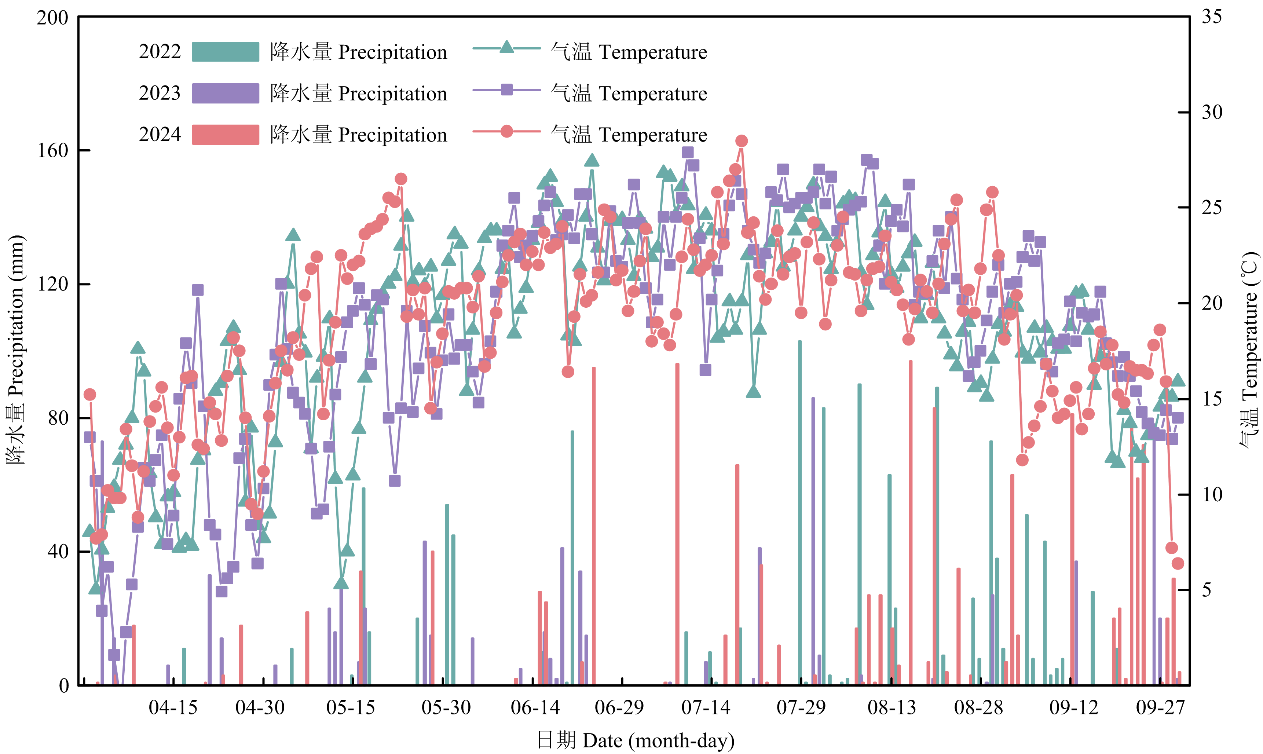
Fig. 1

Variation of daily precipitation and daily mean temperature during crop growth period in the experimental area from 2022 to 2024"

Table 1

Experimental treatments and nitrogen application regimes"

种植模式
Planting model
施氮水平
Nitrogen application level
生物炭处理
Biochar treatment
代码
Code
基肥
Base fertilizer (kg·hm-2
追肥
N fertilizer topdressing (kg·hm-2)
总施氮量
Total fertilizer (kg·hm-2)
大喇叭口期
Big trumpet stage
吐丝期Silking stage
单作玉米
Monoculture maize (SM)
地方传统施氮
Local conventional nitrogen application
(N1)
不施生物炭
No biochar application (B)
SMN1B 108 180 72 360
施用生物炭
Biochar application (C)
SMN1C 108 180 72 360
减氮30%
Reduction 30% application rate
(N2)
不施生物炭
No biochar application (B)
SMN2B 75 125 50 250
施用生物炭
Biochar application (C)
SMN2C 75 125 50 250
玉米间作鲜食豌豆
Maize intercropped with fresh pea (IM)
地方传统施氮
Local conventional nitrogen application (N1)
不施生物炭
No biochar application (B)
IMN1B 108 180 72 360
施用生物炭
Biochar application (C)
IMN1C 108 180 72 360
减氮30%
Reduction 30% application rate
(N2)
不施生物炭
No biochar application (B)
IMN2B 75 125 50 250
施用生物炭
Biochar application (C)
IMN2C 75 125 50 250

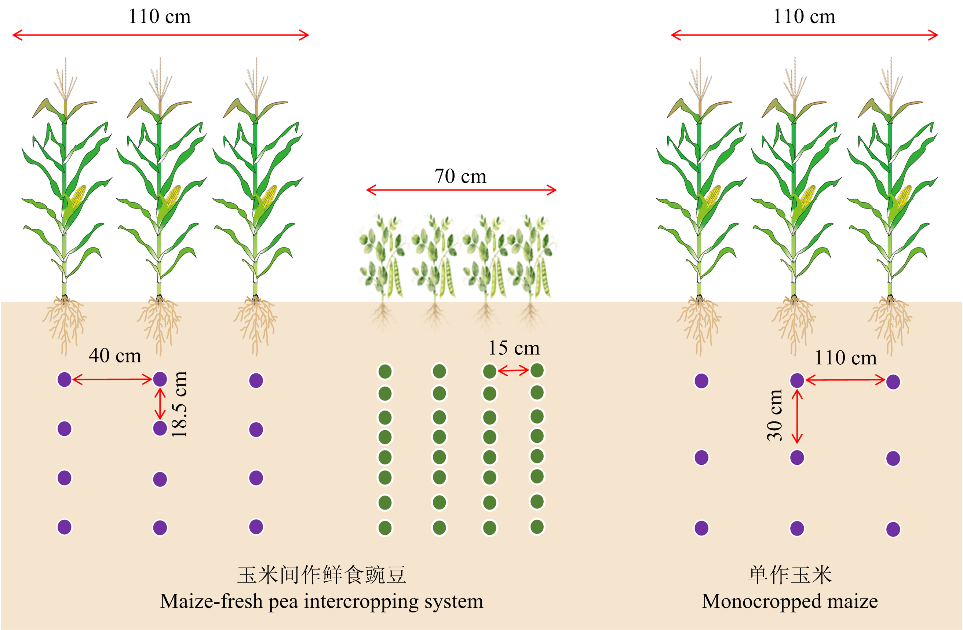
Fig. 2

Schematic diagram of the field experimental layout"

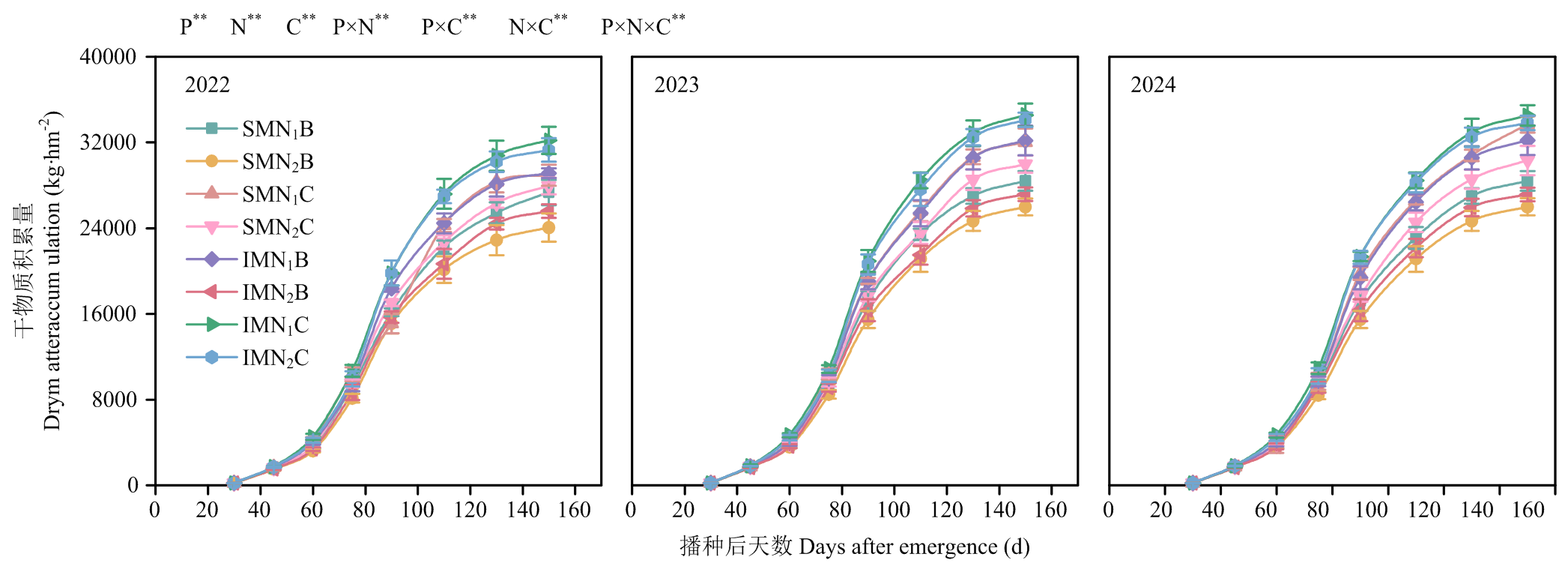
Fig. 3

Dynamic changes in the accumulation of dry matter in maize under different treatments IM and SM represent maize intercropped with fresh pea and sole maize, respectively; N1 and N2 denote the locally recommended nitrogen application rate (360 kg·hm-2) and a 30% reduction in nitrogen fertilizer (250 kg·hm-2), respectively; P, N, C and B respectively represent planting patterns, nitrogen application levels, biochar application and no biochar application, respectively. ** and * indicate significant difference in P< 0.01 and P< 0.05 levels, respectively. Error bars represent the standard error (n=3). The same as below"

Table 2

Regression analysis of the Logistic equation for the accumulation of dry matter in the aboveground parts of maize under different treatments"

年份 Year 处理 Treatment 回归方程 Regression equation R2 t50 (d) Vmax (kg·hm-2·d-1) Vmean (kg·hm-2·d-1)
2022 SMN1B Y=27060/(1+e6.244-0.075t) 0.999 83.3c 507.4c 182.2d
SMN2B Y=23942/(1+e6.143-0.073t ) 0.999 84.2b 434.4e 160.4f
SMN1C Y=30159/(1+e6.169-0.074t) 0.999 83.4c 555.0ab 201.8b
SMN2C Y=28817/(1+e6.304-0.075t) 0.999 84.1b 539.1c 192.9c
IMN1B Y=29684/(1+e6.296-0.074t) 0.999 85.1a 547.9b 198.7b
IMN2B Y=25486/(1+e6.214-0.074t) 0.999 84.0b 469.1d 170.7e
IMN1C Y=32086/(1+e6.157-0.073t) 0.999 84.3b 584.6a 214.8a
IMN2C Y=30846/(1+e6.152-0.072t) 0.999 85.4a 555.9a 206.4a
2023 SMN1B Y=23824/(1+e5.927-0.070t) 0.998 84.7b 494.2d 189.4d
SMN2B Y=25943/(1+e5.881-0.068t) 0.999 86.5a 441.0e 173.2e
SMN1C Y=33364/(1+e6.328-0.074t) 0.999 85.5ab 613.2b 223.1b
SMN2C Y=29848/(1+e6.013-0.070t) 0.999 85.9ab 522.3c 199.9c
IMN1B Y=32042/(1+e6.180-0.072t) 0.999 85.8ab 575.0c 214.6c
IMN2B Y=27075/(1+e5.854-0.069t) 0.998 84.8b 467cd 181.2d
IMN1C Y=34424/(1+e6.106-0.072t) 0.999 84.8b 618.3a 230.5a
IMN2C Y=33144/(1+e6.254-0.074t) 0.998 84.5b 617.2a 224.6b
2024 SMN1B Y=28239/(1+e5.947-0.070t) 0.998 85.0ab 494.2e 189.4b
SMN2B Y=25948/(1+e5.833-0.068t) 0.999 85.8a 441.1f 173.2c
SMN1C Y=33294/(1+e6.593-0.077t) 0.998 85.6a 609.4b 224.6a
SMN2C Y=29998/(1+e6.142-0.072t) 0.999 85.3ab 540.0d 202.1b
IMN1B Y=31950/(1+e6.223-0.073t) 0.998 85.2ab 583.1c 214.7b
IMN2B Y=27079/(1+e5.886-0.069t) 0.999 85.3ab 467.1f 181.0c
IMN1C Y=34222/(1+e6.171-0.073t) 0.998 84.5c 640.9a 230.1a
IMN2C Y=33392/(1+e6.191-0.073t) 0.998 84.8b 624.6a 225.5a

Fig. 4

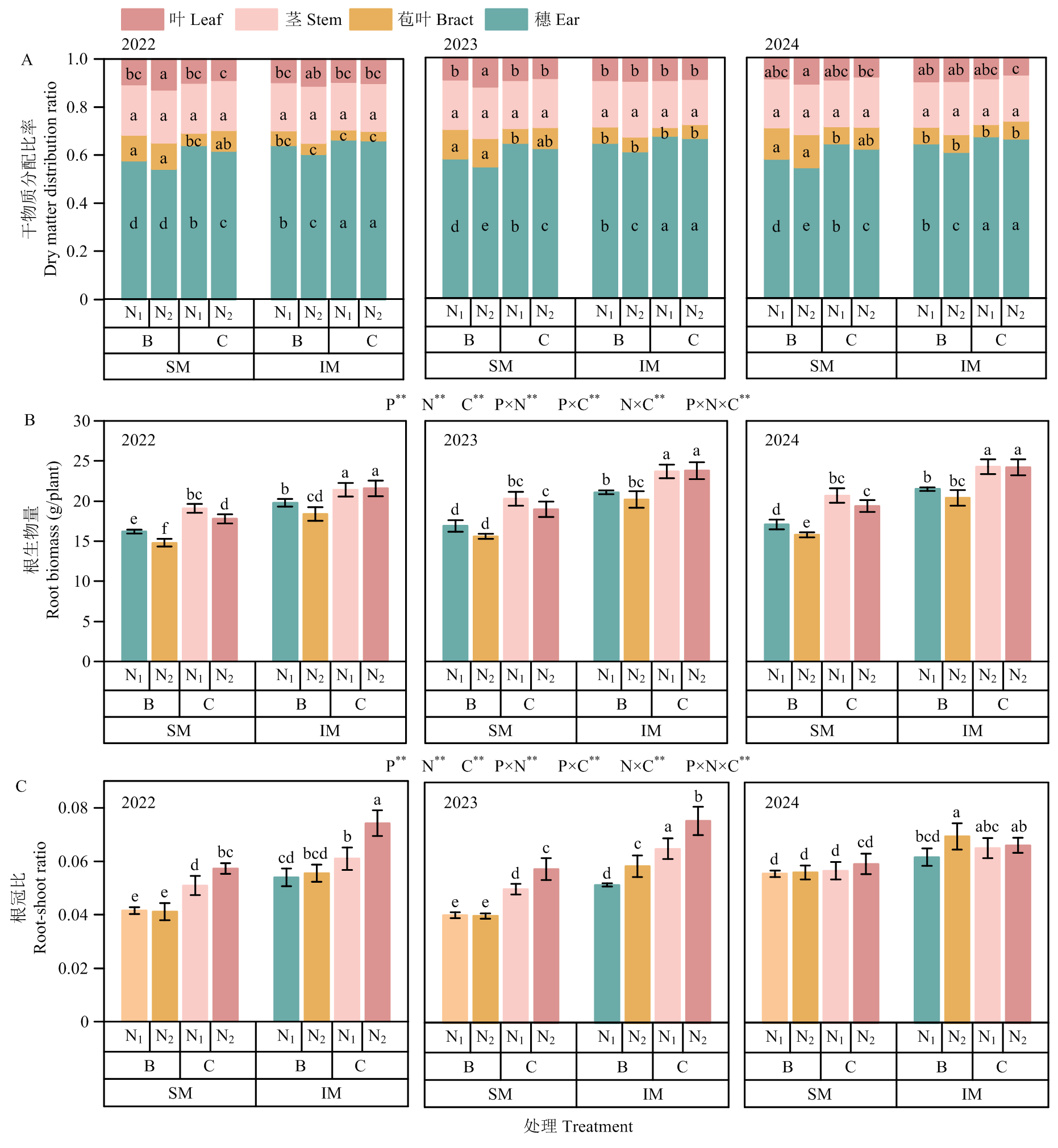
Dry matter accumulation distribution ratio, root biomass, and root-to-shoot ratio of maize under different treatments"

Fig. 5

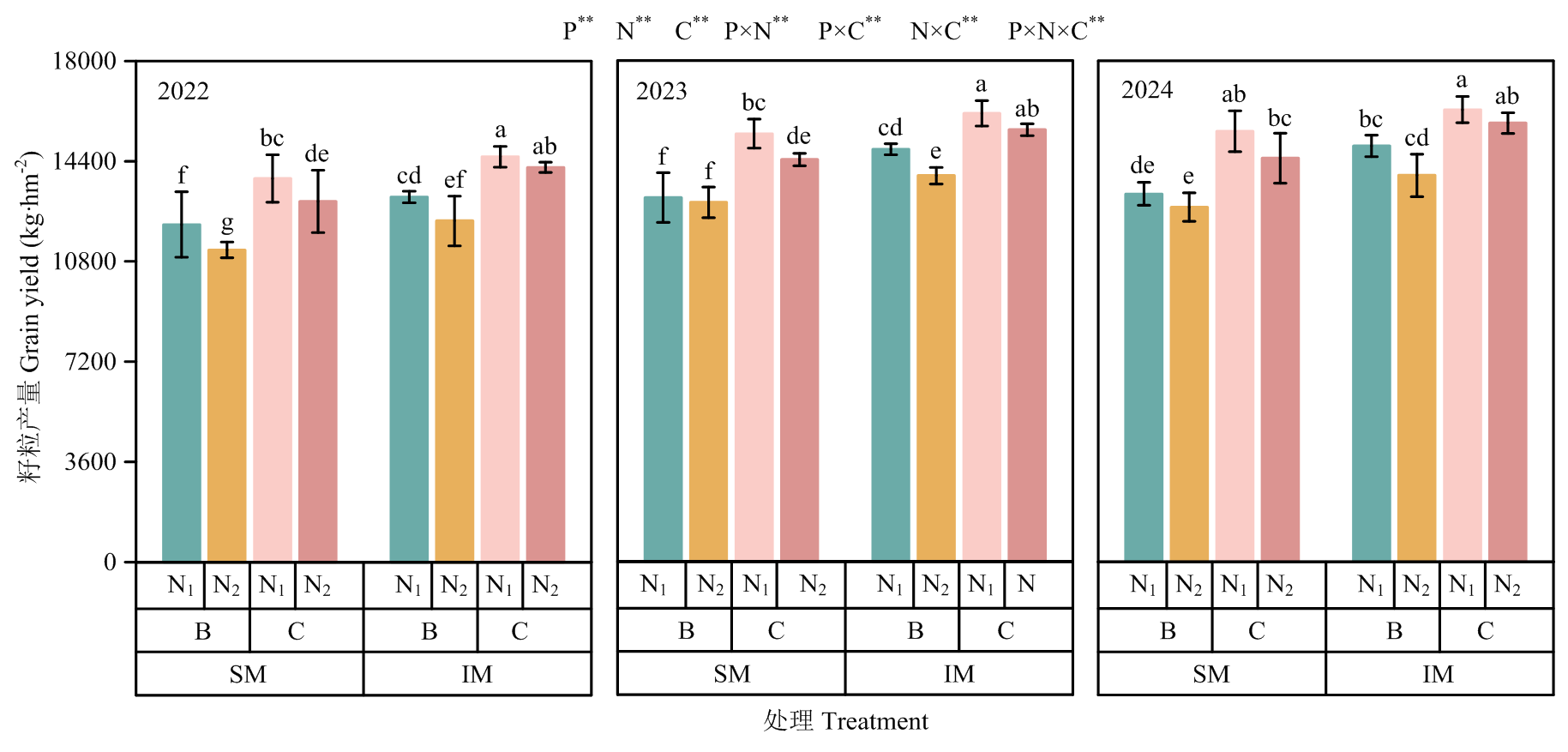
Maize grain yield under different treatments"

Fig. 6

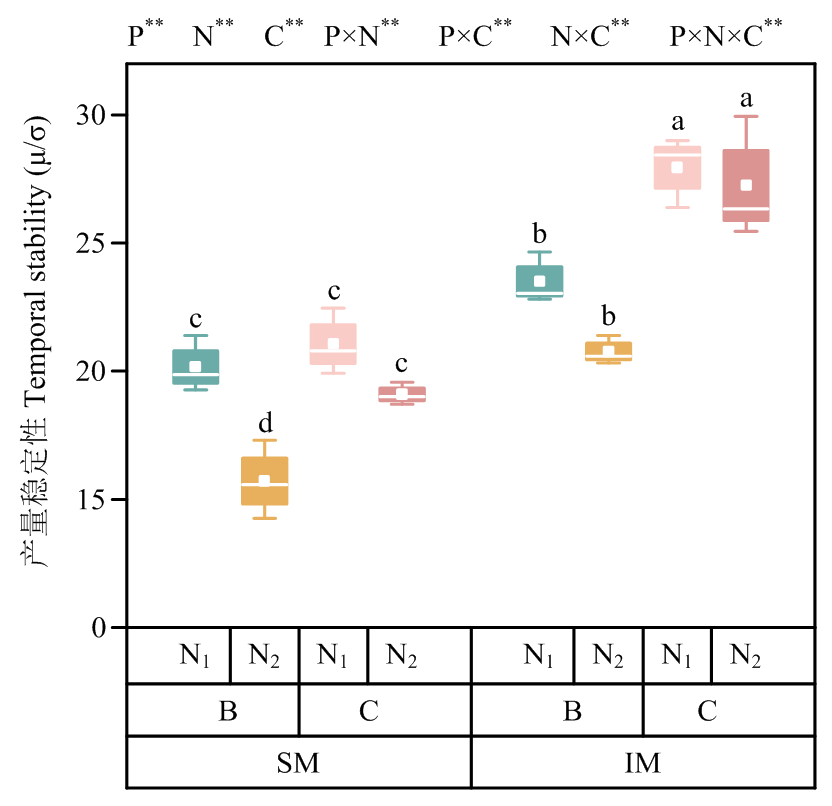
The stability of maize yield under different treatments"

Fig. 7

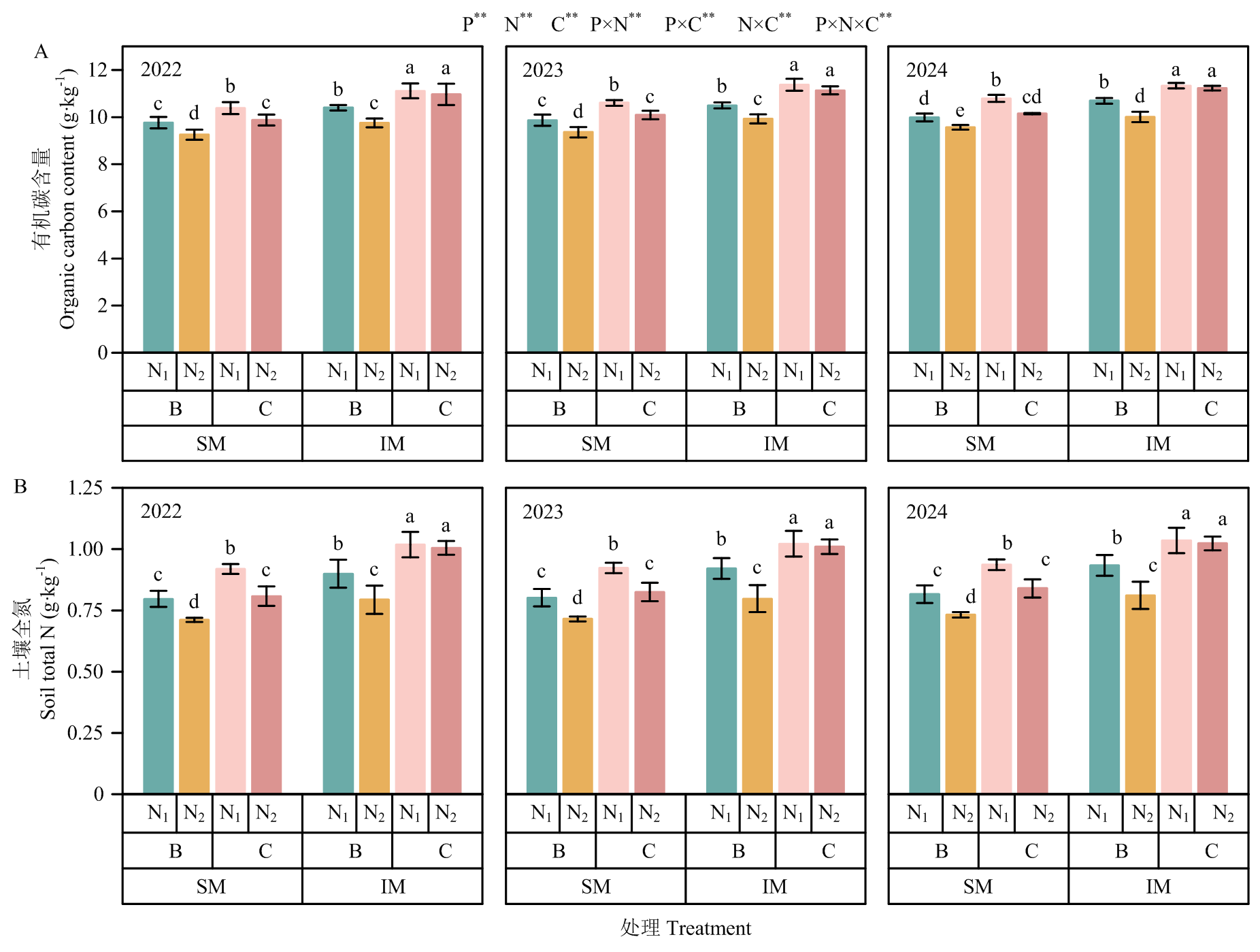
Soil organic carbon and total nitrogen content in maize field at flowering stage under different treatments"

Fig. 8

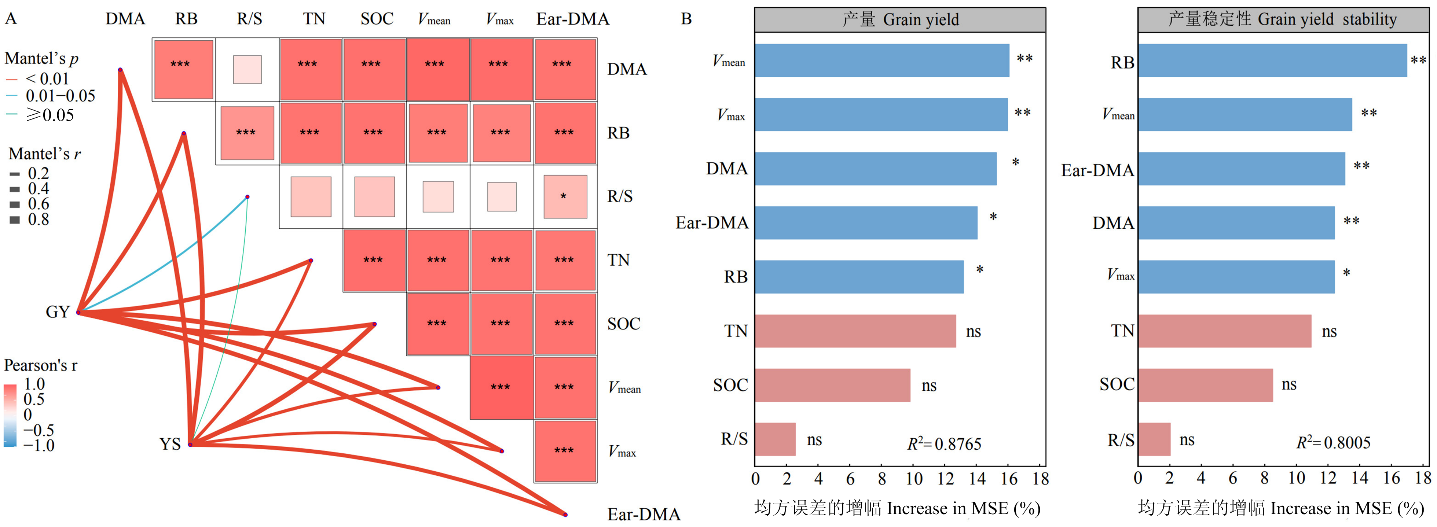
The relationships between maize yield, yield stability, and various influencing factors A: Mantel test; Figure B: Random forest model for grain yield and yield stability. GY, YS, DMA, RB, R/S, TN, SOC, Vmean, Vmax, and Ear-DMA represent grain yield, yield stability, dry matter accumulation, root biomass, root-to-shoot ratio, soil total nitrogen, soil organic carbon, mean dry matter growth rate, maximum mean dry matter growth rate, and proportion of dry matter allocated to the ear, respectively. ns indicates no significance"

[1]
Hasegawa T, Sakurai G, Fujimori S, Takahashi K, Hijioka Y, Masui T. Extreme climate events increase risk of global food insecurity and adaptation needs[J]. Nature Food, 2021, 2(8): 587-595.
[2]
Cheng P, Zhang Y, Liu K, Kong X S, Wu S M, Yan H F, Jiang P. Continuing the continuous harvests of food production: From the perspective of the interrelationships among cultivated land quantity, quality, and grain yield[J]. Humanities and Social Sciences Communications, 2025, 12: 46.
[3]
Zhao Y L, Guo S H, Zhu X Q, Zhang L, Long Y, Wan X Y, Wei X. How maize-legume intercropping and rotation contribute to food security and environmental sustainability[J]. Journal of Cleaner Production, 2024, 434: 140150.
[4]
李晓红, 王克如, 张国强, 明博, 薛军, 方梁, 张婷婷, 叶建全, 李少昆. 增密和株行距优化提高西辽河平原沙地滴灌玉米的产量与水氮利用效率[J]. 中国农业科学, 2025, 58(14): 2766-2781. DOI: 10.3864/j.issn.0578-1752.2025.14.005.
Li X H, Wang K R, Zhang G Q, Ming B, Xue J, Fang L, Zhang T T, Ye J Q, Li S K. Increasing planting density and optimizing plant row spacing to improve yield water and nitrogen use efficiency of drip-irrigated maize in sandy areas of the xiliaohe plain[J]. Scientia Agricultura Sinica, 2025, 58(14): 2766-2781. DOI: 10.3864/j.issn.0578-1752.2025.14.005.(in Chinese)
[5]
Zhang C, Rees R M, Ju X T. Cropping system design can improve nitrogen use efficiency in intensively managed agriculture[J]. Environmental Pollution, 2021, 280: 116967.
[6]
Gui D Y, Zhang Y Y, Lv J Y, Guo J Y, Sha Z P. Effects of intercropping on soil greenhouse gas emissions-A global meta- analysis[J]. Science of the Total Environment, 2024, 918: 170632.
[7]
Yang X L, Xiong J R, Du T S, Ju X T, Gan Y T, Li S E, Xia L L, Shen Y J, Pacenka S, Steenhuis T S, Siddique K H M, Kang S Z, Butterbach-Bahl K. Diversifying crop rotation increases food production, reduces net greenhouse gas emissions and improves soil health[J]. Nature Communications, 2024, 15: 198.
[8]
王鹏飞, 于爱忠, 王凤, 王玉珑, 吕汉强, 尚永盼, 尹波, 刘亚龙, 张冬玲, 霍建喆, 姜科强, 庞小能. 干旱地区绿肥还田条件下减氮对玉米农艺性状、产量及籽粒品质的影响[J]. 中国农业科学, 2025, 58(13): 2552-2563. DOI: 10.3864/j.issn.0578-1752.2025.13.005.
Wang P F, Yu A Z, Wang F, Wang Y L, H Q, Shang Y P, Yin B, Liu Y L, Zhang D L, Huo J Z, Jiang K Q, Pang X N. Effects of reducing nitrogen application on maize agronomic traits, grain yield and quality under green manure returning to field system in arid areas[J]. Scientia Agricultura Sinica, 2025, 58(13): 2552-2563. DOI: 10.3864/j.issn.0578-1752.2025.13.005.(in Chinese)
[9]
Meng W S, An N, Guan S, Dou S, Zhang B W, Zhu W J, Yue J H. Unraveling mechanisms of carbon enrichment via straw and biochar application to enhance soil fertility and improve maize yield[J]. European Journal of Agronomy, 2025, 169: 127673.
[10]
Yu R P, Yang H, Xing Y, Zhang W P, Lambers H, Li L. Belowground processes and sustainability in agroecosystems with intercropping[J]. Plant and Soil, 2022, 476(1): 263-288.
[11]
Jing B, Shi W J, Chen T, Zhai Z M, Song J W. Optimizing root distribution and water use efficiency in maize/soybean intercropping under different irrigation levels: The role of underground interactions[J]. Soil and Tillage Research, 2025, 249: 106490.
[12]
Gao H X, Zhang C C, Van der Werf W, Ning P, Zhang Z, Zhang F S. Intercropping modulates the accumulation and translocation of dry matter and nitrogen in maize and peanut[J]. Field Crops Research, 2022, 284: 108561.
[13]
付浩川, 李成, 李贺男, 张浩磊, 温家宣, 方妍欣, 李想, 李锦朝, 董勤各, 冯浩. 不同禾豆间作模式对作物产量及水氮利用的影响[J]. 干旱地区农业研究, 2025, 43(3): 200-209.
Fu H C, Li C, Li H N, Zhang H L, Wen J X, Fang Y X, Li X, Li J Z, Dong Q G, Feng H. Effects of different cereal-legume intercropping systems on crop yield, water usage, and nitrogen utilization[J]. Agricultural Research in the Arid Areas, 2025, 43(3): 200-209.(in Chinese)
[14]
韩笑晨, 张贵芹, 王亚辉, 任昊, 王洪章, 刘国利, 林佃旭, 王子强, 张吉旺, 赵斌, 任佰朝, 刘鹏. 土壤调理剂对滨海盐碱地土壤盐分含量及夏玉米产量的影响[J]. 作物学报, 2024, 50(7): 1776-1786.
Han X C, Zhang G Q, Wang Y H, Ren H, Wang H Z, Liu G L, Lin D X, Wang Z Q, Zhang J W, Zhao B, Ren B Z, Liu P. Effects of soil conditioners on soil salinity content and maize yield in coastal saline-alkali land[J]. Acta Agronomica Sinica, 2024, 50(7): 1776-1786.(in Chinese)
[15]
Omokaro G O, Kornev K P, Nafula Z S, Chikukula A A, Osayogie O G, Efeni O S. Biochar for sustainable soil management: Enhancing soil fertility, plant growth and climate resilience[J]. Farming System, 2025, 3(4): 100167.
[16]
Chen Z, Jin P H, Liu Q, Zhang Y H, Hu T L, Wang H, Zhou R, Zhang J R, Lin X W, Xie Z B. Decade-long successive biochar amendment enhances wheat production and increases crop system resistance to unfavorable meteorological factors[J]. Field Crops Research, 2025, 322: 109743.
[17]
柴强, 胡发龙, 陈桂平. 禾豆间作氮素高效利用机理及农艺调控途径研究进展[J]. 中国生态农业学报, 2017, 25(1): 19-26.
Chai Q, Hu F L, Chen G P. Research advance in the mechanism and agronomic regulation of high-efficient use of nitrogen in cereal-legume intercropping[J]. Chinese Journal of Eco-Agriculture, 2017, 25(1): 19-26.(in Chinese)
[18]
尚永盼, 于爱忠, 王玉珑, 王鹏飞, 李悦, 柴健, 吕汉强, 杨学慧, 王凤. 绿洲灌区绿肥还田利用方式对玉米干物质积累、分配及产量的影响[J]. 作物学报, 2024, 50(3): 686-694.
Shang Y P, Yu A Z, Wang Y L, Wang P F, Li Y, Chai J, H Q, Yang X H, Wang F. Effects of green manure application methods on dry matter accumulation, distribution, and yield of maize in oasis irrigation area[J]. Acta Agronomica Sinica, 2024, 50(3): 686-694.(in Chinese)
[19]
Wang Y L, Lyu H Q, Yu A Z, Wang F, Li Y, Wang P F, Shang Y P, Yang X H, Chai Q. No-tillage mulch with green manure retention improves maize yield by increasing the net photosynthetic rate[J]. European Journal of Agronomy, 2024, 159: 127275.
[20]
Feng W H, Ge J Y, Rodríguez A R S, Zhao B P, Wang X Y, Peixoto L, Yang Y D, Zeng Z H, Zang H D. Oat/soybean strip intercropping benefits crop yield and stability in semi-arid regions: A multi-site and multi-year assessment[J]. Field Crops Research, 2024, 318: 109560.
[21]
Lyu H Q, Yu A Z, Chai Q, Wang F, Wang Y L, Wang P F, Shang Y P, Yang X H. Enhancing soil quality and crop yield by increasing dominant bacterial abundance and reducing bacterial diversity under no-tillage with total green manure incorporation[J]. Agriculture, Ecosystems & Environment, 2025, 378: 109303.
[22]
Zhang N H, Ye X, Gao Y, Liu G X, Liu Z H, Zhang Q L, Liu E K, Sun S K, Ren X L, Jia Z K, Siddique K H M, Zhang P. Environment and agricultural practices regulate enhanced biochar-induced soil carbon pools and crop yield: A meta-analysis[J]. Science of the Total Environment, 2023, 905: 167290.
[23]
Fiorentino N, Sánchez-Monedero M A, Lehmann J, Enders A, Fagnano M, Cayuela M L. Interactive priming of soil N transformations from combining biochar and urea inputs: A 15N isotope tracer study[J]. Soil Biology and Biochemistry, 2019, 131: 166-175.
[24]
Hou S, Sun X R, Chen G H, Siddique K H M, Chen Z L, Liu F, Ping S Y, Lai H T, Guo H H, An Y J, Lin Z L, Zhang Z X, Sun L Z, Yang P Z. Biochar addition mitigates asymmetric competition of water and increases yield advantages of maize-alfalfa strip intercropping systems in a semiarid region on the Loess Plateau[J]. Field Crops Research, 2024, 319: 109645.
[25]
Li W R, Wang L W, Qian S F, He M Y, Cai X J, Ding J Q. Root characteristics explain greater water use efficiency and drought tolerance in invasive Compositae plants[J]. Plant and Soil, 2023, 483(1): 209-223.
[26]
Yang T R, Zhao J H, Hong M, Ma M J, Ma S J, Yuan Y Y. Optimizing water and nitrogen supply can regulate the dynamics of dry matter accumulation in maize, thereby promoting dry matter accumulation and increasing yield[J]. Field Crops Research, 2025, 326: 109837.
[27]
Gao X Y, Yang J Q, Wang A J, Liu W Z. The reduction of nitrogen loss using biochar for soil fertility reservation[J]. Journal of Soils and Sediments, 2024, 24(6): 2416-2424.
[28]
Yang J R, Xia L L, Van Groenigen K J, Zhao X, Ti C P, Wang W L, Du Z L, Fan M S, Zhuang M H, Smith P, Lal R, Butterbach-Bahl K, Han X R, Meng J, Liu J, Cai H G, Cheng Y H, Liu X R, Shu X Y, Jiao X Y, et al. Sustained benefits of long-term biochar application for food security and climate change mitigation[J]. Proceedings of the National Academy of Sciences of the United States of America, 2025, 122(33): e2509237122.
[29]
Feng W H, Sánchez-Rodríguez A R, Bilyera N, Wang J Q, Wang X Q, Han Y H, Ma B X, Zhang H Y, Li F Y, Zhou J, Li Y Y. Mechanisms of biochar-based organic fertilizers enhancing maize yield on a Chinese Chernozem: Root traits, soil quality and soil microorganisms[J]. Environmental Technology & Innovation, 2024, 36: 103756.
[30]
Zhang G Z, Yang H, Zhang W P, Bezemer T M, Liang W J, Li Q, Li L. Interspecific interactions between crops influence soil functional groups and networks in a maize/soybean intercropping system[J]. Agriculture, Ecosystems & Environment, 2023, 355: 108595.
[31]
Liu L, Wang Y F, Yan X W, Li J W, Jiao N Y, Hu S J. Biochar amendments increase the yield advantage of legume-based intercropping systems over monoculture[J]. Agriculture, Ecosystems & Environment, 2017, 237: 16-23.
[1] BAI JingJing, ZHANG YuChen, NI ZiJie, GAO JiaYong, LIU WeiYang, GAI DongSheng, WANG YuHang, HE JiaQing, ZHANG Qiang, SHAO XiWen, WU Ying, GENG YanQiu, GUO LiYing. Effects of Different Irrigation Volumes on Lodging Resistance Characteristics and Yield of Rice in Northeast China [J]. Scientia Agricultura Sinica, 2026, 59(9): 1848-1868.
[2] CAI QiaoHong, ZHOU Tian, SU Ming, HONG ZiQiang, LI FanGuo, LI Tong, WANG Hua, KANG JianHong, WU HongLiang. Effects of Nitrogen Reduction and Potassium Enhancement Fertilization Mode on Photosynthetic Fluorescence Characteristics and Photosynthetic Product Accumulation of Maize in Ningxia Yellow Irrigation Area [J]. Scientia Agricultura Sinica, 2026, 59(9): 1869-1886.
[3] ZHU Pei, ZHAO Yao, BAI Yan, ZHANG JinKui, LI Mei, LONG JinJia, YANG Long, LUO LiYa, XU BenBo, XU JinSong, ZHANG XueKun. Physiological Regulation of Pydiflumetofen on Rapeseed (Brassica napus) and Its Combined Effect with Prochloraz [J]. Scientia Agricultura Sinica, 2026, 59(9): 1903-1915.
[4] CHEN XuanYi, GUO XingXing, ZHANG XiangQian, LU ZhanYuan, LIU LingYue, LUO Fang, LI JinLong, ZHANG ChuanLing, ZHANG ZhiQing, CHE ManQing. Impacts of Intercropping Row Patterns on the Heterogeneity of the Light Environment and Photosynthetic Product Production in Maize Canopy [J]. Scientia Agricultura Sinica, 2026, 59(8): 1653-1671.
[5] HOU HuiZhi, YIN JiaDe, MA MingSheng, LIU XiaoWei, LIU YanLan, LEI KangNing. Effects of Tillage and Organic Fertilizer Application on Crop Yield and Water Use in a Potato-Maize Double Cropping System in the Longdong Region [J]. Scientia Agricultura Sinica, 2026, 59(8): 1672-1685.
[6] PENG TingShen, LU JiuYan, WU MeiLin, YAN YuXin, LIU HongZhou, NAN WenBin, QIN XiaoJian, LI Ming, GONG JunYi, LIANG YongShu. QTL Analysis of Yield-Related Traits in Both Huangnuo2# and Changbai7# of Perennial Chinese Rice [J]. Scientia Agricultura Sinica, 2026, 59(7): 1361-1379.
[7] WANG YuPing, FU Zhi, SUN JiaYing, MU XiaoMeng, LIU HuiLin, GUO JinYun, SONG WenJing, HOU LeiPing, ZHAO HaiLiang. Evaluation of the Mitigating Effect and Application Efficacy of Melatonin Applied at the Seedling Stage on Short-Term Chilling Stress in Tomato Plants [J]. Scientia Agricultura Sinica, 2026, 59(7): 1523-1535.
[8] WANG JiaNuo, CHEN GuiPing, LI Pan, WANG LiPing, NAN YunYou, HE Wei, FAN ZhiLong, HU FaLong, CHAI Qiang, YIN Wen, ZHAO LiaoHao. Photo-Physiological Mechanism at Grain Filling Stage of No-Tillage with Plastic Re-Mulching to Increase Maize Yield in Oasis Irrigation Areas [J]. Scientia Agricultura Sinica, 2026, 59(6): 1189-1202.
[9] ZHOU XinJie, REN Hao, CHEN YingLong, ZHANG JiWang, ZHAO Bin, REN BaiZhao, LIU Peng, WANG HongZhang. Effects of Calcium Peroxide on Root Morphology and Yield Formation of Summer Maize in Waterlogging Farmland [J]. Scientia Agricultura Sinica, 2026, 59(6): 1203-1216.
[10] HE JiHang, ZHANG Qing, LÜ XiangYue, XUE JiQuan, XU ShuTu, LIU JianChao. Evaluation of Nitrogen Efficiency of Different Stay-Green Maize Hybrids [J]. Scientia Agricultura Sinica, 2026, 59(6): 1217-1230.
[11] LI YongJuan, ZHANG YueTong, WANG YiBo, ZHAO ChangJiang, SONG Jie, CHEN XueLi, YAO Qin. Effects of Biochar Application on the Abundance and Community Composition of Nitrogen-Fixing Microbial nifH Gene in Soybean Rotation and Continuous Cropping Systems [J]. Scientia Agricultura Sinica, 2026, 59(6): 1272-1285.
[12] HAO Kun, CHEN HongDe, ZHANG Wei, ZHONG Yun, DANG MeiRong, ZHU ShiJiang, HUANG ZhiKun, JIN Ying. Comprehensive Evaluation of Water-Nitrogen Management Under Surge-Root Irrigation Based on Citrus Yield, Quality, and Water- Nitrogen Use Efficiency [J]. Scientia Agricultura Sinica, 2026, 59(4): 862-873.
[13] GUO FuCheng, TANG HaiJiang, HAO XinYi, MA GuoLin, YANG JiuJu, HUANG LinFeng, TIAN Lei, WANG Bin, LUO ChengKe. Effects of Different Irrigation Methods on Water-Salt Transport, Rice Yield, and Water Use Efficiency in Saline Soil in Ningxia [J]. Scientia Agricultura Sinica, 2026, 59(4): 750-764.
[14] YAN TingLin, DU YaDan, HU XiaoTao, WANG He, LI XiaoYan, WANG YuMing, NIU WenQuan, GU XiaoBo. The Impacts of Nitrogen Fertilizer Organic Alternatives Under Aerated Drip Irrigation on Cotton Yield and Water Use Efficiency Under Deficit Irrigation Conditions [J]. Scientia Agricultura Sinica, 2026, 59(3): 602-618.
[15] YANG Rui, CHEN JingDong, HUANG Ying, XIE LingLi, ZHANG XueKun, ZHOU DengWen, LIU QingYun, XU JinSong, XU BenBo. Genetic Improvement and Configuration Analysis of High-Yield Rapeseed Lines in the Upper Reaches of the Yangtze River [J]. Scientia Agricultura Sinica, 2026, 59(2): 250-264.
Viewed
Full text


Abstract

Cited

  Shared   
  Discussed   
No Suggested Reading articles found!