Scientia Agricultura Sinica ›› 2026, Vol. 59 ›› Issue (12): 2750-2762.doi: 10.3864/j.issn.0578-1752.2026.12.016

• ANIMAL SCIENCE·VETERINARY SCIENCE • Previous Articles    

Development of Double-Antibody Sandwich ELISA for the Detection of Clostridium perfringens ε Toxin (ETX)

HAN FengYe1,2(), LIU Ying2, ZHU KaiYing2, YIN ChunSheng2, ZHANG QianYi2, WEN YongJun1, WANG FengXue1(), DU JiGe2()   

  1. 1 College of Veterinary Medicine of Inner Mongolia Agricultural University/Key Laboratory of Animal Diseases Clinical Diagnosis and Treatment Technology of Ministry of Agriculture and Rural Affairs, Hohhot 010000
    2 China Institute of Veterinary Drug Control, Beijing 100081
  • Received:2025-10-16 Accepted:2026-04-21 Online:2026-06-16 Published:2026-06-16
  • Contact: WANG FengXue, DU JiGe

Abstract:

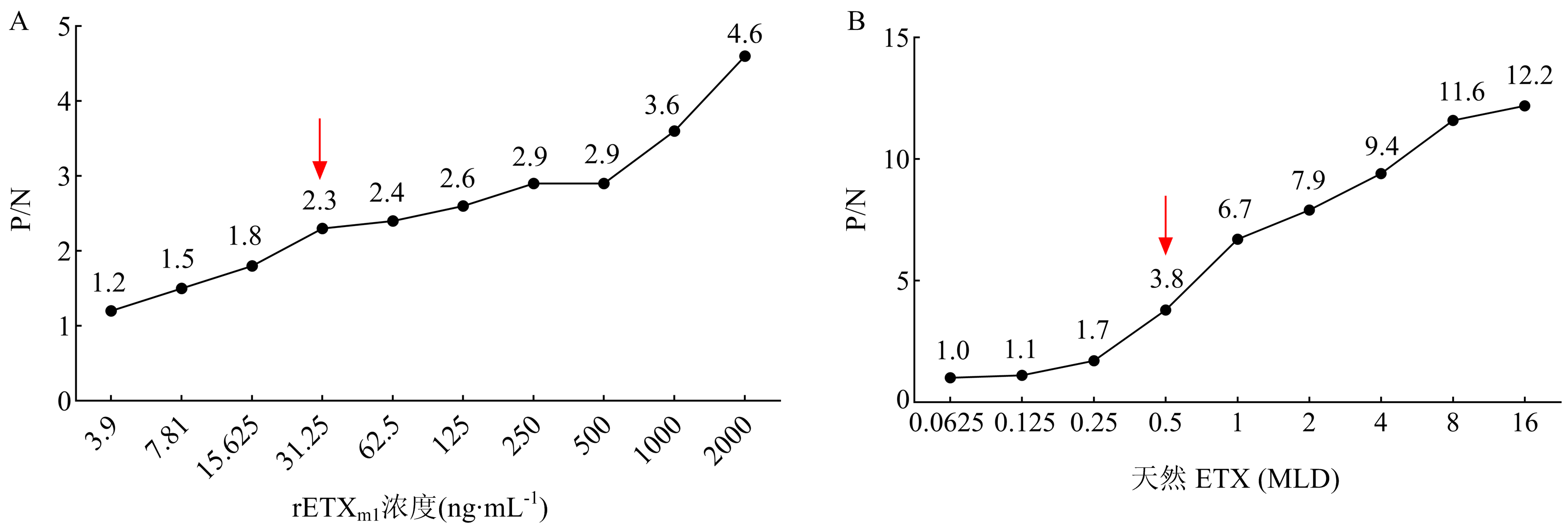
【Background】Clostridium perfringens Epsilon toxin (ETX), recognized as the world's third most potent known biological toxin, causes severe economic losses in the livestock industry due to ETX poisoning. Therefore, there is an urgent need to establish a diagnostic method for ETX that is highly specific, sensitive and easy to operate, and suitable for large-scale sample screening. 【Objective】This study aimed to produce mouse anti-ETX monoclonal antibodies (mAbs) and establish a double-antibody sandwich ELISA (DAS-ELISA) for ETX detection, thereby providing a material foundation for early ETX diagnosis, epidemic surveillance, and the formulation of prevention and control strategies.【Method】BALB/c mice were immunized with inactivated crude ETX (inactivated ETX, iETX) and non-toxic recombinant ETX (rETXm1) as immunogens. An indirect ELISA method and an indirect immunofluorescence assay, established using rETXm1 as the coating antigen, were employed for mAb screening. The obtained mAbs were tested for ETX neutralizing activity, and mouse monoclonal ascites were prepared. Purification of mouse ascites was performed using Protein A affinity chromatography, followed by identification via SDS-PAGE and Western-blot analysis. A DAS-ELISA for ETX detection was established using rabbit polyclonal anti-Clostridium perfringens ε toxin antibody (capture antibody) and neutralizing monoclonal antibody (detection antibody). Optimal reaction conditions were determined by optimizing capture and detection antibody concentrations via a checkerboard approach. The method's cutoff value, specificity, sensitivity, and reproducibility were validated prior to clinical application.【Result】A total of three hybridoma cell lines capable of stable passage and producing ETX-specific mAbs were selected and designated ETX-CH, ETX-ZH, and ETX-NH, respectively. Toxin neutralization assays revealed that ETX-ZH exhibited the highest neutralizing titer at the cellular level, while ETX-NH showed no neutralizing activity. In vivo toxin neutralization experiments in mice further demonstrated that ETX-ZH retained neutralizing activity against ETX in vivo. The purified ascites contained 2.3 mg·mL-1 of ETX-ZH protein. Using the checkerboard method, the optimal dilution for capture antibody was determined to be 1﹕100, and for detection antibody, 1﹕1 600. The optimized conditions for this method were: capture antibody coating at 4 ℃ for 12 h, blocking with 5% skim milk at 37 ℃ for 2 h, antigen incubation at 37 ℃ for 90 min, detection antibody incubation at 37 ℃ for 30 min, incubation with enzyme-labeled secondary IgG antibody at 37 ℃ for 1 h, and TMB color development at 37 ℃ for 15 min. The positive cutoff value was 0.161, and the negative cutoff value was 0.143. The assay demonstrated high specificity with no cross-reactivity to other Clostridium perfringens toxins or purified proteins. It exhibited good reproducibility, with an intra-assay coefficient of variation ≤4.69% and an inter-assay coefficient of variation ≤5.32%. The lower limit of detection for rETXm1 was 31.25 ng·mL-1, and for ETX it was 0.5 MLD. Testing of eighteen multi-valent dry powder vaccines containing ETX-like toxins yielded a 100% detection rate for ETX.【Conclusion】The DAS-ELISA method developed using the prepared ETX mAb exhibited high specificity and good reproducibility, making it suitable for ETX detection.

Key words: ETX, monoclonal antibody, polyclonal antibody, neutralising activity, double antibody sandwich ELISA

Fig. 1

Indirect immunofluorescence of monoclonal antibodies A: ETX-CH; B: ETX-ZH; C: ETX-NHThe red arrow indicates the presence of distinct green fluorescent particle signals within the cell cytoplasm"

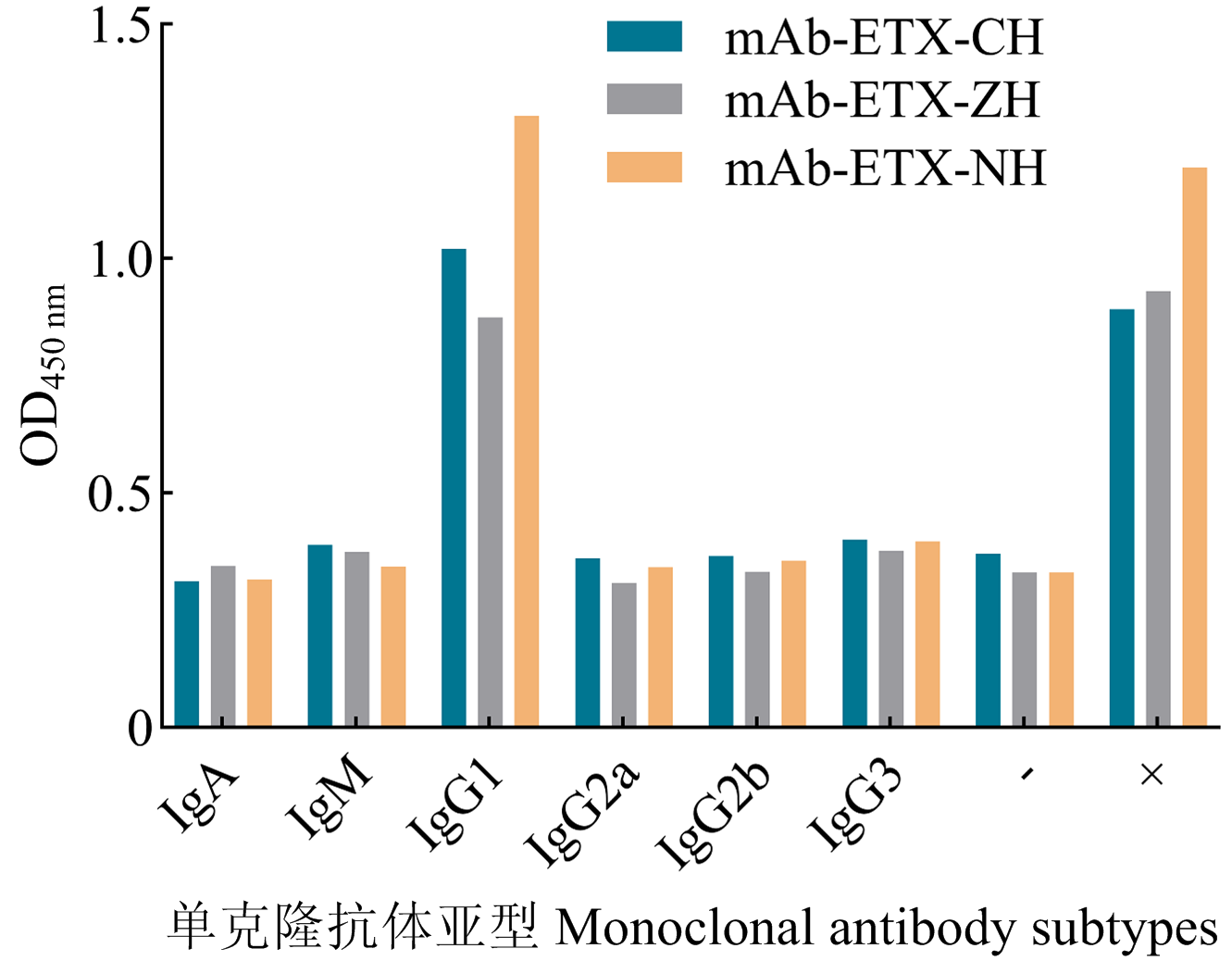
Fig. 2

Monoclonal antibody subclass identification"

Table 1

MDCK cell neutralization assay"

单抗名称
Monoclonal antibody name
与不同稀释倍数的毒素结合中和MDCK细胞
Binding and neutralization of MDCK cells with toxins at different dilution ratios
100 200 400 600 800 1600
ETX-CH + + + - - -
ETX-ZH + - - - - -
ETX-NH + + + + + +

Fig. 3

Cell neutralization assay lysate"

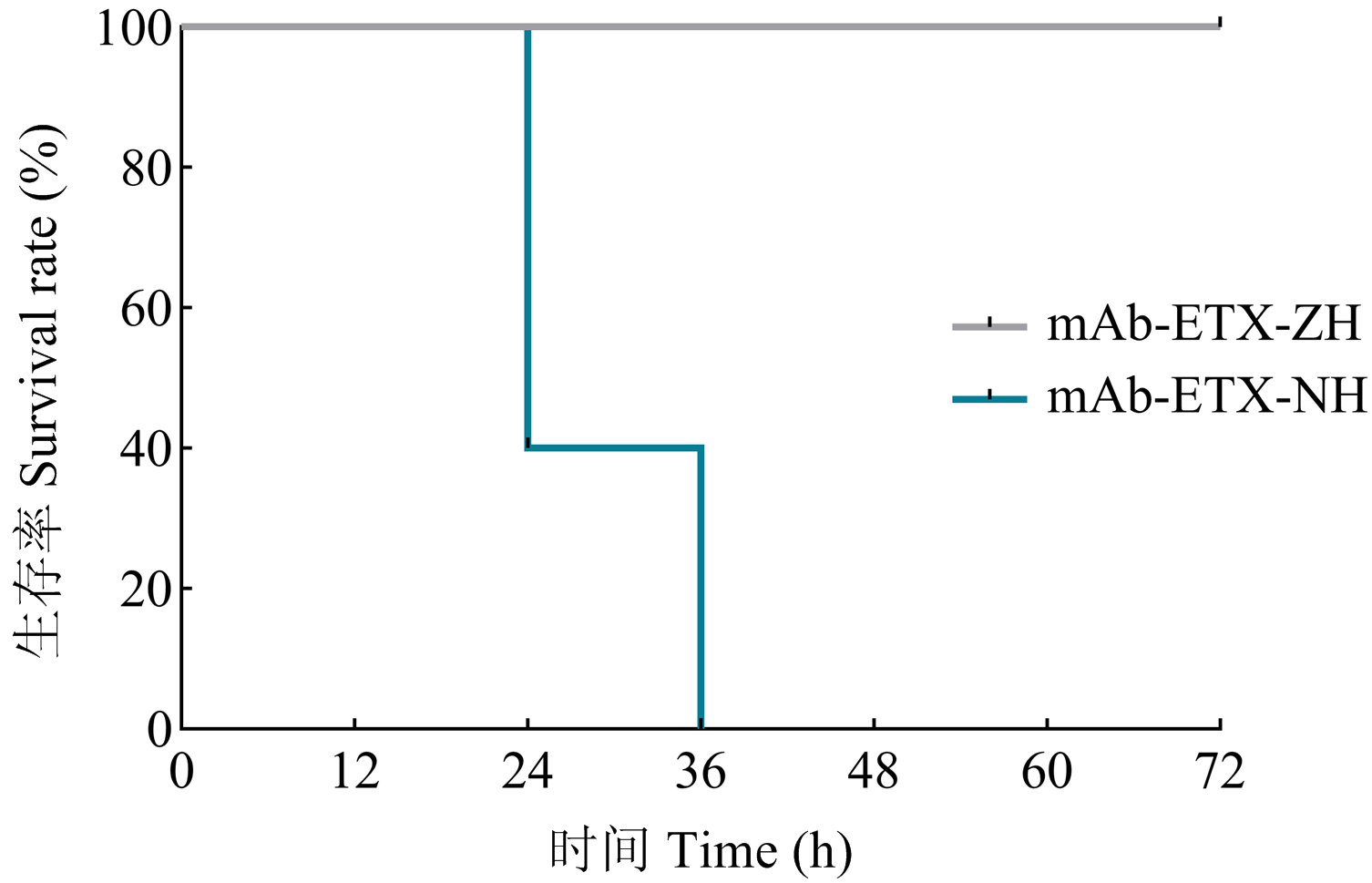
Fig. 4

Neutralization assay of hybridoma cells in animals"

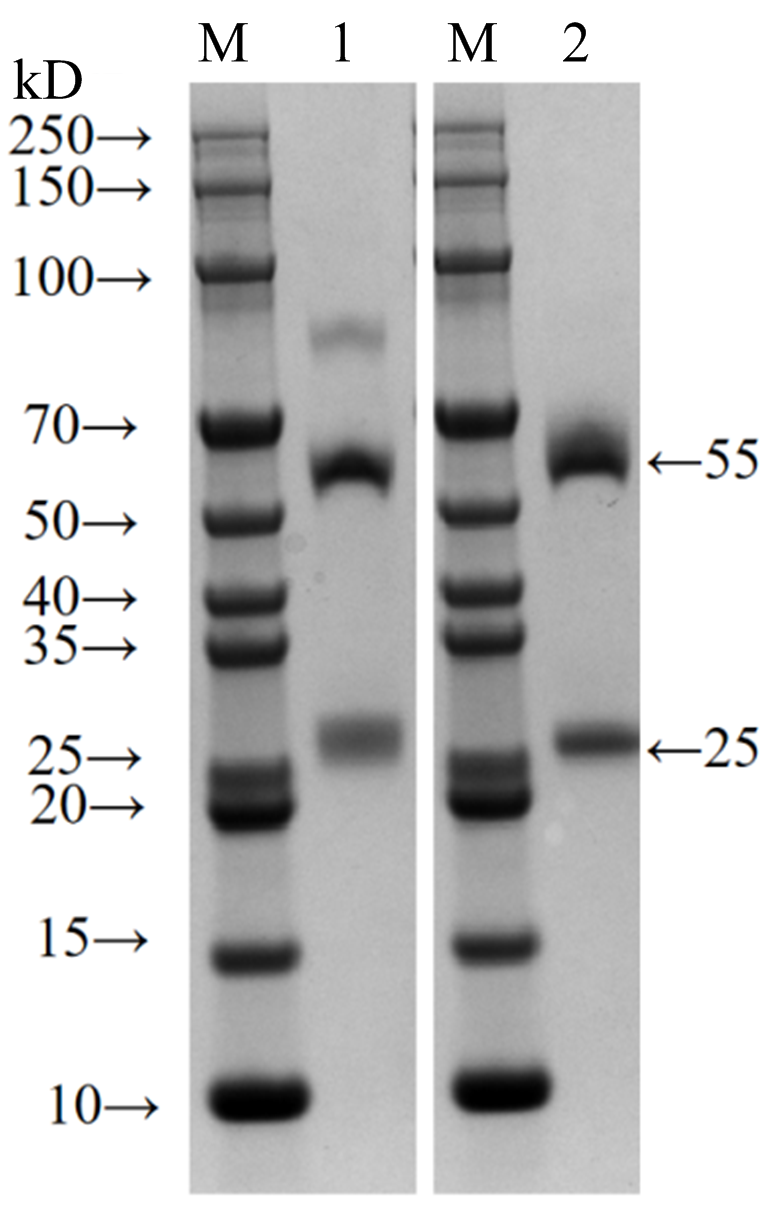
Fig. 5

SDS-PAGE of purified monoclonal antibody M: Protein molecular weight standard; 1: ETX-ZH; 2: ETX-NH"

Fig. 6

Western-blot identification of mAbs M: Protein molecular weight standard; 1, 3: Ending enzyme-treated blank control; 2: ETX-ZH; 4: ETX-NH"

Table 2

Results of antibody dilution tests at different dilutions"

多克隆抗体稀释度
Polyclonal antibody dilution
单克隆抗体稀释度 Monoclonal antibody dilution
1:100 1:200 1:400 1:800 1:1600 1:3200
1:50 1.464 1.131 1.109 1.077 1.007 0.998
0.445 0.178 0.180 0.130 0.111 0.137
P/N 3.290 6.350 6.160 8.280 9.070 7.280
1:100 1.382 1.079 1.010 1.057 1.012 0.954
0.376 0.192 0.153 0.125 0.104 0.125
P/N 3.680 5.620 6.600 8.470 9.730 7.630
1:200 1.324 1.051 1.083 0.934 0.915 0.918
0.358 0.241 0.182 0.125 0.118 0.141
P/N 3.700 4.360 5.950 7.470 7.750 6.510
1:400 1.363 1.031 0.934 0.858 0.798 0.837
0.391 0.257 0.192 0.143 0.134 0.161
P/N 3.490 4.010 4.860 6.000 5.960 5.200
1:800 1.179 0.857 0.689 0.688 0.701 0.722
0.264 0.196 0.176 0.106 0.122 0.133
P/N 4.470 4.370 3.910 6.490 5.750 5.430
1:1600 1.097 0.756 0.639 0.634 0.613 0.675
0.246 0.152 0.128 0.109 0.118 0.145
P/N 4.460 4.970 4.990 5.820 5.200 4.660
1:3200 1.105 0.785 0.680 0.608 0.620 0.667
0.214 0.151 0.100 0.090 0.114 0.162
P/N 5.160 5.200 6.800 6.760 5.440 4.120

Fig. 7

Optimal reaction condition"

Table 3

The specificity test of the DAS-ELISA"

待检样品Sample to be tested OD450nm值OD450nmvalue 结果Result
D型产气荚膜梭菌天然毒素Clostridium perfringens crude toxin Type D 1.13 +
诺维梭菌C64-1株天然毒素Clostridium novyi C64-1 strain crude toxin 0.11 -
破伤风梭菌C66-1株天然毒素Clostridium tetani C66-1 strain crude toxin 0.11 -
肉毒梭菌C型C62-4株天然毒素Clostridium botulinum C62-4 strain crude toxin 0.11 -
腐败梭菌C55-1株天然毒素Clostridium sordellii C55-1 strain crude toxin 0.13 -
破伤风梭菌蛋白Clostridium tetani protein 0.14 -
腐败梭菌蛋白Clostridium sordellii protein 0.12 -
小反刍兽疫蛋白Peste des petits ruminants (PPR) protein 0.13 -
羊口疮蛋白Orf protein 0.11 -
山羊痘蛋白Goatpox protein 0.11 -
狂犬病毒蛋白 Rabies protein 0.10 -
PBS 0.09 -

Fig. 8

Sensitivity determination of the DAS-ELISA method The red arrow indicates the minimum detectable levels of recombinant protein (A) and native toxin (B) when P/N ≥2.1"

Table 4

Repeatability assay for the DAS-ELISA(n=3)"

样品
Sample
批内变异系数Intra-batch CV 批间变异系数Inter-batch CV
平均数
$\overline{x}$
±SD
变异系数 CV(%) 平均数
$\overline{x}$
±SD
变异系数CV (%)
1 1.406+0.0491 3.49 1.435+0.061 4.25
2 1.492+0.070 4.69 1.505+0.08 5.32
3 1.519+0.047 3.09 1.530+0.059 3.86
4 0.874+0.028 3.20 0.859+0.023 2.68
5 0.617+0.009 1.46 0.601+0.014 2.33

Table 5

Testing of vaccine samples"

待检样品
Sample to be tested
OD450nm
OD450nmvalue
结果
Result
待检样品
Sample to be tested
OD450nm
OD450nmvalue
结果
Result
1 1.01 + 10 0.83 +
2 1.12 + 11 0.89 +
3 0.99 + 12 0.90 +
4 0.98 + 13 1.00 +
5 1.05 + 14 0.96 +
6 1.20 + 15 0.96 +
7 1.19 + 16 1.05 +
8 1.07 + 17 1.05 +
9 0.84 + 18 1.08 +
[1]
SONGER J G. Clostridial enteric diseases of domestic animals. Clinical Microbiology Reviews, 1996, 9(2): 216-234.

doi: 10.1128/CMR.9.2.216 pmid: 8964036
[2]
MORCRETTE H, BOKORI-BROWN M, ONG S, BENNETT L, WREN B W, LEWIS N, TITBALL R W. Clostridium perfringens Epsilon toxin vaccine candidate lacking toxicity to cells expressing myelin and lymphocyte protein. Vaccines, 2019, 4: 32.

doi: 10.3390/vaccines4030032
[3]
SÁNCHEZ-PLATA M X, AMÉZQUITA A, BLANKENSHIP E, BURSON D E, JUNEJA V, THIPPAREDDI H. Predictive model for Clostridium perfringens growth in roast beef during cooling and inhibition of spore germination and outgrowth by organic acid salts. Journal of Food Protection, 2005, 68(12): 2594-2605.

doi: 10.4315/0362-028X-68.12.2594
[4]
VAN IMMERSEEL F, DE BUCK J, PASMANS F, HUYGHEBAERT G, HAESEBROUCK F, DUCATELLE R. Clostridium perfringensin poultry: An emerging threat for animal and public health. Avian Pathology, 2004, 33(6): 537-549.

doi: 10.1080/03079450400013162
[5]
王东, 张思雨, 丁雅文, 曾瑾. 产气荚膜梭菌毒素疫苗研究进展. 中国感染控制杂志, 2024(7): 910-917.
WANG D, ZHANG S Y, DING Y W, ZENG J. Research progress in Clostridium perfringens toxin vaccines. Chinese Journal of Infection Control, 2024(7): 910-917. (in Chinese)
[6]
ALVES G G, MACHADO DE ÁVILA R A, CHÁVEZ-OLÓRTEGUI C D, LOBATO F C F. Clostridium perfringens Epsilon toxin: The third most potent bacterial toxin known. Anaerobe, 2014, 30: 102-107.

doi: 10.1016/j.anaerobe.2014.08.016
[7]
HARKNESS J M, LI J H, MCCLANE B A. Identification of a lambda toxin-negative Clostridium perfringens strain that processes and activates Epsilon prototoxin intracellularly. Anaerobe, 2012, 18(5): 546-552.

doi: 10.1016/j.anaerobe.2012.09.001
[8]
DORCA-ARÉVALO J, PAUILLAC S, DÍAZ-HIDALGO L, MARTÍN-SATUÉ M, POPOFF M R, BLASI J. Correlation between in vitro cytotoxicity and in vivo lethal activity in mice of Epsilon Toxin mutants from Clostridium perfringens. PLoS ONE, 2014, 9(7): e102417.
[9]
UZAL F A. Clostridium Perfringens toxins involved in mammalian veterinary diseases. The Open Toxinology Journal, 2013, 3(1): 24-42.
[10]
朱真, 郭鑫, 杜吉革, 李启红, 黄小洁, 李倩琳, 印春生, 陈小云. 产气荚膜梭菌ε毒素研究进展. 动物医学进展, 2021, 42(8): 73-77.
ZHU Z, GUO X, DU J G, LI Q H, HUANG X J, LI Q L, YIN C S, CHEN X Y. Progress on Clostridium perfringens ε-toxin. Progress in Veterinary Medicine, 2021, 42(8): 73-77. (in Chinese)
[11]
岳楠, 康琳, 李佳欣, 王菁, 高姗, 辛文文, 王景林. 产气荚膜梭菌ε毒素的研究进展. 微生物学通报, 2024, 51(7): 2289-2300.
YUE N, KANG L, LI J X, WANG J, GAO S, XIN W W, WANG J L. Research advance of Clostridium perfringens Epsilon toxin. Microbiology China, 2024, 51(7): 2289-2300. (in Chinese)
[12]
PETIT L, GIBERT M, GILLET D, LAURENT-WINTER C, BOQUET P, POPOFF M R. Clostridium perfringens Epsilon-toxin acts on MDCK cells by forming a large membrane complex. Journal of Bacteriology, 1997, 179(20): 6480-6487.

pmid: 9335299
[13]
NAYLOR R D, MARTIN P K, SHARPE R T. Detection of Clostridium perfringens Epsilon toxin by elisa. Research in Veterinary Science, 1987, 42(2): 255-256.

doi: 10.1016/S0034-5288(18)30696-9
[14]
MIYATA S, MINAMI J, TAMAI E, MATSUSHITA O, SHIMAMOTO S, OKABE A. Clostridium perfringens ε-toxin forms a heptameric pore within the detergent-insoluble microdomains of madin-darby canine kidney cells and rat synaptosomes. Journal of Biological Chemistry, 2002, 277(42): 39463-39468.

doi: 10.1074/jbc.M206731200
[15]
SHETTY S V, MAZZUCCO M R, WINOKUR P, HAIGH S V, RUMAH K R, FISCHETTI V A, VARTANIAN T, LINDEN J R. Clostridium perfringens Epsilon Toxin binds to and kills primary human lymphocytes. Toxins, 2023, 15(7): 423.

doi: 10.3390/toxins15070423
[16]
李庆伟, 石碧玥, 韩英伦, 刘欣. 产气荚膜梭菌ε毒素的细胞毒机制及致病机理的研究进展. 辽宁师范大学学报(自然科学版), 2015, 38(2): 219-224.
LI Q W, SHI B Y, HAN Y L, LIU X. Research progress of the cytotoxic mechanisms and pathogenesis mediated by Epsilon toxin of Clostridium perfringens. Journal of Liaoning Normal University (Natural Science Edition), 2015, 38(2): 219-224. (in Chinese)
[17]
SHIVAPPAGOWDAR A, PATI S, NARAYANA C, AYANA R, KAUSHIK H, SAH R, GARG S, KHANNA A, KUMARI J, GARG L, SAGAR R, SINGH S. A small bioactive glycoside inhibits Epsilon toxin and prevents cell death. Disease Models & Mechanisms, 2019, 12(10): dmm040410.
[18]
KAUSHIK H, DESHMUKH S K, SOLANKI A K, BHATIA B, TIWARI A, GARG L C. Immunization with recombinant fusion of LTB and linear epitope (40-62) of Epsilon toxin elicits protective immune response against the Epsilon toxin of Clostridium perfringens type D. AMB Express, 2019, 9(1): 105.

doi: 10.1186/s13568-019-0824-3
[19]
UZAL F A, KELLY W R, THOMAS R, HORNITZKY M, GALEA F. Comparison of four techniques for the detection of Clostridium perfringens type D Epsilon Toxin in intestinal contents and other body fluids of sheep and goats. Journal of Veterinary Diagnostic Investigation, 2003, 15(2): 94-99.

doi: 10.1177/104063870301500202
[20]
LI Q, XIN W W, GAO S, KANG L, WANG J L. A low-toxic site-directed mutant of Clostridium perfringens ε-toxin as a potential candidate vaccine against enterotoxemia. Human Vaccines & Immunotherapeutics, 2013, 9(11): 2386-2392.
[21]
杜吉革, 张秀坤, 朱真, 薛麒, 李启红, 印春生, 彭小兵, 王磊, 姚文生, 康凯, 陈小云. 重组产气荚膜梭菌ε毒素三点突变体的融合表达及其免疫活性分析. 中国兽药杂志, 2018, 52(7): 28-34.
DU J G, ZHANG X K, ZHU Z, XUE Q, LI Q H, YIN C S, PENG X B, WANG L, YAO W S, KANG K, CHEN X Y. Expression and immunocompetence of Clostridium perfringens ε Toxin derivative with three mutations. Chinese Journal of Veterinary Drug, 2018, 52(7): 28-34. (in Chinese)
[22]
SOJKA M G, WHITE V J, THORNS C J, ROEDER P L. The detection of Clostridium perfringens Epsilon antitoxin in rabbit serum by monoclonal antibody based competition ELISA. Journal of Biological Standardization, 1989, 17(2): 117-124.

doi: 10.1016/0092-1157(89)90002-4
[23]
ALIBEIKI M, GOLCHIN M, TABATABAEI M. Development of a double-recombinant antibody sandwich ELISA for quantitative detection of Epsilon toxoid concentration in inactivated Clostridium perfringens vaccines. BMC Veterinary Research, 2020, 16(1): 361.

doi: 10.1186/s12917-020-02572-4
[24]
BUXTON D. In-vitro effects of Clostridium Welchii type-D Epsilon Toxin on Guinea-pig, mouse, rabbit and sheep cells. Journal of Medical Microbiology, 1978, 11(3): 299-302.

doi: 10.1099/00222615-11-3-299
[25]
杜吉革, 薛麒, 朱真, 李启红, 印春生, 姚文生, 康凯, 陈小云. 无毒性产气荚膜梭菌ε毒素突变体的表达及免疫保护力评价. 中国农业科学, 2018, 51(11): 2206-2215. doi: 10.3864/j.issn.0578-1752.2018.11.017.
DU J G, XUE Q, ZHU Z, LI Q H, YIN C S, YAO W S, KANG K, CHEN X Y. Expression and evaluation of protective efficacy of No- toxic Clostridium perfringens ε toxin derivative. Scientia Agricultura Sinica, 2018, 51(11): 2206-2215. doi: 10.3864/j.issn.0578-1752.2018.11.017. (in Chinese)
[26]
MCCLAIN M S, COVER T L. Functional analysis of neutralizing antibodies against Clostridium perfringens Epsilon-toxin. Infection and Immunity, 2007, 75(4): 1785-1793.

doi: 10.1128/IAI.01643-06
[27]
LIPMAN N S, JACKSON L R, TRUDEL L J, WEIS-GARCIA F. Monoclonal versus polyclonal antibodies: Distinguishing characteristics, applications, and information resources. ILAR Journal, 2005, 46(3): 258-268.

doi: 10.1093/ilar.46.3.258 pmid: 15953833
[28]
EBERT E, ÖPPLING V, WERNER E, CUSSLER K. Development and prevalidation of two different ELISA systems for the potency testing of Clostridium perfringens β- and ϵ-toxoid containing veterinary vaccines. FEMS Immunology and Medical Microbiology, 1999, 24(3): 299-311.
[29]
AYDIN S. A short history, principles, and types of ELISA, and our laboratory experience with peptide/protein analyses using ELISA. Peptides, 2015, 72: 4-15.

doi: 10.1016/j.peptides.2015.04.012 pmid: 25908411
[30]
KIRCANSKI J, HODGINS D, SOLTES G, PEI Y L, PARREIRA V R, SONGER J G, PRESCOTT J F. Development of an antigen-capture enzyme-linked immunosorbent assay for Clostridium perfringens beta2-toxin in porcine feces and the neonatal piglet intestine. Journal of Veterinary Diagnostic Investigation, 2012, 24(5): 895-902.

doi: 10.1177/1040638712453584
[31]
LIU Z L, BLASCHEK H P. Monoclonal antibody-based ELISA for detection of Clostridium perfringens alpha-toxin. Journal of Food Protection, 1996, 59(6): 621-625.

doi: 10.4315/0362-028X-59.6.621
[32]
王武斌, 崔洁文, 曹小安, 高鹏程, 马清龙, 李学瑞, 储岳峰. 产气荚膜梭菌ε毒素蛋白的原核表达及其抗体间接ELISA方法的建立. 中国兽医科学, 2023, 53(4): 426-433.
WANG W B, CUI J W, CAO X A, GAO P C, MA Q L, LI X R, CHU Y F. Prokaryotic expression ofεtoxin protein of Clostridium perfringens and establishment of an indirect ELISA method for detection of ε toxin antibody. Chinese Veterinary Science, 2023, 53(4): 426-433. (in Chinese)
[33]
XI J, YAO L L, FAN Y H, WANG Y C, FU Y, DUAN Y Y. Establishment of DAS-ELISA for the detection of antigenic changes in glycinin after heat processing. International Journal of Biological Macromolecules, 2022, 208: 1090-1095.

doi: 10.1016/j.ijbiomac.2022.03.205 pmid: 35381285
[1] ZHAO JiaLi, BIAN XianYu, SONG JiaPeng, WANG Chen, TANG XueChao, LI YunChuan, ZHOU JinZhu, ZHU XueJiao, TAO Ran, DONG HaiLong, ZHANG XueHan, LI Bin. Preparation of Monoclonal Antibody to Porcine Rotavirus VP4 and Preliminary Characterization of Antigenic Epitope [J]. Scientia Agricultura Sinica, 2026, 59(1): 220-232.
[2] HONG RunJing, ZHOU Hong, LIN HuiXing, FAN HongJie. Establishment and Application of Sandwich ELISA Method for Detecting Lawsonia intracellularis [J]. Scientia Agricultura Sinica, 2025, 58(5): 1032-1042.
[3] WU ChuYan, LU HangQiong, HU MingXue, LIN YuMeng, CHEN MengYun, LIU ChangJun, LIU YongZhen, CUI HongYu, WANG SuYan, QI XiaoLe, CHEN YunTong, DUAN YuLu, GAO YuLong, ZHANG YanPing. Preparation, Epitope Identification, and Preliminary Application of Monoclonal Antibodies Against Marek's Disease Virus pp38 Protein [J]. Scientia Agricultura Sinica, 2025, 58(24): 5288-5298.
[4] LIU ChuanXia, CHEN Xin, WANG Xiao, LI XueWen, LI TingTing, WENG ChangJiang, ZHENG Jun. Preparation and Application of Polyclonal Antibodies Against Pig CD1d Protein [J]. Scientia Agricultura Sinica, 2024, 57(8): 1620-1628.
[5] FENG ChunYing, ZHANG ZhaoXia, LIU YunFei, HUANG Li, WENG ChangJiang. Preparation of Monoclonal Antibody Against African Swine Fever Virus p54 Protein and Identification of Its Epitope [J]. Scientia Agricultura Sinica, 2024, 57(19): 3936-3944.
[6] BIAN XianYu, LI SuFen, WANG JianXin, HAN Nan, LU HongTing, CHENG Xi, ZHOU JinZhu, TAO Ran, ZHU XueJiao, DONG HaiLong, ZHANG XueHan, LI Bin. Prokaryotic Expression, Antibody Preparation and Application of Major Non-Structural Proteins of Porcine Rotavirus [J]. Scientia Agricultura Sinica, 2024, 57(17): 3494-3506.
[7] GUO Kui, ZHANG ZeNan, WANG YaoXin, LI ShuaiJie, CHU XiaoYu, GUO Wei, HU Zhe, WANG XiaoJun. Development and Application of a Mab-Based iELISA for the Detection of Antibodies Against African Horse Fever Virus [J]. Scientia Agricultura Sinica, 2023, 56(16): 3237-3246.
[8] ZHANG FengXi,XIAO Qi,ZHU JiaPing,YIN LiHong,ZHAO XiaLing,YAN MingShuai,XU JinHua,WEN LiBin,NIU JiaQiang,HE KongWang. Preparation and Identification of Monoclonal Antibodies to P30 Protein and Establishment of Blocking ELISA to Detecting Antibodies Against African Swine Fever Virus [J]. Scientia Agricultura Sinica, 2022, 55(16): 3256-3266.
[9] WEI Tian,WANG ChengYu,WANG FengJie,LI ZhongPeng,ZHANG FangYu,ZHANG ShouFeng,HU RongLiang,LÜ LiLiang,WANG YongZhi. Preparation of Monoclonal Antibodies Against the p30 Protein of African Swine Fever Virus and Its Mapping of Linear Epitopes [J]. Scientia Agricultura Sinica, 2022, 55(15): 3062-3070.
[10] YuXin LIANG,JianXiang WU,XiaoYu LI,ChunYu ZHANG,JiChao HOU,XuePing ZHOU,YongZhi WANG. Mapping of Epitopes and Establishment of Rapid DAS-ELISA for Potato Virus Y Coat Protein [J]. Scientia Agricultura Sinica, 2021, 54(6): 1154-1162.
[11] LI MinXue,LI JianNan,ZHOU Hong,XIAO Ning,LIN HuiXing,MA Zhe,FAN HongJie. Establishment and Preliminary Application of Lawsonia intracellularis IPMA Antigen Detection Method Based on SodC Monoclonal Antibody [J]. Scientia Agricultura Sinica, 2021, 54(20): 4478-4486.
[12] TAN YongAn,ZHAO XuDong,JIANG YiPing,ZHAO Jing,XIAO LiuBin,HAO DeJun. Cloning, Preparation of Antibody and Response Induced by 20-Hydroxyecdysone of Target of Rapamycin in Apolygus lucorum [J]. Scientia Agricultura Sinica, 2021, 54(10): 2118-2131.
[13] HU XiaoFei,LI QingMei,YAO JingJing,HU SiYu,SUN YaNing,XING YunRui,DENG RuiGuang,ZHANG GaiPing. Development of High Sensitive Zeranol Monoclonal Antibody Based on the Cross Reactivity of Structural Analogs [J]. Scientia Agricultura Sinica, 2020, 53(5): 1071-1080.
[14] BI KeRan,LI Yin,HAN KaiKai,ZHAO DongMin,LIU QingTao,LIU YuZhuo,HUANG XinMei,YANG Jing. Prokaryotic Expression and Polyclonal Antibody Preparation of Duck Oligoadenylate Synthase-Like Protein [J]. Scientia Agricultura Sinica, 2019, 52(23): 4429-4436.
[15] SONG HuiFang, ZHANG JianQin, FAN YunHe, LI Tao, MA EnBo, ZHANG JianZhen. Antibody Preparation and Subcelluar Localization of dsRNA Degrading Enzyme in Locusta migratoria [J]. Scientia Agricultura Sinica, 2018, 51(19): 3704-3713.
Viewed
Full text


Abstract

Cited

  Shared   
  Discussed   
No Suggested Reading articles found!