






中国农业科学 ›› 2026, Vol. 59 ›› Issue (14): 3070-3081.doi: 10.3864/j.issn.0578-1752.2026.14.006
罗长威( ), 邓杰夫, 王冰, 易图永(), 宋娜()
收稿日期:2026-03-10
接受日期:2026-05-13
出版日期:2026-07-16
发布日期:2026-07-21
通信作者:
联系方式:
罗长威,E-mail:2053166447@qq.com。
基金资助:
LUO ChangWei(), DENG JieFu, WANG Bing, YI TuYong(), SONG Na()
Received:2026-03-10
Accepted:2026-05-13
Published:2026-07-16
Online:2026-07-21
摘要:
【目的】基于甜橙(Citrus sinensis)与砂皮病菌(Diaporthe citri)互作转录组数据,筛选获得一个显著上调的脂氧合酶基因CsLOX2-1,系统解析其表达特征与抗病功能,为柑橘抗病育种提供候选基因资源。【方法】利用RT-qPCR技术检测CsLOX2-1在甜橙不同组织(根、茎、叶、果实、种子)及多种胁迫条件(4、40 ℃、100 mmol·L-1 NaCl高盐处理、机械损伤、柑橘溃疡病菌(Xanthomonas citri subsp. citri,Xcc)与砂皮病菌侵染)下的表达模式。通过生物信息学分析CsLOX2-1的结构域以及与其他物种LOX基因的进化关系。利用农杆菌介导的瞬时表达技术,在甜橙叶片中瞬时过表达CsLOX2-1,接种溃疡病菌后评估其对溃疡病的抗性,并检测茉莉酸(JA)含量变化。此外,构建拟南芥异源表达植株,应用模式菌株丁香假单胞杆菌番茄致病变种(Pseudomonas syringae pv. tomato,Pst DC3000)和灰霉病菌(Botrytis cinerea)分析其对细菌和真菌的抗性,并通过RT-qPCR检测防御相关基因的表达水平。【结果】甜橙CsLOX2-1的CDS全长为2 703 bp,编码900个氨基酸,该蛋白含有一个典型的Lipoxygenase结构域和一个PLAT/LH2结构域,无跨膜结构域。该基因与楝中同源基因的相似性高达99%,定位于叶绿体。表达模式分析表明,CsLOX2-1在甜橙不同组织中呈现特异性表达,叶片中相对表达量最高;多种胁迫下,其对生物胁迫的响应尤为显著,柑橘溃疡病菌、砂皮病菌侵染48 h时各上调17.64、257.10倍。瞬时过表达试验显示,在甜橙叶片中过表达CsLOX2-1可显著促进茉莉酸的合成,同时显著增强对溃疡病的抗性。在拟南芥中异源过表达CsLOX2-1后,多个防御相关基因(AtJAR1、AtMYC2、AtPDF1.2、AtPR1等)的表达水平显著上调,同时对Pst DC3000及灰霉病菌的抗性也显著提升。【结论】CsLOX2-1受病原菌侵染诱导表达,通过调控茉莉酸信号通路参与柑橘抗病。研究结果可为柑橘抗病育种提供重要的基因资源。
罗长威, 邓杰夫, 王冰, 易图永, 宋娜. 脂氧合酶基因CsLOX2-1调节甜橙抗病的功能[J]. 中国农业科学, 2026, 59(14): 3070-3081.
LUO ChangWei, DENG JieFu, WANG Bing, YI TuYong, SONG Na. The Disease Resistance Function Mediated by the Lipoxygenase Gene LOX2-1 in Citrus sinensis[J]. Scientia Agricultura Sinica, 2026, 59(14): 3070-3081.
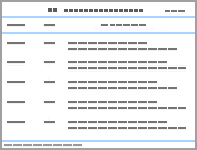
表1
PCR引物信息"
| 引物名称 Primer name | 引物序列 Primer sequence (5′-3′) | 引物名称 Primer name | 引物序列 Primer sequence (5′-3′) | |
|---|---|---|---|---|
| CsLOX2-1-F | ATGTTGAAGCCACAGGTTCATCAAC | qPCR-AtPDF1.2-F | GCTTCCATCATCACCCTTATC | |
| CsLOX2-1-R | GATAGAGATGCTGTACGGAACTCC | qPCR-AtPDF1.2-R | GTCCCACTTGGCTTCTCG | |
| RT-qPCR-CsLOX2-1-F | ACCTTCTTGGCACTCTACT | qPCR-AtPR1-F | TACGCAGAACAACTAAGAGGC | |
| RT-qPCR-CsLOX2-1-R | TGTCATAGGCAACAGAGC | qPCR-AtPR1-R | AGACAAGTCACCGCTACCC | |
| CsLOX2-1-EGFP-F | CGGGGGACGAGCTCGATGTTGAAGCCACAGGTTCATCAAC | qPCR-AtPR2-F | CTCAAGGAAGGTTCAGGGAT | |
| CsLOX2-1-EGFP-R | ACGAGATCTGGTCGAGATAGAGATGCTGTACGGAACTCC | qPCR-AtPR2-R | GAGATTCACGAGCAAGGGA | |
| qPCR-CsCOX-F | GTATGCCACGTCGCATTCCAGA | qPCR-AtPR3-F | GACACCGCCACGAGGAAG | |
| qPCR-CsCOX-R | GCCAAAACTGCTAAGGGCATTC | qPCR-AtPR3-R | CGTAGTAGCGTTTGCCAGAT | |
| 1300-EGFP-F | TGAGACTTTTCAACAAAGGGTAATACCG | qPCR-AtPR5-F | TGACTCCAGGTGCTTCCC | |
| 1300-EGFP-R | TGAACAGCTCCTCGCCCTTG | qPCR-AtPR5-R | CGCCGCCGTTACATCTTAG | |
| qPCR-AtActin7-F | CCATTCAGGCCGTTCTTTC | qPCR-AtACO-F | GGGGTTCTACTGCGTTCC | |
| qPCR-AtActin7-R | CGTTCTGCGGTAGTGGTGA | qPCR-AtACO-R | CATCCAGCAACTCCCAAAC | |
| qPCR-AtJAR1-F | CGGCTTGGAGATGTGGTA | qPCR-AtCTR1-F | CGGACGAGTCTGCTTTACG | |
| qPCR-AtJAR1-R | CGATGAATGCTCGGTCTAA | qPCR-AtCTR1-R | TTGAAGGGATGCGACCAC | |
| qPCR-AtMYC2-F | GCAACCGTCGTATGATTTCT | qPCR-AtWRKY26-F | TCCTCCCTTGTTCCTACCA | |
| qPCR-AtMYC2-R | ATTCCGTATCCGTCACCTC | qPCR-AtWRKY26-R | TTCCTTTGACTTGCTTCTGC |
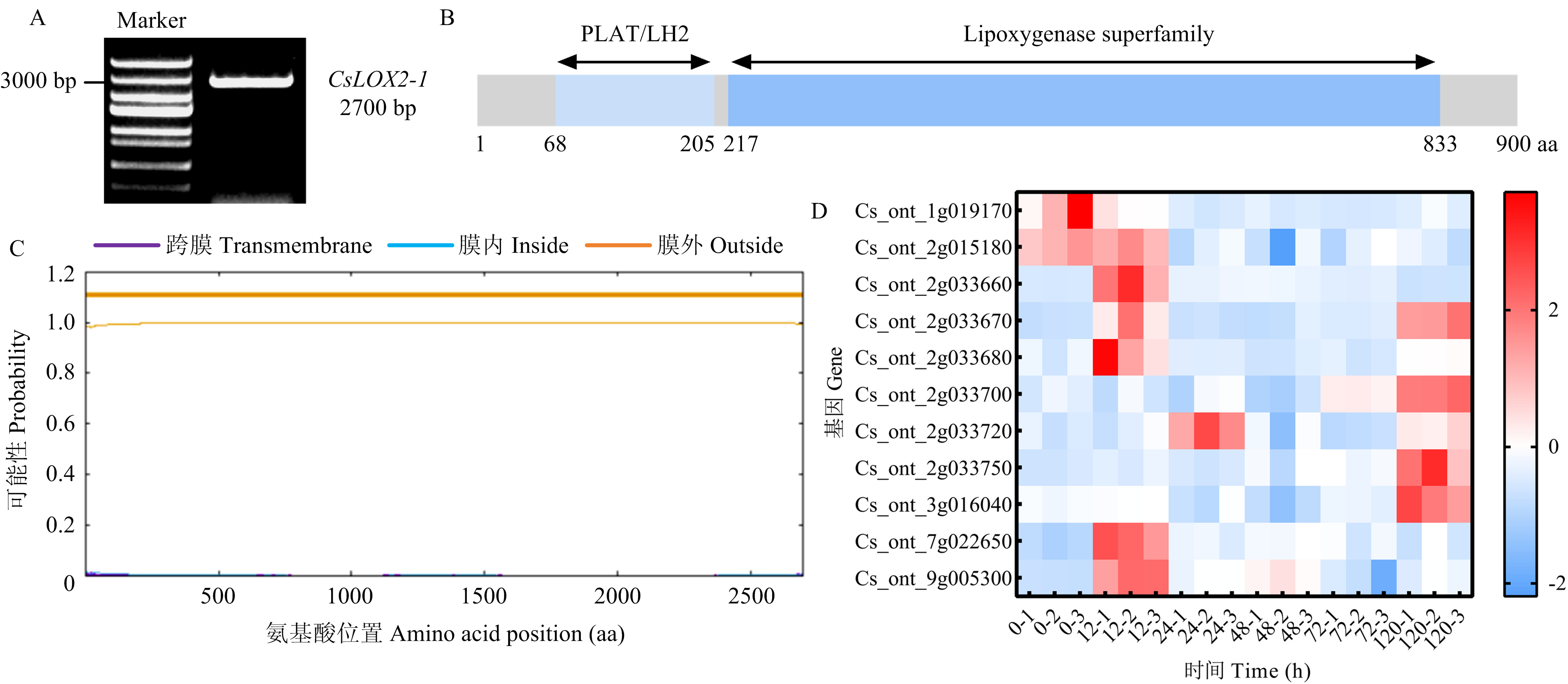
图1
CsLOX2-1克隆、结构域、跨膜域分析及CsLOX表达分析 A:CsLOX2-1克隆Cloning of CsLOX2-1;B:CsLOX2-1功能域分析Functional domain analysis of CsLOX2-1;C:CsLOX2-1跨膜域分析Transmembrane domain analysis of CsLOX2-1;D:砂皮病菌胁迫下CsLOX表达分析Expression analysis of CsLOX under D. citri stress"
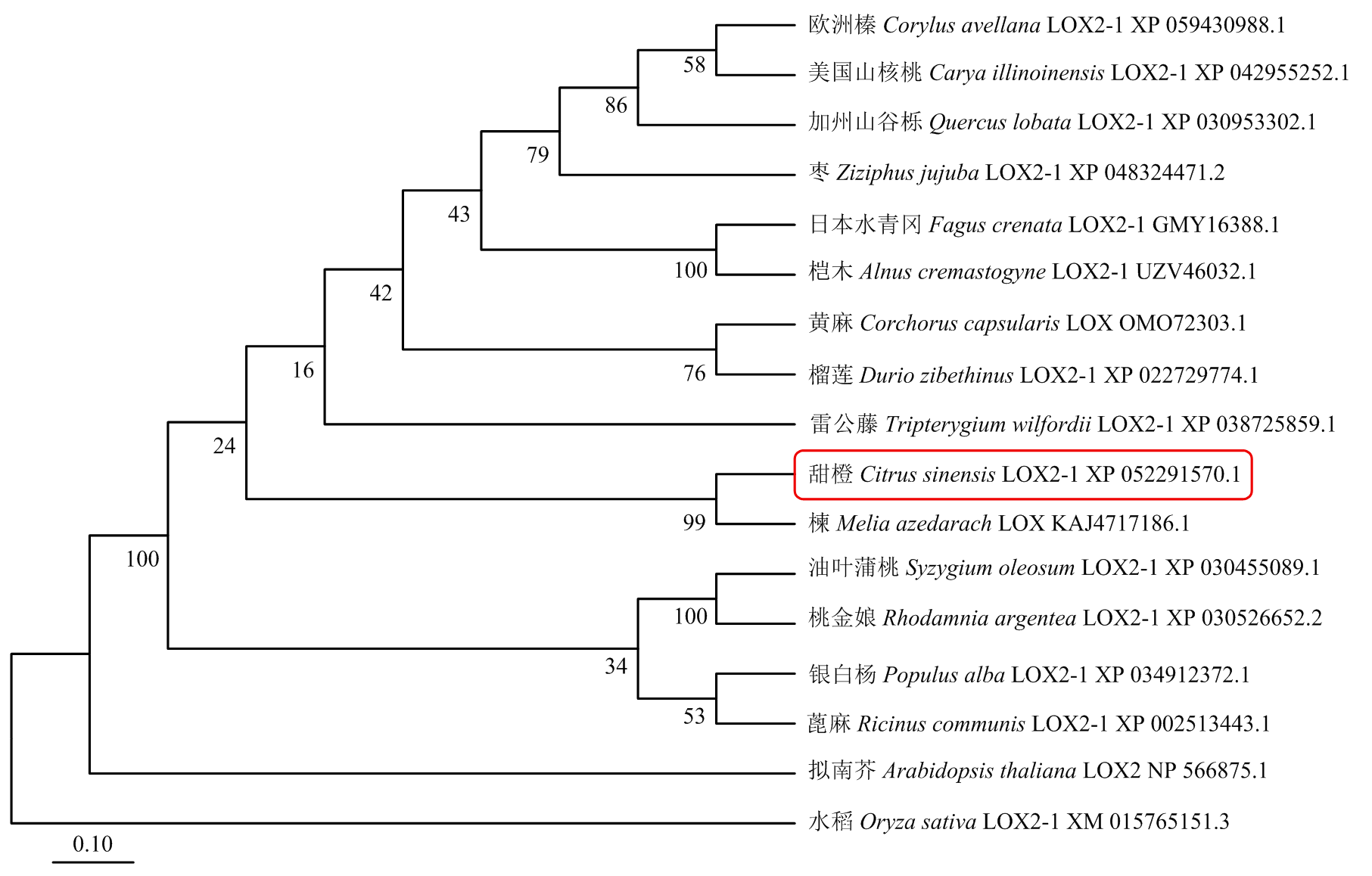
图2
不同植物中LOX蛋白系统发育树"

图3
CsLOX2-1亚细胞定位"
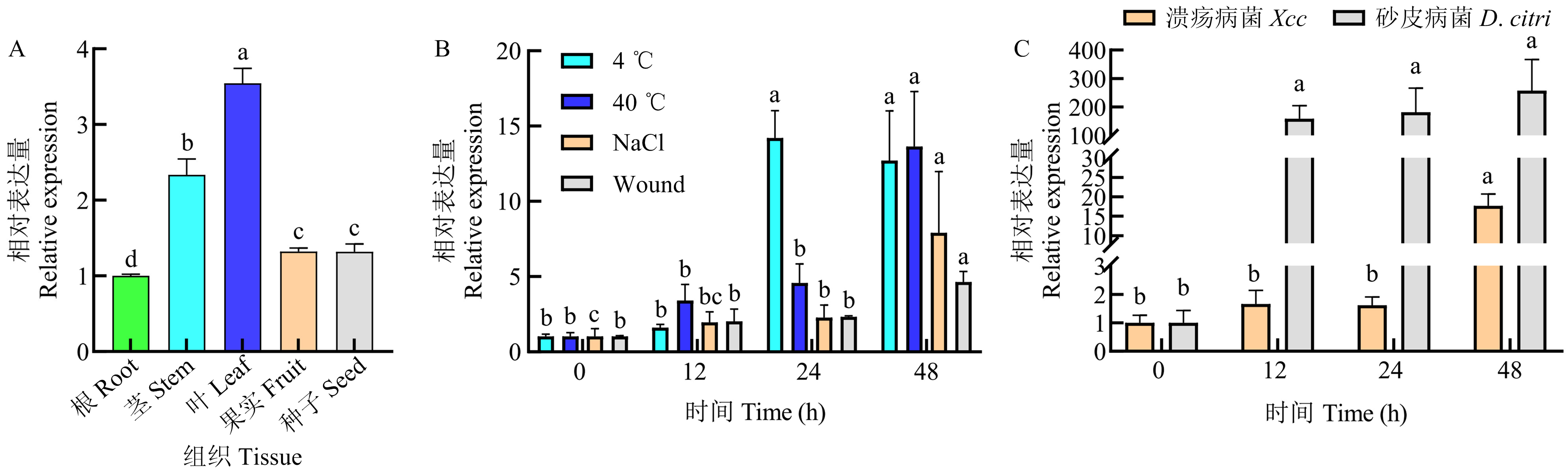
图4
CsLOX2-1在不同组织及胁迫下的表达分析 A:不同组织Different tissues;B:非生物胁迫Abiotic stress;C:生物胁迫Biotic stress 图中数据为平均数±标准误,柱上不同小写字母表示处理间差异显著(P<0.05)。下同Data are mean±SE in the figure, different lowercases on the bars indicate significant differences among different treatments (P<0.05). The same as below"

图5
CsLOX2-1瞬时过表达甜橙叶片接种溃疡病菌后的症状(A、B)、菌含量(C)及CsLOX2-1表达量(D)"

图6
Col 0和超表达拟南芥T3代株系接种Pst DC3000表型(A)、病斑面积(B)及菌含量(C)"

图7
Col 0和超表达拟南芥T3代株系接种灰霉病菌表型(A)及病斑面积(B)"
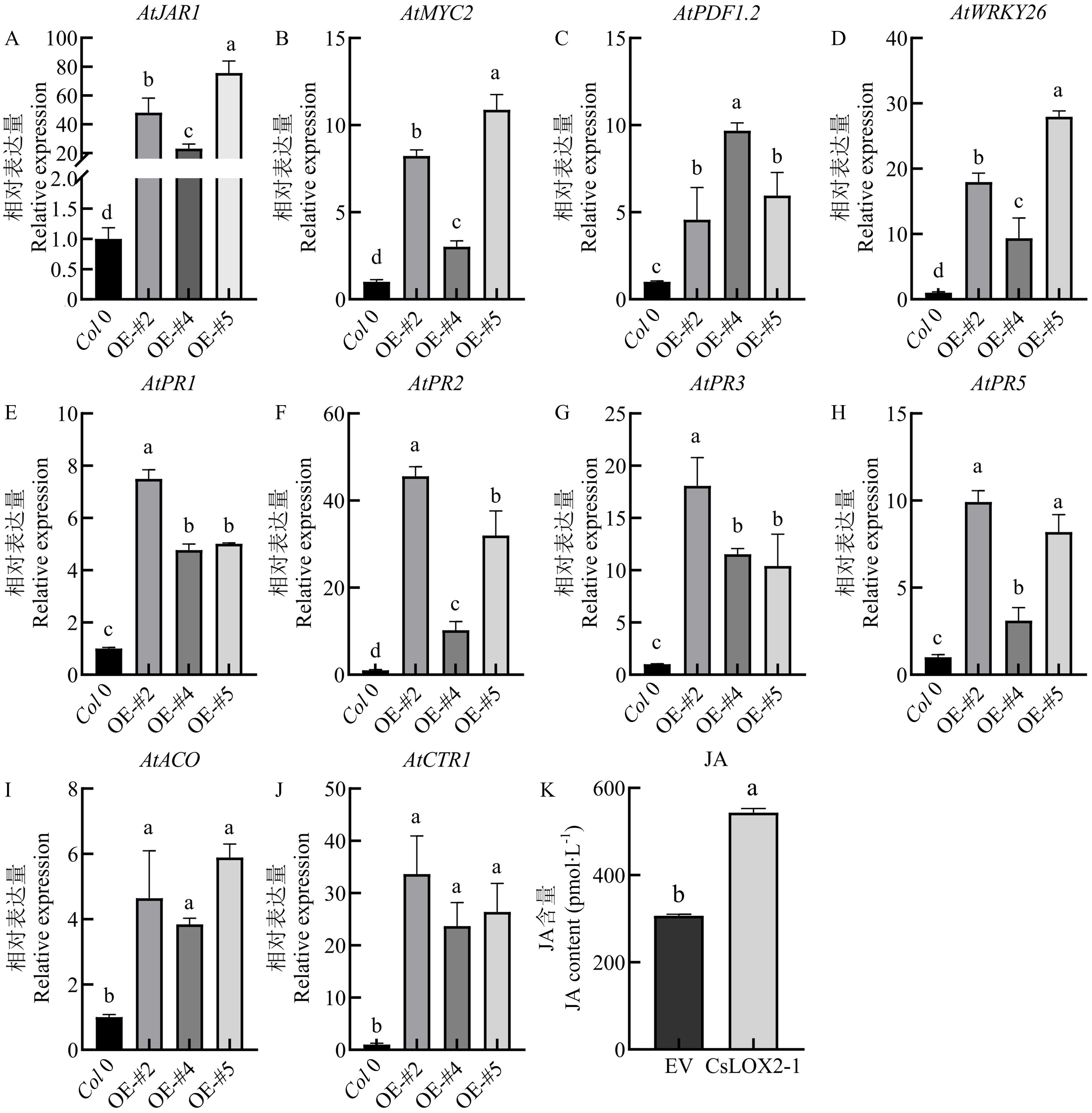
图8
转35S::CsLOX2-1::EGFP基因T3代拟南芥防御反应基因表达分析(A—J)及甜橙茉莉酸含量测定(K)"
| [1] |
朱孝波, 王立印, 陈学伟. 水杨酸介导的植物免疫反应: 从代谢、感知到免疫激活[J]. 植物学报, 2025, 60(5): 679-692.
doi: 10.11983/CBB25149 |
|
|
|
| [2] |
doi: 10.1093/aob/mct067 pmid: 23558912 |
| [3] |
doi: 10.1016/j.plaphy.2009.12.003 |
| [4] |
|
| [5] |
doi: 10.1093/jxb/eraf026 |
| [6] |
doi: 10.1093/jxb/eraf437 |
| [7] |
doi: 10.1111/nph.v238.4 |
| [8] |
doi: 10.1023/A:1006173313548 |
| [9] |
刘梦, 魏玉磊, 丁冬, 赵训超, 罗伟毅, 徐晶宇. 高粱LOX基因家族全基因组鉴定及表达模式分析[J]. 河南农业科学, 2020, 49(11): 37-44.
|
|
|
|
| [10] |
doi: 10.3389/fmicb.2024.1425441 |
| [11] |
doi: 10.1111/ppl.12815 |
| [12] |
doi: 10.1371/journal.pone.0112375 |
| [13] |
doi: 10.3389/fpls.2021.814252 |
| [14] |
doi: 10.3390/ijms22168918 |
| [15] |
颜培涵, 罗健铭, 郝晨星, 孙紫青, 叶蓉春, 李益, 刘恋, 盛玲, 马先锋, 邓子牛. 枸橼C-05 CmPR4A上游转录因子CmWRKY75的筛选及其抗溃疡病功能分析[J]. 中国农业科学, 2023, 56(21): 4304-4317. DOI: 10.3864/j.issn.0578-1752.2023.21.012.
|
|
|
|
| [16] |
doi: 10.1006/meth.2001.1262 pmid: 11846609 |
| [17] |
doi: 10.1016/S0006-3495(97)78307-3 pmid: 9370472 |
| [18] |
冯倩倩, 王文娟, 李海冬, 潘勋. 利用激光扫描共聚焦显微镜研究叶绿体自发荧光[J]. 清华大学学报(自然科学版), 2017, 57(6): 651-654, 660.
doi: 10.16511/j.cnki.qhdxxb.2017.26.034 |
|
|
|
| [19] |
doi: 10.1111/tpj.2004.38.issue-5 |
| [20] |
罗健铭, 缪绸雨, 韩健, 郝晨星, 叶蓉春, 盛玲, 马先锋, 金燕. 枸橼过氧化物酶基因家族鉴定及其响应柑橘溃疡病菌侵染表达分析[J]. 植物病理学报, 2024, 54(6): 1142-1157.
doi: 10.13926/j.cnki.apps.001037 |
|
doi: 10.13926/j.cnki.apps.001037 |
|
| [21] |
林晨俞, 郭鑫, 王文娟, 翟敏, 曹颖杰, 王梦月, 赵平娟, 于晓惠. 番茄SlJAZ7的抗病功能及与SlTGA7的互作[J]. 华南农业大学学报, 2024, 45(4): 525-534.
|
|
|
|
| [22] |
doi: 10.1074/jbc.271.35.21012 pmid: 8702864 |
| [23] |
doi: 10.1038/nrm3013 pmid: 21102612 |
| [24] |
doi: 10.1038/nature02026 |
| [25] |
doi: 10.1186/s12918-014-0131-1 pmid: 25495800 |
| [26] |
doi: 10.1038/s44160-023-00429-w |
| [27] |
doi: S0092-8674(20)30885-0 pmid: 32841601 |
| [28] |
doi: 10.1093/plcell/koae144 pmid: 38723161 |
| [29] |
|
| [30] |
doi: 10.3389/fpls.2015.00781 pmid: 26500659 |
| [31] |
doi: 10.3390/ijms19123900 |
| [32] |
doi: 10.3390/ijms231810642 |
| [33] |
doi: 10.1002/pld3.610 pmid: 38903415 |
| [34] |
doi: 10.3390/biomimetics8020145 |
| [35] |
doi: 10.1038/s41438-020-0278-4 |
| [36] |
doi: 10.3390/ijms21041446 |
| [37] |
doi: 10.1146/annurev-cellbio-092910-154055 pmid: 22559264 |
| [38] |
曹鹏, 安玉艳, 崔浪军, 张美祥. 茉莉酸途径在植物与病原菌互作中的作用和机制[J]. 生命科学, 2025, 37(5): 500-513.
|
|
|
|
| [39] |
周永林, 申小磊, 周立帅, 林巧霞, 王朝露, 陈静, 冯慧捷, 张振文, 陈晓婷, 鲁国东. OsLOX10正调控水稻对稻瘟病和白叶枯病的抗性[J]. 中国水稻科学, 2022, 36(4): 348-356.
doi: 10.16819/j.1001-7216.2022.210604 |
|
|
|
| [40] |
张海洋. 脂氧合酶基因OsLOX7在水稻抗白叶枯病中的作用研究[D]. 南昌: 江西农业大学, 2025.
|
|
|
|
| [41] |
doi: 10.1007/s10886-014-0468-3 pmid: 24973116 |
| [42] |
doi: 10.3390/ijms20102479 |
| [43] |
doi: 10.1186/s12864-023-09671-0 |
| [44] |
doi: 10.1007/s00344-024-11264-4 |
| [45] |
doi: 10.1016/j.pmpp.2012.03.001 |
| [46] |
doi: 10.3389/fpls.2025.1680357 |
| [1] | 汪炜檬, 魏云晓, 唐云霓, 刘苗苗, 陈全家, 邓晓娟, 张锐. 棉花发根农杆菌转化体系的建立及生根优化[J]. 中国农业科学, 2025, 58(8): 1479-1493. |
| [2] | 韩立杰, 才宏伟. 高粱遗传转化研究进展[J]. 中国农业科学, 2024, 57(3): 454-468. |
| [3] | 赵婕, 赵龙缘, 潘凝辉, 管丽蓉, 杜云龙, 李成云, 王云月, 谢勇. 水解酶基因BGIOSGA023826在稻瘟菌侵染过程中的抗病表型效应[J]. 中国农业科学, 2024, 57(23): 4607-4618. |
| [4] | 梁丽娟, 程李香, 袁剑龙, 撒刚, 张峰. 茉莉酸调控马铃薯离体块茎发育的主要代谢物变化[J]. 中国农业科学, 2024, 57(13): 2525-2538. |
| [5] | 覃语祺, 苏健馨, 曹雪敏, 朱婉, 程文翰, 张蔚. 月季‘月月粉’与野蔷薇U6启动子的克隆及活性分析[J]. 中国农业科学, 2024, 57(13): 2651-2661. |
| [6] | 邵红扬, 孟香, 张涛, 陈敏. 响应槲皮素诱导的美国白蛾P450基因及CYP6ZB2功能分析[J]. 中国农业科学, 2023, 56(7): 1322-1332. |
| [7] | 李仁静, 申晚霞, 赵婉彤, 程莉, 李沛, 江东. 利用SLAF-seq简化基因组数据挖掘甜橙果实品质性状基因[J]. 中国农业科学, 2023, 56(16): 3168-3182. |
| [8] | 邢苗苗, 许园园, 卢昱宇, 严继勇, 曾爱松. 通过遗传转化Rfo获得青花菜Ogura CMS恢复系[J]. 中国农业科学, 2023, 56(15): 2966-2976. |
| [9] | 杜静雅, 陈凯园, 普金, 周会英, 祝光涛, 张春芝, 杜慧. 高效GFPuv荧光筛选基因编辑载体的改造及其在马铃薯遗传转化中的应用[J]. 中国农业科学, 2023, 56(11): 2223-2236. |
| [10] | 莫文静,朱嘉伟,何新华,余海霞,江海玲,覃柳菲,张艺粒,李雨泽,罗聪. 芒果MiZAT10A和MiZAT10B功能分析[J]. 中国农业科学, 2023, 56(1): 193-202. |
| [11] | 赵海霞,肖欣,董玘鑫,吴花拉,李成磊,吴琦. 苦荞愈伤遗传转化体系的优化及用于FtCHS1的过表达分析[J]. 中国农业科学, 2022, 55(9): 1723-1734. |
| [12] | 李青,鱼海鹏,张子豪,孙正文,张艳,张冬梅,王省芬,马峙英,阎媛媛. 棉花真叶原生质体分离及瞬时表达体系的优化[J]. 中国农业科学, 2021, 54(21): 4514-4524. |
| [13] | 丁茜,赵凯茜,王跃进. 中国野生毛葡萄芪合酶基因表达及对葡萄抗白粉病的影响[J]. 中国农业科学, 2021, 54(2): 310-323. |
| [14] | 李艳林,SHAHID Iqbal,侍婷,宋娟,倪照君,高志红. 梅PmARF17克隆及其在花发育中与内源激素的调控模式[J]. 中国农业科学, 2021, 54(13): 2843-2857. |
| [15] | 李杰,罗江宏,杨萍. 病毒诱导基因沉默在蔬菜作物上应用的研究进展[J]. 中国农业科学, 2021, 54(10): 2154-2166. |
|
||
