






中国农业科学 ›› 2026, Vol. 59 ›› Issue (13): 2867-2877.doi: 10.3864/j.issn.0578-1752.2026.13.009
黄一文( ), 隋世江, 何志刚, 叶鑫, 徐嘉翼, 邹晓锦, 宫亮()
收稿日期:2025-08-05
接受日期:2026-03-05
出版日期:2026-07-01
发布日期:2026-07-01
通信作者:
联系方式:
黄一文,E-mail:yiwen13940381697@163.com。
基金资助:
HUANG YiWen(), SUI ShiJiang, HE ZhiGang, YE Xin, XU JiaYi, ZOU XiaoJin, GONG Liang()
Received:2025-08-05
Accepted:2026-03-05
Published:2026-07-01
Online:2026-07-01
摘要:
【目的】探究不同秸秆还田方式对草甸土壤团聚体分布与稳定性、有机碳组分和固碳效应的影响,为土壤团聚体结构改良和固碳潜力提升提供理论和实践依据。【方法】依托11年长期定位试验,处理分别为无秸秆还田(CK)、全量免耕覆盖秸秆还田(SNT)、半量免耕覆盖秸秆还田(NT)、全量连年翻压秸秆还田(S1)和全量隔年翻压秸秆还田(S2)。【结果】相较于CK处理,SNT处理显著提高0—40 cm土层土壤有机碳含量2.5%—6.6%;秸秆还田可不同程度提高0—40 cm土层中活性有机碳组分(易氧化有机碳、微生物量碳)含量,其中S1处理显著提高0—40 cm土层的易氧化有机碳含量15.4%—20.1%,NT处理显著提高0—40 cm土层的微生物量碳含量16.0%—17.6%,SNT处理显著提高0—40 cm土层的易氧化有机碳和微生物量碳含量,提升幅度分别达53.6%—54.1%和34.6%—57.2%。与CK处理相比,S2处理显著提高了0—20 cm土层>0.25 mm水稳性大团聚体百分含量,改善各粒级团聚体的分布情况,3—5和0.5—1 mm团聚体含量分别显著提高16.8%、49.0%;S1和NT处理显著提高了20—40 cm土层>0.25 mm水稳性大团聚体百分含量,S1处理>5 mm团聚体含量显著增加10.3%,NT处理3—5 mm团聚体含量显著增加25.7%。表层土中易氧化有机碳含量与>0.25 mm大团聚体百分含量呈显著正相关。各秸秆还田方式对各粒级团聚体易氧化有机碳含量的影响不同,SNT、S1处理均显著提高各粒级团聚体中易氧化有机碳含量,其中在0—20和20—40 cm土层,SNT处理对易氧化有机碳含量的提升幅度分别达9.5%—15.9%和9.1%—23.9%,S1处理提升幅度分别达12.7%—23.2%和14.8%—19.4%。【结论】不同秸秆还田方式可不同程度提高0—40 cm土层中土壤有机碳含量和活性碳组分含量,改善团聚体粒级分布。其中全量免耕覆盖秸秆还田更利于提升土壤有机碳、易氧化有机碳以及微生物量碳的含量,促进团聚体中易氧化有机碳的形成,从而提升土壤固碳潜力。
黄一文, 隋世江, 何志刚, 叶鑫, 徐嘉翼, 邹晓锦, 宫亮. 秸秆还田对草甸土壤团聚结构和固碳效应的影响[J]. 中国农业科学, 2026, 59(13): 2867-2877.
HUANG YiWen, SUI ShiJiang, HE ZhiGang, YE Xin, XU JiaYi, ZOU XiaoJin, GONG Liang. The Influence of Straw Returning to the Field on the Soil Agglomeration Structure and Carbon Sequestration Effect of Meadows[J]. Scientia Agricultura Sinica, 2026, 59(13): 2867-2877.
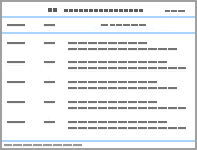
表1
秸秆还田对土壤有机碳及活性碳组分含量的影响"
| 土层 Soil layer (cm) | 处理 Treatment | 有机碳 SOC (g·kg-1) | 易氧化有机碳 EOC (mg·kg-1) | 微生物量碳 MBC (mg·kg-1) | 可溶性有机碳 DOC (mg·kg-1) |
|---|---|---|---|---|---|
| 0-20 | CK | 14.6±0.2a | 372.9±24.8c | 171.6±1.8c | 383.2±14.8a |
| NT | 14.1±0.3b | 323.2±25.1d | 199.0±1.0b | 268.4±60.0b | |
| SNT | 15.0±0.2a | 572.8±24.7a | 231.1±1.8a | 298.3±25.6b | |
| S1 | 14.1±0.3b | 447.9±24.9b | 165.9±15.2c | 374.7±25.5a | |
| S2 | 13.5±0.1c | 397.9±25.0c | 138.8±10.9d | 323.7±25.6ab | |
| 20-40 | CK | 13.2±0.2b | 323.2±24.8cd | 136.5±1.0c | 400.2±25.5a |
| NT | 12.9±0.2bc | 348.0±25.0bc | 160.5±1.8b | 374.7±25.5a | |
| SNT | 14.0±0.3a | 498.0±25.0a | 214.6±1.8a | 323.7±25.3b | |
| S1 | 12.9±0.3bc | 372.9±25.1b | 124.6±7.1d | 272.8±25.5c | |
| S2 | 12.6±0.4c | 298.0±24.7d | 120.3±1.9d | 272.8±25.5c |
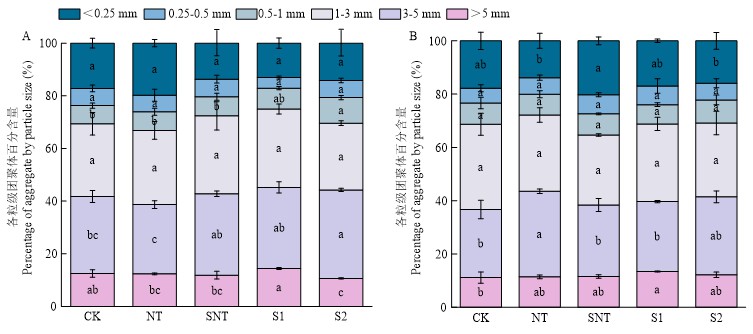
图1
秸秆还田对0—20 cm土层(A)和20—40 cm土层(B)中各粒级水稳性团聚体百分含量的影响 不同小写字母代表相同粒级水稳性团聚体百分含量在不同处理间差异显著(P<0.05)"
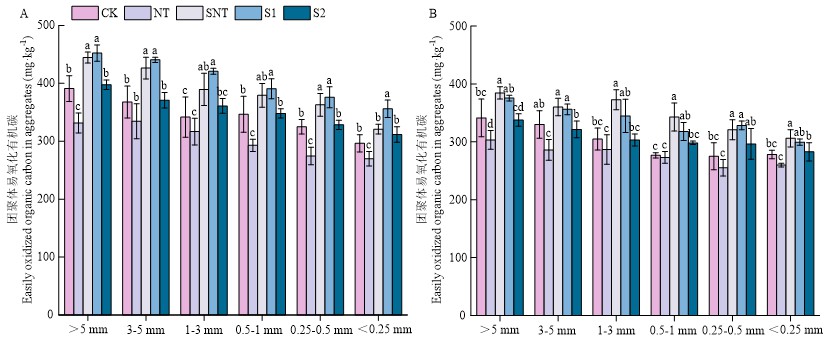
图2
秸秆还田对0—20 cm土层(A)和20—40 cm土层(B)各粒级团聚体中易氧化有机碳含量的影响 不同小写字母代表相同粒级团聚体中易氧化有机碳含量在不同处理间差异显著(P<0.05)"
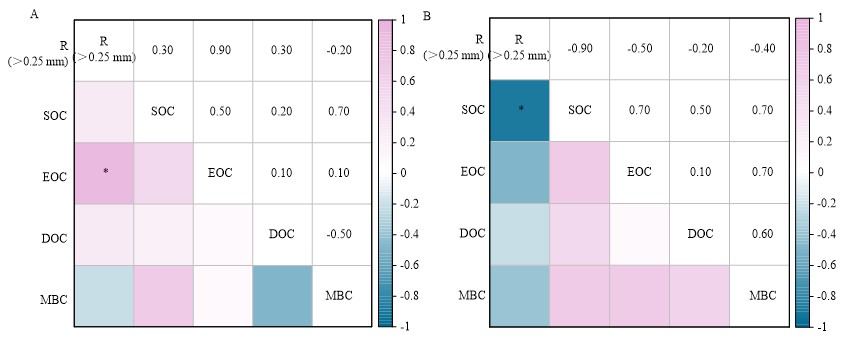
图3
不同土层0—20 cm(A)和20—40 cm(B)有机碳及活性碳组分含量与大团聚体含量的相关性 *表示 P<0.05 水平上显著相关"
| [1] |
|
| [2] |
王佳敏. 全球变暖背景下中纬度地区气候四季变化的研究[D]. 兰州: 兰州大学, 2022.
|
|
|
|
| [3] |
|
| [4] |
于志国, 唐健, 王红岩, 高传宇, 周旭东. 气候变暖对典型湿地碳汇功能动态影响研究进展[J]. 中国农村水利水电, 2022(10): 1-5.
|
|
|
|
| [5] |
|
| [6] |
李怡燃. 农田土壤团聚体有机碳对秸秆还田响应的Meta分析[J]. 中国生态农业学报(中英文), 2024, 32(1): 41-52.
|
|
|
|
| [7] |
徐仁扣, 李九玉, 周世伟, 徐明岗, 沈仁芳. 我国农田土壤酸化调控的科学问题与技术措施[J]. 中国科学院院刊, 2018, 33(2): 160-167.
|
|
|
|
| [8] |
陈洁, 梁国庆, 周卫, 王秀斌, 孙静文, 刘东海, 胡诚. 长期施用有机肥对稻麦轮作体系土壤有机碳氮组分的影响[J]. 植物营养与肥料学报, 2019, 25(1): 36-44.
|
|
|
|
| [9] |
赵明月, 刘源鑫, 张雪艳. 农田生态系统碳汇研究进展[J]. 生态学报, 2022, 42(23): 9405-9416.
|
|
|
|
| [10] |
刘昱, 陈敏鹏, 陈吉宁. 农田生态系统碳循环模型研究进展和展望[J]. 农业工程学报, 2015, 31(3): 1-9.
|
|
|
|
| [11] |
马子钰, 马文林. 秸秆还田对中国农田土壤固碳效应影响的研究[J]. 土壤, 2023, 55(1): 205-210.
|
|
|
|
| [12] |
徐嘉翼, 隋世江, 张鑫, 陈玥, 邹询, 宫亮, 牛世伟. 东北雨养区草甸土玉米田氮素淋溶累积特征[J]. 环境科学与技术, 2021, 44(11): 72-78.
|
|
|
|
| [13] |
孟祥萍. 麦玉两熟制下氮肥与秸秆还田的农田碳氮固持和温室气体减排效应研究[D]. 杨凌: 西北农林科技大学, 2021.
|
|
|
|
| [14] |
林仕芳, 王小利, 段建军, 皮义均, 郭琴波, 龙大勇, 徐彬, 杨宏伟. 有机肥替代化肥对旱地黄壤有机碳矿化及活性有机碳的影响[J]. 环境科学, 2022, 43(4): 2219-2225.
|
|
|
|
| [15] |
吴海梅, 周彦莉, 郑浩飞, 李亚伟, 马建涛, 夏博文, 王凤仁, 尚旭民, 张旭辉, 路建龙, 逄蕾. 秸秆带状覆盖对土壤有机碳及其活性组分的影响[J]. 干旱地区农业研究, 2022, 40(1): 61-69.
|
|
|
|
| [16] |
胡雪纯, 解文艳, 马晓楠, 周怀平, 杨振兴, 刘志平. 长期秸秆还田对旱地玉米土壤有机碳及碳库管理指数的影响[J]. 中国农学通报, 2022, 38(34): 8-13.
|
|
|
|
| [17] |
赵宇航, 殷浩凯, 胡雪纯, 解文艳, 刘志平, 周怀平, 杨振兴. 长期秸秆还田对褐土农田土壤有机碳、氮组分及玉米产量的影响[J]. 干旱地区农业研究, 2024, 42(3): 80-88.
|
|
|
|
| [18] |
郭戎博, 李国栋, 潘梦雨, 郑险峰, 王朝辉, 何刚. 秸秆还田与施氮对耕层土壤有机碳储量、组分和团聚体的影响[J]. 中国农业科学, 2023, 56(20): 4035-4048. DOI: 10.3864/j.issn.0578-1752.2023.20.009.
|
|
|
|
| [19] |
谢世兴, 刘雪玲, 刘晨, 和江鹏, 赵海超, 刘松涛, 卢海博, 黄智鸿. 寒旱区不同秸秆还田方式对土壤团聚体稳定性和有机碳组分含量的影响[J]. 中国土壤与肥料, 2024(6): 1-10.
|
|
|
|
| [20] |
崔凤娟, 刘景辉, 李立军, 高婕, 李倩. 免耕秸秆覆盖对土壤活性有机碳库的影响[J]. 西北农业学报, 2012, 21(9): 195-200.
|
|
|
|
| [21] |
|
| [22] |
徐蒋来, 胡乃娟, 张政文, 朱利群. 连续秸秆还田对稻麦轮作农田土壤养分及碳库的影响[J]. 土壤, 2016, 48(1): 71-75.
|
|
|
|
| [23] |
赵炳地, 张久明, 朱莹雪, 匡恩俊, 袁佳慧, 迟凤琴, 孙磊, 李宁. 不同秸秆还田量对土壤团聚体及有机碳含量的影响[J]. 中国农业科技导报, 2025, 27(1): 193-200.
|
|
|
|
| [24] |
蔺芳, 邢晶鑫, 任思敏, 张家洋. 鸡粪与化肥配施对饲用小黑麦/玉米轮作土壤团聚体分形特征与碳库管理指数的影响[J]. 水土保持学报, 2018, 32(5): 183-189, 196.
|
|
|
|
| [25] |
刘学彤, 曹彩云, 党红凯, 马俊永, 李科江, 郑春莲, 李月英. 华北平原长期秸秆还田潮土土壤有机碳变化特征[J]. 干旱地区农业研究, 2025, 43(1): 132-138.
|
|
|
|
| [26] |
周莺, 杨雅丽, 张阳, 郑甜甜, 吕付泽, 解宏图, 李向祎. 免耕不同秸秆覆盖量对土壤有机碳库和碳库管理指数的影响[J]. 土壤通报, 2025, 56(3): 745-754.
|
|
|
|
| [27] |
王虎, 王旭东, 田宵鸿. 秸秆还田对土壤有机碳不同活性组分储量及分配的影响[J]. 应用生态学报, 2014, 25(12): 3491-3498.
|
|
|
|
| [28] |
梁尧, 蔡红光, 杨丽, 程松, 张水梅, 袁静超, 刘剑钊, 刘松涛, 任军. 玉米秸秆覆盖与深翻两种还田方式对黑土有机碳固持的影响[J]. 农业工程学报, 2021, 37(1): 133-140.
|
|
|
|
| [29] |
|
| [30] |
|
| [31] |
|
| [32] |
马俊勇. 四种森林经营措施对土壤活性有机碳组分影响研究[D]. 北京: 北京林业大学, 2019.
|
|
|
|
| [33] |
姜丽伟. 不同施肥模式下有机替代对旱塬小麦水肥利用和土壤碳氮组分的影响[D]. 太谷: 山西农业大学, 2022.
|
|
|
|
| [34] |
|
| [35] |
田平, 姜英, 孙悦, 马梓淇, 隋鹏祥, 梅楠, 齐华. 不同还田方式对玉米秸秆腐解及土壤养分含量的影响[J]. 中国生态农业学报, 2019, 27(1): 100-108.
|
|
|
|
| [36] |
胡海清, 陆昕, 孙龙. 土壤活性有机碳分组及测定方法[J]. 森林工程, 2012, 28(5): 18-22.
|
|
|
|
| [37] |
周孟椋, 高焕平, 刘世亮, 李慧, 刘芳, 姜桂英, 赵颖. 秸秆与氮肥配施对潮土微生物活性及团聚体分布的影响[J]. 水土保持学报, 2022, 36(1): 340-345.
|
|
|
|
| [38] |
王秀娟, 解占军, 董环, 赵颖, 刘慧屿, 娄春荣. 秸秆还田对玉米产量和土壤团聚体组成及有机碳分布的影响[J]. 玉米科学, 2018, 26(1): 108-115.
|
|
|
|
| [39] |
蔡立群. 保护性耕作对麦-豆轮作条件下土壤团聚体组成及有机碳含量的影响[J]. 水土保持学报, 2008, 22(2): 141-145.
|
|
|
|
| [40] |
|
| [41] |
|
| [42] |
|
| [43] |
|
| [44] |
李翻过, 谭小敏, 苏明, 洪自强, 周甜, 张世博, 张文杰, 康建宏, 吴宏亮. 秸秆还田和种植密度对土壤-微生物-植株叶片碳氮比及内稳性的影响[J]. 环境科学, 2025, 46(11): 7022-7032.
|
|
|
|
| [45] |
|
| [46] |
|
| [47] |
|
| [48] |
周东兴, 王广栋, 邬欣慧, 李晶, 金聪敏, 王恩泽. 不同还田量对秸秆养分释放规律及微生物功能多样性的影响[J]. 土壤通报, 2018, 49(4): 848-855.
|
|
|
|
| [49] |
王永栋, 武均, 蔡立群, 张仁陟. 秸秆还田量对陇中旱作麦田土壤团聚体稳定性和有机碳含量的影响[J]. 干旱地区农业研究, 2022, 40(2): 232-239, 249.
|
|
|
|
| [50] |
|
| [51] |
|
| [52] |
|
| [1] | 许杨浩峻, 陈丽明, 杨世奇, 唐奕凡, 谭雪明, 曾勇军, 潘晓华, 曾研华. 长期秸秆还田对双季稻田不同土层有机碳、养分和团聚体的影响[J]. 中国农业科学, 2026, 59(7): 1492-1506. |
| [2] | 李星宇, 黄容, 鲜一鸣, 田娇娇, 马晓瑾, 杨乔茜, 李冰, 王昌全. 稻田土壤不同粒级团聚体有机碳组分及CO2排放对长期施肥的响应[J]. 中国农业科学, 2026, 59(6): 1255-1271. |
| [3] | 魏圆慧, 余益辉, 李子钧, 丁文杰, 涂文龙, 毛艳玲. 长期施肥对黄泥田土壤有机碳化学结构与固碳细菌群落结构的影响[J]. 中国农业科学, 2026, 59(5): 1020-1033. |
| [4] | 刘梦阳, 刘洁, 陈翔, 王擎运, 罗来超, 齐永波, 田达, 李金才, 柴如山. 长期秸秆还田对砂姜黑土团聚体结构及磷组分分布的影响[J]. 中国农业科学, 2026, 59(3): 575-588. |
| [5] | 张烨, 王文宁, 朱靓萍, 陈语涵, 韩燕, 张润泽, 胡昌录, 杨学云, 张树兰. 土壤管理措施对小麦产量影响的全球Meta分析[J]. 中国农业科学, 2026, 59(12): 2656-2670. |
| [6] | 叶梦雪, 王宜伦, 张倩, 曾冲, 武雪萍, 吴会军, 田文仲, 吕军杰, 李俊红, 苗玉红, 郑凤君. 长期保护性耕作土壤有机碳矿化特征及其影响因子[J]. 中国农业科学, 2026, 59(10): 2181-2193. |
| [7] | 张昊鑫, 于晟玥, 雷秋良, 杜新忠, 张继宗, 安妙颖, 樊秉乾, 罗加法, 刘宏斌. 基于RothC模型的东北旱地和稻田土壤有机碳动态变化模拟研究[J]. 中国农业科学, 2025, 58(8): 1564-1578. |
| [8] | 吴欣珈, 薛玮, 严翊丹, 聂莹莹, 叶立明, 徐丽君. 呼伦贝尔土壤有机碳时空变异特征及其影响因素[J]. 中国农业科学, 2025, 58(6): 1145-1158. |
| [9] | 史帆, 李文广, 易树生, 杨娜, 陈玉萌, 郑伟, 张雪辰, 李紫燕, 翟丙年. 有机无机肥配施下旱地麦田土壤有机碳组分含量的变化特征[J]. 中国农业科学, 2025, 58(4): 719-732. |
| [10] | 张方方, 宋启龙, 高娜, 白炬, 李阳, 岳善超, 李世清. 长期覆盖对黄土高原春玉米产量、土壤碳氮组分和碳氮库相关指数的影响[J]. 中国农业科学, 2025, 58(3): 507-519. |
| [11] | 马鹤逍, 葛国龙, 张向前, 路战远, 王满秀, 戎美仁, 师晶晶, 张德健, 孙雪萍. 不同作物轮作系统对土壤易氧化有机碳和碳库活度差异性的影响[J]. 中国农业科学, 2025, 58(24): 5201-5215. |
| [12] | 于茹, 李玉义, 曹巨峰, 马俊, 常芳弟, 宋佳珅, 张宏媛, 李晓彬, 李浩若, 张华, 王婧. 施肥管理对麦后复种绿肥盐碱土碳组分与小麦产量的影响[J]. 中国农业科学, 2025, 58(20): 4189-4202. |
| [13] | 靳晓莹, 肖柄政, 张天津, 刘忠宽, 冯伟, 杜章留. 冬绿肥提升滨海盐碱土团聚性及植物源与微生物源有机碳固存[J]. 中国农业科学, 2025, 58(20): 4203-4215. |
| [14] | 张斯佳, 杨杰, 赵帅, 李莉威, 王贵彦. 华北平原多样化作物与小麦-玉米轮作对土壤质量的影响[J]. 中国农业科学, 2025, 58(2): 238-251. |
| [15] | 霍润霞, 方娅婷, 张艳科, 吴海亚, 刘桂生, 李小坤, 任涛, 陆志峰, 丛日环, 鲁剑巍. 长期秸秆还田条件下化肥减量对稻稻油轮作系统作物产量和土壤肥力的影响[J]. 中国农业科学, 2025, 58(16): 3267-3279. |
|
||
