






中国农业科学 ›› 2026, Vol. 59 ›› Issue (21): 4729-4745.doi: 10.3864/j.issn.0578-1752.2026.21.003
杨扬1( ), 常诗惠1(), 曾波2, 李煜铭2, 张如养1, 徐田军1, 孙轩1, 陈传永1, 曹强1, 王凤格1, 赵久然1()
收稿日期:2026-08-16
接受日期:2026-09-28
出版日期:2026-11-01
发布日期:2026-11-06
通信作者:
联系方式:
杨扬,E-mail:caurwx@163.com。常诗惠,E-mail:changshihui0225@163.com。杨扬和常诗惠为同等贡献作者。
基金资助:
YANG Yang1(), CHANG ShiHui1(), ZENG Bo2, LI YuMing2, ZHANG RuYang1, XU TianJun1, SUN Xuan1, CHEN ChuanYong1, CAO Qiang1, WANG FengGe1, ZHAO JiuRan1()
Received:2026-08-16
Accepted:2026-09-28
Published:2026-11-01
Online:2026-11-06
摘要:
【目的】株高和穗位高是玉米最直观和重要的性状之一,通过分析其构成特征和变化趋势,以及在不同生态区间的差异表现,为进一步认识品种更替对株型结构的影响和不同环境对株型的塑造作用提供理论依据。【方法】搜集整理2000—2025年国家审定玉米品种信息共7 502个品次,对不同品种类型的株高、穗位高构成特征和相关性进行统计,并在株高等级和对应数据的基础上推导穗位高等级阈值,从不同生态区和同一品种跨区2个角度分析这两个性状的适应性表现和变异来源,并揭示二者的年际演变规律。【结果】6 379个品次的大田籽粒玉米株高平均为284.6 cm,穗位高平均为109.0 cm;898个品次的鲜食(甜、糯)玉米株高平均为228.2 cm,穗位高平均为89.9 cm;183个品次的青贮玉米株高平均为302.0 cm,穗位高平均为130.0 cm;42个品次的爆裂玉米株高平均为245.9 cm,穗位高平均为112.8 cm。穗位高分为5个等级:超高穗位、高穗位、中穗位、低穗位和超低穗位,其分割线分别为138、108、87和51 cm。根据株高、穗位高等级划分,籽粒玉米以高秆和中秆、高穗位和中穗位为主,鲜食玉米以中秆和矮秆、中穗位和低穗位为主,青贮玉米以高秆、高穗位为主,爆裂玉米以中秆、高穗位为主。国家区试组不同生态区的株高统计分布均呈现由东南春播区向东华北中熟区递增、再向北方极早熟区递减的趋势,穗位高则呈现由东南春播区向西南、西北春播区递增的趋势,其中,品次数量最多的黄淮海夏播区株高和穗位高均值分别为268.5和101.0 cm,并以中秆和中穗位为主;排名第二的东华北春播区则分别为293.3和113.7 cm,并以高秆和高穗位为主。2个性状的聚类分组结果相似,东南春播区、黄淮海夏播区、京津冀早熟区、北方早熟区和北方极早熟区株型较小,西北春播区、东华北春播区、东华北中熟区和东华北中早熟区株型较大。同一品种通过审定对应的2个生态区地理位置的距离越大,其跨区表型差异越大,其中,东南春播区和东华北春播区的跨区表型差异最大,后者比前者平均高54.6(株高)和35.8 cm(穗位高),且穗位高更易受环境变化影响。近26年内,籽粒玉米株高年际波动幅度小,并以年均增加0.79 cm的速度上升,穗位高则以年均减少0.19 cm的速度下降。【结论】由于育种目标、环境条件不同,各类型玉米的株型结构差异较大。籽粒玉米作为我国玉米的主要构成品种,其株型较高大,这与通过增大生物量积累以实现高产的育种理念密不可分。而鲜食玉米为保障果穗品质表现株型较为矮小,其蕴含丰富的矮秆种质资源以待充分挖掘。同时,光温匹配度、生长期内降水量大小等可能影响表型分化的因素值得进一步关注。
杨扬, 常诗惠, 曾波, 李煜铭, 张如养, 徐田军, 孙轩, 陈传永, 曹强, 王凤格, 赵久然. 国审玉米品种株高与穗位高构成特征及不同生态区差异分析[J]. 中国农业科学, 2026, 59(21): 4729-4745.
YANG Yang, CHANG ShiHui, ZENG Bo, LI YuMing, ZHANG RuYang, XU TianJun, SUN Xuan, CHEN ChuanYong, CAO Qiang, WANG FengGe, ZHAO JiuRan. Analysis on the Composition Characteristics of Plant Height and Ear Height of Nationally Approved Maize Varieties and the Differences in Different Ecological Regions[J]. Scientia Agricultura Sinica, 2026, 59(21): 4729-4745.
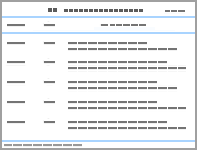
表1
国审玉米不同品种类型的株高和穗位高统计特征及相关性分析"
| 品种类型 Variety type | 品次数 Variety record count | 株高 Average plant height (cm) | 株高变异系数 CV in plant height (%) | 穗位高 Average ear height (cm) | 穗位高变异系数 CV in ear height (%) | 相关系数 Correlation coefficient |
|---|---|---|---|---|---|---|
| 籽粒玉米 Grain maize | 6379 | 284.6 | 7.20 | 109.0 | 10.47 | 0.77 |
| 鲜食玉米 Fresh maize | 898 | 228.2 | 10.18 | 89.9 | 19.12 | 0.84 |
| 青贮玉米 Silage maize | 183 | 302.0 | 5.74 | 130.0 | 10.84 | 0.78 |
| 爆裂玉米 Pop maize | 42 | 245.9 | 6.80 | 112.8 | 10.02 | 0.79 |
表2
不同等级株高与穗位高间的对应关系及分布范围"
| 株高等级 Plant height grade | 株高范围 Plant height range (cm) | 不同株高品次占比 Plant height proportion (%) | 线性拟合方程 Linear fitting formula | 穗位高等级 Ear height grade | 穗位高范围 Ear height range (cm) | 不同穗位高品次占比 Ear height proportion (%) | |
|---|---|---|---|---|---|---|---|
| 超高秆 Ultra-high stem | ≥340.0 | 0.13 | y=1.54x-386.85 | 超高穗位 Ultra-high ear position | ≥138.0 | 1.25 | |
| 高秆 High stem | 280.0-340.0 | 52.75 | y=0.44x-15.53 | 高穗位 High ear position | 108.0-138.0 | 49.13 | |
| 中秆 Medium stem | 220.0-280.0 | 42.66 | y=0.33x+14.11 | 中穗位 Medium ear position | 87.0-108.0 | 42.43 | |
| 矮秆 Dwarf stem | 160.0-220.0 | 4.45 | y=0.55x-37.05 | 低穗位 Low ear position | 51.0-87.0 | 7.13 | |
| 超矮秆 Ultra-dwarf stem | <160.0 | 0.01 | — | 超低穗位 Ultra-low ear position | <51.0 | 0.05 |
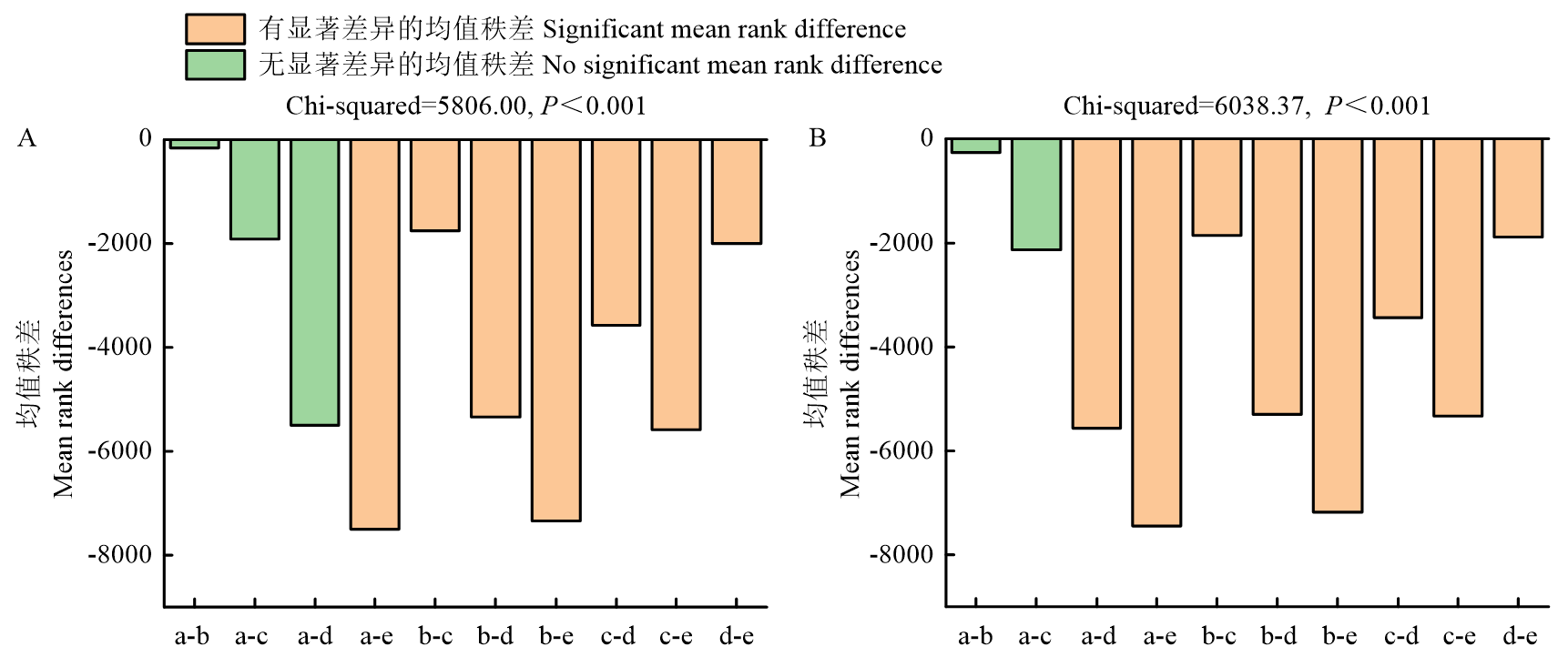
图1
2种穗位高阈值方案的Dunn’s多重比较与Kruskal-Wallis非参数检验分析 A:穗位高阈值方案一;B:穗位高阈值方案二。a—e分别为超低穗位、低穗位、中穗位、高穗位、超高穗位5个穗位等级;Chi-squared:卡方统计量;P值:卡方检验显著性概率。下同"
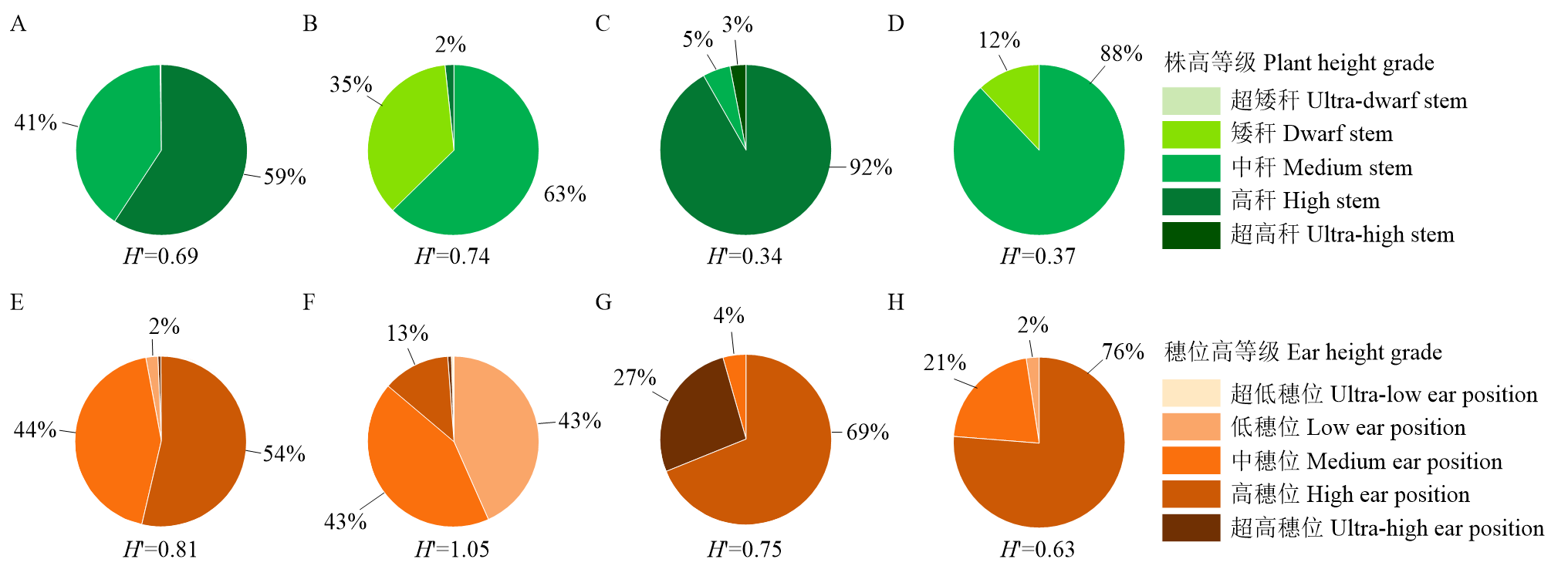
图2
国审玉米不同类型品种的株高与穗位高等级构成 A—D依次为籽粒玉米、鲜食玉米、青贮玉米和爆裂玉米的株高构成;E—H依次为籽粒玉米、鲜食玉米、青贮玉米和爆裂玉米的穗位高构成。H′为香农-威纳指数"

图3
不同生态区国审玉米品种株高与穗位高的统计分布差异 A—F依次为籽粒玉米株高、籽粒玉米穗位高、鲜食玉米株高、鲜食玉米穗位高、青贮玉米株高、青贮玉米穗位高在不同生态区的组间差异显著性。横坐标根据由南向北、由低纬度向高纬度地区过渡的规律对生态区进行依次排列。空心方形代表对应生态区品种的株高、穗位高的均值。RD:热带亚热带区;DN:东南春播区;XN:西南春播区;HHH:黄淮海夏播区;JJJ-E:京津冀早熟区;DHB:东华北春播区;XB:西北春播区;DHB-M:东华北中熟区;DHB-ME:东华北中早熟区;BF-E:北方早熟区;BF-VE:北方极早熟区。a—g为差异显著性标记。下同"
表3
不同生态区国审玉米品种株高和穗位高等级分布统计"
| 品种类型 Variety type | 生态区 Ecological region | 株高Plant height | 穗位高Ear height | |||||||||
|---|---|---|---|---|---|---|---|---|---|---|---|---|
| 超矮秆 Ultra dwarf stem | 矮秆 Dwarf stem | 中秆 Medium stem | 高秆 High stem | 超高秆 Ultra high stem | 超低穗位 Ultra-low ear position | 低穗位 Low ear position | 中穗位 Medium ear position | 高穗位 High ear position | 超高穗位 Ultra-high ear position | |||
| 籽粒玉米 Grain maize | 热带亚热带 RD | 65 | 28 | 28 | 63 | 2 | ||||||
| 东南春DN | 2 | 27 | 2 | 20 | 7 | |||||||
| 西南春XN | 1 | 313 | 540 | 2 | 204 | 644 | 4 | |||||
| 黄淮海夏 HHH | 1325 | 390 | 64 | 1320 | 329 | 2 | ||||||
| 京津冀早熟 JJJ-E | 68 | 39 | 1 | 74 | 32 | |||||||
| 东华北春 DHB | 2 | 194 | 773 | 1 | 2 | 241 | 717 | 10 | ||||
| 西北春XB | 50 | 463 | 1 | 48 | 452 | 12 | ||||||
| 东华北中熟 DHB-M | 77 | 725 | 4 | 162 | 638 | 6 | ||||||
| 东华北中早熟 DHB-ME | 203 | 578 | 7 | 331 | 441 | 2 | ||||||
| 北方早熟BF-E | 98 | 154 | 6 | 182 | 63 | 1 | ||||||
| 北方极早熟 BF-VE | 5 | 171 | 83 | 59 | 172 | 28 | ||||||
| 鲜食玉米 Fresh maize | 东南春DN | 184 | 141 | 2 | 214 | 103 | 6 | |||||
| 西南春XN | 1 | 73 | 137 | 80 | 112 | 19 | ||||||
| 黄淮海夏 HHH | 37 | 160 | 1 | 57 | 96 | 45 | ||||||
| 东华北春DHB | 25 | 125 | 14 | 2 | 39 | 73 | 44 | 6 | ||||
| 青贮玉米 Silage maize | 东南春DN | 3 | 3 | |||||||||
| 西南春XN | 2 | 76 | 1 | 63 | 14 | |||||||
| 黄淮海夏 HHH | 4 | 47 | 7 | 31 | 13 | |||||||
| 西北春XB | 13 | 1 | 8 | 6 | ||||||||
| 东华北春DHB | 3 | 30 | 4 | 21 | 16 | |||||||
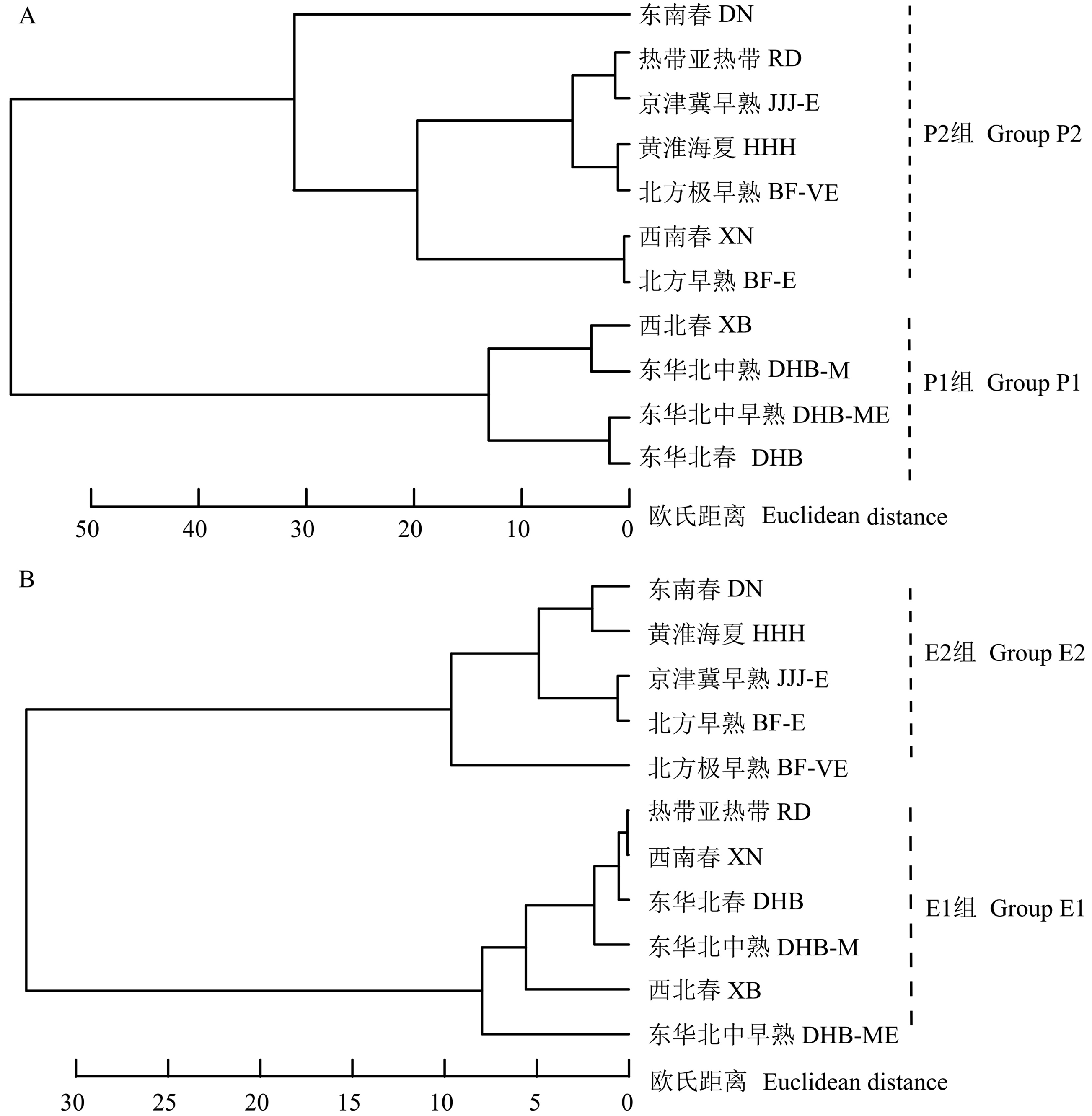
图4
基于株高和穗位高数据不同生态区籽粒玉米的聚类分析 A:籽粒玉米的株高;B:籽粒玉米的穗位高"

图5
国审玉米品种的株高和穗位高在2个生态区种植的表型差异 每个方格内的数值从上到下分别表示从横轴生态区到纵轴生态区变化的差值均值、差值均值的显著性水平、自由度。株高生态区差值(对角线以上)均为纵轴减横轴生态区,穗位高生态区差值(对角线以下)均为横轴减纵轴生态区。*:P≤0.05,**:P≤0.01,***:P≤0.001。下同"

图6
国审玉米品种跨3—4个生态区种植的株高与穗位高变化规律 空心方形代表对应生态区品种的株高、穗位高的均值,箭头连接下方的数字代表2个生态区间品种株高、穗位高的差值均值"
表4
跨区国审玉米品种株高与穗位高的Finlay-Wilkinson回归系数与方差分量估计"
| 性状 Trait | 平均回归系数 Mean β₁ | 回归系数平均 标准误差 Mean SE of β₁ | 变异来源 Variation source | 后验均值 Posterior mean value | 95%置信区间 95% credible interval | 方差分量占比 Percentage of variance (%) |
|---|---|---|---|---|---|---|
| 株高 Plant height | 0.59 | 0.22 | 品种遗传效应Genotype (G) | 526.70 | [424.50, 647.20] | 41.3 |
| 环境效应Environment (E) | 683.20 | [149.70, 1616.00] | 53.6 | |||
| 品种遗传与环境互作效应 Genotype×Environment (G×E) | 4.12 | [3.08×10⁻⁴, 26.11] | 0.3 | |||
| 残差Residual | 60.40 | [39.07, 75.28] | 4.7 | |||
| 穗位高 Ear height | 0.99 | 0.34 | 品种遗传效应Genotype (G) | 134.10 | [106.80, 166.00] | 30.6 |
| 环境效应Environment (E) | 275.30 | [73.91, 625.40] | 62.8 | |||
| 品种遗传与环境互作效应 Genotype×Environment (G×E) | 13.65 | [1.30×10⁻³, 26.11] | 3.1 | |||
| 残差Residual | 14.93 | [2.91, 30.33] | 3.4 |

图7
2000—2025年国审籽粒、鲜食玉米品种株高、穗位高随年份更替变化趋势 A:籽粒玉米的株高、穗位高变化趋势;B:鲜食玉米的株高、穗位高变化趋势。实线表示各年份审定品种株高/穗位高的平均值,虚线为线性拟合趋势线"
| [1] |
王宝宝, 王海洋. 理想株型塑造之于玉米耐密改良[J]. 生物技术通报, 2023, 39(8): 11-30.
doi: 10.13560/j.cnki.biotech.bull.1985.2023-0660 |
|
|
|
| [2] |
马雅杰, 高悦欣, 李依萍, 龙艳, 董振营, 万向元. 玉米株高和穗位高的遗传基础与分子机制[J]. 中国生物工程杂志, 2021, 41(12): 61-73.
|
|
|
|
| [3] |
杨楠, 丁玉川, 焦晓燕, 王劲松, 董二伟, 王立革, 武萍. 种植密度对高粱群体生理指标、产量及其构成因素的影响[J]. 农学学报, 2013, 3(7): 11-17.
|
|
doi: 10.11924/j.issn.2095-4050.2013-xb0265 |
|
| [4] |
doi: 10.1093/plphys/kiae204 pmid: 38590166 |
| [5] |
doi: 10.1126/science.1086072 pmid: 14526073 |
| [6] |
doi: 10.1080/09168451.2016.1148575 |
| [7] |
doi: 10.1111/jipb.v56.11 |
| [8] |
doi: 10.1016/j.molp.2022.11.016 |
| [9] |
doi: 10.1093/jxb/erad216 |
| [10] |
明博, 谢瑞芝, 侯鹏, 李璐璐, 王克如, 李少昆. 2005—2016年中国玉米种植密度变化分析[J]. 中国农业科学, 2017, 50(11): 1960-1972. DOI: 10.3864/j.issn.0578-1752.2017.11.002.
|
|
|
|
| [11] |
杨扬, 常诗惠, 田红丽, 易红梅, 王璐, 任洁, 范亚明, 刘亚维, 王凤格, 赵久然. 不同生态区国审玉米品种的遗传多样性分析[J]. 作物学报, 2026, 52(5): 1352-1363.
doi: 10.3724/SP.J.1006.2026.53086 |
|
doi: 10.3724/SP.J.1006.2026.53086 |
|
| [12] |
戴明宏, 赵久然, 杨国航, 王荣焕. 不同生态区玉米产量及农艺性状比较[J]. 中国农学通报, 2010, 26(11): 127-131.
|
|
doi: 10.11924/j.issn.1000-6850.2009-2795 |
|
| [13] |
孙悦, 库婷婷, 熊伟, 刘倩彤, 党同洋, 张超, 刘霞, 冷冰莹, 张恩盈. 近20年山东省审定玉米品种主要性状演变规律分析[J]. 山东农业科学, 2025, 57(3): 37-46.
|
|
|
|
| [14] |
田慧娟, 胡梦婷, 杨凯智, 张丹. 新疆近20年来审定玉米品种主要性状的演变分析[J]. 江苏农业科学, 2023, 51(16): 54-61.
|
|
|
|
| [15] |
徐国强, 苏萍萍, 段海洋, 李娜, 高炯浩, 高勇, 付志远, 李卫华, 汤继华, 张雪海. 河南省近20年玉米品种主要性状的演变及育种方向分析[J]. 分子植物育种, 2023, 21(12): 4158-4169.
|
|
|
|
| [16] |
王天依, 王荣焕, 王夏青, 张如养, 徐瑞斌, 焦炎炎, 孙轩, 王继东, 宋伟, 赵久然. 玉米矮秆基因与矮秆育种研究[J]. 生物技术通报, 2023, 39(8): 43-51.
doi: 10.13560/j.cnki.biotech.bull.1985.2023-0504 |
|
|
|
| [17] |
doi: 10.1080/01621459.1963.10500845 |
| [18] |
孙美红, 田园, 张慧芋. 2019—2023年山西省审定玉米品种的农艺·产量及品质性状分析[J]. 安徽农业科学, 2024, 52(21): 19-24.
|
|
|
|
| [19] |
杨勤, 陈岩, 刘永红, 韩友学, 毛双林, 岳丽杰, 刘禹池, 梁南山. 四川省近36年审定玉米品种主要农艺性状变化趋势[J]. 西南农业学报, 2023, 36(3): 445-453.
|
|
|
|
| [20] |
余忠浩, 周亚星, 周伟, 王静, 张立东. 2002—2021年内蒙古自治区普通玉米审定品种性状演变及综合分析[J]. 种子, 2022, 41(10): 139-148.
|
|
|
|
| [21] |
doi: 10.1126/science.adl5302 pmid: 37883569 |
| [22] |
doi: 10.1016/j.molp.2025.08.011 |
| [23] |
doi: 10.1016/j.fcr.2023.109008 |
| [24] |
doi: 10.1038/s41586-024-07669-6 |
| [25] |
doi: 10.1146/annurev-arplant-042817-040422 pmid: 29553800 |
| [26] |
|
| [27] |
耿子叶, 张树婧. 中国北京种业大会: 育种家征集AI大模型, 京字号小麦烤馕受欢迎[EB/OL]. (2026-09-04)[2026-09-07]. https://www.bjnews.com.cn/detail-1788520878129469.html.
|
|
|
|
| [28] |
王轶潇. 我国首张主粮基因编辑安全证书落户济南舜丰生物矮秆玉米获认可[EB/OL]. (2024-05-11)[2026-09-07]. https://www.sohu.com/a/778106562_121123795.
|
|
|
|
| [29] |
赵久然, 孙世贤. 对超级玉米育种目标及技术路线的再思考[J]. 玉米科学, 2007, 15(1): 21-23, 28.
|
|
|
|
| [30] |
刘杭, 侯乐新, 王方明, 张玉强, 李建生, 丁宁. 我国青贮玉米育种现状和遗传改良策略[J]. 玉米科学, 2021, 29(1): 1-7.
|
|
|
|
| [31] |
赵耀, 程前, 徐田军, 刘正, 王荣焕, 赵久然, 陆大雷, 李从锋. 高密度条件下株型改良对春玉米根-冠特征及籽粒产量的影响[J]. 中国农业科学, 2025, 58(7): 1296-1310. DOI: 10.3864/j.issn.0578-1752.2025.07.004.
|
|
|
|
| [32] |
王玉兰, 马晓萍, 张彦荣, 倪淑凤, 王春明. 国内外爆裂玉米遗传育种研究动态[J]. 吉林农业大学学报, 1998, 20(4): 99-102.
|
|
|
|
| [33] |
杨明花, 布阿依夏木·那曼提, 刘强, 刘琪, 廖必勇, 冯国瑞, 达吾来·杰克山, 艾尔居玛·吐卢汗. 鲜食玉米自交系种质资源主要农艺性状的多样性分析[J]. 种子, 2025, 44(9): 128-136.
|
|
|
|
| [34] |
doi: 10.1016/j.molp.2025.02.007 pmid: 40025737 |
| [35] |
doi: 10.1111/pbi.v23.1 |
| [36] |
doi: 10.1038/s41586-018-0415-5 |
| [37] |
doi: 10.1016/j.xplc.2023.100637 |
| [38] |
刘月娥. 玉米对区域光、温、水资源变化的响应研究[D]. 北京: 中国农业科学院, 2013.
|
|
|
|
| [39] |
史振声, 李海燕, 李凤海, 吴玉群, 杨翠翠, 王志斌, 王宏伟, 吕香玲, 朱敏. 玉米株高的年际间变化及其与产量的关系研究[J]. 玉米科学, 2013, 21(5): 24-29.
|
|
|
|
| [40] |
张书萍, 王延波, 赵海岩, 常程, 隋阳辉, 徐亮, 刘晶, 肖万欣. 东北春玉米区温度条件与玉米生长发育及产量形成的量化分析[J]. 玉米科学, 2022, 30(3): 54-62.
|
|
|
|
| [41] |
周宝元, 葛均筑, 孙雪芳, 韩玉玲, 马玮, 丁在松, 李从锋, 赵明. 黄淮海麦玉两熟区周年光温资源优化配置研究进展[J]. 作物学报, 2021, 47(10): 1843-1853.
doi: 10.3724/SP.J.1006.2021.13012 |
|
doi: 10.3724/SP.J.1006.2021.13012 |
|
| [42] |
doi: 10.1016/j.fcr.2013.01.003 |
| [43] |
doi: 10.2135/cropsci2012.12.0688 |
| [44] |
杨国航, 孙世贤, 张春原, 刘春阁, 赵久然. 东北早熟春玉米区玉米生产现状和发展趋势[J]. 玉米科学, 2007, 15(4): 143-145.
|
|
|
|
| [45] |
苗永茂, 李丽君, 王海霞, 融晓萍, 聂丽娜, 周璇. 西北春玉米组品种试验现状分析[J]. 中国种业, 2021(12): 45-48.
|
|
|
|
| [46] |
曹冬梅, 丁明亚, 方继友. 我国北方早熟玉米区高密度、超高密度栽培的品种选择[J]. 农业科技通讯, 2007(12): 56-59.
|
|
|
|
| [47] |
周进宝, 杨国航, 孙世贤, 赵久然. 黄淮海夏播玉米区玉米生产现状和发展趋势[J]. 作物杂志, 2008(2): 4-7.
|
|
|
|
| [48] |
孔令杰, 马行军, 卢红, 孟庆长, 郑飞, 赵文明, 张美景, 陈艳萍, 袁建华. 环境因素对玉米植株性状的影响[J]. 安徽农业科学, 2014, 42(33): 11641-11643.
|
|
|
|
| [49] |
doi: 10.1111/pbi.v18.6 |
| [50] |
|
| [51] |
何文昭, 王红武, 胡小娇, 李坤, 王琪, 吴宇锦, 刘志芳, 黄长玲. 玉米株高和穗位高在不同环境下的数量遗传分析[J]. 作物杂志, 2017(3): 13-18.
|
|
|
|
| [52] |
doi: 10.1111/pbi.v20.3 |
| [53] |
赵久然, 王荣焕. 玉米生产技术大全(第2版)[M]. 北京: 中国农业出版社, 2025: 50-51.
|
|
|
|
| [54] |
马雅杰, 鲍建喜, 高悦欣, 李雅楠, 秦文萱, 王彦博, 龙艳, 李金萍, 董振营, 万向元. 玉米株高和穗位高性状全基因组关联分析[J]. 作物学报, 2023, 49(3): 647-661.
doi: 10.3724/SP.J.1006.2023.23023 |
|
doi: 10.3724/SP.J.1006.2023.23023 |
|
| [55] |
冯宣军, 潘立腾, 熊浩, 汪青军, 李静威, 张雪梅, 胡尔良, 林海建, 郑洪建, 卢艳丽. 南方地区120份甜、糯玉米自交系重要目标性状和育种潜力分析[J]. 中国农业科学, 2022, 55(5): 856-873. DOI: 10.3864/j.issn.0578-1752.2022.05.003.
|
|
|
|
| [56] |
余海兵, 王金顺, 任向东, 刘正. 4个玉米早代材料应用潜力研究[J]. 干旱地区农业研究, 2013, 31(2): 32-37, 72.
|
|
|
|
| [57] |
岳海旺, 魏建伟, 刘朋程, 陈淑萍, 卜俊周. 基于GYT双标图分析对黄淮海生态区玉米品种综合评价[J]. 作物学报, 2024, 50(4): 836-856.
doi: 10.3724/SP.J.1006.2024.33034 |
|
doi: 10.3724/SP.J.1006.2024.33034 |
|
| [58] |
李广昌, 倪秋凉, 王志纯. 甜玉米产量相关性状的AMMI模型分析[J]. 福建农业科技, 2014, 45(2): 1-6.
|
|
|
| [1] | 蔡巧红, 周甜, 苏明, 洪自强, 李翻过, 李彤, 汪华, 康建宏, 吴宏亮. 宁夏引黄灌区减氮增钾施肥模式对玉米光合荧光特性及光合产物积累的影响[J]. 中国农业科学, 2026, 59(9): 1869-1886. |
| [2] | 王志高, 李刘滨, 许颖, 鞠澄辉, 何荣. 基于图像处理的玉米破损比例检测方法及其品质变化同步分析[J]. 中国农业科学, 2026, 59(9): 1987-2001. |
| [3] | 陈宣伊, 郭星星, 张向前, 路战远, 刘凌悦, 罗方, 李金龙, 张传玲, 张志青, 车曼青. 间作行比对玉米冠层光环境异质性和光合物质生产的影响[J]. 中国农业科学, 2026, 59(8): 1653-1671. |
| [4] | 侯慧芝, 尹嘉德, 马明生, 刘晓伟, 柳燕兰, 雷康宁. 耕作与增施有机肥对陇东马铃薯-玉米一年两熟制作物产量和水分利用的影响[J]. 中国农业科学, 2026, 59(8): 1672-1685. |
| [5] | 赵思捷, 任家欣, 南江磊, 王兴云, 成卫宁. 玉米叶片次生物质含量及相关基因表达与其对草地贪夜蛾抗性的关系[J]. 中国农业科学, 2026, 59(8): 1686-1696. |
| [6] | 王亚菲, 闫鹏, 薛金涛, 董学瑞, 孟凡琦, 郭丽娜, 罗艺, 张娟, 董志强, 卢霖. 乙烯利-甜菜碱-水杨酸合剂对高温胁迫下玉米根系建构、生理功能和产量的影响[J]. 中国农业科学, 2026, 59(7): 1439-1455. |
| [7] | 王佳诺, 陈桂平, 李盼, 王丽萍, 南运有, 何蔚, 樊志龙, 胡发龙, 柴强, 殷文, 赵连豪. 免耕地膜两年覆盖提高绿洲灌区玉米产量的灌浆期光合生理机制[J]. 中国农业科学, 2026, 59(6): 1189-1202. |
| [8] | 周新杰, 任昊, 陈应龙, 张吉旺, 赵斌, 任佰朝, 刘鹏, 王洪章. 过氧化钙对渍涝农田夏玉米根系形态及产量形成的影响[J]. 中国农业科学, 2026, 59(6): 1203-1216. |
| [9] | 何继航, 张擎, 吕相月, 薛吉全, 徐淑兔, 刘建超. 不同保绿型玉米杂交种氮效率评价[J]. 中国农业科学, 2026, 59(6): 1217-1230. |
| [10] | 李永娟, 张悦彤, 王艺博, 赵长江, 宋洁, 陈雪丽, 姚钦. 生物炭施用对大豆轮连作系统土壤固氮微生物nifH基因丰度及群落组成的影响[J]. 中国农业科学, 2026, 59(6): 1272-1285. |
| [11] | 李思源, 李鸿萍, 常洪庆, 张森焱, 栗思佳, 崔欣飞, 乔泼, 曾波, 刘桂珍, 刘天学, 汤继华, 李潮海. 增密对不同株高玉米品种产量和农艺性状动态变化的影响[J]. 中国农业科学, 2026, 59(5): 967-984. |
| [12] | 董金龙, 赵莹, 余海兵, 吕建晔, 秦佳琦, 梁晨, 明博, 李少昆. 多模型解析玉米籽粒容重的营养品质贡献度与区域异质性[J]. 中国农业科学, 2026, 59(5): 985-995. |
| [13] | 成明鑫, 陈稳产, 魏凯巍, 张赛, 左愉婕, 苏前富, 刘宁, 曹志艳, 董金皋. 我国玉米籽粒的菌群构成及优势镰孢菌产毒能力分析[J]. 中国农业科学, 2026, 59(21): 4802-4814. |
| [14] | 王宾, 王艳群, 付鑫, 门杰, 王洋, 宁鹏, 彭正萍. 分层施氮肥改善土壤氮组分提高玉米氮素利用和产量[J]. 中国农业科学, 2026, 59(21): 4865-4881. |
| [15] | 冯誉誉, 周亚荣, 柴莺莺, 杨军宁, 魏佳智, 俞晓雪, 赵岩, 马雄风, 王彩香, 宿俊吉. 陆地棉GhAARS Ⅰ家族基因的鉴定及GhAARS Ⅰ-17调控株高的功能分析[J]. 中国农业科学, 2026, 59(20): 4447-4460. |
|
||
