






中国农业科学 ›› 2026, Vol. 59 ›› Issue (8): 1712-1726.doi: 10.3864/j.issn.0578-1752.2026.08.009
王彩玉1,2( ), 刘小丽1, 李文广1,3,*(), 杨文平4, 杨珍平1,*(), 高志强1
收稿日期:2025-07-09
接受日期:2026-01-29
出版日期:2026-04-21
发布日期:2026-04-21
通信作者:
联系方式:
王彩玉,E-mail:gtq1003@126.com。
基金资助:
WANG CaiYu1,2(), LIU XiaoLi1, LI WenGuang1,3,*(), YANG WenPing4, YANG ZhenPing1,*(), GAO ZhiQiang1
Received:2025-07-09
Accepted:2026-01-29
Published:2026-04-21
Online:2026-04-21
摘要:
【目的】研究有机肥不同比例替代化肥对旱地小麦生产力、氮磷肥农学效率、土壤多功能性及微生物群落结构的影响,重点解析土壤多功能性驱动作物生长的微生物机制,为黄土高原旱地合理施肥、培育健康土壤和农业可持续发展提供依据。【方法】于2019—2022年开展旱地小麦施肥试验,所设6个处理分别为不施肥(CK)、单施化肥(CF)和有机肥氮以20%、40%、60%、80%替代化肥氮(MN:M20N80、M40N60、M60N40、M80N20)。采用宏基因组测序技术获取了62种与碳、氮、磷、硫循环相关的功能基因,并分析了群落组成和多样性差异,探索旱地农田生态系统中微生物群落如何通过土壤多功能性影响小麦生长。【结果】MN处理的小麦产量、氮磷肥农学效率和土壤多功能性均显著高于CK和CF处理,其中M40N60表现最优。与CK相比,M40N60的小麦平均产量和土壤多功能性提升幅度最大,分别为60.1%和191.6%。群落分析结果表明,施肥显著改变了细菌和真菌群落组成和多样性,细菌群落优势菌门分别为Actinobacteria(32.4%)、Proteobacteria(31.1%)和Acidobacteria(13.5%),真菌群落优势菌门分别为Ascomycota(0.6%)、Mucoromycota(0.2%)和Basidiomycota(0.1%)。不同处理的物种丰富度和香农指数分布规律不同,香农指数表现为MN>CF>CK处理,且其随有机肥替代比例的降低先增加后降低;物种丰富度表现为CK>CF>MN处理。校正随机率结果表明,细菌群落和真菌群落构建中分别由确定性和随机性过程主导。相关性结果表明,土壤多功能性与产量和细菌群落香农指数显著正相关,但与物种丰富度无显著关系。结构方程结果表明,在考虑了多种土壤变量后,细菌香农指数与土壤多功能性仍然保持正相关关系,且土壤多功能性对小麦产量产生积极影响。随机森林分析表明,稀有细菌类群对土壤多功能性的预测作用强于丰富细菌类群。【结论】有机肥氮替代40%化肥氮(M40N60)能实现作物生产力与土壤健康协同提升,建议将其纳入黄土高原旱地农业的推荐施肥方案。
王彩玉, 刘小丽, 李文广, 杨文平, 杨珍平, 高志强. 有机肥不同替代比例对土壤多功能性的影响及微生物驱动机制[J]. 中国农业科学, 2026, 59(8): 1712-1726.
WANG CaiYu, LIU XiaoLi, LI WenGuang, YANG WenPing, YANG ZhenPing, GAO ZhiQiang. Effects of Different Substitution Rates of Organic Fertilizers on Soil Multifunctionality and Its Microbial Driving Mechanisms[J]. Scientia Agricultura Sinica, 2026, 59(8): 1712-1726.
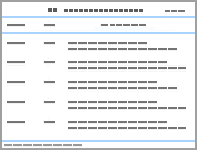
表1
试验设计及施肥详情"
| 处理 Treatment | 有机肥 Organic fertilization | 化肥 Chemical fertilization | 养分输入总量 Total nutrient input | ||||
|---|---|---|---|---|---|---|---|
| N | P2O5 | K2O | N | P2O5 | K2O | ||
| CK | 0 | 0 | 0 | 0 | 0 | 0 | 0 |
| CF | 0 | 150 | 90 | 60 | 150 | 90 | 60 |
| M20N80 | 1293.2 | 120 | 72.0 | 48.3 | 150 | 90 | 60 |
| M40N60 | 2586.4 | 90 | 54.0 | 36.7 | 150 | 90 | 60 |
| M60N40 | 3879.6 | 60 | 36.1 | 25.1 | 150 | 90 | 60 |
| M80N20 | 5172.8 | 30 | 18.1 | 13.4 | 150 | 90 | 60 |
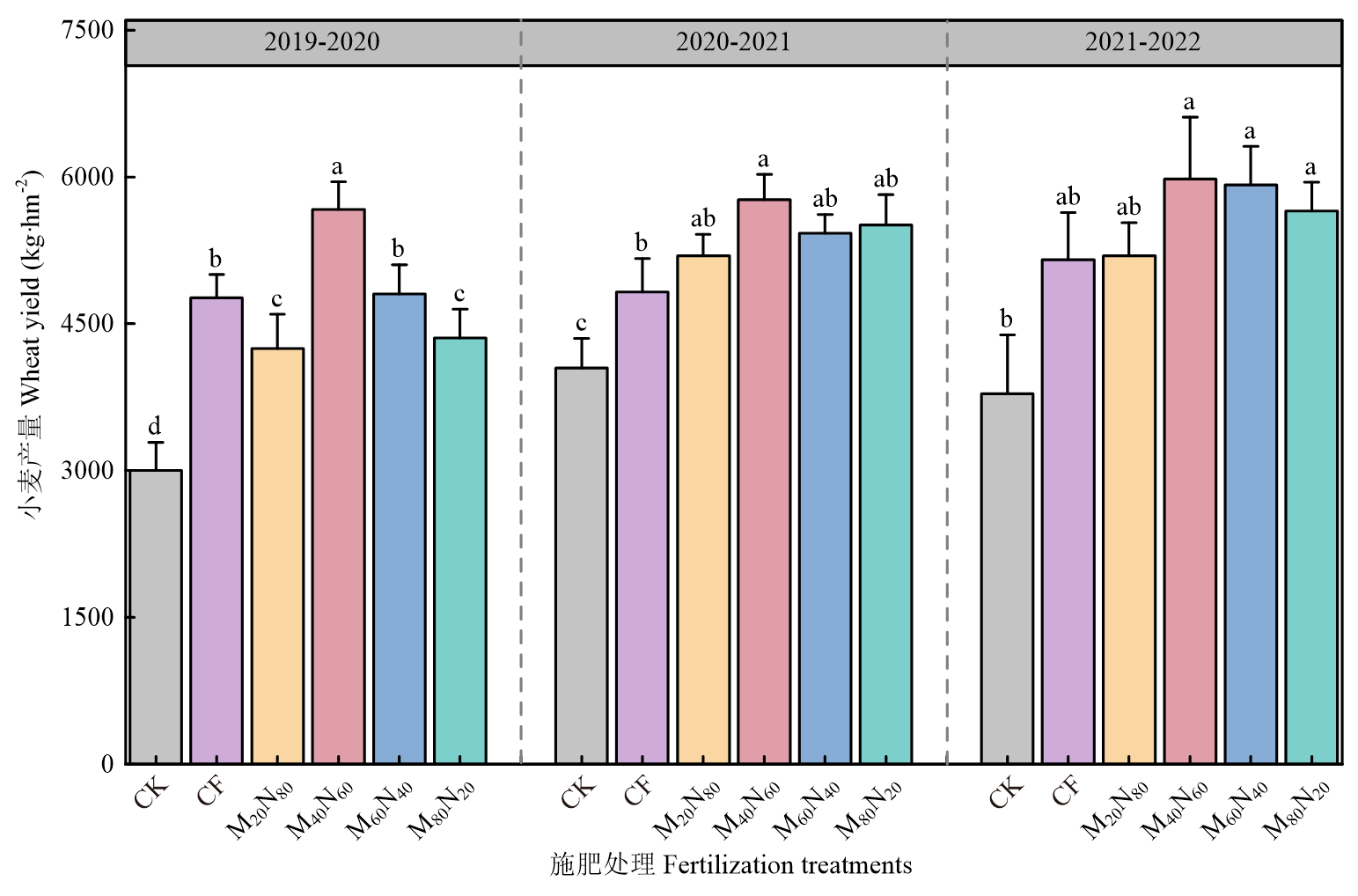
图1
2019—2022年不同处理的冬小麦产量 图柱上不同小写字母表示处理间差异显著(P<0.05)。下同"
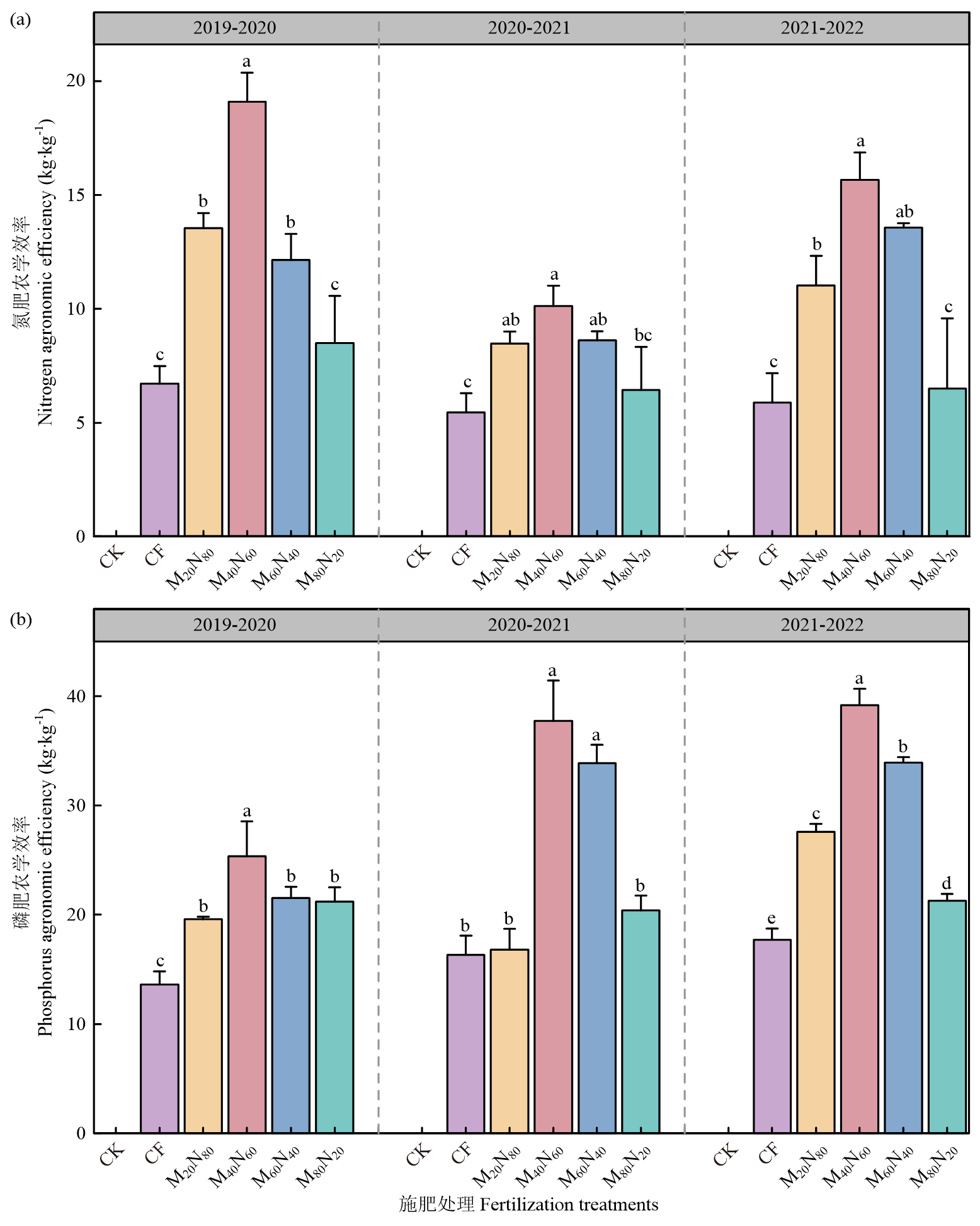
图2
不同施肥方式对氮、磷肥农学效率的影响"
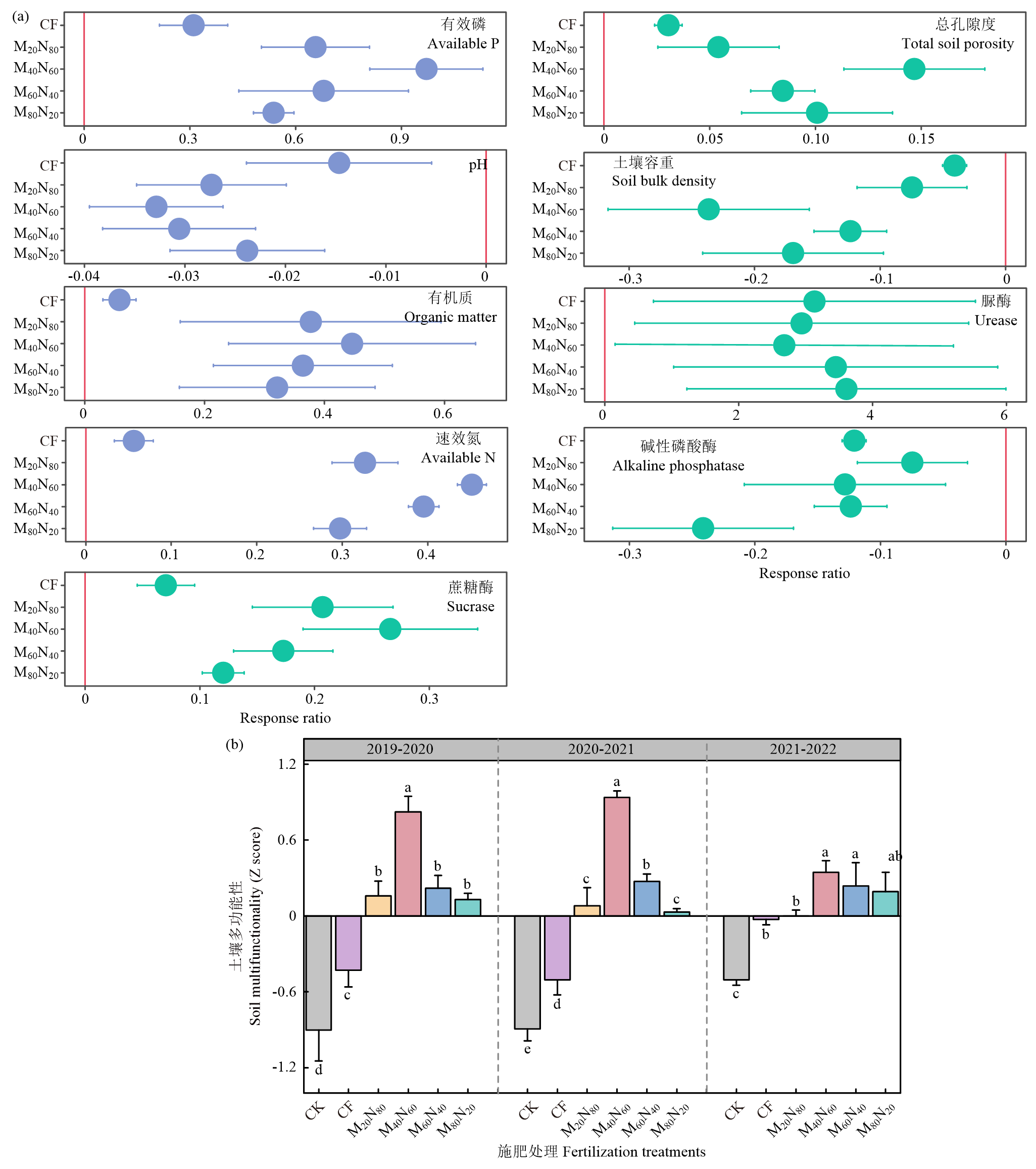
图3
不同施肥处理对土壤理化性质及多功能性的影响 图a中误差条表示95%的置信区间。误差条与零线不重叠为差异有统计学意义(P<0.05)"
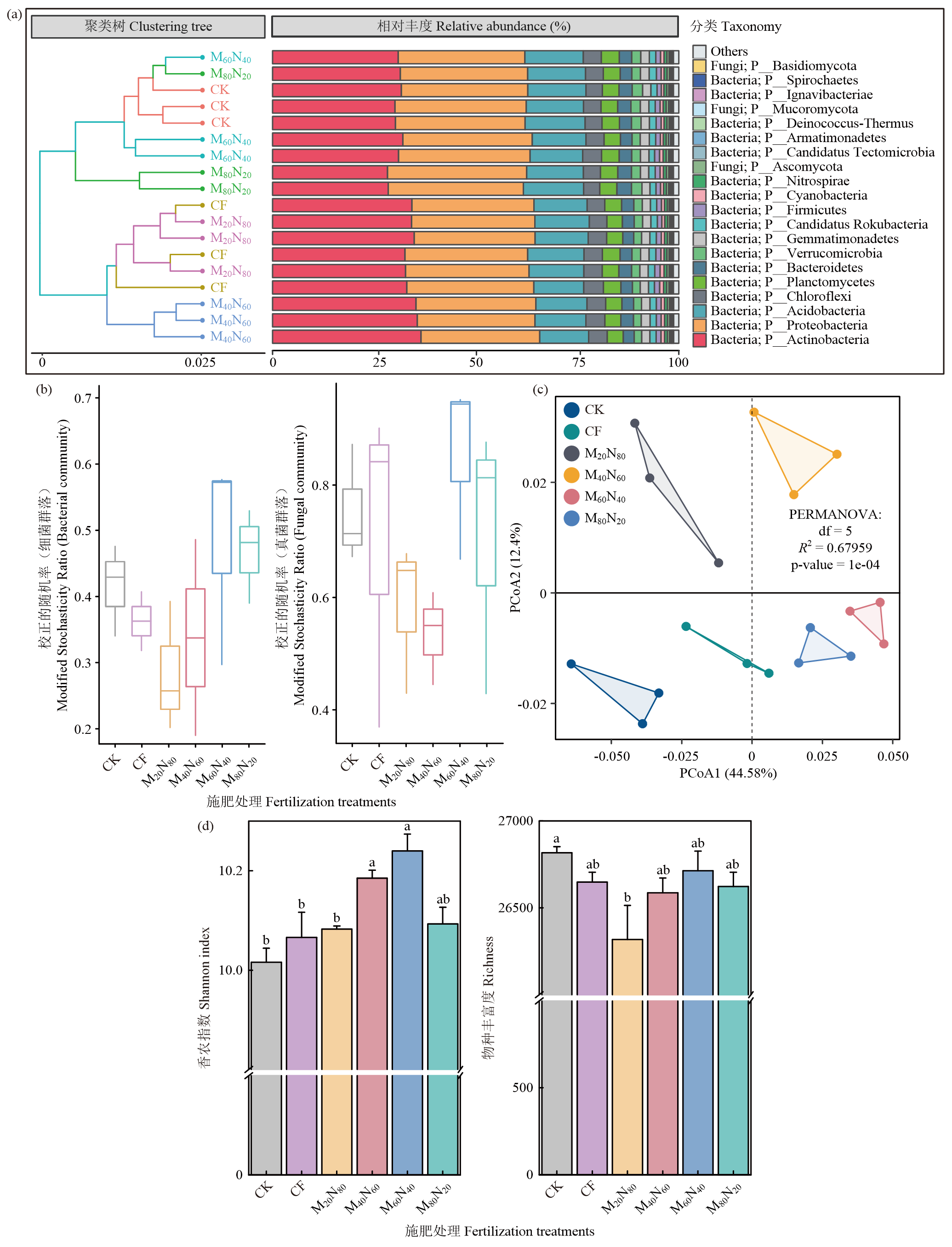
图4
不同施肥处理对土壤微生物群落组成、多样性和随机性的影响"
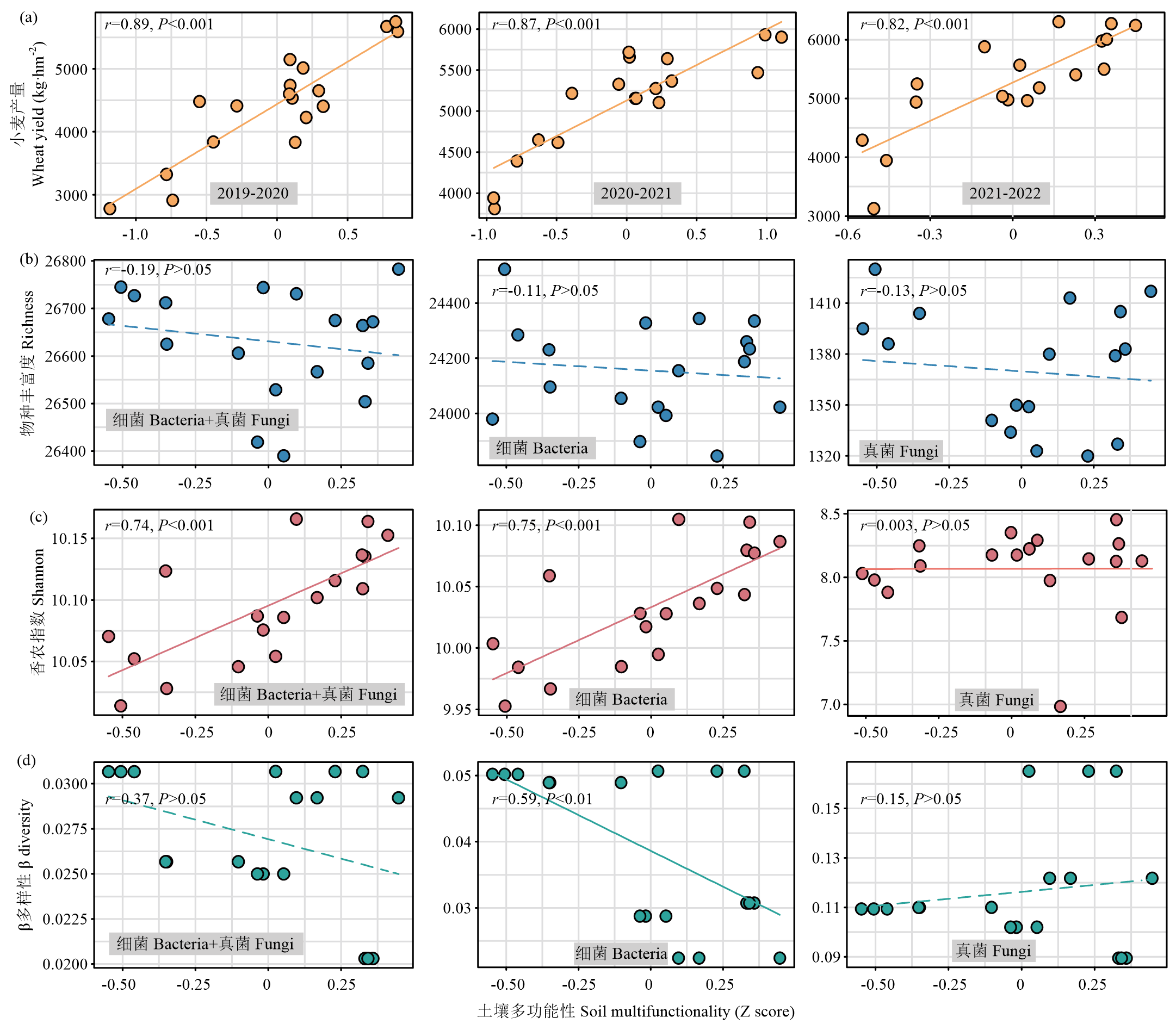
图5
土壤多功能性与冬小麦产量和微生物群落特征间的关系"
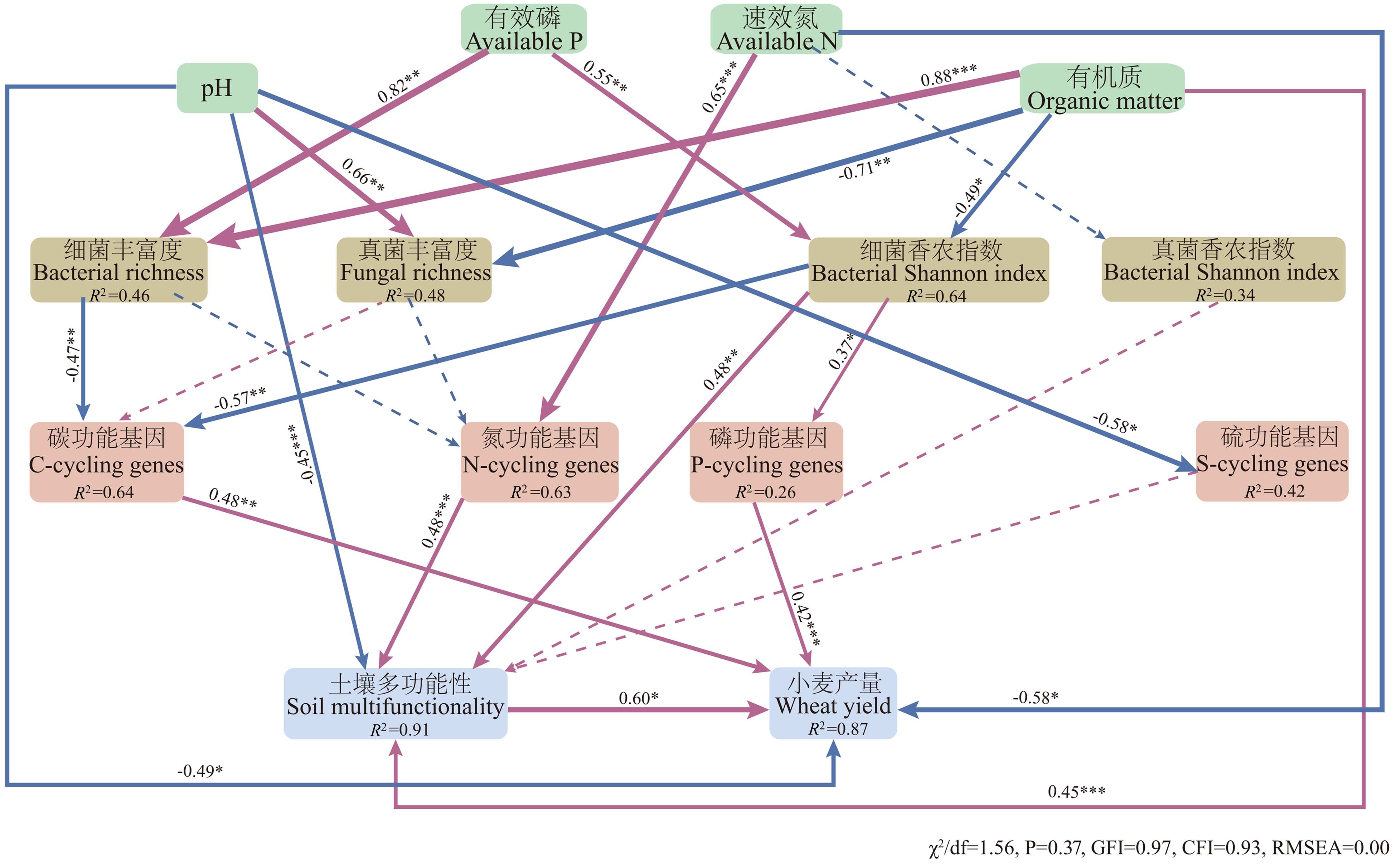
图6
土壤理化性质和微生物群落特征对土壤多功能性和冬小麦产量的直接和间接影响 红线和蓝线分别表示正相关和负相关。实线和虚线分别表示显著和不显著的路径。线的宽度与其对应的路径系数的强度成正比。线上的数字是标准化的路径系数。R2表示方差被解释的比例"
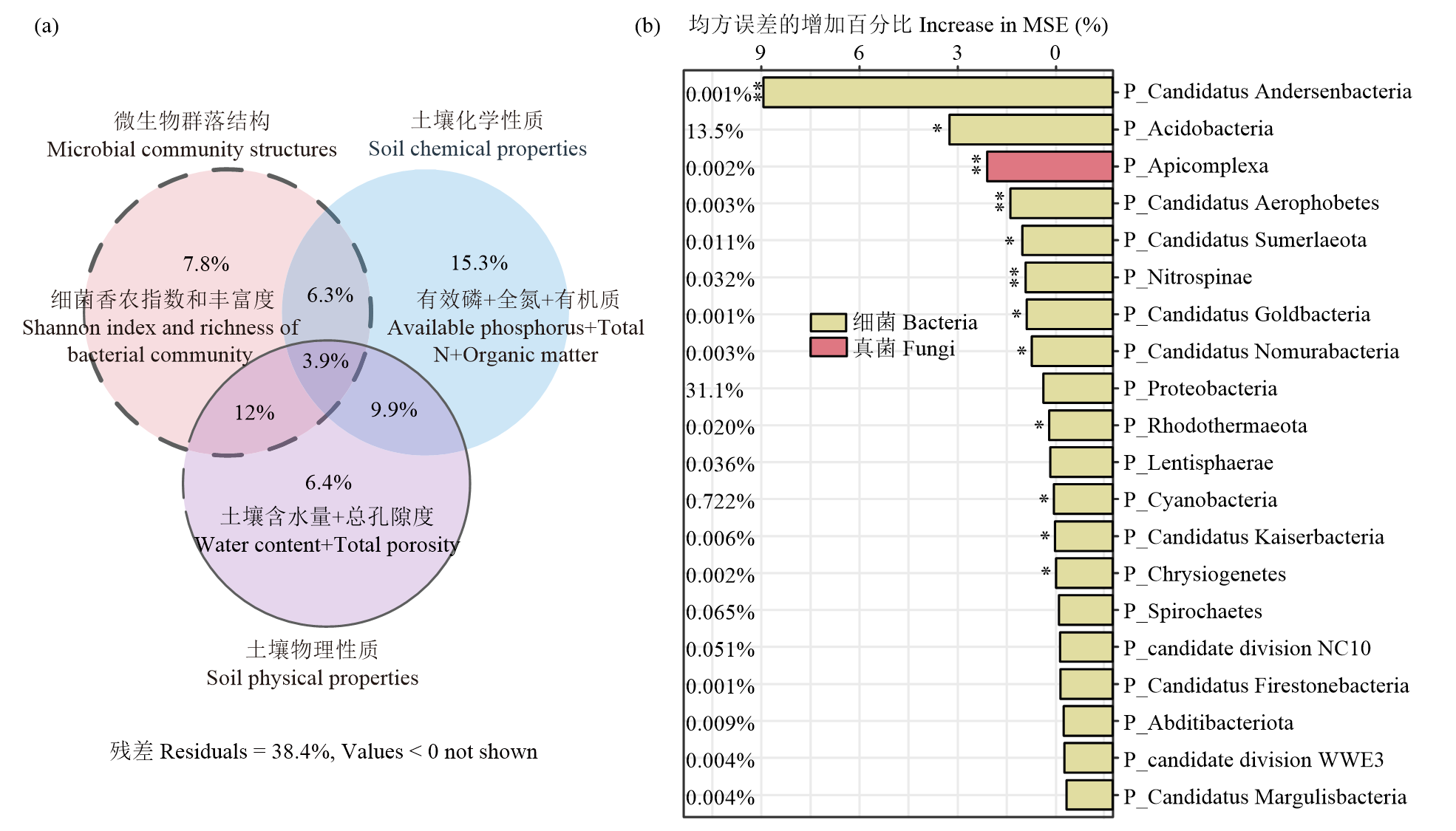
图7
土壤性质和微生物物种对土壤多功能性的贡献(a:方差分解;b:随机森林分析)"
| [1] |
马登科, 殷俐娜, 刘溢健, 杨文稼, 邓西平, 王仕稳. 施氮量对黄土高原旱地冬小麦产量和水分利用效率影响的整合分析. 中国农业科学, 2020, 53(3): 486-499. doi: 10.3864/j.issn.0578-1752.2020.03.003.
|
|
|
|
| [2] |
张振, 石玉, 于振文, 张永丽. 不同产量水平麦田植株氮素转运和籽粒氮素积累的差异. 中国农业科学, 2024, 57(13): 2539-2548. doi: 10.3864/j.issn.0578-1752.2024.13.004.
|
|
|
|
| [3] |
doi: 10.1016/j.fcr.2022.108744 |
| [4] |
doi: 10.1016/j.eja.2023.127058 |
| [5] |
李鑫, 张文菊, 邬磊, 任意, 张骏达, 徐明岗. 土壤质量评价指标体系的构建及评价方法. 中国农业科学, 2021, 54(14): 3043-3056. doi: 10.3864/j.issn.0578-1752.2021.14.010.
|
|
|
|
| [6] |
李奕赞, 张江周, 贾吉玉, 樊帆, 张福锁, 张俊伶. 农田土壤生态系统多功能性研究进展. 土壤学报, 2022, 59(5): 1177-1189.
|
|
|
|
| [7] |
宣泽鹏, 冯慧瑶, 陈美淇, 徐基胜, 刘梦璇, 赵炳梓, 张佳宝. 秸秆还田配施化肥对土壤生态系统多功能性的影响. 中国农业科学, 2025, 58(14): 2821-2837. doi: 10.3864/j.issn.0578-1752.2025.14.009.
|
|
|
|
| [8] |
doi: 10.1007/s00374-018-1298-1 |
| [9] |
doi: 10.1111/fec.2018.32.issue-4 |
| [10] |
马静, 华子宜, 尤云楠, 朱燕峰, 张琦, 陈浮. 东部平原矿区复垦土壤微生物多样性驱动土壤多功能性变化. 土壤学报, 2025, 62(2): 528-542.
|
|
|
|
| [11] |
井新, 贺金生. 生物多样性与生态系统多功能性和多服务性的关系: 回顾与展望. 植物生态学报, 2021, 45(10): 1094-1111.
doi: 10.17521/cjpe.2020.0154 |
|
doi: 10.17521/cjpe.2020.0154 |
|
| [12] |
doi: 10.1038/ncomms10541 |
| [13] |
doi: 10.1038/s41559-018-0519-1 |
| [14] |
doi: 10.1111/fec.v38.5 |
| [15] |
doi: 10.1016/j.soilbio.2019.107686 |
| [16] |
刘小丽. 有机肥替代化肥促进旱地麦田培肥增产的微生物作用机理[D]. 太谷: 山西农业大学, 2023.
|
|
|
|
| [17] |
周浩露, 申朝阳, 罗新宇, 黄英惠, 王可心, 王云浩, 高小丽. 氮肥对垄沟集雨种植谷子氮素利用效率及产量的影响. 中国农业科学, 2024, 57(5): 885-899. doi: 10.3864/j.issn.0578-1752.2024.05.005.
|
|
|
|
| [18] |
鲍士旦. 土壤农化分析. 3版. 北京: 中国农业出版社, 2000.
|
|
|
|
| [19] |
doi: 10.1016/j.agee.2023.108586 |
| [20] |
易树生. 长期有机无机肥配施对西北旱地麦田土壤物理性质的影响[D]. 杨凌: 西北农林科技大学, 2024.
|
|
|
|
| [21] |
关松荫. 土壤酶及其研究法. 北京: 农业出版社, 1986.
|
|
|
|
| [22] |
|
| [23] |
|
| [24] |
doi: 10.1186/s13059-019-1891-0 |
| [25] |
doi: 10.1093/bioinformatics/btv033 |
| [26] |
doi: 10.1038/nbt.3988 |
| [27] |
doi: 10.1093/nar/gkq275 |
| [28] |
doi: 10.1038/nmeth.4197 pmid: 28263959 |
| [29] |
徐炜, 井新, 马志远, 贺金生. 生态系统多功能性的测度方法. 生物多样性, 2016, 24(1): 72-84.
doi: 10.17520/biods.2015170 |
|
doi: 10.17520/biods.2015170 |
|
| [30] |
李文广. 旱地麦田有机无机肥配施的减氮增效潜力及机理研究[D]. 杨凌: 西北农林科技大学, 2024.
|
|
|
|
| [31] |
doi: 10.1016/j.agee.2023.108647 |
| [32] |
史帆, 李文广, 易树生, 杨娜, 陈玉萌, 郑伟, 张雪辰, 李紫燕, 翟丙年. 有机无机肥配施下旱地麦田土壤有机碳组分含量的变化特征. 中国农业科学, 2025, 58(4): 719-732. doi: 10.3864/j.issn.0578-1752.2025.04.008.
|
|
|
|
| [33] |
李永华, 武雪萍, 何刚, 王朝辉. 我国麦田有机肥替代化学氮肥的产量及经济环境效应. 中国农业科学, 2020, 53(23): 4879-4890. doi: 10.3864/j.issn.0578-1752.2020.23.013.
|
|
|
|
| [34] |
|
| [35] |
谭文峰, 许运, 史志华, 蔡鹏, 黄巧云. 胶结物质驱动的土壤团聚体形成过程与稳定机制. 土壤学报, 2023, 60(5): 1297-1308.
|
|
|
|
| [36] |
doi: 10.1016/j.still.2019.104569 |
| [37] |
doi: 10.1016/j.envexpbot.2018.10.013 |
| [38] |
doi: 10.1016/j.apsoil.2025.106167 |
| [39] |
朱雪峰, 孔维栋, 黄懿梅, 肖可青, 罗煜, 安韶山, 梁超. 土壤微生物碳泵概念体系2.0. 应用生态学报, 2024, 35(1): 102-110.
doi: 10.13287/j.1001-9332.202401.018 |
|
doi: 10.13287/j.1001-9332.202401.018 |
|
| [40] |
doi: 10.1016/j.agee.2021.107389 |
| [41] |
doi: 10.1111/emi4.v14.1 |
| [42] |
doi: 10.1038/s41396-019-0522-9 |
| [43] |
doi: 10.1016/j.soilbio.2022.108790 |
| [44] |
doi: 10.1016/j.soilbio.2020.107866 |
| [45] |
doi: 10.1016/j.soilbio.2022.108922 |
| [46] |
doi: 10.1016/j.soilbio.2019.107521 |
| [47] |
王庆峰, 褚长彬, 赵峥, 吴淑杭, 周德平. 草莓连作对土壤微生物及碳氮磷功能基因丰度的影响. 中国农业科学, 2025, 58(17): 3488-3502. doi: 10.3864/j.issn.0578-1752.2025.17.010.
|
|
|
|
| [48] |
doi: 10.1002/bltj.1948.27.issue-3 |
| [49] |
郭晗玥, 王东升, 阮杨, 乔亦铸, 张芸滔, 李玲, 黄启为, 郭世伟, 凌宁, 沈其荣. 西瓜连作根际土壤微生物群落演替特征. 中国农业科学, 2023, 56(21): 4245-4258. doi: 10.3864/j.issn.0578-1752.2023.21.009.
|
|
|
|
| [50] |
方临川, 胡紫莹, 崔庆亮, 杨阳, 梁玉婷, 蔡鹏, 渠晨晨, 高春辉, 焦硕, 刘玉荣, 黄巧云, 谭文峰. 合成菌群构建与应用: 提升土壤健康新策略. 土壤学报, 2025, 62(5): 1233-1245.
|
|
|
|
| [51] |
doi: 10.1016/j.soilbio.2022.108816 |
| [52] |
doi: 10.1038/nrmicro.2017.87 pmid: 28824177 |
| [53] |
doi: 10.1038/nrmicro3400 pmid: 25730701 |
| [1] | 朱琦, 贾振鹏, Tahir SHAH, 徐晨晟, 李芷琦, 吕会帅, 朱鹏超, 韦小敏, 黄冬琳, 孙艳妮, 曹卫东, 高亚军, 王朝辉, 张达斌. 绿肥配施增效产品降低旱地麦田温室气体排放及碳足迹[J]. 中国农业科学, 2026, 59(7): 1507-1522. |
| [2] | 钱瑾, 李映雪, 吴芳, 邹晓晨. 集成光谱降维的冬小麦叶片磷含量估算[J]. 中国农业科学, 2026, 59(4): 781-792. |
| [3] | 孔媛, 崔沙沙, 李美, 李健, 杨思雨, 房锋, 刘帅帅, 刘明平, 曾艳, 高兴祥, 柏连阳. 黄淮海冬小麦田多花黑麦草等5种禾本科杂草时空分布变化规律[J]. 中国农业科学, 2026, 59(4): 807-823. |
| [4] | 咸青林, 肖鉴珂, 高阿庆, 郜利闯, 刘杨. 种植方式结合测墒补灌下冬小麦产量及水分利用效率[J]. 中国农业科学, 2026, 59(3): 589-601. |
| [5] | 吕旭东, 孙世媛, 李亚楠, 刘玉龙, 王艳群, 付鑫, 张佳英, 宁鹏, 彭正萍. 智能机械化分层施肥对麦田根-土养分分布和小麦产量的影响[J]. 中国农业科学, 2026, 59(1): 129-146. |
| [6] | 蒲丽霞, 张佳芮, 叶建萍, 黄秀兰, 樊高琼, 杨洪坤. 二氢赤霉素与秸秆覆盖对旱地小麦分蘖成穗与产量的影响[J]. 中国农业科学, 2025, 58(9): 1735-1748. |
| [7] | 张昊鑫, 于晟玥, 雷秋良, 杜新忠, 张继宗, 安妙颖, 樊秉乾, 罗加法, 刘宏斌. 基于RothC模型的东北旱地和稻田土壤有机碳动态变化模拟研究[J]. 中国农业科学, 2025, 58(8): 1564-1578. |
| [8] | 史帆, 李文广, 易树生, 杨娜, 陈玉萌, 郑伟, 张雪辰, 李紫燕, 翟丙年. 有机无机肥配施下旱地麦田土壤有机碳组分含量的变化特征[J]. 中国农业科学, 2025, 58(4): 719-732. |
| [9] | 牟树佳, 董莉霞, 李广, 燕振刚, 逯玉兰. 基于鲸鱼算法的旱地春小麦农田土壤N2O排放模型参数优化[J]. 中国农业科学, 2025, 58(3): 537-547. |
| [10] | 房康睿, 丁世杰, 陈雨珊, 杨秉庚, 郭腾飞, 徐新朋, 赵士诚, 王秀斌, 黄绍敏, 仇少君, 何萍, 周卫. 有机无机肥配施下典型潮土小麦季有机肥氮磷的当季释放率[J]. 中国农业科学, 2025, 58(24): 5234-5246. |
| [11] | 吴文琪, 焦阳, 惠家祯, 王绪锋, 郭博森, 沈玉芳. 不同有机物料配施化肥对土壤肥力和玉米产量的影响[J]. 中国农业科学, 2025, 58(23): 4966-4978. |
| [12] | 张丰, 徐隽峰, 高志源, 党海燕, 郭戎博, 佘文婷, 李文虎, 刘金山, 王朝辉. 基于长期定位试验的氮磷表观平衡优化小麦氮磷肥用量[J]. 中国农业科学, 2025, 58(22): 4688-4702. |
| [13] | 张海睿, 贾昂元, 高奇奇, 韩哲群, 南珊珊, 段碧华, 武雪萍. 生物炭配施黄腐酸对滨海盐碱地土壤理化性质、酶活性和多功能性的影响[J]. 中国农业科学, 2025, 58(20): 4178-4188. |
| [14] | 佘映军, 周子哲, 伍明, 郭魏, 师昌健, 胡超, 李平. 地下水埋深和施氮对土壤水盐分布及冬小麦养分吸收利用的影响[J]. 中国农业科学, 2025, 58(20): 4285-4304. |
| [15] | 王荣荣, 徐宁璐, 黄修利, 赵凯男, 黄明, 王贺正, 付国占, 吴金芝, 李友军. 一次灌溉和氮肥运筹对旱地小麦籽粒产量和品质的影响[J]. 中国农业科学, 2025, 58(1): 43-57. |
|
||
