






中国农业科学 ›› 2026, Vol. 59 ›› Issue (2): 265-277.doi: 10.3864/j.issn.0578-1752.2026.02.004
廖婷璐( ), 石亚飞, 肖东浩, 舍杨梦斐, 郭富城, 杨九菊, 唐海江, 罗成科()
收稿日期:2025-06-19
接受日期:2025-08-18
出版日期:2026-01-16
发布日期:2026-01-22
通信作者:
联系方式:
廖婷璐,E-mail:liaotl4433@163.com。
基金资助:
LIAO TingLu(), SHI YaFei, XIAO DongHao, SHE YangMengFei, GUO FuCheng, YANG JiuJu, TANG HaiJiang, LUO ChengKe()
Received:2025-06-19
Accepted:2025-08-18
Published:2026-01-16
Online:2026-01-22
摘要:
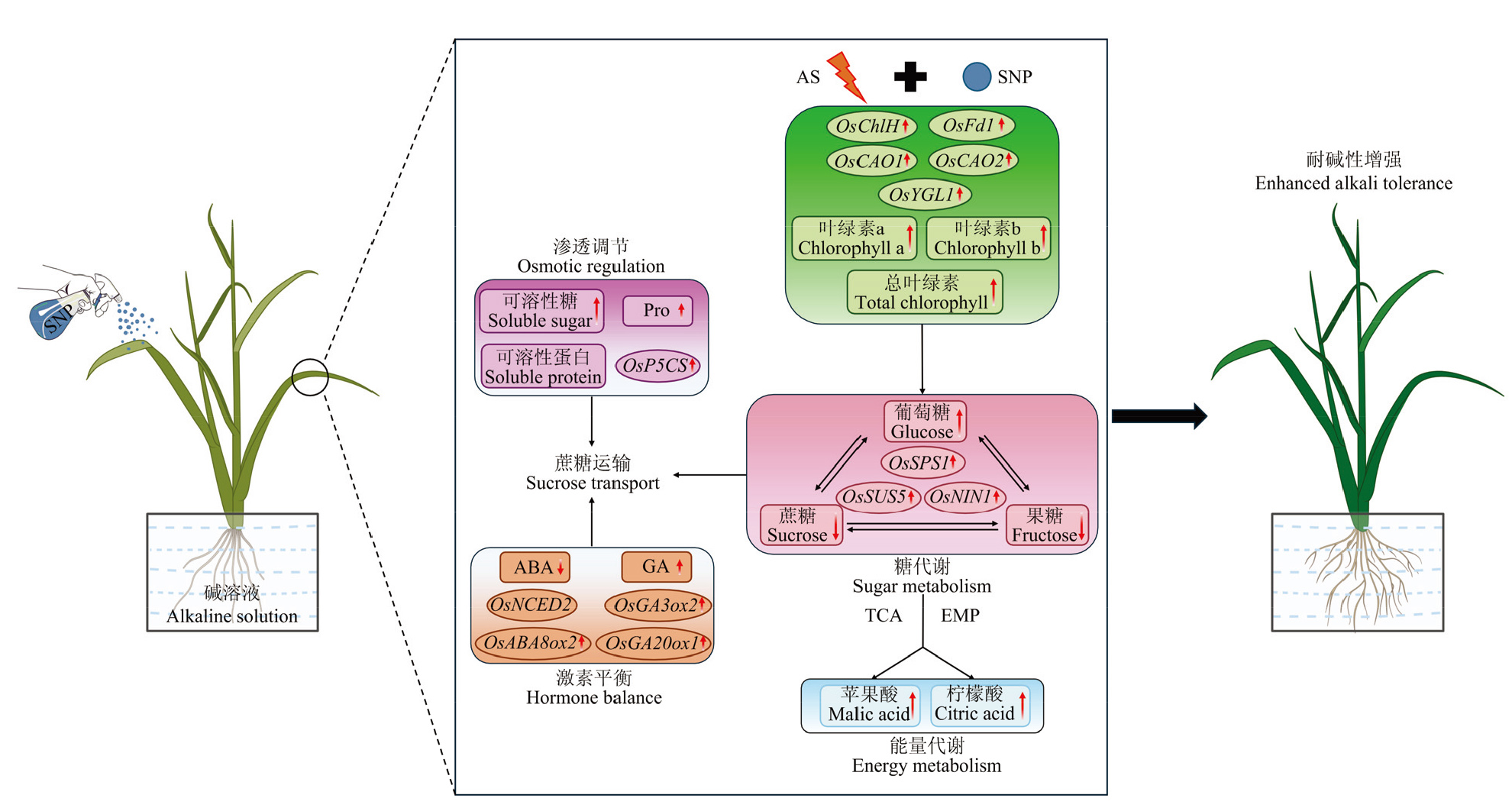
【目的】 外源硝普钠(SNP)是一种常用的一氧化氮(NO)供体,在植物胁迫响应中具有重要的调控作用。探究外源SNP对碱胁迫下水稻幼苗糖代谢的影响,为揭示SNP增强水稻耐碱性的机制提供理论依据。【方法】 以幼苗期水稻中花11和宁粳52为供试材料,设置对照(CK)、CK+SNP(50 µmol·L-1)、碱胁迫(AS,将NaHCO3与Na2CO3等比例混合配制成20 mmol·L-1、pH 9.55的混合碱溶液)、AS+SNP(20 mmol·L-1 AS+50 µmol·L-1 SNP)4个处理,分析各处理对水稻幼苗期2个水稻品种糖代谢的影响。【结果】 与AS处理相比,AS+SNP处理显著提高了水稻幼苗的苗高、根长、鲜重及干重;AS+SNP处理上调了叶绿素合成酶相关基因OsChlH、OsCAO1和OsCAO2的表达,从而增加了叶绿素的含量,促进光合作用;同时,上调表达蔗糖转化酶基因OsNIN1使果糖和蔗糖含量降低,葡萄糖含量升高,有助于糖酵解和三羧酸的良性循环,促进苹果酸和柠檬酸的积累,从而维持能量平衡;此外,通过诱导蔗糖磷酸合酶OsSPS1、赤霉素合成酶相关基因(OsGA3ox2、OsGA20ox1)、脯氨酸合成基因(OsP5CS)的表达,增加了赤霉素(GA)、脱落酸(ABA)、脯氨酸(Pro)和可溶性糖含量,并调节渗透胁迫和激素平衡,促进蔗糖从源向库的运输。【结论】 外源喷施SNP通过上调叶绿素合成基因,促进碱胁迫下水稻幼苗叶绿素积累并维持光合效率,进而增强葡萄糖合成;同时,通过激活糖酵解和三羧酸循环,使糖类分解产物向苹果酸、柠檬酸等转化,促进有机酸积累。此外,外源SNP通过渗透调节和GA/ABA激素平衡,促进蔗糖运输及糖代谢通路活化,保障能量代谢通量,进而提高了水稻幼苗对碱胁迫的耐受性。
廖婷璐, 石亚飞, 肖东浩, 舍杨梦斐, 郭富城, 杨九菊, 唐海江, 罗成科. 外源硝普钠对碱胁迫下水稻幼苗糖代谢的影响[J]. 中国农业科学, 2026, 59(2): 265-277.
LIAO TingLu, SHI YaFei, XIAO DongHao, SHE YangMengFei, GUO FuCheng, YANG JiuJu, TANG HaiJiang, LUO ChengKe. The Effect of Exogenous Nitroprusside on Sugar Metabolism in Rice Seedlings Under Alkaline Stress[J]. Scientia Agricultura Sinica, 2026, 59(2): 265-277.
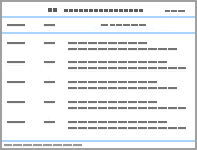
表1
检测的基因和RT-qPCR引物序列"
| 基因名称 Gene symbol | RGAP ID RGAP ID | 引物 Primer sequence (5′—3′) (forward/reverse) | 产物长度 Product size (bp) |
|---|---|---|---|
| OsP5CS | LOC_Os05g38150 | AATGACAGTTTAGCAGGAC/ACCACTATACAACCCATCC | 87 |
| OsNIN1 | LOC_Os03g20020 | CTATTCTGCTTTGCGTTGT/CTGAGCCTGTAGTTGATGG | 87 |
| OsSUS5 | LOC_Os04g24430 | GCATTCGGGCTAACGGTCAT/ATTCCTGCCTCCCTGTCGT | 140 |
| OsSPS1 | LOC_Os01g69030 | GGCACAGCAAGACACTCCC/CGCCACGAACTAGACCATG | 134 |
| OsYGL1 | LOC_Os05g28200 | CTGTTGGTGGGTCCTTGCTT/TAGCTCGCACCAAGAGCAAA | 97 |
| OsCAO1 | LOC_Os10g41780 | TGCTCATCAAGCCTTCCTTCAGGTG/GCGTTGTTCTTTGCATAGTCAGCTC | 115 |
| OsCAO2 | LOC_Os10g41760 | CTGCTCGTCAAGCCTTCCTCCTCCT/CCCTCATGTTGTTCTTGGCATGTTG | 130 |
| OsFd1 | LOC_Os08g01380 | CAGGCGGAGGAGGAAGGGAT/TAGGCGTGGCAGGTGAGGAC | 161 |
| OsChlH | LOC_Os03g20700 | CCAATCCGTAACCCGAAGGT/CAATAATTTTGGCGCTCTTCAA | 103 |
| OsNCED2 | LOC_Os12g24800 | TCCGCAATGGTCCCAACC/ACAGTGTTGACGAGGCCG | 111 |
| OsABA8ox2 | LOC_Os08g36860 | TGGCCAAGCTGGAGATGC/ACGGGCTGTACTCCACCT | 96 |
| OsGA3ox2 | LOC_Os01g08220 | TGTTCTTGAGGGCGCTGG/GTCGCCGTCATCCTCTCG | 85 |
| OsGA20ox1 | LOC_Os03g63970 | GGTGCATGGACGCCTTCT/CTTCCACGGCAGCTTGGA | 125 |
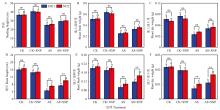
图1
外源SNP对碱胁迫下水稻幼苗生长和生物量的影响 CK:正常营养液 Normal nutrient solution;CK+SNP:50 μmol·L-1 SNP处理 50 μmol·L-1 SNP treatment;AS:碱胁迫处理 Alkali stress treatment;AS+SNP:碱胁迫+50 μmol·L-1 SNP处理 Alkaline stress+50 μmol·L-1 SNP treatment;ZH11:中花11品种 Zhonghua 11 variety;NJ52:宁粳52品种 Ningjing 52 variety。小写字母为ZH11品种在不同处理间的显著差异;大写字母表示NJ52品种在不同处理下的显著差异(P<0.05) Lowercase letters indicate significant differences among different treatments for the ZH11 variety; uppercase letters indicate significant differences among different treatments for the NJ52 variety (P<0.05)。*和**分别表示在P<0.05和P<0.01的水平上存在显著差异,“ns”表示相同处理下2个水稻品种之间没有显著差异 * and ** indicate significant differences at the levels of P<0.05 and P<0.01, respectively, while "ns" indicates no significant difference between the two rice varieties under the same treatment。下同 The same as below"
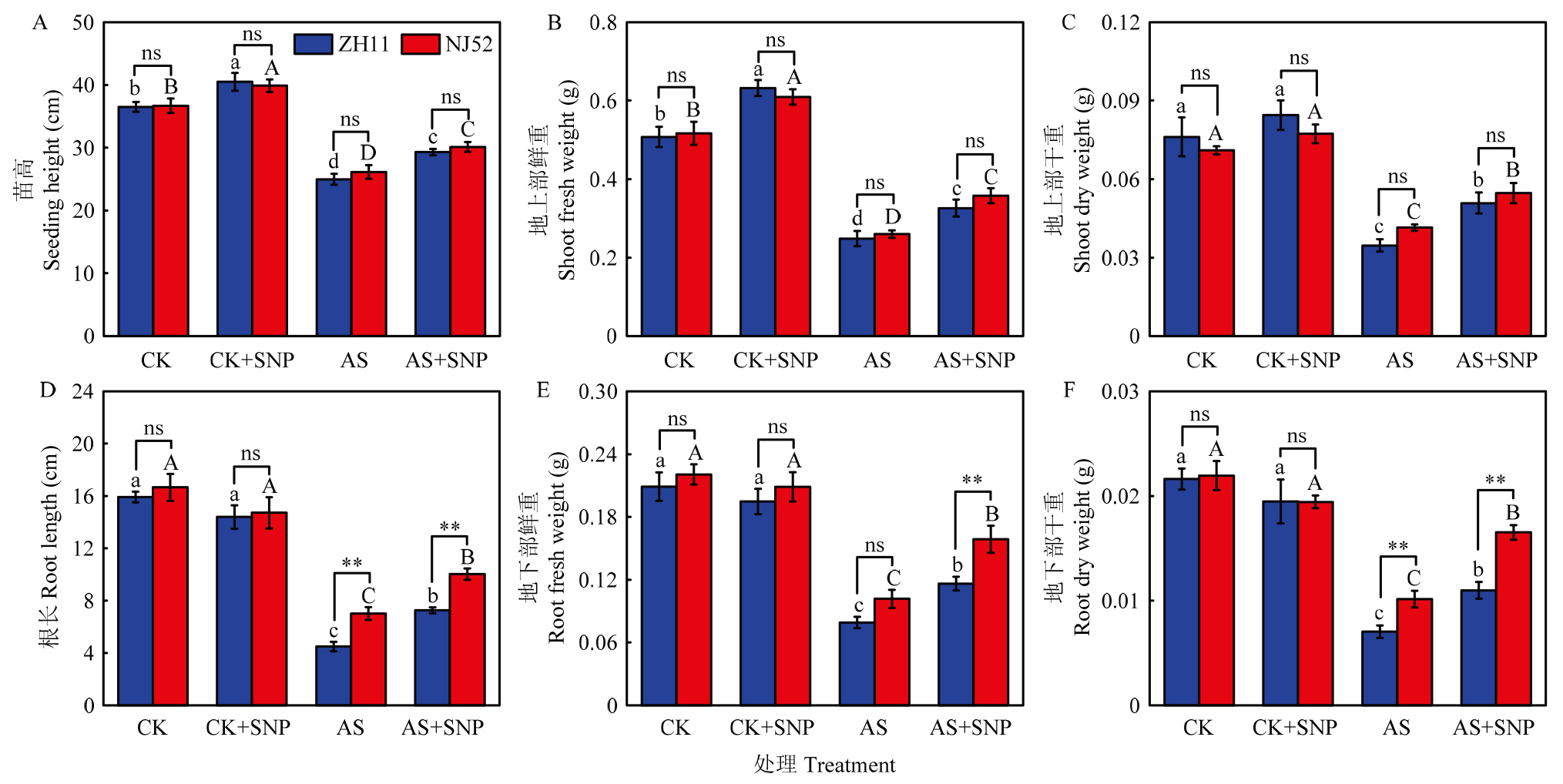
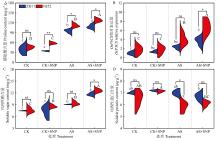
图2
外源SNP对碱胁迫下水稻幼苗渗透调节的影响"
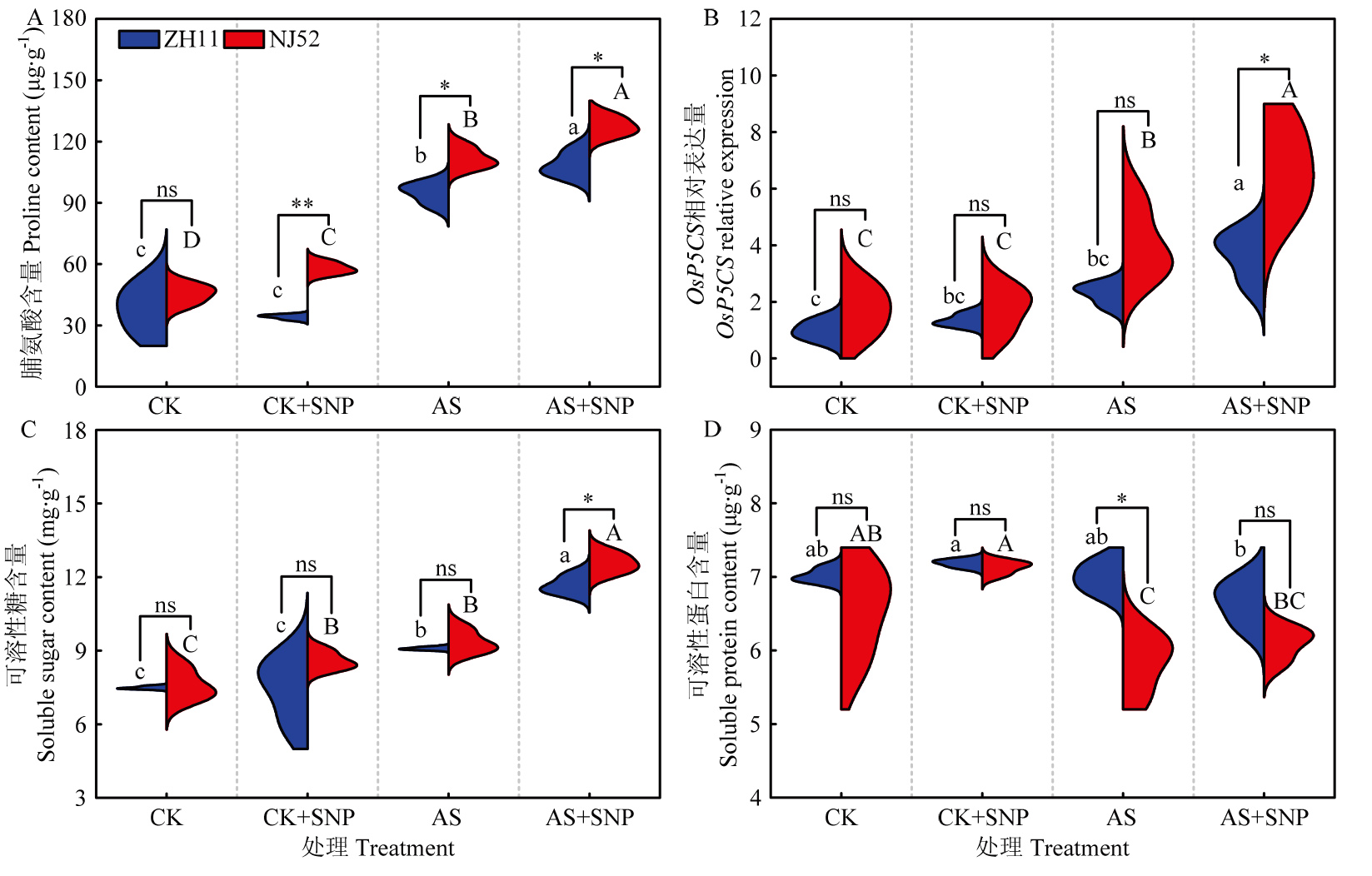
图3
外源SNP对碱胁迫下水稻幼苗叶绿素合成的影响"
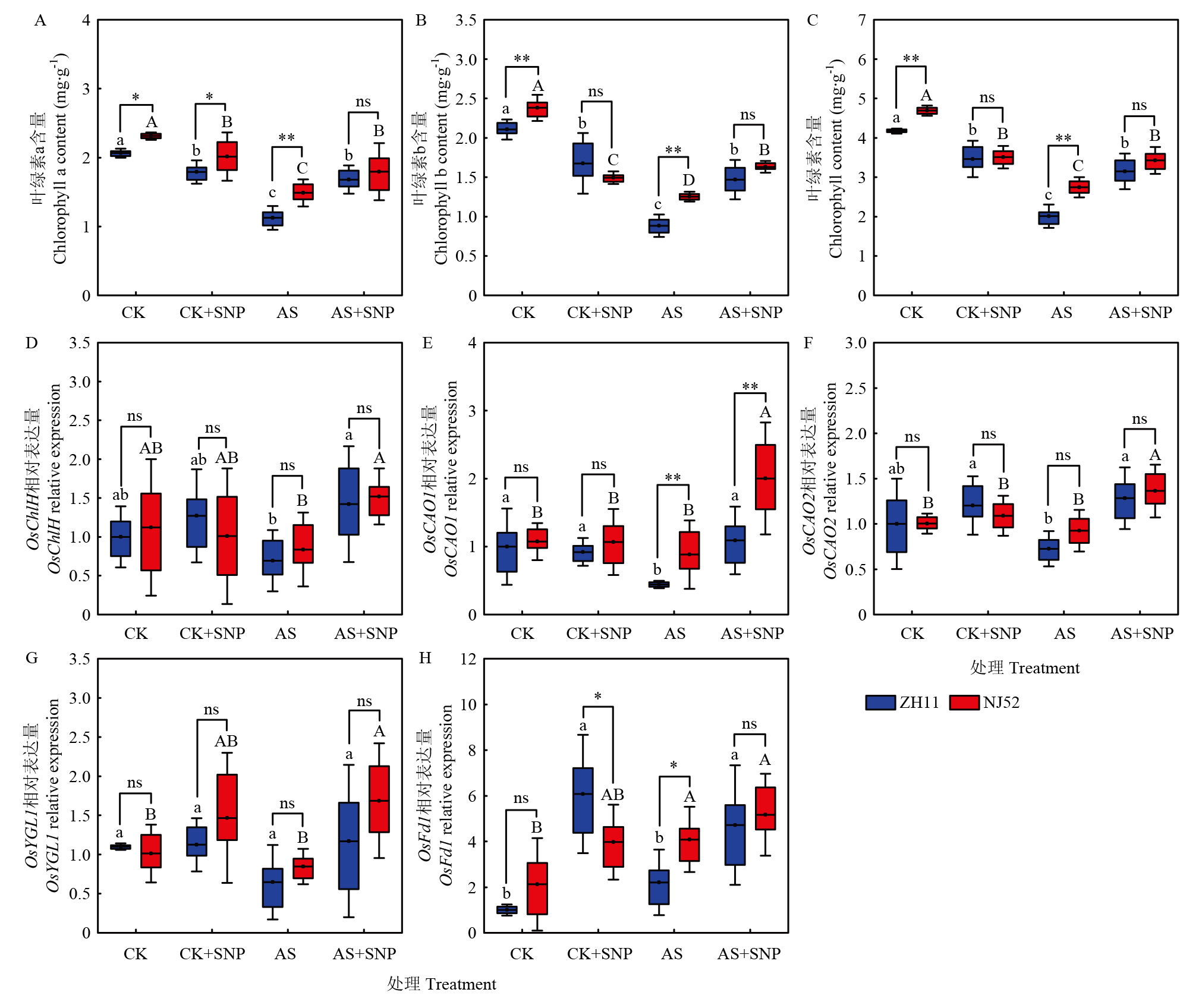
图4
外源SNP对碱胁迫下水稻幼苗糖类物质含量的影响"

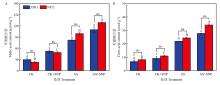
图5
外源SNP对碱胁迫下水稻幼苗有机酸含量的影响"

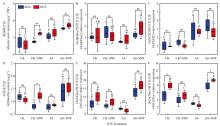
图6
外源SNP对碱胁迫下水稻幼苗激素水平的影响"
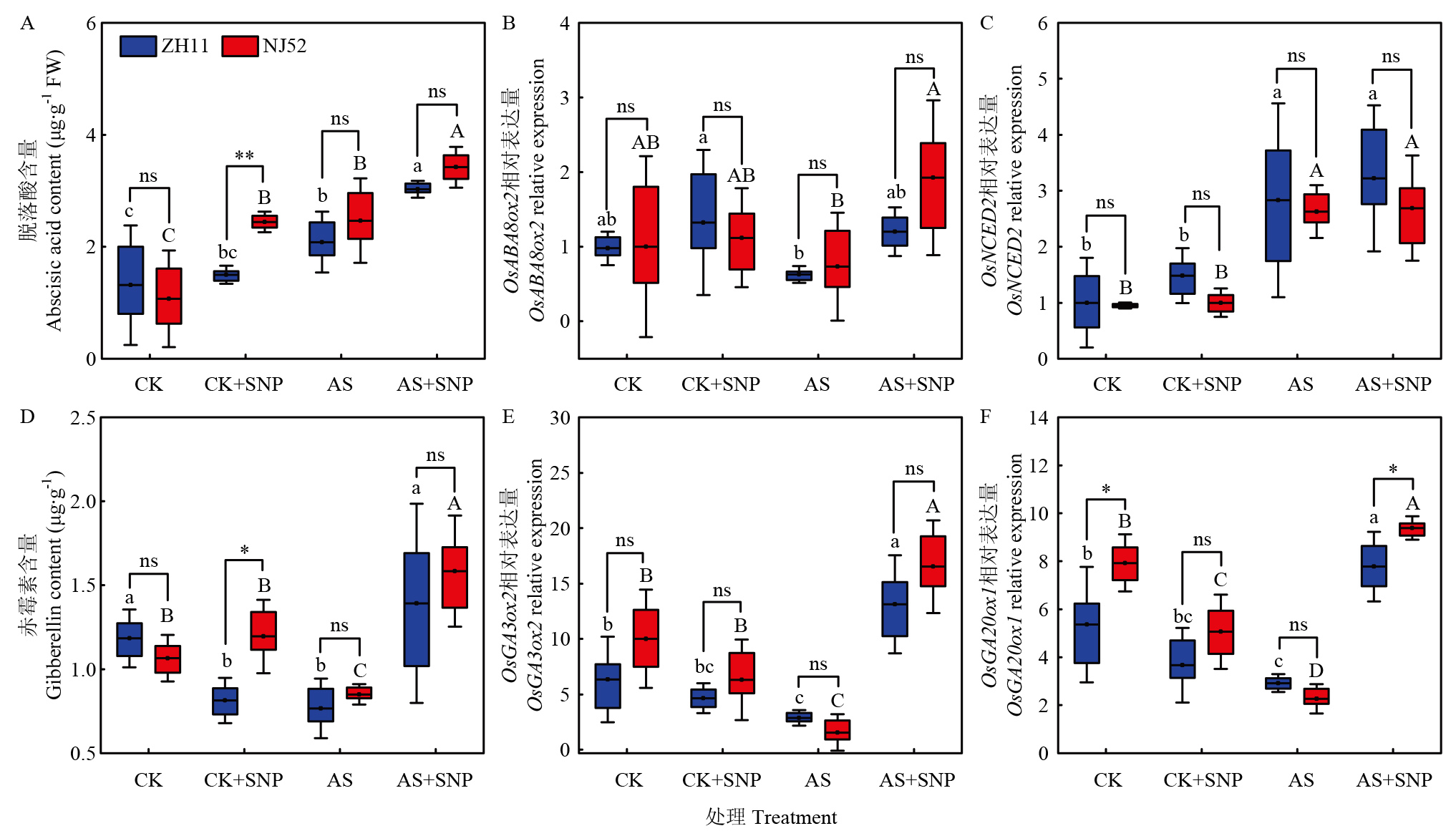
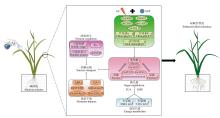
图7
碱性胁迫下SNP调控水稻幼苗糖代谢的机制模式图 红色箭头上升/下降表示AS+SNP处理与AS处理下该指标的增加/减少 The red arrow indicates the increase/decrease of this indicator under AS+SNP treatment and AS treatment"
| [1] |
FAO. Global status of salt-affected soils. Rome: FAO, 2024.
|
| [2] |
冯起, 尹鑫卫, 朱猛, 张举涛, 刘蔚, 席海洋, 鱼腾飞, 杨林山, 刘文, 陆志翔. 统筹推进西北地区盐碱地综合治理利用: 现状、 挑战与对策建议. 中国科学院院刊, 2024, 39(12): 2060-2073.
|
|
|
|
| [3] |
马国辉, 郑殿峰, 母德伟, 王奉斌, 戴其根, 魏中伟, 冯乃杰, 王才林. 耐盐碱水稻研究进展与展望. 杂交水稻, 2024, 39(1): 1-10.
|
|
|
|
| [4] |
王丽娟. 植物转化酶在糖代谢中的作用. 农业科学研究, 2010, 31(4): 70-75.
|
|
|
|
| [5] |
郑广杰, 叶昌, 徐春梅, 陈松, 褚光, 陈里鹏, 章秀福, 王丹英. 低温胁迫对水稻胚芽中葡萄糖和水分状态的影响及其与种子出苗成活间的关系. 作物学报, 2024, 50(12): 3055-3068.
|
|
|
|
| [6] |
|
| [7] |
|
| [8] |
|
| [9] |
李佳馨, 李霞, 谢寅峰. 外源海藻糖增强高表达转玉米C4型PEPC水稻耐旱性的机制. 植物学报, 2021, 56(3): 296-314.
|
|
|
|
| [10] |
王丽华, 李改玲, 李晶, 左师宇, 曹鑫波, 佟昊阳, 魏湜. 外源糖对盐胁迫下小黑麦幼苗糖代谢的影响. 麦类作物学报, 2017, 37(4): 548-553.
|
|
|
|
| [11] |
|
| [12] |
陈丽珊, 周红艳, 林伟伟. 外源褪黑素对盐胁迫下水稻苗期碳氮代谢的影响. 生态学杂志, 2023, 42(7): 1635-1643.
|
|
|
|
| [13] |
|
| [14] |
|
| [15] |
吴坤, 邢承华, 饶玉春, 宋洪明, 陈晓阳, 蔡妙珍. 外源NO对铝毒下水稻根系生长和抗氧化系统的影响. 西北植物学报, 2014, 34(3): 536-542.
|
|
|
|
| [16] |
方淑梅, 梁喜龙, 纪伟波, 林岩. 外源NO对盐碱胁迫下水稻幼苗生长抑制的缓解作用. 江苏农业科学, 2013, 41(8): 67-69.
|
|
|
|
| [17] |
|
| [18] |
刘海艳, 杨丽洁, 丁艳锋, 李刚华, 王绍华, 刘正辉, 唐设, 刘仁梅, 蒋卫红. NO对水稻孕穗期干旱胁迫下叶片光合及产量的影响. 南京农业大学学报, 2017, 40(2): 195-202.
|
|
|
|
| [19] |
闵炜芳, 方晶莹, 石亚飞, 摆小蓉, 舍杨梦斐, 田浩天, 罗成科. 硝普钠添加对碱胁迫下萌发期水稻碳氮代谢的影响. 植物营养与肥料学报, 2024, 30(5): 934-947.
|
|
|
|
| [20] |
石亚飞, 闵炜芳, 摆小蓉, 舍杨梦斐, 田浩天, 罗成科. 外源物调节碱胁迫水稻生理特性及相关基因表达的效应. 植物营养与肥料学报, 2023, 29(5): 813-825.
|
|
|
|
| [21] |
路旭平, 李芳兰, 石亚飞, 张娟伟, 杨文伟, 罗成科, 田蕾, 李培富. 不同水稻品种幼苗响应碱胁迫的生理差异及胁迫等级构建. 生态环境学报, 2021, 30(8): 1757-1768.
|
|
|
|
| [22] |
李芳兰. 碱胁迫对中花11种子萌发、幼苗生长的影响及外源物的缓解作用[D]. 银川: 宁夏大学, 2021.
|
|
|
|
| [23] |
|
| [24] |
李合生. 植物生理生化实验原理和技术. 北京: 高等教育出版社, 2000.
|
|
|
|
| [25] |
|
| [26] |
|
| [27] |
|
| [28] |
|
| [29] |
|
| [30] |
|
| [31] |
金姣姣, 刘自刚, 米文博, 徐明霞, 邹娅, 徐春梅, 赵彩霞. 利用RNA-Seq鉴定调控甘蓝型油菜叶片光合特性的低温胁迫应答基因. 生物技术通报, 2022, 38(4): 126-142.
|
|
|
|
| [32] |
张荣, 刘淋茹, 付凯霞, 武紫君, 宋一凡, 王璐媛, 侯阁阁, 贺利, 冯伟, 段剑钊, 王永华, 郭天财. 干旱胁迫下外源褪黑素对冬小麦小花发育及碳营养代谢的调控. 中国农业科学, 2024, 57(23): 4644-4657. doi:10.3864/j.issn.0578-1752.2024.23.006.
|
|
|
|
| [33] |
谷闻东, 刘春娟, 李邦, 刘畅, 周宇飞. 外源色氨酸对低氮胁迫下高粱苗期叶片碳氮平衡和衰老特性的影响. 中国农业科学, 2023, 56(7): 1295-1310. doi:10.3864/j.issn.0578-1752.2023.07.008.
|
|
|
|
| [34] |
|
| [35] |
|
| [36] |
|
| [37] |
李俊伟, 刘景辉, 王俊英, 郭来春, 王春龙, 任长忠. 盐与碱胁迫对燕麦离子平衡和有机酸含量的影响. 西北植物学报, 2022, 42(10): 1700-1710.
|
|
|
|
| [38] |
刘建新, 刘瑞瑞, 刘秀丽, 贾海燕, 卜婷, 李娜. 外源硫化氢调控盐碱胁迫下裸燕麦叶片糖和酚酸代谢反应. 中国生态农业学报(中英文), 2023, 31(3): 463-477.
|
|
|
|
| [39] |
|
| [40] |
|
| [41] |
马福林, 马玉花. 干旱胁迫对植物的影响及植物的响应机制. 宁夏大学学报(自然科学版), 2022, 43(4): 391-399.
|
|
|
|
| [42] |
|
| [43] |
|
| [44] |
|
| [45] |
|
| [46] |
|
| [47] |
|
| [48] |
|
| [49] |
|
| [1] | 吕文彦, 程海涛, 马兆惠, 田淑华. 育种新时代水稻杂交育种技术与策略探讨[J]. 中国农业科学, 2026, 59(2): 233-238. |
| [2] | 刘天生, 刘耕源, 赵安琪, 杨旭, 蔡明雪, 杨艾文, 娄铭轩, 李沐恺, 王晗, 张亚玲. 黑龙江省水稻恶苗病致病群体[J]. 中国农业科学, 2026, 59(2): 305-321. |
| [3] | 王忠妮, 雷月, 李佳丽, 宫彦龙, 朱速松. ABC转运蛋白OsARG1调控水稻抽穗期的功能[J]. 中国农业科学, 2026, 59(1): 1-16. |
| [4] | 费耀莹, 王迪, 唐伟杰, 郭彩丽, 张小虎, 邱小雷, 程涛, 姚霞, 江冲亚, 朱艳, 曹卫星, 郑恒彪. 基于无人机多源影像融合的水稻籽粒蛋白质含量估测[J]. 中国农业科学, 2026, 59(1): 41-56. |
| [5] | 董桂春, 王子涵, 王树深, 李杰, 霍晓晴, 杨瑞, 周娟, 舒小伟, 李妍, 曹靓婧, 王子瑞, 姚友礼, 黄建晔. 硫包衣缓释肥提升水稻产量及氮肥利用率的技术途径[J]. 中国农业科学, 2026, 59(1): 57-77. |
| [6] | 王爱冬, 李瑞杰, 冯向前, 洪卫源, 李子秋, 张晓果, 王丹英, 陈松. 基于多角度成像与机器学习的水稻叶面积精确估算[J]. 中国农业科学, 2025, 58(9): 1719-1734. |
| [7] | 韦萍, 潘炬忠, 朱德平, 邵胜雪, 陈珊珊, 韦雅倩, 高维维. OsDREB1J调控水稻籽粒大小的功能研究[J]. 中国农业科学, 2025, 58(8): 1463-1478. |
| [8] | 刘劲松, 伍龙梅, 包晓哲, 刘志霞, 张彬, 杨陶陶. 短期减施氮肥对华南地区早晚兼用型水稻产量和稻米品质的影响[J]. 中国农业科学, 2025, 58(8): 1508-1520. |
| [9] | 王彬, 吴朋浩, 鲁剑巍, 任涛, 丛日环, 陆志峰, 李小坤. 长江中游地区水稻-油菜轮作体系需水特征[J]. 中国农业科学, 2025, 58(7): 1355-1365. |
| [10] | 熊嘉妮, 李宗玥, 胡衡亮, 顾天宇, 高艳, 彭佳师. OsLCT1启动子驱动OsNRAMP5表达对镉向水稻种子迁移的影响[J]. 中国农业科学, 2025, 58(7): 1259-1268. |
| [11] | 晋艺丹, 何旎清, 程朝平, 林少俊, 黄凤凰, 白康呈, 张涛, 汪文潇, 余敏祥, 杨德卫. 稻瘟病抗病蛋白Pigm-1互作蛋白的筛选与鉴定[J]. 中国农业科学, 2025, 58(6): 1043-1051. |
| [12] | 靳亚茹, 陈斌, 王歆凯, 周田田, 李笑, 邓晶晶, 杨郁文, 郭冬姝, 张保龙. 利用基因编辑产生长片段缺失创制低谷蛋白水稻种质[J]. 中国农业科学, 2025, 58(6): 1052-1064. |
| [13] | 徐元元, 贾东升, 宾羽, 魏太云. 黑尾叶蝉PGRP6负调控共生菌抑制水稻矮缩病毒的经卵传播[J]. 中国农业科学, 2025, 58(5): 907-917. |
| [14] | 陈鸽, 谷雨, 文炯, 傅岳峰, 何兮, 李薇, 周峻宇, 刘琼峰, 吴海勇. 冬闲杂草还田对水稻光合物质生产和产量的影响[J]. 中国农业科学, 2025, 58(4): 647-659. |
| [15] | 王少骅, 沈年桥, 储天然, 吴永汉, 李康宁, 石延霞, 谢学文, 李磊, 范腾飞, 李宝聚, 柴阿丽. 浙江苍南番茄-水稻轮作对连作土壤理化性质和微生物群落的影响[J]. 中国农业科学, 2025, 58(4): 692-703. |
|
||
