Scientia Agricultura Sinica ›› 2026, Vol. 59 ›› Issue (17): 3920-3932.doi: 10.3864/j.issn.0578-1752.2026.17.015

• ANIMAL SCIENCE·VETERINARY SCIENCE • Previous Articles     Next Articles

Genome-Wide Association Analysis of Dorsal Black Stripe Trait in Youzhou Dark Goat

JIANG Jing1(), WANG GaoFu1, SUN XiaoYan1, LI Jie1, CHEN CanCan1, LIU LiangJia1, LIU HongYu1, LI NianFu2, REN HangXing1(), LÜ ShiPeng1()   

  1. 1 Chongqing Academy of Animal Sciences/Chongqing Engineering Research Center for Goat, Chongqing 402460
    2 Chongqing Youyang Animal Husbandry Development Center, Chongqing 409800
  • Received:2025-12-09 Accepted:2026-07-20 Online:2026-09-03 Published:2026-09-03
  • Contact: REN HangXing, Lü ShiPeng

Abstract:

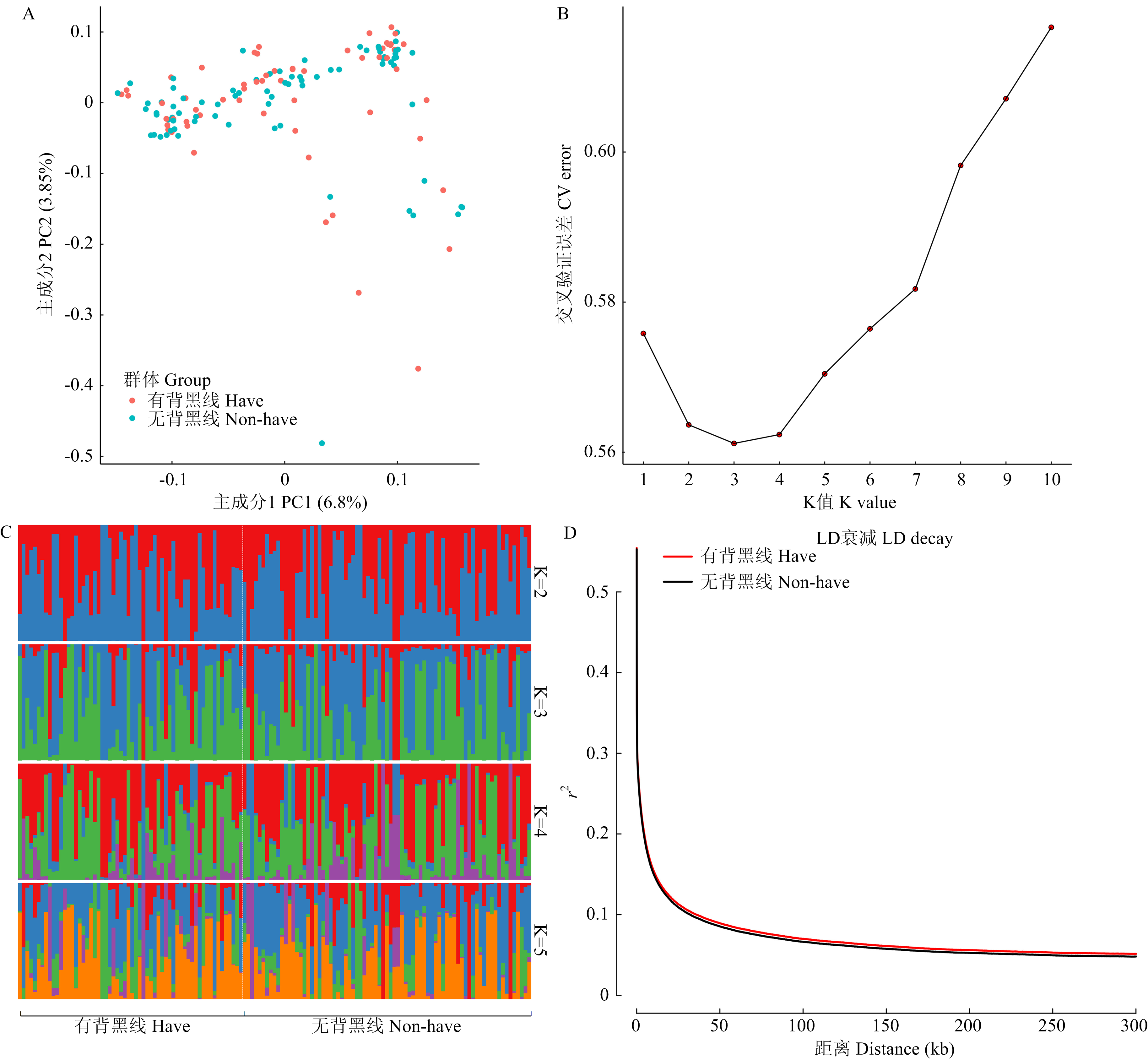
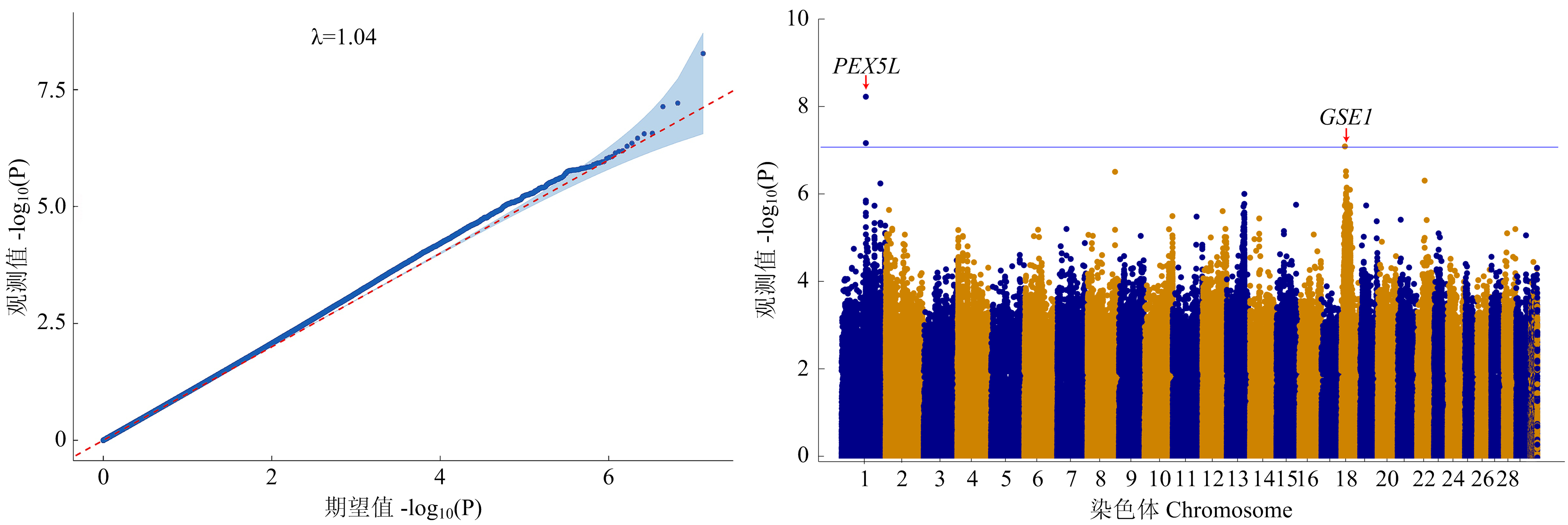
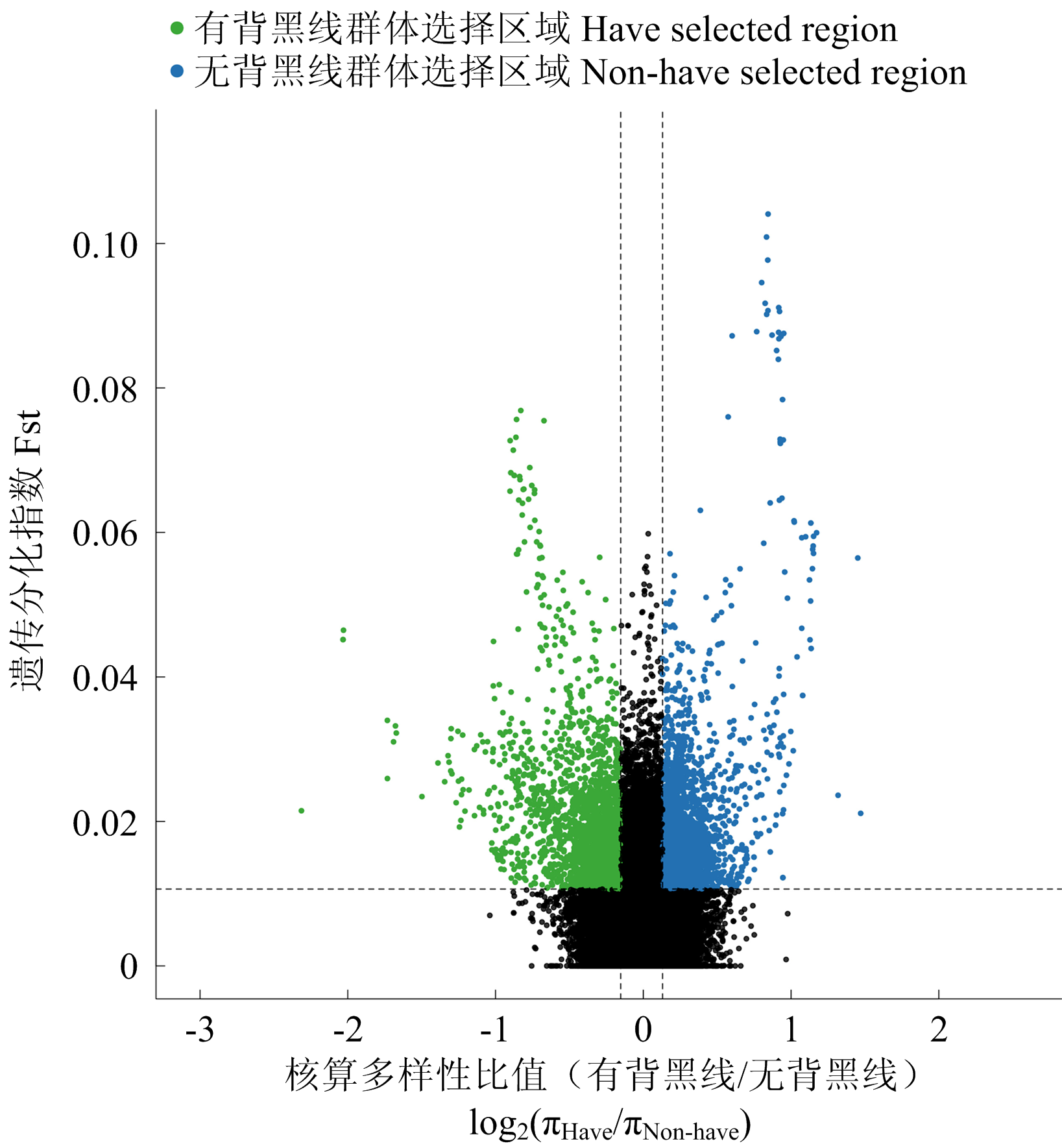
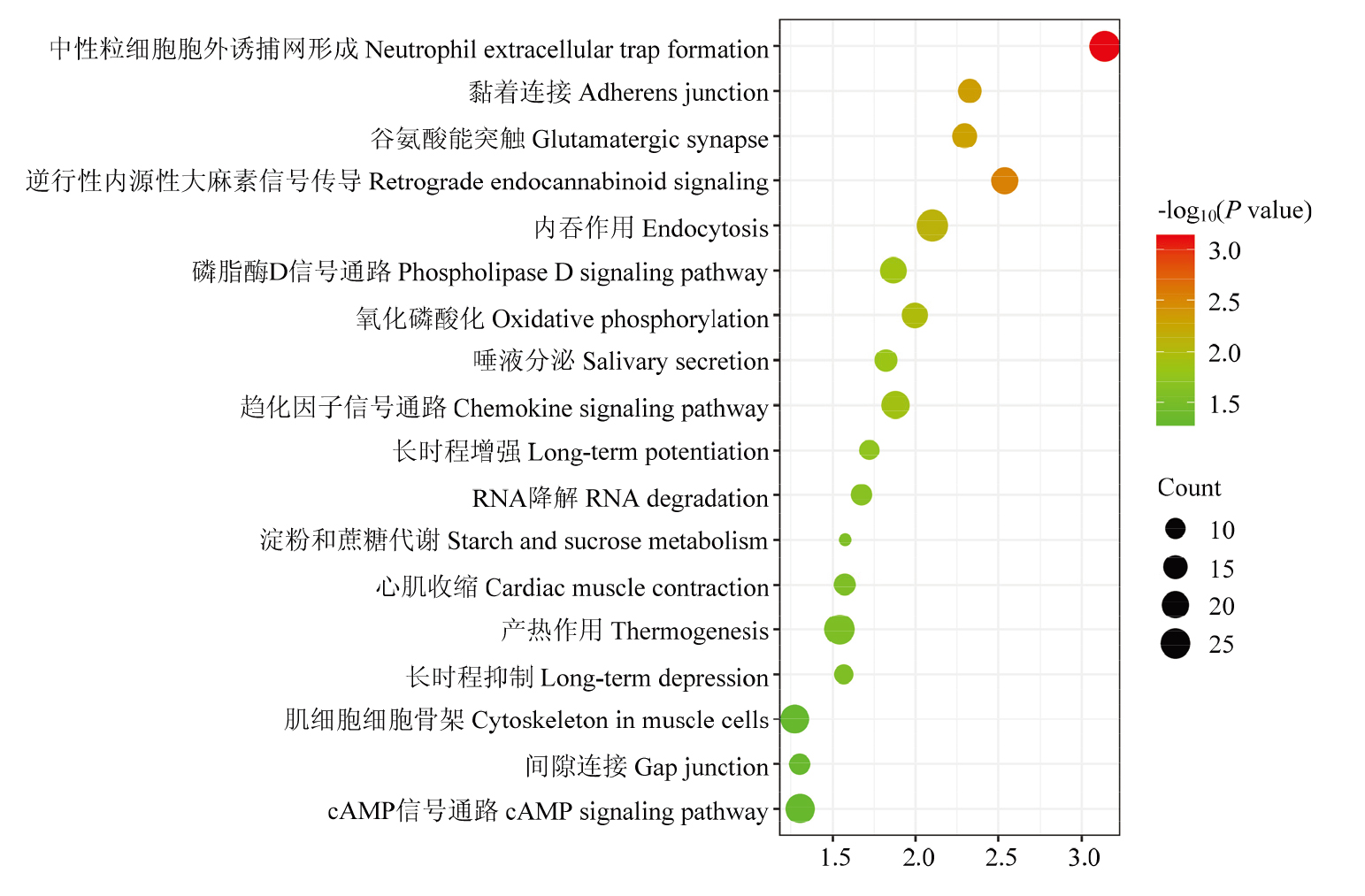
【Objective】The dorsal black stripe trait is widespread among mammals and holds significant importance for breed identification, genetic breeding, and evolutionary studies. This research aimed to reveal the genetic basis of this trait by screening molecular markers and candidate genes associated with the dorsal black stripe trait in Youzhou dark goats, thereby providing scientific support for the conservation and utilization of local genetic resources.【Method】A total of 137 healthy adult Youzhou dark goats were selected as subjects and phenotypically classified based on the presence or absence of the dorsal black stripe trait. Genomic DNA was extracted from venous blood samples and subjected to whole-genome resequencing (WGS) to generate raw sequencing data. After quality assessment, the data were aligned to the goat reference genome ARS1 (GCF_001704415.1) to obtain genome-wide single nucleotide polymorphism (SNP) markers. High-quality SNPs were retained after strict quality control using Plink software, followed by principal component analysis (PCA) and population structure analysis (Admixture) to assess genetic background, and pairwise algorithm-based linkage disequilibrium (LD) estimation. Genome-wide association study (GWAS) was performed using GEMMA to identify SNPs significantly associated with the dorsal black stripe trait (threshold = 7.57×10⁻⁷), and significant loci were annotated using Bedtools to mine nearby candidate genes. Meanwhile, genome-wide selection scans were conducted with VCFtools using a 50 kb sliding window and 10 kb step size to compute population genetic differentiation index (Fst) and nucleotide diversity ratio (π‑ratio). Regions falling within the top 5% of both metrics were defined as positively selected regions, from which candidate genes were annotated and subjected to KEGG pathway enrichment analysis. Additionally, SNPs within a key region on chromosome 18 (NC_030825.1: 12403900-17000000) were extracted and annotated using ANNOVAR to analyze variant distribution among genes in this region.【Result】Phenotypic statistics showed that among the 137 Youzhou dark goats, 60 individuals exhibited the dorsal black stripe trait, while 77 did not. WGS generated a total of 4.04 Tb of valid data, with an average efficiency rate of 99.31%, Q30 of 96.48%, and an average sequencing depth of 10.49×. After quality control, a total of 13 211 396 high-quality SNPs were retained for subsequent analysis. Population structure analysis indicated no clear genetic differentiation between goats with the have and non-have dorsal black stripe. GWAS identified three SNPs significantly associated with the dorsal black stripe trait in goats. Among these, SNP1 and SNP2 were annotated within introns of the peroxisomal biogenesis factor 5‑like gene (PEX5L), while SNP3 was located in an intron of the genetic suppressor element 1 gene (GSE1). The chi-square test showed that the genotype distributions of the three SNPs differed significantly between the groups with have and non-have dorsal black stripe (P < 0.001). Specifically, the GG genotype of SNP1 and the TT genotype of SNP2 were primarily observed in the group with have dorsal black stripe, while the CC genotype of SNP3 was mainly found in the group with non-have dorsal black stripe. Selection signature analysis detected 4 373 candidate selective sweep regions, corresponding to 1 544 candidate genes, including PEX5L and GSE1. These selected genes were significantly enriched in 18 KEGG pathways (P < 0.05), such as the cAMP signaling pathway, gap junction, and adherents junction. Further analysis of the key region on chromosome 18 demonstrated that GSE1 exhibited the highest genetic variability, with a total of 1 277 SNPs (18 in exons, 1 259 in introns), significantly exceeding the variant counts of other genes in this region.【Conclusion】Integrating WGS‑based GWAS and selection signature analyses, this study identified PEX5L and GSE1 as key candidate genes for the dorsal black stripe trait in Youzhou dark goats. The findings provide a theoretical foundation for elucidating the molecular genetic mechanisms underlying this trait in goats and would facilitate marker‑assisted selection in breeding programs as well as sustainable utilization of local genetic resources.

Key words: genome-wide association study (GWAS), Youzhou dark goat, dorsal black stripe trait, selection signature analysis, whole-genome sequencing (WGS)

Fig. 1

Phenotype of the black dorsal stripe in Youzhou black goats A: Individuals with the dorsal black stripe phenotype (Have); B: Individuals without the dorsal black stripe phenotype (Non-have)"

Table 1

Consistency statistics of WGS data quality across different phenotypic groups"

分组
Grouping
比对率 Mapped (%) 覆盖度 Coverage (%)
平均值
Mean
标准差
Standard deviation
变异系数
CV (%)
平均值
Mean
标准差
Standard deviation
变异系数
CV (%)
有背黑线组 Have 99.90 0.501 0.502 94.70 0.0048 0.504
无背黑线组 Non-have 99.70 1.350 1.350 94.60 0.0040 0.425

Fig. 2

Density distribution and functional classification of SNPs A: Density distribution of SNPs on each chromosome; B: Functional classification of SNPs"

Fig. 3

Population genetic structure of Youzhou dark goats A: PCA of populations; B: CV error values at different values of K; C: The genetic structure of populations; D: Linkage disequilibrium (LD) decay plot"

Fig. 4

Q-Q plots (left) and Manhattan plots (right) for genome-wide association analysis of black dorsal stripe traits"

Table 2

The candidate SNPs associated with black dorsal stripe traits significantly"

染色体
Chromosome
SNP编号
SNP No.
物理位置
Position
P值
P value
基因型
Genotype
相对基因位置
Location relative to gene
基因注释
Gene symbol
NCBI基因ID号
Entrez gene ID
基因区间
Gene range
1 SNP1 86740693 5.31×10⁻⁹ G/A 内含子 Intron PEX5L 102187896 86709401:8699066
SNP2 86740750 6.11×10⁻⁸ T/C 内含子 Intron PEX5L 102187896 86709401:8699066
18 SNP3 12798677 7.28×10⁻⁸ C/A 内含子 Intron GSE1 102183352 12653900:13048675

Table 3

Genotype frequencies, allele frequencies, and chi-square test results of significant SNP loci"

SNP编号
SNP No.
性状
Trait
基因型频率
Genotype frequency
等位基因频率
Allele frequency
P
P value
卡方值
χ2
SNP1 有背黑线
Have
GG(38)
0.63
GA(20)
0.33
AA(2)
0.03
G
0.80
A
0.20
P<0.001 30.90
无背黑线
Non-have
GG(16)
0.21
GA(34)
0.45
AA(25)
0.33
G
0.44
A
0.56
SNP2 有背黑线
Have
TT(38)
0.64
TC(18)
0.31
CC(3)
0.05
T
0.80
C
0.20
P<0.001 27.31
无背黑线
Non-have
TT(18)
0.24
TC(31)
0.41
CC(26)
0.35
T
0.45
C
0.55
SNP3 有背黑线
Have
CC(23)
0.39
CA(29)
0.49
AA(7)
0.12
C
0.64
A
0.36
P<0.001 27.30
无背黑线
Non-have
CC(63)
0.82
CA(13)
0.17
AA(1)
0.01
C
0.90
A
0.10

Table 4

Missense mutations in the GSE1"

编号
No.
物理位置
Position
基因型
Genotype
基因
Gene
外显子
Exon
碱基突变
Nucleotide mutation
氨基酸突变
Amino acid mutation
Have MAF Non-have MAF P值
P value
1 12654282 C/T GSE1 exon1 c.C380T p.A127V 0.2119 0.2303 4.84×10⁻¹
2 13033621 G/A GSE1 exon9 c.G3901A p.G1301S 0.0848 0.1104 6.39×10⁻¹
3 13033781 C/A GSE1 exon9 c.C4061A p.P1354Q 0.3250 0.1558 2.28×10⁻³
4 13036369 C/A GSE1 exon10 c.C4458A p.F1486L 0.0424 0.0844 2.31×10⁻¹
5 13040017 C/T GSE1 exon14 c.C5225T p.T1742M 0.175 0.2078 4.52×10⁻¹

Fig. 5

Intersection of Fst and π signals"

Fig. 6

KEGG pathway analysis of selected genes"

Table 5

Distribution of SNP variants across genes within the candidate region on chromosome 18 in goats"

基因
Gene
总SNP数
Total number
of SNPs
外显子SNP数 Exon SNP
number
内含子SNP数
Intron SNP
number
基因
Gene
总SNP数
Total number
of SNPs
外显子SNP数 Exon SNP
number
内含子SNP数 Intron SNP number
GSE1 1277 18 1259 GAS8 44 2 42
TOX3 433 6 427 MAP1LC3B 44 0 44
CBFA2T3 289 6 283 SLC7A5 36 0 36
JPH3 269 4 265 ZNF276 34 0 34
ANKRD11 268 12 256 DPEP1 31 2 29
KIAA0513 248 6 242 GALNS 30 2 28
CRISPLD2 238 3 235 C18H16orf95 29 0 29
BANP 210 3 207 EMC8 28 1 27
PIEZO1 198 16 182 CDK10 25 1 24
ZFPM1 153 6 147 RNF166 25 0 25
ZCCHC14 149 4 145 FAM92B 23 2 21
GINS2 148 0 148 DEF8 19 1 18
KLHDC4 137 4 133 CPNE7 19 0 19
C18H16orf74 137 3 134 VPS9D1 14 2 12
FBXO31 129 3 126 SNAI3 13 1 12
ZC3H18 124 4 120 SLC22A31 11 4 7
ZNF469 117 26 91 TRAPPC2L 10 1 9
SPG7 106 4 102 DBNDD1 10 0 10
CA5A 106 3 103 FOXF1 10 0 10
ACSF3 85 2 83 MVD 9 1 8
ZDHHC7 81 1 80 RPL13 9 0 9
FANCA 80 7 73 CDT1 8 3 5
SPIRE2 74 1 73 IL17C 8 3 5
IRF8 64 4 60 CHMP1A 7 0 7
CTU2 56 3 53 APRT 4 2 2
TCF25 53 0 53 SPATA2L 4 0 4
CDH15 48 5 43 FOXL1 3 3 0
MTHFSD 48 1 47 PABPN1L 3 1 2
[1]
Negro J J, Doña J, Blázquez M C, Rodríguez A, Herbert-Read J E, Brooke M D L. Contrasting stripes are a widespread feature of group living in birds, mammals and fishes[J]. Proceedings of the Royal Society B: Biological Sciences, 2020, 287(1936): 20202021.
[2]
Stevens M, Merilaita S. Defining disruptive coloration and distinguishing its functions[J]. Philosophical Transactions of the Royal Society of London Series B, Biological Sciences, 2009, 364(1516): 481-488.
[3]
Caro T. The colours of extant mammals[J]. Seminars in Cell & Developmental Biology, 2013, 24(6/7): 542-552.
[4]
Dubovskiy I M, Whitten M M A, Kryukov V Y, Yaroslavtseva O N, Grizanova E V, Greig C, Mukherjee K, Vilcinskas A, Mitkovets P V, Glupov V V, Butt T M. More than a colour change: Insect melanism, disease resistance and fecundity[J]. Proceedings of the Royal Society B: Biological Sciences, 2013, 280(1763): 20130584.
[5]
Roulin A, Dauwe T, Blust R, Eens M, Beaud M. A link between eumelanism and calcium physiology in the barn owl[J]. Naturwissenschaften, 2006, 93(9): 426-430.
[6]
Gluckman T L, Mundy N I. Evolutionary pathways to convergence in plumage patterns[J]. BMC Evolutionary Biology, 2016, 16(1): 172.
[7]
Linnen C R, Kingsley E P, Jensen J D, Hoekstra H E. On the origin and spread of an adaptive allele in deer mice[J]. Science, 2009, 325(5944): 1095-1098.
[8]
Mallarino R, Henegar C, Mirasierra M, Manceau M, Schradin C, Vallejo M, Beronja S, Barsh G S, Hoekstra H E. Developmental mechanisms of stripe patterns in rodents[J]. Nature, 2016, 539(7630): 518-523.
[9]
Xu X, Dong G X, Hu X S, Miao L, Zhang X L, Zhang D L, Yang H D, Zhang T Y, Zou Z T, Zhang T T, Zhuang Y, Bhak J, Cho Y S, Dai W T, Jiang T J, Xie C, Li R Q, Luo S J. The genetic basis of white tigers[J]. Current Biology, 2013, 23(11): 1031-1035.

doi: 10.1016/j.cub.2013.04.054 pmid: 23707431
[10]
Xu X, Dong G X, Schmidt-Küntzel A, Zhang X L, Zhuang Y, Fang R, Sun X, Hu X S, Zhang T Y, Yang H D, Zhang D L, Marker L, Jiang Z F, Li R Q, Luo S J. The genetics of tiger pelage color variations[J]. Cell Research, 2017, 27(7): 954-957.

doi: 10.1038/cr.2017.32 pmid: 28281538
[11]
Abitbol M, Dargar T, Gache V. Golden cats: A never-ending story![J]. Animal Genetics, 2022, 53(5): 715-718.
[12]
Sun X Y, Jiang J, Wang G F, Zhou P, Li J, Chen C C, Liu L J, Li N F, Xia Y Y, Ren H X. Genome-wide association analysis of nine reproduction and morphological traits in three goat breeds from Southern China[J]. Animal Bioscience, 2023, 36(2): 191-199.
[13]
Sun X Y, Niu Q H, Jiang J, Wang G F, Zhou P, Li J, Chen C C, Liu L J, Xu L Y, Ren H X. Identifying candidate genes for litter size and three morphological traits in Youzhou dark goats based on genome-wide SNP markers[J]. Genes, 2023, 14(6): 1183.
[14]
高广亮, 张克山, 赵献芝, 许国洋, 谢友慧, 周莉, 张昌莲, 王启贵. 全基因组关联分析筛选鹅蛋品质相关分子标记[J]. 中国农业科学, 2023, 56(19): 3894-3904. DOI: 10.3864/j.issn.0578-1752.2023.19.015.
Gao G L, Zhang K S, Zhao X Z, Xu G Y, Xie Y H, Zhou L, Zhang C L, Wang Q G. Identification of molecular markers associated with goose egg quality through genome-wide association analysis[J]. Scientia Agricultura Sinica, 2023, 56(19): 3894-3904. DOI: 10.3864/j.issn.0578-1752.2023.19.015. (in Chinese)
[15]
Gaudel C, Soysouvanh F, Leclerc J, Bille K, Husser C, Montcriol F, Bertolotto C, Ballotti R. Regulation of melanogenesis by the amino acid transporter SLC7A5[J]. Journal of Investigative Dermatology, 2020, 140(11): 2253-2259.e4.

doi: 10.1016/j.jid.2020.03.941 pmid: 32240722
[16]
Mattei F, Schiavoni G, Sestili P, Spadaro F, Fragale A, Sistigu A, Lucarini V, Spada M, Sanchez M, Scala S, Battistini A, Belardelli F, Gabriele L. IRF-8 controls melanoma progression by regulating the cross talk between cancer and immune cells within the tumor microenvironment[J]. Neoplasia, 2012, 14(12): 1223-IN43.
[17]
Cornetti L, Tschirren B. Combining genome-wide association study and FST-based approaches to identify targets of Borrelia-mediated selection in natural rodent hosts[J]. Molecular Ecology, 2020, 29(7): 1386-1397.

doi: 10.1111/mec.15410 pmid: 32163646
[18]
胡帅帅. 去泛素化酶USP13调控獭兔黑色素生成的作用机制研究[D]. 扬州: 扬州大学, 2022.
Hu S S. The mechanism of effect on deubiquitinase USP13 regulates melanogenesis in rex rabbits[D]. Yangzhou: Yangzhou University, 2022. (in Chinese)
[19]
Hu S S, Bai S C, Dai Y Y, Yang N S, Li J L, Zhang X Y, Wang F, Zhao B H, Bao G L, Chen Y, Wu X S. Deubiquitination of MITF-M regulates melanocytes proliferation and apoptosis[J]. Frontiers in Molecular Biosciences, 2021, 8: 692724.
[20]
Meng Z Y, Yang Y Q, Li S P, Huang L G, Yao Z J, Chen Y X, Wang J K, Shen Y R, Liang P P, Zhang H, Wang W B, Wang F S. GSE1 promotes the proliferation and migration of lung adenocarcinoma cells by downregulating KLF6 expression[J]. Cell Biology International, 2024, 48(10): 1490-1506.
[21]
Ding K S, Tan S, Huang X, Wang X N, Li X C, Fan R, Zhu Y, Lobie P E, Wang W B, Wu Z S. GSE1 predicts poor survival outcome in gastric cancer patients by SLC7A5 enhancement of tumor growth and metastasis[J]. Journal of Biological Chemistry, 2018, 293(11): 3949-3964.

doi: 10.1074/jbc.RA117.001103 pmid: 29367342
[22]
Li Y Y, Zheng Q M, Zhang N, Zhang M. The Krüppel-like factor 6 represses proliferation and invasion of cutaneous malignant melanoma[J]. Polish Journal of Pathology, 2023, 74(3): 194-202.
[23]
Zhang D W, Li Z J, Zhang Y F, Tu C, Huo J, Liu Y. miR-4262 promotes the proliferation of human cutaneous malignant melanoma cells through KLF6-mediated EGFR inactivation and p21 upregulation[J]. Oncology Reports, 2016, 36(6): 3657-3663.

doi: 10.3892/or.2016.5190 pmid: 27779691
[24]
Bajpai V K, Swigut T, Mohammed J, Naqvi S, Arreola M, Tycko J, Kim T C, Pritchard J K, Bassik M C, Wysocka J. A genome-wide genetic screen uncovers determinants of human pigmentation[J]. Science, 2023, 381(6658): eade6289.
[25]
Yan R H, Li Y N, Müller J, Zhang Y Y, Singer S, Xia L, Zhong X Y, Gertsch J, Altmann K H, Zhou Q. Mechanism of substrate transport and inhibition of the human LAT1-4F2hc amino acid transporter[J]. Cell Discovery, 2021, 7: 16.

doi: 10.1038/s41421-021-00247-4 pmid: 33758168
[26]
Li J, Chen Y F, Yang Y, Yang Y, Wu Z L. High-level L-Gln compromises intestinal amino acid utilization efficiency and inhibits protein synthesis by GCN2/eIF2α/ATF4 signaling pathway in piglets fed low-crude protein diets[J]. Animal Nutrition, 2024, 19: 480-487.

doi: 10.1016/j.aninu.2024.06.008 pmid: 39659992
[27]
Atul Jani R, Nag S, Setty S R G. Visualization of intracellular tyrosinase activity in vitro[J]. Bio-protocol, 2016, 6(8): e1794.
[28]
Snyman M, Walsdorf R E, Wix S N, Gill J G. The metabolism of melanin synthesis: From melanocytes to melanoma[J]. Pigment Cell & Melanoma Research, 2024, 37(4): 438-452.
[29]
Rosario F J, Barentsen K, Powell T L, Urschitz J, Brown T L, Kanai Y, Jansson T. Trophoblast-specific overexpression of the LAT1 increases transplacental transport of essential amino acids and fetal growth in mice[J]. PNAS Nexus, 2024, 3(6): pgae207.
[30]
Shakeri F, Mohamadynejad P, Moghanibashi M. Identification of autophagy and angiogenesis modulators in colorectal cancer based on bioinformatics analysis[J]. Nucleosides, Nucleotides & Nucleic Acids, 2024, 43(4): 340-355.
[31]
Selçuk S E, Ozmen O, Keskin B, Çolak R. Transcriptome profiles of the skin associated with the color of the black and white coat of Angora goats[J]. Comparative Biochemistry and Physiology Part D: Genomics and Proteomics, 2024, 52: 101325.
[32]
Panigrahi M, Rajawat D, Nayak S S, Ghildiyal K, Sharma A, Jain K, Lei C Z, Bhushan B, Mishra B P, Dutt T. Landmarks in the history of selective sweeps[J]. Animal Genetics, 2023, 54(6): 667-688.
[33]
Zhang W T, Jin M L, Li T T, Lu Z K, Wang H H, Yuan Z H, Wei C H. Whole-genome resequencing reveals selection signal related to sheep wool fineness[J]. Animals, 2023, 13(18): 2944.
[34]
Utsunomiya Y T, Pérez O’Brien A M, Sonstegard T S, van Tassell C P, do Carmo A S, Mészáros G, Sölkner J, Garcia J F. Detecting loci under recent positive selection in dairy and beef cattle by combining different genome-wide scan methods[J]. PLoS ONE, 2013, 8(5): e64280.
[35]
Huangfu R Y, Li H B, Luo Y, He F, Huan C, Ahmed Z, Zhang B Z, Lei C Z, Yi K L. Illuminating genetic diversity and selection signatures in Matou goats through whole-genome sequencing analysis[J]. Genes, 2024, 15(7): 909.
[1] REN MinPeng, ZHANG XiFei, GE HuaLiang, GENG LiYing, LI XiangLong, YU BaoJun, WANG KunYang, ZHANG ChuanSheng. Identification of Candidate Genes Associated with Black-Tailed and White-Tailed Plumage Traits in B380 Chickens Based on Multi- Omics Analysis [J]. Scientia Agricultura Sinica, 2026, 59(16): 3673-3686.
[2] LI Ming, CHENG YuKun, BAI Bin, LEI Bin, GENG HongWei. Genome-Wide Association Study on Spike Architecture Traits and Elite Haplotype Mining in Winter Wheat [J]. Scientia Agricultura Sinica, 2025, 58(18): 3583-3597.
[3] ZHAO ZhenJian, WANG Kai, CHEN Dong, SHEN Qi, YU Yang, CUI ShengDi, WANG JunGe, CHEN ZiYang, YU ShiXin, CHEN JiaMiao, WANG XiangFeng, TANG GuoQing. Integrated Aanalysis of Genome and DNA Methylation for Screening Key Genes Related to Pork Quality Traits [J]. Scientia Agricultura Sinica, 2024, 57(7): 1394-1406.
[4] SHOU XinYue, LIU Zhi, CHEN YueHan, LI ChenHui, SUN BinCheng, SUN RuJian, HAN DeZhi, LU WenCheng, SHEN YongHui, WANG XiaoBo, YAN Long. Genome-Wide Association Analysis of Soybean Nodulation-Related Traits in the Northern Hebei [J]. Scientia Agricultura Sinica, 2024, 57(11): 2102-2113.
Viewed
Full text


Abstract

Cited

  Shared   
  Discussed   
No Suggested Reading articles found!