Scientia Agricultura Sinica ›› 2026, Vol. 59 ›› Issue (10): 2075-2087.doi: 10.3864/j.issn.0578-1752.2026.10.002

• CROP GENETICS & BREEDING·GERMPLASM RESOURCES·MOLECULAR GENETICS • Previous Articles     Next Articles

QTL Mapping and Genomic Selection of Stay-Green in Soybean (Glycine max L.)

LIU ZhiYu1,2(), CHEN YiJie1,2, YU Huan1,2, SHEN MaoTing2, QIU LiJuan4(), WANG Jun2,3()   

  1. 1 College of Agriculture, Yangtze University, Jingzhou 434025, Hubei
    2 The Shennong Laboratory, Zhengzhou 450002
    3 Institute of Crop Molecular Breeding, Henan Academy of Agricultural Sciences, Zhengzhou 450002
    4 Institute of Crop Sciences, Chinese Academy of Agricultural Sciences/National Key Facility for Crop Gene Resources and Genetic Improvement (NFCRI)/Key Laboratory of Crop Gene Resource and Germplasm Enhancement, Ministry of Agriculture and Rural Affairs, Beijing 100081
  • Received:2025-10-15 Accepted:2025-12-02 Online:2026-05-16 Published:2026-05-20
  • Contact: QIU LiJuan, WANG Jun

Abstract:

【Objective】The “stay-green” trait can prolong the effective photosynthesis duration in soybeans and increase dry matter accumulation, thereby holding significant potential for improving yield. Mining stay-green related QTL and elucidating their molecular mechanisms can provide a theoretical basis and technical support for enhancing soybean yield.【Method】A soybean nested association mapping population was evaluated for stay-green traits across multiple environments. Genome-wide association study was conducted using genotyping data. Candidate genes were screened via SNP variation, tissue-specific expression, and functional annotation analyses, haplotype, promoter cis-acting elements, and protein structure prediction analyses were performed to characterize the candidate genes. Additionally, the application effect of genomic selection for the stay-green trait was evaluated.【Result】Six significant QTL intervals were co-localized on chromosomes 3, 4, 5, and 16. Among these, qSG5-1 (Chr.5: 41600128..42273303, 613.18 kb) was repeatedly mapped across multiple environments and represents a novel QTL for stay-green regulation in soybean. Linkage disequilibrium analysis allocated two significantly associated regions within qSG5-1: qSG5-1.1 (Chr.5: 41798499..41996276, 197.78 kb) and qSG5-1.2 (Chr.5: 41996989..42273303, 276.32 kb), containing 29 and 37 genes, respectively. SNP variation analysis identified 53 genes containing variants that cause nonsynonymous mutations, alternative splicing, stopgain, or stoploss. Of these, eight genes were transcriptionally active in stems and leaves. Functional annotation suggested that Glyma.05G245200 and Glyma.05G247900 were involved in protein folding and oxidative metabolism, respectively, which highlights they might regulate cell cycle, growth metabolism, and nutrient remobilization during senescence. Besides, two major haplotypes of these genes exhibited highly significant phenotypic differences as Glyma.05G245200 harbored nonsynonymous mutations which changed C617T into A206V and C44T into P15L, and caused subtle alterations in its protein structure. Likewise, Glyma.05G247900 also contained a nonsynonymous mutation which changed A275G into D92G that did not alter its protein conformation. Analysis of cis-acting elements revealed that the presence of light and abscisic acid (ABA)-responsive elements in their promoters hints they might regulate soybean growth, senescence, and the stay-green trait by participating in light and hormonal signaling. These genes may serve as candidate genes for soybean stay-green and the prediction accuracy of genome-wide selection for stay-green across different marker sets ranged from 0.27 to 0.36.【Conclusion】This study identified a novel QTL, qSG5-1, and two candidate genes, Glyma.05G245200 and Glyma.05G247900, associated with the stay-green trait in soybean.

Key words: soybean, stay-green, QTL mapping, candidate genes, genomic selection

Table 1

Statistical analysis of stay-green phenotypes for the NAM population across two environments"

群体编号
Cohort number
持绿样本数量
The number
of stay-green samples
非持绿样本数量
The number of
no stay-green samples
持绿样本所占比例
The proportion of stay-green samples (%)
N004 53 36 59.55
N005 20 78 20.41
N006 17 50 25.37
N008 17 68 20.00
N009 18 36 33.33
N010 74 23 76.29
N011 25 41 37.88
N012 15 58 20.55
N015 16 33 32.65
N017 59 37 61.46
N018 9 69 11.54
N019 25 57 30.49
N020 7 82 7.87
N021 14 74 15.91
N022 42 51 45.16
N023 16 51 23.88
N024 7 62 10.14
N025 15 65 18.75
N026 37 48 43.53
N027 71 20 78.02
N028 21 51 29.17
N029 3 43 6.52
N030 16 18 47.06
N031 4 54 6.90
N032 25 17 59.52
N033 8 70 10.26
N034 18 55 24.66

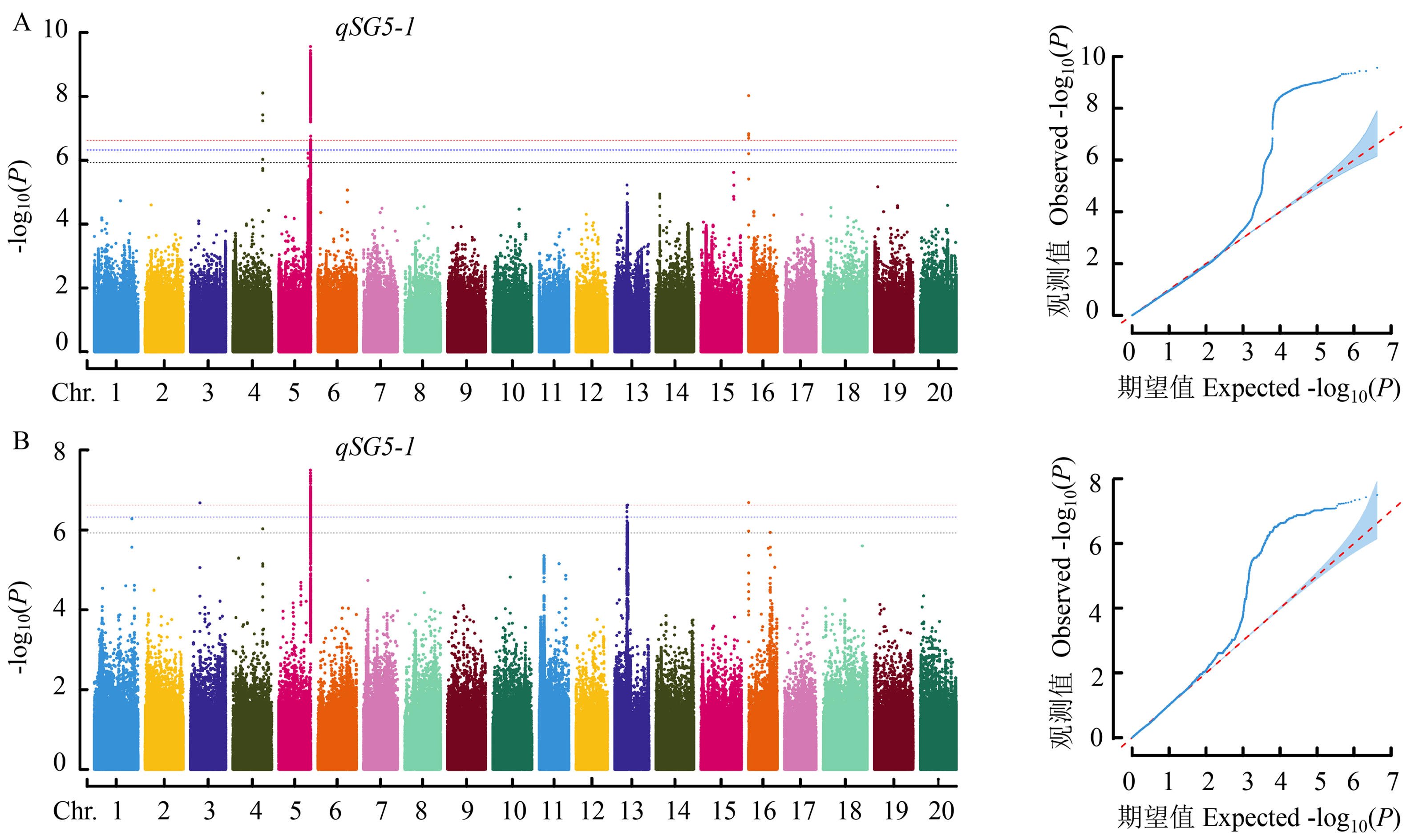
Fig. 1

Manhattan and Q-Q plots showing the genome-wide association results for stay-green using the EMMAX A: 23XX EMMAX Manhattan Q-Q plots; B: 24JN EMMAX Manhattan and Q-Q plots"

Table 2

QTL mapping results for stable expression of stay-green in soybean"

QTL名称
QTL name
环境
Environment
染色体
Chromosome
起始/bp
Start/bp
终止/bp
End/bp
基因数量
Gene number
qSG5-1 23XX 5 41600128 42273303 90
qSG5-1 24JN 5 41605515 42273303 88

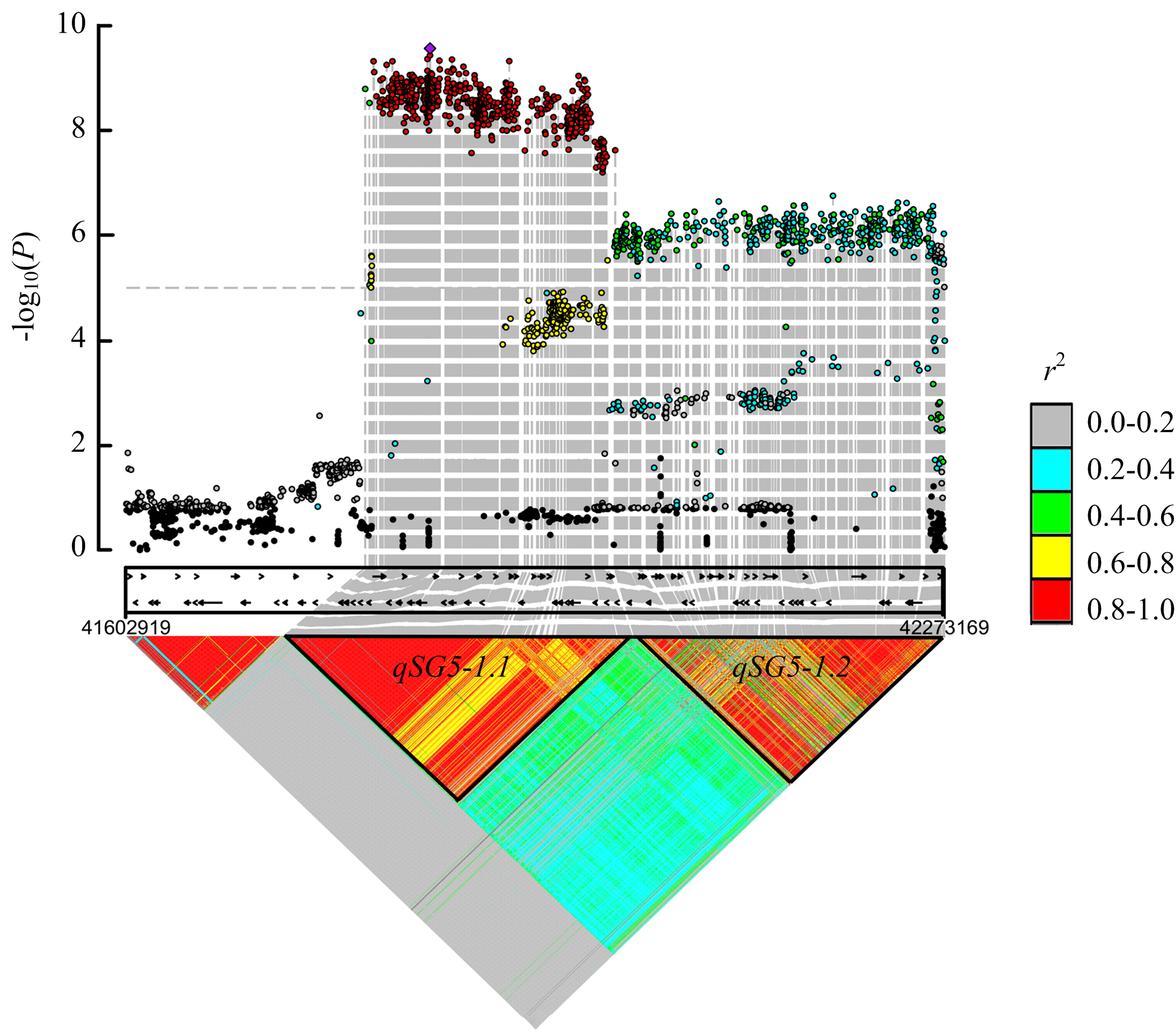
Fig. 2

Integrated map of association and linkage disequilibrium of qSG5-1"

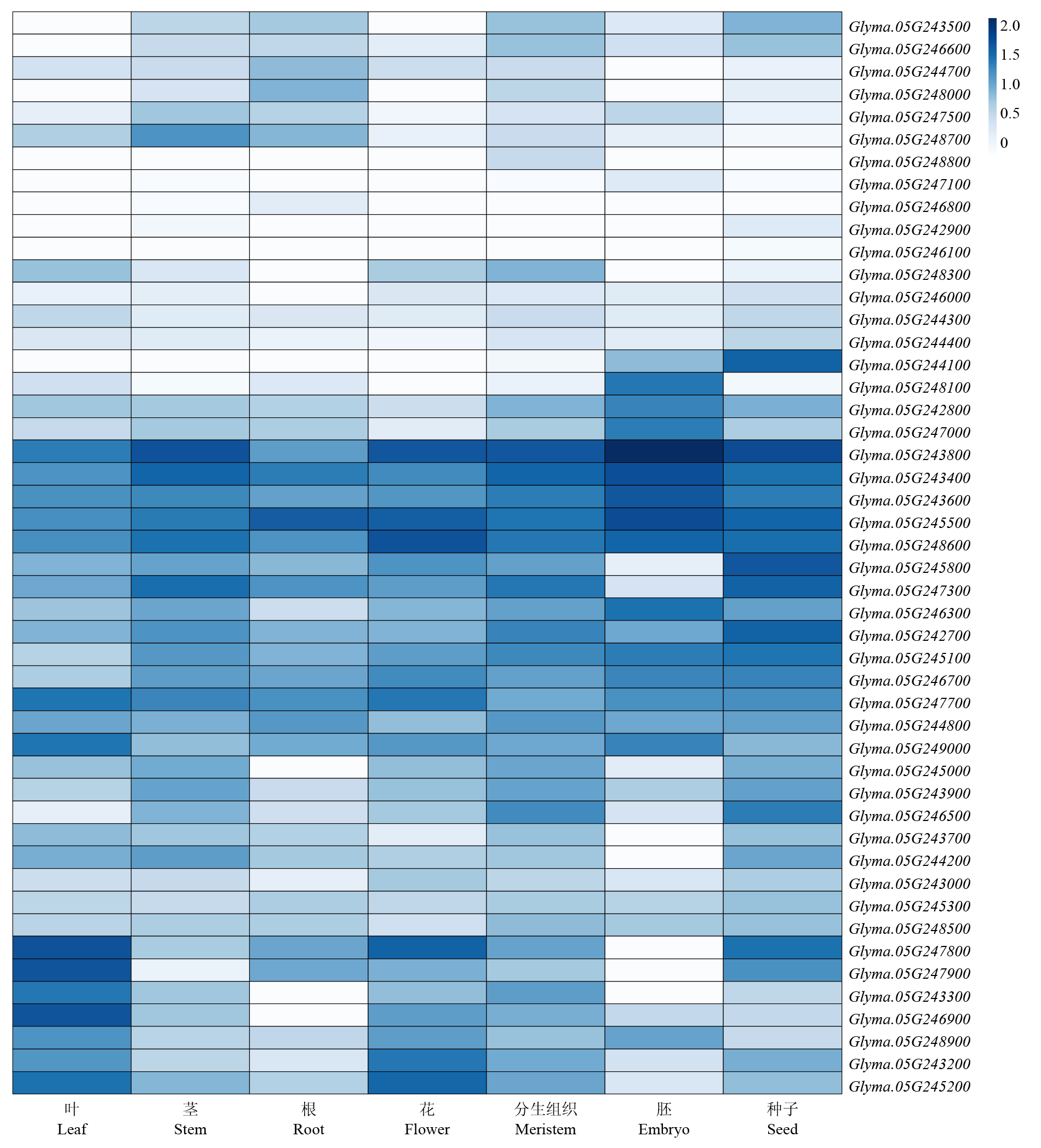
Fig. 3

Specific expression patterns of soybean stay-green-associated candidate genes"

Table 3

Homologues genes and functional annotation of eight stay-green-related candidate genes"

基因
Gene
同源拟南芥基因
Homologues in Arabidopsis
功能注释
Functional annotation
Glyma.05G244200 AT3G18050 糖基磷脂酰肌醇锚定蛋白 GPI-anchored protein
Glyma.05G245200 AT1G18170 FKBP肽基脯氨酰基顺反异构酶家族蛋白FKBP-like peptidyl-prolyl cis-trans isomerase family protein
Glyma.05G246900 AT3G17930 细胞色素b6f复合体积累的类囊体膜蛋白
Encodes a thylakoid membrane protein involved in the accumulation of the cytochrome b6f complex
Glyma.05G247500 AT3G02850 外向整流型钾离子通道 STELAR K+ outward rectifier
Glyma.05G247700 AT1G48450 未知功能蛋白 Protein of unknown function
Glyma.05G247900 AT3G17790 紫色酸性磷酸酶17蛋白 Purple acid phosphatase 17 protein
Glyma.05G248700 AT5G42710 未知功能蛋白 Protein of unknown function
Glyma.05G249000 AT3G17670 四肽重复(TPR)结构域蛋白 Tetratricopeptide repeat (TPR)-containing protein

Table 4

Haplotypes and frequency distribution of candidate genes"

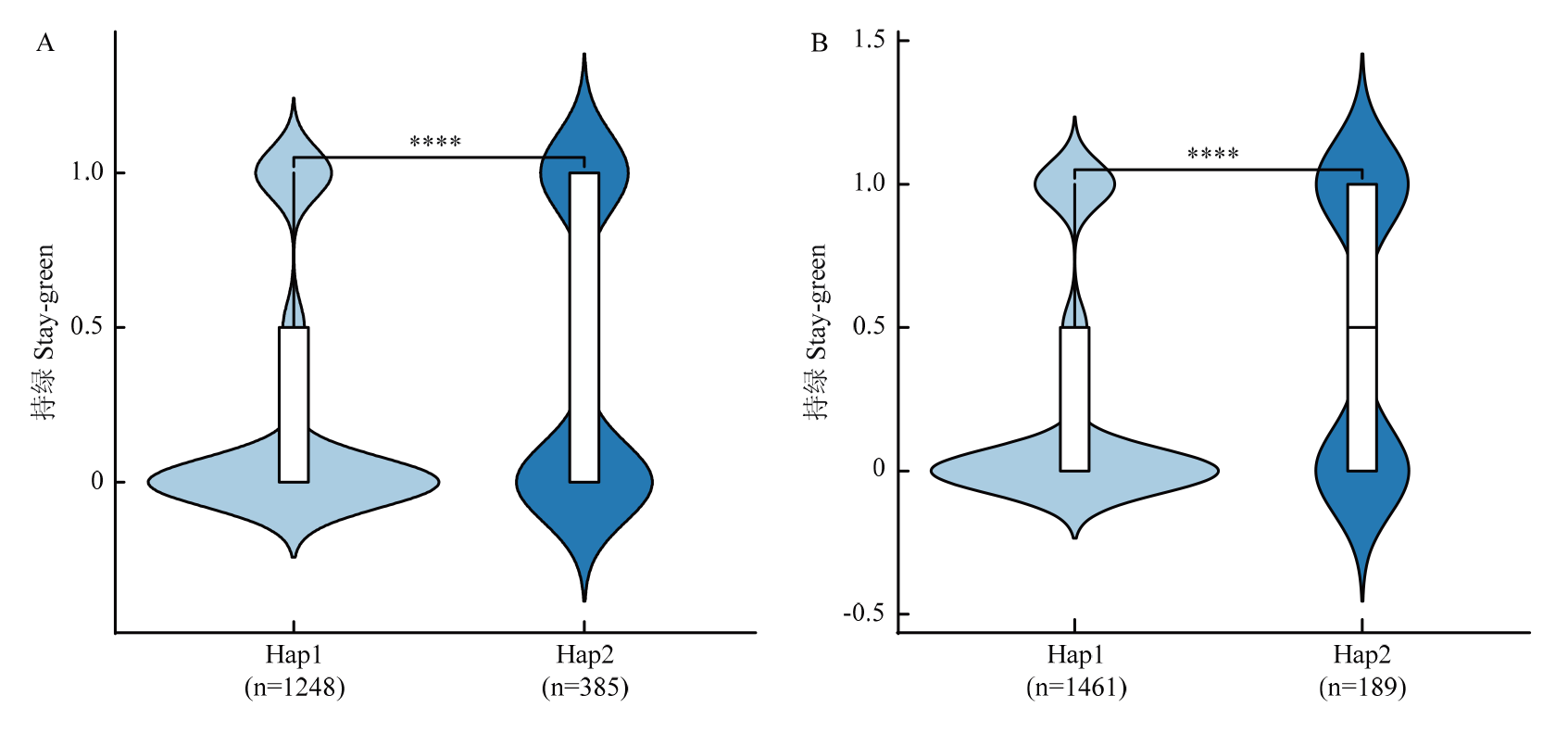
基因 Gene 单倍型 Haplotype 基因型 Genotype 频数 Frequency
Glyma.05G245200 Hap1
Hap2
Hap3
Hap4
Hap5
CGTGGGTG
TACCAACA
TACCAACG
TACCAGTA
CGTGAACA
1248
385
3
2
1
Glyma.05G247900 Hap1
Hap2
TA
CG
1461
189

Fig. 4

Comparison of stay-green phenotypes among different haplotypes of a candidate gene A:Glyma.05G245200;B:Glyma.05G247900。****:P<0.0001"

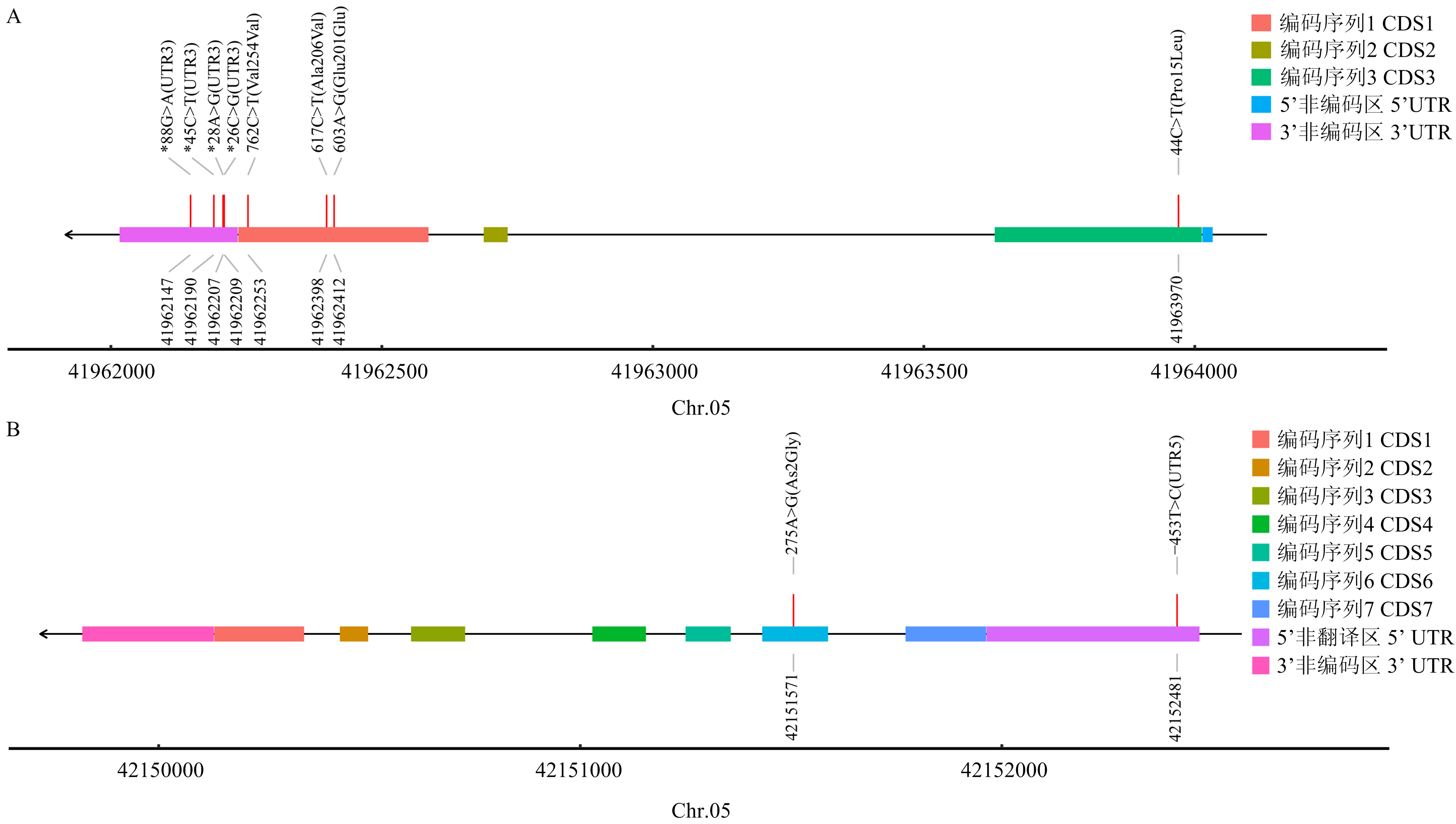
Fig. 5

Analysis of mutation types and sites in candidate genes A:Glyma.05G245200;B:Glyma.05G247900"

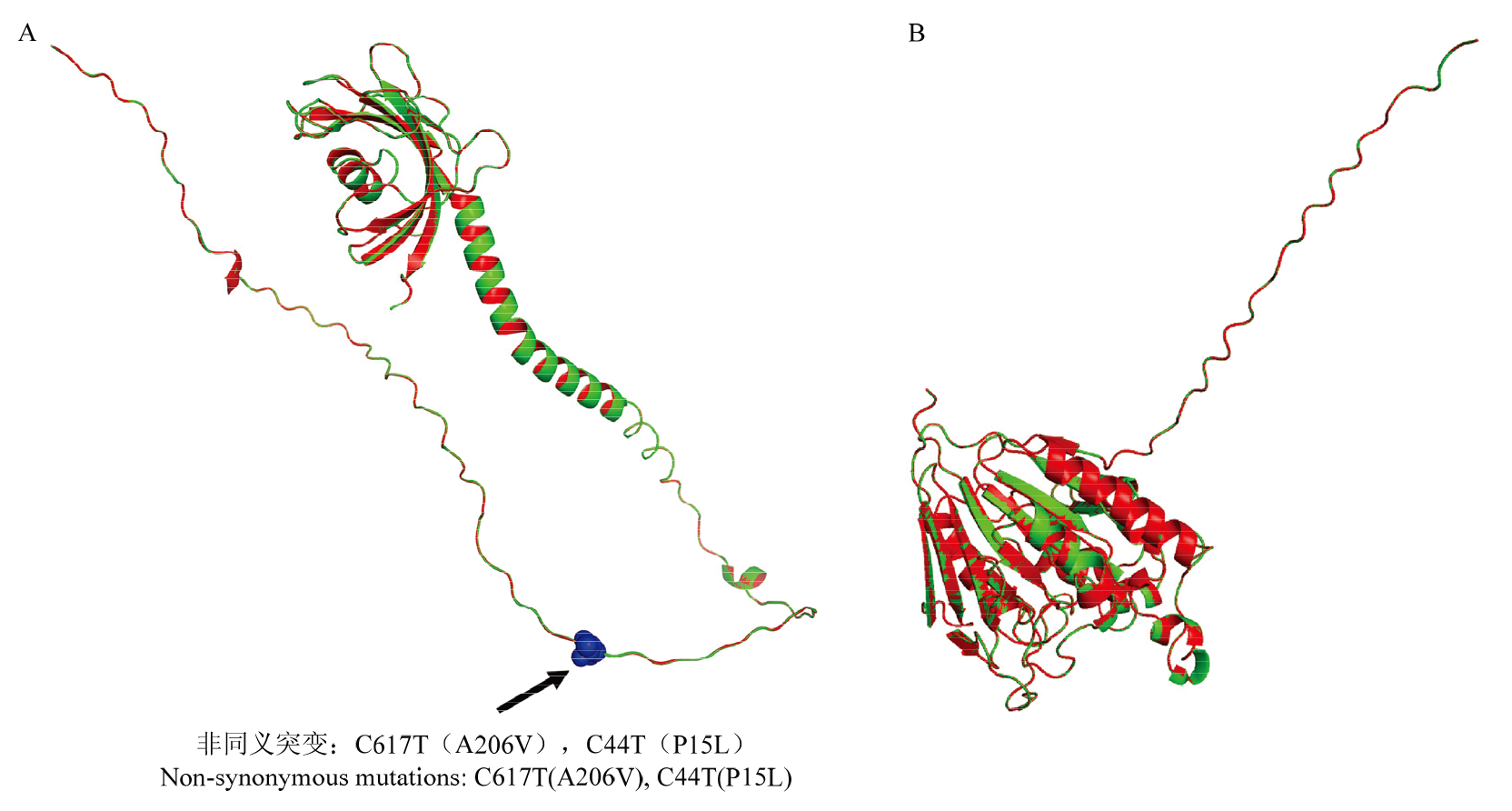
Fig. 6

Comparison of tertiary structure predictions between wild-type and mutant proteins A: Tertiary structure diagrams of wild-type and mutant Glyma.05G245200 protein; B: Tertiary structure diagrams of wild-type and mutant Glyma.05G247900 protein. red: Wild-type; green: Mutant"

Table 5

Analysis of cis-acting elements in the core promoter region"

分类
Classification
顺式作用元件
Cis-acting elements
生物学功能
Biological function
光响应
Light response
Box 4 参与光响应的保守DNA模块 Part of a conserved DNA module involved in light responsiveness
I-box 光响应元件 Part of a light responsive element
ATCT-motif 参与光响应的保守DNA模块 Part of a conserved DNA module involved in light responsiveness
TCT-motif 光响应元件 Part of a light responsive element
胁迫响应
Stress response
MYB MYB结合位点 MYB recognition site
MYC MYC识别元件 MYC recognition element
LTR 参与低温响应的顺式作用元件 Cis-acting element involved in low-temperature responsiveness
激素响应
Hormone response
CGTCA-motif 参与MeJA反应的顺式作用调控元件 Cis-acting regulatory element involved in the MeJA-responsiveness
TGACG-motif 参与MeJA反应的顺式作用调控元件 Cis-acting regulatory element involved in the MeJA-responsiveness
ABRE 参与脱落酸反应的顺式作用元件 Cis-acting element involved in the abscisic acid responsiveness
ERE 乙烯响应元件 Ethylene responsive element

Table 6

Prediction accuracy of the soybean stay-green GS model under different marker sets"

标记集 Marker sets 23XX 24JN
T1 0.27 0.36
T2 0.35 0.31
T3 0.27 0.36
[1]
闫爽, 潘相文, 齐玉鑫, 张秋英, 井乐刚, 王飞飞. 利用大豆重组自交群体定位产量相关性状QTL. 分子植物育种, 2025: 1-17. https://link.cnki.net/urlid/46.1068.S.20250506.1101.002.
YAN S, PAN X W, QI Y X, ZHANG Q Y, JING L G, WANG F F. QTL mapping of yield-related traits by recombination self-cross population in soybean. Molecular Plant Breeding, 2025: 1-17. https://link.cnki.net/urlid/46.1068.S.20250506.1101.002. (in Chinese)
[2]
ACEBRON K, SALVATORI N, ALBERTI G, MULLER O, PERESSOTTI A, RASCHER U, MATSUBARA S. Elucidating the photosynthetic responses in chlorophyll-deficient soybean (Glycine max L.) leaf. Journal of Photochemistry and Photobiology, 2023, 13: 100152.

doi: 10.1016/j.jpap.2022.100152
[3]
AINSWORTH E A, YENDREK C R, SKONECZKA J A, LONG S P. Accelerating yield potential in soybean: Potential targets for biotechnological improvement. Plant, Cell & Environment, 2012, 35(1): 38-52.

doi: 10.1111/pce.2012.35.issue-1
[4]
孙轼絮, 逄翠晶, 黄友举, 于泳波, 路晨, 陈雪, 司玉君, 张浩, 代学焕, 于延冲. EMS化学诱变大豆叶片早衰突变体的转录组学分析. 植物生理学报, 2025, 61(3): 277-288.
SUN S X, PANG C J, HUANG Y J, YU Y B, LU C, CHEN X, SI Y J, ZHANG H, DAI X H, YU Y C. Transcriptomic analysis of EMS induced premature senescence mutants in soybean leaves. Plant Physiology Journal, 2025, 61(3): 277-288. (in Chinese)
[5]
ZHANG J, FENGLER K A, VAN HEMERT J L, GUPTA R, MONGAR N, SUN J D, ALLEN W B, WANG Y, WEERS B, MO H, et al. Identification and characterization of a novel stay-green QTL that increases yield in maize. Plant Biotechnology Journal, 2019, 17(12): 2272-2285.

doi: 10.1111/pbi.13139 pmid: 31033139
[6]
龚月桦, 林娜, 石慧清, 周春菊. 持绿型小麦冠温特性及其对低氮和高温的适应性. 西北农林科技大学学报(自然科学版), 2016, 44(9): 49-55.
GONG Y H, LIN N, SHI H Q, ZHOU C J. Canopy temperature characteristics and adaptability of stay-green wheat to low nitrogen and high temperature. Journal of Northwest A & F University (Natural Science Edition), 2016, 44(9): 49-55. (in Chinese)
[7]
TEIXEIRA R N, LIGTERINK W, DE B FRANÇA-NETO J, HILHORST H W M, DE SILVA E A A. Gene expression profiling of the green seed problem in soybean. BMC Plant Biology, 2016, 16: 37.

doi: 10.1186/s12870-016-0729-0 pmid: 26829931
[8]
HÖRTENSTEINER S. Stay-green regulates chlorophyll and chlorophyll- binding protein degradation during senescence. Trends in Plant Science, 2009, 14(3): 155-162.

doi: 10.1016/j.tplants.2009.01.002
[9]
WANG C, GAO L, LI R Z, WANG Y, LIU Y Y, ZHANG X, XIE H. High-throughput sequencing reveals the molecular mechanisms determining the stay-green characteristic in soybeans. Journal of Biosciences, 2020, 45(1): 103.

doi: 10.1007/s12038-020-00074-x
[10]
SHI S Y, MIAO H Y, DU X M, GU J T, XIAO K. GmSGR1, a stay-green gene in soybean (Glycine max L.), plays an important role in regulating early leaf-yellowing phenotype and plant productivity under nitrogen deprivation. Acta Physiologiae Plantarum, 2016, 38(4): 97.

doi: 10.1007/s11738-016-2105-y
[11]
WANG P, HOU S Y, WEN H W, WANG Q Z, LI G Q. Chlorophyll retention caused by STAY-GREEN (SGR) gene mutation enhances photosynthetic efficiency and yield in soybean hybrid Z1. Photosynthetica, 2021, 59(1): 37-48.

doi: 10.32615/ps.2020.076
[12]
LI X, BAI X, WU L J, WANG C Y, LIU X H, LI Q Q, ZHANG X J, CHEN F, LU C D, GAO W, CHENG T L. Mapping of a quantitative trait locus for stay-green trait in common wheat. Plants, 2025, 14(5): 727.

doi: 10.3390/plants14050727
[13]
CHRISTOPHER J T, CHRISTOPHER M J, BORRELL A K, FLETCHER S, CHENU K. Stay-green traits to improve wheat adaptation in well-watered and water-limited environments. Journal of Experimental Botany, 2016, 67(17): 5159-5172.

doi: 10.1093/jxb/erw276 pmid: 27443279
[14]
ZHENG H J, WU A Z, ZHENG C C, WANG Y F, CAI R, SHEN X F, XU R R, LIU P, KONG L J, DONG S T. QTL mapping of maize (Zea mays) stay-green traits and their relationship to yield. Plant Breeding, 2009, 128(1): 54-62.

doi: 10.1111/pbr.2009.128.issue-1
[15]
LIU Z, HU C H, WANG Y N, SHA Y, HAO Z H, CHEN F J, YUAN L X, MI G H. Nitrogen allocation and remobilization contributing to low-nitrogen tolerance in stay-green maize. Field Crops Research, 2021, 263: 108078.

doi: 10.1016/j.fcr.2021.108078
[16]
FU J D, YAN Y F, KIM M Y, LEE S H, LEE B W. Population-specific quantitative trait loci mapping for functional stay-green trait in rice (Oryza sativa L.). Genome, 2011, 54(3): 235-243.

doi: 10.1139/G10-113
[17]
XIE W Y, XUE X, WANG Y, ZHANG G Y, ZHAO J H, ZHANG H M, WANG G D, LI L, WANG Y Q, SHAN W F, et al. Natural mutation in stay-green (OsSGR) confers enhanced resistance to rice sheath blight through elevating cytokinin content. Plant Biotechnology Journal, 2025, 23(3): 807-823.

doi: 10.1111/pbi.14540 pmid: 39630094
[18]
KASSAHUN B, BIDINGER F R, HASH C T, KURUVINASHETTI M S. Stay-green expression in early generation sorghum [Sorghum bicolor (L.) Moench] QTL introgression lines. Euphytica, 2010, 172(3): 351-362.

doi: 10.1007/s10681-009-0108-0
[19]
庄润杰, 刘慧铭, 王诗雨, 吕婉萍, 温永仙. 基于G2PSE堆叠集成的全基因组选择方法. 中国农业科学, 2025, 58(15): 2960-2979. doi: 10.3864/j.issn.0578-1752.2025.15.003.
ZHUANG R J, LIU H M, WANG S Y, W P, WEN Y X. Genomic selection method based on G2PSE stacking ensemble. Scientia Agricultura Sinica, 2025, 58(15): 2960-2979. doi: 10.3864/j.issn.0578-1752.2025.15.003. (in Chinese)
[20]
CUI Y R, LI R D, LI G W, ZHANG F, ZHU T T, ZHANG Q F, ALI J, LI Z K, XU S Z. Hybrid breeding of rice via genomic selection. Plant Biotechnology Journal, 2020, 18(1): 57-67.

doi: 10.1111/pbi.13170 pmid: 31124256
[21]
WANG J, YANG Q C, CHEN Y J, LIU K L, ZHANG Z Q, XIONG Y J, YU H, YU Y D, WANG J, SONG J, QIU L J. QTL mapping and genomic selection of stem and branch diameter in soybean (Glycine max L.). Frontiers in Plant Science, 2024, 15: 1388365.

doi: 10.3389/fpls.2024.1388365
[22]
MANTHENA V, JARQUÍN D, VARSHNEY R K, ROORKIWAL M, DIXIT G P, BHARADWAJ C, HOWARD R. Evaluating dimensionality reduction for genomic prediction. Frontiers in Genetics, 2022, 13: 958780.

doi: 10.3389/fgene.2022.958780
[23]
宋健, 熊亚俊, 陈伊洁, 徐瑞新, 刘康林, 郭庆元, 洪慧龙, 高华伟, 谷勇哲, 张丽娟, 等. 大豆巢式关联作图(NAM)群体构建及花色和种皮色遗传分析. 作物学报, 2024, 50(3): 556-575.

doi: 10.3724/SP.J.1006.2024.34094
SONG J, XIONG Y J, CHEN Y J, XU R X, LIU K L, GUO Q Y, HONG H L, GAO H W, GU Y Z, ZHANG L J, et al. Genetic analysis of seed coat and flower color based on a soybean nested association mapping population. Acta Agronomica Sinica, 2024, 50(3): 556-575. (in Chinese)

doi: 10.3724/SP.J.1006.2024.34094
[24]
ABOUL-MAATY N A, ORABY H A. Extraction of high-quality genomic DNA from different plant orders applying a modified CTAB-based method. Bulletin of the National Research Centre, 2019, 43(1): 25.

doi: 10.1186/s42269-019-0066-1
[25]
BROWNING B L, TIAN X W, ZHOU Y, BROWNING S R. Fast two-stage phasing of large-scale sequence data. The American Journal of Human Genetics, 2021, 108(10): 1880-1890.

doi: 10.1016/j.ajhg.2021.08.005
[26]
KANG H M, SUL J H, SERVICE S K, ZAITLEN N A, KONG S Y, FREIMER N B, SABATTI C, ESKIN E. Variance component model to account for sample structure in genome-wide association studies. Nature Genetics, 2010, 42(4): 348-354.

doi: 10.1038/ng.548 pmid: 20208533
[27]
HE F Y, DING S C, WANG H W, QIN F. IntAssoPlot: An R package for integrated visualization of genome-wide association study results with gene structure and linkage disequilibrium matrix. Frontiers in Genetics, 2020, 11: 260.

doi: 10.3389/fgene.2020.00260 pmid: 32265990
[28]
JOSHI T, WANG J J, ZHANG H X, CHEN S Y, ZENG S, XU B W, XU D. The evolution of soybean knowledge base (SoyKB). Plant Genomics Databases. New York: Springer New York, 2016: 149-159.
[29]
KOLDE R, KOLDE M R. Package 'pheatmap' [Computer software]. R package version 1.0.12. 2015. https://CRAN.R-project.org/package=pheatmap.
[30]
于欢, 陈伊洁, 刘康林, 张帆. 单倍型分析软件HaploAssistant包的开发与应用. 分子植物育种, 2023: 1-11. https://link.cnki.net/urlid/46.1068.S.20231120.1141.010.
YU H, CHEN Y J, LIU K L, ZHANG F. Development and application of a haplotype analysis R package (HaploAssistant). Molecular Plant Breeding, 2023: 1-11. https://link.cnki.net/urlid/46.1068.S.20231120.1141.010. (in Chinese)
[31]
VANRADEN P M. Efficient methods to compute genomic predictions. Journal of Dairy Science, 2008, 91(11): 4414-4423.

doi: 10.3168/jds.2007-0980 pmid: 18946147
[32]
CALUS M P L, VANDENPLAS J. SNPrune: An efficient algorithm to prune large SNP array and sequence datasets based on high linkage disequilibrium. Genetics, Selection, Evolution, 2018, 50(1): 34.

doi: 10.1186/s12711-018-0404-z pmid: 29940846
[33]
ZHANG S B, AGYENIM-BOATENG K G, ZHANG S R, GU Y Z, QI J, AZAM M, MA C Y, LI Y C, FENG Y, LIU Y T, et al. QTL mapping for seed tocopherol content in soybean. Agronomy, 2023, 13(5): 1188.

doi: 10.3390/agronomy13051188
[34]
CAO Y C, JIA S H, CHEN L X, ZENG S N, ZHAO T J, KARIKARI B. Identification of major genomic regions for soybean seed weight by genome-wide association study. Molecular Breeding, 2022, 42(7): 38.

doi: 10.1007/s11032-022-01310-y
[35]
DUAN Z B, ZHANG M, ZHANG Z F, LIANG S, FAN L, YANG X, YUAN Y Q, PAN Y, ZHOU G A, LIU S L, TIAN Z X. Natural allelic variation of GmST05 controlling seed size and quality in soybean. Plant Biotechnology Journal, 2022, 20(9): 1807-1818.

doi: 10.1111/pbi.13865 pmid: 35642379
[36]
RAKSHIT R, BAHL A, ARUNIMA A, PANDEY S, TRIPATHI D. Beyond protein folding: The pleiotropic functions of PPIases in cellular processes and microbial virulence. Biochimica et Biophysica Acta, 2025, 1869(2): 130754.
[37]
LI N, WONG W S, FENG L, WANG C M, WONG K S, ZHANG N H, YANG W, JIANG Y M, JIANG L W, HE J X. The thylakoid membrane protein NTA1 is an assembly factor of the cytochrome b6f complex essential for chloroplast development in Arabidopsis. Plant Communications, 2023, 4(1): 100509.

doi: 10.1016/j.xplc.2022.100509
[38]
DRECHSLER N, ZHENG Y, BOHNER A, NOBMANN B, VON WIRÉN N, KUNZE R, RAUSCH C. Nitrate-dependent control of shoot K homeostasis by the nitrate transporter1/peptide transporter family member NPF7.3/NRT1.5 and the stelar K+ outward rectifier SKOR in Arabidopsis. Plant Physiology, 2015, 169(4): 2832-2847.
[39]
DEL POZO J C, ALLONA I, RUBIO V, LEYVA A, DE LA PEÑA A, ARAGONCILLO C, PAZ-ARES J. A type 5 acid phosphatase gene from Arabidopsis thaliana is induced by phosphate starvation and by some other types of phosphate mobilising/oxidative stress conditions. The Plant Journal, 1999, 19(5): 579-589.

doi: 10.1046/j.1365-313X.1999.00562.x
[40]
BLATCH G L, LÄSSLE M. The tetratricopeptide repeat: A structural motif mediating protein-protein interactions. BioEssays, 1999, 21(11): 932-939.

doi: 10.1002/(SICI)1521-1878(199911)21:11<932::AID-BIES5>3.0.CO;2-N pmid: 10517866
[41]
SCHUBERT M, PETERSSON U A, HAAS B J, FUNK C, SCHRÖDER W P, KIESELBACH T. Proteome map of the chloroplast lumen of Arabidopsis thaliana. Journal of Biological Chemistry, 2003, 278(15): 13590.
[42]
ROMANO P, GRAY J, HORTON P, LUAN S. Plant immunophilins: Functional versatility beyond protein maturation. New Phytologist, 2005, 166(3): 753-769.

pmid: 15869639
[43]
KLEINE T. Arabidopsis thaliana mTERF proteins: Evolution and functional classification. Frontiers in Plant Science, 2012, 3: 233.
[44]
DI RIENZO C A V. Genome-wide expression profiling Arabidopsis at the stage of Golovinomyces cichoracearum haustorium formation. Plant Physiology, 2008, 146(3): 1421-1439.

doi: 10.1104/pp.107.111286
[45]
齐新捧, 于洋, 张奇, 张晟瑞, 傅军, 武婷婷, 韩天富, 谢华. 全基因组选择技术在大豆育种中的应用与展望. 大豆科学, 2025: 1-19.
QI X P, YU Y, ZHANG Q, ZHANG S R, FU J, WU T T, HAN T F, XIE H. Genomic selection in soybean breeding: Progress and prospects. Soybean Science, 2025: 1-19. (in Chinese)
[1] CHEN XuanYi, GUO XingXing, ZHANG XiangQian, LU ZhanYuan, LIU LingYue, LUO Fang, LI JinLong, ZHANG ChuanLing, ZHANG ZhiQing, CHE ManQing. Impacts of Intercropping Row Patterns on the Heterogeneity of the Light Environment and Photosynthetic Product Production in Maize Canopy [J]. Scientia Agricultura Sinica, 2026, 59(8): 1653-1671.
[2] YE MeJin, WU Lei, MD NAHIBUZZAMAN Lohani, YIN Li, HU XinRong, LIU YaXi, JIANG YunFeng, CHEN GuoYue, PU ZhiEn, LI Yang, LI Ting, ZOU YaYa, WU JiaYi, MA Jian. Genome-Wide Association Study-Based Identification of Loci Controlling Mature Embryo Size in Chinese Wheat Landraces and Their Genetic Effects Analysis [J]. Scientia Agricultura Sinica, 2026, 59(6): 1157-1171.
[3] HE JiHang, ZHANG Qing, LÜ XiangYue, XUE JiQuan, XU ShuTu, LIU JianChao. Evaluation of Nitrogen Efficiency of Different Stay-Green Maize Hybrids [J]. Scientia Agricultura Sinica, 2026, 59(6): 1217-1230.
[4] LI YongJuan, ZHANG YueTong, WANG YiBo, ZHAO ChangJiang, SONG Jie, CHEN XueLi, YAO Qin. Effects of Biochar Application on the Abundance and Community Composition of Nitrogen-Fixing Microbial nifH Gene in Soybean Rotation and Continuous Cropping Systems [J]. Scientia Agricultura Sinica, 2026, 59(6): 1272-1285.
[5] LIU FangDong, SUN Lei, WANG WuBin, ZHAO JinMing, GAI JunYi. Changes of Cropping System and Suggestions on Ecological Cultivation Regions of Soybeans in China [J]. Scientia Agricultura Sinica, 2026, 59(3): 486-498.
[6] WANG YongSheng, NIU Li, WANG ChangJie, MA LiHua, LIAN XiaoXiao, MENG YaXiong, MA XiaoLe, YAO LiRong, ZHANG Hong, YANG Ke, LI BaoChun, WANG HuaJun, SI ErJing, WANG JunCheng. Genome-Wide Association Study and Candidate Gene Identification for Thousand Grain Weight in Winter Wheat [J]. Scientia Agricultura Sinica, 2026, 59(3): 499-514.
[7] CAI TingYang, ZHU YuPeng, LI RuiDong, WU ZongSheng, XU YiFan, SONG WenWen, XU CaiLong, WU CunXiang. Effects of Leaf-Cutting at Seedling Stage on Photosynthetic Characteristics, Pod Distribution and Yield Formation in Soybean in the Huang-Huai-Hai Region [J]. Scientia Agricultura Sinica, 2026, 59(2): 292-304.
[8] WU Qiong, XIE XiangTing, WANG Lei, MOU Yong, LI JinWei. Development and Validation of Event-Specific PCR Method for the Quantification of Genetically Modified Soybean DBN8205 [J]. Scientia Agricultura Sinica, 2026, 59(1): 29-40.
[9] LI YunLi, DIAO DengChao, LIU YaRui, SUN YuChen, MENG XiangYu, WU ChenFang, WANG Yu, WU JianHui, LI ChunLian, ZENG QingDong, HAN DeJun, ZHENG WeiJun. Genome-Wide Association Study of Heat Tolerance at Seedling Stage in A Wheat Natural Population [J]. Scientia Agricultura Sinica, 2025, 58(9): 1663-1683.
[10] LIU LuPing, HU XueJie, QI Jin, CHEN Qiang, LIU Zhi, ZHAO TianTian, SHI XiaoLei, LIU BingQiang, MENG QingMin, ZHANG MengChen, HAN TianFu, YANG ChunYan. Cloning of the Promoters and Analysis of Expression Patterns of Maturity Genes E1 and E2 in Soybean [J]. Scientia Agricultura Sinica, 2025, 58(5): 840-850.
[11] YANG YongQing, HU PengJu, SONG YaHui, JIN XinXin, SU Qiao, WANG Jin. QTL Mapping of Quality Traits for A Peanut Germplasm SW9721-3 with Ultra-High Oil Content [J]. Scientia Agricultura Sinica, 2025, 58(4): 635-646.
[12] ZHENG Yu, CHEN Yi, TI JinSong, SHI LongFei, XU XiaoBo, LI YuLin, GUO Rui. Evaluation of Carbon Footprint and Economic Benefit of Different Tobacco Rotation Patterns [J]. Scientia Agricultura Sinica, 2025, 58(4): 733-747.
[13] ZHANG Qi, XUE FuZhen, YANG XiuJie, JIANG SuYang, HUANG XueJuan, MA JiaYi, ZHANG ZheWen, XU JieFei. Study on the Function of Soybean Nicotinamide Enzyme GmNIC1 Gene Under Saline Alkali Stress [J]. Scientia Agricultura Sinica, 2025, 58(24): 5128-5142.
[14] MA HeXiao, GE GuoLong, ZHANG XiangQian, LU ZhanYuan, WANG ManXiu, RONG MeiRen, SHI JingJing, ZHANG DeJian, SUN XuePing. Effects of Different Crop Rotation Systems on Soil Readily Oxidized Organic Carbon and Carbon Pool Activity Differences [J]. Scientia Agricultura Sinica, 2025, 58(24): 5201-5215.
[15] GAO ChunHua, ZHAO HaiJun, ZHAO FengTao, KONG WeiLin, JU FeiYan, LI ZongXin, SHI DeYang, LIU Ping. Effect of Growth Regulators on the Stem Characteristics and Yield of Summer Maize in Maize-Soybean Strip Intercropping [J]. Scientia Agricultura Sinica, 2025, 58(23): 4920-4935.
Viewed
Full text


Abstract

Cited

  Shared   
  Discussed   
No Suggested Reading articles found!