






中国农业科学 ›› 2026, Vol. 59 ›› Issue (17): 3795-3806.doi: 10.3864/j.issn.0578-1752.2026.17.007
王思琪1,2( ), 朱晓明3, 马红霞2, 孙华2, 张硕2, 郭宁2, 石洁2()
收稿日期:2026-04-09
接受日期:2026-05-04
出版日期:2026-09-03
发布日期:2026-09-03
通信作者:
联系方式:
王思琪,E-mail:1852432887@qq.com。
基金资助:
WANG SiQi1,2(), ZHU XiaoMing3, MA HongXia2, SUN Hua2, ZHANG Shuo2, GUO Ning2, SHI Jie2()
Received:2026-04-09
Accepted:2026-05-04
Published:2026-09-03
Online:2026-09-03
摘要:
【目的】南方锈病是由多堆柄锈菌(Puccinia polysora)引起的重要玉米病害,严重威胁产量。论文旨在筛选高效玉米南方锈病防治药剂并明确其室内毒力、苗期持效期、保护与治疗作用及田间防效与挽回产量损失率(挽产率),为科学用药提供依据。【方法】采用孢子萌发抑制法和芽管伸长抑制法,测定95%苯醚甲环唑、98%吡唑醚菌酯、95%氟吡菌酰胺、94.4%氰烯菌酯、96%噻呋酰胺和97%氟唑菌酰羟胺共6种杀菌剂对多堆柄锈菌的室内毒力,并选取毒力较强的药剂进行苗期及田间试验。苗期采用先施药后接菌和先接菌后施药的方法,以35%唑醚·氟环唑SC为常规对照药剂,清水处理为空白对照,评估药剂的持效期、保护作用和治疗作用。田间玉米大喇叭口期,设置保护、治疗和综合3种施药方式,在保定市竞秀区和定兴县2个地点开展试验;于接菌后14、21及45 d(成熟期)逐株调查发病情况,计算病情指数、防治效果,并于收获期测量果穗性状计算挽产率。【结果】室内毒力测定结果表明,98%吡唑醚菌酯、96%噻呋酰胺、95%苯醚甲环唑、97%氟唑菌酰羟胺对多堆柄锈菌夏孢子芽管伸长的抑制活性均高于对孢子萌发的抑制活性,抑制孢子萌发的EC50分别为0.019、5.468、6.362、8.440 mg·L-1;抑制芽管伸长的EC50分别为0.007、0.072、3.738、4.136 mg·L-1。苗期防效结果初步显示25%吡唑醚菌酯EC药效持效期至少10 d,且具有较好的保护和治疗作用,其防效分别为88.89%、73.97%;10%苯醚甲环唑WDG的持效期约为7—10 d,结果显示其保护作用较好,防效为80.00%。田间药效试验结果进一步表明,25%吡唑醚菌酯EC的防效最好,接菌后14和45 d,综合性施药防效分别为67.72%—70.00%和58.89%—60.80%,挽产率为37.06%—40.29%,药效较为稳定;10%苯醚甲环唑WDG作为保护性药剂较好,接菌后14和45 d防效分别为67.78%—70.43%和22.22%—58.39%,挽产率为24.75%—35.01%,药效持效期短。氟唑菌酰羟胺和噻呋酰胺的防效和挽产率均较低。【结论】建议25%吡唑醚菌酯EC作为保护性药剂和综合性药剂施用;10%苯醚甲环唑WDG与不同作用方式的杀菌剂复配使用;不建议氟唑菌酰羟胺和噻呋酰胺用于玉米南方锈病的防治。
王思琪, 朱晓明, 马红霞, 孙华, 张硕, 郭宁, 石洁. 不同杀菌剂对玉米南方锈病的毒力测定及其田间防治效果[J]. 中国农业科学, 2026, 59(17): 3795-3806.
WANG SiQi, ZHU XiaoMing, MA HongXia, SUN Hua, ZHANG Shuo, GUO Ning, SHI Jie. Toxicity Determination and Field Control Efficacy of Different Fungicides Against Southern Corn Rust[J]. Scientia Agricultura Sinica, 2026, 59(17): 3795-3806.
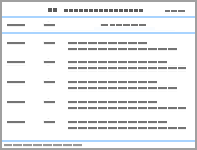
表1
药剂信息及用量"
| 药剂 Fungicide | 生产厂家 Manufacturer | 田间用药量 Field application rate (g a.i./hm2) |
|---|---|---|
| 10%苯醚甲环唑WDG 10% Difenoconazole WDG | 东莞市瑞德丰生物科技有限公司 Dongguan Ruidefeng Biotechnology Co., Ltd. | 45 |
| 25%吡唑醚菌酯EC 25% Pyraclostrobin EC | 巴斯夫植物保护有限公司 BASF Crop Protection Co., Ltd. | 125 |
| 200 g·L-1氟唑菌酰羟胺SC 200 g·L-1 Pydiflumetofen SC | 先正达南通作物保护有限公司 Syngenta Nantong Crop Protection Co., Ltd. | 100 |
| 240 g·L-1噻呋酰胺SC 240 g·L-1 Thifluzamide SC | 山东康乔生物技术有限公司 Shandong Kangqiao Bio-technology Co., Ltd. | 120 |
| 35%唑醚·氟环唑SC 35% Pyraclostrobin·epoxiconazole SC | 山东仕邦农化有限公司 Shandong Shibang Agrochemical Co., Ltd. | 130 |
表2
不同药剂对多堆柄锈菌夏孢子萌发的抑制作用"
| 药剂 Fungicide | 毒力回归方程 Toxicity regression equation (y=) | 相关系数 Correlation coefficient (r) | EC50 (mg·L-1) | 95%置信区间 95% confidence interval |
|---|---|---|---|---|
| 95%苯醚甲环唑95% Difenoconazole | -1.96+2.44x | 0.993 | 6.362 | 5.382-7.248 |
| 98%吡唑醚菌酯98% Pyraclostrobin | 4.58+2.65x | 0.993 | 0.019 | 0.016-0.021 |
| 95%氟吡菌酰胺95% Fluopyram | -19.43+9.20x | 0.985 | 130.418 | 128.074-132.819 |
| 97%氟唑菌酰羟胺97% Pydiflumetofen | -4.27+4.62x | 0.993 | 8.440 | 7.784-9.036 |
| 96%噻呋酰胺96% Thifluzamide | -0.99+1.37x | 0.992 | 5.468 | 4.149-6.897 |
| 94.4%氰烯菌酯94.4% Phenamacril | -24.80+12.58x | 0.986 | 94.171 | 92.932-95.424 |
表3
不同药剂对多堆柄锈菌夏孢子芽管伸长的抑制作用"
| 药剂 Fungicide | 毒力回归方程 Toxicity regression equation (y=) | 相关系数 Correlation coefficient (r) | EC50 (mg·L-1) | 95%置信区间 95% confidence interval |
|---|---|---|---|---|
| 95%苯醚甲环唑95% Difenoconazole | -1.33+2.29x | 0.991 | 3.738 | 2.734-4.599 |
| 98%吡唑醚菌酯98% Pyraclostrobin | 4.58+2.65x | 0.993 | 0.007 | 0.016-0.021 |
| 95%氟吡菌酰胺95% Fluopyram | -8.16+4.56x | 0.992 | 61.148 | 50.792-69.040 |
| 97%氟唑菌酰羟胺97% Pydiflumetofen | -1.37+2.25x | 0.992 | 4.136 | 2.750-5.208 |
| 96%噻呋酰胺96% Thifluzamide | 0.52+0.45x | 0.994 | 0.072 | 0.001-0.385 |
| 94.4%氰烯菌酯94.4% Phenamacril | -7.70+4.59x | 0.990 | 46.973 | 35.008-54.995 |
表4
不同药剂持效期"
| 药剂 Fungicide | 施药与接菌时间间隔Time interval between application and inoculation (d) | ||||||
|---|---|---|---|---|---|---|---|
| 1 | 2 | 3 | 4 | 5 | 7 | 10 | |
| 10%苯醚甲环唑WDG 10% Difenoconazole WDG | - | - | - | - | - | - | + |
| 25%吡唑醚菌酯EC 25% Pyraclostrobin EC | - | - | - | - | - | - | - |
| 200 g·L-1氟唑菌酰羟胺SC 200 g·L-1 Pydiflumetofen SC | - | - | - | - | + | + | + |
| 240 g·L-1噻呋酰胺SC 240 g·L-1 Thifluzamide SC | - | - | - | - | - | + | + |
| 35%唑醚·氟环唑SC 35% Pyraclostrobin·epoxiconazole SC | - | - | - | - | - | - | + |
| CK | + | + | + | + | + | + | + |
表5
不同药剂对玉米南方锈病的保护作用"
| 药剂Fungicide | 病情指数Disease index | 防治效果Control efficacy (%) |
|---|---|---|
| 10%苯醚甲环唑WDG 10% Difenoconazole WDG | 11.11±2.14de | 80.00±3.85ab |
| 25%吡唑醚菌酯EC 25% Pyraclostrobin EC | 6.17±1.24e | 88.89±2.22a |
| 200 g·L-1氟唑菌酰羟胺SC 200 g·L-1 Pydiflumetofen SC | 37.04±2.14b | 33.33±3.85d |
| 240 g·L-1噻呋酰胺SC 240 g·L-1 Thifluzamide SC | 30.86±1.23c | 44.45±2.22c |
| 35%唑醚·氟环唑SC 35% Pyraclostrobin·epoxiconazole SC | 12.34±1.23d | 77.78±2.22b |
| CK | 55.56±2.14a | — |
表6
不同药剂对玉米南方锈病的治疗作用"
| 药剂Fungicide | 病情指数Disease index | 防治效果Control efficacy (%) |
|---|---|---|
| 10%苯醚甲环唑WDG 10% Difenoconazole WDG | 34.57±1.24d | 61.64±1.37b |
| 25%吡唑醚菌酯EC 25% Pyraclostrobin EC | 23.46±3.27e | 73.97±3.62a |
| 200 g·L-1氟唑菌酰羟胺SC 200 g·L-1 Pydiflumetofen SC | 58.03±1.23b | 35.62±1.37d |
| 240 g·L-1噻呋酰胺SC 240 g·L-1 Thifluzamide SC | 50.62±1.23c | 43.84±1.37c |
| 35%唑醚·氟环唑SC 35% Pyraclostrobin·epoxiconazole SC | 24.69±3.27e | 72.60±3.62a |
| CK | 90.12±2.47a | — |
表7
不同药剂保护性处理对南方锈病的田间防效及挽产作用"
| 地点 Location | 药剂 Fungicide | 接种后14 d 14 d after inoculation | 接种后21 d 21 d after inoculation | 接种后45 d 45 d after inoculation | 挽产率 Yield retention rate (%) | |||
|---|---|---|---|---|---|---|---|---|
| 病情指数 Disease index | 防治效果 Control efficacy (%) | 病情指数 Disease index | 防治效果 Control efficacy (%) | 病情指数 Disease index | 防治效果 Control efficacy (%) | |||
| 竞秀 Jingxiu | 10%苯醚甲环唑WDG 10% Difenoconazole WDG | 10.74±0.18d | 67.78±0.56a | 33.33±0d | 58.33±0.33a | 38.52±0.37f | 58.39±0.56a | 35.01±3.32a |
| 25%吡唑醚菌酯EC 25% Pyraclostrobin EC | 10.00±0.32d | 70.00±0.96a | 41.48±1.48c | 48.11±2.24b | 49.45±0.16d | 46.59±1.41c | 33.46±7.92a | |
| 200 g·L-1氟唑菌酰羟胺SC 200 g·L-1 Pydiflumetofen SC | 29.63±0.37b | 11.11±1.11c | 71.85±1.61b | 10.14±2.73c | 84.07±1.62b | 9.20±1.75e | 13.89±0.72bc | |
| 240 g·L-1噻呋酰胺SC 240 g·L-1 Thifluzamide SC | 28.52±0.37c | 14.44±1.11b | 70.00±2.94b | 12.55±3.00c | 77.78±0c | 16.00±0.34d | 4.90±1.64c | |
| 35%唑醚·氟环唑SC 35% Pyraclostrobin·epoxiconazole SC | 10.37±0.19d | 68.89±0.56a | 33.33±0d | 58.33±0.33a | 42.59±1.62e | 54.00±1.78b | 26.35±3.83a | |
| CK | 33.33±0a | — | 80.00±0.64a | — | 92.59±0.37a | — | — | |
| 定兴 Dingxing | 10%苯醚甲环唑WDG 10% Difenoconazole WDG | 10.19±0.19b | 70.43±0.29a | 32.96±0.37c | 54.57±1.10b | 77.78±0b | 22.22±0c | 24.75±3.03b |
| 25%吡唑醚菌酯EC 25% Pyraclostrobin EC | 9.63±0.19b | 72.04±0.28a | 11.11±0d | 84.69±0.20a | 39.63±2.43d | 60.37±2.43a | 45.61±0.43a | |
| 200 g·L-1氟唑菌酰羟胺SC 200 g·L-1 Pydiflumetofen SC | 33.33±0a | 3.16±1.80b | 54.44±0.64b | 24.96±1.70c | 100.00±0a | 0d | 4.84±3.58c | |
| 240 g·L-1噻呋酰胺SC 240 g·L-1 Thifluzamide SC | 32.96±0.37a | 4.20±2.75b | 54.44±0.64b | 24.97±1.56c | 100.00±0a | 0d | 9.07±0.60c | |
| 35%唑醚·氟环唑SC 35% Pyraclostrobin·epoxiconazole SC | 9.08±0.81b | 73.60±2.54a | 10.19±0.37d | 85.97±0.51a | 55.56±0c | 44.44±0b | 41.05±1.21a | |
| CK | 34.44±0.64a | — | 72.59±0.98a | — | 100.00±0a | — | — | |
表8
不同药剂治疗性处理对南方锈病的田间防效及挽产效果"
| 地点 Location | 药剂 Fungicide | 接种后14 d 14 d after inoculation | 接种后21 d 21 d after inoculation | 接种后45 d 45 d after inoculation | 挽产率 Yield retention rate (%) | |||||||||||
|---|---|---|---|---|---|---|---|---|---|---|---|---|---|---|---|---|
| 病情指数 Disease index | 防治效果 Control efficacy (%) | 病情指数 Disease index | 防治效果 Control efficacy (%) | 病情指数 Disease index | 防治效果 Control efficacy (%) | |||||||||||
| 竞秀 Jingxiu | 10%苯醚甲环唑WDG 10% Difenoconazole WDG | 30.74±0.37b | 7.78±1.11c | 52.59±0.37d | 34.24±0.96c | 63.33±1.11c | 31.59±1.47c | 22.24±2.77a | ||||||||
| 25%吡唑醚菌酯EC 25% Pyraclostrobin EC | 10.19±0.19d | 69.44±0.56a | 16.67±1.11f | 79.16±1.40a | 50.37±1.33e | 45.60±1.40a | 32.85±6.28a | |||||||||
| 200 g·L-1氟唑菌酰羟胺SC 200 g·L-1 Pydiflumetofen SC | 29.26±0.37c | 12.22±1.11b | 72.22±1.11b | 9.71±1.56d | 81.48±0.37b | 12.00±0.65d | 9.23±2.55b | |||||||||
| 240 g·L-1噻呋酰胺SC 240 g·L-1 Thifluzamide SC | 33.33±0a | 0d | 69.26±0.98c | 13.40±1.92d | 82.22±1.28b | 11.19±1.44d | 6.32±3.66b | |||||||||
| 35%唑醚·氟环唑SC 35% Pyraclostrobin·epoxiconazole SC | 10.74±0.18d | 67.78±0.55a | 25.56±0.64e | 68.06±0.71b | 54.44±0.64d | 41.20±0.73b | 25.24±2.21a | |||||||||
| CK | 33.33±0a | — | 80.00±0.64a | — | 92.59±0.37a | — | — | |||||||||
| 定兴Dingxing | 10%苯醚甲环唑WDG 10% Difenoconazole WDG | 32.22±0.64b | 6.35±3.07b | 54.07±0.37b | 25.47±1.48c | 90.74±3.87b | 9.26±3.87b | 19.27±2.03a | ||||||||
| 25%吡唑醚菌酯EC 25% Pyraclostrobin EC | 32.96±0.37ab | 4.23±2.12b | 54.07±0.37b | 25.49±1.04c | 72.96±2.89c | 27.04±2.89a | 26.66±3.63a | |||||||||
| 200 g·L-1氟唑菌酰羟胺SC 200 g·L-1 Pydiflumetofen SC | 32.96±0.37ab | 4.27±0.99b | 48.52±0.98c | 33.16±1.20b | 99.63±0.37a | 0.37±0.37c | 2.35±3.74b | |||||||||
| 240 g·L-1噻呋酰胺SC 240 g·L-1 Thifluzamide SC | 33.33±0ab | 3.16±1.80b | 46.30±0.98c | 36.18±2.07b | 99.26±0.37a | 0.74±0.37c | 2.27±2.82b | |||||||||
| 35%唑醚·氟环唑SC 35% Pyraclostrobin·epoxiconazole SC | 9.07±0.37c | 73.60±1.50a | 11.11±0d | 84.69±0.20a | 78.15±0.37c | 21.85±0.37a | 18.89±4.95a | |||||||||
| CK | 34.44±0.64a | — | 72.59±0.98a | — | 100.00±0a | — | — | |||||||||
表9
不同药剂综合性处理对南方锈病的田间防效及挽产效果"
| 地点 Location | 药剂 Fungicide | 接种后14 d 14 d after inoculation | 接种后21 d 21 d after inoculation | 接种后45 d 45 d after inoculation | 挽产率 Yield retention rate (%) | |||||||||||
|---|---|---|---|---|---|---|---|---|---|---|---|---|---|---|---|---|
| 病情指数 Disease index | 防治效果 Control efficacy (%) | 病情指数 Disease index | 防治效果 Control efficacy (%) | 病情指数 Disease index | 防治效果 Control efficacy (%) | |||||||||||
| 竞秀 Jingxiu | 10%苯醚甲环唑WDG 10% Difenoconazole WDG | 10.56±0b | 68.33±0b | 33.33±0c | 58.33±0.33b | 35.19±0.37d | 62.00±0.35b | 32.22±2.68ab | ||||||||
| 25%吡唑醚菌酯EC 25% Pyraclostrobin EC | 10.00±0.32c | 70.00±0.96a | 33.33±0c | 58.33±0.33b | 36.30±0.74d | 60.80±0.89b | 37.06±5.77a | |||||||||
| 200 g·L-1氟唑菌酰羟胺SC 200 g·L-1 Pydiflumetofen SC | 33.33±0a | 0c | 70.74±2.43b | 11.57±3.02c | 87.78±0.64b | 5.19±1.04d | 20.76±32.89bc | |||||||||
| 240 g·L-1噻呋酰胺SC 240 g·L-1 Thifluzamide SC | 33.33±0a | 0c | 67.78±1.93b | 15.31±1.73c | 77.78±0c | 16.00±0.34c | 18.42±4.29c | |||||||||
| 35%唑醚·氟环唑SC 35% Pyraclostrobin·epoxiconazole SC | 9.63±0.19c | 71.11±0.56a | 23.33±1.28d | 70.82±1.74a | 24.07±1.38e | 74.01±1.34a | 28.76±0.60abc | |||||||||
| CK | 33.33±0a | — | 80.00±0.64a | — | 92.59±0.37a | — | — | |||||||||
| 定兴Dingxing | 10%苯醚甲环唑WDG 10% Difenoconazole WDG | 9.63±0.37d | 71.99±1.53a | 23.70±0.98d | 67.32±1.64c | 67.04±6.43b | 32.96±6.43b | 24.34±1.34b | ||||||||
| 25%吡唑醚菌酯EC 25% Pyraclostrobin EC | 11.11±0d | 67.72±0.60a | 11.11±0f | 84.69±0.20a | 41.11±3.57c | 58.89±3.57a | 40.29±1.55a | |||||||||
| 200 g·L-1氟唑菌酰羟胺SC 200 g·L-1 PydiflumetofenSC | 33.33±0a | 3.16±1.80d | 54.44±0b | 24.98±1.01e | 100.00±0a | 0c | 4.98±5.59c | |||||||||
| 240 g·L-1噻呋酰胺SC 240 g·L-1 Thifluzamide SC | 26.30±0.37b | 23.64±0.72c | 33.70±0.37c | 53.54±1.07d | 99.26±0.37a | 0.74±0.37c | 5.20±7.45c | |||||||||
| 35%唑醚·氟环唑SC 35% Pyraclostrobin·epoxiconazole SC | 13.52±1.13c | 60.60±4.02b | 18.89±1.28e | 74.00±1.55b | 35.56±1.93c | 64.44±1.93a | 39.31±2.06a | |||||||||
| CK | 34.44±0.64a | — | 72.59±0.98a | — | 100.00±0a | — | — | |||||||||
| [1] |
张瑞平, 周联东, 马朝阳, 王文洁, 王蕊, 孙佩, 张培风, 殷春渊, 刘经纬, 王长青. 我国玉米南方锈病研究进展[J]. 中国植保导刊, 2024, 44(1): 28-36.
|
|
|
|
| [2] |
|
| [3] |
王亚飞, 巩梦豪, 李好海, 徐永伟, 肖继斌, 张玉阳, 苌嘉鑫, 袁虹霞, 李洪连, 施艳. 玉米南方锈病研究进展[J]. 河南农业大学学报, 2024, 58(3): 357-364.
|
|
|
|
| [4] |
doi: 10.1094/PHP-05-20-0038-RS |
| [5] |
|
| [6] |
李志敏, 李政, 丁俊强, 田志强. 玉米南方锈病主效抗病QTL的鉴定和效应分析[J]. 河南农业科学, 2024, 53(7): 109-116.
|
|
doi: 10.15933/j.cnki.1004-3268.2024.07.012 |
|
| [7] |
|
| [8] |
刘杰, 姜玉英, 曾娟, 纪国强, 刘莉, 邱坤, 徐永伟. 2015年我国玉米南方锈病重发特点和原因分析[J]. 中国植保导刊, 2016, 36(5): 44-47.
|
|
|
|
| [9] |
冒宇翔, 薛林, 王莉萍, 陈国清, 陆虎华, 石明亮, 黄小兰, 周广飞, 张振良, 赵浚宇, 郝德荣. 玉米抗锈病自交系种质的发掘与评价[J]. 玉米科学, 2017, 25(4): 55-61.
|
|
|
|
| [10] |
王新涛, 谢淑娜, 杜亚亭, 任玲玲, 张香粉, 陈威, 高宏伟, 段灿星, 郝俊杰. 黄淮海夏玉米区试品种对南方锈病的抗性分析及抗病基因检测[J]. 玉米科学, 2025, 33(1): 114-119.
|
|
|
|
| [11] |
刘万才, 秦萌, 杨晓欣, 王云鹏, 任宗杰, 张帅. 我国植物保护工作面临的形势与对策[J]. 中国植保导刊, 2025, 45(10): 21-28.
|
|
|
|
| [12] |
章慧玉, 张香粉, 张留声, 林源, 卢瑞乾, 李长建, 王良发, 刘桂珍. 46份黄淮海玉米新品种南方锈病抗性剖析[J]. 种子, 2024, 43(9): 109-115.
|
|
|
|
| [13] |
孙静, 茹艳艳, 谢淑娜, 刘建娜, 肖红, 李保叶, 朱伟岭, 王新涛, 商东耀, 郭晓琴, 郝俊杰. 不同杀菌剂对玉米南方锈病的防效与效益分析[J]. 植物保护, 2025, 51(6): 342-350, 377.
|
|
|
|
| [14] |
孙静, 王新涛, 谢淑娜, 任玲玲, 刘佳中, 朱伟岭, 霍明鑫, 李保叶, 张颖, 徐永伟, 郝俊杰. 施药时期和次数对玉米南方锈病的防效与效益分析[J]. 玉米科学, 2025, 33(12): 144-151.
|
|
|
|
| [15] |
侯辛未, 李文兰, 吕洪国, 张路路, 岳润清. 玉米南方锈病研究进展及防治策略[J]. 山东农业科学, 2026, 58(4): 181-188.
|
|
|
|
| [16] |
施艳, 袁虹霞, 李庆伦, 史亚娟, 杨雪, 李洪连. 2021年黄淮地区夏玉米南方锈病流行因素分析及防控对策[J]. 植物保护, 2023, 49(4): 309-311, 356.
|
|
|
|
| [17] |
|
| [18] |
|
| [19] |
田耀加, 赵守光, 张晶, 黄亮华, 王秋燕, 陈红弟. 鲜食玉米南方锈病发生动态及药剂防控[J]. 植物保护, 2016, 42(6): 177-180, 196.
|
|
|
|
| [20] |
王子伟, 鲍丽, 宛琼, 陈莉, 齐永霞. 不同药剂及施药技术对玉米南方锈病的防效研究[J]. 植物保护, 2024, 50(4): 368-375.
|
|
|
|
| [21] |
|
| [22] |
郭宁, 马井玉, 张海剑, 石洁, 李坡, 孙华. 苯醚甲环唑和丙环唑对黄淮海夏玉米区主要叶斑病的防治效果[J]. 植物保护, 2017, 43(4): 213-217, 232.
|
|
|
|
| [23] |
|
| [24] |
冯耀漩. 小麦叶锈菌对三唑酮敏感性监测与抗性风险评估[D]. 杨凌: 西北农林科技大学, 2025.
|
|
|
|
| [25] |
邵莒南, 徐春梅, 郭贝贝, 刘峰. 四种SBIs类杀菌剂对不同发育阶段小麦赤霉病菌的毒力及其作用方式[J]. 农药学学报, 2015, 17(4): 425-431.
|
|
|
|
| [26] |
禾丽菲, 李晓旭, 朱佳美, 慕卫, 刘峰. 不同杀菌剂对黄瓜靶斑病菌的毒力作用特性比较[J]. 农药学学报, 2018, 20(1): 25-32.
|
|
|
|
| [27] |
赵洪涛, 陈东奎, 陈香玲, 欧智涛, 黄其椿, 张兰, 李果果, 刘要鑫, 叶云峰, 付岗. 沃柑溃疡病病原菌分离鉴定及防治药剂筛选[J]. 南方农业学报, 2019, 50(12): 2703-2712.
|
|
|
|
| [28] |
高保森, 陈涛, 王洪星. 槟榔炭疽病病原菌分离鉴定及防治药剂筛选[J]. 分子植物育种, 2023, 21(22): 7444-7449.
|
|
|
|
| [29] |
张硕佳, 王超杰, 徐博, 冉刚超, 曹立冬, 曹冲, 黄啟良, 朱峰, 赵鹏跃. 五种杀菌剂在水稻上的吸收与传导性能研究[J]. 农药学学报, 2022, 24(4): 752-761.
|
|
|
|
| [30] |
洪霞, 钱滢文, 冯玉升, 王懂帅, 何海宁, 汪永松, 高志莹, 张彦军. 苯醚甲环唑农药残留检测技术的研究进展[J]. 食品研究与开发, 2018, 39(24): 190-197.
|
|
|
|
| [31] |
郝文泽, 范在丰, 石洁, 马占鸿, 周涛, 张永军, 时鸿宇, 路一楠, 秦誉嘉, 李志红. 气候变化下多堆柄锈菌在中国的潜在地理分布预测[J]. 植物保护学报, 2025, 52(2): 284-293.
|
|
|
|
| [32] |
李雪华, 张克瑜, 李磊福, 张书铭, 骆勇, 马占鸿. 多堆柄锈菌孢子数量与病情以及气象因素的相关性分析[J]. 植物病理学报, 2019, 49(3): 362-369.
doi: 10.13926/j.cnki.apps.000286 |
|
|
|
| [33] |
郝俊杰, 彭红, 张弘, 施艳, 赵文新. 2023年河南省玉米南方锈病发生特点及影响因素分析[J]. 玉米科学, 2025, 33(11): 135-142.
|
|
|
|
| [34] |
蔡光辉, 李萌, 吴绪金, 秦曙, 马欢, 马婧玮, 汪红, 周娟, 李通, 安莉. 吡唑醚菌酯在杨桃中残留检测及膳食风险评估[J]. 食品安全质量检测学报, 2021, 12(14): 5531-5539.
|
|
|
|
| [35] |
于晓龙, 朱翔宇, 张富铭, 熊阳, 石家俊, 李世聪, 李昊洋, 吕蒙, 朱雨萌, 王泽鑫, 侯志广. 30%吡唑醚菌酯·溴菌腈水乳剂高效液相色谱分析[J]. 农药, 2026, 65(3): 186-189.
|
|
|
|
| [36] |
甘林, 代玉立, 卢学松, 滕振勇, 陈伟, 杨秀娟. 闽南山区鲜食玉米叶斑病季节性流行动态及药剂防治[J]. 植物保护, 2021, 47(6): 213-222, 230.
|
|
|
|
| [37] |
杨志富, 欧晓明, 李建明, 张贵群, 熊锋, 任建伟. 苯醚甲环唑和嘧菌酯在金银花中的残留消解及安全性评价[J]. 农药, 2021, 60(8): 601-605.
|
|
|
| [1] | 侯普兴, 王勇, 冯俊涛, 马志卿, 吴华. 75种植物乙醇提取物对两种土传病原菌的抑制活性[J]. 中国农业科学, 2026, 59(2): 322-335. |
| [2] | 李雷, 杨明珊, 华蔚菡, 刘昕, 邵青, 陈锐, 王文生, 高俊平, 孙小明. 气动雾化喷雾对月季切花农药沉积效率及采后灰霉病防控效果的影响[J]. 中国农业科学, 2026, 59(15): 3400-3411. |
| [3] | 刘婕, 侯瑞, 周泽华, 易图永. 聚六亚甲基胍对柑橘溃疡病菌的抑菌活性[J]. 中国农业科学, 2025, 58(9): 1779-1790. |
| [4] | 史彩华, 金杰, 华登科, 胡静荣, 张友军, 黄圣琳, 吴明月, 孔祥义, 谢文. 基于豆大蓟马暴发与豇豆花发育动态耦合下的物理防控新技术研发与应用[J]. 中国农业科学, 2025, 58(21): 4382-4392. |
| [5] | 肖焯丹, 乔家正, 高渝岚, 尚掌印, 刘怀, 王佳. 沉默豆蚜细胞色素P450基因CYP6CY53和CYP302A1增强对氟啶虫酰胺的敏感性[J]. 中国农业科学, 2025, 58(18): 3664-3675. |
| [6] | 路露, 李一诺, 张修国, 高丹美, 吴凤芝. 小麦和蚕豆填闲及其腐解液对连作辣椒幼苗生长及疫病的影响[J]. 中国农业科学, 2024, 57(22): 4541-4552. |
| [7] | 马红霞, 孙华, 郭宁, 刘树森, 张海剑, 石洁. 基于PCR和巢式PCR技术的玉米南方锈病早期检测[J]. 中国农业科学, 2023, 56(9): 1686-1695. |
| [8] | 路粉,孟润杰,吴杰,赵建江,李洋,毕秋艳,韩秀英,李敬华,王文桥. 马铃薯晚疫病菌对霜脲氰抗性动态监测及药效验证[J]. 中国农业科学, 2022, 55(18): 3556-3564. |
| [9] | 周京龙,冯自力,魏锋,赵丽红,张亚林,周燚,冯鸿杰,朱荷琴. 棉花内生细菌YUPP-10及其分泌蛋白CGTase对棉花枯萎病的防治作用及机理[J]. 中国农业科学, 2021, 54(17): 3691-3701. |
| [10] | 解昆仑,刘莉铭,刘美,彭斌,吴会杰,古勤生. 小西葫芦黄花叶病毒dsRNA的原核表达及其对ZYMV的防治效果[J]. 中国农业科学, 2020, 53(8): 1583-1593. |
| [11] | 周华飞,杨红福,姚克兵,庄义庆,束兆林,陈志谊. FliZ调控枯草芽孢杆菌Bs916生物膜形成 及其对水稻纹枯病的防治效果[J]. 中国农业科学, 2020, 53(1): 55-64. |
| [12] | 揣红运,石延霞,柴阿丽,杨杰,谢学文,李宝聚. 10%乙霉威·腐霉利微粉剂的研制及其 对黄瓜棒孢叶斑病的防治效果[J]. 中国农业科学, 2019, 52(6): 1009-1020. |
| [13] | 刘波,陈倩倩,王阶平,阮传清,陈燕萍,夏江平,车建美,陈峥,潘志针,文笑,朱育菁,张海峰,郑雪芳. 整合微生物组菌剂的提出、研发与应用[J]. 中国农业科学, 2019, 52(14): 2450-2467. |
| [14] | 禾丽菲,陈乐乐,肖斌,赵时峰,李秀环,慕卫,刘峰. 番茄叶霉病菌对咯菌腈敏感基线的建立及田间防治效果评价[J]. 中国农业科学, 2018, 51(8): 1475-1483. |
| [15] | 曹海潮,李秀环,王晓坤,白海秀,慕卫,刘峰. 吡唑醚菌酯及三唑类杀菌剂对番茄颈腐根腐病的防治效果[J]. 中国农业科学, 2018, 51(21): 4065-4075. |
|
||
