






中国农业科学 ›› 2026, Vol. 59 ›› Issue (5): 927-936.doi: 10.3864/j.issn.0578-1752.2026.05.001
• 作物遗传育种·种质资源·分子遗传学 • 下一篇
马兆惠1( ), 全成哲2(), 程海涛1, 杨衎劼1, 李欣蕊1, 吕文彦1()
收稿日期:2025-09-30
接受日期:2025-11-24
出版日期:2026-03-01
发布日期:2026-03-06
通信作者:
联系方式:
马兆惠,E-mail:mazh1985@syau.edu.cn。全成哲,E-mail:jlgzqcz@163.com。马兆惠和全成哲为同等贡献作者。
基金资助:
MA ZhaoHui1(), QUAN ChengZhe2(), CHENG HaiTao1, YANG KanJie1, LI XinRui1, LÜ WenYan1()
Received:2025-09-30
Accepted:2025-11-24
Published:2026-03-01
Online:2026-03-06
摘要:
中科发5号是李家洋院士团队利用分子设计育种理念培育的新品种。运用表型与分子标记选择相结合的方法,聚合了GL7(多拷贝)、GS3和GW5基因型组合,形成了水稻的细长籽粒,且含有高产的基因/QTL qSB2、qSB8、qSB10和SCM2等,以及携带稻瘟病抗性等位基因Pib、qBR10、Pi-ta和Ptr。基于此,该品种综合农艺性状表现出高产、多抗、品质优良等特点,在2014年位列中国十大主栽品种之列,已成为东北标志性品种。面对这一局面,未来东北粳稻应该以此为基准,实现超越。结合大米供需市场状况,育种目标应是以高产为基础的长粒香。具体产量目标为9 500 kg·hm-2以上,而实现这一目标的性状组配是株高95.0—105.0 cm、有效穗数375.0万—420.0万株/hm2、穗粒数120.0粒以上、千粒重大于25.0 g;品质目标为粒长大于6.5 mm、长宽比大于2.8、整精米率达到审定标准、外观优良、食味80分以上、具有香味。除此之外,还要具有良好的适应性与抗性。为实现该目标,首先要加强辩证思维,要在实践中坚决淘汰大量不能达到育种目标的材料,同时,加强优良性状组配及其与当地栽培条件适应性的实践检验。在育种过程中,协调使用高产资源和长粒资源,加强复合杂交,同时优化育种过程,积极采用分子育种等现代育种技术。育种策略关键是要拓展具有广亲和性的籼粳亚种杂交稻恢复系的运用,特别是高产籼粳三系杂交稻的利用。由于高产三系杂交稻本身产量较高,其配子存在广泛重组,更有期望出现突破性类型。利用具有广亲和性的粳稻恢复系与长粒香型籼型杂交稻配组,可能是实现长粒香育种目标的最好策略,但还需进一步检验。
马兆惠, 全成哲, 程海涛, 杨衎劼, 李欣蕊, 吕文彦. 中科发5号背景下东北粳稻育种目标与策略的思考[J]. 中国农业科学, 2026, 59(5): 927-936.
MA ZhaoHui, QUAN ChengZhe, CHENG HaiTao, YANG KanJie, LI XinRui, LÜ WenYan. The Breeding Goals and Strategies of Northeast Japonica Rice Under the Background of Zhongke Fa No.5[J]. Scientia Agricultura Sinica, 2026, 59(5): 927-936.
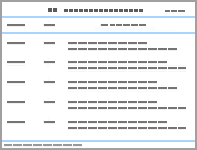
表1
中科发5号审定性状"
| 系统来源 Pedigree | 产量Yield (kg·hm-2) | 株高 Plant height (cm) | 有效穗数 Effective panic (×104··hm-2) | 穗粒数 Kernels per spike | 结实率 Seed setting rate (%) | 千粒重 1000- grain weight (g) | 粒长 Grain length (mm) | 长宽比 Length- width ratio | 整精米率 Head rice rate (%) | 垩白率 Chalkiness rate (%) | 垩白度 Chalkiness degree | 直链淀 粉含量 <BOLD>A</BOLD>mylose content (%) | |
|---|---|---|---|---|---|---|---|---|---|---|---|---|---|
| 区域试验 Regional trial | 生产试验 Production test | ||||||||||||
| 空育131/南方长粒粳//吉粳88 Kongyu 131/ Nanfangchangligeng //Jigeng 88 | 10332.6 | 9805.2 | 102.8 | 409.5 | 118.3 | 79.9 | 26.9 | 6.4 | 3.0 | 70.1 | 6.0 | 1.8 | 16.1 |
表2
吉林省近10年公益性区试产量较高品种及长粒粳稻品种基本性状比较"
| 品种 类型 Variety type | 品种名称 Variety | 系统来源 Pedigree | 产量Yield (kg·hm-2) | 有效穗数 Effective panicle (×104·hm-2) | 株高 Plant height (cm) | 穗长 Panicle length (cm) | 穗粒数 Grain number | |||
|---|---|---|---|---|---|---|---|---|---|---|
| 区域试验 Regional trial | 较CK Comparison of CK (%) | 生产试验 Production test | 较CK Comparison of CK (%) | |||||||
| 高产 High yield | 松峰199 Songfeng 199 | 长白9号/松粳5号//秋田63 Changbai No.9/Songgeng No.5// Qiutian 63 | 9566.5 | 8.9 | 9285.1 | 7.6 | 400.5 | 99.0 | 18.0 | 132.4 |
| 通育268 Tongyu 268 | 9405//通育316/吉01-125 9405//Tongyu 316/Ji 01-125 | 9543.9 | 8.6 | 9249.2 | 7.2 | 357.0 | 116.3 | 18.6 | 128.1 | |
| 九稻941 Jiudao 941 | 通院515/盐丰47C Tongyuan 515/Yanfeng 47C | 9479.3 | 6.6 | 9036.9 | 7.1 | 381.0 | 105.1 | 20.7 | 120.2 | |
| 通禾885 Tonghe 885 | 04-7003/稗草 04-7003/Barnyard grass | 9467.9 | 7.8 | 9055.7 | 5.0 | 337.5 | 107.1 | 19.1 | 116.3 | |
| 九稻80 Jiudao 80 | 九稻41/系选1号 Jiudao 41/Xixuan No.1 | 9433.7 | 8.3 | 9038.8 | 5.3 | 352.5 | 114.9 | 23.9 | 123.4 | |
| 长粒 Long grain | 吉粳557 Jigeng 557 | 吉粳801/平粳6号 Jigeng 801/Pinggeng No.6 | 8884.6 | 5.0 | 8974 | 6.1 | 388.5 | 101.3 | 18.8 | 129.7 |
| 吉大313 Jida 313 | 吉大05-117/农大314 Jida 05-117/Nongda 314 | 7825.9 | 9.8 | 7693.5 | 8.1 | 373.5 | 120.7 | 20.9 | 102.3 | |
| 长乐520 Changle 520 | 五优一号/长选14 Wuyou No.1/Changxuan 14 | 7688.9 | 7.9 | 7757.9 | 9.0 | 328.5 | 111.6 | 22.4 | 122.3 | |
| 吉粳577 Jigeng 577 | 平粳8号/吉粳89 Pinggeng No.8/Jigeng 89 | 7810.6 | 7.8 | 8311.3 | 8.0 | 315.0 | 104.4 | 20.3 | 151.2 | |
| 臻福源528 Zhenfuyuan 528 | HW998/松粳9号//五优稻4号 HW998/Songgeng No.9// Wuyoudao No.4 | 7849.4 | 8.4 | 8343.3 | 8.4 | 324.0 | 114.3 | 19.9 | 131.1 | |
| 品种 类型 Variety type | 品种名称 Variety | 结实率 Seed setting rate (%) | 千粒重 1000-seeds weight (g) | 糙米率 Brown rice rate (%) | 精米率 Milled rice rate (%) | 整精米率 Head rice rate (%) | 粒长 Grain length (mm) | 长宽比 Length- width ratio | 垩白粒率 Chalkiness rate (%) | 垩白度 Chalkiness degree (%) |
| 高产 High yield | 松峰199 Songfeng 199 | 87.9 | 23.6 | 85.7 | 75.7 | 66.8 | 4.7 | 1.7 | 30 | 3.3 |
| 通育268 Tongyu 268 | 90.2 | 25.6 | 83.9 | 75.8 | 71.2 | 5.1 | 1.9 | 15 | 3.0 | |
| 九稻941 Jiudao 941 | 91.8 | 25.7 | 84.7 | 75.6 | 73.2 | 4.7 | 1.7 | 12 | 3.4 | |
| 通禾885 Tonghe 885 | 89.1 | 23.2 | 84.2 | 73.5 | 68.5 | 5.3 | 1.8 | 37 | 3.0 | |
| 九稻80 Jiudao 80 | 86.8 | 28.3 | 83.7 | 74.1 | 64.8 | 5.5 | 2.1 | 16 | 4.9 | |
| 长粒 Long grain | 吉粳557 Jigeng 557 | 85.6 | 26.1 | 83.0 | 72.2 | 65.1 | 6.5 | 2.8 | 12 | 3.2 |
| 吉大313 Jida 313 | 85.7 | 28.9 | 87.3 | 78.4 | 71.1 | 6.4 | 2.6 | 6 | 1.5 | |
| 长乐520 Changle 520 | 90.9 | 25.8 | 80.2 | 71.7 | 63.0 | 6.4 | 2.8 | 12 | 2.7 | |
| 吉粳577 Jigeng 577 | 81.2 | 27.0 | 83.3 | 73.9 | 70.7 | 6.3 | 2.6 | 10 | 2.6 | |
| 臻福源528 Zhenfuyuan 528 | 90.7 | 27.0 | 81.9 | 72.3 | 68.4 | 5.9 | 2.4 | 8 | 3.0 | |
表3
辽宁省近10年公益性区试产量较高品种及长粒粳稻品种基本性状比较"
| 品种 类型 Variety type | 品种名称 Variety | 系统来源 Pedigree | 产量<BOLD>Y</BOLD>ield (kg·hm-2) | 有效穗数 Effective panicle (×104·hm-2) | 株高 Plant height (cm) | 穗长 Panicle length (cm) | 穗粒数 Grain number | ||||
|---|---|---|---|---|---|---|---|---|---|---|---|
| 区域试验 Regional trial | 较<BOLD>CK</BOLD> Comparison of CK (%) | 生产试验 Production test | 较<BOLD>CK</BOLD> Comparison of CK (%) | ||||||||
| 高产 High yield | 桥润粳9号 Qiaorungeng 9 | 盐粳166/ 盐丰47 Yangeng166/Yanfeng47 | 10534.5 | 4.8 | 10308.0 | 12.0 | NA | 103.3 | 15.9 | 134.2 | |
| 辽粳1305 Liaogeng 1305 | 辽粳94/盐粳18//辽粳20 Liaogeng94/Yangeng18// Liaogeng20 | 10698.0 | 4.7 | 10522.5 | 14.3 | NA | 105.5 | 16.5 | 134.1 | ||
| 美锋稻67 Meifengdao 67 | 开粳2号系选/农实99-1 Kaigeng No.2 line selection/ Nongshi99-1 | 10716.0 | 7.0 | 9790.5 | 4.6 | NA | 104.8 | 16.4 | 153.1 | ||
| 锦稻107 Jindao 107 | PF118系选 PF118 line selection | 10593.0 | 3.6 | 10075.5 | 9.4 | NA | 107.5 | 16.1 | 203.9 | ||
| 盐粳765 Yangeng 765 | 盐粳901/南粳46 Yangeng901/Nangeng46 | 10524.0 | 11.9 | 10627.5 | 13.6 | NA | 100.1 | 16.5 | 132.5 | ||
| 长粒 Long grain | 北粳255 Beigeng 255 | 沈农604/五优稻4号//丰锦 Shennong604/Wuyoudao No.4// Fengjin | 8511.0 | 7.9 | 8848.5 | 7.6 | 405.0 | 111.3 | 20.2 | 119.7 | |
| 铁粳香3号 Tiegengxiang 3 | 稻花香2号/铁粳11 Daohuaxiang No.2/Tiegeng11 | 7600.5 | 0.4 | 8125.5 | 4.4 | 375.0 | 123.9 | 23.5 | 132.0 | ||
| 勇稻香 Yongdaoxiang | 高优35号/五优稻4号 Gaoyou No.35/Wuyoudao No.4 | 8050.5 | 0.1 | 8412.0 | 4.8 | 411.0 | 114.6 | 18.5 | 121.4 | ||
| 源稻香7号 Yuandaoxiang7 | 九稻42/抚粳8号 Jiudao42/Fugeng No.8 | 8752.5 | 12.9 | 9429.0 | 9.6 | 325.5 | 105.9 | 17.4 | 182.2 | ||
| 品种 类型 Variety type | 品种名称 Variety | 结实率 Seed setting rate (%) | 千粒重 1000- seeds weight (g) | 糙米率 Brown rice rate (%) | 精米率 Milled rice rate (%) | 整精米率 Head rice rate (%) | 粒长 Grain lengt (mm) | 长宽比 Length-width ratio | 垩白粒率 Chalkiness rate (%) | 垩白度 Chalkiness degree (%) | |
| 高产 High yield | 桥润粳9号 Qiaorungeng 9 | NA | 25.6 | 80.6 | 73.3 | 69.7 | 5.0 | 1.8 | 7 | 0.7 | |
| 辽粳1305 Liaogeng 1305 | NA | 25.1 | 83.6 | 75.9 | 74.8 | 5.2 | 2.0 | 9 | 1.0 | ||
| 美锋稻67 Meifengdao 67 | NA | 24.6 | 81.0 | 73.4 | 72.5 | 5.0 | 1.9 | 10 | 1.0 | ||
| 锦稻107 Jindao 107 | NA | 24.1 | 81.9 | 73.8 | 71.7 | 5.1 | 3.0 | 14 | 3.0 | ||
| 盐粳765 Yangeng 765 | NA | 26.9 | 83.2 | 81.4 | 72.0 | 5.2 | 1.0 | 29 | 4.0 | ||
| 长粒 Long grain | 北粳255 Beigeng 255 | 92.6 | 25.6 | 81.7 | 72.4 | 69.0 | 6.0 | 2.3 | 4 | 1.0 | |
| 铁粳香3号 Tiegengxiang 3 | 87.2 | 26.6 | 80.3 | 70.8 | 67.6 | 7.0 | 3.1 | 8 | 2.4 | ||
| 勇稻香 Yongdaoxiang | 88.7 | 27.9 | 82.4 | 74.2 | 66.8 | 6.8 | 2.9 | 13 | 5.0 | ||
| 源稻香7号 Yuandaoxiang7 | 70.1 | 23.9 | 82.2 | 74.3 | 71.8 | 6.1 | 1.7 | 16 | 3.8 | ||
表4
当前东北粳稻米主要类型及品质特点"
| 东北粳米类型 Northeast China rice type | 粒长 Grain length (mm) | 长宽比 Length-width ratio | 千粒重 1000-grain weight (g) | 垩白粒率 Chalkiness rate (%) | 垩白度 Chalkiness degree (%) | 感官评分 Sensory score | 代表品种 Representative variety |
|---|---|---|---|---|---|---|---|
| 小町米 Komachi rice | <5.0 | <1.8 | <25.0 | <10 | <5 | >80 | 秋田小町 Akitakomati |
| 小粒香 Small-grain rice | <5.0 | <1.8 | <25.0 | <10 | <5 | >80 | 吉粳816 Jigeng 816 |
| 二大粒Medium to long grain | >5.0 | >2.0 | >25.0 | <10 | <5 | >80 | 辽星1号 Liaoxing No.1 |
| 长粒香 Long grain fragrant rice | >6.0 | >2.3 | 26.0-28.0 | <10 | <5 | >80 | 吉粳577 Jigeng 577 |
| 稻花香 Daohuaxiang | >6.4 | >2.8 | 26.0-28.0 | <10 | <5 | >80 | 稻花香2号 Daohuaxiang No.2 |
表5
2024年10大主栽水稻品种中的粳稻品种基本性状比较"
| 品种名称 Variety | 产量Yield (kg·hm-2) | 有效穗数 Effective panicle (×104·hm-2) | 株高 Plant height (cm) | 穗长 Panicle length (cm) | 总粒数 Total grain number | 结实率 Seed setting rate (%) | |||
|---|---|---|---|---|---|---|---|---|---|
| 区域试验 Regional trial | 较CK Comparison of CK (%) | 生产试验 Production test | 较CK Comparison of CK (%) | ||||||
| 龙粳31 Longjing 31 | 8165.4 | 5.7 | 9135.4 | 12.6 | NA | 92.0 | 15.7 | 86.0 | NA |
| 南粳9108 Nanjing 9108 | 9663.0 | 5.2 | 9781.5 | 7.3 | 318.0 | 96.2 | NA | 125.5 | 94.2 |
| 绥粳27 Suijing 27 | 8741.0 | 6.3 | 9261.5 | 7.1 | NA | 94.4 | 16.9 | 84.0 | NA |
| 中科发5号 Zhongke Fa No.5 | 1033.2 | 9.3 | 9805.4 | 14.9 | 409.5 | 102.8 | 118.3 | 79.9 | |
| 五优稻4号 Wuyoudao No.4 | 7723.4 | 4.7 | 409.5 | 122.1 | 19.5 | 115.8 | 78.4 | ||
| 南粳5055 Nanjing 5055 | 9217.5 | 4.8 | 9565.5 | 6.0 | 306.0 | 96.5 | NA | 121.0 | 91.4 |
| 品种名称 Variety | 千粒重 1000-seeds weight (g) | 糙米率 Brown rice rate (%) | 精米率 Milled rice rate (%) | 整精米率 Head rice rate (%) | 粒长 Grain length (mm) | 长宽比 Length- width ratio | 垩白粒率 Chalkiness rate (%) | 垩白度 Chalkiness degree (%) | 食味(状况)分数 Taste (condition) score |
| 龙粳31 Longjing 31 | 25.6 | 81.2 | NA | 72.8 | NA | NA | 2.0 | 0.1 | 82 |
| 南粳9108 Nanjing 9108 | 26.4 | NA | NA | 71.4 | NA | NA | 10.0 | 3.1 | 软米 Soft rice |
| 绥粳27 Suijing 27 | 26.7 | 81.7 | NA | 68.3 | NA | NA | 13.5 | 2.6 | 81 |
| 中科发5号 Zhongke Fa No.5 | 26.9 | NA | NA | 70.1 | 6.4 | 3.0 | 6.0 | 1.8 | 食味金奖 Gold award for taste |
| 五优稻4号 Wuyoudao No.4 | 27.7 | 84.7 | 72.7 | 64.8 | 6.3 | 2.7 | 46.0 | 7.0 | 优良 Excellent taste |
| 南粳5055 Nanjing 5055 | 24.7 | NA | NA | 71.4 | NA | NA | 10.0 | 0.8 | 软米 Soft rice |
| [1] |
|
| [2] |
中国科学院. “中科发”系列水稻新品种选育成功获大面积示范应用. (2019-12-23) [2025-09-30]. https://www.cas.cn/jh/202001/t20200113_4731137.shtml.
|
|
Chinese Academy of Sciences. The breeding of “Zhongke Fa” series of new rice varieties has been successfully demonstrated and applied in a large area. (2019-12-23) [2025-09-30]. https://www.cas.cn/jh/202001/t20200113_4731137.shtml. (in Chinese)
|
|
| [3] |
瞿康洁, 陆建飞. 吉林大米品牌创建及政府行为研究. 中国稻米, 2021, 27(6): 1-5.
doi: 10.3969/j.issn.1006-8082.2021.06.001 |
|
|
|
| [4] |
黄海祥, 钱前. 水稻粒形遗传与长粒型优质粳稻育种进展. 中国水稻科学, 2017, 31(6): 665-672.
doi: 10.16819/j.1001-7216.2017.7115 |
|
|
|
| [5] |
门柳. 2023年黑龙江稻米市场研究及展望报告. 黑龙江粮食, 2024(8): 25-29.
|
|
|
|
| [6] |
刘立超, 谢树鹏, 门龙楠, 魏中华, 孙中华, 宗天鹏, 符强, 董晓慧, 王翠玲. 黑龙江粳稻品质育种现状及对策. 中国稻米, 2022, 28(4): 19-22.
doi: 10.3969/j.issn.1006-8082.2022.04.004 |
|
|
|
| [7] |
余泓, 白世伟, 李家洋. 迈向育种5.0: 智能品种的智能培育. 科学通报, 2024, 69(32): 4687-4690.
|
|
|
|
| [8] |
邵雅芳, 朱大伟, 郑欣, 牟仁祥, 章林平, 陈铭学. 2002—2022长三角地区粳稻品质发展状况和地域差异性分析. 中国水稻科学, 2025, 39(2): 264-276.
doi: 10.16819/j.1001-7216.2025.240408 |
|
|
|
| [9] |
陈品, 刘家成, 赵小松. 中国居民中高端大米需求弹性估算与市场潜力研究: 以长三角市场为例. 中国水稻科学, 2023, 37(1): 102-112.
doi: 10.16819/j.1001-7216.2023.220312 |
|
doi: 10.16819/j.1001-7216.2023.220312 |
|
| [10] |
路凯, 赵庆勇, 周丽慧, 赵春芳, 张亚东, 王才林. 稻米蛋白质含量与食味品质的关系及其影响因素研究进展. 江苏农业学报, 2020, 36(5): 1305-1311.
|
|
|
|
| [11] |
杨柳, 郭长婕, 梁斌. 基于直链淀粉含量的大米食味品质评价. 现代食品, 2019, 25(19): 171-174.
|
|
|
|
| [12] |
习敏, 季雅岚, 吴文革, 许有尊, 孙雪原, 周永进. 水稻食味品质形成影响因素研究与展望. 中国农学通报, 2020, 36(12): 159-164.
doi: 10.11924/j.issn.1000-6850.casb20191000732 |
|
doi: 10.11924/j.issn.1000-6850.casb20191000732 |
|
| [13] |
许锐, 隋勇, 李书艺, 祝振洲, 周雷, 施建斌, 蔡沙, 熊添, 蔡芳, 梅新. 稻米食味品质影响因素研究进展. 食品安全质量检测学报, 2024, 15(7): 234-241.
|
|
|
|
| [14] |
doi: 10.1038/s41467-025-58823-1 |
| [15] |
doi: 10.1111/pbi.70079 pmid: 40192301 |
| [16] |
吕文彦, 程海涛, 马兆惠, 田淑华. 育种新时代水稻杂交育种技术与策略探讨. 中国农业科学, 2026, 59(2): 233-238. doi: 10.3864/j.issn.0578-1752.2026.02.001.
|
|
|
|
| [17] |
doi: 10.1038/s41586-025-09122-8 |
| [18] |
杨振玉, 高勇, 赵迎春, 魏耀林, 华泽田, 张忠旭, 高日玲. 水稻籼粳亚种间杂种优势利用研究进展. 作物学报, 1996, 22(4): 422-429.
|
|
|
|
| [19] |
马双双, 黄玲玲, 王伟, 杨用丹, 翟荣荣, 叶靖, 巫明明, 叶胜海. 籼粳杂交水稻分子机理研究进展. 浙江农业科学, 2025, 66(6): 1297-1307.
doi: 10.16178/j.issn.0528-9017.20240808 |
|
|
|
| [20] | |
|
|
|
| [21] |
杨冬奇. 水稻广亲和性的遗传及其在籼粳杂交稻育种中的应用. 湖南农业科学, 2005(3): 11-12.
|
|
|
|
| [22] |
韦还和, 姜元华, 赵可, 许俊伟, 张洪程, 戴其根, 霍中洋, 许轲, 魏海燕, 郑飞. 甬优系列杂交稻品种的超高产群体特征. 作物学报, 2013, 39(12): 2201-2210.
doi: 10.3724/SP.J.1006.2013.02201 |
|
doi: 10.3724/SP.J.1006.2013.02201 |
|
| [23] |
王林友, 张礼霞, 勾晓霞, 范宏环, 金庆生, 王建军. 利用InDel标记鉴定浙优系列杂交稻籼粳属性和预测杂种优势. 中国农业科学, 2014, 47(7): 1243-1255. doi: 10.3864/j.issn.0578-1752.2014.07.001.
|
|
|
|
| [24] |
秦剑, 刘露. 中浙优系列杂交稻新品种的特征特性调查研究. 现代农业科技, 2013(6): 50-51.
|
|
|
|
| [25] |
|
| [26] |
|
| [1] | 吕文彦, 程海涛, 马兆惠, 田淑华. 育种新时代水稻杂交育种技术与策略探讨[J]. 中国农业科学, 2026, 59(2): 233-238. |
| [2] | 王睿智, 李涛, 钱相玲, 张丫, 杨晓琢, 李光彦, 魏海燕, 张洪程, 刘国栋. 氮素穗肥对南方香粳稻南粳9108产量、品质和香气的影响[J]. 中国农业科学, 2025, 58(12): 2316-2332. |
| [3] | 周宇, 孙童, 张艳红, 汝艳, 苏坦, 王帅, 朱金燕, 胡金龙, 熊强强, 张洪程, 周年兵. 施氮量对不同源库类型粳稻物质积累与氮素吸收的影响[J]. 中国农业科学, 2025, 58(11): 2096-2117. |
| [4] | 朱天赐, 马天封, 柯健, 朱铁忠, 何海兵, 尤翠翠, 吴晨阳, 王冠军, 武立权. 长江下游地区味优高产协同粳稻的品种特性[J]. 中国农业科学, 2024, 57(4): 820-830. |
| [5] | 朱大伟, 郑欣, 余静, 牟仁祥, 陈铭学, 邵雅芳, 章林平. 中国高食味北方粳稻与南方半糯粳稻品种理化特性及食味品质的差异分析[J]. 中国农业科学, 2024, 57(3): 469-483. |
| [6] | 范鹏, 杨天乐, 朱少龙, 王志杰, 张明月, 魏海燕, 刘国栋. 长三角地区半糯粳稻外观品质的评价[J]. 中国农业科学, 2024, 57(16): 3105-3115. |
| [7] | 徐亚楠, 陶怡, 叶淑珍, 徐春梅, 陈松, 褚光, 王丹英, 欧阳由男. 寒地粳稻在长江下游地区作双季早粳稻产量和品质表现分析[J]. 中国农业科学, 2024, 57(11): 2114-2124. |
| [8] | 徐海, 李秀坤, 芦佳浩, 姜恺, 马玥, 徐正进, 徐铨. 籼型血缘渗入对北方粳稻产量和品质的影响[J]. 中国农业科学, 2023, 56(22): 4359-4370. |
| [9] | 朱大伟,章林平,陈铭学,方长云,于永红,郑小龙,邵雅芳. 中国优质稻品种品质及食味感官评分值的特征[J]. 中国农业科学, 2022, 55(7): 1271-1283. |
| [10] | 赵春芳,赵庆勇,吕远大,陈涛,姚姝,赵凌,周丽慧,梁文化,朱镇,王才林,张亚东. 半糯粳稻品种核心标记的筛选及DNA指纹图谱的构建[J]. 中国农业科学, 2022, 55(23): 4567-4582. |
| [11] | 赵黎明,黄安琪,王亚新,蒋文鑫,周行,沈雪峰,冯乃杰,郑殿峰. 连续旋耕下深耕对寒地优质粳稻产量形成的影响[J]. 中国农业科学, 2022, 55(22): 4550-4566. |
| [12] | 邵小龙,徐文,王潇,杨晓静,沈飞,刘琴. 3种粳稻籽粒水分解吸过程中的裂纹变化[J]. 中国农业科学, 2022, 55(2): 390-402. |
| [13] | 朱春艳,宋佳伟,白天亮,王娜,马帅国,普正菲,董艳,吕建东,李杰,田蓉蓉,罗成科,张银霞,马天利,李培富,田蕾. NaCl胁迫对不同耐盐性粳稻种质幼苗叶绿素荧光特性的影响[J]. 中国农业科学, 2022, 55(13): 2509-2525. |
| [14] | 邓艾兴,刘猷红,孟英,陈长青,董文军,李歌星,张俊,张卫建. 田间增温1.5℃对高纬度粳稻产量和品质的影响[J]. 中国农业科学, 2022, 55(1): 51-60. |
| [15] | 吴云雨,肖宁,余玲,蔡跃,潘存红,李育红,张小祥,黄年生,季红娟,戴正元,李爱宏. 长江下游粳稻稻瘟病广谱抗性基因组合模式分析[J]. 中国农业科学, 2021, 54(9): 1881-1893. |
|
||
