






中国农业科学 ›› 2026, Vol. 59 ›› Issue (3): 486-498.doi: 10.3864/j.issn.0578-1752.2026.03.002
刘方东( ), 孙磊, 王吴彬, 赵晋铭, 盖钧镒()
收稿日期:2025-01-14
接受日期:2025-11-10
出版日期:2026-02-01
发布日期:2026-01-31
通信作者:
联系方式:
刘方东,E-mail:2022002@njau.edu.cn。
基金资助:
LIU FangDong(), SUN Lei, WANG WuBin, ZHAO JinMing, GAI JunYi()
Received:2025-01-14
Accepted:2025-11-10
Published:2026-02-01
Online:2026-01-31
摘要:
大豆种植制度涉及其在全国的布局、品种光温特性与熟制、轮作制度,以及纯作、间作、套作种植方式等,是大豆生产、引种、育种、栽培技术创新的依据。优化大豆种植制度对提升我国大豆综合生产能力及效益具有决定性意义。新中国成立70年以来,一年一熟制地区的大豆种植面积扩大,两年三熟制向一年两熟制转化地区的大豆种植面积缩减,一年两熟到一年三熟制地区的大豆种植面积稳中有升。从全国布局看,大豆栽培区域向东北地区北部扩展,南方-西南地区的大豆种植面积稳中有升,西北地区是新兴的大豆高产区。历史上大豆栽培区划分的方案是基于当时种植制度的基本资料,通过调查和试验得出的结果。近30年来,大豆生产、育种、栽培技术有了很大进步,尤其是大豆栽培区域有了规模较大的变化,特别是2000年以来国家突出强调发展大豆产业的国策,各地竞相调整发展大豆产业。生态栽培区的划分是与大豆布局、栽培技术、资源利用、引种育种等关系十分密切的一项基础性工作。随着我国大豆生产的变化,及时提出新的生态栽培区划分方案,有利于调整作物结构,推动未来大豆生产的发展。为此,本文回顾了新中国成立以来大豆栽培区域的变化、品种的更新换代、机械化水平的提高、带状复合种植的推进、栽培技术的全面进步,在此基础上列述了我国五次大豆栽培区划的变迁及其特点,并对区划的动态特征进行了全面剖析,从而提出大豆生态栽培区划调整的建议。新区划将全国分为东北春作大豆生态栽培区、西北春作大豆生态栽培区、黄淮海夏作大豆生态栽培区、长江流域春夏秋作大豆生态栽培区、西南高原春夏作大豆生态栽培区和岭南四季大豆生态栽培区,共6个生态栽培区。该区划的划分和命名力求兼顾到全国耕作制度区划的整体特点和对应关系,并注意到与以往区划的衔接。
刘方东, 孙磊, 王吴彬, 赵晋铭, 盖钧镒. 我国大豆种植制度的变更和生态栽培区划调整的建议[J]. 中国农业科学, 2026, 59(3): 486-498.
LIU FangDong, SUN Lei, WANG WuBin, ZHAO JinMing, GAI JunYi. Changes of Cropping System and Suggestions on Ecological Cultivation Regions of Soybeans in China[J]. Scientia Agricultura Sinica, 2026, 59(3): 486-498.
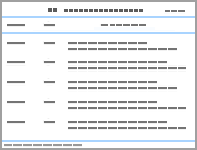
表1
中国各省市历年大豆种植面积(国家统计局)"
| 地区 Region | 年份Year | |||||||||||||||
|---|---|---|---|---|---|---|---|---|---|---|---|---|---|---|---|---|
| 2023 | 2019 | 2014 | 2009 | 2004 | 1999 | 1994 | 1989 | 1984 | 1979 | 1974 | 1969 | 1964 | 1959 | 1954 | 1949 | |
| 北京Beijing | 4.3 | 1.4 | 4.1 | 8.4 | 13.6 | 10.4 | 14.9 | 13.5 | 7.8 | 7.7 | 6.8 | 22.7 | 30.9 | 39.0 | 56.5 | 51.2 |
| 天津Tianjin | 5.7 | 5.2 | 6.4 | 11.6 | 29.3 | 35.2 | 58.6 | 47.0 | 25.8 | 20.6 | 22.1 | 4.7 | 0.0 | 0.0 | 0.0 | 0.0 |
| 河北Hebei | 113.6 | 93.5 | 86.7 | 145.7 | 274.3 | 438.1 | 575.9 | 415.9 | 268.5 | 276.5 | 248.0 | 442.0 | 694.8 | 524.7 | 794.9 | 558.9 |
| 山西Shanxi | 117.0 | 129.1 | 149.5 | 178.8 | 210.9 | 245.9 | 282.7 | 245.1 | 161.0 | 129.5 | 129.6 | 238.7 | 322.1 | 295.1 | 479.9 | 188.5 |
| 内蒙古 Inner Mongolia | 1235.3 | 1189.8 | 744.6 | 931.2 | 752.9 | 736.8 | 603.9 | 317.6 | 192.6 | 182.7 | 35.3 | 54.0 | 265.8 | 204.0 | 223.9 | 106.0 |
| 辽宁Liaoning | 122.8 | 83.9 | 63.5 | 135.2 | 295.9 | 235.1 | 318.6 | 370.2 | 372.5 | 508.8 | 517.2 | 538.7 | 586.4 | 684.5 | 648.4 | 487.6 |
| 吉林Jilin | 328.8 | 345.0 | 242.8 | 462.6 | 525.9 | 278.4 | 504.9 | 537.3 | 397.1 | 576.5 | 675.6 | 756.0 | 742.3 | 885.2 | 939.2 | 665.7 |
| 黑龙江Heilongjiang | 4886.9 | 4279.5 | 2792.9 | 4165.2 | 3555.5 | 2153.2 | 2789.1 | 2263.8 | 1795.4 | 1665.1 | 1466.5 | 1494.0 | 1373.7 | 1440.0 | 1520.3 | 1033.0 |
| 上海Shanghai | 0.6 | 0.7 | 3.2 | 5.2 | 5.3 | 5.5 | 7.6 | 5.9 | 1.6 | 1.8 | 1.3 | 4.7 | 11.5 | 11.5 | 19.3 | 32.3 |
| 江苏Jiangsu | 225.4 | 191.8 | 201.7 | 230.9 | 216.4 | 210.4 | 255.4 | 309.4 | 285.7 | 240.5 | 313.0 | 448.7 | 678.6 | 573.5 | 984.5 | 404.2 |
| 浙江Zhejiang | 81.0 | 90.2 | 85.1 | 54.5 | 116.6 | 109.2 | 86.0 | 69.6 | 61.3 | 64.8 | 54.8 | 76.7 | 99.3 | 94.4 | 177.7 | 165.5 |
| 安徽Anhui | 631.5 | 636.2 | 679.7 | 891.1 | 888.1 | 478.9 | 504.9 | 590.5 | 750.4 | 653.0 | 714.7 | 636.7 | 698.8 | 573.3 | 928.1 | 452.0 |
| 福建Fujian | 35.8 | 32.7 | 32.9 | 45.4 | 88.4 | 109.2 | 103.2 | 87.3 | 75.7 | 50.4 | 62.1 | 68.7 | 66.7 | 67.3 | 91.3 | 78.0 |
| 江西Jiangxi | 112.7 | 108.8 | 100.5 | 95.6 | 101.5 | 150.4 | 166.2 | 137.6 | 132.2 | 125.9 | 138.1 | 148.0 | 196.9 | 255.5 | 248.9 | 111.4 |
| 山东Shandong | 232.4 | 183.5 | 147.5 | 164.7 | 241.2 | 492.2 | 571.5 | 487.5 | 483.3 | 634.1 | 863.5 | 1072.7 | 1498.9 | 1417.3 | 2300.1 | 1915.4 |
| 河南Henan | 380.8 | 394.7 | 381.9 | 462.1 | 522.5 | 569.2 | 656.3 | 673.1 | 942.7 | 859.4 | 818.5 | 893.3 | 1267.9 | 1240.7 | 1629.5 | 913.6 |
| 湖北Hubei | 242.2 | 211.7 | 136.8 | 111.4 | 183.8 | 207.0 | 201.4 | 173.7 | 159.1 | 224.3 | 191.1 | 223.3 | 258.5 | 274.7 | 249.4 | 242.5 |
| 湖南Hunan | 139.7 | 113.3 | 101.1 | 91.2 | 188.1 | 206.6 | 214.5 | 181.8 | 160.9 | 131.7 | 102.3 | 138.7 | 154.8 | 251.8 | 155.3 | 42.8 |
| 广东Guangdong | 35.9 | 32.6 | 36.4 | 48.8 | 80.4 | 96.4 | 104.7 | 115.7 | 135.6 | 130.1 | 140.2 | 78.0 | 90.3 | 69.8 | 138.5 | 69.9 |
| 广西Guangxi | 110.1 | 93.9 | 94.7 | 99.2 | 219.6 | 275.9 | 250.2 | 204.1 | 229.6 | 152.8 | 108.5 | 112.7 | 86.8 | 94.7 | 163.1 | 58.5 |
| 海南Hainan | 1.8 | 1.9 | 3.0 | 3.3 | 6.7 | 8.8 | 7.7 | 7.4 | 0.0 | 0.0 | 0.0 | 0.0 | 0.0 | 0.0 | 0.0 | 0.0 |
| 重庆Chongqing | 118.4 | 96.9 | 95.0 | 82.5 | 95.1 | 74.2 | 0.0 | 0.0 | 0.0 | 0.0 | 0.0 | 0.0 | 0.0 | 0.0 | 0.0 | 0.0 |
| 四川Sichuan | 554.0 | 402.0 | 312.4 | 243.6 | 200.9 | 137.9 | 189.4 | 191.3 | 182.5 | 190.5 | 213.3 | 228.7 | 232.2 | 253.3 | 268.1 | 230.2 |
| 贵州Guizhou | 238.3 | 191.8 | 180.9 | 149.0 | 131.1 | 142.2 | 130.9 | 130.5 | 127.9 | 108.4 | 125.9 | 204.7 | 124.9 | 114.0 | 106.5 | 84.9 |
| 云南Yunnan | 175.2 | 185.2 | 159.4 | 143.7 | 149.7 | 111.4 | 86.2 | 71.0 | 66.7 | 47.4 | 47.4 | 77.3 | 91.9 | 97.0 | 126.6 | 104.9 |
| 西藏Xizang | 0.0 | 0.1 | 0.1 | 0.1 | 0.3 | 0.3 | 0.0 | 23.3 | 0.3 | 0.0 | 0.0 | 0.0 | 0.0 | 0.0 | 0.0 | 0.0 |
| 陕西Shaanxi | 177.0 | 151.1 | 143.5 | 205.3 | 308.1 | 273.2 | 344.9 | 279.7 | 195.7 | 195.1 | 208.7 | 274.0 | 355.5 | 314.0 | 341.8 | 280.4 |
| 甘肃Gansu | 62.0 | 41.4 | 67.6 | 82.6 | 86.7 | 86.2 | 90.0 | 53.0 | 41.2 | 31.9 | 26.5 | 45.3 | 39.2 | 47.9 | 39.1 | 26.8 |
| 宁夏Ningxia | 27.2 | 4.9 | 11.4 | 19.3 | 20.5 | 40.5 | 44.3 | 34.3 | 20.2 | 22.5 | 21.0 | 28.0 | 29.5 | 28.0 | 18.5 | 14.5 |
| 新疆Xinjiang | 77.5 | 39.0 | 32.5 | 70.5 | 79.7 | 43.4 | 58.0 | 20.1 | 13.1 | 14.9 | 9.2 | 18.0 | 10.4 | 12.0 | 4.3 | 0.0 |
| 青海Qinghai | 0.0 | 0.0 | 0.0 | 0.0 | 0.0 | 0.0 | 0.0 | 0.0 | 0.0 | 0.0 | 0.0 | 0.0 | 0.0 | 0.1 | 0.1 | 0.0 |
| 台湾Taiwan | - | - | - | - | - | - | - | - | - | - | - | - | - | - | - | - |
| 总计Total | 12496.9 | 11350.8 | 9111.8 | 11347.7 | 11593.0 | 9961.1 | 11215.9 | 10046.2 | 9270.4 | 9225.9 | 9235.2 | 10298.0 | 11972.6 | 11822.3 | 14607.8 | 10267.7 |
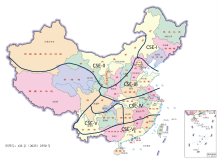
图1
中国大豆生态栽培区分布 CSE:中国大豆生态栽培区。CSE-Ⅰ:东北春作大豆生态栽培区;CSE-Ⅱ:西北春作大豆生态栽培区;CSE-Ⅲ:黄淮海夏作大豆生态栽培区;CSE-Ⅳ:长江流域春夏秋作大豆生态栽培区;CSE-Ⅴ:西南高原春夏作大豆生态栽培区;CSE-Ⅵ:岭南四季大豆生态栽培区。下同"
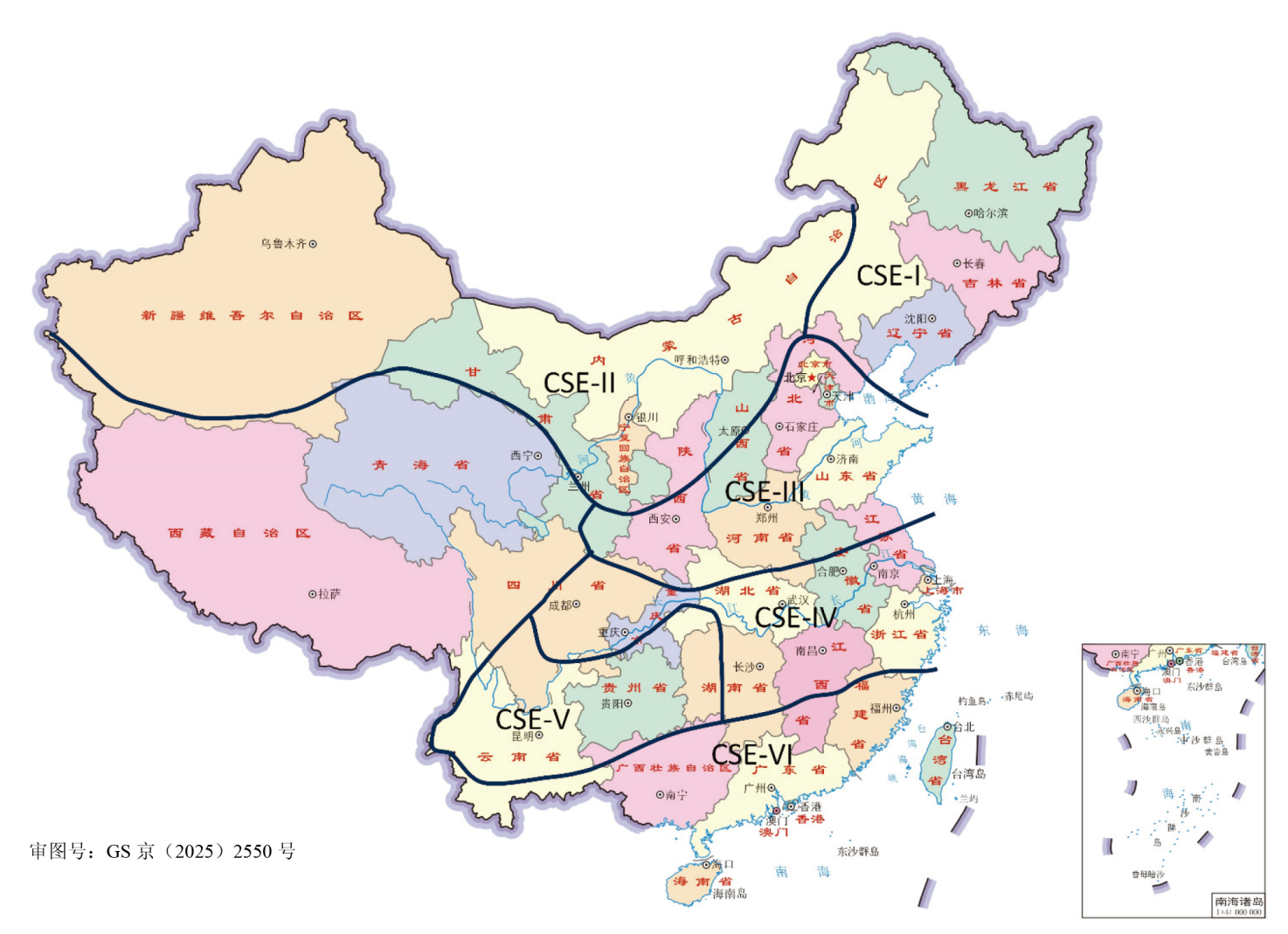
表2
现时我国大豆生态栽培区地理分布和气候特点"
| 生态栽 培区 CSE | 名称 Name | 年降水 Average annual rainfall | 10 ℃以上积温 Accumulated temperature over 10 ℃ | 地理范围 Geographical distribution |
|---|---|---|---|---|
| CSE-Ⅰ | 东北春作大豆生态栽培区 Northeast spring planting soybean ecological cultivation region | 400-800 mm,小部分小于400 mm Most 400-800 mm, fraction below 400 mm | 大部分2000-3000 ℃ Most 2000-3000 ℃ | 大兴安岭以东及西麓、小兴安岭南及北麓、内蒙古高原以东、燕山-太行山以北的东北平原等 The Northeast Plain, which is located of the east and west slopes of Great Khingan Mountains, south and north slopes of Little Khingan Mountains, east of Inner Mongolian Plateau, north of Yanshan-Taihang Mountains, etc |
| CSE-Ⅱ | 西北春作大豆生态栽培区 Northwest spring planting soybean ecological cultivation region | 大部分400 mm以下 Most below 400 mm | 大部分2000-3000 ℃,部分3000-4000 ℃ Most 2000-3000 ℃, fraction 3000-4000 ℃ | 内蒙古高原、黄土高原北部、河套平原、河西走廊、塔里木盆地、准格尔盆地等 The Inner Mongolian Plateau, northern Loess Plateau, Hetao Plain, Hexi Corridor, Tarim Basin, Jurggar Basin, etc |
| CSE-Ⅲ | 黄淮海夏作大豆生态栽培区 Huang-Huai-Hai summer planting soybean ecological cultivation region | 400 mm以上,南部800-1600 mm Most 400 mm, southern 800-1600 mm | 大部分4000-5000 ℃,部分3000-4000 ℃ Most 4000-5000 ℃, fraction 3000-4000 ℃ | 太行山以东、燕山以南、秦岭/大巴山-淮河以北的华北平原、关中平原、秦巴山区等 The east of Taihang Mountains, south of Yanshan, north of Qinling/Daba Mountains- Huai River, North China Plain, Guanzhong Plain, and Qinba Mountains, etc |
| CSE-Ⅳ | 长江流域春夏秋作大豆生态栽培区 Changjiang valley spring- summer-autumn planting soybean ecological cultivation region | 大部分800 mm,东南部1600 mm以上 Most 800 mm, southeastern 1600 mm | 大部分5000-6000 ℃,部分4000-5000 ℃ Most 5000-6000 ℃, fraction 4000-5000 ℃ | 秦岭/大巴山-淮河以南、川西高原以东、云贵高原以北以东、南岭以北的长江中下游平原、两湖平原、四川盆地、江南丘陵等 The south of Qinling/Daba Mountains-Huai River, east of the Western Sichuan Plateau, north of Yunnan-Guizhou Plateau, north of southeast Hilly-Nanling Mountain, Middle and Lower Yangtze Valleys, Two Lakes Plain, Sichuan Basin, Jiangnan Hills, etc |
| CSE-Ⅴ | 西南高原春夏作大豆生态栽培区 Southwest plateau spring-summer planting soybean ecological cultivation region | 800-1600 mm Most 800-1600 mm | 大部分3000-5000 ℃ Most 3000-5000 ℃ | 川西川南高原区、云贵高原、湘西雪峰山等 Western Sichuan and Southern Sichuan Plateau, Yunnan-Guizhou Plateau, WesternXuefeng Mountain, etc |
| CSE-Ⅵ | 岭南四季大豆生态栽培区 South China all season planting soybean ecological cultivation region | 1600 mm,部分800- 1600 mm Most 1600 mm, fraction 800-1600 mm | 大部分6000 ℃以上,小部分5000-6000℃ Most 6000℃, fraction 5000-6000 ℃ | 云贵高原以东以南、南岭及其以南等 East and south of Yunnan-Guizhou Plateau and south of Nanling Mountain, etc |
表3
现时大豆生态栽培区划与耕作区划的对应关系"
| 生态栽培区CSE | 名称 Name | 耕作区划[ Cultivation region [ | 二级区[ Secondary region [ |
|---|---|---|---|
| CSE-Ⅰ | 东北春作大豆生态栽培区 Northeast spring planting soybean ecological cultivation region | 1东北平原丘陵半湿润喜温作物一熟区 1 Semi-humid-thermophilic single-crop region in Northeast Plain-Hills | 1.2三江平原农业区、1.3松嫩平原农业区、1.4长白山地农林区、1.5辽东滨海农渔区、2.1内蒙古草原农牧区东北部、2.2辽吉西蒙东南冀北山地农牧区等 1.2 Sanjiang Plain farming region, 1.3 Songnen Plain farming region, 1.4 Changbai Mountain farming-forestry region, 1.5 Liaoning coastal farming- fishery region, 2.1 Northeastern Inner Mongolia Grassland farming-pastoral region, 2.2 Western of Liaoning and Jilin, southeastern Inner Mongolia, and northern Hebei Mountain farming-pastoral region, etc |
| CSE-Ⅱ | 西北春作大豆生态栽培区 Northwest spring planting soybean ecological cultivation region | 2内蒙古高原半干旱温凉作物一熟区、3甘新绿洲喜温作物一熟区、5黄土高原易旱喜温作物一熟二熟区 2 Inner Mongolia Plateau semi-arid cool-warm single-crop region, 3 Gansu-Xinjiang oasis warm single-crop region, 5 Loess Plateau drought-prone warm single-double-crop region | 2.1内蒙古草原农牧区、2.3晋北后山坝上高原农牧区、2.4河套银川平原农牧区、2.5鄂尔多斯高原农牧区、2.6阿拉善高原农业区、3.1北疆准噶尔盆地农牧林区、3.2南疆塔里木盆地农牧区、3.3河西走廊农牧区、5.1黄土高原中部沟谷农林牧区、5.2黄土高原南部旱塬农林牧区、5.3黄土高原西部丘陵农林区等 2.1 Inner Mongolia Grassland farming-pastoral region, 2.3 Shanxi Houshan Bashang Plateau farming-pastoral region, 2.4 Hetao Yinchuan Plain farming-pastoral region, 2.5 Ordos Plateau farming-pastoral region, 2.6 Alxa Plateau farming region, 3.1 Junggar Basin farming-pastoral region, 3.2 Tarim Basin farming-pastoral region, 3.3 Hexi Corridor farming-pastoral region, 5.1 Central Loess Plateau valley farming- forestry region, 5.2 Southern Loess Plateau dry plateau farming-forestry region, 5.3 Western Loess Plateau hilly farming-forestry region, etc |
| CSE-Ⅲ | 黄淮海夏作大豆生态栽培区 Huang-Huai-Hai summer planting soybean ecological cultivation region | 5黄土高原易旱喜温作物一熟二熟区、6黄淮海平原丘陵灌溉农作二熟区、7西南山地丘陵旱地水田二熟区 5 Single-double-crop region for drought- prone and temperature-loving in Loess Plateau, 6 Double-crop region for irrigation farming in Huang-huai-hai Plain-hills, 7 Double-crop region for dryland paddy fields in southwestern mountainous-hilly | 5.4汾渭谷地二熟农业区、5.5豫西晋东丘陵山地二熟农林区、6.1燕山太行山山前平原农业区、6.2冀鲁豫低洼平原农业区、6.3山东丘陵农林渔区、6.4黄淮平原农业区、7.1秦巴山林农区等 5.4 Fenwei Valley double-crop farming region, 5.5 West Henan and East Shanxi hilly-mountainous double-crop farming-forestry region, 6.1 Yanshan-Taihang Mountain piedmont plain farming region, 6.2 Hebei, Shandong and Henan low-lying-plain farming region, 6.3 Shandong hilly farming-forestry-fishery region, 6.4 Huanghuai Plain farming region, 7.1 Qin-ba Mountain forest-farming region, etc |
| CSE-Ⅳ | 长江流域春夏秋作大豆生态栽培区 Changjiang Valley spring- summer-autumn planting soybean ecological cultivation region | 8四川盆地水田旱地二熟区、9长江中下游平原三熟区丘陵水田旱地三熟二熟区、10江南丘陵山地水田旱地三熟区 8 Sichuan Basin paddy field and dry land double-crop region, 9 Middle and lower reaches of Yangtze River plain triple-double-crop region, hilly paddy field and dry land triple-crop region, 10 Jiangnan hilly-mountain paddy field and dry land triple-crop region | 8.1盆西平原农林区、8.2盆东丘陵山地林农区、9.1鄂豫皖低山平原农林区、9.2江淮平原农业区、9.3沿江平原农业区、9.4两湖平原农林区大部和10.1浙闽沿海丘陵山地农林渔区等 8.1 Basin-West Plain farming-forestry region, 8.2 Basin-East hilly- mountainous forestry-farming region, 9.1 Hubei-Henan-Anhui low- mountain-plain farming-forestry region, 9.2 Jianghuai Plain farming region, 9.3 Riverside Plain farming region, 9.4 Most of Two Lakes Plain farming-forestry region, and 10.1 Zhejiang-Fujian coastal-hilly- mountainous farming-forestry-fishery region, etc |
| CSE-Ⅴ | 西南高原春夏作大豆生态栽培区 Southwest plateau spring- summer planting soybean ecological cultivation region | 7西南山地丘陵旱地水田二熟区 7 Southwest mountainous-hilly dryland paddy field double-crop region | 7.2渝鄂黔湘浅山农林区、7.3贵州高原农林牧区、7.4川滇黔高原山地农林牧区和7.5云南高原农林牧区等 7.2 Chongqing-Hubei-Guizhou-Hunan low-mountain farming-forestry region, 7.3 Guizhou plateau farming-forestry-pastoral region, 7.4 Sichuan-Yunnan-Guizhou plateau-mountain farming-forestry-pastoral region, and 7.5 Yunnan plateau farming-forestry-pastoral region, etc |
| CSE-Ⅵ | 岭南四季大豆生态栽培区 South China all season planting soybean ecological cultivation region | 10江南丘陵山地水田旱地三熟区、11华南丘陵平原水田旱地三熟区 10 Triple-crop region of paddy fields and dry land in hilly-mountainous of Jiangnan; 11 Triple-crop region of paddy fields and dry land in hilly-plain of South China | 10.1浙闽沿海丘陵山地农林渔区中南部、10.2南岭丘陵山地农林区、11.1华南低平原农林渔区和11.2西双版纳山地丘陵农林牧区等 10.1 Central and southern of Zhejiang-Fujian coastal hilly-mountainous farming-forestry-fishery region, 10.2 Nanling hilly-mountainous farming- forestry-fishery region, 11.1 South China low-plain farming-forestry- fishery region, and 11.2 Xishuangbanna mountainous-hilly farming- forestry-pastoral region, etc |
表4
现时我国大豆生态栽培区的种植制度"
| 生态栽 培区 CSE | 名称 Name | 行政区域分布 Distribution of administrative regions | 主栽作物/种植制度 Main crops/ cultivation system | 面积 Area (khm2) | 大豆熟期组Maturity group |
|---|---|---|---|---|---|
| CSE-Ⅰ | 东北春作大豆生态栽培区 Northeast spring planting soybean ecological cultivation region | 黑龙江、吉林、辽宁、河北北部、内蒙古东部 Heilongjiang, Jilin, Liaoning, northern Hebei, Eastern Inner Mongolia | 春玉米、水稻、大豆 Sp-corn, rice, soybean | 6365 | 000-Ⅲ |
| CSE-Ⅱ | 西北春作大豆生态栽培区 Northwest spring planting soybean ecological cultivation region | 新疆和内蒙古大部、甘肃大部、宁夏、陕西中北部、山西西北部Most of Xinjiang and Inner Mongolia, most of Gansu, Ningxia, central northern Shaanxi, and northwestern Shanxi | 春小麦、春玉米、棉花、冬小麦-夏玉米 Sp-wheat, sp-corn, cotton, win-wheat- su-corn | 456 | 000-Ⅲ |
| CSE-Ⅲ | 黄淮海夏作大豆生态栽培区 Huang-Huai-Hai summer planting soybean ecological cultivation region | 河北和河南大部、北京、天津、山东、安徽和江苏北部,山西和陕西中南部、甘肃东南部 Hebei and most of Henan, Beijing, Tianjin, Shandong, Anhui and northern Jiangsu, Shanxi and central southern Shaanxi, and southeastern Gansu | 冬小麦/油菜-中稻/夏玉米 Win-wheat/rape-semi-late rice/su-corn | 1394 | Ⅱ-Ⅳ |
| CSE-Ⅳ | 长江流域春夏秋作大豆生态栽培区 Changjiang Valley spring-summer- autumn planting soybean ecological cultivation region | 四川中东部、湖北大部、河南最南部、安徽和江苏中南部、湖南中东部、江西中北部、浙江和上海等 Central and eastern Sichuan, most of Hubei, southernmost Henan, central and southern Anhui and Jiangsu, central and eastern Hunan, central and northern Jiangxi, Zhejiang and Shanghai, etc | 冬小麦/油菜-中稻/夏玉米、油-稻-稻 Win-wheat/ rape- semi-late rice/ su-corn, rape-early rice- late rice | 1407 | 春0-Ⅲ,夏秋Ⅲ-Ⅵ Sp 0-Ⅲ, Su/ au Ⅲ-Ⅵ |
| CSE-Ⅴ | 西南高原春夏作大豆生态栽培区 Southwest plateau spring-summer planting soybean ecological cultivation region | 四川西部南部、重庆西南部、湖北西南部、贵州、云南大部、湖南西部等 Southwest Sichuan, southwestern Chongqing, southwestern Hubei, Guizhou, most of Yunnan, western Hunan, etc | 春玉米、冬小麦/油菜-中稻/夏玉米、油-稻-稻 Sp-corn, win-wheat/rape- semi- late rice/su-corn, rape-early rice- late rice | 503 | 春Ⅱ-Ⅲ,夏秋Ⅳ-Ⅴ Sp Ⅱ-Ⅲ, Su/ au Ⅳ-Ⅴ |
| CSE-Ⅵ | 岭南四季大豆生态栽培区 South China all season planting soybean ecological cultivation region | 广东、广西、福建、台湾、海南、湖南和江西南部、云南最南部 Guangdong, Guangxi, Fujian, Taiwan, Hainan, Hunan, southern Jiangxi, and southernmost Yunnan | 油-稻-稻、薯-稻-稻、春玉米-夏玉米 Rape- early rice- late rice, sweet potato- early rice- late rice, sp-corn- su-corn | 168 | 春Ⅱ-Ⅲ,夏秋Ⅶ-Ⅷ Sp Ⅱ-Ⅲ, Su/ au Ⅶ-Ⅷ |
表5
现时我国大豆生态栽培区与历史上大豆栽培区的对应关系"
| 生态栽 培区 CSE | 名称 Name | 王金陵[ WANG J L [ | 吉林省农科院[ Jilin Academy of Agricultural Sciences[ | 吕世霖等[ LÜ S L, et al[ | 卜慕华等[ BO M H, et al [ | 盖钧镒等[ GAI J Y, et al[ |
|---|---|---|---|---|---|---|
| CSE-Ⅰ | 东北春作大豆生态栽培区 Northeast spring planting soybean ecological cultivation region | 春作大豆区 Spring planting soybean region | 东北春大豆亚区 Northeast spring soybean sub-region | 东北春播亚区、内蒙古春播亚区 Northeast spring planting sub- region; Inner Mongolia spring planting sub-region | 东北春作亚区 Northeast spring planting sub-region | 东北亚区 Northeast sub-region |
| CSE-Ⅱ | 西北春作大豆生态栽培区 Northwest spring planting soybean ecological cultivation region | 春作大豆区 Spring planting soybean region | 黄土高原春大豆亚区、西北春大豆亚区 Loess Plateau spring soybean sub-region; northwest spring soybean sub-region | 新疆春播亚区、冀晋陕中部春夏播亚区 Xinjiang spring planting sub region; spring and summer planting sub-region in central Hebei, Shanxi, and Shaanxi | 北部高原春作亚区、西北春作亚区 Northern Plateau spring planting sub-region; Northwest spring planting sub-region | 华北高原亚区、西北亚区 Northern Plateau planting sub-region; Northwest sub- regions |
| CSE-Ⅲ | 黄淮海夏作大豆生态栽培区 Huang-Huai-Hai summer planting soybean ecological cultivation region | 夏作大豆冬闲区 Summer planting- winter fallow region | 黄淮流域夏大豆区 Huang-Huai summer soybean region | 黄淮大豆区、长江中下游秦巴春夏播亚区 Huang-Huai soybean region; middle and lower Changjiang Valley, Qin-Ba Spring, summer planting sub-region | 黄淮海流域夏作区 Huang-Huai-Hai summer planting region | 黄淮海二熟制春夏作大豆栽培区 Huang-Huai-Hai double cropping, spring and summer planting cultivating region |
| CSE-Ⅳ | 长江流域春夏秋作大豆生态栽培区 Changjiang Valley spring- summer-autumn planting soybean ecological cultivation Region | 夏作大豆区 Summer planting soybean region | 长江中下游夏大豆亚区、四川夏大豆亚区、秋大豆区 Middle and lower Changjiang Valley summer soybean sub- region; Sichuan summer soybean sub-region; autumn soybean region | 长江中下游秦巴春夏播亚区、鄂赣浙闽北春夏秋播亚区、四川春夏秋播亚区 Middle and lower Changjiang Valley, Qin-Ba spring summer planting sub-region; Hubei, Jiangxi, Zhejiang, Northern Fujian spring summer autumn sub- region; Sichuan spring summer autumn sub-region | 长江亚区、东南亚区、中南亚区 Changjiang valleys sub-region; eastern South sub-region; Middle south sub- region | 长江中下游二熟制春夏作大豆栽培区、东中南亚区、四川盆地亚区 Middle and lower Changjiang Valley double cropping, spring and summer planting cultivating region; Eastern Middle South sub-region; Sichuan Basin sub-region |
| CSE-Ⅴ | 西南高原春夏作大豆生态栽培区 Southwest plateau spring- summer planting soybean ecological cultivation region | 夏作大豆区、秋作大豆区 Summer planting soybean region; autumn planting soybean region | 云贵高原夏大豆亚区 Yunnan-Guizhou Plateau summer soybean planting region | 云贵高原春夏秋播亚区 Yunnan-Guizhou Plateau spring, summer autumn, planting region | 西南高原春作亚区 Southwest Plateau spring planting region | 西南高原二熟制春夏作大豆栽培区 Southwest Plateau double cropping, spring and summer planting cultivating region |
| CSE-Ⅵ | 岭南四季大豆生态栽培区 South China all season planting soybean ecological cultivation region | 秋作大豆区、大豆两获区 Autumn planting soybean region, soybean two harvest region | 秋大豆区、冬大豆区 Autumn soybean region; winter soybean region | 华南南部四季区、鄂赣浙闽北春夏秋播亚区 South China all season planting region; Hubei Jiangxi Zhejiang northern Fujian spring summer autumn sub-region; Sichuan spring summer autumn sub- region | 东南亚区、中南亚区、华南多作亚区 Eastern South sub- region; Middle South sub-region; South China multiple cropping planting region | 东中南亚区、华南热带多熟制四季大豆栽培区 Eastern Middle South sub- region; South China tropical multiple cropping, all season planting cultivating region |
| [1] |
宋雯雯, 李继存, 赵云, 周静, 黄新阳, 曾海燕, 杨光明, 李素真, 吴存祥, 韩天富. 中国大豆微核心种质光温综合反应敏感性的鉴定. 植物遗传资源学报, 2020, 21(1): 146-153.
doi: 10.13430/j.cnki.jpgr.20190606004 |
|
|
|
| [2] |
doi: 10.1016/S2095-3119(19)62850-9 |
| [3] |
杨永华, 盖钧镒, 马育华. 大豆生育期光温反应特性的遗传. 作物学报, 1994, 20(2): 144-148.
|
|
|
|
| [4] |
doi: 10.1016/S2095-3119(14)60856-X |
| [5] |
doi: 10.1186/s12864-017-3778-3 pmid: 28549456 |
| [6] |
姜芬芬, 孙磊, 刘方东, 王吴彬, 邢光南, 张焦平, 张逢凯, 李宁, 李艳, 贺建波, 等. 世界大豆生育阶段光温综合反应的地理分化和演化. 中国农业科学, 2022, 55(3): 451-466. doi: 10.3864/j.issn.0578-1752.2022.03.003.
|
|
|
|
| [7] |
盖钧镒, 汪越胜, 张孟臣, 王继安, 常汝镇. 中国大豆品种熟期组划分的研究. 作物学报, 2001, 27(3): 286-292.
|
|
|
|
| [8] |
陈阜, 姜雨林, 尹小刚. 中国耕作制度发展及区划方案调整. 中国农业资源与区划, 2021, 42(3): 1-6.
|
|
|
|
| [9] |
张素心, 申格, 余强毅, 吴文斌. 中国耕地种植制度遥感探测及其时空特征. 中国农业科学, 2024, 57(8): 1469-1489. doi: 10.3864/j.issn.0578-1752.2024.08.005.
|
|
|
|
| [10] |
刘巽浩. 农作制与中国农作制区划. 中国农业资源与区划, 2002, 23(5): 11-15.
|
|
|
|
| [11] |
潘铁夫, 张德荣, 张文广, 叶修祺, 荆淑民, 戚鹤年, 潘荣欣, 王荣堂, 高振福, 张振, 等. 中国大豆气候区划的研究, 大豆科学, 1984, 1(3): 169-182.
|
|
|
|
| [12] |
王金陵, 武镛祥, 吴和礼, 孙善澄. 中国南北地区大豆光照生态类型的分析. 农业学报, 1956, 7(2): 169-180.
|
|
|
|
| [13] |
王国勋, 罗学华, 李友华. 论我国南北大豆生育期生态类型及在引种工作中的应用. 大豆科学, 1982, 1(1): 33-40.
|
|
|
|
| [14] |
郝耕, 陈杏娟, 卜慕华. 中国大豆品种生育期组的划分. 作物学报, 1992, 18(4): 275-281.
|
|
|
|
| [15] |
任全兴, 盖钧镒, 马育华. 我国大豆品种生育期生态特性研究. 中国农业科学, 1987, 20(5): 23-28. doi: 10.3864/j.issn.0578-1752.1987-20-05-23-28.
|
|
|
|
| [16] |
刘巽浩, 韩湘玲. 中国耕作制度区划. 北京: 北京农业大学出版社, 1987.
|
|
|
|
| [17] |
安萍莉, 陈思宇, 孟丽君, 江丽. 三调耕地分等中全国标准耕作制度体系的确定. 中国农业大学学报, 2020, 25(8): 61-72.
|
|
|
|
| [18] |
王金陵. 中国大豆栽培区域划分之初步探讨. 农报, 1943, 8(25-30): 282-286.
|
|
|
|
| [19] |
吉林省农业科学院. 中国大豆育种与栽培. 北京: 农业出版社, 1987.
|
|
Jilin Academy of Agricultural Sciences. Breeding and Cultivation of Soybeans in China. Beijing: Agricultural Press, 1987. (in Chinese)
|
|
| [20] |
吕世霖, 程舜华, 程创基, 郭显荣, 李娥, 王峰. 我国大豆栽培区划的研究. 山西农业大学学报, 1981, l(1): 9-17.
|
|
|
|
| [21] |
卜慕华, 潘铁夫. 中国大豆栽培区域探讨. 大豆科学, 1982, 1(2): 105-121.
|
|
|
|
| [22] |
盖钧镒, 汪越胜. 中国大豆品种生态区域划分的研究. 中国农业科学, 2001, 34(2): 139-145. doi: 10.3864/j.issn.0578-1752.2001-34-2-23-29.
|
|
|
|
| [23] |
宋雯雯. 中国大豆功能性成分地理分布规律及环境影响因素分析[D]. 北京: 中国农业科学院, 2018.
|
|
|
|
| [24] |
doi: 10.1016/j.foodres.2022.112364 |
| [25] |
汪越胜, 盖钧镒. 中国各省大豆品种的熟期组分布. 作物品种资源, 1999, 1(4): 5-6, 48.
|
|
|
|
| [26] |
汪越胜, 盖钧镒. 中国大豆品种生态区划的修正: Ⅱ.各区范围及主要品种类型. 应用生态学报, 2002, 13(1): 71-75.
|
|
|
|
| [27] |
傅蒙蒙, 王燕平, 任海祥, 王德亮, 包荣军, 杨兴勇, 田忠艳, 曹景举, 傅连舜, 程延喜, 等. 东北春大豆熟期组的划分与地理分布. 大豆科学, 2016, 35(2): 181-192.
|
|
|
|
| [28] |
任珩, 赵文智, 杨荣, 杜泽玉. 河西走廊绿洲农业水生产力提升的途径与对策. 中国沙漠, 2024, 44(5): 217-224.
doi: 10.7522/j.issn.1000-694X.2024.00108 |
|
doi: 10.7522/j.issn.1000-694X.2024.00108 |
|
| [29] |
祝宏辉, 杜美玲, 尹小君. 节水农业技术对绿洲农业生态效率的影响:促进还是抑制?——以新疆玛纳斯河流域绿洲农业为例. 干旱区资源与环境, 2022, 36(10): 34-41.
|
|
|
| [1] | 蔡廷阳, 朱玉鹏, 李瑞东, 吴宗声, 徐一帆, 宋雯雯, 徐彩龙, 吴存祥. 苗期叶损伤对黄淮海夏大豆光合特性、荚果分布及产量形成的影响[J]. 中国农业科学, 2026, 59(2): 292-304. |
| [2] | 吴琼, 谢香庭, 王磊, 牟勇, 李进伟. 转基因大豆DBN8205转化体特异性定量PCR方法的研发和验证[J]. 中国农业科学, 2026, 59(1): 29-40. |
| [3] | 严孙辉, 罗程, 陈银基, 庄昕波. 细菌纤维素协同pH偏移处理对大豆分离蛋白凝胶特性与微观结构的影响[J]. 中国农业科学, 2025, 58(6): 1210-1222. |
| [4] | 刘路平, 胡雪洁, 祁金, 陈强, 刘智, 赵田湉, 史晓蕾, 刘兵强, 孟庆民, 张孟臣, 韩天富, 杨春燕. 大豆生育期基因E1和E2的启动子克隆及其表达模式分析[J]. 中国农业科学, 2025, 58(5): 840-850. |
| [5] | 郑煜, 陈颐, 遆晋松, 史龙飞, 许校博, 李昱霖, 郭瑞. 烟草不同轮作模式碳足迹及经济效益评价[J]. 中国农业科学, 2025, 58(4): 733-747. |
| [6] | 张琦, 薛芙珍, 杨秀洁, 姜苏洋, 黄雪娟, 马佳怡, 张哲文, 徐杰飞. 大豆烟酰胺酶GmNIC1在盐碱胁迫下的功能研究[J]. 中国农业科学, 2025, 58(24): 5128-5142. |
| [7] | 马鹤逍, 葛国龙, 张向前, 路战远, 王满秀, 戎美仁, 师晶晶, 张德健, 孙雪萍. 不同作物轮作系统对土壤易氧化有机碳和碳库活度差异性的影响[J]. 中国农业科学, 2025, 58(24): 5201-5215. |
| [8] | 高春华, 赵海军, 赵逢涛, 孔玮琳, 巨飞燕, 李宗新, 石德杨, 刘苹. 生长调节剂对玉米大豆带状间作下夏玉米茎秆特性与产量的影响[J]. 中国农业科学, 2025, 58(23): 4920-4935. |
| [9] | 杨舒淇, 赵影星, 钱欣, 张学鹏, 孟维伟, 隋鹏, 李宗新, 陈源泉. 黄淮地区玉米大豆复合种植模式的综合效益评估[J]. 中国农业科学, 2025, 58(23): 4936-4951. |
| [10] | 房健, 秦召纪, 于园园, 于宁宁, 赵斌, 刘鹏, 任佰朝, 张吉旺. 大豆玉米带状间作下不同行比配置对作物个体和群体产量及效益的影响[J]. 中国农业科学, 2025, 58(23): 4841-4857. |
| [11] | 宋旭辉, 赵雪盈, 赵斌, 任佰朝, 张吉旺, 刘鹏, 任昊. 行比配置对玉米大豆带状复合种植系统冠层光合特性及产量形成的影响[J]. 中国农业科学, 2025, 58(23): 4858-4871. |
| [12] | 石德杨, 高春华, 李艳红, 赵海军, 夏德君. 行距配置对间作玉米冠层特性及产量的影响[J]. 中国农业科学, 2025, 58(23): 4872-4885. |
| [13] | 张梦雨, 何在菊, 王星星, 任昊, 任佰朝, 刘鹏, 张吉旺, 赵斌. 玉米大豆带状复合种植模式下不同株高玉米品种搭配对群体冠层光分布及玉米光合特性的影响[J]. 中国农业科学, 2025, 58(23): 4886-4904. |
| [14] | 孔玮琳, 高春华, 赵逢涛, 巨飞燕, 李宗新, 赵海军, 刘苹. 施氮量与播后滴灌量对玉米大豆带状复合种植系统产量、经济效益及水分利用特性的影响[J]. 中国农业科学, 2025, 58(23): 4905-4919. |
| [15] | 于哲, 周芳雪, 刘润发, 田雅琦, 吉好木哈, 王勇翔, 冯雯蜜, 牟可欣, 井妍, 李海燕. 利用酵母双杂交系统筛选与大豆花叶病毒核内含体蛋白互作的大豆寄主因子[J]. 中国农业科学, 2025, 58(19): 3799-3813. |
|
||
