Scientia Agricultura Sinica ›› 2026, Vol. 59 ›› Issue (13): 2933-2945.doi: 10.3864/j.issn.0578-1752.2026.13.014

• FOOD SCIENCE AND ENGINEERING • Previous Articles     Next Articles

Differential Absorption of Components in Buckwheat Polyphenols via MKN28/Caco-2 Continuous Transport Model and Their Lipid- Lowering Effects

YAO YiJun(), CHEN Yu, JU XingRong, WANG LiFeng()   

  1. College of Food Science and Engineering, Nanjing University of Finance and Economics/Collaborative Innovation Center for Modern Grain Circulation and Safety, Nanjing 210023
  • Received:2025-12-19 Accepted:2026-04-07 Online:2026-07-01 Published:2026-07-01
  • Contact: WANG LiFeng

Abstract:

【Background】 Polyphenolic compounds exhibit pronounced lipid-lowering effects, and their absorption in the human gastrointestinal tract varies considerably, which critically influences their bioavailability. Buckwheat, a natural food being rich in polyphenols, has been suggested to possess unique lipid-lowering potential. 【Objective】 This study aimed to investigate the differential absorption of buckwheat polyphenols using an MKN28/Caco-2 sequential transport model, and to systematically evaluate their lipid-lowering effects and underlying mechanisms through cellular assays and gut microbiota fermentation experiments.【Method】 Buckwheat polyphenol extract was characterized by ultra-high-performance liquid chromatography coupled with quadrupole Orbitrap mass spectrometry (UHPLC-Q-Orbitrap MS). Based on the MKN28/Caco-2 transport model, the extract was fractionated into readily absorbable and poorly absorbable components. The lipid-lowering effects of the absorbable fraction were assessed in adipocytes using Oil Red O staining and intracellular lipid quantification. In addition, the impact of the non-absorbable fraction on gut microbiota composition was evaluated in vitro fermentation.【Result】 Component analysis revealed that there are 23 kinds of polyphenolic compounds rutin and protocatechuic acid exhibited relatively high signal intensities. The absorbable fraction significantly reduced lipid accumulation in adipocytes, with triglyceride (TG), total cholesterol (TC), and low-density lipoprotein cholesterol (LDL-C) levels in 3T3-L1 cells decreased by 17.8%, 28.6%, and 15.2%, respectively. Furthermore, in vitro fermentation demonstrated that the poorly absorbable fraction (BWP-AP) modulated gut microbiota composition by increasing the relative abundance of Bacteroides and Bifidobacterium, while decreasing Escherichia-Shigella and Alistipes.【Conclusion】 Buckwheat polyphenol extract contained 23 identified phenolic compounds. The readily absorbable fraction exerted significant intracellular lipid-lowering effects, whereas the poorly absorbable fraction regulated metabolic homeostasis via modulation of gut microbiota. These findings revealed a dual-pathway mechanism involving direct host absorption and microbiota-mediated regulation, providing a theoretical basis for the development of functional foods based on buckwheat polyphenols.

Key words: buckwheat polyphenols, MKN28/Caco-2 continuous transport model, differential absorption, lipid-lowering effects, gut microbiota

Table 1

Receiving rate of ethanol extract of buckwheat and content of total phenols and flavonoids"

得率
Receiving rate (%)
总酚
Total phenolic content (mg GAE·g-1)
总黄酮
Total flavonoid content (mg RE·g-1)
苦荞 Tartary buckwheat 3.25±0.02 20.40±0.29 10.83±0.46
甜荞 Sweet buckwheat 2.50±0.04 13.24±0.54 7.30±0.62

Table 2

Composition and identification of polyphenols in tartary buckwheat extract by UHPLC-Q-Orbitrap MS"

序号
Number
保留时间
Retention
time
峰面积
Peak area
相对定量
Relative quantification (%)
分子量Molecular weight 误差
Error
value
分子式
Formula
注释源Annotation source 化合物
Compounds
测量值
Measured
value
理论值
Theoretical
value
mzCloud mzVault MassList
1 5.779 31520316066 95.31302115 610.1529 610.52 0.36715 C27H30O16 芦丁 Rutin
2 5.356 813686384.8 2.460473665 154.027 154.12 0.09301 C7H6O4 原儿茶酸 Protocatechuic acid
3 5.499 173675725.5 0.525171069 756.2135 756.66 0.44649 C33H40O20 山茶花苷A Camelliaside A
4 5.478 167558784.7 0.506674297 170.022 170.12 0.09805 C7H6O5 没食子酸 Gallic acid
5 5.685 110062044.7 0.332812208 390.132 390.38 0.24805 C20H22O8 虎杖苷 Polydatin
6 6.032 67686001.22 0.204672988 668.198 668.6 0.40199 C30H36O17 丹皮苷B
Tenuifoliside B
7 2.392 40018060.9 0.121009011 436.1357 436.41 0.27435 C21H24O10 根皮苷 Phlorizin
8 6.302 31067800.42 0.093944677 286.0482 286.236 0.18784 C15H10O6 木犀草素 Luteolin
9 6.179 30683750.47 0.092783364 346.0682 346.29 0.2218 C17H14O8 丁香苷 Syringetin
10 5.696 24698332.19 0.074684297 466.1122 466.39 0.27781 C21H22O12 车前草苷 Plantagoside
11 8.147 19850602.56 0.060025442 270.053 270.24 0.18705 C15H10O5 染料木黄酮 Genistein
12 5.903 16924242.75 0.05117654 194.0584 194.18 0.12162 C10H10O4 阿魏酸 Ferulic acid
13 9.826 13206999.01 0.039936115 770.2244 770.68 0.45556 C34H42O20 香蒲苷 Typhaneoside
14 5.652 12511802.1 0.037833937 304.0952 304.29 0.19482 C16H16O6 原苏木素B Protosappanin B
15 10.915 9320952.514 0.028185255 784.2782 784.75 0.47179 C36H48O19 安格洛苷C
Angoroside C
16 3.867 5294193.31 0.016008899 304.0581 304.25 0.19188 C15H12O7 二氢槲皮素 Taxifolin
17 6.305 3454208.941 0.010445044 166.0634 166.17 0.10657 C9H10O3 丹皮酚 Paeonol
18 5.464 3036822.242 0.009182925 492.1045 492.43 0.32549 C26H20O10 丹酚酸C
Salvianolic acid C
19 6.344 2796773.379 0.008457051 362.174 362.42 0.24605 C20H26O6 开环异落叶松树脂酚 Secoisolariciresinol
20 5.625 1966842.11 0.005947455 272.0901 272.25 0.15994 C12H16O7 熊果苷 Arbutin
21 5.599 1747962.418 0.005285594 582.1941 582.5505 0.35639 C27H34O14 柚皮苷
Naringin dihydrochalcone
22 11.716 631804.1539 0.001910487 578.1411 578.52 0.37889 C30H26O12 原花青素B2 Procyanidin B2
23 10.054 118564.9798 0.000358524 724.221 724.66 0.43898 C33H40O18 女贞苷 Ligustroflavone

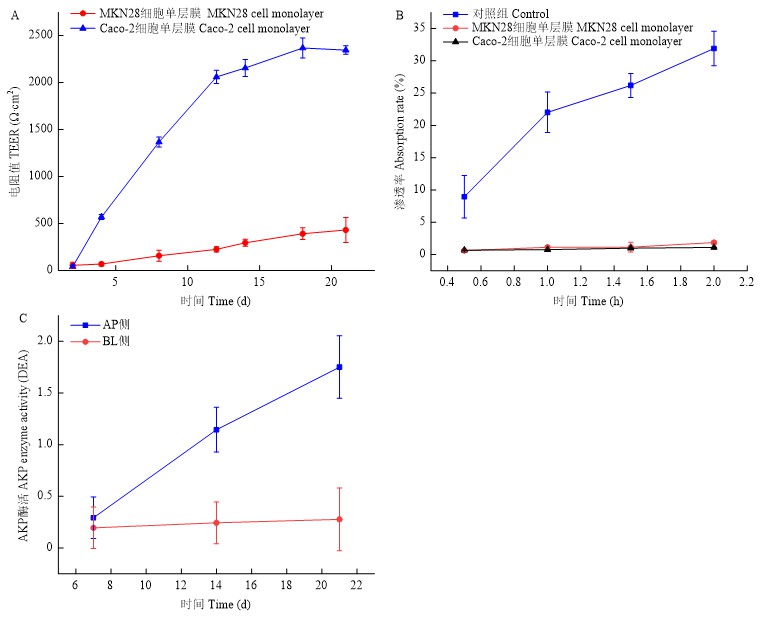
Fig. 1

TEER values (A), fluorescein sodium permeability (B), and AKP activity on AP and BL sides (C) of MKN28 and Caco-2 cells"

Fig. 2

Schematic diagram of MKN28/Caco-2 continuous transport model and Caco-2/3T3-L1 adipocytes Co-culture model (A) and cultured cells (B) In Fig. B, a: MKN28 cell monolayer cultured for 21 days; b: Caco-2 cell monolayer cultured for 21 days; c: 3T3-L1 adipocytes cultured for 2 days; d: 3T3-L1 adipocytes cultured for 14 days (magnification: 200)"

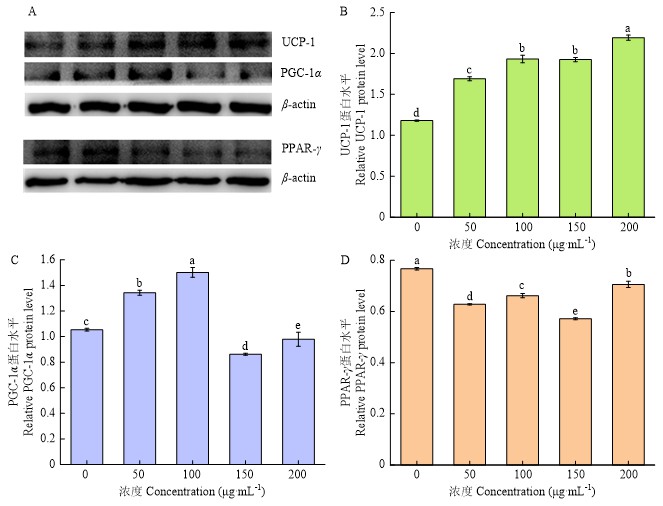
Fig. 3

Western blotting analysis of related proteins in 3T3-L1 cells (A: Protein immunoblotting bands; B, C, and D: Gary value analysis)"

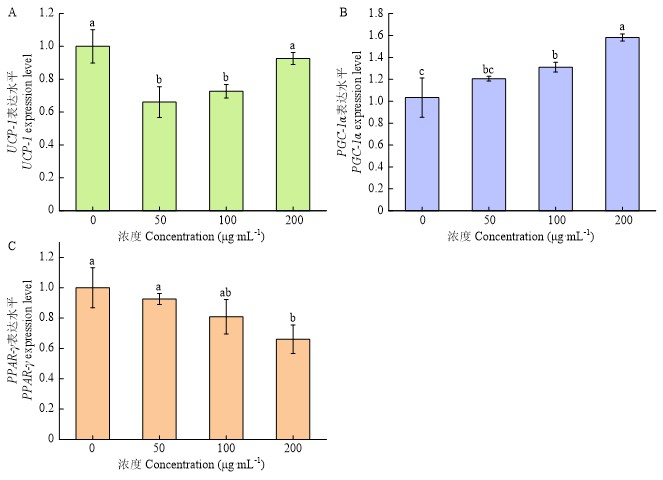
Fig. 4

The effect of different concentrations of BWP-BL on the expression of UCP-1 (A), PGC-1α (B) and PPAR-γ (C) genes in cells"

Fig. 5

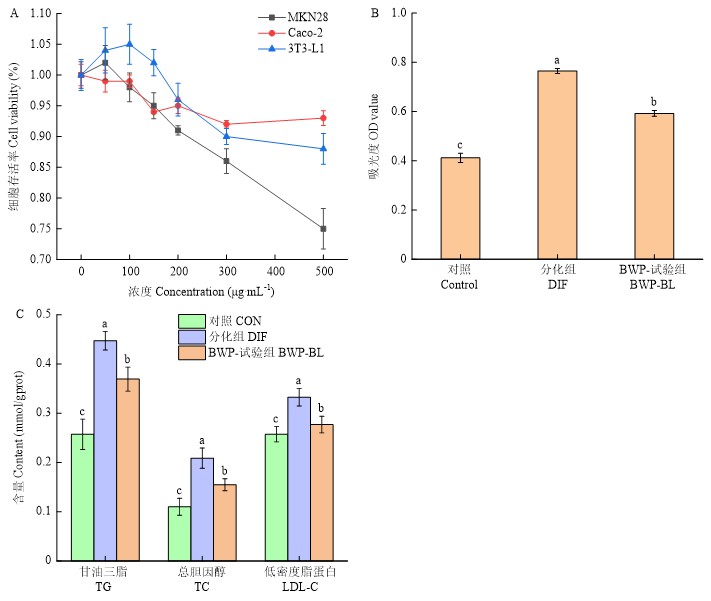
Toxicity of sample solution on MKN28, Caco-2 cells, and 3T3-L1 adipocytes (A, values are the mean ± SD calculated from three independent experiments), Extraction results of 3T3-L1 cells by oil red O staining (B), Lipid lowering effects in TG, T-CHO and LDL-C (C)"

Fig. 6

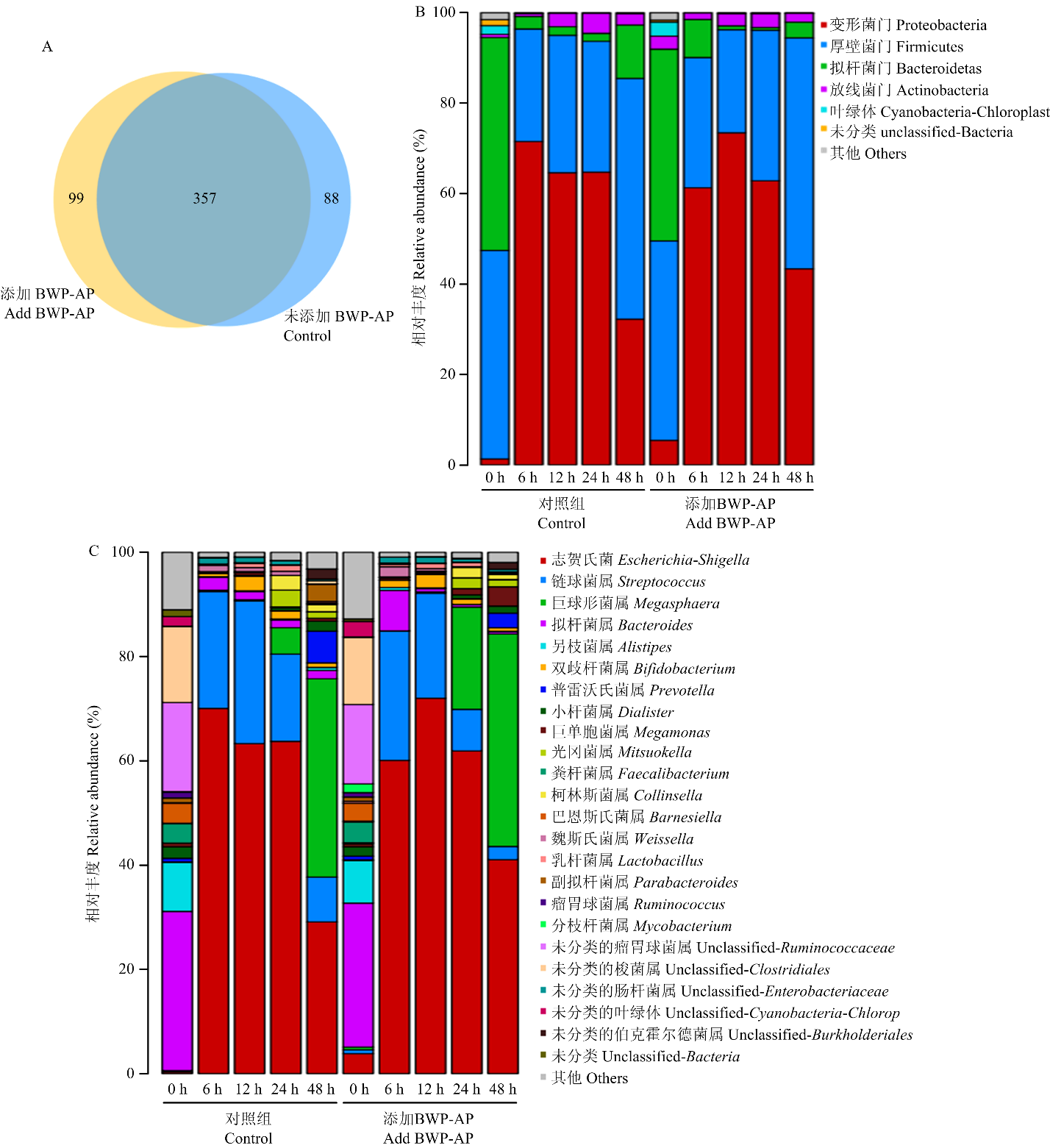
The effect of BWP-AP on the human intestinal flora A: Venn diagram of species distribution; B: The relative abundance of bacteria at the phylum levels; C: The relative abundance of bacteria at the genus levels"

[1]
Sharma T, Agrawal P, Sahoo P, Verma N K, Vasikarla S. Line segments based rotation invariant descriptor for disparate images [C]//2018 IEEE Applied Imagery Pattern Recognition Workshop (AIPR). October 9-11, 2018, Washington, DC, USA. IEEE, 2018: 1-8.
[2]
Xiao J B, Kai G Y, Yamamoto K, Chen X Q. Advance in dietary polyphenols as α-glucosidases inhibitors: A review on structure- activity relationship aspect[J]. Critical Reviews in Food Science and Nutrition, 2013, 53(8): 818-836.
[3]
Kandemir K, Tomas M, McClements D J, Capanoglu E. Recent advances on the improvement of quercetin bioavailability[J]. Trends in Food Science & Technology, 2022, 119: 192-200.
[4]
谢佳函, 刘回民, 刘美宏, 郑明珠, 徐倩, 刘景圣. 杂粮多酚功能活性研究进展[J]. 食品工业科技, 2017, 38(14): 326-329, 335.
Xie J H, Liu H M, Liu M H, Zheng M Z, Xu Q, Liu J S. Research progress of functional activities of polyphenols in coarse cereals[J]. Science and Technology of Food Industry, 2017, 38(14): 326-329, 335. (in Chinese)
[5]
李辉, 刘志虎, 李华, 卿笃信. 姜黄素脂质体对高脂诱导的非酒精性脂肪性肝病小鼠的降脂保肝作用[J]. 中国医药, 2020, 15(7): 1053-1057.
Li H, Liu Z H, Li H, Qing D X. Effect of curcumin liposomes on lipid-lowering and hepatoprotective effects of hyperlipidemia-induced nonalcoholic fatty liver disease mice[J]. China Medicine, 2020, 15(7): 1053-1057. (in Chinese)
[6]
徐红敏, 吴惠文. 芦丁抑制3T3-L1前脂肪细胞分化并促进米色脂肪细胞形成[J]. 中国公共卫生, 2021, 37(5): 845-848.
Xu H M, Wu H W. Rutin inhibits 3T3-L1 preadipocytes differentiation and promotes beige adipogenesis[J]. Chinese Journal of Public Health, 2021, 37(5): 845-848. (in Chinese)
[7]
谢琳琳, 迟晓星, 董佳萍, 杨琪, 王鹤霖, 刘殊凡, 张东杰. 荞麦槲皮素对高脂饮食大鼠脂代谢及脂肪因子的调节作用[J]. 现代食品科技, 2023, 39(5): 1-7.
Xie L L, Chi X X, Dong J P, Yang Q, Wang H L, Liu S F, Zhang D J. Regulatory effects of buckwheat quercetin on lipid metabolism and adipokines in rats receiving a high-fat diet[J]. Modern Food Science and Technology, 2023, 39(5): 1-7. (in Chinese)
[8]
李洁, 吴金春, 曹萍. 福林酚比色法对含茶制品中茶多酚含量的测定研究[J]. 中国食品工业, 2025(19): 85-87.
Li J, Wu J C, Cao P. Study on the determination of tea polyphenol content in tea products by Folin phenol colorimetric method[J]. China Food Industry, 2025(19): 85-87. (in Chinese)
[9]
秦博闻. 薏米多酚的吸收转运及其降脂功能研究[D]. 南京: 南京财经大学, 2023.
Qin B W. Absorption, transport and lipid-lowering function of polyphenols in Coix seed[D]. Nanjing: Nanjing University of Finance & Economics, 2023. (in Chinese)
[10]
张泽宇, 代玉婷, 丁煜哲, 李岩松, 姜珂昕, 张林, 石镜明. 正常肝细胞系LO2中单油酸诱导非酒精性脂肪性肝细胞模型的建立[J]. 中国生物化学与分子生物学报, 2026, 42(1): 143-152.
Zhang Z Y, Dai Y T, Ding Y Z, Li Y S, Jiang K X, Zhang L, Shi J M. Development of an NAFLD cellular model using monooleic acid in a wild-type liver cell line LO2[J]. Chinese Journal of Biochemistry and Molecular Biology, 2026, 42(1): 143-152. (in Chinese)
[11]
张富新, 贺连珍, 马楠. 荞麦营养成分及生物活性成分研究进展[J]. 北方农业学报, 2025, 53(3): 104-109.
Zhang F X, He L Z, Ma N. Research progress on nutritional and bioactive components of Fagopyrum esculentum[J]. Journal of Northern Agriculture, 2025, 53(3): 104-109. (in Chinese)
[12]
王丽, 李浩志, 段黎娟, 闫春生, 贾安, 黄小强. 响应面法优化女贞花原儿茶酸提取工艺[J]. 食品工业, 2025, 46(10): 1-4.
Wang L, Li H Z, Duan L J, Yan C S, Jia A, Huang X Q. Optimization of extraction process of protocatechuic acid from Ligustrum lucidum flowers by response surface methodology[J]. The Food Industry, 2025, 46(10): 1-4. (in Chinese)
[13]
张旭, 陈朝银, 董珺琳, 蔡金燕, 赵声兰. 没食子酸对谷氨酸钠诱导的肥胖小鼠的降脂作用[J]. 中成药, 2017, 39(6): 1115-1119.
Zhang X, Chen C Y, Dong J L, Cai J Y, Zhao S L. Lipid-lowering effects of Gallic acid on glutamate-induced obese mice[J]. Chinese Traditional Patent Medicine, 2017, 39(6): 1115-1119. (in Chinese)
[14]
Qin B W, Yao Y J, Zhang J, Wang L F. Bioavailability of Coix seed polyphenols in a MKN28/caco-2 continuous transport model and their lipid-lowering effects via modulating adipocyte differentiation of 3T3-L1 cells[J]. Journal of Agricultural and Food Chemistry, 2023, 71(22): 8425-8436.
[15]
左丹, 廖霞, 李瑶, 石芳, 王丽颖, 明建. 基于肠道吸收机制的膳食多酚代谢研究进展[J]. 食品科学, 2017, 38(7): 266-271.
Zuo D, Liao X, Li Y, Shi F, Wang L Y, Ming J. Progress in research on dietary polyphenols metabolism based on a mechanism involving intestinal absorption[J]. Food Science, 2017, 38(7): 266-271. (in Chinese)
[16]
Kikuchi T, Hayashi A, Ikeda N, Morita O, Tasaki J. Multidrug resistance-associated protein 2 (MRP2) is an efflux transporter of EGCG and its metabolites in the human small intestine[J]. The Journal of Nutritional Biochemistry, 2022, 107: 109071.
[17]
Qu L L, Liu Q Q, Zhang Q, Tuo X X, Fan D D, Deng J J, Yang H X. Kiwifruit seed oil prevents obesity by regulating inflammation, thermogenesis, and gut microbiota in high-fat diet-induced obese C57BL/6 mice[J]. Food and Chemical Toxicology, 2019, 125: 85-94.
[18]
Kim S J, Zaidul I S M, Suzuki T, Mukasa Y, Hashimoto N, Takigawa S, Noda T, Matsuura-Endo C, Yamauchi H. Comparison of phenolic compositions between common and Tartary buckwheat (Fagopyrum) sprouts[J]. Food Chemistry, 2008, 110(4): 814-820.
[19]
Lemmens E, De Brier N, Spiers K M, Ryan C, Garrevoet J, Falkenberg G, Goos P, Smolders E, Delcour J A. The impact of steeping, germination and hydrothermal processing of wheat (Triticum aestivum L.) grains on phytate hydrolysis and the distribution, speciation and bio-accessibility of iron and zinc elements [J]. Food Chemistry, 2018, 264: 367-376.
[20]
de Souza da Costa Brum I, Mafra D, de Souza Gouveia Moreira L, Teixeira K T R, Stockler-Pinto M B, de França Cardozo L F M, Borges N A. Consumption of oils and anthocyanins may positively modulate PPAR-γ expression in chronic noncommunicable diseases: A systematic review[J]. Nutrition Research, 2022, 105: 66-76.
[21]
Liu W, Zhao S Q, Wang J Q, Shi J, Sun Y K, Wang W Q, Ning G, Hong J, Liu R X. Back cover: Grape seed proanthocyanidin extract ameliorates inflammation and adiposity by modulating gut microbiota in high-fat diet mice[J]. Molecular Nutrition & Food Research, 2017, 61(9): 1770096.
[22]
Song Z L, Revelo X, Shao W J, Tian L L, Zeng K J, Lei H, Sun H S, Woo M, Winer D, Jin T R. Dietary curcumin intervention targets mouse white adipose tissue inflammation and brown adipose tissue UCP1 expression[J]. Obesity, 2018, 26(3): 547-558.
[23]
Gao X L, Jia R Z, Xie L, Kuang L H, Feng L, Wan C M. A study of the correlation between obesity and intestinal flora in school-age children[J]. Scientific Reports, 2018, 8: 14511.
[24]
Ferrarese R, Ceresola E R, Preti A, Canducci F. Probiotics, prebiotics and synbiotics for weight loss and metabolic syndrome in the microbiome era[J]. European Review for Medical and Pharmacological Sciences, 2018, 22(21): 7588-7605.
[25]
Bervoets L, Van Hoorenbeeck K, Kortleven I, Van Noten C, Hens N, Vael C, Goossens H, Desager K N, Vankerckhoven V. Differences in gut microbiota composition between obese and lean children: A cross-sectional study[J]. Gut Pathogens, 2013, 5(1): 10.
[26]
Ley R E, Turnbaugh P J, Klein S, Gordon J I. Human gut microbes associated with obesity[J]. Nature, 2006, 444(7122): 1022-1023.
[27]
喻喜华, 王一, 李刘若兰, 杨柳, 冯滢璇, 王鸿超, 肖越. 褐藻多糖对肠道菌群及相关代谢的调节作用[J/OL]. 中国乳品工业.
YU X H, WANG Y, LI L R L, YANG L, FENG Y X, WANG H C, XIAO Y. Modulatory effects of fucoidan on the gut microbiota and associated metabolism[J/OL]. China Dairy Industry. in Chinese)
[28]
Zeng Q, Li D F, He Y, Li Y H, Yang Z Y, Zhao X L, Liu Y H, Wang Y, Sun J, Feng X, Wang F, Chen J X, Zheng Y J, Yang Y H, Sun X L, Xu X M, Wang D X, Kenney T, Jiang Y Q, Gu H, et al. Discrepant gut microbiota markers for the classification of obesity-related metabolic abnormalities[J]. Scientific Reports, 2019, 9: 13424.
[29]
余雅婷, 赵亮, 郝彦玲, 翟征远. 基于体外发酵模型研究4种植物多酚对肠道菌群的调节作用[J]. 食品工业科技, 2025, 46(23): 190-201.
Yu Y T, Zhao L, Hao Y L, Zhai Z Y. Modulation of intestinal flora by plant polyphenols based on in vitro fermentation models[J]. Science and Technology of Food Industry, 2025, 46(23): 190-201. (in Chinese)
[30]
Segui-Perez C, Huang L Z X, Paganelli F L, Lievens E, Strijbis K. Probiotic Bifidobacterium bifidum strains desialylate MUC13 and increase intestinal epithelial barrier function[J]. Scientific Reports, 2025, 15: 8778.
[1] WANG YuXuan, GU Jiong, XIA Bing. Research Progress on the Mechanism of Protein Glycosylation Modification in Regulating Intestinal Health of Livestock and Poultry [J]. Scientia Agricultura Sinica, 2026, 59(10): 2265-2275.
[2] WANG LuLu, ZHANG MingWei, YE JiaMin, ZHANG RuiFen, DENG Mei. Effects of Soluble and Insoluble Dietary Fiber from Shatianyu Pulp on Gut Microbiota [J]. Scientia Agricultura Sinica, 2024, 57(20): 4119-4129.
[3] YAO YiJun, JU XingRong, WANG LiFeng. Lipid-Lowering Effects and Its Regulation Mechanism of Buckwheat Polyphenols in High-Fat Diet-Induced Obese Mice [J]. Scientia Agricultura Sinica, 2023, 56(5): 981-994.
[4] YANG NingZhi,LI Ting,WANG Yan,CHEN Zhuo,MA YiCheng,REN QiangLin,LIU JiaJia,YANG HuiGuo,YAO Gang. Comparison of Growth Physiology and Gut Microbiota Between Healthy and Diarrheic Lambs in Pre- and Post-Weaning Period [J]. Scientia Agricultura Sinica, 2021, 54(2): 422-434.
[5] XU Long-Long, WU Jie, GUO Jun, LI Ji-Lian. Dynamic Variation of Symbionts in Bumblebees During Hosts Growth and Development [J]. Scientia Agricultura Sinica, 2014, 47(10): 2030-2037.
Viewed
Full text


Abstract

Cited

  Shared   
  Discussed   
No Suggested Reading articles found!