






中国农业科学 ›› 2025, Vol. 58 ›› Issue (23): 5031-5045.doi: 10.3864/j.issn.0578-1752.2025.23.017
许朵朵( ), 杜倩倩, 赵理想, 栗燕, 黄淦, 李永华, 逯久幸*()
收稿日期:2025-06-09
接受日期:2025-08-15
出版日期:2025-12-01
发布日期:2025-12-09
通信作者:
联系方式:
许朵朵,E-mail:xiaohua8052023@163.com。
基金资助:
XU DuoDuo(), DU QianQian, ZHAO LiXiang, LI Yan, HUANG Gan, LI YongHua, LU JiuXing*()
Received:2025-06-09
Accepted:2025-08-15
Published:2025-12-01
Online:2025-12-09
摘要:
【目的】 挖掘牡丹AP2/ERF基因家族在花发育中的功能,为精细化调控牡丹花型育种提供理论依据。【方法】 以牡丹基因组为基础,系统鉴定牡丹AP2/ERF基因家族成员,进行系统进化分析、基因结构分析、顺式元件分析和重复事件分析。自公共数据库下载拟南芥、水稻、葡萄和枫香树的基因组文件,并以牡丹为参照进行种间共线性分析。利用全球公共数据库下载所有牡丹组织测序不同部位的RNA-seq数据集,进行文件拆分、序列比较,最后通过TBtools构建热图对牡丹AP2/ERF基因家族成员的功能进行预测。通过主成分分析和层次聚类分析对样本间的整体相关性进行评估。通过对12个基因进行实时荧光定量分析,验证家族成员组织特异性表达的有效性。【结果】 共鉴定出126个AP2/ERF家族成员,通过系统发育分析,将其划分为AP2、ERF、DREB和RAV 4个亚家族和1个未分类(Soloists)序列。根据共线性分析,鉴定到122个基因锚定在牡丹5条染色体上,共含有73对共线性基因。牡丹与枫香树、葡萄同源基因对数远多于牡丹与拟南芥、水稻的同源基因对,表明各亚家族内部存在高度的保守性,且常伴随UTR的缺失。顺式元件分析表明,牡丹AP2/ERF家族基因主要参与植物生长发育、激素响应、非生物胁迫应答和光信号调控过程。表达分析显示,鉴定到的126个AP2/ERF家族成员中有48%的基因参与了花发育的过程。筛选出12个与花发育相关的AP2/ERF成员(3个来自AP2亚家族、6个来自DREB亚家族和3个来自ERF亚家族),以‘凤丹白’牡丹的根、茎、叶、盛花期花瓣和5个分化时期花芽为材料,进行qRT-PCR试验,结果显示,83%的基因与预测的表达情况吻合。【结论】 牡丹AP2/ERF家族的扩张是串联复制以及染色体片段复制造成的。牡丹AP2/ERF家族的扩张发生在牡丹与拟南芥分化后。牡丹中除了AP2亚家族,ERF和DREB亚家族的部分基因也参与了牡丹花发育的过程,进一步说明牡丹AP2/ERF家族成员的功能与其他植物存在较大差异。
许朵朵, 杜倩倩, 赵理想, 栗燕, 黄淦, 李永华, 逯久幸. 牡丹AP2/ERF转录因子的全基因组分析[J]. 中国农业科学, 2025, 58(23): 5031-5045.
XU DuoDuo, DU QianQian, ZHAO LiXiang, LI Yan, HUANG Gan, LI YongHua, LU JiuXing. Genome-Wide Analysis of AP2/ERF Transcription Factors in Peony[J]. Scientia Agricultura Sinica, 2025, 58(23): 5031-5045.
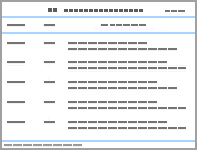
表1
实时荧光定量PCR引物及其序列"
| 基因Gene | 引物序列Primer sequence (5′-3′) |
|---|---|
| ubiquitin | F:AGCCCATATTCAGGAGGTGT R:GCAATCTCAGGTACAAGGGG |
| PoDREB2 | F:CCCGACACCCAATTTACCGA R:ACGTGCCCAACCATATCCTC |
| PoERF37 | F:ACCCACTTCAAAACTCCGCA R:TTCCGCTACCCATTTTCCCC |
| PoDREB25 | F:GGTTCTCGAGCCATGACCAA R:ATTGGGCTTGGATCTGGTGG |
| PoAP2-9 | F:ACTTCCTCTCATCAGCCCCT R:CGCGGGCTATTCGAGTTAGT |
| PoAP2-5 | F:CGCATCATGGCAAGCAGTAC R:AACACCGGTCGATTGCTGAT |
| PoERF19 | F:CAGAGATCCGAACAAACGCG R:ACGTCCCGATCTCAAGAGGA |
| PoERF2 | F:CTGGCTTGGTACGTTCGACT R:GAGGAGGCGACGATGATGTT |
| PoDREB28 | F:ACATCACAACAGCAATGCGG R:ACCCCATTTCCTTCGTCGAA |
| PoDREB43 | F:TTCGACGCTGCACTCTTTTG R:GCAGCCTCTTGAATTTCCGG |
| PoAP2-16 | F:AGCATGGAAGATGGCAAGCT R:TTCTGCAGCTTCCTCTTGGG |
| PoDREB39 | F:AAGGGACCGATGAAAGGCTG R:AACTTCCCCACTCCCTCTGT |
| PoDREB21 | F:GTGGCCGCATCTAACGAAAG R:GTTCCTTCCACCCAGCAAGA |
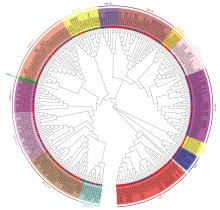
图1
牡丹AP2/ERF家族系统进化树 不同颜色代表各亚家族不同分组。蓝色五角星表示牡丹中的基因,红色三角形表示拟南芥中的基因"

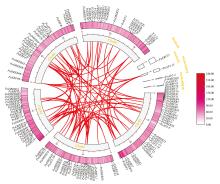
图2
牡丹基因组内部共线图谱"
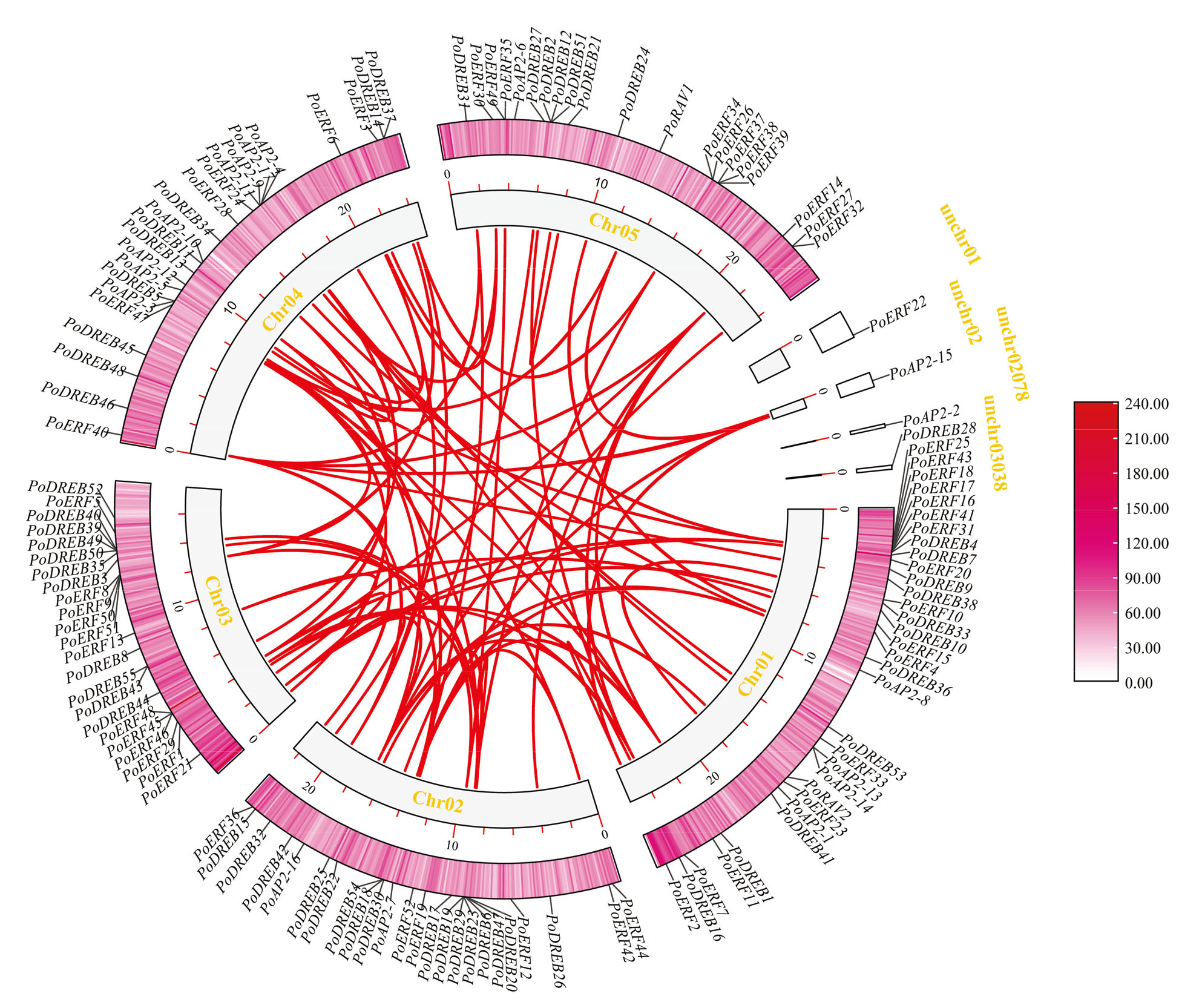
图3
牡丹与其他物种之间PoAP2/ERF基因的共线性和同源关系"
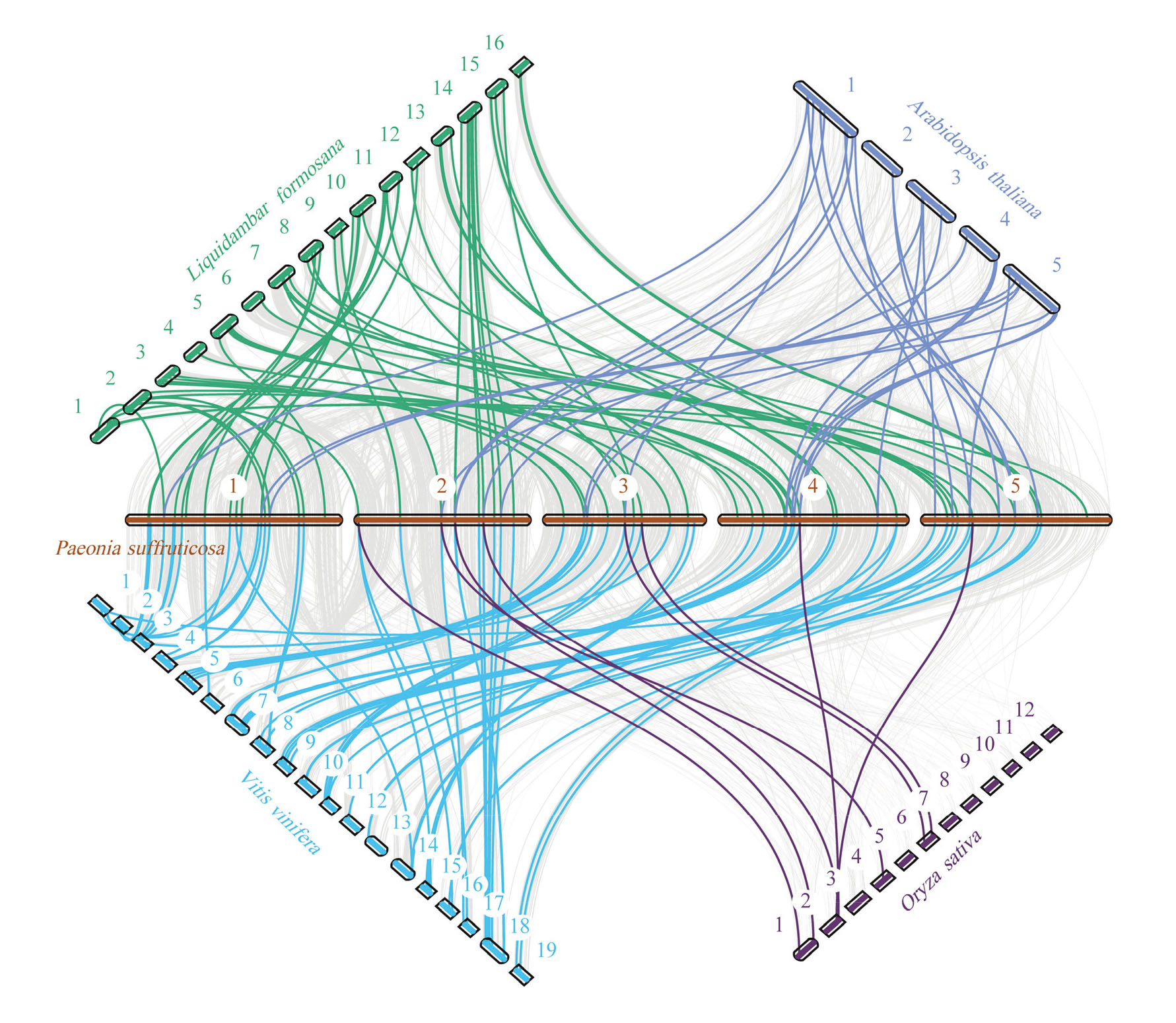
图4
牡丹AP2/ERF基因的保守基序和基因结构分布 A:系统发育树及基序组成;B:蛋白结构域;C:外显子-内含子结构"
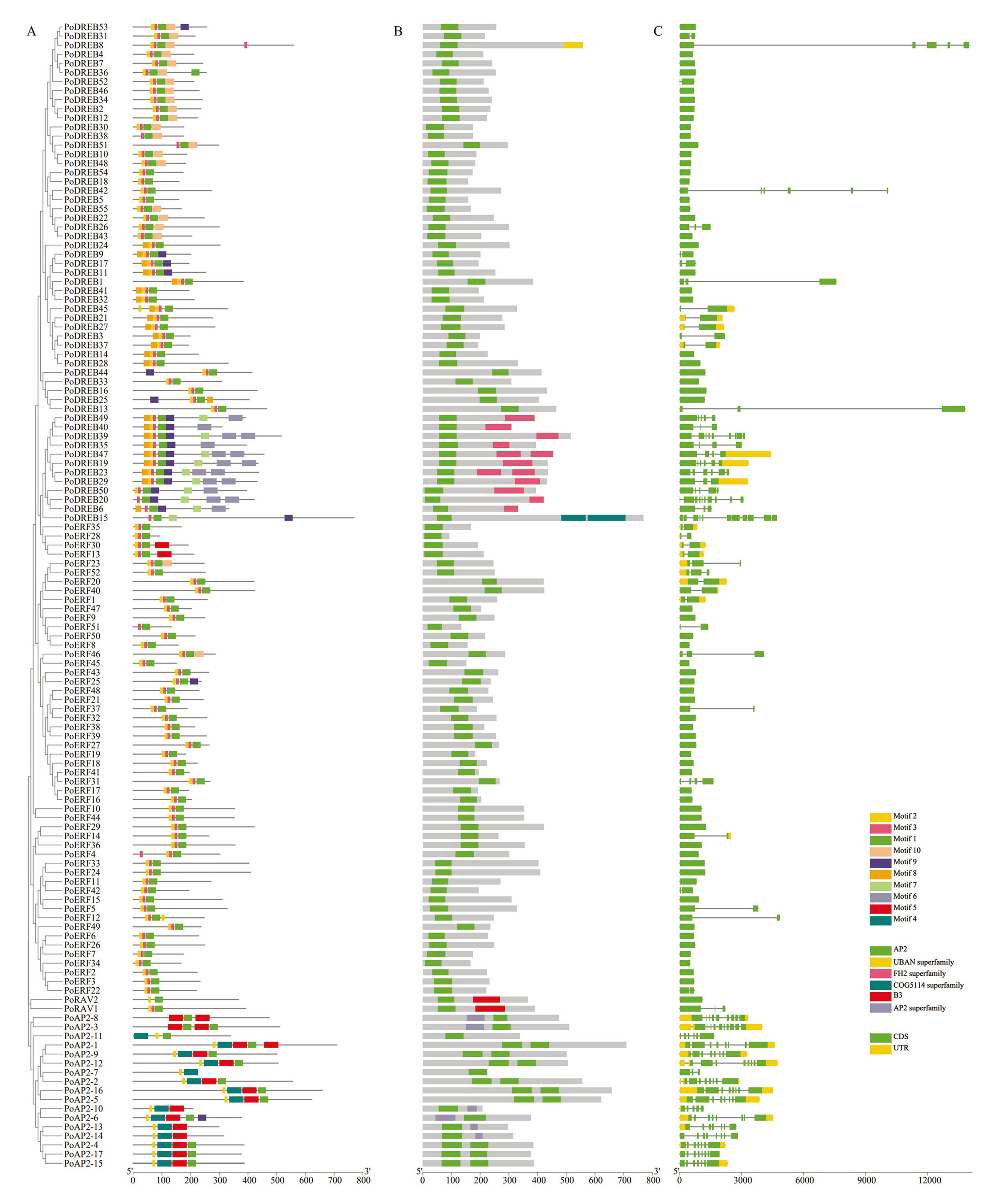
图5
牡丹AP2/ERF启动子顺式调控元件分析"
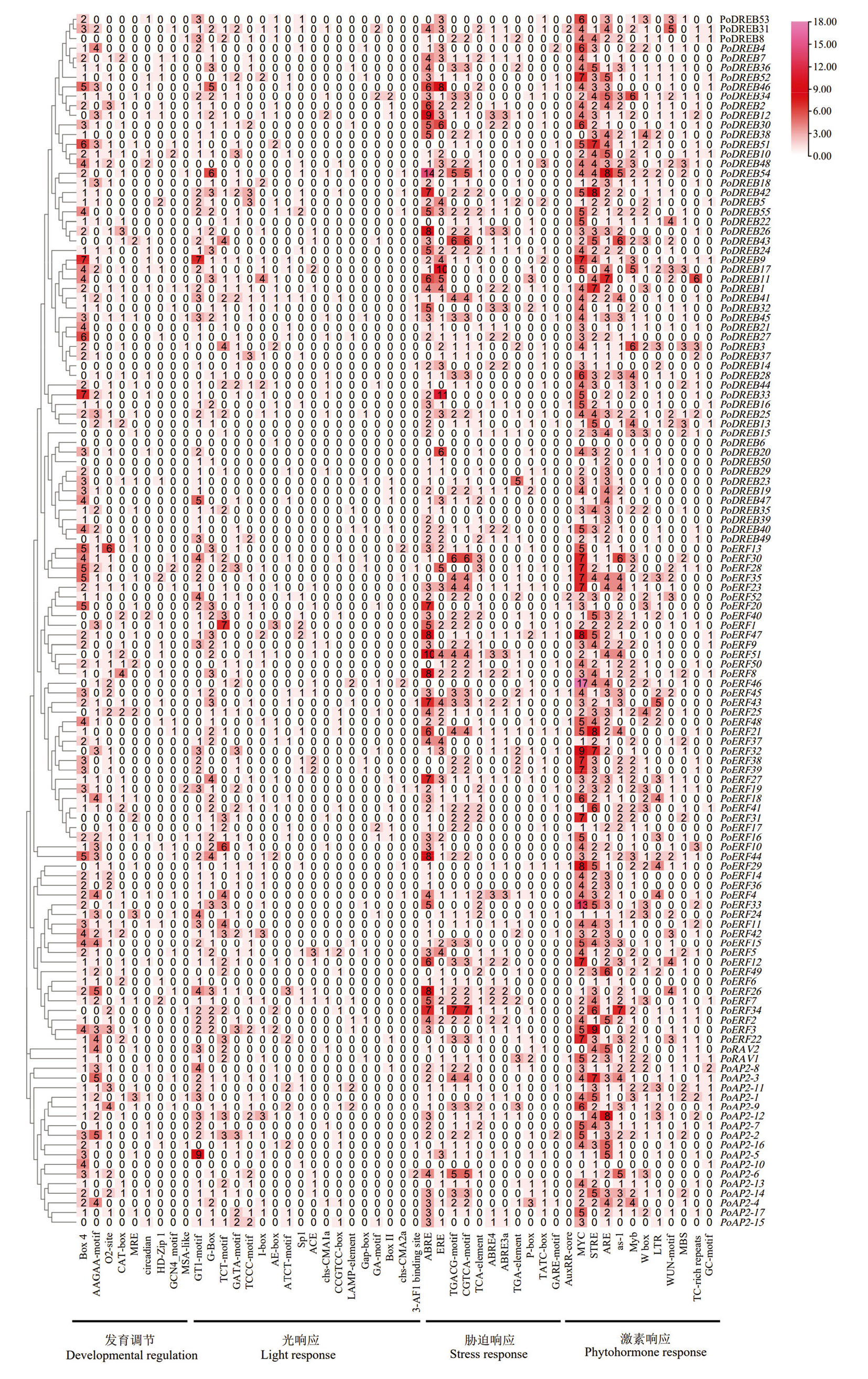
图6
牡丹AP2/ERF基因不同组织表达水平热图 LF:叶;RT:根;SH:枝;ST:茎;BD_1:花芽萼片分化阶段;BD_2:花芽的花瓣分化阶段;BD_3:花芽分化完全;PE_1:无色素紧密芽;PE_2:开花前稍有色素的芽;PE_3:初开的花;PE_4:露出花药完全开放的花。星号表示12个进行实时荧光定量PCR的基因"
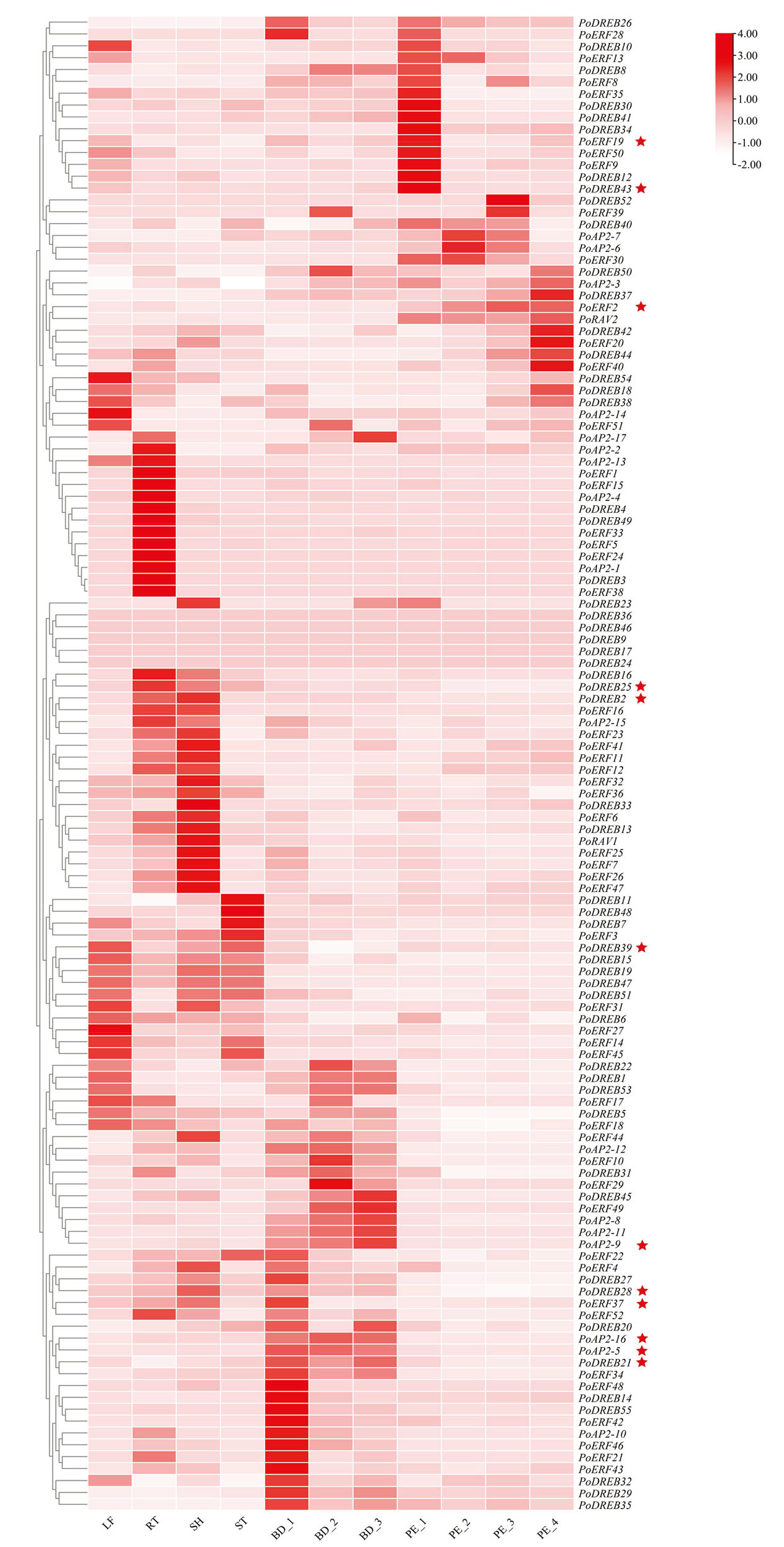
图7
牡丹不同部位RNA-seq数据集样本主成分分析及聚类分析 A:PCA散点图;B:层次聚类树状图 A: PCA scatterplot; B: Hierarchical clustering dendrogram"
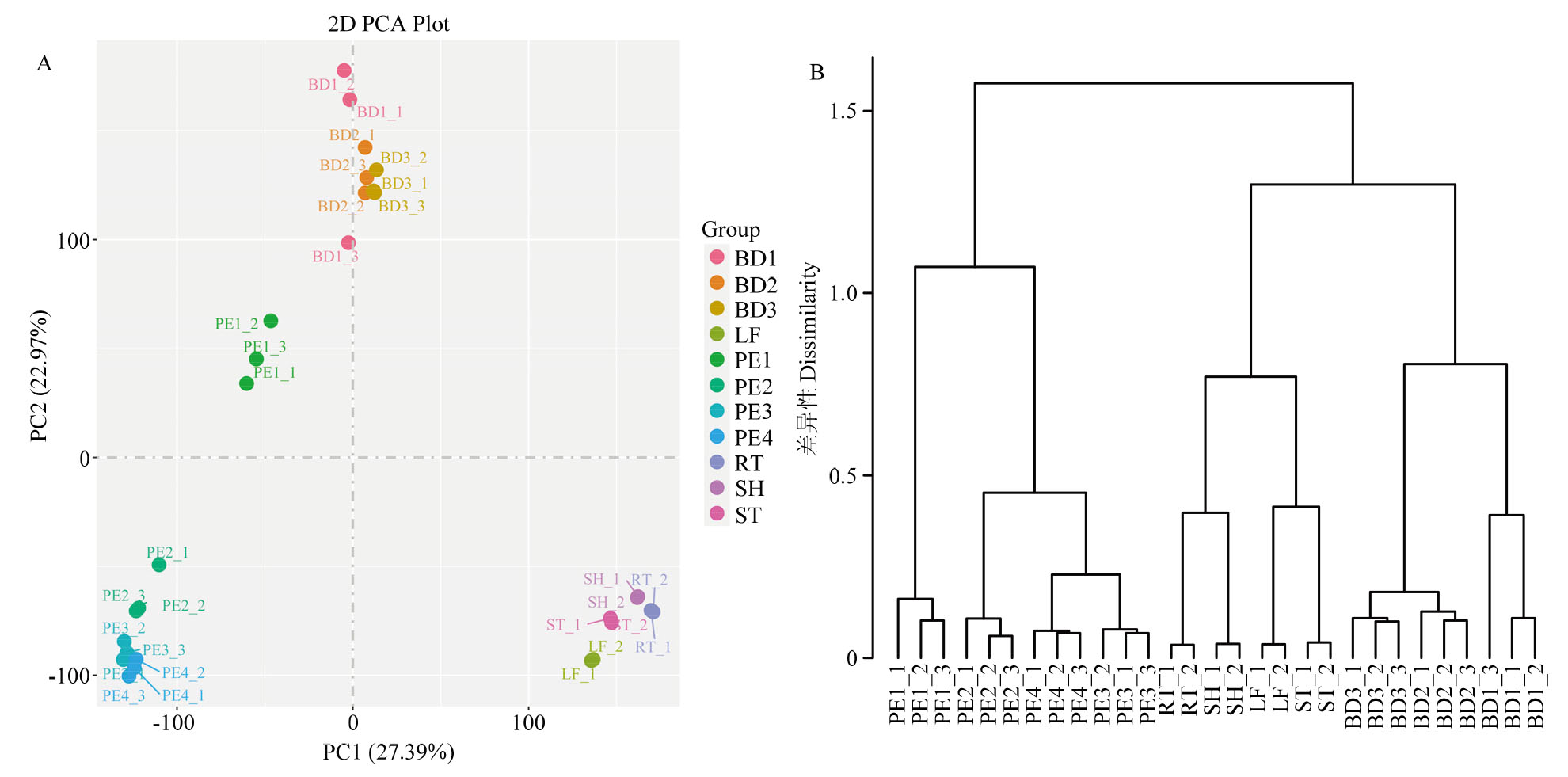
图8
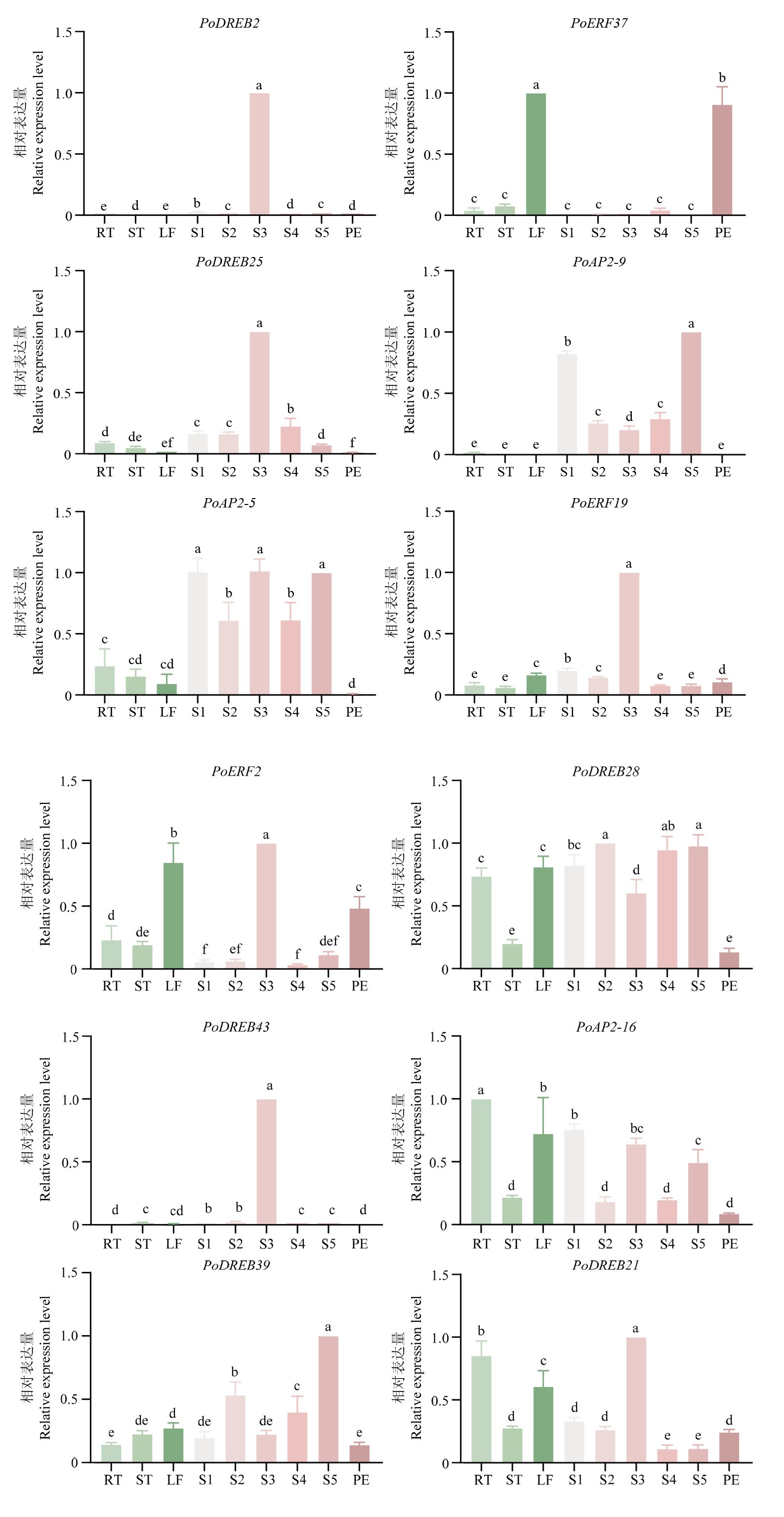
12个牡丹AP2/ERF基因组织特异性qRT-PCR分析 RT:根;ST:茎;LF:叶;S1:萼片原基分化期花芽;S2:花瓣原基分化期花芽;S3:雄蕊原基分化期花芽;S4:雌蕊原基分化期花芽;S5:分化完成期花芽;PE:盛花期花瓣。不同字母表示在P<0.05水平显著差异"
| [1] |
|
| [2] |
doi: 10.1242/dev.134080 pmid: 27624831 |
| [3] |
doi: 10.3390/ijms24032751 |
| [4] |
doi: 10.1126/science.1088060 |
| [5] |
doi: 10.1105/tpc.110.075606 |
| [6] |
doi: 10.1038/s41598-018-30918-4 |
| [7] |
|
| [8] |
|
| [9] |
田明康, 徐智祥, 刘秀群, 眭顺照, 李名扬, 李志能. 蜡梅AP2亚家族转录因子鉴定及CpAP2-L11功能研究. 园艺学报, 2023, 50(2): 382-396.
doi: 10.16420/j.issn.0513-353x.2021-1114 |
|
|
|
| [10] |
doi: 10.1080/07388551.2020.1768509 pmid: 32522044 |
| [11] |
doi: 10.1002/ece3.v10.11 |
| [12] |
|
| [13] |
doi: 10.1093/molbev/msr121 pmid: 21546353 |
| [14] |
|
| [15] |
doi: 10.1038/nbt0816-888d pmid: 27504780 |
| [16] |
刘传娇, 王顺利, 薛璟祺, 朱富勇, 任秀霞, 李名扬, 张秀新. 牡丹泛素延伸蛋白基因ubiquitin的克隆及其作为内参基因的研究. 园艺学报, 2015, 42(10): 1983-1992.
doi: 10.16420/j.issn.0513-353x.2015-0180; |
|
|
|
| [17] |
doi: 10.1016/j.bbrc.2008.04.087 |
| [18] |
doi: 10.1186/1471-2164-11-719 |
| [19] |
doi: 10.1104/pp.106.080580 |
| [20] |
doi: 10.1006/bbrc.2001.6299 |
| [21] |
doi: 10.1016/j.ygeno.2020.10.040 pmid: 33359830 |
| [22] |
doi: 10.3390/ijms22062821 |
| [23] |
doi: 10.1093/jxb/ern354 |
| [24] |
doi: 10.1007/s00709-010-0142-8 |
| [25] |
doi: 10.1242/dev.024273 pmid: 18701544 |
| [26] |
doi: 10.1242/dev.126.4.711 |
| [27] |
doi: 10.1007/s12010-017-2420-9 |
| [28] |
doi: 10.1111/j.1365-313X.2011.04610.x pmid: 21481033 |
| [29] |
doi: 10.1093/pcp/pcz132 pmid: 31318417 |
| [30] |
doi: 10.1105/tpc.107.052944 |
| [31] |
doi: 10.1105/tpc.107.050674 |
| [32] |
doi: 10.1105/tpc.13.2.229 |
| [33] |
doi: 10.1016/j.jplph.2007.12.006 |
| [34] |
doi: 10.1093/jxb/erq324 |
| [35] |
doi: 10.1101/gad.12.8.1145 |
| [1] | 李云丽, 刁邓超, 刘雅睿, 孙玉晨, 孟祥宇, 邬陈芳, 汪妤, 吴建辉, 李春莲, 曾庆东, 韩德俊, 郑炜君. 小麦苗期耐热性全基因组关联分析[J]. 中国农业科学, 2025, 58(9): 1663-1683. |
| [2] | 罗正英, 胡鑫, 吴转娣, 钱禛锋, 田春艳, 刘新龙, 李富生. 蔗茅全基因组SSR标记特征分析与开发[J]. 中国农业科学, 2025, 58(5): 851-863. |
| [3] | 张天雨, 李白, 藏金萍, 曹宏哲, 董金皋, 邢继红, 张康. 灰葡萄孢HMG家族基因的全基因组鉴定与表达规律分析[J]. 中国农业科学, 2025, 58(4): 704-718. |
| [4] | 周广飞, 马亮, 马璐, 张舒钰, 章慧敏, 宋旭东, 张振良, 陆虎华, 郝德荣, 冒宇翔, 薛林, 陈国清. 玉米苞叶性状全基因组关联分析[J]. 中国农业科学, 2025, 58(3): 431-442. |
| [5] | 陈彩锦, 马琳, 蒋庆雪, 刘金晖, 苗童, 张志鹏, 孟翔, 马晓冉, 周昕越, 张建, 刘文辉, 王学敏. 244份饲用燕麦种质资源表型性状遗传多样性分析[J]. 中国农业科学, 2025, 58(23): 4825-4836. |
| [6] | 关紫恒, 季润泽, 荣琪, 徐雨杰, 钟原, 成仿云. 分子核型分析揭示芍药属组间杂种新倍性及其产生机制[J]. 中国农业科学, 2025, 58(23): 4998-5012. |
| [7] | 贾文庆, 和亚琳, 段慧琳, 于迎月, 王政, 赵国栋, 郭英姿, 王二强, 穆金艳, 张焱, 王艳丽, 何松林. 基于转录组和代谢组分析‘凤丹’×大花黄牡丹远缘杂交受精前障碍发生机制[J]. 中国农业科学, 2025, 58(23): 5013-5030. |
| [8] | 魏晨曦, 董山榕, 王小满, 罗建让. 基于叶色表型和花青苷积累特征的牡丹红色叶性状解析[J]. 中国农业科学, 2025, 58(23): 5046-5056. |
| [9] | 张帆, 杨青川. 紫花苜蓿育种历史、现状与展望[J]. 中国农业科学, 2025, 58(21): 4471-4481. |
| [10] | 武书羽, 衡燕芳, 于太飞, 王世佳, 于思佳, 李园, 胡正, 张辉, 孙现军, 黎亮, 姜奇彦. 玉米自然群体苗期耐盐性鉴定及耐盐相关基因分析[J]. 中国农业科学, 2025, 58(20): 4085-4099. |
| [11] | 郭孟泽, 张磊, 孙平平, 江彪, 闫晋强, 李正男. ToLCNDV广东冬瓜分离物的分子特征及其遗传演化规律[J]. 中国农业科学, 2025, 58(19): 3890-3904. |
| [12] | 赵剑, 任涛, 方娅婷, 杨昕, 盛倩男, 李小坤, 朱俊, 鲁剑巍. 施氮对不同轮作模式下油菜和小麦根际土壤中有机氮矿化功能基因的影响[J]. 中国农业科学, 2025, 58(19): 3919-3931. |
| [13] | 仪泽会, 王颖, 宋慧霞, 赵婧, 毛丽萍. 芦笋过氧化物还原酶(Peroxiredoxins)基因家族全基因组鉴定及表达分析[J]. 中国农业科学, 2025, 58(18): 3728-3743. |
| [14] | 向爱慧, 白荣基, 郝宇琼, 赵佳佳, 武棒棒, 李晓华, 郑兴卫, 关攀锋, 郑军. 山西小麦矮秆基因的鉴定及株高遗传位点挖掘[J]. 中国农业科学, 2025, 58(17): 3372-3388. |
| [15] | 刘晨曦, 赵冰兵, 史智宾, 王世达, 王靖飞. 犬细小病毒CPV-2c SX-LC株感染性克隆的构建与病毒拯救[J]. 中国农业科学, 2025, 58(17): 3561-3570. |
|
||
