






中国农业科学 ›› 2025, Vol. 58 ›› Issue (23): 5013-5030.doi: 10.3864/j.issn.0578-1752.2025.23.016
贾文庆1( ), 和亚琳1, 段慧琳1, 于迎月1, 王政2, 赵国栋3, 郭英姿2, 王二强4, 穆金艳1, 张焱1, 王艳丽1, 何松林2,*()
收稿日期:2025-06-05
接受日期:2025-07-22
出版日期:2025-12-01
发布日期:2025-12-09
通信作者:
联系方式:
贾文庆,E-mail:jiawq2012@126.com。
基金资助:
JIA WenQing1(), HE YaLin1, DUAN HuiLin1, YU YingYue1, WANG Zheng2, ZHAO GuoDong3, GUO YingZi2, WANG ErQiang4, MU JinYan1, ZHANG Yan1, WANG YanLi1, HE SongLin2,*()
Received:2025-06-05
Accepted:2025-07-22
Published:2025-12-01
Online:2025-12-09
摘要:
【目的】 大花黄牡丹(Paeonia ludlowii)是西藏特有野生牡丹种质,具有高大株型、纯黄色花朵及猩红秋叶等优异性状,但其与栽培牡丹的远缘杂交障碍导致其优良基因未能有效利用,解析其授粉后柱头响应远缘杂交的分子机制,阐明花粉-柱头识别障碍的调控网络,为突破牡丹远缘杂交受精前障碍提供理论依据。【方法】 以栽培品种‘凤丹’(Paeonia ostii Fengdan)为母本,大花黄牡丹为父本开展杂交试验,设置‘凤丹’自交(CK)、‘凤丹’×大花黄牡丹(DH),以及经2 mg·L-1 KCl预处理柱头后的‘凤丹’×大花黄牡丹(KH)。利用荧光显微技术动态监测授粉后0—4 h的花粉萌发及花粉管生长情况;采用Illumina高通量测序进行柱头转录组分析(RNA-seq),并结合UPLC-QTOF-MS非靶向代谢组学技术,筛选差异表达基因(DEGs)与差异代谢物(DAMs),通过KEGG和GO富集分析解析关键代谢通路。【结果】 表型观察表明,CK组授粉后2 h即出现大量花粉萌发,4 h可见花粉管极性生长;DH组授粉4 h仅少数花粉萌发;KH组花粉萌发量显著高于DH组。花粉-雌蕊互作中,高浓度O2-和H2O2抑制花粉萌发;KEGG富集分析表明,DEGs与DAMs主要参与糖代谢、细胞壁组织与生物合成及黄酮类化合物代谢途径。牡丹远缘杂交中,碳水化合物的普遍下调导致能量供应不足,黄酮类物质减少引发活性氧(ROS)稳态失衡,是花粉萌发受抑的关键因素。【结论】 Rboh介导的ROS动态失衡、糖代谢紊乱引发的能量供给不足、黄酮类物质代谢异常及激素信号传导紊乱,使大花黄牡丹远缘杂交花粉萌发受阻,最终导致受精前障碍形成。
贾文庆, 和亚琳, 段慧琳, 于迎月, 王政, 赵国栋, 郭英姿, 王二强, 穆金艳, 张焱, 王艳丽, 何松林. 基于转录组和代谢组分析‘凤丹’×大花黄牡丹远缘杂交受精前障碍发生机制[J]. 中国农业科学, 2025, 58(23): 5013-5030.
JIA WenQing, HE YaLin, DUAN HuiLin, YU YingYue, WANG Zheng, ZHAO GuoDong, GUO YingZi, WANG ErQiang, MU JinYan, ZHANG Yan, WANG YanLi, HE SongLin. Integrated Transcriptomic and Metabolomic Analysis of Pre- Fertilization Barriers in Distant Hybridization of Paeonia ostii × P. ludlowii[J]. Scientia Agricultura Sinica, 2025, 58(23): 5013-5030.
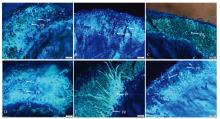
图1
授粉后2和4 h的花粉萌发状态 A:CK授粉后2 h;B:KH授粉后2 h;C:DH授粉后2 h;D:CK授粉后4 h;E:KH授粉后4 h;F:DH授粉后4 h。pg:花粉粒;pt:花粉管。CK:‘凤丹’自交,KH:KCl处理‘凤丹’柱头后与大花黄牡丹杂交,DH:‘凤丹’与大花黄牡丹常规杂交。下同"

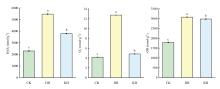
图2
CK、DH和KH柱头中H2O2、O2-和·OH含量的变化 不同小写字母表示在P<0.05水平差异显著 Different lowercase letters indicate significant differences at P<0.05"
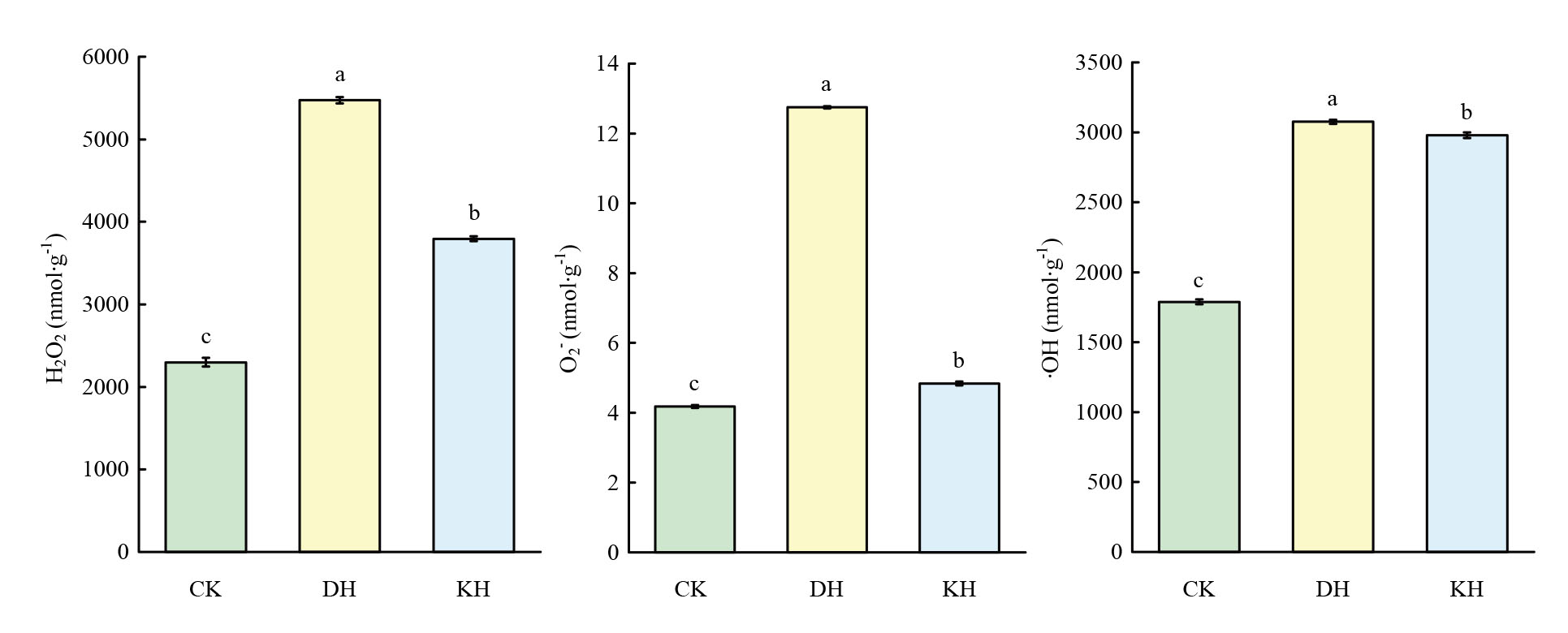
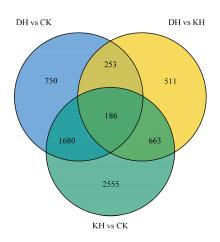
图3
差异表达基因Venn图"
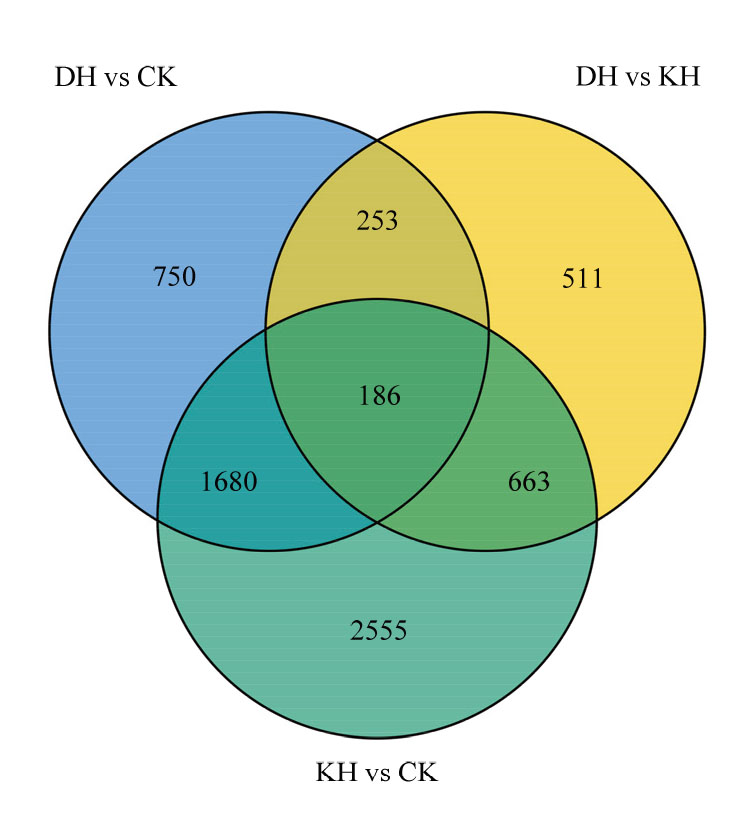
图4
代谢组样本的OPLS-DA统计分析图 A:CK;B:DH;C:KH"
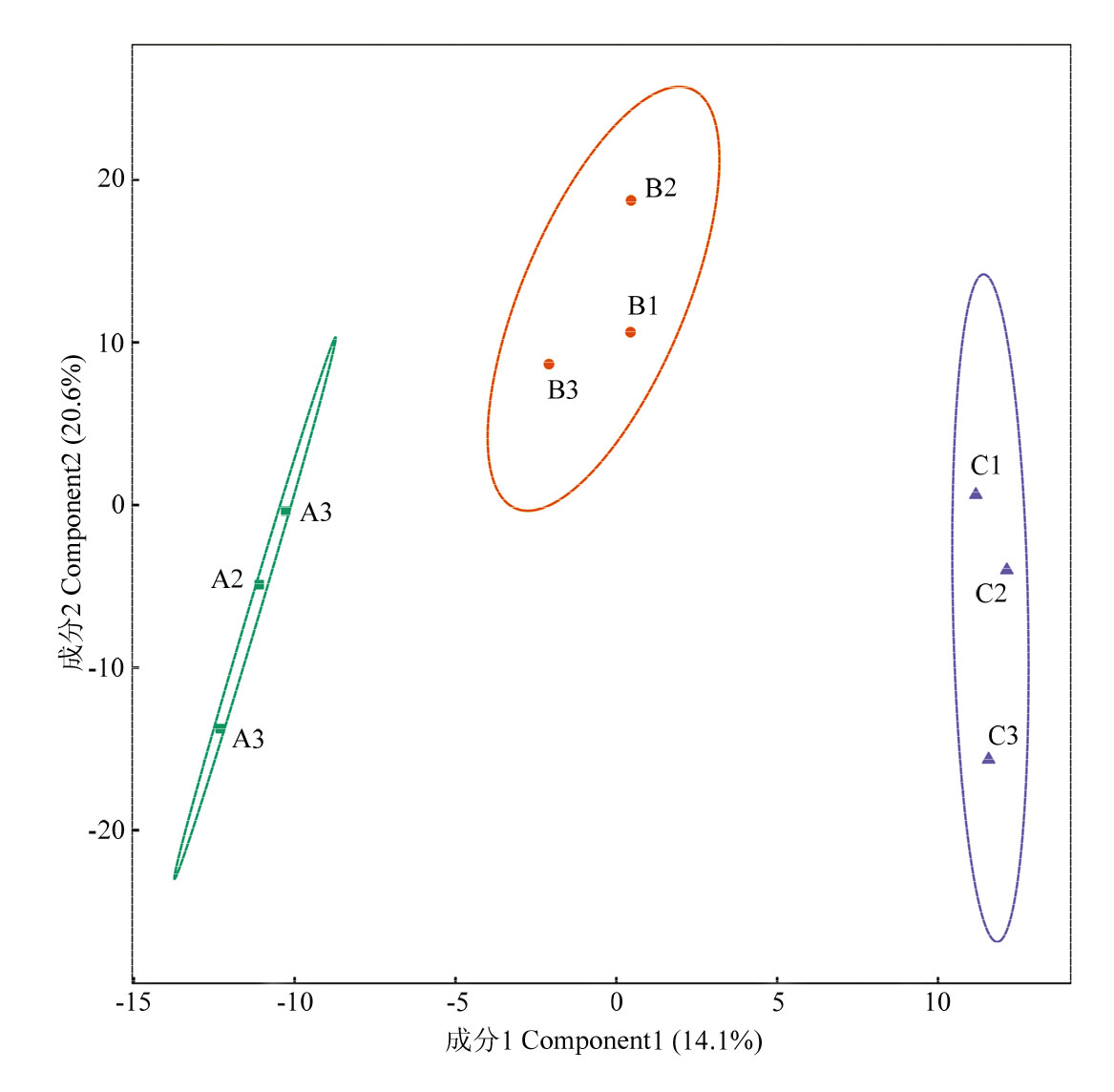
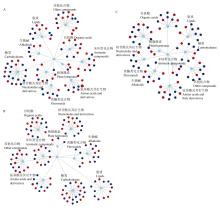
图5
柱头中差异代谢物的综合功能/通路聚类分析图 A:DH vs CK;B:DH vs KH;C:KH vs CK。图中每个节点代表一个经过KEGG通路注释的差异代谢物。圆圈直径与代谢物的差异倍数(FC值)呈正比。红色表示代谢物显著上调(log2FC>0),深蓝色表示代谢物显著下调(log2FC<0),浅蓝色表示代谢物的分类信息"
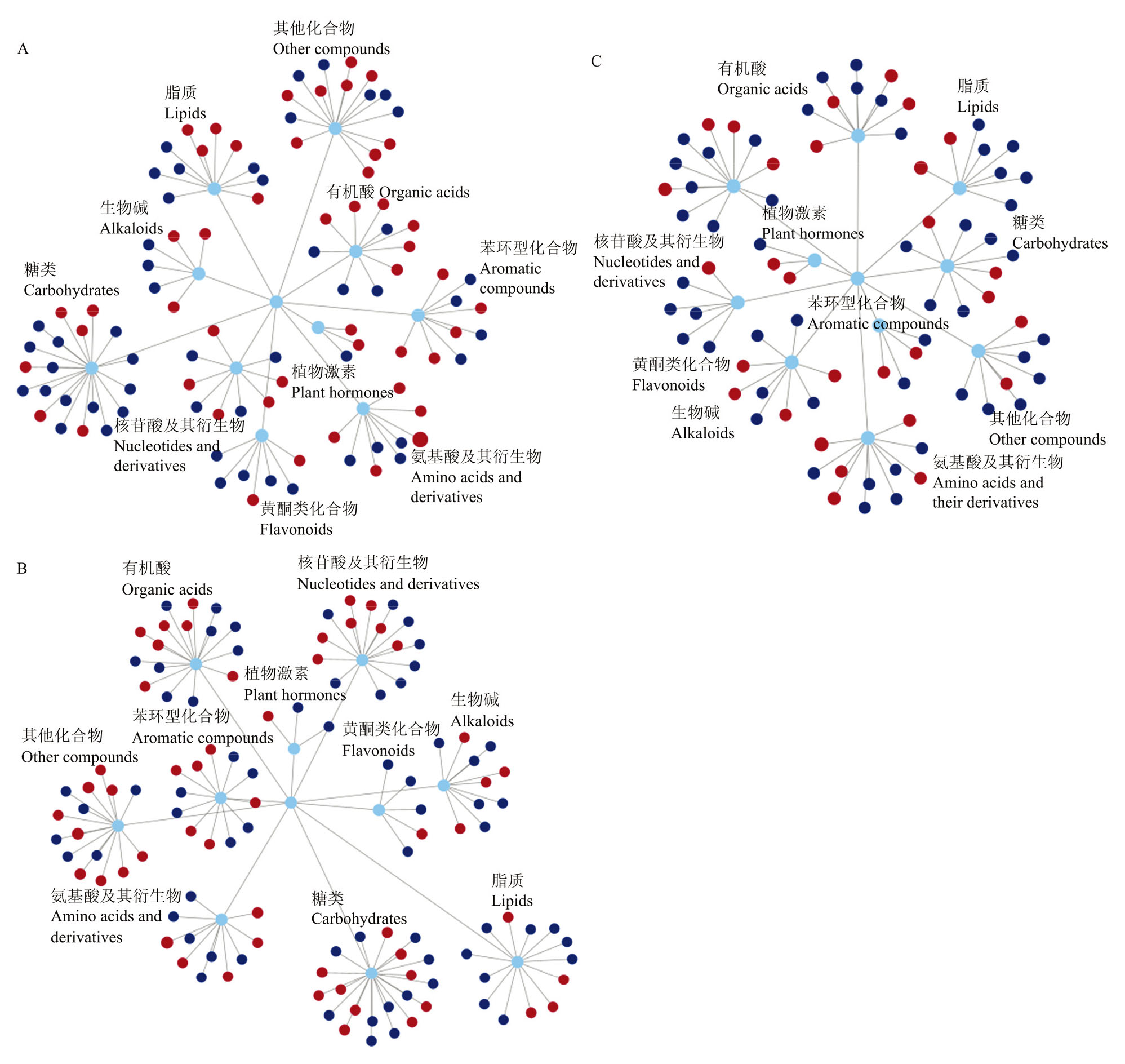
图6
差异代谢物 KEGG 富集分析 A:DH vs CK;B:DH vs KH;C:KH vs CK"
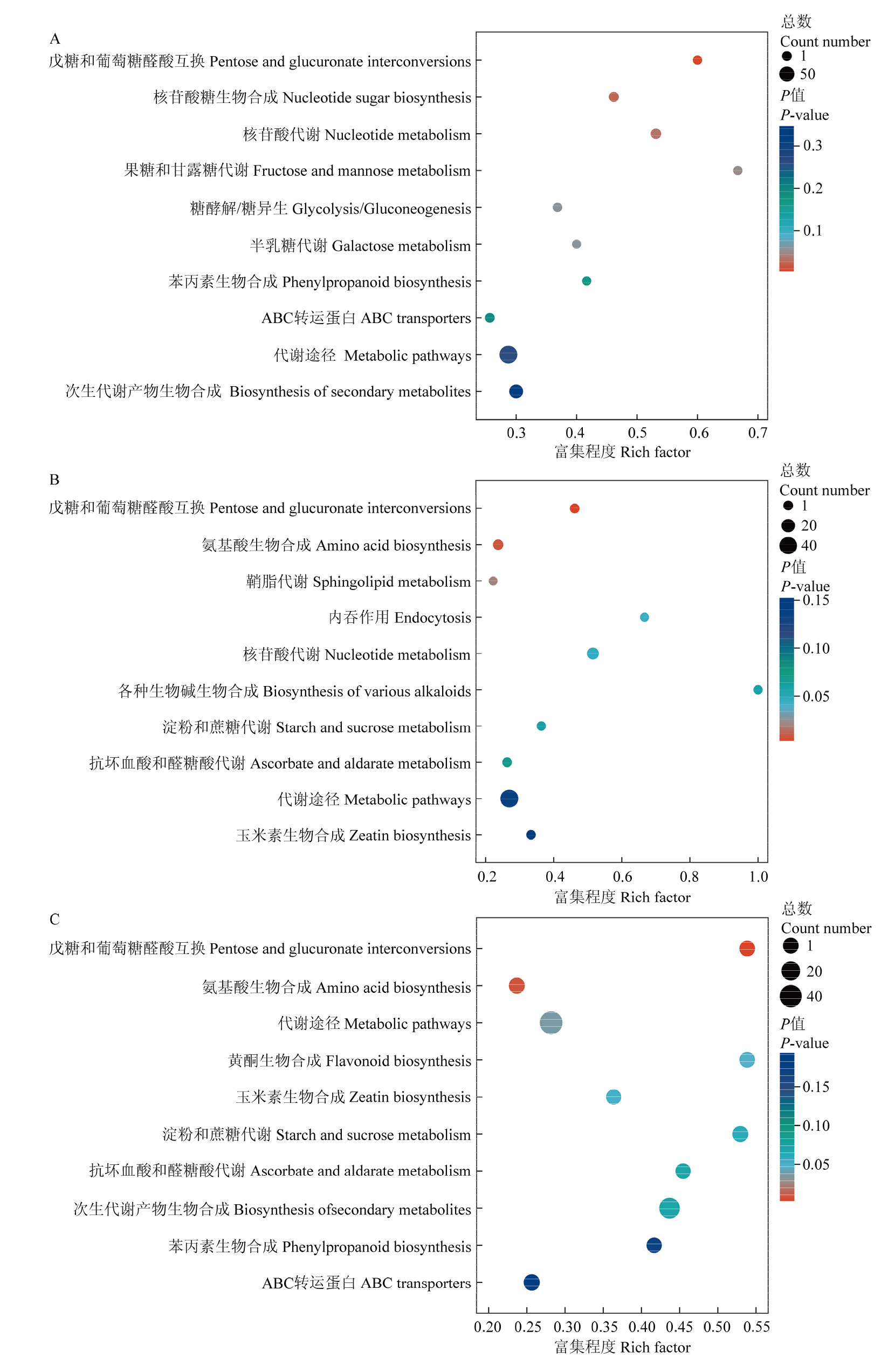
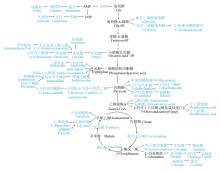
图7
远缘杂交对柱头代谢通路的影响 蓝色表示差异代谢物,箭头间的实线与虚线分别指示直接响应或间接响应"

图8
差异表达基因GO富集 A:DH vs CK;B:DH vs KH;C:KH vs CK"
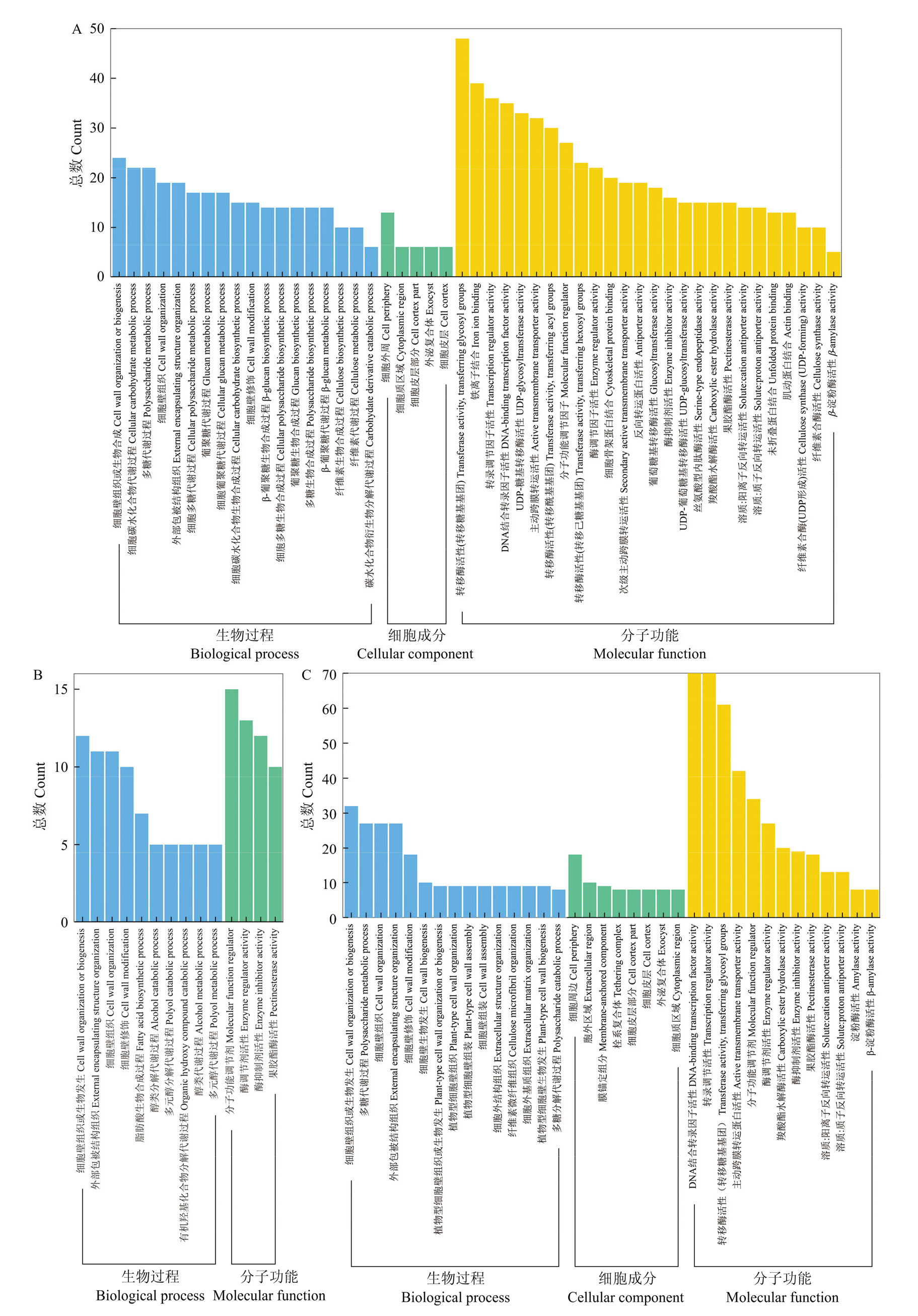
图9
差异表达基因KEGG富集 A:DH vs CK;B:DH vs KH;C:KH vs CK"
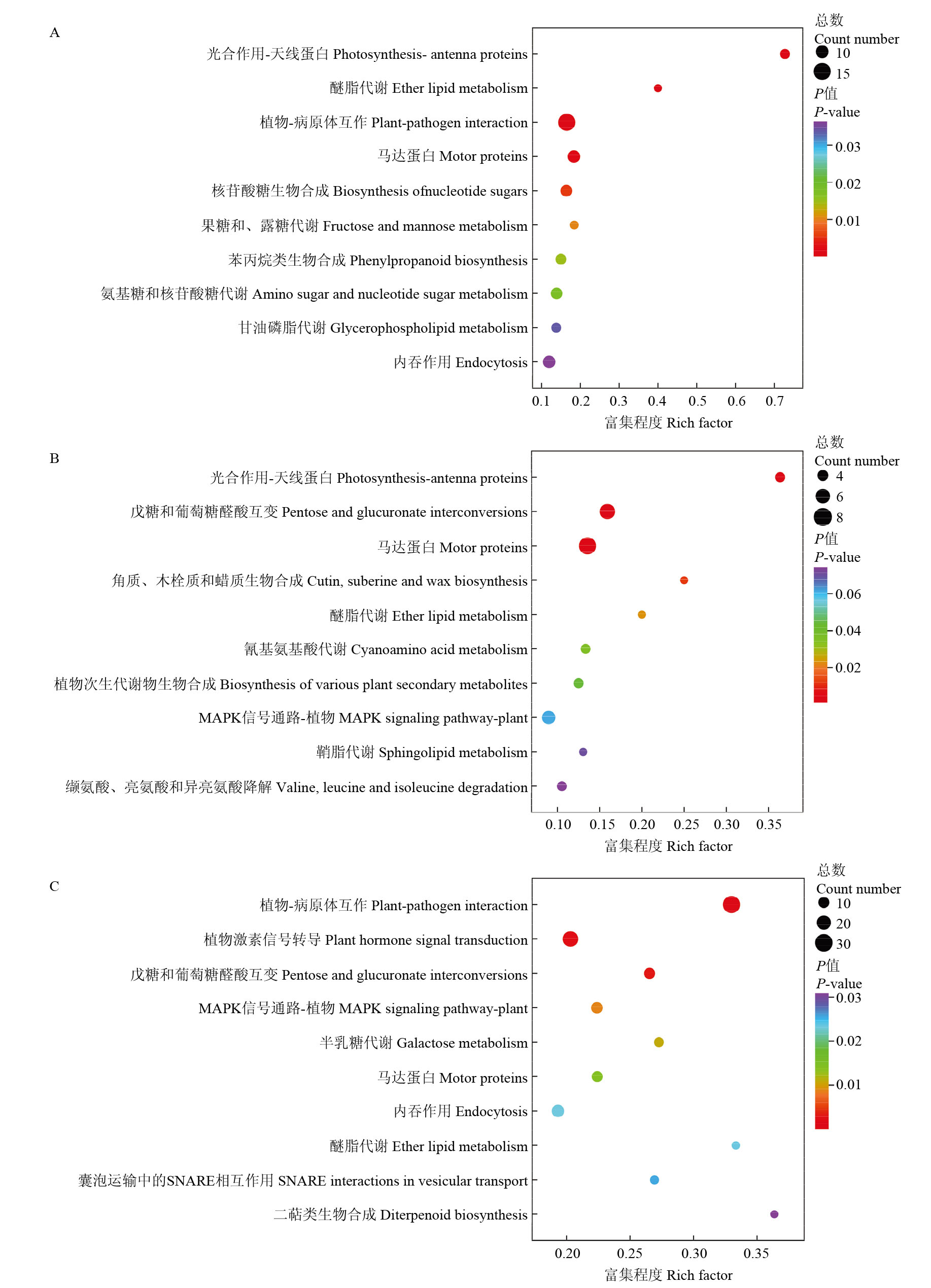
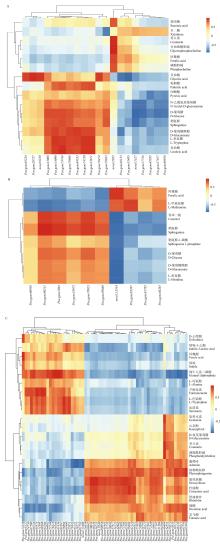
图10
CK、DH和KH转录组和代谢组联合分析 A:DH vs CK;B:DH vs KH;C:KH vs CK。横坐标为差异表达基因ID,纵坐标为差异代谢物"

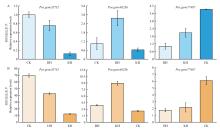
图11
与ROS合成相关基因表达量的 qRT-PCR验证(A)与 RNA-Seq表达模式(B)"

| [1] |
doi: 10.1016/j.pld.2022.07.002 |
| [2] |
doi: 10.1016/j.indcrop.2019.01.054 |
| [3] |
doi: 10.1007/s00425-016-2493-7 pmid: 26969022 |
| [4] |
doi: 10.3390/plants11152038 |
| [5] |
doi: 10.1016/j.hpj.2021.05.004 |
| [6] |
doi: 10.3390/horticulturae9010034 |
| [7] |
doi: 10.1007/s10681-012-0853-3 |
| [8] |
doi: 10.1038/s41597-019-0240-1 |
| [9] |
doi: 10.3389/fpls.2023.1230278 |
| [10] |
doi: 10.1093/plphys/kiae125 pmid: 38431529 |
| [11] |
doi: 10.1016/j.pbi.2013.12.005 pmid: 24457825 |
| [12] |
叶佳伟. 攸县油茶远缘杂交亲和性的细胞学研究[D]. 长沙: 中南林业科技大学, 2024.
|
|
|
|
| [13] |
张宏伟. 君子兰与朱顶红属间远缘杂交亲和性研究[D]. 沈阳: 沈阳农业大学, 2023.
|
|
|
|
| [14] |
doi: 10.3389/fpls.2016.01208 pmid: 27563306 |
| [15] |
张翔宇. 芍药属种间杂交亲和性研究[D]. 新乡: 河南科技学院, 2022.
|
|
|
|
| [16] |
doi: 10.1016/j.scienta.2018.11.045 |
| [17] |
doi: 10.3390/plants12173106 |
| [18] |
doi: 10.1038/s41598-025-90046-8 |
| [19] |
doi: 10.1016/j.flora.2022.152046 |
| [20] |
刘建鑫, 于晓南. 芍药与牡丹远缘杂交花粉萌发与花粉管生长行为观察. 北京林业大学学报, 2016, 38(9): 80-86.
|
|
|
|
| [21] |
doi: 10.1016/j.scienta.2021.110343 |
| [22] |
doi: 10.3390/plants14071120 |
| [23] |
doi: 10.3390/horticulturae10050513 |
| [24] |
doi: 10.1007/s10681-025-03495-7 |
| [25] |
doi: 10.1017/S1479262121000538 |
| [26] |
doi: 10.1016/j.heliyon.2021.e07645 |
| [27] |
doi: 10.21273/JASHS05153-21 |
| [28] |
doi: 10.1007/s11103-022-01259-8 |
| [29] |
doi: 10.3389/fpls.2022.866588 |
| [30] |
doi: 10.3390/ijms241311180 |
| [31] |
doi: 10.1038/s41598-019-39449-y |
| [32] |
doi: 10.3390/ijms22136996 |
| [33] |
doi: 10.3389/fpls.2023.1194598 |
| [34] |
doi: 10.3390/plants12040926 |
| [35] |
doi: 10.1016/j.ecoenv.2011.08.015 pmid: 21899888 |
| [36] |
doi: 10.1093/pcp/pcx020 |
| [37] |
doi: 10.3390/plants10081652 |
| [38] |
doi: 10.3389/fpls.2021.552515 |
| [39] |
doi: 10.1111/tpj.2013.74.issue-2 |
| [40] |
doi: 10.1093/plcell/koad181 pmid: 37352123 |
| [41] |
doi: 10.1146/arplant.2011.62.issue-1 |
| [42] |
doi: 10.1016/j.cj.2021.08.003 |
| [43] |
doi: 10.1007/s11033-014-3683-7 pmid: 25163631 |
| [44] |
doi: 10.1016/j.plaphy.2023.107991 |
| [45] |
doi: 10.1016/j.plantsci.2014.05.018 |
| [46] |
doi: 10.1371/journal.pbio.1001719 |
| [47] |
doi: 10.3389/fpls.2022.836665 |
| [48] |
doi: 10.3389/fpls.2023.1255418 |
| [49] |
doi: 10.1093/plphys/kiad529 pmid: 37801619 |
| [50] |
doi: 10.1371/journal.pone.0108811 |
| [51] |
doi: 10.1111/tpj.v104.1 |
| [52] |
doi: 10.1007/s11103-023-01391-z |
| [53] |
doi: 10.1093/plphys/kiac068 |
| [54] |
doi: 10.1093/plcell/koae234 |
| [55] |
doi: 10.1093/mp/sss071 |
| [56] |
|
| [57] |
|
| [58] |
doi: 10.1105/tpc.106.048884 |
| [59] |
doi: 10.1093/jxb/eraa485 |
| [60] |
doi: 10.3389/fpls.2024.1389357 |
| [61] |
doi: 10.1111/ppl.v176.6 |
| [62] |
doi: 10.1186/s12864-023-09483-2 |
| [63] |
doi: 10.1007/s44154-022-00061-2 |
| [1] | 魏晨曦, 董山榕, 王小满, 罗建让. 基于叶色表型和花青苷积累特征的牡丹红色叶性状解析[J]. 中国农业科学, 2025, 58(23): 5046-5056. |
| [2] | 许朵朵, 杜倩倩, 赵理想, 栗燕, 黄淦, 李永华, 逯久幸. 牡丹AP2/ERF转录因子的全基因组分析[J]. 中国农业科学, 2025, 58(23): 5031-5045. |
| [3] | 关紫恒, 季润泽, 荣琪, 徐雨杰, 钟原, 成仿云. 分子核型分析揭示芍药属组间杂种新倍性及其产生机制[J]. 中国农业科学, 2025, 58(23): 4998-5012. |
| [4] | 周平西, 王警琨, 尤啸龙, 华超, 郭浩楠, 张明星, 刘艺平, 贺丹, 何松林. SnRK2.6对芍药远缘杂交花粉管生长的影响及对ABA的响应[J]. 中国农业科学, 2025, 58(15): 3081-3096. |
| [5] | 罗钦, 毛方华, 陈谢勇, 陈静, 黄彪, 叶乃兴, 郑德勇, 韦航, 姚清华. 不同生境白牡丹茶叶香气特征分析及产地判别[J]. 中国农业科学, 2024, 57(23): 4774-4793. |
| [6] | 贺丹, 尤啸龙, 何松林, 张明星, 张佼蕊, 华超, 王政, 刘艺平. 芍药胼胝质合成酶基因家族鉴定及PlCalS5功能分析[J]. 中国农业科学, 2023, 56(16): 3183-3198. |
| [7] | 叶迪,施江,高双成,王占营,史国安. 乙烯促进牡丹‘洛阳红’切花花瓣脱落与内源生长素的关联性分析[J]. 中国农业科学, 2021, 54(23): 5097-5109. |
| [8] | 崔虎亮,贺霞,张前. 不同牡丹品种开花期间花瓣花青素和类黄酮组成的动态变化[J]. 中国农业科学, 2021, 54(13): 2858-2869. |
| [9] | 刘成,韩冉,汪晓璐,宫文萍,程敦公,曹新有,刘爱峰,李豪圣,刘建军. 小麦远缘杂交现状、抗病基因转移及利用研究进展[J]. 中国农业科学, 2020, 53(7): 1287-1308. |
| [10] | 贺丹,谢栋博,张佼蕊,何松林,李朝梅,郑云冰,王政,刘艺平,栗燕,逯久幸. 利用iTRAQ技术和转录组筛选芍药属远缘杂交不亲和基因[J]. 中国农业科学, 2020, 53(6): 1234-1246. |
| [11] | 尹米琦,张双喜,范春捆,王坤杨,王静,王轲,杜丽璞,叶兴国. 不同化学试剂和处理方式加倍小麦单倍体植株的效果[J]. 中国农业科学, 2018, 51(5): 811-820. |
| [12] | 张涛, 司福会, 张玉喜, 盖树鹏. 外源GA3影响牡丹花芽DNA甲基化水平和 相关酶基因的表达分析[J]. 中国农业科学, 2018, 51(18): 3561-3569. |
| [13] | 徐建强,平忠良,刘莹,马世闯,许道超,杨岚,郑伟,刘圣明,夏彦飞,林晓民. 咯菌腈对四种牡丹叶片病原真菌的抑制活性[J]. 中国农业科学, 2017, 50(20): 4036-4045. |
| [14] | 黄兴琳,陆俊杏,廖冰楠,白辉扬,管丽,张涛. 油用牡丹脂肪酸脱氢酶基因FAD3的克隆与表达分析[J]. 中国农业科学, 2017, 50(10): 1914-1921. |
| [15] | 王坤杨,张伟,张双喜,刘宏伟,王轲,杜丽璞,林志珊,叶兴国. 化学杀雄剂SQ-1和阿拉伯葡聚糖蛋白对小麦品种间杂交及远缘杂交成胚率的影响[J]. 中国农业科学, 2016, 49(24): 4824-4832. |
|
||
