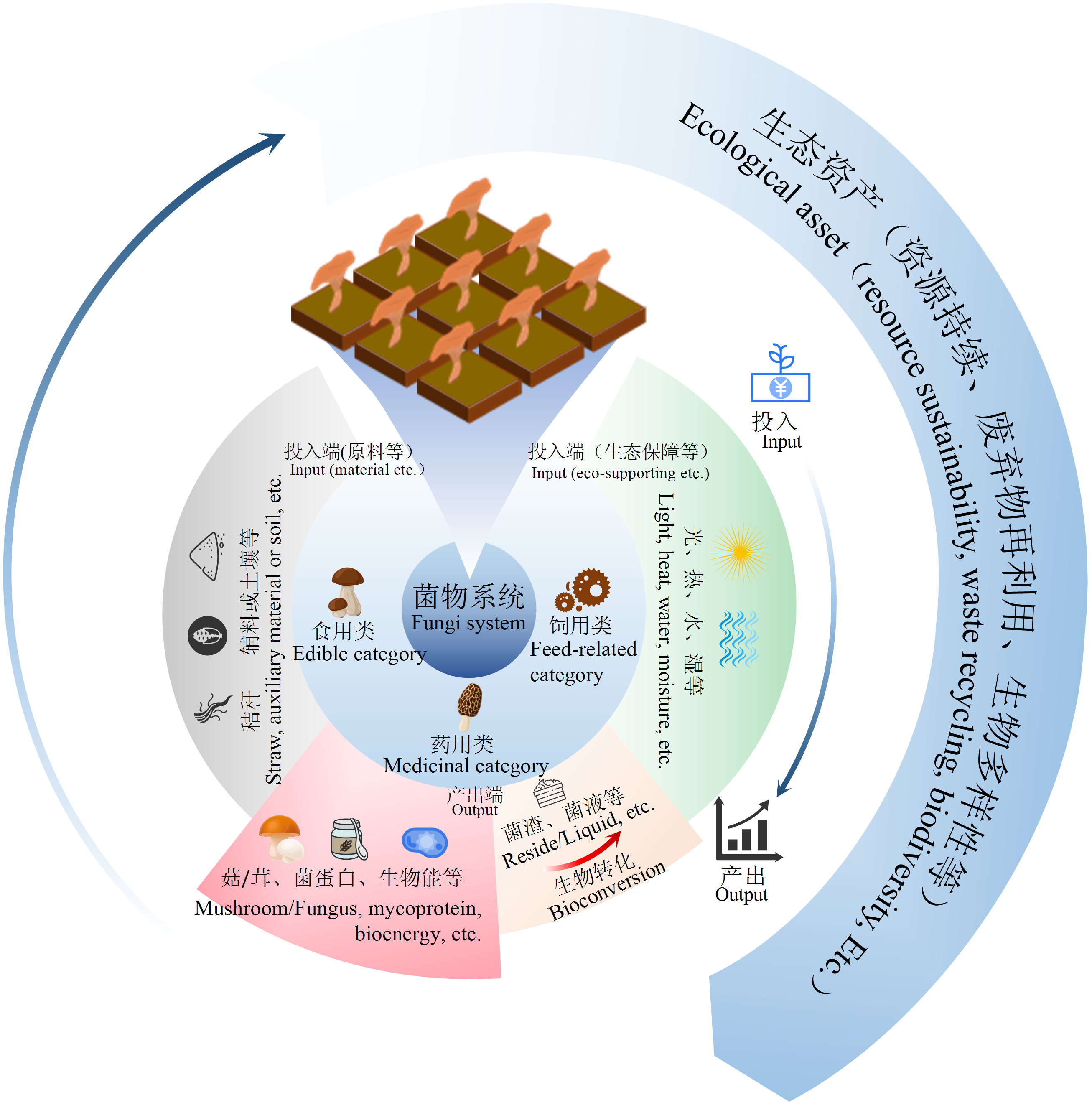
| [1] |
孙燕, 袁一心, 葛恒军, 蒋非非, 邹铭, 陈浮. 2010—2022年中国农业温室设施空间格局及变化趋势[J]. 农业工程学报, 2025, 41(18): 291-299.
|
|
Sun Y, Yuan Y X, Ge H J, Jiang F F, Zou M, Chen F. Spatial pattern and evolutionary trends of agricultural greenhouse facilities in China from 2010 to 2022[J]. Transactions of the Chinese Society of Agricultural Engineering, 2025, 41(18): 291-299. (in Chinese)
|
| [2] |
冯在文, 许多, 田芳, 张红雨, 李万理, 彭辉, 刘善梅, 刘汉尊, 金慧东, 黄远, 吴颖丹, 龙浩, 韩怡然. 设施农业智能决策大模型关键技术与发展方向[J]. 农业工程学报, 2025, 41(13): 50-61.
|
|
Feng Z W, Xu D, Tian F, Zhang H Y, Li W L, Peng H, Liu S M, Liu H Z, Jin H D, Huang Y, Wu Y D, Long H, Han Y R. Key technologies and development trends of intelligent decision-making large models for facility agriculture[J]. Transactions of the Chinese Society of Agricultural Engineering, 2025, 41(13): 50-61. (in Chinese)
|
| [3] |
Reis Ely C R, Perakis S S, Cleveland C C, Menge D N L, Reed S C, Taylor B N, Batterman S A, Clark C M, Crews T E, Dynarski K A, Gei M G, Gundale M J, Herridge D F, Jovan S E, Kou-Giesbrecht S, Peoples M B, Piipponen J, Rodríguez-Caballero E, Salmon V G, Soper F M, et al. Global terrestrial nitrogen fixation and its modification by agriculture[J]. Nature, 2025, 643(8072): 705-711.
doi: 10.1038/s41586-025-09201-w
|
| [4] |
于滢, 姬广兴, 陈轶楠, 翁倩文, 陈伟强. 北方集约化农区农业氮素面源污染模拟及动因分析[J]. 环境科学, 2025, 46(5): 2783-2792.
|
|
Yu Y, Ji G X, Chen Y N, Weng Q W, Chen W Q. Simulation and motivation analysis of agricultural nitrogen non-point source pollution in north intensive farming area[J]. Environmental Science, 2025, 46(5): 2783-2792. (in Chinese)
|
| [5] |
刘晶, 徐伟义, 金晓斌, 应苏辰, 王世磊. 可持续集约导向下的耕地利用转型: 理论逻辑与调控路径[J]. 地理研究, 2025, 44(7): 1861-1876.
doi: 10.11821/dlyj020240595
|
|
Liu J, Xu W Y, Jin X B, Ying S C, Wang S L. Cultivated land use transition for sustainable intensification: theoretical logic and regulatory approach[J]. Geographical Research, 2025, 44(7): 1861-1876. (in Chinese)
|
| [6] |
周连昊, 曾全超, 梅唐英泽, 汪明霞, 谭文峰. 集约化柑橘种植抑制土壤磷循环微生物活性[J]. 环境科学, 2024, 45(5): 2881-2890.
|
|
Zhou L H, Zeng Q C, Mei T, Wang M X, Tan W F. Intensive Citrus cultivation suppresses soil phosphorus cycling microbial activity[J]. Environmental Science, 2024, 45(5): 2881-2890. (in Chinese)
|
| [7] |
蔡继明, 李艺铭. 培育发展农业领域新质生产力的路径选择[J]. 人民论坛, 2024(24): 75-77.
|
|
Cai J M, Li Y M. Strategies for cultivating and developing new-quality productive forces in the agricultural sector[J]. People’s Tribune, 2024(24): 75-77. (in Chinese)
|
| [8] |
耿立, 魏莉丽, 俞洋, 吴一平, 申进文. 食用菌规模化快速发展背景下菇农生产意愿的分析: 基于泌阳、西峡两县的调查[J]. 中国农业资源与区划, 2020, 41(6): 120-129.
|
|
Geng L, Wei L L, Yu Y, Wu Y P, Shen J W. Analysis of Lentinus edodes farmer’s willingness to continue production under the background of rapid development of large-scale production: Based on the investigation of Biyang county and Xixia county in Henan province[J]. Chinese Journal of Agricultural Resources and Regional Planning, 2020, 41(6): 120-129. (in Chinese)
|
| [9] |
刘俊彩, 范博文, 赵立琴, 孙欣莹, 董子铭, 王萌萌, 孙宁, 杨凤军. 玉米浆添加对堆肥过程中磷组分转化及微生物群落的影响[J]. 微生物学通报, 2025, 52(1): 249-262.
|
|
Liu J C, Fan B W, Zhao L Q, Sun X Y, Dong Z M, Wang M M, Sun N, Yang F J. Addition of corn steep liquor affects the transformation of phosphorus fractions and microbial community during composting process[J]. Microbiology China, 2025, 52(1): 249-262. (in Chinese)
|
| [10] |
李王成, 黄亚浩, 马东祥, 贾振江, 吴洋洋, 徐昊文, 张一帆, 李旭. 砂田退化机制及其修复改良措施: 研究进展及展望[J]. 江西农业大学学报, 2025, 47(2): 277-290.
|
|
Li W C, Huang Y H, Ma D X, Jia Z J, Wu Y Y, Xu H W, Zhang Y F, Li X. Degradation mechanisms of sand-mulched farmland and their restoration and improvement measures: Research status and prospects[J]. Acta Agriculturae Universitatis Jiangxiensis, 2025, 47(2): 277-290. (in Chinese)
doi: 10.3724/aauj.2025025
|
| [11] |
刘洋, 胡钰, 郭芯蕊, 丁斐. 我国农业新污染物治理的现状与展望[J]. 环境保护, 2025, 53(13): 64-68.
|
|
Liu Y, Hu Y, Guo X R, Ding F. Situation and prospect of emerging agricultural pollutants governance in China[J]. Environmental Protection, 2025, 53(13): 64-68. (in Chinese)
|
| [12] |
李开轩, 李富根, 钟耀辉, 付鑫羽. 关于农药中有关危险化学品管理问题的思考[J]. 农药科学与管理, 2025, 46(10): 56-60.
|
|
Li K X, Li F G, Zhong Y H, Fu X Y. Thoughts on the management of dangerous chemicals in pesticides[J]. Pesticide Science and Administration, 2025, 46(10): 56-60. (in Chinese)
|
| [13] |
刘丰茂, 刘东晖. 农药残留与安全专题序言[J]. 农药学学报, 2025, 27(3): I0001-I0002.
|
|
Liu F M, Liu D H. Special topic: Pesticide residues and safety Preface[J]. Chinese Journal of Pesticide Science, 2025, 27(3): I0001-I0002. (in Chinese)
|
| [14] |
吴思敏, 王春蕊, 汤涛, 季晨阳, 赵美蓉. 农药助剂的毒性效应研究进展[J]. 农药学学报, 2025, 27(4): 606-617.
|
|
Wu S M, Wang C R, Tang T, Ji C Y, Zhao M R. Research progress on the toxic effects of pesticide adjuvants[J]. Chinese Journal of Pesticide Science, 2025, 27(4): 606-617. (in Chinese)
|
| [15] |
贾亚楠, 唐忠. 中国和欧美国家养殖业抗生素使用负面问题及管理政策比较[J]. 农业环境科学学报, 2024, 43(6): 1205-1219.
|
|
Jia Y N, Tang Z. Negative issues of antibiotic use in livestock and management policies comparison between China, the United States, and the European Union[J]. Journal of Agro-Environment Science, 2024, 43(6): 1205-1219. (in Chinese)
|
| [16] |
赵方凯, 沈琳钧, 杨恺丰, 刘鸿林, 杨磊, 陈利顶. 中国农田土壤抗生素污染格局及其对施肥和灌溉的响应[J]. 科技导报, 2025, 43(12): 171-178.
doi: 10.3981/j.issn.1000-7857.2025.02.00228
|
|
Zhao F K, Shen L J, Yang K F, Liu H L, Yang L, Chen L D. Spatial pattern of soil antibiotic pollution in China’s farmland and the responses to fertilization and irrigation[J]. Science & Technology Review, 2025, 43(12): 171-178. (in Chinese)
|
| [17] |
李业芳, 苏艳芳, 王晶, 魏新华, 赵文轩, 余大为, 孙研研, 贾亚雄, 马月辉, 侯水生, 蒋琳. 我国畜禽种质资源保护现状与展望[J]. 中国工程科学, 2025, 27(5): 165-179.
doi: 10.15302/J-SSCAE-2025.05.014
|
|
Li Y F, Su Y F, Wang J, Wei X H, Zhao W X, Yu D W, Sun Y Y, Jia Y X, Ma Y H, Hou S S, Jiang L. Livestock germplasm resource conservation in China: Current status and prospect[J]. Strategic Study of CAE, 2025, 27(5): 165-179. (in Chinese)
doi: 10.15302/J-SSCAE-2025.05.014
|
| [18] |
Tscharntke T, Grass I, Wanger T C, Westphal C, Batáry P. Beyond organic farming-harnessing biodiversity-friendly landscapes[J]. Trends in Ecology & Evolution, 2021, 36(10): 919-930.
doi: 10.1016/j.tree.2021.06.010
|
| [19] |
Seibold S, Gossner M M, Simons N K, Blüthgen N, Müller J, Ambarlı D, Ammer C, Bauhus J, Fischer M, Habel J C, Linsenmair K E, Nauss T, Penone C, Prati D, Schall P, Schulze E D, Vogt J, Wöllauer S, Weisser W W. Arthropod decline in grasslands and forests is associated with landscape-level drivers[J]. Nature, 2019, 574(7780): 671-674.
doi: 10.1038/s41586-019-1684-3
|
| [20] |
Benton T G, Vickery J A, Wilson J D. Farmland biodiversity: Is habitat heterogeneity the key?[J]. Trends in Ecology & Evolution, 2003, 18(4): 182-188.
doi: 10.1016/S0169-5347(03)00011-9
|
| [21] |
姜小三, 卢梦凡, 刘岩, 李晗泚, 袁诗睿, 林伯正. 江苏省4类主要秸秆和畜禽粪便空间分布及综合利用潜力研究[J]. 农业环境科学学报, 2024, 43(3): 675-687.
|
|
Jiang X S, Lu M F, Liu Y, Li H C, Yuan S R, Lin B Z. Spatial distribution and comprehensive utilization potential of four main types of straw and livestock manure in Jiangsu Province[J]. Journal of Agro-Environment Science, 2024, 43(3): 675-687. (in Chinese)
|
| [22] |
龚世飞, 翟自建, 丁武汉, 张振, 望甜, 李虎. 南水北调中线工程水源地畜禽粪便面源污染特征及替代化肥潜力[J]. 中国生态农业学报(中英文), 2025, 33(2): 324-337.
|
|
Gong S F, Zhai Z J, Ding W H, Zhang Z, Wang T, Li H. Non-point source pollution characteristics and potential of alternative fertilizers of livestock and poultry manure in middle route of the South-to-North Water Diversion Project water source areas[J]. Chinese Journal of Eco-Agriculture, 2025, 33(2): 324-337. (in Chinese)
|
| [23] |
马悦, 赵若男, 陈朱淑怡, 童文彬, 王美. 畜禽粪便中抗生素耐药基因的污染现状及其防控研究进展[J]. 中国畜牧杂志, 2025, 61(5): 117-121.
|
|
Ma Y, Zhao R N, Chen Z, Tong W B, Wang M. Progress research on present situation of antibiotic resistance genes contamination in livestock and poultry manure and its prevention and control[J]. Chinese Journal of Animal Science, 2025, 61(5): 117-121. (in Chinese)
|
| [24] |
Stein S, Hartung J, Zikeli S, Möller K, Reents H J. Status quo of fertilization strategies and nutrient farm gate budgets on stockless organic vegetable farms in Germany[J]. Organic Agriculture, 2024, 14(2): 199-212.
doi: 10.1007/s13165-024-00458-5
|
| [25] |
Xu R, Chen J W, Yan N N, Xu B Q, Lou Z C, Xu L. High-value utilization of agricultural residues based on component characteristics: Potentiality and challenges[J]. Journal of Bioresources and Bioproducts, 2025, 10(3): 271-294.
doi: 10.1016/j.jobab.2025.01.002
|
| [26] |
Sietz D, Niamir A, Müller D, Hickler T, Kanemoto K, Moran D D, Thonicke K. Mapping human-nature archetypes to guide global biodiversity, food security, and land-use policy[J]. One Earth, 2025, 8(8): 101416.
doi: 10.1016/j.oneear.2025.101416
|
| [27] |
Kitowski I, Łopucki R, Stachniuk A, Fornal E. Banned pesticide still poisoning EU raptors[J]. Science, 2021, 371(6536): 1319-1320.
doi: 10.1126/science.abh0840
pmid: 33766879
|
| [28] |
Talha M, Tanveer M, Abid A, Maan A A, Khan M K I, Shair H, Tanveer N, Mustafa A. Valorization of poultry slaughter wastes via extraction of three structural proteins (gelatin, collagen and keratin): A sustainable approach for circular economy[J]. Trends in Food Science & Technology, 2024, 152: 104667.
|
| [29] |
Jana U K, Pandey D, Kango N. Advances in the utilization of mannan-rich agricultural wastes and gums for the circular bioeconomy[J]. Renewable and Sustainable Energy Reviews, 2025, 217: 115713.
doi: 10.1016/j.rser.2025.115713
|
| [30] |
|
|
Xuan Z P, Feng H Y, Chen M Q, Xu J S, Liu M X, Zhao B Z, Zhang J B. Effects of straw returning combined with chemical fertilizer on soil ecosystem multifunctionality[J]. Scientia Agricultura Sinica, 2025, 58(14): 2821-2837. doi: 10.3864/j.issn.0578-1752.2025.14.009. (in Chinese)
|
| [31] |
Huang W B, Zeng X L, Li J H. Fostering the waste management with environmental-resource interacting attribute[J]. Nature Communications, 2024, 15: 10196.
doi: 10.1038/s41467-024-54602-6
|
| [32] |
Masood S, Shahbaz H M, Shaik M A S, Maqsood S. Strategic valorization of heterogeneous organic wastes for sustainable food packaging: A circular economy approach[J]. Trends in Food Science & Technology, 2025, 165: 105353.
|
| [33] |
王二平. 我国有机农业的发展与有机产品认证及监管[J]. 中国农业资源与区划, 2014, 35(6): 70-74.
|
|
Wang E P. The development of organic agriculture in China and organic product certification and supervision[J]. Chinese Journal of Agricultural Resources and Regional Planning, 2014, 35(6): 70-74. (in Chinese)
|
| [34] |
胡晓兵, 陈凡. 从自然农法看循环农业技术的哲学基础[J]. 自然辩证法研究, 2006, 22(9): 41-44, 68.
|
|
Hu X B, Chen F. Philosophy basic of recycle agriculture technology from nature farming[J]. Studies in Dialectics of Nature, 2006, 22(9): 41-44, 68. (in Chinese)
|
| [35] |
朱士超, 李健, 王欢, 夏兵. 溯源技术对供应商漂绿的影响及其采纳决策研究[J/OL]. 系统工程理论与实践. https://link.cnki.net/urlid/11.2267.N.20251112.1450.002.
|
|
Zhu S C, Li J, Wang H, Xia B. Research on the influence of traceability technology on supplier greenwashing and its adoption decision[J/OL]. China Industrial Economics. https://link.cnki.net/urlid/11.2267.N.20251112.1450.002. (in Chinese)
|
| [36] |
Kaushal M, Atieno M, Odjo S, Baijukya F, Gebrehawaryat Y, Fadda C. Nature-positive agriculture: A way forward towards resilient agrifood systems[J]. Sustainability, 2025, 17(3): 1151.
doi: 10.3390/su17031151
|
| [37] |
Lucca E, Kofinas D, Avellán T, Kleemann J, Mooren C E, Blicharska M, Teutschbein C, Sperotto A, Sušnik J, Milliken S, Fader M, Đorđević D, Dašić T, Vasilić V, Taiwo B, Baubekova A, Pineda- Martos R, Spyropoulou A, Baganz G F M, el Jeitany J, et al. Integrating “nature” in the water-energy-food Nexus: Current perspectives and future directions[J]. Science of the Total Environment, 2025, 966: 178600.
doi: 10.1016/j.scitotenv.2025.178600
|
| [38] |
Rasmussen L V, Grass I, Mehrabi Z, Smith O M, Bezner-Kerr R, Blesh J, Garibaldi L A, Isaac M E, Kennedy C M, Wittman H, Batáry P, Buchori D, Cerda R, Chará J, Crowder D W, Darras K, DeMaster K, Garcia K, Gómez M, Gonthier D, et al. Joint environmental and social benefits from diversified agriculture[J]. Science, 2024, 384(6691): 87-93.
doi: 10.1126/science.adj1914
|
| [39] |
刘广伟. 食学定位: 隐性“食事知识体系”的显性确立[J]. 山西农业大学学报(社会科学版), 2025, 24(5): 26-36.
|
|
Liu G W. The positioning of Shiology: The explicit establishment of the implicit “food knowledge system”[J]. Journal of Shanxi Agricultural University (Social Science Edition), 2025, 24(5): 26-36. (in Chinese)
|
| [40] |
王晓红. 符号学框架下的饮食文化文本解析与意义构建[J]. 食品与机械, 2025, 41(2): 254-255.
|
|
Wang X H. Textual analysis and meaning construction of food culture within a semiotic framework[J]. Food & Machinery, 2025, 41(2): 254-255. (in Chinese)
|
| [41] |
肖显静, 何进. 生态系统生态学研究的关键问题及趋势: 从“整体论与还原论的争论”看[J]. 生态学报, 2018, 38(1): 31-40.
|
|
Xiao X J, He J. Key problems and trends in the study of ecosystem ecology based on the debate of holism and reductionism[J]. Acta Ecologica Sinica, 2018, 38(1): 31-40. (in Chinese)
|
| [42] |
Trienes R. Holism and Kantian teleology in C.J. Van De Klaauw’s structuralization of oecology[J]. Acta Biotheoretica, 1992, 40(1): 11-22.
doi: 10.1007/BF00046547
|
| [43] |
Bramon Mora B, Gravel D, Gilarranz L J, Poisot T, Stouffer D B. Identifying a common backbone of interactions underlying food webs from different ecosystems[J]. Nature Communications, 2018, 9: 2603.
doi: 10.1038/s41467-018-05056-0
pmid: 29973596
|
| [44] |
Tansley A G. The use and abuse of vegetational concepts and terms[J]. Ecology, 1935, 16(3): 284-307.
doi: 10.2307/1930070
|
| [45] |
Xi N X, De Long J R, Davison J, Kardol P, Forero L E, Zobel M, Semchenko M. Plant-soil microbial interactions as modulators of species coexistence and productivity[J]. Trends in Ecology & Evolution, 2025, 40(7): 673-686.
doi: 10.1016/j.tree.2025.04.013
|
| [46] |
Teng J L, Hou R X, Dungait J A J, Zhou G Y, Kuzyakov Y, Zhang J B, Tian J, Cui Z L, Zhang F S, Delgado-Baquerizo M. Conservation agriculture improves soil health and sustains crop yields after long-term warming[J]. Nature Communications, 2024, 15: 8785.
doi: 10.1038/s41467-024-53169-6
pmid: 39389978
|
| [47] |
Chan S F, Rubenstein D R, Wang T W, Chen Y Y, Chen I C, Ni D Z, Shih W K, Shen S F. Land-use changes influence climate resilience through altered population demography in a social insect[J]. Ecological Monographs, 2025, 95: e1638.
|
| [48] |
Delord J. Beyond the limit: Carrying capacity (K) and the holism/ reductionism debate[J]. History and Philosophy of the Life Sciences, 2021, 43(3): 90.
doi: 10.1007/s40656-021-00440-4
|
| [49] |
Hu J L, Amor D R, Barbier M, Bunin G, Gore J. Emergent phases of ecological diversity and dynamics mapped in microcosms[J]. Science, 2022, 378(6615): 85-89.
doi: 10.1126/science.abm7841
pmid: 36201585
|
| [50] |
刘万才, 张政兵, 贺平均, 宋一林, 陈学新. 植保无人机释放赤眼蜂球防治二化螟的效果[J]. 中国植保导刊, 2022, 42(4): 44-47.
|
|
Liu W C, Zhang Z B, He P J, Song Y L, Chen X X. Research on the control effect of drone dropping Trichogramma balls on Chilo suppressalis[J]. China Plant Protection, 2022, 42(4): 44-47. (in Chinese)
|
| [51] |
Liu T X, Chen X X. Biological control of aphids in China: Successes and prospects[J]. Annual Review of Entomology, 2025, 70(1): 401-419.
doi: 10.1146/ento.2025.70.issue-1
|
| [52] |
Wang P Z, Shu X H, Chen Y S, Gu L C, Wu Z W, Ma R F, Tang P, Wang Z Z, Chen X X. Transcriptome analysis reveals divergent parasitic strategies between two larval endoparasitoids of Spodoptera frugiperda[J]. Entomologia Generalis, 2024, 44(3): 737-746.
doi: 10.1127/entomologia/2024/2241
|
| [53] |
Wang Z Q, Zhou X G, Xiao Q, Tang P, Chen X X. The potential of Parapanteles hyposidrae and Protapanteles immunis (Hymenoptera: Braconidae) as biocontrol agents for the tea grey geometrid Ectropis grisescens (lepidoptera)[J]. Insects, 2022, 13(10): 937.
doi: 10.3390/insects13100937
|
| [54] |
时敏, 唐璞, 王知知, 黄健华, 陈学新. 中国寄生蜂研究及其在害虫生物防治中的应用[J]. 应用昆虫学报, 2020, 57(3): 491-548.
|
|
Shi M, Tang P, Wang Z Z, Huang J H, Chen X X. Review of research on parasitoids and their use in biological control in China[J]. Chinese Journal of Applied Entomology, 2020, 57(3): 491-548. (in Chinese)
|
| [55] |
Pang L, Dong Z, Liu Z, Feng T, Shi W, Lu Y, Sheng Y, Chen J, Guan X, ChenX X, Huang J H. Larval secretions of parasitoid wasps are new effectors that impair host immune defences[J]. Crop Health, 2023, 1: 11.
doi: 10.1007/s44297-023-00011-y
|
| [56] |
Kirchherr J, Reike D, Hekkert M. Conceptualizing the circular economy: An analysis of 114 definitions[J]. Resources, Conservation and Recycling, 2017, 127: 221-232.
doi: 10.1016/j.resconrec.2017.09.005
|
| [57] |
Mignacca B, Filippelli S, Strazzullo S, Tiburzi L, Urbinati A, Kirchherr J. Building circular economy theories: A practical-oriented perspective and a way forward[J]. Journal of Industrial Ecology, 2025, 29(2): 418-428.
doi: 10.1111/jiec.v29.2
|
| [58] |
黄仁辉, 高明. 基于链间竞争的“城市矿产”资源化共生网络竞合关系研究[J]. 系统工程理论与实践, 2025, 45(3): 886-906.
doi: 10.12011/SETP2023-2248
|
|
Huang R H, Gao M. Research on the co-opetitive relationship of symbiosis network for“urban mineral” utilization based on chain-to- chain competition[J]. Systems Engineering-Theory & Practice, 2025, 45(3): 886-906. (in Chinese)
|
| [59] |
陈丽强, 高明, 梁开荣. 基于ANP-BPNN的“城市矿产”开发利用多主体协同影响因素识别[J]. 管理评论, 2023, 35(2): 16-27.
|
|
Chen L Q, Gao M, Liang K R. ANP-BPNN model based identification of the factors that affect the multi-agent collaboration of “urban minerals”[J]. Management Review, 2023, 35(2): 16-27. (in Chinese)
|
| [60] |
唐燕, 孟繁癑. “城市矿产”产业生态效率动态演变特征与影响因素[J]. 中国人口·资源与环境, 2021, 31(6): 67-77.
|
|
Tang Y, Meng F N. Dynamic evolution characteristics and influencing factors of 'urban mining’industrial ecological efficiency[J]. China Population Resources and Environment, 2021, 31(6): 67-77. (in Chinese)
|
| [61] |
孙佳杰, 范诗琳, 项方铭, 韩璐滢, 沈珂薇, 张志剑. 鸡粪协同易腐垃圾的黑水虻幼虫转化增效及肠道菌群响应机理分析[J]. 环境污染与防治, 2025, 47(7): 26-35.
|
|
Sun J J, Fan S L, Xiang F M, Han L Y, Shen K W, Zhang Z J. Effectiveness and gut microbiota response analysis of black soldier fly larvae bioconversion for treatment of chicken manure coupled with domestic biodegradable food waste[J]. Environmental Pollution and Control, 2025, 47(7): 26-35. (in Chinese)
|
| [62] |
陶兴华, 王先哲, 马景津, 黄恩, 沈建林, 金维正, 张志剑. 黑水虻转化厨余垃圾过程中物料理化性质及溶解性有机质光谱学特征[J]. 应用与环境生物学报, 2023, 29(4): 860-866.
|
|
Tao X H, Wang X Z, Ma J J, Huang E, Shen J L, Jin W Z, Zhang Z J. Dynamic physicochemical and spectral properties of dissolved organic matter in stack material during black soldier fly larvae (Hermetia illucens L.) bioconversion for food waste treatment[J]. Chinese Journal of Applied & Environmental Biology, 2023, 29(4): 860-866. (in Chinese)
|
| [63] |
Jiang S Y, Tang X T, Wang H, Henawy A R, Zhang Q, Shen K W, Li G, Xiang F M, Zhang Z J. Biofertilizer derived from black soldier fly (Hermetia illucens L.) larval frass promotes tomato growth and suppresses bacterial wilt disease[J]. Bioresource Technology, 2026, 440: 133408.
doi: 10.1016/j.biortech.2025.133408
|
| [64] |
Jiang S Y, Shen K W, Brandón M G, Lu S B, Tomberlin J K, Tang X T, Wang H, Xiang F M, Chen X X, Zhang Z J. Using black soldier fly larval frass to restore soil health[J]. Bioresource Technology, 2025, 432: 132701.
doi: 10.1016/j.biortech.2025.132701
|
| [65] |
Jiang S Y, Sun J J, Zhu X L, Shen K W, Zhang Z J. Co-treatment of agri-food waste streams using black soldier fly larvae (Hermetia illucens L.): A sustainable solution for rural waste management[J]. Journal of Environmental Management, 2024, 370: 122373.
doi: 10.1016/j.jenvman.2024.122373
|
| [66] |
Xiang F M, Zhang Q, Xu X H, Zhang Z J. Black soldier fly larvae recruit functional microbiota into the intestines and residues to promote lignocellulosic degradation in domestic biodegradable waste[J]. Environmental Pollution, 2024, 340: 122676.
doi: 10.1016/j.envpol.2023.122676
|
| [67] |
Xiang F M, Han L Y, Jiang S Y, Xu X H, Zhang Z J. Black soldier fly larvae mitigate greenhouse gas emissions from domestic biodegradable waste by recycling carbon and nitrogen and reconstructing microbial communities[J]. Environmental Science and Pollution Research, 2024, 31(23): 33347-33359.
doi: 10.1007/s11356-024-33308-8
|
| [68] |
吴孔阳, 马佳音, 杨同香, 唐琳, 陈雪冬, 韩新宽, 韩建明. 农业废弃物堆肥技术研究进展[J]. 江苏农业科学, 2025, 53(11): 1-8.
|
|
Wu K Y, Ma J Y, Yang T X, Tang L, Chen X D, Han X K, Han J M. Research progress on agricultural waste composting technology[J]. Jiangsu Agricultural Sciences, 2025, 53(11): 1-8. (in Chinese)
|
| [69] |
彭瑞雪, 程艳, 宋娜, 杨利, 周维, 杨俊, 杨青, 吴启侠, 段小丽. 水稻-大球盖菇模式对土壤微生物量碳氮磷的影响[J]. 中国土壤与肥料, 2024(7): 49-59.
|
|
Peng R X, Cheng Y, Song N, Yang L, Zhou W, Yang J, Yang Q, Wu Q X, Duan X L. Effects of the rice-Stropharia grandis rotation/ cultivation on soil microbial biomass C, N and P[J]. Soil and Fertilizer Sciences in China, 2024(7): 49-59. (in Chinese)
|
| [70] |
Hu Q Y, Li C F, Cao C G, Huang J L, Ding H N, Yu M, Liu J, Liu T Q. The rice-edible mushroom pattern promotes the transformation of composted straw-C to soil organic carbon[J]. Agriculture, Ecosystems & Environment, 2023, 353: 108560.
doi: 10.1016/j.agee.2023.108560
|
| [71] |
Hu Q Y, Yang J, Chen Z P, Zhang X L, Li C F. Rice-edible mushroom Stropharia rugosoannulata rotation mitigates net global warming potential while enhancing soil fertility and economic benefits[J]. European Journal of Agronomy, 2025, 164: 127521.
doi: 10.1016/j.eja.2025.127521
|
| [72] |
刘苏捷, 王剑, 贺腾飞, 刘汉锁, 龙沈飞, 臧建军, 朴香淑, 王春林. 不同蛋白质原料对断奶仔猪生长性能、养分表观消化率、血清免疫和抗氧化指标及肠道形态的影响[J]. 动物营养学报, 2022, 34(4): 2238-2248.
doi: 10.3969/j.issn.1006-267x.2022.04.020
|
|
Liu S J, Wang J, He T F, Liu H S, Long S F, Zang J J, Piao X S, Wang C L. Effects of different protein ingredients on growth performance, nutrient apparent digestibility, serum immune and antioxidant indexes and intestinal morphology of weaned piglets[J]. Chinese Journal of Animal Nutrition, 2022, 34(4): 2238-2248. (in Chinese)
|
| [73] |
祝婕, 刘桂荣. 蝇蛆粉对仔猪生长性能、血清免疫指标及经济效益的影响[J]. 饲料研究, 2023, 46(1): 33-37.
|
|
Zhu J, Liu G R. Effect of fly maggot powder on growth performance, serum immunological indexes and economic benefits of piglets[J]. Feed Research, 2023, 46(1): 33-37. (in Chinese)
|
| [74] |
蔡赐美, 马崇, 朱剑锋, 庞旭, 祁姣姣, 李雪玲, 杨美艳, 胡文锋, 胡斌. 黑水虻幼虫作为饲料原料在生猪养殖中的应用研究进展[J]. 中国畜牧兽医, 2024, 51(4): 1500-1510.
doi: 10.16431/j.cnki.1671-7236.2024.04.018
|
|
Cai C M, Ma C, Zhu J F, Pang X, Qi J J, Li X L, Yang M Y, Hu W F, Hu B. Advance of applications of Hermetia illucens L.Larvae as feedstock in pig production[J]. China Animal Husbandry & Veterinary Medicine, 2024, 51(4): 1500-1510. (in Chinese)
|
| [75] |
李志强, 蒋硕匀, 江承亮, 沈珂薇, 杨柱理, 岳春雷, 张志剑. 饲粮中添加发酵虻浆对仔猪生长性能及肠道菌群的影响[J]. 养殖与饲料, 2026, 25(5): 1-8.
|
|
Li Z Q, Jiang S Y, Jiang C L, Shen K W, Yang Z L, Yue C L, Zhang Z J. Effects of fermented black soldier fly larval paste on growth performance and gut microbiota dynamics in piglets[J]. Animals Breeding and Feed, 2026, 25(5): 1-8. (in Chinese)
|
| [76] |
Costanza R, d’Arge R, de Groot R, Farber S, Grasso M, Hannon B, Limburg K, Naeem S, O’Neill R V, Paruelo J, Raskin R G, Sutton P, van den Belt M. The value of the world’s ecosystem services and natural capital[J]. Ecological Economics, 1998, 25(1): 3-15.
doi: 10.1016/S0921-8009(98)00020-2
|
| [77] |
|
|
Gao S J, Wu C X, Zhou G P, Chang D N, Cao W D. “Green manure plus” industry mechanism and its practices[J]. Scientia Agricultura Sinica, 2025, 58(10): 1982-1993. DOI: 10.3864/j.issn.0578-1752.2025.10.010. (in Chinese)
|
| [78] |
蒙培元. 人与自然: 中国哲学生态观[M]. 北京: 人民出版社, 2004.
|
|
Meng P Y. Man and Nature: China’s Philosophical Ecological View[M]. Beijing: People’s Publishing House, 2004. (in Chinese)
|
| [79] |
Sven Erik Jϕrgensen. 系统生态学导论[M]. 陆健健, 译. 北京: 高等教育出版社, 2013.
|
|
Sven Erik Jϕrgensen. Introduction to Systems Ecology[M]. Lu J J, trans. Beijing: Higher Education Press, 2013. (in Chinese)
|
| [80] |
Mandal S, Mendhe A C, Park T, Lee H S. Temperature-modulated surface features of neem seed biochar for sustainable thermal energy storage applications[J]. Biochar, 2026, 8(1): 9.
doi: 10.1007/s42773-025-00510-x
|
| [81] |
Ali Abaker Omer A. Climate change and the water-food-energy nexus: A comprehensive review of sustainability challenges and innovations[J]. Renewable and Sustainable Energy Reviews, 2026, 230: 116676.
doi: 10.1016/j.rser.2025.116676
|
| [82] |
Guan D J, Chen S, Zhang Y X, Liu Z F, Peng G C, Zhou L L. Influencing factors and the establishment of a basin ecological compensation mechanism from the perspective of water conservation: A case study of the Upper Yangtze River in China[J]. Journal of Cleaner Production, 2024, 456: 142332.
doi: 10.1016/j.jclepro.2024.142332
|
| [83] |
Liu D, Abdellah Y A Y, Dou T T, Keiblinger K M, Zhou Z Y, Bhople P, Jiang J S, Shi X F, Zhang F M, Yu F Q, Xing B S. Livestock- crop-mushroom (LCM) circular system: An eco-friendly approach for enhancing plant performance and mitigating microbiological risks[J]. Environmental Science & Technology, 2025, 59(17): 8541-8554.
doi: 10.1021/acs.est.4c12517
|
| [84] |
吴信, 张会会, 杨旭东, 梁晓晓, 高乐. 新型单细胞蛋白饲料资源开发利用进展[J]. 饲料工业, 2024, 45(20): 1-8.
|
|
Wu X, Zhang H H, Yang X D, Liang X X, Gao L. Progress in the development and utilization of new feed resources of single cell protein[J]. Feed Industry, 2024, 45(20): 1-8. (in Chinese)
|
| [85] |
韩振强, 梁浩, 鹿富俊, 李柏浩, 瞿子惠, 赵晓东, 闫晓刚, 耿春银. 肉牛粗饲料玉米秸秆高效利用的研究进展[J]. 饲料研究, 2023, 46(7): 133-137.
|
|
Han Z Q, Liang H, Lu F J, Li B H, Qu Z H, Zhao X D, Yan X G, Geng C Y. Research progress on efficient utilization of beef cattle roughage corn straw[J]. Feed Research, 2023, 46(7): 133-137. (in Chinese)
|
| [86] |
吕亮雨, 施建军, 蔡宗程, 高佩, 李发毅. 菌剂配施有机肥对高海拔地区燕麦生长及土壤特性影响[J]. 草地学报, 2025, 33(12): 4172-4182.
doi: 10.11733/j.issn.1007-0435.2025.12.029
|
|
Lü L Y, Shi J J, Cai Z C, Gao P, Li F Y. Effects of combined application of bacterial agents with organic fertilizer on oat growth and soil characteristics in high altitude areas[J]. Acta Agrestia Sinica, 2025, 33(12): 4172-4182. (in Chinese)
|
| [87] |
俞孔见, 胡加付, 柴一秋, 蔡瑞杭. 白僵菌素产量对蝉花虫草侵染斜纹夜蛾的致病性影响[J]. 菌物学报, 2025, 44(6): 108-119.
|
|
Yu K J, Hu J F, Chai Y Q, Cai R H. Effects of the production of beauvericin on pathogenicity of Cordyceps chanhua infecting Spodoptera litura[J]. Mycosystema, 2025, 44(6): 108-119. (in Chinese)
|
| [88] |
陈欣, 叶俊龙, 唐建军. 现代集约化农业如何利用物种多样性: 源自对重要农业文化遗产“稻鱼共生系统”研究的思考[J]. 中国生态农业学报(中英文), 2026, 34(1): 1-5.
|
|
Chen X, Ye J L, Tang J J. How can modern intensive agriculture utilize species diversity? Insights from the important agricultural heritage rice-fish system[J]. Chinese Journal of Eco-Agriculture, 2026, 34(1): 1-5. (in Chinese)
|
| [89] |
梁新强, 杨姣, 何霜, 刘博弈, 李建业, 徐向阳, 傅伯杰. 关于长江三角洲地区推进稻田退水零直排工程建设的建议[J]. 中国科学院院刊, 2021, 36(7): 814-822.
|
|
Liang X Q, Yang J, He S, Liu B Y, Li J Y, Xu X Y, Fu B J. Promoting construction of zero-direct discharge engineering for agricultural wastewater from paddy fields in Yangtze River Delta Region[J]. Bulletin of the Chinese Academy of Sciences, 2021, 36(7): 814-822. (in Chinese)
|
| [90] |
吴小沔, 贺聪志. 从反思到实践: 有机农业的发展历程与话语变迁回顾[J]. 中国农业大学学报(社会科学版), 2019, 36(2): 116-128.
|
|
Wu X M, He C Z. From reflections to actions: A review on the development and discourses of organic farming[J]. Journal of China Agricultural University (Social Sciences Edition), 2019, 36(2): 116-128. (in Chinese)
|
| [91] |
Ouatahar L, Amon B, Bannink A, Amon T, Zentek J, Deng J, Janke D, Hempel S, Beukes P, van der Weerden T, Krol D, Lanigan G J. An integral assessment of carbon and nitrogen emissions in dairy cattle production systems: Comparing dynamic process-based greenhouse gas emissions factors with IPCC Tier 1 and Tier 2 approaches in confinement and pasture-based systems[J]. Journal of Cleaner Production, 2025, 486: 144479.
doi: 10.1016/j.jclepro.2024.144479
|
| [92] |
党莹超, 李莎, 苏巍, 胡凡旭, 姜伟. 基于环境DNA技术的宜宾江段秋季鱼类多样性研究[J]. 水产科学, 2024, 43(6): 894-905.
|
|
Dang Y C, Li S, Su W, Hu F X, Jiang W. Fish diversity in Yibin section in autumn based on eDNA technology[J]. Fisheries Science, 2024, 43(6): 894-905. (in Chinese)
|
| [93] |
苏文英, 王一璞, 刘晓梅, 纪伟, 孙潇潇, 胡曙鋆, 任立凯. 大球盖菇-大豆-豆丹种养循环模式对土壤细菌群落结构和多样性的影响[J]. 江西农业学报, 2025, 37(3): 47-53, 62.
|
|
Su W Y, Wang Y P, Liu X M, Ji W, Sun X X, Hu S Y, Ren L K. Effects of “Stropharia rugosannulata-soybean-Clanis bilineata” rotation on bacterial community structure and diversity in soil[J]. Acta Agriculturae Jiangxi, 2025, 37(3): 47-53, 62. (in Chinese)
|







 ), JIANG ShuoYun2, WANG XianZhe1,3, LIANG XinQiang1, TANG XiaoTian4, JIANG PeiKun5, YUE ChunLei6(