






中国农业科学 ›› 2026, Vol. 59 ›› Issue (4): 850-861.doi: 10.3864/j.issn.0578-1752.2026.04.011
杨岩1( ), 江丽华2, 李妮2, 石璟1, 谭德水1, 刘玉敏1, 赵环宇1, 徐钰1()
收稿日期:2025-03-31
出版日期:2026-02-10
发布日期:2026-02-10
通信作者:
联系方式:
杨岩,E-mail:tornado23@126.com。
基金资助:
YANG Yan1(), JIANG LiHua2, LI Ni2, SHI Jing1, TAN DeShui1, LIU YuMin1, ZHAO HuanYu1, XU Yu1()
Received:2025-03-31
Published:2026-02-10
Online:2026-02-10
摘要:
【目的】氮素淋失是设施菜地种植区地下水硝酸盐污染的重要来源之一。明确设施菜地氮素淋失特征为农业面源污染测算和实现蔬菜绿色高效可持续生产提供依据。【方法】以设施番茄-黄瓜轮作系统为研究对象,2016—2023年,在山东省禹城市连续8年开展不同水肥运筹对设施菜地氮素淋失、蔬菜产量和水肥利用效率影响的试验研究。【结果】在设施番茄-黄瓜轮作模式下,淋溶产流高峰主要发生在3月和10月,基本处于设施番茄和黄瓜的结果初期;高峰期产流量占全年产流量的34.6%以上。水肥优化综合管理模式(OPTW)降低设施菜地淋溶产流量32.6%以上,但对淋溶强度无显著影响。各处理淋溶液中可溶性总氮占比达70.0%以上,是氮素流失的主要形态。与传统水肥管理(FP)相比,优化施肥(OPT)全氮淋失量降低24.7%,蔬菜年增产3.2%,水肥利用效率提高2.7%以上;而OPTW则降低全氮淋失量49.6%,蔬菜年产量和水肥利用效率分别提高19.6%和55.5%以上。OPT和OPTW处理全氮淋失系数分别为24.9%和16.3%,二者间无显著差异,其中OPTW较FP降低31.9%。【结论】水肥优化综合管理模式在保证蔬菜增产的同时,实现氮素减排和水肥协同增效,为降低设施菜地氮淋失风险提供可靠技术依托,但后续研究或实际生产中需对灌溉制度进一步优化,并增配氮形态调控、增强土壤水肥固持能力等农艺措施。
杨岩, 江丽华, 李妮, 石璟, 谭德水, 刘玉敏, 赵环宇, 徐钰. 水肥运筹降低设施菜地氮淋失协同增产增效[J]. 中国农业科学, 2026, 59(4): 850-861.
YANG Yan, JIANG LiHua, LI Ni, SHI Jing, TAN DeShui, LIU YuMin, ZHAO HuanYu, XU Yu. Water and Fertilizer Management for Reducing Nitrogen Leaching in Facility Vegetable Fields and Achieving Concurrent Yield Increase and Efficiency Improvement[J]. Scientia Agricultura Sinica, 2026, 59(4): 850-861.
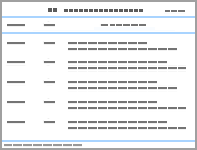
表1
各处理化肥施用量"
| 处理 Treatment | 黄瓜季Cucumber season (N-P2O5-K2O) | 番茄季Tomato season (N-P2O5-K2O) | ||
|---|---|---|---|---|
| 基肥 Base fertilizer | 追肥 Additional fertilizer | 基肥 Base fertilizer | 追肥 Additional fertilizer | |
| CK | 0-225-225 | 0-195-450 | 0-300-225 | 0-0-315 |
| FP | 225-225-225 | 450-195-450 | 225-300-225 | 525-0-315 |
| OPT | 225-225-225 | 300-195-450 | 225-300-225 | 225-0-315 |
| OPTW | 225-225-225 | 300-195-450 | 225-300-225 | 225-0-315 |
表2
各处理每季作物种植情况及生育期灌溉次数和灌水总量"
| 年度Annual | 种植季 Planting season | 作物 Crop | 定植时间 Planting time | 收获时间 Harvest time | 灌水次数 Irrigation times | 畦灌 Border irrigation (mm) | 滴灌 Drip irrigation (mm) |
|---|---|---|---|---|---|---|---|
| 2016 | 1 | 番茄Tomato | 2015-12-18 | 2016-05-26 | 14 | 469.6 | 383.3 |
| 2 | 黄瓜Cucumber | 2016-08-06 | 2016-12-02 | 12 | 363.6 | 234.7 | |
| 2017 | 1 | 番茄Tomato | 2017-01-06 | 2017-06-03 | 11 | 548.1 | 354.3 |
| 2 | 黄瓜Cucumber | 2017-08-04 | 2017-11-27 | 12 | 442.4 | 355.0 | |
| 2018 | 1 | 番茄Tomato | 2017-12-24 | 2018-05-31 | 10 | 450.4 | 363.7 |
| 2 | 黄瓜Cucumber | 2018-08-12 | 2018-11-22 | 7 | 423.1 | 252.8 | |
| 2019 | 1 | 番茄Tomato | 2018-12-17 | 2019-05-27 | 9 | 613.5 | 488.4 |
| 2 | 黄瓜Cucumber | 2019-08-16 | 2019-11-22 | 10 | 545.9 | 438.9 | |
| 2020 | 1 | 番茄Tomato | 2019-12-06 | 2020-05-29 | 9 | 580.7 | 470.4 |
| 2 | 黄瓜Cucumber | 2020-08-01 | 2020-11-24 | 9 | 640.0 | 514.8 | |
| 2021 | 1 | 番茄Tomato | 2021-01-04 | 2021-05-26 | 9 | 573.3 | 463.0 |
| 2022 | 1 | 黄瓜Cucumber | 2021-09-10 | 2022-01-05 | 9 | 502.2 | 403.7 |
| 2 | 番茄Tomato | 2022-01-20 | 2022-06-20 | 7 | 523.0 | 418.5 | |
| 2023 | 1 | 黄瓜Cucumber | 2022-09-24 | 2023-01-10 | 10 | 576.3 | 459.3 |
| 2 | 番茄Tomato | 2023-02-28 | 2023-06-19 | 8 | 349.6 | 280.4 |
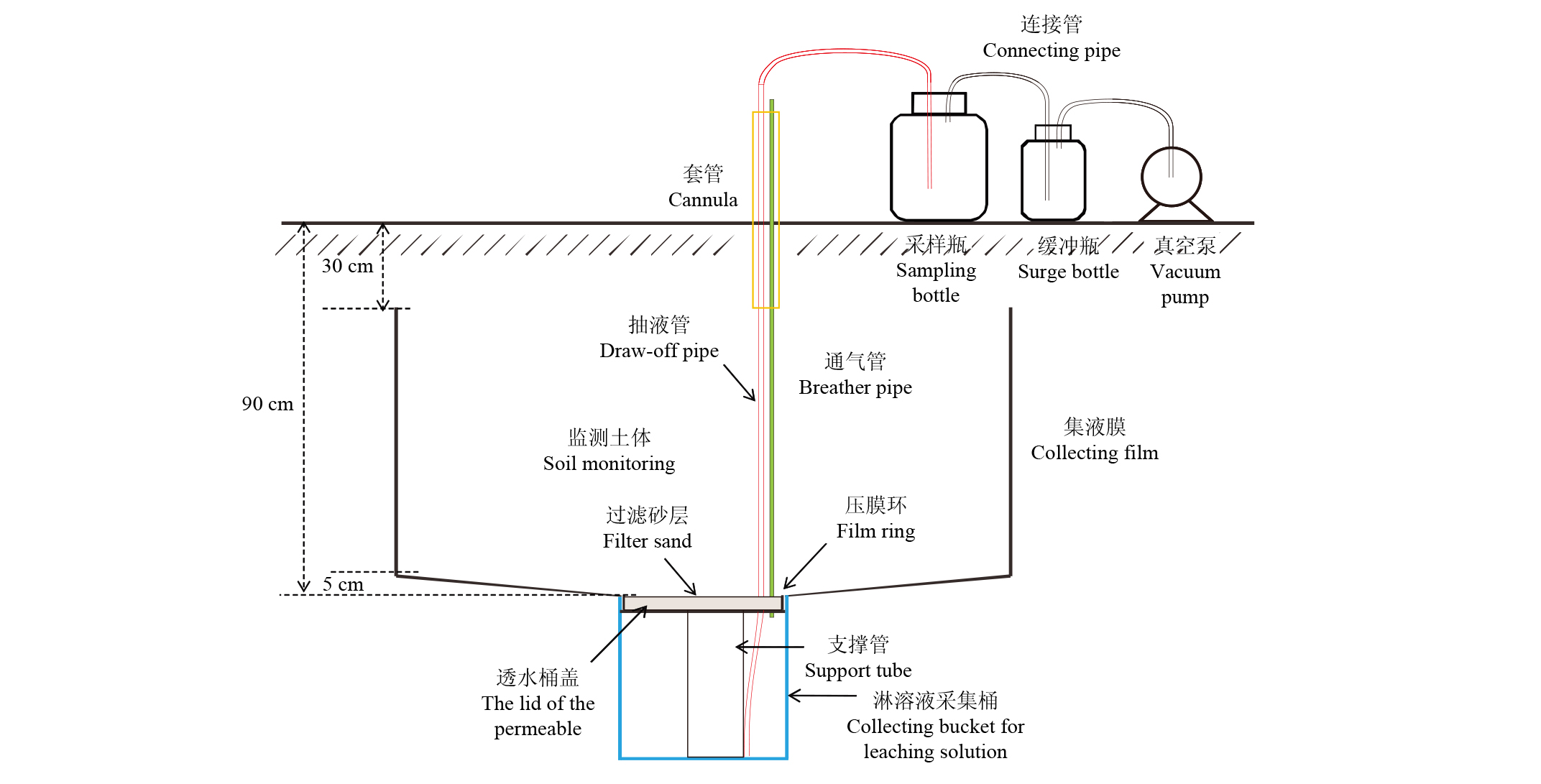
图1
田间渗滤池装置示意图"

图2
灌溉量及淋溶量动态变化 图中字母n为监测期内自然月份的累计灌溉次数"
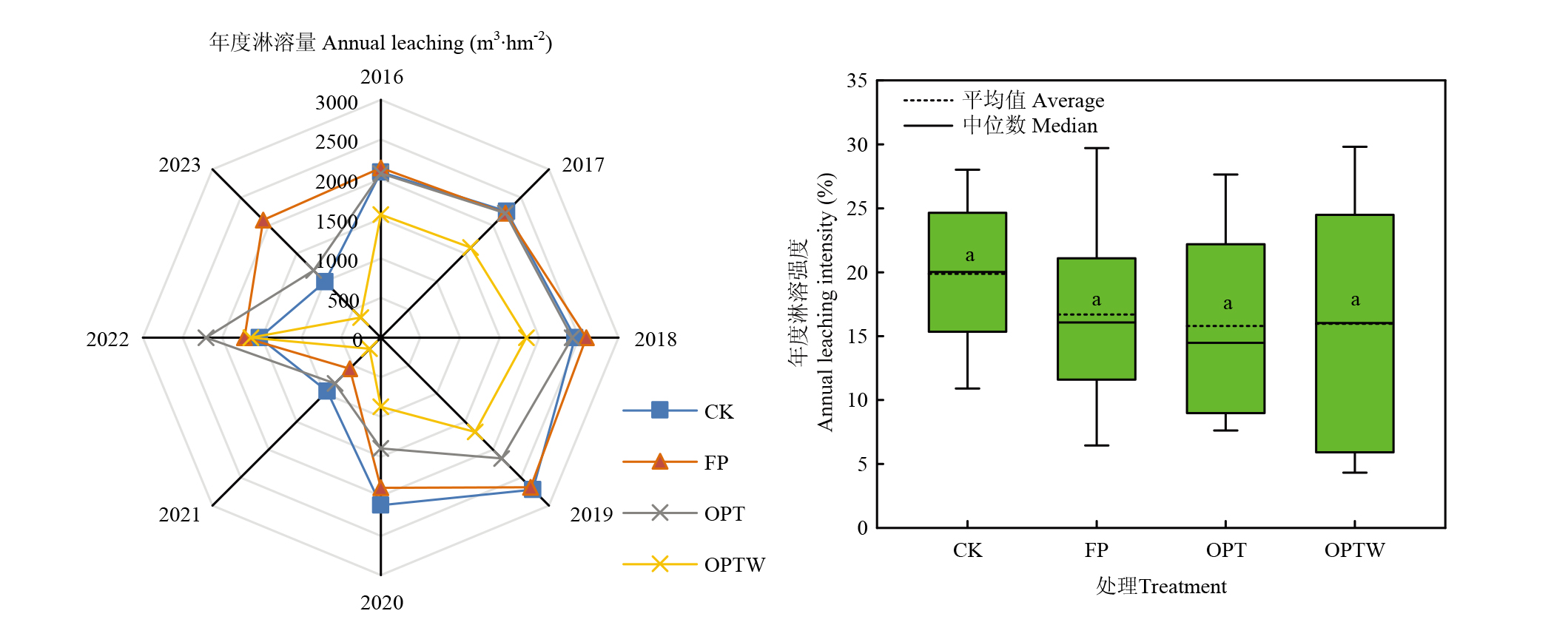
图3
水肥优化对年度淋溶量和淋溶强度的影响"
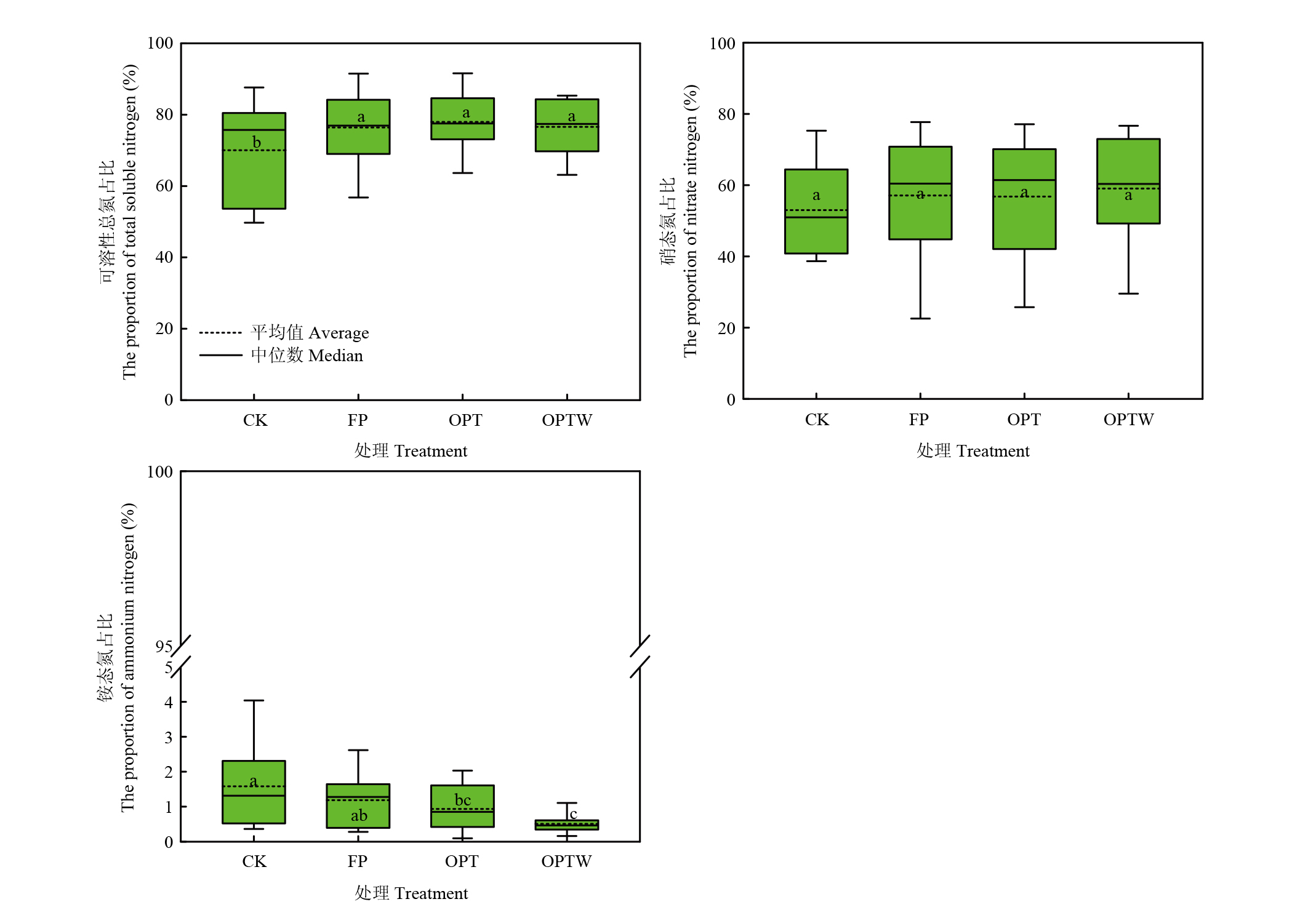
图4
水肥优化对淋溶液不同形态氮浓度的影响"
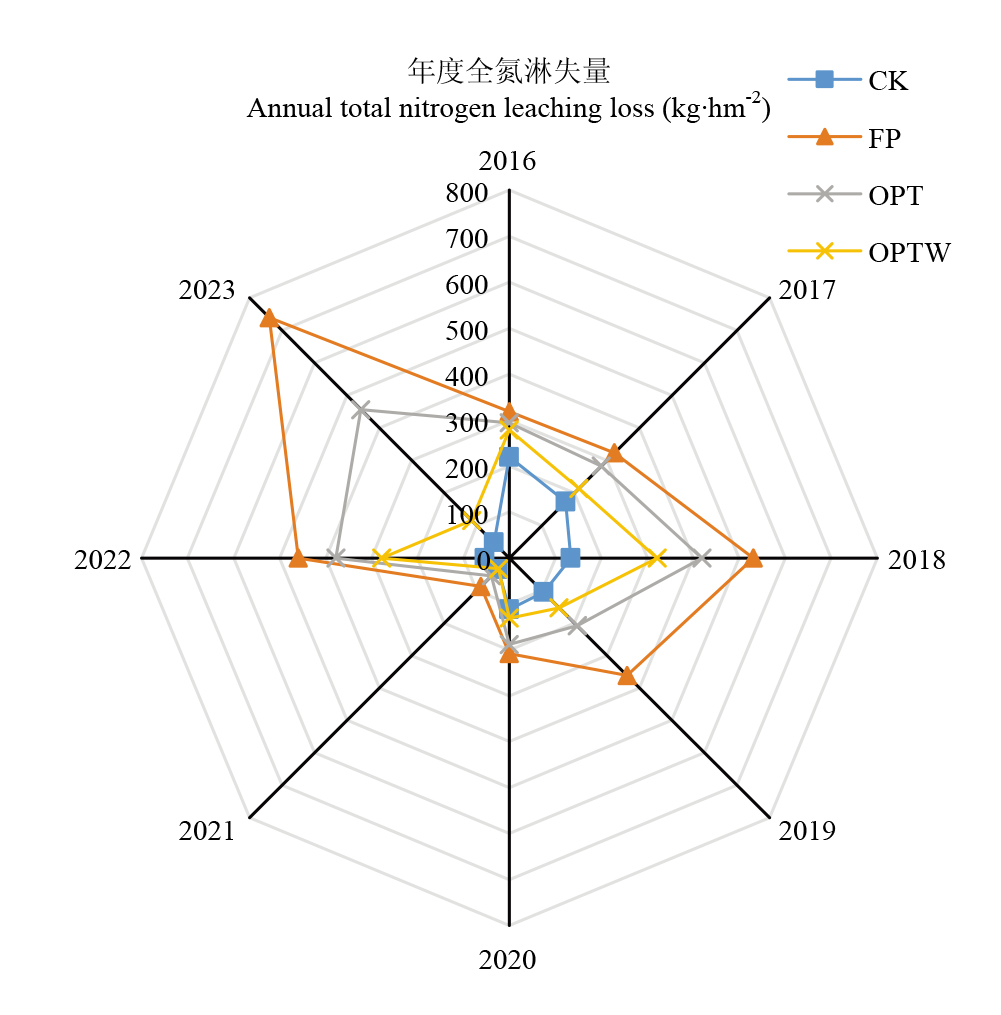
图5
水肥优化对全氮淋失量的影响"

图6
水肥优化对全氮淋失系数的影响"
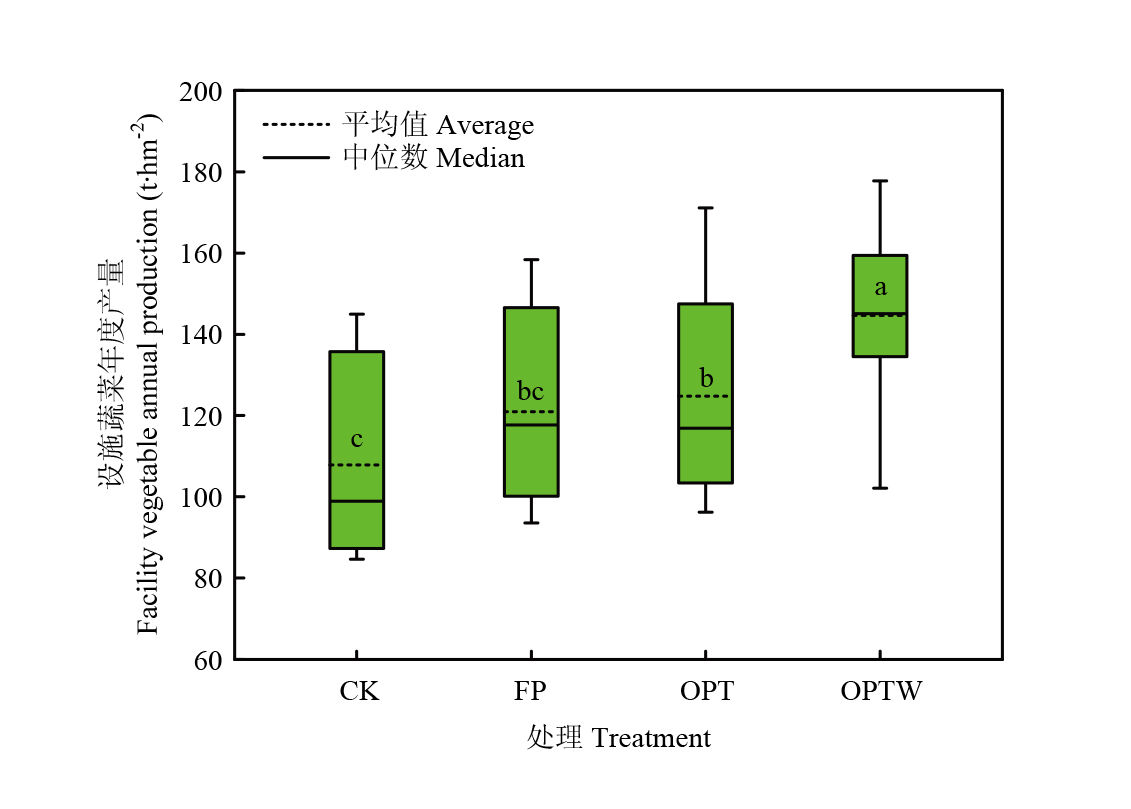
图7
水肥优化对蔬菜产量的影响"
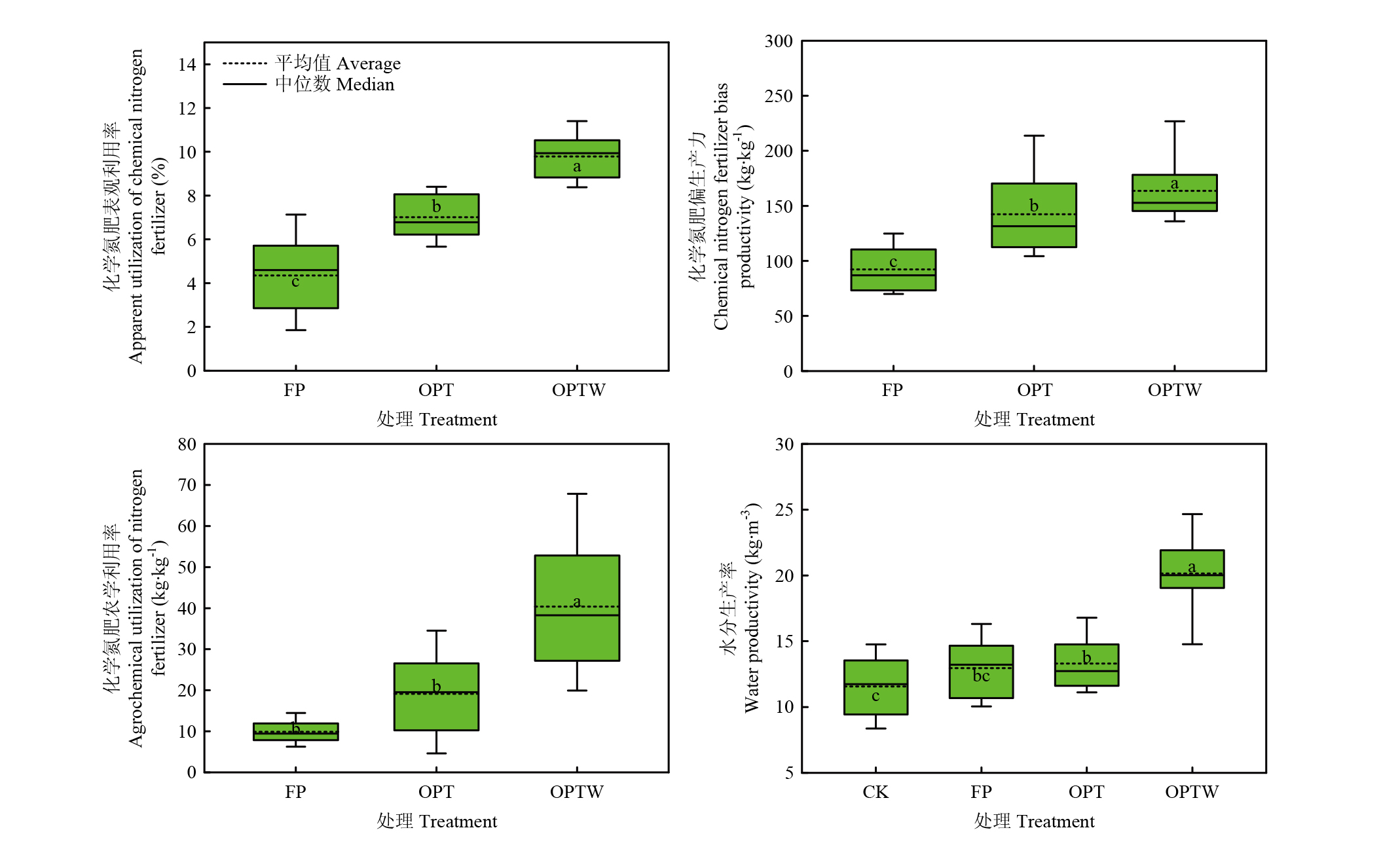
图8
水肥优化对蔬菜水肥利用效率的影响"

图9
氮素淋失主成分载荷图"
| [1] |
doi: 10.1016/j.watres.2008.07.020 pmid: 18721996 |
| [2] |
doi: 10.1016/j.scitotenv.2014.05.004 |
| [3] |
doi: 10.1007/s11368-009-0063-3 |
| [4] |
doi: 10.1016/j.envpol.2020.115004 |
| [5] |
doi: 10.1016/j.envpol.2020.116372 |
| [6] |
薄录吉, 李彦, 王艳芹, 仲子文, 井永苹. 设施番茄土壤氮素流失控制技术措施比较. 中国生态农业学报 (中英文), 2025, 33(1): 1-8.
|
|
|
|
| [7] |
doi: S0269-7491(18)34040-5 pmid: 30500748 |
| [8] |
doi: 10.1007/s11104-006-9110-7 |
| [9] |
doi: 10.1016/j.agee.2017.03.006 |
| [10] |
doi: 10.1016/j.agwat.2018.12.015 |
| [11] |
doi: 10.1016/j.envpol.2022.119616 |
| [12] |
doi: 10.1016/j.crvi.2008.11.005 |
| [13] |
雷豪杰. 水肥一体化对设施菜地氮素淋失的影响及其机制模拟研究[D]. 北京: 中国农业科学院, 2021.
|
|
|
|
| [14] |
马林, 王洪媛, 刘刚, 胡克林, 梁超, 杜连凤, 郭胜利, 柏兆海, 王凤花, 李晓欣, 王仕琴, 胡春胜. 中国北方农田氮磷淋溶损失污染与防控机制. 中国生态农业学报(中英文), 2021, 29(1): 1-10.
|
|
|
|
| [15] |
安志装, 索琳娜, 刘宝存. 我国农业面源污染研究与展望. 植物营养与肥料学报, 2024, 30(7): 1422-1436.
|
|
|
|
| [16] |
阚炜杰, 徐明泽, 田硕, 王金凤, 董楚轩, 祝宁. 设施栽培系统土壤氮磷淋溶特征与影响因素. 天津农业科学, 2023, 29(5): 34-40.
|
|
|
|
| [17] |
杨荣全, 谢立勇, 郑益旻, 李明, 魏娜, 李迎春, 巨晓棠, 郭李萍. 不同水肥措施下华北露地菜地氮淋溶特征. 中国生态农业学报(中英文), 2021, 29(1): 176-186.
|
|
|
|
| [18] |
鲍士旦. 土壤农化分析. 3版. 北京: 中国农业出版社, 2000.
|
|
|
|
| [19] |
姜玲玲, 赵同科, 杜连凤, 康凌云. 设施菜地氮淋溶研究方法评价. 北方园艺, 2018(23): 156-163.
|
|
|
|
| [20] |
刘健. 三种质地土壤氮素淋溶规律研究[D]. 北京: 北京林业大学, 2010.
|
|
|
|
| [21] |
王洪媛, 李俊改, 樊秉乾, 骆晓声, 彭畅, 翟丽梅, 李虎, 马林, 刘宏斌. 中国北方主要农区农田氮磷淋溶特征与时空规律. 中国生态农业学报(中英文), 2021, 29(1): 11-18.
|
|
|
|
| [22] |
doi: 10.1016/j.fcr.2017.02.016 |
| [23] |
doi: 10.1016/j.envpol.2010.02.014 pmid: 20227804 |
| [24] |
doi: 10.2136/sssaj2011.0249 |
| [25] |
doi: 10.1016/j.still.2015.11.009 |
| [26] |
刘岑薇, 叶菁, 李艳春, 林怡, 王义祥. 生物炭对茶园酸性红壤氮素养分淋溶的影响. 中国农业科技导报, 2020, 22(5): 181-186.
doi: 10.13304/j.nykjdb.2019.0182 |
|
doi: 10.13304/j.nykjdb.2019.0182 |
|
| [27] |
doi: 10.1016/j.eja.2016.06.009 |
| [28] |
盖霞普, 刘宏斌, 翟丽梅, 王洪媛. 玉米秸秆生物炭对土壤无机氮素淋失风险的影响研究. 农业环境科学学报, 2015, 34(2): 310-318.
|
|
|
|
| [29] |
周旋, 吴良欢, 董春华, 贾磊. 氮肥配施生化抑制剂组合对黄泥田土壤氮素淋溶特征的影响. 生态学报, 2019, 39(5): 1804-1814.
|
|
|
|
| [30] |
王宇, 韩兴, 赵占军, 李明欢, 房含, 赵兰坡. 垄沟秸秆覆盖对黑土顺坡耕地氮、磷养分阻控效果. 水土保持学报, 2016, 30(1): 137-140.
|
|
|
|
| [31] |
盖霞普, 刘宏斌, 翟丽梅, 杨波, 任天志, 王洪媛, 武淑霞, 雷秋良. 长期增施有机肥/秸秆还田对土壤氮素淋失风险的影响. 中国农业科学, 2018, 51(12): 2336-2347. doi: 10.3864/j.issn.0578-1752.2018.12.010.
|
|
|
|
| [32] |
江丽华, 李妮, 徐钰, 石璟, 杨岩, 王梅, 陈永智, 张立联, 郭洪军, 宋东涛, 张洪启, 姜新, 刘延生. 山东省设施蔬菜施肥现状调查研究. 山东农业科学, 2020, 52(2): 90-96.
|
|
|
|
| [33] |
doi: 10.1016/j.jia.2023.12.019 |
| [34] |
doi: 10.1016/j.agee.2024.108989 |
| [35] |
doi: 10.1016/j.agwat.2009.03.019 |
| [36] |
杨丽娟, 张玉龙, 须晖, 李军. 灌溉方法对保护地土壤耗水量与番茄水分利用效率的影响. 灌溉排水学报, 2004, 23(3): 49-51.
|
|
|
|
| [37] |
韦彦, 孙丽萍, 王树忠, 王永泉, 张振贤, 陈青云, 任华中, 高丽红. 灌溉方式对温室黄瓜灌溉水分配及硝态氮运移的影响. 农业工程学报, 2010, 26(8): 67-72.
|
|
|
|
| [38] |
doi: 10.1071/CP10080 |
| [39] |
刘虎成, 徐坤, 张永征, 孙敬强. 滴灌施肥技术对生姜产量及水肥利用率的影响. 农业工程学报, 2012, 28(S1): 106-111.
|
|
|
| [1] | 周道明, 孙涛, 赵玉红, 贾媛婕, 杨铭菲, 屈锋, 胡晓辉. 基于品质、产量与水肥利用效率的基质栽培辣椒水肥管理优化[J]. 中国农业科学, 2023, 56(12): 2354-2366. |
| [2] | 万连杰,何满,李俊杰,田洋,张绩,郑永强,吕强,谢让金,马岩岩,邓烈,易时来. 有机肥替代部分化肥对椪柑生长、品质及土壤特性的影响[J]. 中国农业科学, 2022, 55(15): 2988-3001. |
| [3] | 王从,孙会峰,徐春花,王站付,张继宁,张鲜鲜,陈春宏,周胜. 施肥方式对设施菜地氨挥发的影响[J]. 中国农业科学, 2022, 55(1): 123-133. |
| [4] | 白由路. 高效施肥技术研究的现状与展望[J]. 中国农业科学, 2018, 51(11): 2116-2125. |
| [5] | 曾希柏, 王亚男, 王玉忠, 林志灵, 李莲芳, 白玲玉, 苏世鸣, 沈灵凤. 不同施肥模式对设施菜地细菌群落结构及丰度的影响[J]. 中国农业科学, 2013, 46(1): 69-79. |
|
||
