






中国农业科学 ›› 2026, Vol. 59 ›› Issue (11): 2499-2512.doi: 10.3864/j.issn.0578-1752.2026.11.014
周琪1,2( ), 张佳敏1(), 徐颖2, 胡炜3, 廖斌3, 黄峰2(), 张春晖2
收稿日期:2025-12-19
接受日期:2026-01-28
出版日期:2026-06-01
发布日期:2026-06-03
通信作者:
联系方式:
周琪,E-mail:z1326633805@163.com。
基金资助:
ZHOU Qi1,2(), ZHANG JiaMin1(), XU Ying2, HU Wei3, LIAO Bin3, HUANG Feng2(), ZHANG ChunHui2
Received:2025-12-19
Accepted:2026-01-28
Published:2026-06-01
Online:2026-06-03
摘要:
【目的】探究高水分、低盐条件下藏香猪肉腊肠的品质形成规律,阐明水分迁移与产品质地之间的关系,为突破传统腊肠产品普遍存在的高盐、干硬等技术瓶颈,开发兼具健康属性与优良品质的新型肉制品提供理论依据。【方法】采用双因素交互试验设计,分别在固定食盐添加量(1.5%)条件下调节水分含量(25%—50%),以及在固定水分含量(45%)条件下调节食盐添加量(1.0%—2.5%),制备藏香猪肉腊肠样品。系统测定其pH、色泽、质构、蒸煮损失、水分分布(低场核磁共振及成像)、风味(电子鼻和电子舌)及微观结构(扫描电镜),并结合感官评价,综合解析其品质演变规律。【结果】在固定食盐添加量(1.5%)条件下,随着水分含量的增加,腊肠的pH呈先降后升趋势、蒸煮损失率显著升高、不易流动水与自由水(T2)弛豫时间延长、质构硬度下降达49.61%;在固定水分含量(45%)条件下,随着食盐添加量的降低,pH无显著变化、蒸煮损失率上升,T2弛豫时间显著增加,氢质子密度先增后减,肌纤维结构由初期出现裂缝逐步优化为均匀致密后进一步变为粗糙杂乱。不同处理组间气味轮廓差异明显(P<0.05),而对滋味无显著影响。综合分析表明,水分含量45%、食盐添加量1.5%的藏香猪肉腊肠在色泽明亮度、质构适宜性、保水性能及微观结构均匀致密性等方面均表现最优。【结论】与传统低水分、高盐配方相比,高水分(45%)、低盐(1.5%)协同作用可优化藏香猪肉腊肠的蛋白质网络结构与水分分布状态,在显著降低食盐用量的同时,维持产品适宜的质构特性、良好的持水稳定性、协调的风味轮廓以及较高的感官接受度。
周琪, 张佳敏, 徐颖, 胡炜, 廖斌, 黄峰, 张春晖. 高水分低盐藏香猪肉腊肠品质变化机制[J]. 中国农业科学, 2026, 59(11): 2499-2512.
ZHOU Qi, ZHANG JiaMin, XU Ying, HU Wei, LIAO Bin, HUANG Feng, ZHANG ChunHui. Quality Change Mechanism of High-Moisture and Low-Salt Tibetan Pork Sausage[J]. Scientia Agricultura Sinica, 2026, 59(11): 2499-2512.
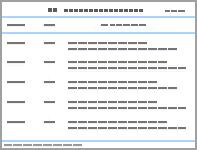
表1
藏香猪肉腊肠配料及添加量"
| 配料 Ingredients | 添加量Addition rate (%) |
|---|---|
| 红花椒粉 Red Sichuan pepper powder | 1.5 |
| 辣椒面 Chili powder | 1.5 |
| 白酒 Liquor | 1.2 |
| 印度椒皮粉 Indian chili powder | 0.1 |
| 十三香粉 Thirteen spice powder | 0.2 |
| 白胡椒粉 White pepper powder | 0.2 |
| 鸡精 Chicken essence | 0.2 |
| 水 Water | 4.0 |
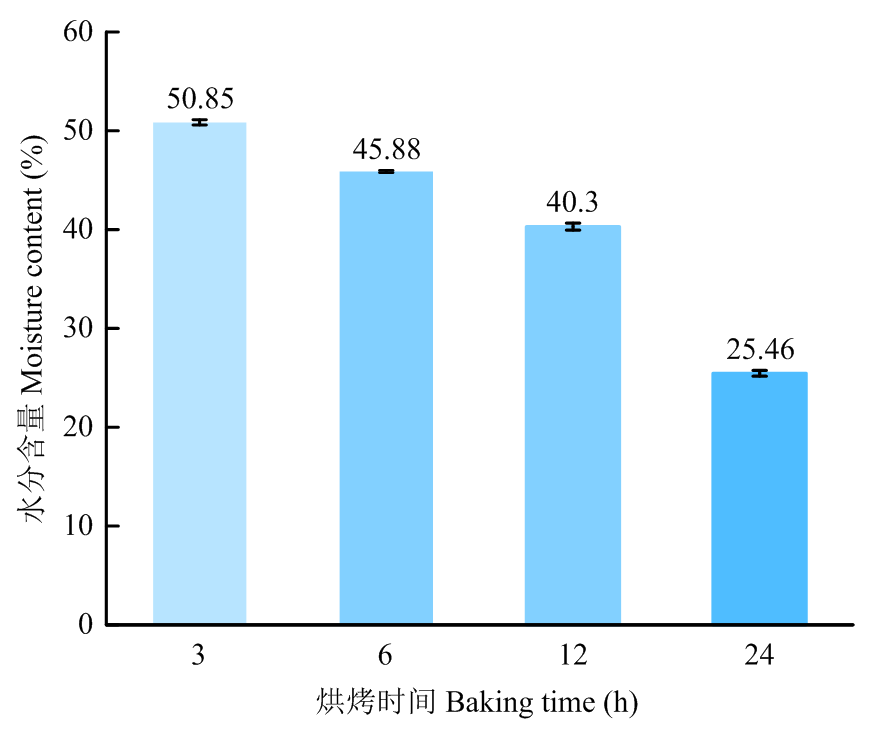
图1
不同烘烤时间下藏香猪肉腊肠的水分含量"
表2
藏香猪肉腊肠感官评价打分表"
| 项目 Item | 评分标准 Scoring criteria | 得分 Score |
|---|---|---|
| 色泽 Color | 色泽均匀性差,灰红色,光泽暗淡 Poor color uniformity, gray-red, and dull luster | <10 |
| 色泽均匀性一般,暗红色,光泽一般 The color uniformity is average, dark red, with average gloss | 10—15 | |
| 色泽均匀性好,亮红色,光泽油亮 Good color uniformity, bright red, and glossy and shiny | 16—20 | |
| 气味 Flavor | 气味很淡,有异味,无腊肠特色香味 The smell is very faint, has an off odor, and lacks the characteristic fragrance of sausage | <10 |
| 气味较浓郁,稍有异味,腊肠特色香味不突出 The smell is quite strong, with a slight off-odor, and the distinctive aroma of the sausage is not prominent | 10—15 | |
| 气味浓郁,无异味,腊肠特色香味突出 Rich aroma, no off-putting smell, distinct characteristic fragrance of sausage | 16—20 | |
| 滋味 Taste | 滋味不协调,极咸或极淡,有涩味 The taste is unbalanced, either extremely salty or extremely bland, with an astringent flavor | <10 |
| 滋味较协调,略咸或略淡,稍有涩味 The taste is relatively balanced, slightly salty or slightly bland, with a hint of astringency | 10—15 | |
| 滋味协调,咸淡适宜,无涩味 The flavor is well-balanced, with just the right amount of saltiness, and no astringency | 16—20 | |
| 组织状态 Organizational status | 结构松散,切面不平整,裂痕多,气孔多 Loose structure, uneven cut surface, many cracks, and many pores | <10 |
| 结构较紧实,切面较不平整,有裂痕,有气孔 The structure is relatively compact, the cross-section is uneven, with cracks and air holes | 10—15 | |
| 结构紧实,切面平整,无裂痕,无气孔 Compact structure, smooth cut surface, no cracks, and no pores | 16—20 | |
| 整体可接受度 Overall acceptability | 不满意 Unsatisfied | <10 |
| 较为满意 Relatively satisfied | 10—15 | |
| 满意 Satisfied | 16—20 |
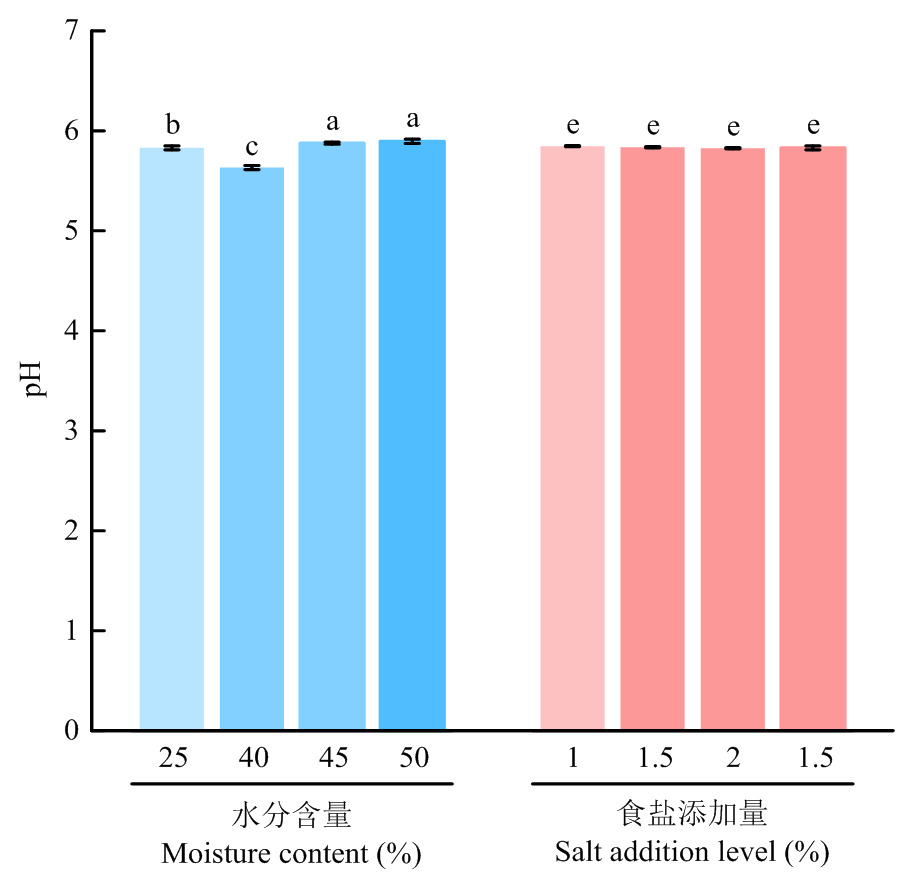
图2
不同水分含量和食盐添加量藏香猪肉腊肠的pH 不同小写字母表示同组不同处理间差异显著(P<0.05)。下同"
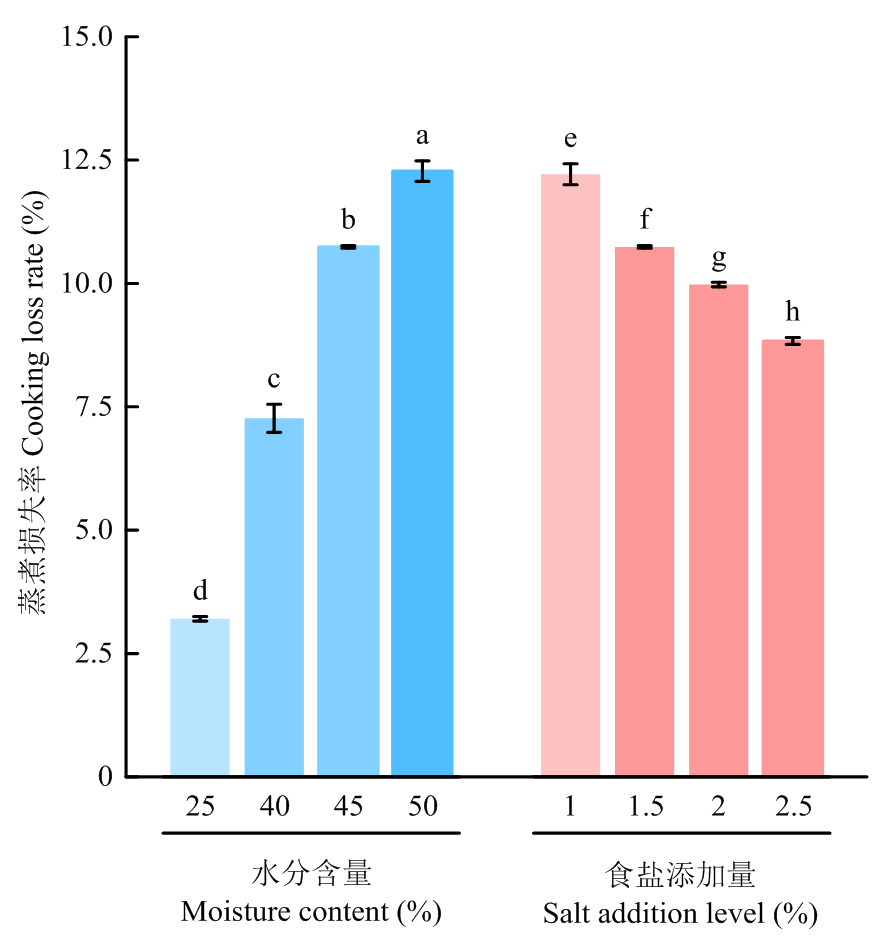
图3
不同水分含量和食盐添加量下藏香猪肉腊肠的蒸煮损失率"

图4
不同水分含量(A、C、E)和食盐添加量(B、D、F)下藏香猪肉腊肠的水分分布、T2弛豫时间和核磁共振成像"
表3
不同水分含量及食盐添加量下藏香猪肉腊肠的质构特性"
| 项目 Item | 水分含量Moisture content (%) | 食盐添加量Salt addition level (%) | ||||||
|---|---|---|---|---|---|---|---|---|
| 25 | 40 | 45 | 50 | 1.0 | 1.5 | 2.0 | 2.5 | |
| 剪切力 Shear force (N) | 34.04±0.28a | 32.82±0.15b | 28.33±0.27c | 24.15±0.08d | 28.33±0.27g | 31.14±0.08f | 34.59±0.22e | 24.71±0.22h |
| 弹性 Elasticity | 2.86±0.03d | 3.09±0.06b | 3.19±0.02a | 3.01±0.02c | 2.83±0.06h | 3.19±0.02g | 3.69±0.06e | 3.35±0.03f |
| 硬度 Hardness (g) | 124.66±2.18a | 92.26±0.26b | 70.40±1.75c | 62.84±2.06c | 61.34±1.64h | 70.40±1.75g | 99.10±1.77e | 84.10±2.39f |
| 咀嚼性 Chewiness (mJ) | 210.67±0.96a | 141.23±8.00b | 124.07±2.71c | 81.63±0.65d | 113.4±6.25h | 124.07±2.71g | 151.53±2.97e | 138.10±0.46f |
| 内聚性 Cohesiveness | 0.45±0.07ab | 0.50±0.01a | 0.50±0.03a | 0.50±0.01a | 0.40±0.01f | 0.50±0.04ef | 0.55±0.07e | 0.50±0.02ef |

图5
不同水分含量和食盐添加量下藏香猪肉腊肠的显微结构(A、B)及孔隙率(C)"
表4
不同水分含量及食盐添加量下藏香猪肉腊肠的色泽"
| 项目 Item | 水分含量Moisture content (%) | 食盐添加量Salt addition level (%) | ||||||
|---|---|---|---|---|---|---|---|---|
| 25 | 40 | 45 | 50 | 1.0 | 1.5 | 2.0 | 2.5 | |
| L* | 45.77±0.31d | 47.30±0.22c | 48.61±0.06b | 50.74±0.19a | 50.24±0.36f | 51.21±0.15e | 48.61±0.06g | 47.65±0.14h |
| a* | 8.75±0.35a | 9.12±0.03a | 7.89±0.33b | 6.29±0.24c | 8.94±0.27f | 10.02±0.07e | 7.89±0.33g | 7.41±0.23g |
| b* | 33.28±0.26a | 31.20±0.09b | 26.32±0.30c | 24.71±0.11d | 30.29±0.06h | 31.20±0.09g | 32.31±0.07f | 34.15±0.12e |

图6
不同水分含量(A、B)和食盐添加量(C、D)下藏香猪肉腊肠的电子鼻传感器PCA图及DFA图"
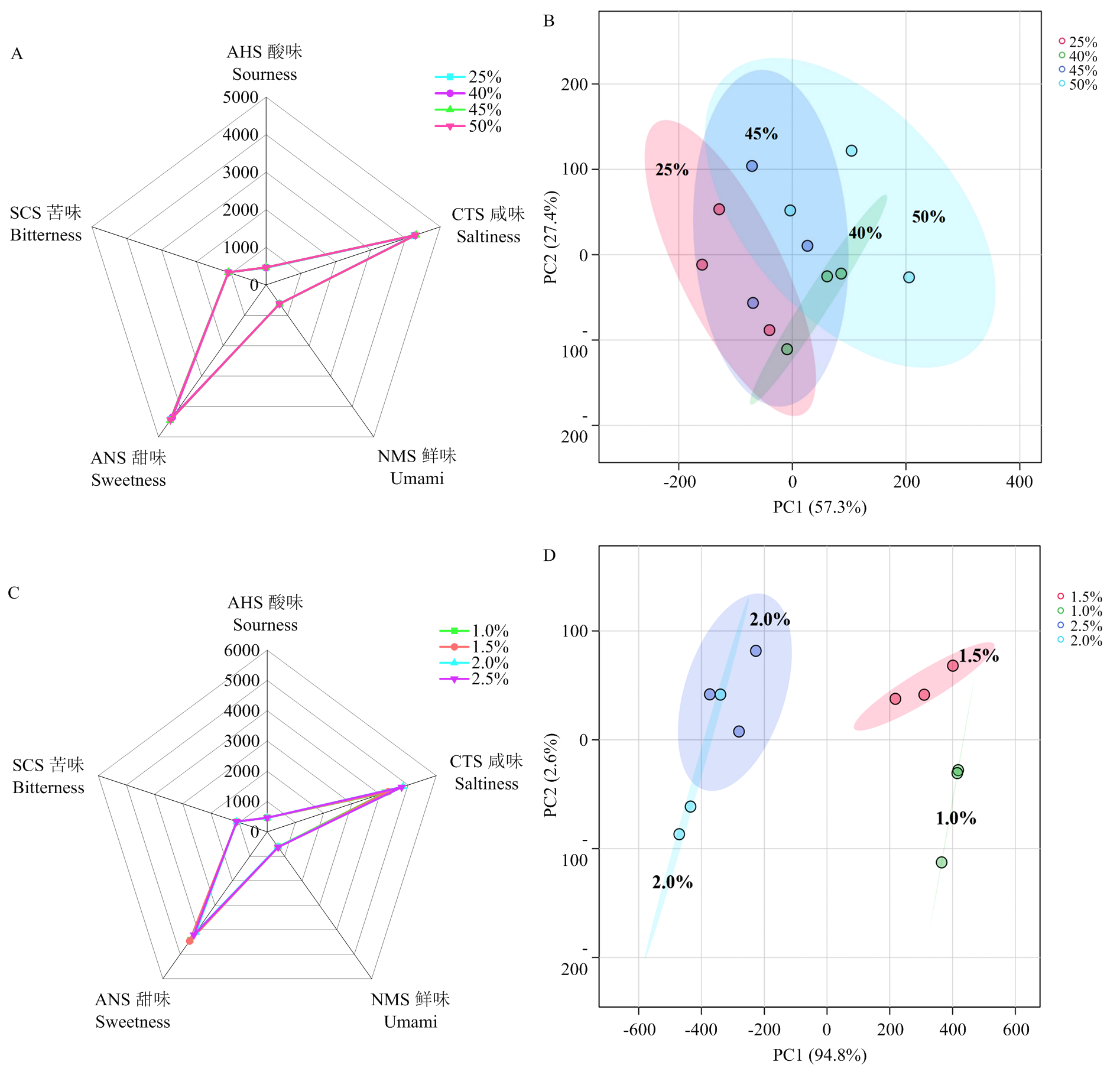
图7
不同水分含量(A、B)和食盐添加量(C、D)下藏香猪肉腊肠的电子舌传感器响应雷达图及PCA图"
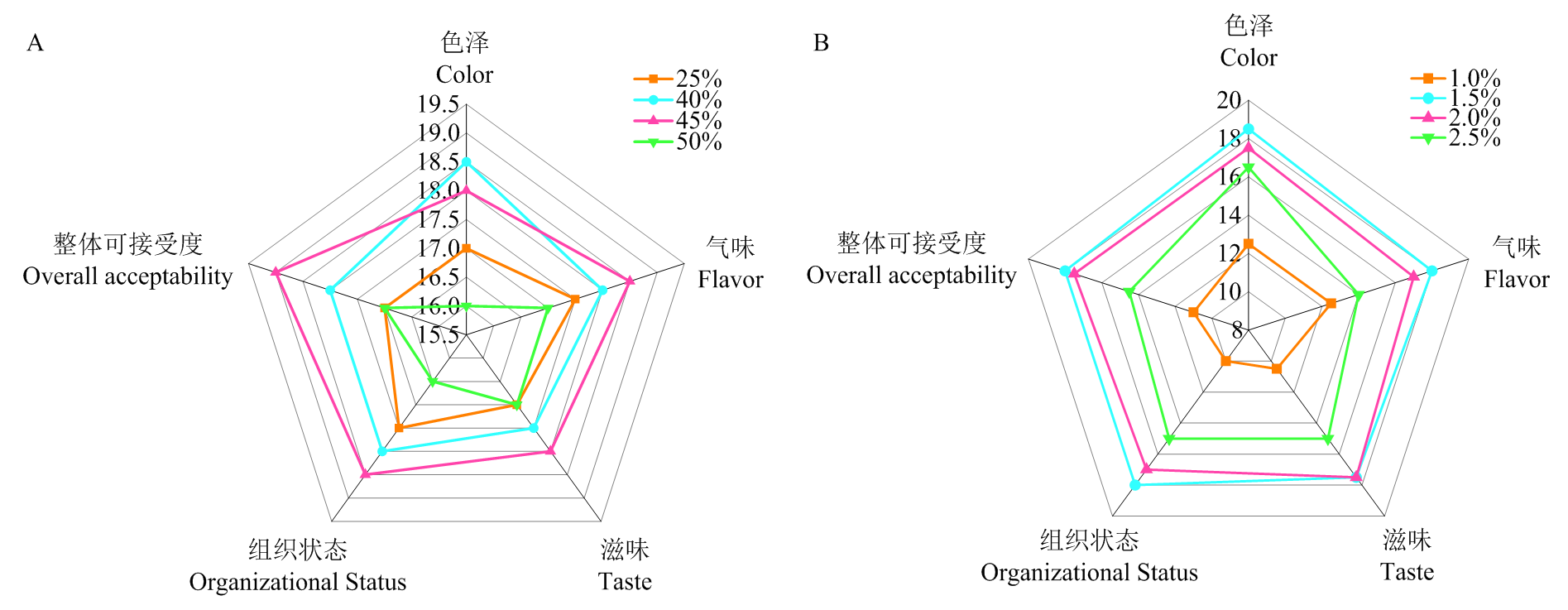
图8
不同水分含量(A)和食盐添加量(B)下藏香猪肉腊肠的感官评价雷达图"
| [1] |
王丹. 不同地区传统肉制品品质及其特征风味研究[D]. 呼和浩特: 内蒙古农业大学, 2021.
|
|
|
|
| [2] |
王卫, 宋浪, 张佳敏, 张崟, 熊伟. 腊肠品质形成机理及其调控研究进展. 肉类研究, 2017, 31(5): 51-54.
|
|
|
|
| [3] |
|
| [4] |
中共中央国务院印发《“健康中国2030”规划纲要》大健康产业大有可为健康中国势在必行.中国品牌与防伪, 2023, (S1): 4-6.
|
|
The Central Committee of the Communist Party of China and the State Council Issue the “Healthy China 2030” Planning Outline: The Health Industry Holds Great Potential, Healthy China is Imperative. China Brand and Anti-Counterfeiting, 2023, (S1): 4-6. (in Chinese)
|
|
| [5] |
doi: 10.1016/j.lwt.2023.115347 |
| [6] |
doi: 10.3390/app15158343 |
| [7] |
付浩华, 周兵, 夏启禹, 孙琦, 吴浩, 刘胤. 食盐添加量对腊肉风味及贮藏过程中理化性质的影响. 肉类研究, 2023, 37(9): 39-45.
|
|
|
|
| [8] |
陈燕华. 低盐高水分四川腊肉微生物菌群解析及巴氏杀菌处理对其贮藏品质的影响[D]. 雅安: 四川农业大学, 2022.
|
|
|
|
| [9] |
徐丽娜, 黄峻榕, 赵莱昱, 任培芳, 张春晖, 黄峰. 不同加工方式下藏猪肉和杜长大猪肉品质差异分析. 食品工业科技, 2025, 46(6): 293-302.
|
|
|
|
| [10] |
doi: 10.1016/j.meatsci.2020.108343 |
| [11] |
刘文营, 乔晓玲, 成晓瑜, 王守伟, 李享, 贾晓云, 王乐, 杨凯. 天然抗氧化剂对广式腊肠感官品质及挥发性风味物质的影响. 中国食品学报, 2019, 19(2): 206-215.
|
|
|
|
| [12] |
张佳敏, 王卫, 白婷, 吉莉莉. 烘烤与风干干燥对四川腊肉脂质氧化影响的比较研究. 食品科技, 2016, 41(5): 115-121.
|
|
|
|
| [13] |
|
| [14] |
|
| [15] |
pmid: 15080343 |
| [16] |
doi: 10.1016/j.ultsonch.2025.107373 |
| [17] |
陈乐, 李建英, 刘成江, 韩东, 黄峰, 张春晖. 西红柿炖牛腩菜肴的品质评价. 食品工业科技, 2022, 43(20): 300-309.
|
|
|
|
| [18] |
doi: 10.1016/j.foodres.2023.112513 |
| [19] |
doi: 10.1016/j.foodchem.2024.139514 |
| [20] |
季文彤, 杨平, 刘俊梅, 贾伟, 张春晖. 炒制对榛蘑炖鸡肉菜肴风味品质的影响. 食品工业科技, 2025, 46(23): 350-362.
|
|
|
|
| [21] |
谭雪梅, 唐善虎, 李思宁, 郑娇, 龚珏. 反复式冻融-风干对风干牦牛肉的理化特性和挥发性成分的影响. 食品与发酵工业, 2020, 46(4): 131-138.
doi: 10.13995/j.cnki.11-1802/ts.022401 |
|
doi: 10.13995/j.cnki.11-1802/ts.022401 |
|
| [22] |
doi: 10.1016/j.foodcont.2013.02.003 |
| [23] |
doi: 10.1016/j.meatsci.2011.11.015 |
| [24] |
doi: 10.1111/asj.2018.89.issue-2 |
| [25] |
doi: 10.1016/j.meatsci.2020.108335 |
| [26] |
doi: 10.3390/foods11020226 |
| [27] |
doi: 10.1016/j.meatsci.2022.108990 |
| [28] |
doi: 10.1016/j.lwt.2012.09.009 |
| [29] |
|
| [30] |
邓孟孟. 盐焗牛肉干工艺优化及其品质探究[D]. 呼和浩特: 内蒙古农业大学, 2023.
|
|
|
|
| [31] |
doi: 10.1016/j.lwt.2018.11.026 |
| [32] |
doi: 10.3390/chemosensors13050161 |
| [33] |
刘兴余, 金邦荃, 詹巍, 汤详明, 陶立. 猪肉质构的仪器测定与感官评定之间的相关性分析. 食品科学, 2007, 28(4): 245-248.
|
|
doi: 10.1111/jfds.1963.28.issue-3 |
|
| [34] |
关睿, 李琳, 王建辉, 蒙荣, 黄轶群. 不同食盐添加量对冷藏草鱼品质的影响. 食品科学技术学报, 2020, 38(5): 100-108, 126.
|
|
|
|
| [35] |
吴亮亮, 罗瑞明, 孔丰, 田银, 张赫宇, 苏春霞. 食盐添加量对滩羊肉蒸煮损失、嫩度及水分分布的影响. 食品工业科技, 2016, 37(2): 322-325, 366.
|
|
|
|
| [36] |
李雨露, 刘丽萍. 提高肉制品保水性方法的研究进展. 食品工业科技, 2012, 33(20): 398-400.
|
|
|
|
| [37] |
doi: 10.1016/j.meatsci.2011.04.007 |
| [38] |
|
| [39] |
pmid: 22061163 |
| [40] |
李龙祥, 赵欣欣, 孔保华. 复合磷酸盐添加量对调理重组牛肉品质特性的影响. 食品研究与开发, 2017, 38(2): 1-5, 85.
|
|
|
|
| [41] |
doi: 10.1080/10498850.2013.879241 |
| [42] |
doi: 10.1016/j.lwt.2020.109061 |
| [43] |
doi: 10.1016/j.meatsci.2012.11.040 pmid: 23261539 |
| [1] | 祝培, 赵耀, 白岩, 张金盔, 李莓, 龙金佳, 杨龙, 罗丽娅, 许本波, 徐劲松, 张学昆. 氟唑菌酰羟胺对油菜的生理调控作用及其与咪鲜胺的复配效应[J]. 中国农业科学, 2026, 59(9): 1903-1915. |
| [2] | 王志高, 李刘滨, 许颖, 鞠澄辉, 何荣. 基于图像处理的玉米破损比例检测方法及其品质变化同步分析[J]. 中国农业科学, 2026, 59(9): 1987-2001. |
| [3] | 岳丽昕, 王清华, 王振宝, 尼玛琼吉, 刘泽洲, 孔素萍, 张立峰, 高莉敏. 基于广靶代谢组学分析藏葱和细香葱营养品质及黄酮类代谢产物差异[J]. 中国农业科学, 2026, 59(5): 1070-1086. |
| [4] | 张利东, 郭一聪, 黄洪宇, 聂静, 王兵, 李梦雨, 李加旺, 眭晓蕾, 李愚鹤. 基于感官评价结合营养品质特征与风味物质特性关联分析黄瓜果实品质[J]. 中国农业科学, 2026, 59(5): 1087-1100. |
| [5] | 王少华, 范秋丽, 杨锦昌, 孙煜杰, 余纽, 蒋守群. 米老排叶片饲喂水平对黄羽肉鸡生长性能、免疫功能、抗氧化能力、胴体品质和肉品质的影响[J]. 中国农业科学, 2026, 59(5): 1111-1127. |
| [6] | 董金龙, 赵莹, 余海兵, 吕建晔, 秦佳琦, 梁晨, 明博, 李少昆. 多模型解析玉米籽粒容重的营养品质贡献度与区域异质性[J]. 中国农业科学, 2026, 59(5): 985-995. |
| [7] | 郝琨, 陈洪德, 张威, 钟韵, 党美荣, 朱士江, 黄志坤, 金英. 基于柑橘产量、品质及水氮利用的涌泉根灌水氮综合评价[J]. 中国农业科学, 2026, 59(4): 862-873. |
| [8] | 张梦博, 谭鸿冰, 沈甜, 徐美隆, 周新明, 房玉林, 鞠延仑. 不同灌溉量与抗蒸腾剂处理对葡萄酒品质的影响[J]. 中国农业科学, 2026, 59(2): 413-426. |
| [9] | 王慧玲, 王晓玥, 闫爱玲, 刘振华, 任建成, 卢浩成, 孙磊. 葡萄果实品质性状遗传特性与基因位点解析研究进展[J]. 中国农业科学, 2026, 59(11): 2447-2467. |
| [10] | 董雪, 刘佳乐, 邵晋, 陈梦秋, 吴学友, 唐培安. 多组学揭示粳稻脂质在长期低温储藏中的稳定机制[J]. 中国农业科学, 2026, 59(10): 2249-2264. |
| [11] | 季圣阳, 陆柏益, 李培武. 关于现代农产品品质学的若干思考[J]. 中国农业科学, 2025, 58(9): 1830-1844. |
| [12] | 刘劲松, 伍龙梅, 包晓哲, 刘志霞, 张彬, 杨陶陶. 短期减施氮肥对华南地区早晚兼用型水稻产量和稻米品质的影响[J]. 中国农业科学, 2025, 58(8): 1508-1520. |
| [13] | 韦文华, 李盼, 邵冠贵, 樊志龙, 胡发龙, 范虹, 何蔚, 柴强, 殷文, 赵连豪. 西北灌区青贮玉米产量及品质对减量灌水与有机无机肥配施的响应[J]. 中国农业科学, 2025, 58(8): 1521-1534. |
| [14] | 薛钰琦, 赵继玉, 孙旺胜, 任佰朝, 赵斌, 刘鹏, 张吉旺. 不同氮素形态对夏玉米产量和品质的影响[J]. 中国农业科学, 2025, 58(8): 1535-1549. |
| [15] | 张亚封, 董伟进, 李启云, 路杨, 张正坤, 隋丽. 球孢白僵菌与钾元素互作对番茄果实品质的影响[J]. 中国农业科学, 2025, 58(6): 1131-1144. |
|
||
