






中国农业科学 ›› 2026, Vol. 59 ›› Issue (12): 2537-2550.doi: 10.3864/j.issn.0578-1752.2026.12.001
官亚东1,2( ), 龙武华2, 吴娴2, 王倩2, 刘雪薇2, 王学良5, 王忠妮2, 宫彦龙2, 姚元勋4, 朱速松3()
收稿日期:2026-03-23
接受日期:2026-05-01
出版日期:2026-06-16
发布日期:2026-06-16
通信作者:
联系方式:
官亚东,E-mail:758638996@qq.com。
基金资助:
GUAN YaDong1,2(), LONG WuHua2, WU Xian2, WANG Qian2, LIU XueWei2, WANG XueLiang5, WANG ZhongNi2, GONG YanLong2, YAO YuanXun4, ZHU SuSong3()
Received:2026-03-23
Accepted:2026-05-01
Published:2026-06-16
Online:2026-06-16
摘要:
【目的】分析贵州香稻(包含贵州香禾、贵州香稻育种材料、除贵州香禾外的贵州地方香稻)种质资源的遗传多样性,评估其遗传背景的差异性,并分析其Badh2等位变异类型,为改善香稻育种遗传基础狭窄的问题提供理论基础和材料支撑。【方法】供试材料共131份,其中有87份贵州香稻,此外还收集广东、福建、江苏等省份香稻材料共40份,泰国香稻3份,印度香稻1份。利用50K液相基因芯片对131份香稻材料进行全基因组扫描并经过滤获得高质量SNP位点。基于最小等位基因频率、多态性信息含量、有效等位基因数等遗传参数进行遗传多样性评估,结合群体结构与聚类分析探究不同香稻群体遗传背景差异性;利用香味基因Badh2的全长引物对87份贵州香稻材料进行基因分型,明确等位变异类型。【结果】全基因组扫描131份香稻资源并经严格过滤后共获得39 580个高质量SNP位点,最小等位基因频率为0.05—0.50,多态性信息含量为0.091—0.634,有效等位基因数为2.000—10.526,Nei’s遗传多样性指数为0.095—0.500,Shannon指数为0.199—0.693,表明香稻群体整体位点遗传多样性较高。且131份香稻材料可划分为4个遗传亚群,亚群间基因交流匮乏、遗传分化显著,大部分贵州香禾材料集中归属于2个遗传亚群,且有13份材料未表现出明确群体归属。比较有趣的是,与其他省份及国外香稻群体相比,贵州香禾群体呈现出独特的遗传构成。等位变异分析结果表明,有4份香稻材料的香味性状调控机制不依赖Badh2,可能为新型香稻种质资源;1份香稻材料为Badh2第六外显子39 bp处单碱基G的插入;82份香稻属于badh2-E7突变类型。【结论】贵州香稻群体的位点遗传多样性较高,且贵州香禾具有独特的遗传结构;badh2-E7是贵州香稻的主导等位变异,且发现了新型Badh2第六外显子突变的材料和非Badh2依赖型的突变材料。
官亚东, 龙武华, 吴娴, 王倩, 刘雪薇, 王学良, 王忠妮, 宫彦龙, 姚元勋, 朱速松. 基于高密度SNP标记的贵州香稻资源遗传多样性分析及其Badh2等位变异分析[J]. 中国农业科学, 2026, 59(12): 2537-2550.
GUAN YaDong, LONG WuHua, WU Xian, WANG Qian, LIU XueWei, WANG XueLiang, WANG ZhongNi, GONG YanLong, YAO YuanXun, ZHU SuSong. Analysis of Genetic Diversity and Allelic Variation of the Badh2 Gene in Guizhou Aromatic Rice Germplasm Based on High-Density SNP Markers[J]. Scientia Agricultura Sinica, 2026, 59(12): 2537-2550.
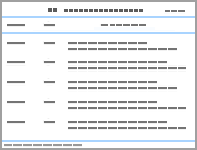
表1
用于测序完整badh2/Badh2等位基因的9对引物列表"
| 引物名称Primer name | 引物序列Primer sequence (5′-3′) | 退火温度Annealing temperature (℃) | PCR产物PCR product (bp) |
|---|---|---|---|
| Badh2P2 | F: CCGAAGTCCGTACCAACTGC R: CAATCAGCCATGCTTCCAAC | 56.8 | 972 |
| Badh2P3 | F: GTGCGTATCCTCTGTTCTGG R: CAAGCGTCTCTAGTCTAGCC | 58.9 | 855 |
| Badh2P4 | F: CTGAGCTGGCTAGACTAGAG R: CCATCAGGAGAGGATAGTTTC | 59.6 | 1025 |
| Badh2P5 | F: CCTCCGTGTTAATGCAGCTC R: CATAGCAAGTGGCATGTACC | 61.6 | 1026 |
| Badh2P6 | F: GGTTGGTCTTCCTTCAGGTTG R: GTTCCTTCCTAACTGCCTTCC | 56.4 | 926 |
| Badh2P7 | F: CCAGACGAGCAGGATGCAAG R: CATGGTCAGGAGCAAGAAGC | 53.1 | 984 |
| Badh2P8 | F: GTGGCAAGGAAGGCAGTTAG R: GCAAATAAGGCTTGGAAGGAC | 54.1 | 912 |
| Badh2P9 | F: TTTCAGTTCTCTTGCTCCTGA R: CAGTTAATCTCTGGCATCGC | 57.5 | 1023 |
| Badh2P10 | F: GGCCAACGATACTCAGTTGAG R: CCGGTCATCAGCTAACCTTCC | 57.5 | 1083 |
表2
各染色体SNP标记数量及比例"
| 染色体 Chromosome | SNP数量 Number of SNPs | 所占比例 Proportion (%) |
|---|---|---|
| Chr.01 | 5336 | 13.5 |
| Chr.02 | 4821 | 12.2 |
| Chr.03 | 4321 | 10.9 |
| Chr.04 | 3166 | 8.0 |
| Chr.05 | 2719 | 6.9 |
| Chr.06 | 3764 | 9.5 |
| Chr.07 | 3276 | 8.3 |
| Chr.08 | 2748 | 6.9 |
| Chr.09 | 2384 | 6.0 |
| Chr.10 | 2533 | 6.4 |
| Chr.11 | 2430 | 6.1 |
| Chr.12 | 2082 | 5.3 |
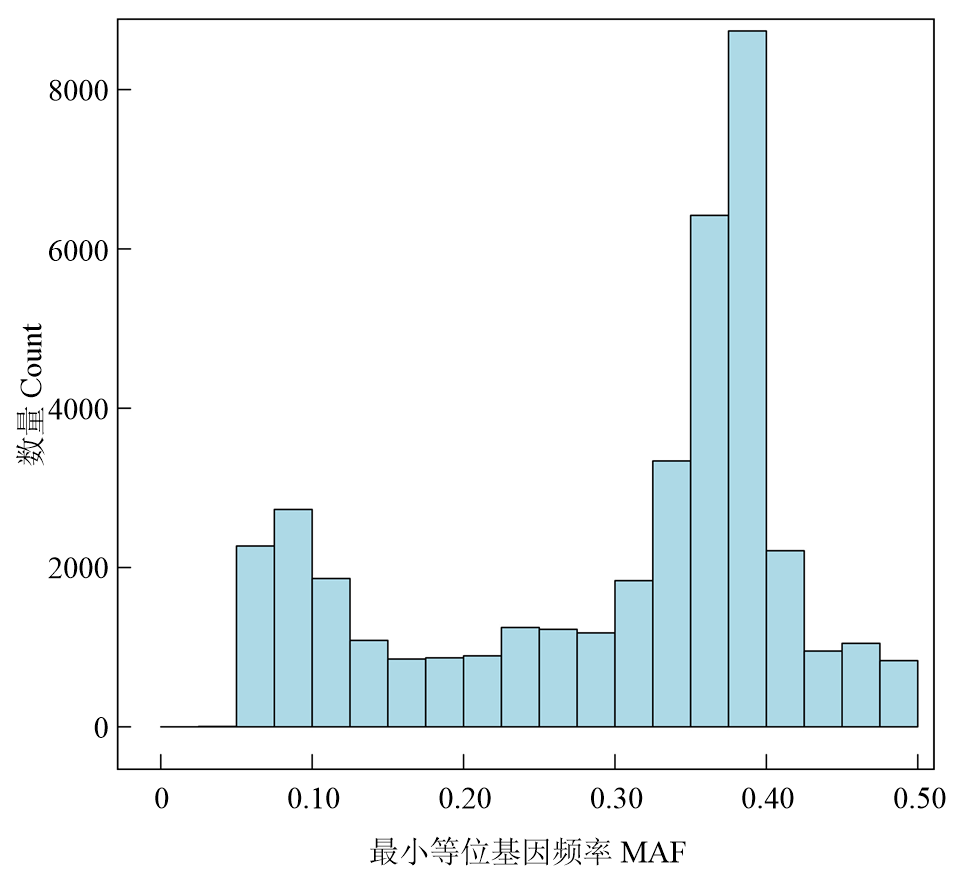
图1
131份香稻材料最小等位基因频率(MAF)分布"

图2
131份香稻材料多态性信息含量(PIC)分布"
表3
131份贵州香稻资源遗传多样性分析"
| 参数 Parameter | 最小等位 基因频率 MAF | 多态性 信息含量 PIC | 观测杂合度 Observed heterozygosity | 期望杂合度 Expected heterozygosity | 有效等位基因数 Effective number of alleles | Shannon信息指数 Shannon’s diversity index | Nei′s遗传多样性指数 Nei’s genetic diversity index |
|---|---|---|---|---|---|---|---|
| 最大值Maximum | 0.500 | 0.634 | 0.797 | 0.500 | 10.526 | 0.693 | 0.500 |
| 最小值Minimum | 0.050 | 0.091 | 0.000 | 0.095 | 2.000 | 0.199 | 0.095 |
| 平均值Average | 0.300 | 0.310 | 0.007 | 0.389 | 3.118 | 0.570 | 0.389 |

图 3
131份香稻材料的遗传距离分布"
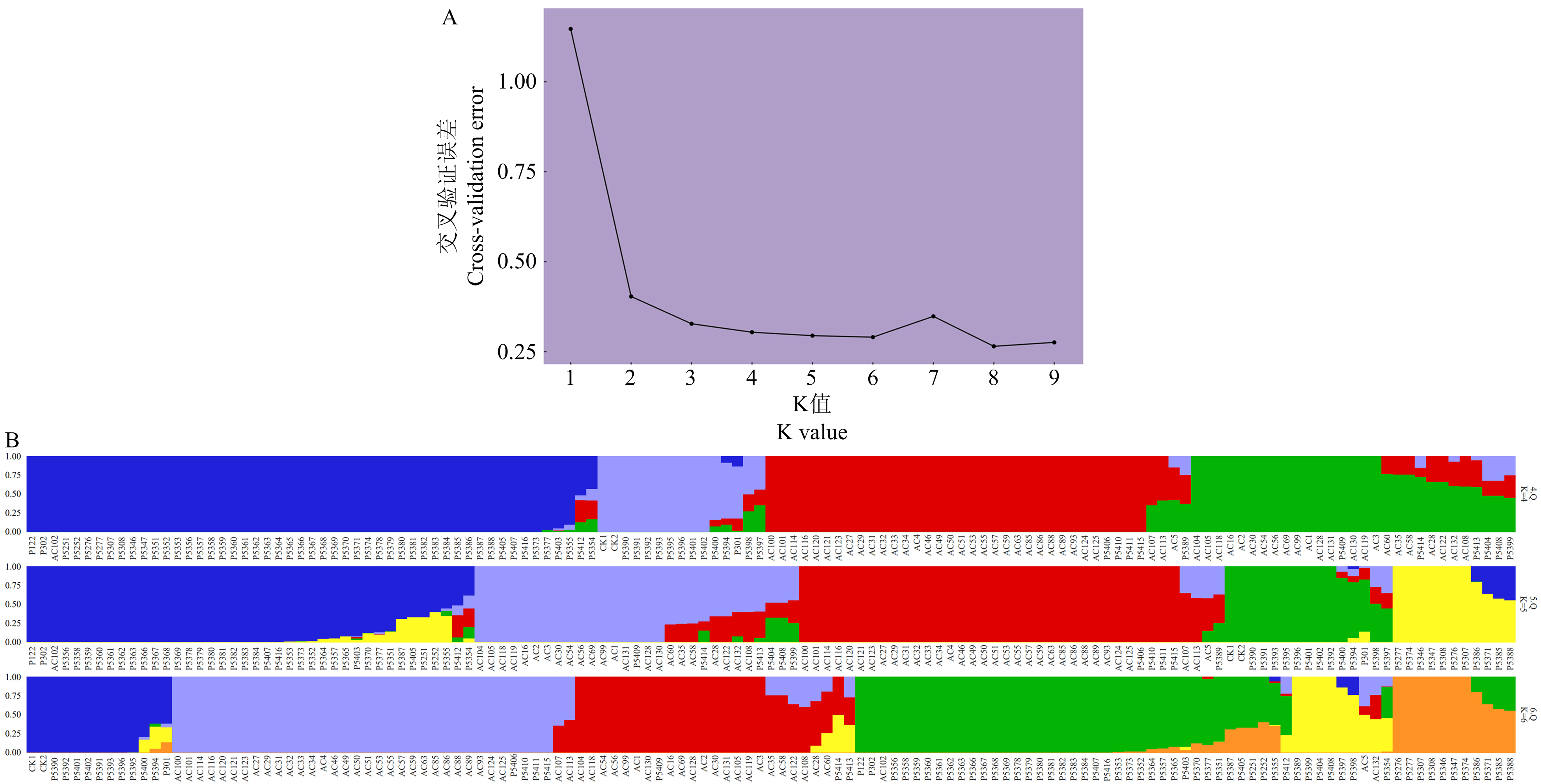
图4
131份香稻资源的群体结构分析 A:131份香稻K值折线图;B:131份香稻群体结构(K=4—6),不同颜色代表样本所属不同亚群,颜色比例代表样本血统的构成比例"

图5
131份香稻的亲缘关系分析图 A:系统进化树。CK1:日本晴;CK2:9311。图中为品种编号,同附表1;B:PCA聚类图"

图6
部分香稻材料第七外显子突变序列比对"
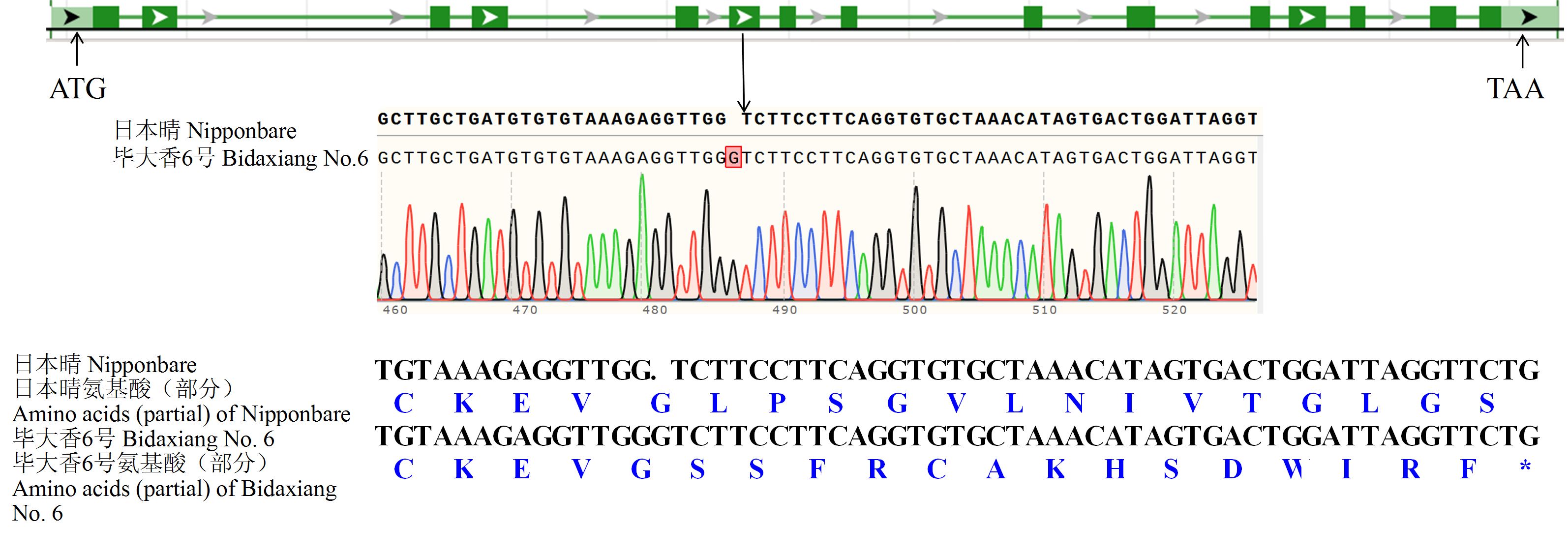
图7
毕大香6号突变情况与氨基酸序列比对"
| [1] |
doi: 10.1016/j.fcr.2022.108736 |
| [2] |
doi: 10.1016/j.aggene.2017.09.003 |
| [3] |
齐金岗, 陈颖, 刘开强, 王小姣, 李林娟, 赵丽冰, 李孝琼, 郭嗣斌. 利用CRISPR-Cas9技术编辑OsBADH2基因改良优质恢复系桂恢852的香味品质. 南方农业学报, 2024, 55(7): 2058-2068.
|
|
|
|
| [4] |
doi: 10.1021/jf00067a031 |
| [5] |
doi: 10.1080/87559129.2020.1720231 |
| [6] |
doi: 10.1016/j.molp.2024.11.002 |
| [7] |
doi: 10.1111/j.1467-7652.2005.00131.x pmid: 17129318 |
| [8] |
doi: 10.1105/tpc.108.058917 |
| [9] |
doi: 10.1007/s11032-008-9165-7 |
| [10] |
doi: 10.1007/s11032-015-0412-4 |
| [11] |
doi: 10.1016/j.rsci.2023.01.003 |
| [12] |
胡明珠, 杨瑰丽, 刘洪, 林晓莲, 梁雪雨, 刘永柱, 郭涛, 王慧. 香型水稻种质资源筛选与Badh2等位变异分析. 分子植物育种, 2025, 23(15): 5028-5036.
|
|
|
|
| [13] |
梁雪雨, 郭敏, 欧旭华, 陈莹, 周丹华, 黄翠红, 王慧, 杨瑰丽. 南方稻区主栽香稻品种香味基因Badh2基因型分析. 广东农业科学, 2023, 50(12): 104-111.
|
|
|
|
| [14] |
doi: 10.1016/j.xplc.2024.101141 |
| [15] |
王春萍, 张现伟, 白文钦, 蒋晓英, 吴红, 林清, 唐永群, 姚雄, 张巫军, 唐荣莉, 等. 新型香稻渝恢2103香味分子遗传特性分析. 作物学报, 2017, 43(10): 1499-1506.
|
|
doi: 10.3724/SP.J.1006.2017.01499 |
|
| [16] |
doi: 10.1007/BF00230138 pmid: 24162494 |
| [17] |
doi: 10.1007/s11032-007-9108-8 |
| [18] |
doi: 10.1016/j.gene.2014.10.048 pmid: 25445269 |
| [19] |
陈惠查, 张再兴, 阮仁超, 杨玉顺, 金桃叶, 游俊梅. 贵州稻种禾类种质资源耐冷性和抗旱性鉴定与评价利用. 贵州农业科学, 1999, 27(6): 38-40.
|
|
|
|
| [20] |
王艳杰, 王艳丽, 焦爱霞, 才吉卓玛, 杨京彪, 阮仁超, 薛达元. 民族传统文化对农作物遗传多样性的影响: 以贵州黎平县香禾糯资源为例. 自然资源学报, 2015, 30(4): 617-628.
doi: 10.11849/zrzyxb.2015.04.008 |
|
|
|
| [21] |
阮仁超, 陈惠查, 陈能刚, 游俊梅, 陈锋, 焦爱霞, 谭金玉, 涂敏, 黎小冰. 新世纪贵州稻种遗传资源研究利用进展. 山地农业生物学报, 2015, 34(5): 1-8, 101.
|
|
|
|
| [22] |
doi: 10.1126/science.320.5877.732 |
| [23] |
doi: 10.1186/s13002-018-0256-1 |
| [24] |
齐永文, 张冬玲, 张洪亮, 王美兴, 孙俊立, 廖登群, 魏兴华, 裘宗恩, 汤圣祥, 曹永生, 等. 中国水稻选育品种遗传多样性及其近50年变化趋势. 科学通报, 2006, 51(6): 693-699.
|
|
|
|
| [25] |
宋玥, 李飞, 王君瑞, 乔卫华, 王新华, 徐志健, 吕树伟, 汤翠凤, 王记林, 刘文强, 等. 中国普通野生稻重要农艺性状的遗传多样性研究. 植物遗传资源学报, 2020, 21(6): 1512-1520.
doi: 10.13430/j.cnki.jpgr.20200206003 |
|
doi: 10.13430/j.cnki.jpgr.20200206003 |
|
| [26] |
赵凤民, 李修平, 薛菁芳, 王立楠, 马文东, 张献国, 单莉莉, 郭俊祥. 黑龙江省香稻资源遗传多样性分析. 分子植物育种, 2020, 18(12): 4120-4127.
|
|
|
|
| [27] |
朱勇良, 黄凌哲, 乔中英, 谢裕林, 王建平, 黄萌, 陈培峰, 吴建祥. 我国部分香稻SSR指纹图谱的构建及遗传相似性分析. 江西农业学报, 2011, 23(4): 5-9.
|
|
|
|
| [28] |
doi: 10.1016/S2095-3119(15)61221-7 |
| [29] |
赵一洲, 倪善君, 张战, 李鑫, 毛艇, 张丽丽, 刘研, 刘福才. 基于SNP标记的粳型香稻品种品质性状差异及遗传多样性分析. 辽宁农业科学, 2020(1): 1-6.
|
|
|
|
| [30] |
朴日花, 金永梅, 李萍, 陈莫军, 孟凡梅, 周广春, 严永峰. 我国北方香型粳稻资源遗传多样性及其香味基因Badh2的等位基因分析. 吉林农业大学学报, 2021, 43(5): 507-515.
|
|
|
|
| [31] |
杨世丽, 杨胜海, 李涛, 管艳伟, 杨文荟, 潘宗东, 周丽洁, 赵全志. 基于SNP芯片的贵州香禾糯遗传多样性分析及核心种质构建. 种子, 2024, 43(7): 9-16.
|
|
|
|
| [32] |
吴娴, 王倩, 吴朝昕, 阙涛, 吴钱蓉, 龙武华, 彭强, 朱速松. 基于50K液相芯片分析贵州香稻资源遗传多样性. 四川农业大学学报, 2025, 43(1): 104-110.
|
|
|
|
| [33] |
刘旭, 郑殿升, 刘作易. 贵州农业生物资源调查. 北京: 科学出版社, 2019.
|
|
|
|
| [34] |
doi: 10.1007/BF02670470 |
| [35] |
pmid: 6247908 |
| [36] |
阳树英, 邹应斌, 夏冰, 吴朝晖, 周婷, 陈逸. 中国传统地方香稻品种资源的多样性及其在特殊生境成香机理的探讨. 中国稻米, 2015, 21(3): 1-7.
doi: 10.3969/j.issn.1006-8082.2015.03.001 |
|
|
|
| [37] |
余亚莹, 邵高能, 圣忠华, 蒋汉伟, 贺记外, 孙园园, 蔡怡聪, 胡培松, 唐绍清. 国内外香稻资源遗传多样性研究. 植物分类与资源学报, 2015, 37(6): 871-880.
|
|
|
|
| [38] |
谢向誉, 尚小红, 严华兵, 曹升, 王颖, 肖亮, 陆柳英, 曾文丹. 广西地方食用木薯种质资源遗传多样性分析. 核农学报, 2020, 34(11): 2397-2406.
doi: 10.11869/j.issn.100-8551.2020.11.2397 |
|
doi: 10.11869/j.issn.100-8551.2020.11.2397 |
|
| [39] |
陈越, 陈玲, 钟巧芳, 张敦宇, 李婷婷, 程在全. 云南同名地方稻种资源主要表型性状及遗传变异的比较分析. 南方农业学报, 2022, 53(7): 1796-1808.
|
|
|
|
| [40] |
张建冲, 杨翠, 杨世丽, 余显权, 周丽洁. 贵州地方水稻种质的SSR遗传多样性及群体结构分析. 分子植物育种, 2022, 20(11): 3664-3676.
|
|
|
|
| [41] |
王艳杰. 贵州禾类稻种资源的遗传演化及其与侗族传统文化关系研究[D]. 北京: 中国农业科学院, 2017.
|
|
|
|
| [42] |
吴娴, 徐海峰, 张志斌, 王倩, 宫彦龙, 张习春, 龙思芳, 罗秦欢, 宋莉, 王忠妮, 等. 基于KASP标记的贵州禾群体遗传多样性与结构分析. 分子植物育种, 2021, 19(4): 1345-1353.
|
|
|
|
| [43] |
doi: 10.3389/fpls.2022.830556 |
| [44] |
doi: 10.2306/scienceasia1513-1874.2021.055 |
| [45] |
doi: 10.1016/j.pmpp.2025.102682 |
| [46] |
项宇晨. 水稻种质资源遗传多样性流失的主要原因及保护对策. 江西农业, 2024(14): 181-183.
|
|
|
|
| [47] |
|
| [48] |
周桂林, 王至严, 林慧慧, 于智坤, 宣艺冉, 朱哲逸, 吴晴. 香稻种质资源的分子鉴定和应用. 安徽农业科学, 2025, 53(13): 75-79.
|
|
|
|
| [49] |
阮仁超, 陈惠查, 游俊梅, 朱玉琴, 朱明, 陈能刚. 贵州稻种遗传资源收集品的保存现状与展望. 种子, 2007, 26(10): 53-56.
|
|
|
|
| [50] |
doi: 10.1016/j.molp.2022.12.020 |
| [51] |
doi: 10.1007/s11103-008-9381-x |
| [52] |
|
| [53] |
doi: 10.1016/j.envexpbot.2010.01.001 |
| [54] |
doi: 10.1186/1471-2229-8-100 |
| [1] | 葛玉彬, 贺春贵, 王宁, 张国琴, 张正英, 吕鑫. 基于表型性状的热带高粱种质资源遗传多样性分析与创新利用[J]. 中国农业科学, 2026, 59(8): 1622-1638. |
| [2] | 姚林, 彭律文, 阳虹, 饶佳怡, 高浩然, 陶芊伊, 谢念祠, 陈莹玉, 李赛君, 刘硕谦, 黄飞毅. 茶树不同亲本及F1子代多酚类成分多样性和基因型分析[J]. 中国农业科学, 2026, 59(8): 1760-1774. |
| [3] | 龙熙, 柴捷, 张亮, 潘雨, 涂志, 张利娟, 张力丹, 唐乙仝, 郭宗义, 潘红梅. 基于全基因组SNPs的湖川山地猪群体结构与选择信号分析[J]. 中国农业科学, 2026, 59(8): 1809-1824. |
| [4] | 何治霖, 孙翠霞, 岳红丽, 谈月霞, 张耀海, 王福生, 刘思涛, 江东. 基于重测序枸橼、柠檬类种质资源的遗传多样性分析和别罗勒烯的全基因组关联分析[J]. 中国农业科学, 2026, 59(2): 386-401. |
| [5] | 张悦青, 张玉亭, 薛晨飞, 韩秦宇, 贺一容, 徐紫娟, 范秀梅, 王军娥, 罗丹, 冯雪, 孙胜. 364份樱桃番茄种质资源表型性状的遗传多样性分析及综合评价[J]. 中国农业科学, 2026, 59(11): 2468-2483. |
| [6] | 缪俊杰, 谢平华, 廖小华, 毛辉荣, 谢冲冲, 周婧, 谭红丽, 吴利平, 王雅楠, 欧阳婧, 晏学明, 陈浩. 全基因组数据揭示丰城麻鸭的种质资源特性与遗传多样性特征[J]. 中国农业科学, 2026, 59(11): 2513-2525. |
| [7] | 许玉娟, 张捷, 王天译, 陈浩洋, 赵佳佳, 武棒棒, 郝宇琼, 李晓华, 郑兴卫, 左静静, 郑军. 山西小麦低分子量麦谷蛋白Glu-A3和Glu-B3位点多样性鉴定及其对品质的影响[J]. 中国农业科学, 2025, 58(24): 5110-5127. |
| [8] | 陈彩锦, 马琳, 蒋庆雪, 刘金晖, 苗童, 张志鹏, 孟翔, 马晓冉, 周昕越, 张建, 刘文辉, 王学敏. 244份饲用燕麦种质资源表型性状遗传多样性分析[J]. 中国农业科学, 2025, 58(23): 4825-4836. |
| [9] | 魏益民, 周美亮, 唐宇. 荞麦的起源、进化与传播[J]. 中国农业科学, 2025, 58(21): 4305-4316. |
| [10] | 刘晓旭, 钟泽鑫, 邱佳仁, 杨春晓, 张永军, 谢文, 张友军, 潘慧鹏. 豆大蓟马不同地理种群线粒体CO1的遗传多样性[J]. 中国农业科学, 2025, 58(21): 4361-4371. |
| [11] | 唐桂梅, 李卫东, 周宇霞, 孔佑涵, 肖晓玲, 彭颖姝, 张力, 符红艳, 刘洋, 黄国林. 基于表型性状分析蕙兰种质资源遗传多样性[J]. 中国农业科学, 2025, 58(2): 339-354. |
| [12] | 郭孟泽, 张磊, 孙平平, 江彪, 闫晋强, 李正男. ToLCNDV广东冬瓜分离物的分子特征及其遗传演化规律[J]. 中国农业科学, 2025, 58(19): 3890-3904. |
| [13] | 刘鹏鹏, 李江博, 徐红军, 聂迎彬, 韩新年, 孔德真, 桑伟. 新疆冬小麦品种资源蛋白组分及品质的遗传多样性[J]. 中国农业科学, 2025, 58(15): 2948-2959. |
| [14] | 王晖, 丁保朋, 李彧贤, 任泉如, 周海, 赵均良, 胡海飞. 作物泛基因组研究进展与展望[J]. 中国农业科学, 2025, 58(11): 2045-2061. |
| [15] | 李沛, 何治霖, 谈月霞, 赵婉彤, 冯锦英, 陈贵虎, 严池, 王子豪, 黄平, 江东. 基于重测序数据与表型性状的宽皮柑橘遗传多样性分析与优异种质筛选[J]. 中国农业科学, 2024, 57(23): 4761-4773. |
|
||
