






中国农业科学 ›› 2026, Vol. 59 ›› Issue (2): 437-440.doi: 10.3864/j.issn.0578-1752.2026.02.015
理云( ), 张帆, 周泳琪, 乔治豪, 刘艳利()
收稿日期:2025-03-13
接受日期:2025-12-25
出版日期:2026-01-16
发布日期:2026-01-22
通信作者:
联系方式:
理云,Tel:15609229685;E-mail:15609229685@163.com。
基金资助:
LI Yun(), ZHANG Fan, ZHOU YongQi, QIAO ZhiHao, LIU YanLi()
Received:2025-03-13
Accepted:2025-12-25
Published:2026-01-16
Online:2026-01-22
摘要:
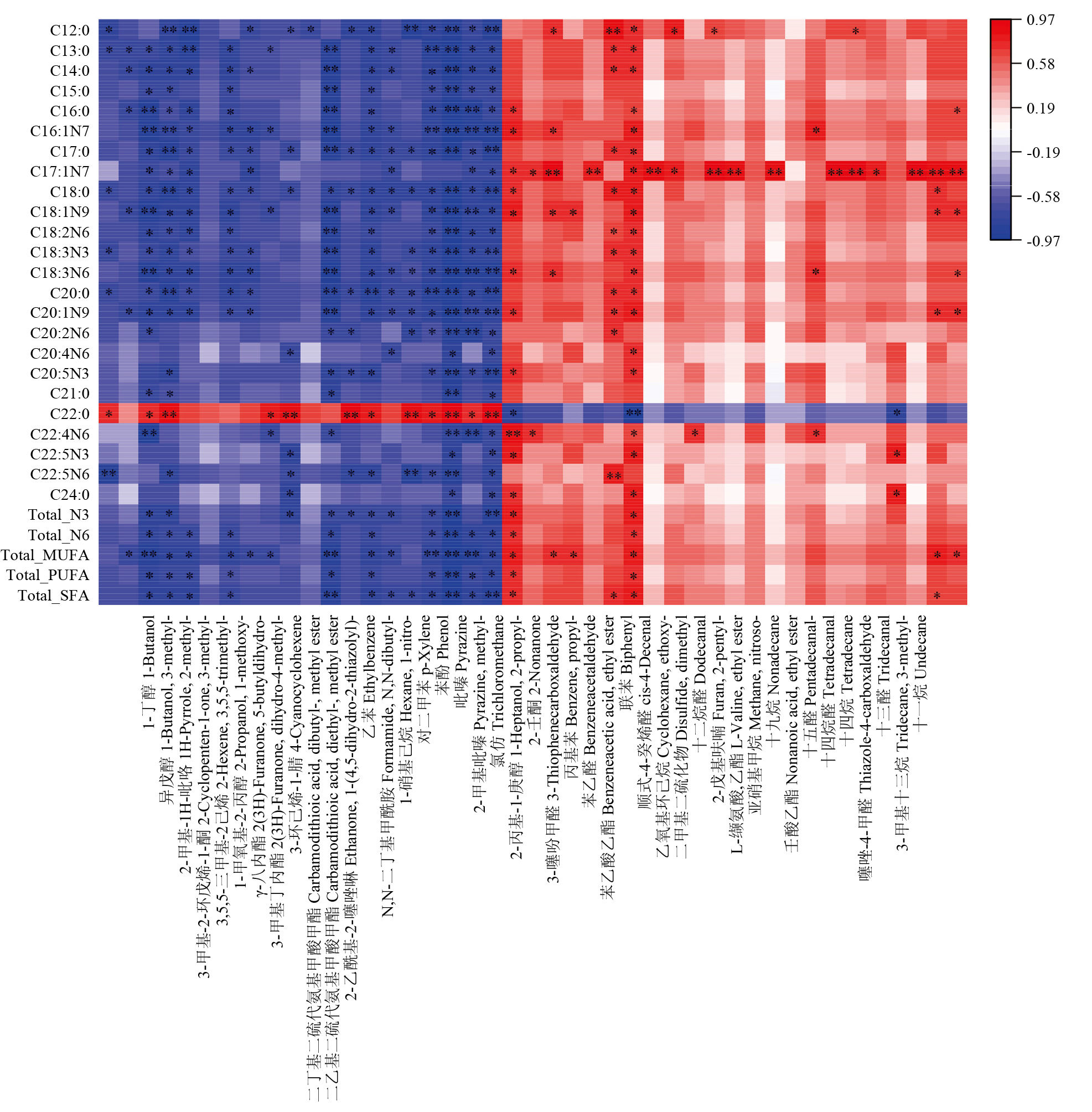
【目的】 略阳乌鸡肉质鲜美,营养丰富,兼具药用与食疗价值,具有特殊的风味。然而,针对其风味物质的研究较少,尤其缺乏系统的感官风味解析。通过对略阳乌鸡生长发育中体尺性状进行分析,并比对不同发育时期胸肌的风味差异,为略阳乌鸡上市时间的选择提供理论依据。【方法】 试验随机选取30只略阳乌鸡,分别在第3、6、8、10、13和16周龄测量体重和体尺,分析其动态生长发育过程。并随机选取13和16周龄的略阳乌鸡各10只进行屠宰,采集胸肌,利用全二维气相色谱-飞行时间质谱(GC×GC-TOFMS)结合多变量数据分析其挥发性风味物质。【结果】 略阳乌鸡在13周龄前生长速度较快,体重和体尺差异显著(P<0.05),而13周龄后生长速率放缓,13和16周龄的体重无统计学差异(P>0.05)。体尺性状(胸宽、胸深、龙骨长等)在13周龄后同样趋于稳定(P>0.05)。肉品质结果显示,13周龄与16周龄胸肌的pH值、剪切力和滴水损失均无显著差异(P>0.05),表明13周龄已达生理成熟。风味组学结果表明,13和16周龄略阳乌鸡的胸肌中分别含有642种和660种风味物质,其中醇类、醛类、酯类和碳氢化合物是主要成分。感官分析表明,13周龄略阳乌鸡的胸肌在甜香、清香、果香感官上显著优于16周龄,这种差异与脂肪酸组成密切相关。进一步筛选出43种关键差异风味物质,发现苯酚、吡嗪、3-甲基-2-环戊烯-1-酮和氯仿可能是导致13和16周龄胸肌风味差异的主要挥发性化合物。相关性分析显示,2-甲基-1H-吡咯、3-甲基-2-环戊烯-1-酮、3,5,5-三甲基-2-己烯、γ-八内酯、2-乙酰基-2-噻唑啉、N,N-二丁基甲酰胺、苯酚、吡嗪、2-甲基吡嗪、氯仿(清香、果香物质)与脂肪酸总量呈显著负相关,而2-丙基-1-庚醇、联苯(脂香前体物质)与脂肪酸总量呈显著正相关(|r|>0.5,P<0.05)。【结论】 13周龄略阳乌鸡的胸肌具有更明显的花香、果香和甜香,而16周龄胸肌中脂肪酸含量更高,烹饪后口感可能更丰富。综合考虑生长速率、风味特征及养殖成本,略阳乌鸡在13周龄提前上市具有一定的可行性。
理云, 张帆, 周泳琪, 乔治豪, 刘艳利. 略阳乌鸡生长发育中体尺性状分析及13和16周龄肉质风味比较[J]. 中国农业科学, 2026, 59(2): 437-440.
LI Yun, ZHANG Fan, ZHOU YongQi, QIAO ZhiHao, LIU YanLi. Analysis of Body Size Traits During Growth and Development and Comparison of Meat Quality and Flavor Between 13 and 16 Weeks Lueyang Black-Bone Chickens[J]. Scientia Agricultura Sinica, 2026, 59(2): 437-440.
图1
不同生长阶段的表型性状比较 A:体重;B:胫围;C:胸宽;D:胸深;E:龙骨长;F:体斜长相同字母表示两组间差异不显著(P>0.05),不同字母表示差异显著(P<0.05)"
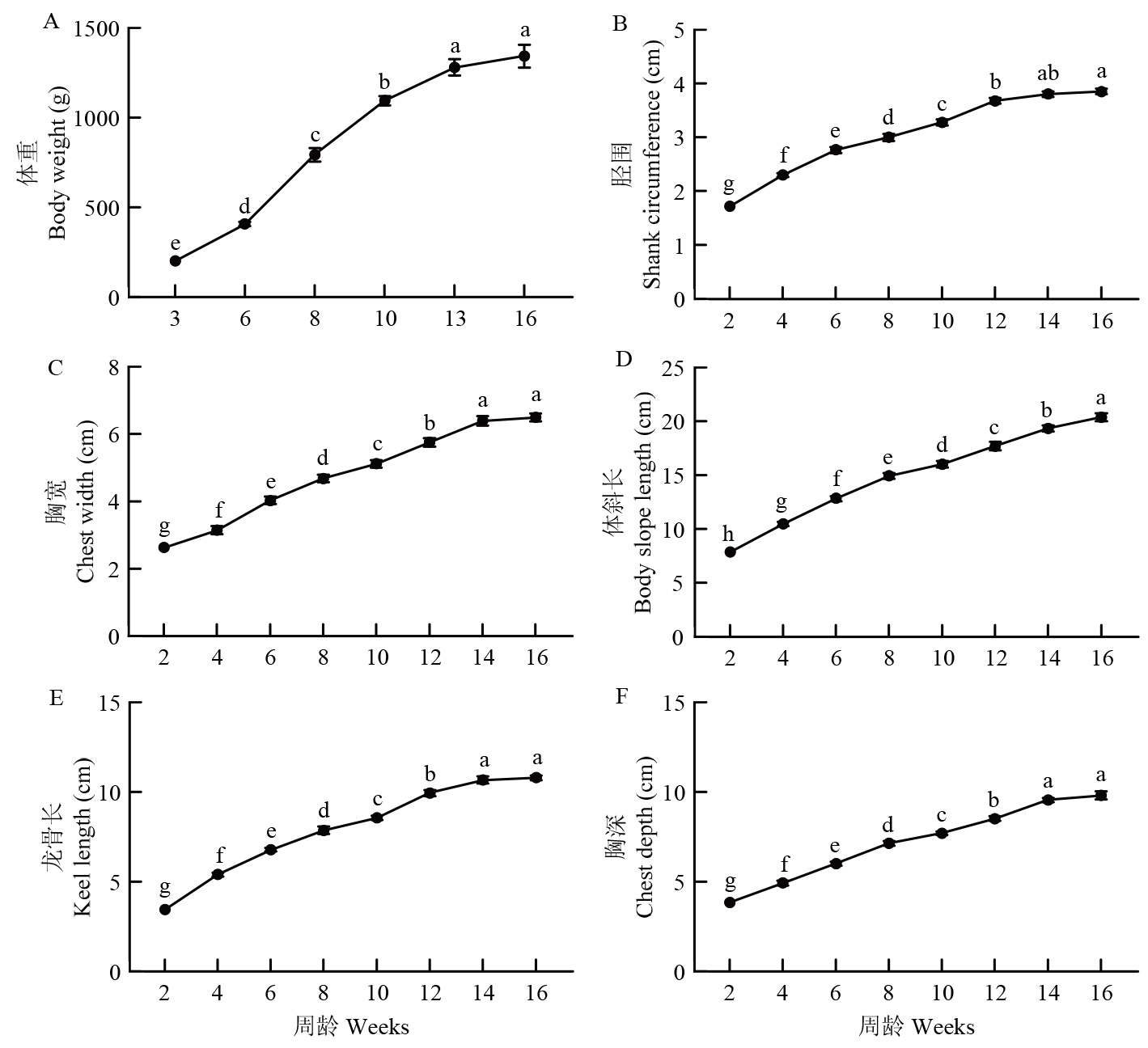
图2
13周龄和16周龄肉质特性比较 A:pH;B:剪切力;C:滴水损失 A: pH; B: Shear force; C: Drip loss"
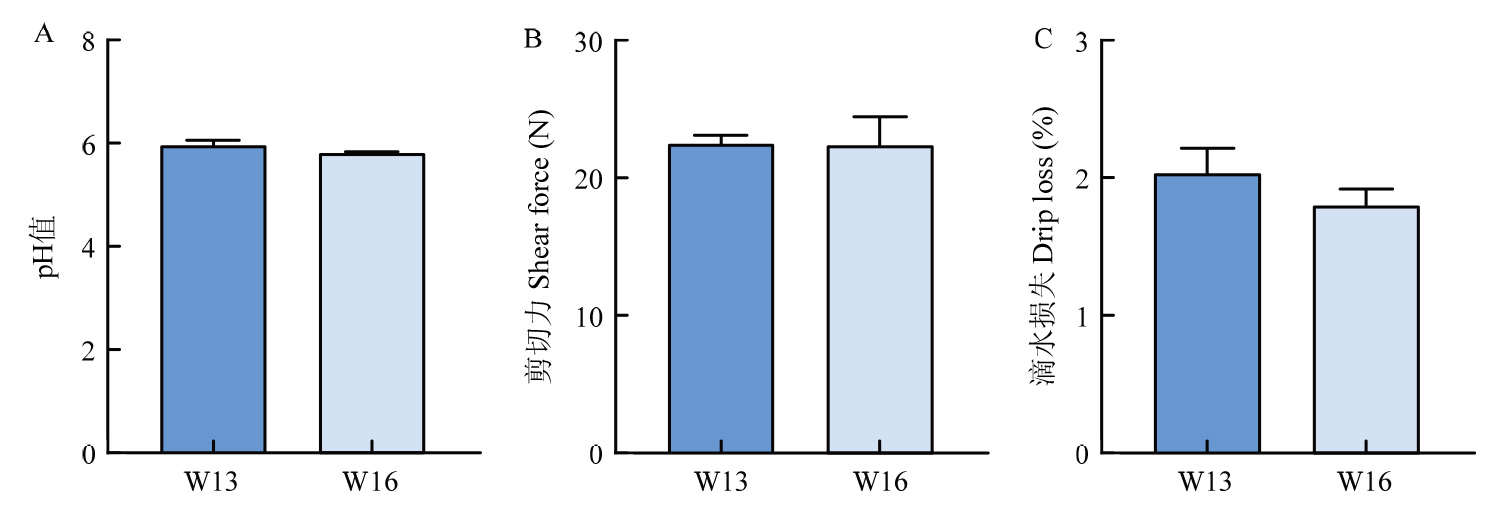
图3
13周龄和16周龄电子鼻结果 A:雷达图;B:PCA相关性分析;C:传感器响应值。*表示P<0.05,**表示P<0.01"
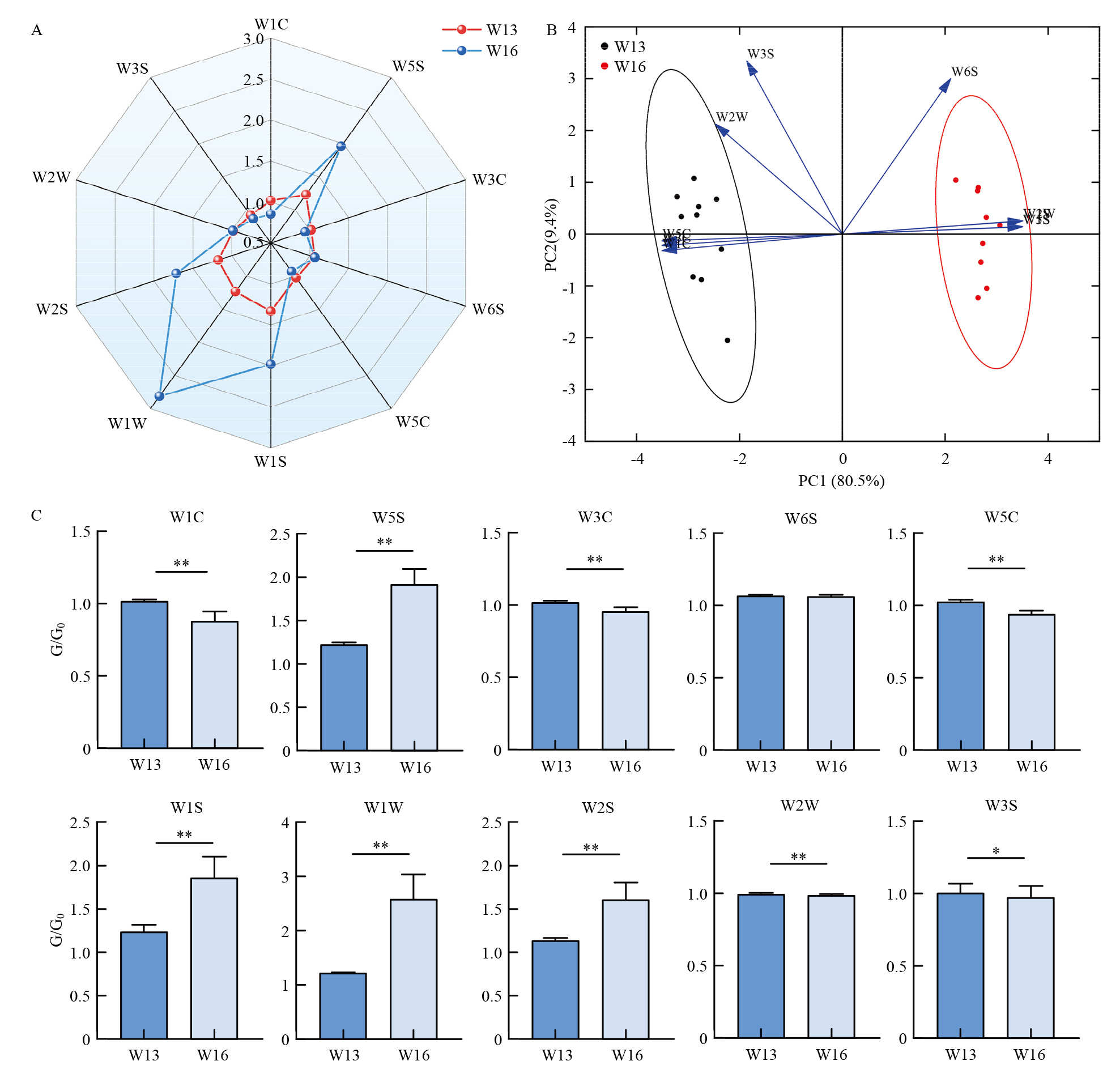
图4
13周龄和16周龄风味组学检测 A:风味物质数目;B:风味物质种类;C:韦恩图;D:风味物质相对含量"
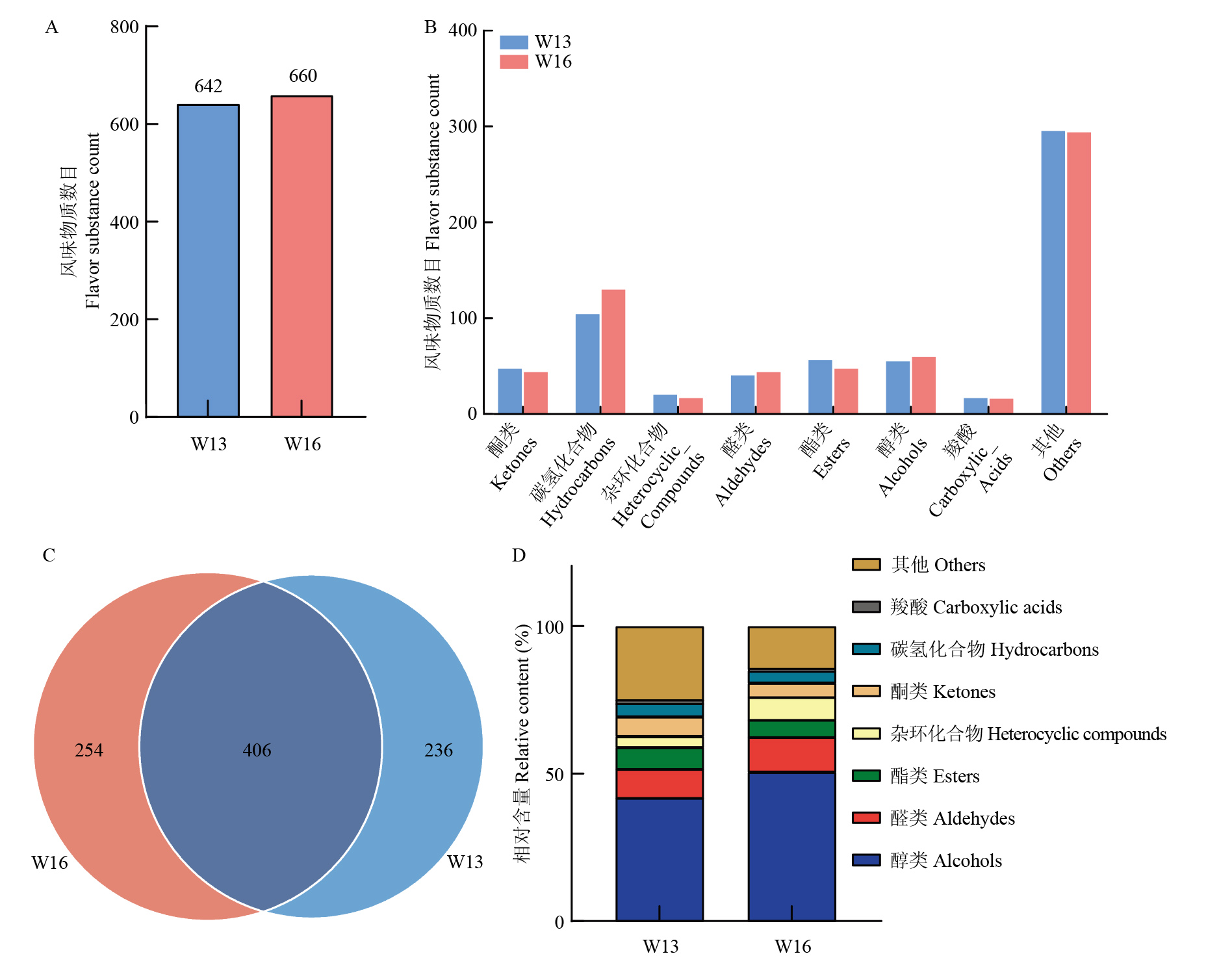
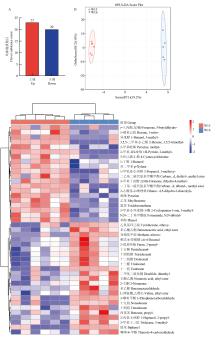
图5
13周龄和16周龄差异化合物比较 A:差异风味物质数目;B:OPLS-DA得分图(R2X = 0.465, R2Y = 0.999, Q2 = 0.722);C:热图(VIP>1 & P<0.05)"

表1
43种差异风味化合物"
| 名称 Name | VIP值 VIP value | P值 P value | 感官风味 Sensory flavor |
|---|---|---|---|
| 上调化合物 Up compound | |||
| 十四烷醛 Tetradecanal | 1.501 | 0.028 | 花香, 柑橘皮香, 熏香, 脂香, 蜡质的 Floral, citrus peel, incense, fatty, waxy |
| 十三醛 Tridecanal | 1.508 | 0.028 | 花香, 新鲜的, 醛香, 肥皂感, 甜香 Floral, fresh, aldehydic, soapy, sweety |
| 顺式-4-癸烯醛 cis-4-Decenal | 1.517 | 0.026 | / |
| 2-丙基-1-庚醇 1-Heptanol, 2-propyl | 1.978 | 0.001 | / |
| 十二烷醛 Dodecanal | 1.682 | 0.010 | 清香, 醛香, 花香, 柑橘香, 蜡质的 Green, aldehydic, floral, citrus, waxy |
| 噻唑-4-甲醛 Thiazole-4-carboxaldehyde | 1.644 | 0.012 | / |
| 苯乙醛 Benzeneacetaldehyde | 1.804 | 0.025 | 清甜的, 清香, 可可香, 花香, 甜香 Honey, green, cocoa, floral, sweety |
| 十五醛 Pentadecanal | 1.485 | 0.030 | / |
| 3-噻吩甲醛 3-Thiophenecarboxaldehyde | 1.673 | 0.015 | / |
| 联苯 Biphenyl | 1.699 | 0.012 | 天竺葵花香, 强烈的气味, 清香, 玫瑰香 Geranium, pungent, green, rose |
| 苯乙酸乙酯 Benzeneacetic acid, ethyl ester | 1.979 | 0.001 | 清甜的, 玫瑰香, 花香, 果香, 甜香 Honey, rose, floral, fruity, sweety |
| 丙基苯 Benzene, propyl- | 1.489 | 0.031 | / |
| 壬酸乙酯 Nonanoic acid, ethyl ester | 1.701 | 0.009 | 果香, 玫瑰香, 酒香, 天然的, 蜡质的 Fruity, rose, wine, natural, waxy |
| L-缬氨酸,乙酯 L-Valine, ethyl ester | 1.643 | 0.014 | / |
| 乙氧基环己烷 Cyclohexane, ethoxy | 1.638 | 0.018 | / |
| 十四烷 Tetradecane | 1.394 | 0.044 | 烷烃风味, 温和的, 蜡质的 Alkane, mild, waxy |
| 十一烷 Undecane | 1.622 | 0.020 | 烷烃风味 Alkane |
| 十九烷 Nonadecane | 1.480 | 0.033 | 烷烃风味, 清淡的 Alkane, bland |
| 3-甲基十三烷 Tridecane, 3-methyl | 1.849 | 0.002 | / |
| 2-壬酮 2-Nonanone | 1.591 | 0.017 | 药草香, 清香, 新鲜的, 肥皂感, 甜香 Herbal, green, fresh, soapy, sweety |
| 2-戊基呋喃 Furan, 2-pentyl | 1.480 | 0.032 | 果香, 青豆气味, 泥土香, 果蔬香, 似黄油风味 Fruity, green bean, earthy, vegetable, butter |
| 亚硝基甲烷 Methane, nitroso | 2.006 | <0.001 | / |
| 二甲基二硫化物 Disulfide, dimethyl | 1.543 | 0.022 | 果香, 清香, 腐臭味, 坚果香, 柑橘香Fruity, green, putrid, nutty, citrus |
| 下调化合物 Down compounds | |||
| 二乙基二硫代氨基甲酸甲酯 Carbamodithioic acid, diethyl-, methyl ester | 1.472 | 0.027 | / |
| 3,5,5-三甲基-2-己烯 2-Hexene, 3,5,5-trimethyl | 1.905 | 0.015 | / |
| 二丁基二硫代氨基甲酸甲酯 Carbamodithioic acid, dibutyl-, methyl ester | 2.002 | 0.007 | / |
| 异戊醇 1-Butanol, 3-methyl | 1.505 | 0.028 | 果香, 麦芽香, 烧焦味, 威士忌风味, 酒精气味 Fruity, malt, burnt, whiskey, alcoholic |
| 2-甲基吡嗪 Pyrazine, methyl | 1.896 | 0.001 | 清香, 巧克力感, 可可香, 烘焙香气, 烤花生香 Green, chocolate, cocoa, roasted, peanut |
| 2-甲基-1H-吡咯 1H-Pyrrole, 2-methyl | 1.943 | 0.011 | / |
| 3-环己烯-1-腈 4-Cyanocyclohexene | 1.812 | 0.003 | / |
| 苯酚 Phenol | 2.128 | <0.001 | 塑料味, 橡胶味, 酚类风味 Plastic, rubber, phenolic |
| 3-甲基-2-环戊烯-1-酮 2-Cyclopenten-1-one, 3-methyl | 2.095 | <0.001 | 果香, 脂香, 甜香 Fruity, fatty, sweety |
| 1-硝基己烷 Hexane, 1-nitro | 1.919 | 0.001 | / |
| 氯仿 Trichloromethane | 2.056 | <0.001 | 甜香, 强烈的气味, 令人窒息的 Sweety, etherous, suffocating |
| 吡嗪 Pyrazine | 2.111 | <0.001 | 榛子风味, 强烈的气味, 大麦香, 烘焙香气, 甜香 Hazelnut, pungent, barley, roasted, sweety |
| γ-八内酯 2(3H)-Furanone, 5-butyldihydro | 1.434 | 0.036 | 椰子风味, 奶制的, 甜香, 脂香, 蜡质的Coconut, dairy, sweety, fatty, waxy |
| 3-甲基丁内酯 2(3H)-Furanone, dihydro-4-methyl | 1.683 | 0.009 | / |
| 2-乙酰基-2-噻唑啉 Ethanone, 1-(4,5-dihydro-2-thiazolyl) | 1.784 | 0.024 | 碎粒感, 坚果香, 烘焙香气, 面包风味, 爆米花气味 Chip, nutty, roasted, bread, popcorn |
| N,N-二丁基甲酰胺 Formamide, N,N-dibutyl | 1.972 | 0.001 | / |
| 乙苯 Ethylbenzene | 1.967 | 0.001 | / |
| 对二甲苯 p-Xylene | 1.719 | 0.026 | / |
| 1-甲氧基-2-丙醇 2-Propanol, 1-methoxy | 1.721 | 0.031 | 轻盈的, 氨味 Etherish, ammonia |
| 1-丁醇 1-Butanol | 1.494 | 0.026 | 果香, 甜香, 药味, 杂醇油, 油腻的 Fruity, sweety, medicine, fusel, oily |
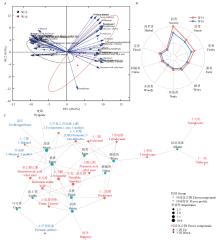
图6
差异化合物与感官风味特征关联图 A:差异化合物与周龄PCA相关性分析;B:感官雷达图;C:相关网络图"
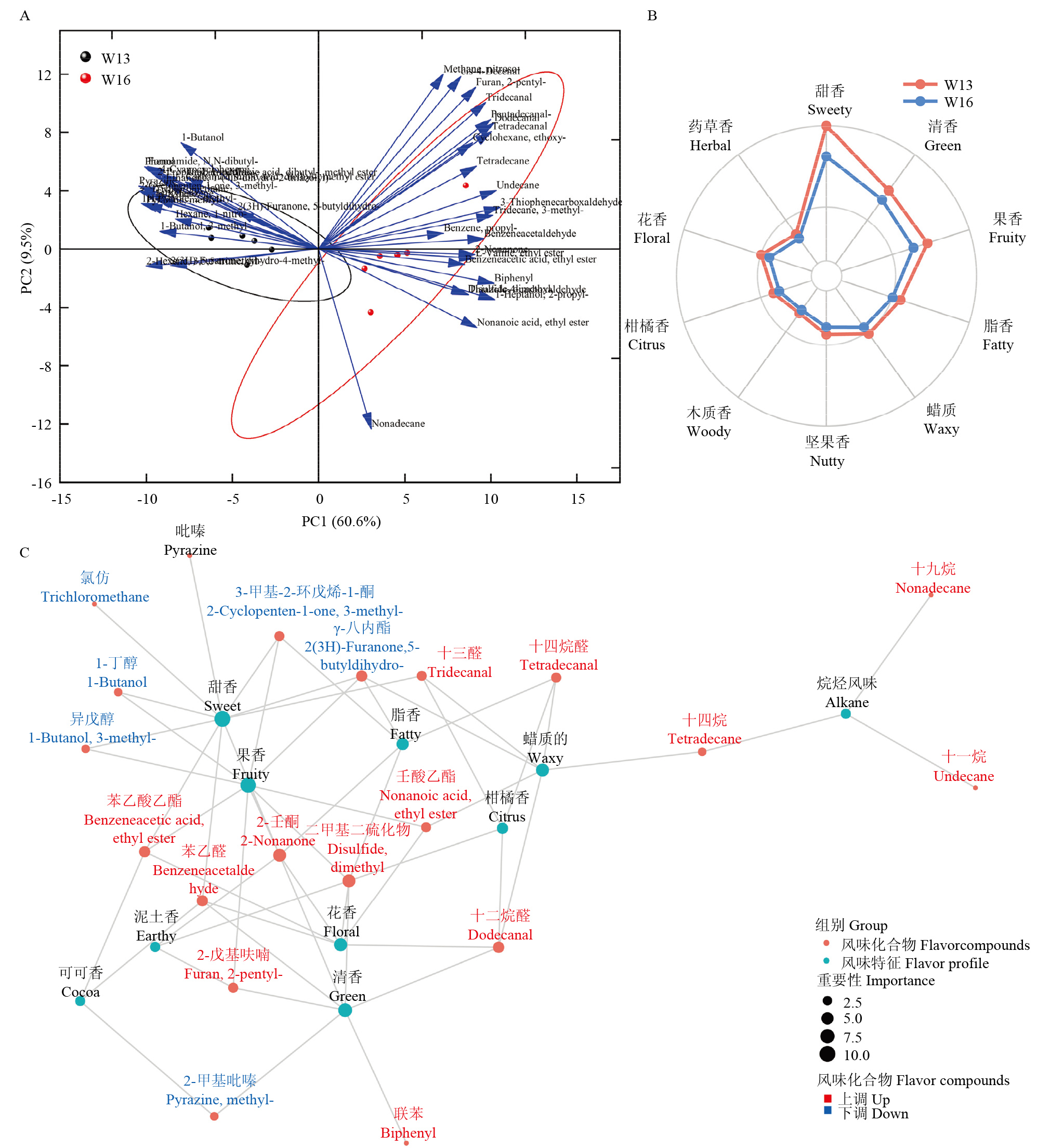
表2
29种差异脂肪酸定量结果"
| 名称 Name | W13 (µg·g-1) | W16 (µg·g-1) | P值 P value |
|---|---|---|---|
| C12:0 | 0.4755 | 1.2610 | 0.007 |
| C13:0 | 0.0538 | 0.1261 | 0.002 |
| C14:0 | 9.4432 | 38.7423 | <0.001 |
| C15:0 | 2.2350 | 6.2193 | 0.004 |
| C16:0 | 765.9851 | 1289.0877 | 0.004 |
| C16:1N7 | 62.3954 | 296.9428 | <0.001 |
| C17:0 | 4.1644 | 16.2919 | <0.001 |
| C17:1N7 | 12.2400 | 18.4608 | 0.032 |
| C18:0 | 306.5123 | 1158.2118 | <0.001 |
| C18:1N9 | 864.6827 | 1962.8961 | 0.001 |
| C18:2N6 | 637.8241 | 1520.0949 | 0.001 |
| C18:3N3 | 6.3606 | 39.1177 | 0.001 |
| C18:3N6 | 2.8909 | 9.2185 | <0.001 |
| C20:0 | 2.9312 | 10.0755 | <0.001 |
| C20:1N9 | 6.9957 | 25.2541 | <0.001 |
| C20:2N6 | 23.3284 | 43.9469 | 0.008 |
| C20:4N6 | 552.9604 | 770.6073 | 0.016 |
| C20:5N3 | 0.3705 | 2.0093 | 0.003 |
| C21:0 | 0.1340 | 0.3431 | 0.008 |
| C22:0 | 16.7759 | 8.4232 | <0.001 |
| C22:4N6 | 142.5059 | 201.4007 | 0.010 |
| C22:5N3 | 73.8491 | 103.0261 | 0.015 |
| C22:5N6 | 46.1703 | 68.9706 | 0.006 |
| C24:0 | 2.3222 | 3.1934 | 0.020 |
| Total_N3 | 83.7879 | 146.8207 | 0.001 |
| Total_N6 | 1451.1665 | 2656.9755 | 0.001 |
| Total_MUFA | 1061.3986 | 2460.2975 | <0.001 |
| Total_PUFA | 1534.9544 | 2803.7962 | 0.001 |
| Total_SFA | 1111.3972 | 2532.6446 | <0.001 |
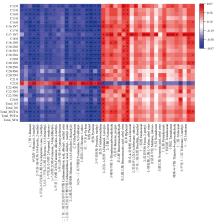
图7
差异化合物与差异脂肪酸相关性热图 *表示P<0.05,**表示P<0.01;|r|>0.5 * indicates P< 0.05, ** indicates P<0.01; |r|>0.5"
| [1] |
孟维一, 古瑾, 徐淇淇, 马燕红, 李莹莹, 郭文萍, 王守伟. 顶空气相色谱-离子迁移谱分析不同部位和品种猪肉的挥发性风味化合物. 食品科学, 2021, 42(24): 206-212.
|
|
|
|
| [2] |
|
| [3] |
|
| [4] |
周晓倩, 李晓贝, 张艳梅, 周昌艳, 任佳丽, 赵晓燕. 基于GC-IMS和GC×GC-ToF-MS技术分析产地对羊肚菌挥发性风味成分的影响. 中国农业科学, 2024, 57(22): 4553-4567. doi: 10.3864/j.issn.0578-1752.2024.22.013.
|
|
|
|
| [5] |
|
| [6] |
|
| [7] |
|
| [8] |
张淑雅, 张纪桥, 蔡瑛婕, 曹敞, 张建华, 张建勤. 不同日龄略阳乌鸡肉品质对比与最佳上市日龄分析. 中国畜牧兽医, 2022, 49(6): 2165-2175.
|
|
|
|
| [9] |
|
| [10] |
刘俊霞, 赵萍, 金晶, 金文刚, 姜鹏飞. 基于气相色谱-离子迁移谱结合化学计量学分析大鲵肉冷藏期间挥发性成分. 食品与发酵工业, 2022, 48(22): 269-278.
|
|
|
|
| [11] |
黄颖妍, 王迪, 李彬, 李林, 曾子悠, 虞洁, 梅绍锋. 不同油脂对麻黄肉鸡生长性能、屠宰性能和肉品质的影响. 中国畜牧杂志, 2023, 59(09): 293-297.
|
|
|
|
| [12] |
于鑫, 周贵同, 赵子怡, 何文, 张玉斌. 不同年龄甘南牦牛肉品质变化分析及安全性评价. 食品与发酵工业, 2025(14): 9-16.
|
|
|
|
| [13] |
张诗泉, 刘永峰, 葛鑫禹, 张朵朵, 侯晨梓. 鸭肉宰后成熟过程中食用品质、营养品质及嫩度变化研究. 食品与发酵工业, 2023, 49(15): 236-242.
|
|
|
|
| [14] |
王昱苏, 孟兰奇, 郭烨, 查恩辉. 热加工方式对鸡肉风味的影响. 保鲜与加工, 2022, 22(12): 44-52.
|
|
|
|
| [15] |
|
| [16] |
|
| [17] |
|
| [18] |
孙旺斌, 付琪, 薛瑞林, 王伟萍, 张骞, 冯平. 不同枣粉水平对陕北白绒山羊肉挥发性风味物质的影响. 动物营养学报, 2021, 33(10): 5664-5676.
|
|
|
|
| [19] |
刘宇航, 刘圈炜, 孙瑞萍, 赵桂苹, 张旭丽, 王秀萍, 魏立民, 冯鑫. 不同饲养方式对文昌鸡肉质性状、脂肪酸、氨基酸及挥发性风味物质的影响. 饲料研究, 2024, 47(22): 34-40.
|
|
|
|
| [20] |
马晶, 陈麒雯, 赵梦雅, 仝鹏琰, 杨小军, 杨欣, 龙芳羽. 不同调味类腌制对略阳乌鸡肉干质构及挥发性风味的影响. 中国食品添加剂, 2023(5): 216-223.
|
|
|
|
| [21] |
施周旻, 王晓洁, 高悦, 刘娟, 崔月花. 糯米发酵前后成品粽子风味物质变化分析. 食品研究与开发, 2024, 45(11): 185-194.
|
|
|
|
| [22] |
|
| [23] |
姜家帅, 孙进华, 蒋守群, 阮栋. 鸡肉挥发性风味物质成分、形成机制及脂质调控研究进展. 动物营养学报, 2023, 35(9): 5465-5474.
|
|
|
|
| [24] |
郑月, 李加加, 王腾, 王文武, 张庆永, 刘登勇. 不同品种乌鸡加工德州扒鸡营养品质及风味物质组成分析研究. 食品与发酵工业, 2024, 50(03): 276-282.
|
|
|
|
| [25] |
袁华根, 罗有文, 高峰. 品种、 日龄因素对鸡肉挥发性风味的影响. 中国饲料, 2022(20): 25-28.
|
|
|
|
| [26] |
顾赛麒, 王涣淇, 冯媛, 黎君鸿, 周振毅, 鲍嵘斌, 戴王力, 陈玉峰, 周绪霞, 丁玉庭. 高铁肌红蛋白对腌腊鱼脂质氧化与挥发性风味的影响. 水产学报, 2023(4): 180-191.
|
|
|
|
| [27] |
|
| [28] |
汪冬冬, 唐垚, 伍亚龙, 张伟, 陈功, 张文学, 张其圣. 泡菜细菌多样性和风味成分研究进展. 食品与发酵工业, 2021, 47(21): 296-302.
|
|
|
|
| [29] |
梁森, 房子林, 李培, 田红玉, 孙宝国. 噻唑类食品香料的研究进展. 食品科学技术学报, 2022, 40(6): 26-36, 51.
|
|
|
|
| [30] |
|
| [31] |
余远江, 庞一扬, 袁桃静, 赵笑颍, 刘小玲. 基于电子鼻、 HS-GC-IMS和HS-SPME-GCMS分析五种水产原料的风味特征. 食品工业科技, 2021(19): 106-117.
|
|
|
|
| [32] |
周宇科, 郑传洋, 任汐月, 胡勇. 不同产地花生酱的挥发性风味成分比较分析. 现代食品科技, 2023, 39(4): 297-310.
|
|
|
|
| [33] |
林珮璇, 张宏婧, 陈继承. 丙氨酸和丁二酮Maillard反应形成烷基吡嗪化合物动力学分析. 食品科学, 2022, 43(2): 41-47.
|
|
|
|
| [34] |
徐振飞, 崔焕先, 梁万鹏, 豆丽萍, 刘刚, 赵福平, 赵桂苹. 不同饲养方式对京星黄鸡103屠宰性能和肉品质的影响. 动物营养学报, 2022, 34(7): 4331-4339.
|
|
|
| [1] | 周得刚, 徐彬艳, 王青霞, 祝霞, 杨学山. 戴尔有孢圆酵母与酿酒酵母细胞间接触对‘赤霞珠’葡萄酒风味品质的影响[J]. 中国农业科学, 2024, 57(16): 3264-3282. |
| [2] | 陈球, 黄晶晶, 王哲鹏. 略阳乌鸡褐壳蛋壳颜色量化体系的建立和遗传基础分析[J]. 中国农业科学, 2023, 56(17): 3452-3460. |
| [3] | 吴世豪, 黄天然, 黄明. HS-SPME-GC-MS技术结合电子鼻分析热处理对南京盐水鸭高温蒸煮味的影响[J]. 中国农业科学, 2023, 56(17): 3435-3451. |
| [4] | 党李苹,周雯馨,刘瑞芳,白云,王哲鹏. 略阳乌鸡体重和产蛋数性状遗传参数估计[J]. 中国农业科学, 2020, 53(17): 3620-3628. |
| [5] | 刘宏祥,徐文娟,朱春红,陶志云,宋卫涛,章双杰,李慧芳. 鸭胚胎发育中后期胸肌发育阻滞的RNA-seq分析[J]. 中国农业科学, 2018, 51(22): 4373-4386. |
| [6] | 崔凯娣,黄学屏,何磊鸣,翟永彪,慕卫,刘峰. 微生物源挥发性化合物苯并噻唑对灰霉病菌的抑制效应[J]. 中国农业科学, 2017, 50(19): 3714-3722. |
| [7] | 张林, 张海军, 武书庚, 岳洪源, 姚军虎, 齐广海. 单色光间歇性刺激胚蛋对肉仔鸡胸肉生长及肉品质的影响[J]. 中国农业科学, 2012, 45(5): 951-957. |
|
||
