






中国农业科学 ›› 2026, Vol. 59 ›› Issue (9): 2042-2060.doi: 10.3864/j.issn.0578-1752.2026.09.015
• 农业经济与农村发展 • 上一篇
李向林1( ), 李有红1(), 段俊2, 齐铁臣1, 刘洁生1, 蔡敏1, 赵海云1, 王海华3
收稿日期:2025-05-08
接受日期:2026-04-02
出版日期:2026-05-01
发布日期:2026-05-06
通信作者:
联系方式:
李向林,E-mail:280069157@qq.com。
基金资助:
LI XiangLin1(), LI YouHong1(), DUAN Jun2, QI TieChen1, LIU JieSheng1, CAI Min1, ZHAO HaiYun1, WANG HaiHua3
Received:2025-05-08
Accepted:2026-04-02
Published:2026-05-01
Online:2026-05-06
摘要:
【目的】针对荔枝产业品种老化、产量波动及资源低效利用问题,本研究提出“果-药-菇-蜜”四维一体立体种养模式,旨在通过技术集成与评价方法创新,阐明其协同增效机制与生态经济价值,为乡村振兴与“双碳”目标提供可落地方案。【方法】在已有LCA与DEA联合应用研究基础上,将数据包络分析(DEA)与生命周期评价(LCA)进行耦合,构建“资源效率-碳排放”双维度评价体系,结合成本效益分析(CBA)与多标准决策分析(MCDA)实现综合评估。具体方法包括:技术集成包括仙进奉荔枝嫁接(形成层分裂速率3.2 μm·h-1)、铁皮石斛附生(存活率96.26%)、红松茸枯枝培育(木质素酶活性4.8 U·mg-1)及中华蜜蜂授粉(坐果率78%)。模型耦合采用DEA-BCC模型(规模报酬可变,投入要素包括土地、劳动、资本及化肥/农药等物质投入,产出包括经济收益与碳减排量)与LCA(ISO 14044标准,量化全生命周期碳排放)。数据来自2019—2024年50个种植单元(四维模式30个、传统模式20个),通过蒙特卡洛模拟(迭代10 000次)控制不确定性(≤15%)。【结果】与传统模式相比:资源效率方面,四维模式DEA综合效率达0.92(传统模式0.16),光能截获率86%(比传统模式增长41%),枯枝资源化率100%(比传统模式增长60%);生态效益方面,碳排放降低32%(1.2 vs. 1.8 t CO2 -eq/亩,1亩=666.7 m2),其中枯枝循环贡献60%减排(0.66 t CO2-eq/亩),蜜蜂授粉贡献15%(0.18 t CO2-eq/亩);经济效益方面,亩均收益101 500元,静态回收期0.76年,内部收益率129%;综合评价方面,MCDA显示四维模式综合得分0.82(传统模式0.21),资源效率(0.92)、碳减排(0.6 t CO2-eq/亩)及就业带动(120人/百亩)均最优。【结论】该模式通过“光能-循环-授粉”协同机制,形成多元化收益结构,有效应对荔枝“大小年”风险。关键创新点关键技术与评价特点包括铁皮石斛强光适应性拓展(Fv/Fm=0.82)、高活性菌株枯枝分解(周期45 d)以及基于DEA与LCA耦合的绩效评价流程,研究结果为广东省“百千万工程”提供技术模式,助力农业绿色转型。
李向林, 李有红, 段俊, 齐铁臣, 刘洁生, 蔡敏, 赵海云, 王海华. 荔枝产业“果-药-菇-蜜”四维种养模式的协同增效机制与生态经济价值[J]. 中国农业科学, 2026, 59(9): 2042-2060.
LI XiangLin, LI YouHong, DUAN Jun, QI TieChen, LIU JieSheng, CAI Min, ZHAO HaiYun, WANG HaiHua. Synergistic Enhancement Mechanisms and Eco-Economic Value of a “Fruit-Medicinal Herb-Edible Fungus-Bee” Integrated Model in the Litchi Industry[J]. Scientia Agricultura Sinica, 2026, 59(9): 2042-2060.

图1
撂荒的荔枝果园 A:汕尾市博美镇蛟溪村撂荒20年的荔枝果园;B:广州市增城区马屋村撂荒5年的荔枝果园"

图2
四维一体种养技术框架"
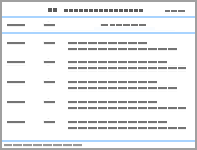
表1
数据包络分析(DEA)模型数据预处理"
| 变量名称 Variable name | 定义与测量方法 Definition and measurement | 数据来源 Data source | 预处理步骤 Preprocessing step |
|---|---|---|---|
| 土地(亩) Land area (mu) | 荔枝经营实际用地面积 Actual operated land area for litchi production | 示范基地实测 Measured data from demonstration base | 直接采用实测值;剔除撂荒地块(如某村××亩荒废果园) Directly use measured values; exclude abandoned plots |
| 劳动(工日/亩·年) Labor (person-days/ mu·year) | 年劳动投入量,覆盖修剪、施肥打药、采收及菌菇/蜂群管理等 Total annual labor inputs covering pruning, fertilization/pesticide application, harvesting, and mushroom/beekeeping management | 田间用工记录、农户台账 Field labor logs and farm accounts | 统一折算工日;缺失值以相邻时段均值插补;异常值用箱线图处理 Standardize to person-days; impute missing values; boxplot outlier treatment |
| 资本(元/亩·年) Capital (CNY/mu·year) | 固定资产年化投入(灌溉设施、蜂箱、菌菇处理设备等),按折旧年限与残值率折算 Annualized fixed capital input (irrigation facilities, beehives, mushroom-related equipment), annualized by depreciation and salvage value | 资产清单、购置发票与合作社记录 Asset inventory, purchase invoices, and cooperative records | 资本年化=(原值-残值)/年限;按面积分摊;币值口径统一 Annualize capital input and allocate by operated area; unify monetary unit |
| 物质投入(元/亩·年)Material inputs (CNY/mu·year) | 化肥(N/P等)与农药等投入强度 Fertilizer (N/P, etc.) and pesticide input intensity | 田间投入品记录、LCA清单核算 Farm input logs and LCA inventory | 缺失值插补;极端值剔除;必要时进行对数变换稳定方差 Impute missing values; remove extremes; optional log transform |
| 经济收益(元/亩) Economic net income (CNY/mu) | 荔枝+石斛+红松茸+蜂蜜收入减成本 Net income = revenue minus cost (litchi + dendrobium + mushroom + honey) | 田间经济账目 Field economic account | 成本与收入口径统一;按亩折算;核对异常记录 Unify accounting scopes; convert per mu; verify anomalies |
| 碳减排量(t CO2-eq/亩)Carbon emission reduction (t CO2-eq/mu) | 与传统模式相比的减排量 Emission reduction compared with the traditional mode | LCA模型结果 LCA model result | 与DEA边界一致的数据共享;不确定性用蒙特卡洛结果报告区间 Align system boundaries; report uncertainty intervals if available |
表2
关键排放因子(EF)参考值"
| 活动Activity | 排放因子Emission factor | 来源Source |
|---|---|---|
| 氮肥生产Nitrogen fertilizer production | 6.7 t CO2-eq/ton | IPCC 2023 |
| 磷肥生产Phosphorus fertilizer production | 1.2 t CO2-eq/ton | CLCD |
| 柴油燃烧Diesel combustion | 2.68 kg CO2-eq/L | 中国能源统计年鉴China energy statistical yearbook |
| 荔枝枯枝焚烧Lychee pruning waste incineration | 1.8 t CO2-eq/ton | 农业农村部实测数据 Ministry of Agriculture and Rural Affairs measured data |
表3
生命周期评价(LCA)主要数据预处理"
| 参数类别 Parameter category | 四维一体模式 Four-dimensional mode | 传统模式 Traditional mode | 数据来源与预处理 Data source and preprocessing |
|---|---|---|---|
| 土地占用(亩) Land occupation (mu) | 1 | 1 | 示范基地实测数据 Demonstration base measured data |
| 化肥用量(kg/亩·年) Chemical fertilizer Dosage (kg/mu·year) | 氮肥:24.6;磷肥:8.4 Nitrogen fertilizer: 24.6; Phosphorus fertilizer: 8.4 | 氮肥:41;磷肥:11.7 Nitrogen fertilizer: 41; Phosphorus fertilizer: 11.7 | 田间账目(2019—2024年),经正态分布检验剔除异常值 Field accounts (2019-2024), with outliers removed via normal distribution test |
| 农药用量(kg/亩·年) Pesticide dosage (kg/mu·year) | 0.8 | 2.3 | 汕尾市农业农村局统计,按作物需药量标准化 Statistics from Shanwei Municipal Bureau of Agriculture, standardized by crop pesticide demand |
| 枯枝处理量(吨/亩) Pruning waste Treatment amount (ton/mu) | 2.8(全量转化为红松茸基质) 2.8 (fully converted to stropharia rugosoannulata substrate) | 2.8(焚烧率60%;堆肥率40%) 2.8 (incineration rate 60%; composting rate 40%) | 农业农村部数据,结合IPCC排放因子 (EF=1.8 t CO2-eq/吨枯枝)计算碳排放 Data from the Ministry of Agriculture and Rural Affairs, combined with IPCC emission factor (EF=1.8 t CO2-eq/ton pruning waste) to calculate carbon emissions |
| 灌溉能耗(kW/亩) Irrigation energy consumption (kW/mu) | 120 | 200 | 广东省农业用电标准,经电表实测校准 Guangdong agricultural electricity standard, calibrated by electricity meter measurement |
| 运输距离(km) Transportation distance (km) | 50(冷链车,能耗系数0.15 L·km-1) 50 (refrigerated truck, energy consumption coefficient 0.15 L·km-1) | 80(普通货车,能耗系数0.25 L/km) 80 (ordinary truck, energy consumption coefficient 0.25 L/km) | 物流公司数据,按柴油碳排放因子(2.68 kg CO2- eq/L)折算 Logistics company data, converted by diesel carbon emission factor (2.68 kg CO2-eq/L) |
表4
成本构成(以1亩为单位)"
| 成本类型 Cost type | 四维模式(元) Four-dimensional model (yuan) | 传统模式(元) Traditional model (yuan) | 计算依据 Calculation basis |
|---|---|---|---|
| 初期投资(元) Initial investment (yuan) | 80000 | 5000 | 四维模式:菌菇设备(50000元)+蜂箱(10000元)+石斛种苗(12000元)+其他(8000元);传统模式:化肥+农药+基础农具 Four-dimensional model: Mushroom equipment (50000 yuan) + beehives (10000 yuan) + Dendrobium seedlings (12000 yuan) + others (8000 yuan); Traditional model: Chemical fertilizers + pesticides + basic farm tools |
| 年运营成本(元) Annual operating cost (yuan) | 28000 | 6500 | 四维模式:人工(15000元)+菌种(8000元)+蜜蜂饲料(5000元);传统模式:化肥(4000元)+农药(2500元) Four—dimensional model: Labor (15000 yuan) + bacterial strains (8000 yuan) + bee feed (5000 yuan); Traditional model: Chemical fertilizers (4000 yuan) + pesticides (2500 yuan) |
| 政府补贴(元/年) Government subsidy (yuan/year) | 3000 | 0 | 广东省“百千万工程”设施补贴,直接抵扣初期投资 Facility subsidy from Guangdong’s “Hundred-Thousand-Ten-Thousand Project”, directly deducted from initial investment |
表5
效益构成(以1亩为单位)"
| 产品类型 Product type | 四维模式年收益(元) Four-dimensional annual revenue (yuan) | 传统模式年收益(元) Traditional annual revenue (yuan) | 计算依据 Calculation basis |
|---|---|---|---|
| 荔枝 Litchi | 30000 | 2000 | 四维模式:丰产期25000元+减产期12000元(年均);传统模式:单产低+价格波动(年均2000元) Four-dimensional model: High-yield period 25000 + low-yield period 12000 (annual average); Traditional model: Low yield + price fluctuation (annual average 2000 yuan) |
| 铁皮石斛 Dendrobium officinale | 9600 | 0 | 存活率96.26%,鲜条产量80 kg/亩,市场单价120元/kg Survival rate 96.26%, fresh strip yield 80 kg/mu, market unit price 120 yuan/kg |
| 红松茸 Stropharia rugosoannulata | 59500 | 0 | 生物转化率15%,鲜菇产量1750 kg/亩,单价20元/kg Bioconversion rate 15%, fresh mushroom yield 1 750 kg/mu, unit price 20 yuan/kg |
| 蜂蜜 Honey | 2400 | 0 | 50箱蜂群,单箱产蜜40 kg/年,单价120元/kg 50 beehives, honey production per hive 40 kg/year, unit price 120 yuan/kg. |
| 合计年收益 Total annual revenue | 101500 | 2000 | — |
表6
评价指标体系与权重(AHP法确定)"
| 准则层 Criterion layer | 指标层 Index layer | 权重 Weight | 指标性质 Index property | 数据来源 Data source |
|---|---|---|---|---|
| 资源效率 Resource efficiency | DEA综合效率 DEA comprehensive efficiency | 0.4 | 正指标 Positive indicator | |
| 环境影响 Environmental impact | 碳减排量(t CO2-eq/亩) Carbon emission reduction t CO2-eq/mu) | 0.3 | 正指标 Positive indicator | |
| 经济效益 Economic benefit | 传粉昆虫多样性指数 Pollinator diversity | 0.2 | 正指标 Positive indicator | 花期样点调查与统计 (Field survey & statistics) |
| 社会效益 Social benefit | 就业带动人数(人/百亩) Employment-Driven population (persons/100 mu) | 0.1 | 正指标 Positive indicator | 四维120人,传统0人 Four-dimensional model 120 persons, traditional model 0 person |
表7
DEA模型资源利用效率对比"
| 指标 Index | 完整四维模式 Four-dimensional model | 移除“药” w/o Herb | 移除“菇” w/o Mushroom | 移除“蜜” w/o honey | 传统模式 Traditional model | 误差范围 Error range |
|---|---|---|---|---|---|---|
| 综合效率(q)Overall efficiency (q) | 0.92 | 0.72 | 0.83 | 0.87 | 0.16 | ±0.03 |
| 光能截获率Light energy intercept rate (%) | 86 | 70 | 86 | 86 | 45 | ±5% |
| 枯枝资源化率 Resource recovery rate of dead wood (%) | 100 | 100 | 40 | 100 | 40 | ±3% |
| 单位面积经济收益(元/亩) Economic benefit per unit area (yuan/mu) | 101500 | 91900 | 95000 | 100000 | 2000 | ±5000 |
| 荔枝单产(kg/亩) Lychee yield per unit area (kg/mu) | 1000 | 880 | 1 000 | 800 | 1000 | ±50 |
表8
LCA模型碳排放与减排贡献对比"
| 指标 Index | 完整四维模式 Four-dimensional model | 移除“药” w/o Herb | 移除“菇” w/o Mushroom | 移除“蜜” w/o honey | 传统模式 Traditional model | 误差范围 Error range |
|---|---|---|---|---|---|---|
| 碳排放(t CO2-eq/亩) Carbon emissions (t CO2-eq/mu) | 1.2 | 1.2 | 1.28 | 1.2 | 1.80 | ±0.18 |
| 枯枝处理碳排放 Pruning waste disposal reduces carbon emissions | 0 | 0 | 1.08 | 0 | 1.08 | ±0.10 |
| 化肥生产碳排放 Carbon emissions from fertilizer production | 0.33 | 0.33 | 0.45 | 0.33 | 0.97 | ±0.05 |
| 运输能耗碳排放 Transportation energy carbon emissions | 0.08 | 0.08 | 0.08 | 0.08 | 0.20 | ±0.03 |
| 农药用量(kg/亩) Pesticide dosage (kg/ mu) | 0.8 | 0.8 | 0.80 | 0.90 | 2.30 | ±0.1 |
表9
经济指标计算(折现率8%,周期5年)"
| 指标 Index | 四维模式 Four-dimensional model | 传统模式 Traditional model | 评价标准 Evaluation criteria |
|---|---|---|---|
| 静态回收期(年) Static payback period (years) | 0.76 (9 months) | 2.5 | 越短越好(年为强可行性) The shorter the better (strong feasibility in years) |
| 净现值(NPV,元) Net present value (NPV, yuan) | 367500 | -12 500 | >0为可行,数值越大越好 > 0 is feasible, the larger the better |
| 内部收益率(IRR) Internal rate of return (IRR) | 129% | 15% | >基准收益率(8%)为可行,越高越好 The benchmark yield (8%) is feasible, the higher the better |
| 成本效益比(BCR) Cost-benefit ratio (BCR) | 3.6 | 0.3 | >1为可行,>3为高效益 > 1 is feasible, > 3 is high efficiency |
表10
TOPSIS法综合排序"
| 评价对象 Evaluation object | 资源效率 Resource efficiency | 碳减排量 Carbon reduction | 年净收益(元) Net income for the year (yuan) | 就业人数 Employed Homo sapiens count | 综合得分 Overall score |
|---|---|---|---|---|---|
| 四维一体模式 Four-dimensional model | 0.92 | 0.6 | 73005 | 120 | 0.82 |
| “果-蜜”模式 “Fruit-Nectar” model | 0.75 | 0.2 | 32000 | 30 | 0.58 |
| “果-菇”模式 “Fruit-Mushroom” model | 0.80 | 0.4 | 45000 | 50 | 0.65 |
| 传统模式 Traditional model | 0.16 | -0.3 | -45000 | 0 | 0.21 |

图3
荔枝产业四维一体立体种养实地效果"
| [1] |
农业农村部南亚热带作物中心. 中国荔枝、龙眼产业发展报告. 中国热带农业, 2024(3): 5-7.
|
|
South Subtropical Crops Center, Ministry of Agriculture and Rural Affairs. Report on the development of China’s Litchi and Longan industries. China Tropical Agriculture, 2024(3): 5-7. (in Chinese)
|
|
| [2] |
农业农村部等6部门联合印发《“十四五”全国农业绿色发展规划》. 中国农技推广, 2021, 37(9): 89.
|
|
Ministry of agriculture and rural affairs and five other departments jointly issue the “14th Five-Year Plan for national agricultural green development”. China Agricultural Technology Extension, 2021, 37(9): 89. (in Chinese)
|
|
| [3] |
高洁珊, 齐文娥. 泰国荔枝产业发展形势与政策分析. 中国果业信息, 2023, 40(9): 18-22, 27.
|
|
|
|
| [4] |
陈风波, 庄丽娟, 齐文娥, 左两军, 林家宝. 澳大利亚荔枝产业发展及对中国的启示. 世界农业, 2015(8): 137-142.
|
|
|
|
| [5] |
doi: 10.1016/j.ygeno.2024.110804 |
| [6] |
苏钻贤, 杨胜男, 陈厚彬, 申济源. 2020年我国荔枝主产区的生产形势分析. 南方农业学报, 2020, 51(7): 1598-1605.
|
|
|
|
| [7] |
张运平, 林建平, 黄艺敏, 袁浩, 冯桂贤, 张佩怡. 基于空间决策模型的耕-果错位空间分析与协调布局优化. 农业工程学报, 2024, 40(6): 330-338.
|
|
|
|
| [8] |
|
| [9] |
金书秦, 张哲晰, 胡钰, 杜志雄. 中国农业绿色转型的历史逻辑、理论阐释与实践探索. 农业经济问题, 2024(3): 4-19.
|
|
|
|
| [10] |
胡福初, 陈哲, 赵杰堂, 冯学杰, 吴凤芝, 范鸿雁, 王祥和, 胡桂兵. 荔枝种质资源矮化相关形态指标的鉴定及综合评价. 植物遗传资源学报, 2020, 21(3): 775-784.
doi: 10.13430/j.cnki.jpgr.20190918002 |
|
doi: 10.13430/j.cnki.jpgr.20190918002 |
|
| [11] |
doi: 10.1016/j.aspen.2022.101882 |
| [12] |
贺丽. 林下空间菌类植物种植模式研究. 北方园艺, 2021(10): 132-135.
|
|
|
|
| [13] |
doi: 10.1016/j.funbio.2022.03.005 |
| [14] |
舒波, 刘丽琴, 王一承, 决登伟, 李伟才, 魏永赞, 石胜友. 荔枝根毛与菌根水平年动态规律研究. 热带作物学报, 2016, 37(6): 1069-1074.
|
|
|
|
| [15] |
doi: 10.1016/j.scitotenv.2018.12.296 |
| [16] |
doi: 10.1016/j.dib.2025.111496 |
| [17] |
doi: 10.1016/j.scitotenv.2025.178763 |
| [18] |
doi: 10.1016/j.scitotenv.2023.162666 |
| [19] |
卢华, 王冠, 周应恒, 徐定德. 邻里推荐对农户有机肥施用行为的影响: 来自四川省水稻主产区的实证分析. 农业技术经济, 2025(1): 79-94.
|
|
|
|
| [20] |
doi: 10.1016/j.ecoser.2020.101187 |
| [21] |
刘慧芳, 刘华格, 倪慧勇. 林-草-鸡生态立体种养模式技术要点. 北方牧业, 2022(1): 22.
|
|
|
|
| [22] |
广东省人民政府办公厅印发关于金融支持“百县千镇万村高质量发展工程”促进城乡区域协调发展实施方案的通知. 广东省人民政府公报, 2023(33): 15-24.
|
|
Notice of the General Office of the People’s Government of Guangdong Province on issuing the implementation plan for financial support for the “high-quality development project of hundreds of counties, thousands of towns, and tens of thousands of villages” to promote coordinated urban-rural development. Gazette of the People’s Government of Guangdong Province, 2023(33): 15-24. (in Chinese)
|
|
| [23] |
doi: 10.1038/30918 |
| [24] |
doi: 10.1016/j.foodchem.2024.140971 |
| [25] |
曾丹琦, 张明泽, 何春梅, 王浩斌, 俞振明, 司灿, 赵聪慧, 李冬妹, 段俊. 铁皮石斛WOX转录因子的鉴定和分析. 热带亚热带植物学报, 2021, 29(3): 301-310.
|
|
|
|
| [26] |
|
| [27] |
doi: 10.1287/mnsc.30.9.1078 |
| [28] |
doi: 10.1016/0377-2217(78)90138-8 |
| [29] |
doi: 10.1016/j.eswa.2024.125828 |
| [30] |
doi: 10.1016/j.watres.2014.10.040 |
| [31] |
doi: 10.3978/j.issn.2305-5839.2015.12.63 pmid: 26889483 |
| [32] |
|
| [33] |
doi: 10.1007/s11367-016-1246-y |
| [34] |
|
| [35] |
普晓妍, 王鹏程, 李苏, 鲁志云, 宋钰. 亚热带森林附生植物叶片气孔特征及其可塑性对光照变化的响应. 广西植物, 2021, 41(9): 1465-1475.
|
|
|
|
| [36] |
刘培蕾, 孙燕, 张继冉, 徐淑霞, 张世敏, 马琳静, 田甜甜. 园林废弃物中木质素高效降解菌的分离鉴定及菌剂开发. 河南农业大学学报, 2025, 59(5): 883-892.
|
|
|
|
| [37] |
梁盛凯, 洪日新, 王田月, 秦献泉, 陆启皇, 孙甜, 周大维, 陆宇明. 蜜蜂传粉对荔枝成花与坐果的影响. 南方农业学报, 2019, 50(6): 1284-1289.
|
|
|
|
| [38] |
崔连标, 翁世梅, 宋马林. 贸易冲突、“一带一路”与中国农产品进口多元化策略研究. 科学决策, 2021(1): 31-53.
|
|
|
|
| [39] |
doi: 10.1016/j.jclepro.2016.03.175 |
| [40] |
doi: 10.1016/j.jclepro.2024.144072 |
| [41] |
doi: 10.1016/j.jenvman.2024.122178 |
| [1] | 石娜, 路杨, 隋丽, 王佳江, 赵宇, 李启云, 张正坤. 莱氏绿僵菌与异色瓢虫协同增效防治蚜虫研究[J]. 中国农业科学, 2024, 57(17): 3398-3407. |
| [2] | 齐晔, 李惠民, 王晓. 农业与中国的低碳发展战略[J]. 中国农业科学, 2012, 45(1): 1-6. |
|
||
